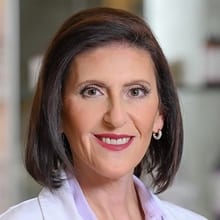
Environmental Triggers of Mast Cell Disease with Tania Dempsey, MD
Description
Summary
Dr. Tania Dempsey discusses mast cell activation syndrome (MCAS) with a focus on environmental triggers of mast cell disease.
Watch
Guests
Transcript
[02:00] Dr. Linda Bluestein: Welcome back, every bendy body. This is the Bendy Bodies podcast, and I'm your host and founder, Dr. Linda Bluestein, the Hypermobility MD. This is going to be a great episode, so be sure to stick around until the very end so you don't miss any of our special hypermobility hacks. As always, this information is for educational purposes only and is not a substitute for personalized medical advice. Dr. Dempsey, hello and welcome to Bendy Bodies.
[02:23] Tania Dempsey, MD: Hello, thank you for having me.
[02:28] Dr. Linda Bluestein: I'm so excited to chat with you. I've wanted to do this for such a long time. And I should also mention that you have your own podcast as well.
[02:34] Tania Dempsey, MD: I do, and it's Mast Cell Matters.
[02:44] Dr. Linda Bluestein: Fantastic. We'll definitely have a link to that in the show notes as well.
[02:49] Tania Dempsey, MD: Perfect. And I've had you on my podcast.
[02:52] Dr. Linda Bluestein: It's a perfect reciprocal thing. And at the same time, you and I were both on both Mast Cell Matters and the POTS Cast, right?
[03:03] Tania Dempsey, MD: That's right.
[03:04] Dr. Linda Bluestein: And the Bendy Bodies podcast discussing the documentary that we're working on.
[03:08] Tania Dempsey, MD: Oh, that's right.
[03:10] Dr. Linda Bluestein: As well, with our other colleagues. So yeah, this is super exciting now to be able to really dive deep into MCAS and environmental triggers because we know that this is such an important topic. Let's start with infectious diseases. Can you talk about how infections and MCAS are related and how they affect one another?
[03:31] Tania Dempsey, MD: Sure. We know that mast cells are really part of our immune system that helps us fight infection. They're our first line of defense against anything that's foreign to us. And so with infections that are either bacterial or parasitic or viruses or fungus, those microorganisms and microbes will trigger a mast cell reaction because that's what mast cells do. They protect us from those things. So any infection, any microorganism that is foreign to us is going to set off mast cells.
[04:09] The way I think about it is we all have mast cells and everybody's mast cells will react to a trigger. I think about COVID because especially right at the beginning of the pandemic, so many people were getting sick. There were people who were getting COVID and recovering from it. Those mast cells reacted to the infection, recruited other white blood cells and other things in the body to try to fight off the infection, and then succeeded. And then those mast cells reset and wait for the next trigger, the next event, the next toxin they have to encounter and deal with.
[05:04] But there were people who get that infection and don't recover fully. They continue to have symptoms. In that case, these are the mast cells that are dysfunctional already. They were probably releasing some of their mediators at baseline. Then there was this major trigger — this virus — that set off the mast cells even more. But even when the virus left the body, the mast cells continued to react. And that's really the distinguishing factor between infection in patients with MCAS already and in those who don't have MCAS. Either way, mast cells get activated. It's what happens after the infection is taken care of, what happens to those mast cells. That's how I like to think about it.
[06:04] Dr. Linda Bluestein: Okay. And if somebody has mast cell activation syndrome compared to somebody who doesn't and they both get the same infection, do you think that the person with MCAS has mast cells that react more significantly, or they just don't stand down when the infection is cleared?
[06:21] Tania Dempsey, MD: It could be both, actually. It could be a more pronounced activation with more mediators and causing more inflammation. And then it could be that it continues to release those mediators and continues to cause inflammation. So it's probably a combination.
[06:42] Dr. Linda Bluestein: Because we all got introduced, I think, to a lot more science than probably a lot of people were used to with COVID happening, of course, and then we were hearing so much about how some people had much worse inflammatory cytokine release, and some people were hospitalized, in the ICU, or even died who were not necessarily known to be very ill beforehand. So distinguishing who is at higher risk is something that I think has been much more important in recent years.
[07:17] Tania Dempsey, MD: To build on this topic — I mentioned COVID, which is an acute infection, but many of us have been exposed to lots of infections over the course of our lifetime. Other viruses like Epstein-Barr virus, certain types of herpes viruses, and then what we'll call vector-borne infections. People have been bitten by mosquitoes or ticks or fleas, flies, or spiders. There are lots of people listening who have been bitten by something. Those vectors can carry various diseases, viruses, parasites, bacteria, and they can transmit it. So we do have an epidemic that's really unrecognized of infection coming from vectors.
[08:17] Some of the common ones people may have heard of are Lyme disease, but there are really many, many others — Bartonella, Babesia, Ehrlichiosis, Rocky Mountain spotted fever, tularemia, Brucella. It goes on and on with various strains of Lyme-like organisms in the family of Borrelia. There's tick-borne relapsing fever. Anyway, there are lots of things that can be transmitted, and I think that lots of people have been exposed to these types of infections.
[08:50] Sometimes these infections become dormant. They're not actually killed off or completely eliminated from the body. Epstein-Barr is one of those viruses that people get as mono, and then that virus goes dormant. Some of these other infections are the same — the body deals with it, it goes dormant, but it can get reactivated at any point. And when there's a big stressor — it could be COVID, a major stressor in a person's life, a divorce, a death in the family, a trauma, another medical condition, surgery, implants — I think that does two things. One is it will rouse the mast cells and cause them to activate more, but it may actually cause reactivation of some of these infections. And that reactivation then causes this vicious cycle of more mast cell activation, which affects the immune system as a whole.
[10:13] Now the body can't fight the infections as well because everything is dysfunctional — the mast cells are trying to recruit other white blood cells and other cells to help, but the signals are faulty. So now the person is in this real catch-22, and it just keeps escalating and escalating. That's why it's so important for patients who have MCAS to really understand what is continuing to drive their MCAS. It's not that just treating the infections is going to make the MCAS disappear, especially if it was there before. But if there's something making it worse, you have to figure out what those triggers are — whether they're internal, like these various infections that got reactivated or have just been active, or things from the environment that are bombarding the immune system and the mast cells specifically.
[11:20] Dr. Linda Bluestein: So other non-infectious things from the environment can either trigger mast cell activation syndrome directly, or they can trigger it through a reactivation of a dormant infection?
[11:32] Tania Dempsey, MD: Yes. Correct.
[11:37] And we see that more often than I could have imagined. The more we test, the more we look, we start to see that patients who have — let's take breast implant illness — patients who have breast implants that develop an inflammatory reaction. The term being used is BII, or breast implant illness. I believe it's MCAS, and there's some evidence to support that. We have an amazing plastic surgeon in Australia who was on my podcast, Dr. Eva Nagy, who has really made it her life's work to help patients with breast implant illness. She is finding mast cells in the tissue and is starting to understand the role of implants — this foreign body — in causing the mast cells to activate.
[12:33] Sometimes, though, you remove that trigger, you remove the implant, and now the mast cells have an opportunity to calm down and stop releasing chemicals. And sometimes that's it — that's what the body needed and the body resets. But sometimes what I see is that patients get better and then all of a sudden start to get worse again. And I'm not saying this is across the board — this is a subset I'm talking about. We start to look at what else there must be, some other trigger. So the implant was a big trigger, we took that out, but there must be something else that's now becoming more obvious. And sometimes what we're finding is other stuff like Epstein-Barr, Lyme, Bartonella, or Babesia. I'm not saying it's always like that, but that can be a trigger. Certainly mold is another huge trigger that we sometimes see in patients with these various issues. Those are the things that I think about a lot in my practice.
[13:46] Dr. Linda Bluestein: And in people who have either these unresolved or somewhat dormant infections, are those people more likely to have an immune deficiency?
[13:58] Tania Dempsey, MD: That's a great question, because it's sort of a chicken-or-the-egg way of thinking about it. I think there's a subset of patients who do have a relative immune dysfunction. Some of them are born with this sort of predisposition, and in many cases I think it is mast cell activation syndrome that's playing a role in how their immune system is dealing with infection in general.
[14:33] However, these infections themselves can disrupt the immune system — can suppress the immune system. We know that you can see decreases in total immunoglobulin G, or IgG, levels with these infections. You can see certain subclasses of IgG go down with these infections, and they can sometimes resolve when the infection is removed. So again, it's sometimes hard to know which came first. Is the infection driving the immune dysfunction? Is the immune dysfunction driving the infection? And maybe it's usually a combination — it always is in medicine.
[15:16] Dr. Linda Bluestein: Right. That's so often the case. And what kind of infections are you seeing in your practice most often?
[15:26] Tania Dempsey, MD: I think viruses are always the common thing to see. Mono — the statistic is something like 95% of adults have been exposed to mono by the time they're probably 30 or 35. So you have the mono that you've had that then goes dormant and is sitting in the body. You have herpes viruses. Think about chickenpox — some people have had chickenpox, some people have had the vaccine, but the virus, particularly in the case of chickenpox, can go dormant into a nerve and reactivate later in life as shingles. So I do see shingles quite often as a reactivation of the herpes virus.
[16:17] There's a herpes virus called herpes virus 6, also known as the roseola virus. It's something like 95% of people have been exposed to roseola by about the age of 5. They may not know it. I have 3 kids — I have one kid who I knew had roseola because he had the classic symptoms, and 2 that I didn't know had it, but they all have antibodies to it. So they've had it at some point in time. When I test people, everybody has it, but it can reactivate, and we sometimes see adults who have reactivation of that virus.
[16:57] So I would say viruses are quite common. Fungal infections, yeast infections, either due to external mold exposure or internal — I think of yeast as internal mold. We have a dysbiosis, an imbalance in the gut from our diet, from the toxins we're exposed to, from antibiotics and other medications. There are so many things that can disrupt our gut and lead to yeast overgrowth. That is quite common. Parasites go along with that, especially when there's a lot of imbalance in the gut. I see a lot of parasites. I think back 10 or 20 years ago, I would have thought that was fairly rare — we're in a country with sanitation and hygiene and we shouldn't be seeing it. But parasites are everywhere.
[17:51] And because my interest is in vector-borne infections, and I'm on the board of the International Lyme and Associated Diseases Society, I definitely see a lot of Lyme disease. I'm practicing in an area of the country where it's endemic. But it's not just about the Lyme. I'll hear people say, "Well, I'm in Colorado" or another state: "We don't have Lyme there." You do, because there are cousins to Lyme that are there. Lyme is Borrelia burgdorferi, but we have Borrelia of other species all over the country and all over the world. It's technically not Lyme disease because it's a different species, but it can cause similar symptoms and make people sick.
[18:44] And then we have these other infections. Bartonella, by far, is the thing I'm most concerned about because it is a bacteria transmitted by so many different types of vectors. It can be transmitted by ticks like Lyme, but also by spiders, fleas, lice, and mosquitoes. It can come from cat scratches, dog scratches, dog bites, cat bites, and other mammal bites or exposures, especially if those animals have had fleas, because fleas are a big carrier for Bartonella. If you look at a map of the world, Bartonella is found everywhere — in sub-Saharan desert, in Africa, everywhere. That infection we do see quite often, unfortunately. And the more we look, the more we find, the more we realize this is really at epidemic proportions because of how easy it actually is to contract.
[20:04] Dr. Linda Bluestein: Do you think these infections in general are getting worse over time?
[20:09] Tania Dempsey, MD: This is the question that a lot of us talk about and raise, and I think it's a combination of things. The technology is better at detecting and picking things up, so maybe we're able to identify it better. That's always what we think about with certain diseases when we ask: are we seeing more of it, or are we just diagnosing it better? Maybe there's a part of that. But I do think that because the world we live in is different than it was 100, 200, or 1,000 years ago, there are things we're exposed to that have changed our immune system. So I think part of it is how our own immune system is dealing with our environment.
I also think that environmental changes — climate change and other things — are affecting the insects and ticks and other vectors we're seeing, so we have a greater potential for exposure. I think back when I was a kid in the wintertime, it was frozen. In New York, it was a frozen tundra as far as I'm concerned. It snowed a lot. It was cold for months and months and months. Now this winter, we've barely had any snow. It's 50, 55 degrees today in New York. It's February. So what's happening is that the ticks are living, people are still going outside with their dogs, still getting exposed — whereas when the ground is frozen, the ticks are dormant and not biting people and transmitting infections. That's a big issue, and I think it's going to lead to greater illness and infection overall over time. And then, even with viruses like COVID — we're going to have another pandemic, unfortunately.
[22:33] Dr. Linda Bluestein: Yeah. And obviously things like air travel are wonderful and incredibly convenient, but they're also basically vectors of a sort that allow the transmission of different infectious illnesses much more easily from area to area, whereas before all of that I'm sure things were more contained.
[22:57] Tania Dempsey, MD: Exactly.
[22:59] Dr. Linda Bluestein: So in terms of these infectious illnesses that you see, how do you address them?
[23:05] Tania Dempsey, MD: Well, it's complicated, and there's no single right answer. Every patient I'm going to approach a little bit differently. I always want to understand the host — that's the person who has these infections. I think this is really the most important thing and it's underrated. I have patients who come to me and carry their diagnosis as if it's them — they have Lyme disease, it's become their identity. And the problem is that I don't doubt they're sick with Lyme. I know they probably have other things beyond Lyme, though. But I also need to understand why they're still sick with Lyme. Is it about the infection? Is it about their immune system? Is it about their nutritional status, their metabolic status, their toxic load? There are all these other things I really have to consider when we're dealing with infection.
[24:17] For some patients, the foundational work is set — they eat well, they're doing everything they can, but they're sick and I have to go after what's making them sick. Based on some retrospective data I've put together, about 90% of my MCAS patients have underlying infection. That's a big number. Again, that's my practice, so I was careful to say I don't know if that's what everyone's practice is like, but in my practice it's a big number.
[24:57] So I'm going to treat their MCAS. I'm going to stabilize them the best that I can, given the fact that the infection may be making their MCAS worse. There may be only so much I can do, but there are times when stabilizing the mast cells helps the immune system so much that the infection is just so much easier to deal with. The body just seems able to handle it, and then maybe I don't have to be as aggressive in treating it because everything sort of falls into place. And there are other times where I need to be more aggressive with the infection, because I can't get the immune system and the mast cells back on board while the infection is constantly driving everything and wreaking such havoc.
[25:46] So again, the approach really does change from patient to patient. That's why it's so important to take the type of history that I take — three hours of really digging and understanding all the nuances, the chronological stuff that's happened in a person's life, and what is setting the stage for them to be at the point where they're at. Once you understand that and do the appropriate testing, then you know: this patient is going to need maybe some antibiotics. There's a relatively new protocol we use for some patients with vector-borne infections called the Dapsone protocol — the high-dose Dapsone protocol. There are other antibiotics we sometimes have to use, especially for acute infections. Sometimes there are antivirals if viruses are involved. So sometimes it's pharmacologic.
[26:48] Because I have an integrative background, sometimes I want to use herbs, or do ozone therapy, or we have this other therapy called SOT therapy — supportive oligonucleotide technique — which can target infections on a molecular level. That's been really incredible for a lot of patients. Sometimes I'm combining things. And of course, always making sure the foundational stuff is in place. If the patient is eating McDonald's and I'm trying to treat their Lyme, it's just not going to work. I'm sorry.
[27:32] Dr. Linda Bluestein: So what other environmental triggers should listeners be aware of?
[27:36] Tania Dempsey, MD: It can be overwhelming, but I think there are some simple things that people can start to look at. I mentioned mold. Mold is not that simple, but it is important to understand your environment. If you've had water damage, that's the biggest red flag. If you've had water intrusion into the house somewhere — in the ceiling, if you're in an apartment and you see something on your ceiling, that means that somebody above you had some water leaking down — that's going to be harboring mold potentially. In the bathrooms, there are certain places that are a little higher risk of mold growth. People need to be aware, look for it. And sometimes extensive remediation does need to be done.
[28:26] Mold is toxic. Mold releases toxins called mycotoxins, and those mycotoxins can make you quite sick. Some of them are neurotoxic and affect the nervous system. Some of them are endocrine disruptors and can affect the metabolic state of the body. Some of them bind estrogen receptors and can cause a whole host of issues. Some of them cause weight gain and insulin resistance. They make you sick. So if your MCAS is not well controlled — or maybe you don't even know if you have MCAS, but you know you're sick and can't figure out what's going on — that's a place to start. Look at what's around you, what you're breathing in. Sometimes it's not the house, it's the office. I've had patients who narrow it down to where they spend a lot of time during the day at work. That's a tough situation, but there are solutions.
[29:40] The other simpler things people can look at — I think about plastics. Plastic water bottles are my least favorite thing. Plastics are a very big trigger for MCAS patients in various forms. Interestingly, I'll have patients who have issues with certain plastics but not others, or they can only drink water out of a certain plastic from a certain company. But in the end, plastic in general is going to be problematic. Plastic leaches — even the plastics that they say are BPA-free, they now use BPS, and there are a few other plastics they get around to and say are safer, but they've actually been shown to have similar effects. They can be endocrine disruptors and cause mast cells to degranulate and activate and cause problems.
[30:51] So think about plastics in the environment and what you can do to minimize that. Think about food storage — eliminate the plastic containers made by various companies like Glad and Ziploc. They make very convenient containers, but there are really nice stainless steel and glass containers you can store your food in. You definitely don't want to microwave food in plastic. That's a huge pet peeve of mine because that plastic, even though they say it's microwave safe, it's not. So those are simple things, because plastic leaching into your food can trigger mast cell activation syndrome.
We're now aware of microplastics — we know we're contaminated with them. Is that causing a rise in MCAS overall? Is it the microplastics? Is it the other toxins in the world? Think about cashier receipts — they're coated with a type of plastic, a type of chemical I'm forgetting the name of, that can actually leach through your skin and go into your bloodstream. When people hand me a receipt, I don't even take it. Most of the time I'm getting a receipt on my email or something anyway. Those are just simple things that could make a difference.
[32:33] I think about the food that you're putting in your body. This is a little bit more difficult because not everyone has access to good quality food, not everyone can afford it. I'm hoping that there will be ways for people to get affordable food that is grass-fed meat, pesticide-free vegetables, things that are safer to eat, because those things are affecting our bodies overall.
And limiting sugar — to me, that's a big trigger. Simple carbohydrates. We know that mast cells are involved in our metabolic process. One of the things I see quite often as a side effect of MCAS for some patients is either weight loss or weight gain. The mast cells are involved in that process, involved in insulin resistance. There's this study I like to talk about with patients because I think it makes it clear. They did a study with mice — they had mice that were mast cell-free and mice with mast cells, and they fed them the equivalent of a Western diet, a standard American diet, SAD. The mice without mast cells did not gain weight — their weight stayed the same regardless of the food they were being fed. The mice with mast cells gained weight very quickly when exposed to a standard American diet. So we know that mast cells are needed for this process of weight gain and are involved in insulin resistance and metabolic syndrome.
[34:44] So the better we can control that — we can't remove our mast cells, but if we can remove triggers like sugar, which causes insulin to rise and insulin binds to the mast cells and can activate them, and sugar can bind to the mast cells and activate them directly — if you can keep your blood sugar stable and eliminate the constant pumping of insulin from the pancreas, I think that can have a dramatic effect on stabilizing mast cells. So I am a big fan of the carnivore diet. That may not be for everybody, but I love the idea. It's the way I eat. Eating meat stabilizes blood sugar, reduces inflammation, and calms down mast cells for a lot of patients.
[35:37] Anyway, that's my quick overview of what people can do to start thinking about things they have control over. Because I think what's overwhelming sometimes is that it feels like so much is out of our control. When patients are sick with MCAS, it just feels like the body was taken hostage and is just doing its own thing and breaking down. But there are things we can control that over time could lead to better health.
[36:05] Dr. Linda Bluestein: And I think having some of those easier things to be able to implement is really, really huge. What about things like air purification? What do you think about that?
[36:21] Tania Dempsey, MD: I think that's important. The way I think about it — it can't hurt, it can only help. Especially if you're not sure about your environment or you don't have control over it. I think about college students. My son is in college, and I will tell you that the dorm is moldy. I know it is. I can smell it. He knows it is. People who live in his house are having sinus infection after sinus infection. I know mold is a problem. So I can't control everything, but he has one of those Air Doctor air purifiers and he feels better as long as he's in his room. It's not a perfect solution — it's not going to remove all the mold and mycotoxins from the air — but it can purify the air at least enough to make it more habitable and have less of an effect on the mast cells. So why not?
[37:20] Dr. Linda Bluestein: And you pointed out very appropriately so that not everyone can afford high-quality food. If someone can afford to buy organic fruits and vegetables versus non-organic, do you think that is worthwhile? Because you also hear people say that if they're next to a non-organic farm that's using regular pesticides, there may be cross-contamination through the soil or the air. Do you think that's a worthwhile thing to do? Does it depend on whether it's the so-called dirty dozen, or what are your thoughts on that?
[38:00] Tania Dempsey, MD: Yeah. There's no guarantee — that's the problem. It was much easier back in the day when you knew the farm, knew where the food was coming from. Now you don't know. A lot of the food is coming from Mexico or other places where you don't really know what the farms look like. But if they've gone through the certification process, it's hopefully a little bit safer. I do think you should concentrate on those foods that we know are more likely to carry more residue from pesticides. There are some things where, if you have to peel the skin off anyway, that's going to be a little lower risk. But I usually recommend washing the produce first so you eliminate some of the toxins and pesticides, because when you take a knife and peel, let's say an apple — if you don't clean the outside first, when you're peeling it you're actually exposing the apple to the pesticide that was on the outside.
[39:06] Dr. Linda Bluestein: Right.
[39:08] Tania Dempsey, MD: Some people are like, "Wow, I never thought of that." But you can do things to minimize it that way. I think you do the best you can.
[39:22] And again, I think meat and protein is really the most important thing that people can eat. I know there are going to be people listening who have various food intolerances from their MCAS. But if you can tolerate animal protein, that is going to be to your advantage — gearing toward about 1 gram of protein per pound of body weight. So the easiest example: a 120-pound person should try to get close to 120 grams of protein, or at least 100 grams. I'm saying this not because they shouldn't eat fruits or vegetables, but that's another conversation. I'm actually not sure they should eat fruits or vegetables, to be honest with you. There may be some specific ones that are better than others. But the most important thing for our overall health, for maintaining muscle mass, study after study has shown that protein is the most important thing. So that's what I would concentrate on.
[40:42] If it's too expensive to get certain organic vegetables and you know you need grass-fed or cleaner meat, at least meat that doesn't have antibiotic exposure — there are various levels of meat quality — the better quality meat you can get is going to be much more important, I think, than worrying about filling up on pesticide-free vegetables. But I know that my opinion is not one that many others share. Some do.
[41:20] Dr. Linda Bluestein: And it's interesting because I have quoted you a number of times to some of my patients who are vegan. And of course, you can follow a vegan diet that's not plant-based, right? I have had vegan patients who are eating cereal for multiple meals. So technically vegan, but that's not a plant-based diet. I have shared that information because I remember you saying it for the very first time I met you in person at the mast cell conference in Broomfield. And I'm curious — what do you think about fish versus meat for some people if they want to avoid other types of meat products? What about if they eat fish instead?
[42:04] Tania Dempsey, MD: It's still from the animal kingdom, so it still has the right type of amino acids. It's a complete protein. The problem with plant proteins is that they're not all complete, and you have to really work at making a complete protein. So fish is great. The downside of fish is the toxins — mercury is an issue for certain fattier, bigger fish. We have to watch out for swordfish, tuna, mackerel, halibut. Those are the big ones I say to really try your best to avoid, because then you're just exchanging one problem for another. I've had patients with mercury toxicity who have had really severe MCAS triggered by the mercury.
[43:04] But if you can get lighter fish that you know is going to be lower in mercury and lower in toxins, I think it's a great source. My favorite — sardines are tiny but a great source of protein. Anchovies, also small. Salmon — it depends, actually. There are some types of salmon that will be higher in mercury, and I've had patients who were eating only wild salmon and had really high levels of mercury. So I love salmon, but you do have to know where it's coming from.
[43:45] Dr. Linda Bluestein: And how are you testing their mercury levels? Is that through a specialized lab or how?
[43:48] Tania Dempsey, MD: A few different ways. Generally I'll just do it in the blood — you can get a view of what's going on in the bloodstream. It's not perfect, but it's a good screening. If I'm really concerned, I might do a urine collection through a special lab. I might do something called the provocative test where you give them something to sort of detox the mercury and then catch it in the urine. Generally, if I'm suspicious, I'll find it and then I'll know what to do with it. For some people it's avoiding the fish for a while to get their mercury levels down.
[44:35] You can't ever really get rid of mercury — this is a problem. That's why some of these big fish have mercury. Mercury is inert in a way; it just stays in the body. The liver has a very hard time, for most people, detoxing it out. So the longer you go without fish, you can detox a little bit. But if you eat swordfish a couple times a year for several years, you'll have enough mercury for a lifetime and it will be almost impossible to get rid of completely, although there are tricks that help. So I always say just be careful with what you're putting in your body.
[45:21] Sushi is a concern, especially because a lot of people eat tuna sushi, and tuna is really high in mercury. But the other problem with sushi, not to get too far off topic, is parasites. Raw fish can be problematic. I had a patient recently who had a tapeworm from sushi. That's not fun. So yeah, raw could be a problem.
[45:54] Dr. Linda Bluestein: Wow, that's remarkable because I feel like sushi has become more popular in a lot of places and with certain groups of people. And I literally was at someone's house recently and had some sushi and was up all night feeling really, really terrible. I don't think I had food poisoning per se. It felt more like a mast cell reaction. So that's really interesting.
[46:21] Tania Dempsey, MD: That's interesting. Was it tuna that you had?
[46:28] Dr. Linda Bluestein: Some of it was tuna. Yes.
[46:31] Tania Dempsey, MD: There is a reaction called scombroid — I can never pronounce it — scombroid food poisoning, which is really where the fish is contaminated with a lot of histamine. Tuna is one that can carry it. You basically get what could look like a mast cell reaction or just an acute histamine toxicity reaction. I've seen a few cases back in my day in the ER, so I wonder if it was something like that.
[47:11] Dr. Linda Bluestein: I almost went to the ER. I had such severe abdominal pain and dry heaving, but not really the other more classic signs. It was a very, very rough night and then a couple of days.
[47:30] Tania Dempsey, MD: I wonder if you had scombroid. Because what happens is the fish is not that fresh, it's sort of sitting around, bacteria grow, they produce more histamine, that histamine gets really concentrated, and then that's that kind of reaction. You could be really sick from that.
[47:48] Dr. Linda Bluestein: Yeah, that's really interesting, because as far as I know, no one else actually had any kind of a reaction. But I have by far more active mast cells than anyone else who was there, so it would make sense that I would be more susceptible. Okay, I'm doing much better now, so that's good.
[48:05] So I'm really excited to jump into some of our listener questions. We had a lot of really, really great questions that came in. I do want to ask people, if you're watching this on YouTube and enjoying this conversation, please hit the like button because that will help other people find the show. We want everyone to have access to this fabulous information from Dr. Dempsey.
[48:34] Okay, first question from one of our listeners: do you have any concerns about long-term antihistamine use, especially in regards to dementia?
[48:44] Tania Dempsey, MD: I really don't. And I know that there have been a few reports in the literature about antihistamines like Benadryl potentially causing dementia. The problem with those studies is that they were retrospective — they were looking at people who had been using antihistamines — and I have a lot of concerns about that, because we don't know if those patients had MCAS and that's why they were using antihistamines long-term. We don't know anything else about their risk factors. So they just reported: people who take more antihistamines may be at higher risk. I think that patients with MCAS may be at higher risk of dementia anyway. Dementia is actually an inflammatory process, even though we don't think of it like that. There's inflammation in the brain, and I wonder if a subset of those patients are really having a problem because of underlying MCAS as opposed to the treatment causing the problem.
[49:54] Now, that's not to say people listening are going to be all concerned that they're going to get dementia because they have MCAS. I'm just saying that may be what would explain some of the findings. What I think is most important is that your mast cells are stabilized as much as possible. The more stabilized your mast cells are, the less inflammation you have in your body, the healthier you are, the less inflammation you have in your brain. I see antihistamines, if used appropriately, as theoretically actually reducing the risk. So I'm not concerned.
[50:31] I think it's just much more important for people to be stabilized than to worry about studies that were poorly designed and not looking at what we really need to look at. It's like those studies that looked at meat as the cause of colon cancer. Meat does not cause colon cancer, even though that's what the media wants you to believe some of those studies showed. In fact, those studies were very poorly designed and had lots of other problems. The same is true for these antihistamine studies. You have to take it with a grain of salt.
[51:13] Dr. Linda Bluestein: Right. Makes a lot of sense. What about somebody who has reactions to laundry products or facial products? What do you suggest your patients do in that case?
[51:25] Tania Dempsey, MD: There are so many options nowadays, and I would say find products that are as pure as possible and have the fewest ingredients — hopefully you could find something that works. There are natural products out there, but I will say that my patients react to some of them, and when you look at the list of ingredients, theoretically they're natural, but there are like 50 ingredients to make that natural product, and inevitably there's going to be something in there that's a problem. Things that have the fewest ingredients. You do have to be pretty on top of it, reading everything with a fine-tooth comb. But you can find things. And there are ways you can make products you need for cleaning that contain only what you can tolerate.
[52:24] But the point is that generally speaking, the better your mast cells are controlled, the better you tolerate the environment and these various things. I'll give you an example — I have patients who are very sensitive to scents and fragrances, which is very common in MCAS patients. But I have a subset of patients who sort of outgrew their scent sensitivity. They don't love it, but they won't have a reaction because I've stabilized their mast cells, treated their infection if there's an infection, gotten them into a better place. Then they realize they're not as reactive to the environment or can eat more foods they were reacting to in the past. The same is true for laundry detergent and these other things. Theoretically, if you're that sensitive, the goal should be to continue to work on finding ways to stabilize yourself so that hopefully with time you are more tolerant to the environment. But it is hard. I will acknowledge that's not an easy task.
[53:39] Dr. Linda Bluestein: Okay. And what kind of results are you seeing from omalizumab, or Xolair?
[53:48] Tania Dempsey, MD: It varies. I think it's been really helpful for a subset of patients. I have yet to really identify why certain patients do so amazingly well and why others may not notice as much of a difference. But it's a tool. I look at it sort of like: how good is Claritin? Well, Claritin can be a game changer for some patients — I've seen it. And for other patients, nothing. The same is true for Xolair. It seems so individualized. And that's actually the problem with MCAS — it really is so individual and different in every person, because everybody's mast cells are different. They release different mediators, they have different receptors. If we could figure out what any particular person's mast cells are doing, we could target treatment better. That's the wave of the future — we have to be able to figure out who is a Xolair candidate and who isn't. We're not there yet.
[54:55] Dr. Linda Bluestein: Right. And someone else asked: what are treatment options after failing Xolair?
[55:01] Tania Dempsey, MD: Well, it really depends on a lot of things — on what else they've tried. I don't have a specific order that I try things in. For some patients, Xolair is early on; maybe they haven't tried ketotifen or cromolyn or LDN. Or maybe they've tried all those things and then are at Xolair. So it just really depends.
[55:23] Dr. Linda Bluestein: Yeah. That definitely makes sense. And it seems like there are people who can also react to the Xolair itself — maybe they're having a reaction to the excipient or something like that — so maybe just removing that and trying some other treatments may be beneficial. What about food dyes? What are your thoughts about food dyes related to MCAS?
[55:50] Tania Dempsey, MD: I hate food dye, period, whether you have MCAS or not. But yeah, it should be avoided. That said, I have patients who can tolerate certain medications that are blue or pink — I'm shocked, but they're fine with that. So it's not across the board. Again, every MCAS patient is different and is going to have different triggers. Dyes can be perfectly fine for some MCAS patients who are sensitive to other things. In other cases, we have to compound the drug to eliminate those excipients like the dyes. But generally, I would love there to be a time when we can make drugs without dye — or food without dye. Is it really that necessary?
[56:48] Dr. Linda Bluestein: Right. And what about EMFs, electromagnetic fields, and how they might relate to MCAS?
[56:57] Tania Dempsey, MD: There are people who are more sensitive to EMFs, and there are various reasons for that. Mast cells are sensitive to a lot of things — they're sensitive to barometric pressure, they're sensitive to EMF. Some people are going to be more reactive than others. Some people have to be more careful and can't use Bluetooth devices or phones and things like that.
[57:26] Generally though, in my experience, a lot of those patients actually have other underlying issues like mold or Bartonella, sometimes both. That's always a little bit of a red flag for me that they should look for something else. While mast cells alone can certainly be reacting to EMF, I often see that it's never just the mast cells in that case.
[57:53] Dr. Linda Bluestein: Okay. And this question I really liked: why do so many doctors fail to believe in MCAS?
[58:00] Tania Dempsey, MD: That's a great question. It's hard for us to understand why it's so difficult to believe or grasp. It's so simple — the pathophysiology just makes sense. I think the medical profession defaults to a couple of things. One is they default to old knowledge. Even though a lot of doctors think they're cutting edge and are trying to keep up with the medical literature, generally speaking, what they learned in med school is what they keep with them. Did you learn about mast cells in med school? I don't recall learning about mast cells in med school.
[58:54] Dr. Linda Bluestein: I don't recall it either.
[58:59] Tania Dempsey, MD: So I think that's part of it — the training. And then you get to a certain point and it's hard to change your way of thinking. I think you need to be a certain type of person with a certain personality to think outside the box and consider that maybe there's more. I think a lot of doctors are overwhelmed; these big medical groups are really handcuffing doctors in a way where they can't spend a lot of time with patients. This is a very complex disease process. You can't really treat a patient with MCAS in 5 minutes, but that's what a lot of doctors have time for. So it's easier not to acknowledge it than to acknowledge it. It's much easier to write a script — you have high cholesterol, here's your Lipitor — than to listen to the patient, go home and think, "Wait a second, that's interesting, that doesn't make sense with anything I know, I'm going to read more about it." They don't do that. They should. That's what I always did. I'm sure that's what you do. So I think it takes a special person in the medical field to really want to learn and think outside the box.
[1:00:26] Dr. Linda Bluestein: Yeah, I totally agree. We're taught so many things, and I think we're taught them in a way such that this is the truth. And of course, science continues to evolve. But it seems like it actually takes even more inertia to make us change our mind about what we were taught at that early stage, as compared to other things. It seems like it requires a lot more evidence, maybe.
[1:00:55] Tania Dempsey, MD: Right.
[1:00:56] Dr. Linda Bluestein: Okay. Someone else asked: what pre-flare warning signs should people look out for?
[1:01:04] Tania Dempsey, MD: Some people have no warning signs at all, so it's not universal. Some people will notice a little tingling in their mouth, or their lips, or their throat. Could be a little itching. Could be a headache. Again, it's really hard to answer because it's just so individual. That's the type of thing where you really want to talk to whoever's treating you for MCAS. If you can find somebody who's willing to think about it and work with you, they can help you identify what your triggers are and what your reactions are like so you can kind of anticipate them. But the reactions are so varied across patients.
[1:01:52] Dr. Linda Bluestein: Sure. And what about immunotherapy for allergies — the more traditional type that we think of for environmental allergies, and maybe food allergy as well? Do you think immunotherapy is often helpful or is it more likely contraindicated?
[1:02:11] Tania Dempsey, MD: I've seen it both ways, actually. I have a fair number of patients who have done really well with immunotherapy — for the right person, the right candidate, the right symptoms and allergens, it makes sense. And I've seen patients who have not done well with immunotherapy. For some of them, their mast cells get a little more activated, at least in the short term. For some, it's just not going to work out. But I think it's a good tool — it all depends on the patient.
[1:02:53] Dr. Linda Bluestein: Right, absolutely. And this is an N of 1, but for me, immunotherapy for my allergies and asthma was a huge game changer — just absolutely hugely beneficial. That was a long time ago. What about people who react to heat, sun, exercise, and triggers like that? Do you have any suggestions for how they can manage that, especially in the summer?
[1:03:24] Tania Dempsey, MD: Yeah, that's a huge thing. Temperature regulation is a common problem. It's really about figuring out how to dress appropriately — in layers, preferably. Sometimes that helps. You can take layers off if you're too hot or put them back on if you're too cold. Figuring out temperature in your own home and trying to figure out what works. I have patients who need to turn the thermostat down to 60, 62, 63 degrees to sleep because they need it much colder regardless of the season.
[1:04:10] And again, doing whatever you can to stabilize your mast cells and continuing to look for the big triggers that are driving that continued mast cell activation is going to be key. Because ultimately, once you have that in place, the temperature stuff gets better.
[1:04:25] The other thing I think about with temperature regulation issues is infection. Babesiosis is a parasitic infection that you can get from ticks, mosquitoes, and other things. It is a cousin to malaria and has an interesting life cycle. The way it infects the red blood cells — and when it releases from the red blood cells — it causes a kind of heat intolerance. Hot flashes and heat intolerance are actually a common symptom related to Babesia. So if I have patients whose mast cells I've treated and they're still having a lot of heat intolerance issues, I'm going to be testing for that, because when that's dealt with, so many other symptoms get better.
[1:05:25] Dr. Linda Bluestein: And I'm glad you mentioned testing for these infections, because can you comment on that briefly — isn't testing for some of these things also particularly challenging?
[1:05:37] Tania Dempsey, MD: It can be, yes. You have to know what you're testing for. You have to understand what your index of suspicion is. If I have a high index of suspicion based on symptoms, I'm going to interpret tests a certain way. Antibody tests are definitely a little more challenging than molecular tests. Molecular tests looking for PCR or FISH are better. I feel more confident when I see, say, a FISH-positive Babesia test because then I know that's an active infection. There's no doubt that they have it. Whereas an antibody test could mean that they had it, could mean that their immune system thinks they had it, they may never have actually had it.
We published an article with Dr. Afrin and Dr. Molderings — it's called "Learned Cautions Regarding Antibody Testing in Mast Cell Activation Syndrome." The point was that mast cells are talking to other cells and driving antibody production in sometimes a very spurious or random manner. They could even be causing mimicking antibodies. So when you see antibody testing positive in a mast cell patient, it does become more difficult to interpret. That's why molecular testing is the best. There are really great tests now that can look at whether there's an active infection, and that's what I use.
[1:07:26] Dr. Linda Bluestein: Going off on that same testing thread, somebody asked about what criteria you use to diagnose MCAS. We know that lab testing is fraught with difficulty, so if you could share that.
[1:07:44] Tania Dempsey, MD: There was a paper — you should link that paper — that we published on the consensus 2 criteria for mast cell activation syndrome. That's what we base it on. We want at least 2 mediators positive. There are various mediators. We test for tryptase, but it's rarely helpful in diagnosing mast cell activation syndrome. We use these other mediators that we can test in the blood, in the urine, or in biopsy samples. Ideally, there's a clinical picture combined with 2 or more mediators that are positive.
[1:08:26] Dr. Linda Bluestein: Okay. And I'll definitely link that paper — I was one of the co-authors on that as well. That was a really great project. So did we miss any questions, or do you have any final thoughts?
[1:08:41] Tania Dempsey, MD: I think we covered a lot of ground. This was great. I love talking about all these things. Mast cell activation syndrome is obviously a very complex condition with lots of nuances, and we've covered some things, but there may be something important that didn't come up in the hour we're talking. The thing I like to emphasize is: if people are not getting better and don't really understand why they're still sick, I really encourage them to continue to search, to find people to work with them.
[1:09:24] The network of mast cell-savvy or at least interested providers is increasing, and that's good news. Maybe there's still not enough of us out there, but we are growing our network. So keep searching, keep working, and keep thinking about and looking for those triggers that are continuing to make you sick, because I really think there are people who are suffering unnecessarily with things that can be treated and helped. I want people to feel better, so keep finding those answers.
[1:10:00] Dr. Linda Bluestein: And definitely people should also check out your podcast, because there's lots and lots of great information in there as well. We could talk about this for 12 hours instead of one. So, great. We'd like to finish every episode with hypermobility hacks — and it could be a mast cell-related hack, because we know that is definitely related to hypermobility as well. Do you have a favorite hypermobility or mast cell hack?
[1:10:38] Tania Dempsey, MD: I love that question. My hack is definitely going to be from the mast cell lens. There are lots of things that my hypermobile patients should do to improve their overall health, but really, the hack for me is: don't be afraid of antihistamines. There's just so much fear over antihistamines — not just because of the dementia study, but in general, people don't want to take medications and they're afraid of reactions.
[1:11:13] I do see improvement in hypermobility with antihistamines when people are controlled. Control of mast cells does help decrease the symptoms related to hypermobility and EDS. I have a patient I talked to the other day who has a lot of joint pain. She does have hypermobility, but she also has Lyme disease and also has MCAS. As we're treating these various things — in her case, ketotifen is making a big difference — her joint pain is better, her nausea is better, and all these other symptoms are getting better. So the hack is: get your mast cells under control, and don't be afraid to trial some of these medications.
[1:12:04] Dr. Linda Bluestein: I totally agree with that. I've had quite a few patients where we've worked on getting the mast cells under better control, and that has actually helped improve their joint instability as well as their pain. And honestly, before the conference in New York — I guess that was almost 2 years ago — that amazing conference that you and your partner Dr. Laurie Afrin put together was phenomenal. But really, before that, I was addressing mast cells but not as much. In preparing that talk on pain care related to mast cells and how mast cells could be playing a role, I definitely started after that to be much more diligent about addressing mast cells. And I really think that has made a big difference in outcomes.
[1:12:56] Tania Dempsey, MD: I believe that.
[1:12:57] Dr. Linda Bluestein: Yeah. Okay. Where can people find you online?
[1:13:00] Tania Dempsey, MD: I have a new website out, drtaniadempsey.com. I have my Facebook, Dr. Tania Dempsey, Instagram, Dr. Tania Dempsey MD. And then of course the podcast on Apple and Spotify — it's called Mast Cell Matters. And my center is AIM Center for Personalized Medicine in Brentwood, New York.
[1:13:26] Dr. Linda Bluestein: Fantastic. All right, well, I am so grateful to you for coming on the show today. I just want to remind everyone that they've been listening to Bendy Bodies with the Hypermobility MD, and your guest today was Dr. Tania Dempsey, leading expert in MCAS, dysautonomia, ME/CFS, tick-borne infections, and autoimmunity. Dr. Dempsey, thank you so much for coming on the Bendy Bodies Podcast, sharing your incredible knowledge and wisdom with us, and being so generous with your time.
[1:13:57] Tania Dempsey, MD: Thank you for having me. This was great.
[1:13:57] Dr. Linda Bluestein: Thank you for listening to this week's episode of Bendy Bodies with the Hypermobility MD podcast. Visit our new website at bendybodiespodcast.com where you can now view guest profiles and show notes with links to products and journal articles. Leave me a comment, sign up for updates, leave a review or a voicemail, and access the podcast on your favorite player, all directly from our website. You may hear your voicemail in a future episode where we answer your question or dive into your gracious feedback.
[1:14:29] Follow us on Instagram at bendy_buddies. We love seeing your posts and stories, so be a buddy and engage our community by using the hashtag bendy buddy — that's hashtag B-E-N-D-Y B-U-D-D-Y. You can also find me, Dr. Linda Bluestein, on Instagram, Facebook, Twitter, or LinkedIn at HypermobilityMD. Visit hypermobilitymd.com for information about medical services and one-on-one coaching.
[1:14:55] This podcast is for general informational purposes only and does not constitute the practice of medicine or other professional healthcare services, including the giving of medical advice. No doctor-patient relationship is formed. Do not disregard or delay obtaining medical advice for any medical condition you have. Opinions shared are that of the guest and do not necessarily represent the views of the host or any particular organization. Sponsorship of the podcast does not necessarily mean an endorsement. Thank you for being a part of our community, and we'll catch you next time on the Bendy Bodies Podcast.