Description
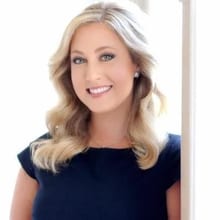
Summer Dashe, a former news anchor and advocate for the chronically ill, shares her POTS and EDS journey. She covers how she manages her symptoms in everyday life and the challenges of getting diagnosed with POTS (Postural Orthostatic Tachycardia Syndrome) and EDS (Ehlers-Danlos Syndrome). #dysautonomia #ChronicIllness #POTSAwareness
Watch
Guests
Transcript
[01:10] Dr. Linda Bluestein: Welcome back, every bendy body. This is the Bendy Bodies Podcast, and I'm your host and founder, Dr. Linda Bluestein, the Hypermobility MD. This is going to be a great episode, so be sure to stick around until the very end so you don't miss any of our special hypermobility hacks. As always, this information is for educational purposes only and is not a substitute for personalized medical advice. Summer, hello and welcome to Bendy Bodies.
[01:35] Summer Dashe: Hi, thank you so much for having me. What a nice intro, I really appreciate it.
[01:40] Dr. Linda Bluestein: Awesome. I feel like I've wanted to do this for so long, so I'm so excited that we're finally sitting down to chat. I know so many people are dying to know, how did you first discover that you had POTS? I'm going to say POTS and Company.
[01:51] Summer Dashe: POTS and Company. Yes, that's a good way to put it. It took 2 years to find out I had POTS. At the time, I was a main anchor at an ABC station in South Carolina. And the good news about that is just before I developed this disorder, I was working weekend mornings. And for those people who have POTS, we know that a lot of times it's really hard to get up in the morning, and a lot of times those symptoms really slam you upon getting up right in the morning. So imagine if I had still been on a morning show when this developed. I don't think I would have survived that long in that position.
[02:30] So I had just been moved to main anchor, which meant I was working evenings — about 2:00 to midnight — and I started having all these strange symptoms. It really started with shaking and really bad sweating. My memory was going and I was having trouble finding words and all of these things. And interestingly enough, in the beginning, I didn't notice the heart rate. If I had, I mean, if I had sat there and gone, oh, my heart's beating really fast, I probably would have mentioned that to a doctor, but I didn't really notice the heart rate. So when I would go to the doctor, I was talking about all these other symptoms we experience with POTS.
[03:13] Regardless, at that time it was 2017 and doctors really were not familiar with POTS like they are now. Do we still need more awareness? You bet. But people now in 2022 post-pandemic are much more familiar with POTS than they were in 2017 when it started for me. So after visiting about 11 doctors locally in the South Carolina area and being told I had anxiety and being prescribed all sorts of different anxiety medications, I finally ended up at Vanderbilt Cardiology. A cardiologist there in about 2 minutes said, "I know what's wrong with you." And I kind of looked at him and laughed and I said, "No, you don't. Nobody does."
[03:52] Dr. Linda Bluestein: Oh, really?
[03:53] Summer Dashe: Yeah. It had been 2 years at this point and I kind of went, yeah, whatever, nobody does. And by that point I was beginning to doubt my own sanity, thinking maybe it is anxiety. I'm causing all of this. This is crazy. I'm doing this to myself. And he referred me into Vanderbilt Autonomics where I had a tilt table test, and no doubt this was POTS. So that was in May of 2019. My symptoms developed in May of 2017, so almost 2 years to the day was when I was diagnosed.
[04:27] Dr. Linda Bluestein: Interesting. And when you developed your symptoms in May of 2017, was that following an infectious illness or trauma of some sort, or did it just completely start out of the blue?
[04:39] Summer Dashe: That's a really great question. A lot of POTS patients can really pinpoint their trigger, and I get asked that all the time. And I was the healthiest I have ever been in my whole life when this happened. I had just lost about 30 pounds. I had won a fitness competition. I was working out with a trainer on a fitness team 5 days a week. I was bike riding. We lived at the beach, so we'd take our little doggies and plop them in their bike baskets and go bike to the beach and whatnot. So this was really the healthiest I had ever been. I had not been sick that I know of at that time. No virus. I had no major trauma in terms of a car accident or any surgery or anything like that.
[05:27] So I really don't know what my trigger was. It was quick, though. There's a picture of me on like May 8th of that year, and it's me with the sign where I'd won the fitness competition. And then by the following weekend — May 12th or whatever it was — I woke up and was so messed up. So something happened in that 5-day span. I always say, and I'm allowed to say this here, that's when everything went to shit.
[06:01] Dr. Linda Bluestein: Yeah, absolutely. First of all, allowed. And second of all, that's fascinating to me that you can pinpoint it that precisely, but the trigger is not evident. So that's really interesting.
[06:14] Summer Dashe: Some of the doctors — for people who have followed me, they know I've been going down the spinal fluid leak rabbit hole — the reason they suspected that was because at that time I was doing really intense workouts. And I did not know I had Ehlers-Danlos syndrome, so I was not aware that my body was potentially weaker than others in certain ways. So it's possible that with all that excessive, intense, hardcore working out, I popped a hole in my dura and have a leak. But that's TBD.
[06:49] Dr. Linda Bluestein: Right, right. Oh my gosh. And so by May 12th you started having symptoms — how did you manage those symptoms at first when you were working?
[07:02] Summer Dashe: Part of it was that I was being told it was all in my head. So I'm sitting there thinking, push through this. What's wrong with you, you wimp? I was mad at myself during that time. And so I would just try harder, but at the same time, it became so clear that there was something very wrong.
I also was really lucky. At that time, I had a schedule that more worked with these symptoms. I was not out in the field reporting anymore, which is much tougher on your body. So I was going to a studio that was climate controlled. Granted, I was anchoring 4 or 5 shows a night, which is a lot. And I had the world's most supportive co-anchor on the entire planet. He literally dragged me through this a lot. I really credit him with getting me through those few years. He believed me the whole time. He knew that this was not right. He was hilarious and so funny, and so he'd make jokes about it, and I have a really good sense of humor, so I'd make jokes about it too.
[08:10] I would go to the morning show set — they had a couch, and since we didn't use the morning show set on evenings, I would go lay on their couch in between shows, just die for a minute before I had to anchor another one. And it got to the point where there were times I would put my head in my hands on a commercial break and just close my eyes and actually fall asleep for a second. My producer would be in my ear going, "Summer, Summer, Summer," and my co-anchor would tap me and I'd be back up and on to the next story.
My coworkers knew something was going on. Some of them, the ones I was close with like my co-anchor, knew better than others how bad it was getting. Toward the second year into this, it was very obvious and very difficult. I think I did a really tremendous job hiding it. But I credit a lot of the reason I was able to get through that to really, really great coworkers.
[09:14] Dr. Linda Bluestein: Yeah, it sounds like it. It sounds like they believed you more than you believed yourself.
[09:18] Summer Dashe: 100%. And I say this a lot, but it really makes me sick and breaks my heart for people who develop this condition in their teens or before they graduate from college, because I also had the benefit of having built a reputation for myself in the workforce. I was 26 when this started. At that point, my boss — she had just promoted me — she knew I was a hard worker. She knew I was very reliable. So the question was never, "Why is Summer lazy?" The question was, "Oh my God, what's wrong with her? Because that's not her." It really upsets me because I know how difficult that would be for someone who didn't have that benefit.
[10:07] Dr. Linda Bluestein: Yeah. That is such an excellent point. And so I have to ask — if someone is diagnosed when they're younger and they don't have that kind of reputation established, you know, that they're a hard worker who wants to do their best but is dealing with these difficult symptoms — what would you say to those people who are struggling with that kind of situation?
[10:34] Summer Dashe: Well, I now have some experience being up against that, because I did have to leave news because of this. I left an industry where I had a stellar reputation. The news industry is very small and very tight-knit — everyone knows everyone. You ask a reporter at a station in South Carolina if they know someone in California, of course they do. So my reputation in that industry was very protected in that sense.
[10:58] I left and now work in science communications in an industry that's nuclear, environmental, and medical. No one knew me there. When I was applying for the job, the weirdest part about being me applying for a job is when anyone looks at a candidate, they're going to Google their name. When you Google Summer Dashe, all of this stuff about POTS, Ehlers-Danlos syndrome, spinal fluid — everything — comes up. So I cannot hide this. That is a blessing and a curse.
But for me, once I was in a new industry and on a day-to-day basis, the only way to handle this is to be appropriately honest. That's what I call it. We have to unfortunately recognize the stereotypes that exist about disabled people. And when we are crafting our conversations about our conditions, we have to keep those in mind. That's a burden we have to carry. Is it fair? Nope. Is it real? Yep.
[12:09] I am in a way overly honest. The things that I share, you legally don't have to, but I find it is very important to explain the why behind why I'm asking something. For instance, if I'm asking for an accommodation where I work 11:00 AM to 8:00 PM instead of 8 to 5 and I don't include the reason why, what are they going to think? She likes to sleep in. Is that the case? No. So I write in facts. I'll say, "This condition commonly causes people to feel very sick upon getting upright," and I'll even link to some sort of document about the specific symptoms that cause me to make that request. That way they're not going to be able to fill in the gaps in their head about questions they have about why I'm making the ask.
[13:07] Additionally, I'm really funny about it — I'd say shameless about it, because I don't have a choice. I want my life, I want my career. This sucks and I'm sick all the time. The only way I will possibly be able to be successful and manage these symptoms is to be honest about them. I was laying on the floor in our new studio the other day, and I was like, "Sorry guys, I'm dying." But I also make it so that nobody's worrying. I'll say, "Don't worry, I'm good. I just have to lay here for a minute, but let's keep going with the meeting." I make sure it's not distracting, like, "Oh my God, do we need to call an ambulance?"
[13:50] Dr. Linda Bluestein: Right, right.
[13:51] Summer Dashe: I'll make a joke about it and we move right on. The way you handle it as the employee is the example for how others will handle it too. So I try to handle it with appropriate honesty, humor, acknowledgment, and then move on. And that's how it has worked for me.
[14:08] Dr. Linda Bluestein: Wow. Oh my gosh, that is such a perfect little vignette about how people can manage these really, really challenging conversations. And I think the idea about injecting a little bit of humor is probably helpful because people don't know what to do — they don't know how to respond.
[14:28] Summer Dashe: Right. And unfortunately, our job sometimes is to make other people comfortable. Again, are these things fair? No. But we're taught, when we're strictly talking about the workplace, you have to accept that. Do I hope that society gets to a better place where disabilities are more normal, more acceptable, more digestible to a healthy person? Of course. But this is the reality right now. And so making other people comfortable with your symptoms goes a long way, especially if you're cool with your coworkers. I love my coworkers. A testament to them, they've allowed me to be comfortable acting this way. So that is huge. You've got to be with people who can support your success, and you have to find a job that works with your symptoms, not against them.
[15:20] Dr. Linda Bluestein: Right. And one thing I'm thinking of as you're talking about this is the pros and cons of a lot of remote work that people are doing nowadays. On the one hand, if you have medical problems — POTS or EDS — you can work around those symptoms maybe a little bit easier. But on the other hand, when you're working remotely, you don't have the same kind of relationship with your coworkers. You don't have those water cooler conversations. Pros and cons, I guess, of working remotely versus in person for people with these chronic and very complicated problems.
[15:51] Summer Dashe: That is a really good point — that you don't have those water cooler conversations where people can get to know who you are aside from your illness. And I'm in a really interesting situation where I see both sides of this.
[16:12] On the one hand, first and foremost, the pandemic is horrible, COVID is horrible, but there are silver linings — and those silver linings do not negate the horrible. But one of those silver linings is the surge in remote work opportunities. I would not be working right now if remote work was not possible, period. I would not be in the workforce. When I left news, I knew I had to get a remote job, or at least a hybrid one. And that's what my position is — 3 days a week at home and 2 days in office. Recently I had to request an accommodation to work full-time remote because I haven't been doing very well.
[16:58] I have a really unique situation. I'm a contractor to the United States government. I work for a private research and engineering company contracted to the Department of Energy, so I work in a federal building. My company — my boss, my employer — is in a different building. I never see them. It's a little bit like being remote in that sense. No matter where I am, I'm not seeing them. They really don't know me.
[17:30] So what I've made sure to do is — silly as this sounds — they have a holiday party every year. I go to that and make sure I'm introducing myself to people so they have a face to the name. If there's any exciting news about my company, like they just redid their website, I'll email the CEO and the VP and say, "Oh my gosh, the new website looks awesome!" They never even see me, but at least they know this random person who does their communications at DOE likes the new website.
[17:57] Dr. Linda Bluestein: Right, right.
[17:58] Summer Dashe: Just little things like that to create those moments is something I've done in that situation. I think that could be applied to remote work too — injecting yourself into positive conversations whenever you can and taking those opportunities. And of course, whenever there is a chance to see people, if you're able to, setting up bimonthly meetings with your boss or whatever to chat. My boss and I are in constant communication. We call all the time. So we're still having those moments where we're chatting about things that aren't work-related. And then it's really fun when we all see each other in the office.
[18:40] First and foremost, I would say remote work is one of the best things that could have happened for disabled people. It has opened up opportunities that we could not have had otherwise. And that's another note — I cannot stand it when people say things like, "She never let her disability stop her." My disability stops me constantly, and that's all right. My disability stopped me from being a news anchor. It stopped me from a lot of things. What's changed is I looked at that, accepted what I could not do, and figured out what I could do and ran after that. Virtual and remote opportunities have created more of those jobs that work with our symptoms and not against them.
[19:35] Dr. Linda Bluestein: Yeah, that's amazing. I love that you figured out, okay, I need to make some changes, and I'm going to figure out what I can do and run with it. A lot of people have to pivot, and it's really hard to make those changes. So in terms of asking for accommodations and/or communicating with coworkers, what would you say has been the most surprising thing?
[19:59] Summer Dashe: It's always way scarier in my head than it actually turns out being.
[20:02] Dr. Linda Bluestein: Interesting.
[20:04] Summer Dashe: I build it up in my head like, oh my gosh, this is going to be so scary and they're going to think I'm the worst, they're going to think I'm lazy, I'm a thorn in their side. And then it's like, it's not a big deal. Again, handling it the way I do — with appropriate honesty, a little bit of humor if needed, and informed reasoning behind the ask — makes a real difference.
[20:27] I am also — keep in mind I'm a former investigative reporter — so I get everything in writing. I am very by the books. Even if I think they're going to be cool and nice about it, I don't care. I want documentation. I have to protect myself. I was an investigative reporter. I'm very used to not trusting anyone. So that has served me well.
[20:54] I'll usually write up a letter. When I asked for the accommodation to work from home, I wrote up a letter and I think having a little bit of emotion in there is fine. I think it makes you human. I said, "I am really disappointed to have to ask for this. I wish this wasn't the case, but here's what's going on. I'm hoping that I can have the flexibility to work from home full-time if I need to. I would like to come in whenever I am able to, but because of my symptoms, it's become difficult."
[21:21] I also make sure to say that I can still do every single thing I've been doing with this accommodation. My ability to do the job doesn't change as long as I have this accommodation. And that's the point of an accommodation — to make sure you have the ability to succeed in your role. I can still do everything I did in the office from home. So nothing changes for them. And in fact, I wrote in there that my quality may improve with this accommodation, because I will feel better, my brain will work better, and I'll be able to produce better content.
[22:03] Dr. Linda Bluestein: Oh, I love that so much. I think so often people think about accommodations and believe they're entitled to one, but they don't necessarily think about it from the employer's standpoint — the idea of the accommodation, like you said, is so that you can still continue to work. They have to get the work done, right? They have to have people who can do the work. But working together like that — you have such a beautiful balance of strength and humor, and it takes courage to ask for these things. You have to be kind but also firm. Yeah.
[22:57] Summer Dashe: Being a news anchor taught you that. When they teach you how to speak on the news, they say you want to be conversational but authoritative. You want to be someone people connect with and like, but you also have to be authoritative because you are an authoritative figure. I say it all the time — being a journalist trained me to be a chronically ill person.
[23:24] Dr. Linda Bluestein: Oh my God.
[23:26] Summer Dashe: Yes. In a really weird way, it trained me for how to navigate this. I have these skills, and I don't know how people navigate being chronically ill and getting the right help without one of two things — either being in the medical field or being a trained journalist. I don't know how they do it.
[23:45] Dr. Linda Bluestein: I love the two paths. And I'm also thinking to myself about another person I know who is so good at advocating for herself and doing it in a way that motivates healthcare professionals to feel like they're going to be able to succeed — and she's in communications too. It's really funny that you say that, because those are important skills that we don't always learn. That human interaction piece, especially nowadays — we are not as good at it as we used to be.
[24:24] Summer Dashe: Absolutely. And it kind of breaks my heart because I go, if I'm having as much trouble as I'm having navigating all of this, and I have this skill set — what about everyone else? I worry constantly for all the other patients. It's just sad.
[24:43] Dr. Linda Bluestein: Yeah. And that's a perfect lead into my next question, which is: how do you manage the unpredictability of POTS in everyday life?
[24:53] Summer Dashe: People often say I'm so graceful about this. I'm not graceful at all. I'm really hard on myself too. I think people around me would say, "Are you kidding? You're doing a great job." This has been an extremely difficult few months for lots of reasons. So it's been an exceptionally difficult time to be navigating everything medical right now.
[25:18] When things are a little bit calmer and more regular, even then, as you mentioned, my symptoms are unpredictable. That being said, I think the number one thing to do if you have unpredictable symptoms is to know your limit — because at least that's predictable. When are my symptoms so bad that I can't push through them anymore? And then you have to make decisions based on that.
I'll be asked to do things — not work-related, things like this podcast or other speaking engagements — and I'll sit there and look at it and go, "Okay, here's where I am on my calendar. Here's what I've got going on at work. Here's what I've got going on outside of work. Can I realistically get to this podcast and push through this with my symptoms, or do I really have to say no to this one?" Because the last thing I want is to have to cancel. In order to remain a reliable member of the workforce and a reliable member of life, I have to know my boundaries.
[26:30] Is there a chance I woke up today and it was totally intolerable and I had to cancel? Yes, and it has happened. But I don't think anyone at my job would call me unreliable. I know that I can push through for a couple of hours. Part of the reason I asked for the accommodation to work from home is that I still go out and do shoots — I shoot video and I'm basically a reporter and anchor for the Department of Energy. I know that if I have a shoot on a Wednesday that's going to be maybe 2 hours, I have to go home after that so I can work the rest of the day at home. I can't do that and then go back to the office and be upright and working for the next 6 hours. That's where my limit is. I know if I wake up and I'm sick, I can still get through that interview as long as I know I'm going home after. So that's how I've managed it — knowing where that limit is and then trying to live underneath it.
[27:35] Dr. Linda Bluestein: Oh, that's brilliant. That's really brilliant. And it's going to be different for each person, right?
[27:40] Summer Dashe: Yeah, and it may move over time.
[27:40] Dr. Linda Bluestein: Yeah, that's the hard part. But I think that's such a great approach. I love that. So you did a report on POTS in 2019 while working as a news anchor, about 6 months after you were diagnosed. What do you wish you could tell yourself back then that you know now?
[28:01] Summer Dashe: Oh gosh. Well, there are things I wish I'd tell myself and then there are things I wouldn't. I would tell myself — I wish someone had been more honest, maybe brutally honest, about the fact that this was not going to go away. I thought when I was diagnosed — like I think a lot of patients do — I was ecstatic. I was so relieved and so happy to finally have a diagnosis. My mom was with me at Vanderbilt, and she and I were like bouncing off the walls after that appointment. Like, "Yes, she has POTS!" Which now I'm like, oh my God, don't say yay, it's horrible. But at the time we thought, okay, now that I've got the diagnosis, I can manage it. They say I can manage it.
Dr. Linda Bluestein: Right.
[28:51] Summer Dashe: I hate that term, by the way. I can't manage it. This is awful.
[28:54] Dr. Linda Bluestein: Yeah.
[28:59] Summer Dashe: You just think once you have the diagnosis, there's something you can do about it. It doesn't occur to you that it's not really exact — it's kind of treatable, kind of not. They don't really know what it is entirely. We've got lots of science happening, but as a healthy person you don't realize there's a gray area. I call it purgatory, not to be negative, but there's life, there's death, and there's purgatory. There's a terminal diagnosis where you're going to die soon. There's a diagnosis that's curable and you're going to live. And then there's purgatory, where you get a diagnosis that isn't treatable, isn't curable, isn't totally understood. That's where we fall.
[29:42] So I wish someone had been more honest with me about that — that this was going to be lifelong. I understand that as healthcare professionals, when you make this diagnosis, you don't want patients to be devastated and have no hope. But for me at least, being someone who likes the truth and honesty, I wish someone had flat-out told me I was not going to get cured. Because when I started doing medication trials, it was a harder fall when the meds didn't work. I thought I'd take medicine and I'd get better. When the medications weren't working, I wasn't mentally prepared for that possibility. So I think that was harder for me.
[30:30] I would go back and tell myself that this is going to suck. This is going to be really hard. This is going to completely derail your life, but you're going to figure it out. You're going to have the coolest opportunities because of this. You're going to meet the most ridiculously awesome people. You're going to figure it out. It's going to suck, but you're going to be all right. I would not tell myself that I would have to leave news, because I would not have survived that information back then.
[31:04] Dr. Linda Bluestein: Yeah, wow. That's really, really interesting. And I appreciate that you're sharing both what you would and would not tell yourself. It's so important for people who are maybe suspecting they have POTS, or are recently diagnosed. I've heard some stories of people who have been quote-unquote cured or feel completely recovered, but the statistics are definitely not favorable for that. I should back up — I think when family members have been diagnosed, at that time it seemed like they were being told that 90% of people completely recover from POTS. No.
[31:43] Summer Dashe: Right. No.
[31:44] Dr. Linda Bluestein: I don't know if those statistics have been updated, but I feel like complete recovery is by far the exception, not the norm.
[31:57] Summer Dashe: And we know that there are so many comorbidities that make your outcome so much different. There are people who will go on to improve tremendously. But I wish someone had been more honest about the fact that for most people this is considered a lifelong condition, and it's going to be a bumpy road to figure out what works. I didn't know that. I thought, give me a beta blocker, I'll be good. Guess what? Beta blockers don't work for me.
[32:29] Dr. Linda Bluestein: And when that happened, did you blame yourself?
[32:32] Summer Dashe: To some extent. Not the medication necessarily — it was the tremendous push for physical therapy where I really blamed myself, because unfortunately physical therapy hasn't helped me a whole lot. I did it for 2 years straight. It helps a little, and I don't want to discount that. However, what I liked most about physical therapy for me was — you have to remember, I was extremely active before this — so going to physical therapy felt kind of like when I'd go to the gym. It was like I was at least doing something good for myself. This was such an out-of-control thing that nothing was helping, so at least I could do something I knew was good for my body. That movement, trying to be a healthy person — that's a good thing if you can do it.
[33:29] But then there was such an emphasis on, "If you just work out, you'll get better." And I was doing that. I was swimming, I was going to PT, I was doing all these things, and I wasn't getting better. And I'm thinking, "You're just lazy. You didn't work hard enough. You didn't work out hard enough." All these things. And it's like — that's so sad looking back. I wish I could hug myself back then.
[33:55] Dr. Linda Bluestein: Oh yes.
[33:57] Summer Dashe: That piece of it was hard for me.
[34:00] Dr. Linda Bluestein: Yeah. And you've said publicly that you didn't believe you had Ehlers-Danlos syndrome when you were first diagnosed. Why did you have trouble accepting that diagnosis, and what changed your mind?
[34:12] Summer Dashe: It was hard to accept because I could not comprehend that I had had this thing my whole life and nobody knew it, and I never knew it. I was 28 when they told me I had a genetic connective tissue disorder, which means I would have had it my whole life, and they're just telling me now? But looking back, like so many EDS patients, all the signs were there. I was a gymnast. I was on dance team my whole life. I was a cheerleader, so I was good at those things because I was bendy. There are pictures of me as a kid and as a teenager, and I'm doing a high V in cheerleading, and my elbows — I remember when I was like 10 years old on the little kids cheer squad, I'd look at pictures of all of us with our arms up in a high V, and I didn't know why mine looked broken. They'd tell me, "Straighten your arms, straighten your arms." I'd lock them as hard as I could. "They're straight, they're straight." Why do they look like that?
[35:16] Dr. Linda Bluestein: Oh wow.
[35:21] Summer Dashe: So those signs were there. But when you start looking up Ehlers-Danlos syndrome — and you have to keep in mind this was before I had educated myself like I have now, I was still a brand-new patient — and when you first start Googling Ehlers-Danlos syndrome, I didn't even understand there were more than a dozen types, that some were more serious than others, whatever.
[35:47] Looking this up, I went, "There's no way I have this. I'm not that bad. I don't dislocate." That one had me convinced it wasn't EDS — because I don't dislocate. I don't have crazy stretchy skin. I have terrible scarring and other things. That combination just made me go, what if they said I had EDS because they don't really know what causes POTS and they're just throwing that out there?
[36:15] So finally, what convinced me — and this is a pretty funny moment — I went to Mayo Clinic in Jacksonville. I went to their Ehlers-Danlos clinic, which I think had just opened at the time, with Dr. Knight. I went down there in 2021, I believe, kind of thinking, "I am being so dramatic right now. I don't even have Ehlers-Danlos syndrome. Why am I doing this?" But at that point, I had gotten so bad and my symptoms had progressed so much that I thought, I've tried everything for POTS. There has to be something else going on here.
[36:51] So I went down there and at my very first appointment, Dr. Knight — the director of the EDS clinic — does the Beighton scale on me. And I asked him, "You see this all the time, right? Ehlers-Danlos syndrome?" He said, "All the time — that's all we see." And I said, "Are you sure I have Ehlers-Danlos syndrome?" My mom is sitting next to me. She says, "Summer, you have Ehlers-Danlos syndrome." And I was like, "Mom, hold on. Are you sure?" And he goes, "Yeah, I think you have Ehlers-Danlos syndrome." So that was the moment I went, okay — if this person who is kind of a big deal in EDS also says I have EDS, I guess it could be true.
[37:37] Dr. Linda Bluestein: Oh my gosh. Did that change your treatment strategy after that?
[37:43] Summer Dashe: Absolutely. And I know there is discussion about the importance of getting the diagnosis. People say, "Well, why do I need a diagnosis if there's not much I can do about it?" Well, there are things you can do about it. It changed my approach to how I was looking at my condition. I was thinking POTS was my number one illness and that EDS was this little thing in the background that caused bendy fingers. I now look at it as EDS is the beast that probably caused POTS — or they're neck and neck, whatever science decides. There's so much conflicting information, but I really started looking at Ehlers-Danlos syndrome as my primary condition and POTS as something that occurred with it, or because of it.
[38:35] I also started to honor the fact that I might have comorbidities that exist with EDS, and if I do, then I need to get those checked out and treat those, and maybe my condition gets better. I was throwing everything I had at POTS and nothing helped. Well, now I need to go down the EDS rabbit hole, because if that's the real beast here, I need to start respecting it. And things like the spinal fluid leak — I never would have thought that was possible without EDS.
[39:07] Dr. Linda Bluestein: Right, right. And I'm working on this documentary right now on the triad — I don't know if you listened to that episode — the triad being EDS, POTS, and MCAS, mast cell activation syndrome. It's so fascinating because you hear people talk about, well, this causes that and this — and we don't really know. The bottom line is we do not know. We know that these things overlap a lot, but we don't know what's the chicken and what's the egg, or what's the head of the snake and what's the tail. It'll be interesting to see what we find out in the next number of years for sure.
[39:42] Summer Dashe: Yeah. And I'm involved a lot in the medical space, and that's one of those things where I would also go back and tell myself — you're going to get involved in really cool things with medicine, and you're going to love that part. I'm always really careful with what I say online, going, I'm not a doctor, I know my place in this world and I will never intentionally speak inappropriately in that way. But I do talk to a lot of researchers on this condition. It's fascinating to hear the kind of research that's happening in this space. You go, if they find a genetic cause of EDS or of POTS, that might just be one of 100 genetic causes. It's really, really interesting and it gives me a lot of hope. But I think for the average person who hasn't had access to all these researchers like I have, they may not understand that we may not be talking about one discovery to cure this.
[40:41] Dr. Linda Bluestein: Right.
[40:41] Summer Dashe: We're talking about lots of different combinations and formulations to find the cure for different people.
[40:48] Dr. Linda Bluestein: Yeah, most definitely. You serve on several patient and community medical boards and are so well connected in the dysautonomia space. How do you think the future looks in terms of awareness, treatment, and cure?
[41:02] Summer Dashe: I think — and this is a bit of a bold statement — I'm 33 years old. If I live a long life to 80, 90, 100, I think I will see a cure in my lifetime. That is not something I thought 2 years ago, or even maybe a year ago. But with the conversations I've had between all these different boards on which I serve and the different researchers and doctors I've spoken to — not for my medical appointments, but just for learning and understanding — there is so much more happening with genetic research right now that is so mind-blowing.
[41:51] We think about electric vehicles — we didn't have those when I was a kid. We have the technology to send people to space. We have internet that hasn't been around all that long. Those things are now being used in genetic research. And I think that's going to get us the answers that a lot of us have been looking for.
[42:18] Dr. Linda Bluestein: Okay. So speaking of technology, you were recently in a very scary car accident, and technology was really important in communicating with your family. Can you just tell me how you're feeling after that very, very scary accident?
[42:31] Summer Dashe: Well, thank you for asking. I know we got a lot of feedback on Twitter about that, so thank you also to everybody who even cared — that was so unbelievably nice. It was so terrifying. I am doing okay. I have a concussion. I've got a burn on my wrist. I had my hand on the wheel when the airbag deployed, so my wrist got burned and bruised and it's all swollen. And then on top of that, not only did I get in this terrible car crash, but because my hand was on the horn, I punched myself in the face.
[43:15] Dr. Linda Bluestein: Oh no.
[43:17] Summer Dashe: I joke that I must really hate myself, because not only did I get in a wreck, but then I got to punch myself in the face to top it all off. An older man was driving an Escalade. He said he wasn't paying attention and he just pulled out in front of me. I had almost no time to stop. I was on a main road and I slammed into an Escalade in a little tiny red convertible, going about 40 miles per hour.
[43:50] This podcast is really the first thing I've done since the wreck, so thank you so much for having me on it. A lot of people asked, "Are you okay to do the podcast?" I said, "Don't worry." She offered to let me reschedule, and I wanted to do this because I knew if there were ever an audience who would be kind if I lost my words, it would be this one.
[44:16] The hardest part right now is the concussion. My husband says I'm not quite acting right, and I'm losing my words a lot still. I can't drive at the moment, obviously. It kind of comes and goes — I'll have clear moments and really weird moments. And I have no car. I don't really even want one right now because I'm never going to want to drive again.
[44:42] Dr. Linda Bluestein: Yeah, no, that's understandable.
[44:42] Summer Dashe: Yeah. But everybody — I was blown away by the response from people. It was my Apple Watch that called 911 from my car. I regained consciousness to the sound of my Apple Watch calling 911 through my speakers. Your Apple Watch, when it detects a crash and you have crash detection on, will alert you. It buzzes on your wrist and a loud siren goes off, and if you don't turn it off, it gives you about 20 seconds. If you don't respond, it calls 911, and a looping recording says the owner of this Apple Watch has been in a severe car crash and is not responding, and then gives the coordinates of your location. That's what I heard when I regained consciousness — that call.
[45:39] Additionally, my emergency contacts all got a text message alert saying Summer Dashe has been in a car crash, and it sent them my map location. So by the time I got myself out of the car and to the side of the road, 911 had already been dispatched. My family was frantic. My boss actually got the alert because he was one of my emergency contacts. At the time he was in a van with 3 other coworkers, and they turned the van around and came to find me at the crash site.
[46:41] Dr. Linda Bluestein: Oh wow.
[46:41] Summer Dashe: I had already been taken to the hospital at that point, but it was unbelievably kind. And I will never forget that in my whole life. I work with the best people ever. And the fact that that technology worked so rapidly and so well — I'm really lucky. Between the seatbelt, airbags, Apple Watch crash detection — everything that needed to work worked, and I'm alive.
[46:41] Dr. Linda Bluestein: Yeah. Oh, thank God. I'm so glad. I saw the pictures of your car, and I just immediately was like, oh my gosh, I hope Summer's okay, because those pictures were scary. And to think this person was inside that car and already has chronic illnesses — we know those things can be just life-changing. So I'm so glad that you're doing as well as you are, and of course we're all praying for a very speedy recovery. I always like to end with a hypermobility hack. Do you have one to share with us?
[47:18] Summer Dashe: Yes, I do. Is it okay if my doggy's in this one with me?
[47:21] Dr. Linda Bluestein: Of course, of course.
[47:24] Summer Dashe: For anyone who doesn't know, this is Sunday. She's on my social media all the time. My hypermobility hack is that even if you're not pregnant, get a pregnancy pillow. It is life-changing. A few months ago, I was having a lot of trouble where when I'd go to sleep at night, I would have that slipping rib syndrome. I'd wake up with what felt like a dislocated rib, and it was awful. I think you and I had messaged about it a little bit. You had talked about it, and that pregnancy body pillow is what has ultimately fixed it — I don't have that anymore. I don't wake up with my ribs out of place. It has completely fixed that because I can keep my leg up and my arm up so that my spine and everything is perfectly aligned, and then I don't move at all at night. After about 6 months of using it, no more slipped rib.
[48:29] Dr. Linda Bluestein: Wow, which is really great because there are various different things we can do for slipped ribs, but we don't want to do surgery for that or any other condition if we can avoid it. If you have POTS, any kind of surgery is likely to flare your POTS, and of course surgery is always challenging when you have EDS — oftentimes the surgery doesn't deal with the underlying problem. So if you can come up with a solution like that, that's incredible. I'm so glad it has helped.
[48:59] Summer Dashe: My back pain is a lot better with it too. So it's just helped any widespread pain. Is it a cure to pain? No. But I've tried everything, and of all the tools I've tried, my pregnancy pillow is my number one tool. And the little one likes to snuggle up on it too, so it's a win-win for us.
[49:21] Dr. Linda Bluestein: That's perfect. And Sunday — she's so adorable. Oh my gosh.
[49:23] Summer Dashe: She's had her surgery. I don't know if you guys can see, but she's got a little scar on her tummy.
[49:30] Dr. Linda Bluestein: Oh, poor thing. Oh, she's so adorable.
[49:36] Summer Dashe: I joke that I'm chronically ill and I also have a chronically ill dog.
[49:37] Dr. Linda Bluestein: And I just took a screenshot of that because it was so darn cute.
[49:43] Summer Dashe: Thank you.
[49:48] Dr. Linda Bluestein: Summer, thank you so much for chatting with me today. I'm so grateful, and especially given the circumstances. I'm so grateful that you're here and that you're doing as well as you are. I hope you just continue to feel better and better and recover completely from this scary accident. You're such an inspiration in how you handle these conditions that suck — and like you said, they really, really suck. There's no two ways about it. I've been dying to meet you, so it's such a great honor and I really appreciate having you on the show.
[50:29] Summer Dashe: Thank you so, so much. And I promise to keep everybody posted. I know the big question is how will I recover long-term from something like a concussion, and that's my greatest fear too. So I will keep people posted. And thank you to you, because the reason I even talk about this online is because there are so few resources for patients with these conditions. Thank you so much for being one of those places where we can find the limited information that is out there. I can't tell you how many times you've posted an upcoming topic and I'm like, "Oh yes, I was just wondering about that." I push people to your podcast a lot when they need resources, and I am just honored that you even thought I was worthy of being on it. So thank you.
[51:13] Dr. Linda Bluestein: Oh yes, of course, of course. And I really appreciate the kind words. I always love getting suggestions — suggested speakers, suggested topics — because I want to make this as helpful as possible for people that are part of this community. Like you said, even though there's kind of an abundance of information in some ways, in terms of practical things that we can do, there isn't necessarily a lot. So I'm just so happy that we got to chat finally. Just want to remind everyone that you've been listening to the Bendy Bodies with the Hypermobility MD podcast, and your guest today was Summer Dashe. Summer, you're such an incredible person, and I feel like so many people are going to gain inspiration from this, and some skills on how to communicate better in the workplace and things like that. Thank you again.
[52:06] Summer Dashe: Thank you so much. I really, really appreciate it. I hope it was helpful.
[52:11] Dr. Linda Bluestein: Yes, most definitely. So there was a piece of technology that was really important after this car accident. Can you just very briefly tell us about that?
[52:19] Summer Dashe: Yeah, so incredibly, it was my iPhone and my Apple Watch. I lost consciousness for a few seconds. The next thing I remember from when I regained consciousness — at first I couldn't hear at all. It was kind of like in the movies after a bomb goes off and all you hear is a tone. That was exactly what this was like. Once my hearing returned, I heard — and I don't think my vision had returned yet, it was just my hearing — my Apple Watch recording on loop to 911 dispatch. It had crash detection turned on on both my iPhone and my watch. On impact, it began the crash detection process, where it buzzes on your wrist and plays a really loud siren so you have time to turn it off if it's a mistake or if you're okay. I was unconscious, so clearly I was not okay. I couldn't turn it off. But amazingly, once it gets done with that countdown, it immediately called 911 and played a loop that said something along the lines of, "The user of this iPhone has been in a severe crash," and it listed my coordinates to dispatch. It plays that on loop until you stop it or whatever.
[53:39] That is what I heard when I first came back from being unconscious. And it was actually that sound that I think got me out of my car, because I had no idea what was going on. I was so disoriented. Once my vision returned and I'm seeing this airbag and I'm seeing smoke or something, hearing the watch through the speakers in my car say, "Severe crash detected," made me go, "I've been in a crash." Then I look out my window and I am sideways on a road. And I'm like, "You have to get out. Oh my God, you survived. Don't die now. You have to get out and get to the side of the road or you're going to get hit again." So I bolted out of my car, got myself out in my heels, couldn't fully hear, couldn't fully see, and got myself to the side of the road and just sat on a stump in silence. My brain was not right, and I knew that, and I told the EMTs immediately — I said something's wrong with my brain and I'm worried about my neck.
[54:45] Meantime, 911 was already on the way. My family and emergency contacts had all been notified with an automated text message that essentially said, "Emergency SOS — Summer Dashe has been in a severe crash. This is an automated text message to her emergency contacts," and it shared my location. My mom, my sister, my brother, my best friends all started trying to get in touch with me, calling 911 on their own. My boss is one of my emergency contacts, so he got it, and he was in a van with 3 other employees and they turned the van around and came to the location to try to find me.
[55:24] Dr. Linda Bluestein: Wow.
[55:25] Summer Dashe: I wasn't picking up my phone. I am just so wildly grateful for that technology and for the fact that it worked. It did what it needed to do. And it was also helpful to me in the moment because I was so disoriented that I don't know if I would have regained consciousness as fast if I hadn't had this thing waking me up and explaining to me that I'd been in a crash. It even alerted all the way to the hospital until I got there, realized it was on, and turned it off. My emergency contacts could see my location change and it would update them — "Summer Dashe's location has changed" — and it should have shown the hospital. Just an incredible technology. Between that, the seatbelt, the airbags — every piece of technology that needed to work to make sure I lived, worked. And that's why I get to be here right now talking to you.
[56:24] Dr. Linda Bluestein: Yeah, exactly. Oh, that gives me goosebumps. And thank you so much for sharing that. I mean, you might save someone else's life by sharing that story. So thank you.
[56:31] Summer Dashe: You can look it up and read these incredible stories about how that crash detection has saved lives. I mean, thankfully I wasn't so injured that I was at risk of dying emergently, but just to know that it's working is incredible. Makes me a little more peaceful for whenever I am brave enough to drive again.
[56:58] Dr. Linda Bluestein: Yeah, totally understandable. Thank you for listening to this week's episode of the Bendy Bodies with the Hypermobility MD podcast. Visit our new website at bendybodiespodcast.com where you can now view guest profiles and show notes with links to products and journal articles. Leave me a comment, sign up for updates, leave a review or a voicemail, and access the podcast on your favorite player, all directly from our website. You may hear your voicemail in a future episode where we answer your question or dive into your gracious feedback.
[57:31] Follow us on Instagram at bendy_buddies. We love seeing your posts and stories, so be a buddy and engage our community by using the hashtag bendy buddy — that's hashtag B-E-N-D-Y B-U-D-D-Y. You can also find me, Dr. Linda Bluestein, on Instagram, Facebook, Twitter, or LinkedIn at HypermobilityMD. Visit hypermobilitymd.com for information about medical services and one-on-one coaching.
[57:57] This podcast is for general informational purposes only and does not constitute the practice of medicine or other professional healthcare services, including the giving of medical advice. No doctor-patient relationship is formed. Do not disregard or delay obtaining medical advice for any medical condition you have. Opinions shared are that of the guest and do not necessarily represent the views of the host or any particular organization. Sponsorship of the podcast does not necessarily mean an endorsement. Thank you for being a part of our community, and we'll catch you next time on the Bendy Bodies Podcast.