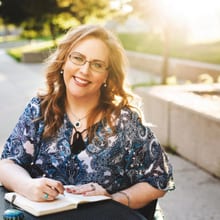
Learning to Spot the Signs of Ehlers-Danlos Syndromes with Guest Host, Kate Colbert
Description
In this special “EDS Awareness Month” episode of the Bendy Bodies Podcast, founder Dr. Linda Bluestein and guest host Kate Colbert discuss how everyone can learn to spot the signs of Ehlers-Danlos Syndromes.
Dr. Bluestein emphasizes the importance of EDS awareness, as many people are still not getting the evaluations and care they need. She also debunks several myths about EDS, including the misconception that EDS does not cause pain and that only geneticists can diagnose it. She emphasizes the importance of early intervention and appropriate treatment for better patient outcomes.
They cover the importance of understanding Mast Cell Activation Syndrome (MCAS), the challenges faced by individuals with EDS in their relationships, and how to communicate with romantic partners and family members.
Colbert and Dr. Bluestein also discuss the impact of EDS in the workplace and provide tips for employers and coworkers to support individuals with EDS. The conversation emphasizes the need for awareness, empathy, and support for individuals with EDS and other poorly recognized conditions.
Watch
Guests
Transcript
[00:37] Kate Colbert: Hello, every bendy body. It's Kate Colbert. I am your guest host today on the Bendy Bodies Podcast, and we're going to be putting Dr. Linda Bluestein in the hot seat of her own podcast, all in service of EDS Awareness Month. So for some of us, it's always EDS Awareness Month, right? But the calendar says it's officially EDS Awareness Month. So I think we should celebrate. Or actually, maybe we should get down to business and get to work spreading the word and educating other people and making some more light bulbs go off in the minds of patients, caregivers, teachers, daycare professionals, medical professionals, sports coaches, family members, all the people, significant others, co-workers, all the people who surround the EDS community.
[01:28] How do we help them be more aware of what EDS patients are coping with? So no matter who you are or where you are, you are literally surrounded by people with hypermobility conditions and you just might not know it. So I'm going to go ahead and start serving up some questions to Dr. Bluestein. Thank you first of all, Dr. Bluestein, for letting me guest host today.
[01:54] Dr. Linda Bluestein: I am so grateful.
[01:56] Kate Colbert: Isn't it nice not to have to host every now and then?
[01:59] Dr. Linda Bluestein: Yes, it's wonderful.
[02:01] Kate Colbert: Okay, so seeing that you, Dr. Linda Bluestein, the Hypermobility MD, are one of the world's leading authorities on the clinical management of hypermobility conditions like Ehlers-Danlos syndromes, I'd like to shine a light on you, to take that light that you typically graciously shine on the guests on your show and shine that back on you so that we can spotlight why EDS awareness is so important.
[02:36] Dr. Linda Bluestein: Welcome back, every bendy body. This is the Bendy Bodies Podcast, and I'm your host and founder, Dr. Linda Bluestein, the Hypermobility MD. This is going to be a great episode, so be sure to stick around until the very end so you don't miss any of our special hypermobility hacks. As always, this information is for educational purposes only and is not a substitute for personalized medical advice.
[02:59] Kate Colbert: So let's get started. Let's start with precisely that question. Why is EDS awareness important?
[03:07] Dr. Linda Bluestein: I think that with all the work that we have been doing, EDS is still horribly misunderstood. We still have a lot of work to do. We have made a lot of progress, but people are definitely not getting the evaluations that they need. They're not getting the care that they need. And sadly, medical trauma is still occurring. And we can do so much better. There are so many people in the world of healthcare who want to help, but they don't know what to look for and they don't know what to do. And in medical school, we're taught what to prescribe and what treatments to do and what tests to run. We're not told what to do when the tests come back unremarkable, and we're not told what to do when we don't have a clear-cut diagnosis. We're really not educated enough as to offering resources to people and doing something besides just referring them to someone else. Because a lot of people feel like, I just keep getting punted around like a football.
[04:11] So I think that with awareness, we can do such a better job of letting healthcare professionals know — and in this case, I'm going to specifically talk about physicians — that even if you don't know exactly what that person's diagnosis is, if you listen to them and if you believe them, you are doing something for them. I actually took a training course for this program called Rishi Healer's Art, and I was the course director for this course at the MCW medical school. And at that time I was between my anesthesia practice and this practice that I have now. And this is one of the things that I taught the medical students. But it's funny because I was teaching it because it was part of the curriculum for the Rishi program, not because it was something that I had really deeply understood and processed. And I now, after caring for people since 2017 who have EDS and related conditions, I now understand the incredible value in simply listening to someone and believing them.
[05:14] And I want to say to my physician colleagues: if you are in a position where you cannot believe your patients, then please think about what is going on that you are unable to do so. Are you overworked? Do you have too much going on in your personal life? Are you overly stressed, doing too much paperwork, whatever it might be — because people went into medicine to help people. They really did. And so if you're not able to do that critically important piece — which is listening to the patient and believing them — if you're not able to do that, then the best thing you can do is look at yourself and figure out: what do I need to change here? Is there something going on in my personal life that needs to be changed? Because you can really make a huge difference in so many people's lives.
[06:05] People with EDS, they know they're complicated. They know that it's not going to be a quick visit, but they just want somebody to care. They want someone to express that they care and that they are going to try to help with the tools that they have. So you don't have to become an EDS expert, but you have to have an open mind and an open heart.
[06:28] Kate Colbert: Wow, that is such great advice. I think about my own journey. I was diagnosed with EDS when I was 45, right? And there were just hundreds of opportunities throughout my life where my diagnosis was sort of being served up on a silver platter to doctors who didn't get the diagnosis. And with all due respect to them for their expertise, the problem was that they weren't listening. And so I think that's really great advice — and loving advice — to your colleagues, to say: you don't have to know everything. You don't have to be an expert in everything. But every now and then your patient is going to bring you some complex set of questions or symptoms or signs, and you don't have to have the answer.
[07:16] I mean, that's one of the things I wish I could say to doctors more often: I don't expect you to know the answer right now. I don't expect that there's this perfect formula where I walk in the door of a doctor's office and say I'm experiencing this, this, and this, and they can immediately jump to a diagnosis and a treatment. But what if we could jump to a conversation? What if we could jump to a listening, to your point?
[07:45] I heard Dr. Knight from the EDS clinic at Mayo Clinic talk at one of the — I think it was last year's Ehlers-Danlos Society conference — about how the best doctor is a doctor who is listening. And in my experience, some of the most helpful providers on my team are people with whom I was their first EDS patient. So they had zero expertise in EDS when they met me, and they learned along the way, and I did some of that teaching as a patient. But they were listening, and they said, I want to help.
[08:17] And sometimes a patient is not going to be — and I think this is maybe good advice for a doctor too — a lot of times patients are not going to be able to articulate that need clearly. They're not all going to come in and look you in the eyes and say, hey doc, I don't expect you to have all the answers, but are you willing to be my quarterback? Like, are you willing — especially if you're a primary care or a pain doctor — to say, are you willing to help me figure out where we throw the ball next? Do I need a different specialist? What sort of treatments should we be looking at? Are you willing to learn with me and to help me?
[08:52] And I think a lot of patients don't have the ability to articulate that during a 15-minute appointment. But if a provider could do that — if a doctor or a physical therapist could say, okay, let me be vulnerable. I don't have all the answers. I'm not an expert on what you're going through, but I think I can help. Let's figure out how I can do that. I think that's fantastic advice, so thank you for that.
[09:21] So let's talk about some of the other folks who might be listening, or who might have somebody forward this episode of Bendy Bodies to them, who may be surrounded by people big and small who have hypermobility conditions and they may not know it. I want to talk about that sort of delayed diagnosis — why people are making it to 18 years old, 35 years old, 50 years old, 70 years old. I know somebody who wasn't diagnosed till she was 72. How is it that folks are struggling with and suffering from EDS symptoms for even decades without getting diagnosed? And that's not all just on the doctors.
[10:07] Let's talk about teachers, daycare providers, nannies — those tireless, amazing professionals who spend time with small children, caring for them and providing early childhood education. If I work with children, what do I need to know about EDS? What do I need to be on the lookout for, and why?
[10:35] Dr. Linda Bluestein: So especially if you're working in a classroom setting, you can actually be a really helpful part of someone's diagnostic journey because you know what a lot of different kids of that same age group look like. So you can really say, compared to other children, this particular child is injured more frequently or sick more frequently, or has all these allergic-type phenomena. You can really think about how this child is different from other children.
[11:09] Because it is a common misconception that if you're not diagnosed in childhood, you must not have these conditions. But I think part of the reason why so many people are being diagnosed as adults now is because we didn't catch these things sooner. And of course, a lot of people think of the typical contortionist doing Cirque du Soleil, or the super bendy ballet dancer. We know that ballet dancers, circus performers, and a lot of different musicians have higher rates of joint hypermobility and especially generalized joint hypermobility. But just because someone is more bendy or less bendy does not necessarily mean that they do or don't have a connective tissue disorder. We haven't actually correlated that a higher Beighton score or a higher degree of generalized joint hypermobility means that you're more likely to have a connective tissue disorder. So we don't want to rule someone out just because they have maybe fewer and less extreme hypermobile joints.
[12:12] If you're a teacher or a nanny, first of all I should say that joint hypermobility is where joints have a greater than expected range of motion. Now, what's difficult for children is we have to have norms for age, sex, and actually by race and ethnicity. So it makes it very challenging to have these norms, because you can imagine how many different tables we would have to have. But that's where, if you're a teacher, you can say, gosh, I've seen this kid bend their elbows like 45 degrees backwards, and that's not normal — plus they get all these injuries. And also, joint instability is where joints have difficulty staying in proper alignment. So if you've seen a child dislocate their shoulder or dislocate their patella — which is their kneecap — or you've witnessed that they have difficulty controlling their bodies, or sometimes people call it difficulty organizing their bodies, or difficulty with proprioception, maybe they're more clumsy than other kids. These are the kinds of things that can suggest symptomatic joint hypermobility, or more specifically, maybe they have a connective tissue disorder.
[13:31] It's not up to you to diagnose it, by the way. We are not asking teachers and nannies to learn to make a diagnosis. What we are saying is you can help, because you are probably spending a lot of time with those children. If you're a nanny, you may be spending more time with those children than their parents are. So you're making these observations — you're seeing that, again, we get back to the mast cell stuff, they have a lot of allergic problems, tummy aches after they eat, various different symptoms. And one of my favorite lines is: if you can't connect the issues, think connective tissues. So if you're working with a child who has various different things going on and you're thinking to yourself, how could all of this possibly be related? — of course, maybe it isn't. But maybe it is. Maybe it's related because it all relates to connective tissue.
[14:33] And it's never too soon for people to start taking better care of their bodies and for parents to start getting information, especially if their child has EDS — Ehlers-Danlos syndrome — or HSD, hypermobility spectrum disorder, or some other condition that causes hypermobility. It is never too soon to get information and to start learning what you can do to optimize function.
[14:59] Kate Colbert: Gosh, this is great advice. And I had not thought about what you just said — that teachers, daycare providers, nannies, and folks who work with small children have context. They have exposure to a lot of children. So I might be a parent and I might have 2 or 3 or 4 or 5 kids, or maybe just 1. And so my sphere of recognition around what's quote-unquote normal for a 6-year-old or a 10-year-old or a 2-year-old might be limited to just my children, or just my children and the neighbor's kids. But when you're talking about a kindergarten teacher who has 30 kids this year and has had 30 kids every year for the last 30 years — and he or she knows a lot about what's normal — that is such a powerful thing you're talking about.
[15:50] What does that look like, and how could that change the trajectory of that young person's life? I often wonder how different my life would have been had I been diagnosed timely. What does it look like if a teacher takes that parent aside or mentions during a parent-teacher conference, "You know, hey, there are a couple things about Johnny that seem a little different than other kids. There's the degree to which he has a lot of food allergies and the tummy aches after lunch. I've noticed that when he plays on the equipment outside at recess, sometimes just the monkey bars are tearing the skin on his hands and he just seems a little delicate. And I do notice when he raises his hand to ask a question, his elbow goes backward. I think there may be something going on there. You may want to talk to his pediatrician." I think that's really, really great advice.
[16:48] Dr. Linda Bluestein: And I realized as you were talking that I forgot to mention a super, super important thing here. And that is neurodivergence. We know that neurodivergence and hypermobility are so incredibly highly correlated. We don't know cause and effect — correlation does not equal causation — so we don't know what causes what. But we do know that if you have joint hypermobility, you're much more likely to have a condition of neurodivergence, and vice versa. So when I say neurodivergence, I mean autism, ADHD, Tourette's — those kinds of things. So teachers are already taught to look for signs of autism or ADHD. This is just another layer: if you have a child with ADHD or autism especially, think, okay, have I noticed their arms bending backwards? Are they complaining of pain?
[17:48] By the way, I take a long history when I am first evaluating a patient, and it is so common that they will tell me they've had pain since they were 5 or 7 or whatever. So if you're working with children and one of them is complaining of pain — not just today, but like, a lot of days — that's really significant. Children should not be in pain all the time. So I should have mentioned that about the neurodivergence.
[18:15] Kate Colbert: That's a great point. An incredible point that it's not normal for children to be in pain all the time or most of the time. And I love the talk about neurodivergence. I hope that folks who are listening to this episode about EDS awareness — that this also makes its way maybe to some of those professionals who do evaluations at schools for neurodivergence, or folks who are responsible for developing IEPs, because of that interesting overlap. Those would be good people to have some new, high levels of awareness.
[18:49] You mentioned dancers, athletes, etc. So let's talk about athletics a little bit too. There are a lot of kids and young adults who really start to show signs of connective tissue disorders when they're busy playing soccer, or training as a dancer, or learning gymnastics, or running track and field. So what do coaches and athletic instructors need to know about EDS in a nutshell?
[19:26] Dr. Linda Bluestein: Similar kind of thing — comparing against other people. And if they're complaining of pain and injury, and this person seems to be injured a lot, and/or complaining that they're dizzy. You used a good word — fragile. I don't want people to necessarily feel like they're fragile, but yeah, oftentimes we are a lot more fragile than other people.
[19:50] I also really, really want coaches and artistic directors to know that just because a dancer is dancing does not mean that they are healthy. They will push through pain. They will push through orthostatic intolerance, or difficulty with upright posture. They're dizzy, they may or may not faint — they may just feel faint without actually fainting. People will push through an incredible amount of symptoms and keep going, going, going, until they just cannot anymore. So do not assume that if someone is dancing or doing whatever their sport might be that they're fine, because they might not be.
[20:39] Also, just know a few resources so that you can point people in the direction of help, and mention to the parents, mention to the athlete or the dancer, "I heard about this thing called joint hypermobility — it's where joints have greater than expected range of motion, or you appear overly flexible." Flexibility and hypermobility are different things. But just make them aware of it and say, "Hey, do you want me to check out this podcast, for example?" And just listen and see if it resonates with you, or if you think any of these things might be the right fit, and then go see a sports medicine doctor or a dance medicine physician.
[21:24] In the dance world, unfortunately, dancers tend to go to their teachers first, and then maybe they'll go to a physical therapist, but they do not want to go to the doctor because they're afraid the doctor's going to tell them to stop dancing.
[21:38] Kate Colbert: Wow.
[21:38] Dr. Linda Bluestein: But if you go to a dance medicine physician — and there are great resources for this, including IADMS, it's IADMS.org, the International Association of Dance Medicine and Science, of which I'm a member — they have listings for dance medicine professionals. So you can find one in your area, or hopefully not too far away. And they are usually former dancers. They're not going to tell you just to stop dancing. They're going to explain to you what they think might be going on and how you can potentially do things differently.
[22:08] So have resources, be looking out for these things, be aware, know your students, your athletes, and your dancers so that you can pick up on potential problems and have them addressed sooner rather than later.
[22:24] Kate Colbert: Wow, great advice. And I love that hint about paying attention to when they let their guard down. Whether you're a football player or a dancer, you might be able to perform on the stage or on the field, but what happens when they step off? Like when they're offstage, so to speak, or off the field — do you have a dancer who can perform in their recital, and the second he or she steps off the stage, they're grabbing for their belly, they're nauseated, they're grabbing for a wall, they're sick, they're going red, they're asking for water after a 6-minute number? What have they pushed themselves through, and where are they starting to fall apart afterward? And is that an indicator that something's going on, that they are — like you said — pushing through because they love their sport and they don't want to disappoint their coach or their instructor or their teammates?
[23:24] So we talked at the beginning of this conversation about why EDS awareness is important, and you talked about health professionals. I want to circle back to that for a second. This could be an entire podcast series on its own, and it probably should be, but let's just touch on that because I want to make sure I didn't miss anything you wanted to share. Let's talk just briefly again about your colleagues in the healthcare industry. You've talked about some of the more obvious symptoms — joints that go beyond expected range of motion, those types of things. What are some other things that you think every healthcare professional should know? In terms of trying to spot a zebra in the field — how do you spot somebody with a hypermobility condition? Are there 3 or 4 or 5 things that they should have in the back of their mind? Like, if I see these things, something might be going on?
[24:17] Dr. Linda Bluestein: Well, I have a list of more than 3 or 4 or 5 things. I like to play with numbers and letters, and so I came up with this 3x3. Three times three is nine. So I have 3 about pain, 3 about treatment, and 9 about diagnosis myths. Because I think one of the biggest problems is that people either don't know anything — which is almost easier — versus when they think they know. It's worse when they think they know, because that's where the problems really come in. So we're going to approach this from the standpoint of myths.
[24:55] The first 3 myths have to do with pain. Number 1: the myth that EDS and HSD don't cause pain. Of course, that could not be further from the truth. So if you have a patient who has persistent pain, especially persistent widespread pain, please think about joint hypermobility. Could this explain this person's symptoms? Because the second myth is that pain relief is not possible. And pain relief is often possible. We want to separate pain relief and function, because sometimes we can get their pain improved a lot but they still have a lot of functional problems, and vice versa. But pain relief is possible. And number 3: that pain care means opioids or nothing. I think a lot of people think they can either prescribe opioids or they can't do anything at all, but there are lots of other things that we can do.
[25:57] In terms of diagnosis, I have 9 things — and these are myths again. Number 1: that symptoms are limited to the musculoskeletal system. No. Connective tissue is all throughout the body. So anywhere that you have connective tissue — in the gastrointestinal tract, in the oropharynx, in the blood vessels, in the heart, everywhere, inside our cranium, in the neck — we can have symptoms. People sometimes think that you can have joint subluxations or dislocations in other parts of the body but the neck would be exempt. No. We have connective tissue everywhere, so we can have symptoms everywhere.
The second diagnosis myth is that only geneticists can diagnose EDS and HSD. Other doctors can diagnose EDS and HSD. It does require training and it does take time, but any doctor can diagnose any condition. I'm not going to go trying to diagnose ophthalmologic conditions because those are highly specialized. But if you're a family medicine doctor, you can learn to diagnose EDS and HSD. And this is important because if you're having symptomatic joint hypermobility, it is really, really hard — if not impossible — to get in to see a geneticist unless they suspect, or you strongly convince them, that you might have vascular EDS. Otherwise, getting into a geneticist is almost impossible.
[27:29] The third myth: that everyone with hypermobile EDS looks the same. Because right now we are diagnosing hypermobile EDS based on the 2017 International Consortium criteria, there's a lot of things left out of that. We're lumping a lot of people into the same bucket who I'm sure do not have the same underlying genetics. We're going to have much more uniformity among people with vascular EDS or classical EDS because they have clear-cut diagnostic mutations we're looking for. Hypermobile EDS is a clinical diagnosis, so we're going to have people who look different. Just because they look different doesn't mean they don't have it.
[28:14] Number 4: that everyone with EDS has a Marfanoid body type — that they're thin and tall. Yes, some people do, but not everybody. If someone doesn't have a Marfanoid body type, it does not mean that they don't have EDS.
[28:30] Number 5: we already talked about this — that dancers and other athletes cannot have EDS and still dance or do their sport. They can.
[28:36] Number 6: that EDS and HSD are rare. We know HSD is incredibly common. We don't have good statistics because that only came out as a diagnosis in 2017. But if we had some good prevalence studies, I bet it would be very, very common. The other forms of EDS are quite rare except for the hypermobile type, which again we think could be like 1 in 500 people. But we don't really know good numbers on that either.
[29:04] Number 7: that EDS is an autoimmune disorder. It is not. That seems to be a common myth.
[29:10] Number 8: that HSD is less serious than EDS. It is not. People with both EDS and HSD can have symptoms that impact every single aspect of their life.
[29:25] Number 9: that if EDS does not present in childhood, you can't have it. It can present in adulthood, or at least become more significant in adulthood.
[29:36] And the 3 myths about treatment: number 1, that there are no treatment options available for symptomatic joint hypermobility besides physical therapy; number 2, that symptoms are always progressive; and number 3, that your doctor must be an EDS expert in order to be helpful. That's right — 3 times 3 is 9.
[29:57] Kate Colbert: I think you just outlined your book, by the way, when you're ready to write it. That's fantastic. And what I love about talking about myths is that we can't — as a community, especially healthcare providers — appropriately shepherd people towards understanding about their health, diagnosis, appropriate treatment, support, and adaptations to improve their life if we're stuck behind those myths, right? If doctors are stuck believing these myths, they will perpetuate those myths to the patients, and vice versa. I'm sure there are plenty of patients who believe some of those myths that you just outlined, or parents or teachers or any of the stakeholders we're talking about today — caregivers — who believe some of those myths and say, "It can't be EDS because..." And if they're wrong, then the patient ultimately suffers. Delayed and misdiagnosis is really the root of a whole lot of suffering. So I think that's fantastic, thank you.
[31:07] Let's talk quickly about a couple of other stakeholder groups before we wrap up. Let's talk about parents. I think some of this aligns with what you were talking about with childcare providers and teachers. Anything else we haven't covered that you think parents should be on the lookout for? How do I know if my child might have a hypermobility condition, and when should I take them to a doctor — or a dozen doctors until I find one who isn't stuck believing all those myths?
[31:40] Dr. Linda Bluestein: So I would say persistent pain is one of the biggest things to be looking for. If your child is having traveling-type pains — one week it's an elbow, next week it's a knee — if it's the same area, there could be something focal going on. And if you have any doubt, definitely take them in and get it checked out. Maybe you're thinking, okay, they have a regular routine checkup in a month, so I'll just ask about it then. You can do that, but please say to the pediatrician or your family medicine physician: do you have time to assess this now, or should I come back for a separate visit? Because you don't want them glossing over it and not giving that issue the time and attention it needs. Make it clear to them that this is important enough to you that you're willing to bring your child back — you're not just trying to pile on more things for them to look at during that visit, because they're busy going from room to room and trying to deal with sick kids who have been added on that day.
[32:47] So if there's persistent pain, that's really, really important. And addressing pain early on is so important. Kids can be taught age-appropriate information about pain. They may need to see a rheumatologist and have a rheumatologic condition ruled out — maybe they have juvenile rheumatoid arthritis, or lupus or something. And please, I really also want to stress: do not assume that because a lot of these things sound like they fit, don't assume that it's EDS. Because we also don't want to settle on a diagnosis too soon and go in with confirmation bias. We want to have the proper evaluation to rule other things out because the treatment might be completely different.
[33:38] If your child has other things going on — headaches, allergic-type symptoms, gastrointestinal problems are really a big one. Whether it's difficulty swallowing, heartburn, fullness easily while eating, abdominal pain, bloating, constipation, diarrhea — if they're having gastrointestinal complaints, that's definitely a big one. And dizziness, as I mentioned earlier.
[34:07] And we with EDS are canaries in the coal mine. We are sensitive to things. So if your child goes with you to Target — not to blame Target, it's not specific to Target — but if your child goes down the aisle with all of the perfumed laundry detergents and starts sneezing and doesn't feel well, or complains of a headache, chemical intolerance is definitely something that can be one of the first signs that something might be going on. Does my child have more sensitive mast cells, which are part of the immune system? They're white blood cells that are a very, very essential part of life, and they are wherever we interface with the environment — on the skin, in the lungs, the vagina, the nose, inside the ears, etc.
[35:03] So if your child is having environmental sensitivities, that's another thing to be aware of and to get evaluated. Unfortunately, a lot of allergy and immunology doctors are not very aware of — and/or don't believe in — mast cell activation syndrome. They feel like you must have an elevated tryptase, which is a very highly specific mast cell mediator. And if you don't have an elevated tryptase, they don't want to see you or even consider mast cell activation syndrome as a possible diagnosis. It's hard, though, because tryptase is very thermolabile, so it is very, very hard to get a positive or elevated tryptase on lab testing. We know there are other things we can assess for that, and we know it's important because these conditions occur together so often.
[35:59] Kate Colbert: Wow, this is great advice. Let's talk about — so sort of moving forward from talking about children and young adults to talking about those of us who are a little older than that. One of the things I hear a lot — and it's a sad thing — I do a lot of coaching and advocating for EDS patients through my work as the executive director and founder of EDS Guardians. And one of the things I hear a lot is that people say their own spouses or partners or other members of their immediate family just don't get it. They don't understand the nuances of their complex illness, and that's causing emotional hardship and sometimes physical hardship, right? So if you need somebody to help you with tasks around the house, or to bring you medicine, or take you to a doctor's appointment, or to pay for a mobility aid that you might need, and they think, "You're just being a baby about it" — they don't get it. That can be devastating to somebody who has a complex illness.
[37:07] And a lot of people don't understand dynamic disability, right? They say, "Well, I don't understand — Kate was perfectly fine on Tuesday when I saw her and we went out to dinner. She seemed okay. On Wednesday, her face kept turning red and she was wearing a neck brace. And on Thursday, she asked her brother to push her in a transport chair so she could go to that football game to see her niece and nephew because her knee wasn't working right." I don't understand — is something different every day. Like, are you sick or are you better? And people don't understand what dynamic disability is.
[37:49] So what advice would you have for romantic partners or other family members for how they can best learn about EDS, or how they can be a really great caregiver or supporter to the person in their family who has EDS or a related condition?
[38:07] Dr. Linda Bluestein: It's really, really hard. It's really hard to live in an EDS body. And it is really, really hard to understand what living in an EDS body is like if you don't have one. Just like if you have an EDS body, it's kind of hard to imagine what life would be like in a non-EDS body. I think for people who don't have EDS or HSD, it's really, really hard for them to understand. So if you can put things in terms that help them relate.
[38:42] If you could say something like, "Remember when you had the flu 6 months ago and everything in your body hurt and you felt miserable for 3 days, and then you felt icky for another 5, and then you were fine? I can't live in your body, but that — to me — is what my body feels like 3 out of 7 days." Or whatever it might be. Try to put it into terms they can relate to. "Remember when you had your injured shoulder and you couldn't exercise, and how miserable you felt, and how difficult it was to sleep because you couldn't roll over onto that shoulder?" If you can figure out ways to put it in terms they can understand, I think it can help them relate to you better.
[39:49] And you want to get on the same team, which is hard. In every relationship, each person has their own needs, and our needs are often in conflict with each other. And like you said, it's really hard to understand dynamic disability for most people unless you have one — and then you totally get it. But otherwise, it's really, really challenging when someone's needs vary so much from one day to the next.
[40:16] So I think discussing what your needs are and how you can meet each other's needs in a way that's feasible — if you're partners, showing compassion and kindness to each other, and knowing that you're going to make mistakes. Say you get frustrated with the other person and you say something that's not kind. Apologize, the next day or whenever you can. Don't be too proud to apologize and say, "I'm sorry I wasn't there for you. I'm sorry I wasn't more supportive. It's hard for me to understand what you're going through and it impacts me in this way."
[41:02] And I think using the mirroring-type language can be helpful. If I say to you, "Kate, I am experiencing this pain in my head, and the way you ignored me the other day and walked away from me made me feel like you didn't care," it would be helpful if you said to me, "So what I'm hearing you say is that you were having a really bad headache, and when I walked away from you, that made you feel like I didn't care." That kind of mirroring can be helpful.
[41:36] And I recently learned a technique — it's a talking boundary, and it's a 3-part thing. The first part is you say something factual: "When you walked away" — if that's factually true. The second part is: "What I made up in my head about that is that you didn't care about me." And the third part is what you felt about that — and you're supposed to name one of about 8 primary emotions, like fear or anger. Anyway, learning how to communicate in a way that involves less blaming — "When you do blank, I feel blank" — use "I" language. Say, "I feel this when you do that." Try to say it in a way that is less attacking.
[42:47] Think of things you could do for each other that make you feel valued and cared for. Even though the person who has the health problems is probably going to be able to do less, having those lines of communication open is very helpful.
[43:06] Kate Colbert: Wow, this is really great advice. And I do think sometimes caregivers require more care too, right? Being the sick person in my family, I get a lot of the attention. All of our money goes towards my medical care and all that kind of stuff. So I think it's important that we take the time to think about our caregivers and our loved ones. And I don't think we should be putting it all on the sick patient, but is there something we can do to help them understand?
[43:39] And for all of the family members who are listening to this conversation right now — what can they be doing to ask questions? And by the way, as patients, we welcome your questions. I love it when my husband says, "So what does it feel like when...?" or "What is it like when you dislocate an ankle? I hear you yelp in pain and you hop and then you snap it back in and then you just kind of take a couple of stumbles and carry on. What does that feel like?"
[44:11] My husband sometimes struggles to know, like, should he proactively plate my dinner and bring it to me, or am I feeling up for that? And we had an interesting conversation just the other day. I said to him — I think it was important that he heard me say this — I said, "I hope you know that when I am able to do more things for myself, I will. And when I'm feeling good, I'm going to try to give you a break from having to caregive for me. And I want to be able to do things for you — I like being able to go get you a glass of water when I feel like it. But I hope you understand that when I'm kind of all propped up on the couch pillows for my craniocervical instability and all the things that are causing problems, that is me trying to provide self-care, and that's never laziness. When I have the energy and the ability to do things, I am always going to do them. So please know that if you see me deferring to you, it's because I need to."
[45:14] I think these conversations are really, really important. I love the analogy around — do you remember what it feels like when you have the flu? I use an analogy a lot when I talk to people, especially colleagues or people who just don't know a whole lot about my health but sometimes need to. I try to explain that it's not just about joint dislocations. I'm a pretty frequent subluxer and dislocator, so 5, 6, 8, 10 dislocations a day is not really abnormal for me. And so I try to ask people: have you ever been in a car accident? Maybe just a fender bender. Or, you know, your neck was really sore for a few days afterward, you maybe had some bruises, or you fell off your bike. The adrenaline made you feel sort of okay on day 1, and then on day 2 you woke up and you were limping and stiff and your pelvis didn't move the way it should and all hell felt like it was breaking loose in every part of your body.
[46:15] I tell people that having EDS — for some of us who have been in a body like this for a long time, who injure daily — is like being on day 2 of a car accident every day of our lives. And when I explain it to people that way, I can see the light bulb go off, because people know what that kind of discomfort feels like — that it's maybe not acute pain, it's this sort of multi-systemic misery that you have to try to figure out how to push through. And most people on day 2 of a car accident call in sick to work and crawl into bed and Netflix and chill all day and take a bunch of Tylenol and eat comfort food and stay in their pajamas. So for people to understand what it might look like for your loved one to be feeling like that — like you said, 3 out of 7 days, or every day, or a few days a month, or whatever their situation is — and yet we expect them to show up to work, to show up to the family picnic, to help make dinner, all those things. The day 2 of a car accident analogy seems to help people understand.
[47:27] So my last question for you is about coworkers. People with EDS and related conditions — just like anybody else — we're everywhere when it comes to the world of work and careers. And there are a lot of us who have full-time jobs or part-time jobs or are college students or running our own businesses. Many of us have workplace colleagues — co-workers, clients, bosses, etc. And a lot of people don't want to sort of come out as chronically ill at work, right? It took me a long time, and actually it took me really until I was my own boss — where nobody could fire me — that I felt really comfortable. And I'm still uncomfortable. I rarely wear a neck brace in front of a client, even though I really should, to protect my brainstem given my CCI.
[48:28] What should we tell people they should be aware of, no matter where they work? Let's just assume we know it — somebody on your team has told you they have EDS, HSD, Marfan, some sort of connective tissue disorder or hypermobility condition. We don't need to become an expert in it, but we have this employee or colleague who has shared they have this condition. What should co-workers or employers be aware of when it comes to EDS? And I'm not specifically talking about the HR side of FMLA, but if I have an employee, are there certain types of grace I should maybe give them, or understanding, or patience? What should I know about my employee who has EDS?
[49:32] Dr. Linda Bluestein: That's a really good question. I think checking in with them — especially if they seem a little off — because sometimes something as simple as taking a break and getting extra hydration can be really helpful.
[49:48] I really like your analogy about day 2 of a car accident. And you're right, I probably shouldn't have said 3 out of 7 days, because for most people it's probably closer to 6.5 out of 7. Like, for half a day, maybe I feel pretty good. And people with EDS and HSD — and Marfan's — are like the strongest people. It is amazing to me the things that people manage to push through. It's just mind-boggling.
[50:21] There was an article written by — I think it was Claire Francomano and also Colin Halverson — and we talked about it on the podcast when I interviewed him. There was the clinician traumatization article, but then there was the article about a hero's journey — the diagnostic odyssey as a hero's journey. I don't remember the exact title, but we'll link it in the show notes. It is so, so true. I really believe that people with EDS and HSD are heroes. They really are. They are so strong — their tissues are weak, but their spirits are strong. And they are so inspirational. The way they keep going despite having so many problems, like multiple dislocations in a day. It's amazing.
[51:11] So checking in with a coworker and showing that you care, even simply by asking: "How are you really?" — adding that word "really" at the end can make a huge difference. Or just saying, "I just wanted to let you know I was thinking about you today." It can be really, really simple. And if they want to talk, great. If not, that's okay.
[51:42] Offering a little bit more grace in terms of special concessions — I remember when one of my children was starting college and needed extra permission to bring a water bottle. With POTS, you have to be able to do that. So just realizing that sometimes small things like that can make a big difference. And it's important for people to be able to give back to society, and we can only do that when we have workplaces that are more accommodating.
[52:21] And again, lines of communication — we don't ask early enough, and we don't ask for these things early enough. People are not going to ask for things unless they really, really need it, because people don't like to ask for help.
[52:34] Kate Colbert: They really don't. That's great advice. And if anybody is listening on a favorite podcast player and is not on YouTube — if you would like to see me cry, this is your time to go over to YouTube. Because that's emotional for me to hear you say that, Doc — to acknowledge how hard it is to have this condition and to continue to push through it.
[53:03] One of my favorite phrases — and I think this is something to know if you work with somebody who has EDS or a related condition — is that they are sicker than they look, and stronger than they feel. And you know, it's no secret, probably among people who sort of know me through you or know you through me, that I'm one of your patients. And at our very first appointment, you put in my after-visit summary: "You are capable of difficult things." And I will never forget that. I remember going on a hiking adventure by myself on what's called the cordwalk — this sort of floating walkway over some sand dunes along Lake Michigan in Sheboygan, Wisconsin — in very cold weather, by myself. It was very difficult, and I was so proud of myself. And I made a live video while I was there for you, and I barely knew you. You were this brand new doctor I had just started consulting with. And I remember thinking that had you not said that to me, I would not have believed I could have done that. So that is important.
[54:18] I would also say to folks — I just went on a campus tour at a university, and the tour guide was young and clearly quite healthy, or appeared to be at least. And she never thought — and I gave her this feedback afterward — she never thought to say, "I'm going to go ahead and go up this spiral staircase, and if you want to follow me, go ahead. Anybody who'd like to take the elevator, there's one right around the corner and we'll wait for you at the top." There was never a mention of where the elevator or the ramp was. So for those of us who needed an elevator, we were fumbling to try to find one, or struggling our way up and down the stairs, always at the back of the pack on the tour.
[55:02] And that happens in workplaces a lot too. For people who are showing up to physical workspaces with lots of stairs, or who are being scheduled for appointments across a corporate campus where people expect you to get from point A to point B in 5 minutes — maybe that's reasonable for a really healthy person, but it may not be for your colleague who has EDS. So really understanding that their condition says nothing about their competence, their character, their commitment, or their capability to do their job — but it does sometimes say something about the way they need to show up to work, or the way they do their work, or the accommodations they need.
[55:51] I appreciate that. I love this conversation. I'm so glad that we did this. I'm so glad that EDS Awareness Month gave us an excuse to talk about how we can increase awareness across all these important stakeholder groups beyond patients and doctors. I think this conversation is a really great start to bring in more people in the EDS community and to support patients through these medical odysseys. I love the word odyssey, because sometimes a journey sounds like fun — like you're on an adventure, you're going on a vacation. This is really more like an odyssey.
[56:32] And I do think that awareness is vital, because awareness precedes empathy and support. I cannot help somebody who has EDS if I don't understand what EDS is, or I've never even heard of it, or I don't know how to spell it. And as we have more empathy and support for people with EDS and related conditions, we can create better partnerships towards supporting them through their treatments and their interventions.
[57:01] So I'm really hopeful that everybody who's listened to this episode will go grab a link at bendybodiespodcast.com and send it to someone in your life who needs to hear it. Maybe it's a second grade teacher, maybe it's a coach, maybe it's a manager at a workplace. Think about the people we talked about in this conversation — who needs to know about this? And how can we come together and dazzle, as we say in the zebra community, and spread awareness about EDS and related conditions. Please, please, please send this to folks.
[57:37] As Dr. Bluestein said a little while ago, it is believed that the prevalence of hypermobile EDS is actually quite common — maybe as much as 1 in 500 — which means that in the United States alone there are hundreds of thousands, if not millions, of people who are struggling with EDS and other heritable connective tissue disorders every day. And so we cannot do this alone. People who are struggling with EDS cannot make the world a better place and cannot be supported in the way that they need all by themselves. We need all of you, which is why we need you to be aware. Thank you so much. Thank you, Dr. Bluestein, for letting me come sit in your seat for a moment to guest host your show. It's really an honor. Everyone, by spreading awareness, we can spread better health. Happy EDS Awareness Month.
[58:28] Dr. Linda Bluestein: I do want to say one other thing before we wrap up. And that is that this also helps other people with other poorly recognized conditions. So whether it's EDS or something else, there's a lot of similarities. There's a lot of overlap. Don't worry about whether this is as relevant to their particular situation or family situation — I really think that learning how to communicate and a lot of these other things are just beneficial for everyone.
And Kate, I am so incredibly grateful to you for giving me this opportunity to share some of the things I want people to know about for EDS Awareness Month. But I want to ask you a question before we wrap up. It wouldn't really be a Bendy Bodies episode if we didn't have at least one hypermobility hack — and I know people are always hanging on for that hypermobility hack. So I want to ask you if you could share one of your favorite hypermobility hacks.
[59:34] Kate Colbert: You're right, it would not be a Bendy Bodies episode without a hypermobility hack, so I'm glad we remembered. One of my favorite hacks is what I call the cheater drawer in the kitchen. A lot of folks with EDS struggle when we're reaching up into the upper cabinets to grab a plate — sometimes that's causing us to go up on our toes, for people like me who aren't super tall, or we're pulling our shoulders out, causing thoracic outlet injuries, all kinds of things that can happen when you stretch your arm too far out of that shoulder socket. I'm one of those patients whose humeral heads are almost always out of the sockets, and I have them put back in by my PT every week, which is life-changing. I feel like a different person when my arms go back into the sockets.
[1:00:23] So we created what we call the cheater drawer at our house. Here's how it works. You find a drawer in your kitchen right below the counter level — right there at waist level — and you empty it out. Maybe you have a junk drawer that you could just clean out and repurpose. Line it with towels, and then go ahead and fill it with one of everything that you might need on a bad day when you can't bend down to get into the low cabinets and you can't reach up into the high cabinets. That drawer should have one big plate, one little plate, one cereal bowl, one little bowl, a small drink glass, a coffee mug, a big drink glass — all the things that are normally in high or low cabinets. So if you have a set of 12 glasses, one of them should be in your cheater drawer. And every time you do dishes, you should be making sure the cheater drawer is filled back up and fully stocked.
[1:01:17] The cheater drawer is something we put together in our house when I had a thoracic outlet injury and could not reach into the upper cabinets. I don't need it every day and I don't need it every month, but we will never retire the cheater drawer, because you never know when you might need it and you don't want to be rearranging your kitchen when you are acutely injured. So you want to have that cheater drawer ready. That has been life-changing for me.
[1:01:45] Other things you can do: 3M hooks to put things closer. If your towel bar outside your shower is a little far to reach when you're wet, get a 3M hook and put it right next to the shower so you have a towel hanging right there. Or a jacket hook right next to my desk so if I'm cold I can grab my sweater right there — I don't have to get up and go look for one. So put success in your way. Put things closer to you and have them surrounding you — your neck brace right on your desk, whatever else. But the cheater drawer is a good theme to get you started on how to move the things you need for activities of daily living closer to you, so you can be more independent without having to ask for so much help. That's been really helpful for me.
[1:02:32] Dr. Linda Bluestein: I love that. And that's something I should have thought about earlier when we were talking about caregivers, because being solution-focused — and co-workers too — it demonstrates that you're not trying to be a burden. You're trying to come up with a solution. So working together to come up with a solution is such a fabulous thing to do. I love the cheater drawer. That's brilliant. Thank you for sharing that.
[1:03:03] Kate Colbert: Hacking your way through hypermobility.
[1:03:04] Dr. Linda Bluestein: Sometimes that's all we can do. Exactly. All right. Well, thank you so much, Kate. This was super fun, and I really appreciate you being the guest host. It was fun to sit in the other chair for once. This was the Bendy Bodies with the Hypermobility MD podcast. You've been listening to Kate Colbert interviewing me, Dr. Linda Bluestein. Thank you so much for joining us, and we'll see you next time.
[1:03:29] Thank you for listening to this week's episode of the Bendy Bodies with the Hypermobility MD podcast. Visit our new website at bendybodiespodcast.com where you can now view guest profiles and show notes with links to products and journal articles. Leave me a comment, sign up for updates, leave a review or a voicemail, and access the podcast on your favorite player, all directly from our website. You may hear your voicemail in a future episode where we answer your question or dive into your gracious feedback. Follow us on Instagram at bendy_buddies. We love seeing your posts and stories, so be a buddy and engage our community by using the hashtag bendy buddy — that's hashtag B-E-N-D-Y B-U-D-D-Y. You can also find me, Dr. Linda Bluestein, on Instagram, Facebook, Twitter, or LinkedIn at hypermobilitymd. Visit hypermobilitymd.com for information about medical services and one-on-one coaching.
[1:04:27] This podcast is for general informational purposes only and does not constitute the practice of medicine or other professional healthcare services, including the giving of medical advice. No doctor-patient relationship is formed. Do not disregard or delay obtaining medical advice for any medical condition you have. Opinions shared are those of the guest and do not necessarily represent the views of the host or any particular organization. Sponsorship of the podcast does not necessarily mean an endorsement. Thank you for being a part of our community, and we'll catch you next time on the Bendy Bodies Podcast.