Description
In this eye-opening episode, Dr. Linda Bluestein speaks with Dr. Alexis Cutchins, a cardiologist passionate about uncovering missed and misunderstood diagnoses. One of those? Pelvic Venous Disease, a condition affecting countless patients but rarely identified. They explore how PVD can mimic or exacerbate conditions like dysautonomia, MCAS, and chronic pelvic pain and how many patients are left cycling through specialists without answers. From diagnostic challenges to emerging treatments, this episode will change the way you think about pelvic pain and complex multisystem illness.
Watch
Guests
Transcript
[01:00] Dr. Linda Bluestein: Welcome back, every bendy body, to the Bendy Bodies Podcast. I'm your host, Dr. Linda Bluestein, a Mayo Clinic-trained expert in Ehlers-Danlos syndromes, dedicated to helping you navigate joint hypermobility and live your best life. I am so excited to speak with Dr. Alexis Cutchins today. We are going to be talking about POTS, dysautonomia, and pelvic venous disease. This is such an important conversation because POTS is something that we see quite commonly in people who have EDS and HSD, and oftentimes treatment of these conditions can be quite challenging. So taking a deep dive into pelvic venous disease and what symptoms we should be looking for, what tests we should order, and what kind of outcomes we might expect from interventions, I think, is going to be a really important conversation.
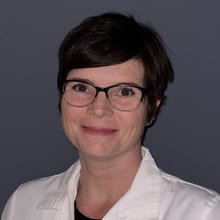
Dr. Cutchins is a board-certified cardiologist and global leader in the care of complex chronic illnesses, including POTS, mast cell activation syndrome, dysautonomia, and long COVID. After 13 years on faculty at Emory University, she founded Cutchins Cardiovascular Medicine in New York City, where she brings her expertise and passion for patients with underdiagnosed conditions. Recognized internationally for both her clinical care and her groundbreaking research linking pelvic venous disease to orthostatic intolerance, Dr. Cutchins also serves on the boards of ISMCAS, Standing Up to POTS, and SAFIRE.
[02:32] As always, this information is for educational purposes only and is not a substitute for personalized medical advice. Stick around until the very end so you don't miss any of our special hypermobility hacks. Here we go.
[02:46] I am so excited to chat with you, Dr. Cutchins. Thank you so much for joining me today on Bendy Bodies.
[02:53] Dr. Alexis Cutchins: Thanks for having me. I'm super excited to be here.
[02:56] Dr. Linda Bluestein: Oh, great. So today we're going to talk about POTS, postural orthostatic tachycardia syndrome, and dysautonomia in general, but we're really going to focus on venous disease because I know that that is an area of subspecialty for you, and it's something that I think a lot of people are not very aware of. So can you explain briefly, for an overview, the connection between pelvic veins and POTS — how you would explain that to a patient?
[03:23] Dr. Alexis Cutchins: Yeah. So we all know that POTS results from a venous pooling in the lower half of the body. You get dilation of blood vessels in the abdomen, the pelvis, and the lower extremities. For a long time that was always thought to be an autonomic dysfunction-mediated process where there was an abnormality that caused those veins to dilate in an abnormal way, which I think is very real and there.
[03:50] But over the course of taking care of patients with POTS, I was noticing that they all had symptoms of leg pain, pelvic pain, and other things that were not quite connecting all the dots for me. The first patient I looked for venous disease in was a 24-year-old woman who was quite well compensated except she could only eat 4 foods, she didn't want to take any medicines because they all gave her psychiatric side effects. But her compression socks stopped working one day. So we looked for venous insufficiency and she had bad lower extremity venous insufficiency and we fixed it. I called her up because she hadn't come in for follow-up and she said, "Oh, I don't need to come back. I'm totally fine. I don't have POTS anymore." And that's when I started thinking, hmm, maybe there's something to this — maybe it's not just the autonomic dysfunction, but there's something else going on in these veins that's causing extra pooling.
[04:50] So over time I started looking for this in patients and it became clear that there was that connection. And then I started learning about pelvic venous disease, started asking questions about that and looking for that, and sure enough, it's there too.
[05:03] When you have pelvic venous disease and you have obstruction of blood flow in the veins of the pelvis, there's less blood returning to the heart. There's more blood pooling in the pelvis and the lower extremities. When less blood returns to the heart, less blood pumps out of the heart. When you have less blood pumping out of the heart, you have less blood going to your brain. And so ultimately that results in chronic fatigue and brain fog and POTS symptoms — high heart rate when you stand, lack of adequate compensation with position change and exercise, et cetera.
[05:32] Dr. Linda Bluestein: And can the venous disease be either within the pelvis or in the lower extremities?
[05:39] Dr. Alexis Cutchins: Yeah, usually there's both.
[05:41] Dr. Linda Bluestein: Okay. And what 3 signs would you say are most specific for you suspecting pelvic venous disease in somebody labeled with POTS?
[05:50] Dr. Alexis Cutchins: As a cardiologist, patients come to me because they feel like they have POTS or they've been diagnosed with POTS. So I ask them questions like, do you have pain in your pelvis? All of them do. The most important thing is, does it get worse over time if you're sitting for a prolonged period of time or standing for a prolonged period of time? And if it does, that means there's worsening pain with pooling. So that's one major red flag.
[06:18] The other major red flag is low back pain in the same circumstances. Both of these should resolve lying flat when the blood redistributes. Another symptom that I see that's pretty classic is leg discomfort. You don't have to necessarily have swelling, but any kind of tingling or paresthesias, pain, or tightness is a red flag to me that there's some venous pooling going on in the lower extremities as well.
[06:47] Dr. Linda Bluestein: That's great. And what about listeners who are thinking, gosh, I think I might have some orthostatic intolerance? I don't know if it meets the criteria for POTS or not. Are there things that they can do at home to gauge their orthostatic intolerance, like a 5 to 10 minute active stand test? And if they do that, what numbers should make them bring this up to their doctor? And I guess the last part of that would be, how do you suggest they bring this up to their doctor? Because we know that that's a big part of the problem.
[07:16] Dr. Alexis Cutchins: Such a hard thing to do in this day and age, unfortunately. Yes. So I recommend the NASA Lean test, which is a 10-minute passive standing test. What I tell patients to do is lie flat for 5 minutes and then take your blood pressure — record that blood pressure twice, record the heart rate twice — and then stand up about 6 inches away from the wall with the top of your shoulders leaning up against the wall and stay there for 10 minutes. During those 10 minutes, record your blood pressure and your heart rate about every minute. At the end of the 10 minutes, you can stop the test.
[07:50] What we're looking for with POTS is a basically stable blood pressure — maybe it'll move a little bit, but it shouldn't drop substantially — and a heart rate rise that's greater than 30 beats per minute in adults and greater than 40 beats per minute in anyone under the age of 18. If that happens and is sustained — it doesn't have to happen right away, it could happen at minute 3 or 5 — then that's what's going to give us the diagnosis of POTS. And I use that as my criteria for diagnosis.
[08:19] I don't often recommend a tilt table test because they really disrupt function in my patients. My patients have a lot of flares and symptoms after tilt table tests, so I try to avoid those.
[08:36] When you have that information in hand, what I would do is repeat it another couple of times so you have data to bring into your doctor. Then I would approach a primary care physician and say, look, I have these symptoms. I feel really dizzy when I stand. I don't think it's normal. Sometimes I even pass out or I feel like I'm about to pass out or my vision goes gray. And I did this test I heard about from a cardiologist on a podcast, and it looks like I meet the criteria for POTS. More and more people are understanding what POTS is, and it's not as uncommon for primary care physicians or even other practitioners to recognize that that might actually be a thing for a patient. So that's what I would recommend — having a couple of data points separated by time and just bringing them to the doctor and explaining your symptoms.
[09:36] Dr. Linda Bluestein: Yeah, definitely. And I do orthostatic vital signs in my office because I used to send people for tilt table testing and then they'd have to wait months and months. Obviously doing orthostatic vital signs in my office is super easy to do. And another important part of the criteria is they need to have symptoms that go along with that, right? Like the heat intolerance and the orthostatic intolerance — getting dizzy when you stand up, the black shades closing in, that kind of thing. But I also want to make sure to point out, because some people might be listening to this and say, "Oh, that happens to me every so often" — this needs to be something that's happening to you on a regular basis for at least 3 months. Is that correct? That's part of the criteria, right?
[10:12] Dr. Alexis Cutchins: Yeah, it needs to be a chronic symptom. And it can come and go. You can have days where it doesn't happen, you can have days where it does happen, but as long as it's consistently occurring and popping up for 3 months, yes. And you want to rule out other things — if your hemoglobin is 6, then that might be the reason why you're having these symptoms. So you want to make sure that other things are checked off the list.
[10:38] Dr. Linda Bluestein: Yeah, absolutely. Severe anemia would explain fatigue and orthostatic intolerance and is treatable very differently. So absolutely, we always need to make sure we rule those things out. Thank you for pointing that out.
[10:52] Okay. So there are also physical counter maneuvers that people can do, like leg crossing, calf squeezes, squeezing your gluteal muscles. Are there certain ones that you recommend most to patients?
[11:06] Dr. Alexis Cutchins: So that's a great question. Yes, in the moment there are things you can do — squeezing your calf muscles, your gluteal muscles, trying to get that blood flow back to the brain. I recommend lying flat and putting your legs up against the wall. That often helps kind of counteract a flare if something's coming on.
[11:27] But what I also recommend for patients, especially if you work at a desk all day, is having something that keeps your legs moving, like a pedal bike that you can put under your desk, or there are some that you can just paddle up and down with your feet. This keeps the circulation going, keeps blood flow pumping up to your brain, so you can try to prevent an episode as well.
[11:50] Dr. Linda Bluestein: I love that. That's fantastic. And we're going to talk about a couple more general POTS things, and then we're going to get more into the venous component of this. So in terms of compression and salt and fluids, is there something specific in terms of compression that you recommend, like the 20 to 30 or 30 to 40 millimeters of mercury? Can you tell me about how you do that?
[12:11] Dr. Alexis Cutchins: Yeah, so what I recommend to my patients is 20 to 30 millimeters of mercury. I recommend as high as you can go — the higher the better. So if you can tolerate compression that goes from your toes to your ribs, then that's the best. If you can't, then any compression is better than no compression. So if you can only tolerate compression to your thighs, then that's okay. If you can only tolerate compression to your knees, then do that.
[12:37] Sometimes people do better with compression to their knees plus abdominal compression — mixing it up kind of makes it easier to tolerate. Other times, if you can't tolerate the 20 to 30 millimeters of mercury, then I tell patients to go down to 18 to 20 or 15 to 18, because any compression is better than no compression. I say it multiple times when I see patients. Whatever you can tolerate is going to be better than not having anything at all. Don't give up on the first pair.
You may also have to try a couple of pairs to find the right fabric that works for you — some of them are hotter than others, some of them cause itching in patients. So you really have to give it a solid try and try a couple of different types.
[13:26] I do recommend pneumatic compression boots for patients who really can't tolerate compression garments. Those are nice because it's 30 to 60 minutes at night and you can get just a boot that inflates on your legs. If you do it nightly, then over time you get a decrease in that potential space for pooling to occur, and it kind of remodels a little bit of the tissues in your lower extremities so you don't pool as much during the day. So for people who really can't tolerate compression, I move to the pneumatic compression boot at night.
[14:02] Dr. Linda Bluestein: Interesting. If somebody can tolerate the compression during the day, could they still potentially benefit from the pneumatic compression at night? Those are different things and you're using them at different times.
[14:13] Dr. Alexis Cutchins: Yeah, I think so. It may not be as big of a bang because hopefully you're not pooling as much during the day since you've got the compression on. But I definitely think you can use them together, for sure.
[14:25] Dr. Linda Bluestein: Okay, great. And what about your target recommendations for fluid and salt, other electrolytes?
[14:32] Dr. Alexis Cutchins: So I usually say 90 to 120 ounces a day of water, and I usually shoot for about 6 grams of sodium. I know that a lot of recommendations are for 10 grams of sodium a day. Sometimes I find that that's too much. A lot of our patients have problems with swelling and interstitial edema and fluid accumulation. If you go overboard, then you start getting fluid in places where you don't want fluid. The goal is to get it into the intravascular space. The key is to have the right ratio of sodium and fluid so that everything stays intravascular. As long as you're doing that, you don't necessarily need to overdo it on the fluid and the sodium — you just have to get the right amount.
[15:13] Dr. Linda Bluestein: And do you have a favorite oral rehydration solution or hydration product or recipe?
[15:16] Dr. Alexis Cutchins: You know, I have a lot of favorites. Every patient is different — everyone has a different aversion, like "I can't eat stevia" or "I can't do sugar" — and so I kind of have a list of them in my mind to try to figure out what's going to work best for each patient.
[15:37] In general, I really like Tri-Oral, but it has a lot of sugar. Oftentimes in this population, the sugar will aggravate symptoms and be hyper-inflammatory, and that's a problem. But a lot of patients do well with it — the sugar in fact helps with the sodium-glucose transporter in the GI tract, so having some real sugar can actually be beneficial in terms of getting that sodium uptake. Sometimes I'll say you could mix that with another one to cut the sugar a little bit.
[16:11] You can also make your own oral rehydration solution. There's a recipe on the World Health Organization website, and you can tweak the sugar amount so that you're getting enough to absorb sodium well, but not so much that it aggravates symptoms.
[16:32] Other than that, I like LMNT — I think it's excellent. It has a high sodium content, 1,000 milligrams. A lot of people like Drip Drop and Liquid IV. Those are kind of standards. I also like Gatorlyte. Gatorlyte is specifically more of a rehydration solution than Gatorade. It has less sugar — I think it's only 5 grams — and it has about 500 milligrams of sodium. So that can be a good one. You just have to watch out for the artificial dyes that can also trigger things.
[17:05] Dr. Linda Bluestein: Yeah, that's so tricky.
[17:08] Dr. Alexis Cutchins: I know, except there are Gatorades that aren't artificially colored.
[17:11] Dr. Linda Bluestein: Mm-hmm. Okay. That's great. And what about IV fluids? What are your thoughts on that?
[17:17] Dr. Alexis Cutchins: So I'm not a fan of IV fluids for general maintenance of hydration personally. I know some POTS specialists really love IV fluids. I will say patients feel better with IV fluids — there's no question. This is an easy fix. The problem is once you get someone on regular IV fluids, they really need to continue the regular IV fluids. And in our population, since we're talking about veins, the veins don't tolerate so many IV accesses — they blow, they are fragile. You can't just repeat an IV every week in the same vein. It just doesn't work.
[17:54] And so eventually these patients beg for a central line or a port. I don't blame them. And then we place that and they're continuing on IV fluids, saying "this is the only thing that helps me, I have to be on them." And then they develop a bacterial infection, endocarditis — they become very sick in the hospital. There's risk of death. So I try to avoid the slippery slope personally.
[18:22] But I do use IV fluids in patients who can't eat. There's definitely a portion of the population of patients with POTS who have gastroparesis and other GI illness — they're not absorbing food and they're not absorbing water through their GI tract, and they need hydration. If they don't become hydrated, they're never going to start using their GI tract appropriately, and we have to jumpstart that in some way. Part of that is IV hydration.
[18:48] Another time I use it is in a flare — like if you have a GI illness or a viral illness of some sort, giving IV fluids helps you get through that faster and maybe not flare your symptoms long-term. So I will use it for that as well. Mostly I try to avoid it.
[19:05] Dr. Linda Bluestein: Yeah, that's exactly the approach that I take. As an anesthesiologist, I'm very familiar with PICC lines, Hickman catheters, central lines — all the things. And maybe the risk of complications isn't that high, but if you're that one person that gets the complication, it's obviously very, very serious, and you can die from it. So I take the same approach.
[19:22] So in terms of specifically suspecting pelvic venous disease, what is the symptom cluster that kind of makes you think this isn't typical POTS — you're really thinking this is pelvic venous disease? You mentioned a little bit of this earlier, but what are the things you might really be looking for there?
[19:47] Dr. Alexis Cutchins: Varicose veins, especially of the upper buttocks area, upper thigh area, or labial varicose veins — those are going to be a tell for sure. In my male patients, a history of varicocele is very telling as well. We know that that's connected to gonadal vein varices. So if they have that, I think it's important to take a deeper dive.
[20:15] In our data — which we just got accepted for publication, so hopefully it's coming out soon — 80% of the patients with POTS that come to see me have a diagnosis of pelvic venous disease. So you don't see them in isolation, necessarily.
[20:33] But those varicose veins and then multiple pregnancies — that can initiate significant pelvic venous disease, and those are kind of red flags that would definitely make me go down that route. It's more common than you think. And the question is, who do we treat, and what do we do with it?
[20:56] Dr. Linda Bluestein: Yeah. And if there's a community clinician listening to this — we have lots and lots of healthcare professionals that listen — and if they're thinking, "Oh wow, I think I have a patient that might have this, I want to work this up," what would be the first-line imaging that they should order? And is there specific phrasing that they should use so they make sure they get the correct test or tests?
[21:18] Dr. Alexis Cutchins: Yeah, this is also a challenging question to answer. The easiest test to get is an ultrasound of the pelvic veins — an iliac vein ultrasound is what you can call it. Also an ultrasound of the lower extremity veins looking for venous insufficiency. So it's not a DVT study, but specifically looking for leaky valves in the veins of the leg. You want to put on those orders: pelvic pain, concern for pelvic venous disease, concern for pelvic vein obstruction. The studies will get covered with a diagnosis of pelvic pain. The lower extremity study will get covered with a diagnosis of lower extremity pain or discomfort or swelling. So they're pretty easy to get covered.
[22:04] The next line is an MRI of the veins of the pelvis — it's an MRV of the abdomen and pelvis. This isn't often covered by insurance unless you have an ultrasound of the pelvis done before. The thing is, most of my patients have had pelvic ultrasounds for pelvic pain in the past — it doesn't have to be a pelvic vein ultrasound, it could be any pelvic ultrasound. That's sort of the first step in the pelvic pain workup. Then they can go to MRV. For the MRV order, I order that for pelvic pain as well, but I usually put on there: concern for May-Thurner or left iliac vein compression, or concern for Nutcracker — left renal vein compression. Most of the time it will get covered.
[22:47] The problem with imaging is that the radiologists who read these studies aren't very familiar with diagnosing it, or they think it's an incidental finding and they don't need to comment on it. Even if you say specifically in the order, "I think this patient has May-Thurner," they still won't comment. And so that's the tricky part. If the imaging comes back negative and you have a high suspicion, you need that imaging reviewed by someone who does this on a regular basis and sees these patients.
[23:22] Dr. Linda Bluestein: Yeah, that's a huge part of the problem — the radiologist reading the studies, whether it's for this or for upper cervical instability or Tarlov cysts or all these other things. So many radiologists think these are incidental findings. And maybe in a certain population they don't cause problems, but in people who have connective tissue disorders and/or POTS and/or mast cell activation, these things are definitely problematic. So we want to know about them.
[23:50] We're going to take a quick break and when we come back we are going to talk about what to do when you actually find pelvic venous disease. We will be right back.
[25:19] Dr. Linda Bluestein: We're back with Dr. Cutchins. So excited to jump into interventions. But before we do, we were talking about the workup and I just have one other question about that. What about intravascular ultrasound? Because I understand that's a new thing. When is that appropriate? Who should do it? What can you tell me about that?
[25:43] Dr. Alexis Cutchins: So usually, in order to get an intravascular ultrasound or venogram covered — where they go together — you have to have some other diagnostic evidence of pelvic venous disease, like the MRV or the ultrasound. Those more invasive tests won't be covered unless you have some evidence that the disease is there.
[26:06] But when they are covered, it's the gold standard. Ultrasound is about 50% accurate. MRI is about 70 to 80% accurate. If you've done all of that and you're still not getting answers and there's a high suspicion, you can probably move on to the venogram and IVUS in the right hands. Someone who does this a lot will be able to get that covered.
The venogram involves injecting dye into the veins, and that gives us a picture of what the veins look like, where the compressions may be, and also what collateralization has formed. The IVUS is a little catheter that goes into the vein and we pull it through the vein — it looks at the diameter of the vein with ultrasound, captures the length of the vein, and tells you what the diameter is the whole way. So you can actually see the vein going along and then narrowing and then opening again. When it narrows, you can see the right iliac artery above it pushing it down, you can see where the spine is. You can see all of this on an ultrasound of the inside of the vein. It's pretty much 100% accurate in what we use to finalize a diagnosis.
[27:24] Dr. Linda Bluestein: Yeah, I actually got to see somebody do that locally here and it was really, really fascinating. I didn't even know that was a thing before I went there. And it was like, oh my God, technology just keeps advancing. We can't cure the common cold, but —
[27:41] Dr. Alexis Cutchins: Yeah, we can put tiny little catheters with ultrasounds on them inside blood vessels.
[27:45] Dr. Linda Bluestein: Yeah. We can't cure the common cold, depression, insomnia — all these hugely prevalent things. Okay, so that's super valuable information. What about embolization and stenting? Who would be a good candidate for one of these types of procedures, and what kind of response rates and time to benefit do you normally quote people?
[28:13] Dr. Alexis Cutchins: Yeah, so that's an excellent question. In the world of pelvic pain, we've been treating pelvic varices for a very long time with sclerotherapy and coiling. People have recognized that as a cause of pelvic pain — treat it and it will help pelvic pain improve. There's no data showing necessarily that it fixes POTS, but theoretically, if you're not pooling that blood in those varicose veins in the pelvis, it should help. And people do symptomatically improve, not just from pelvic pain but other things.
[28:52] I don't have numbers for that specifically, because in the era that I've kind of fallen upon this diagnosis and this discovery, the doctors I've been working with really start with iliac vein stenting and not with sclerotherapy. We find that iliac vein stenting sometimes fixes those varicose veins of the pelvis on its own. After you've decompressed that compression and allowed blood flow to go in the right direction, those varicose and collateral veins kind of shrivel up and dissolve on their own. In some circumstances, when you open up the iliac vein, you don't get complete resolution of those pelvic varices, and then we go back in and do sclerotherapy of those vessels.
Now, this isn't how everyone does it, but the people who understand pelvic venous disease and patients with EDS — the ones who are really experts and have dedicated a lot of time to this field — probably understand that opening up the iliac vein first is appropriate and then doing the sclerotherapy next is the way to go.
[30:02] I can tell you what our data shows: one year out in almost 300 patients after stenting the iliac vein, we see about 75% of patients with orthostatic intolerance have improvement in symptoms. 44% of patients have resolution of orthostatic intolerance by questionnaire. So this is all surveyed information — this is not like we did a tilt table before and a tilt table after. In that same study, we saw dramatic improvements in chronic pelvic pain and in interstitial cystitis.
[30:50] It's not 100% — like everything else in the POTS world and the EDS world, there's a lot of things to treat. I never tell patients that they're going to instantly feel better after this procedure, but it does help move the needle in terms of their chronic medical condition — gets them a little more active, a little less reactive, more tolerant of medications. And the improvement in pain is really substantial for most patients, and that is such a driver for so many of our patients' symptoms that I think that's valuable as well.
[31:33] Dr. Linda Bluestein: And even if some people can get off of a medication or two — so long as they're not having problems with the stent. So I guess a couple of thoughts I had: one, do you do any kind of testing beforehand to make sure they're going to tolerate the stent material? Because we know a lot of these people have mast cell activation, so they might react to the stent material. And then the other question I had was from a comfort standpoint — I'm thinking about my husband, who's a urologist, and he would put stents in the ureter and people don't like stents in the ureter. They are not comfortable.
[32:09] Dr. Alexis Cutchins: Right. So in terms of the mast cell component of this, it's very real and there are a lot of fears. A lot of patients have nickel sensitivities, nickel allergies. The stents are made out of almost 100% nickel-free material, but there is some there. Some folks have done testing in patients who are very reactive to metals — patch testing with the stent, where they take a little piece of the stent and put it on your arm and see if you get a big rash from it or not. There are a couple of stents that could be used with different materials, so you might not react to one but react to another. And that could maybe predict what the inside of your vein is going to do with the stent.
[32:56] But honestly, it's a completely different process — a T-cell-mediated cutaneous rash is completely different from whatever's going on in the middle of the vein. As a cardiologist, I've dealt with stents in the arteries my whole career. We put them in everyone. You come in with a heart attack, you get a stent. We're not asking you if you have a nickel allergy. We're not asking you if you have hypermobile Ehlers-Danlos. We are putting a stent in your artery.
[33:26] Dr. Linda Bluestein: There's no time. You're going to die.
[33:26] Dr. Alexis Cutchins: You're having a heart attack. And obviously this is not the case for pelvic venous disease — we have more time to think about it, which is great. But in my career, maybe I have one patient that I suspect might be reacting to the stent in her artery. She tells me that when the stent was placed she felt better, so that's good. I just wonder if some of the more chronic symptoms she has may be related. But that's one patient in thousands that I even think might be reactive. So I think the risk is very low.
[34:21] There is endothelialization of the stent — it becomes sort of part of the vein, it doesn't react with the bloodstream anymore after that. It's just sitting there inert, theoretically. Is there a risk? Absolutely — there's always a risk. As far as what happens with the stent once it's there — risks like thrombosis or movement of the stent — I've probably had 400 or 500 patients now have this procedure done, and maybe 2 of them had a non-occlusive thrombus that we treated with blood thinners, it went away, and has not recurred. So I don't think it's a huge risk. No one has had any kind of stent movement.
[35:05] I would say the only issue with the procedure is maybe incomplete treatment — do you need a stent on the other side, or is the stent not long enough? Do you need to go back in and put in a slightly longer stent?
[35:22] When these stents are placed, there is back pain — there's no question. Some people have more than others. I usually quote 2 to 14 days of significant back pain that's going to put you on your butt. You're not doing anything. Most patients don't go beyond 2 weeks. Some have — I have patients who have had pain for 4 weeks or longer. Sometimes we need to do a pudendal or sacral block to try to relieve that pain because it's just a circuit that's not stopping. You can imagine that the vein that's been crushed on the spine for a long time — you're opening it up and putting something hard there — it's interacting with a lot of nerves and other structures. So there's going to be pain, and some people have less than others and some get over it faster. But there will be pain. I haven't seen anyone with prolonged pain at 6 or 12 months out. In rare cases it takes longer than 4 weeks, but it does resolve.
[36:25] Dr. Linda Bluestein: What about contraindications? Are there certain people that even if you diagnose pelvic venous disease, you would avoid doing some kind of intervention on?
[36:36] Dr. Alexis Cutchins: That's an excellent question. If you have severe left renal vein compression — and I'm talking severe, because a lot of patients have some left renal vein compression along with this — then that needs to be a conversation with a kidney transplant specialist, someone who works with Nutcracker patients, and the interventional radiologist who does venous disease treatment, to see what the timing of all of that would be and what would work best.
[37:04] I have seen in some patients who get their iliac veins stented that their Nutcracker worsens or flares. I've seen in others that it improved. So I don't know what the mechanism is, but it could go one way or the other, and you have to be prepared for that.
[37:19] There are people with such extensive disease that it may not be treatable with an interventional procedure. That might be something that either needs to be surgically managed or left alone. And if you have a known allergy to a stent, then obviously I wouldn't put another one in.
But there are really not that many contraindications. I've seen people in follow-up who have had pelvic venous disease treated and iliac veins stented 20 years out, 30 years out. And these are the old stents, not the good new stents. It's like they're not even there. They forget that they had that procedure. Sometimes I'm looking through the chart and I'm like, "Oh, you had these stents put in — what was going on there?" And they're like, "Oh yeah, that was way back when I had a DVT," and so on. They really do seem, in my opinion, to last.
[38:28] Dr. Linda Bluestein: And this next question could literally be an entire separate podcast episode all on its own. So recognizing that — stabilizing mast cell activation before a procedure, imaging, surgery — is obviously important, especially for clinicians who might be listening and want to know a few simple premedication things they can do and/or what they can do in the couple of weeks before a procedure. Some general rules of thumb that they can adapt to that particular patient?
[39:07] Dr. Alexis Cutchins: Yeah. So it is really critical to have the mast cells as stable as possible and to have patients who have mast cell activation syndrome not be flaring in their symptoms or really debilitated from their mast cell activation syndrome at the time of the procedure, because it will only flare more during any kind of procedure, let alone this one in particular.
[39:30] I spend a lot of time treating mast cell activation syndrome in patients with POTS, and so I hope that all my patients are on a regimen to begin with. But I make sure that they are taking twice-a-day H2 blockers, at least twice-a-day H1 blockers. They should be on vitamin C. If they're on ketotifen, make sure that they're taking it. If they're taking low-dose naltrexone, that's one we usually stop for the procedure so that they can take opiates post-op for the pain.
So we really try to get them as stable as possible on the mast cell regimen. These patients sometimes have a bit of a SIRS response post-stent placement. I think of it similarly to what we used to see when we first started doing transcatheter aortic valve replacements — when we opened up the aortic valve, these patients would have a dramatic systemic inflammatory response that we had to treat and monitor. I wonder if it's a similar process: you're opening up an obstruction that's been closed for a long time, and all of a sudden you're allowing blood flow in a place where there wasn't any, and that's triggering the systemic inflammatory response.
We see that post-op in some cases, not all cases, and we often treat it with a short course of steroids. At the time of the procedure, I think it's useful to give IV Benadryl, IV Ativan, IV Pepcid — things that are going to help in the moment to really calm everything down. And obviously to keep all mast cell-targeted therapy going post-op.
[41:14] Dr. Linda Bluestein: And in terms of — again, this also could be its own completely separate episode — where you start if you're treating POTS with medications, kind of shifting gears a little bit. Do you have preferences between Midodrine, ivabradine, fludrocortisone, beta blockers, pyridostigmine? And are there certain side effect red flags that make you switch? Again, recognizing that we could talk about this for probably 2 hours.
[41:52] Dr. Alexis Cutchins: Yes, we could. I take a very individualized approach to each patient. I really try to cater what I start patients on to what their symptoms are specifically and what they're experiencing. Once I've gotten them on a good amount of fluid and salt, compression — they're really trying hard with those lifestyle modifications and a good diet — then I start adding medicines.
[42:19] If a patient comes in with a low blood pressure and high heart rate, I usually start with Midodrine. If a patient comes in with a normal blood pressure and tachycardia symptoms, I usually start with a beta blocker. I personally like nadolol and acebutolol. Nadolol is non-cardioselective; acebutolol is cardioselective. So depending on whether the patient has asthma, I'll choose one or the other. The problem with nadolol is it causes a lot of weight gain, but the benefit is that it's very much a systemic sympathetic suppressor — it really calms everything, which patients often love. And not everyone gains weight on it. Acebutolol works really well in my younger patients with really high heart rates. I don't know why, but it seems more effective in that 16 to 24-year-old population with enormously high heart rates than other beta blockers.
[43:19] I tend to stay away from fludrocortisone first line, just because people have so many side effects from it — weight gain, headaches, it's just not well tolerated. But I will use it if needed. Sometimes it's actually a great drug because it's once a day, people can be very compliant with it, and it can work well to raise blood pressure.
[43:41] I do like SSRIs in POTS. They do help with venous return. I use Zoloft and Prozac probably the most — Prozac probably the most just because it doesn't cause as much weight gain. I also like Lexapro a lot. Weirdly, Lexapro helps in those patients who have these GI-type events — some people will have dramatic diarrhea episodes and then they pass out and have a high heart rate. For some reason, Lexapro is really good at treating that. Don't ask me why, I don't know. So if a patient tells me about those kinds of GI episodes, I might start with Lexapro instead of Prozac.
[44:28] I know a lot of patients can't tolerate SSRIs and have abnormal metabolism of them, and that always comes into play. You mentioned pyridostigmine — I think it's great for fatigue. I don't usually use it first line, but it does really help with high heart rates in the right patient, so I will add it in after I've gotten them on a couple of other meds. Desmopressin I use to help with fluid retention — that can be a good one, though it can be a little tricky because patients can become hyponatremic on it, so you have to be very careful with sodium drops. But those are some of the front runners for me in terms of starting medication.
[45:15] Dr. Linda Bluestein: I am looking at my remaining questions, of which there are many, and I am thinking that this is such great information. Would you be willing to come back for a part 2? Because I feel like a lot of people have brain fog and fatigue, and of course they can hit pause and come back to it, but I feel like if we can have a second part of this conversation that would be really great. I want to ask you about long COVID. I want to ask you about more tips for clinicians who want to help but don't really know where to start. I feel like I've gotten through maybe half of my questions. So if we could do a part 2, I think that would really be fantastic.
[46:09] So we will go ahead and wrap up with a hypermobility hack, and then if you can tell us where people can learn more about you.
[46:17] Dr. Alexis Cutchins: So the hypermobility hack in my world of POTS is compression. I think it helps in multiple ways — it helps with the POTS, but it certainly helps with joint stabilization and other nuances to the hypermobile population. So I'm all compression, compression, compression every day.
[46:37] You can find me on Instagram @DrKutchins. I have a website at www.KutchinsCBM.com. I'm opening up practice in New York City — we should be opening the doors in November. It's very exciting.
[47:00] Dr. Linda Bluestein: That's very exciting.
[47:03] Dr. Alexis Cutchins: It is. It's a little overwhelming and terrifying, but super exciting.
[47:08] Dr. Linda Bluestein: Okay, so I have a patient that I literally saw yesterday that I thought about sending to you — I already have patients for you. So great.
[47:17] Dr. Alexis Cutchins: Yes, send them my way, please.
[47:17] Dr. Linda Bluestein: Yes, I will. And I hope it's okay to ask you this, but one thing that I have had several listeners ask me to start asking guests — just so that they don't get their hopes up and then get disappointed — is about state rules and also insurance, so that they know what the deal is before they even call the office.
[47:40] Dr. Alexis Cutchins: So I'm not taking insurance — it's going to be a fee-for-service model. So every appointment is going to be a certain charge. The initial visit is going to be longer and cost more than follow-ups. This will all be on my website once it goes live, which should happen in the next week, I'm hoping. But I want to be very transparent because I know it's hard for patients to call, get their hopes up, make an appointment, and then realize there's no way they're going to be able to afford it.
[48:09] We are partnering with something called Sheer Health, and it's a program that helps patients with reimbursement. I'm paying a small monthly fee so that the patients who see me don't have to pay for their assistance in getting procedures reimbursed, imaging reimbursed, out-of-network office visits reimbursed, etc. I'm hoping that's going to help a little bit with the fact that I'm not going to be accepting insurance.
[48:46] As far as telehealth, I am licensed in New York, Georgia, Colorado, Tennessee, Pennsylvania, Ohio, and Wisconsin.
[48:58] Dr. Linda Bluestein: Oh, Colorado and Wisconsin — that's where I have licenses. So that's great.
[49:00] Dr. Alexis Cutchins: I can see any of them over telehealth as long as they are in that state.
[49:07] Dr. Linda Bluestein: Great. And I will definitely put links to some of the articles you've mentioned and to Sheer Health. I also do a super bill so patients can try to get reimbursement. Some people do well with that and other people, it's harder or they don't get any reimbursement at all. But we know that this is a time-consuming process, and I appreciate you being transparent about that so people can know right from the get-go.
Dr. Cutchins, thank you so much for chatting with me today. This was such a great conversation. I'm really looking forward to part 2. And the other cool thing is, for the people listening right now, you can submit your questions — there'll probably be enough of a gap in between that we'll get an influx of questions. So there might have to be a part 3. We'll see.
[49:56] Dr. Alexis Cutchins: Well, that sounds great. I really appreciate being here. It's been super fun and I'm looking forward to the next time.
[50:58] Dr. Linda Bluestein: Well, I am so grateful to Dr. Cutchins for coming on the podcast today. She is such a wealth of knowledge, and I am sure that you will join me in being so grateful for her wealth of information — and especially for the opportunity to ask questions so that when we have part 2, we can incorporate the things that you want to hear more about.
[51:18] Thank you so much for listening to this week's episode of the Bendy Bodies with the Hypermobility MD podcast. I have so many other resources I'd like to share with you, but one of them is my Bendy Bulletin. Please check that out on Substack at hypermobilitymd.substack.com. You can help us spread the word about joint hypermobility and connective tissue disorders by leaving a review and sharing the podcast. This really helps raise awareness about these complex conditions.
[51:44] Did you know that I also offer one-on-one support for both clients and healthcare professionals? Whether you're living with hypermobility or caring for people who are, I've got your back. Check out my coaching and professional mentorship options on the services page at hypermobilitymd.com.
[52:00] You can find me, Dr. Linda Bluestein, on Instagram, Facebook, TikTok, Twitter, or LinkedIn at hypermobilitymd. You can find my amazing production team, Human Content, at humancontentpods on TikTok and Instagram. You can find full video episodes up every week on YouTube at Bendy Bodies Podcast.
[52:17] As you know, we love bringing on guests with unique perspectives to share. However, these unscripted discussions do not reflect the views or opinions held by me or the Bendy Bodies team. Although we may share healthcare perspectives on the podcast, no statements shared on Bendy Bodies should be considered medical advice. Please always consult a qualified healthcare provider for your own care.
[52:39] To learn about the Bendy Bodies program disclaimer and ethics policy, submission verification and licensing terms, and HIPAA release terms, or to reach out with any questions, please visit bendybodiesboutique.com. Bendy Bodies Podcast is a Human Content production. Thank you for being a part of our community, and we'll catch you next time on the Bendy Bodies Podcast.