What If Your Spine Surgery Wasn't Necessary? with Dr. Betsy Grunch
Description
Neurosurgeon Dr. Betsy Grunch on why a normal-looking MRI doesn't settle the question, and when spine surgery is — and isn't — the right call in EDS.
Watch
Guests
Transcript
[00:59] Dr. Linda Bluestein: Welcome back, every bendy body, to the Bendy Bodies Podcast. I'm your host, Dr. Linda Bluestein, the Hypermobility MD, a Mayo Clinic-trained expert in connective tissue disorders like the Ehlers-Danlos syndromes, dedicated to helping you navigate joint hypermobility and live your best life. Today we'll be speaking with neurosurgeon Dr. Betsy Grunch.
[01:17] Oh my gosh, I just looked out my window and saw this incredible double rainbow, so now my ADHD is kind of kicking in, but we're going to have a great conversation. As you know, I've already spoken to a number of different neurosurgeons, and it's so important to have these conversations because neurosurgery is a very, very big decision and you want to make sure that you are making the best possible choices. It is possible to have symptoms without really having findings on imaging to explain the symptoms. And likewise, you can have findings on imaging that possibly correlate with the symptoms, but not always. So it's really, really important to gather as much information as you possibly can so that you can make the most informed decisions.
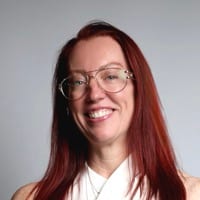
Dr. Betsy Grunch is a board-certified neurosurgeon at Longstreet Clinic in Gainesville, Georgia, specializing in minimally invasive spine surgery and neurotrauma care. Honored as a top doctor by Georgia Trend and Atlanta Magazine, she was named one of Atlanta Magazine's Women Making a Mark in 2023. Known online as Lady Spine Doc, Dr. Grunch shares her expertise with millions of followers, simplifying neurosurgery with content that educates, inspires, and connects with both medical professionals and the public. As always, this information is for educational purposes only and is not a substitute for personalized medical advice. Stick around until the very end so you don't miss any of our special hypermobility hacks. Here we go.
[02:39] Oh my gosh, I am so excited to finally be here with Dr. Grunch. We have had computer issues, software issues, emergencies — I feel like this is a long time coming, so I'm so happy that we're finally sitting down to chat.
[02:54] Dr. Betsy Grunch: Yes, absolutely.
[02:56] Dr. Linda Bluestein: I'm so happy. So, can you start out by telling us your journey into neurosurgery and briefly how you ended up here?
[03:06] Dr. Betsy Grunch: Yeah, it's been a wild ride. First off, I have to apologize for my raspy voice. I have a little bit of laryngitis, so I don't normally sound like this. Basically, I think everybody that goes into medicine kind of has some type of draw or something that led them to the field. For me personally, I was a teenager — I was in that time of my life where I was trying to decide what I wanted to do when I grew up. And my mom was involved in an accident when I was a freshman in high school and she suffered a spinal cord injury. That kind of catapulted me into the healthcare field, in terms of going through her rehab and recovery and trying to understand why something like that can be so devastating.
[03:58] Her journey with her surgeries and recovery really fascinated me about neuroscience, particularly about the spine, and eventually led me to where I'm at today.
[04:13] Dr. Linda Bluestein: Yeah, you're right. I think so many of us have a personal story that really impacted our path. So it's always interesting to hear. And do you have any direct experience treating patients with connective tissue disorders like EDS? And if so, what led you into that space?
[04:31] Dr. Betsy Grunch: I think being a spine surgeon, naturally speaking, people with connective tissue disorders have spine disorders. So yeah, I have a pretty broad experience. And then of course, connective tissue disease and autoimmune disease are kind of more prevalent in females. Myself being a female healthcare provider, I think naturally I see a fair amount — probably more than average — of patients with these types of processes.
[05:06] Dr. Linda Bluestein: And if you were to explain to another neurosurgeon who's not familiar with connective tissue diseases, not familiar with EDS, and in particular hypermobile EDS, how would you explain that to them?
[05:19] Dr. Betsy Grunch: I think anybody that doesn't understand or appreciate that this is an entity they need to be knowledgeable in — the way I like to describe it is: we as surgeons look at images and make decisions based on static images. And the thing about hypermobility is it's not a static problem. Our bodies are meant to be in motion, and we're forced, particularly in my field, to have MRIs and X-rays done in one moment in time. It's so difficult to sometimes really conceptualize what may be going on outside of that image and how to interpret it, treat it, and manage it.
[06:17] Dr. Linda Bluestein: Yeah, that makes sense. Dynamic imaging would be preferable probably for anybody, but especially for people with connective tissue disorders, right?
[06:25] Dr. Betsy Grunch: Yeah. Every patient that comes into my practice, whenever I first see them as a new patient, I get dynamic imaging — X-rays, flexion, extension, lumbar, cervical, whatever the case may be — just so I can try to appreciate what that patient looks like in flexion, what they look like in extension or weight-bearing. Because MRIs and CTs are done typically non-weight-bearing, with the patient flat in one position. Dynamic MRIs and CTs are very difficult to get. So a lot of times I like to interpret what I'm seeing on X-ray and then translate to what that may look like when I look at their MRI — what does that potentially look like as a weight-bearing image or a flexion image? It takes a little more thinking outside the box than I think a lot of people are accustomed to doing.
[07:21] Dr. Linda Bluestein: And in terms of subtypes of Ehlers-Danlos syndromes, are there certain ones that you think you see more frequently than others?
[07:30] Dr. Betsy Grunch: That's a great question. To be quite honest, most patients that come to me don't really have a type or subtype. I think I see a lot of underdiagnosed, misdiagnosed, or just not diagnosed patients. It's very rare that someone comes in and knows their subtype.
It's usually me saying, "I think you've got a connective tissue disorder. I think you have EDS. I need you to go get screened."
[07:58] Dr. Linda Bluestein: Sure. And what would be the things that you would see in the exam or in the history-taking process that would make you say that to somebody?
[08:07] Dr. Betsy Grunch: A lot of times it's people that have gone underdiagnosed or misdiagnosed for a long period of time and don't have the answers, but have real pain. So it's looking at those patients with certain body habitus or certain body types — very skinny, long neck, very tall patient. That's a stereotypical appearance, but looking at patients and asking those questions: do you feel like you are a little bit more bendy than normal? Do you have any issues where you've had subluxation of a joint or something like that? Those are all things I try to ask patients whenever I have a suspicion that something may be going on.
[08:59] Dr. Linda Bluestein: Yeah. And that stereotypical body habitus is so tricky because in my practice, which is of course mostly people with EDS or HSD — mostly hypermobile EDS specifically, or HSD — there are a lot of people who do fit that stereotype, but then I have lots of people who don't. And of course, if they really have the arachnodactyly, long fingers and toes, and pectus abnormalities and things like that, sometimes we would suspect Marfan syndrome or some other hereditary disorder of connective tissue. Do you find yourself — because I know you're more aware of these conditions than most neurosurgeons by far — do you find yourself sometimes referring these people to geneticists? Or if you're referring them to somebody else, would it be PM&R, genetics — who would it be most commonly?
[09:50] Dr. Betsy Grunch: Typically I'll refer a couple of patients per month to genetics. That's usually my go-to. I've found that at least in my region, if I refer them elsewhere, I just tend to not get a whole lot of anything.
[10:15] I want to try to get them to where they need to be, but knowing a geneticist is the backup for that — it can be a long time. They can wait sometimes 6 months, 12 months for an appointment. So I try to reassure them: "Hey, we're just trying to get you answers. It's not necessarily going to change what we do, but I think you need to hold on to that appointment so we can maybe get some clarity to the situation." Yeah, I know people who have to wait years.
[10:45] Dr. Linda Bluestein: That's really, really challenging. And I'm sure when you are operating on people, you want to know: are they more likely to have tissue fragility? More ligamentous laxity? Might they even have vascular fragility? That's obviously really, really important. So what do you see in terms of those kinds of things? Do you feel like now that you're so much more aware of this, are you able to predict pretty well, or how do you think that works?
[11:16] Dr. Betsy Grunch: Yeah, I think I'm able to give a good guess if I think someone has some type of connective tissue disorder, and then handle that situation accordingly. Is confirming the diagnosis going to change my treatment plan? A lot of times, knowing or not knowing doesn't necessarily change things. If I suspect they may have vascular problems, that's a whole different ballgame — the referral pattern I may take for pre-op risk stratification and that kind of thing.
[11:50] But in terms of wound healing, the real question is: are they a surgical candidate? Do I think surgery is going to help them? And there are ways we can mitigate risks with wound healing. The biggest thing with hypermobility disorder and surgeries is we often resort to fusion, and fusion has a high risk of nonunion in people with connective tissue disorder — because if they don't heal their skin, they're not going to heal their bone. So we have to do everything in our power: use instrumentation, products for bony fusion, things that may be a little more robust than we would traditionally use, to give patients the best end result.
[12:40] Dr. Linda Bluestein: And I know it's hard because it's not like you have all these patients coming in saying, "I have EDS." Of course, the way I was going to frame a lot of these questions is like, "Well, in your EDS patients" — so we'll just assume we're talking about people you suspect might have EDS. I'm curious if you notice any particular patterns of problems in people with suspected connective tissue disorders. Do they have differences in their degenerative disc disease, spinal instability, other deformities, other things like that?
[13:17] Dr. Betsy Grunch: In terms of spine, we see a lot of sacroiliac dysfunction. I see a lot of that in my practice just at baseline, partly because I'm a female provider and SI disease tends to be more prevalent in females — I disproportionately see that. I'm also one of the few providers in our region who really offers SI joint fusion as a solution, so I'll often get patients with connective tissue disease coming to me with either diagnosed or undiagnosed SI joint dysfunction.
[13:54] Spondylolisthesis is a really common problem we see in EDS, particularly at L4-L5. That's the most common level we see at baseline, but particularly in patients with connective tissue disorder, that first segment right out of the pelvis — which takes the most motion and the most stress — tends to be affected. And that's why those dynamic films I mentioned, those flexion-extension X-rays, are so important to get on those new patient evals so you don't miss something.
On social media we see a lot of patients with hypermobility talking about OCI dissociation and craniocervical instability. I don't see a lot of that in my practice for whatever reason. I'm hyper-aware of it, but I think it's less common, at least for me.
[14:55] Dr. Linda Bluestein: Well, I think there are a few people who have published a lot on that particular topic. And I think there are a lot of people who have mild craniocervical instability or cervical instability that they're managing non-surgically. And if they do need surgery, they might be going to one of a couple of people in the US who really specialize in that. So, with spondylolisthesis — just for people who don't know — that's when the vertebral bodies are slipping on each other with flexion and extension. I'm holding my hands up right now for the people watching the video. Would you say that's a pretty accurate description, or do you want to add to that?
[15:41] Dr. Betsy Grunch: Yeah, that's how I describe it. It's like if you have one bone on top of another bone, they should be lined up, but in a spondylolisthesis they translate differently — they don't hold together correctly, so it hurts.
[15:56] Dr. Linda Bluestein: Yeah. And I love that you do a lot with sacroiliac joint dysfunction as well and are able to offer surgical fusion. Same thing with fusing any part of the body — we don't take that lightly. That's a very significant type of surgery. But it's great that you're able to do that because the more tools you have in your toolbox, the better it is for the patient. Rather than them having to make sure they have the right condition coming in to see you, it sounds like they might come in thinking their problem is spondylolisthesis, but as you're assessing them, you might say, "No, I actually think it's SI joint dysfunction instead." Am I correct about that?
[16:35] Dr. Betsy Grunch: Yeah. We often see SI joint pain and L4-5 pathology overlap a lot in how they present, and it's so difficult. I've definitely operated on people I was convinced had spondylolisthesis, and they had persistent pain after fixing that — and it was SI joint pain. Or vice versa: we think it's SI, but it's really a small annular tear at L4-5 or something like that. It can be a little challenging. Even in the best diagnostician's hands, it's not always a perfect science.
[17:17] Dr. Linda Bluestein: Yeah, definitely. And I know having been on both the patient side and the clinician side, it's also hard because when you're asking questions, I feel like sometimes I have a hard time answering. You know, so when you're doing the history portion — the physical exam might be a little bit easier — but aggravating and relieving factors, I think, are sometimes hard for people to identify or describe. What are other diagnostic challenges that you face with this population?
[17:54] Dr. Betsy Grunch: I think the biggest thing is just getting over — a lot of them have this fear of the healthcare system because they have been either gaslit, given the wrong diagnosis, or feel like their pain isn't worthy. So I think the biggest challenge is just earning trust and trying to offer real solutions to a very difficult problem.
[18:19] Dr. Linda Bluestein: And we talked earlier about the quality of the ligaments, the vasculature, and the quality of the tissues. How do you assess preoperatively somebody's risk of bleeding, whether or not they have hypermobility, if they might be at risk for wound healing problems, et cetera?
[18:46] Dr. Betsy Grunch: If you know going in that they have EDS or something like that, you're going to pay particular attention. But I really try to rely on: have you had surgery before? What complications have you had? How did they deal with that? How did you heal? Did you have a wound infection? Those are things I ask every patient, but they're particularly important in patients where we're trying to stratify the risks. And sometimes, in patients with a lot of risk factors who maybe need a scoliosis surgery or something really big — is it really worth the risk? Those are difficult conversations to have, because doing a multilevel scoliosis correction when they're high risk: are they really going to heal the whole construct? Is it really worth it? Because sometimes, even though we have surgical fixes, things aren't worth fixing — you can put them in a worse situation than if you didn't do anything at all. So those challenges require a lot of insight, thought, and communication with the patient.
[20:02] Dr. Linda Bluestein: I love that you just said that, because I have said forever that patient selection is everything when it comes to surgeons. Back when I was doing anesthesia in Wisconsin, we all knew — those of us who worked in the operating room — which surgeons were likely to operate on people with a kind of lower threshold, and which surgeons were very selective. And I actually, one time after I moved to Colorado, I went to a number of different people's practices and kind of hung out for a few hours just to get a sense of what people were doing. There was this one orthopedic surgeon — there was a patient who was arguing with him, and he was telling her that he did not think she was a good surgical candidate. It was ironic because he spent more time with her than with anybody else, and everyone else got offered surgery, and she was being turned down and was really upset. I get it, because of course when you get to that point, you're often thinking that surgery is the answer. But I really respect surgeons who are thoughtful in their selection process and carefully think through the risks and make sure the person is a proper candidate.
[21:19] Dr. Betsy Grunch: Yeah, I agree.
[21:21] Dr. Linda Bluestein: What about non-interventional therapies? Are there ones in particular that you often recommend?
[21:28] Dr. Betsy Grunch: I think it depends on the problem. I think education is so important because, as you touched on earlier, there are patients who have pain and discomfort who maybe aren't the best operative candidates or don't yet quite have operative pathology. It's so easy to want to fix pain, but it's not always that A leads to B. Talking about conservative options — whether it be strengthening with PT, traction, medical management, injections, or alternative treatments — those conversations sometimes take longer than surgical discussions.
[22:19] And patients maybe aren't always as receptive to that because they want to fix. It's really about explaining why you feel that way so they understand, and so they know that conservative management might be their best choice or best outcome.
[22:39] Dr. Linda Bluestein: I think that's one of the most challenging things. There are people walking around on whom you do imaging and they have all kinds of abnormalities, but maybe they don't have pain. And then there are people who have lots of pain and may or may not have corresponding imaging abnormalities. But then it's also hard to know — as you said — that the pathology maybe isn't quite there yet. You want to make sure as a surgeon that the changes you're seeing are actually explaining the symptoms, right?
[23:08] Dr. Betsy Grunch: Exactly.
[23:09] Dr. Linda Bluestein: I just want to make sure people understand that, because it's such a key concept: you can have a certain set of symptoms and a certain set of findings, but that doesn't mean one causes the other.
[23:23] Dr. Betsy Grunch: Right, and that's the challenge for the surgeon, the physician, whoever's making the diagnosis. We often try to diagnose imaging, and you can't do that. It takes a good physician, a good listener, and a good diagnostician to put the two together. And even the best still make mistakes. It's even more challenging in this patient population.
[23:55] Dr. Linda Bluestein: Yeah, definitely. And speaking of this patient population, are there any standard surgical techniques that you modify? We talked about fusion already. If you're doing any kind of fixation instrumentation, grafting — are there other things you might modify in that regard?
[24:16] Dr. Betsy Grunch: Yeah. There are different products, especially in spine fusion, that we can use to augment patients we think are at risk for nonunion. We might use a certain type of bone graft over another, or we might use a bone stimulator — but in a traditional setting, insurance may not cover that because it doesn't meet their criteria. So you have to explain why this patient needs this product and really go to bat for them to make sure they can get what they need, to give them the best chance of avoiding a pseudoarthrosis or a nonunion, which could potentially lead to more future surgery.
[25:02] Dr. Linda Bluestein: Oh, and the insurance piece — dealing with insurance companies is so frustrating.
Dr. Betsy Grunch: Yeah.
Dr. Linda Bluestein: Yeah.
[25:08] Dr. Betsy Grunch: But it's part of the reality of healthcare, at least in the US right now.
[25:19] Dr. Linda Bluestein: Yeah, absolutely. And it is frustrating because, like you alluded to, there might be something that would cost less money but be more preventative, as compared to waiting until you have the nonunion and need another surgery, which is going to be a lot more expensive. But in general, insurance companies seem to really struggle with that preventative type of concept.
[25:41] Dr. Betsy Grunch: Yeah, for real. I mean, prevention — they're a business too. Does prevention save them money in the future, or are they paying now to prevent a cost for another insurance company down the road? They don't always think that way. It's a different mindset, and it's a little frustrating.
[26:03] Dr. Linda Bluestein: Okay, we're going to take a quick break, and when we come back, we're going to talk about prognosis and what we think the future might hold in this space. We'll be right back.
[27:36] Dr. Linda Bluestein: Okay, we're back with Dr. Grunch, and I'm curious — we've been talking quite a bit about fusion, and we've talked about sacroiliac joint fusion and fusion for spondylolisthesis. What are some other surgeries that you think you've performed in patients who might have connective tissue disorders, whether or not they have a formal diagnosis? What would be the condition and the indication for surgery, and what would be the actual surgery you'd be performing?
[28:07] Dr. Betsy Grunch: Yeah. We touched a little on joint disease and spondylolisthesis in the spine, but scoliosis is something that can affect people with connective tissue disease and may be underdiagnosed or misdiagnosed. Those are the more challenging cases because they're higher risk, especially in the nonunion setting. If you're trying to fuse 10 levels of the spine and the patient is high risk, if even one level doesn't fuse, that patient may not have a successful operation. Those are the ones that really give me the most heartburn, to be honest.
[28:54] Dr. Linda Bluestein: Are you doing that very often?
[28:58] Dr. Betsy Grunch: I do a fair amount of deformity work. In my practice, I probably do 1 or 2 a month, which is a pretty high amount for a spine surgeon.
[29:10] Dr. Linda Bluestein: Yeah. Those are big surgeries. So you're talking about scoliosis — and I know you can't say there's a magic number for the curvature, but what might be some indications for scoliosis surgery?
[29:25] Dr. Betsy Grunch: Typically, we look at a Cobb angle of around 30 degrees as something we'd really consider being in the range of needing correction. That being said, there are patients with less than that whom we offer surgery to. But that's kind of the number that gets tossed around in the literature.
[29:50] Dr. Linda Bluestein: Okay. And I know back when I was in the operating room for neurosurgeries, it's been a long time since I've anesthetized someone for a big Harrington rod surgery or something like that. How do you do a repair now for scoliosis? I've heard about more minimally invasive types of surgeries, but I'm not sure what the current standard of care is.
[30:16] Dr. Betsy Grunch: We definitely don't do Harrington rods anymore — thank God. The biggest thing for deformity correction now is trying to restore the most natural alignment to the spine. We talk about coronal and sagittal balance. Coronal balance is if you're looking at the patient standing straight on — are they curved to the side? Sagittal balance is looking at them from the side: does their head sit over their pelvis? Is it too far forward? Do we need to correct the lumbar lordosis or pelvic incidence, which are all numbers we calculate?
[35:42] There's a lot of statistics, physics, and math that goes into correcting some of these deformities, because we know that overcorrection or undercorrection could potentially lead to further problems down the road. If they're a young patient, we want to get them as perfectly corrected as possible so they hopefully don't have future issues with their spine in 10, 15, 20 years.
[35:42] Dr. Linda Bluestein: And in terms of patients you're not recommending surgery for, do you ever recommend something like Schroth physical therapy? Do you find that to be helpful, or are there other modalities or bracing you often recommend for scoliosis?
[35:42] Dr. Betsy Grunch: Yeah, I talk a lot about core strengthening and pelvic floor strength in women — or men, for that matter. We tend to see it a lot more in women's health, but those things are very vital to helping with the symptoms of scoliosis, or really anything to get your spine in better condition. Weight-bearing exercise, those types of things are crucial because when we're hurt, we don't necessarily want to do those things. But it's like a dangerous cycle: we hurt, we don't exercise, we don't strengthen our body, we get weaker, we rely more on our joints — and then those joints aren't good, they're hypermobile. So you're just in this continuous detrimental cycle.
[35:42] Dr. Linda Bluestein: Yeah, it's really challenging for sure. And in terms of sacroiliac joint fusion — coming back to that for a second — I want to ask: how often, after you fuse one side, do you end up having to fuse the other side?
[35:42] Dr. Betsy Grunch: It really depends on the patient. It often is a unilateral condition, but in a large majority of patients it can be bilateral. The interesting thing is I used to, in patients I knew had bilateral SI joint pain, just fuse both sides. But it's really hard in the recovery because in my practice and in my outcomes, I've seen better recovery when I let them offload that side during healing — partial weight-bearing, really trying to minimize load on the joint that was just fused. And you can't do that if you fuse both sides. So I saw a higher risk of nonunion when doing both sides at the same time.
[35:42] So I switched to doing just one side — let's do the worst side first, let you heal, and then 6 to 12 months later we'll come back and do the other side. What I found was that in a large majority of patients where I did one side, the other side almost compensated or balanced out and they didn't necessarily need that side done. I won't say that's the case for every patient, because we do go back and fuse the opposite side in many patients. But it's interesting to see how fusing one side can sometimes almost correct the other side or maintain it in balance.
[35:42] Dr. Linda Bluestein: Well, that's great if some people can avoid doing that second side. And I've often thought — this was rare, but every once in a while you'd see somebody come in for bilateral total knee replacements, and you're like, oh my gosh.
[35:42] Dr. Betsy Grunch: Yeah, no, please.
[35:42] Dr. Linda Bluestein: Yeah, no thank you. I mean, I get the idea of one horribly painful recovery period, but that just sounds really, really awful. I'm curious to ask your take on chiropractors, because it's a whole field with a lot of people who have standardized training but practice very differently. There are people who do NUCCA-type chiropractic and specialize in the upper part of the cervical spine with very specialized treatment there. But there are also still chiropractors who do some more aggressive types of treatments. So I would love to know your opinion about chiropractic therapy in particular for people with a possible connective tissue disorder.
[35:42] Dr. Betsy Grunch: Chiropractic medicine can be very useful for patients, but it can also be harmful. Unfortunately, it's not a very evidence-based field. And patients with connective tissue disorders are kind of set up for this — they're going every avenue possible to try to help their pain. They hurt, but the healthcare field is telling them they shouldn't hurt. So they go to chiropractic trying to get help. But if they have vascular pathology or are more prone to dissection, going and getting high-velocity neck manipulation could — I mean, it could kill them. I've seen it before.
[36:20] So it's challenging. It's on the chiropractic profession to recognize these patients and the challenges they face in traditional modern medicine. Chiropractors want to help them, but they also need to know the risks of manipulation — that's where they can get themselves into trouble, really hurting people because these patients are more vulnerable to either spine or vascular injury with any type of high-velocity manipulation.
[36:58] Dr. Linda Bluestein: And in terms of patients with loss of cervical lordosis — loss of the natural spine curve in the cervical spine — I know there are some chiropractors who specialize in restoration of that curve. I don't have enough data myself to know if they are often successful. Do you happen to have any opinion about that?
[37:24] Dr. Betsy Grunch: I've not seen any good data to suggest that anything from a chiropractic standpoint can reliably correct deformities. We see a lot of it on social media and things that go viral, but the reality is there's just not a lot of evidence to back that proclamation. You have to tread very lightly if you're a patient. You deserve to know your risks and benefits: What is the data behind that? How is this going to help me? Is this worth my time? Is this worth my money? Time is money, really, so you need to know what you can reasonably expect from any type of treatment.
[38:16] Dr. Linda Bluestein: Absolutely. And if it can take something that's slightly out of position and improve it, but it doesn't stay — it doesn't hold — then are you any better off than you were before?
[38:29] Dr. Betsy Grunch: Yeah, exactly.
[38:32] Dr. Linda Bluestein: Okay. So getting back to surgery — we talked quite a bit about fusions and how important it is to actually be able to form that union between the bones. Do you ever use cadaver bone or other things like that?
[38:50] Dr. Betsy Grunch: Yeah, all the time. Cadaveric DBM or whatever the case may be — allograft is the mainstay of grafting for spine. There are other things we use like autografts, the patient's own bone, which has their own stem cells in it and can lead to higher success. There are also other products like iFactor or Infuse that have a higher concentration of growth factors in them that can kind of put gasoline on the fire of a fusion that wouldn't be natural in cadaver bone or their own bone. Those products are more costly and sometimes aren't necessarily covered.
[39:35] And some of them have risks. Infuse, for example, carries a black box warning of increasing your risk of cancer. So you have to be careful.
[39:50] Dr. Linda Bluestein: Yeah. Wow. And these are tough decisions for patients to make. I feel like patients now have so much access to information — they can go online and look at a large number of papers, since a lot of things are open access now that weren't back when I was in school. More information can sometimes be a great thing, but it can also be really overwhelming and make you feel a lot of responsibility as a patient. So I'm curious to ask — are there any tips you give people preoperatively to help with the fusion process, in terms of nutrition or other things they can do to improve their outcomes?
[40:34] Dr. Betsy Grunch: Yeah, nutrition is important — making sure you're eating as good a diet as you can. Protein-heavy foods are going to give you good healing properties in the healing cascade. Activity modifications are important too, like listening to what your doctor says to do and not do — brace or not brace, whatever the case may be.
[40:52] And then things like nicotine cessation are incredibly important to discuss with patients, regardless of their disease process, because that can lead to up to a 50% failure rate. Operating on a patient at the right body weight is another important conversation to have. Diabetics: making sure their glycemic control is good. Screening for osteoporosis — is their bone quality good? Those are all things that are on my mental checklist for every patient I operate on.
[41:41] Dr. Linda Bluestein: Yeah, that's really important. You want to set them up for success. I do remember back when I was working in Wisconsin, there was a neurosurgeon who would do — I can't remember if it was a urine test or a blood test, but they would check for nicotine.
[41:55] Dr. Betsy Grunch: Yeah, just a blood test.
[41:57] Dr. Linda Bluestein: Okay. And they would cancel the case if it came back positive.
[41:58] Dr. Betsy Grunch: Yeah. I do it pre-op. I don't like to cancel cases day of surgery because it's just so much stress on the system that's prepared. But I ask everyone, I screen everyone. If they're positive, we cancel ahead of time.
[41:59] Dr. Linda Bluestein: Mm-hmm.
[42:20] Dr. Betsy Grunch: If they're negative but you had a suspicion, sometimes you have to deal with it day of surgery — but that would be unfortunate.
[42:27] Dr. Linda Bluestein: And tell me a little bit more about the body weight picture, because I feel like I'm very aware of that when it comes to total joint replacements and the risk of wound infection, DVTs, deep venous thrombosis, blood clots in the legs. Tell me more about what your process is.
[42:47] Dr. Betsy Grunch: There's similar data in spine that the higher the BMI, the more likely there is wound infection, nonunion, and the more challenging the recovery and pain experience. And in spine, it's not like a joint replacement where you do it the same way every time. In spine, you can come anterior, lateral, oblique, or posterior — different ways of getting to a particular level, with different implants depending on the approach. An anterior approach is going to get the biggest implant in there, which for someone who is overweight may actually be best because you want more surface area for fusion. But being overweight also makes it very challenging to get there safely — there's a deeper area, more tissue to go through.
[43:44] Those are really important issues to be transparent about. And I think these conversations are a little easier now — in the past couple of years I can say, "I think you need surgery, but I'm very concerned about your risks. Why don't we talk about Ozempic or Mounjaro or something like that?" Those are easier conversations than they were a few years ago, when you were limited to saying, "I know you hurt, but we need you to work out."
[44:15] Dr. Linda Bluestein: Right. And that's a great transition, because I just wrote down GLP-1s. I remember you had a post a while back about GLP-1 — glucagon-like peptide receptor agonist medications, which you just mentioned a couple of: tirzepatide, semaglutide. There are quite a few available now. And you were posting something about those medications and intracranial pressure, I believe. Is that ringing a bell?
[44:44] Dr. Betsy Grunch: Yeah. GLP-1s actually change the way the brain produces CSF, which is fascinating. Those medications can reduce the amount of CSF that you produce. We knew that patients on GLP-1s who have pseudotumor cerebri — increased intracranial pressure — got better, but it wasn't because they were losing weight. The effect was quicker than the weight loss. And scientists figured out that it was actually altering or reducing the way spinal fluid is produced, which is amazing. That's a breakthrough that can really help people tremendously who are suffering — and maybe patients who have this problem but aren't necessarily overweight could qualify to get these medications approved for them.
[45:40] Dr. Linda Bluestein: Yeah. And I've had a lot of patients say that they got started on a GLP-1 and it really helped stabilize their mast cells. I know in the literature there's a case report and another study that came out fairly recently — it's not like there's a ton in the literature about this yet — but anecdotally I'm hearing from quite a few patients positive things. A lot of patients are at totally normal body weight, or even on the lower side of BMI, but they're being prescribed these medications for mast cell activation. I'm hearing much more positive than negative. I think I have only one patient who just really couldn't tolerate even a very low dose. But they started at about 1/10th the usual dose, often from a compounding pharmacy, and titrated up slowly. It's really fascinating in this population. And a lot of people have also been prescribed acetazolamide for a similar problem. How would you compare and contrast those two options?
[46:44] Dr. Betsy Grunch: Acetazolamide is riddled with side effects, so it's very difficult to find someone who can really tolerate it well. And the mechanism of action is different from a GLP-1. It's easier to come by, and both have good data to help, but you're going to have more side effects with acetazolamide than with GLP-1s. And the benefits of GLP-1s just keep rolling out with these medicines. I know they get some negativity, but the cardiovascular benefits and all these other things that keep coming out about how they can help — it's very interesting to see where these medications hopefully can take us in terms of human health.
[47:37] Dr. Linda Bluestein: And when should a patient with EDS or a possible connective tissue disorder seek an evaluation from a neurosurgeon?
[47:59] Dr. Betsy Grunch: You could seek an evaluation anytime you want, but you need to be able to make reasonable decisions — because there are surgeons whose risk stratification and patient selection aren't good. Just because someone says you need surgery doesn't mean you really need surgery. So I think it's always good to get ideas and thoughts, but if you're making a decision on something that could alter your body forever, you need to think very deeply about it, ask questions, and get multiple opinions. I've seen a lot of patients make the wrong decisions about surgery and end up suffering, and then there's nothing we can do once it's been done.
[48:54] Dr. Linda Bluestein: Right. Really hard. And what about Tarlov cysts? Is that something you operate on, and have you seen them very often? What are your thoughts?
[49:05] Dr. Betsy Grunch: Yeah, we see them a lot incidentally speaking. Tarlov cysts are found on MRI reports quite a bit. There are patients who are symptomatic from them and patients who are not. There's a lot of information on the internet about them, and it's challenging. Have I operated on them?
Yes. You can see perineural cysts or Tarlov cysts on a nerve root that are compressive and causing problems. But for every one of those, I think you'll find ten times more that are just incidentally found and not really causing issues. And it's challenging — going back to what we said earlier — people want a solution, and maybe that cyst isn't really causing the problem.
[50:02] I know there are some specialists who really focus on this in their practice, and I've had patients who have gone to Texas and had that surgery done and done well. But I've also seen patients who went ahead with it and ended up developing arachnoiditis or something 20 times worse. So it's definitely a very delicate topic.
[50:26] Dr. Linda Bluestein: Yeah. And I'm glad you mentioned arachnoiditis because I want to circle back to that. But I do want to ask — I actually had surgery for a Tarlov cyst, and I had a selective nerve root block beforehand to determine if that Tarlov cyst was likely the causative factor in my symptoms. Is that the approach you would normally take to help determine if a Tarlov cyst or perineural cyst is symptomatic or not?
[50:54] Dr. Betsy Grunch: Yeah, we can use diagnostic injections. But Tarlov cysts are usually down in the sacrum, so it's going to be challenging to do a nerve block at S2, S3, those kinds of levels. The ones that are easier are like those on a motor neuron or causing radicular pain — those are a little easier to diagnose. Those are the ones I've had the most success with, either with pre-op injections or just going in and fenestrating the cyst to see if the patient improves.
[51:31] Dr. Linda Bluestein: Then let's talk a little bit about cauda equina syndrome, because I have this very complex patient population, and every once in a while I'll get a message in the portal: "I suddenly lost the ability to hold my urine." And it's not just a little bit of stress incontinence — it's like the urine is just coming out, and/or stool incontinence. What I was taught was that this is a neurosurgical emergency. But a lot of these patients have had so many problems, and I feel like even if they go in emergently to the ER, they may or may not get a prompt evaluation. And if imaging shows a Tarlov cyst but nothing else, they're often kind of sent home without any action plan. I've had several patients who had Tarlov cysts and also had saddle anesthesia and incontinence — things we'd normally associate with cauda equina syndrome. Can you comment on that? And I should probably describe what cauda equina syndrome actually is.
[52:32] Dr. Betsy Grunch: Cauda equina syndrome is where you have compression of any of the nerve roots in the low back down to the sacral area that can cause a constellation of symptoms — numbness in the groin and perineum, urinary and bowel incontinence. Those sacral nerves get impinged from compression. It's a neurosurgical emergency because those nerves are so delicate — even compression for a very brief period of time can lead to permanent issues with sexual function and with the ability to control bladder and bowel, which as we know is life-changing.
[53:19] The patients can have incontinence for a multitude of other reasons, so it's a slippery slope: did you have severe pain and urinate on yourself as a result? So the easiest thing to do is get evaluated, because those symptoms in combination with compressive pathology constitute a neurosurgical emergency. In the absence of compressive pathology on imaging, it's not necessarily an emergency — it could represent something totally different. But you don't want to ever brush something off and make the wrong choice. If someone calls my office with those symptoms, we tell them they need to go to the ER whether or not it turns out to be the real thing. We have to see.
[54:25] Dr. Linda Bluestein: Because if you can relieve the compression, you can potentially reverse those symptoms. But if you don't relieve it quickly enough, the changes are going to be permanent. Are there other neurosurgical emergencies you want people to be aware of?
[54:41] Dr. Betsy Grunch: The biggest thing is dissection and stroke. I think of brain health and spinal health together. Making sure you don't subject yourself to the risk of something like that — like going to a chiropractor for aggressive manipulation. But honestly, you can get a dissection from almost anything. You can get a dissection from throwing your head over and brushing your hair upside down.
[55:04] So any neurological changes that are different for you — you know your own body, and you're your own best advocate. If you know something is different or wrong, you have to get it checked out. It can be hard because sometimes you feel like you're not being listened to, but you have to be the best advocate for yourself that you can be.
[55:35] Dr. Linda Bluestein: Yeah, a lot of people have experienced so much gaslighting that they're afraid to go to the ER, which I totally get. Let's come back to arachnoiditis before we wrap up. You touched on it briefly as a potential complication from spine surgery. Can you define that for us and tell us what you want patients to know about it?
[55:57] Dr. Betsy Grunch: Arachnoiditis is where your nerves — which typically float around in the lumbar area like little spaghetti noodles in water — no longer float. They can stick or scar either to each other or to the dura. Our body is meant to be in motion, so anytime we walk, kick, or move our legs, the nerves normally slide and glide. But if they're stuck or scarred, it can cause pain, weakness, numbness, and cauda equina symptoms.
[56:45] Patients can develop arachnoiditis in a few ways — it's usually not spontaneous. It usually results from something that causes inflammation around the area: infection, bleeding, or even a routine injection like an epidural or myelogram — a test where we inject something into the spinal fluid space and the body has a bad reaction, swells up, and arachnoiditis develops. Knowing the risk of that, knowing it can be misdiagnosed — knowledge is power.
[57:43] The hardest part for me about making that diagnosis is that arachnoiditis is progressive, there's no cure, and there's not a lot of treatment for it. There's neuromodulation, spinal cord stimulation as an adjunct, medications, and other things, but it's still very difficult.
[57:59] Dr. Linda Bluestein: Yeah, these patients are really, really suffering. I've ended up with quite a few of them because when Dr. Forrest Tennant, who has done so much research in this space, closed his practice, I was on his shortlist of people he was recommending patients to. So I have a number of arachnoiditis patients in my practice. I take a general anti-inflammatory approach and follow his bulletins — some of what he recommends might be hormonal therapies and things like that. It's like, well, it's worth a try, because like you said, we don't have a lot of great double-blind randomized controlled trials that tell us ABC is the answer. We don't have a drug for that, at least not yet. So yeah, that's a tough condition to have for sure. How often do you see tethered cord syndrome and/or CSF leaks?
[58:51] Dr. Betsy Grunch: Tethered cord, we don't see a lot of in adult medicine. It's just not very common. It's usually in the spina bifida patients that gets managed in the pediatric world. Even as adults, those patients tend to stay in pediatric-oriented care. If it remains asymptomatic throughout adolescence and that growth spurt, it's less likely to be a problem in adulthood.
And what was the other thing you asked me about?
[59:26] Dr. Linda Bluestein: CSF leaks.
[59:27] Dr. Betsy Grunch: Oh, CSF leak. Again, fairly rare, but it's very difficult to diagnose. You have to be quite astute to have it even in your thought process or differential. If we're talking about CSF coming through the nose or somewhere where it's actually visible, that's hard to miss. But those spontaneous CSF leaks from a nerve root cyst or sleeve — those are so hard to diagnose, and I think those are the most challenging ones.
[1:00:10] Dr. Linda Bluestein: Mm-hmm. And then you get to the point where you have to decide: do I have a myelogram or not? Now I'm doing something that may put me at risk of arachnoiditis — and some of our arachnoiditis patients definitely had myelograms, though that doesn't prove cause and effect. And speaking of cause and effect, one quick last question before we move on to the hypermobility hack. Are you saying that in some adult patients you might see a tethered cord that is asymptomatic?
[1:00:41] Dr. Betsy Grunch: You could see an asymptomatic low-lying conus or something like that, but it's pretty rare. Patients with symptoms of tethered cord are usually going to present during that growth spurt. I have had a few patients who weren't symptomatic, or who had it without symptoms, but then got degenerative changes or something else going on in their spine that tipped them over the edge. Those are uncommon, but you do see them. If you see horses, you also see zebras — you just have to recognize them.
[1:01:29] Dr. Linda Bluestein: Yeah, definitely. And unfortunately, if you have a connective tissue disorder, your risk of tethered cord does go up — as with a lot of these things. So, okay, great. Well, this is such great information, and we always like to end with a hypermobility hack. Do you have a hack for us?
[1:01:49] Dr. Betsy Grunch: Yes. I think it's easy for people with hypermobility to want to stretch, but I always talk about doing strengthening before you stretch. So instead of going forward and stretching first thing in the morning and then working out, you want to activate your core and activate those muscles before you stretch — so you don't overdo it or pull something.
My go-to core strengthening exercise for everybody is the glute bridge, because for most people, no matter how strong or physically active they are, they can do it. You lay on your back, lift your pelvis up and hold — that engages the gluteal muscles, which we often underuse but which are so important for core strength. Hold it 3 to 5 seconds, lower down, and repeat that 5 to 10 times. It also kind of auto-aligns your SI joint and fires those muscles that may help you. Doing it before you get out of bed in the morning is important for activating your core and lower abs.
[1:03:05] Dr. Linda Bluestein: So you recommend doing that before you get out of bed?
[1:03:05] Dr. Betsy Grunch: Yeah, before you get out of bed — or definitely before you do any type of stretching — so your brain can engage and know the length of your muscles before you move. Those already loosey-goosey joints are going to become even more loose if you're not protecting them when you move.
[1:03:37] Dr. Linda Bluestein: Yeah. And I know some people love to do self-manipulation. Can you share your thoughts on that quickly?
[1:03:51] Dr. Betsy Grunch: It's almost like a habitual thing for some people — popping your knuckles or popping your neck or whatever the case may be. Just realize: am I doing that because it's routine for me? Is it really doing anything to benefit me? Or is it just kind of a nervous habit? Try not to do those things that may put you at risk for hurting yourself.
[1:04:20] Dr. Linda Bluestein: Yeah, I view it the same way. Especially because, like you said, some people do it habitually — over and over again. It feels good at the time, but it doesn't mean it's actually beneficial for you. So, okay, thank you so much for joining me today. Before you go, can you tell me if you have any special projects underway, research you're doing, anything like that? And where can people learn more about you?
[1:04:46] Dr. Betsy Grunch: I'm on almost all social platforms — Lady Spine Doc is my handle. You can find me on most things. And yeah, I just launched a boutique at ladyspinedoc.com, where I sell medical inspirational merch. That's been a new passion of mine, and I've done some designs for EDS, raising awareness and funding for the condition — so you can wear what inspires you, wear your condition proudly, and use that to help support a good cause.
[1:05:25] Dr. Linda Bluestein: Does that go to a nonprofit organization?
[1:05:28] Dr. Betsy Grunch: Yeah. For the EDS design that I did — we had a "bendy baddie" design, which was fun — I actually worked with one of my patient's daughters who is an EDS patient and just got accepted into Harvard.
She's going into public health. She's very smart, very amazing, and she also does design work. She selected a research institution for EDS — I'm blanking on the name right now because I wasn't expecting this question.
[1:06:03] Dr. Linda Bluestein: Sorry, sorry.
[1:06:05] Dr. Betsy Grunch: No, you're good. But yeah, I always try to make a substantial impact with the things we do so we can make a meaningful difference somewhere.
[1:06:21] Dr. Linda Bluestein: Yeah, that's amazing. I have a boutique called the Bendy Bodies Boutique, and same thing — a large percentage of the proceeds go to the nonprofit EDS Guardians. So it's great when we can do things like that.
[1:06:35] Dr. Betsy Grunch: Yeah, exactly.
[1:06:37] Dr. Linda Bluestein: Well, thank you so much for joining me today. It was so great to finally get to meet you. I don't know how long we've been planning this, but I feel like it's probably been close to a year.
[1:06:57] Dr. Betsy Grunch: We almost weren't even able to do it today because of the connection issues.
[1:07:03] Dr. Linda Bluestein: I know — it's crazy. I've been doing this podcast — well, I initially did do it on Zoom, but then today we had to switch back to Zoom instead of Riverside, which has not happened in the past year or more. Not once. And it happened today. But anyway, thank you so much for taking the time to chat with me and share so much great information.
[1:07:26] Dr. Betsy Grunch: No problem. Have a good one.
[1:08:31] Dr. Linda Bluestein: Well, I can't believe I finally got to sit down with neurosurgeon Dr. Betsy Grunch. We have really been trying to do this for a very long time, and this was such a great conversation. Neurosurgical problems are so common in people with connective tissue disorders like EDS, so it's great to hear another neurosurgeon's perspective.
[1:08:52] Thank you so much for listening to this week's episode of the Bendy Bodies with the Hypermobility MD Podcast. I have lots of other resources I want you to check out, including my newsletter, the Bendy Bulletin. You can check that out on Substack at hypermobilitymd.substack.com. You can help us spread the word about joint hypermobility and related disorders by leaving a review and sharing the podcast. This really helps raise awareness about these complex conditions.
[1:09:16] Did you know that I also offer one-on-one support for both clients and healthcare professionals? Whether you're living with hypermobility or caring for people who are, I've got your back. Check out my coaching and mentorship options on the services page of my website at hypermobilitymd.com.
[1:09:32] You can find me, Dr. Linda Bluestein, on Instagram, Facebook, TikTok, Twitter, or LinkedIn at hypermobilitymd. You can find Human Content, my producing team, at humancontentmd.com. Content pods on TikTok and Instagram. You can also find full video episodes up every week on YouTube at Bendy Bodies Podcast.
[1:09:48] As you know, we love bringing on guests with unique perspectives to share. However, these unscripted discussions do not necessarily reflect the views or opinions held by me or the Bendy Bodies team. Although we may share healthcare perspectives on the podcast, no statements shared on Bendy Bodies should be considered medical advice. Please always consult with a qualified healthcare professional for your own care.
[1:10:09] To learn about the Bendy Bodies Program disclaimer and ethics policy, submission verification and licensing terms, and HIPAA release terms, or to reach out with any questions, please visit bendybodiespodcast.com. Bendy Bodies Podcast is a Human Content production. Thank you for being a part of our community, and we'll catch you next time on the Bendy Bodies Podcast.