Description
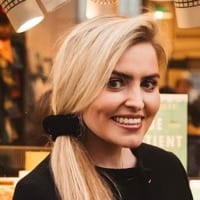
In this emotionally charged episode, Dr. Linda Bluestein talks with Tilly Rose, the founder of That Oxford Girl and the author of Be Patient, about what it’s like to face palliative care as a young adult and come out the other side fighting for change. They explore how Tilly transformed her private pain into public advocacy, why chronic illness is so often misunderstood in young people, and what happens when you rewrite your identity in the face of a diagnosis. This is a story of resilience, reinvention, and the radical act of showing up when the world doesn’t know what to do with you.
Watch
Guests
Transcript
[01:04] Dr. Linda Bluestein: Welcome back, every bendy body, to the Bendy Bodies Podcast. I'm your host, Dr. Linda Bluestein, the Hypermobility MD, a Mayo Clinic-trained expert in Ehlers-Danlos syndromes dedicated to helping you navigate connective tissue disorders and joint hypermobility to live your best life. Today I'll be speaking with Tilly Rose. Tilly is the author of the book Be Patient. She is an incredible, incredible young lady. After 20 years as a patient, Tilly made the decision to share her patient journey on Instagram and saw firsthand how her experiences resonated with her followers. She now shares her personal story in chapters on @thattillyrose and recently launched @thatpatientcollective, a platform for other patients to share their stories and support each other with diagnosis suggestions, treatment options, and test ideas. Be Patient is Tilly's first memoir and part of her wider mission to impact patient care.
[01:58] I'm so excited to have this conversation with Tilly because I loved this book. It was really gripping from the minute I started it, so I'm really excited to chat with her. As always, this information is for educational purposes only, and it's not a substitute for personalized medical advice. Stick around until the very end so you don't miss any of our special hypermobility hacks. Here we go.
[02:21] Okay, I am so excited to be here with Tilly Rose. I just have to say, before we even start, she sent me this beautiful little note when she sent me the book. And we're going to be talking about this beautiful book called Be Patient. It's such a fantastic book. And I don't know, for those of you watching on video, if you can see that not only did I highlight in the book, but I also have all these tabs for a lot of my different favorite sections. So I have ADHD, so I often don't finish books, but I read the whole thing cover to cover and I thought it was really fantastic.
[02:56] Tilly Rose: Oh, that is wonderful to hear. Thank you very much.
[02:59] Dr. Linda Bluestein: Yeah, absolutely. It's such a great book. And I'm going to be along the way kind of reading some of the quotes from your book because I feel like you're such a talented writer and I wanted to basically be able to read so much of the book to people. So we're going to start out talking about your advocacy and you say, "I didn't set out to be an advocate. I just got tired of being unheard." For listeners who might be new to your work, can you tell us what inspired you to write Be Patient and how you ever got even involved in this space?
[03:33] Tilly Rose: Yeah. So as you say, it was something that developed organically, sadly, as a result of my own medical history. And to give you a brief overview, I was a very healthy child and I first became unwell when I was 10 years old. And in the years that followed, I became what was deemed a medical mystery. And as a result of that, I ended up going through every ologist, every department, every corner of our healthcare system in this desperate attempt to try and receive a diagnosis. And through doing so, I ended up becoming what I say is the expert patient — the expert that nobody wants to be. That nothing prepares you for, but you very much learn as a survival technique as you go along.
[04:26] And I ended up seeing so many things that I say I can't unsee. And it was this, I guess, which then motivated me to want to share that story. And I also became aware that so many other people had these stories and that patients, I still feel, are a group in society that haven't yet really been acknowledged for their daily reality and what they're going through on this daily basis.
[04:51] And the book itself — the idea for it came about when I was on one hospital admission. It was during COVID-19. And I don't know whether you've read Adam Kay's This Is Going to Hurt. He was a junior doctor in the UK who had written a book about being a doctor in our healthcare system. And I read this book and instantly thought, there has to be a patient reply to this. And my view was, he said this is going to hurt, and I said, it did hurt. It really did hurt a lot. And that was where this seed of an idea for Be Patient sprang from.
[05:27] And it then developed later. I ended up — which I guess we'll maybe go into detail later in the podcast — in a situation in a London hospital that led to me sharing my story on social media. And it was the response on social media and this large patient community that I started to develop that ultimately then led to this publishing deal for Be Patient and my patient advocacy work that has ended up coming as a result of that.
[06:01] Dr. Linda Bluestein: Yeah, that's such an amazing story. And as you briefly alluded to, you had a lot of long hospital stays. I mean, reading Be Patient, it was like, oh my gosh — I've had a lot of patient experiences, nothing like that, thank God. And a lot of my patients and clients have had some hospital stays, but you spent a lot of time in a hospital for quite some time. Do you happen to know, like, what percentage of your life, or for the most intense period, how many days in X? Just to give people a context of how very, very serious this was. I mean, you have been very, very seriously ill.
[06:42] Tilly Rose: Yeah. I've spent a lot of my life in and out of hospital. As I say, I started — I first became unwell when I was 10 years old, and initially I was suffering from repeated pneumonias and chest infections. And over the years they deteriorated and I was requiring more and more admissions for IV antibiotics, which were obviously stints on the hospital ward. Then age 16, I underwent an emergency terminal ileum resection, which was basically part of my bowel that was removed and the two sides were sewn back together again. So again, a big stint and a serious operation. At this point, still nobody knew why.
[07:23] I was later diagnosed with having lived with 13 years of undiagnosed active tuberculosis, which was this crazy story — I'd ended up getting it as a result of drinking unpasteurized milk when I was 5 years old, unbeknownst to me, on my great-aunt's dairy farm. And this sort of ended up being a catalyst for many of the health problems that followed, which also linked ultimately — which we'll no doubt talk about today — to underlying Ehlers-Danlos syndrome. And there was a relationship there. I later went on to have a diagnosis of Addison's disease, which again can be connected to tuberculosis and also has a connection to vascular compressions and the underlying EDS.
[08:06] And I guess the worst, if we're talking about hospital stints, the worst hospital stint of all for me was this London hospital admission in 2022 where my health really reached a crescendo. TB had been treated, the Addison's disease I was taking medication for, but I once again presented as a medical mystery that nobody could solve. And I lived for almost 3 months on the open ward in an NHS hospital, which I started to call my blue box, which was a very, very long time to be in this kind of horrific communal living area. And no doctor could work out what was wrong with me.
[08:47] And that was the most traumatic point in my journey where I was about to be discharged on what they were saying was comfort care, which is palliative care. And nobody had an explanation as to what was happening to my body. I was having convulsion seizure-like episodes. At times I was unable to walk. All different parts of my body were being affected. Myself and my family, we could not quite get our heads around the fact that somebody could be saying that effectively your life was over when they actually did not have a reason as to why. There was still no explanation. And I was in this undiagnosed category that I've seen more and more so many patients continue to be stuck in.
[09:31] And I saw firsthand throughout this whole journey how so often the medical community splits you into different parts. I use a quote in Be Patient where I say that it was as if a photograph had been taken of my whole body and the doctor who had the photo of my head had no idea what my feet looked like. And it was like they'd all been cut into these sort of horizontal strips and nobody was piecing the puzzle together. And I needed a medical detective to come along and pin it all together. And that's been a pattern throughout my whole journey. Yes, there's been a lot of horrific hospital stints and a lot of different diagnoses along the way. But interestingly, at the end of it, it ended up coming back to Ehlers-Danlos syndrome, which is why talking to you and the great work you're doing is highly relevant to my story.
[10:27] Dr. Linda Bluestein: Yeah, it's really — I remember reading the book and thinking, I know that Tilly has EDS, but at what point am I going to hear about that in the book? Because it takes a while, right, before you hear the connection in the book. And I do have to say that I've heard of other people being recommended to go on hospice or palliative care — recognizing that they're very different; palliative care and hospice are two different things — but basically people throw their hands up and they're like, there's nothing else we can do for you. There have been people who might even have an EDS diagnosis, but basically people throw their hands up and say that. So I can't even imagine for you, 3 years ago, being told that. I vividly remember that part of the book and thinking — oh, I get chills thinking about it. It was just like, what? Yeah, shocking. Thank God for your mom, right? She's amazing.
[11:18] Tilly Rose: She's a hero in my life and in the book. Yeah. If you have someone — if you're lucky enough to be in a position where you have someone advocating and fighting for you, whoever that may be in your life — as a patient, that is invaluable and has changed my whole trajectory. Because sadly, when you're in the position where you're that unwell, you're in a very vulnerable position and not necessarily able to advocate and fight for yourself.
[11:46] Dr. Linda Bluestein: Yeah, and I just did a program for advocacy, and I'm part of an organization called GNA, Greater National Advocates. And because of the coaching that I do, that can be considered advocacy-type work. So yeah, I totally see that with people that I'm working with. It's just — I can make certain connections and/or send certain messages. But your mom was in a position where she was like going through medical school while she was trying to help you. You literally — you write so well that you can literally picture your mom in the corner, sleeping in the chair, reading through books, reading through journal articles and trying to sort all this out. I feel like she should have an honorary MD degree, your mom.
[12:27] Tilly Rose: Oh, she should. Yeah. And you are completely right. That scene — I mean, that's just epitomized so much of my life. That vision of my mom in the hospital chair where she has spent so much of her life never leaving my side, refusing to give up. Her line was always, "Giving up is never an option." And also this logic that was behind it all, that she held on to the fact that there is a reason for everything. How could somebody go from being this happy, healthy child to becoming so physically seriously ill and nobody being able to explain why? And to her, logically, there had to be a reason for that. And she wasn't willing to give up until we found that reason.
[13:06] And she kept going. And completely stuck by her mantra and believed that, as is right, knowledge is power. And she knew that the only way that she would be able to fight my case and advocate for me was if she could always ask the next question. So she could always have that next test idea up her sleeve, or she could always have the idea for a diagnosis that hadn't yet been looked at. But she knew that if she just stuck to generic statements like, "Oh, my daughter's very ill, can you help?" — actually, that didn't get us anywhere. So her research became what ultimately led us to always having a plan, always having a next step. And that was ultimately what kept us going and what kept the medics on this path — forced them to also keep asking those questions because we were asking them, and they were logical, well-thought-out, well-researched questions that couldn't almost just be dismissed. So yeah, I have my mom. It's incredible. And yeah, I'm very, very lucky to have her.
[14:10] Dr. Linda Bluestein: Yeah, and I'm sure she has really good social skills as well, to be able to ask those questions in the right way so that they are received as helpful. And we all know that that can be very, very challenging. So I'm curious — since all this detective work has been done and you say so specifically that all of this transition happened when you were 10 years old — I know you mentioned about the unpasteurized milk. Is that the thing that happened when you were 10, or is there something else that happened when you were 10?
[14:45] Tilly Rose: So in terms of piecing the whole puzzle together — which as you say, we sort of go on this medical mystery tour through Be Patient, and at the end of it, it comes together as what I describe as the perfectly imperfect storm of just all of these things that had happened, like a domino effect in my body. And I was very interested, actually — I was listening to one of your episodes with Dr. Chopra about vascular compressions that you had on recently. And this was an area of medicine that we didn't know about. And Ehlers-Danlos was an area of medicine that we didn't particularly know about.
[15:20] But if I rewind — yeah, I first became unwell when I was 10 years old. That was, in effect, we later found out, from drinking this unpasteurized milk, which led to these symptoms of tuberculosis. But what tuberculosis also does is lead to significant weight loss in the body. And as a result, when I was a teenager, I lost a significant amount of weight within the space of a couple of months — at the time, not understanding why. And during this period, I did go to see a doctor in the UK, a professor, who told me that he believed I had Ehlers-Danlos syndrome. But this was 15 years ago now, and I vividly remember sitting in the appointment with my mum, and he did all the hypermobility score tests like the Beighton score, etc., and said to me that I had EDS. But he also looked at my mum, who's also very bendy and very flexible, and he said that she probably also had it.
[16:20] And what we weren't given at that point was any explanation as to how EDS could explain all of these internal symptoms I had going on. I wasn't somebody who was going around dislocating joints and things, and that was very much how it was presented to me. What we didn't realize and wasn't explained at that point — and I think perhaps even back then the connections weren't necessarily even being made in the same way — was that if you were bendy on the outside, you could also be bendy on the inside. Which is something that the work people like you are doing and medical science that has advanced, that's becoming more known about now.
[16:57] And my story — the way it all ended up fitting together — was that as a result of losing this quite significant amount of weight during my teens, we've since learned that if this happens to somebody who has underlying Ehlers-Danlos syndrome, because of the connective tissue being too stretchy, this can lead veins and organs to end up shifting slightly into the wrong place within the body. And this is what happened to me. So as a result of this, I ended up developing vascular compressions, which are where the blood vessels in the body become squashed and blood flow is restricted to vital organs. And these then went sadly undetected for so many years.
[17:40] And by the time I eventually got diagnosed, they were in a really bad way. I had multiple vascular compressions all over my body, with the main one being centered around my left renal vein, which meant that I wasn't receiving the blood flow to my kidneys. And as a result, I was having extreme symptoms of toxicity in my body because fundamentally everything was stuck inside and nothing was actually being released and detoxed in the way that it should. So it was this very strange domino effect where the weight loss from the TB ended up being a catalyst. But because of the underlying Ehlers-Danlos syndrome, it led these vascular compressions to develop.
[18:26] And it's something that I've learned more and more about — I've met more and more patients who have got both Ehlers-Danlos syndrome and vascular compressions. And I think the medical world is beginning to realize, and particularly in Germany where I've been, that there is this direct correlation between the two. And yeah, something that I'm now passionate about raising awareness for because it's impacted my whole life.
[18:50] Dr. Linda Bluestein: Yeah. And we're so grateful for the work that you're doing because it takes a village and we have to get everyone thinking about these things. Because sadly — I don't know if this happened to you, you probably talked about it in the book — so many, especially young females, if they do go through a period like that and they might lose weight for a variety of different reasons, maybe they had the flu, maybe who knows what was the cause, but then they get labeled as having an eating disorder. And so now if they have gastrointestinal symptoms, then the doctor often says, "Well, you just have an eating disorder, you just need to eat," which is, of course, as we've discussed on the podcast — yes, gaining weight can be helpful, but just simply telling someone to eat more is not the answer.
[19:38] So I really appreciate you tying those threads together because I feel like you do such a beautiful job in the book. But of course, the vascular compressions happened after you finished the book, right? Or the diagnosis — not the vascular compressions, but the diagnosis and the treatment happened after you finished the book. And you've shared so much about these different hospitalizations, and you've also shared publicly that there have been some additional medical crises since the book was released. What about more in recent times? How has your health been?
[20:11] Tilly Rose: Yeah, so maybe it'd be helpful for me to explain how I ended up going and having the treatment for vascular compressions. Would that be a good way of framing this? Yeah. So ultimately, in London, the London hospital admission in 2022 where I was told that sadly nobody could help me and nobody knew what was wrong with me — in absolute desperation after being told that I was going to be discharged on palliative care, I posted on my Instagram, @thattillyrose, and I shared my symptoms and I asked the world if the world had any ideas.
[20:42] And wow, did it restore our faith in human beings, because the world answered. We had PhD students, professors, medics, patients, families, people from all over the world, from all different backgrounds, who got in touch with diagnosis suggestions, test ideas, and treatment options. And my mum, who we've spoken about, spent the next year working her way through every single suggestion on this list and researching them. And if it was a no, she crossed them off. And if she thought that maybe it could fit, she looked into it further.
[21:25] There was this one idea that she kept returning to, and it was in fact MAL syndrome, which is one of the vascular compressions. And she felt like it fitted some of my symptoms, but it didn't fit the whole picture. But the more she researched, the more she realized that you could have these vascular compressions all over your body, and they could give different symptoms depending on where they were. To cut a long story short, in the research papers that she was reading, the name of a professor in Germany who did a very specialist 4D Doppler scan to detect these compressions kept appearing. I'd had all sorts of scans in the UK, and I'd been told they were all normal. In November '23, we boarded a plane in sheer desperation to Germany, and I went to have this scan. And this was where I got my life-saving diagnosis, where I was told that I had multiple vascular compressions. And this professor had also picked up this connection between Ehlers-Danlos and the vascular compressions, which made us also then reflect on this previous diagnosis I'd had as a teenager. And suddenly this picture started to all fit together.
[22:40] Following on from the scan, I was told that I would require life-saving surgery — open abdominal surgery — to fix these compressions and to restore the blood flow in my body. And I went over to Düsseldorf to a very specialist clinic, to a specialist vascular surgeon, with the belief and hope that I was going to have this one open abdominal surgery, and this was going to be my big miracle cure and I was going to get my life back. And whilst the surgery was successful, I had had these compressions for so long and they had caused so much long-term damage to my body that I actually ended up requiring 3 surgeries. And over 18 months later, we have recently returned from Düsseldorf. So yeah, if I thought I knew what was coming for me, I really had no idea. And sometimes I say maybe it's better that I didn't know because the last 18 months have been extremely, extremely challenging.
[23:49] But in Germany, I found a medical team who were constantly thinking, had extremely big hearts, and weren't willing to give up on me. And as each new hurdle came along, they kept finding these connections and working out how this picture fitted together and working out what the next step would need to be. And fundamentally, to sort of simplify what had happened — my left renal vein was where this main compression was centered. And as I said, it meant that my kidneys hadn't been detoxing for years. And they then detected that I'd got this buildup of heavy metals in my system, toxins, and in more recent months, bacteria and viruses that had also built up and kind of all stayed stuck inside. And they needed to allow my body to start to release these toxins.
[24:39] And as a result of going through the operations — and I also went through apheresis, blood cleaning, and antibiotic therapy — as you can see, I'm a very different girl to the girl you've no doubt seen having horrific seizure-like attacks every 2 hours on Instagram, and the girl described in the book. And they really have been — I call them my real-life angels. They've saved my life, they've changed my life, and they've allowed me to see that there are answers out there if somebody is really willing to look. And if people care enough to really research.
[25:20] And along the way, I've also met so many other patients in equally heartbreaking situations that have flown from all over the world to this hospital. And I've seen these miracles take place in front of my very eyes. And it's shown me that for EDS vascular compression patients, there are solutions, there are tangible solutions, but more awareness needs to be raised. So yeah, in terms of where I am now, I am in a much better place. I'm still undergoing antibiotic treatment moving forward, but we've now moved away from IVs onto oral medication, and I've been allowed to come back to the UK and start to adjust to some elements of a normal life, which I can't tell you how great that feels after this torturous journey for so long.
[26:14] Dr. Linda Bluestein: Oh, wow. This is the best. I feel like — I'm not going to think I'm going to jinx you because I feel like this is okay. You're doing so, so well. And I feel like this is going to help so many people because there's so many people that feel so discouraged. So just to give us a little framework — you got really sick when you were 10. How many years would you say it's been since you felt as good as you feel right now?
[26:45] Tilly Rose: Oh, I can't even really remember.
[26:49] Dr. Linda Bluestein: Wow.
[26:50] Tilly Rose: The things that I am now starting to be able to do again — and it is an adjustment, of course; I've got to build myself back up — but the things that I am starting to be able to do, even just like living back independently at my flat with my partner, waking up in the morning, being able to get out of bed. I couldn't even go to the toilet by myself. At times I could not walk. I had to be lifted from the bed onto a commode on the side of the bed. That was my life. I could not shower because I was on 24-hour oxygen. I could not even come off the oxygen to have a shower for months on end. Life was a living hell.
[27:35] As I say, so many other patients — as you are saying — who are out there living with these awful symptoms, condemned to these terrible lives and told that there are no other options. Or as you said earlier, which is a position I found myself in over the years, when the medics can't find a physical reason as to why these things are happening for you, and in their eyes all the tests have been done, so often there is a shift to telling you that it must in some way be in your head. And that's a pattern that I've just seen repeated again and again.
[28:09] As you say, the young women that I've met in Germany, many of whom have had vascular compressions that have physically been stopping them from being able to eat because anything they eat, they vomit up — they have so often been told that they've got eating disorders, and they're saying, "No, I want to eat. I really want to eat, but I can't physically hold food down." And I found myself in that same position when I was in the London hospital. And as a result of this enormous toxicity in my body, I became extremely swollen and I wasn't eating. But you may have seen on Instagram, I had this tummy that looked 9 months pregnant. I looked like I was about to give birth.
[28:50] Dr. Linda Bluestein: Yeah, I saw.
[28:52] Tilly Rose: And I ended up being told that I was fat, that I was overweight. And logically, I was saying to the medics, "How can I possibly be fat? I don't eat. At most, I have liquids. There's no way." And obviously, underneath it — when this toxicity and swelling started to go down — I was skin and bone underneath it. There was nothing there.
[29:15] And I think, yeah, it's a terrible story that sadly I hear far too often. And I sometimes think that the medics need to stop and look at the situation and think, "Why would anybody choose this life?" Look at the conditions I was living in. I was living in a blue box surrounded by bedpans and living on wards with window blinds that didn't open, people screaming out in the night. People dying in the beds next to me. It was trauma on repeat, night and day. People climbing into your bed in the middle of the night. Nobody would choose that life. And in that respect, that's not a choice.
[30:00] And I think that's something that I feel really strongly that I want to get across to the medical world — being ill isn't a choice. It's a situation that you find yourself in and you have to try and find some way to navigate. But to keep being told that it's in your head when you know there's something so physically seriously wrong with you — and I think this particularly keeps happening to women and particularly young women — is something that badly needs to change.
[30:31] Dr. Linda Bluestein: Yes. It badly needs to change. And I don't think a lot of healthcare professionals realize the amount of trauma that happens when they say things like that. It's bad enough to be living with all those symptoms. And like you said, oh my gosh, just people crawling into your bed. I know in the book you talk about people dying in the bed next to you and all these things. And it's like, who would choose this? Whether it's that extreme or a lot less extreme, if a medical professional says to you directly or implies that it's in your head and you're living with these miserable physical symptoms, that is so damaging to your self-esteem and your psyche, because oftentimes it makes us doubt ourselves. So we get gaslit, but then we start to gaslight ourselves, which is of course just adding more fuel to that fire and just really, really harmful.
[31:23] Yeah, I feel like a lot of people are going to message me and say, "Can you ask Tilly more specifically where she went?" Are you willing to share that information?
[31:34] Tilly Rose: Yeah, of course. I think what I've really learned through this journey — and I've seen through social media — is the good side of social media, which is really great because it gets a lot of bad press.
[31:46] Dr. Linda Bluestein: Yes.
[31:46] Tilly Rose: But I've seen that I shared my story, our faith in humanity was restored by all of these incredible people that tried to help me. And what I tried to do on my Instagram, which is @thattillyrose, is I don't just share snippets. I take you on this whole journey with me behind the hospital curtain and the nitty-gritty of what really goes on, whether that be the physical things, the medical side, the science, but also the emotional side of what goes on, the people in my life, the people who have supported me, the medics, the nurses, etc.
[32:23] And what I've seen is that social media does have the capacity to open up these global conversations when it comes to healthcare. I mean, I'm sitting here in the UK today, you're in the US. It's allowing us to share information across borders, and that is ultimately how we're going to help get these sort of rare illnesses — and the question is, are they as rare as people think? Maybe not. Maybe we're just not having those conversations yet — but we can get them on the map by putting it out there. So yes, I am very willing to share.
[32:56] First of all, I went to a professor's clinic in Leipzig for what was a 4D Doppler scan, which proved to be the life-saving scan that allowed me to receive my diagnosis. And sadly, these compressions were visible on my scans in the UK, but they were missed, which again shows second opinions are always worth seeking. And I then went on to have my surgery at the Clinic BellaTage in Düsseldorf, which is an expert centre for the treatment of vascular compressions. And as I say, I can only ever share my own experience. I can't speak on behalf of other patients.
[33:35] But in my experience, I found this team who were constantly thinking, had very big hearts, and never gave up on me, even at points where I couldn't see how there was another way forward. And whatever happens in the future, I will remain eternally grateful to them because they never stopped trying. And I think in medicine, that's all you can ever ask for. I always say I never blame anybody for not having the answers because you can't expect that as a patient, necessarily, with a rare or complicated illness or medical history. But if somebody is still trying to pursue those answers and trying to help you with your symptoms in the meantime, then to me, yeah, that is everything. And I think for so many patients, they will probably agree that they feel the same.
[34:24] Dr. Linda Bluestein: So beautifully stated. I feel a second book coming on. You are so —
[34:34] Tilly Rose: Well, sadly, as you say, there was a book after the book, really, wasn't there? We reached the end when I summarized it, which still stands. Everything in the epilogue still stands. But yeah, there's been a lot of chapters since then.
[34:43] Dr. Linda Bluestein: Yeah, you're so eloquent.
[34:45] Tilly Rose: Patient life is unpredictable, and that's the thing.
[34:48] Dr. Linda Bluestein: Yep, absolutely. We're going to take a quick break, and when we come back, we are going to talk more about your advocacy work and how you think other patients can help move the needle and make it so that we can all get better care. So we will be right back.
[36:32] Okay, we are back with Tilly Rose and I'm so excited to chat with you. And as I mentioned earlier, when I was reading Be Patient — I'm going to hold it up again just for people in case they didn't catch it the first time — this is such a fantastic book. I recommend it to everyone. Whether you have EDS or you've been a patient in any capacity, it's inspiring. There are some funny parts. You're so eloquent and you do such a great job with this book. It's so interesting because in the beginning, you know, when you're reading about TB, I kept thinking, when does the EDS part come? Can you elaborate a little bit more about the role that EDS has played in your life?
[37:14] Tilly Rose: Yeah, definitely. So as I touched on earlier, when I was a teenager and being deemed this medical mystery and we were doing the rounds of ologists desperately trying to find answers, I found — which is something I hear from a lot of patients — that I was being passed around like a hot potato, because everybody was looking at my symptoms in isolation and nobody was drawing the full picture together. And I went to this one appointment with an EDS specialist who said that I'd got hypermobile Ehlers-Danlos syndrome. But as I spoke about earlier, they didn't explain how it could affect you internally. I was only given an explanation as to how it could lead to things like dislocating joints. And that actually wasn't a symptom that I was really having. And so we kind of thought it was just another one of these labels that I was being given that didn't actually really explain what was going on. And I think back then the connections weren't fully being made in the way that they are now as well.
[38:25] So it was then years later when I started to be given all of these different labels — and labels, I keep hearing, that the EDS community are being given again and again. So I was told gastroparesis, mast cell activation, POTS, neurological problems, kidney problems. I was having all sorts of problems with being able to hold down food and eating. And the list was getting longer. And with each of these labels I was given, it was almost deemed from a medical perspective like, "Oh yeah, we've worked out you've got POTS." But my mum and I kept looking at these different labels and thinking, no, these are symptoms. These aren't conditions necessarily in their own right. These are symptoms of a condition that we believed hadn't yet been detected. And that was what kind of kept us going on this journey, thinking, I can't have this many separate things wrong with me. There's got to be something that ties all of these things together.
[39:27] And ultimately, when I went on to find out that I'd been diagnosed with these vascular compressions and we found out that there was this really strong link with Ehlers-Danlos syndrome, it was like all the pieces of the puzzle began to fall into place. We realized that Ehlers-Danlos syndrome and the vascular compressions could lead to the POTS developing because the blood isn't flowing properly through the body. It can lead to the inflammatory responses because my body wasn't detoxing and the kidneys weren't working. It could lead to the gastroparesis because the compressions themselves can stop the passage of food and the intestine from working. So suddenly there was an explanation for all of these labels that actually came under one heading, which was the EDS and the vascular compressions.
[40:14] And as a result of having my surgeries for the compressions, a lot of these symptoms — I was on over 30 tablets a day when I went over to Germany — I've managed to now wean off because, as we always believed, they weren't what was fundamentally wrong with me. They were symptoms of the Ehlers-Danlos and the compressions themselves.
[40:43] I think what was quite amusing, in a funny sort of way, when I was over in Germany, was this link that has started to be made. There is quite cutting-edge, relatively new research on the link between the vascular compressions and Ehlers-Danlos syndrome. My surgeon who operated on me explained to me that the reason he started to see this pattern emerge was he would operate on people for their vascular compressions. And there was a girl that he'd operated on, and he went one day to do his ward round and see her after her surgery. Bear in mind she'd had open abdominal surgery — literally, like me, being cut from top to bottom, opened up, 8 hours of surgery — a very, very serious surgery. And he went to see her, I don't know the exact timeframe, but a week or so later.
[41:37] Most patients that had gone through that, they'd be deconditioned. They wouldn't be able to move. They'd be stiff. They were bedbound. And she was sitting in the bed after this surgery with her legs behind her head. And he thought, "What on earth is going on here? One, how can you do that? But literally, you've been sliced in half. How are you?" And she was quite comfortable. That was how she liked to sit. And it was then this pattern that he started to see with these patients — that they were all bendy. And suddenly that was this light bulb moment for him. He thought, there's got to be more to this. There's something here to do with the collagen. There's something to do with the connective tissue. And he went on to write this very cutting-edge paper later, after a lot of research, on this relationship between Ehlers-Danlos and how it could cause these compressions and the pattern that he'd seen emerge.
[42:31] So, yeah, I thought it was a kind of mad story about how that came about and something that will probably be relatable to people in the EDS community with how we like to sit and move.
[42:43] Dr. Linda Bluestein: Yes. And what a great visual — that he walks in and there she is with her legs behind her head. And you're so right about the unifying diagnosis. I find that all the time. I'm reviewing someone's chart, they're going to be a new patient, or I'm going to be working as an advocate or coach for them. And I'm looking and I'm like — I saw somebody just the other day, 22 years old, all these different diagnoses — and that's exactly what I'm thinking. There has to be something that unifies all of this. And are you familiar with the book Occam's Razor written by my colleague, Dr. Lauren Safran?
[43:15] Tilly Rose: Yeah. The scenario is that there has to be something to explain it all, one thing. It's much more logical.
[43:20] Dr. Linda Bluestein: Right. What's more logical — that somebody has 20 different things, or that somebody has one thing that in combination with these other things would create this picture, but that there's one thing at the root of it? And if you don't get to the root of the problem, then it's really, really hard to make any progress.
[43:37] And I wanted to come back to a comment that you made earlier because I think it's important for people to be aware. You mentioned about your mom and that your mom is also bendy. So a finding that a lot of us are seeing in the community — and it's something that desperately needs to be formally studied — but we're finding that the younger generations tend to be more impacted than the older generations. Because I've literally had people in my office sitting there and the parents will say, "Yeah, but I have hypermobile joints and I have a little bit of symptoms, but I'm not as sick as they are." And you have this wonderful advocate, this wonderful mom who's able to navigate all of this. But you're right, for some people it has to be somebody else. They have to — if they have the means to do so, which I understand a lot of people don't — hire somebody or find somebody as a volunteer. It has to be outside of their family a lot of times, because I've had people where the family is basically gaslighting the patient, saying, "Well, how could this be? I have these things and I'm not as sick." And so they basically kind of accuse the person of exaggerating or whatever, which of course is tough.
[44:48] Tilly Rose: Yeah, incredibly so. Yeah. And you're right. And it's amazing to hear medics like you who are making those connections and, as you say, looking at the case file in front of you and thinking, "No, this doesn't add up. This person can't have this many separate things wrong with them." And trying to do that medical detective work — which requires time, it requires thought, it requires extensive research.
[45:14] And you're right, I think going back to when I was a teenager, my mum could do all the Beighton score tests and things. She effectively would have been told she also had EDS, but she wasn't unwell with it. And I think that's something that we've also seen — that there's obviously a percentage of the population that are just bendy and it's not causing them any terrible problems with their health, but that there's then the percentage who are bendy and it's causing them to not be able to function and live any sort of life. And that's quite hard to marry up and for people to understand.
[45:47] And actually, it's funny you say about the different generations being affected. When we first met my surgeon in Düsseldorf — the one who has made this connection between EDS and the compressions — he said to us, "You both have the EDS skin." That was one of the first things he said.
[46:07] Dr. Linda Bluestein: Oh, interesting.
[46:07] Tilly Rose: He said it about my mum. And he said a lot of the time, because of the collagen and the way that it affects patients with EDS, they often actually have very good, glowing skin, which actually belies how poorly they are. So often he said they almost don't get the recognition for how unwell in certain moments they are, because they end up looking a lot healthier. And also often they're quite athletic-looking in the way that they move and the way that they bend. So he said it almost can actually end up going against people in the invisible illness piece — it doesn't necessarily show quite how much your life has been affected. And it's easy for people to think there isn't so much of a problem.
[46:53] Dr. Linda Bluestein: Yeah, definitely. When it was about 2009 or 2010 — around when my health was at its worst — I was also the thinnest I've ever been, a lot thinner than I am now. And what you said, oh my gosh, so much of that resonates with me because I went to a bar mitzvah and all these people came up to me saying how great I looked.
[47:14] Tilly Rose: And you're thinking, I feel terrible.
[47:20] Dr. Linda Bluestein: Yes. Yes. But because I was so thin, people were asking me, "Oh, are you running? What are you doing?" So yeah, that's such a big challenge.
[47:31] Tilly Rose: You looked fit rather than — yeah, right.
[47:33] Dr. Linda Bluestein: Yeah, right.
[47:35] Tilly Rose: You've touched on a couple of times about the coaching that you do, and I think that's a really interesting angle as well. Because I think with the EDS community and rare diseases in general, what you're saying about coaching and helping people to navigate their paths and be able to advocate or learn how to navigate the system is so important. I think it's something that's become bigger in the US than it is in the UK currently, where I think so many patients are often referred for counseling when they have a physical illness that nobody can maybe help them with. And often that is associated with being told that they're very stressed and they need to get their stress under control, rather than a more goal-oriented coaching focus of actually, no, let's see how we can help you navigate this path and pursue answers.
[48:30] So I think, yeah, that's something really valuable that you were doing, and it's something that I've also felt on my path — something that I would have loved to have been offered. Whereas again and again it was a case of, "Well, we can send you to a psychologist or for counseling." And I was thinking, but that's actually not — that's almost finding a problem here that isn't the problem.
[48:56] And yeah, it was something that a few years ago, when I wasn't able to have a full-time job like all of my friends, I'd also always been very motivated and driven. And I decided to pursue a coaching qualification at the University of Cambridge. And the area that I focused on in my case studies was patients. And I feel like it's a massive area that could be really revolutionary. And you're obviously already in that area. But for patients, I think it's something hugely valuable that you're offering — to that community, to their families, their support networks. And yeah, something that I hope can become bigger in the UK because I think in the US it's starting to take off.
[49:42] Dr. Linda Bluestein: And it's so wonderful now with modern technology, the things that we're able to find out. So if you have the right amount of curiosity and, like you said, it's time-consuming, but if you have the curiosity and you're willing to take the time and then you know how to interpret the information — that's how I view myself. I view myself as an interpreter. So when I'm working with families, I'm researching a lot of things because I know a certain amount, but there's so much more that I don't know than what I do know. So I have to look stuff up all the time. But at least I feel like if you have somebody external who's looking at things and depending on what their background is, they can interpret that information in a different way than maybe you would interpret it. Because confirmation bias is a real problem. You can look something up and see a list of 12 things and say, "I have 4 of those things, so therefore I must have this condition," which may or may not be true. So somebody who's taken a more objective stance is really valuable.
So is coaching something that people could take advantage of through you now?
[50:51] Tilly Rose: Not currently at this specific moment in time. I just got back from my whirlwind of an 18 months. But yeah, it's something I'm looking to develop in the future for sure. And yeah, I've seen that a goal-focused approach — for me personally on my journey, having a goal, having a plan, having that sense of how to navigate the next step — has been what has always kept me going. And my mom has coached me through this without really meaning to or realizing it. Talking about it, planning. We said to each other, that's effectively how this has worked and how we've kept going. And we realized what that was. That was coaching. That wasn't counseling. That was looking into the future. And I think, as you say, what you're doing — providing that objective standpoint and also empowering somebody to keep going on that journey — is so important. Because that mindset is massive when it comes to this.
[51:52] Dr. Linda Bluestein: It is. And there are so many difficult decisions that you have to make. I mean, when you were getting ready to go to Germany for those tests, you were probably excited, but were you also super nervous because this was such a big step?
[52:05] Tilly Rose: Yeah, absolutely massive. I think what patients in the rare disease community will be able to relate to is that feeling that when you're again and again told that all the tests are coming back normal, but you know that something abnormal is happening to your body — it sounds maybe like a weird thing to say if you haven't been faced with this, but you start praying that something shows up, because you're so ill, you can't function, you can't lead any sort of life. So you need something to show, because if something doesn't show, in my experience, not only do you not have treatment, but you actually don't have the pathways to even get help with the symptoms. So you're sort of sidelined by the system, and often you're left to fend for yourself and kind of dismissed and ignored. And that is a really vulnerable and really scary place to be.
[53:00] So for me, I was desperate for a diagnosis because I knew that a diagnosis then meant a pathway and a way — whether it was going to be the miracle cure or not, I didn't know — but a way to at least get some support and help with these horrific symptoms that I was living with. And heading over to Leipzig in that respect, it was this very strange mixture, as you've hit on, of overwhelming fear and also this spark of hope and excitement that this could be it. Because we'd done so much research. You don't make a trip like that lightly. And we'd done so much research prior to it, and we felt it so fitted the picture that there was that hope in me that this really could be it.
[53:44] And I remember being on the table where I was having this ultrasound scan, and the scan goes on for hours. It's really in-depth, and it is in front of you in real time as it's happening. So you can see this lack of blood flow on the screen in front of you. The professor found that one of the compressions had become so bad that it had found a collateral vein to leak blood into, because it was overflowing and it was leaking blood into my spine. He could explain the neurological symptoms I was having because all of this blood was leaking into the spinal cord. And when he found that, I screamed out loud with this involuntary response of just relief, thinking, "Oh my goodness, at last."
[54:39] I had been living with these — I mean, my whole body would shake in these convulsion-like seizures that had been going on and on ever since I left the London hospital. And for somebody to be able to explain why that was happening and tell me that there was a potential solution out there — well, it was hope. And I think that is what so many patients need. It was hope at a time when it felt like there was no hope at all. And yeah, that was unbelievable.
[55:05] Dr. Linda Bluestein: Yeah, that reminds me of when — I think I mentioned this when I interviewed my own neurosurgeon, Dr. Frank Feigenbaum, about my Tarlov cysts. When I was on the table to have the block to see if the Tarlov cysts were the cause of the problem or not, they said, "Now get up off the table and we want you to walk around and do the things that normally cause you pain." And I got up and I could tell immediately the pain was 100% gone. And I burst into tears.
[55:36] Tilly Rose: That feeling after living with something for so long — you can't ever believe that moment will happen, can you?
[55:44] Dr. Linda Bluestein: Correct.
[55:44] Tilly Rose: And then when it does, it's life-changing. But it's also a moment of hope and you think, it doesn't maybe have to be this way forever. And I think so often we're resigned — or the medical community resigns us to thinking — that it does have to be this way forever. And yeah, your journey, my journey, it shows that actually that doesn't have to be the case in lots of situations.
[56:11] Dr. Linda Bluestein: Exactly. And you've talked so openly — which I so appreciate — about these different emotions that you've had, and you talk about it in the book, of course — grief, anger, hope, sadness. I'm sure so many different things. How do you stay grounded emotionally even though you've had these long periods of uncertainty?
[56:33] Tilly Rose: I have to say that's the people around me, and for that I am so fortunate. I share in the book — you've no doubt read about — mom, dad, boyfriend, and auntie, Team Tilly, as we call them, who I am so incredibly lucky to have had as my support network. I've had constantly a group of people in my life who have been constants. They've been there throughout it all. My mom in particular has seen every stage of this journey and has been there through all of these absolutely horrific encounters. And I've always known that I would never be left. She was there for me all the time. She didn't leave Germany for 18 months.
[57:18] Dr. Linda Bluestein: Wow.
[57:20] Tilly Rose: Yeah, she stayed by my side throughout it all, which is amazing. And I think we always talked about it. My mum's view was, if it was all whirring around in your head, that was a very different place to be than if you could offload it. We would analyze it to an extent that was probably granular, but it was our way of processing it. By talking about it throughout the whole journey, we constantly processed it. Our coping mechanism was, as I said earlier, always having a plan — whether that be the long-term aim that we always hoped for, that we were going to find out what this was and find a cure for it, but also just always having a short-term plan as well.
[58:04] And I often say to patients that you can't always look 3 years into the future, but what you can do is say, "Do you know what, tomorrow I'm going to follow up and email that doctor that I've been looking at online," or "I'm going to order that supplement that I've been researching," or "Starting tomorrow, I'm going to try and do that short walk every day," or whatever it is that might just shift something — even the tiniest thing. Having that focus and feeling that you've got that little bit of control over a life that so often you don't have any control over. And I think that's one of the worst things about being a patient — so much of it is outside of your control. So regaining any of those little bits of control along the way became my way of constantly moving forward.
[58:58] And then, as I say, being hugely fortunate to have this love around me, this support network. And then when I went to Germany, finding not only Team Tilly — as in my family — but finding this medical team who were a team in every sense of the word and who worked with us as a team. And that was a hugely unique situation, to have a medical team and a family working together with the same goal, who respected each other, listened to each other, and valued each other's opinions. And it wasn't a case of — which we've sadly had so many times in the UK — "Oh, you're the mum," and very dismissive: "You couldn't possibly know, you haven't got a medical degree." To have that collaborative approach — that also kept me going. Because I genuinely felt that I'd found a team who, as I said, were trying. And I think if you've got that, that keeps you going, because if somebody is still trying to help you, then there is still hope.
[1:00:11] Dr. Linda Bluestein: I love that. You're so wise. You're wise beyond your years, first of all. And I love the gratitude because I think it's so — it must be so hard when you've been so sick not to dwell on, you know, "poor me." And I'm sure there have been periods where you do feel like, "Oh my God, why is all this happening to me?"
[1:00:32] Tilly Rose: Of course, and you've got to acknowledge that. As a patient, when you're going through that, you've got to also acknowledge those awful moments and cry and get angry. And I think expressing all of those things is actually so important as well. By no means has my journey all been happy and positive — not at all. We've had moments of absolute horror. And it's so important to acknowledge those as well.
[1:00:54] Dr. Linda Bluestein: Yeah. Because it's both, right?
[1:00:57] Tilly Rose: Of course.
[1:00:58] Dr. Linda Bluestein: You're going to go through all of that. And when you look back at your younger self when you first got sick and everything — if you could tell your younger self something, what would you say?
[1:01:10] Tilly Rose: I think I would reiterate my mom's mantra to myself — that there is a reason for everything. Because that is what this journey has shown me. That so often along the way, I was told to give up. I was told there were no more tests. I was told everything had been done. I was told statements that could have ended the journey at any of those points. And had we not had this conviction that that just didn't sit right, that that didn't make logical sense to us — so aside from all of the emotions that went with the journey, we had this core belief that, as you said earlier, there had to be an explanation for this.
[1:01:57] And this whole journey, in all of its different stages, all the different diagnoses I've received, has proven that there has been a medical, scientific, very rational reason as to why all of these things have happened to me. And they have only been found because we continued to pursue it. So yeah, there is a reason for everything. And to keep holding on to that — giving up isn't an option. Because I could have given up at so many points on the journey. And the fact that I didn't, that we didn't, is now, I really hope, going to be not only — well, I've started to see what changes it has made in my own life, but it's now starting to change the lives of other patients. And to see the bigger impact that my story is now having, and to see how this story is so much bigger than just me and my life — the areas that I'm beginning to influence and impact, the other patients that are now being helped and also receiving their diagnosis as a result of following my story — I couldn't ask for a better outcome than that with everything that's happened.
[1:03:10] And I've met patients at the hospital in Germany who have had the most harrowing experiences. I've met young women who were self-catheterizing 30 times a day and being told that they were refusing to urinate. I don't even know how it's possible to refuse to urinate. How do you stop yourself urinating? That makes no sense to me. And there was a girl who followed my page who went on to find out about vascular compressions. She had EDS, she had her surgery, she can now urinate, she doesn't use a catheter. And she has returned to Australia and is also beginning to live her very normal life, which for me — seeing a story like that — yeah, makes it feel that my terrible experience has gone into something good that is now impacting other people.
[1:04:12] And I hope that the more this story gets shared and Be Patient gets shared — whether it be vascular compressions or another illness — I hope that it's empowering people on their own journeys and guiding them to navigate those and to keep pursuing those answers. And if it saved one life, then it was worth it, but it seems to be saving a lot more than that.
[1:04:32] Dr. Linda Bluestein: Oh, I'm sure it is. I'm sure your story has saved so many people. And I love how — like you said, social media gets blamed for a lot of things, and obviously there are a lot of problems with it. But in the book, you say, "When doctors didn't believe me, the chronic illness community did. That validation saved my life." And you just gave such a great example of somebody who, through your sharing your story, you're paying it back and then some. The butterfly effect, or however you want to look at it, is just really, really incredible.
[1:05:02] I just have a couple more questions and then we're going to wrap up. What have you observed about how the medical community is dealing with EDS, and how do you think this approach needs to change?
[1:05:12] Tilly Rose: I think the biggest problem that I've seen with EDS is something that I've talked about in lots of different areas today — this chopping up of the body. Yes, there have been moves obviously around the world, and in the UK we've had the petition to Westminster with the 33,000 signatures trying to get EDS debated and trying to get more support and clearer diagnosis pathways for EDS patients. But I think one of the fundamental problems is there are still so many people who aren't receiving their diagnosis. And as I've said, in medicine, without a diagnosis, there is then very little support with the symptoms themselves.
[1:05:57] I think a big problem that I'm seeing again and again is this plethora of conditions being diagnosed as conditions in their own right — as I've said, the gastroparesis, the mast cell, the POTS, the kidney dysfunction — when more and more, through meeting so many patients and also through my communities online, I'm seeing that yes, they have a lot of these symptoms, but actually fundamentally they then end up being diagnosed with EDS, which is the umbrella that's underpinning all of these. And we need to start getting to the root cause rather than just sending people to all these different ologists for all these different symptoms.
[1:06:48] And I think on my journey in particular, and something that I'm really passionate about raising awareness for, is obviously this link that I've seen firsthand between vascular compressions and EDS. I've met a lot of patients who have been told, "You've got EDS, therefore you have to lead this terrible life." And I've seen that actually, yes, maybe they do have EDS, like I have EDS. But what the EDS had done was caused the compressions, and it was the compressions themselves that for me were making me so acutely ill and bedbound. And yes, I might always have some problems related to the EDS, but compared to where I was — as a result of having those surgeries, so many things in my life have improved. So I guess seeing that there are solutions out there for EDS patients and maybe delving more into the nitty-gritty of what in the body it can affect and how we can then support those areas of the body. So it's awareness, it's learning, it's having doctors like you who are piecing it together and doing the medical detective work. And I think we're only at the beginning, and it's still a big learning curve.
[1:08:07] Dr. Linda Bluestein: Okay. So if you had final words for the medical community, what would you want to say?
[1:08:14] Tilly Rose: I think my final words for the medical community would be actually the opening line of Be Patient, which is: being ill is not a choice. And I think that bearing that in mind in whatever they are doing, whoever they're seeing — having that at the forefront of your mind and thinking about that question that I posed earlier: "Why would anybody choose this life?" So if somebody is suffering with these symptoms, they are desperate to get their lives back and for any support or help they can get. And empathy and thinking and trying is, I believe, fundamental to what a successful medic can offer.
[1:08:52] And yeah, moving forward, my big mission is to keep raising awareness for what these patients are going through and validating that daily reality. And more and more, getting that patient voice heard within the medical sphere is so important. I think so much of the time, the decisions being made about patients — both in policymaking settings and in medical settings — are being made by people who aren't patients themselves. And I really strongly believe that patients need to be at the center of those decision-making processes and in those conversations, because ultimately they are the end user that everybody is purporting to try to help. So they need to be able to put not only their opinions but actually be part of that process.
[1:09:55] And yeah, more and more, that's my wider mission with both my platforms and Be Patient — to impact patient care by bringing that patient voice to these rooms. This month I'm speaking — or opening — the Global Tuberculosis Summit 2025. It's very exciting. And I've recently started working with the NHS Confederation in the UK. And my big mission now is to change things for other people.
[1:10:23] And I think — we can talk about EDS and rare diseases and all of these different conditions, but what I try to get across in Be Patient that's relevant to everybody is that whilst you might not have an EDS diagnosis or a rare illness or whatever, patient life is sadly something that none of us can escape. It's the one thing in life that we can guarantee we will all be exposed to at some point in our lives. And I say that we are all patients. Whether we've had the horror show that I've had for 20 years, living on the hospital wards, or somebody who just goes to the GP once because they've got a bit of a virus — everybody has a tale to tell. There's always a story and everybody has an experience. And in that respect, it's something that whether we're in the medical community or we see ourselves as being healthy and apart from it, we can't escape — and therefore it's something that we should all be invested in and all be invested in trying to change and improve.
[1:11:37] Dr. Linda Bluestein: Wow. Talk about taking your life situation and using it as a catalyst to help other people. It's just incredible what you've been doing, and I'm so excited to continue to keep in touch with you so that I can hear about more of these incredible, incredible things that you're taking on and just using this as a way of helping and touching as many lives as possible. It's really incredible.
[1:12:06] Tilly Rose: Well, equally, right back at you — because we need more medics like you who are delving into these challenging areas of medicine that aren't just the textbook. And as I say, doing that detective work and acknowledging what these patients are going through and making those connections. So also raising awareness on things like this podcast — that is huge for patients to be able to hear these stories and the sorts of people that you interview in this world. As I say, I thought the Dr. Chopra interview on the vascular compressions, for somebody like me who had been through that, was fascinating and so needed. So thank you for bringing these conversations into the spotlight.
[1:12:46] Dr. Linda Bluestein: Of course, of course. It's fun because I get to read a book like this and say, "Oh, I'd like to talk to Tilly. Let's see if Tilly will come on the podcast."
[1:12:57] Tilly Rose: Well, I'm very grateful.
[1:13:00] Dr. Linda Bluestein: Of course. It's such a great way to spread information and knowledge. And I'm just so grateful for the opportunity. And as you may know, we always end every episode with a hypermobility hack. Do you have a hack to share with us?
[1:13:16] Tilly Rose: I do, which is something that isn't always possible if — as at times on my journey — I was bedbound and unable to move. But as part of my recovery, one of the areas that I've become very conscious of is that Ehlers-Danlos can obviously lead to lordosis of the spine. And one of the areas that ended up contributing to the various compressions in my body — I had both abdominal compressions but also jugular vein compressions in my neck — was because my whole body was sort of out of kilter. And one of the ways to combat that is having strong core strength. So that is something that I have been told that for my future, in terms of trying to prevent further problems from developing as a result of the EDS, is something that I should be mindful of. So yeah, developing that core strength so I can hold myself upright and hopefully keep everything where it is inside.
[1:14:10] Dr. Linda Bluestein: Yeah, definitely. And I'm glad you pointed that out because I've observed even in some dancers who are able to move their levers — their arms and legs — in amazing ways, but they don't have the core strength and stability. It just seems like that can be so important for everyone. Regardless of your fitness level, most of us can really focus on that and try to make our core as strong as possible. Great, great.
[1:14:54] Tilly, I cannot tell you how much I've enjoyed this conversation. We're not supposed to have favorites, but this was definitely one of my absolute favorite conversations ever.
[1:15:02] Tilly Rose: Oh, that's very lovely to say. It's been great.
[1:15:10] Dr. Linda Bluestein: Can you tell us where we can buy the book and also where people can find you?
[1:15:17] Tilly Rose: Yeah, so the book is available worldwide, to be ordered from Blackwell's, which does free worldwide delivery to all different countries, including the US. And then it's also available on Amazon UK, Waterstones, and lots of the shops in the UK. And the paperback is being launched on the 29th of January, 2026. So it's currently in hardback form. The paperback will be available in the new year, which we're hoping will allow this story to get even more to the masses and resonate with even more people and patients out there.
[1:16:00] You can follow my journey and my progress on @thattillyrose, which is my Instagram, where in a way there's a mini book unfolding as we speak. I share chapters in my Instagram captions on the daily reality of what it's like to be a patient, and that unfolds in almost real time. You can come on the journey with me.
[1:16:22] Dr. Linda Bluestein: Yeah.
[1:16:23] Tilly Rose: Thank you so much for having me on and for sharing Be Patient.
[1:16:27] Dr. Linda Bluestein: Of course, of course. Because of my ADHD, I've started many, many more books than I've finished, but I would literally find myself getting into bed and thinking, I want to know what happens next. I want to know what happens next. Should I get up and read another chapter? It's just really captivating.
[1:16:49] Tilly Rose: Well, if I can make the patient story an engaging one that people want to engage with, then that's fantastic. That's part of the battle. So that's great.
[1:16:58] Dr. Linda Bluestein: Yeah. I read through it once and then I put little bookmarks in there. And then of course part of it was also preparing for this interview, but I went back through where I'd put in the bookmarks — all these little torn pieces of paper — and I went back through and highlighted certain ones. And then like I said, I put the tabs in there because I just think more things could be done with this that are just really impactful for so many people. So thank you so much for taking the time to chat with me today and for being so vulnerable and sharing your story so openly. I really appreciate it.
[1:17:33] Tilly Rose: Thank you. Well, it's amazing to hear that you were so engaged in the book. And one of the things you just said there that's probably also worth sharing is that it's not a book of doom and gloom. It's a book of hope. And there are lots of funny moments along the way as well, because patient life also comes with a lot of dark humor — which I've talked about coping mechanisms earlier, and sometimes laughing in these situations is all that you can do. So yeah, it's also an entertaining read that hopefully you can feel gripped and captivated by. So that's great feedback.
[1:18:07] Dr. Linda Bluestein: Well, thank you again, and I look forward to chatting with you another time.
[1:19:03] Well, I am so grateful to Tilly Rose for coming on the podcast today and being so open and vulnerable about her incredible story. Her book, Be Patient, is so inspirational, and she's done so many wonderful things already. I just cannot wait to see what the future holds for her.
[1:19:17] I want to thank you for listening to this week's episode of the Bendy Bodies with the Hypermobility MD podcast. I hope you'll check out my other resources, including my newsletter, the Bendy Bulletin. You can check that out on Substack at hypermobilitymd.substack.com. You can help us spread the word about joint hypermobility and related disorders by leaving a review and sharing the podcast. This really helps raise awareness about these complex conditions.
[1:19:43] Did you know that I also offer one-on-one support for both clients and healthcare professionals? Whether you're living with hypermobility or caring for people who are, I've got your back. Check out my coaching and mentorship options on the services page of my website at hypermobilitymd.com. You can also find me, Dr. Linda Bluestein, on Instagram, Facebook, TikTok, Twitter, or LinkedIn at hypermobilitymd. You can find Human Content — my amazing producing team — at human content pods on TikTok and Instagram. You can also find full video episodes up every week on YouTube at Bendy Bodies Podcast.
[1:20:17] As you know, we love bringing on guests with unique perspectives to share. However, these unscripted discussions do not reflect the views or opinions held by me or the Bendy Bodies team. Although we may share healthcare perspectives on the podcast, no statements shared on Bendy Bodies should be considered medical advice. Please always consult with a healthcare provider for your own care. To learn about the Bendy Bodies program disclaimer and ethics policy, submission verifications, licensing terms, and HIPAA release terms, or to reach out with any questions, please visit bendybodiespodcast.com. Bendy Bodies Podcast is a Human Content production. Thank you for being a part of our community, and we'll catch you next time on the Bendy Bodies Podcast. Human Content.