Description
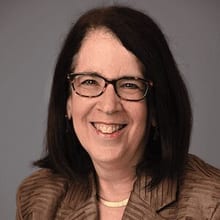
In this episode of the Bendy Bodies podcast, Dr. Linda Bluestein, the Hypermobility MD, has an in-depth conversation with Dr. Clair Francomano, a leading expert on connective tissue disorders and Chair of the Medical and Scientific Advisory Board for the Ehlers-Danlos Society. Dr. Francomano shares her insights on diagnosing hypermobile Ehlers-Danlos Syndrome (hEDS) versus hypermobility spectrum disorders (HSD), the current state of genetic testing, and emerging biomarkers (are we close?) that could revolutionize hEDS diagnosis. She discusses the potential connections between EDS, mast cell activation syndrome (MCAS), and postural orthostatic tachycardia syndrome (POTS), offering advice for patients navigating this complex landscape. With updates from ongoing research, this episode is essential listening for those with EDS or related conditions.
Watch
Guests
Transcript
[00:41] Dr. Linda Bluestein: Welcome back, every bendy body, to the Bendy Bodies Podcast with your host and founder, Dr. Linda Bluestein, the Hypermobility MD. Today, I'm going to be chatting with Dr. Clair Francomano, Chair of the Medical and Scientific Advisory Board for the Ehlers-Danlos Society. I'm so excited to chat with Dr. Francomano. Like many of you, I had an incredibly long diagnostic odyssey to getting my diagnosis of hypermobile Ehlers-Danlos syndrome. We're going to be chatting today about biomarkers, the difference between hypermobile EDS and HSD, if there actually even is one, and genetic testing. When is it indicated, and what red flags should we be looking for as clinicians?
Dr. Clair Francomano is an internist and medical geneticist and is internationally recognized for her work in the hereditary disorders of connective tissue. She has worked in medical genetics at Johns Hopkins, later joining the National Institutes of Health as an intramural scientist working as chief of the Medical Genetics Branch and clinical director for the National Human Genome Research Institute, and then as chief of the Human Genetics and Integrative Medicine Section in the Laboratory of Genetics at the National Institute on Aging. She served as director of adult genetics at the Harvey Institute for Human Genetics in Baltimore before moving to Indianapolis in 2019. Dr. Francomano has published over 150 articles in the peer-reviewed literature and has authored and edited 4 books. As always, this information is for educational purposes only and is not a substitute for personalized medical advice. Be sure to stick around until the very end so you don't miss any of our special hypermobility hacks. Let's get started.
[02:29] Well, it is so great to finally get to talk with you, Clair. I've just been wanting to do this for such a long time.
[02:37] Dr. Clair Francomano: It's really great to be here, Linda. Thank you so much.
[02:41] Dr. Linda Bluestein: Yes, absolutely. And I feel like I see you in different meetings and things like that, but actually getting to talk to you this way is something I've wanted to do for a really long time, and I hope everything's going okay in your corner of the world.
[02:56] Dr. Clair Francomano: Absolutely. Thank you very much, and I hope the same for you.
[02:59] Dr. Linda Bluestein: Well, very good. We know that there's actually been a lot happening lately, so we have more than usual to talk about. I'm really excited about that. I want to start with talking about generalized joint hypermobility, just because I feel like there's so much challenge surrounding things like the Beighton score. And then of course, we know that there's more specialized tests like the Upper Limb Assessment Score, the Lower Limb Assessment Score, and there's also the Five-Point Questionnaire, right? In your clinical practice, which of those tools do you feel is most helpful for assessing generalized joint hypermobility?
[03:38] Dr. Clair Francomano: So clinically, I'm using the Beighton score still. That's really the anchor and the one that I'm most familiar with and the one that I use. We are in the midst of a fairly large study looking at the diagnostic criteria for hypermobile Ehlers-Danlos syndrome and hypermobility spectrum disorders. And part of that study is utilizing some of the measures from the upper limb and lower limb hypermobility assessments.
[04:15] I would say stay tuned because it's likely that we will be making some recommendations based on that study to incorporate those additional measures, to add them in with the Beighton.
[04:28] Dr. Linda Bluestein: And when I was diagnosed, I had a high Beighton score at that time, but now, actually, I guess it's a little over a decade later, my Beighton score is a lot lower through injuries and surgeries and things like that. So I would fall into the category personally of historical generalized joint hypermobility, as do lots of our patients, right? So, if you have somebody who you feel like does fit the current 2017 classification criteria for hypermobile EDS — otherwise, they meet the other parts of that criteria — but their joint hypermobility is more historical, how do you usually handle that situation?
[05:10] Dr. Clair Francomano: So if they tell me that they were able to do the maneuvers that we ask of them in the Beighton, but, for example, somebody's had surgery or they've had injuries or because of progressive osteoarthritis or something like that, they're not able to do them anymore, then I would take that historical hypermobility into consideration and I would still make a diagnosis of hypermobile Ehlers-Danlos syndrome.
[05:41] Dr. Linda Bluestein: That's exactly what I do. So I'm glad that I'm on the right track there.
[05:48] Dr. Clair Francomano: Just my opinion.
[05:50] Dr. Linda Bluestein: Yeah, right. I mean, we are all constantly evolving how we do things. And I definitely know from having so many great conversations with you and with all the team for Project ECHO that these situations are complex, right? And patients are very complex. It's easy to think that things should be really straightforward, but that's not how bodies work and that's not how science works.
[06:17] Dr. Clair Francomano: Exactly.
[06:18] Dr. Linda Bluestein: So speaking of complex, I want to jump into how we have people who fit the phenotype of hypermobile EDS or hypermobile Ehlers-Danlos syndrome, and yet we don't yet know the genotype. So if you could explain the difference between those two, and if you have thoughts about why we have not yet found a single gene for hypermobile EDS.
[06:45] Dr. Clair Francomano: So in genetics, we use the word phenotype to describe the person's presentation — what we see clinically or what they experience in their lives. So their history and their presentation, what we can examine in the examining room. The phenotype is the clinical presentation, and the genotype is the genetic sequence that underlies that phenotype. When we have a gene that is identified as underlying a specific genetic disorder, we can look at the sequence of that gene and say there is a variant in that gene which is the cause of the clinical phenotype.
[07:33] But for the hypermobile type of Ehlers-Danlos syndrome, because we don't have a single gene or even a set of genes that we can point to at this point, we're unable to go to the genome to make the diagnosis. And so for that reason, we're really dependent on the clinical diagnostic criteria to make the diagnosis. And that's why we use those 2017 criteria that all of us are so familiar with by this time.
[08:07] So why are we in this situation? There have been so many studies and such a lot of time and effort and money that's gone into trying to identify the genes that cause the hypermobile type of Ehlers-Danlos syndrome. And I think there are a number of possible reasons why we don't have an answer still. The HEDGE study is ongoing, and the analysis of that data is still in progress. And I think it's still possible that we may find something that will contribute to our understanding of the hypermobile type of Ehlers-Danlos syndrome.
[08:50] It's possible that there are just many, many genes that underlie it. There's an example in genetics of hypertrophic cardiomyopathy — hereditary hypertrophic cardiomyopathy has something like 24 or 26 different genes that cause it. And so that's another phenotype that took a long time for people to dissect because there are conflicting signals when you look at the genome, when you look at the genetic sequences, when there are that many different genes that are contributing. So that's one possibility.
[09:38] Another possibility is that the underlying mechanism is something outside of the realm that we're thinking in. We're thinking about hereditary disorders that involve the connective tissue and the structural proteins of the connective tissue. And maybe it's more of an inflammatory issue. And we're looking under the lamppost — if you could say that's the light that we're shining on it, we're looking at specific genes for structural proteins, and maybe we're not looking in the right place. So that's one of the things that the team involved with the HEDGE analysis is really looking at. They want to make sure we have the whole genome — we sequenced the whole genome, so we have all those other genes; we just have to interrogate them. And of course you've got 3 billion base pairs for each participant, so it's a lot to look through.
[10:55] I think those are the two really major possibilities. Another possibility — a reason why we may not have an answer right at this moment — is that it's not a monogenic phenomenon, but that there are multiple genes, and the interplay of those multiple genes is contributing to the phenotype. We have several examples of that in genetics also, where you have to have a variant in two different genes in order to express the phenotype. So if that's the case, it's going to take us a little longer to figure this out.
[11:39] We know the condition runs in families. It looks for all the world like a Mendelian disorder. It looks like an autosomal dominant condition. So I just think we have to keep looking. We're not giving up hope.
[12:02] Dr. Linda Bluestein: Well, I think it's actually really exciting that there is obviously this massive amount of data to be looked through. And I think it's great that you're looking under all of these different lampposts, as you said, because it could be that what we thought is very different than what actually is the case. It's really exciting.
[12:27] Dr. Clair Francomano: Yeah, it's a very exciting time, really, because we have never been in the situation to really have the tools and the means to just go after it. And there's a lot of interest and enthusiasm to do that right now.
[12:45] Dr. Linda Bluestein: Yeah, that's really, really exciting. So the 2017 classification criteria for hypermobile EDS are being revisited. But of course, all of these things take a considerable amount of time, right? There's a lot of work that happens behind the scenes that I think a lot of people are not aware of. In the meantime, that's the set of criteria that we are generally going by when we're looking at somebody clinically — do they or do they not have hypermobile EDS, or would they fit more into the category of HSD? And we know that the third part of that diagnostic criteria is exclusion of other conditions. How do you approach satisfying that Criterion 3?
[13:32] Dr. Clair Francomano: Well, I have a list of what I consider to be red flags — signs in the family history or the person's personal history that make me wonder whether there might be either another type of Ehlers-Danlos syndrome causing the person's hypermobility, or a different hereditary disorder of connective tissue altogether. I go through those red flags when we take the family history and also when I'm collecting information about the person's personal history. And then there are certain things that I look for on my clinical exam that are also red flags to me — that say this is a little unusual for hypermobile Ehlers-Danlos syndrome, it's not our garden variety hypermobile EDS.
[14:30] Whenever anything comes up in the family history or the personal history or on the exam that seems out of the ordinary or is on that red flag list for me, then we do genetic testing.
[22:10] Dr. Linda Bluestein: And that was going to be my next question about when you do genetic testing. So it's when you have one of those red flags?
Dr. Clair Francomano: Yes.
Dr. Linda Bluestein: Normally? Okay. And is that something that maybe we could put in the show notes? Because probably a lot of people just heard that and they're going to think, "I would like to know what those red flags are." Because of course we know that there's also confirmation bias, right? A lot of people — and we're going to talk later about direct-to-consumer testing and all of the challenges with that — we know a lot of people are resorting to tools like that because it is so hard to get in to see a geneticist. And sometimes they get back a variant of uncertain significance or something like that, and then they look up what the closest condition that might be associated with it is, and then they see some of the different features, and then they think, "Oh, well, I have that, I have that, I have that." And so it's very easy to be led down a path that is more scary.
Dr. Clair Francomano: Yeah. There's a table of the red flags that we published in the book Symptomatic, which came out in January of 2024, just this last year. I can send you that table, and I'm happy to share it with your listeners.
Dr. Linda Bluestein: That would be wonderful. So if somebody does not have those red flags, then generally speaking, you usually do not do genetic testing. Is that safe to say?
Dr. Clair Francomano: Yeah, that has been my practice. For some time I did do genetic testing, and we've done genetic testing as part of a number of different research projects for several years now — many years — starting back when I was at the National Institute on Aging. And we just don't find anything. We find variants of uncertain significance. But if you look at the HEDGE data with the whole genome sequencing, those are people who were diagnosed clinically as part of HEDGE. We did not find any pathogenic variants in any of the genes that cause other types of EDS or other hereditary disorders of connective tissue. There were a few people who were enrolled in HEDGE after COVID hit, and those are people that we didn't have an opportunity to see clinically. And so in some of those people — really less than a handful — we found pathogenic variants. But for the most part, if we saw them clinically and came to the conclusion that this was hypermobile EDS, we haven't found any variants in other genes.
Dr. Linda Bluestein: That's really important and hopefully reassuring for people who are being assessed in person by somebody who is knowledgeable enough about these conditions and feels quite confident that they fit into the hypermobile EDS phenotype — that at least per the HEDGE group, none of them tested positive for a different type of EDS or a different hereditary disorder of connective tissue, if I heard you correctly.
Dr. Clair Francomano: Absolutely.
Dr. Linda Bluestein: On the topic of genetic testing, we know that cost has changed dramatically over the past 5 years, probably 3 years even. If somebody is going to be tested, do you normally order a connective tissue panel, or do you do whole genome sequencing, whole exome sequencing? How do you normally approach that?
Dr. Clair Francomano: Well, there's been a little bit of a shift in the landscape of the hereditary disorders of connective tissue panels just in the last month. My practice for the last — well, since I've been here at Indiana, which is the last 5 years — we've been sending panel testing for the hereditary disorders of connective tissue panel either to GeneDx or Invitae. And all that time up until just August of this year, both of those companies had an option for self-pay where you could get that panel done for $250 even if your insurance was not covering it.
So within the same month, Invitae was acquired by LabCorp and that self-pay option went away. And GeneDx has now eliminated the hereditary disorders of connective tissue panel from their menu, from their offerings. So we don't have that option anymore. Now LabCorp is in-network for most insurance companies, so the people from Invitae have been pretty reassuring that the testing is going to be covered to a greater degree even than they were able to offer it before. We just don't have enough experience yet in this new environment with Invitae rolled into LabCorp to know what the costs are going to be for patients in this setting.
But I still prefer — if it's an option to do the hereditary disorders of connective tissue panel — I prefer to do that rather than the exome, because we have so much greater chance of finding variants of uncertain significance when we do the exome. We know that people vary from one to the other. When we look at the genetic sequence, the variation is about 0.1% — that's 1 in 1,000 base pairs. So for every 1,000 base pairs that we sequence, we're going to find a variant that we have to explain somehow. It's either going to be likely benign, benign, a variant of uncertain significance, likely pathogenic, or pathogenic. And so I prefer to narrow the number of genes that we interrogate just because it gives us less of a chance of finding those variants of uncertain significance, which are unnerving to people. Even if we can say that we just don't know, it raises questions in people's minds and it's difficult. So if we can minimize the number of those that people have to navigate, I think it's better.
Dr. Linda Bluestein: Yeah, that's interesting because I encountered that when it was recommended that I have a cancer panel done because I have a very small family and had had some things happen. They recommended that I do this panel, and they asked me — it was going to be done through Invitae — how many genes did I want? Did I want the smallest or the largest that they offered, which I think was around 100? And I said I wanted the largest, thinking I could handle it if I got back a variant of uncertain significance, which of course I did. Luckily, nothing pathogenic. But you're right, it kind of is in the back of your mind, and people can find that stressful.
[22:43] So you're saying that until we have more data, doing the connective tissue panel is the most helpful because it can rule out the genes that we know cause vascular EDS or some of these other more rare subtypes, and we're not then confusing the picture or making a person anxious over variants of uncertain significance. Did I understand that correctly?
[23:15] Dr. Clair Francomano: That's exactly it. Yeah.
[23:18] Dr. Linda Bluestein: And we know that stress plays a role in symptoms for sure.
[23:21] Dr. Clair Francomano: For sure. Yes, absolutely. For people with EDS, the dysautonomia symptoms, the mast cell symptoms, all of those things are really exacerbated by stress. You don't sleep well when you're stressed, and that makes pain worse. So yeah, we definitely want to minimize stress.
[23:39] Dr. Linda Bluestein: Yeah. I remember when my pain was at its worst and my doctor was telling me to take some deep breaths. She definitely could have done a better job of explaining that it doesn't matter what is causing the pain — stress will make the pain worse. I felt like instead she was making me think that there was no actual cause of the pain other than what I was generating in my own head.
[23:44] Dr. Clair Francomano: Right.
[24:13] Dr. Linda Bluestein: But I think that's a helpful concept for people to understand. And like you said, the dysautonomia symptoms get worse, mast cell activation syndrome, etc. Okay, so I bet you won't be surprised at this next question. Hypermobile EDS versus HSD — is it possible they're the same condition? And we are going to talk in a little bit about the fibronectin paper that recently came out, but more from a genetics standpoint. What are your thoughts on that?
[24:46] Dr. Clair Francomano: I do think there's a very good chance that when we separated those things out, we didn't do a good service to our patients. I mean, I was there when it happened. I wasn't on the subcommittee that was dealing with hypermobility, and I completely understand we needed a more rigorous diagnostic set of criteria for hypermobile Ehlers-Danlos syndrome. But the information that we've gained over the last — well, it's 7 years now, right, since 2017 — we recognize that the prevalence of the comorbidities is very comparable between people who are diagnosed with hypermobile Ehlers-Danlos syndrome and hypermobility spectrum disorder, generalized hypermobility spectrum disorder.
[25:41] And I have families where one person meets the diagnostic criteria for hypermobile Ehlers-Danlos syndrome, and then there are other people who don't meet the diagnostic criteria. By the rigid criteria, we would have to say that one of them has HSD and the other one has hypermobile EDS. And then this fibronectin paper that you're mentioning suggests that the biomarkers are very similar from one to the other. So this is another thing that I think we're really going to have to look at very closely in the diagnostic criteria study. And it's one of the things we're going to be focusing on when we do the analysis of that data.
[26:36] Dr. Linda Bluestein: And on the opposite side, sort of — do you think that it's possible within a family for one person to meet the criteria for hypermobile EDS, but for another member of the family to have vascular EDS, for example, or have crossover types within a person even?
[26:57] Dr. Clair Francomano: So, it's theoretically possible. We know that vascular Ehlers-Danlos syndrome can occur as the result of a new variation in the DNA of the gene which causes vascular EDS, which is called COL3A1. So if a mom, for example, has hypermobile Ehlers-Danlos syndrome, it doesn't protect her from having an egg that would have a new variant in COL3A1 — that could happen. Another thing that could happen is she may have a partner who has vascular Ehlers-Danlos syndrome. So a mom with hypermobile EDS and a dad with vascular EDS could have a child with either one or both of those conditions.
[27:54] People tend to think about vascular phenotypes in hypermobile Ehlers-Danlos syndrome. And I think sometimes that's a source of some confusion, because we think about POTS as a vascular or cardiovascular phenomenon in some ways, and the bruising is a result of subcutaneous blood vessels being particularly fragile, so they bleed. And so people who are not familiar with the type of vascular complications that we see in the vascular type of EDS think that they have some vascular manifestations, even though what they really have is hypermobile Ehlers-Danlos syndrome.
[28:48] So I think it's important to make that distinction and for people to know that the kinds of vascular phenomena that we see in vascular EDS are the ruptures of those medium-sized arteries in the abdominal cavity — things like the hepatic artery and the splenic artery and the artery that goes to the stomach. We can also see dissections and ruptures in the carotid arteries in vascular EDS. But the POTS-type symptoms and the easy bruising and things like that are not things that make us worry about vascular EDS.
[29:32] Dr. Linda Bluestein: Okay, I think that's really important. A couple of times when I did post about vascular EDS, I had so many comments from people that were so concerned about that. And yes, it did seem like a lot of the things that they were sharing didn't fit into those red flags that we talked about. I think it's going to be really important for people to be aware of so that they can understand that distinction.
[29:58] Dr. Clair Francomano: Yeah. I think people have the same kind of confusion with the classical type of EDS also, because the hypermobility is a feature in both classical and hypermobile EDS. And the soft skin, stretchy skin is something that's seen in both. So it's really a matter of degree for the stretchiness of the skin. And those really extreme scars that people see on the shins — to me, that's the big giveaway for the classical type when I'm looking at somebody in the office. I always look at their shins first.
[30:44] Dr. Linda Bluestein: Interesting. Okay. And when you look at their shins, what are you looking for specifically?
[30:49] Dr. Clair Francomano: So often people with classical EDS will just have tremendous bruising up and down their shins, and they often have these scars that are described as fish mouth scars. They're kind of like a V-shaped or U-shaped scar. Children often get them when they start toddling around and walking into furniture and things — the skin just splits and then it doesn't heal very well, and you get really prominent scars that are sometimes described as hemosiderotic. It looks like there was blood there and then the bruising just never goes away, so they kind of darken in color and they're quite characteristic. These very scarred shins are a real giveaway for the classical type of EDS. And then of course the stretchiness of the skin is also much more pronounced than what we see in the hypermobile type.
[32:01] Dr. Linda Bluestein: And that definitely speaks to the benefits of having an in-person evaluation, especially for that first visit where you can actually feel someone's skin — not just having them show you on camera. I always make sure that if I'm having a new patient, that first visit is always in person.
[32:18] Dr. Clair Francomano: I agree completely. I mean, we were really handicapped during the COVID years when we weren't seeing patients in person. I still have a few people that I saw for their first appointments by telemedicine, and we're trying now to bring them in to make sure that we've got a really good in-person evaluation.
[32:47] Dr. Linda Bluestein: Okay, we are going to take a quick break, and when we come back, we are going to touch on TNXB, the kallikrein variant, fibronectin, the skin biopsy paper, what to do if you can't get in to see a geneticist, and then we'll chat if we have more time. We'll be right back.
[34:28] We are back with Dr. Francomano and have so many other fantastic topics to dig into. First thing I want to ask about is TNXB and what your thoughts are on whether this has a contribution to the hypermobile EDS phenotype. Is this something that we need testing for, or what are your thoughts on that?
[34:51] Dr. Clair Francomano: I think this is something we really need more information about. The HEDGE team has been looking at the TNXB gene and really interrogating the sequence that we have for TNXB, and they are not really coming up with much. It's been a little bit of a surprise to me. We know that there is a phenotype associated with biallelic variants — so two copies of a TNXB variant — which causes an autosomal recessive phenotype that looks more comparable to the classical type. It's what we call classic-like. And some of the children of people who have 2 copies of a TNXB variant have a phenotype that looks more like the hypermobile type of Ehlers-Danlos syndrome.
[35:58] So in my mind, I had been thinking that it's possible that heterozygous variants — or single copies of those TNXB variants — could be one cause of hypermobile Ehlers-Danlos syndrome. But based on the data that we have so far from HEDGE, it's really not that promising.
[36:25] Dr. Linda Bluestein: That's so interesting. And when it comes to variants of uncertain significance — we talked about those before the break — you mentioned that they could fall into different categories: likely benign, benign, variant of uncertain significance, likely pathogenic, pathogenic. Can you explain that a little bit more and basically how people should view it if they do get testing and it comes back with some variants of uncertain significance or VUSs?
[36:59] Dr. Clair Francomano: Absolutely. So the American College of Medical Genetics came up with a set of algorithms that allow us to assign variants into one of five categories. They're either going to be pathogenic or disease-causing, likely pathogenic, a variant of uncertain significance, likely benign, or benign. One thing that these algorithms use, for example, is the frequency of the variant in population databases. There are a couple of different databases out there now that tell us how common specific variants are in particular genes. So if a variant is present with a frequency of like 10 or 15% in the general population, it's not likely to be causing a rare condition. That's one thing that makes it more likely to be a benign variant — if it's got a high frequency in a general population database.
[38:21] There are also programs that we can run that predict the likely effect of the variant on the protein structure and function. If the variant is unlikely to really change the structure or function of the protein encoded by that gene, then it's not likely to be pathogenic — it's more likely to be benign. There's a long list of different factors that are taken into consideration. But the diagnostic laboratories run each variant that they find through these algorithms and come up with an assignment based on the probability generated by those algorithms.
[39:17] So if it's a pathogenic variant, it's probably either been seen before or it's a type of variant that is known in that gene to cause disease in other people. If it's a variant that's been seen frequently in unaffected individuals, it will be classified as benign, and so on. The variants of uncertain significance are the ones where we just don't have enough information. Maybe the in silico computer models say that it possibly might change the structure, but we don't really know. Or it might be in the population databases — not very common, but not absent either. So there just isn't enough information and it can't be classified one way or the other.
[40:21] Sometimes we can do family studies. For example, if a person has classical Ehlers-Danlos syndrome and they've inherited that from their mom, and we find a variant in one of the type 5 collagen genes that's a variant of uncertain significance, we can test the mother and see if she also has it. If she does, that's a little bit of additional evidence that it could be a pathogenic variant. But if that variant was inherited from the dad who's not affected with classical EDS, then it's unlikely to be explaining the phenotype in the patient. So the family studies can be helpful — they're not always helpful, but they can be helpful.
[41:12] And then if we don't have any additional information from family studies, or for whatever reason we can't get family studies, we just recommend to people that they come back and let's look at it again in a year or two, because we're getting more and more information all the time. The variant databases are growing by leaps and bounds, and the information we have about variants is growing by leaps and bounds. So in 2 years, we may be able to say one way or the other where we're not able to say now.
[41:45] Dr. Linda Bluestein: That makes sense. And when you were talking about doing the family studies, I don't know if you've made this observation, but I feel like we've talked about this maybe a little bit in the ECHO groups — not something that's been studied necessarily per se, at least at this point in time — but that over the generations it does maybe seem like people are being more affected. Is that something that you've observed in your patients? That the younger patients seem to maybe have a greater impact from hypermobile EDS than older generations?
[42:20] Dr. Clair Francomano: I've heard people say that, but it's not something that I've personally witnessed or could testify to. There is a phenomenon that we recognize in genetics called anticipation, where children in subsequent generations are more profoundly affected by the condition than the previous generations were. And typically that phenomenon is caused by variants in a gene that has multiple triplet repeats. We know that as those variants are passed down from generation to generation, they're more likely to expand — the number of repeats of those triplet repeats gets larger in subsequent generations, and the phenotype is more profound when there are more repeats in the gene.
[43:36] So that process of anticipation is something that's recognized in genetics, but we haven't found any triplet repeats underlying the hypermobile type of Ehlers-Danlos syndrome yet. And I just don't know. It does seem like some of the comorbid conditions are definitely more recognized now. I never thought about mast cell activation or allergies, or even the dysautonomia kinds of things — they didn't really seem to be part of the clinical picture when I was first learning about Ehlers-Danlos syndrome, which was in the '80s. So about 40 years ago.
[44:27] Dr. Linda Bluestein: Wow.
[44:32] Dr. Clair Francomano: But I don't know if that's because we didn't know enough to look or because they weren't there.
[44:40] Dr. Linda Bluestein: Right. It's really hard to know.
[44:41] Dr. Clair Francomano: It's really hard to know.
[44:44] Dr. Linda Bluestein: Yeah, it just seems like there's a not insignificant number of people in their 20s, late teens, who are quite significantly impacted and whose quality of life is quite poor. And I just don't remember when I was that age having any friends — I mean, obviously if you're talking about the prevalence potentially being low enough that you wouldn't necessarily know somebody — but it just, maybe now that I'm in this world, it seems like there's more people than there really are because you're biased by who you see. But maybe that's part of the COVID effect, of people having activation of their immune system from this novel virus and that having impacts. I was just curious.
[45:32] Dr. Clair Francomano: Yeah, I really do think there's more awareness now, and that's a good thing. It's definitely a good thing. I credit the Ehlers-Danlos Society, who has done a huge amount to bring awareness about EDS to the general population. I think people are being diagnosed more readily now than they were 10 years ago because of those efforts. It's very hard to say.
[46:11] Dr. Linda Bluestein: Sure. Okay. And let's talk about biomarkers for a minute. We know that there have been a lot of different things that have probably been looked at over the years. I mentioned briefly the fibronectin paper. We know that there was the MUSC study where they looked at the kallikrein variants. They also talked about whether the complement system is perhaps involved. And you mentioned earlier — is it possible that the immune system, that there are more inflammatory conditions than we realized involved in these processes? How close do you think we are to having biomarkers?
[46:51] Dr. Clair Francomano: So the paper from Marina Colombi that was just published in the last couple of weeks is very promising. She's found these markers at the amino-terminal end of fibronectin as being pretty prevalent among patients with the hypermobile type of EDS and in HSD — which is interesting — but not in some of the other types of Ehlers-Danlos syndrome, and not in some rheumatologic conditions she looked at as well. So it seemed to be both sensitive and specific for hypermobile EDS and HSD. That's a very promising line of inquiry, and I think people are very interested in seeing some replication studies to try to verify that this is a useful biomarker. It would be so helpful to have a concrete test to offer people to make a diagnosis rather than being entirely dependent on the clinical criteria. That would be really, really helpful.
[48:19] And then it also might lead us to think about what kind of rational therapies that understanding might bring us to, with a little bit more knowledge about the underlying connective tissue physiology or pathology. The kallikrein study from MUSC is also extremely interesting. I know a number of people are working on trying to replicate that right now. Unfortunately, it still has not been published in the peer-reviewed literature, and so we're still kind of in limbo. I think we still just need more information about that in order to know whether it's going to pan out as a marker or not.
[49:06] Dr. Linda Bluestein: That makes sense. Okay. One of the listeners submitted a question about whether we want to call it the triad of MCAS, EDS, and POTS, or the pentad — adding in autoimmune and GI — or the septad. I mean, we see a lot of these things traveling together, right? Do you think that the comorbidities are truly separate conditions, or do you think that this is perhaps all part of one multisystemic condition?
[49:47] Dr. Clair Francomano: I've been thinking about it as all part of one multisystemic condition. As I said earlier, we have been thinking about hypermobile EDS and HSD as disorders fundamentally of the connective tissue. And we know that the connective tissue plays a really important role in, if you can call it, the education of the mast cells. We also know that the autonomic nervous system can be profoundly impacted not only by the mast cells but also by disruption of the craniocervical junction. And we can get venous pooling as a result of venous insufficiency from the legs. So we can think of ways that the underlying connective tissue issues may be contributing to some of these phenotypes. The GI issues are related to the dysautonomia, and they can also be related to the mast cells. It is just one huge big Venn diagram with overlaps everywhere you look, right?
[51:07] And you can imagine — we could create a story that explains how the connective tissue is contributing to all of these various things. But as I said earlier, it's possible that we're thinking about it in an entirely upside-down way, and that when we understand more about the pathology, we will recognize that the connective tissue involvement was the secondary issue. So I think we have to keep an open mind about it at this point — and take care of each symptom and problem for the patients in the very best way that we can while we're sort of operating in the dark.
[51:56] Dr. Linda Bluestein: Right. And I think that's one of the challenges that people face, right? Because so frequently we see people who have problems in so many different bodily systems. You and I are used to that, and other people who are in this space, but a lot of other physicians are looking for things within one system. And if you start talking about problems in other systems, that becomes problematic from the standpoint of getting good care. We know that there are a lot of challenges with our healthcare right now. Do you think there's a way that patients can approach that in a way that might help them be understood a little bit better? And we know medical trauma is so prevalent — you've written some great papers about this. Do you think there's a way that a patient can present this where they would be less likely to be gaslit?
[52:56] Dr. Clair Francomano: I think one of the most important things is finding a primary care doctor who's going to be in your corner — someone who really understands the multifaceted nature of this condition. And then it helps to have the referral coming from the primary care doctor, and I think it gives validity to that referral if it's from a knowledgeable PCP.
[53:24] If people are going to specialists, I think it serves them well to just try to deal with the one issue that they're going in to talk about, because it is really, really challenging. I don't know about you, Linda, but when I was in medical school, I was taught that if everything is wrong, probably nothing is wrong.
[53:54] Dr. Linda Bluestein: Yes, yes.
[53:55] Dr. Clair Francomano: And I think there are still a lot of doctors out there with this mindset that if you have a pan-positive review of systems — if you ask about every system and there's a problem in every system — it's not real. And we know that is not the case for our patients. They have very, very real issues in almost every organ system. So it's important if you're dealing with a new physician or new practitioner to just really focus on that one thing that you know they'll be able to help you with and not get into the whole nine yards.
[54:40] Dr. Linda Bluestein: So if you're seeing a neurologist, to focus more on your neurologic symptoms and not necessarily expect them to address your gastrointestinal symptoms, right?
[54:49] Dr. Clair Francomano: Or your mast cells and things like that, yes, right.
[54:53] Dr. Linda Bluestein: Even though they might all be relevant and may be playing a role.
[54:53] Dr. Clair Francomano: They definitely might. And the other thing is to try to find people who are knowledgeable. That's one of the things the Ehlers-Danlos Society Centers and Networks of Excellence were really working to put out there — where people can get care from knowledgeable clinicians who are aware of the multifaceted nature of the problem. Right now we have about 37 centers and networks around the globe, but it's not nearly enough. It's a start. And the other place people can look is the healthcare professional directory at the Ehlers-Danlos Society webpage to try to find people who have experience with these multiple different issues in EDS.
[55:54] Dr. Linda Bluestein: The group that I am part of — we are a network, not a center — but I am part of the Colorado Network of Excellence, which is very exciting. That was just awarded within the last couple of months from the Ehlers-Danlos Society. So I'm very excited to be a part of the Colorado Network of Excellence, based mostly out of the Denver area. Those kinds of resources I think are really, really important for patients to have. So what about patients who really want to see a geneticist, and/or they're told they need to see a geneticist for a diagnosis, but there are obviously long wait lists? What do you recommend that they do?
[56:45] Dr. Clair Francomano: I think getting on those wait lists makes sense — the time is going to go by. And look for genetics practitioners all over; try to find one that's accepting patients. Unfortunately, we are in this situation where there are a number of genetic practices in academic medical institutions where they're not seeing patients with hypermobile Ehlers-Danlos syndrome anymore. So this is really difficult.
[57:21] And I think we're going to have to get away from the idea that it has to be a geneticist who makes this diagnosis, because really those criteria are very straightforward. A primary care doctor who's knowledgeable about the criteria can easily make the diagnosis. The most important thing is for them to be able to recognize those red flags and to know to look for them. So if we can make those available, and find primary care doctors, rheumatologists, neurologists, physiatrists — we even had a really great discussion on the ECHO program a couple of weeks ago about physical therapists making the diagnosis, and it can be done. The geneticists are a limited resource. There aren't enough of them, and I don't think that should be a barrier to getting a diagnosis for hypermobile EDS. We should be able to have the diagnosis made by other specialists, other practitioners, and move forward in the care of the symptoms without having to wait 3 years to get a diagnosis.
[58:49] Dr. Linda Bluestein: Yeah, definitely. But if someone is being evaluated by a physical therapist, of course they're doing their own assessment of movement and they're used to doing an assessment and making an evaluation. I don't know exactly how it works in terms of their diagnosis — is it processed from the standpoint of insurance and/or being listed as one of their ICD-10 codes in the same way as if you or I make the diagnosis? Do you know about that?
[59:14] Dr. Clair Francomano: I don't really know. But I think that a physical therapist could certainly raise the question of possible Ehlers-Danlos syndrome and send that person back to their primary care doctor, and then the primary care doctor could establish the diagnosis and put it in the ICD-10.
[59:41] Dr. Linda Bluestein: Yeah. It was my physical therapist who first said to me, "You have very hypermobile joints." And I honestly had no idea what that meant, even though looking back, I realized that I had so many doctors who told me I had extremely excessive range of motion of multiple different parts of my body, but they never said anything about what that might mean. And I didn't actually really think about it until I started having a lot of problems, and then you start to really try to get more information.
[1:00:14] That's an excellent thought — that somebody could talk to their physical therapist and ask them to provide some kind of documentation that they can then take to their PCP. And/or if they're in the same system, the PCP can look at the physical therapist's note and see that the physical therapist commented that they had numerous hypermobile joints and had this concern. So that is a good idea.
[1:00:38] Okay. I want to make sure to talk about direct-to-consumer testing before we wrap up, because I feel like that's something that is really challenging. When people can't get in to see a geneticist, and they may or may not be able to get their primary care doctor to really listen to their concerns, validate their concerns, and order the kind of tests that they feel like they need, a lot of people are resorting to that kind of thing. What are your thoughts on direct-to-consumer testing? Are there times that it is appropriate? Is it more harmful than good?
[1:01:10] Dr. Clair Francomano: I'm not a big fan, I have to say. But the direct-to-consumer testing does come in different flavors. It's very important for people to know that 23andMe, for example, is not going to give them any information that's relevant to making a diagnosis of EDS of any type. The 23andMe technology is looking at what we call single nucleotide polymorphisms — it's not sequencing the DNA. It's just looking for the presence of variants that are known to be more common in certain diagnoses than others. I've had people who've come in who've been told that they have vascular Ehlers-Danlos syndrome based on 23andMe. And this is just not accurate and not good. So, don't rely on Ancestry or 23andMe for that. They're great for looking into ethnicity and finding relatives and things like that, but not for making genetic diagnoses.
But there is direct-to-consumer testing that's available through Invitae, for example, which is a very reputable company. They are doing sequencing, and they require that you meet with a genetic counselor before you have the testing — that genetic counselor will explain the possible outcomes. So that is an entirely different thing, and I think much more likely to come up with valid information. But we come back again to those variants of uncertain significance, which are inevitable whenever we look at DNA sequencing. So it's important for people to know that's a possible outcome and to be prepared to deal with that uncertainty.
[1:03:23] Dr. Linda Bluestein: Okay. And if somebody does want to obtain testing themselves through a company like Invitae, is it possible to get their insurance to cover that? Or because they're doing it on their own, they're probably going to be self-pay.
[1:03:41] Dr. Clair Francomano: Yeah, I think if the test has not been ordered by a physician, it's unlikely that an insurance company is going to pay for it. I really don't know since Invitae has been acquired by LabCorp what the implications of that for self-referral are either. I don't know if there's been a change in that or not.
[1:04:05] Dr. Linda Bluestein: And another company that I've heard of is either Sequence.com or Sequencing.com, something like that. Do you know if that falls more on the 23andMe side or more like a medical — are you familiar with them at all?
[1:04:21] Dr. Clair Francomano: I've seen them advertised, but I don't really know whether they're working with genetic counselors or — I really don't know very much about it.
[1:04:30] Dr. Linda Bluestein: I heard someone describe this situation the other day, and I think it's very accurate — in some ways this is kind of like the gold rush. You see a lot of these companies put Ehlers-Danlos on their website; they're trying to attract this population of people who is concerned about it and thinks that they might have it. And it has become in some ways the much more popular thing to put on your website or discuss. And of course, it's great in most every way, but we also want to make sure that people are not being taken advantage of by charlatans. So that's hard.
[1:05:15] Dr. Clair Francomano: Absolutely. And there's one of those companies — maybe that sequencing.com — that's advertising sequencing for the kallikrein genes, which both the MUSC folks and the Ehlers-Danlos Society have put out a joint statement saying it's premature to be testing for those. So I think we have to be aware of that. It speaks 100% to what you're saying — we just don't want people to be taken advantage of.
[1:05:50] Dr. Linda Bluestein: Yeah, it's definitely a vulnerable population. And well, we want people to get information and obviously we want them to get better care, but we also want to be careful about where people are looking. I'm sure you see the same thing — some of the things that people have tried or some of the places that they've gone.
[1:06:10] Dr. Clair Francomano: Yes.
[1:06:12] Dr. Linda Bluestein: Often spending a lot of money. Are there red flags that you would want to share with people that might be a sign to run? I always say the word "cure" — if you see "we can cure Ehlers-Danlos," we can't do that yet.
[1:06:37] Dr. Clair Francomano: Right. And certainly if they're advertising to diagnose hypermobile Ehlers-Danlos syndrome with molecular testing — at this point in time, nobody can do that. So I would say that would be a big red flag.
[1:06:55] Dr. Linda Bluestein: All right. I like to finish every episode with a hypermobility hack, a quick win for listeners. Do you have one that you can share with us?
[1:07:02] Dr. Clair Francomano: You know, I've done so much work with the Ehlers-Danlos Society, Linda, and I really think that their website is the biggest hypermobility hack out there because there is so much information there that people can find in terms of making a diagnosis of Ehlers-Danlos syndrome. All the diagnostic criteria are on there, everything from the 2017 publications, all the information about the centers and networks of excellence, and the healthcare professionals directory. So I would just really encourage people to seek out that Ehlers-Danlos Society website for a lot of really good information.
[1:07:50] Dr. Linda Bluestein: Yes, the work that the society has done has been just incredible in this space. The advances and everything that they're responsible for is really amazing. And the website is ehlers-danlos.com, correct?
[1:08:03] Dr. Clair Francomano: Yes.
[1:08:04] Dr. Linda Bluestein: Yeah, there are lots and lots of resources there, so definitely check it out. Well, thank you so much for joining me today. I've just had such a great time chatting with you.
[1:08:17] Dr. Clair Francomano: I've really enjoyed it. Thank you, Linda.
[1:08:19] Dr. Linda Bluestein: Before we go, I just have one other quick question. I would love to know if you have any special projects that you're involved in or research that you're doing, and also where we can find more about you.
[1:08:32] Dr. Clair Francomano: Well, there are a number of projects that I'm working on at this time. The HEDGE study is ongoing, and that's a really big one that I've been working on for several years with Dr. Woody Gandhi and the Ehlers-Danlos Society. And the analysis right now is under the direction of Joel Hirschhorn and Christina Lekatis. I'm working with Dr. Alan Hakim on the clinical criteria study, and we have a study that's looking at the role of sex hormones in the phenotype of hypermobile Ehlers-Danlos syndrome. And we have a study that we just launched this year looking at the natural history of hypermobile Ehlers-Danlos syndrome and HSD. So there's lots and lots going on.
[1:09:31] My website — I think I sent you the URL from Indiana University. And I also have a YouTube channel that I've just really started up and running, with 10-minute videos talking about the various comorbidities and resources that are available to people. And we've been pulling some Instagram Reels from those YouTube videos, so there's an Instagram site as well, which is @DrClaireFrancomano.
[1:10:12] Dr. Linda Bluestein: Okay, fantastic. And we will have those links in the show notes so people can definitely access those sites as well. Well, thank you so much again. I've been wanting to do this for such a long time, and we finally did it.
[1:10:30] Dr. Clair Francomano: It's been a great, great pleasure. Thank you so much.
[1:11:38] Dr. Linda Bluestein: Well, that was such a fascinating conversation with Dr. Clair Francomano, who is chair of the Medical and Scientific Advisory Board of the Ehlers-Danlos Society. She really has the insight into everything that's going on in this space. It's really great to get this incredibly current and up-to-date scientific information from her.
[1:11:55] And I want to just thank you for listening to this week's episode of the Bendy Bodies with the Hypermobility MD podcast. You can really help us spread the word about joint hypermobility and related disorders by leaving a review and sharing the podcast. This helps raise awareness about these complex and misunderstood conditions. You can find me, Dr. Linda Bluestein, on Instagram, Facebook, Twitter, or LinkedIn @hypermobilitymd. You can find Human Content, my producing team, @humancontentpods on TikTok and Instagram. You can also find full video episodes up every week on YouTube at Bendy Bodies Podcast. If you would like to dig deeper, you can meet with me one-on-one by visiting the services page of my website at hypermobilitymd.com. To learn about the Bendy Bodies Program disclaimer and ethics policy, submission verification and licensing terms, and HIPAA release terms, or to reach out with any questions, please visit bendybodiespodcast.com. Bendy Bodies Podcast is a Human Content production. Thank you for being a part of our community, and we'll catch you next time on the Bendy Bodies Podcast.