Description
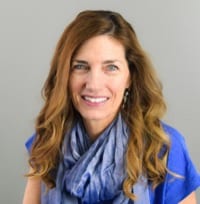
In this personal solo episode of the Bendy Bodies podcast, Dr. Linda Bluestein, the Hypermobility MD, opens up about her journey from aspiring ballet dancer to renowned hypermobility expert. Dr. Bluestein shares her struggles with joint pain, dislocations, and chronic illness, which led to her diagnosis of Ehlers-Danlos Syndrome (EDS). Along with her personal story, Dr. Bluestein reveals the hacks and strategies that have helped her regain function, manage pain, and improve her quality of life. From practical tips to movement strategies, this episode is packed with advice on navigating hypermobility and chronic pain. Whether you’re newly diagnosed or a long-time EDS warrior, you’ll find plenty of insights and hacks to apply to your own journey.
Watch
Guests
Transcript
[00:42] Dr. Linda Bluestein: Welcome back, every bendy body, to the Bendy Bodies Podcast with your host and founder, Dr. Linda Bluestein, the Hypermobility MD. Today we are going to do another solo episode where you guys are my guest. I'm going to be periodically doing these episodes and addressing some of your frequently asked questions. Please visit the Bendy Bodies website at bendybodiespodcast.com to submit your questions and also to sign up for the Bendy Bulletin. This is something we recently started and you will want to catch up on all the latest news. Also, be sure to stick around until the very end so you won't miss any of our special hypermobility hacks. As always, this information is for educational purposes only and is not a substitute for personalized medical advice. Let's get started.
[01:29] I would love to be able to tell you my story so you know how I ended up working as a hypermobility expert. This is not something that I necessarily planned to do, but it came as a natural evolution out of my love of science and medicine and also my love of dance. And a lot of people who are dancers are hypermobile.
[01:49] So I grew up as a young woman wanting to be a ballet dancer like so many people, and I had a lot of medical problems starting from an early age. I had asthma and allergies and GI problems, a lot of chemical sensitivities. I had abdominal pain and heartburn and started getting migraines, terribly painful periods, terrible allergies. I actually remember telling my mom that I wanted to die because my allergies were so bad. Because back at that time, we only had sedating antihistamines, and so I had the choice of either being super sedated all the time or dealing with my allergies. So I had to make it through school, so I ended up with terrible sneezing and wheezing, etc.
[02:34] So I really, really wanted to be a ballet dancer, but when that wasn't going to work out, I decided to go into medicine. And I chose UC Irvine as my undergraduate school because they have a really excellent dance program. I actually was going to either double major in dance and biology or minor in dance, but I was really afraid that I would ruin my GPA and that when I was applying to medical schools they would not look closely enough and realize that my less than optimal grades were all in my dance classes.
[03:16] So I went to medical school and everything was good. I decided to do anesthesiology for my residency and practiced as an anesthesiologist for many years before I started getting other health problems that really started to catch up with me. So a lot of the same things that I dealt with as a younger child, I started to deal with even more seriously. Again, lots and lots of joint problems and injuries and things like that.
[03:48] I had injured my knee very badly in a bike accident. For some strange reason, I decided that it would be a good idea to try mountain biking. And if someone is hypermobile and has a lot of injuries, that's a pretty difficult sport. I ended up with some pretty serious injuries from mountain biking and tore a bunch of things in my knee.
[04:12] I was at an anesthesia conference and was still recovering from surgery on my knee and was getting out of a kayak when my foot slipped and I got this shearing pain down my left leg, and basically it didn't leave me for a period of about a year and a half. During that time I was trying to figure out what was going on. I had several epidural steroid injections and a number of different medications and things like that. Nobody could really figure out what was going on until someone finally said, "Maybe it is this Tarlov cyst that you have around the S2 level." That's a very common place for Tarlov cysts to develop, and that's where there's an outpouching of the lining of the nerves, and it compresses the surrounding nerves. So somebody said, "I wonder if that's what's causing your problems." And the best way to figure that out is to get what's called a selective nerve root block.
[05:09] So I went back to the Mayo Clinic, and I had the selective nerve root block, and it took away my pain 100%. I got off the table, and I remember just bursting into tears because it was the first time in years that I was not in pain. And I had had more pain creeping up until this point in different parts of my body. Again, I had had a lot of different injuries, and I actually collided with someone on a dance floor and basically dislocated a nerve in my elbow. Everyone thought that was such a strange injury — how could that happen? And I had to have surgery where they actually took that nerve and buried it under the muscle in my forearm.
[05:55] So I had these other weird things happen, but again, nobody really connected them. When they realized that it was this Tarlov cyst that was causing these problems, I was also told, "We have no idea who you should go to because no one at the Mayo Clinic did those kinds of surgeries." So fortunately, I had a friend in Kansas City where the most well-known doctor for Tarlov cyst surgery, Dr. Frank Feigenbaum — who I've also interviewed for this podcast — operated. So I flew out there and stayed with my friend who's an anesthesiologist and saw Dr. Feigenbaum, and he said, "Yes, I definitely think this is what's causing the problem." And I actually ended up having surgery the next day.
[06:41] That was really amazing, and the recovery was really hard. You have to lay flat in the hospital — flat with a catheter in your bladder and things like that — for a number of days. So that surgery was quite difficult, but it was very, very helpful. I recovered eventually really well, although I did end up having to do a lot of extra work. I never liked swimming, but I figured out that swimming was the best thing to help recover from the surgery. So I would go every couple of days to the YMCA and swim laps. That was the first and only time really in my life that I really did much in the way of swimming, but it really helped me get my ability to move back and my confidence and things like that. And then I started to have physical therapy, and that really helped a lot as well.
[07:38] Somewhere along the way, I read that people with Tarlov cysts have a higher chance of having connective tissue disorders, and I started to read about EDS, or Ehlers-Danlos syndrome. And I realized when I was reading about Ehlers-Danlos that this was describing my life perfectly. Like many of you, I was the first one to come across any kind of information that made me think that this was what I had.
[08:07] So I asked a couple of my doctors, including my internist, who I'd been asking for years if he had any idea what was wrong with me. I kept asking him, "Why do I get injured so easily?" and "Why do I have so many seemingly unconnected problems?" And of course, he did not have any ideas. And even my physical medicine and rehabilitation doctor did not have any ideas, even though she knew that I had the Tarlov cyst. She had even commented that I had extremely excessive range of motion when she had been testing my neck range of motion and my lumbar spine and other joints. She never made that connection either.
[08:49] I also had been to Mayo Clinic where I had that orthopedic surgery on my elbow, and my orthopedic surgeon at Mayo Clinic said, "You have extreme elbow hyperextension," but he did not tell me why he thought that was the case or what that might mean. So I had all these people who had pointed out my excessive range of motion, but nobody told me what it might mean. They probably either didn't know or didn't realize that Ehlers-Danlos could present in a variety of different ways.
[09:21] So I also then saw a rheumatologist, and like many of you, I had a terrible experience with the first rheumatologist that I saw. I was in the exam room, and he came in, and my recollection was that the first words out of his mouth were, "Oh, you want something to be wrong with you." And I was like, no, I don't want something to be wrong with me. I know that there's something wrong with me. I just don't know what it is, and I need your help figuring it out. And basically, I left there feeling very dismissed and feeling like my concerns were not taken seriously. What he told me was to exercise in the pool, which actually probably was a very good suggestion. But he didn't have any other suggestions for me. And he said, "You don't want to have a rheumatologic condition." And of course I'm thinking to myself, yes, I know I don't want to have a rheumatologic condition, but I was concerned because I had so much pain — in so many parts of my body by this point in time — and I knew something wasn't right.
[10:29] So I ended up seeing a second rheumatologist, and he did not gaslight me at all. He was great. He did a very thorough physical exam, a very detailed history, and he told me, "I think you have Ehlers-Danlos." I didn't even realize until I looked back at my notes — I can't even remember why I was looking at my notes — but in his note, he actually said that he suspected the classical type of EDS. And I think definitely I fit more the hypermobile type, but that's what he had said in his note. So that was very helpful to finally have an explanation, but he also at the same time told me there's really not much you can do about it.
[11:12] So as I have said many times, I have spent the last — he told me this in 2012, so it's now been 12 years — but I especially spent the last 7 years trying to prove him wrong. I wrote my first article about hypermobility in 2017. I started it in 2016 after I was asked to write an article for a CMA journal. And when I was writing this article about pain management in joint hypermobility, as I was doing the research, I realized that I was far from alone. I realized that this affected a huge number of people, and even though I had practiced in the operating room for over 20 years, I realized that probably most people with these conditions are being missed. Most of the time, people are not asking the right questions. They're not taking enough time. They're not understanding how every system in the body can be affected, and therefore they're missing these diagnoses.
[12:15] Around March of 2017 is when the International Consortium released their criteria for the hypermobile type of EDS — the 2017 criteria. And when they released those criteria, I realized this is going to be huge.
[12:33] Interestingly, I also had surgery — I believe it was February of 2017 — on my nose, the second surgery on my nose, and ended up with an ulcer on my cornea. And so it was very painful to look at a screen or to read or anything like that. And again, having connective tissue that is suboptimal, we are at risk for having problems like what I had in my cornea.
[12:57] I was reading this new information about the 2017 criteria and hearing this webinar that the EDS Society did, and I immediately contacted the editor for the journal and told her, "I need to rewrite the introduction to this article because this new information was just released and we want this to be accurate. We don't want this to be outdated before it's even published." So that meant going back and trying to rewrite — read, write again — when I had this ulcer on my cornea, because now they wanted me to turn this around in a pretty short period of time. So I ended up getting that finished and got that article published.
[13:41] And I had people that started emailing me and asking me, "Where can I come see you?" And I had to tell them, "I don't have a practice. I don't see patients." In the meantime, I met Dr. Chopra. I had contacted him and asked him if he would review my article, which he very kindly did. And so I was speaking with him on the phone one day, and he said, "I think you need to open a clinic. And I will help you."
[14:14] So I ended up going to some conferences and spending a lot of time talking to Dr. Chopra and learning as much as I possibly could. And in November of 2017, I opened my clinic, my first clinic for EDS, and it was called Wisconsin Integrative Pain Specialists because at that time I lived in Wisconsin. Dr. Chopra had actually suggested that I make the title more broad so it wouldn't just be people who were bendy or have joint hypermobility that would be contacting me for assistance with their pain.
[14:48] So I opened my clinic and it got pretty busy fairly quickly and ended up moving to a new space in the beginning of 2019. And then of course we know what happened about a year later — the pandemic happened — and I ended up canceling my lease. I knew we were going to be moving from Wisconsin to Colorado in a relatively short period of time. So I canceled my lease and closed my clinic. I gave people some notice, but I canceled my clinic. And then I found out that there was so much that could be done with virtual sessions because a lot of the restrictions that had been existing previously were being lightened. So I realized that I could reopen my clinic and that I could do a lot of virtual visits, and I was able to get a number of different emergency licenses, including for Georgia and Nevada. I actually had a Washington state license for a while, and I got my Colorado license, of course.
[15:54] So when I reopened my clinic about a month later, I thought, I don't want to have Wisconsin in the name because I want this to be something that is much more not state-specific. So I reopened as Hypermobility MD. That was in May of 2022. And basically everything was virtual for quite a while because at that time we didn't even have a vaccine yet. So try to remember what things were like back then. There was a lot of flexibility for virtual practices because of the pandemic. So then I ended up moving to Colorado, and now I do in-person visits and I do virtual visits. So that's how I ended up becoming a hypermobility specialist.
[16:40] I was my own first guinea pig. Then I realized along the way that as an anesthesiologist, we do have training in the cardiovascular system, the gastrointestinal system, neurologic issues, pulmonary issues, the immune system — a whole bunch of different systemic parts of the body that are really applicable to people with EDS, and of course musculoskeletal being another big factor in there. So I realized, with the help of Dr. Chopra of course, that this was something that I should do — that if it worked for myself and I was able to improve my own pain and my own quality of life, that maybe it would work for other people.
[17:29] For myself, my pain went from pain — all big capital bold letters — to lowercase pain. And over time, that became less and less and less to the point where I could start to do more things. For a long time, I couldn't even walk the dog, and for about a month, I hardly even got off the sofa. So it was huge when I was able to start walking in the neighborhood and then walking the dog. And I remember before I had my spine surgery, at physical therapy, being on the treadmill and being able to go about 1.1 miles per hour for about 5 minutes. Some of you might hear that and think, "Wow, that's a lot." Some other of you might be hearing that and thinking, "That's not very much." For me, that was a huge difference from what I could do previously. Because before I fell off that mountain bike in 2009 and tore a bunch of things in my knee, I was probably in the best physical shape I had ever been in my life. I was incredibly fit.
[18:40] And it was really, really hard when I had this injury and suddenly couldn't exercise. When I was in pain all the time, I really had to do a lot of grieving because my life was not the same life that I had before. So I think that was just a really, really hard process. And then when I couldn't practice in the operating room anymore — and I think I just skipped over that part completely — that was also really, really hard.
[19:10] So after I had my Tarlov cyst surgery, I did get back to work, and I worked doing locum tenens for about 4 years. During that time, I traveled to hospitals all over Wisconsin. Basically, locum tenens is like substitute teaching, but for doctors. So I'd be going to all these small hospitals where if they had one anesthesiologist who was on maternity leave or medical leave, they would have to close an operating room, and that would be a huge loss of revenue for the hospital. So they really needed anesthesiologists very badly. They would contract with different companies to have people come in and do anesthesia for that hospital. So that's what I did for a period of about 4 years.
[19:56] And then I started getting pain in my wrist. This pain in my wrist started getting worse and worse, and of course I'm in the operating room and I'm seeing all these orthopedic surgeons. I had just gone to Walmart and bought a basic brace, and the orthopedic surgeons are asking me, "What's wrong? Why are you wearing that?" I had a number of them do a little brief exam on me, and they would tell me it was this thing or that other thing. I even had a couple of them go to their office and get me a nicer brace, which is really nice.
[20:26] And finally, I got in to see my own orthopedic surgeon — very, very frustrating, because my insurance company did not want to authorize that visit because they kept thinking it was carpal tunnel. And I kept telling them the pain is on the other side of my wrist. It's not on the inside like where you get pain for carpal tunnel; it's on the outside. So finally I got in to see my doctor, and of course in orthopedics they always do an X-ray before they do anything else. And he came out to talk to me and said, "You always have the strangest things." I'm like, "What? What's going on?" And he said, "You have a huge cyst inside a bone in your wrist." I was like, "What?" And he said, "You have this cyst, this big fluid-filled sac inside your lunate, which is a bone in your wrist. So we need to do an MRI to get more information."
[21:26] By the way, this was the same doctor who had taken care of me for part of when I had dislocated that nerve in my elbow. So he knew I had these strange things. He had taken care of me for both of my shoulders. I had terrible arthritis already in my hands and things like that.
[21:43] So I was still doing the locum tenens at this time, and one day — this was winter, and winter in Wisconsin, obviously lots of snow — I had a boot on one foot because I had a foot problem at that time, and I had both wrists in braces because I had so many problems with my hands. And I was scraping the snow off my car and I fell, right onto that wrist. And when I had the MRI, they're like, "Your wrist is basically broken." So I don't know how much of that happened when I fell and how much was preexisting, because he told me that it looked like maybe it was a break through the bone.
[22:26] Anyway, I ended up getting recommended to have bone grafting surgery, and I had the bone grafting surgery in January of 2016. I told the hospitals I was working at, "I'll be back in 12 weeks, no problem." I felt terrible because I'm their backup person, I'm their plan B, so now they have to go to plan C. I felt terrible that I had to stop working so suddenly for them. But they understood.
[22:47] So I had the surgery, and after the surgery, I developed something called CRPS — complex regional pain syndrome. And that was really, really hard. I had horrific pain in my wrist that was absolutely unrelenting. They took me out of the cast just days after the surgery because it was so painful to have anything touch my wrist. So they put me in a much lighter type of splint. Later on, I ended up actually spitting out the suture that was in my wrist for the bone grafting surgery. I had mentioned earlier that I had all these chemical intolerances, and I actually had had other surgeries where I had spit out the sutures afterwards. So once the sutures were basically discharged by my own body, my pain was a lot more manageable, which was good.
[23:49] So that all happened around January of 2016 with the surgery. I had the CRPS for probably a year or so. In the meantime I was trying to figure out, well, what am I going to do with myself if I can't return to the operating room? Because I realized that because my wrist was so bad, my elbow was so bad, I have bilateral thumb arthritis quite severely, bilateral unstable shoulders, and I'd had lots of neck problems. So I realized, okay, now I need to go to Plan C. Plan A was to be a ballet dancer, Plan B was to be an anesthesiologist, now I need Plan C. So Plan C was to be a hypermobility specialist.
[24:31] So what I'm doing now is I have this podcast, of course, that I founded in February of 2020. And for the first few years, it was very much focused on dance medicine. I really wanted to raise awareness for people who were high-risk populations like dancers, circus performers, and other people who might not have any idea what joint hypermobility is or why it's important. And then season 4 was very much focused on medical issues, and now season 5, we're doing a lot of deeper dives and have Human Content, my amazing producing team, helping us to produce these episodes on a much more regular basis.
[25:18] I also now am offering coaching through Bendy Bodies. So basically, if you become a coaching client, I work with you one-on-one. We have individual conversations, and every conversation is with me. There's nobody else involved in that process. And I give people specific information that they can either take to their own healthcare team, or they are things that they can do on their own — and often they don't even need their own doctor for some of those things.
[25:52] And another thing that I do is I have my medical practice, Hypermobility MD. I do offer patient visits for people who are able to travel in person either to Colorado or Wisconsin for their first visit. And then after that, sessions can be virtual for up to a year. I do not take insurance, unfortunately. The insurance system is not a good fit for people that have chronic, complex illness. What I have found, and what I was told by my colleagues before I even opened my practice, was that people with these conditions need a lot of time, and they need you to be able to take the time to dig into what their issues are, what their problems are, and insurance does not value time. So I do give people a super bill that they can submit to their insurance, and that's also part of why I do the Bendy Bodies coaching sessions. Those sessions are, first of all, less expensive because I'm not writing prescriptions or lab orders, and also they don't require travel. Oftentimes when people come to see me, they're getting on a plane — maybe with both parents, for example — and getting a hotel room. It can be quite expensive, whereas if they come and do a Bendy Bodies coaching session, it's a lot less expensive.
[27:12] So those are the 3 things that I do right now. And I view this podcast as a way of giving information to people that cannot afford to come see me and/or making it more efficient for the people who do see me one-on-one. So if you see me one-on-one, especially more and more lately, you may hear me say, "Go listen to this particular episode." Because rather than taking the valuable time that we have together one-on-one to rehash everything that I might have said in an episode, I may refer you to a previous episode of the podcast.
[27:50] I also serve on a number of different committees and boards and things like that for nonprofit organizations, and I give a lot of presentations and speeches and workshops in order to raise awareness about joint hypermobility and related conditions, because there is still a huge lack of awareness, especially when it comes to treatment options. I feel like, unfortunately, there are a lot of people still saying that there's nothing that you can do in order to improve your symptoms, and I believe that that's not true. There's usually something that you can do.
[28:24] And we're going to take a quick break, and when we come back, I am going to tell you the things that I have done to improve my own health and what I think are some common things that people might be able to do in order to improve their quality of life. We'll be right back.
[29:12] Okay, we're back. So first, I want to talk about something that I've been asked before, and that is: how do you do all this stuff if you're so sick? And I want to first remind people — or maybe they don't know this — I don't see patients every day. And most days I work from the comfort of my home office. I definitely could not work in the operating room anymore, especially not full-time, especially because a lot of the time you have to wear a lead apron to protect you from X-rays. Not every procedure involves X-rays, of course, but a lot of them do. And sometimes they're using that X-ray machine for the entire day, all those procedures. And sometimes for pain-type procedures — injections and things like that — they're using fluoroscopy. So even a pain practice where they are doing interventions, injections, epidural steroid injections, celiac plexus blocks, stellate ganglion blocks — things like that — would be really, really hard on my body.
[30:17] So what I'm doing now is a much better fit. I don't think most people realize that being an anesthesiologist is actually somewhat physical. You end up often doing things when the bed — and when I say bed, the operating room table — is not necessarily in the best position for you. It's in the best position for the surgeon. So you might have to bend over things or under things and around things and get things from the bottom drawer of your cart. If there's an emergency, for example, in the radiology suite, you have to run to all these codes. If there's a code blue in the hospital, you're usually part of the code team, so you have to run. And if you are doing, for example, a code in radiology, sometimes the person is up on a really high table. So I have, on more than one occasion, had to jump onto a high table in order to manage an airway. So there's more physicality, I think, than a lot of people realize.
[31:15] And for a lot of reasons, that's something I could not do right now. I actually saw the other day, as a client, a colleague who was also an anesthesia provider, and it made me really appreciate something as simple as just going to the bathroom. As an anesthesiologist, I couldn't even go to the bathroom whenever I wanted. You had to have somebody come in and give you a break and let you out to go to the bathroom. So now I can go to the bathroom pretty much whenever I want. I'm not on my feet in a clinic every day.
[31:54] And of course, I have my amazing producing team that helps with my podcast. I have Annie, who helps with the Hypermobility MD practice. She does so much of the communications and helping with scheduling and following up on orders and prescriptions and things like that. So that's hugely helpful. And of course, I have used myself as a guinea pig. As I am learning things to help my patients and my clients, this is also information that I use to help myself. So it's really beneficial because I can help multiple people at the same time.
[32:34] For example, when I recently traveled — I guess it was over a year ago — I traveled to MUSC, or the Medical University of South Carolina, and I got to speak with them about their program that they're doing. I got to visit the lab, the Norris Lab, with Dr. Norris and Dr. Courtney Gensimer, and see the incredible work that they're doing there. And I also got to travel recently to the Centeno-Schultz Clinic and do an on-site interview there where they are doing interventional orthopedic procedures and regenerative medicine — prolotherapy, PRP, and bone marrow concentrate injections. So I get to go to these places and learn things that benefit my patients and my clients, but also benefit me.
[33:21] So what I'm doing now is so much easier on my body than what I did before. I also participate in a listserv that is for clinicians that are interested in mast cell activation syndrome or treat people with mast cell activation syndrome. We discuss de-identified patients and learn from each other, and it's super helpful. So I'm in this unique situation as a doctor with EDS treating those with EDS, and the other thing is I have this incredible podcast that helps me vet other doctors and share information in ways that allows me to be more efficient in my practice. And I usually try to think: if I were the patient, what would I want this doctor to do for me? So I really try to put myself in the other person's shoes.
[34:15] There are, of course, still hard days. When I have hard days, I try to make sure I'm taking breaks, go down and eat something. I have a foam roller that I often will use. I have all kinds of different braces, of course, like a lot of you. I have multiple braces for almost every part of my body. For most parts of my body, I will have a lightweight sleeve or compression sleeve or something like that, and then all the way up to a more rigid brace. So that's really helpful.
[34:46] When I get really, really complex patients, that can be really challenging because I often wonder, do I have enough to offer them? So I try to do lots of research and make sure that I have as much information as possible so that I can help people as best I possibly can.
[35:07] My expertise as an anesthesiologist has helped a lot because as an anesthesiologist, you have to learn about pain science. In our training, we all do rotations — at least back in my day — through both the acute pain service and the chronic pain service. So that really helped a lot, and it helps me also to interpret new information and new science and research. So I combine my lived experience and my expertise in order to help patients and clients.
[35:34] My expertise in anesthesiology is also particularly helpful when I have people that are planning surgery or contemplating surgery. I often will provide detailed letters to patients and clients that will explain to the anesthesia provider and also to the surgeon what things they should be thinking about in taking care of this patient or this client. I had one patient tell me that she took the letter and gave it to them in advance before her surgery, and the day of the surgery, the anesthesiologist looked over the letter very carefully. They had a nurse anesthetist. They looked over the letter carefully and felt like they were taking it very seriously. The neurosurgeon apparently was a little more reluctant to read the letter, and this person told me that she said, "We are on Team Susie" — I'm making up a name here — "We are all on Team Susie. Aren't you on Team Susie? We all want Susie to have the best possible outcome, and therefore I think it would be in all of our best interest if you read the letter." And she said he then read the letter.
[36:47] So that's really good to know, because I do think it's a unique perspective as an anesthesiologist who worked for over 20 years in the operating room to now be taking care of people who have persistent pain who also sometimes are having surgery. Because I definitely understand the positioning that goes on in surgery, the airway management that people will have to do, the risk factors for mast cell activation syndrome flares and things like that. So I wear my patient hat 24/7, and I wear my doctor hat some of the time.
[37:25] In terms of things that I've done differently, I definitely eat more and better. When I was at my sickest, I was very underweight and definitely not taking in enough nutrients. The funny thing in our current society is I had so many people telling me, "You look great." They would say things to me like, "Are you running? What are you doing? Because you look so good." And it's like, if they only knew — I'm in pain 24/7. I couldn't sleep. I was so depressed. I was so anxious, and I was so afraid to move.
[37:56] So I also figured out that I needed to find ways to move more, and slowly but surely, I started to move more. As I was doing my research for that article, I read about kinesiophobia, which is fear of movement, and a lot of us with EDS and HSD develop kinesiophobia. And it makes sense. Like many of you, I had injured myself doing silly things — getting up off the sofa, picking something up, doing very, very small movements. And so then you get afraid to move because you're afraid you're going to hurt yourself. But at the same time, it's crucial for us to move because if we don't move, our muscles get weaker and weaker, and we may develop more and more dysfunctional movement patterns.
[38:50] I actually had one of my sicker patients the other day — who is also a healthcare professional — tell me, "I know if I don't move, I will die." And she's right. Moving is absolutely essential for life. Now, there are a lot of reasons why people are not able to move a lot, and of course, those need to be addressed. Is it that they have dysfunction of their autonomic nervous system, so any kind of upright posture is extremely uncomfortable for them? Maybe their heart is racing, their breathing gets accelerated, they're dizzy, they're lightheaded, and therefore they really can't exercise in that position at all. If someone has ME/CFS, of course, they might have post-exertional malaise, and that makes movement very, very difficult. But that's where prescriptions simply to exercise without specifics can be very harmful, or at the very least, not helpful.
[39:59] So those are a couple of things that I did differently. I also realized that learning about pain neuroscience helped me a lot. I was on call one night and I was in so much pain. This was during that period of time that I was doing locum tenens, so somewhere around 2015 or so. I went to the call room and was laying down on the bed and got at my computer and stumbled across a lecture by Dr. Dan Clauw — spelled C-L-A-U-W — and his lecture was on fibromyalgia and central sensitization. And as I listened to this lecture, I realized, "Oh my gosh, this is what has happened to my body. My body has become sensitized," because I had become sensitive to sounds, to light, to touch, to everything. And I realized this is part of why I have so much pain.
[40:55] And through the course of that lecture, I really came to this big realization that with chronic pain, pain and damage are not equal — that you can have a lot of pain with very little damage, and actually the opposite can happen too: you can have damage in your body and not have a lot of pain. So that helped me tremendously. It allowed me to realize that what happened between my ears could help influence how much pain I felt, and influence my quality of life.
[41:31] So I started to try to have less panic, which of course is easier said than done, but I tried to really work on my anxiety, and I also tried to have a more objective attitude. I tried to think about my symptoms in a more objective way, and I tried to report my symptoms to myself as if I was a reporter — very objectively — and try to think more concretely and try not to obsess too much over my symptoms and what was happening in my body. I tried to do a lot of guided imagery. I started doing a lot of meditation and things like that.
[42:10] And along the way, I realized one day I was talking to my husband and I said, "I think I need an acronym for this approach that I've developed that I've used, first of all, on myself as a guinea pig." And then later as I was using it on my patients and clients, we came up with the acronym MENSPMMS, and that stands for movement, education, nutrition, sleep, psychosocial modalities, medications, and supplements.
[42:44] I already mentioned the movement piece — that's really important. We talked a bit about education. Nutrition: I started to focus on what nutrients to include in my diet to make sure that I was getting sufficient amounts of micronutrients, healthy fats, protein, fiber, and things like that. With the psychosocial aspects, I started to do counseling, which was very, very helpful. I started to read lots of books. I started to work on calming my nervous system. And I found those things, again in combination with these other things, to be helpful.
[43:25] Before I started really working on this approach, back in 2009 for sure — 2010, '11, '12 — up until about 2015, I kept looking for one thing to take away my pain. I kept thinking, "There must be something out there and I just haven't found it yet. There's got to be one thing to take away my pain." But I realized, as I started working on myself and really figuring some of this out, that if you get 5% out of one thing, 10% out of another thing, 10% out of another thing, that adds up to 25% improvement. So these little things can really add up, and your brain can start to rewire itself, and you can start to feel less pain and be more functional.
[44:27] So it's important to keep that in mind with these modalities. Whether it's acupressure, acupuncture, maybe you would try something like dry needling, maybe you've tried a TENS unit — if you've tried these things and said, "Well, it didn't solve my problem," maybe try them again and see if you can get 5 or 10% improvement. Maybe even a little more, maybe a little less. But if you can get a little bit of improvement combined with other things, then maybe that's going to be meaningful.
[45:00] For medications, there are a variety of medications that are used off-label for EDS. Every medication is actually off-label for EDS because there are no on-label medications for EDS. The one that I have found to be most helpful is low-dose naltrexone. I started taking low-dose naltrexone probably about 7 years ago — maybe it was longer, it's hard to remember back. But I would say that that probably has been the single most impactful thing for me when it comes to the medication aspects. And low-dose naltrexone acts in a whole host of different ways, including acting on glial cells in your brain and your nervous system, and it can help with that central sensitization that occurs. And over time, it can help reverse that central sensitization.
[45:50] The S stands for supplements, and I found a variety of supplements that were helpful for me. I started taking magnesium. A lot of us are magnesium deficient, and magnesium is very important for sleep. It's important for pain regulation. It's important for mood. So if we take the proper types of magnesium salts, that can be helpful for replenishing our stores of magnesium. And unlike with vitamin D, where you can do a very helpful test to check your vitamin D level, the tests for magnesium are not very accurate. So magnesium is something that is often more of a trial and error. I found that that was helpful for me.
[46:33] I also started taking vitamin C, and that's a very important antioxidant — it can help with stabilization of mast cells, it can help with inflammation, it can help with your immune system, and also with connective tissue. So I found that that was something helpful as well.
[46:57] And I also started taking vitamin D. Back many years ago, I had asked my primary care doctor to order a vitamin D level on me when I was having so much pain. I came across something that talked about vitamin D and pain, and he reluctantly ordered the vitamin D level for me, and it came back in single digits — extremely low. I was extremely deficient in vitamin D, and no surprise. I lived in Wisconsin, so that's a very high latitude, and I would go long periods without seeing the sun at all because I would go to work in the dark and come home in the dark. So I did start taking vitamin D at that time, but my doctor never ordered a follow-up lab. I realized when I started treating patients and learning a lot more about these conditions that it's very important — if you start vitamin D supplementation — to do follow-up lab testing and make sure that you're supplementing with the correct dose. It's also important with vitamin D to be taking a supplement that includes K2, vitamin K2, because that helps with the mineralization of bones.
[48:07] Those things are also helpful for sleep. Vitamin D and magnesium also help with sleep. And my sleep was terrible back when I had so much pain — I'm sure a lot of you can relate to this. A lot of people call it painsomnia. You have so much pain that you can't sleep, and then you can't sleep, so you get more pain. This is a very, very common vicious cycle. So if we can even just get more sleep and better quality sleep, that can improve our pain.
[48:43] One tricky thing with low-dose naltrexone is that it can cause vivid dreaming. So sometimes we have to be cognizant of that, and sometimes I do end up either prescribing the low-dose naltrexone in divided doses or to take in the morning instead of in the evening. It just varies depending on the person. For me personally, I'm able to take the naltrexone in the evening. I do have vivid dreams, but they don't bother me, so that works out fine for me.
[49:12] The last supplement that I'm going to mention that I started taking was melatonin. And I did find that melatonin helped with my sleep a lot, especially the sustained-release melatonin, because that helps not only with falling asleep, but with staying asleep. So that was really helpful as well.
[49:31] I'm not a big fan, by the way, of supplements or medications coming as gummies. Supplements often will come as gummies, and I'm not a fan of that because you want to avoid things like dyes and coloring and as many excipients as possible — those are the inactive ingredients in medications and supplements. So just be mindful when you're thinking about supplements that you don't want to be using gummies if you can avoid it. They also have a lot of sugar, and sugar is pro-inflammatory.
[50:04] One other thing I should mention about low-dose naltrexone is that this was a medication that was initially developed for substance use and alcohol misuse. So if you use the full dose, it can cause withdrawal-type symptoms if you take alcohol or opioids. In lower doses, it doesn't usually cause those problems, but it potentially can. So if you do drink alcohol, make sure you talk to your doctor very specifically about that. And alcohol is pro-inflammatory, so limiting our alcohol intake is actually really helpful for our chronic pain condition anyway.
So with low-dose naltrexone, the most important things to be aware of are the vivid dreams, the potential interaction with alcohol, and also some people do say that it causes their anxiety to increase temporarily. Not everyone can tolerate any treatment, but I often find that if we work with the excipients or change up the formulation, people who didn't think they could tolerate low-dose naltrexone usually end up tolerating it just fine. It does have to come from a compounding pharmacy — meaning a pharmacy that makes their own medications. They actually take the powder and make their own tablets or capsules.
[51:28] I just want to talk about one last thing before we wrap up for today, and that is other favorite things about this podcast that I forgot to mention before. One is that it allows me the opportunity to learn from my colleagues. If I come across somebody who gave a great talk somewhere — in my mastermind group or some other place — where I want to learn more from that person, I invite them onto the podcast, and most of the time they say yes. So that's really, really great. I get to learn from people who have different areas of expertise than my own.
[52:04] I also get to establish relationships with my colleagues in ways that I wouldn't be able to otherwise. And I can vet them so that if I want to refer somebody to that particular person, I know that I have had some additional contact with them before I refer a patient or a client to that particular colleague. It's also a great resource that I refer my patients and clients to quite frequently, as I mentioned earlier, and I direct patients and clients to specific episodes in order to be more efficient.
[52:38] I'm also trying to really develop a library of information for people who have the triad, which again is EDS, mast cell activation syndrome, and dysautonomia — one form of which is POTS. And if you have suggestions for topics, or if you have suggestions for speakers, please do visit the website bendybodiespodcast.com and let us know your suggestions there. I love hearing from listeners and getting your feedback because it is so helpful to me and really helps me make this show the best that it can be for you. Because this really is a community and I really want this to be your show and your resource.
[53:16] I hope you found this informative and I would love to hear from you. I love hearing from followers and from listeners about their thoughts on the Bendy Bodies podcast. What has been most helpful for you, and what would you like to see more of?
[53:32] And thank you for listening to this week's episode of the Bendy Bodies with the Hypermobility MD podcast. Help us spread the word about joint hypermobility and related disorders by leaving a review and sharing the podcast. This helps raise awareness about these complex conditions. If you'd like to dig deeper, you can meet with me one-on-one by checking out the available options on the services page of my website at hypermobilitymd.com. You can also find me, Dr. Linda Bluestein, on Instagram, Facebook, TikTok, Twitter, and LinkedIn @hypermobilitymd. You can find Human Content, my producing team, @humancontentpods on TikTok and Instagram. You can also find full video episodes up every week on YouTube at Bendy Bodies Podcast. To learn about the Bendy Bodies Program disclaimer and ethics policy, submission verification and licensing terms, and HIPAA release terms, or to reach out with any questions, please visit bendybodiespodcast.com. Bendy Bodies Podcast is a Human Content production. Thank you for being a member of our community, and we'll catch you next time on the Bendy Bodies Podcast.