Description
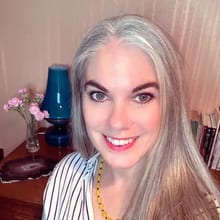
In this episode of the Bendy Bodies podcast, Dr. Linda Bluestein, the Hypermobility MD, explores the impact of nutrition on joint hypermobility with Lorna Ryan, chair of the Diet and Nutrition Working Group for the Ehlers Danlos Society. Lorna shares essential advice on how to nourish the body for better pain management, improved gut health, and more energy. From the importance of fiber to balancing nutrients and understanding food sensitivities, this conversation is packed with practical tips. Lorna also shares her favorite recipes and explains how the right foods can help reduce EDS (Ehlers-Danlos Syndrome) symptoms and support gut health. Whether you’re looking to ease GI symptoms, balance energy levels, or discover new dietary approaches for EDS, this episode offers valuable insights and hacks.
Watch
Guests
Transcript
[00:32] Dr. Linda Bluestein: Welcome back, every bendy body, to the Bendy Bodies Podcast with your host and founder, Dr. Linda Bluestein, the Hypermobility MD. Today we'll be talking with Lorna Ryan about nutrition. This is such an important topic, and I know so many of you have so many questions about what you should be doing when it comes to food.
[00:59] This is something that I found to be really, really important for me when I went from having so much pain — and as I often describe it, having pain in all capital letters that was encompassing every aspect of my life, basically taking over my brain during every waking moment and interfering with my sleep — to having lowercase pain and even starting to go more and more into the background. And now I don't even have pain most days, which is obviously fantastic.
[01:27] Lorna Ryan is a member of the London Hypermobility Unit, and she serves in the International Consortium on Ehlers-Danlos Syndromes and Hypermobility Spectrum Disorders as the chair of the Diet and Nutrition Working Group and member of the Pain and Fatigue Working Group. She facilitates EDS Project ECHO Nutrition, presents for nonprofit international organizations, and contributes to collaborative research.
[01:50] I am so excited about this topic because nutrition is key for our healing and is so essential for life, and it should be something that we can enjoy. We covered so many of the frequently asked questions during this conversation, so I hope that you will enjoy it. As always, this information is for educational purposes only and is not a substitute for personalized medical advice. Be sure to stick around until the very end so you don't miss any of our special hypermobility hacks. Let's get started.
[02:20] Okay, well, I'm so excited to finally get to talk with Lorna Ryan. We have had this scheduled several times, and I think you were sick once, I was sick once — we've had so many hiccups along the way, but it's great to get to see you finally.
[02:34] Lorna Ryan: Yeah, it's a delight to finally align our diaries and be chatting today, Linda. Thank you for having me.
[02:40] Dr. Linda Bluestein: Yes, of course. I get to see you in some meetings from time to time, but this is a conversation that we've been wanting to do for quite a while. So I'm excited that we're finally getting to do it.
[02:52] Lorna Ryan: Yeah, me too. Overdue.
[02:54] Dr. Linda Bluestein: Yes. And I know it's quite late where you are, so I hope that I'm not keeping you up too late today.
[03:01] Lorna Ryan: No, it's not too late — 7:00 PM. It's just delayed dinner slightly.
[03:06] Dr. Linda Bluestein: All right, well, that's late enough. So we'll go ahead and get started. Can you start out by telling us why nutrition is such an important topic for hypermobility spectrum disorders and the Ehlers-Danlos syndromes?
[03:19] Lorna Ryan: I think the key factor is it's the opportunity to nourish the body and help all of our wonderful pathways that food and nutrients deliver. And it's no more important for EDS than it is for any other complex health condition or just being a human being. But in EDS, we have the opportunity to make gains in our health outcomes by nourishing the whole of our systems, particularly the lovely gut.
[03:42] Dr. Linda Bluestein: Yes. And we know that a lot of people have a lot of different GI symptoms, and we'll definitely be getting into that, especially in the second half of the conversation. So, super important. We know that with HSD or hypermobility spectrum disorders and EDS, there are also a lot of different comorbidities that come along with that — like mast cell activation syndrome, which again we'll get into more in the second half, and postural orthostatic tachycardia syndrome or other forms of dysautonomia.
[04:13] When it comes to dietary plans — because of course a lot of people will have said, "Oh, I've tried vegan or vegetarian, or I've tried Mediterranean or low histamine, anti-inflammatory, low FODMAP, gluten-free, dairy-free, carnivore" — is there any one diet that is more commonly a really good fit for people, or what are your thoughts on that?
[04:39] Lorna Ryan: So my thoughts, and also the literature, suggest that there isn't one diet that's going to be a good fit across the board for hypermobility or EDS. The best diet is the one where someone is going to eat food on a regular basis and without restriction. We know the downside of restricting. If anything, the one that does help somebody nourish is going to be where we're just manipulating foods rather than restricting, and not sticking to a rigid plan. That's never going to work. We want flexibility — because also the big caveat is that no two days are the same. No one's symptoms are on a plateau. We're up and down, and our dietary intake needs to reflect that as well.
[05:24] Dr. Linda Bluestein: Yeah, that's definitely true. And I think that does make it so hard to make correlations between foods that we eat and our symptoms because, like you said, no two days are the same. And I know a lot of people really get frustrated by that, totally understandably. They're trying to make these connections.
[05:42] Lorna Ryan: Yeah. And I hear it a lot when people first come into clinic for support — they feel a diet has done really well for them and served them well, and they don't understand why they've now got new symptoms. That's because we can't just have the same pattern of eating and expect it to suit. It would be like having a wardrobe — you soon get fed up of some colors and you want a bit of change. And that's the same with the body.
[06:08] Dr. Linda Bluestein: Interesting. So if somebody was following a certain — and I love that you're talking right away from the very beginning about restriction and how we need to think differently, flipping what so many people think of when they think of nutrition and these conditions. I think a lot of people think of, "What do I need to restrict? What do I need to take out? What's causing me problems?" rather than thinking of food and how important it is to nourish the body and provide it with essential nutrients.
[06:39] So I love that you're immediately getting us into a different mindset. And I love that you're talking about how just because a certain plan seems to have worked for a while, it's not going to work indefinitely — and that if you have a change in symptoms, that dietary plan you've been following could actually be part of the problem, or maybe you'd need something different at that point in time.
[07:12] Lorna Ryan: Yeah, absolutely. And it's not even just where the symptoms fluctuate — it might be environmental. You might shift seasons if you're living in a country that goes from hot to cold, and your body is potentially going to need different things from your diet in that environmental shift. You might change jobs. You might go on holiday. And all of these things require you to reframe what you're eating rather than just blaming the fact that you've been following one solid diet.
[07:37] A lot of people have their key must-haves. And I like saying to my patients, we're not robots and we have to be a bit more open to maneuvering out of what is our ordinary and our safe. But I want to caveat this point — we do have to pay attention to what someone feels safe with, because quite often there's been a lot of struggles and a real lot of suffering. So we do understand, without judgment, why someone is restricting food. And I don't say it lightly when we want to broaden up safe foods. It's a whole Pandora's box when we go there.
[08:14] Dr. Linda Bluestein: Yeah, no, that makes sense. And if our nervous system doesn't feel safe, then we know that has a lot of downstream effects. So I'm glad that you brought that up. So in terms of how you approach dietary intake when people are living with symptomatic joint hypermobility, how do you actually start to approach that?
[08:37] Lorna Ryan: So it's very patient-centric, or person-centric — it's about who's sitting in front of me. And the first discussion I like to have is, "What do you miss with food if you're not consuming a wide variety? What do you enjoy in your dietary patterns?" And then we use that as a sort of footprint to build upon. Then I'm really looking at the historic restriction, the current plan, the symptom management. And overarching is always going to be very slow, monitor progress. And I like people to try and make friends with fiber. Fiber gets a bad rap, and I like to just slowly try to become friends with it and make changes very incrementally.
[09:19] Dr. Linda Bluestein: Interesting. So that's something that you see a lot of us perhaps not have enough of — fiber?
[09:26] Lorna Ryan: Yeah, across the board. In the general population, actually, there aren't many people that actually meet a good fiber intake, or what we know in the literature to be a good fiber intake. What I observe in clinic is most people in our EDS population are concerned about protein, because they hear a lot about protein and collagen — "I need to eat more protein, protein for energy, protein for muscles." But without sufficient fiber, we're not going to be supporting our gut to use our protein in the first place.
[10:00] So I see a lot of people who have, for one reason or another, slowly restricted fiber-based foods because they do tend to get blamed for symptoms like bloating, fatigue, and constipation. And once they're out of the diet, they're really hard to bring back in without support or knowing what you're doing. So I see it a lot. That's why I say, don't blame the old fiber.
[10:24] Dr. Linda Bluestein: Right. And I do get that a lot. I have a lot of patients who have problems with bloating. And of course we know constipation is quite common, as is diarrhea, but GI symptoms — I had no idea how common that was until I really started seeing more patients. In my practice, pain is number one, fatigue is number two, but GI symptoms is definitely number three. They can be quite diverse and really impact someone's quality of life significantly.
[10:57] So when it comes to fiber, let's say I'm your patient today and I have been restricting my fiber because I've been having problems with bloating. How would you advise me to start to experiment or add some fiber back into my diet?
[11:14] Lorna Ryan: I like to go back to good old chemistry lessons with my people in clinic and really have that discussion about what fiber is, because it's not one thing. There are different types — there's insoluble, soluble, and then there's resistant starches — and they all get digested slightly differently and have different actions on the body. Rather than just avoid, I like to have the discussion of what someone feels is the problem. What fiber types do they feel bloats them or adds to constipation? And then I ask, how are you eating them? How are you cooking them? Volume, portion size? Do you have them with fluids or without fluids? To really get a good picture of what the pivot point might be.
[11:58] Then we're trying to just move the needle on helping someone eat fiber in a more comfortable way. Usually it starts with taking skins off of the soluble fiber types. It's about mashing food so it's already in a more easy-to-digest form. It's about limiting volume — actually stripping back slightly and then slowly adding it in and letting the gastrointestinal functions catch up, instead of a big whammy of fiber all in one go. So it's really over the course of a month that we're wanting to increase very, very slowly.
[12:34] And the caveat there is we absolutely have to screen for red flags. If someone is reporting symptoms related to fiber and constipation, have they had a thorough EDS-relative colorectal exam? We never want to add in fiber if there's a question over rectal prolapse. And sorry to go there so soon in our interview, Linda, but it's really, really important for our patient population. If someone's telling me they're eating more fiber and they're more constipated, then I'm sending them straight back to the gastroenterologist for a thorough review.
[13:10] Dr. Linda Bluestein: Yeah, we discuss everything on this show, so it's very important to mention these things early on because, like you said, these red flags — we want to make sure that we're not missing them. So you said something about peeling the skins off. What would we be peeling the skins off of?
[13:31] Lorna Ryan: So — and I get so many people come to clinic asking about things like inulin supplementation for fiber. But the good old humble parsnip, which I know some countries depending on your listeners might not have, is really rich in inulin. It's a wonderful fiber type, but it's hard to digest with the skin. So we're just going to take the skins off that. We might take the skins off of other fruits and vegetables, and also pips, and maybe some hard stems as well. But we're also going to be cooking them down so that we actually change that molecular structure of the fiber.
[14:08] Stewed apples is one of the perfect examples — I think it's nearly every nutritional professional's preferred type of fiber to help gut function. We're going to stew it or boil it and release that pectin. And for people with quite delicate GIs, we might just want to take that skin off while we're introducing it. So it's all about manipulating fiber and looking at basic chemistry.
[14:30] Dr. Linda Bluestein: Yeah, that sounds like a good idea. And as soon as you said that, we're in the fall right now and I was picturing cooked apples with cinnamon — that sounds really good. What about spices?
[14:45] Lorna Ryan: Oh, I love spices, because again, a lot of our population feel that they can't have many plant-based foods. Once you have really severe GI symptoms, it's very natural to feel "I can't have those foods," and you do become a little bit scared. But spices and herbs — and I'm talking about herbs in the culinary sense, not herbal medicine — they offer wonderful antioxidant-rich compounds, fiber-rich compounds depending on the type, and flavor. And so they are classed as a plant, so it counts toward your plant consumption and diversity.
[15:18] So like you say about the baked apple — add on some chopped walnuts or ground walnuts for a little bit more nutty fiber, if that doesn't aggravate any symptoms. Cinnamon, basil, thyme, oregano — there are so many herbs and spices that can be beneficial. Black pepper, turmeric, the list goes on. And they offer those small-volume but nutrient-dense options for people to experiment with.
[15:44] Dr. Linda Bluestein: And in terms of things that we're mashing up, could it be a whole host of things, or are there specific things that you recommend that for?
[16:01] Lorna Ryan: Yeah, it would be the harder-to-digest foods, like root vegetables. If one thinks about cooking, say, roast beef with roast potatoes, broccoli, a squash or pumpkin — then maybe we're going to be mashing down those root vegetables. And if needed for the gastrointestinal, we might also mash down the protein-rich foods as well, like the red beef if you can tolerate it, or the chicken. It's just changing that structure. It's actually technically called the small particle diet, where we're just mashing things down to make them easier to digest.
[16:34] So we can do that to all of our food bases. With fiber, it would be apples, beans, oats — which we're going to be really, really soaking — and lentils we'd just be blending down. We can actually really change the structure. Beans — most people, and I don't know if you see this in your clinic — a lot of people in our community are scared of beans. They don't digest them well, and they have effects that they don't like. But I love in my clinic looking outside the box at things like having a bean flour and making truffles, which is a good way to get beans in. And it's much easier to digest than trying to have whole beans briefly cooked.
[17:19] Dr. Linda Bluestein: Okay, when you said truffles, my mind went to like a kind of candy. Are you thinking of truffles in a different way than I am?
[17:28] Lorna Ryan: Potentially — it might be the British versus American truffles, as in the chocolate truffles. So I like to use dark chocolate, yeah, dark chocolate and black bean flour, or just mashed-down black bean, as my favorite go-tos for people, especially when people feel they can't have desserts. It's like, let's open up the world of what we frame as a dessert. And it extends to things like making cookies, making pancakes, you know.
[17:58] Dr. Linda Bluestein: Okay, wow, this conversation is suddenly making me very hungry. And I'm thinking, do you have any favorite recipes for those kinds of things? Because you're right — we want to feel like we are getting to have those treats too, because I think so often when we're in pain, we don't feel good, and we don't want to feel like we're just depriving ourselves all the time. So if we can take some of these foods that have important nutrients but utilize them in ways that also feel like a treat, then I think that might have multiple benefits. Do you have any special recipes you can share? We could link them in the show notes or send them out as part of the email blast.
[18:40] Lorna Ryan: Yeah, so it is all about reframing food. It's not good, it's not bad — it's what is beneficial and what's going to suit somebody. I'm a huge fan of poaching fruit. So we can have poached pears, and we can have a little bit of ice cream if you can have dairy. We can also mash down fruit. I love watermelon ice lollies, or you can make a sorbet and add a few little fresh foods. Baked cherries with dark chocolate is quite sumptuous, and people feel, "Oh my gosh, it's a proper dessert."
[19:17] So there isn't really any one recipe per se — it's just about feeling the freedom and safety of ingredients and getting experimenting in the kitchen. A baked apple, chopped walnuts, a little bit of maple syrup or honey, baked really well — that's delicious. So stewed fruits and everything like that. But I'm also a fan of the Japanese style of making rice dumplings and mochi and using bean flour in that way. So yeah, lots of things to experiment with.
[19:54] Dr. Linda Bluestein: I really like this too because I have a lot of problems with my jaw — a lot of our patients have TMD. Apples are something that I normally can't have, but what you're describing is something that would be perfect for me. So I love that.
[20:10] Let's talk about protein, because you brought up the P word and it's such a hot topic. Depending on who you ask, am I getting enough protein, not getting enough protein? What should we know about protein?
[20:26] Lorna Ryan: Oh my goodness. This is like a whole day's topic, I feel.
[20:30] Dr. Linda Bluestein: Right, right.
[20:32] Lorna Ryan: So I think there are a couple of myths that I hear a lot in clinic. People feel demonized if they choose to, or need to for religious purposes, follow a fully plant-based diet — "I can't get enough protein." So we need to first understand that there are different types of proteins. There's what's called complete protein from animal-based products, and then the non-completes from plant-based. But if we're picky and choosy on the plant-based — things like beans, legumes, lentils, green peas, brown rice, and then our lovely tofu — we are getting an abundance of the full spread of amino acids, except for a couple: lysine being only available from animals.
[21:29] When someone feels they're not consuming enough protein, my first question is, why do you feel that way? Because if you go into any media platform, it's bombarding you with "have more protein," and it's generally coming from research for exercise-based, performance-based needs. There is some very robust literature for the chronic health space — if you're recovering from surgery, there's an increased protein need; if you've got a particular disease presentation, you might need a higher protein intake. We don't, sadly, have anything like that for EDS yet, but we can piece it together.
[22:52] What we know is that we need sufficient protein at every meal, sufficient to suit one's individual needs, because we have a very wide spectrum in our community. We have people who are unfortunately confined to bed and may not be very mobile. Then we have people who are really trying to keep their life together, working hard, trying to do exercise, under a lot of stress. Then we have people who are fully able and just have their struggles, and then we go all the way up to performance athletes. So we can never say what the one protein need is. But what we do know is that it's not just the protein we eat, it's the protein we digest. So we want to optimize digestion so that we're actually breaking down the protein to use it as the amino acid building blocks, because it's used for every structure in the body.
It's a very long-winded answer, I'm afraid. First, we want to check bloods — I want to see if there's any elevated creatine to know what's going on physiologically with muscles, make sure someone's kidney function is okay if I've got questions about protein intake. And then it's all about asking, when is your fatigue? How do your muscles feel? Do you ever get things like DOMS if you're exercising? And then just piecing it together. And people don't often need as much protein as they think they do.
[23:49] Dr. Linda Bluestein: So DOMS being delayed onset muscle soreness. Are you saying that can indicate that a person might need more protein, or that they were able to exercise hard enough to get DOMS so maybe their protein is adequate? What might be the correlation there?
[24:05] Lorna Ryan: Thank you for explaining what the initials mean. Sometimes people feel they need more protein because they come to me and say, "I experience DOMS," or "My physio says I get DOMS, so I need more protein." Obviously in our hypermobile world, we need physios to assess what exactly is going on — is it truly delayed onset muscle soreness? Have you been working hard enough? That's outside my wheelhouse. But when it comes to protein intake, we do find some people fare better having a higher protein intake within that 20 to 30 minutes of intense exercise, to help the muscles regenerate well. But I also want the step before that — for muscle function, what's going on with someone's carbohydrate intake and glycogen stores in the muscles to start with. So it's never ever one thing in isolation.
[25:00] Dr. Linda Bluestein: Yeah. And as you're describing this too, I'm thinking of another challenge. If people have dysautonomia and difficulty with upright posture, and/or for financial reasons are more limited in what they can purchase at the store, they might be buying more prepared foods. Do you have any recommendations as far as that goes?
[25:24] Lorna Ryan: The overarching message should be: eat. Enjoy what food you can have available to you. There are many barriers in our population — money to buy fresh food, for one. And I don't like the argument of "organic is best," because not many people can afford a fully organic diet. And we'll set aside the argument of whether that's actually better for you or not.
[25:48] Many people don't have the options around them for fresh fruit and vegetables, shop-wise, depending on where they live. And then we do tag into many areas of barriers when it comes to ability — there might be the fatigue, the POTS, the ability to cook, even just the heat in the kitchen. So if someone wants a pre-prepared meal, we are looking for one that has fewer additives and fewer emulsifiers — as close to what you'd cook at home. But a good old frozen meal is wonderfully nutritious. Sometimes frozen food can be more nutritious because the nutrients are stable in the freezer. And for some people, a takeaway is what they're going to eat that day — try to make a good choice in that takeaway, but it's nourishing you, it's giving you food. I'd prefer someone to eat than not eat because they're scared of tinned food, packet noodles, or frozen food. Yeah, so it absolutely has a place in our diets.
[26:52] Dr. Linda Bluestein: And speaking of which — protein, as you said, we could definitely talk about that for hours and hours. But I'm also going to bring up another thing that we could talk about for hours, and that is collagen. This is probably an area where we desperately need more research, especially when it comes to people with symptomatic joint hypermobility. But what are your thoughts, and what does the research show on collagen supplements?
[27:26] Lorna Ryan: It's a real sit-on-the-fence thing with collagen supplementation in the world of nutrition and human health anyway. The research is really limited. When we do look at the research that's available, a lot of it is rodent studies, a lot of it is looking at osteoarthritis, and most of it is on skin. The research is trying to show that it increases hydration in the skin, which plumps out wrinkles. And then if we delve down a little bit more, much of the study is actually funded by supplement companies that want to sell collagen. So there are a lot of nuances.
[28:11] When we focus on whether someone who is hypermobile with Ehlers-Danlos — a diagnosed hereditary connective tissue disorder — is additional collagen in supplemental form going to help, we just don't know. Some people report that they feel it helps. And I have a few caveats when I question people around this. I never want to devalue someone's bias — if someone feels it helps, I don't want to take that away from them. But if someone's telling me they've just started a supplement powder and it's been one week and their joints are better, their gut's better, their skin's better, then we have to be like, I don't think so — because it likely takes 3 to 6 months to really start getting the benefit of a collagen supplement through into tissue concentration.
What I find — and most people don't talk about it — is that a lot of collagen supplements are bound with zinc, B6, and B12, and that is going to have more of an immediate effect on energy and skin and the other things people might feel it helps. So I think it was around 2014 there was a randomized trial that looked at objective measurements on the skin and found no difference — I think it was a 3-month study; don't quote me on that, I can find the study and give it to you for the show notes. It was looking at around a 12% water increase in the skin.
[29:51] If we delve deeper into our structures — and I think this is why a lot of people want to take collagen for hypermobility and EDS, for joints, muscles, and tendons — it's really sitting on the fence about whether it's going to benefit. What we do know is that if a collagen supplement is going to help, it needs to be a short-chain peptide. So the big thing I'd like people to understand from a nutrition science point of view is that not all collagen supplements are the same. We have denatured, where it's not been synthetically altered. We have hydrolyzed, non-hydrolyzed. We have to be breaking down those peptide chains to the smallest possible — literally like a bead — so that we can actually utilize it, and we need to be able to digest it well in the first place.
[30:44] I think it's quite promising around osteoarthritis, but you're right — if we could have a really good study on EDS, it would be wonderful. But in reality, we would have to be dosing to quite a high level over at least 6 months and have really good measurements.
[31:05] Dr. Linda Bluestein: That's okay — it's a very important question, and I'm sure one that you get a lot. Does it fall into the category of unlikely to hurt and might help? So if they can afford it from a cost standpoint, and if they tolerate it okay, is it one of those things where you just try it and see what happens?
[31:28] Lorna Ryan: Well, here's the thing — yes, it does come in the category of likely not to do any harm. However, too much hydrolyzed collagen will give you diarrhea. And so I have quite a lot of people come to clinic with loose stools where gastroenterology finds everything is fine — no pathology. And when we really delve in and I say, "So when did you start taking the collagen supplement, and when did the diarrhea or the bloating start?" it does tend to match up. And quite often when we then either half the dose or remove the collagen peptide supplement, loose stools go back to normal.
[32:06] So for some people, just be aware that it does depend on your digestion rate. Obviously we have different gut motility transit rates. If you're quite quick and maybe not digesting the amount of collagen you're taking in the supplement, you might get quite urgent diarrhea from it.
[32:29] But it's also very important to break down what a collagen supplement actually is, because we are talking about the 3 major amino acids — glycine, proline, and hydroxyproline — and these are found in animal produce. The most important thing is that if we are wanting to use collagen supplements to help our EDS body, we absolutely have to have its cofactors to help collagen synthesis. So we do still need to be consuming proline if we can get it in the diet — egg white in particular is a good example, though not everyone can eat those. We're wanting our vitamin C-rich foods. We're wanting our sulfur-rich foods and a plethora of antioxidants. So just be mindful that yes, collagen supplementation might help, but it's not the full stop of the story for our bodies.
[33:22] Dr. Linda Bluestein: Well, that's great information. We're going to take a quick break, and when we come back, we are going to talk about the microbiome, dysautonomia, mast cell activation syndrome, and so much more. We'll be right back.
[34:55] Okay, so we're back with Lorna Ryan talking about nutrition, such an important topic. And I'd love to ask you about people with mast cell activation syndrome, because we know there is such a high prevalence of mast cell activation syndrome. I keep saying it should be mast cell activation spectrum, because it's such a wide spectrum of symptoms — we have people who seem to be on the more mild end, and we have some people who are really, really struggling a lot.
[35:21] And so a lot of people will immediately think, "I have to avoid all high histamine foods, I need to go on a low histamine diet, these are the definite supplements I need to take." But it's still not one-size-fits-all, right? Are there some guidelines that you can share with people, or certain things that you think are bigger triggers in more people?
[35:52] Lorna Ryan: Yeah, and this is such an important topic — and it's a massive one. We do have to remember that mast cell disorders aren't unique to EDS; it's a whole condition out there. And it's important when clients or patients come to clinic who either feel that they might come under the mast cell histamine umbrella, or they have a medical diagnosis — it's about seeing how this is linking into their medical history or their EDS.
[36:29] The overarching thing I always want to say is that, dietary-wise, there's no one thing that's ever going to suit everybody. It's about stopping, pausing, and really observing what one is doing. So it's not just food, it's not just environment, it's not just stress — it's everything together.
[36:49] Where it comes to the dietary side, most people have already started to restrict foods. There's so much — I call it noise — on some platforms about low histamine diets. And some people put themselves on a low histamine diet, and maybe it's not working, so they restrict more and then restrict more and then get really lost. So it's hard at that point to observe the diet to figure out what's going on because they're already avoiding all the foods.
[37:16] So my pearl is: please don't restrict foods until you've just kept a very detailed diary — as long as this isn't triggering for the individual. And keep a diary of everything. We want to know: are you at home? Are you at work? Are you on public transport? Have you been somewhere with a lot of fragrance? What foods are you eating? What time of day? Have you done exercise? What medications? What supplements? Everything goes into the bucket of evaluating. And then if we identify trigger foods, those are the ones we might want to restrict temporarily, see how symptoms go, and then try to reintroduce. Maybe we need to consider again how we're cooking. And I know you talk a lot about the leftover hypothesis and putting foods in freezers — there are some wonderful conversations already out there that I know you've had on mast cell and food.
[38:14] It's about people understanding that what might trigger a histamine or a mast cell reaction for one person might not be their trigger. And sometimes we just have to be very detective-like to figure it out. Ultimately, we never want anyone to be on a low histamine diet for life. And it's really important that we do align with medical professionals to try and get the right antihistamine medication.
[38:38] Dr. Linda Bluestein: Yes, and I see that so often — exactly what you just said. They restrict and they're still having symptoms, restrict more, restrict more, and that gets to be so stressful. And then we're potentially losing a lot of nutrients that we need. So sometimes I hear people say, "I love spinach, but I hear that it's high in histamine, so I'm going to stop eating it," whether they appear to have problems with that or not. So I like the idea of keeping a diary or a journal so that people can really track their symptoms and what correlates.
[39:15] Lorna Ryan: Yeah, absolutely. And we do have to go back to fiber again. I know it's boring, and I feel like I keep repeating myself with it, but fiber is so important for what the gut does with mast cells. So we also consider that if we're restricting foods that are high in histamine, or histamine liberators, or whatever someone wants to frame them as, we're restricting dietary intake ultimately. And then we might be getting nutrient deficiencies, and then we might be affecting some enzyme function in the gut. And all of this is going to exacerbate the symptoms of what our body is doing with histamine levels, mast cell activity, et cetera.
[39:55] Dr. Linda Bluestein: Because the gut is actually very important for making neurotransmitters, correct?
[40:01] Lorna Ryan: Yeah, very important.
[40:05] Dr. Linda Bluestein: I think a lot of people think — and I sure thought this for so many years — that the GI tract was kind of separate from neurologic things. But everything in the body is really connected. The foods that we eat actually impact the neurotransmitters that can affect our mood and that we need in order to move. So are there certain foods that we need in particular in order to form those neurotransmitters?
[40:33] Lorna Ryan: Well, that's like the million-dollar question, because we can't quite isolate just one — it's neurohormonal activity, plus the immune system, and the immune system and the nervous system go hand in hand. But it does come back to what fiber does for the gut and our gut microbiota and that signaling. We want to really nurture our commensal bacteria — the good bacteria. We want to try to limit the opportunistic bacteria, because that's going to shift neurotransmitter activities. And we're really going to want to try and support, in particular, the DAO enzyme function, which is what a lot of people in my clinic come to me asking about — "Should I be supplementing? What should I do?" The gut and the nervous system are so intertwined that we can't really extract one food or one group of foods that's going to support neurotransmitters specifically.
[41:38] Dr. Linda Bluestein: Yeah, no, that's okay. And I did want to ask about the gut microbiome because I used to think, "Antibiotics, no big deal," but now we know that having that good commensal bacteria is critically important for the functioning of our whole body. So in terms of the gut microbiome, are there things that you want us to know about that in particular in this population?
[42:08] Lorna Ryan: Yeah, there's so much, and it's really misunderstood in our population. We don't have robust evidence on isolated bacteria as such. What we do know about the gut microbiota is really in its infancy in terms of science. What we do know is how the gut microbiota uses byproducts of the fiber we eat, breaks it down to short-chain fatty acids, and then we get different metabolites. Butyrate is one of them that hopefully a lot of people have already heard about.
[42:43] So the gut microbiome is going to be our bacteria, our yeasts, our genes, and our viruses — just so people get a good understanding of the microbiota. And it is really involved in a lot of signaling to the body, whether it's nervous system, immune health, or the breaking down of our metabolites from food. So it's crucial to understand that we need to be really nourishing the host — the host of the immune system, the host of the gut-brain axis and communication.
[43:13] And we go back again to the biggest ways to help our gut microbiota: thinking about what might be negatively affecting it — medication, stress, alcohol, lots of sugary processed foods — and then what's going to help it. And it's never one thing. It's going to be good sleep, movement to the capacity if someone's able to, prebiotic foods, probiotic foods, fibers, making sure we don't get too constipated. It's like a big cauldron of recipe to support the gut.
[43:51] Dr. Linda Bluestein: And a lot of people will have tried taking probiotic supplements. What are your thoughts on that?
[44:01] Lorna Ryan: Some are really robustly tested, third-party tested, and strain-specific. And this is where they can be a joy to use for people — if you've had antibiotics, we know certain strains are going to support that balance. If someone has had a particular gut bug, then there might be strains that can support. If someone's had a bout of traveler's diarrhea, we know there might be a certain probiotic yeast that people can consume. So the overarching message about probiotics is that they might help in the short term if you've got the right species.
[44:40] But other than that, some people think, "They're just probiotics, it probably won't do any harm." And it's a little similar to the collagen — why are you taking it and what are you taking? Because many of them, particularly off-the-shelf products, are not stable and probably not even going to reach where we want them to get to. If you already have an abundance of Lactobacillus, for example, and you're only taking Lactobacillus, it's probably not going to do anything for you.
[45:01] And the other thing is that we do have to err on the side of caution in our population when we consider there might be some gastroparesis and slow motility, or a presence of SIBO — small intestinal bacterial overgrowth — and we know that for that population, potentially, probiotic supplementation and probiotic foods such as kombucha tea, sauerkraut, and kimchi — all the things we generally hear are wonderful — might exacerbate symptoms. So yes, probiotics are a sit-on-the-fence thing. Science-backed, strain-specific.
[45:50] Dr. Linda Bluestein: And this is where I think it's so frustrating for people, because at least here in the U.S., so many appointments are 5 minutes long. They don't really have the time to go into a lot of detail — if they're seeing a nutritionist or a dietitian, it's probably longer, but a lot of doctor's appointments with the gastroenterologist are going to be super short and not really going into that level of detail you're explaining — to really determine, is this somebody in which a short course of probiotics might be helpful because they were just on antibiotics, for example?
[46:22] And I'm glad you brought up gastroparesis, because we know that gastroparesis, or slow movement through the gastrointestinal tract — in particular slow emptying through the stomach — can be super impactful. Some people end up on tube feedings and even IV-type feedings. So if we can intervene earlier, it'd be really helpful, because some people end up just on a liquid diet. So are there certain tips that you have for people who have signs of gastroparesis — for example, if they get really full while eating or feel like they can't take in a normal amount of food?
[47:02] Lorna Ryan: Yeah, and this is one of my favorite topics actually, Linda, because people really struggle. And unless you've really experienced gastroparesis and slow motility, I don't think you can actually understand the real physical barrier to wanting to eat any more food. So it's really understandable, and there's zero judgment to somebody saying, "This really hurts. I'm just not going to have any more food today." And I hear it quite commonly that people feel, "If I don't eat any more food, everything will just move down slowly, and then I'll just have more food tomorrow." But that's not actually how the gastrointestinal tract works. Actually consuming a little bit more food stimulates digestion and stimulates the peristalsis — the muscle's propulsion.
[47:54] So if someone is struggling, our best tactics are to modify the food we're consuming. We want to be having smaller volumes, maybe a little bit more frequently — and that does depend on the individual, so we can't be prescriptive and say like 6 meals a day or a handful of food. It completely depends. I have some people where it's literally like feeding a little bird — a tiny little palm full of food every 2 hours so that over the course of 24 hours we are consuming enough to nourish and sustain the body.
[48:29] And this is where we have to be careful. If we're unable to do that, then yes, you need specialist dietetic support and you might need some clinical medical nutritional interventions. But if we are able to consume orally, we're wanting to have our liquids away from our food. We want to make it easier to digest, so we go back to our mashed foods, take off the skins if necessary. We might limit foods that are really hard to digest — like a good old steak. And if you love them, I'm sorry, but they're harder to digest. Then we just manipulate our foods.
[49:04] We also have to be very mindful and respectful of how digestion does not work in isolation in the body. Vago-stimulatory hormones, our nervous system, our breath, what our diaphragm is doing — it all interplays with helping digestion. So we do want to, with capacity — and I say this respectfully, because some people can't sit upright — if we can adopt a good posture while we're eating, if we can breathe and let our nervous system help us, this is going to be the best intervention rather than just avoiding foods.
[49:44] Dr. Linda Bluestein: And I've wondered about that. If you start having some symptoms related to food and then get more stressed and more anxious, can that perhaps contribute to a vicious cycle? So do you think that in some cases, if people can practice some meditation or something like that — maybe away from meals at first, but then maybe a little bit before they start eating — that perhaps that might be beneficial?
[50:14] Lorna Ryan: Yeah, 100%. And it's an analogy that people often share — "Do you know, when I go to Italy or when I go to the mountains, I don't have any symptoms." And when you actually look, it's not necessarily that you're eating different foods, it's that you're relaxed and you're probably not rushing your food. So we know that chewing our food really well helps digestion. But in our population, as you touched upon earlier with the chewing, it might be that you get muscle fatigue, it might be that you actually have teeth issues or TMJ issues, you might have a slower swallow or problems there. So I never want to be hard and fast about "you have to chew more" — it's always about, can you chew a little bit better?
[51:01] And then really leaning into that switch into rest and digest from our autonomic nervous system — which again is another caveat, because everything in our population is caveats when it comes to digestion — is that if you have POTS, then you've got another layer on top of the gastroparesis or slow motility. But it's all about trying to enable the nervous system to work with you. There are a few digital technologies out there developed mostly for IBS, but we find them helpful. There's gut-directed hypnotherapy, which a lot of people find helpful — though of course you need a specialist clinician for that, and it's outside a nutrition professional's wheelhouse.
[51:47] But if we just take a moment to relax and let our digestive system settle — then we have our food and we try to eat slowly and mindfully, whatever that means for somebody. And then after we have our meal, we want to also be mindful that we're still digesting. So let's not get up and try to get back to work, or go out for a run, or wash up — just sit and let your digestive system do its thing.
[52:18] Dr. Linda Bluestein: Yeah, I like that. That makes perfectly good sense. And we know that the opposite can also happen, right? Dumping syndrome. Is that something that you see in your patients?
[52:29] Lorna Ryan: I don't see it too often, actually. I do hear my patients say they feel that they have dumping syndrome. Generally, people who feel that they get a sort of dumping syndrome — it may be more POTS-related, that postprandial response. But it's very common in someone with gastrointestinal involvement. From my clinical side, what's really important is if there are clinical symptoms, that you are sent away for some appropriate testing. And ultimately we want to make sure if it's that 1 to 3 hours post-symptom window, that you are absolutely being checked out for things like — and not to scare viewers — diabetes and any kind of anatomical constriction around the stomach.
[53:10] But usually what we find is that you have the rapid and you have the slow. So we're wanting to assess the time frame and the symptoms. Is it gastrointestinal? Is it that vagal nervous system interference? And people can swing to both, depending on what they might eat. I've actually heard some very interesting things that people have tried to do to self-manage the symptoms. So yeah, it's another huge topic.
[53:46] Dr. Linda Bluestein: What about supplements? Of course, this could be a whole other multi-hour conversation, but we know a lot of people have tried various different supplements either for pain, for sleep, for mast cell activation syndrome, or for dysautonomia-type symptoms. Are there certain supplements that you have found to be more beneficial in your population?
[54:07] Lorna Ryan: That is such a big can of worms. Ultimately, yes, I do have my go-to clinical toolbox of supplementation — things we know are very safe, have minimal drug-nutrient interactions, and have limited excipients. Because, as we've already discussed, there's GI, there's POTS, there's mast cells, there's lots of things in the mix. So I personally want to have as few ingredients in them as possible.
[54:41] Probably isn't going to be a surprise: vitamin C, magnesium — they can be very helpful. I might lean into some digestive enzymes if it's going to be helpful for someone's digestive capacity while we're building up a better food profile. I do find that if someone is a little bit more on the neuropathic style of pain, PEA — please don't ask me to say the long name — I find that to be quite helpful.
[55:06] Dr. Linda Bluestein: I think I know how to pronounce it. Are you talking about palmitoylethanolamide?
[55:13] Lorna Ryan: That's it. Excellent pronunciation.
[55:15] Dr. Linda Bluestein: Okay, I'm not sure if I pronounced that right, but I'll make sure that we have that in the show notes. That's something I recommend a lot as well.
[55:24] Lorna Ryan: Yeah, I find it's really a nice product to use. You do have to be on it quite long-term to see the benefits. Depending as well on GI, I do love a good psyllium husk supplement — very particular about the ones I use; I like it to be very finely ground. And then I'm not actually adverse to using a collagen peptide, I must say. If someone is not able to digest proteins as well as we would like, or if they have got a limited diet and we have concerns, particularly around the joint areas, and if someone's got frequent injuries. And I have a particular liking for eggshell membrane out of the collagen peptides, so I tend to use eggshell membrane a fair amount.
[56:19] And then there's a few others that come in and out. Quercetin — I think everyone's heard about that. But other than that, I actually much prefer to look at what we might want a supplement for and ask, can we break that down and get it from food? So take quercetin — we can get quercetin from foods, not to such a high degree as a therapeutic supplement might offer on a daily basis, but we can get it through food. And it's all about trying to get more of these wonderful flavonoids and antioxidants in food, as much as we might be able to both eat and digest well. I think that's pretty much my wheelhouse of top supplements.
[57:07] Dr. Linda Bluestein: Sure. And a lot of those are ones that I use as well. What are your thoughts on luteolin versus quercetin?
[57:17] Lorna Ryan: Yeah, this is so interesting, and it seems to come up quite a lot lately. They're both flavonoids, but they are slightly different in their molecular structure. Both are antioxidants and polyphenols, and different foods offer different amounts. I think they have different actions in the body in terms of their mode of action, if we're talking about the supplements. I don't necessarily see a huge benefit outside of people who might be needing it for the hypersensitivity side. So I think that's the biggest difference. Quercetin in research is going to be more beneficial for swelling and things. The first one you said —
[58:09] Dr. Linda Bluestein: I say luteolin.
[58:09] Lorna Ryan: Luteolin — yeah, research suggests it's a bit better for hypersensitivity. But again, I'm going to try to get both of those compounds in food first, which is actually fairly difficult if you have mast cell issues given the foods that contain them. So quercetin is like the red wine, and luteolin — it's totally gone from my head right now, I can't remember the food sources. Anyway, I can put it in the show notes for you, the food sources.
[58:45] Dr. Linda Bluestein: Sure, sure.
[58:46] Lorna Ryan: It's getting late and my brain fog is creeping in.
[58:51] Dr. Linda Bluestein: Oh yeah, I know — this is always the challenging thing with the time difference, and I really appreciate you talking with me. You're probably not going to sleep well tonight because your brain will be going until the time you go to bed. So I apologize, but I really appreciate you doing this.
[59:07] Yes, and there's a supplement that I often recommend that is a combination of palmitoylethanolamide and luteolin. And I'm probably going to get some people saying I pronounced all of these wrong, so we'll have to see about that.
[59:22] What about diamine oxidase or DAO? You mentioned DAO earlier, but we know that some of the DAO supplements are pork-based, correct? There's also one that's pea-based, I believe.
[59:35] Lorna Ryan: Yeah, DAO is an interesting one. And actually it's one of the things I see a lot of people come into clinic already taking, so I very rarely supplement with it in clinic. I don't think the evidence in the literature is quite there yet. I'll caveat that I don't have a specialist MCAS or mast cell disorder clinic.
[59:59] First of all, yes, DAO is from kidneys — we manufacture DAO in our kidneys. But ultimately what I'm interested in is: have you got a deficiency? Have you had a measurement from a medical doctor and been found to have a DAO deficiency? And then I want to look at what's going on with your gut health. Are you able to sustain a good DAO enzyme function? And for that, we want our zinc, our omega fatty acids, our fibers, et cetera.
[1:00:31] So a lot of people come wanting a DAO supplement but they're plant-based. And I would never suggest a plant-based one in my clinic, because I just don't think the research is there — ultimately we do have to have the pork kidney. Sorry for the vegans out there. But I'm also interested in, instead of supplementing with DAO, whether the diet is offering blockers. So are we having a lot of beans and legumes? Are we having a lot of alcohol? Some medications might be affecting our DAO enzyme function. Do we have bacterial overgrowth? So all of these things factor in as to whether we would then conclude that a DAO supplement might be beneficial.
[1:01:17] Dr. Linda Bluestein: Okay, that's really helpful. And that's good to know about the pea-based DAO — that that's something you don't think is worthwhile. That's really good to know.
[1:01:31] Lorna Ryan: Yeah. And there might be dietitians and other nutritional professionals out there who look at evidence slightly differently. They might be shouting at me right now. But yeah, as far as I'm aware.
[1:01:42] Dr. Linda Bluestein: Yeah, no, that's exactly right. And I sometimes see a patient that someone else in our community has also seen, and I'll read the note and it's like, they approach things differently than I do. We all do things a little bit differently, which on the one hand can be challenging, but on the other hand, if we all did everything exactly the same, then we wouldn't necessarily be introducing new ideas that people might benefit from. So it can be both a blessing and a challenge for people when they get different recommendations.
[1:02:15] Before we wrap up, I did want to circle back to something you mentioned briefly — butyrate. Can you tell us a little bit about that and why it's important?
[1:02:25] Lorna Ryan: It's my favorite thing, actually. It's so important for many functions in the body. So if we're consuming fiber — particularly resistant starches — we're going to be producing short-chain fatty acids. And butyrate is one of the wonderful short-chain fatty acids that's produced. And butyrate can go on and have so many different beneficial functions in the body, whether it's helping to support inflammatory processes, nervous system pathways, neurotransmitters, or even mast cells.
[1:03:04] And lots of people say, "I should supplement with butyrate," but again, the evidence isn't there. And supplementing with butyrate can be quite problematic — diarrhea, bloating, nausea, painful cramps, et cetera. I don't think the research in our population supports using the supplement. So I say to people, let's try and help produce more butyrate in the gut by increasing our resistant starches where we're able. Cook some rice and let it cool down — that turns it into a nice resistant starch. It's going to produce short-chain fatty acids that will produce our butyrate. So it's quite straightforward when you look at the dietary intake of food and the metabolites it produces.
[1:03:52] Dr. Linda Bluestein: I'm hoping that you can solve a family debate really quick. I have a very specific question here before we wrap up. Speaking of starches, when it comes to potatoes — whether regular potatoes or sweet potatoes — how big of a difference does that make from a nutrition standpoint?
[1:04:13] Lorna Ryan: I got this question a little while ago actually, because there was some new research that came out showing that the fiber types aren't that different and the nutritional profiles aren't that different. So as it stands at the moment, I'm going to sit on the fence because I think there's some emerging research that I haven't completely made my mind up about yet.
[1:04:32] But what we're looking at between the two potatoes — and we have to twist it even more — is the purple potato as well. So we have the white, the sweet potato, and the purple. White potato is going to have a higher resistant starch and is classified as a simple carbohydrate. Sweet potato is classed as more of a complex carbohydrate with less resistant starch. The fiber types are going to be slightly different, and some people find that they digest a sweet potato a bit better and that it feeds their gut microbiota better. But again, there are always caveats — the skin of a sweet potato is a lot harder to digest, so we might want to remove that if we have some motility issues. Ultimately, both have a good place in our diet, and who doesn't love a potato?
[1:05:21] Dr. Linda Bluestein: And my son sent me something a while back — he was like, "Do you know they're not that much healthier than regular potatoes?" I was like, "Really? I always thought that they were."
[1:07:41] Lorna Ryan: And if you want to geek out on it, look at the Japanese sweet potato. It's in another realm of its own. There are a lot of nutritional differences in the potatoes, and some fascinating studies out there.
Dr. Linda Bluestein: So that might be a better option — the Japanese one. Is that the purple one, or is that a different one?
Lorna Ryan: No, it's a whole different species of potato. Yeah.
Dr. Linda Bluestein: Gotcha. Good to know. Excellent. And I know that you are one of the presenters for the virtual conference that the Ehlers-Danlos Society is putting on. By the time this episode comes out, that conference will have already happened. Do you happen to know if people are listening to this and want more information — will people still be able to purchase tickets for that?
Lorna Ryan: So it's on the 2nd of November, Eastern time. I've actually had the privilege of being the lead facilitator, so I've organized the topics and the speakers, and we've got such an amazing day of education. I can't tell you off the top of my head if you can purchase a ticket after the date. I know if you do register, you will be able to view it after the event, but I don't think you can buy the ticket afterwards. So that bit I don't know. But what I can tell your listeners is that it's absolutely thorough topics being discussed, and yes, I am speaking as well.
Dr. Linda Bluestein: Excellent. And I will try to find that out before we release this episode so that we are not leading people astray. But I wanted to mention it because I know that's something you're involved with, and I'm looking forward to it. I think it's going to be a great day of information.
I keep saying "before we're going to wrap up," but the last thing I want to do before we say goodbye is ask you to share a hypermobility hack — some quick win for people.
Lorna Ryan: A quick win is: make friends with fiber, and don't worry if on one day you've not eaten what you would want to eat. Tomorrow's always another day and another opportunity to eat better for you.
[1:07:52] Dr. Linda Bluestein: I love that. Well, Lorna, it was so great chatting with you, and I'm so grateful to you for coming on the show. Before we wrap up, can you share with us what you're up to and also where we can find you?
[1:08:06] Lorna Ryan: So you can find me at lornaryanhealth.com, and it's Lorna Ryan Health across social media platforms. What I'm up to is I run a busy private practice clinic and a group support program. And my latest project, which we've just talked about, has been organizing the 1-Day Diet and Nutrition Summit. I also chair the Diet and Nutrition Working Group for the International Consortium on EDS, and we are busy doing some really wonderful research — there are 5 of us in a close-knit team working with the Society on their latest research advances.
[1:08:42] Dr. Linda Bluestein: That is huge, because as we kept saying, every time I think about a topic, it depends — we know a lot, but yet there are so many things that we don't know. So it's great to know that a lot of projects are underway.
[1:09:00] Lorna Ryan: Oh, there's so much going underway. And obviously we're very excited in due course to share with everybody. I just want to say that a lot of people feel not enough is being done in the nutrition space because we do keep saying we don't have enough research, but there's so much work going on and we're learning more and more to offer some more definitive diet and nutrition support.
[1:09:25] Dr. Linda Bluestein: All right, well, that's a great hopeful note to end on. And I just want to thank you again, Lorna, for chatting with me — this evening for you, during the day for me. It was so great to get this information and to connect with you.
[1:09:42] Lorna Ryan: It's been delightful to sit down and have a good old chat, Linda. Thank you again for inviting me on. It's been wonderful.
[1:10:51] Dr. Linda Bluestein: Well, I really enjoyed that conversation with Lorna, and I bet you did too. I know so many people have questions regarding nutrition and what they should do when it comes to EDS, POTS, mast cell activation syndrome, hypermobility spectrum disorders, et cetera. So I hope that you found this information helpful.
[1:11:08] I just want to thank you so very much for listening to this week's episode of the Bendy Bodies with the Hypermobility MD podcast. You can really help us spread the word about joint hypermobility and related disorders by leaving a review and sharing the podcast. This helps raise awareness about these complex and often unrecognized conditions.
[1:11:29] If you would like to meet with me one-on-one, check out the available options on the services page of my website at hypermobilitymd.com. You can also find me, Dr. Linda Bluestein, on Instagram, Facebook, TikTok, Twitter, and LinkedIn @hypermobilitymd. You can find Human Content, my producing team, @humancontentpods on TikTok and Instagram. You can find full video episodes up every week on YouTube at Bendy Bodies Podcast.
[1:11:57] To learn about the Bendy Bodies Program Disclaimer and Ethics Policy, submission verification and licensing terms, and HIPAA release terms, or to reach out with any questions, please visit bendybodiesbodcast.com. Bendy Bodies Podcast is a Human Content production. Thank you so much for being a part of our community, and we'll catch you next time on the Bendy Bodies Podcast.