Description
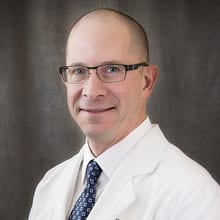
Tarlov cyst symptoms, why they are so often missed, and what surgery involves — with Dr. Frank Feigenbaum, the neurosurgeon who operated on Dr. Bluestein.
Watch
Guests
Transcript
[00:41] Dr. Linda Bluestein: Welcome back, every bendy body, to the Bendy Bodies Podcast with your host and founder, Dr. Linda Bluestein, the Hypermobility MD. I am so excited to chat with Dr. Frank Feigenbaum today. Dr. Feigenbaum was my surgeon when I had Tarlov cyst surgery on August 11th, 2011. That's easy to remember because it's 8/11/11. So the last time he saw me, I was probably wearing a hospital gown, and it's really great to get to chat with him again after so many years. And I feel like there's still so much confusion about Tarlov cysts and the symptoms that they cause and the connection with connective tissue disorders, what types of other alternatives there are to surgery, what the outcomes are, and things like this. So I'm really excited to dig into all of those topics.
[01:29] Dr. Feigenbaum is a board-certified neurosurgeon practicing in Dallas, Texas, and in Cyprus. He has extensive experience in treating symptomatic Tarlov cysts and other spinal meningeal cysts. Dr. Feigenbaum has developed and refined surgical techniques for the treatment of multiple types of symptomatic spinal meningeal cysts and collected outcomes data following surgery. He also specializes in minimally invasive spine surgery with extensive experience in both developing minimally invasive technology and teaching minimally invasive spinal surgery techniques. Dr. Feigenbaum is the author of numerous journal articles and book chapters on spinal meningeal cysts as well as other surgical disorders.
[02:10] Tarlov cysts are often labeled as asymptomatic and are not even reported on radiology imaging, so it's really important to have this conversation. As always, this information is for educational purposes only and is not a substitute for personalized medical advice. Stick around until the very end so you don't miss any of our special hypermobility hacks. Here we go.
[02:32] I'm so excited to chat with you, Dr. Feigenbaum. I don't know if you know this, but you did my surgery back in 2011. Well, yeah, of course. Yeah. Okay. So it's been a while since I've seen you.
[02:46] Dr. Frank Feigenbaum: You're very memorable though, so.
[02:47] Dr. Linda Bluestein: Oh, well, I think it was probably my friend Tricia who was more memorable. Do you remember her?
[02:52] Dr. Frank Feigenbaum: I remember that, but no.
[02:52] Dr. Linda Bluestein: Oh, okay. Yeah, Tricia came in with me. Tricia Martin is also an anesthesiologist, and she came with me to the pre-op appointment. And you said yes, you thought I was a good surgical candidate. And we were discussing when we would do the surgery. And Tricia is very persuasive and she's like, well, she's here in town. She flew from out of town. Do you think maybe you could do it tomorrow? Like in the very near future? Yeah, she's very, very persuasive.
[03:14] Dr. Frank Feigenbaum: Yeah, I think that rings a bell. Yeah.
[03:14] Dr. Linda Bluestein: Yeah, I think we had some conversation about Spanx.
[03:18] Dr. Frank Feigenbaum: I don't remember that.
[03:21] Dr. Linda Bluestein: Okay.
[03:23] Dr. Frank Feigenbaum: It's usually how fast you get surgery depends on your insurer. Usually you have to get precertification that can take a variable amount of time. That's really the issue.
[03:31] Dr. Linda Bluestein: Yeah, totally. So I didn't eat or drink anything, and the next day I was literally in pre-op when I got the call from my insurance that it was approved. So yes.
[03:40] Dr. Frank Feigenbaum: Okay, well good.
[03:41] Dr. Linda Bluestein: 100% correct that that was the factor that we were waiting for.
[03:45] Dr. Frank Feigenbaum: So your medical director was in a good mood that day or something.
[03:48] Dr. Linda Bluestein: I really lucked out on that one. So anyway, I'm just so excited to chat with you, and I feel like this is such an important conversation that is not frequently talked about in the world of connective tissue disorders. The podcast is very much focused on people who have Ehlers-Danlos syndromes and other connective tissue type problems. So Tarlov cysts and meningeal cysts are an important part of that conversation.
[04:13] Dr. Frank Feigenbaum: Yeah, for sure, no question.
[04:15] Dr. Linda Bluestein: Okay, so let's start out with some definitions, just so we know that everyone's on the same page. And so people know, because there's probably some people listening that have no idea even what a Tarlov cyst is. So could you start out by telling us what a Tarlov cyst is?
[04:28] Dr. Frank Feigenbaum: A Tarlov cyst is when one of the nerve roots in your spine overfills with spinal fluid and it kind of balloons up. Like if you had a weakness in a hose in your backyard, when you turn the water on, it kind of balloons up in that section. That is kind of a basic description of a Tarlov cyst. The problem with that happening is that there's other nerves that are next to it usually, and when the nerve balloons up, it ends up compressing other nerves that are next to it. That can cause symptoms, or it's not the normal state for a nerve to be ballooned up like that and all the nerve fibers inside stretched out. So you can get symptoms from that also.
[05:09] Dr. Linda Bluestein: Okay. And what about a meningeal cyst?
[05:11] Dr. Frank Feigenbaum: A Tarlov cyst is a type of a meningeal cyst. A meningeal cyst is any cyst that arises from the covering of the spinal sac and the brain. It's called a dura. In my practice, I only treat spinal meningeal cysts so far. The most common ones are Tarlov cysts, and then something called an intrasacral meningocele, also historically called meningeal diverticulum. And then beyond that, there's other types of cysts called ectatic spinal sac cysts or false arachnoid cysts. There's several.
[05:45] Dr. Linda Bluestein: Okay. And are these cysts always symptomatic?
[05:49] Dr. Frank Feigenbaum: No. In fact, if you went and did an MRI on a whole bunch of people on the street, a lot of them would have small cysts here or there, usually Tarlov cysts. And you can have cysts like that and have zero symptoms. In order to make a diagnosis, you really have to correlate the person's symptoms to the location where the cyst is present and compressing nerves or causing problems.
[06:16] Dr. Linda Bluestein: Sure. Yeah, and I think that misconception that they're always asymptomatic still exists. And I know for me personally, that was one of the challenges that I faced for the period of a number of years that I was having symptoms before finally having a selective nerve root block and having a more thorough evaluation, and then eventually coming to see you. So I think that's, yeah.
[06:41] Dr. Frank Feigenbaum: That's the dogma that we fight all the time. Historically, we were taught to leave these cysts alone. There wasn't a strategy to treat them, and we were told to avoid them to avoid serious complications related to surgery. And it's just sort of taken time for people to come around to the idea, and you have to kind of turn the battleship slowly. Just like you can say that Tarlov cysts are not always symptomatic, it's also not correct to say Tarlov cysts are never symptomatic. And that I think has been pretty thoroughly shot down, to the point where the Centers for Disease Control have specifically assigned a number to Tarlov cysts as a pathologic entity — something that can cause symptoms. So I think we're getting there.
[07:49] Dr. Linda Bluestein: Yeah. What percentage of your Tarlov cyst patients do you think either have a known or suspected connective tissue disorder?
[07:59] Dr. Frank Feigenbaum: I don't know that number. And I think it's probably high. It is correct to say that if you have a connective tissue disorder, you're more likely to have a spinal meningeal cyst. However, the reverse I have found not to be true. Just because you have a Tarlov cyst doesn't mean — I think the probability that you have a connective tissue disorder, at least one that's been described, is probably low.
[08:24] Dr. Linda Bluestein: When we talk about these cysts, they can occur anywhere in the spine, correct?
[08:30] Dr. Frank Feigenbaum: A Tarlov cyst is a spinal nerve root, so anywhere you have a spinal nerve root, you can have a Tarlov cyst. So that can be the cervical, thoracic, lumbar, or sacral spine.
[08:37] Dr. Linda Bluestein: Okay. And then the symptoms would be, if they were symptomatic, they would correlate with that nerve root level, probably.
[08:45] Dr. Frank Feigenbaum: That's right. In the cervical spine, if you get a Tarlov cyst, that means you have a cyst of one of the nerve roots in the spine, and you get something called a radiculopathy, which is symptoms related to that one particular nerve. And so on down the spine. I think in the sacrum, it's a little different. In the sacrum, there's this canal that goes all the way up and down your spine. But in that canal in the sacrum, there's a whole bunch of spinal nerves that are grouped together against each other, next to each other. And usually there's just enough room for those spinal nerves, and that's it. But if one of those nerves becomes a cyst and compresses the other nerves around it, you can get symptoms that are more than just related to the one particular nerve that became a cyst. You can get symptoms related to the other nerves that are being compressed also. So it's a little different in the sacrum.
[09:46] Dr. Linda Bluestein: Okay. That's very helpful. And do you see more often where people have a lot of these cysts or isolated ones? How does that pan out?
[09:57] Dr. Frank Feigenbaum: When I do a sacral Tarlov cyst surgery, the average number of cysts per patient is something like 3.4.
[10:02] Dr. Linda Bluestein: Oh, really?
[10:03] Dr. Frank Feigenbaum: That's the average number, yeah.
[10:05] Dr. Linda Bluestein: In terms of working up patients for these conditions, what are the most helpful imaging studies?
[10:13] Dr. Frank Feigenbaum: MRI is the best, particularly an MRI of the particular part of the spine that you're interested in. Sometimes, like on a lumbar MRI, you can see some of the cysts in the sacrum, but all the cuts on the MRI don't go all the way down into the sacrum. So if you have a sacral cyst, it's better if you have an MRI of the sacrum or sometimes the pelvis, which shows the same thing.
[10:36] Dr. Linda Bluestein: Okay. And do you need contrast for that, or can that be an MRI without contrast?
[10:38] Dr. Frank Feigenbaum: That depends. If it looks like straightforward multiple Tarlov cysts, you don't necessarily need contrast. If you're suspicious that that cyst might be something else, like a mass or a tumor or something of a nerve, you would get it with contrast.
[10:57] Dr. Linda Bluestein: And since it is so important to determine if this cyst is causing this person's symptoms or not, you said you correlate that with their history, of course. What else do you do in order to determine if the cyst is related to the person's symptoms?
[11:13] Dr. Frank Feigenbaum: Well, you have to gather a detailed history, as you just mentioned. For example, if you have a cyst in the sacrum, you get symptoms of sacral nerve root compression. So you're going to listen for that. It would be sacral pain to the buttock, down the back of the leg, numbness in those areas, weakness in the feet, pain or numbness in the private areas, the perineum, bladder or bowel symptoms, painful intercourse or sexual dysfunction, and pain typically made worse by sitting. Those are some of the most common symptoms — it's kind of a constellation of symptoms that you would hear about. Not everybody has every single symptom, but it makes it easier when the patient does have that complete constellation of symptoms.
[12:01] And then you can examine the patient. Unfortunately, with involvement of the lower sacral nerve roots, there's not a whole lot you can pick up on physical exam. Those nerves control more the perineum and the bladder and the bowel. There is some innervation of the intrinsic muscles in the feet and different things you can pick up. You can do exam for numbness in different areas of the legs or the perineum. But this is a diagnosis that's made mostly from the history, the symptoms that the patient describes, and then imaging studies.
[12:42] There are certain situations where it's not clear. Maybe the patient only has a couple of that constellation of symptoms, but on the MRI you see an obvious cyst. Or let's say the patient has a predominance of symptoms on one side, but the biggest of the cysts — in other words, the cyst that is probably pushing the most on the nerves — is on the opposite side. A cyst on one side pushing on the nerves on one side doesn't usually cause symptoms on the other. So in those cases where it's not a straightforward diagnosis, I have patients get something you already mentioned, the diagnostic nerve block. A diagnostic nerve block is where you go to a pain doctor, usually — there are other types of doctors that do them, but it's usually an anesthesia pain doctor or an interventional neuroradiologist. That doctor puts some numbing medicine under X-ray exactly next to the cysts that you think are causing the symptoms.
[13:48] If the cysts are what's causing the symptoms and you put some numbing medicine where they're pushing on the nerves, usually the person's pain will go way down within 30 minutes. And it might last for a couple of hours, because the numbing medicine wears off pretty fast. No steroids, just numbing medicine. And you keep a pain log of your pain score before the block and then hour by hour after the block. You can look at that log and see if it makes sense that the cysts were what's causing your symptoms. And if you had the block and it seemed to eliminate your symptoms for a couple hours, that would imply that the cysts are a problem, and you might be a candidate for a surgery to treat the cyst. That kind of resolves some of these question marks — like if the biggest cyst is on the opposite side of where the majority of the symptoms are, or maybe the patient only has a couple of the symptoms. But if you get a block by the cyst and it takes your pain away for a couple hours, well, it was probably what was responsible for at least the pain.
[14:49] Dr. Linda Bluestein: Yeah, I remember when I had my procedure. So they drained the cyst first and then they did the block with local anesthetic and my pain went away 100%. It was so dramatic, and I had been in pain for 2 years. So when I got up off the table in interventional radiology — it was one of the pain doctors who did it — and I had zero pain, I just broke into tears, because I literally thought the pain was never going to go away. So I was shocked. And they told me to do something that would provoke the pain. And I'm like, well, that's pretty much everything. So I was like, that's not gonna be hard to do. And they said, why don't you go walk up and down the hall? And I started to walk and I started to run. And they're like, hang on, you know, because I was just so excited. And you're right, it didn't last very long. I was in the car, in the backseat — my parents had actually driven me to Mayo where I had trained to have this procedure done — and they were driving me home and it was starting to come back. It came back pretty quickly once it started to come back. But at least then I knew, okay, this is valuable information.
[16:01] Dr. Frank Feigenbaum: Usually sitting is what people do after — that's usually their most provocative thing — but whatever sets the symptoms off for you is the best.
[16:07] You mentioned someone drained the cyst, which I try to avoid at all costs if possible. That cyst is a spinal nerve. And when you put a needle in a nerve, you can injure the nerve fibers inside. And that cyst, being a nerve, is connected to this bigger sac of fluid called your spinal sac, with several hundred milliliters of spinal fluid. So you can put a needle in the cyst and draw fluid out to your heart's content — it's just going to keep on filling with more spinal fluid from the spinal sac.
[16:50] In the past, people used to do these diagnostic cyst drainages, but I think more currently there's no need for that. If you do a selective nerve block next to the cyst, that gives you all the information that you need without the risk of putting a needle in the cyst and injuring the nerve fibers inside. And I've seen that. I've seen patients who've had needle procedures and you look inside the nerve and there's changes — something called hemosiderin, which is deposition of blood — inside the wall and all in and around and amongst the nerve fibers. It's not aesthetically pleasing to look at, and it can't be good.
I also try to avoid any procedure where someone's putting a needle in the cyst and doing things to it, because it creates scarring around the cyst — particularly if they inject glue into the cyst. And that makes my life more difficult when you end up having a definitive surgery, because now there's scarring around the cyst and the nerves and the cyst are stuck together. That increases your risk of surgery to some extent, and that really isn't necessary. It's just as much information to simply get a diagnostic block next to the cyst. You don't have to stick needles in them.
[18:19] Dr. Linda Bluestein: So I'm really glad that you brought up the fibrin glue and the draining the cyst. It sounds like, of course you can do lots of studies looking at different groups and different procedures and things, but there's nothing like observation. So you're saying when you actually are doing the surgeries and you're looking through the microscope at these tissues, you can actually see some damage that has taken place from these procedures. Am I hearing you correctly?
[18:44] Dr. Frank Feigenbaum: Yeah. And there's actually a picture of that that I published in a chapter. I mean, I think it's just common sense. Your spinal nerve is kind of like a hose with fibers inside that are conducting information. And the covering of that nerve is intended to protect those nerve fibers. Why would you inject a bunch of blood products or glue in and amongst those fibers? It just doesn't sound good.
[19:16] Now, there are certain doctors that do fibrin glue procedures for treating cysts, and they have published information supporting that. Obviously we — those of us who treat Tarlov cysts surgically — have a bias, and this may not agree with the opinion of the doctors that treat with needles and injecting glue and things. The number of cases where there's just one cyst or two cysts that you can treat — and like I said, the average number of cysts per patient is 3.4 — so how would you possibly treat all those cysts with needles?
[19:59] And if you take the group as a whole, particularly the ones that I see in my practice who've had those glue procedures, the major downfall of those needle procedures is that the cysts recur. As I said, the cyst is a spinal nerve connected to the spinal sac. I'm not sure how squirting some glue into the cyst is going to stop spinal fluid from getting into that nerve. It doesn't make any sense. They keep filling. Whereas I've never had a cyst recur the way I treat it — with wrapping that contains it and prevents it from re-expanding in the future.
[20:40] And as I said before, if people go and have these glue procedures, it makes my life more difficult when they actually need a surgery to treat the cyst definitively and increases their risk of surgery. Now, there are perfectly good doctors out there that use these needle procedures and I'm sure they'd have a different opinion than I would. But there are a couple of times a year that I'll send a patient for a needle procedure. It's usually someone who is such a bad surgical candidate that they can't tolerate a surgery — they have heart problems and lung problems, and we go to get medical clearance and the doctor says this patient just can't handle the surgery. That would be a situation where you're looking for something to do for the patient, and you might send them to try some of these needle procedures.
[21:41] Dr. Linda Bluestein: So we're going to talk about surgical outcomes and things like that in a little bit. But I want to come back to what you just said. Are you saying that with the technique that you use — the wrapping and everything — you have never had a cyst recur in that same location?
[21:55] Dr. Frank Feigenbaum: I've never had a cyst recur that I've treated with the wrapping.
[21:58] Dr. Linda Bluestein: Right, right.
[21:58] Dr. Frank Feigenbaum: It's permanent.
[21:59] Dr. Linda Bluestein: Wow. Yeah, that's amazing. I just wanted to repeat that because that's very important. Okay.
[22:06] Dr. Frank Feigenbaum: You can have a cyst occur on the part of the nerve farther along, right, where there wasn't one before. Or maybe some other smaller cysts in the vicinity get bigger over time and cause symptoms. But I've never had a cyst recur — at least none comes to mind.
[22:26] Dr. Linda Bluestein: Okay. I want to come back to symptoms for a minute just because I want to kind of finish up this assessment-type section of the conversation. What about PGAD, persistent genital arousal disorder? Is that something that people sometimes might have as part of their symptoms with sacral cysts? Are you aware of that?
[22:47] Dr. Frank Feigenbaum: Yeah, I include that in sexual dysfunction, which I mentioned before is one of the symptoms. And I published an article on this in the journal OB-GYN, even though I have nothing to do with obstetrics and gynecology. I was actually asked to give a speech at the Southwest OB-GYN conference here in Dallas last year for OB-GYNs.
This symptom is real. It's really related to compression of the sacral nerve roots, and those nerve roots go to your private parts — they control sexual function and sensation in the perineum and so forth. My impression, and I may be proven wrong later, is that PGAD is one of the earlier symptoms of compression of the nerve roots that go to the perineum. When a nerve that controls sexual function is compressed, you get this persistent genital arousal syndrome, which probably later on, as the nerves become more injured, either becomes straight-up pain or just numbness. So I think that's where PGAD fits in — in a spectrum of symptoms that relate to sexual function.
[24:14] It's not the article I usually cite when I go to neurosurgical meetings, but it's out there. And we found that surgery to treat the Tarlov cyst could help the PGAD in that small group of patients we looked at. Also, as a corollary, I'm finding that the diagnostic nerve root block also temporarily stops the PGAD in a significant number of patients as a diagnostic test.
[24:48] Dr. Linda Bluestein: Okay. What about intracranial pressure and Tarlov cysts? I had a patient whose entire thoracic spine was full of huge Tarlov cysts, and I know she also had spontaneous intracranial hypotension. Is that something that you see very often?
[25:12] Dr. Frank Feigenbaum: There have been a lot of theories as to what causes Tarlov cysts. Are you saying hypotension or hypertension?
[25:20] Dr. Linda Bluestein: Hypotension. I'm thinking if the CSF is basically diverted into these cysts, can that cause intracranial hypotension?
[25:31] Dr. Frank Feigenbaum: I see. That's a little different than what I thought you were talking about. Patients sometimes describe low CSF pressure symptoms in association with a Tarlov cyst, like you're describing. And in fact, patients go to clinics where they undergo workups to look for spinal fluid leaks, and Tarlov cysts or other types of spinal meningeal cysts are one of the prime targets that these centers, which work up CSF leaks, are looking for.
[26:06] If somebody can prove with a study called a CT myelogram that one of these cysts is leaking, you can then have a surgery to treat that cyst and stop it from leaking further. Obviously the more cysts you have, the higher the probability that one of them might be leaking, but you have to prove it. You can't just say, oh, I think it's this one, let's operate on it today. You have to specifically identify a particular cyst that is the source of the symptoms.
Like for example, if a patient has Tarlov cysts throughout their whole spine — like you mentioned — that can be very difficult to prove. What happens is you go to one of these centers. If you don't see an obvious spinal fluid leak on the initial imaging studies, they will do radionuclide studies, sometimes CT myelograms with delayed imaging and different technical things. But in the end, if you find a particular cyst you're suspicious of, they can do a blood patch just on that one specific cyst that you think is leaking. It's kind of a diagnostic blood patch, because if you put pressure on it to the point where it stops leaking, your symptoms might go away briefly. That would serve as either a treatment if the symptoms don't come back, or if it temporarily stops the symptoms and then they return, that would imply that that one cyst is leaking and it's a target for further treatments — like a surgery, more blood patches, or whatever.
[27:54] Dr. Linda Bluestein: Okay, so not all Tarlov cysts leak? Some do, some don't?
[27:59] Dr. Frank Feigenbaum: The vast majority don't.
[27:59] Dr. Linda Bluestein: The vast majority don't. Okay. But if they do, doing a blood patch — which is of course something I've done a lot in the context of post-dural puncture headache when I was working as an anesthesiologist — would that cause similar problems if you did a blood patch for a Tarlov cyst that was leaking and then later it was determined that the patient needed surgical treatment of that cyst?
[28:28] Dr. Frank Feigenbaum: Well, at this point in time, that is the only test. If you don't see it obviously leaking on imaging studies, that's all you got, and you have to go with the best you've got.
[28:38] You have to prove a particular cyst is leaking. You can't just say, oh, I think it's this one, let's operate on that one. You have to specifically identify a particular cyst that is the source of the symptoms. And hopefully somebody develops something better, or maybe it's already out there. But that's what I've seen patients go and do.
[29:05] It can be difficult. For example, with cysts throughout the whole spine, the patient will go into one of these centers and they'll get a blood patch that covers the whole cervical spine, and then later one that covers the whole thoracic spine, and then some other one covering the whole lower part of the spine. And they'll say, did any one of those three help you? And the patient will say, oh, yeah, when you did the blood patch that covered my whole cervical spine, that took my symptoms away briefly. So then that focuses you on the cysts in the cervical spine, the ones that you think are most likely. And that way you progressively narrow it down to one. Does that make sense?
[29:53] Dr. Linda Bluestein: Yeah.
[29:53] Dr. Frank Feigenbaum: But it can be a lot. You have to stick with it, and it can be a difficult situation.
[30:01] Dr. Linda Bluestein: Yeah. I mean, I think that this hopefully really starts to help people understand how challenging it can be to correlate a person's symptoms with the pathology that you might see on imaging, because things are often not as straightforward as we would like them to be. So I think that's important to be aware of — this more unique situation where the cyst is leaking. And in terms of indications and contraindications for surgery, patient selection is hugely important. Are there other things we should know about the indications and contraindications?
[30:38] Dr. Frank Feigenbaum: That's a really broad question. Can you be more specific?
[30:43] Dr. Linda Bluestein: Sure. So you mentioned a couple contraindications earlier — someone who is basically just not a good surgical candidate, period, because they're so high risk. These are the people that I definitely didn't like to anesthetize, or you would say, "Yeah, this person is just not going to do well," because they have such severe aortic stenosis or coronary disease or whatever. So we know there are those kinds of contraindications. And of course we've talked about doing the block and correlating the physical findings on exam and the history with what you're seeing on the imaging. Are there other things to consider? Okay, let me throw out an example. Let's say someone has had symptoms for 5 years. Is that someone who is a less good surgical candidate than someone who's had symptoms for a year? Are there things like that that you also consider?
[31:35] Dr. Frank Feigenbaum: You would think that. The longer the nerves have been pressed on and injured, the harder it is for your body to heal the nerves once you get the pressure off by treating the cyst. But when I looked at my data, the length of time that the patients had symptoms didn't necessarily correlate with outcomes. I think that really speaks to the body's ability to heal the nerves — more than we actually give it credit for.
[32:08] But that's an important point, and it's a critical one that I always try to make. I can do a surgery to treat the cyst and get the pressure off the nerves. Nobody has the ability to heal someone else's nerves for them. I can't heal somebody's nerves. We don't have that technology. And really, it's up to that person's body to heal the nerves. How you do after surgery really depends on which nerves were injured, how much each nerve was injured, your body's ability to heal the nerves, and what you're trying to do after the surgery that challenges the nerves.
[32:47] Dr. Linda Bluestein: Okay. And you talked a little bit about the wrapping of the cyst, but could you explain — in basic terms, what exactly are you doing?
[33:03] Dr. Frank Feigenbaum: There's nothing magical about it. The cyst is a nerve that's overfilled with fluid. You expose the cyst from the back, and that cyst is a nerve. You can't just remove someone's sacral nerves — you need those to perform important functions like sensation in the perineum, down the back of the legs, bladder function, bowel function, sexual function. So if you just go in and remove someone's Tarlov cyst, you're removing one of their spinal nerve roots that they need for these functions.
[33:37] So the treatment that I developed is to get the fluid out of that nerve or cyst. You kind of deflate it so that it's a normal-size nerve again. And then you wrap it with this material like a sleeve, and the sleeve contains that nerve or cyst and prevents it from refilling and re-expanding in the future. It doesn't constrict the nerve — it just prevents it from being anything but a normal caliber nerve that it was supposed to be. That has worked pretty well for me, and that's what I've stuck with. The wrapping is permanent, as I said before, and it turns out pretty well.
[34:27] Dr. Linda Bluestein: Okay. How do you deflate the cyst?
[34:30] Dr. Frank Feigenbaum: Some cysts — being a nerve root connected to the spinal sac — you can kind of just squeeze and the fluid goes back up into the spinal sac where it came from, depending on the extent of communication between the spinal sac and the cyst. If it's a big communication and the fluid flows easily between the spinal sac and the cyst, you can just kind of squeeze it or press on it and the fluid goes back up into the spinal sac. And while it's still deflated, you wrap it.
[35:01] Other cysts, you can't get the fluid to go back up into the spinal sac because the opening is so small. So you make a little opening in the cyst wall — the sleeve — and you drain the fluid out. And then you put a little clip on the opening that you just made on the sleeve to close it, and then you wrap it. But one way or another, you have to get the fluid out of it and wrap it with the sleeve.
[35:24] Dr. Linda Bluestein: Okay. And the sacrum is a solid bone, right? So you have to get in there in the first place.
[35:30] Dr. Frank Feigenbaum: When you make the opening from the back, you have to make a little window in the bone on the back of the sacrum. Usually that bone has been very thinned out by the cysts pressing on it, because as the cysts get bigger inside the spinal canal — which is surrounded by bone — they put pressure on the bone around them. Over time, the bone thins out and the cysts make a pocket for themselves in the bone. So usually the bone overlying the cyst on the back of the sacrum has been very thinned out, or the cysts have actually come through the bone on the back of the sacrum. But in any case, you have to make a window in the bone there to get at the cyst.
[36:19] Dr. Linda Bluestein: I know when I had my cyst drained and I had the selective nerve root block, they said they put the needle right through my sacrum because it was so thin.
[36:29] Dr. Frank Feigenbaum: If you just had the diagnostic block, you wouldn't have had to have a needle through the bone. But yes, often the bone on the back of the sacrum is so thinned out that you can easily put a needle through it.
[36:44] Dr. Linda Bluestein: We're going to take a quick break, and when we come back, we are going to talk about surgical complications, outcomes, and the kind of data that Dr. Feigenbaum has been collecting and doing his great research on. So we'll be right back.
[37:28] All right, we're back with Dr. Feigenbaum talking about Tarlov cysts, and really excited to dig more into the surgical approach. So you're saying that you have to make a window through the sacrum, which is normally a solid bone, but in this case it's often very thinned out because the cysts are putting pressure — kind of like maybe a waterfall going over a rock for many, many years, smoothing out and starting to erode that rock. What about afterwards, after you've treated the cyst?
[37:57] Dr. Frank Feigenbaum: Well, you treat each of the cysts. I typically treat all the cysts in the sacrum that I can find. That not only treats the cysts that are most likely causing the symptoms, but also there are often adjacent cysts that could potentially be symptomatic in the future. Or maybe I'll visually look and confirm that they're putting pressure on the nerves. I will treat all the cysts that are in the spinal canal in the sacrum, because usually your first shot at treating the cyst is the best one.
[38:38] If you only treated one of the cysts — let's say the patient had 3 cysts and you wanted to treat them one at a time to see which one is the symptomatic cyst — you would end up doing potentially 5 different surgeries. The problem is that after the first surgery, you get extensive scar tissue that forms, and that increases your risk of subsequent surgeries, particularly spinal fluid leak and nerve injury, because everything's stuck together and it's hard to separate.
[39:09] That scar tissue, incidentally, is how your body normally heals. And many times after surgery, when the patient may still have some nerve healing to do, or their nerves were injured, they go and see another practitioner, and someone will say, "Oh, the scar tissue is causing your symptoms." The scar tissue in the spine is not like scar tissue in the abdomen, where it binds down the intestines and you get obstructions and things. When you do surgery in the spine and you treat a cyst, particularly larger ones, it leaves a big empty space — there's a big pocket in the bone where the cyst was. That doesn't mean that when your body fills in that space, it's going to cause a problem. Your body's not going to leave a vacuum there. Your body's going to fill it in with some fluid or some scar tissue or healing granulation tissue. That granulation or scar tissue is not an expanding cyst pressing on the nerves like it used to be. So just a side note.
[40:14] Dr. Linda Bluestein: Yeah, I know that's important. And intraoperatively, you're also doing monitoring of the function of the nerves as well, correct?
[40:20] Dr. Frank Feigenbaum: The monitoring in the surgery serves a couple of purposes. It can tell you if you're doing something to irritate a particular nerve — it'll say, hey, stop manipulating me, stop aggravating me — and you kind of back off and try something else.
[40:42] Another purpose of the monitoring is that at the end, after I've treated each of the cysts, I stimulate that particular nerve proximal, or above, or closer to the brain than where I treated the cyst, to see if that nerve still conducts electricity. The monitoring technicians have leads more distally in the arms or the legs or the feet and so forth. So when I stimulate before where we treated the cyst, you should still be picking up a signal farther down. That tells you that the nerve is still at least connected.
[41:16] The limitation of the monitoring is that it's not at the point where I can test the nerve and tell you what percent that nerve is injured and how long it's going to take to heal. Sometimes people have misconceptions about that — the monitoring in surgery doesn't give you that type of information, at least not yet that I know of.
[41:41] Dr. Linda Bluestein: Yeah, having been on the end of doing anesthesia — not for Tarlov cyst surgery, but for lots of other surgeries where they do intraoperative monitoring — I knew that those were not things that you could assess for, but it seems like that would make sense that people would think, oh, maybe you can obtain other information that way.
[42:02] Dr. Frank Feigenbaum: Sometimes patients ask, well, what did the nerve look like at surgery? And in surgery, once I treat a cyst and I get the pressure off a nerve that it was compressing, you can see the nerve that was compressed — that it's been flattened and dented by the pressure for so long. It doesn't just suddenly pop back to the normal round shape it's supposed to be.
[42:28] But really, that's about the extent of it. After surgery, I can say, oh, yeah, you could really see where the cyst was denting and pressing on the nerves, and we relieved that pressure. So hopefully that helps. But I can't just look at a nerve, even with the microscope — because you're looking at the covering of the nerve, not looking at the electrical fibers inside that nerve, the so-called fascicles. I can't say, I can't just look at a nerve in surgery and say, oh, this nerve's injured 15%, it's going to be better in 3 weeks. We don't have that. Really, if you were going to try and do that, you'd have to cut the nerve out and send it to the pathologist and have them stain it and look at it to tell you how much injury has occurred. But again, you'd be cutting the nerve out, so that's counterproductive.
[43:18] Dr. Linda Bluestein: Right, right. So even though you're looking under a microscope, you're not seeing inside and you're not seeing to that level of magnification.
[43:25] Dr. Frank Feigenbaum: Right. It's really at a cellular level that you're looking at the nerves if you're trying to figure out how much that nerve has been injured.
[43:34] Dr. Linda Bluestein: And you're saying that you can see that the nerve is maybe flattened or something like that. What about—
[43:39] Dr. Frank Feigenbaum: Dented, yeah, compressed, yeah.
[43:39] Dr. Linda Bluestein: Yeah, interesting. What about tissue integrity? Is that something that you notice when you operate on some people — where you go, wow, their tissues are just kind of falling apart or seem much more stretchy? Or is that not something that you can necessarily tell?
[43:57] Dr. Frank Feigenbaum: Are you speaking in terms of connective tissue disorder? I have not noticed a really significant difference that affected me intraoperatively in terms of the tissue cohesiveness in patients that had connective tissue disorders.
[44:13] I will say that in certain patients that have something called an ectatic spinal sac cyst, or really, really large Tarlov cysts, that the cyst is so big that the covering has been stretched out so much that it just kind of falls apart — it's so thinned out, you can't really save it. Or another situation would be: let's say you have a Tarlov cyst next to the spinal sac and the cyst has been up against the spinal sac and pressing on it for a long time, most of the person's life. And when you get the cyst away from the spinal sac, that part of the spinal sac where the cyst was pushing on it for so long is super thinned out and at risk for leaking spinal fluid later. That would be another issue with integrity of the tissues. But in terms of connective tissue disorders specifically, I haven't had a huge issue with wound healing or the way the tissues come together. I would say it's more cyst-specific in general.
[45:29] Dr. Linda Bluestein: My husband, who's a urologist — well, he's retired from clinical practice now — but he would sometimes come home and say, "Oh my gosh, that person's tissue is just—" You know, he did robotic prostatectomies, and he would comment that some people, for a variety of reasons — not just connective tissue disorders, but other causes too — had much nicer tissue integrity than other people.
[45:54] Dr. Frank Feigenbaum: Yeah, obviously as you get older, your tissues tend to — and I think this is something all surgeons notice. Also, smoking does a real job on your tissues, and you can definitely notice the difference when you do surgery in smokers versus non-smokers. So don't smoke.
[46:18] Dr. Linda Bluestein: Yeah, quick plug for not smoking. Okay, so you mentioned something that I wanted to come back to because I feel like it's really, really important. When I was getting my MRIs over a period of years because I had had some problems — and then things got better — one thing that people had pointed out was, well, but you had that cyst on some of your earlier imaging. But what's interesting is I don't remember them ever doing an MRI because everything was fine, right? I mean, I was having symptoms or else they wouldn't be doing the MRI in the first place. But I think there was often a conversation of, well, oftentimes these are present for such a long time, or congenital. So why would they suddenly be causing symptoms now?
[47:01] Dr. Frank Feigenbaum: Well, one property of spinal nerves is that if the compression of the nerve comes on slowly or progressively over time, the nerves are able to compensate for injury up to a point. So the cysts have been there many years and the nerves have been compensating, or maybe you have modified your behaviors, or you've kind of gotten accustomed to certain symptoms — it's come on so slowly that you don't really equate it with something wrong.
[47:35] But then it's not uncommon to hear that something puts the nerves over the edge, the straw that breaks the camel's back — it's just too much injury and the nerve can't compensate anymore. For example, patients have obviously had cysts for years. You can see the bone remodeling, which takes many years to develop, but their symptoms suddenly began after a car accident, a fall, or childbirth. These are some of the common things that people describe that kick off their symptoms. And about 80% of my patients that describe onset of symptoms say the symptoms at that point become progressive — you start getting worsening or more symptoms. And the average age to become symptomatic is about 50 in my patients. The vast majority are women — about 85%.
[48:36] Dr. Linda Bluestein: And in terms of wide-neck and narrow-neck cysts — somebody asked a question about plugging the ostium with fat before wrapping the nerve.
[48:47] Dr. Frank Feigenbaum: Sometimes, for example, a patient has a Tarlov cyst and for whatever reason the integrity of the sleeve of that nerve was not good, and the covering of that nerve just fell apart — you can't close that nerve sleeve in a way that's watertight. So as spinal fluid enters that nerve, it's not going to be contained within the sleeve; it has the possibility of leaking out. Now you're in a difficult situation where you can't really get a watertight closure of the sleeve. So you have to do something different.
[49:28] That's one of the original things that I figured out. What you'd be inclined to do is plug and seal that nerve so that no more fluid can enter. But the problem is that the hole where the spinal fluid enters the nerve is also the hole where the nerve fibers — those fascicles, those electrical wires — enter the nerve. So if you just tie off that entrance where the spinal fluid comes in, you're also tying off and damaging the nerve fibers that are trying to get in.
[50:06] So in those situations, what I will typically do is put some fat into that little opening between the nerve and the spinal sac and place a suture there that just partially closes the opening — not completely closes it — so the nerve fibers can still enter. There's a little fat there that's being held by the suture. That allows the nerve fibers to enter the nerve or sleeve and still function, but it prevents spinal fluid from entering. That make any sense?
[50:44] Basically, you're preventing the spinal fluid from entering the nerve root sleeve, but you're allowing the nerve fibers to enter and still function without damaging them. As I developed some of these other ways of treating the cysts, I didn't have to use that technique — the plugging of what I call the ostium — as much. I rely on it less now. And what I found is the less you do to a nerve, the happier it tends to be after surgery. So if you can just get away with pressing on it and getting the spinal fluid to go back in the spinal sac and wrapping it, that's the best — you've perturbed that nerve the least. If you have to open it and drain it and put a little clip and then wrap it, that's second best. If the covering of the nerve is just so bad that it fell apart — which is not very common — then you would treat it with the plugging and then wrap the nerve.
[51:54] But the general principle that I adhere to is: the absolute least you do to that nerve, the better. There are other people out there that have done things to the cysts — which are spinal nerves — that I don't do. For example, instead of wrapping it, they'll open the sleeve and they'll cut away part of the wall and then sew it back together so that overall it's smaller. But the problem is that when that nerve overfills with fluid, the nerve fibers — those electrical fibers — often splay out on the walls of the nerve on the inside. So if you just come along and cut away part of the wall, you're probably cutting away nerve fibers and damaging the nerve. Or some people talk about taking cautery and just burning the covering of the nerve so it shrinks down. Well, if you're burning the wall of the nerve, you are potentially damaging the nerve fibers that are on the underside of that wall inside the nerve root sleeve.
[53:12] To me, the best thing you can do is the least. Get the fluid out of it and wrap it with a sleeve, and it's permanent, and just let the nerve try to heal as best as your body can heal it.
[53:25] Dr. Linda Bluestein: Yeah, nerves sound a lot like the pancreas — kind of what we learned in med school. You don't mess with the pancreas.
[53:31] Dr. Frank Feigenbaum: Well, you can't avoid messing with the nerves because the Tarlov cyst is a nerve, so you have to do something with them. But obviously, yes, the less you do, I have found, the better.
[53:42] Dr. Linda Bluestein: Yeah. And sometimes you need a Whipple procedure too, right? But it makes sense that you're going to want to approach it as elegantly as possible, as specifically as possible. And even though it's invasive because it's surgery, being very careful about those kinds of selections is important.
[54:02] Dr. Frank Feigenbaum: And I think that's a common sense principle of mine, by the way. I don't have statistical data where I looked at each type of cyst treatment with hundreds of patients followed for 2 years — I can't do that study. Usually there's a mixture of different cyst treatments in each patient. Most patients have some cysts that you drain and wrap, other ones that you just wrap in the same patient. So I don't know how to do that study, but I think it's a common sense thing.
[54:33] Dr. Linda Bluestein: Right, right. And I do definitely want to talk about research and publication in a minute because I think that's also a very important thing. And I think a lot of people might not realize some of the challenges in collecting data, especially for people in private practice. But I want to first talk about complications because I feel like that's kind of an important thing.
[54:54] You mentioned a couple of them already, like CSF leak, re-expansion of a cyst, or reoperation for some other reason, arachnoiditis. I don't know if that's something that can occur postoperatively. Is that something that can be present preoperatively and maybe somebody could confuse the cyst as causing the problems, but it was really arachnoiditis? What kind of complications do you look for?
[55:18] Dr. Frank Feigenbaum: Which one of those do you want to address first? There were like 5 things there.
[55:21] Dr. Linda Bluestein: I know, sorry. CSF leak is probably a really important one to cover, I would think.
[55:26] Dr. Frank Feigenbaum: Spinal fluid leak is a risk of this surgery. All the typical risks in a Tarlov cyst case are usually less than 5%. Spinal fluid leak would be one of those. You're obviously dealing with the covering of the spinal sac and the nerves, because these cysts are cysts of the covering of the spinal sac and the nerves. And when the covering of the spinal sac and the nerves becomes distended and ballooned out, that puts you at risk that it could leak after surgery, even though you don't see anything obviously leaking when you're done.
[55:58] For example, that case I told you about where the patient had a cyst up against the spinal sac for years — you treat the cyst, the wall of the spinal sac is thinned. It's not particularly leaking when you're doing surgery despite different maneuvers to test for it. But when the patient goes home, they go to the commode, they do a Valsalva and bear down, and that really stretches the spinal sac out and it pops. And you can get a leak. That would be a situation. But thankfully it's not very common, at least in my hands.
[56:32] When you do get one, the majority of the time you pick it up while you're still in the hospital or here in town — usually while you're still in the hospital. And then we keep people in town for a few days just to make sure everything's going well and the wound's healing well before they go home, get on a plane, or drive. During that time, you pick up the vast majority of most complications, including spinal fluid leaking. Is it possible to go home and then have a problem and have to come back? Yes, it would just be unusual. But if you do find it, typically you go back and see what's leaking and you fix it.
[57:07] Dr. Linda Bluestein: And you already mentioned that you have not had a cyst re-expand, the exact same cyst, so we kind of already covered that one. What about arachnoiditis?
[57:16] Dr. Frank Feigenbaum: Arachnoiditis is a pathology where the nerve roots that are in the spinal sac stick together — the fibers. And it usually is the result of an insult to the nerve fascicles or fibers that are inside the spinal sac. You can get it from meningitis, where an infection inflames all the fibers and they stick together, or from people who've had a hemorrhage in their brain and the blood goes into the spinal fluid and settles down into their spinal sac and makes all the nerves stick together. Also, you can get it from having had a surgery in the vicinity of the spinal sac that was complicated by some problem — like some people have a lumbar decompression or a discectomy, and inadvertently there's a spinal fluid leak, and maybe they get an infection and have multiple surgeries, and the nerves in the spinal sac all clump together. I'm talking about the nerve fibers in the spinal sac before they exit.
[58:40] When that happens, you can get symptoms related to all those nerves sticking together. There's not — there are very few people that have a technique for treating that. It's a whole other subspecialty. It's a very difficult problem. We don't have a good treatment for it. It really is kind of a category of chronic nerve injury, but there are certain people that do work on that.
[59:06] The problem that I see with the term arachnoiditis as it relates to treating Tarlov cysts is that it gets applied to patients who've had a sacral Tarlov cyst surgery. And that surgery had nothing to do with the spinal sac, because when you're treating a Tarlov cyst, you're treating the nerves that have exited the spinal sac. You're not doing anything inside to insult the nerves that are in the spinal sac.
[59:32] I feel like there are some practitioners out there that, when a patient has some symptoms after sacral cyst surgery, they say, "Oh, this must be because of arachnoiditis." But the reality is that that patient has these nerves that were pressed on and injured by the Tarlov cyst. Just because you have a surgery doesn't mean the nerves are suddenly happy and healed. They are reaching for explanations that they can do something about to treat. And it can be difficult.
[1:00:05] For example, if your nerves are in bad shape to begin with, you have a surgery to treat the cyst, but the nerves are injured, and you may have chronic nerve injury symptoms. Some symptoms may get better all the way, some may get partially better, some may not get better. Maybe your body isn't able to heal some of the nerves — they were just so injured that your body couldn't heal them.
[1:00:31] So after a surgery, if you have sacral symptoms, is it because of mysterious arachnoiditis that you can't really see on the MRI, or is it because your nerves were injured by being pressed on, and you're either in the process of healing the nerves or your body just wasn't able to heal them completely? I think that the day someone figures out how to heal somebody else's nerves, and we can squirt some stuff on there when we finish treating the cyst and all the patient's symptoms go away after surgery, this diagnosis of arachnoiditis after Tarlov cyst surgery is going to go way down. I think it gets over-applied to patients who had Tarlov cyst surgery because people are just looking for an explanation as to why they may have some symptoms. But the real explanation, the majority of the time, is that their nerves were injured by being pressed on by the cyst, and can't fully heal — we don't have the technology to heal those nerves.
[1:01:47] For example, I was talking to a patient who had sacral cyst surgery, but had also had some lumbar surgeries that were complicated by a spinal fluid leak and multiple surgeries for that, and they got diagnosed with arachnoiditis. Yes, in the spinal sac higher up where they had had all these lumbar procedures — not in the sacrum. And usually when I look at the MRIs of the vast majority of these patients who get diagnosed with this after sacral surgery, there's absolutely no clumping of the nerves together in the spinal sac. I'll sometimes double-check myself and show the films to other surgeons, and nobody can see any evidence of arachnoiditis.
[1:02:32] There may be some other specialists who specialize in arachnoiditis, maybe they have some other subclinical concept they're working on — I don't know. But there's nothing you would do more surgery for.
[1:02:49] Dr. Linda Bluestein: Right, right. So you mentioned earlier — and I implied it if not said it specifically — I flew from Wisconsin to Dallas to have my surgery with you. No, I'm sorry, you weren't in Dallas at the time, you were in Kansas City. My friend Tricia was in Kansas City. I flew to Kansas City. So, but regardless, most people—
[1:03:05] Dr. Frank Feigenbaum: I married a girl in Dallas, so I had to come here. She didn't want to stay there, she wanted to be here, so that was it.
[1:03:14] Dr. Linda Bluestein: Okay, okay. So most of your patients, I would imagine, are coming from some distance. You might have some that are local, but most of them are coming from a distance, which is difficult because even though you said you have them stay in town — and I remember I came and saw you the day before I left town, I came in and saw you for my final check, and you said yes, it's okay to get on a plane and go back home — you're not healed at that point. You're not going to stick around for a year. Most people can't do that. So obviously that's challenging for you being a surgeon who has so many patients come from a distance. How do you handle that in terms of aftercare?
[1:04:01] Dr. Frank Feigenbaum: Well, you have to get home. Some people drive, some people choose to fly. I've pulled up to the hospital and there's a big RV camper in the parking lot and the hospital administrators are coming up to me saying, why is your patient taking up 10 parking spots with this huge— but people come in different ways. It just depends on your level of symptoms and what you're most comfortable with. Some people drive, some people fly.
[1:04:33] When you drive, usually people make frequent stops — you can lay down in the back seat and walk around. You take your pain pills and so forth. If you fly, you take frequent walks on the plane and do the best you can. Maybe some people get business class so they can lay back, if they have the means. But when you get home, you take it easy. Most of my patients aren't from here, so they come from other places, and that's just a factor.
[1:05:03] Dr. Linda Bluestein: And in terms of if someone is developing some kind of a problem, or things are not resolving as quickly as they had hoped — that's what I'm thinking — because it's tricky, of course, because your local PCP or even a local neurosurgeon is not going to be as familiar with these things as you are.
[1:05:29] Dr. Frank Feigenbaum: Well, we follow patients at different time points with outcomes instruments — questionnaires that you fill out at different time points after surgery. And then we get MRIs at 3 months after surgery. We used to get MRIs at 3 months, 6 months, 1 year, and 2 years. But then the insurers stopped paying — they wouldn't approve them — and basically we're stuck with just getting MRIs at 3 months after surgery. So we do look at that.
[1:06:00] And we have nurses, so if there's any question, you call. Usually it's just a matter of slowly and progressively increasing your activity limitations as the nerves permit and being patient and giving the nerves time. Some people are more patient than others, and sometimes they need reassurance. Also, we have a letter that we give patients to give to their local pain doctors. Because, as you alluded to before, a lot of doctors or primary care doctors don't take these patients seriously — they think they're just looking for pain medication. We give them a letter to say, hey, look, this is bona fide. This patient had nerve injury. They're trying to recover from nerve injury. It's going to take time. Please support them and help them. And sometimes we have to call the primary doctor or the pain doctor and say, hey, help this patient out.
[1:06:59] Dr. Linda Bluestein: They're not faking, you know, that kind of stuff. Okay. And I remember filling out those surveys — my surgery was in 2011, so at that time I'm pretty sure I did the 3-month and 6-month follow-ups, which was helpful. And then it was, I don't remember how many years later, I was having some new symptoms and got a new MRI. I saw a local neurosurgeon and he was able to say, nope, looks the same as it did 2 years ago, more or less. So it was helpful to have that baseline.
[1:07:37] Dr. Frank Feigenbaum: Well, we're all living in the moment, right? And if you have symptoms after surgery, you don't want to have the symptoms. And sometimes I find myself convincing patients that they're actually better. They'll call, or the nurses will call and talk to the patient, and they'll say, "Oh, I still have the same symptoms, my symptoms are horrible." And then when you look back at the questionnaires they filled out before surgery, you say, okay, do you still have the bladder symptoms that you had? Well, no, I don't have that anymore. Do you still have the bowel symptoms? No. Do you still have the pain in the private area? No. Do you still have numbness? No, I don't have that. That's just our nature — you want whatever is bothering you to just go away. But sometimes it's hard because you're in this waiting period, trying to see if your body can heal the nerves. If it can, that can be frustrating.
[1:08:37] Dr. Linda Bluestein: Yeah, I tell people all the time to focus on small gains. Sometimes it's very slow progress. And you're right, sometimes people don't realize because maybe we also don't want to remember how poorly we were doing in the past. So sometimes it's easy to miss those kinds of things.
[1:09:03] Dr. Frank Feigenbaum: But usually, as I said, some relief of some symptoms is sometimes immediate. You just got the pressure off the nerves and they're happy about that. But it's usually a mixed picture. Some things are better right away, some things might take weeks or months, or sometimes even years. People are talking about improvements that they're still getting.
[1:09:22] And I think that's something anybody can understand — we all know that nerve healing is slow. Until the day somebody figures out how to heal your nerves. But there has to be a starting point. You have to get the pressure off the nerves to give the body a chance to heal. I'm kind of a subcontractor to the body — I'm getting the pressure off the nerves to give the body a chance to heal. That's my job.
[1:09:51] Dr. Linda Bluestein: Okay. Yeah. And real briefly before we wrap up — the outcomes research that you've done and results that you've published. I know we could talk about just the challenges of publications for probably a whole other hour, but can you tell us just a little bit about some of the research that you have done and/or the results that you have published?
[1:10:20] Dr. Frank Feigenbaum: Well, the first step was to try and compare apples to apples, because in all these publications that have come out in the past, they either have very small numbers of patients, or — and this is what I mean by apples to apples — the instruments or evaluations that they use after surgery to determine if a person has improved are totally variable. A lot of the traditional instruments or questionnaires out there weren't developed with compression of the sacral nerves in mind. They're more for lumbar issues. There's the SF-36, the Visual Analog Score, the Oswestry Disability Index. None of these looks at or measures — before and after surgery — the differences in the typical symptoms of someone with sacral Tarlov cysts: bladder function, bowel function, sexual symptoms, the PGAD you described, sacral pain as opposed to lower back pain, all those things.
[1:11:32] So the first step in the publications in recent years has been to develop an instrument or questionnaire that's specifically for patients with sacral Tarlov cysts. And that was the first step — developing something that's been statistically validated. You have to statistically validate a particular questionnaire so that you can then use it reliably and expect reliable information. So we did that. And then we more recently published a paper with 1-year outcomes after treating sacral Tarlov cysts. And now we're working on a 2-year outcomes paper.
[1:12:26] Dr. Linda Bluestein: Does that answer your question? Yes, that's great. And I like to finish every episode with a hypermobility hack. Now, obviously I know you're a neurosurgeon who specializes in Tarlov cyst surgery, but if you have something — a quick win or a tip — that you think patients in general would be able to gain something from, I would love to hear what you have in mind.
[1:12:53] Dr. Frank Feigenbaum: Well, if you're having this constellation of symptoms and nobody finds an explanation for it, and you get an MRI and it shows these cysts — don't just give up. If the person telling you that those cysts never cause symptoms had symptoms in their private areas, they might be thinking differently. So continue to pursue it. There are tests you can do to prove whether the cyst is symptomatic or not. At least you have some objective information. Don't just go to people who are guessing.
[1:13:25] Dr. Linda Bluestein: Yeah, it's also really mind-boggling that I'll see reports where the radiologist might comment that there was a Tarlov cyst, but they don't comment on the number, the size, the location. Like, what's up with that?
[1:13:40] Dr. Frank Feigenbaum: We were never taught the typical symptoms of something compressing the lower sacral nerves, or at least emphasis was not put on it. Most of the emphasis in spinal surgery training is on issues in the lumbar spine, the neck, the thoracic spine — not the lower sacral nerves. So the vast majority of spine doctors couldn't list off all the exact symptoms of sacral nerve compression, and they don't have a way to treat the cysts, or have been told just to leave them alone. So you would just distance yourself from whatever that is.
[1:14:16] And unfortunately that leaves a large group of people who are very symptomatic being pawned off to pain clinics or physical therapy. Those practitioners find it incredibly frustrating. As a pain doctor trying to take care of a patient who's got sacral nerve root compression from a Tarlov cyst, you just have nothing. You can try all your typical shots and pills, but you still have the cyst sitting there pressing on the sacral nerves. Mechanical issues.
[1:14:50] Dr. Linda Bluestein: Yeah. I mean, I remember when I was in physical therapy before my surgery — I was walking at about 1 mile an hour. And it's mind-boggling to me now because I've been sitting all day today, which is still not my favorite thing to do, but I go for hikes and I can hike inclines and do all kinds of things that I could never do before. So it's fascinating to see those radiology reports and see that they're not commenting on—
[1:15:21] Dr. Frank Feigenbaum: Emphasis is not put on Tarlov cysts just yet. It's starting — the battleship's starting to turn. There are more publications coming out on the topic. It's recognized now by the CDC and the Centers for Medicare and Medicaid Services. So I think that before too long, in the next couple decades, it'll be something that's more recognized, more taught in medical school and residency, and more patients will get help, hopefully.
[1:15:51] Dr. Linda Bluestein: Yeah. I just want to thank you so much for chatting with me today. I know that you are super, super busy. Before we sign off, can you let us know where we can find you?
[1:16:03] Dr. Frank Feigenbaum: Well, you can just call our office here in Dallas — Feigenbaum Neurosurgery — or you can just Google it and you'll see the information on the website, and then the staff will help you and you can get your imaging studies in. It's kind of a process that you go through, and then we can have a consultation.
[1:16:22] Dr. Linda Bluestein: Do you have a website?
[1:16:24] Dr. Frank Feigenbaum: Yeah, that's what I was talking about. I think it's frankfeigenbaum.com.
[1:16:24] Dr. Linda Bluestein: I could be wrong. I think it is too. Good, I'm looking at it on the screen.
[1:16:31] Dr. Frank Feigenbaum: I'm afraid I'll say something wrong and get in trouble with my staff about it.
[1:16:37] Dr. Linda Bluestein: Yeah, that's okay. That was shared with us, but I was trying to confirm. Yeah. And last name spelled F-E-I-G-E-N-B-A-U-M. Yeah, it's German. Okay. Oh my gosh. Well, thank you so much again. This was so great to see you after so many years.
[1:16:58] Dr. Frank Feigenbaum: Yeah, I'm glad you're doing well.
[1:16:58] Dr. Linda Bluestein: Yeah, I'm doing great, really, really well. I just want to thank you for being my doctor and for—
[1:17:07] Dr. Frank Feigenbaum: There's no pressure operating on another doctor, but, you know, by the way, no pressure there.
[1:17:11] Dr. Linda Bluestein: Right, right. None whatsoever. When I came in with my anesthesiologist friend, the two of us were just like, yeah. She's so sweet. She's amazing. When I found out that you were located in Kansas City, I immediately called her up and I was like, hey, can you do a little background research before I even— and I stayed with her, actually. I stayed at her house. And yeah, so that was all amazing.
[1:17:35] Dr. Frank Feigenbaum: Well, it's good to have help.
[1:17:36] Dr. Linda Bluestein: Yeah, no question. Oh, huge. Yeah, it was really, really fabulous. So, well, thank you so very much again, and I just hope that you found this a helpful way to share some information because I know neurosurgeons are usually so crazy busy and don't take the time to come on a podcast. So I'm really grateful to you for doing that.
[1:17:59] Dr. Frank Feigenbaum: My pleasure. My staff were militant about this happening, so maybe you should thank them.
[1:18:04] Dr. Linda Bluestein: They were really on it. Yeah, I started bugging Debbie about this quite a while ago. I've been doing the podcast now for 4 years, and I think I started bugging her a couple years ago, but we got it done, so that's all that matters.
[1:18:15] Dr. Frank Feigenbaum: Great. All right, nice talking to you.
[1:18:16] Dr. Linda Bluestein: Nice talking to you too.
[1:18:52] Dr. Linda Bluestein: Well, it was so great to see Dr. Feigenbaum again after so many years. Let's see, it's been 13 years since I had my surgery. Really great to chat with him, and I hope you found this interview informative and educational. I just want to thank you so much for listening to this week's episode of the Bendy Bodies with the Hypermobility MD podcast.
[1:19:13] You can help us spread the word about joint hypermobility and related conditions by leaving a review and sharing the podcast. This really helps raise awareness about these complex and very misunderstood conditions. You can find me, Dr. Linda Bluestein, on Instagram, Facebook, TikTok, Twitter, or LinkedIn @hypermobilitymd. If you would like to dig deeper, you can schedule a one-on-one session with me and learn more at hypermobilitymd.com.
[1:19:34] You can find Human Content, my producing team, @humancontentpods on TikTok and Instagram. You can also find full video episodes up every week on YouTube at Bendy Bodies Podcast. To learn about the Bendy Bodies Program disclaimer and ethics policy, submission verification and licensing terms, and HIPAA release terms, or to reach out with any questions, please visit bendybodiespodcast.com. Bendy Bodies Podcast is a Human Content production. Thank you for being a part of our community, and we'll catch you next time on the Bendy Bodies Podcast.