Description
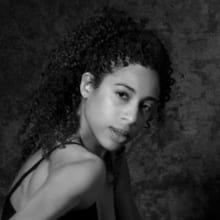
In this inspiring episode of the Bendy Bodies podcast, Dr. Linda Bluestein, the Hypermobility MD, interviews Adji Cissoko, principal dancer with the Lines Ballet Company. Adji shares her incredible journey of balancing natural flexibility with the strength needed to thrive in professional ballet. From dealing with injuries to discussing the importance of sleep, nutrition, and cross-training, Adji provides a glimpse into the discipline required to succeed in dance while taking care of her body. Listeners will learn valuable lessons on injury prevention, building strength, and listening to your body, straight from one of the most captivating dancers in the world.
Watch
Guests
Transcript
[00:42] Dr. Linda Bluestein: Welcome back, every bendy body, to the Bendy Bodies Podcast with your host and founder, Dr. Linda Bluestein, the Hypermobility MD. I am so excited to chat today with Adji Cissoko. Adji is a gorgeous principal dancer with the Lines Ballet Company. I first saw her perform a year ago at this same festival, the Vail Dance Festival, where she was the artist in residence. She is such a gorgeous dancer and has such beautiful lines. I was just really eager to speak with her about how she takes care of her body, what her feelings are about joint hypermobility in dance, and if she's had problems with injuries or not. I wanted to talk to her about her training, what she does for nutrition and sleep, and so much more.
Adji Cissoko grew up in Munich, Germany. She trained at the Ballet Academy Munich and graduated with a diploma in dance. In 2012, she was awarded the Patron Award of Merit by the Patron's Council Committee of the National Ballet of Canada. Adji joined Lines Ballet in 2014. Since then, she has originated many central roles and guested for galas worldwide and taught classes around the world as part of the company's outreach program. In 2020, Adji became certified in health and life coaching and also became certified in ABT's national training curriculum.
[02:10] She is going to be joining me today, and I am so thrilled to get to share this conversation with you. As always, this information is for educational purposes only and is not a substitute for personalized medical advice. Stick around until the very end so you don't miss any of our special hypermobility hacks. Let's get started.
[02:34] Super excited to chat with Adji Cissoko. Thank you so much for chatting with me. We are of course here at the Vail Dance Festival, which is amazing, and where I saw you perform for the first time last year when you were the artist in residence. So phenomenal. I've gotten to see you perform already this year, which is amazing, and I'm looking forward to so many more performances. Thank you. We are outside right now, so if you hear extraneous sounds, it's because we have a little bit of water in the background. But it's just so beautiful here in Vail. We are of course at the Manor Lodge, and it's just too beautiful to be sitting inside.
[03:10] Adji Cissoko: That's true.
[03:11] Dr. Linda Bluestein: Yeah.
[03:11] Adji Cissoko: Yeah.
[03:12] Dr. Linda Bluestein: So I want to start out by asking you about how you take care of your body. And if you look at your Instagram account, people say things about your incredible range of motion and how having legs like that should be illegal. I'm sure that you do a lot to take care of your body. Can you share with us some of the things that you do in terms of your training, nutrition, and things like that?
[03:36] Adji Cissoko: Yeah, I think when I was younger, I didn't really think much about how to take care of my body. I didn't really understand how important that instrument is. Last year I was collaborating with my cousin Yuba, who plays the kora, and he takes such good care of that instrument. He wakes up, he tends to it, he tunes it. And that's the same with our bodies. So when I'm not performing or rehearsing, there's a lot that I have to do to keep everything going. So from massage to physical therapy to rolling out.
[04:09] And then my new thing is that contrast of hot-cold. So whether you do that in the shower, taking a really hot shower and then turning the water to really cold, just to get the circulation going — I think it's really helpful for me. Ice baths, people really believe in it, and I've tried it a few times. It does feel amazing. And since we are so close to the creek, I've been putting my feet in there almost every day, and it feels amazing.
[04:37] So I think that there's always that balance of stretching and using your body, but then also coming back into that healing pattern of giving your body love. And love can also mean strengthening, right? I'm a big believer in strengthening your body so that it can do what you require it to do.
[04:57] Dr. Linda Bluestein: Yeah. And speaking of stretching, are you naturally as flexible as you appear to be? Did you have to do a lot of stretching early on? Tell us about that.
[05:09] Adji Cissoko: Yeah, that's a— I have a funny story about that. When I first started dancing, my mom put me into ballet and jazz, and my jazz teacher said, oh, let's all try the splits. And I just went right into the split. I didn't stretch. I had never tried it before. And everybody was like, oh my gosh, have you been practicing? And I was like, no, I guess I just am flexible. So that was kind of the first indication that that came very natural to me.
[05:34] But then when I went into ballet class and we had adagio and these high extensions, I couldn't get my leg there and hold it there. So the teacher would come up, take my leg, put it by my head. As soon as she let go, my leg would go all the way down to the floor. So it was very clear that I had that flexibility, but not the strength to support it. So that was my big journey of how can I really use my extensions in a way where I can support them and show them, because there's not going to be somebody walking around with me taking my legs up, right? So I had to strengthen, and through strength you can explore how to use all of that.
[06:13] Dr. Linda Bluestein: So at what age and how did you work on developing that strength? And I think so many dancers are worried that if they develop that kind of strength, they will lose some of their flexibility. Were you concerned about that at all? And how did you actually go about doing it?
[06:31] Adji Cissoko: I think that naturally with our ballet training, that is strengthening, right? We did a lot of floor barre and exercises that are engaging the core and the back. And so understanding that the movement comes more from within rather than just using the limbs. And so there started to be that guidance from the core, supported by the core.
[06:58] I was never really concerned about the flexibility going away because actually it's almost the other way around — I felt like the more strength I gained, the more I could actually show the extensions. So I think there's that myth of, oh, I'm getting too strong, I'm not flexible. But you can still stretch after strengthening. The strength will actually support and help the flexibility.
[07:27] Dr. Linda Bluestein: Yeah, that's fabulous, because of course every dancer wants gorgeous extension and I think it's harder to get dancers to be convinced about the strength part, especially younger dancers. So in terms of your training, are there certain things that you do in terms of cross-training, and/or things like nutrition, sleep, supplements, anything like that?
[07:53] Adji Cissoko: I love that you said sleep. I sleep 9 to 10 hours a night, and I really strongly believe that's how my body heals itself, especially up here with the elevation. I feel like I need even more sleep to really give the body that moment of rest and rejuvenating.
And then cross-training, 100%. I used to do a lot of Pilates, especially when I danced with the National Ballet of Canada. I had Pilates privates twice a week, and all we did was core, core, core, to just support all that length that I had. It was just hard to really know where the ends of my limbs were, and I think that helped me a lot. Now I'm very much a Gyrotonics person. I love Gyrotonics because there you actually have that combination of going to your full range and then bringing it in — there's that breath with the movement that I really enjoy experimenting with.
[08:54] Dr. Linda Bluestein: Okay, great. So that's interesting how that's evolved over time for you as well. And I'm a big believer in sleep too, so I'm really glad that you get that much sleep. So what about in terms of your nutrition? I know your mom's a nurse, right? Did you have a little more insight into these kinds of things when you were younger?
[09:15] Adji Cissoko: Not really, to be honest. When I lived in Germany, which is where I was born and grew up, the German diet — we just had about two German meals a week and then three Senegalese meals a week, and that was it. There was not a lot of attention to, is it healthy or not? Because actually the food there is just more nutritious and better. That's what I'm realizing now that I live in the States. So a lot of rice, a lot of protein, meats, vegetables. It was always actually a really good balance without us focusing on that. It's just a normal way of eating in Germany.
[09:53] Now I do pay more attention to getting more protein in my diet. So I usually have a protein shake, and then with most of my meals there's also some source of protein, whether that's eggs or chicken or whatever, so that I really make sure that my body has that to function.
[10:12] Dr. Linda Bluestein: Yeah, that's really good. And then what about the pandemic? I know probably a lot of dancers are tired of talking about the pandemic. I just want to ask in terms of coming back — I saw a wonderful video of you being interviewed, and you talked about how you missed hugs and were looking forward to that when you came back. When you came back, you were of course still training even during the shutdown and quarantine, on your own, but was it difficult when you then went back to a more full performance schedule? Were there certain things that you had to do at that time?
[10:53] Adji Cissoko: That's a wonderful question. I think the pandemic definitely had me living a very different schedule, but in my schedule, there was always some sort of movement, actually, without me realizing at first. Whether it was taking a barre at home, or I did a lot of dancing in nature because, you know, you weren't supposed to be around a lot of people. So I was outside a lot in the parks, and I would just use my inspiration to move and dance. And then I also did strengthening online. I actually taught a stretch and strengthen class each week. And because I did it on Zoom, I had to do it full out as well. That was so great for me because I got my strengthening in as well. So I did feel pretty strong when we came back.
[11:42] But of course, it's not the same. It's not comparable to a day of six hours of dancing nonstop versus doing an hour here and there. I got really passionate about running during the pandemic, which is something that I didn't do before and that I'm not doing now — it was really just the pandemic. But I think that also helped my stamina and kept things going.
[12:05] It's also interesting that listening to your body and what it needs is so important. On a regular basis, I train so hard that my body isn't saying, oh, let's do more, let's go for a run. That's not what it needs. But back then, I didn't have all of that. So it really was craving some of that, and I was just listening. Okay, let's do it. And I got really into it.
[12:29] Dr. Linda Bluestein: I'm so glad you said that. I tell dancers all the time, listen to your body. And it's so ironic because right now the Olympics are going on, and you see — whether it's Olympic gymnasts or other sports — they're taped up, they have injuries. Dancers, of course, dance through injury all the time. Most dance injuries are overuse injuries rather than traumatic injuries. So I think that's even harder. At what point do you alter what you're doing, or change your rehearsal schedule or your performance schedule? Have you had to deal with much in the way of injury, and do you have other advice for dancers when it comes to injury?
[13:16] Adji Cissoko: Yeah, I'm also a health and life coach, and I really do believe in that listening part. And that's not just for injuries — that's also about when do you push, right? You might wake up exhausted in the morning and think, oh, maybe I shouldn't do anything. That's not the right approach. It's like, you're exhausted — let's see where we can go. So I do believe that there are moments where you can still push yourself a little bit further. But then there are also moments where if you really deeply listen, it's like, if I push any further, I'm not gaining anything in that moment, because I'm fatigued and I'm not even mentally there. So there's such a balance. The older I get, the more I'm in tune with my body and understanding what it's telling me. I know, oh, this is a moment to just overcome that little fatigue because I'm tired. And then I also know, oh, this is it for today. I'll try again tomorrow.
Injury-wise, I was pretty lucky that I haven't had any major injuries or operations or anything like that. But two years ago I had hip problems, and they did find out that I had a tear in my labrum — which is hard to know, have I always had that? A lot of dancers have them. And that was another sign where I really got into strengthening. I had to strengthen my glutes and restructure how I work, becoming even more aware of how you place your body in space and how it coordinates. So honestly, it was just a great opportunity to go deeper and refine my work.
[14:48] Now I'm dealing with a little bit of patellar tendonitis, which has been very annoying because it's so easy to say, oh, if you're hurting, don't do it. But then there are shows coming up and you need to be there and you can't just sit out of rehearsal because you have to perform it. So I think there's that balance again of getting work done — I did shockwave therapy the other day — but also, again, giving it love.
[15:15] Dr. Linda Bluestein: Yeah. And tendon injuries are so hard to heal because in general tendons don't get great blood flow. So whether it's your Achilles tendon or your patellar tendon — and ligaments too — that's why, especially people who are hypermobile... I say all the time, if you have joint hypermobility, so increased range of motion of joints, which 90-plus percent of elite ballet dancers have — it's a requirement — at the same time it can present challenges. But the real question is why is the person hypermobile in the first place? And that is what makes the difference in terms of how many injuries they have and how hard it is to heal. But even people who just have joint hypermobility without an underlying connective tissue disorder — everyone gets injuries from time to time if we're on this planet long enough. And so with your hip labral tear, you did not have surgery, correct?
[16:09] Adji Cissoko: No, I didn't, and I don't really feel it anymore.
[16:12] Dr. Linda Bluestein: Yeah, which is really great. I'm really glad that you mentioned that, because you're right — hip labral tears are very, very common in dancers. And they're also common in regular people as well. And it's hard because sometimes if they go to an orthopedic surgeon who's a little bit more on the aggressive side, they might not recommend that they try more conservative therapies first. The third episode of this podcast, which would have been published in March of 2020, over four years ago, was with a hip surgeon, Joel Wells from Texas. We talked about hips and the importance — because of course in dancers, hips get a lot of use and probably abuse. It's an incredibly important part of the body and the range of motion there is so important. So I'm really glad that you were able to strengthen and overcome that, because sometimes I think that might be possible for other people and they might not necessarily know that.
[17:23] Adji Cissoko: Yeah, it's true. And there were definitely moments where I was like, I don't know, am I going to recover from this? And especially because I hadn't had any injuries before, which I know is very unusual — so I'm very lucky — but I just at first didn't know how to deal with it. But then I would go do a strengthening session and walk out of there with no pain at all. I was like, okay, so my body is reacting well to strengthening. So I continued to do so and it really helped me so much.
[17:50] Dr. Linda Bluestein: Yeah. And have you ever heard of Ehlers-Danlos syndromes?
[17:54] Adji Cissoko: No.
[17:55] Dr. Linda Bluestein: Okay. So that's a hereditary connective tissue disorder. And some people say, oh, well, professional ballet dancers could never have that. But I have talked to a number of professional ballet dancers who were later — usually after they stopped dancing — diagnosed with that condition, that group of conditions I should say. And it is really, really challenging because they can get more injuries and things. Someone else that I interviewed for the podcast who danced for the Royal Ballet and American Ballet Theatre, she won the Prix de Lausanne — she basically just covered up her injuries with ibuprofen, covered up her pain. So that is not the way to approach it, because that's just not going to end well.
[18:38] Adji Cissoko: And luckily, I'm allergic to all of those, so I can't even take Advil or ibuprofen or anything. So I just have to always heal the natural way, which is probably better.
[18:48] Dr. Linda Bluestein: Yeah, it probably is a lot better. So that's good. I also learned some fascinating things about you when I was doing research for this interview. You are such an inspiring person. The more I read about you, the more — the first time I saw you dance, I was just so inspired. And then I got to meet you afterwards with Erica Fishback from Colorado Ballet Academy. She introduced us. So I was watching this interview and they — you were talking about how you started taking poetry classes in the pandemic. You also in 2020 became a certified life and health coach, and you also completed the ABT national training curriculum. So you've done a lot of other amazing things already in your short life besides being a professional ballet dancer, which is amazing.
I want to talk a little bit about being a life and health coach. What can you tell us about what that involves, what you're doing with it now, what you think you might want to do with that in the future?
[19:50] Adji Cissoko: Yeah, I did it a lot during the pandemic, just because I had more time and I really noticed how much I love it. And especially as a dancer — dance gives us so much. It fuels our soul. It really is our life in a way. And I wasn't sure if I could find other things that also give me so much back. But doing health and life coaching, or any kind of coaching in general, really does give me so much back. And so that's good to know for the future.
[20:17] I do want to take that health and life coaching more toward the life coaching side, and especially for dancers, because dancers don't really have a lot of resources — which is crazy. They sign up for PT, but next to the PT sheet should also be a coaching sheet. And that doesn't mean you need therapy or something extreme, but it's more like, I feel really stressed out, how do I handle this? My Achilles is hurting and I'm battling the question of, do I stop? Do I go? So it's just talking about things that concern you, because all of that mental health also reflects in the body. A lot of people that have back injuries — that can be emotional, right? And so if you only care about the physical side and not so much about your holistic well-being, then that can cause injuries, that can cause fatigue, that can cause unnecessary stress. So that's really, really important to also address on a regular basis.
[21:24] In general, with how I coach, it's a lot about fine-tuning that listening that we talked about earlier — really getting in touch with your body and your senses and allowing yourself to listen to your own voice, and not so much always about what others say, what others believe, because everybody is so different. Everybody heals differently and absorbs differently. So I think it's important to know that about yourself so that you know how to address any issue that comes up.
[21:52] And then there's also experimenting. Especially with nutrition — I can give you things that are healthy, but are they healthy for you? We don't know yet, right? Some people might really enjoy a salad before the show. They feel light, they feel healthy. And then others are like, no, that doesn't sit well with me at all, it makes me feel bloated. So it's so different. We are so individual, and that should be very much acknowledged so that you can really find out what works for you.
[22:20] And with that, also very important — diets change, and what your body needs changes. Let's say I noticed, oh, if I eat chicken before the show, that feels really good. I feel strong, I feel ready. And then a few years later, it's not working anymore. And that's okay. You just have to listen and be like, okay, you're telling me you need something else now, and that's all right too.
[22:47] Dr. Linda Bluestein: Yeah, that's amazing. And I think so many dancers will learn so much from you, because of course there's nothing like someone else who's walked in your shoes — or the shoes that you hope to walk in. I think it's really hard to relate to something that you haven't ever done. So I think that's incredible. And I totally agree about needs changing over time.
[23:05] So with the ABT National Training Curriculum that you also became certified in — I loved this when I was reading about it. It was developed in collaboration with artistic advisors and a medical advisory board. What they do is train teachers how to teach their students to use their bodies correctly, using kinetics, coordination, anatomy, and proper body alignment. And that's so important because you see dancers going to schools where they are not using their body correctly. I actually have a dancer patient who I think I can share a little bit more about because I'm involved in making a documentary right now, and she was one of the people we recorded for it. She had gone to a dance class — and it's interesting that you shared your experience with doing the splits, because she was told by the dance teacher that the whole class would have their splits by the end of the session. They spent the entire class forcing the splits. And she is actually not super flexible. So she left that class in terrible pain, and her family didn't know what to do. She basically became bedridden for 18 months before she came to see me.
[24:35] Adji Cissoko: Oh, that's so awful.
[24:36] Dr. Linda Bluestein: Isn't that awful? So it's so sad that this young dancer spent 18 months basically in bed, or close to it, because of a dance class where the teacher was doing something terrible for their bodies. So I think it's so important that we have people who are being trained really, really well — because dance is hard anyway, right? Ballet especially is so hard, and we ask so much of your body. I danced as a younger person. I wanted to be a professional dancer, but that never worked out because I had so many injuries growing up. But anyway, that is a very long introduction to the question: what did that certification involve for you, and how will you use it in the future?
[25:26] Adji Cissoko: I think it was just a reminder of how much responsibility you have as a teacher. You have young kids and you can really be in charge of their future. So if you do wrong things with them, you can get them injured. You can lose their passion for dance. We really have to know what we're talking about and how we build the class.
[25:49] So when you tell me getting to the splits in a day, that seems crazy. And I hear this so much about really forceful stretching, which ABT does not recommend at all. There's also a certain moment in the class where stretching is placed, and that's on purpose, because you have to warm up your body. It's not recommended to come in and go into the splits — you're cold, you can pull things, and it's just really not healthy and it's actually not getting you anywhere.
[26:19] They also really think about when is it even appropriate to start at the barre. There is a moment where your brain is actually not quite ready for that. And then there's also the question of when is it healthy to put on pointe shoes. That's interesting because my mom — maybe because she worked at a doctor's office, or just because she was always conscious about me not hurting myself in ballet — she was like, I don't know, this seems all so extreme. And I was like, I understand, but so far it feels very easy, or normal to me. But then when it became time for my class to go on pointe, my mom spoke to the teacher and said, I don't believe she should do pointe yet. Her feet are not fully grown yet, and she had heard that that can be harmful. So I literally went back one class because my mom was saying no. And at first I was like, oh, that's so sad, I'm missing a year. But really, now I'm grateful, because we just made it one year longer, and at least I'm healthy and don't have any problems.
[27:21] Dr. Linda Bluestein: Oh my gosh — every single dancer needs to hear that story that you just told. Because Moira McCormick, who was the lead physiotherapist for the Royal Ballet, told us that really talented dancers — dancers with gorgeous lines like you have, gorgeous articulating feet and flexible ankles — should go on pointe later because they're going to be on pointe for so much longer. So I often see — and I'm sure you see this on Instagram — dancers doing things on pointe and you're like, she looks like she's about ten.
[27:56] Adji Cissoko: And she shouldn't be doing that on pointe, because how she's doing it, I know there's an injury waiting. And that's hard too, because sometimes I teach master classes and I'm asked to teach pointe, and I see the dancers and I don't believe they're quite ready for that. Because again, it's also about strength, right? You can so easily tweak your ankle or roll your foot. So is it worth it for that one moment on pointe rather than actually getting ready for that?
[28:27] And I think it's also that kids get excited. So that's where the teacher comes in — explaining the reason why we're not doing that yet, because we're not quite there. We have to build up to that, and then we have to do it at the barre first. We can't just jump into center and do fouettés. There's always a structure to everything, and it's on purpose, because people really thought about how does one thing build onto the next. That's the trick in all of it.
[28:52] Dr. Linda Bluestein: Yeah. We are going to take a quick break, and when we come back, we are going to talk about what Adji thinks dance teachers can say to parents in terms of going on pointe and how to do this when the timing is right. We'll be right back.
[29:41] Dr. Linda Bluestein: We are back with Adji Cissoko. So we were just talking about going on pointe, and I have heard dance teachers say, well, if I don't let them go on pointe when the dancer wants to — which is often around age 12 — they're just going to go to another studio where that teacher will put them up on pointe. So what would you want all dance teachers, all ballet teachers, to know about how to handle these scenarios?
[30:12] Adji Cissoko: I totally understand their concern, and I think it is a valid concern. Imagine you're an owner of a ballet studio and you depend on having students, and if everybody around you is just like, oh, whatever, we'll put them on pointe — it's tricky. I understand that struggle.
[30:27] But ideally, what I would personally do is really invite all the parents in. Let's have a seminar. Let's have a talk, because we need to explain where we are coming from. And usually no parent wants their kid to be injured or have a short career or be suffering. I think every parent wants only the best for their kid. But if the parents don't know why we are saying no to pointe at that age, or at that point for that particular dancer, it's really all about understanding where we are coming from and our reasoning behind it. And I would hope that if I tell a parent, I'm scared that your kid will get injured and that will cause them to not dance very long, that the parent would understand and maybe think twice about forcing the kid to go on pointe.
[31:20] Dr. Linda Bluestein: Yeah, absolutely. And it probably in some scenarios is really coming from the dancer, and other times from the dancer and the parent both. But I think that's an excellent point — for dance teachers to consider having a seminar for all parents, maybe even proactively in anticipation, rather than being reactive. Have that be part of their going-on-pointe protocol. Have all the parents come in, and maybe — I know dancers and dance teachers are not super fond of slideshows — but I think showing some photos of what the foot looks like on pointe, like the X-ray of the foot, and explaining about the growth plates and things like that, I think would be helpful.
[32:00] Adji Cissoko: And now that I'm thinking about it, there are certain exercises that prepare you for pointe, like relevés. You have to get to a certain level of strength. So having the kids be able to show that they've gotten to that level — and if they're still struggling, that clearly shows you're not ready. Your ankle strength isn't there yet. You're not completing the step beforehand. So maybe it can be a combination of that as well, where you can also show the kid and the parent that they're clearly still struggling with this one. So let's keep getting better at that, and then we can go to the next step.
[32:38] Dr. Linda Bluestein: That absolutely makes sense. You need that strength and endurance in order to go en pointe. There's a lot more to it than most people realize, of course. So you are also a choreographer, which is amazing. You are so multi-talented. And you're on both ends of the choreographic spectrum, right? You're being choreographed on, and then you are also choreographing for other dancers. So what do you think would be the ideal approach? Because of course we want choreography to be exciting and innovative, and audiences love to see things they haven't seen before. But of course we should also be thinking about the dancers and what is appropriate for their bodies — making things sustainable, not having certain movements that are going to cause injury in any dancer.
[33:33] Adji Cissoko: Yeah, I think there's always that balance — when to push and when to maybe ease off for a moment. And also giving the dancers the opportunity to speak up. Like, I'm hurting today, today I'm going to take it a little under in the body, but I'm here 110% — mentally I'm focused, I'm learning, I'm engaged, but I'm not pushing because I'm hurting. So I think that should always be an open space where the dancer feels safe to speak up.
[34:01] And then in terms of how I choreograph — it's usually very personal and from the inside out. I might show movement, but I'm very interested in how each individual dancer approaches that movement. So how they do it automatically will be more organic and more based on their own facility and how they interpret it. So it should be healthy on the body, rather than saying this is how it has to be and there's no other way and there's no wiggle room. When I choreograph, I'm trying to create something new, something contemporary. And within that, what you bring to the table is just as important as my idea. I have maybe a vision or an idea, but I'm open — I'm in collaboration with the dancers. So I think that fact alone should make it healthier on the body.
[34:52] Dr. Linda Bluestein: That sounds amazing and fabulous, and I think that's a great way to think about it — that if a dancer is feeling like their body needs a little more rest at that time, like you said, being mentally 110% there but maybe marking some things, that makes a lot of sense. In reality, do you see that happening very often? Have we come a long way in that regard?
[35:27] Adji Cissoko: I really think it depends on the choreographer. Some choreographers, they don't want to hear that. They're so focused on what they're envisioning that it's almost like they have no time for injuries. So I'm sure that still happens a lot and that the dancer will just not speak up. And I think that's also a problem, because we want to create a space where the dancer does feel like they can speak up. If they don't say anything, the choreographer doesn't know, and then they keep pushing and keep demanding. And it creates that circle where injury is bound to happen.
So it's about creating that safe space, but also knowing we are having to create something. So be smart about it. And also, after rehearsal, it is the dancer's responsibility to take care of their bodies. You shouldn't go clubbing afterwards if your knee is already hurting. Get that sleep, get the best nutrition, take care of your body so that you can give 100% in rehearsal.
[36:32] But also the rehearsal director's or choreographer's responsibility is to create a space where the dancer does feel safe to speak up — which I'm hoping is becoming more and more common. I feel like just a few weeks ago when I was creating with Nashville Ballet, there were people saying, oh, my back is hurting. And I told them, I don't need you to do this lift every day. I have seen it. I trust that it's okay. Save that for when we do the run-throughs. Especially when you're repeating things for music or formations, or maybe even while I'm still figuring it out, I'm like, I don't need to see it full out. I don't need to see the lift. I just need you to be in the right space at the right time and do the musicality so that I can fix what I need to fix. So I think it's also really good to communicate that to the dancers so that they know, oh, this isn't about me dancing right now. This is about something else.
[37:27] Dr. Linda Bluestein: And I would love for every choreographer to approach it in exactly that way, because I think that as dancers, you're so aiming to please, and you want to do exactly what the choreographer is asking of you. So I think you're right — it's so much better if the choreographer really gives that permission, because otherwise it is really hard for the dancers to speak up.
[37:56] Adji Cissoko: But I do also have to say that sometimes we have these aches and pains and we think, oh, maybe I should take it easy. But sometimes no — commit to it full out. When you are not really hurting, that is going to strengthen you. So it's really also our responsibility to learn more and more about what is really an injury moment and what is just fatigue or soreness — because we don't want to mistake that. We do want to push when the time is right, and then lay off when it's not. So really trying to learn more about your body at all times is just so important.
[38:39] Dr. Linda Bluestein: Yeah, absolutely. Hurt versus harm, right? Something can hurt, but it's not actually harmful.
[38:45] Adji Cissoko: You want to use your willpower to push through it so that you realize, oh yeah, I'm okay.
[38:52] Dr. Linda Bluestein: Boy, we could summarize this entire podcast in what you said at the very beginning: dancers listening to their body. Because that really is the key. And I think so often we are externally focused — how does this look? How does the audience perceive this? But that listening-to-the-body piece is so important.
[39:03] Adji Cissoko: And I think the last thing I will say about even just the whole choreography process — I don't usually like for the dancers to focus on the mirror when they are trying things out or coming up with their own movement, because then they're so focused on, is that height correct, is that foot right — and I'm more interested in what comes out of you so that we are actually creating something new. And usually when you listen more to your body, you won't do something that's actually strenuous or hurting yourself. It's more when we are so focused on the looks of it that we force things.
[39:49] Dr. Linda Bluestein: Yeah. That's an interesting point. And there's some very fascinating literature in the dance medicine world about mirrors, especially in ballet. I almost wonder if in some instances we would be better off to not have mirrors at all, because when you're on stage, you have no mirror.
[40:04] Adji Cissoko: Yeah. I think usually I'm always like, let's face away from the mirror. But I think there's also a reason why we have mirrors, and that is especially for young dancers — sometimes we explain something verbally, but you also need to see it at some point to really understand it. So I think there's a balance between understanding it internally and sometimes needing to see something to get it. But in general, I think the mirrors are often overused and they're not actually helping us.
[40:37] Dr. Linda Bluestein: You are so incredibly wise. And I was reading also that when you were seven, the doctors recommended that you start dance to improve your coordination and your proprioception — which is fascinating, because proprioception, or knowing where your body is in space without looking, is actually very commonly reduced in people who have joint hypermobility. Because your end range is not the same as somebody who has more normal end range. So people who have more extended range of motion of their joints — it's harder for them to know where straight is or where their placement is.
[41:12] I also read that you had commented about some of your most significant challenges before becoming a professional dancer being learning how to appreciate and love yourself and trying to fit in, but that along the way you changed your mindset. You embraced your own individuality, and through years of dancing you developed a strong sense of self-confidence. I just love how your self-esteem evolved in that process. And I think this is an important thing to talk about, because dancers — since it's so competitive and you're striving for perfection, of which there is no such thing — self-esteem is something that a lot of dancers really struggle with. So if you have words of wisdom for younger dancers when it comes to self-esteem, I would love to hear that.
[42:09] Adji Cissoko: I think it's just a reminder that we need to sometimes be our own pick-me-up. Teachers, choreographers, people you work with — they almost don't have the time to always tell you, that was good, that was wonderful, and this is what we need to improve. So they just jump to the end and tell you all the things that weren't good, that you need to change, that you need to work on. So hearing that all day long can get so negative and can put you down. But it's almost like you need to remind yourself why you love to dance, all the good things that you have, so that there's that balance created.
[42:46] And then celebrating individuality and reminding yourself that it's literally impossible to be like somebody else. I understand that, for example, if you're in the corps de ballet, it's very important to have uniform form, everybody together, and there's a lot of beauty in that which I don't want to discredit at all. But in that beauty, we still realize that these are all many different people. It's not possible to be exactly the same, but you want to all have the same idea and be on the same page, right? So that when we hear the music, we all want to hear it the same way so that we can execute that music and movement the same way as a corps de ballet.
[43:36] But then what I find even more special is if you have a group of people and they are all reading the same book on the same page, maybe the same word, but yet they're interpreting it very individually. For me, that's even more beautiful to see. In classical ballet there is a moment where we all need to move exactly the same — but with that, you shouldn't forget that you're all different too, and that is beautiful. We can all train to do the same movement, but yet give it your individual feeling so that it doesn't feel forced or put on. You want to become the movement. And maybe for some that means you have to do it over and over again so that it feels like it's coming from within you rather than just forcing yourself to do it. And that's the hard thing to do.
[44:29] Dr. Linda Bluestein: Yeah, definitely. And I think that self-esteem coming from within is such an important point, because I think so often we are looking for external validation. And for a lot of us who struggle with that, there's never going to be enough — that's the other problem.
[44:48] Adji Cissoko: But also knowing that there is no perfection. Everybody — even the most perfect dancer that you think of, the one you're like, oh, they have it all together — they don't. They also struggle. They also have issues with self-esteem at points. They doubt themselves. They're like, was that right? They struggle in class. We are all actually having those thoughts and those insecurities at all times.
[45:12] It's really about how, when those thoughts come in, can you switch them over and be like, yeah, I do feel a little bit insecure about this one — let me approach it and really figure it out. Or rather than being scared about something, switch that word out to curiosity. Alonzo says that a lot — get curious about the movement, get curious about it. And for me, once I get curious about it, there's this sense of, huh, I wonder what I can do with that. Or I wonder why I'm off balance today. Am I leaning a little bit? Is my finger off? And with that, there's less of, I'm just off today. Because that's not going to help at all.
[45:54] Dr. Linda Bluestein: Right. No, that makes perfectly good sense. Are there things that, if you could go back and talk to your younger dancer self, you would like to tell young Adji?
[46:06] Adji Cissoko: I think just always keep bringing that love with you. I think sometimes we get so focused on pleasing and so focused on getting it right that we almost forget that love of dance. Whenever I bring that with me, I know I'm invincible, because nobody can take that from me. Nobody can take that pure joy that I feel when I move. Nobody can take that experience from me. So the only moment we can lose that is if we leave the love and passion behind.
[46:36] And so you want to always bring that, and take that to the work, and start enjoying the work. That's something that I really want to share, because sometimes people say, oh, it must take so much discipline to come to the studio every day and do pliés over and over and rehearse. And I think because I'm starting to enjoy that work — that's why I'm still doing it and I'm not getting tired of it and I'm still finding pleasure in it. It's because I'm really loving to work with curiosity and being open to everything that gets thrown at me. It's like, huh, okay, that seems difficult. Let's try. I'm curious about what's going to happen.
[47:20] Dr. Linda Bluestein: I love that word, curiosity. I think we all can benefit from that no matter what type of work we do. And I think so often we get so caught up in other aspects that we forget to have fun. I had a family member ask me the other day, why do ballet dancers dance? Is it for the money?
[47:48] Adji Cissoko: Definitely.
[47:49] Dr. Linda Bluestein: We definitely should talk about that, because no. They love to dance. But I think so often we probably do get caught up in so many other aspects that we lose that joy and that love of dance.
[48:06] Adji Cissoko: Yeah, it's important to keep reminding yourself why you're even doing it, because it's not for the money. And you shouldn't really do it for the praise either. You should do it a little bit for yourself. It's a little bit selfish, but I think there's also the fact that you want to share, you want to give, which in return fuels you. And just keep reminding yourself of that. Maybe the big words to take away are curiosity, joy, and love. Bring all of that to the table to have that well-rounded meal while you practice and continue to move in that journey.
[48:40] Dr. Linda Bluestein: Yeah, absolutely. That's a wonderful note to end on, but we have to do one other thing before we're done. And that is to talk about a hypermobility hack. I like to end every episode with something that people who have hypermobile joints — so again, that means they have more range of motion compared to what's typical — can use. When you look at professional dancers, you have to think about what does a normal range look like, right? So do you have a hack that you would like to share with people related to hypermobility?
[49:18] Adji Cissoko: My personal one is always strengthen, strengthen, strengthen. And then another one is close your eyes and try visually seeing it from within. What is that movement supposed to be? And then feel it — imagine yourself doing it — and then open your eyes and try it out. Because as you said, sometimes it's hard to feel the ends of things and really understand what it is you're trying to do. So for me personally, it helps to visualize it. There — I see it, I feel it — and then I approach and I try it. And sometimes that really helps me.
[49:58] Dr. Linda Bluestein: Yeah, that's wonderful. And they've done lots of studies showing that when you do that, you activate parts of the brain related to those movements. And that's something that a lot of athletes do. So I think that's a wonderful tip, because it also exercises your brain in a way that you're not putting more strain on your joints. I love that. That is fabulous.
[50:24] Okay. So we also need to know where we can find out more about you and if you have any exciting projects coming up. So if you can share any exciting projects and also where we can learn more about you.
[50:37] Adji Cissoko: All right, so my next projects after Vail will be — I'm performing at the Joyce, August 12th through the 19th, as part of the Unite Festival that's organized by Calvin Royal from ABT. I'll also be in Jamaica performing, and then my season with Alonzo King Lines Ballet starts end of August. We'll be in San Francisco but also doing a lot of touring through the US, West through Europe. So just check the schedule, but I think there'll be lots of dancing that I'm involved in, hopefully. I would love for people to come out and watch and support.
[51:14] And you can learn more about me on my website or on Instagram, @adji_cissoko. If you ever have any questions, I'm always happy to answer. Just DM me or write me and I'll be happy to answer anything.
[51:36] Dr. Linda Bluestein: Wow, that's amazing. That's so generous of you. And so great to chat with you. I learned a lot. I'm sure the listeners will have learned a lot as well. And I also forgot to mention that I got to see you perform in January when Lines Ballet was up here at the VPAC at the Vilar Performing Arts Center. So I got to see you then as well, which was absolutely incredible.
[52:01] Adji Cissoko: Thank you.
[52:01] Dr. Linda Bluestein: Yes, of course. So thank you so much, Adji, for taking the time to talk to me. So many dancers, non-dancers, dance teachers, and choreographers are going to learn so much from this conversation.
[52:16] Adji Cissoko: Awesome. My pleasure. And that's always the goal, right? To inspire and guide and help. So thank you for having me.
[52:44] Dr. Linda Bluestein: Wow, that was such an amazing conversation with Adji Cissoko. She is so wise and has such vast experiences beyond being a professional ballet dancer. But of course, her professional ballet dance wisdom and knowledge is so incredible and beneficial for all dancers to hear. So I really am just so grateful that I got the opportunity to speak with her here in the gorgeous city of Vail for the Vail Dance Festival, and we are at the Manor Lodge finishing up.
[53:22] So thank you so much for listening to this week's episode of the Bendy Bodies Podcast. I hope you found it informative and empowering. If you loved what you learned, follow the Bendy Bodies Podcast on your favorite podcast player and watch for episodes each week on our YouTube channel at Bendy Bodies Podcast. Visit bendybodiespodcast.com to access transcripts, show notes, videos, and all kinds of other information. Help us spread the word about joint hypermobility and related conditions by leaving a review and sharing the podcast. If you'd like to meet with me one-on-one, check out the options on the services page on my website, hypermobilitymd.com. You can also find me, Dr. Linda Bluestein, on Instagram, TikTok, Twitter, LinkedIn, and Facebook @hypermobilitymd. You can find Human Content, my producing team, @humancontentpods on TikTok and Instagram. To learn about the Bendy Bodies program disclaimer and ethics policy, submission verification and licensing terms and HIPAA release terms, or to reach out with any questions, visit bendybodies.com. Bendy Bodies Podcast is a Human Content production. Thank you for being a part of the community, and we'll catch you next time on the Bendy Bodies Podcast.