Uncovering Inequality in Healthcare with Brianna Cardenas, DMSC, PA-C
Description
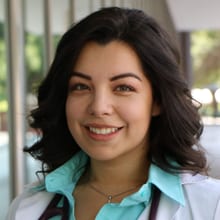
In this episode, YOUR guest is Brianna Cardenas, DMSC, PA-C, ATC and the founder of Healed and Empowered. Brianna courageously shares her own personal journey with Ehlers-Danlos Syndrome (EDS), cervical instability, spinal CSF leak, and dysautonomia, shedding light on the mistreatments she endured - both as a patient and a healthcare professional.
YOUR host, as always, is Dr. Linda Bluestein, the Hypermobility MD. Explored in this episode: · Inequality in healthcare and how we can best advocate for ourselves · Why we should prioritize diversity, equity, and inclusion in medical spaces · The need for personal responsibility when learning about sensitive topics · Discrimination and power dynamics in the healthcare setting · Handling microaggressions · Addressing internalized ableism · The importance of outward visible signs of safety for marginalized groups such as LGBTQ plus and BIPOC
This important conversation about inequality in healthcare will leave you feeling more informed, better prepared to tackle that next step, and with a better understanding of the multitude of factors that can impact the healthcare you receive.
Connect with YOUR Bendy Specialist, Linda Bluestein, MD!
Watch
Guests
Transcript
[00:35] Dr. Linda Bluestein: Welcome back, every bendy body. This is the Bendy Bodies Podcast, and I'm your host and founder, Dr. Linda Bluestein, the Hypermobility MD. This is going to be a great episode, so be sure to stick around until the very end so you don't miss any of our special hypermobility hacks. As always, this information is for educational purposes only and is not a substitute for personalized medical advice. Today I am so excited to have Brianna Cardenas with me, a physician assistant and certified athletic trainer with an additional doctorate in medical science. On her website, she shares that she has EDS, upper cervical instability, spinal CSF leak, and dysautonomia, and has a lifetime of experience with chronic pain. She believes education is the key to becoming healed and empowered, which of course is also in perfect alignment with the mission of this podcast. Brianna, hello and welcome to Bendy Bodies.
[01:37] Brianna Cardenas, DMSC, PA-C: Hello, thank you so much for having me. I'm happy to be here.
[01:42] Dr. Linda Bluestein: I am so excited to chat with you. You and I have communicated a little bit from time to time on social media and things, and so I'm super excited to finally get to sit down and have a real conversation. Can you start out by telling us a little bit about yourself, and then we'll start digging into some of the topics that are super near and dear to your heart.
[02:02] Brianna Cardenas, DMSC, PA-C: Absolutely. And thank you for the kind introduction with my educational background and so forth. I started my career as a PA in 2013, and the majority of my career was in pain management. I loved working with people in pain because I think that a lot of times people in pain don't have their pain taken seriously and don't have, maybe, the compassionate care that all of us deserve when we're dealing with difficult circumstances in our life.
[02:34] I actually knew that I had EDS while I was in PA school, and it wasn't until about 7 years into my career that I actually became really debilitated from having a CSF leak. I took a little bit of time off of clinical practice — about a year off of just work period — to recover. And during that time, I had this idea that I was going to start my own practice and really be able to work with EDS patients so that no one else had to go through the level of diagnostic odyssey that I had to go through just to be believed with some of the conditions that I had to deal with. And lo and behold, here I am on the other side of recovery and having the practice. I'm really so fortunate that I'm in this position now.
[03:27] Before I started my practice, once I got back into work, I had the opportunity to work in PA education — teaching future physician assistants. I had the unfortunate experience of being one of two women of color in the entire college of arts and sciences at the institution that I worked at. I got really into diversity, equity, and inclusion work, or DEI work. At that time, I got the opportunity to serve on state and national committees to help diversify the PA profession. As of 2021, our profession was 86% white people, which is very disproportionate to what our population looks like in the United States.
[04:18] I've been able to bring some of those concepts around diversity, equity, and inclusion work — and some people are now referring to it as justice, equity, diversity, and inclusion work, or JEDI work, which feels fitting — into my practice, and now get to share it with some of my colleagues. I'm so grateful to be getting to talk about this with you today.
[04:40] Dr. Linda Bluestein: Well, it's such an important topic, and I'm sure a lot of people are thinking, "Wow, I can't wait to learn about this," depending on — of course, this all impacts everyone differently. I'm super excited to hear more about your incredible work and how people can help move the needle and help everyone get better care, because so many people are struggling. So why should someone care about medical racism when they already have so much to worry about? They're trying to manage EDS, and if they're not personally affected by it, why is that something that all of us should care about?
[05:17] Brianna Cardenas, DMSC, PA-C: That's an excellent question, and I think it's a valid point. So many of us are struggling with just trying to manage our health, and it feels like sometimes taking on this additional work of unlearning some of our internalized biases — biases that maybe we were just brought up with or that we see in the media — is a lot. Examples of that are things like Disney movies where the villains typically have Southern or Black-sounding accents, as early as Dumbo, where the darker characters are considered the vilified or the foolish ones. So all of us have some level of work to do to start unlearning some of these internalized pieces that are just kind of inherent with growing up in the US.
[06:10] But why it matters is kind of the same reason that representation of all types — not just people of different ethnicities — really affects us in positive ways. I'm sure you've had the experience in your practice as well, Dr. Bluestein, where patients say, "Oh my gosh, it's so nice to go to somebody who understands what it's like to deal with this condition. They don't have to tell you what EDS is. You just get it." And I think that having the opportunity for everyone — regardless of their skin color, regardless of who they love, regardless of what gender they identify with or what socioeconomic status they currently exist in — to feel seen and safe in the healthcare setting takes all of us, or the collective of us, to push for that together, because it benefits all of us.
There's a really great concept that says we all benefit when we center the marginalized. A good example of that is cutting curbs at sidewalk corners, which originally was thought to be a helpful ADA inclusivity measure for people in wheelchairs navigating sidewalks with more ease. But then we found out that it also helps moms with strollers, people pushing carts, shopkeepers loading merchandise — so we find that when we focus our attention on the areas most in need societally, we tend to lift everyone else up as a result. Regardless of somebody's identities, caring about diversity, equity, and inclusion just makes things better for us as a collective society.
[08:04] Dr. Linda Bluestein: That definitely resonates with me, and I love that concept. I never thought about that, about the curbs — it's really helpful whether you're older and you just can't see the curb as well, or like you're saying, there are so many other cases in which that applies. So really interesting. What can someone do if they suspect that they're being mistreated by a healthcare professional due to bias of some sort — whether it's racism, transphobia, or anything like that?
[08:38] Brianna Cardenas, DMSC, PA-C: Absolutely. One thing that I think is really important for all patients to know is that you have the right as a patient to bring a patient advocate with you. And you also have the right to leave — except in rare cases, like if you're inpatient or in the ER. If we're talking about just an outpatient visit, there are a couple of things that can be done.
[09:06] We have to understand that one of the difficult things about navigating a situation like that — when you're experiencing bias in a healthcare provider's office — is that there's a power dynamic where this healthcare provider holds the power to potentially help you or hinder your ability to get the care that you need. So I think making sure that we're doing our own inner work as people who have unfortunately been dealt not a great hand when we deal with a lot of healthcare providers sometimes — I know that most of the audience is no stranger to medical gaslighting — is important. Understanding that the more regulated we can stay and giving people the benefit of the doubt, unless it's just totally blatant, is helpful. Like if someone says a racial or homophobic slur, of course there's no room for ambiguity there. That's a KO — let's leave the visit, let's not continue here.
[10:11] But if someone suspects their pain isn't being taken seriously, for example, understanding that you're allowed to ask why your pain isn't being taken seriously. In my experience, it's best to do it in a tactful manner if possible. For example, I've been asked several times how many kids I have, rather than whether I have kids — which I don't have biological kids — because it's a trope in medical education that women of color have lots of kids, which is not true and has racist origins and undertones.
[11:04] One of the things I learned in how to combat questionable assertions like that is simply asking, "What do you mean by that?" or "Why is that pertinent to what we're talking about?" That does two things: it creates a pause for the person to stop and think about why they said that, and it creates an opportunity to call in the person rather than calling them out. Calling someone out and saying, "Hey, that's racist," can cause somebody to recoil and then turn around and weaponize it — like labeling that patient as "anxious" and therefore "not really in pain." It just turns into this snowball effect.
[12:00] So I think understanding that in some cases the onus is on us to recognize, hey, this could be a microaggression. Ask in a kind way, "What did you mean by that?" or "Can you tell me more about why you asked that question?" — that's certainly a fair thing to ask. And then if it crosses the line into outright discrimination, you as a patient have the right to file a grievance against a healthcare provider if something egregious happened. You have the right to speak with a patient advocate who works in the hospital, especially if you're inpatient and don't have the opportunity to leave. For example, if you have a hospitalist overseeing your care who you suspect is mistreating you based on your pronouns, your gender, or your partner — you're allowed to speak with a patient advocate on staff at most institutions, express your concerns, and request that you be assigned a different person. When bias exists, it does create a safety issue. Knowing your rights as a patient and not being afraid to advocate for yourself are key steps that can be taken.
[13:27] Dr. Linda Bluestein: I like that. Knowing your rights is so important, but I also think if we can influence other people and help them make changes in future encounters, that's really, really powerful. So I like the idea of asking, "Why did you ask it that way?" or "What did you mean by that?" Because it creates a pause rather than just getting a defensive reaction. I really like that approach.
[13:59] Brianna Cardenas, DMSC, PA-C: Absolutely. I have experienced racism going through PA school and as a patient, and I would say the vast majority of times it has been those kind of accidental, "oh, I didn't realize that was a racist thing to do or say" moments. There have only been a couple of times I can think of that were just outright discriminatory with malicious intent. For the most part, people who have missteps here and there don't mean to do it. I really have not encountered very many people who want to be discriminatory — instead they're just on autopilot at the end of a long shift or what have you.
[14:42] I think it may just be an educational gap. I was just talking with a colleague about how the only time LGBTQIA+ case studies are brought up in our board exams and testing, for example, is when it has to do with a sexually transmitted infection. The stereotypical question is something like, "This is a male who has sex with men," and the answer turns out to be some type of STI or HIV. That type of exposure in medical training for years and years and years just creates internalized bias where people are reacting based on what they've seen and what's been drilled into their head from medical textbooks.
[15:37] I don't think it's meant with malicious intent, but that doesn't excuse behaving in that way. And at the same time, we as patients can do the work — when we have the bandwidth and capacity to do so — to invite people to do that work with us instead of being abrasive when we aren't 100% sure a person meant something with malicious intent.
[16:04] Dr. Linda Bluestein: That's really helpful. What if it's a colleague? What if you have a colleague who says something racist, ableist, homophobic, sexist, or classist? What if that person is a colleague on the same level as you, or maybe they're even a boss or an attending? Do you have suggestions for how to handle those situations?
[16:31] Brianna Cardenas, DMSC, PA-C: Yes, absolutely. It's another one of those frustrating and unfortunate things where you're on the receiving end of microaggressions and need to do extra work to insulate yourself and prepare for when you're exposed to them. One thing I let people know — especially if they're a student, because I think there is really no position of powerlessness in the medical journey quite like when you're in medical training — is that essentially if you upset your attending or your preceptor, they can literally end your medical career if they feel like it.
[17:17] So in those cases, having the understanding that power dynamics exist — but arming yourself with the information available in a student handbook or an employee handbook, and knowing what your rights are as an employee — is really important. If you have a situation where something keeps repetitively happening and the person doesn't seem to realize what they're doing is wrong, you have a couple of options.
[17:50] For example, I had a boss who, every time I wore my hair curly, made a comment about my professionalism. And it was only when I wore my hair curly — I'm such a scientist about it, I even made sure to go to work with a button-up shirt, a blazer, and a bow tie, dressed as professionally as I possibly could, and still wore my hair curly — and I still got that comment. So I knew at that point, hey, this is some internalized racism around what we deem professional, because a lot of professionalism standards are inherently racist when it comes to labeling natural hair as "unkempt." Understanding what's in the student handbook or the employee handbook, in that case I was able to take that concern to HR and say, "Hey, this keeps happening. I don't know that this person realizes they're doing it." I already had a tenuous relationship with that boss, so I made the decision to go to HR rather than bring it to her in private. And she was assigned diversity, equity, and inclusion training.
[19:11] But if it's a colleague you have a great relationship with and they say something out of left field — one of my peers said something about "building a wall" one time when I was still in clinic, during a previous administration. My colleague and I, who were both Latina, asked, "Hey, what did you mean by that? Are you aware that some people might find that offensive?" And he said, "Oh, I was just joking." What's actually been a really powerful tool is when people use humor to hide a microaggression — asking the person to explain why it's funny. "Tell me why that's funny. I don't get it." Because then they're forced to say it out loud and realize, as it's coming out of their mouth, how bigoted or inflammatory it is. In that case, our colleague self-corrected. He was like, "Wow, I did not realize that. It's stuff I'd just heard on the radio and repeated." His family felt the same way, so it was something he'd been exposed to and was bringing into a clinical environment. Just asking "what did you mean by that, and why do you think that's funny?" was his opportunity to course-correct.
To sum it up: if you're in a low-power position and it's your boss making these comments, talk to HR, talk to the appropriate channels to potentially remediate that behavior. And as one of my good friends and colleagues, Dr. Williams, says — keep your receipts. Document the encounter and keep it for reference. If you go to HR and say, "I think this person is being racist to me," and you don't have clear examples to refer back to, it's going to be really hard for HR to bring tangible behavior to remediate to that individual. So keep solid documentation: "On this date when I wore my hair curly, I got this comment; on this other date, so-and-so was in a t-shirt and didn't get a comment about their professionalism."
And if you have that type of rapport with a colleague, generally assuming the best in people and just asking them to explain what they mean — giving them the opportunity to trace their steps and realize what they said — can be a really powerful tool to allow people to do that work without necessarily getting in trouble with HR.
[22:25] Dr. Linda Bluestein: I'm curious to ask about this because I was asked to speak to a group of medical students not long ago, and a lot of them have EDS. It wasn't specific to one medical school — it was kind of a national group that met periodically. They asked me to come in and talk during Disability Pride Month, and a lot of them were asking questions like, "Should I disclose when I'm applying for residency? How much should I disclose about my health problems?" They asked me how much I disclosed, and I said I had problems, but I didn't really know what any of them were caused by at that point. Could you comment on what advice you would give to somebody in that kind of situation? Because we know there's what's ideal — what should happen — and then there's the reality.
[23:18] Brianna Cardenas, DMSC, PA-C: Absolutely. I'm so glad you brought up that point. I want to hold space for anyone going through medical training and residency and acknowledge how high-stakes that application process is — understanding that there are not enough seats for all graduating medical students to match into residency the first time, which adds this layer of "I can't afford to be discriminated against." Whereas in PA school, rotations are built in for us as part of accreditation requirements, so it's a different scenario.
[24:00] But generally, what I would advise — because I was in a similar boat to you, where I had my EDS diagnosis but was still in that mindset of internalized ableism, like "I'll just push through and pay for it later on the couch" — is that it needs to be an individual decision. If there's a visible disability, not that we should ever have to hide our disabilities, but for something like using a mobility aid on a daily basis, I think disclosing is a good idea. Having more visibility of outward disabilities, and even invisible disabilities, in the medical training arena will begin to culturally shift norms over time. But for people dealing with that now, having a very clear understanding of what the match or entrance criteria is and being certain that you've crossed all your T's and dotted all your I's as an excellent candidate — that's a good position from which to decide whether to disclose or not.
[25:16] Once you're admitted into residency, it's against the law to dismiss someone based on a physical trait, characteristic, or disability. For some people, it may make more sense to join and then bring accommodations with them once they've matched, because that's a legal requirement and it provides a little more insulation than potentially disclosing on an application before you've had the opportunity to enter that residency training.
For students going into rotations where we knew certain preceptors had received similar complaints, I would tell students to find a faculty advisor and voice those concerns before you enter that externship or residency, because then it's already on record. Hey, I have concerns about a particular identifier I have. I've been mistreated in the past. Professor So-and-So, what would you advise? What are the appropriate channels? Because if a student were to backtalk a preceptor, not only does that student jeopardize their ability to move forward in their education and potentially lose that rotation, but it can compromise the rotation site for the school and the rest of the students — and potentially everyone's ability to graduate.
[27:07] So I think having allies within your program, understanding what you can do if you experience something, and asking in advance: "I have a feeling I might experience some type of microaggression based on my various identity identifiers — what should I do when that happens?" Phrase it as a "when" rather than an "if," because then your advisor doesn't get to say, "Oh, don't worry about that, it won't happen." When forces them to give you an actual explanation: "First, you would come talk to me as your advisor. Next, we would escalate it to the program director. Following that, we would have a faculty-to-preceptor discussion without naming you as the student so as not to further target you." And I would ask for that in an email so that you have it in writing and can keep your receipts. Knowing you have a clear policy to follow — and if it's not delineated in your student or HR handbook, asking about it in advance — would be really, really powerful and helpful.
[28:17] Dr. Linda Bluestein: How often do you think that kind of policy is actually in handbooks? Do you have any data on that?
[28:23] Brianna Cardenas, DMSC, PA-C: I don't have data on that, but I know that for PA education in particular, it's part of our accreditation criteria. We need to have policies in the student handbook that reference how we make accommodations and what would be done in the event of a student grievance, regardless of whether it's based on discrimination, harassment, or something else — that's part of accreditation criteria in physician assistant education. I'm not sure about medical education. And I know that in California we definitely have more protections around employment discrimination than in other states.
[29:11] Dr. Linda Bluestein: That would not surprise me. Okay, what about if someone is outside of academia — not involved in medical education at all — but they say, "Wow, this is really important, and I think it would be smart to help diversify medical training and have more inclusion within the medical field." Is there anything that they can do to help with that?
[29:35] Brianna Cardenas, DMSC, PA-C: Yeah, I think there are a couple of things. Number one, it helps people from underrepresented or historically marginalized identity groups to know that they're supported. As a queer person myself — I am married to a man, so as my friends joke, I'm "straight-passing" — people don't know that I'm queer unless I choose to disclose. But when I walk into a space that has an LGBTQIA+ safe space sticker or a rainbow flag, I automatically feel safer knowing that if I choose to disclose, my safety is not going to be compromised.
[30:25] So if you know that you have healthcare providers who are already welcoming to you regardless of your identifiers, ask them to make that clear in some way. For me, I have a JEDI statement on the About Me page of my website where I talk about the fact that I run my business on unceded Tongva land and that I offer LGBTQ+ and BIPOC sliding scale rates. Just having very outward visible signs of "you are welcome here, you are safe here regardless of how you identify or what your background is" matters enormously. Ask your healthcare professionals who have demonstrated that to share it with their colleagues — let the office manager know: "Hey, this really went a long way for me as your patient to see that you have a pronouns pin or a rainbow flag on your laptop. How can you be more visible about this?"
[31:37] Also, just voicing support for people going through medical training or in academia, because feelings of othering and discrimination don't just start in college or grad school or medical school. We know that SATs, for example, are essentially racist. IQ scores were built around the idea of eugenics. There are early roadblocks in the way for people of various identifiers. Being involved in whatever way you can — whether it's voting in a way that supports trans people having access to the healthcare they need, or showing support at the community level if you own a coffee shop or a bakery, displaying those signs of support in your storefront or on any public platform you have — even just displaying your pronouns on your social media profile shows people who are trans, transitioning, or gender nonconforming that they're accepted and that there are people who see them as people, not just as an identity group.
In short, any way that you can be more visible and more supportive will ultimately translate into the academic arena and into the medical field, because it's a cultural phenomenon that needs to shift gradually.
[33:28] Dr. Linda Bluestein: That's really helpful because I — at least for me — I wouldn't necessarily have expected those things to be that meaningful. I know what I feel in my heart, but that really makes sense: that people can assume you're not supportive unless you have those demonstrable signs on your website or in your clinic space. So that's really good to know.
[33:58] Brianna Cardenas, DMSC, PA-C: Yeah, absolutely. That's part of what I mean about assuming the best in people. I don't walk into spaces and assume people are going to be ableist or racist to me, but having the ability — kind of the same way our patients can walk in and think, "Oh, okay, I don't have to pretend I'm not in pain because this person isn't going to think I'm a hypochondriac if I lie down on the table" — just that ability to let one's hair down goes such a long way to create a feeling of safety.
[34:36] And we know there are measurable cardiovascular effects of the stress of microaggressions — whether they're racist, classist, ableist, homophobic — that affect our health. Having an overt sign of "I am safe here" is almost the inverse of that. It's like the exhale that allows us to activate our parasympathetic nervous system a little bit and have one less thing to be on guard about as people with marginalized identities.
[35:02] Dr. Linda Bluestein: And most of us could definitely use that.
[35:08] Brianna Cardenas, DMSC, PA-C: Yes.
[35:12] Dr. Linda Bluestein: Especially people who have even more other concerns when they're entering the healthcare space. So what about people who might be listening to this conversation and they're feeling guilty, or they're feeling like this is really important work and they want to be a better ally, but they don't really know how to do that? Do you have some suggestions for that? And can you talk a little bit about white guilt and white fragility?
[35:41] Brianna Cardenas, DMSC, PA-C: Absolutely. Thank you for asking that question, and thank you to listeners who are feeling that way and have the desire to learn new ways to approach these topics and unlearn some of the ways we've been shown these topics. First and foremost, I want to express gratitude and thank you for being willing to endeavor into this work.
[36:09] One of the things not to do is go and ask your Black friend or your queer friend or your disabled friend to carry the additional burden of educating you on those topics, as it may be upsetting or retraumatizing to have to explain the ways in which they experience racism or ableism. Understanding that there is a myriad of resources out there that are incredibly helpful is key.
[36:35] Specific to the medical field and how it overlaps with racism and ableism, the book Inflamed: Deep Medicine and the Anatomy of Injustice by Raj Patel and Rupa Mitra is a fantastic book. It literally talks about, from the inception of the medical industrial complex to now, how this overlap occurs. Another great book is How to Be Antiracist by Ibram X. Kendi. That is a phenomenal book, and it helps differentiate the difference between being not racist and being anti-racist. Somebody who knows in their heart "I am not racist" — that is fantastic. The next step of being anti-racist is being visible about it: "I acknowledge that these injustices exist, and I'm taking steps to right them," whether that's in your business, your practice, or your day-to-day life through donating to certain charities or taking other tangible actions.
[38:01] If you are on social media, another great one is Smarter in Seconds — I believe that is the handle. Smarter in Seconds with Blair Imani is a really great social media channel that has short Reels on things like what intersectionality means, ways to avoid displaying toxic positivity to the disabled community, or ways to be more feminist. That's another really solid resource. And there is another Instagram handle I think is really great for trans and gender-nonconforming education: Pink Manta Ray, like the sea creature. It's Skylar Baylor, and his handle is Pink Manta Ray. Really great information on using pronouns correctly, how certain new laws being discussed at state and national levels, or certain policies as they pertain to athletics, are actually very harmful to people who are trans and don't really impact the general public. So there are really good learning opportunities there.
[39:32] Lastly, give yourself compassion. The guilt is natural because I think it shows and reinforces that we do not mean harm to other people. If you're feeling that guilt or that concern, give yourself the self-compassion and grace not to shame yourself. Shame is not productive. Shame doesn't help us move forward. Just acknowledge, "This is an opportunity for me to do better." Acknowledge that you may mess up — I messed up with the alternative spelling of "women," using a Y, and didn't realize that was a trans-exclusionary way to spell it on a social media post one time. I apologized and said, "That was a public misstep. I am sorry." I educated myself and learned that it was inappropriate. None of us are perfect. The landscape of this changes over time — it looks very different pre-pandemic than it does now, and I'm sure it will look completely different in 10 years. Understanding that we're never going to be perfect, but your desire to move forward and do better is really appreciated and means a lot.
And specifically on the topic of white fragility, there's a book called White Fragility by Robin DiAngelo that does a really good job of discussing that and how to undo some of the internalized biases that white culture typically has inherent to its upbringing, especially if you grew up in Western culture or the US.
[41:24] Dr. Linda Bluestein: Those are great resources, and we will be sure to have all of those linked in the show notes so people can find them as easily as possible. Thank you so much for sharing all of that. What if somebody wants to be a better ally but they're afraid of a misstep? You made a quick reference to that — can we get into that a little bit more? They don't want to be ridiculed or canceled. Are there certain things they can do to make sure that doesn't happen?
[41:49] Brianna Cardenas, DMSC, PA-C: Absolutely. Again, kudos for wanting to stand up for a marginalized group. A couple of general things to avoid: number one, speaking on behalf of a group or assuming that a certain group of people are a monolith. What I mean by that is saying things like "all Mexican people are this way and they don't like this" — we can't speak on behalf of an entire group. So before we make sweeping statements, just review our language.
[42:23] Also, there's a difference between a premeditated social media post and reacting in a moment's notice. If you see something happening in a public space to a person of color — you see discrimination happening — using the privileges you may have as a person not experiencing that same type of prejudice to call that act out is one of the most powerful things that can be done. Seeing a racist or race-based altercation occur and, if it's safe, being able to say, "Hey, we don't need to go there — sir, are you okay? Ma'am, are you okay? Is there anything I can do to help? I'm sorry that happened" goes such a long way. Honestly, I had a very healing experience with a woman who stood up for me when someone was condescending to me, and I had been so used to that treatment in my life that it literally didn't even flag for me that the person was behaving in a potentially racist way. It was really huge to be like, "Wow, that person stood up for me." So standing up for somebody when it's appropriate really matters — with the caveat of avoiding the "hero complex." In the disabled community we talk about not pushing a disabled person's wheelchair without asking them if they need help. Don't infantilize people. Don't treat any group as a monolith.
Ask permission and do a quick Google search. My misstep that I shared earlier — I literally could have Googled it and saved myself some embarrassment, but it also was a good learning opportunity. And when you do have missteps, acknowledge it. "I'm so sorry, I didn't mean to misgender you — I'm going to correct that in your chart, apologies." Just acknowledging, "I made a misstep, I'm going to move forward and correct it."
[44:56] Understanding that it may not be possible to be perfect in this work, giving yourself the compassion, and really just having the spirit of wanting to try is a really important piece. If you're not sure, use the resources we discussed, and a quick Google search is a good first step. I would also add a caveat of curating the media you consume, because we become like the 5 people we're around most frequently. If you're constantly consuming media with hateful or bigoted messaging as an undertone, consider switching your media consumption. If you're in a family that freely uses words that aren't okay anymore, having the conversation — "Hey Grandma, it's not okay to refer to that group that way" — and being the person in your family who potentially makes the change for everyone around you can be a really helpful thing.
[46:20] Dr. Linda Bluestein: I had not heard that saying before — you become the 5 people you spend the most time with — but that is really fascinating.
[46:27] Brianna Cardenas, DMSC, PA-C: I don't know who said it, but it was just one of those memorable things I probably saw while scrolling Instagram while brushing my teeth at some point, but it stuck with me.
[46:40] Dr. Linda Bluestein: I can see that. We are influenced by the people we hang out with, and choosing those people carefully is a very good idea. Absolutely. So I am super eager to talk about pseudoscience. I feel like this has just become such a huge problem. I am fascinated when I talk to people and they tell me, "Well, I've been trying this and I've done that," and then you look at some of these websites and you're like, "Whoa, this is kind of scary." There's a lot of this going on right now, and I think it can also contribute to mistrust in the healthcare community — it makes it hard to know who you can trust. Is there an interaction between racism, ableism, and pseudoscience that we should be aware of?
[47:33] Brianna Cardenas, DMSC, PA-C: Absolutely. Thank you for bringing that up because you're right — the peddling of pseudoscience for profit off of patients is absolutely harmful in so many ways. I think it's important to understand that when we look at what is considered science now — meaning what has gone through peer review and been evaluated by research — understanding a couple of key pillars of that is really important. Not to be combative about what is and isn't science, but to have a more expansive view of why people would turn to alternative, maybe not evidence-based, modalities, because of some of the interplay of racism and sexism and ableism.
[48:32] Understanding that the institutions of academia and medicine were inherently exclusionary to people of color, disabled folks, and women — literally until the 1860s — is crucial. Medicine has been around since Socrates, and probably even before that in cultures that didn't document their practices. But when you think about the history of medicine and not having people with different backgrounds even allowed in these spaces until the 1860s — literally in the 1860s, teaching an enslaved African American to read or write was a crime punishable by jail time or a fine, even for a white Northerner trying to help. Those things don't just go away.
[49:35] Specifically for communities of color, there has been a long history of mistreatment. When you look at Henrietta Lacks and HeLa cells, which were taken from her without her consent and then used to profit and develop drugs that have helped people tremendously — again, a scenario where a Black woman had her cells taken without her consent. And there are other examples — some with content warnings, as they're hard to hear — like the Tuskegee experiments, the sterilization of women, eugenics-based practices, and phrenology, which was measuring people's head sizes to determine intelligence when Native American people were first being colonized. That was considered the science of the day. We know better now, but at the time, real harms were done to communities of color, disabled communities, and women. It was still legal to lobotomize people for so-called hypochondria just 50 years ago.
[51:02] Those harms exist and they don't go away — those wounds cut really deep into communities. And when we still have policies in place that enforce racism and disparate access to care — like the very different treatment approaches to opioid use disorder versus crack cocaine addiction in the '80s, for example, based on the demographics of the people involved — the mistrust and the feeling that "this person may not be acting in my best interest" are very real. They contribute to communities turning to alternative options.
[51:50] So when we look at the institution of research and the things that have happened to whole groups of people based solely on their identifiers, it leaves an opportunity for us to invite those communities in to have more participation in these processes and begin to mend some of those bridges. I also think it's important to note that research is not free. It is not lucrative for a company to say, "Regulating your nervous system helps you heal." But it is profitable to say, "Here's a new drug that you can take for the rest of your life" — and in many cases those drugs are genuinely helpful, not to discount them. But people aren't lining up to fund research about the systemic inequities that exist in healthcare or how we can improve health outcomes for underrepresented groups.
[53:11] The way we approach these conversations plays a big role in that too. As healthcare professionals, not shaming people for seeking alternative advice, understanding why that mistrust exists in the first place, and asking our patients — "Why is this appealing to you?" or "Tell me more about why this remedy felt like a better fit" — rather than saying, "Why aren't you vaccinating your child? Don't you know how dangerous that is?" Having a more nuanced conversation, asking rather than telling, and inquiring: "Is there anything I can do as someone in a position to help with your healthcare that would help you trust me more, trust our office more, feel more comfortable in my care?" — because acknowledging that elephant in the room and saying, "I know your community has been harmed by people like me in a white coat" really, really goes a long way. It shows — kind of like having a pride flag in your office — that you're aware of these things. And just knowing that goes a long way toward that "let your hair down" moment, especially as a woman of color: knowing this person understands that there are wrongs that need to be righted, and that at least they're going to try. That's a really key piece, in my opinion.
[54:47] Dr. Linda Bluestein: So many people that I have seen — and I'm sure it's true for you as well — have sought out traditional healthcare but had gaslighting experiences and terrible encounters, and they're not getting any better. So they do start to explore other alternatives, and it can be really, really tricky to navigate all of that.
[55:17] Brianna Cardenas, DMSC, PA-C: Absolutely. And as patients, being prepared — writing down the medicines you're taking and knowing, "These are things I'm not willing to do" — is important. I have patients who tell me, "I'm not going to take medication," and I just say, "Okay, can you tell me more about that?" Sometimes it's based in some of the concerns we shared today. Sometimes it's a personal preference. And having the mutual respect to say, "Okay, I trust you. I'll work with you. There are some alternatives we could discuss." My goal when I'm seeing a patient is not to impose my will on them, and I think that's something our community of healthcare providers could generally do better — not being so paternalistic.
Having the goal first of "this is a human being I'm establishing a relationship with" and making sure our rapport is there before pushing someone out of their comfort zone is just a really different approach to how I was taught medicine and how a lot of medicine operates. Taking that collaborative approach and asking patients — because some of what they share could potentially inform research later on — right, just because it's not in the literature doesn't mean it has zero validity. Having those conversations potentially allows us to make safe and meaningful recommendations. If we're talking about things that are not going to harm people — like breathing exercises — that can potentially inform areas of future research, and that's kind of the whole point of research: acknowledging the gaps we need to fill. It's impossible for everything to start out evidence-based. And for some people, like you said, they're just desperate to get help. Making sure they trust us enough to come to us with experimental things they want to try so that we can advise them — knowing we have their best interests in mind — is probably one of the most reparative things we can do as people who have the privilege of helping other humans.
[57:34] Dr. Linda Bluestein: Yes, totally agree. And before we get to my favorite section — hypermobility hacks — I just want to ask: was there anything I should have asked you, or do you have any final thoughts before we get to your favorite hypermobility hack?
[57:52] Brianna Cardenas, DMSC, PA-C: Gosh, there's so much we could talk about. I feel like we could fill up 5 more episodes. But I just want to say thank you for having me on, and more importantly, thank you, Dr. Bluestein, for being willing to have this conversation. Thank you, listeners, for being willing to want to learn about these topics, because I know they are hard — they're hard on the receiving end, and they're hard in terms of acknowledging, "At some point I may have been on the giving end of some of these microaggressions." I just want to express my gratitude because it's so important that we continue to try and better ourselves as humans, and to hold space to acknowledge the work and the difficulty that can sometimes come with these topics.
[58:53] Dr. Linda Bluestein: I'm so grateful to you because this is such an important conversation to have, and it's so important to have it with the right people who understand these matters on a deeper level. I really appreciate you sharing your wisdom and expertise and perspective on everything — it's super, super helpful. Okay, so I know we're going to have another conversation for sure. When it comes to this particular topic, do you have a favorite hypermobility hack? Understanding that not all hacks are really hacks — they're just some favorite tips, things that are helpful for people that they can turn around and implement the next day, without having to wait 6 months to see their doctor.
[59:45] Brianna Cardenas, DMSC, PA-C: Absolutely. I'll try to keep it related to the topic of today's conversation. My ultimate hypermobility slash life hack — one that has helped me in many other areas of my life and has helped me do this work — is self-compassion.
Implementing self-compassion can be really hard to do. A great resource on that is a book called Self-Compassion by Kristin Neff, because it's kind of the how-to book for how to talk nicer to yourself and give yourself a break. Giving yourself compassion as a growing human being and understanding that it's okay to change your mind — it's a good thing to grow. If you look back at your life and you're like, "I'm a completely different person than I was 5 years ago, 10 years ago," maybe because of having EDS or hypermobility, or because of some hard truths and truth bombs you've had to swallow — that's a good thing.
[1:00:56] Knowing that we have a great big community who I think is very willing to help one another — giving ourselves that compassion that we're pretty quick to show other people is probably one of the best hacks that could help take you far in allyship work, in JEDI work, and just in life. So self-compassion is my hack.
[1:01:20] Dr. Linda Bluestein: I love that. I absolutely love that. I love Kristin Neff and I love that book — I've definitely read it numerous times. I think it is such an important thing, because what happens with so many of us who have experienced chronic pain is that when we've gone in for appointments and been dismissed, we start gaslighting ourselves. So I think this is applicable to so many different scenarios. Really, really important. Can you tell people where they can find you online?
[1:01:51] Brianna Cardenas, DMSC, PA-C: Yes, absolutely. My website is healedandempowered.com. You can find me on Instagram @healedandempowered or facebook.com/healedandempowered. You can find my phone number and email address on my website. And I want people to know that I am very cognizant of some of the structural barriers we've discussed today, so I offer free 15-minute calls — either to see if someone's a good fit to work with me, or just to help them find resources. I had a person call yesterday who said, "There's no way I could afford to pay out of pocket for services, but I'm just wondering if you can give me some starting points." And I said, "Absolutely — that's what this call is here for." So online, pretty much everywhere, healed and empowered.
[1:02:39] Dr. Linda Bluestein: That's so wonderful that you do that. And you're on Twitter too — haven't we connected over there?
[1:02:52] Brianna Cardenas, DMSC, PA-C: A long time ago I was on Twitter when I first started, and then I realized that my ambition to keep up with multiple social media platforms was delusional. My Instagram is where I'm most active. Stuff shows up on Facebook because I can auto-post there. I don't even remember my Twitter handle, honestly.
[1:03:15] Dr. Linda Bluestein: Okay, that's super good to know. So people can find you most easily through your website healedandempowered.com, and at that same handle on Instagram and Facebook — those are the best places. Okay, great. Well, Brianna, it has been so fabulous to chat with you today. I'm so grateful to you for coming on the Bendy Bodies with Hypermobility MD podcast and talking about such an important topic — one that can be difficult to navigate, and so important to have people like yourself who are compassionate and approach it from a standpoint of: we can all be compassionate towards one another, and let's figure out how to help each other and try to become better humans one day at a time.
[1:04:09] Brianna Cardenas, DMSC, PA-C: Thank you for having me.
[1:04:11] Dr. Linda Bluestein: Absolutely. Thank you for listening to this week's episode of the Bendy Bodies with Hypermobility MD podcast. Visit our new website at bendybodiespodcast.com, where you can now view guest profiles and show notes with links to products and journal articles. Leave me a comment, sign up for updates, leave a review or a voicemail, and access the podcast on your favorite player, all directly from our website. You may hear your voicemail in a future episode where we answer your question or dive into your gracious feedback.
[1:04:41] Follow us on Instagram @bendy_buddies. We love seeing your posts and stories, so be a buddy and engage our community by using the hashtag #bendybuddy — that's hashtag B-E-N-D-Y B-U-D-D-Y. You can also find me, Dr. Linda Bluestein, on Instagram, Facebook, Twitter, or LinkedIn at HypermobilityMD. Visit hypermobilitymd.com for information about medical services and one-on-one coaching.
[1:05:07] This podcast is for general informational purposes only and does not constitute the practice of medicine or other professional healthcare services, including the giving of medical advice. No doctor-patient relationship is formed. Do not disregard or delay obtaining medical advice for any medical condition you have. Opinions shared are that of the guest and do not necessarily represent the views of the host or any particular organization. Sponsorship of the podcast does not necessarily mean an endorsement. Thank you for being a part of our community, and we'll catch you next time on the Bendy Bodies Podcast.