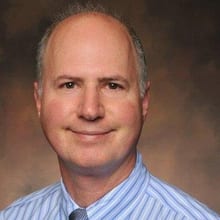
Gastrointestinal Problems in Hypermobile EDS: Learning to Treat and Spot them with Leonard Weinstock, MD
Description
In this episode, YOUR guest is gastroenterologist Leonard Weinstock, MD, author of over 150 peer-reviewed journal articles. His extensive research on MCAS (Mast Cell Activation Syndrome) and diseases of the esophagus, stomach, small intestine, and colon has been presented at national and international conferences. He is actively researching the connection of the gut and small intestinal bacterial overgrowth (SIBO) with several medical problems, including restless legs syndrome (RLS) and chronic pelvic pain syndromes. He presented several lectures in Oregon at the first SIBO symposium and in France at the international rosacea study group. YOUR host, as always, is Dr. Linda Bluestein, the Hypermobility MD. Explored in this episode: · What can cause abdominal pain in those with EDS (Ehlers-Danlos Syndromes), MCAS (Mast Cell Activation Syndrome) and/or dysautonomia (syndromes like POTS - Postural Orthostatic Tachycardia Syndrome) · How gastrointestinal tract symptoms and extraintestinal problems like RLS (restless leg syndrome), rosacea, and interstitial cystitis are related · What unique treatments are available for restless leg syndrome, rosacea, and interstitial cystitis · How Dr. Weinstock’s medical practice evolved after becoming “MCAS aware, POTS aware and EDS aware” · What correlations exist between Crohn's disease, irritable bowel disease and RLS · Why it is so crucially important to listen to AND believe our patients · How Mast Cell Activation Disease and MCAS differ from one another · Why the term “syndrome” can be problematic · What environmental factors can play a role in MCAS · When to suspect a compression syndrome (like Median Arcuate Ligament Syndrome or MALS, Nutcracker Syndrome, or pelvic congestion syndrome), visceroptosis (drooping of the intestines) or gastroparesis · What testing can be performed for MCAS and the significance of tryptase levels · How YOU can help support our nonprofit documentary film and free online educational library, Still Standing.
The goal of our documentary film and free online educational library is to promote wider awareness and physician education about three complex chronic conditions, MCAS, dysautonomia and hypermobility syndromes. Better recognition will help patients get treatment and hope for a better quality of life.
This important conversation about extraintestinal manifestations of gastrointestinal diseases will leave you feeling more knowledgeable, better prepared to advocate for the care you need, and with a better understanding of the interaction of the gastrointestinal system with other bodily systems.
Connect with YOUR Bendy Specialist, Linda Bluestein, MD!
Watch
Guests
Transcript
[00:35] Dr. Linda Bluestein: Welcome back, every bendy body. This is the Bendy Bodies Podcast, and I'm your host and founder, Dr. Linda Bluestein, the Hypermobility MD. This is going to be a great episode, so be sure to stick around until the very end so you don't miss any of our special hypermobility hacks. As always, this information is for educational purposes only and is not a substitute for personalized medical advice. Today, I am so excited to have Dr. Leonard Weinstock with me. Dr. Weinstock is an amazing gastroenterologist who has published, I think, 150 papers if I remember correctly. He was our guest for episode 34 talking about mast cell and gastrointestinal problems, and that was an extremely popular episode. So I wanted to have him back to talk about some more topics that are pertinent to people with EDS and related disorders. So welcome, Dr. Weinstock.
[01:42] Leonard Weinstock, MD: My pleasure to be back. Thank you, Linda.
[01:48] Dr. Linda Bluestein: I'm just thrilled to get to chat with you. We've obviously crossed paths in so many different places, and I just love it when the Bendy Bodies Podcast audience gets to hear from people like you because they learn so much. So can you start out by giving us a brief bio for those who either haven't listened to episode 34, or maybe it's not fresh in their minds?
[02:10] Leonard Weinstock, MD: I've been in practice since 1985 and took my training in Rochester, New York for 8 years and then came to Washington University for my GI fellowship. Then I went into practice with a very busy private practitioner. We did a lot of teaching, and that was exciting and fun. The thing that I really enjoyed a lot was doing clinical research. My partner had a very open, curious mind, and we always had these interesting cases which either turned into case reports or case series or actual studies.
[02:52] I've been involved in investigator-initiated studies on rifaximin for a variety of things including restless leg syndrome, rosacea, and interstitial cystitis. I'm very interested in the extraintestinal manifestations of GI diseases — starting with how small intestinal bacterial overgrowth hits the body, hits the inflammatory pathways, which go systemic. I've written papers on this and other things, and then starting in 2016 I became MCAS aware and POTS aware, and that changed my whole practice. That started with a paper in 2018 where a patient had severe MCAS and POTS and got better with a unique set of treatments directed at the autoimmune phenomenon in POTS, the pain problems associated with MCAS using naltrexone, and treating underlying small intestinal bacterial overgrowth.
[04:18] I still continue with active colonoscopy screening for cancer. It's a lot to put all that together in one practice, but I'm surviving.
[04:32] Dr. Linda Bluestein: Your patients are so lucky to have you because I think we would all love to have a gastroenterologist who looks at these extra — outside of the gastrointestinal tract — connections. I'm so grateful to you for all the incredible research that you're doing and all the publications, because anyone who's published knows how much work that can be. I really appreciate you publishing as much as you have.
[05:02] Leonard Weinstock, MD: Thank you.
[05:04] Dr. Linda Bluestein: So can you tell us a bit more about what you called "extraintestinal" — outside the gut?
[05:14] Leonard Weinstock, MD: Right, so outside the gut. For instance, a lot of patients with Crohn's disease or irritable bowel — which ultimately gets diagnosed as small intestinal bacterial overgrowth — have restless leg syndrome. That's a fascinating condition. There's primary, there's familial, and then there's secondary restless leg syndrome. Over 50 different diseases and conditions have been associated with restless leg syndrome, and for something like that to produce the same degree of symptoms, you have to look for commonalities.
[05:56] One thing that Dr. Arthur Walters and I found was that most of these things tied together with inflammation. Certainly the watchword of the last decade is inflammation, because we know it's the modus operandi for so many syndromes and disorders. That was the basis of an exciting review of the literature and theory in a 2012 paper looking at secondary restless leg syndrome — how it manifests, what kinds of diseases and conditions produce the same set of symptoms. That's in part why it's called a syndrome, and I'm fascinated by syndromes in general.
[06:52] Dr. Linda Bluestein: They are really fascinating. And so many of our patients present with what a lot of us used to think were unusual symptom combinations. Those of us — like you said — who became MCAS aware, I became aware around 2017 but really more so in 2019, and really started directing my practice more toward MCAS-type therapies. But those who haven't necessarily made that transition yet — I feel like a person comes in with symptoms in various different bodily systems and often isn't validated by their practitioner, because the physician thinks these things can't possibly be connected. What would you say to those types of physicians who have never thought of these things as being connected?
[07:48] Leonard Weinstock, MD: You have to believe the patient — that they're not making things up. Sometimes when you sit down with patients and they check off all the symptoms, you think, is it possible that they could have all these conditions? Well, when you really get into MCAS and you accept it and understand it, the answer is yes. You just say, okay, that's MCAS. Yep, that's MCAS. Yep, that's MCAS.
[08:18] The problem with physicians comes down to several things. Number one, they don't have a lot of time, and so anything out of their wheelhouse, they want to refer away or disregard. If you don't know it, if you don't study it, it's easy to disregard, dispense with the patient, dispense with the validation.
And then there's the problem with the word "syndrome." It is defined medically as a unique set of symptoms with or without a known cause. There are plenty of syndromes that actually have known causes and biomarkers — blood tests, manometry, urine tests that are abnormal — and yet the word "syndrome" simply drives away many physicians from thinking sensibly about it.
[09:27] For instance, mast cell activation syndrome — we have blood and urine tests that can validate the patient as having a disease, because that's what it is. There is a condition called mast cell activation disease, which is a category of illnesses that includes systemic mastocytosis (a malignant disease of the mast cells), mast cell leukemia (an extremely rare disease where mast cells appear in the blood), and mast cell activation syndrome. Those three conditions sit under that umbrella term. It'd be nice if we could rename things more precisely — perhaps MCAD1 and MCAD2 for systemic mastocytosis, and MCAD3 for mast cell leukemia.
Even with small intestinal bacterial overgrowth and irritable bowel syndrome, I like to call someone who has a positive antibody test formed after an infection "autoimmune irritable bowel syndrome," or more precisely, small intestinal bacterial overgrowth associated with autoimmune phenomenon. If we could identify biomarkers and accept syndromes as diseases, I think doctors and patients alike can better understand that we're dealing with the real deal.
[11:26] Dr. Linda Bluestein: As you were saying that, I was thinking about the Ehlers-Danlos syndromes, of which there is a biomarker for all but one type. It's interesting that we still call it Ehlers-Danlos syndrome — the vascular type, for example, could be called vascular Ehlers-Danlos disease because we do have a biomarker for that.
[11:47] Leonard Weinstock, MD: Right. But your biomarker is your physical exam. If you have the physical findings, the Beighton scale — why is it still called a syndrome? I don't know. I don't get it, frankly.
[12:03] Dr. Linda Bluestein: There's a lot of things I don't get, that's for sure. Okay, so I wanted to talk specifically about abdominal pain, because I feel like this is such a common thing I see in my patients. I definitely didn't appreciate until I started seeing more patients how many people have some type of abdominal or gastrointestinal symptom. How commonly do you see joint hypermobility in the people you are evaluating with abdominal pain?
[12:32] Leonard Weinstock, MD: Quite often. There was an article out of Mayo Clinic looking at roughly a 20-year period of their hypermobile EDS patients, and 67% had some significant gastrointestinal disorders. So just from that starting point — mast cell activation syndrome, MCAS — I think the majority of patients have GI symptoms. Now, certainly, every patient I see has GI symptoms because I'm a gastroenterologist. They're coming to me for a second or third or fourth opinion regarding unremitting, refractory irritable bowel, chronic nausea syndrome, or chronic constipation or diarrheal disease associated with an underlying syndrome of some type.
[13:32] Once they've had their two or three colonoscopies and two endoscopies, you've ruled out Crohn's disease and celiac — something's got to be there. And often I diagnose MCAS. There's just a tremendous number of mast cells in the gut, and that reservoir is what reacts to food or food allergens most often and can cause pain locally.
[14:07] Years ago, there was a study of just IBS patients — a year before MCAS was first described. In 2004 and 2006, Barbara et al. studied biopsies from irritable bowel syndrome patients, looked for mast cells and their proximity to the nerves, and found that the closer the mast cells were to the nerves, the more pain there was. They also found tryptase and histamine in the lining of the intestine in both IBS with constipation and IBS with diarrhea. This was one of the first times we really had a biomarker — a demonstrated mechanism of action — that explains some cases of irritable bowel syndrome.
[15:09] Dr. Linda Bluestein: So you're saying that in IBS patients, the mast cells and nerve endings were closer together than in controls?
[15:16] Leonard Weinstock, MD: Yes, compared to controls, there were no mast cells next to sensory neurons, whereas in IBS patients they were closer, and the closer they were to the nerves, the more pain — which kind of makes sense.
[15:37] Dr. Linda Bluestein: You've mentioned some of the co-occurring GI symptoms you see, but are there any others worth filling us in on?
[15:46] Leonard Weinstock, MD: Bloating is a big one. I didn't mention bloating. I didn't mention irritable bowel-type symptoms, but that means abdominal pain, diarrhea, constipation — both or just one — chronic or intermittent nausea is a big one. Difficulty swallowing is another. Many of my patients have problems, especially in the upper esophagus, with both liquids and solids. I've done esophageal manometry — checking the pressures of the contraction waves — and can see abnormalities that are common, but nobody puts it together with an underlying syndrome such as MCAS.
I also did a study looking at my MCAS patients with bloating — how many had small intestinal bacterial overgrowth, how many had dysbiosis as suggested by methane excretion, and how many had a normal test. Basically, 87% of my MCAS patients with GI symptoms had bloating. Of those, 30% had abnormal hydrogen levels — something we could treat, reducing the amount of hydrogen and also reducing the inflammation that activates the mast cells. About 10% had methane, and the rest were actually normal but still had severe bloating.
I have seen x-rays on patients during acute attacks of MCAS where there's distension. A lot of times there's just a lot of fluid in the middle of the intestines that swells things up and excretes fluid into the lining and through into the lumen — the channel of the bowel itself. That's very painful as it stretches, but it also takes up room in the gut. So this spontaneous bloating is a very common thing in MCAS patients.
[18:10] Dr. Linda Bluestein: Is that something you can actually see on CT or ultrasound?
[18:15] Leonard Weinstock, MD: Yes. I'm preparing a manuscript now about a patient who had multiple attacks. He was undiagnosed with MCAS until I saw him, but his job was to inspect homes, and many of the homes were moldy. He'd go into a home and then rush out onto the front lawn with cramping abdominal pain, vomiting, sometimes diarrhea — a major problem. Some of the attacks were so severe that he had 4 hospitalizations, and on each one there was distension with mainly fluid but some air. At his third admission, they took him to surgery to look for an obstruction and couldn't find anything — no adhesions, nothing.
[19:21] This is the extreme example of a patient who was subsequently diagnosed with MCAS. I told him to take MCAS therapy, which helped somewhat, and he wore a mask when he went into homes — but what really made the difference was getting out of the environment completely and changing jobs. That removed the mycotoxin trigger that was leading to attacks of MCAS.
[19:50] Dr. Linda Bluestein: Wow, that's an incredible case. I'm so glad you're writing that up. And I want to ask — is it always that obvious once you identify a pattern like that?
[20:04] Leonard Weinstock, MD: Well, it wasn't obvious to anybody else but me. You have to take a thorough history. It's always history, history, history in medicine to really know. You have to look for triggers, whether tick-borne illnesses, mycotoxins, chemical exposures, and so on.
[20:27] On a personal note, I have IBS with a positive anti-vinculin antibody from food poisoning 40 years ago and some mild irritable bowel, but my bigger problem was rosacea — and ocular rosacea — which I published as being associated with SIBO. I got a lot better with antibiotic therapy using rifaximin, but I was living in a moldy home, and ultimately my asthma got worse and I had some brain fog. I moved to an apartment and my eyes got completely better. My ophthalmologist had noted abnormalities of my meibomian glands on every visit, and then they reversed completely. Getting away from mold really made a big difference, as it's an inflammatory condition.
Chemical exposures are also important. I had one patient I didn't investigate well enough at first — he was a paint salesman. When he would go on trips, I initially thought it was the flight, the altitude, the atmospheric pressure, the stress. But what it was ultimately was that at the meetings they would pop cans of paint and he would smell them, which would activate his MCAS and cause severe abdominal pain, diarrhea, and nausea and vomiting requiring ER visits. For a while I used our intravenous protocol to help get him through these episodes, and I even used a chemo agent — imatinib — with great success because nothing else was working. But it was him telling me that he had retired and was feeling terrific, and he thought it was due to the paint, that made everything click. The VOCs — volatile organic chemicals — were activating him.
So you have to think about chemicals, and you have to think about heavy metals. A lot of patients who are older have amalgam in their teeth, or they have an implant or mesh, and that can activate things as well.
[23:33] Dr. Linda Bluestein: That's really interesting. And I apologize for my use of the word "obvious" — I'm sure it was not obvious for quite some time. Once you identify a pattern like that, is it usually pretty straightforward?
[23:51] Leonard Weinstock, MD: Well, the straightforward ones are some of the clear exposures. I now ask four basic questions: tick infections, mold/mycotoxins, chemical exposures, and amalgam/heavy metals. That's just part of my questionnaire now.
[24:19] But the difficult ones are tick-borne illness and mycotoxins. You know, is it enough that you've lived in a home that had mold? Are you the one who has the genetic marker that allows you to get ill with mycotoxins? Maybe it's not enough that you lived in a moldy home as a kid. And I should also add viral infections as another big trigger — including COVID — in addition to those other common ones. That's really important to ask about.
[25:14] Dr. Linda Bluestein: You mentioned food allergy a bit ago. I know testing for that can be very challenging. Do you have particular ways you test for food allergy?
[25:25] Leonard Weinstock, MD: I first do an exclusion diet — gluten-free, dairy-free (including dairy protein), and yeast-free, plus a low-histamine diet. That takes away a lot of things. It's hard to follow, but it can really make a big difference, and you can rechallenge patients. I encourage patients to challenge themselves with one thing at a time.
Food allergy testing per se is problematic. If you don't have hives, skin testing is not going to be effective, and RAST blood testing is not going to be helpful. If you send a patient to an allergist who doesn't have obvious allergic changes, it's going to be very difficult to come up with a useful testing program.
There is an IgG test. That might reflect increased intestinal permeability, and some of the immune globulins associated with foods might be informative, but I don't really order those in general.
[26:48] Dr. Linda Bluestein: I was curious about that because I think some dietitians order those pretty frequently. I've had patients come to me and list off a whole series of food allergies, and depending on how the testing was done, I encourage them to keep an open mind. Isn't it true that you could think you're allergic to a food based on those tests but actually not be?
[27:13] Leonard Weinstock, MD: That's very true. There's another test I used to do fairly often — a little expensive at around $350 — called the LEAP test, L-E-A-P. It looks for mediator reactive testing. They put the white blood cells adjacent to about 100 different foods and chemicals and assess reactivity on a red, yellow, or green scale. Maybe that reflects foods getting into the gut lining and activating the mast cells there — we don't really know, because it's supposed to be a leukocyte response. It's an odd test. Sometimes it's helpful. It's yet another way to look for food reactivity.
[28:26] Dr. Linda Bluestein: Okay. And when we talk about extraintestinal causes of gastrointestinal symptoms, one of the other things I'd like to touch on is compression syndromes. People with EDS are especially at risk for those. Could you talk a bit about that?
[28:44] Leonard Weinstock, MD: Sure. A big one is median arcuate ligament syndrome, MALS. The presentation is upper abdominal pain, usually associated with eating — virtually always in the upper abdomen, sometimes the right upper abdomen. It can come with nausea. It tends to occur almost entirely in Ehlers-Danlos patients, and it can be associated with MCAS and POTS as well, so you can have the whole triad. MCAS and POTS can actually improve somewhat when you release the ligament that's pushing on the nerve plexus, but there's also a requirement that the surgeon denervate — or disrupt — the nerve complex in that area to get pain relief.
That's one reason why there's a test the surgeon wants to see come back positive: an endoscopic ultrasound-guided injection of a steroid and lidocaine mixture to numb the area and see if that takes the pain away for one or two days. If it does, then surgery can be beneficial. All too often, though, vascular surgeons just want to release the ligament that's pulling on the celiac artery. But it's not really the compression of the artery per se — it's the compression of the nerves that travel along with the artery and are embedded in that area. Sometimes you'll find an arterial bruit, a rushing "whoosh" sound when listening to the abdomen — but that's only about 40% of cases. Diagnosis generally requires angiogram or ultrasound looking for decreased flow with deep inspiration or expiration. The surgery is often successful, but unfortunately not always.
[31:41] The other vascular phenomenon that is common is nutcracker syndrome, where the renal vein is compressed. That can cause blood in the urine and pain. And then there's pelvic congestion syndrome, where the left iliac vein is compressed, creating pelvic pain and varicose veins in the upper thigh and on the vulva. That has to be treated with a stent to open the iliac vein, and interventional radiology can also embolize the varices.
Those are the three main compression syndromes. And then Ehlers-Danlos can do some unusual things to the small intestine and colon because of such stretchy pelvic and peritoneal attachments. Our guts are held in place to a certain degree by connective tissues — where the blood vessels and nerves also travel. Just like the joints are hypermobile because of lax ligaments and tendons, the guts are often a problem in EDS because those attachments are long.
[33:49] So the small intestine can be loopy and droopy. Visceroptosis is the word for the small intestine drooping down into the pelvis, and that creates a kind of sump — a reservoir — where bacteria can reside, leading to small intestinal bacterial overgrowth. And one can get dire constipation if the colon droops down, because then the colon follows a long, tortuous path, and peristalsis may not be normal enough to move things adequately from point A to point B.
[34:42] Dr. Linda Bluestein: Are there other causes of gastroparesis or slow movement through the upper gastrointestinal tract as well?
[34:49] Leonard Weinstock, MD: We see that in MCAS. It could be due to the chemicals activating the sympathetic nervous system, so you don't have good peristalsis. POTS itself is a hypersympathetic state, and you can have slow movement. Studies have shown slow gastric emptying in some patients, but in the same group of patients, there are also some who had fast emptying. So it doesn't always make sense.
[35:37] Dr. Linda Bluestein: Okay. And when you're working up these patients, what are the most common tools you're using?
[35:45] Leonard Weinstock, MD: First of all, physical exam — checking for orthostatic pulse changes of POTS, the Beighton scale, looking at the heels for fat pad extrusions, and checking for stretchy or soft skin. Then for MCAS on physical exam, looking for hemangiomas — cherry red angiomas — which are actually fairly common with aging, but when you see them, you ask the patient whether they ever get enlarged or multiply, or become itchy or burning. Dermatographism is one of the skin signs — you can ask people if they see lines when they scratch themselves, or you can just scratch the skin at the beginning of the exam to see if a mark comes up, suggesting increased mast cells in the skin. I also look for telangiectasias — small blood vessel markings that theoretically result from vascular growth chemicals produced by mast cells. You're also examining for abdominal pain, listening for bruits, and looking for edema, red eyes, and conjunctivitis.
For lab testing, there are two plasma tests — histamine and prostaglandin D2. You test for chromogranin A, which can be elevated but can also be caused by proton pump inhibitors, chronic renal insufficiency, and congestive heart failure — usually you have a history or labs to clarify. And then tryptase — you generally get a tryptase not because you expect it to be elevated in MCAS, but if it is over 20, you want to look for the malignant form of mast cell disease. We also have 6% of the population having elevated tryptase levels from a hereditary gene duplication called HAT (hereditary alpha-tryptasemia). That elevated tryptase is by itself inert and doesn't cause symptoms, but patients with HAT can have MCAS as well.
There are also three urine tests commonly done: leukotriene E4, 2,3-dinor-alpha-prostaglandin F2, and N-methylhistamine. That's what our group does in terms of testing.
[39:11] Often the allergist will test tryptase alone and tell the patient the tryptase is not elevated, therefore they cannot have MCAS. But they're really not paying attention to their own consensus group criteria, which say that an abnormal tryptase, or a tryptase that goes up by 20% plus 2 during an attack, or lesser-specific chemicals such as N-methylhistamine and prostaglandin D2 or heparin, are all relevant. Many allergists look at just the first part of their own criteria for labs. They also tend to think that most MCAS patients have anaphylaxis — which is potentially life-threatening — but in fact, anaphylaxis is relatively rare in my MCAS patients.
[40:17] Dr. Linda Bluestein: And how often do you see positive findings in those lab tests?
[40:22] Leonard Weinstock, MD: About 70% of the time. The key thing is that you have this set of symptoms — classic mast cell symptoms in 2 or more systems, and for some studies we've increased that to 5 systems out of 11 characteristic of MCAS — and then with mast cell-directed therapy, patients get better. That fulfills a major and a minor criterion leading toward a diagnosis of MCAS.
[41:03] Dr. Linda Bluestein: Are you sending your samples to any particular lab?
[41:09] Leonard Weinstock, MD: Generally to Mayo. The key thing is how you collect the specimens. The urine has to be collected cold, then frozen and shipped. The two plasma tests — histamine and prostaglandin D2 — need to be spun cold, either in a cold centrifuge (many hospitals have that), or in my office my tech keeps the tube jackets in the freezer so they spin cold that way. With that approach, about 37% of patients have a positive plasma test, about 15 to 20% have a positive chromogranin test, and much fewer have an elevated tryptase level.
[42:10] Dr. Linda Bluestein: So they're getting the labs drawn in your office?
[42:12] Leonard Weinstock, MD: Yes, they are.
[42:13] Dr. Linda Bluestein: Okay, great. So what are some things people can do if they're not able to come see you and can't find a gastroenterologist taking this kind of approach?
[42:36] Leonard Weinstock, MD: I think integrative and functional medicine doctors have really jumped on this. They're a good route — you can look up integrative doctors in your area, and some of them also do telemedicine across different states. Naturopathic doctors can also play a good role.
[43:08] For my step-one protocol, the basic first step, all things except for one are over-the-counter: H1 blockers such as loratadine, Xyzal, and Allegra; famotidine (Pepcid), which is an H2 blocker; quercetin, a flavonoid that stabilizes the mast cell; and vitamins C and D, which also stabilize the mast cell.
Beyond that, if you can't find a local physician familiar with low-dose naltrexone — which I will almost always prescribe assuming the patient isn't on narcotics — there are resources to help you find one. Low-dose naltrexone is an anti-narcotic that basically tricks the body into making endorphins, which suppresses T and B cells. It also suppresses a toll-like receptor and reduces cytokine production, thereby decreasing mast cell activation. You can find a prescribing physician through LDNscience.org and LDNresearchtrust.org — doctors there may have multi-state licenses, or there may very well be a doctor in your own area who can prescribe.
In a small study of my first 116 MCAS patients who took naltrexone, 60% had positive effects, 20% saw no benefit, and 20% had side effects that made them want to stop. The good thing about naltrexone is that if you have a side effect, you stop — immediately — and it goes away. The most common side effects are insomnia, a jittery feeling, and vivid dreams. Often those don't occur if you go up slowly on the dose. I think it's always worth a try, because in MCAS, just one drug trying to treat it never works — the mast cell has 200 receptors and half of them are activating. Trying one drug with one method of toning down the mast cell is not going to do it. It's always a cocktail.
[46:16] Dr. Linda Bluestein: Those are some of my absolute favorite treatments as well, especially LDN, which I take personally. It has probably been one of, if not the most helpful thing for me in improving my levels of pain, quality of life, and physical functioning.
[46:31] Leonard Weinstock, MD: That's great.
[46:31] Dr. Linda Bluestein: And I find it very effective in my patients too. I'm sure you do the same thing — if there's a side effect, sometimes changing the formulation, getting rid of certain excipients or using a different filler or capsule, or going up more slowly on the dose or decreasing the dose—
[46:52] Leonard Weinstock, MD: Sometimes that's enough.
[46:54] Dr. Linda Bluestein: Yeah. So that's a perfect lead-in to the project that we're working on together. I would love for you to share with the Bendy Bodies Podcast listeners what we're up to and how they might be able to help.
[47:10] Leonard Weinstock, MD: We are creating a documentary to bring to light what I like to call the evil triad: EDS, POTS, and MCAS. We're going to have high-quality filming, patient stories, and doctors' perspectives — how we stumbled onto this, how it's affected our practices, how we've been able to help patients, and how important it is that this becomes more widely recognized.
[47:51] The problem is that physicians who get out of medical school often don't pick up many new things. They're set with a particular set of tools and foundational textbook learning. New things that come out you see periodically — many times because a drug rep tells you about a new medication. But there are systems like some large healthcare organizations that don't let you prescribe anything other than generics, so you're never going to hear about something new for a new disease or a new way to treat an existing disease.
[48:56] What we want to do is improve awareness and give hope to patients. We also want the other aspect of our project — an educational library for doctors and patients to listen to lectures — to be helpful. And the ultimate goal is to get this content into the first couple years of medical school, where future doctors still have an open mind. Once you get into a busy rotation and are working in a cookie-cutter way, your mind can close because it's easier to work that way. So what are we doing? We're going to post a link — it's mcasfund.com — and we hope for contributions or donations, no matter how small. And we want to make you and others in your family aware that this is coming and that it validates what you are experiencing.
[50:48] Dr. Linda Bluestein: I do want to point out that you and I, along with Dr. Dempsey, Dr. Kinsella, and Jill Brooke, are the team working on this. All of us are volunteering our time. I just want to make sure people know that none of us are taking a salary for doing this.
[51:08] Leonard Weinstock, MD: Right. I've donated, and others are donating themselves as well. We're all donating money and time. When you start treating MCAS and POTS and EDS — if you don't have compassion, if it doesn't strike compassion in you and you don't buy it, then it's a tragedy for your patients and, in a way, for you as a doctor. You're just not getting it. What we want is for doctors to get it and help their patients.
[51:49] Dr. Linda Bluestein: It's really ironic — a lot of people call these conditions invisible, but they're really not. You just need to have your eyes opened. And once your eyes are opened, you can't miss it.
[51:59] Leonard Weinstock, MD: It's invisible to the doctor, unfortunately. What's interesting is that when you talk to patients and ask, "Are you double-jointed?" — that's the fastest way I get to "are you hypermobile?" — all of them know they've been able to do party tricks, but they don't necessarily realize it comes with consequences. The abdominal pain or the pelvic pain that they're having is a real issue.
[52:37] Dr. Linda Bluestein: I tell people all the time: stop the party tricks long before they start to hurt, because by the time they start to hurt, it's too late. And another point I want to make about these syndromes being "invisible" — for the physicians listening to this, you don't have to be an expert. But you have to have an open mind and an open heart and want to help, because I think it can be intimidating listening to someone like you who has such deep knowledge of these conditions. But most patients — they want to be seen and heard and feel like you care. That's the first step toward healing. If we can do that for them, we don't need to have all the answers right away. People can then get more information, learn how to make the right referrals, who to refer to, and so on.
[53:34] Leonard Weinstock, MD: It's funny — when I first learned about this, I did a grand rounds at my hospital and later GI rounds at the university. I thought, this is amazing, everybody should learn about this. What it's done is made me basically the destination for all the referrals. So it didn't quite help me in my effort to spread the word and have others take up the sword.
[54:13] Dr. Linda Bluestein: We need more people to take up the sword — I'm going to mark that as a quote. So, did I miss any questions? Do you have any final thoughts?
[54:23] Leonard Weinstock, MD: I think you've got it all.
[54:29] Dr. Linda Bluestein: Okay, great. I always like to ask for hypermobility hacks — and it could be an MCAS hack, by the way. Is there anything you'd like to share?
[54:44] Leonard Weinstock, MD: I would definitely keep in mind the vascular and compression syndromes, because the bendy body folks are prone to them. It's not always obvious, and it takes diagnostic testing to find. You have to know what you're looking for and be able to communicate to the radiologist exactly what you need. So if you're an EDS patient and you have blood in the urine, you have to think about compression of the renal vein and nutcracker syndrome, which can also cause abdominal pain.
[55:40] Dr. Linda Bluestein: Do you happen to know the success rate for surgeries for any of those?
[55:45] Leonard Weinstock, MD: I would say in the 80 to 90% range.
[55:50] Dr. Linda Bluestein: Oh, so high. Really high. Okay. And where can people find you online?
[55:57] Leonard Weinstock, MD: My website has a lot of information on MCAS. It's going through a rebuild right now, changing from one company to another, so it's not quite where it was, but it will get back there. I do have literature and lectures on MCAS and educational information, including my approach to MCAS — a 15-page document with specific treatments that can help specific symptoms — at gi-doctor.net. I am limiting my patients to Missouri because that's the only state where I have a license, so I don't practice out of state or do telemedicine. And I do have things on YouTube as well.
[56:55] Dr. Linda Bluestein: Great. We'll make sure to put links to those things in the show notes so people can access that information. Well, you have been listening to the Bendy Bodies with the Hypermobility MD podcast today, and our guest has been Dr. Leonard Weinstock. Dr. Weinstock, it has been such a pleasure to chat with you today. I am so impressed with your incredible depth of knowledge and your generosity with information, and it's always a pleasure to get to chat with you.
[57:23] Leonard Weinstock, MD: Thank you so much, Linda.
[57:23] Dr. Linda Bluestein: Thank you for listening to this week's episode of the Bendy Bodies with the Hypermobility MD podcast. Visit our new website at bendybodiespodcast.com where you can now view guest profiles and show notes with links to products and journal articles. Leave me a comment, sign up for updates, leave a review or a voicemail, and access the podcast on your favorite player, all directly from our website. You may hear your voicemail in a future episode where we answer your question or dive into your gracious feedback.
[57:54] Follow us on Instagram at bendy_buddies. We love seeing your posts and stories, so be a buddy and engage our community by using the hashtag #BendyBuddy. You can also find me, Dr. Linda Bluestein, on Instagram, Facebook, Twitter, or LinkedIn at HypermobilityMD. Visit hypermobilitymd.com for information about medical services and one-on-one coaching.
[58:20] This podcast is for general informational purposes only and does not constitute the practice of medicine or other professional healthcare services, including the giving of medical advice. No doctor-patient relationship is formed. Do not disregard or delay obtaining medical advice for any medical condition you have. Opinions shared are those of the guest and do not necessarily represent the views of the host or any particular organization. Sponsorship of the podcast does not necessarily mean an endorsement. Thank you for being a part of our community, and we'll catch you next time on the Bendy Bodies Podcast.