Description
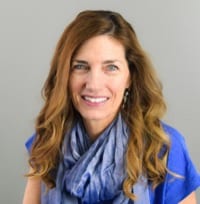
Hypermobility disorders can be difficult to diagnose, with no one clear path forward. Without an obvious road to walk, people with chronic pain who suspect hypermobility disorders may feel defeated and overwhelmed, struggling to find the help they need. In this episode, Bendy Bodies founder Linda Bluestein, MD opens up about her own journey getting an EDS diagnosis and starting her work as a hypermobility specialist. Dr. Bluestein breaks down the different types of connective tissue disorders and how they might be diagnosed. She discusses reasons medical professionals might encourage someone to seek a diagnosis, and theorizes on why they might discourage it. She gives advice on where to start this journey, and discusses the importance of having even just one medical professional in your corner. As well, she suggests types of specialists who might have knowledge of connective tissue disorders, and outlines steps people can take to prepare for a doctor’s visit. Dr. Bluestein offers compassionate advice to people who hear “no” a lot, and cautions against confirmation bias. She busts some harmful myths around connective tissue diagnoses and reveals some of the pitfalls a person might encounter in their pursuit of a diagnosis. Full of advice from a medical expert in hypermobility, this is an episode for anyone feeling defeated or looking to confirm a diagnosis. #ButYouDontLookSick #ChronicPain #bendybodies #BendyBodiesPodcast #ehlersdanlossyndrome #ConnectiveTissue #ZebraStrong #collagen #diagnosis #physiciansofinstagram #EhlersDanlos #hypermobility #hypermobilitymd #bodiesinmotion --- Send in a voice message: https://podcasters.spotify.com/pod/show/bendy-bodies/message
Watch
Guests
Transcript
[00:35] Jennifer Milner: Welcome back to Bendy Bodies with the Hypermobility MD, where we explore the intersection of health and hypermobility, focusing on dancers and other aesthetic athletes. This is co-host Jennifer Milner here with the founder of the Bendy Bodies Podcast, Dr. Linda Bluestein. Our goal is to bring you up-to-date information to help you live your best life. Please remember to always consult with your own healthcare team before making any changes to your routine.
[01:02] Our guest today is our very own Dr. Linda Bluestein, founder of Bendy Bodies and co-host of the podcast. So welcome, Dr. Bluestein.
[01:13] Dr. Linda Bluestein: So nice to see you, Jen. I love when we do the ones where we talk to each other because we never get a chance to just sit and chat with each other. So I'm really excited about doing this, and it's going to be a great topic today that I know a lot of people are asking about.
[01:45] Jennifer Milner: So everyone knows that you're the founder and the co-host of Bendy Bodies, but not everyone may have heard your own health journey story. So could you share with us your own road to being diagnosed with EDS?
[01:57] Dr. Linda Bluestein: Sure. So I knew very little about EDS working as an anesthesiologist. I'd gone through medical school, of course, residency, et cetera, but I still didn't know much about it. And I was diagnosed with something called a Tarlov cyst, which is where there's a weakness in the lining surrounding the nerves. And so you get a bulging of these nerves and it can compress the other nearby nerves and cause sciatic-type pain. And I had this terrible sciatica-type pain that didn't go away for quite a long time. And that was the first time that I really heard about EDS.
[02:33] As I was reading more about Tarlov cysts and trying to understand more about this diagnosis that I had and how it might be affecting my symptoms, I started reading that this is something that happens commonly in people with connective tissue disorders. And as I started digging into that a little bit more, I was like, oh, I wonder if this could explain some of the other things that I've experienced. For example, I've had problems with ulcers on my cornea, which is kind of an unusual thing, especially the way they came about. I've also had a problem with— and this is what led to really my having to leave the operating room— I had a huge cyst inside a bone in my wrist, and I had to have bone grafting surgery, which led to a complication called CRPS. And so these were a lot of things that are kind of unusual. And as I started reading more, I was like, well, these maybe could be pointing to a connective tissue disorder.
[03:24] And the first rheumatologist that I saw was— I'll just say— was a jerk. Looked at me like, you want to have something wrong with you? And it was like, no, I don't want to have something wrong with me. I want to know why all of these things are happening. And for years I'd been telling my primary care doctor and my other doctors, I think there's something wrong with me. I get injured doing everyday things. I don't heal properly. I knew that I had difficulty building muscle mass and keeping my body strong. And so I kind of knew something was going on, but it wasn't until I was in my mid-40s that I actually got the diagnosis of hypermobile EDS.
[04:10] Since that time, numerous other family members have been diagnosed with hypermobile EDS — ironically, some from listening to the podcast. I try not to talk about it too much. But some of them have listened to the podcast and been like, hey, so it's something that definitely has helped a number of us now that we understand the connections. That's kind of how all of that evolved. I had to leave the operating room because of my problems with my wrist. I was no longer able to do that job, but then I tried to figure out how to help other people. I opened my clinic. My first podcast was the Hypermobility Happy Hour, which I co-founded. And that was the first podcast surrounding joint hypermobility. And now there are actually several podcasts that are related to this topic.
[05:02] And of course, now I'm thrilled to be working with you on Bendy Bodies. I think it's a great marriage of the connections that I have and the perspective that I bring and the perspective that you bring and the connections that you have, because you and I have such complementary skill sets. So I think it's a really cool project and it's been a lot of fun, and we keep hearing from people that we're helping them. So that's the best part.
[05:33] Jennifer Milner: Well, I agree. I think a lot of people are getting helped by what we do, which is of course the whole reason that we do it and share our own stories, which can be hard sometimes. So our whole conversation today is centering around seeking a diagnosis. But before we get into that, could you go over the different types of connective tissue disorders and what might lead to a diagnosis for them?
[05:57] Dr. Linda Bluestein: Sure. So not all connective tissue disorders are hereditary. That's the first thing that's important to know. And connective tissue disorders are usually related to the proteins — the collagen and elastin — and the extracellular matrix like fibrillin and other things that are involved in forming connective tissue, which is present in our ligaments and our tendons and basically all throughout the body. We have connective tissue everywhere in the body. That's what's connecting everything to everything else.
[06:21] The hereditary disorders of connective tissue include Marfan syndrome, osteogenesis imperfecta, Loeys-Dietz, Stickler syndrome, and the one that I generally focus on the most — because number one, it's what I know the most about, and number two, it affects the most people — are the Ehlers-Danlos syndromes. We know now that there are 14 different subtypes of Ehlers-Danlos syndromes. And when I'm working with my patients, I really try to focus on the big picture of the Ehlers-Danlos syndromes because the criteria may change over time. We know that there are the 2017 criteria that were established by the International Consortium, but that may be revisited.
[07:00] The hypermobile type of Ehlers-Danlos syndrome is the most common type by far. It accounts for 80 to 90% of cases of Ehlers-Danlos syndrome. And we know that it is the only type that does not yet have a genetic marker. There is a group at MUSC working — the Norris Lab — that is working on finding genetic markers. They have found a candidate gene for hypermobile EDS. They will be publishing about this hopefully fairly soon once they are able to do so. That'll be really exciting. Also the EDS Society is working on the HEDGE study, where they're also collecting large numbers of patients to do genetic analysis and working to find other genes as well. Because most of us who work in this space believe that it's not one gene that accounts for the clinical picture — the phenotype — that we see in hypermobile EDS.
[08:07] So right now, diagnosing hypermobile EDS is based on clinical criteria, and there is a worksheet that can be found on the Ehlers-Danlos Society website. There's also a link on my website to that worksheet. Otherwise, blood tests can be done to rule out some of the other genetic disorders. You can do a blood test to rule out the other types of Ehlers-Danlos syndromes. Blood tests and DNA tests can be used to rule out Marfan syndrome and the other hereditary disorders of connective tissue.
[08:41] Jennifer Milner: So what I just heard was a very great answer that boils down to: there's not one thing. So anybody who's looking for a finger prick and a 10-minute test to tell them they've got this — that's not the way that it goes. It's a complicated path, which is why we want to talk about it and why so many people get frustrated with it.
[09:02] I know that the topic of getting a diagnosis for EDS, especially hypermobile EDS, can be very divisive, and people have strong opinions on it. Why might a medical professional specifically encourage someone to seek a diagnosis?
[09:21] Dr. Linda Bluestein: So once a person has a diagnosis, there might be some things that they could have access to that they would not have access to otherwise. For example, school accommodations. A lot of school-age students can really have a lot of difficulty with day-to-day functioning, so it can be very beneficial for them to have accommodations so that they are able to perform their best in school. So having a diagnosis can be very important for that.
[09:48] For people that are working — and we want to keep people working as much as we possibly can, because working is so important for our sense of purpose in life and meaning and so much of who we are as human beings — it can be very helpful to have the diagnosis for work accommodations. I have to confess, when I first was having my own health problems, I had no idea that my employer even had any obligation whatsoever to do reasonable accommodations for me. And it wasn't until much later that I found out what that meant. Basically, if you are working for the Mayo Clinic, their degree to which they need to accommodate people with disabilities is significantly greater than if you're working for me with my tiny little micropractice. I am not expected to build ramps and all kinds of other things. But if you're Mayo Clinic — a massive institution — you are expected to accommodate people with disabilities.
[10:52] It's also important for insurance coverage. For example, if you have a diagnosis of EDS, you may be able to get more visits for physical therapy. And you also may be able to get insurance coverage for out-of-network providers if you don't have an in-network specialist for EDS. I have had some patients get really good success with getting coverage for visits from me even though I'm out of network for them, because they can demonstrate that there is no in-network provider for EDS, and so therefore they can get coverage.
[11:27] Sometimes you can also get better access to referrals, and those are very important because EDS does not belong to any one specialist. That's part of the difficulty. It's not like it is a solo neurologic condition that belongs to the neurologist. It's not solely an autoimmune condition where therefore it would belong to rheumatology. Probably the closest specialty to which hypermobile EDS would belong would be physical medicine and rehabilitation. A lot of us believe that that specialty is probably the best suited to taking care of those patients. Geneticists, of course, are also extremely important, especially for the other subtypes of EDS besides the hypermobile type.
[12:15] Jennifer Milner: That makes sense. And as you said, there's not one specific person, so it gets complicated. So on the flip side of that, why might some medical professionals discourage someone from pursuing a diagnosis?
[12:30] Dr. Linda Bluestein: So I often will talk to people, even if I suspect that they have hypermobile EDS, and I will let them know that this could have significant implications when it comes to life insurance. We know that hypermobile EDS does not impact lifespan. It greatly impacts quality of life. But in general, for most people, it does not impact life expectancy. But insurance companies are not at the point yet where they're making that distinction — at least often, this is the case. So sometimes if a person does not have that diagnosis yet, I will ask them, do you feel like you have adequate life insurance? Because I don't want to put this on your record unless I know that you feel comfortable in that regard.
[13:11] And also, the other thing that I would mention is medical insurance. If you work for an employer, then it's easier. But if you are self-employed or shopping on the marketplace — and I'm not an insurance expert, so everyone needs to do their own due diligence here — things are constantly changing in the insurance space. And so if you have a preexisting condition, that can impact your ability to get coverage. So those are a couple of reasons why I would maybe discourage someone from pursuing a diagnosis.
[13:47] The other reason I would say is I always ask people, why is this important to you? And it would depend on their reasoning. If they feel like they are doing really well, they feel like they're doing all the right things, they feel like they don't need it for validation, they don't really need it to access referrals and things like that, then oftentimes I'll say, okay, I don't think you need to pursue a diagnosis. I think you can continue to do what you're doing. You're doing the right things already.
[14:12] The last thing I want to add under that is that every single type of specialist needs to know about these conditions. Most of us who work in this space believe that hypermobile EDS — and if you don't fit that clinical criteria but you have a picture that looks like that, then now the default diagnosis is hypermobility spectrum disorders — seems to be getting more common and also much more prevalent than what we originally thought. Therefore, these people are presenting to all types of specialists. So it doesn't matter what type of medical practice you have — you need to know about these conditions.
[14:58] Jennifer Milner: Yeah, that's fair. And I can see the reasoning, as you said, for both encouraging and discouraging from a medical point of view. So on the other side of the prescription pad — you and I have both spoken to a lot of people who have said that having a diagnosis made them feel affirmed, like they're finally being told it's not in their head. And you even said that earlier in our discussion today: I know something's wrong with me, I just want to know what it is. So, keeping that in mind, what are some reasons a person might personally pursue a diagnosis?
[15:32] Dr. Linda Bluestein: So it is very, very validating. I know for me personally and professionally, when I have given people this diagnosis, they feel like, okay, I'm not crazy. And it is amazing what happens when you realize that, because it's so common for many of us — myself included — to have experienced medically induced trauma, meaning that you've gone to appointments and they've been traumatic for you. You've gone to an appointment, or you've had a procedure, or something didn't go well. And that person dismissing your symptoms can cause you to have self-doubt. It can activate your sympathetic nervous system and actually worsen the symptoms that brought you there in the first place — for example, pain, disordered sleep, palpitations, anxiety, et cetera.
[16:26] And that exacerbation of those symptoms can cause problems in your closest relationships. You can end up getting so obsessive with your symptoms because you know something is wrong and you just don't know what it is, that the people around you kind of push you away and it can become very isolating. And we know that isolation is a very bad thing. It's really so important to be connected with other people and have support. And we know that love and fear are opposites of each other. And when we're in that fear part of our brain — that reptilian part of our brain — that exacerbates our symptoms. On the other side, if we feel loved and cared for by our providers and our friends and our family, then that can really help lessen our symptoms.
[17:20] Jennifer Milner: Yeah, I can definitely see that. So looking at all of that, would there be reasons that someone personally might not want a diagnosis?
[17:31] Dr. Linda Bluestein: I think that's a highly personal thing. I always discuss at the very beginning of an appointment: what is your goal? Because most of these people I could talk to for days and not get to the bottom of everything that would be important to talk about. So it's really important to know what their goal is. And for a lot of the people, it is to have a diagnosis. Every once in a while, though, I get people that really don't want a diagnosis. They want a comprehensive treatment plan. They want to know what are the things that they can do, but they actually don't want the label. And I think that's really fabulous if they can have that intuition that for them, having a label is actually not going to be helpful and could potentially be harmful.
[18:22] Jennifer Milner: Yeah, I could see that. And as you said, it is very individualized. So everybody is going to have to make the choice that they think is best, and most people will feel pretty strongly one way or the other about which direction they want to go.
[18:36] So we've talked about the different angles of having a diagnosis — sort of the pros and cons from both sides of the table. Let's assume that someone does want a diagnosis. And you've shared there's really no one clear path to getting a diagnosis. So how would someone start?
[18:54] Dr. Linda Bluestein: Yeah, that's a really good question. So oftentimes this is raised by someone's physical therapist. That is a very common thing, and I do find that physical therapists are much more knowledgeable about hypermobility than most physicians are. So oftentimes the physical therapist will say to you, gosh, you really are— actually, that was kind of how it was first raised to me, as I think about it. One of my physical therapists had pointed that out. Many of my physicians had pointed out that I had severe elbow hyperextension, that I had extreme neck range of motion, but they never said anything about what that might mean. In fairness to them, they probably also didn't know. Awareness about EDS definitely has grown over the years.
[19:44] In terms of where someone would start, I would say that it's important to have one person in your corner. That could be your primary care provider, that could be one of your specialists, that could start with your physical therapist. Your physical therapist will do an assessment and they will make notes, they will put things on your record in terms of what they found on their assessment. But in terms of ICD-10 codes, those do have to come from a physician or now a nurse practitioner or physician's assistant. So if your physical therapist is somebody who is knowledgeable about other providers in the community, they could maybe point you in the direction of a primary care provider, or maybe there is a rheumatologist who is interested in these conditions.
[20:26] A lot of rheumatologists are so highly focused on autoimmune disorders that they're not as interested in EDS. So you don't want to automatically assume that someone who is a rheumatologist is going to be super interested, even though they deal with a lot of joint-type issues. It's really kind of finding that person who will take an interest in you, will take the time. And also, for you to explain that you don't expect this to be accomplished in one visit.
[21:03] If you're working within the traditional healthcare system, physicians are paid based on number of patients seen in a day and procedures and surgeries — basically, that's what insurance companies value. So in a lot of practices, they are seeing very large numbers of patients in a day. They might be seeing 30, 40, 50, 60 — I've heard of doctors seeing 80 patients in a day. I cannot even imagine. If you think about that worksheet, there is no way that someone is going to be able to take the time to do that in a 10-minute visit. It's physically impossible to do that responsibly.
[21:41] So I think it's important to build the relationship and to say, this is something that I have thought about. I'm wondering if it might apply to me. You could take in the worksheet, you could take in an article that you have found online — maybe you've found it on the Ehlers-Danlos Society website — with a couple of things highlighted. Don't get too crazy. More sparing information is better. And then let them know that this is something that you would like to discuss at a future visit and would they be open to that.
[22:13] Jennifer Milner: That's great advice. And so building on that, let's assume that no one in this person's medical area is a connective tissue specialist. What possible specialties, as you've mentioned earlier, might be likely to recognize connective tissue disorders? If you can expand on that a little — like, you mentioned rheumatologist. What others?
[22:41] Dr. Linda Bluestein: Sure. So it's always surprising to me. I had a patient the other day who shared with me that she has an amazing gastroenterologist who's very aware of EDS and mast cell activation syndrome, and I was so excited because she is in a local area to me, and I always love to have more resources. So I was very happy to hear about that.
[23:02] If you are seeing, for example, a cardiologist for your POTS — postural orthostatic tachycardia syndrome — they may be more aware of EDS because of the significant overlap between POTS and EDS. Now, some cardiologists are not good at recognizing or treating POTS at all. Other cardiologists are really knowledgeable about POTS, but they may be treating it as a cardiovascular condition and not the neurologic condition that it truly is. If you're seeing a neurologist for POTS — which, if I have my choice, that's where I usually send people — and if I feel that they need really a lot more than what I can offer in terms of POTS treatment, I refer them to some of the neurologists who are really fantastic in this area. And they are, of course, knowledgeable about EDS again because of the overlap.
[24:01] Some allergy and immunology doctors are quite knowledgeable because of the mast cell activation syndrome patients that they may be seeing. But again, if you're a very traditionally trained allergy-immunology doctor — I know some — they do not acknowledge mast cell activation as a condition. And then there are some oncologists who treat mast cell activation syndrome, and so they might be more knowledgeable. Physical medicine and rehab, as I mentioned, might be a good specialty to pursue, especially because they would be a type of doctor who would be really working with you in terms of improving your physical functioning.
[24:42] Jennifer Milner: Okay. So you talked about this a little bit earlier, but I want to circle back to it. If a person has an appointment with a doctor that they've heard is open to learning about things outside their field or seems to be interested in investing in their patients — if it's a GP or an internist, something along those lines — is there anything that the patient can do to prepare or to bring to that meeting to help them get the most out of it? You talked about the handouts and the sparse highlighting. Are there any other steps that they can take to be ready when they walk into that meeting?
[25:21] Dr. Linda Bluestein: Sure. So the Ehlers-Danlos Society has great resources on their website. They have the papers from the 2017 American Journal of Medical Genetics. They also have a lot of those papers in layman's language. Now, of course, your physician doesn't need it in layman's language. However, they are abbreviated in that format, and that might be a good place to start with your primary care provider or one of your specialists. I highly recommend printing those up — print two copies so you have a copy and your doctor has a copy. Highlight the relevant sentences, just a very small number, not the whole thing. I have a tendency to do that sometimes. My family makes fun of me because my books have the whole things highlighted and sticky notes all over the place. You want to keep it very sparing.
There were also new papers that were published in the 2021 American Journal of Medical Genetics — I believe it was November. There's a whole series of articles about Ehlers-Danlos syndromes that are, of course, four years newer than what was published in 2017 and are a little bit different. So some of the 2017 papers are still super, super important because they address things in a slightly different way. I think those are some really great resources.
[26:45] And if someone is looking to dive a little bit deeper into this topic, I have created a course — I'm just going to give a quick plug — a course that I created with Kia Steele, Hell's Bells and Mast Cells. If someone is interested in diving deeper into how to work with your doctor to get more out of your medical appointments when you have a complex illness or are needing a lot of medical care, that's a great resource.
[27:12] Jennifer Milner: I know that there's a fine line between feeling like you know there's something wrong with you and wanting to find out what it is, and it becoming an obsession where you visit 20 doctors and they're all saying no. So you want to walk that line for your physical health and also for your mental health. And sometimes it's hard to know where to stop.
[27:35] You and I have interviewed and heard from so many amazing people who have told these stories over and over again about how they knew something was wrong, they just didn't know what it was, and how their individual journeys to getting a diagnosis were so different. But all of them had that common thread of: I knew something was wrong. And when the doctor said nothing was wrong, I knew they were wrong. And trying to get there — but at the same time, we want to be realistic and not become obsessive about it.
[28:07] So if a couple of doctors have been seen and no one agrees with the patient's gut instinct that they have a connective tissue disorder, where can this person go from there? And how long do you encourage someone to keep trying for a diagnosis — realizing that once they meet you, that's great, and that's the endpoint, and they probably will get that diagnosis. But how long would you encourage someone to sort of keep going for that?
[28:37] Dr. Linda Bluestein: Yeah, that is such a good question. There's an institution that I'm aware of that has a program for managing chronic pain — it's like a residential program, you stay there for several weeks. And one of the things that they tell you is: stop chasing diagnoses, stop going to doctors. And I understand kind of why they say that, but at the same time, I think it's really hard because a lot of people have been dismissed, they have been disregarded, they have not been listened to.
[29:12] So I would go back to: what are your reasons? What are your goals? Why is it that this is something that you feel you really need? There was a paper that just came out — I believe it was August of this year — looking at muscle mass and muscle strength in people with hEDS and HSD. And basically, one of their conclusions was to treat people with HSD and hypermobile EDS the same, which I would say not just for the muscle strength part — most of us treat those two conditions pretty much the same. So in terms of getting a diagnosis specific to EDS, keep that in mind.
[29:51] The other thing is there is an ICD-10 code for hypermobility syndromes, and I do sometimes see people — I just saw someone a couple of days ago, actually — that had a diagnosis from another provider written as something like hypermobility-related joint pain. So maybe your provider is willing to write something like that. Just make sure they don't write benign joint hypermobility, because as soon as people see the word benign — even though benign generally means not cancer — they often think it means it's an innocent thing that doesn't cause any problems.
[30:33] The other thing that I want to mention is it's really important to be aware of confirmation bias and medical student syndrome. When I was a medical student, things were completely different. We didn't have this crazy access to the internet. We didn't have people who could themselves look up all this information and read all these studies. And so this was really known as medical student syndrome, but now it could be anybody's syndrome. What can happen is we read these things and we get confirmation bias. If we see a list of 20 things and we have 8 of those things, we'll be like, yep, yep, yep, yep, yep. And we can end up thinking, I must have this, even though maybe what you have is something different.
[31:16] So it's important to keep in mind — I would say that if you think something is wrong with you, you're probably right. I had somebody tell me once, I feel like I'm dying. This was when I was at Mayo as an intern. I took that very seriously. He was an inpatient in the hospital and he was like, I don't have chest pain, I don't have shortness of breath, I don't know what it is, but I feel like I'm dying. And I'm like, okay, this has got to be something. Something is going on here. And it turned out he had methemoglobinemia. Long story, but he was right — he was dying, and there was actually a very easy fix. We gave him the antidote, methylene blue, and he was fine.
[31:56] So I do believe that people know their bodies really well, but I think we have to be very careful with the information that we read. Nowadays we could spend 24/7 reading things online, and we need to remember that the people who spend more time online in general are people who are not doing as well. When I first was having issues with my Tarlov cyst, I did try to remind myself — though it was hard — that the people on the Tarlov cyst listserv were people that were having a lot of problems. And the people who had Tarlov cysts who were out doing their thing and happy and having no problems — they're not hanging out online. So I think that's just another important thing to remember.
[32:32] Jennifer Milner: That's very true. And the internet, as we know and see so often, is that double-edged sword. It's a great place to get information that we used to have to go to a library and look up and scroll through the microfiche or flip open an actual encyclopedia. So we have so much information at our fingertips, but there's no guarantee that number one, that information is right, and number two, that the sample you come across is an accurate sample of everyone.
[33:02] So you join or you lurk in a connective tissue disorder group and you hear all of these horrible things — because perhaps these are the people who need support and need to talk to each other. And as you said, the people who have connective tissue disorders who are doing just fine are out there living their lives and may not need that group. So you may not realize that it's not an accurate representation of every person with a connective tissue disorder.
[33:28] So yeah, it's important to remember that, even as you and I work on the internet and that's where we put our information. That's one of the reasons we do it — we want to help people find accurate information and see a reasonable presentation of that information without a bias in one way or the other.
[33:45] Dr. Linda Bluestein: And it's so important what you just said, because the source of the information is so, so important. Oftentimes I have people send me things or ask about things and they're totally not credible — it's someone trying to sell some crazy thing. I think if you wanted to find something that says popcorn causes cancer, you could type that into Google and find somebody saying that. So I think we need to be careful about our search terms as well and try not to lead the witness, so to speak. When you find resources, just be very careful about what you read.
[34:36] Jennifer Milner: I would agree with that. And we have covered a whole bunch around seeking a diagnosis — whether or not different reasons that medical professionals may or may not encourage it, and different reasons people themselves may or may not want it. And you've given us so much information about how to start seeking that diagnosis because it's such a complicated path with so many different ways to get there and no one sure hypermobility 101 finger-prick test.
[35:09] Is there anything else that you wanted to add that we didn't have a chance to cover yet?
[35:14] Dr. Linda Bluestein: I did want to just briefly mention a couple of myths. One is that because Ehlers-Danlos syndromes are genetic, I have heard other colleagues say that if someone is not diagnosed with EDS in childhood, they must not have the condition. And I literally— I took a risk and I presented myself at one of these collaboration meetings where you discuss difficult pain patients. I told them about my diagnosis, and they said, are you sure? Because that's a genetic disorder, if you're not diagnosed in childhood. I was like, really? Because as you get older, we know that your collagen is less strong and healing isn't as good. It's not surprising that some of these things will come out more with age. And also, I had symptoms since I was a baby. I had lots and lots of symptoms in childhood, as a teenager, et cetera.
[36:17] The other thing that I would like to mention is the whole idea that these are "invisible illnesses." I think that's really so ironic. Because yes, I think there is a certain aspect that's invisible, but they're also incredibly visible. You can see if someone is hypermobile. I mean, you and I can pick them out from a mile away, right? And there are also a lot of other features of hypermobility disorders or connective tissue disorders that are quite visible. So it's important to keep that in mind.
[36:55] And then the last thing that I wanted to mention is just that people are very heterogeneous in their presentation. So it's important to know that if you have hypermobile EDS and someone else has hypermobile EDS, they're not necessarily going to look identical. And this is why we think there are probably multiple different genes responsible for creating this phenotype — the phenotype being the clinical signs and symptoms that we see, and the genotype being the genes that underlie that phenotype.
[37:31] In medicine, what do we look for? We look for patterns. If you hear the word "syndrome," it means pattern. We are looking at: okay, this person has this pattern that fits this best. Oftentimes we'll have a working diagnosis and we'll have a differential diagnosis, meaning this is what we think the person has right now, and maybe these are the alternative explanations. And the last thing I wanted to mention is just that caring for hypermobile EDS and HSD patients is very time-consuming. As I mentioned earlier, with insurance, it is very challenging because they recognize numbers and procedures. So there are a lot of us who do take care of this population of people, and we wish that we could work within an insurance system, but we know that we can't do our job the way we want to and really take care of our patients the way we want to — and that's why we do it the way we do.
[38:29] Jennifer Milner: Yeah, and that's a whole other conversation that we could have about trying to navigate the medical insurance field and all of the issues that come along with that — issues that I know even our listeners could tell us hours and hours of stories about, because it's difficult. As you said, it's complicated, but nothing about connective tissue disorders is necessarily straightforward. So we're grateful that you are sharing your expertise and your wisdom on this subject with us.
[39:02] So if people wanted to get in touch with you and learn more about what you do or set up time to work with you — for those people out there who don't know — how can they reach out to you?
[39:14] Dr. Linda Bluestein: So the best place to go is to my website, which is www.hypermobilitymd.com. And from there you can see what the different options are. I do workshops, I work one-on-one with people, and I also share a lot of free information, obviously through the podcast but through lots of other social media outlets as well. I'm on Instagram a lot, I'm also on Twitter, Facebook, LinkedIn — those are probably the main places. But start with my website. That's the best place to get a good overall picture.
[39:52] Jennifer Milner: And also, I know our listeners follow you on the Bendy Bodies Instagram, @bendy_bodies. But you also have your own page on Instagram, @hypermobilitymd, where people can and should subscribe and get all of the great information from you that way as well.
[40:11] Well, you have been listening to Bendy Bodies with the Hypermobility MD. Today we have been speaking with Dr. Linda Bluestein, the actual Hypermobility MD herself. So thank you so much, Dr. Bluestein, for sharing your information with us and letting us hear from you on this really important topic.
[40:33] Dr. Linda Bluestein: Absolutely. It was great to chat with you, and I hope that a lot of people find this helpful. And of course, we'd love to hear from our listeners about what do they want to hear about, what are they finding helpful. We love getting those messages. So I would encourage anyone listening to this episode who has things they want to share with us — please don't hesitate to reach out. [email protected] is the best email to use, but you could also reach us on our Instagram page as well.
[41:04] Jennifer Milner: Absolutely. So until next time, thank you everybody for listening, and we will see you later. Bye.
Dr. Linda Bluestein: Bye.
[41:07] Jennifer Milner: Thank you for joining us for this episode of Bendy Bodies with the Hypermobility MD, where we explore the intersection of health and hypermobility for dancers and other aesthetic athletes. If you found this information valuable, please share it with a colleague or friend and leave us a review on your favorite podcast player. Remember to subscribe so you won't miss future episodes.
[41:34] If you want to follow us on Instagram, it's @bendy_bodies, and our website is www.bendybodies.org. If you want to follow Bendy Bodies founder and co-host Dr. Bluestein on Instagram, it's @hypermobilitymd, all one word, and her website is www.hypermobilitymd.com. If you want to follow co-host Jennifer Milner on Instagram, it's @Jennifer.Milner, and her website is www.jennifer-milner.com.
[42:11] Thank you for helping us spread the word about hypermobility and associated conditions. We want to hear from you. Please email us at [email protected] to share feedback.
[42:21] The thoughts and opinions expressed on this podcast are solely those of the co-hosts and their guests. They do not necessarily represent the views and opinions of any organization. The thoughts and opinions do not constitute medical advice and should not be used in any legal capacity whatsoever. This information is not intended to diagnose, treat, cure, or prevent any disease, as this information is for educational purposes only and is not a substitute for medical advice, diagnosis, or treatment. Please refer to your local qualified health practitioner for all medical concerns.
[42:50] We'll catch you next time on the Bendy Bodies Podcast.