Description
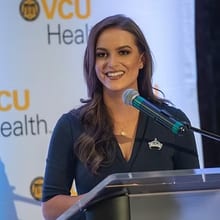
People struggling with a chronic illness often feel overwhelmed at the idea of pursuing a passion. Health issues may seem insurmountable when trying to go after your dream, and you may feel hopeless and alone on your journey. Camille Schrier, Miss America 2020, was diagnosed with Classical Ehlers-Danlos Syndrome at age 11, at the same time she was discovering her love of nature and science. For her, a diagnosis helped her understand all the “crazy” things happening to her body and gave her comfort. Camille walks us through her diagnostic odyssey, explaining the signs of EDS she saw in herself and the twists and turns that came up along the way. She shares her journey to the Miss America title, and her concerns about serving as Miss America with a chronic illness. Camille discusses the importance of advocating for yourself and having providers who listen. She speaks honestly about her struggles with an eating disorder, her journey through mental health issues, and her fights with misdiagnoses. Sharing how her own struggles have made her more compassionate towards others, Camille describes how she is using her platform to spread her Social Impact Initiative, “Mind Your Meds - Drug Safety and Abuse Prevention From Pediatrics to Geriatrics.” You won't want to miss this inspiring interview. Learn more at https://www.camilleschrier.com/. . . . . . #dysautonomia #ehlersdanlossyndrome #hypermobility #invisibleillness #hypermobilitymd #balletwhisperer #zebra #ehlersdanlos #zebrastrong #spoonie #chronicillness #chronicpain #camilleshrier #missamerica #JenniferMilner If you are able to share the resized image, it is much appreciated!
Watch
Guests
Transcript
[00:11] Jennifer Milner: Welcome back to Bendy Bodies with the Hypermobility MD, where we explore the intersection of health and hypermobility, focusing on dancers and other aesthetic athletes. This is co-host Jennifer Milner here with the founder of Bendy Bodies Podcast, Dr. Linda Bluestein.
[00:28] Dr. Linda Bluestein: Our goal is to bring you up-to-date information to help you live your best life. Please remember to always consult with your own healthcare team before making any changes to your routine.
[00:37] Jennifer Milner: Our guest today is Camille Schrier, Miss America 2020, Doctor of Pharmacy student, and ambassador for women and girls in STEM fields. Hello and welcome to Bendy Bodies.
[01:02] Camille Schrier: Hi there. Thank you both for having me on. I'm so excited to be able to chat with you about all the things that I go through with my own bendy body, and kind of the struggles that I go through, especially through my journey of being Miss America and a student. I've definitely had an interesting experience with my EDS and living my life with this disorder.
[01:25] Jennifer Milner: Well, so let's start with that. Why don't you tell us a bit about yourself?
[01:29] Camille Schrier: Yeah, so I grew up outside of Philadelphia, Pennsylvania. I grew up on 10 acres and I loved the outdoors. I loved nature. And I think that that was what I started to realize was actually my love of science when I started to get older. I would be that little kid that would capture frogs in my backyard and keep them in a fish tank and make my parents go and buy crickets to keep them alive. That was who I was at my core. I just loved watching things grow and morph and change. I literally would get butterfly grow kits where I would grow these butterflies and watch them turn into chrysalises and hatch. And that was like my thing. I loved cooking and baking in my house. We had a garden in my backyard. My mom and I would cook and bake and can things when I was a kid. So those are all things that are based in science, and the people around me really recognized that I loved STEM-related topics and put me in situations where I could further that love and explore even more to figure out what I wanted to do.
[02:30] And I did other things. I mean, I liked art. I tried some dancing and performing — that didn't go well for me. It wasn't really who I was. I played a lot of sports. I loved horseback riding. That was something that was really important in my childhood. I spent a lot of time in a barn. And I was just kind of like the outdoorsy kid who loved science, but I was also really intent on my academics as I got through my high school and college careers. I was really focused on doing well academically in school, especially in my STEM classes. I wanted to really excel in that part of my life. And I spent a lot of time on that because I kept seeing the goal get higher and higher — okay, get into a really great college. Do I want to think about going to grad school? What do I want to do after this? And so I really maintained that focus.
[03:18] So I was a busy kid and a busy high schooler. And then I got into college and I struggled a little bit in college when I first transitioned into undergrad, switched schools. I went to a different university to finish my undergrad and kind of found myself when I started studying biochemistry and systems biology. I interned with a pharmaceutical company and was like, this is kind of cool. I didn't realize that pharmacists could work here. I kind of thought it was just business people. And I'm like, wow, what if I could learn all this science and then go work in a company like this and be able to do that corporate America thing that I had kind of pictured myself in, but also use all these really cool science skills and the things that I loved, and being able to provide products to people that make a real difference in their lives? I thought that was really cool. And so I decided to go to pharmacy school.
[04:09] And in the midst of pharmacy school, I decided to compete for Miss Virginia and won, and then became Miss America. And I also failed to mention I did a few pageants when I was in high school, and I learned a lot about myself when I did those. I learned how to interview and speak in front of a group as a 14- and 15-year-old where I didn't have those performance experiences. I didn't know how to be in front of a group and command an audience or be entertaining or really capture attention from people in a way that people with maybe some of that type of experience would have had. So I learned those skills through competing in pageants as a teenager, and I really was a much better communicator than my peers going into college because of the experience that I had had. I was really comfortable meeting new people and having a conversation about who I was, and it put me ahead of people in terms of interviewing and public speaking when I navigated my college experience.
[05:03] And so I was really grateful for that, and it was not like Toddlers and Tiaras. It was very tasteful, and I learned a lot. It was a great family experience. My dad got to escort me on stage in my evening gown. It was a really fun thing for us to do as a family. And that was kind of the catalyst of like, hey, do I ever want to do Miss America? But there were some barriers of how I might do that. It kind of set me up on this path. But I really never thought that I would compete in anything like that again after college. That was never the plan. And it was kind of serendipitous how it all happened. I saw a Facebook ad while I was in pharmacy school and acted on it and became Miss Virginia. So that's just kind of like a 30,000-foot level of who I am. But I also have EDS — Ehlers-Danlos Syndrome. I've known since I was 11. It's been kind of a crazy journey with that as well.
[05:58] Jennifer Milner: Yes, it does sound like it's been a crazy journey, and we are going to want to get into that in a second because so often a diagnosis like that can really define who you are and the choices that you make moving forward. But I hear such a clear narrative through your life so far of this love of outdoors, which turned into — and was fostered, gratefully — a love of science. And this feeling pulled towards the business aspect of it, encouraged you to enter into pageants, and you became this amazing communicator for it. And all of these things have sort of been converging and pulling you down this very clear path. And then you get this diagnosis with EDS.
[06:40] But before we get to that, it's so interesting how different your reign has been compared to people in the past. You are the first woman to win Miss America with a science demonstration, earning the title on December 19th, 2019. You are breaking stereotypes as a doctor of pharmacy student and someone with a chronic medical condition with the EDS. And you also earned the title of Miss America right as a global pandemic was sort of emerging and putting science right into center stage. So it's all kind of converged to make you a really amazing person to be the spokesperson and to have this platform to share and move forward with.
[07:21] Camille Schrier: I feel like it's been really the best time that I could have been Miss America, both for the organization — from their perspective of like, who's going to be the right person for this job at this time? — and for me personally. It's kind of both ways. And I'm really grateful for that. It's been a really unique experience, but it would have been a unique experience with or without a global pandemic. I won 3 months before COVID really became a thing, before the world shut down. December 19th, 2019 was really like March 13th of 2020 when everything shut down. And I remember I was in a South Dakota airport coming home and I had a bunch of stuff on my schedule for the next week, and suddenly everything on the next week was gone. And then everything in the next 4 weeks was gone. And then everything in the next 6 months was gone. And my whole experience suddenly changed as Miss America.
[08:21] But what I will tell you is that as someone with a chronic disease, my biggest fear in doing the job of Miss America was how I would actually be able to execute the travel of the job. I was terrified of the idea of winning because I did not think that I could actually do it if I did win. Miss America typically will travel 20,000 miles a month, probably changing cities every 48 to 72 hours. There were many days that I came into a hotel to stay there for one night and I had to check out the next day and leave at 6 o'clock in the morning. So my bags needed to be zipped at 6 o'clock when I was leaving, and I had to be in full hair and makeup and ready to go for the next day. Restful is not really the experience of being Miss America, and I need rest so much. Fatigue is one of the biggest implications that I have from my chronic disease, and if I am not rested, I cannot function appropriately. I cannot form words. I cannot act in the way that I know I need to in my job.
[09:30] So I was really worried about how I would do that. I just go downhill really quickly if I don't have the same amount of physical and mental rest. Those first 3 months were really, really hard on me. They take a toll on your body. You can't eat the normal foods that you are going to eat. You are eating in hotels, you are eating fast food, you are trying to maintain some sense of normalcy. And you really can't when you don't have the stability of being in the same place. And I thrive on routines. That's how I've gotten through having a chronic illness for 25 years — routines, because I know what I can do to keep myself preventing a lot of those flares. But the uncontrolledness of being Miss America just wasn't really conducive to that.
[10:13] But I'm like, okay, this is a year. I can get through this for a year. I'll do it. I'll figure it out. But then COVID happened and it was like, you are going home. And I'm like, I'm not sad about this right now. I'm ready to go home for a little bit. A lot of the women before me — I didn't really experience this because of COVID — their parents would ship them clothes to the hotels and they'd ship home the other clothes. You're just on the road. You're not going home. And I was terrified of that. I like to be home. I'm a homebody. So when COVID happened, I was kind of ready to be home.
[10:54] And then it turned into what we know was much longer than 2 weeks to stop the spread. The interesting part is that as that continued, organizations started to transition to a virtual platform. Once that happened, a lot of my job became virtual. That was wonderful for me because I could be in my house. I had the stability that I wanted to be able to manage my condition, and I could still do the job virtually over Zoom, over many different platforms, and impact people across the country without actually having to go anywhere. That was absolutely a gift for me, and I then kind of started to create content for schools across the country. I partnered with 3M. I did this Science at Home digital series where I did science educational videos in my basement. I literally wrote and filmed a TV show with PBS called Cooking Up Science with Miss America, talking about the cooking and stuff that I do, doing science in my kitchen — all of these things I wanted to do on the road, impacting students with science education and sharing these really fun demonstrations. But I got to do them in my house, and now they live on forever. And that's another really cool piece.
[12:14] A lot of people ask me if I'm disappointed by the unique experience that I had because it was so different than what the traditional Miss America experience is. And I quite frankly couldn't be more grateful for it. I feel like it allowed me to have the quality of life that I needed and still allowed me to make the impact that I wanted to make. Maybe someone without a chronic disease would have been disappointed by that experience. But I was like, this is wonderful for me. I really thank God for the way that this whole experience happened, because I think I was at the right place at the right time for so many reasons. It was a difficult time to be Miss America, but I am grateful for the experience now looking back. I'm glad that we're now able to move forward.
[13:06] Dr. Linda Bluestein: That's such an amazing story, and it is so incredible, the timing. As I started reading more about you and how all of this evolved, preparing for this podcast interview, it is amazing sometimes how things work out and how this exhausting schedule — right, if you had had to keep that up for a whole year — really could have been incredibly detrimental to your physical and emotional health, potentially. So that's really—
[13:41] Camille Schrier: Absolutely.
[13:42] Dr. Linda Bluestein: Yeah. One of the things that I read somewhere was that you had a, quote, mild form of EDS, and that because of your scoliosis is how you got diagnosed. Now, I believe that I know quite differently there, and we also, of course, know that there is no such thing as a mild form of EDS. And when we say EDS, we mean Ehlers-Danlos Syndrome, or syndromes as they're referred to collectively. Can you tell us about the process of getting your EDS diagnosis?
[14:09] Camille Schrier: Yes. And you're very right. There is no mild form of EDS. And it's quite interesting when I speak of EDS and the way that people perceive my symptoms in the EDS world. More traditionally, I might be seen as someone who's not quite as affected as more severely affected EDS patients. But the more that I have learned about the disorder, it's quite literally how differently it can affect us in different pieces of our life. I could potentially not show a lot of symptoms at a certain point in my life, and then as I age — for example, what I'm going through right now — I'm showing more symptoms than I had in the past. So it's very interesting how people perceive it, and I think that the more that we learn about the disorders and spread information, especially through the healthcare professions, we can have a better understanding so that we don't mislabel someone as having a mild form of EDS because we know that doesn't exist.
[15:03] So the one thing I will tell you is that it is absolutely true — I was diagnosed because of my scoliosis. It was very interesting. I got one of those typical scoliosis screens in middle school where they were checking everyone in our class to see if they had scoliosis. I don't know if they still do that. But I came up as someone who seemed to have mild scoliosis, which does exist. So I got a note sent home to my parents, and this was not surprising. I want to say all of my female cousins on my mom's side have scoliosis, some of them so severely that they have Harrington rods and spinal fusion surgeries to straighten their spines. This was not shocking. We're thinking now heritable genetic disorders, now that I look back with a different perspective. I was referred to a pediatric orthopedic surgeon — not for surgery, but to manage the progression of the scoliosis as I aged. And I had my back X-ray. I go in for my first appointment. And he starts his physical assessment. And I remember him taking my hands and stretching my fingers out and pulling my skin and then taking my thumb and seeing if I could press it onto my arm. And what I now realize is he was probably doing a Beighton score on me. And he very quickly was able to identify that I had a connective tissue disorder. And he was like, I think that you have Ehlers-Danlos Syndrome. And he goes over to my mom and he does the same thing. Because if there was one bendy person in my family, it was not going to be my dad — it was clearly going to be my mom. And the family history fit. So within that first appointment he was like, hey, I think that you have this connective tissue disorder, probably EDS, that is causing you to have this scoliosis. We're going to monitor you for the progression of the scoliosis. I really do have a very mild case of scoliosis that really hasn't progressed much at all, but I know that I have it, and I'm grateful for that because it really led me to this answer.
So we went to a pediatric geneticist at St. Christopher's Hospital in Philadelphia, Pennsylvania, very close to where I grew up, and she diagnosed me immediately. And my mom, on the same day, with EDS. So my mom was in her 40s at this point and had lived her entire life with injuries, with being told that she was lying. She got the Sarah Bernhardt Award when she was in high school because she was so dramatic — she would always get injured in her high school sports teams. Constantly told that she was making up all of these injuries and all of these problems that she was having. The fatigue, she thought maybe she had rheumatoid arthritis. There were so many problems her whole life. And she then got an answer because of me. So although I got diagnosed very early in terms of the EDS world, I answered the question for someone who got diagnosed much later in their EDS experience. And we have these different start times of diagnosis, and I think we're a perfect example of where early diagnosis can be really beneficial for patients.
[18:43] And I am a big advocate for early diagnostics, whether that's supporting labs like the Norris Lab at MUSC who are working on finding an hEDS gene to help really facilitate genetic testing for hEDS — it's the only one we don't have a genetic test for. And we have so many tests now that didn't exist when I was diagnosed. I was diagnosed in 2007. Between 2007 and 2021 in genetics is like a light year. We had one genetic test and it was only for vascular EDS at the time of my diagnosis. I didn't have vascular EDS and I was just kind of given a diagnosis of classical EDS at that time, prior to the reclassification. I guess they didn't even — you know what, I'm thinking back — they didn't even tell me I had classical. It was like MIDAS type, or there was MIDAS and Gravis and all of these very old classifications, and then EDS world kind of changed all of these classifications a few years later. So there were questions about really what type of EDS I did have, but I always understood that I had classical. I now am seeing providers who think that I have hEDS. So even at 26, I'm looking to get reassessed genetically now that we have these tools to better understand what I have.
[20:10] The benefit was I knew that I had EDS at 11, and it didn't really matter so much what type I had at that point. But to know that I had it, to be able to give that information to providers, to be able to preventatively keep my body in a certain way so that I'm not injuring myself — especially as a student athlete — and having to advocate for myself and my care from a very young age and being really confident in that because I had that diagnosis. Versus people who don't necessarily know how to advocate because they don't have the diagnosis. And it's also just comforting to know when you have such a crazy disorder like EDS that affects every body system and sometimes makes you feel like you are crazy — to know that you have this diagnosis that explains the crazy. It makes you feel like you aren't crazy because you're like, hey, this is the reason why, and it is not me, it is just my body.
There are some providers that still ask questions of me or make me feel like what I have isn't necessarily an accurate diagnosis, but I know in my heart that I have the correct diagnosis, and I can then advocate for myself. And so I think there are so many reasons why the early diagnosis is so important. And I think when I talk about spreading awareness of EDS, that is part of why I think it's so important for people to understand what EDS looks like. There's still an understanding in the medical community that I am not a picture of EDS because I am not disabled. I am not in a wheelchair. I do not have frequent dislocations. I don't have some of these really classic signs of EDS, but I absolutely have the disorder and I want to put a face to what functional EDS can look like. So that people can understand from two perspectives that people who don't look sick can still be sick. And you might be going through something similar, or your child might be going through something similar to what I did as a kid, and then you can help give them answers.
[22:19] And what I will also say is I showed signs of EDS my whole life. I didn't mention that part, but I had scoliosis, right? And that's what helped me get that diagnosis. I was born breech with my hips dislocated. I came out with my hips dislocated. So that was like day one. And I joke because I think the average time to diagnosis for EDS is somewhere between 10 and 15 years from the first symptom. And I'm like, perfect, I'm right on track because I got diagnosed 11 years after my first symptom, which was when I was born. I had GI issues my whole childhood. I had a high narrow palate with crowded teeth. I had 2 or 3 sets of braces and a palate expander. I had joint pain. I had bruising. I had abnormal scarring — stuff as a kid that kids bruise, kids have pain because they're growing, but how do you really differentiate those things? I showed so many symptoms of EDS that never got answers until I had this scoliosis. But no one ever really knew what they were. Sometimes they're written off as normal kid things.
[23:33] And so I am really passionate about helping people — and parents especially — to identify what this looks like in their children so that they can give their kids the best opportunity to access that preventative care that I had. And I think that what has really given me a really beneficial outcome as an adult — I'm still affected, but I could be affected much worse if I didn't have the preventative care.
[23:55] Dr. Linda Bluestein: Yeah, absolutely. And that's fascinating that you and your mom were diagnosed at the same time. I think if we were to look at the numbers — 2005, 2006, 2007 — the number of people getting diagnosed is definitely improving. And when I say diagnosed, of course, accurately diagnosed, right? We want to make sure that we are not just diagnosing people but accurately diagnosing. So I think that's so important that you pointed out that yes, there were things you were already showing, but your mom, being another generation older than you, had already gone through so much. I was diagnosed about a similar age as your mom. And it definitely does make a difference. You start to doubt yourself sometimes, because when you go into the doctor and they say, well, I've had people say, that's not possible — it's like, this is what I'm feeling in my body and you're telling me that's not possible? It can be very frustrating.
[24:59] Camille Schrier: Yes. I've had some EDS advocates tell me that when we're talking to healthcare providers about EDS, it's very difficult because healthcare providers have gone through all of this education. And as someone who's in pharmacy school, I'm pretty stubborn because I'm like, I have gone through this education too. I know what I'm doing, especially for those who are practicing and have much more experience than I. It's hard for some people to admit that maybe I don't know enough about this particular topic. When we're thinking about "this isn't possible" — maybe it is possible, but maybe you need to take a moment to look at all of the different options and learn a little bit more about this patient, or what could be causing this? Because clearly it is possible because they're experiencing it.
[25:48] And unfortunately, a lot of patients get dismissed as — this isn't possible, you must not be explaining this to me in the right way, or you're not understanding what you're feeling. When in reality, maybe that provider does not know enough about the topic and needs a minute to learn a little bit more. And that should be encouraged. In so much of medicine, everything is changing. We're reading evidence-based articles constantly to better understand how to treat our patients, and this should be no different. Encouraging that, and not dismissing our patients but really hearing them.
[26:19] And I think that especially as women, we get dismissed more than men in a healthcare setting because we can come in very emotional and excited and may be upset in a way that our male counterparts don't, and that can be perceived as more of an emotional response rather than a quantitative, hey, this is what's going on, I'm feeling this way. And that's something that we need to really emphasize with providers treating EDS patients — or maybe especially primary care providers who might be seeing these symptoms in the primary care setting and can help identify them. And that's something I'm really passionate about explaining and helping people to understand because as someone who's going to be a healthcare professional in the future, I think I can help change that culture. Because there is still a culture within the health professions of — this isn't really a thing, this isn't really deadly, right? This isn't a fatal disorder, so why does this person keep coming to me and telling me all these problems? Because it affects your quality of life. It doesn't necessarily affect your length of life most often — unless you have vascular EDS — but it so deeply affects your quality of life and your mental health because it makes you feel like you're crazy.
[27:38] And so sometimes just listening can be one of the best things that someone can do. When I'm with my healthcare providers, even if they don't know what to do, if I feel like my provider is just listening to me and helping me come up with an alternative option to make me feel a little bit better, or just saying, hey, I understand you're going through this and we're going to work you through it — that's always better than, you know what, I don't think that's what you're experiencing and we're going to treat you for something else. That never helps me.
[28:13] So I will say, I think we're getting there. And the more information about EDS that comes out and the more advocacy we can have around the disorder, I have seen a lot of progress. More providers that I go to are familiar with EDS as compared to when I was younger. And so I'm seeing the progress and I'm really excited to see it too.
[28:37] Jennifer Milner: Absolutely.
[28:38] Dr. Linda Bluestein: Yeah, I'm really glad that you pointed out some of the things that might be important for a primary care provider to know, because there's a saying, if you can't connect the issues, think connective tissue. And there's another saying, listen to the patient, they're telling you the diagnosis. But we tend to overly rely on tests. And so when the tests come back normal, when the imaging comes back normal, I think a lot of times the doctors, since they don't really know what else to do — we're busy, we're pushed to have more and more patients seen in a day. So I think it's just so important for primary care doctors to know that saying. Someone's coming in and telling you — because we do have a lot of physicians that listen to our podcast, we have medical students that listen to the podcast. So you said a couple really important things. Number one, if you can do nothing else, listen and really listen and believe your patient. And then number two, if things are not seeming to make sense, if they're seemingly unconnected, this is a way that they can be connected through EDS and other connective tissue disorders because connective tissue is everywhere in the body.
[29:50] Camille Schrier: Yes, I really can't emphasize the listening enough. And it's difficult because I know a lot about the medical stuff around EDS. Especially with the comorbid conditions — I went in suspecting that I had POTS, and I wanted to talk to my primary care provider about it, and they blew me off so hard. They did this fake POTS test where they laid me down with my knees over the table — my knees were not even up. They took my blood pressure, they sat me back up, they took my blood pressure again, and they're like, you don't have POTS. And I'm like, but that's not how you diagnose POTS. Please listen to me because I'm telling you I'm experiencing — maybe it's not POTS, maybe it's just general dysautonomia, but I'm struggling with this and I'm trying to express that. And it was just completely blown off. No, that's not what POTS looks like.
[30:44] And I get so frustrated because I want patients to advocate and say, hey, I've heard about IVDS, I've heard about mast cell activation syndrome, and I'm experiencing this flushing or these certain things, and I want to go talk to my provider about it. And we need providers to listen and say, could this be an atypical presentation of this particular thing? Maybe this isn't what I read in my textbook about what POTS looks like or what mast cell activation syndrome looks like, but could this be what this patient is experiencing? And if you're not the right person to do that, refer them to someone who can. That just gets so frustrating for EDS patients because of the time, the energy, the struggle that we go through, and then feeling like — okay, maybe I don't have POTS. Well, it turns out I probably do have POTS. I saw a different provider who really went through a very different type of evaluation with me and saw a lot of signs that were very aligned with maybe not POTS but maybe more of a general dysautonomia type thing.
[31:56] And this is the other thing — and I'll talk about this because I'm a pharmacy student — maybe there's not a pharmacotherapy that we can treat a patient with even if they get that diagnosis. I don't want to be put on beta blockers, right? My blood pressure and heart rate are already low enough that I would probably collapse. But so it's like, why does it matter if you have a POTS diagnosis? Why does it matter if you have a dysautonomia diagnosis? It is so important for us as EDS patients to know what we are experiencing in our body. When we go to a new provider and we're able to give them that history and say, these are the things that I struggle with — this is what explains why I feel like I'm going to collapse sometimes in the summer when it's hot and I'm dehydrated. There might not be a treatment that we're going to give you for this disorder, which can be very frustrating.
[33:00] I've also experienced a lot of non-pharmacotherapies that have helped me — electrolyte supplementation and certain things with hydration and vitamin supplementation that have helped my symptoms that are a little bit outside of the box. And I don't want people to forget about those tools that we have that aren't just prescription medications. So it's been very good to look at EDS in a holistic way — not just from the pharmacotherapy, not just from the traditional medicines, but thinking about what can I give this patient to even just help their lifestyle. When I tell you the electrolyte supplements and my dysautonomia get along great — I take an electrolyte supplement every single day and my symptoms are so much better. It was such a simple change in my life. I'm really grateful to have had a doctor say, you know what, you might benefit from something as simple as this. And I'm like, I sure do.
[33:57] So I'm really grateful for those little things and just trying to do what you can with the information that you have. It's an interesting experience being an EDS patient, and it's very complex. And especially for people that don't have a background in medical type information, it can be extremely confusing. It's confusing for me a lot of the time to navigate that system. For patients that don't have the background, it can be even more confusing. So empathize with that and help be their guide.
[34:29] Jennifer Milner: Absolutely. And I will tell you, we have had some version of this conversation with so many of our guests. The frustration of trying to get a diagnosis, the people who say, well, what do you need a diagnosis for? If it's not curable, what's the point? And the discussions that we have about the importance of understanding what's going on so that you can do things to improve your quality of life and to help you function better, right? And having that diagnosis — like you said, just to know that you're not crazy and to know that it is something real and something that can at least be addressed physically in some way.
[35:04] And I really love what you said about trying to treat EDS holistically. There are so many different pieces of it. As Dr. Bluestein said, connective tissue disorders are symptomatic throughout the body. There's so many different ways that they can manifest. And we neglect sometimes — people think, oh, we just don't want them to dislocate. Well, sure, I don't want to dislocate my shoulders anymore, right? But I also, like you said, want to make sure I drink enough electrolytes because they're really helpful for me as well. We want to make sure that people get their hearts checked out if they get a diagnosis. There are just issues that can be helpful, and then there are things that go so much further outside of what people think of as the standard circle.
[35:50] One of those is mental health. People with connective tissue disorders have exponentially higher rates of anxiety, of OCD, of eating disorders, of neurodivergency. So there's a whole other host of issues that can go with that. And I know one of the things that you have talked about is your own eating disorder. That's something that we are extremely passionate about — shedding light on disordered eating and eating disorders here at Bendy Bodies — because it's so prevalent amongst athletic artists and amongst those who have EDS. You shared that as a teen you struggled with an eating disorder and that you decided to enter the Miss America competition following the removal of the swimsuit competition for the first time, which had been a major barrier for you. So I would love for you to share any advice you might have for our listeners who might be experiencing their own body image issues.
[36:44] Camille Schrier: Yeah, my experience with an eating disorder and body dysmorphia was very interesting because I think it had less to do with actually the shape of my body and more of a control mechanism for me. I have been diagnosed with OCD and there's been questions of whether or not that was the right diagnosis for me. I think mental health is very similar to an EDS diagnosis — getting the right diagnosis, and really being able to place you appropriately. So I had gotten an OCD diagnosis at one time, and the idea was that I love numbers. And maybe this goes back to my science love and why I'm good at math and science. I was very hyperfocused as a teen on my achievements in terms of numbers. I love quantitative values — measurements, a way to measure success. And a great way to do that is grades and GPA, rankings of what colleges you might go to, and your body in terms of weight, in terms of measurements. And that was something that I started to obsess over as a form of my own success. Counting calories, counting macronutrients, making things as low as possible in calories to be able to achieve a certain goal that I had kind of mindlessly set for myself, and tracking that progress and seeing success because I thrived on seeing numerical success.
[39:26] It was very interesting because I probably destroyed my metabolism through this. And so when I stopped that type of behavior, my body really gained a lot of weight that I had never had prior, which is a result of the body kind of being in this starvation-like state. That was when I started to really face the body dysmorphia more than I had ever faced it at a lower weight. So now I have this body that I've never had before because it's much larger than what I had ever experienced, and I'm no longer an athlete. I'm going to college and I look a lot different than I had. I don't fit in the clothes that I had fit in, and now I feel like an ultimate failure because all of the goals that I had set for myself are out the window. I can't fit in any of the clothing that I own, and that's kind of discouraging when you try to go in the closet and put something on and nothing fits you. And all of your success you had put on these numbers that now you're much beyond what your goal ever was — but those goals weren't sustainable to begin with. And that was really how this manifested for me.
[40:31] And then ultimately I was struggling with some mental health issues behind that, and I think those were the things that were driving the behaviors that I did have. And it was important for me to recognize that. And that was part of the reason why I left my first university. I was in such a state that I could not be academically successful anymore. Well, I guess I'm not giving myself enough credit — I was doing fine academically, but I was going down this hole of not being able to be successful as a person anymore because my mental health was so poor. And I'm sure that if I had let that progress, my academics would have eventually suffered. I was having panic attacks every single day. My anxiety level was through the roof. I had no tools to be able to cope with these things. I didn't know how to cope with them. My university health center and mental health center really wasn't helping me. I was just kind of stuck. I felt isolated. I was in a place I didn't have any support. And so I left that university and came home and really sought mental health treatment for a while and had been followed by providers for a long time.
[41:43] And this is a really interesting part of the story, and it kind of goes back to not being listened to by providers. I had been followed by a psychiatrist from the time that I was diagnosed with OCD, depression, and anxiety in 2015. And after I won Miss America — I had won Miss America and I spoke about having OCD and anxiety and an eating disorder on stage because I wanted specifically to do that to destigmatize what these look like, right? And to talk about the importance of taking the emphasis away from the body in Miss America, which was really why I was there. I went to my follow-up appointment with my psychiatrist and she said, "I don't know why you talked about those things on stage. You don't have those things." I am like — so I am on medication. So what am I being treated for? She told me I was being treated for social anxiety disorder. And anyone that knows me would know that that doesn't make any sense.
[42:49] Dr. Linda Bluestein: Oh my gosh.
[42:50] Camille Schrier: And she told me that I didn't have OCD, that I never had an eating disorder, and that I was misrepresenting what I was going through. And this was a provider that had followed me for, gosh, 6 years. And I made her go back through her notes and she found those notes from earlier in my experience. And I left the practice because I said, this is ridiculous. This is what we do to patients that is so detrimental — I don't make stuff up out of nowhere. I'm not here to make myself a victim. I'm here to literally explain the experiences that I have gone through. And I think that the original theory of the OCD and the anxiety kind of causing the eating disorder piece was exactly what I was going through because that's really consistent with how that manifested. And then to tell me — after I've literally gone on stage and nationally talked about this because I'm trying to destigmatize it — to go into my own doctor's office and have them tell me that that's not what I'm going through was really, really upsetting to me.
[43:58] And I don't think that it discredits what I really understand that I have and the way that I've now understood my mental health getting older. But we still experience these problems within the mental health care system. And I am not an exception to that. This happens to many patients where they're questioned even by the people that are supposed to be their biggest advocates. And that was a really upsetting experience for me. And now I have someone else who follows me for that. I am treated with low levels of medication that help me make my way through — I've had a very stressful experience in the last few years. And I think that medication can be a really effective tool, not necessarily to cure us of these disorders, but to give us the tools to be able to cope with a lot of the emotional responses that we can have. I think of it as turning off my panic button. It helps me kind of turn off the panic button and think things through in a logical way — think through the feelings that I'm feeling, not necessarily numbing me of them, but giving me the opportunity to work through them.
[45:02] And so that's been a tool that I have used over the years, but I still do experience body dysmorphia, and I think that that's something that I will constantly struggle with, especially being Miss America. You criticize yourself a lot because you're seeing a lot of photos of yourself, you're seeing yourself in different outfits. I sometimes will get outfits shipped to me and they don't fit, or I have something and I'm like, that fit me last year and it doesn't fit me this year. And that's normal. But when you are in a role like this and you've spent a certain amount of money on all this clothing to wear in these certain situations, you want to be able to fit into them. But we have these body fluctuations.
[45:40] So the biggest thing that I would say to anyone struggling with body dysmorphia is don't judge yourself on your body. Think about all of the achievements that you have in your life. Does your body actually matter in any of those achievements? When I look at what I'm the most proud of, it's my 2 degrees from Virginia Tech. I have a degree in biochemistry and a degree in systems biology. I got those with honors. They sit on my wall. What my body looks like has nothing to do with the fact that I got those degrees. It helped me be able to function and get through my campus, but the shape and the size of my waist had nothing to do with me graduating with honors with those 2 degrees. I look at my pharmacy school experience. I put a lot of value on my academic achievements. My body being healthy and functional helps me do that, but the size and shape of my body does not. And Miss America — I did not have to be a certain size or shape to win Miss America. And that is a wonderful part of the experience that I had. All of the things that I did as Miss America, no one cared what the shape of my body was. They cared about what I said.
[47:00] And there's a certain level of wanting to look a certain way because you want to look professional and put together. I love hair and makeup and outfits and stuff — those things are great. But in my real life, I don't really wear any hair and makeup. I kind of just do my thing, very natural, because that's who I am. But there's the level of wanting to be confident in your appearance without putting a certain level of pressure on your body. And that was where I really had to separate those things, and I still have to separate those things in my mind, and I still struggle with them sometimes.
[47:35] The other thing I'll say is that it's a journey. It doesn't necessarily go away — you don't wake up one day and it's gone forever. And even if you have kind of come out of a more disordered relationship with food, it might still creep up on you. I do a lot with substance use disorders, and for people that overcome substance use disorders, it's not like the urge just always goes away forever. People who have quit smoking, people who have been reliant upon certain substances for a long time — under stressful situations, those people often will experience those same feelings and urges that they did when they were in that really difficult part of their addiction. And I really feel like eating disorders can be similar to that experience because you might go through a stressful situation and feel those feelings again. You get tired, your confidence level goes down and you feel those feelings again. And that's okay. It doesn't mean that you're not through this difficult experience. It's just kind of the remnants of what you have gone through. And it's okay to acknowledge them and move forward.
[48:39] That is really what I do in my life — just focus on the things that I have achieved outside of what my body has looked like. And that helps me ground myself in saying I am so much more than what my body is. I'm going to stop judging myself on my body because sometimes I think that everyone else is judging me on my body, but it's really just me. And that's been one of the things that I've had to focus on. It's still a journey and I still go through it, but I'm through it and I understand a lot more about who I am and the way that my brain works. Understanding the things that I'm experiencing helps me move forward in a much more productive way because I'm able to acknowledge it, put it aside, say, okay, I get that this is happening and I know that this is just part of who I am. And then I'm going to move on.
[49:30] Dr. Linda Bluestein: Yeah. Ironically, acknowledging it like that, it has less of an impact — it's like it takes away some of the power of whatever it is. And so you can just, like you said, focus on the other things that you want to do. And I love the way Miss America reinvented itself, and Miss America 2.0 is so fabulous. I think it's just really terrific for women to have this as such a very different platform than how it had started out 100-plus years ago.
[50:07] Jennifer Milner: I believe so.
[50:08] Camille Schrier: This was the 100th year, actually. We just crowned our 100th anniversary Miss America. So it is 100 years old and it started as a swimsuit competition. But it was when women literally couldn't even wear swimsuits in public in a lot of spaces because it was illegal. They would get arrested for wearing or not wearing a certain amount of covering. And it was kind of radical back then for women to be in these swimsuits — first of all, they were like dresses comparatively to what we see now. And I think it's kind of radical that Miss America doesn't judge women on what they look like anymore and doesn't judge them on their body, because when we look at our society now, everybody judges women on their body. So I can go and compete for this traditionally feminine role and I'm not judged on my body? That's kind of different.
[50:59] And I really appreciated that, especially since the prize package is quite literally a scholarship to go further your education. It never really fit for me to have to show my body to earn a scholarship. But quite frankly, I respect anyone who competed in it prior in that setting. That's their decision. It just didn't make sense for me to participate at that time. And so once the changes did happen is when I was like, hey, maybe I could do this. And for so many reasons, again, it was the right place at the right time for me. And I feel really proud that I got to do that entire experience without having to put on a swimsuit and not having to be judged on my body. Because I just know that for me that would not have been a healthy experience. I would have become obsessive over it again. And I know that that would have been a trigger. So I try to avoid those types of triggers. And I think that for us — in EDS, in mental health — knowing what your triggers are, knowing what makes those things flare up in your life and trying to avoid them preventatively is one of the best things that we can do to maintain our physical and mental health.
[52:10] Dr. Linda Bluestein: Definitely. And you're using your platform for so many great things. And you had mentioned substance use disorder and your social impact initiative, Mind Your Meds — drug safety and abuse prevention from pediatrics to geriatrics. I would love to hear more about how that evolved and what exactly you're doing with that.
[52:31] Camille Schrier: Yeah, I have my hands in a lot of different science-related topics, and I think it's great because science really connects a lot of what I do. As a pharmacy student, I took a naloxone training class — which is Narcan — and I never really understood the depth of the opioid epidemic in our country until I learned about Narcan. Through that class, we learned about how an opioid overdose can happen, what types of substances cause these overdoses, because opioids are a broad category — there's a lot of different substances that are opioids, and they have lots of different names, street names, pharmaceutical names. I never really understood that. And maybe I'm naive because of where I grew up. But one of the hubs of the opioid epidemic is here in Philadelphia. And I had always kind of heard of this being in my area, but I never really saw it and never understood it. I never knew how widespread the issue was throughout the country. And I was fascinated by this. I'm like, why is no one talking about this? I never hear about this.
[53:39] And at that time, about 130 people would die every single day of an opioid overdose. That is not the number of people that overdose. That is just the people that lose their life to an overdose. And I'm like, that's a lot of people. That's like an entire plane going down every day. And no one talks about this. So that became something that I was really interested in. And I'm also in pharmacy school learning how to counsel patients on medications. I'm thinking, I have to know all these risks of these medications. What do I do if I'm counseling a patient — a parent? How do I teach a parent how to give their child medication if they're sick? What happens if this parent has 3 sick kids? How am I going to help guide them through this process so that they don't accidentally hurt their child or overdose their child on this medication? It can be very confusing and complex. There are tools that we can use like syringes instead of spoons. There are certain things we want parents to know, like using medication logs. This can be really overwhelming for a parent.
[54:43] My mom's a nurse, so growing up she had everything lined up. She was checking every box of medication, reading the directions, and being very mindful of everything that she gave me. And I realized that that was not the norm. So I'm looking at all these things and I'm like, you know what, these are medication issues that we have in our country for parents, for kids, for anyone taking a medication, but especially we have these problems with prescription medications like opioids that then can translate into this abuse realm that we're going through. So I didn't want to exclude either of them. So I decided to call this project Mind Your Meds.
[55:23] And as I competed for Miss Virginia is really when I started to bring this together. The really beautiful part about the Miss America organization is that each woman at any level in the program has to have an initiative, a social platform that she wants to advance if she were to win the title, and frankly, that she advances throughout her entire experience. And so it really was the catalyst for me to get this program together, which I don't know if I would have done just sitting in pharmacy school. It wouldn't have given me that push to the advocacy part of what I'm doing right now. And I'm glad that it did because it's opened up my eyes to so many issues throughout the country and given me experiences through my time as Miss America advocating for especially those with substance use disorders, talking about the opioid epidemic, talking about medication safety for parents and kids. It's really given me these incredible opportunities that will help strengthen my career. It's kind of like an internship for me when I do all these things as Miss America.
[56:26] But I will say a lot of the focus of what I did over the past 2 years has been around the opioid epidemic. That seems to be the place where the interest level is really high. Very much like the chronic disease community, those who struggle with substance use disorders and those who have family members that do feel very unheard. They feel left behind. They feel stigmatized. There's also a very big misunderstanding of what a substance use disorder is. I have a lot of people who just don't understand why people can just not stop taking these medications or these substances. They don't understand the physiological basis of what addiction is — there's this physiological dependence on a substance along with this psychological need to keep using, which can go back to mental health or trauma in someone's life. That is a very complex situation that needs professional help. This isn't just a cold turkey kind of situation. If you're a frequent heroin user, or if you are using OxyContin inappropriately, you can't just stop using these. That's a misunderstanding in the community. And I hope that through the education and the platform that I have, I can help dispel that. And for people that lose a loved one to substance use, to help them cope with that and not feel the stigma around it. People don't feel comfortable saying, I lost my family member to an overdose because they feel like that reflects on their family.
[58:25] Talking to kids about it. I'm in schools all the time helping kids to understand the real risks of using drugs and how different it is even than when I was a kid. We talk about fentanyl. Fentanyl is a pain medication — it's used in patches in a prescription world. But fentanyl is being cut into so many street drugs. Here in Pennsylvania, we have a real problem with methamphetamines being misused, and then those methamphetamines are getting cut with fentanyl. The person who's using them doesn't have a tolerance to opioids and immediately overdoses. So it's not like 20 or 30 years ago, you could make a decision — maybe it would be a bad decision to use a substance at a party. Right now, if you make that decision, you are playing Russian roulette because of the fentanyl that is in so many of the drugs on the streets right now.
[59:31] And I also emphasize from the pharmacy perspective: never give anyone your medication and never take anyone else's medication. Substances that are even in a prescription bottle can be really detrimental when not used appropriately. There are so many wonderful things that our pharmaceutical companies and our pharmaceutical industry have done to help patients change their quality of life. We have wonderful products, but if they are not used appropriately by prescription under the care of a doctor, they can be really harmful — and people don't necessarily understand how harmful they can be if they're not used correctly. And I think that as a future pharmacist who may be handing that medication to a patient at some point, knowing the risk of what that medication could do to that patient or someone else if it's not used appropriately — I'm trying to do the work ahead of time to make a difference.
[1:00:37] So it's been quite an exciting experience for me to be able to empathize and better understand those with substance use disorders, bring attention to it just like I do with EDS in terms of advocacy. COVID-19 has made this entire situation so much worse. The overdose rates have spiked so badly. I think it is almost 300 people a day right now that are dying of an opioid overdose. Again, we don't hear about it. All we hear about is COVID.
[1:01:07] Dr. Linda Bluestein: Mm-hmm.
[1:01:08] Camille Schrier: And COVID's important, right? We're losing a lot of Americans to it. We now have a vaccine that can help prevent it. We don't have a vaccine that can help prevent overdoses. We do have Narcan, which can help someone who's experiencing an opioid overdose specifically. Again, a lot of stigma around Narcan. I did a collaboration with Emergent BioSolutions who produces branded Narcan. And these posts were running on Instagram, on Twitter, on Facebook. When I tell you that the comments were terrifying — people are like, "Let the junkies die. It's natural selection. It's their fault. Oh, I see who you hang out with, Camille, because you're carrying Narcan." And I'm like, there is such a misunderstanding about opioid overdoses, what this looks like in our communities, what people look like who struggle with substance use disorder. And it breaks my heart. And I'm like, cool. So we need to keep working, clearly. And we just need to continue to talk about this. It broke my heart. And I'm like, I'll take your comments all day long. Because your brother, your neighbor could be in their house struggling, and this is what you're saying.
[1:02:33] For those who are listening who don't know what Narcan or naloxone is — it's the opioid overdose reversal medication. It can almost immediately bring someone back from a comatose state if they are experiencing an overdose from opioids, which causes a lot of respiratory depression, which is what is fatal about an opioid overdose. It's going to allow their body to release those opioid particles from the receptors in their nervous system and allow them to breathe again. It gives them a chance to live again. So if you're talking about helping someone overcome a substance use disorder, the first step would be keeping them alive. And it's really a life or death situation at that point. But it's a stigmatized life or death situation because they're saying, oh, they made that choice to use that substance.
[1:03:24] And I always like to bring it back to this one. If you had a friend or a family member that was a diabetic and they consciously chose to eat an entire dozen Krispy Kreme donuts, right? Their blood sugar is going to go way high. Are you going to say, oh, I am not going to give you your insulin? You made that choice. That was a conscious decision. You are not going to say that to a diabetic because diabetes is not stigmatized the same way. But just as insulin is going to bring that person into a more normal, healthy state — keeping them out of that hyperglycemic, ketoacidosis-type situation — we are going to give this medication to someone who is experiencing an opioid overdose and allow them to regain a normal and healthy state and be able to move forward and make a different decision next time. And it just breaks my heart how much it's misunderstood. So I will keep talking about it through my time as a pharmacy student and beyond. I'm done being Miss America now — I'm no longer Miss America, although I was Miss America in 2020 — but I still plan to continue all of this advocacy as I move forward. It's only been the springboard for my advocacy moving forward. And it's given me the passion to be able to continue it and really to begin it. So it was what began all of this for me, and it's what will help me to continue to do this in the future.
[1:04:56] Jennifer Milner: Well, and I love that your initiative, as you said, everybody has to develop some sort of platform moving forward, but yours has been so clearly that great intersection of where your interest lies with science and your passion for helping others and this desire to do something about what you see. So it's really great that—
[1:05:15] Camille Schrier: Thank you.
[1:05:15] Jennifer Milner: You were able to take all your gifts and be able to put them into this great platform, and such a timely one as well, just as it's been so timely to have you as Miss America 2020 and be able to move forward with that. Because your story's really inspirational, but you're not just an inspiring figure — you're inspiring others to move forward as well. You're helping others move forward. And that's the thing — we've interviewed some incredibly inspirational people, people who live with chronic illness. And what has really struck Dr. Bluestein and myself is that you seem to have a passion for using your platform, whatever that may be at the time, for helping and educating others. You've been open about your eating disorder. You've talked about your mental health struggles. You've got this passion for encouraging others to go into science. You've put together this amazing drug safety and use platform and initiative. And this theme seems to me, as I've been listening to you today, to be you going, huh, I wonder — and then digging into it more and doing something about it. Whether it's, I wonder if all of these issues could be a connective tissue disorder. And even that journey and exploration helps someone else, because you got your mom a diagnosis at the same time, right? So you've had this passion for finding out more information and then not just going, oh, cool, but going, other people should know this, and sharing that information. So it seems like this has been a theme for you in your life. Is that the case? And I don't see you stopping.
[1:06:50] Camille Schrier: Yeah, I think that it has become more of an experience for me after starting Miss Virginia and Miss America, because it allowed me to start that advocacy in a way that I hadn't before. And it kind of gave me a platform to be able to discuss these issues. Before I was Miss Virginia or Miss America, I was kind of advocating to my friends and family about, hey, I have this EDS thing. I actually helped one of my friends as a teenager get diagnosed with EDS because we were talking about the things that we were going through. She had POTS, I had EDS, and I'm like, you seem like you have a lot of the things that I do. You might want to go see if you have EDS. And she did. So I was kind of doing these things at a much smaller level as a younger person.
[1:07:38] But when you become Miss Virginia or Miss America, you immediately have a lot more people that are listening to you. And it's very important to me to use that platform in a way that's responsible and effective, especially through social media. I have a pretty decent social media following now. And I see social media as being really superficial sometimes. And I try to use the platform that I have on social media to engage the people that listen to me, but also to give a message in a way that's both entertaining and fun to look at, but also has some meaning behind it instead of just a bunch of pretty pictures. Maybe it's a pretty picture with a message. Something that is really able to spread the kind of messages that I want to get out — really as Camille now moving forward. But I try to be real with what I'm going through with EDS, with the experiences that I have, sharing the stories of the people that I meet who struggle with substance use disorders, sharing my experiences as a pharmacy student, as a graduate student, trying to accurately represent the life that I live and not just painting a beautiful picture of what isn't happening. And I do fall into that sometimes too — I am guilty of that occasionally, as I'm sure we all are, because we want to post the best stuff that happens to us. We don't want to post on our worst days. But trying to stay somewhat realistic and also spread awareness of these particular things that are really important to me.
[1:09:17] I've had a really wonderful opportunity to do that and still am able to continue to do that. And social media is a really powerful tool. Being able to talk about these issues on a social media platform — Instagram is my primary platform and I have so much engagement with EDS patients on my Instagram. There's a lot of really active EDS advocates and pages that talk about these issues. That's one of the places I connect with a lot of EDS people. I connect with a lot of people in the substance use world on Instagram as well. And it's been a tool that I've really been able to use, especially through COVID, to keep the message going. And it's a way that I will continue to do it moving forward because now I'm a student again — full-time — I can't necessarily travel and do the things that I was doing quite as much. And so social media has become a wonderful tool for me to get that out. But having the platform now, and trying to keep — I'm no longer Miss America, but that doesn't mean that I no longer have the platform. In social media land, I have the people who follow me, who will listen, and the engagement. And so maintaining that to be able to keep getting that message out is a tool that I intend to use moving forward.
[1:10:37] Jennifer Milner: Well, I'm sure that lots of people will continue to benefit from the information that you're putting out there. You mentioned earlier that you were hoping to sort of change the face of EDS — change the way people see EDS — because not everybody, as you said, is in a wheelchair or is visibly struggling, but may still be struggling. And you're also trying to change the face of the opioid epidemic and sort of change some of those stereotypes and issues with that. So we really appreciate that. Speaking of social media, where can people learn more about you and the work that you're doing?
[1:11:11] Camille Schrier: Yes, so the main place is on my website, which is www.camilleschrier.com. You can message me through there, you can look at the work that I'm doing. On Facebook, I'm just @CamilleSchrier or facebook.com/CamilleSchrier. I'm most active on Instagram, and my name is just @CamilleSchrier. I do some TikTok, but my TikTok is more fun and less advocacy at this point because I'm trying to figure out how to use TikTok. And I'm on Twitter but not super active. Instagram, Facebook, and my website are probably the places where you can find me and get the most information. And those all have links to message me and email me if you want to get involved or if you have something that you'd like me to work on with you. I do a lot of collaborations. I do a ton of speaking engagements. So if you want me to come share my story somewhere with you, or have a way that we can work together, please feel free to reach out and we'll see how we can do it.
[1:12:06] Jennifer Milner: Excellent. Well, you have been listening to Bendy Bodies with the Hypermobility MD, and today we have been speaking with Camille Schrier, Miss America 2020. Camille, thank you so much for sharing your story today. We are so grateful for you opening up and being such a great role model for so many people across the world.
[1:12:26] Camille Schrier: Absolutely. Thank you so much for having me.
[1:12:28] Dr. Linda Bluestein: It was so fabulous to get to chat with you and to finally get to meet you. I've been following your path, and it's just so fabulous to learn more about the work that you're doing. The more I hear, the more excited I get.
[1:12:42] Camille Schrier: Oh gosh, well, thank you, and thank you for giving a voice to hypermobility and people who struggle with disorders like EDS. For me as a patient who struggles with this, just being able to have that representation is so important. So thank you for all that you guys do as well.
[1:12:57] Jennifer Milner: Absolutely. Thank you, and until next time, we'll see everybody next time. Bye-bye.
[1:13:04] Dr. Linda Bluestein: Thank you for joining us for this episode of Bendy Bodies with the Hypermobility MD, where we explore the intersection of health and hypermobility for dancers and other aesthetic athletes. If you found this information valuable, please share it with a colleague or friend and leave us a review on your favorite podcast player. Remember to subscribe so you won't miss future episodes. If you want to follow us on Instagram, it's @bendy_bodies, and our website is www.bendybodies.org. If you want to follow Bendy Bodies founder and co-host Dr. Bluestein on Instagram, it's @HypermobilityMD, all one word, and her website is www.hypermobilitymd.com. If you want to follow co-host Jennifer Milner on Instagram, it's @Jennifer.Milner, M-I-L-N-E-R, and her website is www.jennifer-milner.com. Thank you for helping us spread the word about hypermobility and associated conditions. We want to hear from you. Please email us at [email protected] to share feedback. The thoughts and opinions expressed on this podcast are solely of the co-hosts and their guests. They do not necessarily represent the views and opinions of any organization. The thoughts and opinions do not constitute medical advice and should not be used in any legal capacity whatsoever. This information is not intended to diagnose, treat, cure, or prevent any disease, as this information is for educational purposes only and is not a substitute for medical advice, diagnosis, or treatment. Please refer to your local qualified health practitioner for all medical concerns. We'll catch you next time on the Bendy Bodies Podcast.