Description
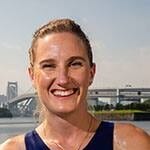
Chronic illness can make your life feel filled with insurmountable obstacles. Pursuing your dreams, even in the face of health issues, may feel hopeless. But moving forward, even in small increments, you can accomplish great things. Just ask gold medalist Allysa Seely. Allysa grew up as a dancer and competitive athlete before health issues tried to sideline her. She spent three years advocating for herself as a teen and young adult, fighting to be listened to, before finally being diagnosed with Ehlers-Danlos Syndrome (EDS), Chiari Malformation, Basilar Invagination, Postural Orthostatic Tachycardia Syndrome (POTS), and more. Allysa refused to var her diagnoses define her, and has become a two-time gold-medal winning paratriathlete at the 2016 and 2020 Paralympics. She shares how she’s been able to compete at such a high level with multiple chronic illnesses, and opens up about her hard journey in college to get a diagnosis. Allysa confides that she used all her “you can’t”s as fuel to move her forward in pursuit of her dream. She discusses her difficult decision about her amputation, and shares her tips for getting through hard days. Allysa’s story, and how she turned challenge into triumph in her life, is inspiring and encouraging for everyone living with chronic illness. As Allysa shows, there really are no limits. An inspiring and encouraging interview for anyone struggling with limitations or hardship. #TriAllysa #paraolympics #USAparatriathalon #triathalon #paratriathlete #amputation #EhlersDanlossyndromes #EhlersDanlos #ChiariMalformation #Chiari #POTS #bendybodies #bendybodiespodcast #hypermobilitymd #JenniferMilner --- Send in a voice message: https://podcasters.spotify.com/pod/show/bendy-bodies/message
Watch
Guests
Transcript
[00:35] Jennifer Milner: Welcome back to Bendy Bodies with the Hypermobility MD, where we explore the intersection of health and hypermobility, focusing on dancers and other aesthetic athletes. This is co-host Jennifer Milner, here with the founder of Bendy Bodies, Dr. Linda Bluestein.
[00:50] Dr. Linda Bluestein: Our goal is to bring you state-of-the-art medical information to help you live your best life. Please remember to always consult with your own healthcare team before making any changes to your routine.
[01:00] Jennifer Milner: Our guest today is Allysa Seely, two-time paratriathlon gold medalist, fresh from her gold medal win in Tokyo. Hi Allysa, and welcome to Bendy Bodies.
[01:20] Allysa Seely: Hi, I'm excited to be here this morning.
[01:22] Jennifer Milner: So Allysa, before we go any further, can you give us a little background both into your health journey and your competitive career?
[01:34] Allysa Seely: Yeah. I was diagnosed in 2010 with Chiari 2 malformation, basilar invagination, and Ehlers-Danlos syndrome after about two and a half years of seeking a diagnosis and being in and out of the hospital. Growing up, I was a very, very active kid. I did every single sport my parents could put me into: T-ball, soccer, baseball, karate, gymnastics, dance — you name it, I did it. I just had a ton of energy and loved being active.
[02:03] I finally found my place in competitive dancing and in competitive running. And that is where my career in triathlon stemmed from. In college, I switched from running to triathlon and I have not looked back.
[02:22] Jennifer Milner: I love the juxtaposition of competitive dancing and competitive — what most people consider a sport instead of dance. I love that you did both of them, enjoyed both of them, and got something different from each of them. That's very cool.
[02:27] Allysa Seely: Absolutely. I believe that every sport, every activity has something to teach you as a person, as a human, and as an athlete. My strength is the run in triathlon. It has been described as my deadly weapon many times, because that is typically where I finish races and put my competitors behind me. I do credit dance for that. Learning how to use my feet at a young age — now my foot — has been really helpful in running. They're very similar mechanics in the way you use your foot when you're dancing, jumping, gliding across the stage, and when you're running. And if you know how to use your feet properly, it prevents injury and definitely helps your run form.
[03:29] Jennifer Milner: That is a great connection. And I often hear that dancers are encouraged to start running as a cross-training conditioning tool for the aerobic aspect of it. Something that they don't think about very often is that their form for running needs just as much attention as their form for dancing. I love that you're talking about how you could take the training that you did in dance and add it to the training that you needed for running. It's not just going out there and seeing how fast you can go — there's biomechanics to it. You want to apply that same attitude towards running as you do towards dancing, or you should, right? For everybody out there trying to do more than one sort of exercise.
[04:10] Allysa Seely: Absolutely. Which is a great thing to do because being more diverse tends to be better for your body.
Dr. Linda Bluestein: Well, Allysa, you are a multiple gold medal athlete, as well as someone with multiple complex medical conditions, including Ehlers-Danlos syndrome and others, as you've already mentioned. How have you been able to compete at such a high level despite having so many health challenges?
[04:33] Allysa Seely: Sheer stubbornness and a team that I have built over the years that has supported my dreams and been willing to improvise, to look outside of the box, and to come up with solutions when problems arise.
[04:50] Dr. Linda Bluestein: That's fabulous. And you mentioned being diagnosed with Chiari 2 malformation, basilar invagination, and EDS. Can you walk us a little more through that diagnostic journey and how those conditions impacted you?
[05:04] Allysa Seely: Yeah. After my diagnosis, when doctors started asking questions, I realized looking back that I've had symptoms my entire life. I've dislocated joints my entire life. I've subluxed joints my entire life. As a kid, it was what we called a stupid human trick — I would just pop my joints out and pop them back in, and people thought it was disgusting and hilarious all at the same time. It just was what it was. I had no idea that was something that was wrong.
[05:34] As a dancer, I was always very flexible. I did gymnastics as well. Never had to work for my flexibility. It was super easy — sometimes the center of some jealousy because others were working really hard to get their splits and I was like, okay, this is boring. Let's do something else.
[05:48] As I grew, my symptoms got more severe with time, and some of the secondary diagnoses became more evident. We think I probably had gastroparesis my entire life, but it became pretty evident around third grade and continued to get worse throughout high school and into college. But because I was a dancer and a runner, it was automatically assumed to be an eating disorder — there was nothing actually wrong with me — and they decided this with no testing.
[06:23] In high school, when things started to get really bad, my POTS started to get worse. I would pass out standing up. I would shake in practices. I wasn't able to eat enough. I was throwing up. I just hid it from the world. Doctors didn't believe me, so I wasn't going to tell anybody else about it. I was just going to keep my head down and do whatever I could to accomplish my dreams.
[06:43] It was finally in college that things got to a breaking point. I was having seizures. There were times when I would stop breathing, and that's when I could no longer hide that something was truly wrong. I was in and out of the hospital, being gaslit by physicians and told that there was nothing wrong with me, it was all in my head, I was doing it for attention, and a whole laundry list of other excuses.
[07:10] At the time, I was working for a doctor, and she did believe me. She saw it with her own eyes. One day we sat in her office at the end of the day, and she called my neurologist and said, "I'm not getting off the phone with you until something is done. Something is very seriously wrong. This is not psychosomatic. This is not in her head. She's not attention-seeking. Something is wrong." And she said, "Nobody can psychosomatically stop breathing. That is not a thing. That does not happen." And he continued to ignore it and do nothing.
[07:40] So I tried to continue on with my life. I was a collegiate athlete. I was a full-ride scholarship student in college, and I was doing the best I could to just make it by. It was the doctor I worked for — actually a PA who worked in her office — who suggested Ehlers-Danlos syndrome. And it was pretty early in those two and a half years I mentioned. But at the time, this was 15 years ago, very little was known about it. Very little was known about its comorbidities, that any of this was related, or that it was anything more than just, okay, my joints dislocate. So although I had that diagnosis, it wasn't really helpful in getting any help at the time.
[08:25] After being in and out of the hospital for years and getting no answers from doctors, I finally was at my wit's end and I pulled all of my medical records from the hospital and started going through them page by page, Googling anything I didn't know and searching for answers myself. Unfortunately, I had started at the most recent medical records when I should have started at the beginning. I got all the way back about 7,000 pages and saw on my very first CT scan that the Chiari malformation was there. And the neuroradiologist who read it had suggested being referred to neurosurgery immediately. That was never done. It was ignored by the neurologist I was seeing, and he just continued to tell me there was nothing wrong with me and that it was all in my head.
[09:13] So I did a Google search to find somebody who treated Chiari, and there was a neurosurgeon — as it happened, in the town I was living in, at the hospital I was being seen at — who was one of the leading experts in the world. He was a pediatric neurosurgeon. I was an adult at this time, so I wasn't sure he would take me, but I was hopeful there would at least be some advice or answers.
[09:39] I called his office and just asked, "Hey, I saw this on my CT scan and there are multiple other MRIs that confirm it. Do you have any suggestions?" The person on the phone said, "Hold on, let me get you the nurse." I spoke with the nurse and she said, "Tell me exactly what your scan says." So I read it to her — the herniation and everything. She asked about my symptoms: the seizures, the episodes where I would stop breathing, the passing out, all of that. She said, "Hold on just one moment."
[10:12] She puts me on hold — me not thinking anything of it, because you're put on hold by doctors all the time, right? She goes and gets the neurosurgeon. He answers the phone and says, "Can you send me those reports right now?" I said, "Well, they're in your hospital system. You could pull up the images." He said, "Oh, perfect." So he pulls them up on the computer and says, "How soon can you come in?" I saw the neurosurgeon that day, and within days I was having surgery. So many of my symptoms were relieved shortly after that point.
[10:42] Jennifer Milner: Wow.
[10:43] Allysa Seely: The journey then continues. At that point I still didn't have a diagnosis of POTS, gastroparesis, MCAS, or any of the secondary diagnoses, and those have kind of come over the years. I've had symptoms for years and years, and this has been going on most of my life, if not all of my life. That's a quick little glimpse into my story.
[11:02] Jennifer Milner: That is a story that is, number one, amazing, and number two, has so many elements that we hear over and over again from the people that we work with. The whole — you've had these symptoms your whole life, but at first may not have been aware of it because it just seemed like a cool thing, the cool party trick or whatever it might be. And then as you hit your teenage years and you start to hit that wall, you're such a high-level performance athlete that you just end up medically masking it and continuing to move forward.
[11:31] And then you're trying to get help, trying to get information, and you feel like you're not being heard, you feel like the doctors don't believe you. We've had other people on who have had gastroparesis and said the same thing — well, you're a dancer, you must have an eating disorder. Then to go from that to having to be your own medical detective — I don't know that I've talked to someone else who has gone through every page of their medical records and gone to that depth of discovering their Chiari malformation themselves and getting a physician on the phone in one phone call and getting the help they so desperately needed.
[12:11] What an incredibly encouraging story for other people to hear, just that you have been on this journey and the struggle that you went through is one that is mirrored by so many others. It's really impressive what you have done advocating for yourself. And another piece that's really familiar to us is that you had one person who believed in you — one medical professional who said, "Hey, I think you're not lying. I think there's something going on." Just having that one person who kept you going, helped you, and pushed you forward. That's an amazing story.
[12:47] Allysa Seely: Yeah. I was desperate. I was being told on one hand that there was nothing wrong with me, but the day I actually pulled my medical records, I was in that neurologist's office and he walked in. I was 19 years old, sitting by myself, and he walks in and says, "With the way your neurologic symptoms are progressing, you'll be lucky to make it to October." This was in August. And he just walked out the door — that was it, the end of the appointment.
[13:18] I just left and I didn't know what to make of it, because here this guy is telling me I'm crazy and that there's nothing wrong with me, and now he's telling me I might not make it to October. While I was in the hospital, he had had one psychiatrist come see me, and the psychiatrist said he didn't really think there was anything psychiatric going on. That was just the general psychiatrist on call. So he then decided he was going to have his buddy come in, because he didn't believe the first two when they both said they didn't think there were any psychiatric problems and that it wasn't psychosomatic. And then he had another psychiatrist come in, and finally he was going to have his buddy come in. I don't know if it was his ego or what it was.
[14:09] I'm not seeing another person. We've been through this. And so unfortunately, that was probably fuel to his fire — oh, well, if you're refusing to see a psychiatrist, even though I had already seen two. It was just a really bad match.
[14:25] I was trying to figure out what this guy's motives were. He's saying I'm crazy and making all of this up for attention, and now he's telling me my symptoms are progressing. Is he just trying to scare me out of this, or is this real? So I was desperate and I pulled all of my medical records and figured it out on my own.
[14:40] I was sick of being treated the way I was being treated. I had worked for a doctor for multiple years. I understood how medical records work. I did know a lot of medical jargon. I obviously do not have an MD, and I would never claim to have an MD, but I have an education in science and knew how to research. I think that was the biggest thing that helped lead me to finding the answer — having the education, the know-how, and the ability to research.
[15:13] Jennifer Milner: Well, and this is an excellent example of taking a negative situation and turning it into a positive. You were in that position and you were able to do something with it. It fueled you, like you said, to go get your medical records. And I imagine that there are lots of challenges for you in your career as an athlete that other people don't have because of your health issues. So I know there have to be some really hard times, but I'm wondering — are there ways that those health issues have turned into a positive, or that you have used them for something positive?
[15:49] Allysa Seely: Absolutely. It was only about a year ago that I became public with all of my complex chronic medical illnesses, mainly because I had thought for so long that people would look at me and say, oh, she can't be a competitive athlete — she has all of these other things going on. But the reality is it has made me the strongest person. The things I've dealt with my entire life, being told I can't, being told this would never happen, that would never happen, that I can't do this — you can't be an athlete who's on TPN, you can't, you can't, you can't — and I found a way.
[16:32] For so many years of hiding it, it taught me how to mask pain. Some of that came from being an athlete prior to all of this, but then it reinforced that. When I'm on the race course, I've had so many competitors say to me, "We never know how you feel, because we cannot read you. We don't know if you're dying, we don't know if you're hurting, or if you're just out for a Sunday stroll. Your face does not tell us anything."
[17:06] I've learned to push through the pain, push past the pain. As an athlete, I said last year when I was going through some other health challenges, that pain during any workout or any race would never match what I've been through at other times in my life. I remember that every time I'm racing, and I'm able to push myself so much further and so much harder because of it.
[17:32] My leg was amputated below the knee back in 2013. It is assumed that because the Chiari malformation and basilar invagination was left untreated for so long, the pressure in both my brain and my spinal cord during that time started to cause damage to the brain and spinal cord itself, which left me with some long-lasting neurological effects, one of which is spasticity. Although my joints are very loose, my muscles have gotten very tight because they don't get the correct neurological signals anymore. It was a combination of the spasticity and the Ehlers-Danlos syndrome. The spasticity was so bad in my left foot that it was subluxing my ankle 24 hours a day, 7 days a week, at times dislocating it.
[18:25] We tried bracing for years. We tried electrical stimulation. We tried literally every single thing we could think of. The spasticity would break the braces. The electrical stimulation worked for a little while, but eventually it started to cause deterioration in my knee, pain in my hip and my back. And I wasn't able to live the life that I wanted to live — being active, being able to take my dogs hiking, going running with friends, or any of the other active things I love to do. I was a competitive athlete, and that part of me didn't change with my diagnosis.
[18:59] I had basically been told the only option left was surgical. I had met with about eight different surgeons. Almost everybody had a different opinion. Most of the opinions were their ideas of what they could do to try to save my leg — and these were not proven surgeries. These were like, "Well, we can try this and this and this. And if it doesn't work, then we'll just fuse your ankle," or, "We'll just fuse your ankle and your knee." So I decided to start asking them what the success rate of these surgeries would be. Some of them involved multiple surgeries, up to five or six. We're talking years of time. Some of them involved external fixators and all of these things.
I said, "No, I don't want to know your success rate in generic terms. This is what I'm basing success off of: Am I going to be able to go hiking with my dogs? Am I going to be able to keep up with, hopefully, my future kids? Am I going to be able to enjoy an active lifestyle?" And I made them look at success through that lens, because this was about my quality of life. This is my life. This isn't them doing some new surgery so they can put it in a journal and use me as a lab rat.
[20:29] Once they started looking at success through that lens, they were like, "Oh, I mean, maybe like 5%, or like 3%." And, "You can find something else to do with your life." And I said, "You're right. I definitely don't have to be a competitive athlete, but I'm always going to be active. You can't take that away. That is part of who I am, and not being that person would destroy me."
[20:58] It was funny because the very first surgeon I had seen, actually a year and a half prior to seeking surgical opinions, had said, "The best thing you can do is amputate. You'll have a better quality of life." And I was just like, "What? I just came here because my foot's a little messed up. What are we talking about?" So I left his office and never really looked back. Until a year and a half later, I was getting these surgical opinions and I remembered what he had said.
One other surgeon among the eight I saw said the same thing: "We can try to save it. If this is about keeping your foot aesthetically, we can try to save it and do all of these things. But if this is about living the life that you want to live, amputation is your best option." And so that is what we moved forward with.
[21:51] Dr. Linda Bluestein: That's absolutely amazing. In my 25 to 30 years of practicing medicine, you're the first person I've ever heard of or met who had an amputation for that reason. We always worry about phantom limb pain, and with you already having EDS, I would think that would also be a concern. It's really fascinating that you approached it the way you did and said, "This is what I need," and that they were able to figure out that was the best option for you — and that you were then able to compete at the level you've been able to compete at, given all of these amazing things you've been through.
[22:32] Allysa Seely: Yeah. When we were talking surgical options, elite athletics was off the table. It was not something considered in the decision I was making. We knew surgery was necessary regardless — my foot was losing circulation, it was getting sores and infections. So no matter what, surgery was going to have to happen. But I think I made the best decision possible. It had been three years that we had been trying everything we possibly could to get my foot back into its socket, to get circulation, to make sure it was not going to cause damage to my knee and my hip.
[23:10] And honestly, I have never second-guessed the decision. The only time I ever think about it is when somebody's asking me about it on podcasts or for interviews. In four weeks I was walking. In eight weeks I was running and had my life back after three years.
[23:32] To be fair, that is not normal. That is not a normal timeline. So if anybody hears that who is experiencing amputation, please do not expect that. I was just some freakishly — I don't know what happened. So let's not set expectations based off of that, please.
[23:50] Dr. Linda Bluestein: Oh my goodness. And you obviously are an incredibly strong-willed person, extremely motivated, with an incredibly positive attitude. I imagine that there have been some pretty hard days, both physically and emotionally. Can you share any tips or strategies for our audience on what you do to get through some of those hard days?
Allysa Seely: Yeah. I think there are a few things I use. The first is that on the days when I'm just not feeling it and things are not going well, I have learned that for myself, my symptoms are typically better if I'm up and moving around. My blood pressure does better if I'm not laying in bed for extended periods of time, not sitting down a lot. So I do try to get up, get active. There are things I've done long-term to control symptoms, and there are also things I do in the moment.
Some of the long-term things I have found to be very, very helpful — and I absolutely understand and know that this is not an easy journey — but one of the best things I did for myself, and also one of the hardest, was to put on muscle mass. Having problems getting nutrition, it was really hard for me to keep on weight, but being able to put on muscle mass has protected my joints. And specifically putting muscle mass on my lower body has helped significantly with my POTS symptoms.
[25:13] There is a caveat to this: it has to be kept up. If I stop training, if I stop working out — which our bodies do need rest — I lose weight very, very quickly and my symptoms come back very, very quickly.
[25:25] For example, after Tokyo this year, I had endocarditis in October of 2020. The Games were in August of 2021. Endocarditis itself is life-threatening, and I had multiple reactions to medications and other things, so it turned into a mess. Long story short, I was in the hospital from essentially October to the middle of February and was not back training until the middle of March. I had to qualify for the Games in June and compete in August, so it was a very condensed timeline. When we jumped in, we jumped in full force. There was no build into exercise or anything like that. My body was in a state of stress constantly from the time we started training to after I finished competing.
[26:15] So my body needed a break. I had to give my body a break — physiologically, mentally, all of that. I came back after Tokyo and decided I was going to take some time off and only do what my body felt like doing, which was not much: walking the dogs, going hiking with friends. Not swimming, running, biking, lifting, or any of the above. And I lost seven pounds. I lost muscle mass, and all of my symptoms returned very quickly and very harshly — ones that had been controlled. So our bodies do need rest, which is hard, and it is hard to get back into it every time. But being active and adding that muscle mass has definitely made a huge difference in my symptoms.
[26:57] The other thing I do day to day is, when I'm not feeling it and I don't want to get up, I tell myself I have to start whatever it is. For me, it happens to be a workout because that's what I do for work. If I wake up and I'm like, I just don't want to get out of bed, I'm not feeling good, I am dizzy, I'm whatever — I tell myself, "You have to get up. You have to start. And if after 15 minutes you still feel like this, you can go back to bed and do whatever you want the rest of the day."
[27:23] Thing is, usually within those 15 or 20 minutes, your body's up and moving, your endorphins start going, and I'm like, oh, I actually don't feel as bad as I thought I did. Getting up and getting my blood pressure up just makes me feel better. And even though I'm discussing a workout right now, I do this with really anything. If I have calls in the morning or whatever it is, I will try to start it. And if I start feeling better, great. If not, I give myself some grace and give my body the rest that it needs.
[27:54] So I try really hard to listen to my body, but also make sure my body's not deceiving me, I guess would be the better word. Because sometimes it's hard to read what our bodies are telling us — does it need rest, or does it need something else?
[28:16] Jennifer Milner: There are two things from that that I love. First, you can do more than you think you can. And I don't want everybody listening to think, "Well, I'm never going to win a gold medal, so she's just an amazing superhuman." Allysa, you are an amazing superhuman, but you are also an example of how anybody can do more than they think they can sometimes, right? That just giving yourself the "just start" — and then we can make a decision further down, and if we need to, we'll show ourselves grace and go back to bed. I think that's such an important point.
[28:50] And I love what you say about listening to your body but also making sure your body's not deceiving you. It's hard to learn the difference in that, right? When you need to take that rest time, it's really important to listen to your body. But sometimes your body is saying "just stay in bed" when your body really means "I need to move, I just don't want to." Those are all really great tips. Thank you for that.
[29:20] Allysa Seely: I think for myself personally, I've always been the type of person that's just push, push, push, push, push. But I've talked to other people who are more cautious and say, "My body needs rest, it's telling me I need to rest," and they just rest, rest, rest, rest. Although these are two opposite reactions, I think they're exactly the same — us not understanding our bodies.
[29:44] It has taken years to learn that pushing through everything is not going to accomplish what I want it to accomplish, but also doing nothing is not going to accomplish what I want to accomplish either. We have to find the middle ground. We have to learn how to communicate with our bodies, and we have to learn how and when it is appropriate to push through uncomfortableness and when to offer ourselves grace.
[30:09] Dr. Linda Bluestein: Definitely. I think that's all so important. And another thing I wanted to dive into a little bit deeper: when you talked about muscle mass, I could not agree more when it comes to POTS symptoms — that's definitely something I see in my patients as well. And I hear so often that people have difficulty building muscle mass. Personally, as someone with EDS, I have tremendous difficulty putting on muscle mass. I would love to know what strategies you used that were successful for building muscle.
[30:48] Allysa Seely: When it comes to building muscle, I was hesitant at first, mainly because I knew how hard it was for me to gain weight. My body likes a certain weight. It doesn't matter what I do — this is the weight my body is going to be. It has always tended to lose weight rather than gain. It's been like that ever since I was a child. So when we discussed adding muscle mass — and I discussed this with my athletic team, not my medical team — I was hesitant. I was like, I don't know how we're going to do this, getting in the calories and all of that.
[31:21] I work with both a clinical dietitian and a sport dietitian. They work in tandem. I do think anybody who has gastroparesis or trouble putting on muscle mass would benefit from having a clinical dietitian. I have a sport dietitian as well because they specialize in sport itself. The sport dietitian's job is to make sure I'm fueling my body appropriately for sport. The clinical dietitian takes the sport dietitian's recommendations and figures out how to actually achieve them given my health needs.
If I were not an elite athlete, I would not need a sport dietitian. All I'm trying to say, in a roundabout way, is that a dietitian is helpful in this process, and a clinical dietitian would be perfectly capable of helping you put on muscle mass.
[32:11] So that is the first thing: if we don't have an excess of calories, it is not possible to gain mass. That is just how the body works. If there are no building blocks, there is no building.
Part two: with the instability in my joints, with hyperextension, with all of my subluxations, we started at the ground level. Please do not just go pick up a 30-pound weight and expect to achieve something. All you're going to achieve is injury. When I say we started at the ground level, I mean we started with no weights at all — just body movements, learning how to move my body in a safe and healthy way, learning proper range of motion. Those are things you have to accomplish first. If you do not have that, you are just going to cause injury. And this is not just for people with EDS — this is literally for everybody. The strength and conditioning coach I work with does this with every single athlete he works with, because the main purpose of strength training is not necessarily getting stronger. It is keeping your joints and your body healthy. So if you don't know healthy ranges of motion, how are you going to keep your body healthy?
[33:24] There are a lot of resources if you don't have access to a team. I do understand I have access to more people given my career choice, but there are a lot of resources online, videos and things like that. Just make sure the resources you're looking at are coming from reputable sources and are not just some fitness influencer putting out anything for views and likes. There are good resources online, and I'm actually currently working on a YouTube series to hopefully help people who don't have the resources I do with some of the things I've learned.
[33:57] The next step is adding in very light weight. That can be done with resistance bands. You can get a set of resistance bands off of Amazon or eBay or wherever you choose to shop for about $30, and that will take you a very long way. You don't need to spend thousands of dollars to make this happen. With resistance bands, you start with the lightest one and you continue working on those same motions, not extending past a healthy range of motion, making sure that you're engaging the correct muscles and trying to stay balanced on each side. Everybody has one weaker side, but we need to try our best to stay balanced.
[34:37] From there, we can start adding weight. When people see me posting videos on social media with weights, that took years to achieve. That did not happen overnight. That did not happen in a month. That literally happened over years. So that's kind of step two to this whole process.
[34:57] The good thing is these steps can be done at the same time — while you're working on your nutrition and making sure you're getting enough calories and protein, you can be starting the range of motion work and the band work as well. It's definitely a concurrent process that can be happening simultaneously.
[35:16] Jennifer Milner: And this just comes back to one of the themes coming out of this conversation, which is that it's a long process, right? The diagnosis might be a long process. The training should be a long process. For you, it was a condensed process to get to the Tokyo Games. Building muscle mass is a long process. Figuring out the balance your body needs is a long process. There's just a lot to it.
[35:39] One of the things I've wondered about for you is that since you are an elite athlete who travels the world, as a person with multiple medical conditions, how do you prepare for international travel and make sure you're going to have the support that you need? I know that travel is a big issue even for high-level athletes we work with, in terms of having some sort of medical stability or team in place or the ability to get the care they need. How do you make that happen?
[36:12] Allysa Seely: I like to call it organized chaos, and sometimes a little more guts than I probably should have. But it is hard. It is really hard. When I travel, I travel with a lot. I have my nutrition, I have my medications, I have everything that normal people don't have. I can't just walk into a new restaurant to get my nutrition. I have to bring it with me. And that is not easy, especially when you're traveling across the world or somewhere you have to be for multiple weeks and your medications expire, or customs issues come up, or this happens or that.
[36:55] You have to educate yourself. You have to be prepared. Every time I travel somewhere, I make sure I've researched whether there's a local English-speaking hospital. If not, I look at what translation services are available in that country. Not everybody has the same laws as the US. The ADA — the Americans with Disabilities Act — is not valid anywhere else in the world. So you need to know where you're going and know their customs, their laws, and their rules to be the most prepared.
[37:28] Everywhere I go, I do my research. If there's an English-speaking hospital, I have all its contact information just in case. If there's not, I know how translation services work. Do I need to hire a translator? Does the hospital provide one? Is there somebody within the race event who would be able to translate? Do they have medical services? All of those things.
[37:56] I just try to be as prepared as possible. Things happen — I've only ended up in a hospital in a foreign country once, which I think is a very good record. I just try to make sure you are advocating in a way that is appropriate based on the customs and traditions of the place you are traveling to. ADA is just American. I think that is one thing that makes me cringe when people say, "But they're not following the laws." Well, it's not their law. They don't have to follow it. Places don't have to be accessible. They don't have to offer translators. A lot of countries don't. So you have to be prepared to provide your own services, but also advocate in a way that is effective, because sometimes the way we advocate in America is not going to be effective in other countries. You're going to be seen as rude, hostile, or combative. So you need to know these things.
[38:50] Dr. Linda Bluestein: Those are all very important things when you're traveling. And speaking of advocating for yourself, we know that there's a whole spectrum of hypermobility and associated disorders, and the Ehlers-Danlos syndromes are actually a group of 14 different subtypes. Then there's hypermobility spectrum disorder and all these different types of conditions. For the people who are listening and are wondering about advocating — or any of the other aspects we've talked about — is there anything in particular that you would like someone with hypermobility spectrum disorder or one of the Ehlers-Danlos syndromes to know?
Allysa Seely: I think there are a few things. The first is that a diagnosis is not an end-all be-all. If you're not getting a diagnosis, it's not the end of the world. I know some people can get very hung up, and sometimes, yes, it does help mentally to know, okay, this is what is wrong. But you can take steps to try to improve your quality of life even without a diagnosis. Believe me, most everything I've done to improve my quality of life has not come from a doctor. Almost everything has come from lifestyle choices I've made personally — putting on muscle mass, finding the right balance between being active and giving myself grace, learning how to communicate with my body. All of those things.
[40:14] So if you're in the process of trying to get a diagnosis and you just feel like you're not being heard, take a step back and ask yourself: is having this diagnosis worth what I'm going through currently for my mental health just to have this label? If it's not, maybe take a step back and start doing some of these lifestyle changes on your own. Start learning appropriate ranges of motion. Start learning what your body wants from you and how best to serve your body to get the best quality of life out of it. Because at the end of the day, a label is not worth the turmoil.
[40:57] I was in a position where I needed life-saving medical treatment. But I see people so frustrated because people aren't listening to them, and I think: it might feel better for five minutes to have that diagnosis, but is it worth what you're going through right now? It's a decision we all have to make individually. Maybe it's worth stepping back and trying to make these lifestyle changes, giving yourself a break and showing yourself some grace.
[41:20] Being gaslit by physicians is hard. Not being believed is hard. And let me tell you — the diagnosis doesn't necessarily change that either. You're still going to be gaslit by physicians. You're still going to find physicians who don't believe you or don't believe in EDS or anything else. That is all still there. So that's my first piece of advice.
[41:38] The second is that there are options to make our quality of life better. I really hope nobody finds themselves in a pattern of self-despair or destruction, because you can live an amazing life. And I don't want this to come across as, oh, well, she's a gold medal athlete standing on top of the world. Because I've been in your shoes. The reality is we all have our own gold medal goals, right? And that might be being able to take your kids to the park. If that is your goal, that is an amazing goal. It is a worthy goal. It is a good goal to focus on.
[42:14] Don't take other people's level of perceived success as the measure of what you can or cannot do. Every single one of us has different goals, different aspirations, and different lives. Some things mean more to some people than they do to others. There are ways to achieve what you want to. You have to have hope. You have to be willing to be uncomfortable at times, because it is only through being uncomfortable that we make these gains. That's hard. Some people are better at being uncomfortable than others, but all of us can do it. We all have that power too — we just have to find the strength. And usually that comes through focusing on a goal or focusing on something that we want to achieve.
[42:59] And if you are finding yourself in despair or a pattern of self-destruction or feeling hopeless, please find somebody to talk to. Please find help. Please find a counselor. It is worth it. Feeling better, being able to enjoy life, that quality of life — like I mentioned earlier — is the most important aspect.
[43:19] If it's helpful, take some of the steps I've done for myself. Talk to your doctor and say, "This is what I consider success. How do we reach it?" Don't let them define success for you. Define it for yourself and be confident in how you want to define it.
[43:33] Jennifer Milner: Okay. I feel like that was just an amazing 20-minute inspirational TED Talk in about two minutes of conversation.
[43:40] Allysa Seely: So thank you for coming to my TED Talk.
[43:45] Jennifer Milner: That was really great, because I can tell that everything you are saying is coming from a very real place of hard-won information, right? This is not something that you read in a motivational book. This is something that you have learned the hard way through walking this really long road, oftentimes in a very lonely way. And I think that comes through very clearly — this is hard-won experience speaking.
[44:13] It is amazing to me how positive you are, and how at so many points in your life you have moved with the assumption of, well, I'm an athlete, so I'm moving forward, rather than going, am I ever going to be able to walk again? You said, I'm going to walk again — what's the best way to do that? What is the best way for me to move forward with the lifestyle that I want, and how can I make that happen? I'm sure there have been compromises and lots of disappointments, but you are an amazing example of what can happen if you move forward with a heart that is so very dedicated to finding the answers and giving yourself the life that you want.
[44:59] How can other people find you and find out more about you? What is a good way for them to reach you?
[45:06] Allysa Seely: The best way really to find me is on social media, which is everything nowadays. I am not great at social media, but I'm trying my best. One of my biggest challenges is that I tend not to like putting myself out there in big ways, but I am trying to do better, because I do know how many people are struggling with things that I have struggled with. And hopefully by sharing my story, maybe a doctor will see it and think, oh, maybe I should have my patients define what success is for them. Maybe I should stop defining it for them. Or a patient will see it and think, if this is how she got through this, maybe I can give that a try.
Check out my social media — on Instagram, my handle is @TriAllysa, T-R-I-A-L-L-Y-S-A — and hopefully get in touch. I'm always happy to share advice. It may take me a little bit of time to get back to you given where I am in the world and things like that, but I do try to communicate with as many people as I can and answer as many questions as I can. I would love to hear from you.
[46:13] Jennifer Milner: That's amazing and incredibly gracious of you. Well, you have been listening to Bendy Bodies with the Hypermobility MD. Today we have been speaking with Allysa Seely, two-time paratriathlon gold medalist, fresh off her gold medal win in Tokyo. Allysa, we thank you so much for taking the time to come on the Bendy Bodies Podcast and share your story with us. It has been really wonderful to hear your journey and learn from you.
[46:38] Allysa Seely: Thank you so much for having me. It was great chatting with you.
[46:42] Dr. Linda Bluestein: Thank you so much. Thank you for joining us for this episode of Bendy Bodies with the Hypermobility MD, where we explore the intersection of health and hypermobility for dancers and other aesthetic athletes. If you found this information valuable, please share it with a colleague or friend and leave us a review on your favorite podcast player. Remember to subscribe so you won't miss future episodes.
[47:05] If you want to follow us on Instagram, it's @bendy_bodies, and our website is www.bendybodies.org. If you want to follow Bendy Bodies founder and co-host Dr. Bluestein on Instagram, it's @hypermobilitymd, all one word, and her website is www.hypermobilitymd.com. If you want to follow co-host Jennifer Milner on Instagram, it's @Jennifer.Milner, M-I-L-N-E-R, and her website is www.jennifer-milner.com.
[47:42] Thank you for helping us spread the word about hypermobility and associated conditions. We want to hear from you. Please email us at [email protected] to share feedback. The thoughts and opinions expressed on this podcast are solely those of the co-hosts and their guests. They do not necessarily represent the views and opinions of any organization. The thoughts and opinions do not constitute medical advice and should not be used in any legal capacity whatsoever. This information is not intended to diagnose, treat, cure, or prevent any disease, as this information is for educational purposes only and is not a substitute for medical advice, diagnosis, or treatment. Please refer to your local qualified health practitioner for all medical concerns. We'll catch you next time on the Bendy Bodies Podcast.