Description
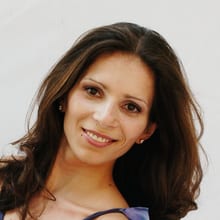
Artistic athletes often push their flexibility to the limit, both for competitive and aesthetic reasons. Nowhere are limits tested more than in rhythmic gymnastics where hypermobility tends to be the norm. Vita Bachman, former international Ukrainian rhythmic gymnast and now a highly respected coach, speaks openly with Bendy Bodies about her experience in the world of rhythmic gymnastics, both as an athlete and as a coach. Vita discusses how the sport has changed since she competed, and what factors influence how she coaches today. She discusses the pitfall in “chasing the points” of competitive rhythmic gymnastics, and why she continually seeks out the best methods for training her students even when these methods differ from what she was taught as a competitor. Living with her own career-related medical problems, Vita strives to be a coach that trains competitive but healthy athletes, both physically and mentally. She shares the hopes she has for the future of rhythmic gymnastics, as well as the hurdles she finds in trying to change certain aspects. She discusses her concerns with social media, confides what she’d like parents to know when shepherding their children through extreme stretching, and shares her own approach to training flexibility in a long-term, healthier way A rare, inside look at one of the most demanding sports for bendy bodies out there! #rhythmicgymnastics #rhythmicgymnasts #vitabachman #beyondlimitsrg #hypermobility #overstretching #bodiesinmotion #hypermobilitymd #jennifermilner #oversplits #safestretching #bendybodies #bendybodiespodcast #hypermobile Her website is www.beyondlimitsrg.com --- Send in a voice message: https://podcasters.spotify.com/pod/show/bendy-bodies/message
Watch
Guests
Transcript
[00:35] Jennifer Milner: Welcome back to Bendy Bodies with the Hypermobility MD, where we explore the intersection of health and hypermobility, focusing on dancers and other aesthetic athletes. This is co-host Jennifer Milner here with the founder of Bendy Bodies, Dr. Linda Bluestein.
[00:52] Dr. Linda Bluestein: Our goal is to bring you state-of-the-art medical information to help you live your best life. Please remember to always consult with your own healthcare team before making any changes to your routine.
[01:02] Jennifer Milner: Our guest today is Vita Bachman, former competitive rhythmic gymnast and now the owner and head coach of Beyond Limits Rhythmic Gymnastics and Beyond Limits Workout. Vita, hello, and thank you so much for being here today.
[01:24] Vita Bachman: Hello, Jennifer and Linda. Thank you so much for having me. We're thrilled to chat with you.
[01:27] Jennifer Milner: Yes, we are. Vita, can you share — before we get started with our discussion — can you share just a little bit of your background?
[01:40] Vita Bachman: Sure. I'm a competitive gymnast in rhythmic gymnastics from Kiev, Ukraine. That's where I trained originally when I lived in Ukraine. I moved to the United States at the age of 19. Before that, when I was training in rhythmic gymnastics, it was quite an interesting process because my coach would come to the daycare and she would select the girls she wanted. So she came to my daycare, she selected me for rhythmic gymnastics. And just the fact that I was selected for something made me fall in love with my coach and fall in love with rhythmic gymnastics. Obviously it's a big part of Ukrainian culture, a big part of Eastern European culture. This sport is extremely well known, so I grew up with it. This sport shaped me, it formed me as a person, it gave me a career that I love, and that's what I've been doing almost my entire life.
[02:45] Jennifer Milner: So going beyond competing as a gymnast, tell us a little bit more about your background since you retired as a competitive gymnast.
[02:51] Vita Bachman: Since I retired as a competitive gymnast, I continued to coach in Ukraine. I was coaching for about 5 years before moving to the United States. Rhythmic gymnastics has always been part of my life, even during college years, even during the time when I took a break from coaching competitively. I was still very much involved in the sport. After moving to the United States, I became a coach at a gym in Tennessee. The name of the gym is Let It Shine Gymnastics. It was my first introduction to the sport of rhythmic gymnastics in the United States. One thing led to another, and eventually I was selected as a regional chair for rhythmic gymnastics in the United States. It's a huge honor to be part of the committee. And I would continue to coach rhythmic gymnastics all the way through to the present time.
[03:57] Jennifer Milner: So you have quite a history. And what I love about the experience that you're bringing to this conversation is that you worked in Ukraine, both as a gymnast and as a coach, and then you worked in the US. I'm sure there are very different styles to those types of training. I'm sure you've been able to see a very big picture of rhythmic gymnastics from all different points of view. Before we go too much further into it, though, what's the difference between rhythmic gymnastics and traditional gymnastics that we see so much of?
[04:30] Vita Bachman: Traditional gymnastics is also called artistic gymnastics. Both disciplines have the word gymnastics in them. However, the two disciplines are completely different. They are different in the way of the apparatus each discipline uses. They're different as far as training technique — very different. Artistic gymnastics is a sport where both men and women compete. But as of now, the Olympic sport of rhythmic gymnastics only has a women's division. That might change because rhythmic gymnastics and the world in general is changing. There is a very interesting Japanese branch of rhythmic gymnastics that is developing right now. Maybe with time it will become mainstream, and maybe boys will become interested in rhythmic gymnastics. It looks very, very different from the traditional women's gymnastics, and that's what makes it very interesting.
[05:41] Another major difference is the type of apparatus. In artistic gymnastics, uneven bars, balance beam, floor exercise — various skills like tumbling passes, swinging elements, and in-flight elements are used. Pommel horse, still rings, vault, parallel bars — basically stationary equipment. In rhythmic gymnastics, the apparatus that we use is handheld. We use rope, clubs, ball, hoop, and ribbon. And depending on the Olympic cycle, four of those pieces of apparatus are used in a given cycle.
[06:28] Jennifer Milner: I had never thought about that. I've watched rhythmic gymnastics and I've watched artistic gymnastics, but I never thought about the fact that in artistic gymnastics the apparatus doesn't move — I mean, it gives a little bit, but it's stationary. And in rhythmic gymnastics, that's the whole point: you're trying to move the apparatus, you're trying to move the props. I never looked at it that way. That's interesting.
[06:49] Vita Bachman: Yes, definitely. In artistic gymnastics, the main emphasis is power and strength and an element of danger and excitement. In rhythmic gymnastics, the emphasis is on grace and beauty and flexibility and fluid movement. It's very much a dance-based movement. And obviously, manipulation of the hand apparatus is getting more and more exciting, more and more complicated.
[07:18] Jennifer Milner: That's a very interesting distinction. And what sort of different demands and expectations are put on the body of a rhythmic gymnast? Are the standards for a rhythmic gymnast's body different than that of an artistic gymnast?
[07:35] Vita Bachman: Yes, it's definitely different. Two different sports require two different levels of preparation. In artistic gymnastics, as I mentioned, strength and power are emphasized. In rhythmic gymnastics, grace and beauty. So traditionally, the way a little girl is selected for each sport, a different body type is selected. Right now, in modern rhythmic gymnastics, that is changing quite a bit, and it's very interesting to see that change. However, traditionally, the body type for ballet — long, lean lines, flexibility — all of that would also apply to rhythmic gymnastics.
[08:17] Like I said, it is changing because in modern rhythmic gymnastics, the demands on the body are so much higher. Strength is becoming a huge part of rhythmic gymnastics conditioning programs. The way we train gymnasts nowadays has changed 180 degrees from the time when I was a gymnast. There is a huge emphasis on strength, conditioning, core training — the full body preparation is emphasized now.
[08:56] Jennifer Milner: Do you see — because this was another question I had in the back of my mind — the difference between when you were competing and now? It sounds like it's a very similar sport on the surface, but the expectations, as you said, have gotten higher. The expectations of more complicated moves have risen. But at the same time, it sounds like the support for those more complicated and more difficult moves has come as well — conditioning, core strength, all of that. While the demands are increasing, so is the support. Is that fair to say?
[09:32] Vita Bachman: That is absolutely true, yes. And it makes me very happy to see that. In my earlier years of coaching, I kept looking for resources. How can I keep up with these difficult demands on the body, especially at a younger age? The span of a rhythmic gymnast is short compared to a professional dancer. If they achieve the highest level, they will be done maybe in their 20s, while a dancer continues to dance further than that. To be able to prepare a gymnast to perform at a high level at a younger age is a tremendous responsibility. It is not easy to do. That is one of the reasons why I kept looking for resources in my earlier years of coaching, and the dance world at the time offered a lot more resources. So that's where I ended up.
[10:34] Jennifer Milner: I love the fact that you saw there was a hole to fill. You thought there needs to be more support here for what these athletes, these gymnasts, are being asked to do, and you didn't see it yet in your area. So you went outside of that area, you found something similar in dance, and you started to draw information and experiences from the dance world. That's incredibly smart of you, and I'm sure it's reflected in your students. You've been on the forefront of piecing together what was needed to help support these gymnasts as they move forward. So well done.
[11:19] Vita Bachman: Thank you, I really appreciate it. In the last few years, Caroline Hunt, who is the president of USA Gymnastics rhythmic gymnastics, has put together tremendous resources for rhythmic gymnastics coaches. If you log into the USA Gymnastics website, there is an education section for coaches, and I can watch those seminars and webinars forever because this is exactly what my heart desires. I really want to know: how can I do good for the children? What am I doing that I was taught in a certain way but that is not applicable anymore? It just makes me really happy to see the amount of resources that are starting to come up in our day and age.
[12:08] Dr. Linda Bluestein: That really is fabulous. As we know more and can do better, it's great to see people doing just that. And really doing that, like you said, for the children. You served as the USA Rhythmic Gymnastics Regional Director for several years and continue to coach rhythmic gymnastics today. How did your experience as a gymnast influence how you train your students today?
[12:39] Vita Bachman: The way I coach is influenced by several factors: my own positive experience, my own negative experience, changes in training methods, and the education and resources available nowadays. All of those factors influence how I coach children.
[13:00] Starting with my own positive experience — rhythmic gymnastics when I was a gymnast used to be very different. It used to be a lot more artistic. I strive for more of an old-school style of rhythmic gymnastics with clean lines, finished lines, good technique, a huge emphasis on ballet, expression, and musicality in my students. I try not to chase the points. The more difficulty you put in a routine, the more points you get, the more competitive you are. But I try to enjoy the process. I try to look at a gymnast and see what does she need — not how many points she can get, but what does she need? How can I develop her in the best way that she can be developed as a young child? That philosophy I hold onto strongly. However, it does present difficulty because it takes much longer to develop a gymnast going that way.
[14:07] When I look at my negative experience as a child, as a gymnast being trained, some of the stretching techniques are not applicable anymore. I know how it feels, I remember how it felt at the time, and I do not want to use those methods. We have new information, new ways of stretching, new ways of using various techniques, new flexibility programs. Why not take advantage of that?
[14:38] Another big part of the experience that I apply to today's gymnastics in my school is the mental and emotional well-being of a child. Pushing a child — that's part of the job. I'm a coach. This is a competitive sport. Results are very important, but not at all costs. I keep educating parents. I keep educating gymnasts that we do want to strive for excellence, but we don't want to do it at any cost.
[15:10] Jennifer Milner: We're both nodding furiously.
[15:13] Dr. Linda Bluestein: For anybody who's listening — I know you can't hear our head nods — but I'm having simultaneous goosebumps and I'm getting a little teary, to be honest. I'm thinking all kids need to work with you, because that's what they need: someone who truly cares about them as people, not just as competitors, and who is truly thinking ahead to how is this body going to feel and behave as an adult, as an older adult? How are they going to be feeling emotionally and psychologically? Yeah, I'm really just digesting that.
[15:49] Jennifer Milner: I want to print it out and just hand it to all the other teachers — here's Vita Bachman's four-point philosophy on how she trains students. I love it.
[16:01] Dr. Linda Bluestein: And this may not be for a podcast, but I have to admit: you two have an episode on the emotional wellbeing of dancers, and I still cannot bring myself to listen to it because I cannot bring back the emotions that will come up. I'm just very happy that we live in a day and age where we have different ways of coaching and teaching. It's so important for parents to understand that there are people like you who are practicing these newer methods, incorporating newer literature and psychological support for dancers and competitors. You don't have to have your child come home in tears every day. If you are experiencing that and your child is seeming really — I don't want to say tortured in the process — but if you feel like something is off and you feel like, does it really have to be this way? Then maybe, especially if you look at ballet studios, for example, there's a tremendous number of them in the United States. As a parent, I think one of the most important decisions you can make is where you send your child for training. Whether they turn out to be a professional, a competitor, or someone doing it more for fun, it can have such a huge impact because they are so young when they are under the influence of their coaches.
[17:44] Jennifer Milner: Well, and thank you for sharing that. Just thinking about having an emotionally healthy space — it's hard for us as retired dancers to go back and process sometimes the things that we went through, because it was a very different time. The important thing is to know that now that we know better, and we remember what that feels like, we want to move forward making it better for this next generation. We are so grateful that there are people like you in rhythmic gymnastics, which can be a really high-pressure competitive sport. Thank you. Thank you for sharing that.
[18:17] Dr. Linda Bluestein: And we know that rhythmic gymnastics definitely has more than its share of bendy bodies, as we refer to them. How do you deal with students who have more hypermobility than average? And do you think there's a point at which someone becomes too hypermobile and it becomes a liability?
[18:34] Vita Bachman: It definitely is a sport of bendy bodies — that is one of the main criteria for selecting a young girl for the sport. Anybody can do rhythmic gymnastics; you don't have to be bendy. However, a girl who does have natural flexibility will be ahead because things will be easier for her given the nature of the sport.
Hypermobile rhythmic gymnasts are definitely part of the sport. We train them with much, much care. The coach realizes immediately that this child is beautiful and is going to be noticed right away. However, the results will not come right away. Very often it's a waiting game. We have to wait, we have to do the right things, we have to give them good technique and a solid foundation, we have to pay special attention to conditioning and strength training, and then we wait. We keep doing the work and we will see the results with years to come. The problem is that coaches understand that, but the parents don't always understand that.
[19:46] What I often see is a gymnast who I know will be incredible in the future but who does not place well right now. She may not pull off hard-level skills yet. She may not jump high — naturally bendy or more flexible body types don't develop their jumps until much later. So it's an education process for the parents, and it's a matter of trust. If the parent trusts the coach, everything will be okay. They don't have to place right now.
[20:23] In fact, my daughter is that way. I have a little girl who is 9 years old and who also wants to be a rhythmic gymnast and a ballerina — and tomorrow she might want to be a cat sitter, I don't know. But right now she has big ambitions, and I have to have these conversations with her. She's beautiful, she's incredible, but she doesn't place well. We went to open championships last year and she was not even on the podium. That is okay with me because I know her potential. But she is very young. All she cares about is the little ribbon or trophy or medal. And she told me, "I must be the worst one, because look at all of those beautiful girls and I didn't even place." And I have to work with her. I have to talk to her a lot. I have to show her her strengths. I have to explain to her: you are like a flower. Right now is the time to plant the seed, but you will not see the flower bloom until you are older, until you're stronger, until your body develops, until you receive the proper training.
[21:39] What makes me sad is when parents don't trust that process and pull out the child way ahead of time before she has the chance to develop that potential.
[21:51] Jennifer Milner: Well, I think what's really interesting — and we're about to get to this in our conversation — is that you also do stretching work for other artistic athletes like dancers and skaters. What's interesting is that rhythmic gymnastics has the edge over the dance world when it comes to hypermobility, in that hypermobility has always been a factor in rhythmic gymnastics. It's only relatively recently become a desirable factor to some people in the dance world. In the dance world right now, if people see someone who's very flexible and very hypermobile, they often immediately push them forward — sometimes without that slow-and-low approach — because they just don't have the experience that rhythmic gymnastics coaches have. You've been working with hypermobile athletes for so long. You know to start slow, that they're going to come out of the gate later, but when they do, it will be incredible. How do you work with both sides? How do you work as a stretch coach for dancers and skaters and help them not push themselves too much, especially with the pressure of social media?
[23:16] Vita Bachman: It all starts with educating the parents, because most of the time the parents are the ones who contact me. When a parent contacts me and tells me, "Please push her hard — if she cries, that's okay, please stretch her so hard that she can get that skill" — I get those requests. I say: I don't work that way. I will help your dancer, I will help your gymnast, if you are willing to follow the methods that I use.
[23:44] You have to understand that in rhythmic gymnastics, we get the children when they are very young — we start them at the age of maybe 4, 5, 6, 7 — and we have until they're about 10 to 12 years old to develop them. We have all of those years to develop strength, flexibility, and coordination. Those are the years when we lay the foundation. When a dancer comes to me and she's already 12 years old, she wants the same level of flexibility that took me 5 years to develop. So very often I explain to the parent: this is not going to be fast. It requires consistency. It needs to be gentle.
[24:32] As far as working with the dancer, the skater, or the athlete, I explain that communication is the key. Please talk to me. What do you feel right now? Is this too much? Would you like a little bit more challenge? What is your body telling you right now? I observe the dancer for the first few lessons. After that, I understand the dancer a little bit more. I understand how their body works and I adjust my method because every dancer is different and they come to me with a different package. Their starting point is very different. I have to work with what they have, and I have to teach them patience. Very often I don't teach flexibility as much as I teach patience. Be patient with yourself.
I often give them very simple homework that is safe to do at home, because in flexibility training it's not the harshness of the exercise that makes a difference — it's the consistency.
[25:49] Dr. Linda Bluestein: I love that. The nervous system — if you push past the point of pain, the nervous system will react and you actually will not increase flexibility. Your body will shut down.
[26:06] This also reminds me of Jen's and my very first podcast interview, which was with Moira McCormick, who was the head physiotherapist for the Royal Ballet and a former Royal Ballet dancer. She said the more talent she sees, the more potential a dancer has — and if they have the right amount of hypermobility and a degree of getting into those aesthetic lines — the more she actually delays putting them on pointe, because you want that to happen at the right time. You want them to peak at the right time. This is reminding me very much of the approach that she takes.
[26:52] Jennifer Milner: Lisa Howell as well, and Marielena Ruiz — so many of our guests. The overriding conversation about training hypermobile athletes is slow and low, slow and low. I'm so grateful that you are reinforcing that. As you move forward with rhythmic gymnastics, what hurdles are you still facing as a coach, and what are your hopes for the sport moving forward?
[27:21] Vita Bachman: My main concern — or perhaps a conflict I'm working through — is reconciling the techniques and methods that I believe in with the demands of modern rhythmic gymnastics. That is basically what I'm struggling with nowadays, and this is why I'm following resources like yours. I would like to find out more and learn as much as I can about increasing the effectiveness of exercises and eliminating the mindless traditional exercises that have always been there but may or may not be effective. Staying competitive is one of the biggest hurdles with the philosophy I try to hold onto.
[28:15] Jennifer Milner: Absolutely. I think that's the tension for all artistic sports and all artistic athletes: how do we stay relevant, how do we continue to capture the audience and entertain and enlighten them, showing them things that are new and fresh, while still maintaining a level of excellence and a healthy physical and mental attitude? That is the balance we walk with all artistic sports. The mental health support and the physical conditioning outside of normal training are just starting to come alongside many of these sports. We're really grateful that you're doing the work that you're doing — modeling a healthy attitude of looking at why you did the things you did, seeing what you could or should do differently moving forward, keeping the things that were really great, learning from experts, and improving your knowledge to make the next generation better. I really appreciate the work you're doing.
[29:25] Vita Bachman: Thank you very much, Jen and Linda. I really appreciate the work that you are doing. I always look forward to the next new podcast and, without exception, I always learn something new from it. My students benefit from it as well.
[29:39] Dr. Linda Bluestein: That's so great to hear. Was there anything you wanted to talk about that we didn't cover today? And of course, we want to know where people can learn more about you and the work that you're doing.
[29:49] Vita Bachman: One of the questions I believe I missed is the pressure of social media nowadays. I am not a very active social media person. The reason is that I'm a private person. I love to do my work. I love to enjoy the process. I love to see the victories and the improvements that my dancers and gymnasts are making. However, in this day, social media is where everything is. So I often start my stretching classes or lessons with a humorous line: "Let's start stretching so that you can put that beautiful picture on your Instagram today." And we realize — no, today is not going to happen. It's a process.
[30:35] It's fine to put beautiful pictures and photos of flexible poses on social media. I don't have anything against it if there is a foundation to it. I believe the human body is capable of so much, and we are exploring those limits and going beyond them. However, there needs to be a healthy balance. Educating dancers — especially the young ones — on how to use the resources they have and not randomly go on YouTube and try to recreate what they see is so important, because they often don't realize how much work and how many years went into that one pose. They try it and it's not going to work, or they might hurt themselves.
So: keep educating the dancers, and continue to do the good job that you are doing with your podcast. With time, we will get the message across.
[31:36] Dr. Linda Bluestein: Absolutely. It's so challenging nowadays to remember that social media success does not equal success. There are people who are tremendously popular on social media but don't necessarily have the same impact otherwise, and vice versa — people can have incredibly successful businesses and not have a presence on social media at all. Something so highly visual as ballet and rhythmic gymnastics is such a perfect fit for Instagram, so trying to figure out how to balance that can be tricky.
[32:22] Jennifer Milner: Vita, we have talked about how your experience competing as a rhythmic gymnast has influenced how you work as a coach. How has your experience as a rhythmic gymnast influenced you physically and personally, and the choices that you make as a coach from those experiences?
[32:47] Vita Bachman: When you are young, you're very passionate and you're willing to do whatever it takes to achieve results. You are willing to put in extra hours, you're willing to stretch extra hard, you're willing to not take breaks. That was the training approach I used to follow when I was a gymnast. Even when I was a young, inexperienced coach, I have to admit that I also used those methods because I didn't know any better at the time.
[33:18] However, once you cross a certain age and you start getting feedback from your own body, you also start asking questions. Why am I having this issue? Why do my hips hurt? Why do my toes hurt? Why can't I go up the stairs and down the stairs without pain? Obviously there could be many other reasons related to that. However, all of those questions are always in the back of my mind when I train dancers or gymnasts, because my first priority is to do no harm. Yes, help them achieve results — but there are so many more years of life after gymnastics. How will they live their lives? How will their body serve them? Taking that into account has been my biggest priority.
[34:16] As a young gymnast, I quit gymnastics because of a stress fracture in my lower back. My doctors did not allow me to continue training. I had achieved the Candidate of Master of Sports level, which is comparable to level 9 rhythmic gymnastics in the US — roughly the same level. I could not move on to level 10. I could not achieve my Master of Sports degree because of that severe injury. As a child, I remember the pain. I remember not being able to get up in the morning. I remember how it reflected in my hips, in my legs — how painful it was to walk. Luckily, the break from gymnastics helped heal a lot of that. However, my personal experience and the feedback my own body gives me play a tremendous role in the way I coach my students.
[35:22] Dr. Linda Bluestein: That ties back into what you were saying earlier about teaching your dancers and rhythmic gymnasts to listen to their own bodies, which I think is so valuable. So often coaches are not instilling that in their students, and I think that is such a fantastic thing to teach — especially at a young age, before we start running into a lot of problems, because then we can be so much more proactive. That's really special and really valuable.
[35:50] So where can people learn more about you and your work, Vita?
Vita Bachman: My website is www.beyondlimitsrg.com. My Instagram pages are Beyond Limits Workout and Beyond Limits RG, or Beyond Limits Rhythmic Gymnastics.
[36:14] Jennifer Milner: Excellent. I will look forward to looking at those — I know I subscribed to one and I think I have to subscribe to the other. So you have been listening to Bendy Bodies with the Hypermobility MD. Today we have been speaking with Vita Bachman, rhythmic gymnastics coach and owner of Beyond Limits Rhythmic Gymnastics and Beyond Limits Workout. Vita, thank you so much for taking the time to come on the Bendy Bodies Podcast and share your expertise with us today.
[36:41] Vita Bachman: Thank you so much. We've loved chatting with you.
[36:46] Jennifer Milner: Yes, we have. And to our listening audience, we will see you next time. Goodbye.
[36:51] Dr. Linda Bluestein: Bye.
[36:53] Thank you for joining us for this episode of Bendy Bodies with the Hypermobility MD, where we explore the intersection of health and hypermobility for dancers and other aesthetic athletes. If you found this information valuable, please share it with a colleague or friend and leave us a review on your favorite podcast player. Remember to subscribe so you won't miss future episodes.
[37:14] If you want to follow us on Instagram, it's @Bendy_Bodies, and our website is www.bendybodies.org. If you want to follow Bendy Bodies founder and co-host Dr. Bluestein on Instagram, it's @hypermobilitymd, all one word, and her website is www.hypermobilitymd.com. If you want to follow co-host Jennifer Milner on Instagram, it's @jennifer.milner — M-I-L-N-E-R — and her website is www.jennifer-milner.com.
[37:51] Thank you for helping us spread the word about hypermobility and associated conditions. We want to hear from you — please email us at [email protected] to share feedback. The thoughts and opinions expressed on this podcast are solely those of the co-hosts and their guests and do not necessarily represent the views and opinions of any organization. The thoughts and opinions do not constitute medical advice and should not be used in any legal capacity whatsoever. This information is not intended to diagnose, treat, cure, or prevent any disease, as this information is for educational purposes only and is not a substitute for medical advice, diagnosis, or treatment. Please refer to your local qualified health practitioner for all medical concerns. We'll catch you next time on the Bendy Bodies Podcast.