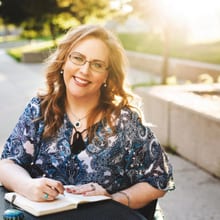
Description
After a wave of passionate listener feedback sparked intense conversations behind the scenes, The Bendy Bodies Podcast returns with a candid and heartfelt follow-up. In this episode, Dr. Linda Bluestein is joined by author and communications expert Kate Colbert to openly address the concerns raised about recent content and to set the record straight. From questions about language and lived experience to the emotional cost of being misunderstood, Dr. Bluestein and Kate hold nothing back. Together, they unpack what went wrong, what they stand by, and what they’ll do differently moving forward. This is the episode that proves growth is messy, but worth it.
Watch
Guests
Transcript
[01:03] Dr. Linda Bluestein: Welcome back to the most popular EDS podcast, Bendy Bodies. I'm your host and founder, Dr. Linda Bluestein, the Hypermobility MD. We have so much in store for you today. I can't wait for you to hear it. This is the first episode of season 6, so I hope that you enjoyed season 5, and even more so, I hope that you're going to enjoy the amazing guests that we're having on season 6.
[01:56] In this episode, we discuss communication and some recent drama surrounding the podcast. EDS patient and communications expert Kate Colbert is playing guest host. This is going to be really fun. So grab a salty snack, your favorite electrolyte drink, get comfy in your favorite chair, and get ready to rock and roll.
[02:16] Okay. I am so excited to be here with Kate Colbert. Kate has incredible expertise in communications, marketing, public relations, and crisis communications. She's been a wordsmith and strategic communicator her entire career, having been a professor of English composition and the founder and president of Silver Tree Communications, which advises corporate, healthcare, and university CEOs and others on high-stakes communication issues. Kate is the founder of a book publishing company that has represented more than 250 authors. She's the author of two commercially successful business books, which are absolutely outstanding — I can vouch for that myself. She's also the founder of EDS Guardians and a patient advocate who helps bridge the communication gaps between patients and doctors. And I can also say that she is an incredible friend and advocate, and I'm so excited to have her on the show today.
[03:09] Kate Colbert: Thanks so much for having me. I have to say for folks who are listening that the communication part of our relationship has been one of my favorite parts. And something you said to me in our very first meeting, when I became a patient of yours, has changed my life with your words. You said to me at the end of that appointment, "Kate, you are capable of difficult things." And every time I decide to go hiking after a big surgery or whatever crazy thing I'm up to, I think about that. I think, I am capable of difficult things. So thank you for that.
[03:46] Dr. Linda Bluestein: Yes, of course.
[03:48] Kate Colbert: So let's get right into it. You are almost 160 episodes into your podcasting odyssey, and you've really quickly become one of the most important voices in the world of hypermobility and in the EDS and HSD space. Bendy Bodies is currently the world's most popular hypermobility podcast, and I have met dozens and dozens, if not hundreds, across the years of people who say, oh my gosh, you know Dr. Linda Bluestein? I was actually at a conference sitting next to somebody who said, oh my gosh, I'm fangirling, I can't believe you know Dr. Linda Bluestein. So that's been really amazing. And I hope you're proud of what you have built here.
[04:29] I'm guessing that most days running a podcast alongside everything else you're doing as a physician feels like a power and a privilege, but I'm guessing that some days it feels really hard. Kind of hard to be expected to know it all, hard to know all the right people to invite onto the show, and hard to be sort of relentlessly camera-ready and reacting perfectly when a guest maybe inadvertently perpetuates a myth or says something you weren't expecting them to say, or even ruffles some feathers with a small segment of your audience.
[05:07] And so as somebody who has devoted her career to communications — that is, to saying the right thing at the right time, in the right way, in the right place — I'm really excited to have been invited on your show today to talk about some of the things that have been happening behind the scenes at the podcast and to kind of pull back the curtain for your listeners.
[05:27] So let's go ahead and get really candid. I want to talk for a minute, just to set the stage for the listeners, about what came before podcasts. Before there were podcasters like you, there were talk show hosts, TV and radio show hosts, and news anchors. I'm going to date myself, but — Phil Donahue, David Letterman, Oprah Winfrey, Stephen Colbert — we're not related, but — you know, I want people to be thinking about that dynamic that has happened across the years when somebody, whether it's an Oprah Winfrey or a Phil Donahue or whoever, is inviting people to their microphone or to their stage, to the couch.
[06:11] Inviting somebody onto your show does not necessarily mean, as a host, that you have the same knowledge or lived experience as your guest. In fact, you usually do not. It does not mean that you necessarily have the same opinions or perspectives or ideologies. And it doesn't mean that you're going to necessarily agree with everything that that guest says during that interview.
[06:42] In fact, it's interesting to me what's been happening in podcasting. Back in the day, Phil Donahue or Oprah Winfrey could have somebody really polarizing on their show — whether they were hateful people or they were jumping on the couches, sort of à la Tom Cruise — and people were not then reaching out to Oprah and saying, "Oh my gosh, I can't believe you let him jump on your couch." If anybody took issue with what the guest was doing, they took issue with the guest, not with the host.
[07:16] And something interesting is happening, I think, in podcasting. Listening to a podcast is such an intimate experience. A lot of people have earbuds in, so you're almost whispering in their ears. It's very different from standing on a stage and talking to an audience. And something I think inadvertently happens where listeners, if they disagree with something that happens on a podcast, instead of going to that guest and saying, "Can you explain that thing you said?" — they come to the host and say, "I have a bone to pick about that thing that your guest said." As if you are somehow accountable for the grown adults who come on your show and say what they say.
[08:05] So I want to talk about some of the surprises that have happened in your first 160 episodes in this regard. Without naming names, what kinds of things have people said on your show that you actually had to edit out of the recordings?
[08:27] Dr. Linda Bluestein: Yeah, I totally agree with all of what you just said. I would say a couple of the craziest things that have been said are, one, that all EDS patients are so attractive they could be models.
[08:42] Kate Colbert: Come on.
[08:43] Dr. Linda Bluestein: Yeah. And of course there is this myth that EDS patients are tall and thin. When somebody comes on a show like this and makes a comment like that — that all EDS patients are tall and thin — that's something that I do edit out, because I don't want to perpetuate that myth. We come in all different body types.
[09:06] Kate Colbert: I'm definitely not tall or thin.
[09:08] Dr. Linda Bluestein: Yeah. And many, many of my patients are not. There have been actual entire episodes that I never aired. That doesn't happen very often, but it has actually happened — which you can imagine I must feel pretty strongly about, because it's a lot of work that goes into every recording. So if I didn't even air the episode at all, that tells you something. It's very, very rare, but it has also happened.
[09:37] Kate Colbert: So it sounds like what people say is not necessarily something that's offensive, but they're perpetuating myths around EDS and HSD. That's interesting. So let's talk about myths for a second and debunking them. Now that you're EDS famous and people are rushing to shake your hand at conferences — I love that that happened to you recently, that's got to feel very cool — are you hearing any myths about you?
[10:07] Dr. Linda Bluestein: Well, I have to share a little more context about this person who said, "I've always wanted to meet you," just because I thought it was so funny. I was at the Vail Dance Festival, and I was waiting and waiting to talk to Tyler Peck. I was chatting with her mom, and her mom said, "Would you like me to introduce you?" I've seen Tyler multiple times, but we were never formally introduced, so she didn't know who I was. So I'm standing there waiting to get the more formal introduction, so excited — I had just watched this incredible performance at the Vail Dance Festival. And somehow I must have said my name, and somebody behind me taps me on the shoulder and says, "Oh my God, you're Dr. Linda Bluestein. I've always wanted to meet you." I thought it was so funny, because here I am waiting to meet somebody that I've always wanted to meet, and this person hears me say my name. Anyway, that was funny.
And I also want to say one truth first before I say any of the myths. It is true that medicine was my plan B. I really, really wanted to be a professional dancer. So I love getting to combine my love of dance and my love of science now.
[11:12] Some of the myths —
[11:13] Kate Colbert: That says something about your intellect, right? Like how many people's backup plan was to be a doctor?
[11:17] Dr. Linda Bluestein: Yeah, definitely. But one of the myths is that I don't help people from states other than Wisconsin or Colorado. People can fly to see me in Colorado or Wisconsin for their initial appointment and become a patient, but even more so, I do coaching sessions with people all over the world. That's something I want people to know.
[11:39] Also, there has been a rumor going around in the past that I only treat dancers. There was a recent rumor that I no longer see patients. And as you know from some of the texts we've had and the exhaustion I've shared with you when we're trying to connect — that's definitely a myth.
[11:59] And there's also a myth that I was Dr. Chopra's student. He has been a wonderful mentor and really encouraged me a lot. In fact, he's one of my biggest cheerleaders. I have learned a lot from him, but I've learned so much from other scientists and clinicians as well. I learned everything foundationally in medical school, college, anesthesia residency — from so many different people. In fact, one of the things I love about podcasting is that if there's something I want to learn about, I try to find a guest who can teach that to me and then I invite them on the show. So it's a way for me to learn as well. And really, I've learned most of what I know from my patients and from living in a body that also has EDS.
[13:02] Kate Colbert: I love that. So a few minutes ago, you shared a couple of examples of some of the bloopers that have happened — things that have had to be edited out, or people saying things that are sort of untrue but maybe sort of flattering about EDS patients. I actually heard a physician one time say that EDS patients are so intelligent — I was a little offended, actually. I was in the operating room last week with Dr. Bolognese and he told somebody, "EDS patients talk a lot." I'm like, it's because we're so smart. We have a lot to say. That was a very funny moment.
[13:47] So I want to talk about some of the hot button issues that have actually aired on your show recently. I know that like all talk show hosts and all podcast hosts, you have taken some heat for some things that have been said — things that you have said and things that your guests have said.
[14:11] There was the autism moms who took issue with your factual discussion about children with autism and your personal experiences treating kids with autism who are not nonverbal, but whose parents were insisting on speaking for them. And I have to say, I can totally relate to that as an autism spouse. My husband takes a lot of extra time to process things before he speaks, which sometimes comes off as if he doesn't have anything he wants to say. As somebody who talks for a living, it's really hard for me not to jump in and speak for him. I have to bite my tongue. But ultimately, if it were a medical setting and a doctor were to ask him a question, I would see why it would be really important for him to try to describe his pain first.
[15:09] And then there were listeners who really took issue, and kind of took you to task, with your discussion of quote-unquote labels. You were talking about diagnoses — when we get a label finally, when somebody says you have hypermobile EDS, you have vascular EDS, you have hypermobility spectrum disorder, Marfan syndrome, etc. You were having a conversation not too long ago on a podcast about that, and you were talking about the fact that with the Ehlers-Danlos Society Road to 2026 and the diagnostic criteria changing for EDS, there is the real possibility that for a lot of people — maybe millions of people — our labels might change. Yours might change. Mine might change.
[15:51] And I thought you did a beautiful job talking about how it doesn't matter what your diagnosis is, your symptoms are real, your suffering is real, your pain is real, and we need to talk about how we treat that and how we approach that. You deserve the care that you seek regardless of your label. But what was people's issue with the labels thing? I'm not even sure I understand why people were upset.
[16:18] Dr. Linda Bluestein: Yeah, I really appreciate the opportunity to have this conversation, because I don't know that a lot of people realize the dynamic on social media. I do my best to track comments and things like that, but as the show has gotten more and more popular — there are many thousands of people who listen to each episode, and of course lots of followers on social media — I don't see every single comment. I try, but I have a medical practice, a coaching practice, and the podcast. It's really hard to stay on top of things.
[16:46] So the best way, if you really want a comment to be seen, is to leave it on bendybodiespodcast.com. If you really have feedback that you want to make sure somebody sees, that's where to go.
[16:57] What some people said was that they need that label for accommodations in school or at work, or they need it in order to get certain coverage through their insurance. And those are valid concerns. It's so hard, because when you're recording an episode — and that was a solo episode, so I'm literally just looking into a camera, making these comments, chatting with myself — it's way easier to chat with you than it is to chat with myself and try to think of all the relevant things, even though I prepare in advance. It turns out there are a lot of people who said, "No, no, no, those labels are important." I was like, oh yeah, those are excellent points.
[17:39] I know you've talked to me about having talkback episodes — instead of just solo episodes, having episodes where I address feedback — which is so helpful. Most of it's incredibly positive, but some of it makes me think, oh darn it, I wish I had said something differently, because I've had tons of patients say to me, "I don't care about the label. Maybe I just met the criteria for hypermobile EDS, but I actually don't want that on my chart right now. Can we hold off?" I've had that happen a lot of times, actually.
[18:18] I think the other thing that's so important for people to be aware of is that when I'm talking to somebody one-on-one in the clinic or one-on-one when I'm coaching them, I know a lot about their individual circumstances, so I can tailor my comments to their needs. But when I'm talking on the podcast and there are thousands of people listening, everyone's situation is going to be different. It's a lot harder to make sure that everyone is getting their needs addressed.
[18:43] Kate Colbert: Yeah, that makes sense. You have to cast a wide net when you're having these conversations. And one of the things I really appreciate about your show is that you are very careful to always present things from your own actual experience as a physician — what you're seeing in the clinic with your patients, what you're reading, what you know to be factually true and evidence-based. But your episodes are relatively long because you go in depth on big topics, and when you've already got an hour of something, it's hard to stop at every comment and say, "Well, but there are exceptions to this," or "There might be patients who—"
[19:31] It's like a Shakespearean play where you look to the audience and talk to the audience. You go from your soliloquy to your aside. And those episodes would get really long if you had a caveat for everything, or if you challenged every single thing that your guests say. I think it's really important that listeners to any kind of podcast understand that there's always more to a message. There's always additional context and usually a backstory for everything that somebody says.
[20:15] So you recently had Dr. Lowe on your show talking about pain neuroscience. Every now and then he would say something that would be a really great soundbite. But if you were to ask him how he knows that, he could write an entire book on it — or he has written an entire book, or hundreds of peer-reviewed journal articles on those things. But we're trying really hard, when we come to a microphone on a podcast, to distill the insights and the professional opinions down to something that the listener can take, absorb, and maybe feel or know or do something about really quickly. And that leaves a lot of room, I think, for interpretation.
[21:05] Let's talk about an episode you just did with Dr. Pradeep Chopra, whose name has already come up in our conversation today. That episode, I think, started out talking about GI manifestations, correct?
Dr. Linda Bluestein: Yes.
[21:19] Kate Colbert: Okay. And then somewhere in that conversation, you guys got onto the topic of the dental and oral manifestations of hypermobility. And you heard directly from a couple of dentists and oral surgeons who identified what they believed to be a few misleading or inaccurate statements in the episode. They said, "I disagree with, or think this is wrong, what he said about dental health." Can you tell me a little bit about the feedback you received about that episode and how you responded?
[21:58] Dr. Linda Bluestein: So I love that question. This episode was about GI manifestations, but his plan for the episode was to kind of go through the GI tract and start with the teeth, because the mouth is the beginning of the GI tract. That's how the teeth got rolled into it.
[22:15] He started out by saying, "Did you know that people with EDS have dancing teeth?" And again, like what you said about Dr. Bolognese — who we both love and totally respect, he's amazing —
[22:30] Kate Colbert: I let him put staples in my head last week, FYI.
[22:32] Dr. Linda Bluestein: So obviously we trust the man. And that's where I send my patients who I feel need to see a neurosurgeon. I send them to Dr. Bolognese. So him making a comment about EDS patients talking a lot — people say generalizations, and we would have no flow if every time somebody said something I asked, "What's the source for that?" or "How do you know that?" We want it to be entertaining and interesting as well as accurate.
[23:02] So that was one comment that generated feedback. He also said that toothpaste is abrasive and bad for you, and kind of gave an example of a different way that you should brush your teeth using a different product. People love the analogies that Dr. Chopra uses — he uses a lot of metaphors and so often attempts to make medical concepts accessible to a broad audience. But in the process, I think he sometimes oversimplifies things without really explaining why he's done that.
[23:37] He also has access to so many lived experiences as a doctor who has seen enormous numbers of EDS patients. And a lot of these things have not been published about at all. So he might say something that's really based on his clinical practice. As somebody else who treats EDS patients, I haven't seen the same kind of dental issues that he's reporting in my patient population. Now, the interesting thing is there is a form of EDS — periodontal EDS — and in fact there's some evidence that potentially periodontal EDS and hypermobile EDS may share some commonalities. So it gets pretty muddy pretty quickly.
[24:34] And most of the things that we talk about on the show honestly are not referencing published scientific studies. A lot of it is people's clinical expertise. Yes, I did get emails from experts — dentists, oral surgeons — who are in the EDS space, treating EDS patients. They took issue and rebutted some of his comments. And I am very grateful to both them and to Dr. Chopra, who then wrote back to me with this long response to each of the comments, because people obviously are listening very carefully — they must hit pause and take all these notes. I really appreciate people taking the time to do that.
[25:25] But I also have to say that sorting out the facts is not so easy. A lot of this is really, really hard to sort out for anyone who has actually tried to fact-check something in science. It's not the same thing as fact-checking a score from a game last night. In science it's a lot different.
[25:47] One of the concerns that was brought up was: we don't want EDSers to stop brushing their teeth and then end up needing major dental work, which could then cause neck injuries. So I did seriously consider having my team edit out that section of the episode. But I think instead what I'm going to do is add a disclaimer. I did ask my team to take down the social posts, and then a follower messaged me asking where that post went.
[26:19] So it's crazy how closely people are following along. As the show gets bigger — which I'm so happy about, because I want everyone to know about these concerns that we have in bodies that have different connective tissue — it's also very, very important for people to be aware that a lot of these things are based in opinion and might be grounded in science, but might not be absolute facts held by everyone in this space.
[26:55] Kate Colbert: Well, I think you made an interesting point about what you see in clinic. I work with a lot of doctors — not just as a patient, but I do a lot of marketing and consulting for the healthcare industry. One of the things that happens is you end up becoming the go-to person for a niche within a niche, because patients talk.
[27:24] For example, if you had a couple of patients who were really severe frequent dislocators, with lots of knee and ankle and hip pain because of their frequent daily dislocations, they might mention something in a support group and other people who have that symptomology might all rush to become your patients. And then suddenly you're thinking, wow, it seems like 70% of all EDS patients dislocate frequently. And then there might be other providers with a lot of EDS patients in their population who don't have the frequent dislocators coming in. So there ends up being a sort of bias based on what you see, and it's possible for multiple things to be true at once.
[28:31] I thought it was fascinating and a little depressing when I was recently checking in at Mount Sinai for invasive neurosurgical testing and Dr. Bolognese and I were talking about you, because you referred me to him. I said something — I don't know how it came up — like, "I don't think she has problems with her neck, you know, like CCI, serious problems with her neck." And he says, "Give it time." I'm like, oh, interesting. You think that all EDS patients eventually have their necks fail? He said yes. And I didn't challenge him on that, because of course all the EDS patients whose necks are failing are showing up in his operating room. There's this bias. But there are a ton of people out there with EDS whose necks are doing really fine.
[29:23] I'm embarrassed to tell you this, but it's his embarrassment and not mine. When I told him, "Well, if anything goes wrong with her neck, I'm sure she'll come to you," he put his hands together — and for anybody watching the video version of this — he got like all excited to operate on you. I'm like, no. I don't want her neck to fall apart.
[29:42] But again, I think that's a really great example of the fact that in your specialty, and in niches within niches within niches, you're all going to see different things. It's possible for multiple things to be true at once. You need to say, "In my population of patients, here's what I'm currently seeing." And what you're currently seeing might not be what you're seeing five years from now.
I want to talk about another controversy from that same episode, because there were some people who had concerns about Eagle syndrome. I think Dr. Chopra had talked about Eagle syndrome being pretty common among EDS patients. Then somebody reached out to you and said, "I do X-rays on my patients and I am not seeing hypertrophied styloids on a lot of them."
[30:24] And as somebody who was just diagnosed with Eagle syndrome and got the experience of getting a glossopharyngeal nerve block recently to feel what it might be like not to have those styloids there — I found it really fascinating and important that this came up in an episode. But somebody reached out and said, "I would hate to think that somebody runs off and has — first of all, I can't imagine anybody doing a neck surgery on someone who doesn't need it. If they don't have hypertrophied styloids, they're not going to operate on them." Can you talk a little bit about the back and forth and controversy you've had around how common or not common Eagle syndrome is in EDS?
[31:26] Dr. Linda Bluestein: Yeah, I think this is a good example. And like you said, we all have biased populations. People who are looking for certain things are much more likely to come to see me as compared to somebody else. And I say this all the time to people when they're asking me, should I do regenerative medicine for this particular procedure, or should I do surgery, or should I do this or that?
I do want to say before I address Eagle syndrome more specifically — for surgeons, choosing who to operate on is everything. There are surgeons, especially earlier in their career, who are much more liberal about who they operate on. When I was working as an anesthesiologist, all of us in the operating room knew that if you really wanted a surgery, you would go to a certain surgeon because you knew their threshold was really low. And then as surgeons go through their career, they often get more and more cautious because they've seen more and more complications. It's very, very common for surgeons who are older or closer to retirement to be much more selective.
[32:39] And this is what I love about Dr. Bolognese — I feel like he is quite selective in who he operates on. I don't want anyone to have surgery they don't need, because there's always the risk of complications from the surgery, complications from anesthesia. It's funny — I went to shadow a surgeon for half a day just to see how they do things. I've done that a lot. I went to shadow an interventional radiologist for half a day as well. I like to learn in as many different ways as I possibly can. I take advantage of the fact that I don't work for anybody but myself, so I can go and do these things.
[33:22] Kate Colbert: Plus, they also know how to play nice in an operating room with an anesthesiologist. So I'm guessing you don't get a lot of "no" when you say, can I come observe your surgery?
[33:27] Dr. Linda Bluestein: No, I don't. And I know what not to touch.
[33:37] Kate Colbert: Oh yeah — they had just disinfected my head and I reached up and they're like, "Don't touch it."
[33:41] Dr. Linda Bluestein: Don't touch it. Yeah, exactly. That's the whole thing with medical students. Oftentimes we literally put them in the OR surgical gown and put their arms down so they physically can't touch anything.
[33:42] Kate Colbert: Hilarious.
[33:59] Dr. Linda Bluestein: True story. We've done that.
[34:00] Kate Colbert: That's like that moment in Grey's Anatomy where the medical student leans over and his glasses fall off and land on the surgical field. And so they call him "Glasses" for the rest of his training.
[34:12] Dr. Linda Bluestein: Yeah, I think there was an episode where a piece of broccoli fell out of someone's mask or something. Horrible. Definitely horrible.
So yes — you want to have surgery when you need it. And sometimes you can have findings — whether it's Eagle syndrome or compression syndromes — on imaging, but that doesn't automatically mean it's cause and effect. That's where you need a surgeon who has not only strong ethics, but a good clinical background to know when these findings are relevant and when they're present but possibly not causative. It's a lot more complex than most people realize.
[34:52] I think most people think a surgeon technically does the surgery. And I know in some countries surgeons don't have as high a regard as they do here in the States. In fact, I think Dr. Bolognese may have even made a comment about that when I interviewed him for the podcast.
[35:08] Anyway, Eagle syndrome — or if we go back to the more foundational thing of elongated styloids, with or without symptoms, because if you don't have the symptoms associated, you could have the elongated styloids but not have quote-unquote Eagle syndrome. The elongated styloids — for people watching on video — are kind of like really close to your jaw, which is where the dentist making the comment about X-rays and all of that comes in. They can get elongated, and/or they can get hypertrophied and calcified, and they can compress the jugular veins. That's where they can cause complications. And it does appear that this is more common in people with EDS than in people who don't have EDS.
Then there was the question of whether it's more often unilateral or bilateral. These kinds of things are very, very important to study in the proper way. I do believe there's some research investigating this right now that I think will be very important and helpful for the community to know. But in the meantime, yeah, there were some opinions shared about how common Eagle syndrome is. We all have biased populations. Certain people choose to come see me, certain people choose to come see Dr. Chopra, or either of these oral surgeons and dentists.
[36:26] So at the end of the day, I think it's very important for me to factor that into consideration when I'm treating someone and advising them about certain procedures. If someone has had a surgery and it was incredibly successful, they're not necessarily going to come back and see me or come see me in the first place.
I do feel sorry for my friends if any of them are listening to this right now. I do like to hear about your medical experiences, and I like to pet your skin and see how stretchy it is, because it kind of broadens my knowledge base. I have friends who are hypermobile and they're not young — they're in their 60s or 70s — and I like to find out from them what their childhood was like to get a better sense of things.
[38:40] Kate Colbert: Okay, so I'm loving this conversation we just had about Eagle syndrome. I know we can't sort of name names or maybe even share numbers, but you had shared with me that in doing a little bit of fact-checking about the comments about Eagle syndrome — after somebody took you to task on whether or not it's really that common — that somebody who would really know is actually about to publish some data demonstrating that Eagle syndrome is much, much higher in incidence among EDS patients than in the general population. That's interesting.
[39:15] And again, I think you made an interesting point a few minutes back when you leaned into the idea that the body of knowledge about EDS is really growing, and growing exponentially. I was diagnosed just six years ago, and when I was diagnosed, nobody knew what EDS was. I would mention it to one of my doctors and they'd say, "I've heard of it, I think." That was kind of it. They were Googling it. And now you can literally be chatting with your cashier at the grocery store and if you mention EDS, they'll say, "My granddaughter has that." The awareness, the rate of diagnosis, is going up, and our understanding of what is happening to the body and why and how to approach these symptoms is accelerating really, really quickly.
[40:09] But what's not keeping up with what you're observing in clinic is the ability for somebody to listen to your podcast and hear something about Eagle syndrome being more common in EDS patients, and then validate that with Google or ChatGPT, if those of you who are so busy treating all of us have not had a chance to speak about that or publish it. It doesn't mean it's not true — it just means it hasn't been published yet.
And I should actually add: the experts, all the doctors and scientists and other leaders in their space who come on your show — when they talk about these things on your show, they are publishing. A podcast is a publication. And I think that's an interesting thing for people to realize, too. There will be points at which somebody listening to another podcast or source will quote-unquote fact-check it by coming back to the Bendy Bodies podcast and saying, "This expert guest who said XYZ when they were talking to Dr. Linda Bluestein validated that." So sometimes listeners hear something for the first time on your show and therefore question whether it's true. But once they start hearing it other places and seeing it written down, ultimately you're going to be the original source. And that might be a good way to remind yourself, when you're feeling exhausted by people questioning things that have been on the show, that you might be one of the first places they heard that. And that's okay.
I do want to reflect on the fact that there are just so many examples of this in the EDS community — things that are not common in the general population but that are relatively common in the EDS population. This brings us back to hoofbeats, right? When you hear hoofbeats, think horses, not zebras. But in the case of complex patients, people think of us as the zebras.
[42:20] I was diagnosed with hypermobile EDS because of one of these examples. I had read something online that basically said thoracic outlet syndrome is pretty rare, but it's pretty common in people with Ehlers-Danlos syndrome. And I thought, that's really weird, because a month or two ago somebody told me they thought my dislocating joints might be this condition called Ehlers-Danlos syndrome. I'd kind of blown it off because this is the body I've lived in my whole life. For me, the way things dislocate and do bizarre things is quote-unquote normal. And I thought, hmm, okay, that's unusual. That was the light bulb moment for me.
Thoracic outlet syndrome being uncommon in the general population but somewhat common in the EDS population was the light bulb moment that got me to finally go to the Wikipedia entry for EDS, read it, burst into tears, go wake my husband up from a nap, and say, "Oh my gosh, I know what's wrong with me. My whole life makes sense now." And I was very lucky to get my diagnosis very quickly. Within a matter of weeks — and I'm pretty tenacious — I'd been seen by my primary care doctor, a rheumatologist, and a geneticist, and got my diagnosis.
[43:33] But we hear these caveats in the hypermobility space all the time. Thoracic outlet syndrome is rare, but not in EDS. Eagle syndrome is rare, but not in EDS. Tethered cord syndrome is rare, but not in EDS. Craniocervical instability is rare, but not in EDS. Vascular compressions are rare, but not in EDS. CRPS is rare, but not in EDS. You see a pattern here. And that's really, really interesting to think about.
[44:00] So this leads me to a critical question: do you think that the reason why some listeners to your show have strong reactions to quickly rebut or deny some of the assertions of your experts is because they, as a patient, just haven't seen what they're hearing about? Or if they're a provider, that maybe they haven't seen the kind of prevalence of these complications that you have or Dr. Chopra has or some of your other guests? Do you think that's what's behind that?
[44:43] Dr. Linda Bluestein: I think that definitely plays a role. And I think a really important thing to think about is confirmation bias.
[44:50] If we see a list of things that are consistent with Loeys-Dietz syndrome — I had this happen not long ago. Somebody had genetic testing ordered by somebody else and came back with a variant of uncertain significance, and one of those genes was a gene that can be abnormal in Loeys-Dietz syndrome. Now they did not have the abnormality that causes Loeys-Dietz syndrome, but they had a variant of uncertain significance — meaning we don't know how significant it is — in a gene that can cause Loeys-Dietz syndrome. So then they went to some source online and found a list of things that are symptoms of Loeys-Dietz syndrome. And what they didn't realize was that when they went through the list and were checking off, "Yes, yes, yes, I have these things," they didn't realize those were the much less specific symptoms for Loeys-Dietz, and they did not have any of the really highly specific symptoms.
[45:43] So confirmation bias is a very real thing, and it's something that we all struggle with. It's very easy to read something and think, yeah, I agree with that, I have that. And it may or may not be accurate. Just being aware of it is one really helpful thing.
[46:03] And also, people who have EDS and HSD usually have had a lot of trauma. It might be physical, it might be psychological, but it's related not only to their physical body and how that is experienced on a daily basis, but also to how they've been treated in the medical community, because most people have many negative experiences. I think that's also why people often have a visceral reaction when something is said that either validates or invalidates their experience.
[46:43] Kate Colbert: Yeah. I think that's a really important thing. Is there anything else that you think listeners should be keeping in mind when listening to your show or other medical shows, or other shows that discuss complex, technical, or very consequential topics — when it comes to facts and how things become facts? Anything else you'd want listeners to be aware of?
[47:13] Dr. Linda Bluestein: Sure. So first, ideally we would have definitive information and scientific facts on which we would base all of our decisions. But instead, we have to weigh the available evidence, and we have to accept that there are fewer facts in science than we would really like.
[47:32] If anyone has tried to fact-check something in science, they would probably quickly realize a few things. Number one, most things — especially in EDS — have not been adequately studied. And I'm really glad that you pointed out about those of us who are treating patients and haven't published yet. A lot of us will never have time to publish. I don't have access to an IRB. I don't have the enormous amount of time that it takes to publish a paper.
[47:57] When I talk to Dr. Courtney Gensemer, who I know you know quite well, who is at MUSC in a lab doing fantastic research — that is what they do: they do scientific studies, they publish, they have a whole big team. If you look at the number of authors on any given paper, it's quite extensive. I don't think people realize how much is involved in publishing a paper, doing a study, especially doing a study with good scientific rigor — where you have a control group and a treatment group, and you have to be willing to have a group that might be getting a placebo. As Dr. Chopra commented not long ago, people don't necessarily have the time to wait or to take a placebo.
[48:39] So I think it's just important for people to be aware that there are a lot of things we would love to study in EDS, but those of us who are treating people with EDS feel like time is of the essence. We have to weigh the risks and benefits of all the treatments we're doing, see how people respond, and if there's a treatment that is relatively safe — which oftentimes there is — we might go ahead and recommend it. And of course, the person has to consider whether they want to try that or not.
[49:05] We also have to think about the fact that all studies have limitations and flaws. If you are publishing a paper, you actually have to have a section on the limitations of your study — something I don't think a lot of people would be thinking about when they read a published paper.
[49:21] And I thought it was great that you mentioned about the podcast being a form of publishing. Oftentimes things are built not on a sturdy brick foundation, but somebody makes a comment, somebody else references it, and next thing you know it becomes widespread as if it's absolutely true — but it may or may not be based on something pretty solid. How studies are designed can greatly influence the results, so it's important to think about that even when quoting a specific study.
[49:55] You also talked about how things are very nuanced, which is so true. There are very few things in science that are as clear as: your risk of lung cancer is increased if you smoke. Recently I was trying to decide what to do with one of my treatments, and I did so much research and talked to my doctors. And at the end of the day, what we had to conclude was that nobody knows. We had to make our best guess.
[50:25] So all of us — healthcare professionals and patients alike — are influenced a lot more by stories and by our own experiences than we are by studies. I think that's an important thing to be aware of.
[50:40] Kate Colbert: I like that.
[50:41] Dr. Linda Bluestein: Yeah. And I also want to say — you have heard me repeat stories of patients, de-identified of course. I've shared with you, before, things like: I had this patient, they were able to get better, they did not end up having neurosurgery. Those types of stories really do resonate with us and probably impact us more than reading a lot of studies. We're human beings. We're impacted by other human beings.
[51:10] And I wish that I had all the facts and all the answers to share on this show. I wish that when people came to see me, I could say, "Aha, I know the one thing that nobody else knows about EDS." But it's really more like you said — an accumulation of my own lived experience treating patients, what I know from reading, and so on. I'm a Mayo Clinic-trained anesthesiologist with more than three decades of clinical experience. I know a lot about anesthesia, I know a lot about EDS, I know a lot about pain. But I also invite experts onto my show because there are so many other things I want to learn about, and they have diverse areas of expertise that I can share with the audience while also learning at the same time.
In a clinical setting, evidence-based medicine means that we integrate the best available research evidence with clinical expertise, and then we incorporate patient values to make decisions about patient care. And this is kind of the strategy that I like to adapt for the podcast. We share what we know from scientific literature and also from our clinical experience. Sometimes a guest does swim a bit outside their lane, without malice, of course. And going forward, I am going to put into place guidelines so that the listener can have a better idea of when someone is sharing an opinion — especially if it's their opinion but is not necessarily held by the majority in that space — and when they're saying something that's based on scientific studies.
[52:34] Scientific accuracy is something all of us in podcasting do struggle with. I hear people talk about this on other shows. Many of you may know Dr. Mike — he has a massive following, and on his show he sounds a bell that I'm sure is added in post-production, to let people know when something is being quote "fact-checked for accuracy." So I think this is just important to share and reinforce the fact that fact-checking in science is something that is important to do, but also has limitations.
[53:06] Kate Colbert: Yeah, it's got to be really difficult. And I think I love that you talked about stories. I think it's important for those of us listening to a show like yours — if we hear something that runs counter to our experience — it's okay to say, "Well, that doctor said they see a lot of this," or "Somebody who has EDS says their symptoms look or feel this way, and that's different from mine." But if I'm listening to your show and I want to feel that the EDS community believes that my stories are valid and my pain, my suffering, my experiences are valid, it is incumbent upon me to also acknowledge the validity of other people's stories, even if they're different than mine.
[53:54] And you said something to me once that I think is really important. You said, "If you've seen one EDS patient, you've seen one EDS patient." Meaning that for all the ways in which we have similarities and can fit into some diagnostic criteria, we're all really, really different. And that's why it's so important that we get to see different stories from different patients and hear from different clinicians and scientists.
[54:21] I want to circle back to something you said a minute ago in case anybody listening is wondering: what is an IRB? You were talking about research and you said, "I don't have an IRB." So it's an institutional review board. It's essentially the compliance body at a medical university, research hospital, or other research institution that makes sure that research studies are being run ethically and in a way that will generate good results. I used to work at a medical university, and as the head of communications, I worked with the IRB all the time. We shut down a lot of studies that were not relevant or didn't have, to your point, some sort of placebo or control group. So that's what an IRB is.
Actually, while we're on technical stuff, I want to give a little tip. I'm going to have to read my notes so I get this right for your listeners.
[55:15] Now that we've told people that sometimes podcast episodes have been released and then edited after the fact — and that happens with other podcasts all the time — people might be wondering: how do I get the newest version? So if a podcast episode that's already been released has been updated, how do you download that new version?
[55:41] So let me explain that, because this is a quick listener hack. Most podcast platforms won't automatically update downloaded episodes. If you listen to a show you love and you have subscribed to it, it automatically downloads to your podcast app on your phone or whatever device you're using. If that podcaster goes and makes changes to it and uploads a new file, you're going to still have the original, the old one. If you want the new one, here's how you do it.
Let's say you subscribe to Bendy Bodies — and we know that thousands and thousands of you do. If you don't, go hit that button. The moment an episode is released, it gets downloaded to your phone or wherever you have your podcast app. So how do you get the new version if an episode has ever been updated?
[56:32] For Apple Podcasts: open the podcast app, find Bendy Bodies, then locate the specific episode you're looking for an update on. If the episode has been updated, you might see a play button there instead of a download icon. You might need to tap and hold the episode and then select "Update Episode" or a similar option. If there is no explicit update option — and this is the more surefire way to do it anyway — you might need to remove the episode if it's been downloaded. Actually delete it, and then go re-download it. When you re-download it, it will give you the most current version. And so listening to that most current version gives you the opportunity to hear any new commentary that's been added. I would definitely recommend doing this.
[57:33] So let's talk about one more public relations drama. You recently featured Dr. Adriaan Louw on your show — he's a pain neuroscience educator and a highly renowned physical therapist. I know he was a really great get, as they say in the podcasting game. I personally loved this episode. I kept pausing it and taking notes, and I found it really validating.
[58:03] I think maybe one of my favorite things about the show was the way that the two of you were talking about pain and suffering, and sharing your dedication to getting patients out of pain regardless of what their diagnosis was. And I loved the conversation around neuroplasticity — that changing nature of the brain — which can give EDS patients or people with any sort of chronic pain hope that if the brain is constantly rewiring itself and changing, then what the brain is doing to create and cause pain today might be different tomorrow or next week or next month or next year. So the amount of pain we have now might not be what we're experiencing later. That gave me a ton of hope.
[58:53] I didn't hear anything in the episode that gave me pause or that I thought would trigger anything from a subset of your listeners. And then, bam — some parents and a documentarian reached out, popped into your email inbox with some very passionate criticisms of one specific moment in the episode. So let's play it.
[59:16] Dr. Linda Bluestein: Are there certain things that you would recommend to parents, even if their child doesn't have persistent pain, but that might help them be able to cope with future pain in the healthiest possible way?
[59:29] Kate Colbert: You're throwing me a lot of grenades today. So the easy answer — the best way to treat a child in pain is to, in a very, very nice, politically correct way, remove the parent.
[59:41] Dr. Linda Bluestein: I mean, we have enough research to show that how parents behave drives their kids' pain.
[59:45] Kate Colbert: And I have kids. I love my kids to death. But there's a study that came out. They took kids that went through orthopedic surgery — as an anesthesiologist, you will appreciate this.
[59:54] Dr. Linda Bluestein: And then they tracked these kids a year out. A year later, they classified the surgery as a success or not a success based on pain, disability, et cetera. But then they looked at everything they measured around the time of the operation to see if they could predict it.
[1:00:06] Kate Colbert: And the number one predictor of children hurting one year later was the parents' catastrophization around the time of the surgery.
Dr. Linda Bluestein: Wow.
[1:00:14] Kate Colbert: And so my message to parents is: chill out. Let the healthcare providers do what they do.
[1:00:20] Dr. Linda Bluestein: Let's talk about what you heard back. Tell me what happened after that episode aired and what you heard about that section of the interview.
[1:00:36] Kate Colbert: Yeah, definitely. And I'm really happy to get the opportunity to talk about this, because when I learned about neuroplasticity, that was such an important turning point for me as well. So I really did want to re-air this episode, even though I did take it down briefly.
[1:00:50] There were a few people — a very vocal minority — who when they heard the line, "The best way to treat a child in pain is to remove the parent," were triggered by that comment. And I believe that was triggering because of traumatic experiences they've had in the past.
[1:01:07] There's a movie called Complicated, which is a fantastic and very important movie about EDS. It really addresses well the problem that some EDS patients have had — and in particular addresses the problem that some parents have had who have been accused of medical child abuse or Munchausen's by proxy. This is a horrible, horrible thing that has happened to some parents of children with EDS. The child may not be diagnosed with EDS yet and is being seen in emergency rooms and clinics where people don't know about EDS and/or don't fully understand it. They think it's just a condition where you have bendy joints. They don't understand the systemic ramifications and how incredibly sick these children can be.
[1:01:50] And the parents — and I have to say, it's usually the moms who are taking the children in for these appointments — often get accused of Munchausen's by proxy or medical child abuse. It's horrible. There have even been cases where the children have been taken away. So I do want to acknowledge that these parents have had terrible emotional pain, and I can see how they could have misinterpreted what Dr. Lowe said.
[1:02:22] But I know for sure his intent, and we can share about that in a minute. I did take the episode down for a few days because I wanted the opportunity to talk more about what he meant and how this was misinterpreted by some people before rebroadcasting this important conversation about the neuroscience of pain.
[1:02:42] And I do believe very, very strongly that what Dr. Lowe shared about nociplastic pain is not only valid, but also very, very important. And I know from my own clinical experience that oftentimes having the parents step out of the room for just a few minutes is very helpful. It's very helpful to get to talk to the children separately. This is something we do all the time in clinical settings — Dr. Lowe did not invent that. He talked about it, and he's a physical therapist. So it's important to keep in mind that he's not talking about taking the child away from the parent. He's talking about, when the patient and the parent are in the exam room, wanting to briefly talk to the child alone.
[1:03:33] Kate Colbert: Yeah. I was recently talking to an EDS patient who lives in the United Kingdom. She had said that when she was a child, before her EDS was diagnosed, the hospital electronic medical records weren't talking to each other even though they're all on a national health system. Her mother, every time something was wrong, would drive sometimes great distances to take her to a different hospital than where they went last time, so that she wouldn't be accused of taking her to the hospital too often or making up these symptoms.
[1:04:10] So there is a sort of global horror happening. And you're right, it usually is the moms who get blamed for knowing too much about their kids' health. It's horrible.
[1:04:24] But I think what's interesting about the reaction from a few people to that episode — and it breaks my heart that anybody felt retraumatized by what they thought they heard — is that it really all came down to one word. When he said "remove." I'm a former foster parent, and that is the language that is used by child services. A child is removed from the home, a child is returned to the parent. So words like "remove" and "return" — when he literally meant, can mom or dad step out into the hallway for two minutes so I can see if Johnny or Janie will tell me a little more about what they're feeling in their own words without being aided by mom or dad, even though their intentions are really good. So I think that was interesting.
[1:05:14] Dr. Linda Bluestein: And I do want to clarify that he said "remove the parent." He did not say "remove the child." He said "remove the parent."
[1:05:22] Kate Colbert: Yeah. Right. But again, people hear what they think they hear. And their trauma and their nervous systems feel what they feel. So yeah, this is legitimate.
[1:05:31] So I know that you reached out to Dr. Lowe and let him know about the controversy surrounding his interview, and he shared a statement which I'd like to go ahead and read. Dr. Lowe said, "I apologize if my comments upset some of your listeners. That was not my intention. It always amazes me, but does not surprise me, that people can listen to a lengthy podcast or lecture and one singular comment triggers them. Unfortunately, this is indicative of the current struggles with chronic and complex pain conditions. People have been treated so poorly that they need to be defensive and advocate for themselves, which I understand. I have dedicated 30 years of my life to studying pain science, working with people in pain, and trying to be a voice for them. When I present on podcasts, webinars, or conferences, my content is 100% backed by research. The specific comment, when seen in context, has been extensively studied."
I thought it was really great that he jumped back into the conversation after the fact. And I hope that those folks who reached out to you with some concerns are listening today — and maybe you'll even reach out to them and send them a link to this episode — because I think what you're doing here, taking the time to talk about that feedback and to wrap some more context around it, is incredibly compassionate and loving. A lot of podcasters would have just said, "Well, that's not what he meant," and carried on. The fact that we're talking about it today says a lot about you.
[1:07:12] There is a lot that goes into podcasting, especially when it's about a medical condition. So I want to give you a lot of credit for not giving up when listeners get critical, for working so hard with your guests to contextualize their professional opinions and observations, for trying to make your show as scientifically accurate as possible, and for taking the verbal beatings that come along the way on social media and via email when people get upset and blame you for what they're feeling or interpreting about what they heard. Man, it's a lot.
[1:07:47] I kind of wonder — when you were going through all of your intensive training to be a physician, where was the training in podcasting, interviewing, and public relations? There was nothing, right? Do you sometimes have days — I'm kind of curious — where you find that the doctoring part of your job is actually the easy part?
[1:08:06] Dr. Linda Bluestein: Yeah, definitely. This whole last couple of weeks honestly has been very, very stressful. I know that you know this, and hopefully most of the listeners know this, that I want to bring the best quality information and would never ever want to invalidate someone's experience.
[1:08:23] In fact, somebody who saw that I had taken down the post about Dr. Chopra's dental comments actually wrote back and said, "What happened to the post?" — and went on to share their own experience and seemed to feel that because I was wanting to make sure this information was accurate, that somehow invalidated their experience. So I'm glad that you brought that up — your experience is your experience. Please do not let anything you hear on this show make you question your own experience. You know your body better than anyone.
[1:09:00] I know a lot of people's bodies. I get a window into so much of what they're experiencing, but I still don't know what it's like to live in anyone else's body except for my own. So while I have a lot of information and a lot of expertise, doing a podcast is very, very challenging. It's hard to maintain the scientific rigor and to have the best guest preparation and make sure that we're doing the editing correctly. There are going to be things that slip through the cracks, unfortunately, or rub a listener the wrong way. I think that's kind of the nature of podcasting. I try to minimize that as much as I possibly can. But at the end of the day, as a highly sensitive person myself, I have to maybe grow a little bit thicker skin and realize that so long as I'm doing the best that I can, I need to try to roll with things a little bit.
[1:09:57] Kate Colbert: Yeah. I think you do a great job. And one of the things I loved about your show from the very beginning is that while you know a lot about EDS, you also know that there are subspecialists who are seeing a different subsector — the neurologic complications of EDS, or the vascular complications, or the GI complications. Having those experts on your show is really great.
[1:10:24] I always tell newly diagnosed folks that this is the best way to have the equivalent of attending an EDS patient conference on an ongoing basis — that every week they're learning a little bit more. And if they're new, they can go back and listen to 160 episodes and pace themselves, and they're going to learn just so much from you and from your guests collectively.
[1:10:50] And I've been very impressed over the years by the fact that if you think something has ever been said on your show that's factually incorrect or even dangerous — which I know is very, very rare — you do your best to challenge the guest or to edit out an offensive comment. But because these conversations are candid and relatively unscripted for a reason, I know that it's your preference to let the conversation stand for better or for worse and to see how the community reacts. And I think that's important. I think all these conversations are important, and I think they make us all a whole lot better.
[1:11:28] Dr. Linda Bluestein: Well, thank you for that. I'm proud, at the end of the day, to have founded the world's leading science-based podcast featuring medical insights about hypermobility, where listeners can count on me to bring important voices to the microphone to talk about the important issues that patients face with complex conditions like EDS and HSD. There isn't anyone else doing exactly what I do, and I think I'm the exact right person to be doing this at this point in time. So I'm grateful for the listeners and for people spreading the word about the podcast.
[1:12:04] I know that there are medical institutions that have smart phrases built into their EMRs where they share the podcast with patients. So that's quite significant — if somebody shares with me that yes, we have a smart phrase where we can just click a button and it tells a patient we just diagnosed with EDS, or we suspect EDS, "Go listen to the Bendy Bodies podcast. You're going to learn a lot by going over there." I really appreciate all the listeners. I appreciate the feedback, and I hope to make the show better and better over time.
[1:12:38] Kate Colbert: Wow. I think that's amazing. I think that's the perfect place to end this episode. Thank you, every bendy body, for listening today. And until next time.
[1:13:43] Dr. Linda Bluestein: Well, I'm so grateful to Kate for coming on the show today and playing guest host. This is such an important conversation to have, and I hope that you found it helpful. Thank you for listening to this week's episode of the Bendy Bodies with the Hypermobility MD podcast. You can help us spread the word about joint hypermobility and related disorders by leaving a review and sharing the podcast. This really helps raise awareness about connective tissue disorders and related conditions.
[1:14:09] If you would like to meet with me one-on-one, check out the available options on the services page of my website at hypermobilitymd.com. You can also find me, Dr. Linda Bluestein, on Instagram, Facebook, TikTok, Twitter, or LinkedIn at hypermobilitymd. You can find Human Content — my producing team — at Human Content Pods on TikTok and Instagram. You can also find full video episodes up every week on YouTube at Bendy Bodies Podcast.
[1:14:33] To learn about the Bendy Bodies Program disclaimer and ethics policy, submission verification and licensing terms, and HIPAA release terms, or to reach out with any questions, please visit bendybodiespodcast.com. Bendy Bodies Podcast is a Human Content production. Thank you for being a part of our community, and we'll catch you next time on the Bendy Bodies Podcast.