Description
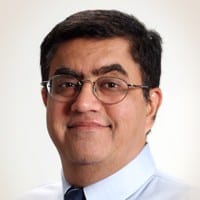
In this compelling episode of the Bendy Bodies Podcast, Dr. Linda Bluestein is joined by her longtime mentor and internationally respected EDS expert, Dr. Pradeep Chopra. Together, they tackle some of the most frustrating—and frequently misunderstood—questions surrounding hypermobile Ehlers-Danlos Syndrome (hEDS). From major flaws in the 2017 diagnostic criteria to the hidden surgical risks that could lead to serious complications like CCI (craniocervical instability), this conversation dives deep into clinical insights and lived experience. Listeners will also hear the surprising story of how Dr. Chopra helped inspire Dr. Bluestein to open her own practice. Whether you're a patient, parent, or provider, this episode just might change how you see joint hypermobility and connective tissue disorders forever.
Watch
Guests
Transcript
[00:52] Dr. Linda Bluestein: Welcome back, every bendy body, to the Bendy Bodies Podcast with your host and founder, Dr. Linda Bluestein, the Hypermobility MD. My guest, Dr. Pradeep Chopra, and I are tackling some of your hardest questions today. For example, how does Ehlers-Danlos syndrome present differently in different sexes? Are hypermobile EDS and HSD actually different conditions? And are the hypermobile EDS criteria appropriate? And so much more.
[01:22] But let me first introduce Dr. Chopra to the few people who do not yet know who he is. Dr. Chopra is my friend, mentor, and the one who convinced me to open an EDS medical practice in the first place. He is world-renowned for his incredible work in EDS and HSD, POTS, MCAS, CRPS, and central sensitization disorders. Dr. Chopra is a Harvard-trained, board-certified pain medicine specialist with over 25 years of experience.
[01:48] Jennifer Milner and I interviewed Dr. Chopra for episodes 70 through 73, which covered the impacts of EDS in a head-to-toe fashion. Dr. Chopra has since joined me as a guest co-host for episode 77 with world-renowned neurosurgeon Dr. Paolo Bolognese and episode 152 with Dr. Theo Haradis. I'm so excited because these are your really important questions and we're here to address them for you. Please submit your questions to bendybodyspodcast.com and subscribe to the Bendy Bulletin at hypermobilitymd.substack.com. As always, this information is for educational purposes only and is not a substitute for personalized medical advice. Stick around until the very end so you don't miss any of our special hypermobility hacks. Here we go.
[02:27] So I am here with Dr. Chopra, and I'm so excited to get to chat with you today.
[02:40] Dr. Pradeep Chopra: Oh, my pleasure. I love being on Bendy Bodies, and thank you for inviting me again, Dr. Bluestein. Not sure why you keep inviting me, but thanks for inviting me.
[02:53] Dr. Linda Bluestein: Of course I keep inviting you. Everybody loves hearing from you. And I wanted to share — because when I was talking to Tessa before we started the recording, she was like, I didn't even know that you two knew each other outside of Bendy Bodies. And I was like, so we have to tell that origination story. I feel like it would be really helpful. I want people to know how much you helped me when I first wrote my first article about pain and hypermobility disorders in 2017. I was doing my literature search and I came across the article that you had written for the big genetics journal, and you were the lead author. So I sent you an email and I said, here's a draft of my article — what do you think? And you were so kind to write back. So we started having some email conversations, which then led to a phone conversation. And I think that first time we talked, we maybe talked for a few hours. Does that sound right to you?
[03:49] Dr. Pradeep Chopra: Yes. All our conversations wind up being a few hours. I've been teaching medicine for many, many years, and I can differentiate between a good student and a not-so-good student. Because with a good student, every teacher wants to put in that extra effort. With not-so-good students, we're like, why waste time?
[04:16] One of the things I liked about you was that you are very inquisitive. Actually, you still are. I still get the occasional email — I remember you sending me an email on LDN. You're constantly learning and evolving. I think it was 2017 when I first met you. And then we bumped into each other at conferences, and I was so impressed with your enthusiasm to learn. It was amazing. And then you also went on a slightly different track with helping dancers and all. I was really proud of you. This is one of the things that teachers like — to see an enthusiastic student. It was a great pleasure teaching you, because I knew you would do well with helping other people.
[05:04] Dr. Linda Bluestein: I really appreciate that. And you were so generous with your time. I felt like I kind of followed you around to these different conferences that you were speaking at and then would pick your brain. And I don't know how well you remember this conversation, but I'm curious if you remember it like I do. It would have been in the fall of 2017 and we were having a conversation about whether or not I was going to open a practice. And you kept telling me, "I think you need to do it. I think you need to do it." And you were telling me I was ready. And I felt like — you know, before you have children, you're like, I'm not ready, I'm not ready.
[05:43] Dr. Pradeep Chopra: Yes. I remember that conversation because one of my things is that I want more people out there treating EDS — or rather, more EDS specialists. The more people there are, obviously more people get help. One of the things about you was that you were in the Midwest, you were in Wisconsin. And I said, listen, you're the best person to do it. You know EDS better than most people do because you live it.
[06:16] And we were at that point in 2017 desperate for more people out there. Now we have some more people, but we really need a lot of people to understand this whole complexity of EDS, mast cell, POTS, and all that goes along with it. So you were ready then.
[06:39] Dr. Linda Bluestein: Yeah. You said, "You're ready." And I was like, okay, well, I guess it's one of those things where you just have to jump in with both feet. So anyway, I was so excited to tell that story, because I think a lot of people may not realize that we've met in person multiple times. I wanted everyone to know how much you helped me, and I'm forever grateful. And yes, I do still send you emails from time to time to pick your brain on various topics.
[07:06] And of course, you've been on Bendy Bodies quite a few times now, both as a guest and as a guest co-host, and I've enjoyed every single one of those conversations. Who knows where this one will lead? I'm sure it's going to be fun for everybody.
[07:23] Dr. Pradeep Chopra: This is going to be an interesting episode because there are a few things I like to discuss that I think are burning topics in EDS.
[07:36] Dr. Linda Bluestein: Do you want to start with your burning topics? Because we absolutely can.
[07:40] Dr. Pradeep Chopra: No, you are the one who sent me the questions.
[07:42] Dr. Linda Bluestein: Okay. We'll start with some of my burning questions and then we can move on to some of yours. Sound like a plan?
[07:50] Okay, so the first question comes from one of our followers who asked: why is the hypermobile EDS diagnostic criteria the same for males and females when boys often present differently and tend to score lower on the Beighton score? My brother only scores a 3 or 4, so doctors hesitate to diagnose him even though he has frequent dislocations, Marfanoid features, gastrointestinal issues, migraines that cause him to vomit, chronic pain, and fatigue. It's frustrating to see how many men and boys are dismissed because they don't meet one specific metric.
[08:20] And I wanted to talk about this too because I do get messages from men and boys who feel like they are ignored. Obviously we see so many more females than males. I thought it would be important to talk about how this presents differently in men and boys, or what you're seeing in your clinical practice. Should we have different criteria for the different sexes?
[08:52] Dr. Pradeep Chopra: Yes. So the 2017 hypermobile EDS diagnostic criteria has a lot of flaws. A lot. And a lot of doctors have not adapted to it and they don't accept it. Oftentimes when patients come in, this is the first question I ask: who diagnosed you with EDS and did they use the 2017 criteria? I use it because it's a standardized criteria — I don't want anyone coming back and saying I didn't use the 2017 diagnostic criteria. But there are many, many flaws in it. And this is one of the biggest: it does not differentiate between males and females. It's also skewed towards adult females and not as much for younger girls. We'll get to that later on.
So for males — it is well known that the Beighton score, which the 2017 criteria depends on so heavily, and which most doctors depend on so heavily, evaluates generalized joint hypermobility. But it has been shown that males score lower than females on average on the Beighton score itself. And there are reasons for that. The muscle structure in boys is a little tougher than in girls. They don't go through the hormonal changes that girls go through. In the total 2017 EDS criteria, they differentiated by age groups, but they never differentiated by male and female. So right off the bat, the Beighton score is not fair to males, not fair to boys.
[11:17] And again, joint hypermobility naturally decreases with age. But in boys, it actually decreases more as they enter into adolescence and adulthood. And other things like ethnic backgrounds, muscle bulk, and athletic conditioning can also reduce joint hypermobility, obscuring the actual underlying pathology. So the Beighton score cutoff for boys and girls should be different.
Now, I'll come to a solution at the end of all this, but first I need to clarify — I don't want people to worry. Doctors have to understand that we're not all Toyota Corollas. A mechanic can close his eyes, put a hand in there, touch a nut, and say exactly what that nut is, what that nut does. We're all different in many ways. And this is one of those ways.
[12:34] What's disappointing is that this 2017 criteria was established about 8 years ago, and no effort has been made to fix it. That's the problem. It was hoped that — well, in all conditions, in every disease, they follow up on the criteria. I can take CRPS, complex regional pain syndrome, as an example — an extremely painful condition. They came out with the criteria a while back, the Budapest criteria. A bunch of people got together, went to Budapest, came up with the criteria. But a criteria is not accepted unless you prove that it is correct. So they eventually did studies on it, and a few years later the same group produced another paper and said, yes, we were right. The criteria we put out when we met in Budapest is valid.
[13:40] Not only that, they met again recently, a couple of years ago in Spain — it's called the Valencia Consensus — and they again confirmed that the Budapest criteria is still valid, with a few tweaks to clarify things that were causing confusion. That's how it should be. Unfortunately, with the 2017 criteria, 8 years later, we are still where we started. So yes, sex does make a difference. Boys tend to have lower Beighton scores, and that has been shown again and again.
[14:19] Dr. Linda Bluestein: I totally agree with you about the difficulties with the 2017 criteria, starting with the Beighton score. And then there's the little side note about the 5-point questionnaire, which I think is a great tool — really important for assessing historical joint hypermobility. So we have the same problem as you were pointing out in older people, because their joint hypermobility is going to go down with age. They might score low on the Beighton score, but they still meet all the other criteria. I had a patient recently who had a Beighton score of 1 out of 9, yet she had 6 of the 12 criteria in the middle.
[14:56] And I do use the 2017 criteria as well. It's important to note that for both of these examples — hypermobile EDS and CRPS — the challenge is that these don't have a good reliable biomarker, or in the case of hypermobile EDS, no biomarker at all. So we're using clinical criteria. That's the challenge. Getting a group together to decide on clinical criteria is hard enough, but you raise an excellent point that it should then be studied. In the case of CRPS, do you know what the timeframe was like? You're pointing out that the Budapest criteria came out quite a long time ago. Do you know, in that 8-year timespan, would it be normal to have a number of studies conducted? Because I know there is the Road to 2026 project where they're looking at revising the 2017 criteria, and they did publish a 2023 update for pediatric patients. But yeah, we know there's a lot more work that needs to be done.
[16:06] Dr. Pradeep Chopra: On the CRPS criteria, I think it was only a few years after Budapest that they did the clarifying study. About 4 or 5 years — that's the average time it takes to do a randomized controlled study. They came out and said, yes, it does meet the criteria. And then reconfirmed it a couple of years ago.
[16:26] And that's done with almost all conditions. Take rheumatoid arthritis — this is what we think the diagnostic criteria is, but just because we said it doesn't mean it's written in stone. You've got to do studies to prove that the criteria matches up, or add to it, or tweak it. That's how it should work. So we're hoping that the Road to 2026 may have additional information. I don't have any information on that yet, but hopefully we'll have something.
[17:18] One of the things about the question you had — his brother scores very low on the Beighton score, only 3 or 4, so doctors don't want to diagnose him with hypermobile EDS. But they also have to remember that the 2017 criteria does not weigh heavily on the Beighton score alone. Doctors have to look at the patient and say, does he have all the other features? This brother has frequent dislocations, Marfan-like features, GI issues, migraines, chronic pain, fatigue — all of which you find in patients with hypermobile EDS. So you take that into consideration. This is a male, his Beighton score is likely to be low, but he has a lot of the other features.
[18:18] Going back to my Toyota Corolla analogy — just because you don't have the little sticker on the back saying "Corolla" doesn't mean it's not a Corolla. It has all the features of a Corolla, so it must be a Corolla. That's where clinical science and medicine come into play — look at the whole patient and understand that these are guidelines, not laws. They're there to guide understanding. That's why they're called guidelines. But you have the flexibility to recognize that if something else doesn't explain the symptoms, it's unfair to send this patient home saying, "You scored 3 out of 9 on the Beighton score, therefore you don't meet the criteria, I don't know what's going on with you." That would be very unfair.
So you've got to look at the patient as a whole. That's the important part.
[19:25] Dr. Linda Bluestein: Yeah, I totally agree about looking at the patient as a whole. And I think another frustration that a lot of patients have — totally understandably — is that the comorbidities are not part of the 2017 criteria. Now, they are kind of part of the 2023 criteria for pediatric patients. There are 5 questions that you ask: is generalized joint hypermobility present, musculoskeletal complications, are there comorbidities, skin and tissue involvement, and have other conditions been ruled out? So for the 2023 pediatric criteria, they do ask about comorbidities. But for the 2017 criteria, comorbidities are not included. If you have POTS, if you have mast cell activation syndrome — following the 2017 criteria, that doesn't give you extra points, if you will. Correct?
[20:14] Dr. Pradeep Chopra: Correct. And going back to the 2017 criteria — this happened to me recently. One of the criteria is recurrent joint dislocations. But it says nothing about subluxations. Recently I saw a patient with EDS — everything was there — who went and saw a neurologist who was actually one of the authors of the 2017 criteria. And he said, "Well, you don't have EDS because you don't have recurrent dislocations. You have subluxations."
[21:07] Dr. Linda Bluestein: Oh my gosh, you're kidding.
[21:09] Dr. Pradeep Chopra: And I was horrified. Because in the United States we call them dislocations, but they're actually luxations. You have luxations where the joint dislocates completely. And if it dislocates and comes back into place — what I call a slippery joint — that's a subluxation. What's the difference? The patient is still suffering, still dislocating the joint. Even if they dislocate it for 2 seconds or 2 hours, they're dislocating their joints. And his big objection was that Dr. Chopra had documented subluxations but not dislocations. Honestly, most patients with EDS don't have dislocations. They have subluxations.
[22:09] Dr. Linda Bluestein: Well, and isn't it true that you can't tell the difference unless you have an X-ray? You can tell if someone totally dislocated a joint and it's out — they have to go to the hospital and have it put back in. But otherwise, especially if a joint dislocates and comes back spontaneously on a regular basis, how would you know? I love what you just said about luxations rather than making this maybe artificial distinction between the two, because most of the time you don't have an X-ray in front of you. Yeah.
[22:41] Dr. Pradeep Chopra: You're absolutely right. So in the case of boys, we can't just leave the boys alone. The other thing about boys is that their basic structure is different. Their muscle structure is tougher and their ligaments are a little tougher — it's just by nature of their DNA. They have a phenotype where their muscles are more coarse, not as soft and flexible. So their hypermobility would fall under a very different set of criteria.
[23:26] But then you look at other things. A lot of the patients I see with hypermobile EDS — a majority of their problem is not the EDS portion of it. It's either the POTS part of it, or the mast cell part of it, or the CCI part of it. And so I tell them: listen, don't worry, we're here to fix whatever is broken. Whether you call it EDS, a zebra or a giraffe, it's irrelevant. You're suffering, your quality of life is not good — otherwise you wouldn't be in my office seeing me. You'd be out there in school or having fun. Whatever it is that is stopping you from functioning, that's our job to fix.
[24:12] And that's what I want to say about what makes you, Dr. Bluestein, special in treating EDS. I've been asked this question many times: you're an anesthesiologist, how come you're treating all these things? You're not a cardiologist, you're not an immunologist, you're not an orthopedic surgeon. And that's when I realized that our education is purely based on studying each and every one of these conditions. Anesthesiologists have to know cardiology, pulmonology, GI, cardiac — everything. Not only that, you can have a patient with heart disease come in for an appendix surgery, and now you've got to manage both. The patient might be septic and has heart disease. It doesn't get more complex than that, and we handle those. So we know our anatomy, we know our physiology, we know our medicine. This is the only branch in medicine that has to be expert at all these branches.
[25:45] Dr. Linda Bluestein: Hmm. Yeah, good point.
[25:48] Dr. Pradeep Chopra: See, you didn't even know how awesome you are. So you've got to change your sign outside. "Specialist." And then list everything below it — anesthesia, ophthalmology, cardiology, put all of those down there.
[26:04] Dr. Linda Bluestein: Yeah, those are good points. Our training is very different from what I think most people realize. We have to know about all of those things because we have to know how they impact the drugs we're going to give, the positioning we're going to be doing, and all the other aspects of care. And oh — I forgot to mention the article that you and I wrote together. Which was also fun.
[26:29] Dr. Pradeep Chopra: Yes. The article Dr. Bluestein is talking about — perioperative care and anesthesia — covered what precautions you have to take for a patient going into surgery, what anesthesiologists need to know. And since you touched that subject, I need to share one PSA. One of the things I've been seeing is patients who are going in for tooth surgery — like wisdom tooth extraction or nose surgery, or even just general anesthesia — even though they tell the anesthesiologist that they have EDS, they still have their neck hyperextended. And then they end up with CCI.
[26:29] Dr. Linda Bluestein: Mm-hmm.
[27:24] Dr. Pradeep Chopra: That has me really worried. I did write to Dr. Bolognese, who's the neurosurgeon, and I said, are you seeing this? And he said, we see this all the time. So we're in the process of writing up a case report of 8 patients who had some sort of facial surgery or dental extraction and ended up with CCI.
We had written about this in our perioperative care paper. We mentioned it carefully — you've got to keep the head neutral, you've got to do fiberoptic intubation. We said that. But in a dental office, they don't pay attention to these things.
[28:10] Dr. Linda Bluestein: I would say probably in a dental office, and unfortunately in other practices too. I write a lot of letters for patients who are going to be having surgery. And fortunately it seems like most of the time they are well received. But if somebody doesn't have something like that and they just say, "Oh, I have EDS, so please be extra careful with my neck," I feel like that's often not taken seriously. And speaking of the paper we published — I believe it was 2019 or 2020, we'll link that in the show notes — I remember when we first started writing it, I had this idealistic thought: oh my gosh, this is going to be in the New England Journal. This is going to be in JAMA. I know, I know how naive I was.
[29:01] I had been going to anesthesia conferences for a couple of decades, and I knew there were all kinds of lectures on positioning, but I never heard any mention of connective tissue disorders. So I'm thinking, every single anesthesiologist needs to understand the implications of positioning a patient under anesthesia, managing their airway, extending the neck. This is going to be big, right? And then you were submitting it to all these different journals and you had to keep telling me, we've got to keep trying. And I was shocked. Tell me again what the response was when you submitted to the major journals.
[29:45] Dr. Pradeep Chopra: There was one response that was just mind-blowing. There's a very famous journal called Anesthesiology — it's like the Bible of anesthesia. Everybody reads it. I wrote to the editor and said, listen, I have this article we've written on EDS and patients going through surgery with EDS. And the response was, our readers don't see that many patients with EDS. If you want to write an article on pain in EDS, sure, go ahead, but our anesthesiologists don't see many patients with EDS.
[30:27] And I'm like, first of all, you're wrong. Because EDS patients do go through a lot of surgeries.
[30:36] Dr. Linda Bluestein: Right.
[30:36] Dr. Pradeep Chopra: And second, okay, so they don't see many EDS patients, but do they see at least 100? So you're going to go ahead and damage their necks in those 100 patients instead of warning people about it? And a few years later, after we had written that article and it was published, I did write to him a follow-up and told him, look, we have a case series of 8 patients that you thought was not relevant for your journal, and it has turned out to be extremely relevant.
[31:14] Dr. Linda Bluestein: Hmm.
[31:16] Dr. Pradeep Chopra: One patient developed paraplegia from that. That was what motivated me to write to him. So, on that question — for the dentist situation, what I tell patients now is that even though I write it in my notes, I don't think they read my notes. Mainly because my notes are 17 pages long.
[31:45] Dr. Linda Bluestein: Right, right. Mine too.
[31:50] Dr. Pradeep Chopra: What I do tell patients is: take your neck collar with you.
[31:54] Dr. Linda Bluestein: Hmm.
[31:56] Dr. Pradeep Chopra: If you don't have one, buy a neck collar — a hard neck brace — and put it on.
[32:02] Dr. Linda Bluestein: Yeah. Great idea.
[32:03] Dr. Pradeep Chopra: Because now they won't forget. And even if they try to hyperextend your neck, they can't, because you are already in the optimal position.
[32:24] And if the numbing medicine doesn't work, now you're screaming because the lidocaine didn't work. The dentist is getting frustrated because he can't get in there because you're in pain. And so he takes your neck way back, opens your mouth wide, and then you end up with CCI.
[32:51] Dr. Linda Bluestein: Yeah. That's a great suggestion, because you're right. It doesn't matter if we try to make it short — there are going to be people who—
[32:58] Dr. Pradeep Chopra: So that's a hack, by the way.
[32:58] Dr. Linda Bluestein: That's a great hack.
[33:01] Dr. Pradeep Chopra: It's nothing but a hack. Always carry your neck brace if you're ever getting anesthesia, dental work — doesn't matter how small — or anything to do with above your neck, your head, including what I call boat payments for dentists: taking out the wisdom teeth. I don't know why they take out wisdom teeth in everybody. Every patient I've asked, "Why did they take out your wisdom teeth?" And they're like, I don't know. So take your neck collar. It is like a safety belt. It's not worth getting CCI. Trust me, you don't want the surgeon and his knife and his screws and bolts in there.
[33:03] Dr. Linda Bluestein: No.
[38:30] Dr. Pradeep Chopra: What was your second question? Oh — HSD and EDS. Yes, we'll get to that. But I want to just hold off on — can you use swear words on this?
[38:46] Dr. Linda Bluestein: Is the FAA going to get after us? No, I think you can use swear words. We can always beep them out if we have to.
[38:54] Dr. Pradeep Chopra: No, no, I don't swear, I'm sorry. But for all practical purposes, if you've ever been diagnosed with HSD, assume that you have to take the same precautions as with EDS. Assume the same thing, because it's not worth the risk. It really isn't worth the risk.
And if you think you have hypermobility but have never been diagnosed with it, and your entire family for generations has had all the EDS stuff, and you're the only one who hasn't been diagnosed — but you feel like you can do all those funny tricks — wear the collar. You can't go wrong with that.
[39:48] Dr. Linda Bluestein: Yeah, there's probably no downside to doing that. And especially nowadays with the GlideScope and other methods of video laryngoscopy, there are more options. You don't have to do an awake fiberoptic intubation like that was the only option a number of years ago. So I think that's really good advice.
[40:06] And I do want to talk in a little bit about hypermobile EDS and HSD — are we drawing a line in the sand artificially? Do we think they are actually separate conditions, or do we think they're one and the same? But first I want to ask you: if you could wave a magic wand and just pick the clinical criteria for hypermobile EDS, what would you include and what would you drop off, or how would you change it?
[40:45] Dr. Pradeep Chopra: Do you want to go through the 2017 criteria together and talk about what should be there and what shouldn't?
Dr. Linda Bluestein: Sure.
[40:54] Dr. Pradeep Chopra: Okay. So they've divided it into 3 criteria, right? The first one is the standard Beighton score. The Beighton score has been around for ages, it has been well studied, everybody knows it, and it's fine to have it in there. Some people have complained that it only looks at small joints, doesn't look at big joints, et cetera. But it is what it is. We don't have a better method of doing it clinically. There are 9 things you do, it takes about 9 seconds — it's a quick—
[41:37] Dr. Linda Bluestein: Yeah, it's very quick. Have you used the Lower Limb Assessment Score? That's 12 different tests you can do on each side. I mostly see physical therapists doing this, but for a population like dancers and other athletes who tend to get injured in the lower extremities, I think that's also a good scoring tool. And then there's the Tokyo — there are a million different scoring systems. But the Beighton, like you said, is so quick and easy to do, easy to memorize, and it has been studied a lot.
[42:10] Dr. Pradeep Chopra: Yeah. If somebody were to ask me what I would add to the Beighton score, I would say knees — hyperextension of the knees.
[42:26] Dr. Linda Bluestein: Well, hyperextension of the knees is in the Beighton score.
[42:29] Dr. Pradeep Chopra: Oh, I'm sorry. It is. Sorry.
[42:31] Dr. Linda Bluestein: Yeah. I think if we were to add something, what do you think about adding the shoulders?
[42:37] Dr. Pradeep Chopra: Oh yeah.
[42:38] Dr. Linda Bluestein: I think shoulders would be a good thing to add.
[42:39] Dr. Pradeep Chopra: So in the upper extremities, we have the pinky finger and the thumb, then the elbow, and then you could add the shoulder. In the lower extremity, the hip is a difficult one to assess for hyperextension.
[42:45] Dr. Linda Bluestein: Mm-hmm.
[42:55] Dr. Pradeep Chopra: It's difficult. So the knee is fine. And of course the back — they've looked at the spine, which is fine.
[43:02] Dr. Linda Bluestein: Maybe ankles.
[43:03] Dr. Pradeep Chopra: Actually, ankle hypermobility is probably the most common hypermobility you ever see. And also the most harmful. So yes, ankles would be a good one to look at.
[43:15] But here's the thing, going back to our male-female discussion — if you find that this boy seems to have hypermobile EDS but doesn't quite meet the Beighton criteria, then add some of these things, like the ankles, or look at the shoulder. Because these are guidelines. They're not the law.
[43:44] The problem is that in criterion 2, among the features they've listed — the one that is very skewed towards older women is pelvic floor, rectal, and uterine prolapse in children. I don't know about you, but I've never seen a rectal prolapse or a uterine prolapse in a child.
[44:20] Dr. Linda Bluestein: No, never in a child.
[44:21] Dr. Pradeep Chopra: I've never seen that. Or heard of it. I've never seen a uterine prolapse in men. And if I do, I will let you know. For that matter, I've never seen a rectal prolapse in men either.
[44:22] Dr. Linda Bluestein: Interesting.
[44:24] Dr. Pradeep Chopra: Hemorrhoids, yes. Hemorrhoids are common. But you can't base your diagnosis of EDS on that.
[44:49] Dr. Linda Bluestein: Yeah, definitely not.
[46:51] Dr. Pradeep Chopra: And nulliparous women — that is, women who have never been pregnant — having uterine prolapse. So now you're going into an older age group. You and I see lots of EDS patients. Lots. And we have never seen rectal prolapse or uterine prolapse in children.
[47:05] Dr. Linda Bluestein: Right.
[47:07] Dr. Pradeep Chopra: But are there people who are seeing them? I don't know. Why would they put them in the guidelines? And so this is skewed more towards older women. Then nulliparous women — that's really boxing it into a very small set of women who have never been pregnant and are having a rectal prolapse. That criteria is kind of strange. There must have been studies they looked at that led them to include it, but I'm hoping in the new guidelines they'll take that off or modify it.
Dr. Linda Bluestein: Or modify it, right? Because what if you've had pregnancies but you have, I mean, there are also degrees of prolapse. Mild prolapse is going to be different from severe prolapse. And I think that's the other problem with a lot of these criteria. If we even look at the first one — "unusually soft or velvety skin" — that's so subjective. Yeah, that's the other challenging thing.
Dr. Pradeep Chopra: Yeah, very subjective. For some reason — and this is just my observation — African American women generally have very soft, velvety skin even without EDS. So it's hard to use that as a discriminating criterion. But it's only one of the five, which is okay. It's not a bad criterion overall.
But this pelvic floor, rectal, or uterine prolapse — and specifically in nulliparous women, women who have never been pregnant — if I could change the criteria, I would say after 1 or 2 pregnancies, if you see rectal prolapse or uterine prolapse, then that's significant.
Dr. Linda Bluestein: Mm-hmm.
[47:07] Dr. Pradeep Chopra: Dental crowding is fine. Arachnodactyly — the rest is fine. In feature B, they've talked about a positive family history. This is going to take years to establish, because this criteria was established in 2017, and it took a couple of years for it to be accepted and for people to start using it. Personally, I think I started using it in 2019 when I was a little more comfortable with it. But if somebody comes in and says, my grandmother was hypermobile, they probably never had the 2017 criteria run on her.
Dr. Linda Bluestein: Mm-hmm.
[47:49] Dr. Pradeep Chopra: So a positive family history of joint hypermobility in a first-degree relative makes sense — it doesn't have to be confirmed hEDS.
[47:58] Dr. Linda Bluestein: Mm-hmm.
[48:02] Dr. Pradeep Chopra: And then in feature C, they talked about recurrent joint dislocations. Is "recurrent joint dislocations" another way of saying subluxations?
[48:13] Dr. Linda Bluestein: Well, it does say recurrent joint dislocations or frank joint instability in the absence of trauma. And feature C requires at least one. In my practice, essentially all of my patients meet the middle one — chronic widespread pain for 3 months or more. And the first one — musculoskeletal pain in 2 or more limbs, recurring daily for at least 3 months.
[48:35] I should also point out that you especially have been seeing these patients long before this criteria came out. It's kind of funny — you and I are both sitting here, I've got the criteria pulled up on my computer, and we're having this conversation as two people who specialize in this space, and there's a lot to discuss on each individual item. So how can we possibly expect a family practice doctor in Timbuktu to look at this sheet and make a diagnosis reliably? It's a lot for somebody to try to take in and understand, even if they have the desire to help these patients.
[49:32] Dr. Pradeep Chopra: Exactly. These criteria are so restrictive. They need to be a little looser. And doctors need to understand that these are guidelines — they should have the flexibility to have some leeway in making the diagnosis.
[50:00] In feature C, I actually see all 3. Not so much dislocations — I see subluxations, which can be frank joint instability. But as I said, one of the authors of the 2017 criteria had an objection to that. I went back and looked at the criteria and said, oh yeah, they don't have subluxations in there, only dislocations. And his objection was that this patient had only subluxations, therefore did not meet the criteria.
[50:09] Dr. Linda Bluestein: Yeah, so he thought the patient should not have the diagnosis of hypermobile EDS because they did not have actual dislocations. But if you look at it, it does say "or frank joint instability." And going back to your point about guidelines — we have guidelines all over medicine. But I'm curious now that you pointed that out. I looked at the very top of the document. It says "Diagnostic Criteria for Hypermobile EDS," and it says, "This diagnostic checklist is for doctors across all disciplines to be able to diagnose EDS." And it says, "The clinical diagnosis of hypermobile EDS needs the simultaneous presence of all criteria 1, 2, and 3." It does not say "these are guidelines, follow your clinical judgment." Am I right or am I wrong?
[51:29] Dr. Pradeep Chopra: Yeah, they should change that to "guidelines." That should be guidelines. But here's the thing — a lot of smart people sat down together to create this, and that was a huge step. Because before this, it was the Wild West. Everybody was using their own criteria. And unfortunately, it was not made firm by follow-up studies.
[52:11] And I have a geneticist in my region who sees a lot of EDS patients but will not use the 2017 criteria. He doesn't use it. A lot of geneticists have said they won't use this criteria. I've never asked them why, but I'm assuming it's because it's too restrictive. And plus, there are two points about echocardiogram — mitral valve prolapse or aortic root dilatation. So what do you want me to do, hold off on diagnosing you until you go get an echocardiogram and come back? These are things that need to be loosened up a bit.
[53:12] And also, I get some pushback from people who are skeptical about the existence of EDS. Believe it or not, in this day and age, there are physicians who think EDS doesn't exist.
[53:30] Dr. Linda Bluestein: Mm-hmm.
[53:31] Dr. Pradeep Chopra: And the objection is, "Oh, you didn't get this diagnosis from a geneticist." But the geneticist is going to look at the same 2017 criteria as I am. They're not going to do a genetic test because there is no genetic test. And that's my other pet peeve about this whole genetic thing — there are so many other conditions that are hereditary, but we don't send them to the geneticist. For example, migraines. There is a type called familial hemiplegic migraine. We don't send those patients to a geneticist to diagnose them. There's a form of high cholesterol that is familial — we diagnose it based on other things. Marfan syndrome — you don't need a geneticist to make that diagnosis. If you meet the criteria, you don't need it. You can get the geneticist to do a genetic test to make absolutely sure, but you don't have to.
[55:04] And even the published literature on EDS has said that. To diagnose someone with hEDS, you don't need a geneticist. But yet there are physicians who will not accept a diagnosis of EDS because it wasn't made by a geneticist. And then we have geneticists who don't want to accept the 2017 criteria and are still looking at the Villefranche criteria or the Brighton criteria. There is a lot of education to be done out there.
[55:57] Dr. Linda Bluestein: Yeah, there's a lot that needs to be done. And you're absolutely right — there are people who try to get in to see a geneticist and the geneticist's office says, "We won't see people who have suspected hypermobile EDS." There aren't enough geneticists to go around. We know this is a much more common problem than was originally thought. So geneticists need to be focusing on the more rare, more complicated genetic things.
[56:23] And I think the 2017 criteria, like you said, are a great start, well-intentioned, but yes, following up with studies would be fabulous. And maybe for the Road to 2026, there are studies that are going to be evaluated. I know there are some studies that have looked at which of the features in criterion 2, feature A, are most common. For example, piezogenic papules was one that was more common in people with a hypermobile EDS diagnosis relative to some of the other features. So hopefully studies like that will really help decide what the criteria are.
[57:13] Because a lot of people are obviously very upset — either they had a diagnosis that was taken away, or they thought they should have a hypermobile EDS diagnosis but missed by one point, and the doctor said, "Nope, I'm going to diagnose you with HSD." And we always say that HSD can be just as serious, if not more so in some cases. But we know that's not the reality in practice. People with hypermobile EDS versus HSD labels get treated very differently, and people take hypermobile EDS more seriously.
[57:52] Dr. Pradeep Chopra: Yes. It's very rarely that I'll diagnose somebody with HSD. I can count on one hand how many people I may have diagnosed with HSD. Because I don't take this criteria so strictly and tightly. For example, if your pinky finger is supposed to go to 90 degrees, and it goes to 89 degrees or even 80 degrees — does that mean you don't have EDS? If your elbow is hyperextensible and anyone can see it's hyperextensible, but it doesn't meet exact degrees with a goniometer — that doesn't mean I'm not going to diagnose you with EDS.
[58:49] I take it a little more loosely, because if everything else matches, I'm not going to get hung up on that one little point. If your car looks like a Toyota Corolla, runs like a Toyota Corolla, and it says "Toyota" but doesn't say "Corolla," it's still a Corolla.
[59:08] Dr. Linda Bluestein: And I think there's a big difference between a primary care doctor using this criteria and somebody like you who has seen thousands upon thousands of people with EDS over the years. You can probably pick up on it super quickly. Whereas a family practice doctor who wants to learn the criteria and wants to be able to diagnose hypermobile EDS — they've seen a lot of people with hypermobile EDS, but haven't diagnosed them yet. They've seen them in their clinic but didn't necessarily know what was wrong with them. If they're just starting out, I think it makes more sense for them to be more closely tied to a set of criteria, because using gestalt is going to be a little bit different for them, don't you think?
[59:59] Dr. Pradeep Chopra: Right, because they don't realize that this is a fluffy criteria that should be loosened up a little bit. I agree.
[1:00:09] And I had a very interesting discussion with a very famous pediatric cardiologist who's written a lot about POTS. I said, the criteria for diagnosis of POTS — where your heart rate has to go up by 30 beats per minute — how tight is that criteria? He just cracked up laughing. He said, "Yeah, we have people who've been told they don't have POTS because their heart rate went up by 29 instead of 30."
[1:00:46] Dr. Linda Bluestein: Oh my gosh.
[1:00:54] Dr. Pradeep Chopra: The patient is lightheaded, fainting all over the place, having palpitations, has all the symptoms of POTS, but their heart rate went up by 28 beats per minute. And they're told, "Sorry, you don't have POTS."
[1:01:16] Dr. Linda Bluestein: Because we human beings pick those numbers, right? We pick 40 if you're 19 or younger, and 30 if you're older. We could have picked 25 or 35 or whatever. So no, I appreciate you bringing that up. That's another great example.
[1:01:30] Dr. Pradeep Chopra: That's where experience comes into play. If everything else matches and there's one little criteria that doesn't, okay — the patient has the condition. Our job is to treat the patient. And that's what they've said in the EDS Society literature again and again: if the patient has the symptoms, treat them. Whether the patient meets the criteria or not, if you have a patient with lightheadedness, palpitations, anxiety, and all the other symptoms of POTS, and they don't quite meet the criteria, go ahead and treat it. You're not going to say, "It's not POTS, go home."
[1:02:33] Dr. Linda Bluestein: No, I totally agree. Unfortunately, the latter is what often happens. People go in for an appointment and they're told no. And they may not even be doing a tilt table test or a NASA lean test — they're doing orthostatic vital signs in the office. I would hope that in those cases, doctors are going to take the clinical approach and treat the patient. But I hear from listeners of this podcast all the time that because they don't have these labels, they're being denied treatments. And that is a huge problem.
[1:03:13] Dr. Pradeep Chopra: That's right.
[1:03:15] Dr. Linda Bluestein: So we have had such a great conversation. Can you believe it? We've already been talking for about an hour. So we are going to have to defer some of these questions to our next conversation. And as you know, we always end every episode with a hypermobility hack. You already gave us a hack in part 1, but do you have a hack for part 2?
[1:03:36] Dr. Pradeep Chopra: Hacks come to my mind at certain times.
[1:03:42] Dr. Linda Bluestein: That's fair. I have to tell you — I want to buy you a little time, because maybe you'll come up with a hack while I'm mentioning this. People love your analogies. Every time you've been on the show, I get people saying, first of all, how much they love you, and second of all, how much they love the way you explain things.
[1:04:09] Dr. Pradeep Chopra: I like analogies because medicine is a complex subject. And you have to think in terms of how people who are not physicians would understand it. Even with physicians, I still use analogies. I talk in terms of what we use in our day-to-day lives. That's how I explain things. But if you give me a problem, I might think of one.
[1:04:11] Dr. Linda Bluestein: Okay. What about the person who suspects they have POTS, suspects they have hypermobile EDS, and they really don't care about the label — they want treatment. They're listening to this podcast, they have an appointment next week, and they want to get treatment for their hypermobile EDS. We know there's no magic pill for hypermobile EDS. There's no magic pill for POTS either, but there are some treatments. What would you tell that person who has this upcoming appointment and is less concerned about the label than about getting some treatment that might help their symptoms?
[1:05:27] Dr. Pradeep Chopra: Sure. So the first thing is, go to your local pharmacy or go to Amazon and buy a blood pressure instrument and check your blood pressure and your heart rate. You can do that whole tilt table thing at home. Just lie down for 15 minutes, get your blood pressure and heart rate. Stand up, take your blood pressure and heart rate, and then again after waiting 10 minutes standing. If there is an increase in heart rate — don't worry about the 30-beat number — if your heart rate increases and your blood pressure is relatively normal to low, not high, then just go to salty snacks, take salt, drink electrolyte fluids, sports drinks. Not Gatorade, not Propel — proper sports drinks. There are lots of good brands. Liquid IV is one. LMNT is becoming really popular, and I think the amount of sodium in that is a little higher. And compression shorts.
Whether you're going to the cardiologist and getting a diagnosis or not — even if you go and they don't give you the diagnosis, but you're still very symptomatic with lightheadedness, palpitations, your heart working really hard, brain fog — just do this. And 99% of people who actually have POTS love taking salt. You don't need a label for this. You just need to treat it.
[1:07:24] But always get one of those devices like an Apple Watch. I prefer the Apple Watch because it talks to your phone and it warns you if your heart rate is climbing. And of course, if you fall, it sends a message to your emergency contacts. You can use any other device — a Samsung or any device that measures heart rate — but it should warn you if your heart rate is rising. And if it's rising, start taking precautionary measures.
[1:07:57] Dr. Linda Bluestein: Mm-hmm. And I usually tell people when they're doing the home test to keep cycling the cuff and keep looking at the pulse for that full 10-minute period and write down all of the numbers. What we're looking for — consistent with a picture of POTS — is for the heart rate to come up and stay up. So having lots of sets of vitals is helpful.
[1:08:24] I had a patient once who was seen in their primary care's office, and the primary care doctor did orthostatic vital signs. For whatever reason, they had the person standing for 30 minutes — which is an incredibly long period of time. And they recorded the baseline blood pressure and pulse, and then the average over the 30 minutes. And I was like, where's the raw data?
[1:08:53] Dr. Pradeep Chopra: You know what the best thing is? Get one of those smartwatches — say, Apple Watch. It should synchronize with your phone. Even before I do the formal testing, I look at the patient's heart rate trend.
[1:09:10] Dr. Linda Bluestein: Mm-hmm.
[1:09:12] Dr. Pradeep Chopra: And you can see how the heart rate spikes all over the place. If it's spiking all over the place, you have POTS or orthostatic intolerance.
[1:09:26] And for those who are interested, there is Dr. Peter Rowe — he's done a lot of work on POTS and orthostatic intolerance. He wrote a book recently on orthostatic intolerance. It's worth a read. It's a pretty good book.
[1:09:49] Dr. Linda Bluestein: I just found it. It's called Living Well with Orthostatic Intolerance: A Guide to Diagnosis and Treatment. Love it. And it's not even that expensive. There'll be a link to that in the show notes. That's a hack on top of a hack.
[1:10:08] Dr. Pradeep Chopra: Yeah. And I wrote to him and said, oh, so now you're going to be rich making money off this book? And he said, no, it all goes to Johns Hopkins.
[1:10:18] Dr. Linda Bluestein: Ha! And he spent like 7 years writing it.
[1:10:22] Dr. Pradeep Chopra: Yeah. Most of these books take a long time to write, and yeah, I doubt that anybody in this space is ever going to get rich on one of their books.
[1:10:35] Dr. Linda Bluestein: So this was such a great and fun conversation. And as I expected, I have so many questions yet for us to discuss — but that's okay because we are going to have more conversations. Please submit your questions to bendybodyspodcast.com. We love answering your questions and we will definitely get to lots more topics.
[1:11:05] Dr. Chopra, before you go, can you let people know where they can find you and if you have any special projects you're working on right now?
[1:11:14] Dr. Pradeep Chopra: Sure. If you Google me, you'll find me. All those negative reviews are not true, okay?
[1:11:24] Dr. Linda Bluestein: I don't think you have any negative reviews.
[1:11:27] Dr. Pradeep Chopra: Believe it or not, yes. But you could find me there. The easiest way is to email my office — it's [email protected].
[1:11:42] And the projects that we are working on — we wrote a really nice paper. It was my pet project: we looked at the number of patients with EDS who are being misdiagnosed. Guess how many were misdiagnosed?
[1:12:06] Dr. Linda Bluestein: I—
[1:12:06] Dr. Pradeep Chopra: Not just misdiagnosed — given a psychiatric diagnosis.
[1:12:14] Dr. Linda Bluestein: Mm-hmm.
[1:12:15] Dr. Pradeep Chopra: 94%.
[1:12:17] Dr. Linda Bluestein: Yeah, I read that paper. It was really good.
[1:12:20] Dr. Pradeep Chopra: 94%. All we did was ask everybody who came in these 5 questions: have you ever been told that this is in your head, it's anxiety, it's conversion disorder, or Munchausen? All they had to do was say yes or no. And we looked at the data and we were horrified. I thought it would be like 60 or 70%. It was 94.4%.
[1:12:46] So the diagnosis was missed, of course, but more than that — they were given a wrong diagnosis. We're now writing a paper on the case series on the whole issue of getting CCI from dental extractions. There's another paper in process: do joint-stabilizing surgeries help people with EDS or not? And the results are shocking.
[1:13:36] Dr. Linda Bluestein: Yeah, that's a really good one.
[1:13:38] Dr. Pradeep Chopra: That will need a drum roll before I give you the results.
[1:13:40] Dr. Linda Bluestein: Yeah, we definitely have to talk about that. I know I was very fortunate with my terrible, loosey-goosey, multidirectional instability shoulders — my upper extremity surgeon was like, "Do not ever let somebody try to tighten up those shoulders for you, because it's not going to work." And unfortunately, that often does not have a good outcome. We know people with EDS don't heal as well, and oftentimes it doesn't address the underlying problem. And then on top of that, if you end up with CCI because of airway mismanagement — just a horribly mismanaged case. So those are exciting projects you're working on. That's great.
[1:14:30] Dr. Pradeep Chopra: Dr. Bluestein, your Bendy Bodies has made an impact in the lives of a lot of EDS patients. Sometimes I'll be telling them something and they'll say, "Oh yeah, I heard that on Bendy Bodies."
[1:14:40] Dr. Linda Bluestein: Oh! That makes me so happy.
[1:14:48] Dr. Pradeep Chopra: And I did go back and look at some of the podcasts you've done, and you've addressed quite a few difficult topics in EDS. You have done well.
[1:15:02] Dr. Linda Bluestein: Well, thank you. It's over 150 episodes now, which means the library is over 150 hours. And if they were all like our conversation with Dr. Bolognese, it would be 450 hours. That was a long one.
[1:15:15] Dr. Pradeep Chopra: That was a long one.
[1:15:19] Dr. Linda Bluestein: So it's been so fun chatting with you as always. Thank you for the kind words, and I look forward to our next conversation.
[1:15:23] Dr. Pradeep Chopra: Thank you, and thank you for having me once again. It's always a pleasure.
[1:16:25] Dr. Linda Bluestein: I really loved that conversation with Dr. Chopra, and I'm sure you did too. As I hear from listeners like you all the time — he's so great at explaining things, has such great analogies, and has so many years of experience treating people with EDS and comorbidities. This was such an important conversation.
[1:16:45] Thank you so much for listening to this week's episode of the Bendy Bodies with the Hypermobility MD podcast. You can help us spread the word about joint hypermobility and related disorders by leaving a review and sharing the podcast. This really helps raise awareness about these complex conditions. If you'd like to meet with me one-on-one, check out the available options on the services page of my website at hypermobilitymd.com.
[1:17:06] You can also find me, Dr. Linda Bluestein, on Instagram, Facebook, TikTok, Twitter, or LinkedIn @hypermobilitymd. You can find Human Content, my producing team, at Human Content Pods on TikTok and Instagram. You can find full video episodes up every week on YouTube at Bendy Bodies Podcast.
[1:17:22] To learn about the Bendy Bodies program disclaimer and ethics policy, submission verification and licensing terms, and HIPAA release terms, or to reach out with any questions, please visit bendybodyspodcast.com. Bendy Bodies Podcast is a Human Content production. Thank you for being a part of our community, and we'll catch you next time on the Bendy Bodies Podcast.