Description
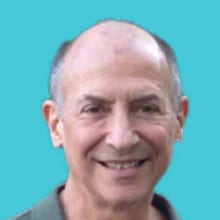
In this episode of the Bendy Bodies Podcast, Dr. Linda Bluestein sits down with Dr. David Kaufman, a specialist in complex illnesses, to discuss how infections, immune dysfunction, and connective tissue disorders intersect. They explore why many chronic illnesses are often overlooked or misdiagnosed. This includes conditions like ME/CFS (myalgic encephalomyeltiis/chronic fatigue syndrome), Long COVID, Ehlers-Danlos Syndrome (EDS), Mast Cell Activation Syndrome (MCAS), and dysautonomia, Dr. Kaufman shares insights on the role of Epstein-Barr Virus (EBV), Lyme Disease, small intestinal bacterial overgrowth (SIBO), and other infections in triggering chronic conditions. They also dive into peptides, plasmapheresis, exosomes, and mitochondrial health as potential treatment avenues. If you've struggled to get answers about complex illness, this episode is packed with groundbreaking insights and expert advice.
Watch
Guests
Transcript
[00:51] Dr. Linda Bluestein: Welcome back, every bendy body, to the Bendy Bodies Podcast with your host and founder, Dr. Linda Bluestein, the Hypermobility MD. Today, we are going to be talking with Dr. David Kaufman. Dr. Kaufman is an incredible physician. I finally got to meet him in person back in 2019 when we were at a conference together, and he is just the most kind human being, an incredible wealth of knowledge, and has vast interest in so many different topics that are relevant to the Bendy Bodies community. I know you're going to love this conversation.
[01:20] Dr. David Kaufman began his internal medicine practice in New York City just as the epidemic that came to be known as HIV/AIDS exploded and became deeply involved in both the care and research of HIV-positive patients. He has expertise in a variety of chronic, often difficult to diagnose and manage conditions such as Lyme disease, fibromyalgia, chronic viral diseases, and vitamin and nutrient deficiencies. In 2017, Dr. Kaufman opened a new clinic, the Center for Complex Diseases, with a focus on patients suffering from ME/CFS, dysautonomia, autoimmune diseases, and chronic infectious diseases including tick-borne diseases, small intestinal bacterial overgrowth syndrome, connective tissue disorders, and mast cell activation syndrome. He is a member of the ME/CFS Collective Research Center at the Stanford University Genome Technology Center and an active participant in several national clinician networks that focus on ME/CFS, mast cell activation syndrome, and autoimmune disease.
[02:18] I am so excited for this conversation with Dr. Kaufman. I'm sure you're going to take away so many great tips and pearls and be able to help your patients if you're a clinician, or help yourself if you're a patient. As always, this information is for educational purposes only and is not a substitute for personalized medical advice. Stick around until the very end so you don't miss any of our special hypermobility hacks. Here we go.
[02:43] All right, I am so excited to finally get to talk to Dr. Kaufman. I have been wanting to talk to you for so long, and as you know, I have quite an extensive list of things that I want to discuss with you. I have no idea how much of it we're going to get through, but we'll just see how we do.
[02:59] Dr. David Kaufman: Great. I'm looking through this too.
[03:02] Dr. Linda Bluestein: Awesome. I feel like the last time I saw you— oh wait, we got to spend a little bit of time together at the mast cell conference in Broomfield, right? That's the first time we met in person, and then we got to chat a little bit again at the mast cell conference in New York. Otherwise we've seen each other a lot on different meetings and things like that, but yeah, I haven't really gotten to chat.
[03:20] Dr. David Kaufman: And you've been moving around, so I haven't really spoken to you since you moved to Denver, so I'll be curious to hear how that's going.
[03:29] Dr. Linda Bluestein: Yeah, it's going great. I love it. And what I love the most about having this podcast is if I'm curious about certain topics — you might have said something recently during one of our mastermind groups, or it was in one of the CME lectures, and you said something and I was like, wait, I want to learn more about that. So I added that to the list of things for this conversation.
[03:52] Dr. David Kaufman: Okay.
[03:52] Dr. Linda Bluestein: Selfishly, I use this for my own personal education and development, which of course a lot of people are grateful for because they can learn from it too.
[04:00] Dr. David Kaufman: We do the same thing. That's why I love doing our Unraveled. Each time we do it, I learn something. It's great.
[04:07] Dr. Linda Bluestein: Yeah, exactly. And I did recently speak with your Unraveled co-host, Dr. Eileen Ruhoy. So yeah, it's really exciting to get to chat with you now. I know you have been taking care of people with chronic illness for quite some time, and for today's conversation, I have a really ambitious list. As I mentioned, I would love to touch on ME/CFS, connective tissue like EDS, dysautonomia and POTS, mast cell activation syndrome, long COVID, chronic viral disease, vector-borne illnesses like Lyme disease, mold illness, small intestinal bacterial overgrowth, pelvic congestion syndromes, CSF leak, vitamin and nutrient deficiencies, peptides, and exosomes. Sound reasonable?
[04:48] Dr. David Kaufman: Yeah, sounds great. Why don't you just wire my brain in?
[04:51] Dr. Linda Bluestein: Yeah, I'm just going to pull it all out.
[04:54] Dr. David Kaufman: Right.
[04:55] Dr. Linda Bluestein: We'll see how much of this we get through. We might have to do a part 2 in order to really get into some of this, but if we can at least touch on a lot of these things, I think it would be really helpful because you are such a vast wealth of knowledge. So when it comes to chronic illness in general, I know that you and I both see patients that have been to so many different physicians and they're not able to dive deep and figure out what's at the root of this person's problem. What are some of the things that you think are most frequently missed by our colleagues when they're evaluating these patients?
[05:28] Dr. David Kaufman: So before I answer that, I'm going to editorialize for a second. I'd rather use the term complex illness than chronic. And the reason is, in mainstream medicine — which is kind of what we, I don't want to say battle with, but the two sides of the dumbbell here — chronic illness exists and doctors take care of it, and many of the docs take great care of chronically ill patients with cancer and heart disease and gastrointestinal disease, inflammatory bowel disease. That's separate and different to me than complex illness, which is all of the very long list you just went through.
[06:14] And it's different because it's truly very complex. It's not just one organ system. That's to me the crucial difference. You and I were trained in school organ system by organ system by organ system. They would talk a little about holistic medicine and everything, but it was pretty much lungs, heart, abdomen, small intestine, large intestine, and never the twain shall meet, never interconnect. Whereas to me and to you, complex illness and the things we're going to go into — it's all interconnected.
[06:47] So in answer to your question, what doesn't get addressed in the office? I think what gets missed — and it's not just the physician's fault — is an in-depth, detailed, attentive medical history. And in fairness to the physicians, our system is totally screwed up. You know, 95% of physicians work for a hospital now or are employed by a corporation, and they're told 10 to 15 minutes on a good day. Maybe you could squeeze in a 20-minute appointment. I take a history for 90 minutes in my first visit. And that doesn't count the time reviewing all the records beforehand, and it doesn't count what I do afterwards when I craft my note and write up the orders and order the kits and put it all together.
[07:47] So it's very hard to do complex illness in 10 minutes. You can't. What happens, I think — and again, in fairness to the physicians, I sort of get it — they start with, you know, "tell me your story," and then there's a review of systems. Our patients, if they do a review of systems, every box gets checked. And that's when that doctor rolls his or her eyes and says, "Oh my God, there's no hope here. This person's nuts." They have a positive review of systems and they walk out the door.
[08:21] Dr. Linda Bluestein: Right.
[08:21] Dr. David Kaufman: So the answer is history.
[08:23] Dr. Linda Bluestein: Yeah, absolutely. I spend a long time taking a history also. And it was William Osler who said, right, if you listen to the patient, they're telling you what's wrong with them.
[08:32] Dr. David Kaufman: Exactly. And it's mind-boggling. I'm sure you go through the same thing. Patient comes to me, they've been to 10 doctors, sick for 20 years, and nobody asked some key questions. It's just so amazing.
[08:48] Also, what I've really learned — and I have to say this is purely since I started doing ME/CFS 11 or 12 years ago — I really do start right at the beginning, pregnancy and delivery. I didn't used to do that in HIV patients. I had enough other stuff to deal with. I didn't ask about their childhood illnesses or how frequently they had ear infections. It was a different world.
[09:13] Dr. Linda Bluestein: Yeah, that makes sense. And whether we're talking about the triad — so that would be the EDS types of EDS or HSD, and then dysautonomia, which can be POTS or neurocardiogenic syncope or some other form of dysautonomia, and mast cell activation syndrome — that's what a lot of us think of when we think of the triad. Or we can think of the septad, right? We can add in autoimmune problems and gastrointestinal problems, or we can go to the octad. There are all these different things that really seem very, very connected. Can you tell us how you, besides doing a very detailed history, approach these patients with complex illness and a very long history of problems — and like you said, a positive review of systems? So when you hit the gastrointestinal and the GI and the GU and the neurologic and musculoskeletal systems.
[10:11] Dr. David Kaufman: Yeah, it's a good question. So I think you've probably — or some of your listeners if they watch Unraveled — have heard me talk over and over about the septet. The reason I love the concept of the septet is it helps organize the history-taking and the gathering of information into a body of knowledge that helps me think about the patient, talk to that patient about what I think is wrong, and then plan a workup and treatment. Because complex illness is overwhelming. I understand why most doctors don't want to do it. It's exhausting. I see 4 to 5 patients in a day and I am exhausted at the end of the day.
[11:07] Cognitively, I'm just sitting in this chair like now. Versus back in New York when I did HIV — it was like a managed care practice, I would see 20, 25 patients — and not be so exhausted. Yes, I was a lot younger, but still.
[11:18] So the point of the septet or the triad is, as you listen, you can sort of make little checkers and move them on the board and say, "Well, that sounds a little like MCAS and a little like SIBO," so I'll put them right next to each other and they'll overlap a little bit. And then, "Oh yeah, that person has connective tissue disorder." That'll be a king on the board as opposed to just one checker. I find it an incredibly useful structure for listening, questioning, and processing the information.
[11:56] Dr. Linda Bluestein: That makes sense, because I feel like that is one of the bigger challenges. I was very conventionally trained, like I believe you were. And so you're taught certain things, you believe certain things, and then once your eyes are opened to how all of these things are connected and the interplay between them, sometimes I feel like my brain is so open that things are falling out. As people are telling me their story, sometimes it's hard to organize that information — there is so much of it. So I like that you're using that to organize the information. I think that's a good strategy.
[12:29] Dr. David Kaufman: I think it's helpful for the patient and the families too. I can see it when I talk to them at the end of the history. I then spend a whole bunch of time going over what I think, and I will very often say, "I think you're like a septet patient. This is what that means." And I'll go through EDS and POTS and SIBO and motility disorder and autoimmunity and mast cell and infection and possible cranial cervical instability and other connective tissue issues. And it's very helpful for them and for me.
[13:02] Dr. Linda Bluestein: And speaking of infection — what do you see as the role of infection in patients with complex illness?
[13:09] Dr. David Kaufman: So full disclosure, I'm very biased towards infection. You know, Larry Afrin is very biased towards MCAS, and there was somebody else I was thinking of today — oh, Dr. Miller and her queasy test. For me it's infection. And that obviously comes out of my HIV experience, I think. But I think it's legit, obviously.
[13:38] What I would say is that over and over, when you take that long, complicated history in these patients, there is a red flag waving about infection somewhere in the history. If it's an ME/CFS patient pre-COVID, for example, if you ask enough questions, you'll find out, "Oh yeah, I had mono in college, I just forgot to tell you," or, "I had ear infections and strep throat when I was 0 to 5 years old and I was on antibiotics every month." Well, that's a big deal. That means something.
[14:20] I am convinced that infection is often the fuse or the initiating event in many of the complex illness patients. I think it leads to or can cause autoimmunity. It certainly can cause ongoing progressive damage to connective tissue, whether the person has EDS or not — they just get damaged sooner if they have EDS. And it can cause a whole host of other problems. And if you look, you'll find it. Build it, they will come. Look for infection, you're going to find it.
[14:54] Dr. Linda Bluestein: Sure. And so what's the difference then? Because, as you're saying, if you look for it, you're going to find it — you're also going to find infection in people who are not afflicted by the triad or the septad. So what's the difference between the people who are and the people who aren't?
[15:11] Dr. David Kaufman: Yeah, well, that's the $64 trillion question, right? I mean, why do I have EBV and I'm fine? And why do I have a history of somewhat lax joints in my shoulder and I'm okay? I don't know the answer to that. I assume it's genetics and levels of exposure. I do think there's a difference between getting ear infections once in a while as a kid and getting them every month. I think that does alter the landscape in the person's immune system. But I don't fully understand why. I mean, I had COVID and I'm fine. I haven't gotten long COVID yet, anyhow. And I don't have a great answer to that.
[15:59] Dr. Linda Bluestein: Yeah, it's so amazing to me because as much as we know, I feel like there's so much more that we don't know. And that's really challenging and frustrating, of course, at times, because people understandably want answers, and we have some answers for them, but not as many as we would like to have.
[16:16] Dr. David Kaufman: And I think about that question all the time. It's a key question.
[16:23] Dr. Linda Bluestein: And what about hemodynamic instability? So whether a person has POTS — postural orthostatic tachycardia syndrome — or if they have neurocardiogenic syncope or some other form of dysautonomia, how does that fit into the complex illness phenotype?
[16:39] Dr. David Kaufman: So let's say that for the complex illness phenotype, we're talking about patients who meet criteria for ME/CFS or have long COVID — and almost all of the long COVID patients I see have ME/CFS criteria, so just to be sure we're on the same page. I can think of maybe 3 or 4 patients in the last 5 years who have not had hemodynamic instability, POTS, dysautonomia, whatever term you want to use. I think it is, if not the major driver of the symptoms of complex illness, it certainly contributes to all the other problems in terms of the interconnection we talked about.
[17:31] But I should say I have a looser definition. POTS is officially defined as 30 beats or more after 10 minutes without a change in your blood pressure. Well, that's academic medicine. I have patients — and you have patients — who, when they stand up for 10 minutes, at minute 10 they only went up 20 beats, but they're near fainting and vomiting and nauseous and they feel horrible. Well, that's POTS. Don't tell me that's not POTS. If you don't want to use the term POTS, then it's hypoperfusion. I like your term: hemodynamic instability. And that's a term people can understand. If your blood pressure and heart rate are not good enough to perfuse your brain with blood and your muscles with blood, you're going to have a bad time.
[18:20] That will kick off your mast cells because they won't like it. And that will cause inflammation, which will hurt your connective tissue because that doesn't like it either.
[18:29] Dr. Linda Bluestein: Yeah, and they're all interconnected, right? Because you have the connective tissue in the vasculature, which can affect your ability to sustain blood flow to your brain when you have upright posture. And then your mast cells can release all their lovely mediators, which can definitely increase vascular permeability and contribute to orthostatic intolerance as well. But I totally agree with you — when somebody comes in and I do stand-up vital signs on somebody and I do have them stand for the full 10 minutes, I find it very frustrating. Oftentimes they will have been to somebody else, and like you said, they have 10 minutes for the whole visit, and they will have done, if they're lucky, supine and then they stand them up or sit them up, check one set of vitals, and then they're like, "Nope, you don't have it." It just boggles my mind how many patients I've seen not only never have had a standing test for 10 minutes, but who have not had orthostatics at all. I mean, seeing a long COVID patient and not doing orthostatics is like not checking them in at the front office.
[19:23] Dr. David Kaufman: I mean, that I can kind of understand why it might not get done. It's so basic, right?
[19:42] Dr. Linda Bluestein: Exactly. And I've seen — I'm sure you've seen crazy things too. I had one patient who I got the actual note from her doctor, and he actually did a 30-minute standing set of vitals. He did the supine and standing, but what he reported in his note — and I never saw any other documentation — is just the average heart rate and the average blood pressure. And I was like, "What? Are you kidding me?" So it's just so frustrating when you see things like this, because there's the whole point of, did you get to 28 beats per minute versus 30? We humans arbitrarily picked that number — 30 in adults and 40 in adolescents and children.
[20:23] Dr. David Kaufman: It's like every other arbitrary number we choose. In the laboratory and blood work, you know, hemoglobin is a 2 standard deviation bell curve issue. So if, let's say, 12 to 15 is the normal range — I'm making that up, it varies by the lab — that means if I'm 11.9, I'm in really bad trouble. That's ridiculous. Obviously, or vice versa: if I'm 12.1 and I'm sick, maybe that means something even though it's normal.
[20:52] You know, the other thing, just since you brought it up in terms of testing by other doctors, is not putting down anything about what the patient says or feels or looks like during the test.
[21:00] Dr. Linda Bluestein: Right.
[21:03] Dr. David Kaufman: My other favorite complaint is people who get tilt table tests — and tilt tables are the official academic defining test for dysautonomia and POTS and QSART — and they'll do the test and the heart rate will go up 20 beats, the patient is symptomatic, and the nurse writes in the chart that the patient reports nausea and near fainting. And then when you read the doctor's interpretation: "Normal tilt table." They didn't go over 30, right?
[21:40] Dr. Linda Bluestein: Right. You should have at the very least commented that the patient was highly symptomatic and that the heart rate went up by this many beats per minute. Yeah, you need to comment on the symptoms for sure. Makes me crazy. Also, when it comes to long COVID — a question I get a lot, and I imagine you get this as well — are people with hypermobile EDS and HSD more susceptible to long COVID than other people?
[22:10] Dr. David Kaufman: Well, just based on my own office experience, the answer is yes. I mean, if we use the old statistic of 1 in 5,000, then I should not be seeing quite so many. I would say probably 60 to 70% of my long COVID patients have EDS, they have connective tissue disorder. I can't be 100% sure that — depending on how long they've been sick — how much of what I am determining as connective tissue disorder came about as a result of the infection and long COVID and constant inflammation. But 5 years is a relatively short time in terms of this issue. And if you go back in the history, "Oh yeah, I used to do cheerleading and splits and I dislocated 4 different joints when I was 14." You get that history over and over. So it's remarkable. It is definitely a risk factor.
[23:22] Dr. Linda Bluestein: Yeah, I agree. That's what I'm seeing also. And it seems like it's very common that people were kind of managing okay, and then they got COVID or some other infection — of course, it could be a different infection besides COVID — and that's when they really started to have a lot of pain, a lot of joint instability, and other multi-systemic symptoms as well.
[23:43] Dr. David Kaufman: Which is why I have that bias about infection, because I do see it all the time.
[23:46] Dr. Linda Bluestein: Yeah, exactly. So speaking of infection — and you mentioned Epstein-Barr virus already, EBV — I don't know what percentage of the population has had EBV, but it's a very high percentage, right?
[23:57] Dr. David Kaufman: It's like 90%.
[24:00] Dr. Linda Bluestein: Okay. So with EBV, is it possible to have chronic EBV? And if so, what do you do about it? And what are the ramifications of that?
[24:04] Dr. David Kaufman: So it's a little more complicated, in the sense that if 90% of people get EBV, 90% of the globe is not sick. So it's crucial to understand that we get EBV, which is in the herpes family of viruses. And none of those herpes family viruses can be killed by our immune system. So when we get infected — and we all essentially get infected with EBV, HHV-6, usually HSV-1, and CMV — our immune system is incredible. It can't kill them, but it locks them up in jail. It makes them latent or stationary phase. And for EBV, the jail is the B cell, which makes antibodies. And that's true for all of us.
[24:55] So let's assume I got EBV when I was 4 years old playing outside with kids. I didn't get sick, had no idea I was infected. And my immune system took over and got rid of it. It can reactivate at any time — that's its job in life. That's what evolution and Darwin is all about. It just wants to replicate. So if the immune system falters for some reason — other infection, stress, chemotherapy, cancer, pneumonia, COVID, drugs — that virus has a chance to reactivate. And that's when the person might get sick, or they don't even feel it, but it may impair or impact their immune system further.
[25:44] So we're all at risk for that. And when we look for it in our complex patients, we see it. With COVID and post-COVID, this is no longer just doctors like me saying "look for EBV." Mainstream medicine has recognized that EBV reactivation is a hallmark finding in COVID and long COVID because of the immune dysfunction. That's also true for some of the other viruses, and I believe it's also true with some other bacterial infections.
[26:16] Dr. Linda Bluestein: So then if we find those reactivated viruses, what do we do about them?
[26:22] Dr. David Kaufman: Well, I treat them. I'll start antiviral medicine to try to suppress viral activity. That usually is effective, but I think if the model I just described is accurate — which I think it is, I don't think I'm saying anything unusual — then the role of the immune system has to be considered. And so more and more I'm focusing, and many of us are focusing, on how we can boost immune function in these patients. They don't have EBV reactivation because it's bad luck. That's not why. It's a compromised immune system at that moment. And anything we can do to boost it will help. Our tools are limited, but there are tools we can use.
[27:05] Dr. Linda Bluestein: And what kind of tools are you thinking of in that regard?
[27:09] Dr. David Kaufman: So I prescribe a lot of a peptide called thymosin alpha 1. Ironically, a drug or peptide which is approved as a drug in this country, but not available. So it's not even that I'm violating FDA guidelines — it's approved. It can be made in compounding pharmacies: TA-1. It boosts natural killer cells. It boosts T-cell function, which is a key piece of the immune system. It was approved as an antiviral to treat hepatitis B and C. So it has antiviral properties. I've seen it improve fatigue in our chronic fatigue patients. And it has essentially zero side effects. The only negative is it's injectable with a tiny insulin needle and it's not covered by insurance, of course.
[27:59] Dr. Linda Bluestein: Of course.
[28:01] Dr. David Kaufman: So that's a big one that I do a lot. Nutrition — protein intake, overall nutritional status, vitamin status, and nutrient status. I measure the vitamins, et cetera. I also use plasmapheresis for some patients, which does help boost immune function as well. It's not a very scalable treatment — that's the problem — because it's very expensive and you have to do it with a machine, et cetera. But those are some of the things.
[28:42] Plus, very careful attention to all the other pathologies that are occurring. I can't ask my immune system to behave if every time I stand up I don't have enough blood going to my brain and I always feel sick. So we need to fix the POTS. I can't ask it to behave if every time I walk into Nordstrom and smell perfume, I have brain fog and tachycardia because of mast cell degranulation.
[29:09] Dr. Linda Bluestein: Yeah, absolutely. And I believe it's episode 133, but I'm going to also suggest that people listen to the interview with Dr. Eileen Ruhoy, because we did also discuss peptides and plasmapheresis. No surprise, because you two work together and spend a lot of time together, and you're both such wealths of knowledge. So I definitely want people to remember to go look at that episode also for more details about those therapies.
[29:38] Yeah, I know there's some evidence for EBV reactivation in people with hypermobile EDS and HSD. And I know a lot of people have asked about that, and I have prescribed peptides, but I haven't done it as much as I probably should. So I appreciate that information, because like you said, there are no side effects. The biggest downside is giving yourself a daily injection.
[30:08] Dr. David Kaufman: Yeah, it can be daily or it can be 3 times a week. I've actually changed my dosing recently to 3 times a week.
[30:13] Dr. Linda Bluestein: Okay.
[30:14] Dr. David Kaufman: And as Eileen — Dr. Ruhoy — probably did talk about, there are many other peptides. I use that one a lot because it's very focused to me on the natural killer cell and T-cell arm of the immune system.
[30:29] Dr. Linda Bluestein: Okay. And would that apply to a lot of the other viral infections as well? Could you extrapolate that?
[30:37] Dr. David Kaufman: You mean the T-cell and NK cell thing?
Dr. Linda Bluestein: Yes.
[30:39] Dr. David Kaufman: Yes, absolutely. That's part of how we fight viral infections. Just to bring it back to my HIV days — the reason people with HIV/AIDS got opportunistic infections, infections that wouldn't normally make a person sick, is because their T-cells, specifically CD4, declined below a certain number. And once it was down low, anything — all infections were ready to party. So yeah, I think it's a really crucial point.
[31:12] Dr. Linda Bluestein: Yeah, I remember that vividly. I was in Los Angeles in medical school from 1986 to 1990 and took care of some very, very sick HIV-positive patients at the various different hospitals I rotated through at that time.
[31:31] Dr. David Kaufman: And actually, just to continue the analogy — the drugs for HIV came out effectively in 1995, '96. You'd have a patient who had a CD4 count of 10 — it should be over 400 — and they were basically near death. And we would start these new cocktails of drugs, which would be like 10 pills 4 times a day. It was very difficult then. But that same patient, literally in a matter of 2 months, would be out of bed walking around. Their CD4 count was now up to 250. I mean, it was miraculous to see. For me it was incredible.
[32:18] The point I'm making is, if we can devise ways to improve immune function, the game changes completely. And these patients were the perfect example of that.
[32:32] Dr. Linda Bluestein: Yeah. Well, thank goodness. That was such a massive game changer when those medications came out in the mid-'90s. And I know you played an integral role in all of that when you were in practice in New York at that time.
[32:47] Dr. David Kaufman: Yeah, it was quite an amazing time.
[32:47] Dr. Linda Bluestein: Yeah, amazing. We are going to take a quick break. And when we come back, we are going to tackle some of the other things on my wish list — autoimmune disorders, SIBO, pelvic congestion syndrome, CSF leak. We'll see if we can get to exosomes and a variety of other things. We'll be right back.
[34:03] Okay, we are back with Dr. Kaufman talking about all things complex illness. Well, I shouldn't say all things, but we're touching on a lot of different things related to complex illness. So I want to talk about Lyme and other vector-borne infections because I know that you are an incredible wealth of knowledge when it comes to infection and how our immune system is impacted. And Lyme is one of those things — and other vector-borne infections — that I feel like are very confusing for a lot of people. And there are a lot of really extreme views in terms of what we should do about these things. So I would love to hear your approach.
[34:41] Dr. David Kaufman: Okay. I look that way just now because I've really been having a kind of a sea change in the way I think about it.
[34:54] Dr. Linda Bluestein: Okay.
[34:54] Dr. David Kaufman: So I've been doing Lyme — I mean, I practiced in New York for 30-plus years. New York is part of the epicenter of Lyme. So obviously I was doing Lyme back then. Interestingly, it was not part of what I saw in HIV patients, but I had other patients as well.
[35:08] I used to think — and I don't even like to use the term Lyme disease, I prefer to say vector-borne or tick-borne infections — because I think one of the biggest mistakes in the medical infectious disease world and the patient world was always saying "Lyme disease" and forgetting that there was Bartonella and Babesia and Ehrlichia and Anaplasma. That was a huge mistake as far as I'm concerned and set us back many, many years.
[35:42] That said, as an infectious disease-thinking doctor, if a person has a bacterial infection, I presume that I should be able to treat them and cure them of that infection. That's what you think when you have a patient — back in your anesthesia days, Linda — who would have sepsis, and you'd participate in their care, and then the ID docs would come in and give them 4 antibiotics and expect the patient to get cured.
[36:11] I've come to the conclusion that that's just likely not the case for chronic tick-borne infections. I think it's true if you get a tick attachment and you get a rash or a diagnosis of Lyme disease within the first weeks and get treated — yes, 95% of those people literally will be cured with one antibiotic, maybe two. That's easy.
[36:39] What I'm trying to describe here is the following realization. I have all these long COVID patients who come in and they're incredibly sick. They meet all criteria for ME/CFS. And when I take a history for any patient, ME/CFS or long COVID, I will take a careful tick-borne disease exposure risk history. Where did you grow up? What did you do as a kid? Did you play outside? Do you hike? Do you camp? Do you fish? Do you hunt? Have you ever had a tick on you? Do you have dogs? Do you have cats? Have you been scratched or bitten? Did they have fleas? And what I'm trying to do is assess their risk for tick-borne infection. And if it's high, and they're not getting better, or I'm already very suspicious for other reasons — even if they don't have classic Lyme disease with joint pains or something — I'll run tests on them, and over and over and over, they all come back positive.
[37:39] And I don't mean antibody positive. I mean active disease positive, fluorescent staining positive, organism seen in the blood. So that patient got infected — let's just use Lyme because that's what everybody likes — 30 years ago and they haven't been sick, and now it's showing up in their blood. To me, that's a reactivated infection, just like EBV.
[38:09] I've become convinced that that's what we're dealing with here: that tick-borne infections are initially curable, but in a significant portion of people, they acquire their infection without symptoms — like EBV — and at some point in their life, something happens to disturb their immune system and it reactivates, just like EBV. Therefore, if that's true, when I treat those patients, I no longer feel compelled to treat them for cure. I want to treat them to reduce burden of infection while improving their immune system.
But I should say, I'm not sure this is a widely held belief. I think Tonya Dempsey agrees with me completely, and I'm sure there are several other Lyme-literate doctors, as they're called. But mainstream infectious disease — IDSA — they absolutely don't agree with this. And certainly what's left of the CDC doesn't agree either. But it's a big change in concept.
[39:13] Dr. Linda Bluestein: Yeah, definitely. It makes sense, though, because so many people seem like they have something happen where suddenly they get so sick and nobody can figure it out. So I think we need to explore things like that and we need to explore other treatment options. So what kind of treatment options are you looking at for the vector-borne infections?
[39:36] Dr. David Kaufman: I do use antibiotics for those infections, and generally I find not just one, but often it's all three — the big three. My latest term is B-cubed, right? Borrelia, Babesia, and Bartonella.
[39:56] And I use the usual antibiotics for that. Azithromycin and doxycycline can be very effective against Borrelia and Bartonella. Clarithromycin and rifampin I'll also use, and I'll often cycle between the two — give a month or two of one and then a month or two of the other. For Babesia, you have to use a third drug, either Mepron, which is atovaquone, or Arakoda.
[40:31] Here's my little speech for tick-borne infection: we don't really know how to treat it. We don't know how many drugs to use. We don't know how long to give the treatment for, and we don't have a great way to know when you're done. It's like an ID nightmare — infectious disease, right?
[40:50] So with that in mind, I'll treat for 4 to 8 weeks with one group of drugs, and then I will switch. The additional challenge here is that these organisms have a replicating phase and a stationary phase — EBV has a latent stage and a reactivated stage. And what we've learned — and this is one of the great discoveries in academic medicine about 5-plus years ago — is the antibiotics we always use, azithromycin, clarithromycin, cefuroxime for Lyme specifically in this conversation, are very effective against replicating bugs, but completely ineffective in stationary phase or latent phase.
[41:35] Therefore, the patients are not crazy when they say, "I felt great on the antibiotics, but when you stopped them 3 weeks later, I felt sick again." Because 3 weeks later, those stationary bugs look around and say, "Oh wow, we can wake up again," and they start replicating.
[41:51] Those same groups of researchers proved that the drugs don't work in stationary phase and discovered other drugs which do work. And that has really increased our arsenal of what we can do and how we can treat them. So I'll bounce back and forth between replicating drugs and stationary phase drugs. And then I will also address the immune system in the same way we discussed with EBV — I'll use the TA-1 especially.
[42:20] Dr. Linda Bluestein: Thank you for sharing all of that. I feel like — and I'm sure you see this too — people get so desperate because they go to regular mainstream doctors and they don't get answers. They've got an accumulation of 10-minute visits over the course of a month or a week or whatever, and none of them take a deep dive because they're not able to. So instead, they start searching out these other places that promise a cure for the tick-borne, vector-borne infections or other problems. There are a lot of charlatans out there, and I think people are drawn to that because they're trying to figure out how they can feel better. Do you have any suggestions for people who see these centers that promise they can cure your Lyme or whatever — how you can judge if that's something that's safe?
[43:17] Dr. David Kaufman: That's a huge question, Linda. And you're right, I see those patients all the time. I had a new patient family recently that came to mind when you brought this up — they were sick and they weren't getting answers, and somebody said, "I think this is Lyme." They had a test that had one positive suggestion of Lyme, and then they didn't actually even treat with antibiotics or anything. They treated with all these strange potions. And it's very upsetting.
[43:54] I don't have a great answer other than: it shouldn't be that complicated. It's an infection, and at least I would start with the more conventional ways of approaching it. I'm not saying antibiotics are the only way. I do think herbals can play a role. I don't have the training and experience, so I don't do herbals, and I don't think they're as potent. And I always try to remind patients: if somebody's prescribing herbals, please keep in mind those are antibiotics in effect. That's why they're prescribing them. They just don't have that name and don't require a prescription. Don't think you're off the hook in taking a drug that kills bugs, because that's what you're taking — it's just called berberine or cinnamon or whatever.
[44:48] I would be a little more concerned or suspicious of treatments like hyperthermia. I think it's interesting, but I don't think there's a lot of proof. And I think it's a dangerous procedure, especially in a patient who might have POTS.
[45:01] So I don't have a great answer to your question about how we can help guide our patients, because they're desperate. And it's the price of capitalism — there are people who can take advantage of desperate people and make a lot of money. And I don't have a solution to that.
[45:21] Dr. Linda Bluestein: Right. The thing that I often tell people is: if someone is suggesting that there are absolutes and "this is going to work 100% of the time, this is the simple cure" — I feel like that's a big red flag. You're saying we don't know how long to treat, we don't have all the answers. I feel like when people are more accepting of the complexity of these vast infections that can affect people in so many diverse ways, that's the kind of person you want to see. You want to see the person who understands that these conditions are very nuanced and we don't have all the answers.
[46:08] Dr. David Kaufman: I would add — and we both may get in trouble with this with some colleagues — anytime somebody tells a patient, "Well, I just know this is Lyme. I can feel it, I can tell," you should walk out the door. We do have tests. The tests aren't perfect, but to say you can tell it's Lyme, or you feel it's Lyme, or "your muscles tell me it's Lyme" — that's nonsense. Walk out the door.
[46:37] Dr. Linda Bluestein: Yeah, that's a very good tip. Okay. So I want to shift gears a little bit and talk about pelvic congestion syndrome. Studies lately are revealing that in patients who have POTS or some form of dysautonomia, it's more common to have congestion of the venous vessels in the pelvis. And sometimes people get stenting for those vascular compressions or this venous congestion. I would love to hear what your experience is with this population of people and what your experience is with the success of stenting-type procedures.
[47:17] Dr. David Kaufman: So pelvic compression for me is the new vector-borne disease. My eyes have just been blown open by this. I fully confess — a year, 18 months ago, it never crossed my mind. I knew the names of some of the things, but I never looked for them. I did look for MALS and superior mesenteric artery syndrome, but the pelvic congestive stuff — May-Thurner and Nutcracker — was completely off my radar.
[47:52] And as often happens, the mastermind conversations and our listserv really opened my eyes. There are a few people there who gave me what felt like a 1-year college course in 3 days. It was just amazing.
[48:18] So I have started looking for it. The reason I started, aside from it making sense and being so interesting, is that — probably like you — I have a population of patients with POTS that is totally resistant to treatment. I can cycle through every drug we have and they still have tachycardia and hypoperfusion and they're miserable. Once I started looking for signs of pelvic compression syndromes, I'm finding it. Again, it's the build it and they will come model. Every time I look, I'm finding it. I send these patients to the group in Denver, to Brooke Spencer's group, and over and over we're finding it.
[49:02] And it makes perfect sense. You have a compression of a major vein — the iliac vein or the vena cava or some combination — and now you can't send enough blood back to the heart. If you can't send blood to the heart, when that ventricle pumps, it doesn't pump out enough blood. Not enough goes to your brain and not enough goes to your muscles. You're pan-hypoperfused. Your whole body is underperfused and you feel horrible, and you're not going to ever feel better until we get that fixed.
[49:34] So it's a real eye-opener, and I think it's huge. The next question in my mind is whether it's more common in connective tissue patients versus non-EDS patients. I think it probably is for a lot of biologic reasons — the stiffness, or lack of stiffness, of the blood vessels means they're more easily compressed. And again, the majority of the patients coming back from Denver with positive diagnoses also have a preexisting EDS diagnosis.
[50:16] I've been so blown away by this that I'm at the point where I'm starting to actually refer after the first or second visit, as opposed to after 6 months of trying to treat POTS.
[50:27] Dr. Linda Bluestein: Really?
[50:28] Dr. David Kaufman: Because I don't want to miss it.
[50:29] Dr. Linda Bluestein: Wow. And so they're going out there for diagnostics and for treatment, or how does that work?
[50:36] Dr. David Kaufman: So the way I do it — I used to try to get the scans done locally. I find it impossible to get the radiology people to do it the right way. Brooke Spencer and her group have a very specific, very detailed scanning protocol — an MRV protocol. So I do something I've never done in my life before: I refer before I do anything. I used to do my own workup and scanning and everything and then refer, like an old-fashioned internist. But here I just say, "I think this is the problem," and I refer them right away to MIPS. That's the name of the group. They will have an intake with the nurse practitioner, and often if the patient has had scans that weren't done with Brooke's protocol, they're able to see things that weren't properly reported. If you know how to look for it, you can find it. So they will either make the diagnosis on some other MRI that was done, or they'll order this scan, and if the scan confirms it, then they fly to Denver and get further evaluated with intravascular ultrasound and then stented.
[51:47] Dr. Linda Bluestein: And what kind of outcomes are you seeing?
[51:55] Dr. David Kaufman: So it's a little too early for me to answer well, because it's taking months to do this. I'm sure there are many other docs like me, so we've overwhelmed her group — for good reason, because they're really, really good. So it's too soon for me to say definitively. I've had some patients get the stent and have minimal change. I happen to think the reason for that is they still have their infection, they still have tethered cord, they still have CCI, they have all this other stuff. So fixing one thing — if you believe in complex illness — fixing one thing isn't going to solve all the problems.
[52:39] Conversely, I had a patient this week who had her stent one week ago and she already feels the difference. She can suddenly read books that she couldn't read. She can go out and do things. So it can be quite dramatic.
[52:51] Dr. Linda Bluestein: And it's important to point out that Dr. Kaufman is practicing in Seattle — you're still in Seattle. Okay. So you're in Seattle and actually Dr. Spencer's practice is 18 minutes from my house.
[53:05] Dr. David Kaufman: I figured.
[53:06] Dr. Linda Bluestein: Yeah. So she's around the corner from me. In fact, I was thinking of going and physically doing a podcast interview at her clinic in person. I think it would be really great. So I really appreciate you sharing all of that.
[53:16] I want to come back to peptides again, because I feel like this is something that a lot of people are really going to be intrigued by. So whether it's BPC-157 or GHK or some of the other ones you've already mentioned — are there certain peptides for connective tissue disorders that you feel like are most worthwhile trying? Because as you pointed out, it's not covered by insurance, so people are having to pay out of pocket. And this is a population that already might not be able to work, so they're on a limited income. It's really important to get the most bang for the buck.
[53:53] Dr. David Kaufman: Yeah. The easy answer is we probably don't know for sure.
[53:58] Dr. Linda Bluestein: Okay, right.
[54:00] Dr. David Kaufman: There's certainly a lot of discussion that GHK copper can improve connective tissue. I don't think I've ever seen a nice, neat study to prove that, but there is a lot of discussion. I can't say I've seen it do much.
[54:14] I think I would take a slightly different approach to how to use peptides in connective tissue disorder and focus on the concept that inflammation is bad for you and for me. I don't think I have connective tissue disorder, but it's still bad for me. That's what makes us grow old and get sick — chronic inflammation. It's a lot worse for anyone with EDS. Therefore, anything that I can do, anything the patient can do, to reduce inflammation will preserve their connective tissue and may allow it to get a little stronger.
[54:58] So the difference here is: prevent further injury versus fix the tissue. I don't know how to fix it and I'm not sure anyone fully knows. So I would use the peptides to reduce the inflammation — that would be BPC-157, thymosin beta 4, thymosin alpha 1, and then some of the others like GHK copper.
[55:22] But I would also look at ways to impact mitochondria — because at the end of the day, the mitochondria and the chronic inflammation are part of the same problem. And if we can't make better connective tissue, but we can fix mitochondrial efficiency and function, that will probably have a huge payoff.
[55:46] Dr. Linda Bluestein: Yeah, that makes sense. And I would love to have you back to talk about mitochondria. In fact, maybe we could have a three-way conversation for that one.
[55:54] Dr. David Kaufman: I was going to say she should be on that.
[55:58] Dr. Linda Bluestein: Definitely. Let's — before we wrap up, because we're going to be running out of time here before too long — you've been so generous with your time and I really appreciate you sharing so much fabulous information with the audience. What about exosomes? Is this something that people should be aware of, look into, et cetera?
[56:17] Dr. David Kaufman: Okay, I purposely did not bring that up before, but now I guess I'll have to. So exosomes are acellular vesicles. They're not immunogenic — they don't cause an immune reaction. They are everywhere in our body. They're like part of our switchboard or our motherboard, if you think in terms of computers. Stem cells, which people use for treatment, contain trillions of exosomes. That's one of the ways they work. The stem cell delivers the exosomes, along with some other functions, to wherever there's inflammation. So that's why people do stem cells.
[56:54] Exosomes can be manufactured and purchased. The exosomes that I'm familiar with are made from placental tissue, so they're from the youngest, healthiest point in life. And they contain literally trillions of signaling molecules and protein-building or mRNA molecules, which when infused into a person — or rubbed or put on the skin, because a lot of it is used in aesthetics — act like a guided missile. They move towards areas of inflammation and begin to help repair those problems. And from what I see in the office with patients, they also reset the immune system. It's like pushing a reset button — they decrease autoimmunity and increase immune function. They're quite extraordinary. It's definitely one of the frontiers of medicine.
[57:49] Dr. Linda Bluestein: Yeah, definitely. And where do people go to get exosomes?
[57:54] Dr. David Kaufman: Some physicians administer exosomes. Is that what you mean?
[57:59] Dr. Linda Bluestein: Yeah, so some physicians' offices would be the place. Okay.
[1:01:32] Dr. David Kaufman: Yeah, and as I said, it's actually pretty active in the dermatology, aesthetic medicine, and plastic surgery world. They use a lot of it. It's used in burns to speed wound healing. And I'm sure it's out in the longevity and anti-aging world as well.
[1:01:32] I think exosomes are incredible. I have seen them change people's lives. Patients with chronic fatigue syndrome and/or long COVID really get better — their fatigue gets better, their brain fog gets better. The problem with exosomes is that the effect is usually not permanent. Often the person will need to have another infusion or treatment after 2 to 4 months.
[1:01:32] I've had a single patient who was one of my worst mast cell activation patients — worst meaning I just could not get it under control. She was actually one of my first MCAS patients. I remember talking to Larry Afrin in the parking lot for an hour about her. I gave her a single dose of exosomes and I have not heard from her for over a year. She's all better.
[1:01:32] Dr. Linda Bluestein: Wow.
[1:01:32] Dr. David Kaufman: I find it hard to believe, frankly, but it's true. But yeah, exosomes are great. Again, no side effects. The big problem with exosomes is they're not FDA approved, which is why I wasn't going to bring it up because I didn't want to get in trouble.
[1:01:32] Dr. Linda Bluestein: Well, we talk about a lot of things that are either not FDA approved or we use off-label, of course, because there is nothing that is FDA approved for EDS, and there's nothing that's FDA approved for POTS. So we're really stuck with extrapolating from other conditions.
[1:01:32] Dr. David Kaufman: And if we do talk again, we can talk about off-label approved drugs like rapamycin, because that's a whole other huge topic.
[1:01:32] Dr. Linda Bluestein: I think that would be a great conversation, definitely. What have I missed? I know I wanted to talk about CSF leak and vitamin and nutrient deficiencies. I don't know if you have any comments about that in the few minutes before we start closing up.
[1:01:32] Dr. David Kaufman: So you probably know way more than me about CSF leaks. The problem there is it's so hard to diagnose. It's one of those interesting diagnoses that are easier to consider, to have a low threshold to consider, and easier to take a history that's very suggestive of, but very difficult to prove. The scanning drives me crazy. And as a result, you end up — as a physician — in the position with the patient of saying, "Looks like a CSF leak, smells like a CSF leak. Maybe we'll just try a blood patch and see what happens." And that's not great medicine in many ways because it carries risk.
[1:01:32] In our EDS patients, when they have thin, leaky, or fragile dura, their risk for leaks is huge. And their risk for high intracranial pressure, and then a leak develops, and then they're low pressure, and then the leak seals and they're high pressure. It's horrible for the patient.
[1:01:32] Dr. Linda Bluestein: Yeah, it is. And as an anesthesiologist, I have done lots and lots of blood patches back when I was working in the operating room. But at that time I was doing blood patches on people who had had a spinal tap or a spinal anesthetic, or they'd had a spinal tap for ruling out meningitis or something like that. So that was very different because you knew where you put the hole in the dura.
[1:01:57] Dr. David Kaufman: Yeah, exactly — as opposed to a blind patch where you're just pouring some blood in, hoping it goes to the right spot.
[1:02:03] Dr. Linda Bluestein: Right. Or an epidural where you accidentally punctured the dura, and then again, you know where your hole is in the dura so that you could go one level below and knew exactly how much blood to use. So yeah, when I first heard about spontaneous CSF leaks, my mind was blown. "Really? That can happen?" But it makes sense. Like you said, if connective tissue is weak everywhere, all kinds of things can happen.
[1:02:03] Dr. David Kaufman: Exactly.
[1:02:35] Dr. Linda Bluestein: And small intestinal bacterial overgrowth is another thing that people with these conditions are more susceptible to, because they have gastroparesis and they end up with bacteria growing in their small intestine, which can of course be challenging to diagnose and treat.
[1:02:51] Dr. David Kaufman: So that's another obsession of mine. I think I used that word on one of our Unraveled podcasts, and I've had several patients throw it back at me.
[1:03:01] I think — as I said about POTS — the two biggest drivers of symptom pathology in our patients are POTS and hypoperfusion, and SIBO with leaky gut. That's the bad news. The good news is both are treatable, manageable.
[1:03:21] But I think SIBO is huge, just huge. Over and over and over, I'll have a patient who says, "Oh, I've been fine — it's just that I've had IBS since I was 18." They're now 40 years old with long COVID. Come on. I think the statistic is 60% of IBS is SIBO, something along those lines.
[1:03:48] Dr. Linda Bluestein: Wow.
[1:03:48] Dr. David Kaufman: I'm sure Lenny Weinstock has better numbers than me. But that's telling. So I think about that: let's say it was SIBO and they have had leaky gut for 20 years. And that brings me back to the question you asked earlier — how come some people get sick and others don't? I think 20 years of a leaky gut are going to set you up for long COVID. So I think it's huge.
[1:04:11] Dr. Linda Bluestein: Yeah, fascinating. All right, I like to end every episode with a hypermobility hack. Do you have some hacks that you could share with us?
[1:04:25] Dr. David Kaufman: The main thing I would say is something I already said, which is: anything that can be done to reduce inflammation — and I don't just mean with drugs, I mean in lifestyle. If you don't sleep well, that's probably going to be causing some inflammation. If you eat junk food, if you drink diet soda and stuff like that, those are inflammatory products or they cause inflammation downstream.
[1:04:52] So I think that's the main thing. And then beyond that, the concept we use a lot in the ME/CFS world of pacing and not overdoing it. One of the things I see happen — this isn't just for EDS, so I'm not quite answering your question, but — a patient starts to feel better and then goes out and does all these things because they feel better. And I don't blame them, I would do the same thing. They go out and shop and go out to eat and see their friends, and then they crash. They just overdo it. It's so hard to stick to your pacing when you suddenly feel so much better. And then when you do that, if you have EDS, if you have connective tissue disorder, that causes inflammation and is going to potentially hurt it more. So I don't have any nice, neat hacks.
[1:05:49] Dr. Linda Bluestein: Those are great hacks. The pacing thing is so hard because you don't feel well for so long, so you're not meeting with friends, you're not doing all these things, you're not interacting with your kids or whatever it might be. So then you finally feel a little bit better and you feel like you need to catch up with all of that. Yeah, it's a vicious cycle. I have hypermobile EDS, and I definitely went through the boom and bust cycle many, many times before I finally figured out that it's really important to pay attention to how my body is feeling and use my energy a little more appropriately.
[1:06:30] Dr. David Kaufman: Just one last thing I'd say — the reason I think mitochondrial function is so crucial here, and there are so many reasons: in terms of connective tissue specifically, I can't change your genes that seem to have caused your connective tissue disorder. But if your mitochondria are healthy, efficient, and functioning well, producing adequate amounts of ATP and all the other miraculous things they do, that will certainly help your connective tissue be stable. And I suspect — although I don't have proof — it may actually help build better tissue.
[1:07:17] We don't have evidence for that in an EDS patient, I don't think. In the EDS patient, it's a lack of ability to repair. It's really a risk of fragility. And maybe if we can improve the repair technology, that would be the ultimate hack.
[1:07:36] Dr. Linda Bluestein: Before we go, can you share with us what projects you're up to? I know you are always so busy with so many different things. And I would also love to know where to find you — I know where to find you, I should say, but I'd like for you to share with other people where they can find you and learn more about your incredible work.
[1:07:55] Dr. David Kaufman: So I've done studies over the last few years with oxaloacetate. I think you're familiar with that. It's a supplement that, consistently in every study — and we just submitted our paper for the latest randomized, controlled, placebo-controlled study, so this is the gold standard in science — shows the same results. Two-thirds of patients who take oxaloacetate have a significant decrease in fatigue. Within that two-thirds, almost another two-thirds are ultra-responders, where a 25% decrease in fatigue would be the usual, but ultra-responders can have 50, 60, 70% decrease. It's remarkable. It's a little expensive as a supplement, but I've done a lot of that work.
[1:08:42] And now I'm working a lot with rapamycin and doing a study with Cimarron and Gunnar Gottschalk, where his lab has discovered and is measuring proteins that tell us when autophagy is impaired and when autophagy is upregulated, which is what rapamycin is all about. And then we can correlate the upregulated autophagy after the patient takes their rapamycin to cognitive and fatigue measurement tools that show the patient is feeling better as their autophagy increases, which is very exciting. It also means we can use his proteomics to begin to predict who might get the greatest benefit and to determine the best dosing. I'm totally excited about that. And rapamycin is amazing — there are just so many things that it does.
[1:09:48] Dr. Linda Bluestein: That's incredible. Wow. And where can people find you and learn more about your work?
[1:09:54] Dr. David Kaufman: So as you know, Eileen Ruhoy and I have a podcast. You're way ahead of us — you said 133 was hers?
[1:10:03] Dr. Linda Bluestein: Yeah, hers I think was 133.
[1:10:05] Dr. David Kaufman: I've been spending a lot of my time downloading the Patreon podcasts to move them to YouTube. We have about 65 hours of those podcasts. So we're in the process of moving them. They're on our YouTube channel, and that's free — it's just out there for people. I think they are really helpful for patients. We love doing it. And I hear over and over from patients how helpful it is. I just wish more physicians were watching. That was our original goal — to use it as a teaching tool — but that hasn't quite happened. That's why we moved it to YouTube, so they have no excuses. They don't even have to spend money to watch.
[1:10:49] Dr. Linda Bluestein: And this podcast — we did a survey not too long ago and 20% of the audience is healthcare professionals.
[1:10:55] Dr. David Kaufman: Is that right? Wow.
[1:10:59] Dr. Linda Bluestein: Yeah, physicians and physical therapists and yeah. So hopefully this will also point people in the right direction.
[1:11:02] Dr. David Kaufman: Yeah, we'll get the YouTube channel up then.
[1:11:07] Dr. Linda Bluestein: We will, absolutely, most definitely.
[1:11:07] Dr. David Kaufman: If it's 20%, that's great. And believe it or not, I'm on BlueSky. I finally gave in. Eileen has hassled me all these years — "Why don't you go on Twitter?" And I didn't want to, but I just did. The problem is I'm spending most of my time on BlueSky doing political ranting, and that's not so good.
[1:11:26] Dr. Linda Bluestein: Oh well. I'm so glad we finally got to do this. I've literally wanted to do this for years. I think that conference was in April of 2019, yeah. So thank you so much.
[1:11:43] Dr. David Kaufman: Yeah, it's been great. Thank you for having me.
[1:11:44] Dr. Linda Bluestein: It's so great to see you. I look forward to seeing you in person next time you come to the area.
[1:11:52] Dr. David Kaufman: I will. We will.
[1:11:56] Dr. Linda Bluestein: That was such a great conversation with Dr. Kaufman. I had a really long list of topics that I wanted to cover. And I thought he did a really fantastic job of touching on basically everything that I really wanted to address with him. So that was really fun.
[1:12:08] I want to thank you for listening to this week's episode of the Bendy Bodies with the Hypermobility MD Podcast. You can help us spread the word about joint hypermobility and related disorders by leaving a review and sharing the podcast. This really helps support the show. If you'd like to dig deeper, you can meet with me one-on-one. Please check out the available options on my website at hypermobilitymd.com. You can also find me, Dr. Linda Bluestein, on Instagram, Facebook, TikTok, Twitter, and LinkedIn @HypermobilityMD. You can find Human Content, my producing team, @HumanContentPods on TikTok and Instagram. You can find full video episodes up every week on YouTube at Bendy Bodies Podcast. To learn about the Bendy Bodies Program disclaimer and ethics policy, submission verification and licensing terms, and HIPAA release terms, or to reach out with any questions, please visit bendybodiespodcast.com. Bendy Bodies Podcast is a Human Content production. Thank you for being a part of our community, and we'll catch you next time on the Bendy Bodies Podcast.