Description
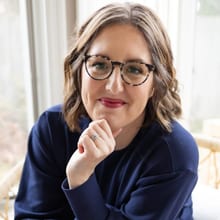
Immunologist Dr. Kara Wada on why Sjögren's is so often missed, and how it overlaps with hypermobility, dysautonomia and MCAS.
Watch
Guests
Transcript
[01:13] Dr. Linda Bluestein: Welcome back, every bendy body, to the Bendy Bodies Podcast with your host and founder, Dr. Linda Bluestein, the Hypermobility MD. Today we'll be chatting with Dr. Kara Wada, who is an allergy and immunology doctor. We are going to be talking about Sjögren's and other autoimmune conditions. These so commonly affect people with connective tissue disorders, dysautonomia, and mast cell activation syndrome. I am really excited about this conversation today because I get so many questions about Sjögren's and other autoimmune conditions. As always, this information is for educational purposes only and is not a substitute for personalized medical advice. Be sure to stick around until the very end so you don't miss any of our special hypermobility hacks. Here we go.
[01:56] Okay, so excited to be here with Dr. Kara Wada today. It's so great to see you again.
[02:02] Dr. Kara Wada: Thanks so much for having me back on, Linda. It's always a joy.
[02:05] Dr. Linda Bluestein: I got such great feedback from our previous interview, and so I wanted to have you back on so we could talk about some other topics because I know you are such a great teacher, and I know you're so passionate about some things like Sjögren's that are really important for the population of people that listen to this podcast. And apparently there are millions — like 4 million Americans that are affected by Sjögren's — and it affects 0.5 to 1% of the population is what I'm reading, and 15% or so of women. So, can you start out by telling us what is Sjögren's and why it matters for this population?
[02:38] Dr. Kara Wada: What is absolutely astounding to me — of that 4 million people that we suspect have Sjögren's and kind of know from the data that have Sjögren's — three-quarters of those people don't have that diagnosis yet. There's a huge gap in disparity. And part of it is because what we learned in medical school and in our training is just a very small sample of what the lived experience of someone with Sjögren's is.
[03:11] And I think what has been incredibly humbling for me is I went through all my education and board certified in immune system medicine, of all things. And I look back — I was diagnosed with Sjögren's coming up on about 6 years ago — but I look back knowing what I know now, primarily from the patient community, and I had symptoms back in college that were suggestive. Now, who knows what my workup would've been then?
But essentially, Sjögren's disease, formerly known as Sjögren's syndrome, is a systemic autoimmune condition that tends to be characterized — especially in medical education — by dryness. It is one of the key features that tends to affect most people with Sjögren's, but not all, and not all people in the early stages of their condition. It's a disease that can affect folks from head to toe. And it can affect anyone at any age, though if you look at the data, it does affect primarily women. About 9 out of 10 patients are women. And there's a huge gap in delays in diagnosis, in part because it's not necessarily an easy diagnosis to make. And I'm sure we'll dig into more about that too.
[04:41] Dr. Linda Bluestein: Yeah. So in terms of the population with EDS, POTS, mast cell activation syndrome, hypermobility spectrum disorders — this is a particularly important topic, right? Because we see more autoimmune conditions associated with those things. And then isn't it also true that an autoimmune disorder can predispose you towards an autonomic nervous system disorder like POTS? So they're intertwined like this.
[05:07] Dr. Kara Wada: Yeah. My 9-year-old has been wanting to learn how to crochet for years, and I see this ball of yarn in my brain and it's all tangled. And that is how I think of increasingly all of these different connective tissue, immune system, and nervous system-related disorders. You try to pull one of the threads and other parts get more tangled. They're hard to really fully parse out.
[05:41] In part because if we think about where all of this complex physiology is occurring — and specifically Sjögren's — Sjögren's tends to affect our barriers, causes our barriers to be drier and more sensitive, and it also tends to affect our nervous system. So we think of our barriers as our skin, our gut, and our respiratory tract. And those are all comprised of our connective tissues. We have our immune system located there. Often we think of our mast cells as the border guards, but they are working part and parcel with our somatosensory nervous system and they are in constant communication.
[06:28] So the way I've started explaining it to patients is: if you have connective tissues that at their base are genetically predisposed to not reading the textbook, that may set you up for a more glitchy immune system. If you have defective barriers or a glitchy immune system, we think that may then impact our nervous system. And add in that if you have nervous system issues, that may then impact your connective tissue and your immune system. So we think this is all not just a two-way street, but a really confusing roundabout that we're dealing with in trying to understand.
[07:19] And I think the other part that makes it really hard is that as a medical community, your neurologists are in one building, your allergists are in another building, rheumatologists in yet another, pain medicine and physical medicine — we're all so disjointed that it's really difficult for those of us with symptoms affecting us from head to toe to get care that looks at all of us and puts all of these puzzle pieces together.
[07:50] Dr. Linda Bluestein: Yeah, so well said. I think that is one of the really, really challenging things. And people ask me all the time, what kind of doctor should I see? If they can't come and see me or come and see you, but they want to know — I need to find somebody local to me — and it's like, well, you probably need multiple doctors, actually, unfortunately, because like you said, these are head-to-toe conditions.
So, Sjögren's disease. I guess two questions. One is, how does a syndrome change to become a disease? And two, is it an autoimmune disorder, a connective tissue disorder, or both?
[08:28] Dr. Kara Wada: The second question is the easier to answer — it is both. It is an autoimmune disease and it affects the connective tissue.
[08:36] Dr. Linda Bluestein: Okay.
[08:37] Dr. Kara Wada: How did the nomenclature change? Well, within the last year to 18 months, all the parties involved got together over in Europe for a big meeting on Sjögren's. And there has been increased advocacy within the patient community. I liken Sjögren's — within kind of the education space — to the black sheep of the autoimmune conditions. It's one of the most common autoimmune conditions, and yet if you look at the docket for the big rheumatology meeting, and research funding, and all these other measures that look at how much we're investigating and the resources we're putting into understanding this condition, it's been paltry. And so there has been this big push to solidify that this is a disease, it affects people's quality of life.
[09:45] I remember a colleague who's near and dear to me, who was my former rheumatologist — and really only former because of some career changes and insurance changes. But when I was first diagnosed, she was trying to reassure me, and I can give her the benefit of the doubt, but she said something along the lines of, "Well, if you have to have an autoimmune condition, it's the best one to maybe have." And frankly, I would say that's BS. If you look at quality of life measures and you look at the hard data, it's not true.
[10:22] Dr. Linda Bluestein: Yeah, that's really interesting. And a syndrome is generally considered like things that go together, right? And a disease more so means that we actually have a test we can test for. And so that is an important distinction. And I see where that can be so important for the patient — to have that labeled as a disease and not as a syndrome.
[10:44] Dr. Kara Wada: It's like, take us seriously, darn it.
[10:46] Dr. Linda Bluestein: Right, right, right. No, that totally makes sense. So besides the dryness — and it could be dry eyes, dry mouth, dry skin, vaginal dryness, dryness of the nose, kind of all these different places where we contact with the environment — what are some of the other symptoms that people might experience?
[11:10] Dr. Kara Wada: So it's the number one autoimmune cause of dysautonomia. Things like POTS. And it frequently affects gastrointestinal function. Often you'll hear that patients have some sort of GI complaint, whether it's irritable bowel type symptoms, foods that just don't agree with them, food sensitivity type symptoms. Often that dysautonomia may affect motility of the gut. So sometimes there's difficulty with swallowing called dysphagia, or gastroparesis where the stomach doesn't empty as it should. Not uncommon to see things like bacterial overgrowth — SIBO is a term that I think we've been hearing more and more about recently.
[11:59] And it often goes along with other autoimmune conditions. So not uncommon to see it go along with celiac, rheumatoid arthritis, lupus. There's been a lot of debate amongst scientists, physicians, and the patient community on this concept of primary versus secondary Sjögren's. So if you're reading research papers, they'll note whether it's primary or secondary. And there's been a lot of pushback that Sjögren's is Sjögren's — if you have it, you have it. It's not necessarily secondary to your lupus or your RA. It is its own entity and has its own set of problems that come along with it.
[12:46] Those are the big ones. As an allergy immunology doc, I often think about it when I see someone with chronic sinus infections where we're treating their allergies or using antihistamines and they're really dry — drier than you would expect, and the typical treatments are just not improving as I would expect. And then often there's a lot of pain. It's super common for me to see fibromyalgia as a diagnosis on someone's chart, and the body pain is thought to be related to those small fiber nerves being affected.
[13:22] And then the biggest symptom — which I should not have left for last — is what patients find the most bothersome along with the pain: fatigue. Fatigue that really plays out many times like chronic fatigue syndrome, where folks are just really running on very few spoons for long periods of time.
[13:53] Dr. Linda Bluestein: I feel like you just described every single one of my patients, and myself too, in so many ways. And I live in Colorado currently where it is really, really dry.
[14:05] Dr. Kara Wada: Dry.
[14:05] Dr. Linda Bluestein: Yeah. And I had a patient the other day who lives at a really, really high altitude. So that probably can really confound the diagnostic process. And it's fascinating that you're saying 75% of people are actually undiagnosed. So how does the diagnostic process work, and how can we make that better?
[14:26] Dr. Kara Wada: I was actually just doing some reading today on a relatively newer article, because when we think about the diagnostic process, it would be really easy if we had some blood work or an X-ray or some sort of imaging that was the slam dunk. And I have to say, I was incredibly privileged when it came to my diagnostic workup. Once I kind of figured out that something was wrong and pulled my head out of the sand and got blood work drawn, my labs were just glaringly messed up. And so that made my diagnostic process quite easy.
[15:03] But for somewhere between 30 to 40% of folks, their labs can be pretty normal, and in some cases completely normal. Things that you would typically check — you'd check an ANA, an antinuclear antibody — and that oftentimes can be positive, but again, not always. The lab that is most specific and is part of the EULAR diagnostic criteria from 2016 is SSA or Ro antibody. And that is positive in 60 to 70% of folks. That is also important to know if you are someone who is positive for that antibody and wanting to have a baby, because it can affect the fetus of moms who are SSA positive.
[16:08] And then the other parts of the diagnostic criteria really are focused on dryness. So it looks at: do your eyes make enough tears? There's a score that looks at whether markers appear when they put fluorescein in your eyes. And if they put the little paper in your eye, does it show that you don't make enough tears — called the Schirmer's test? And then there's also salivary flow testing. Essentially they have you spit in a tube and they measure it.
[16:41] Dr. Linda Bluestein: I've had that done.
[16:43] Dr. Kara Wada: Yeah, super fun. Sometimes they'll have you chew on a little film to try to stimulate saliva. And that's typically what's used. There's a scoring system — you get 3 points for the positive labs. If your labs aren't positive, often they will suggest a lip biopsy or a minor salivary gland biopsy, typically done in an office under just a little bit of local anesthetic inside the lip, small little incision. They take a little bit of salivary gland tissue and look at it under the microscope. What they're looking for are lymphocytes or white blood cells that are essentially demonstrating that there's inflammation there, and that's scored on a focus score. So if you have a focus score of 1 or greater, that gets you another 3 points. And then if you have those positive eye or salivary flow type testing, those each get you 1 point. So you have to essentially have a score of 4 or greater to meet those classification criteria.
[17:48] What's hard is often you will have folks who maybe meet some of those criteria, or if you look at the big picture of all those symptoms I described — the fatigue and the pain and an element of dryness, or even maybe not dryness but dysautonomia — and you're like, gosh, this really fits once you can see that picture in its whole, but it doesn't hit all those checkmarks. It's really challenging.
[18:16] And when it comes to the lip biopsy, you would think that must have a much greater ability to detect — it's more invasive, it's tissue. Still, 20% of people will have a false negative lip biopsy. And so there still are gaps. That's why, in part, we're missing some folks. The other reason is that as physicians, we were not trained to recognize that Sjögren's is common and that it affects all of us. It's not just that board exam question we had to memorize about SSA and dryness, right? Or if you're a pediatrician, that SSA can affect the baby's heart conduction system. Those are the board exam questions you needed to know. And that's all I knew about Sjögren's up until my own diagnosis.
[19:04] Dr. Linda Bluestein: That's so interesting because you're so much younger than I am, and yet what you learned and what I learned are probably about the same.
[19:17] Dr. Kara Wada: The same, I'm sure.
[19:19] Dr. Linda Bluestein: How did that not change in that interim? So that's really—
[19:24] Dr. Kara Wada: There's no funding.
[19:24] Dr. Linda Bluestein: Yeah, right. That's so fascinating. And I would love to know — because I have heard, you know, oh, it's not that big of a deal, about the lip biopsy. But then in talking to a dentist who actually had me spit into the tube and really strongly suspects that I have it — I haven't gone through the rest of the process yet, and I'm loving this conversation already because I'm going to pick up a lot of tips for my own care — she said that it's not uncommon for people to have persistent pain after having the biopsy. So that's also made me think this is not something to be undertaken lightly, especially by people like me who already have pain on a regular basis, since we're at higher risk of having other pain problems.
[20:12] Dr. Kara Wada: Absolutely. I have really taken a case-by-case, conversational, shared decision-making approach with each and every patient and saying, hey, here are the tools in our toolbox, and here are some potential decisions we could make together depending on how strongly we feel about a lip biopsy.
[20:36] Another tool that is not universally recognized, but I have found quite helpful, is called an early Sjögren's antibody profile. It's another lab test — a send-out to, I believe, Quest — but it essentially checks for 3 different autoantibodies that are recognized to be elevated in early disease. They are proteins that create saliva and tears, and it looks for IgA, IgG, and IgM for each of those antibodies. So it's been really interesting to see some of my patients whose symptoms are relatively newer onset, seeing some of those panels come back where it's their IgM — which is the initial autoantibody that the body would produce — that is elevated. I'm curious to see, not from an individual standpoint, but just overall, would that then potentially switch over to IgG? We don't necessarily know the natural course of that.
[21:49] But that has been quite helpful in at least steering us to say, hey, should we think about doing a 6-month trial of medication? And with that information, how do you feel about a lip biopsy? For some people it actually makes them want to pursue it, which, to be honest, kind of surprised me. But that was enough to push them towards wanting a true tissue diagnosis.
[22:25] And so I think when we're venturing into areas of medicine that are not as well-defined, it is so critically important to have the time to talk through the ifs and thens — like a choose-your-own-adventure story.
[22:41] Dr. Linda Bluestein: Yeah, that's so true. I don't know how people manage with 10-minute recurring patient visits and 20-minute new patient visits — and that's the total amount of visit time, not the time spent with the doctor. It's really crazy how you can even accomplish much of anything in the standard Western medicine model we're familiar with in the US. And you mentioned treatments. I would love to know what treatment options exist for Sjögren's.
[23:13] Dr. Kara Wada: Right now there are zero FDA-approved treatments for Sjögren's disease. Which is really sad when we look at the progress that has been made in so many similar conditions. When you see all of the commercials for the new treatments for rheumatoid arthritis and lupus, it sometimes does make you a little jealous.
[23:42] Often what will be tried first — first-line therapy — is hydroxychloroquine, or Plaquenil. Initially it was used as an antimalarial drug, and it tends to be immune modulating rather than immunosuppressive. So one really great thing about that particular drug is it does not make you more susceptible to infection, which is generally a good thing. It's not a perfect drug, but it is thought to slow progression, and does seem to move the dial, especially on the fatigue, which can be so challenging. It's generally pretty well tolerated too. Occasionally people will have some hiccups when initially starting it — they may have some headaches or some tummy upset — and that tends to get better. I've had a few patients who've had rashes that we've tried to work through. And one patient, it was actually her third or fourth try that she finally tolerated it. There are some desensitization protocols out there — Dr. Donald Thomas has some great resources on his Lupus Encyclopedia blog and his book, because it is often a first-line treatment for lupus as well.
[24:59] Occasionally, if patients don't tolerate hydroxychloroquine, or maybe it's not helpful, methotrexate is also sometimes trialed. That tends to be a first-line treatment for rheumatoid arthritis and sometimes has a bit of a bigger side effect profile. It is a little more immunosuppressive, but can be quite helpful.
[25:27] And then between those, there are a few other minor players, but there's this huge gap in treatment. And one of the things that's really important — when we talk about Sjögren's being common and these misperceptions and myths about Sjögren's being rare and localized and no big deal — is that it actually comes along with a 10% lifetime risk of lymphoma and cancer. That's not a small thing.
[25:57] Dr. Linda Bluestein: No.
[25:58] Dr. Kara Wada: And so one of the treatments used for both autoimmune conditions and lymphoma and leukemia-type malignancies is rituximab. It is an infusion that essentially depletes the B cells, which are the antibody-producing cells. And so often if Sjögren's is severe enough and/or there are some of these cancer-related developments, that's often the next step.
[26:32] So that leaves a lot to be desired. Now, that's all gloom and doom, but there are multiple drugs right now in phase 3 clinical trials that are looking really promising. And so we anticipate that somewhere between now — when we're recording this in early 2025 — and hopefully sometime in 2026, we will start seeing those medications go up for their final evaluation with the FDA.
[27:02] Dr. Linda Bluestein: Okay. And what about something like low-dose naltrexone? I prescribe that a lot, and I find it so often helpful with stabilizing mast cells and with the glial cell activation in the brain. Does that help with Sjögren's?
[27:17] Dr. Kara Wada: So other tools in my toolbox — outside of treating the autoimmune side of things — I often use LDN, low-dose naltrexone. I often use cevimeline and some other medications that can increase salivary flow. Sometimes — and this is a newer tool in my toolbox — I have a couple of patients I've put on pyridostigmine, which, to me, I learned about only for myasthenia gravis, but it turns out it can actually be really helpful.
One of those patients just messaged me back last week and said, "Dr. Wada, I have saliva and tears for the first time in years. And I have energy." She's a patient who's had long-term lupus, certainly has an element of Sjögren's going on — although unfortunately she has required rituximab and so doesn't have antibodies, meaning her SSA wouldn't be positive even if we went looking for it. And so we've been clinically treating her as though Sjögren's is going on as well. And she said, "It's a game changer." So that's another tool I think I'll be revisiting after that glowing report from her.
[28:34] And then other things I find super helpful — especially with dry eye, and for me personally — fish oil. Really trying to get those omega-3s into my diet. There's some good data to say that's helpful for dry eye, whether it's related to Sjögren's or not.
[28:56] Dr. Linda Bluestein: Yeah, I remember the first time I prescribed pyridostigmine — otherwise known as Mestinon — for dysautonomia. In this case, the person had POTS, postural orthostatic tachycardia syndrome. I was a little nervous, like you said — it's like, okay, sure, we'll try it. She was a nurse and she really, really wanted to try it. I said, okay, let's start low, go slow. And yes, she also thought the medication was extremely helpful.
[29:23] So whether it's hypermobile Ehlers-Danlos, hypermobility spectrum disorder, Sjögren's, or so many other conditions, we have to be looking at other similar diseases and extrapolating, saying, okay, biologically this makes sense and/or you have these overlapping conditions for which this is potentially helpful. And I love that you're mentioning the nutrition aspects as well. So besides fish oil — whether as a supplement or in the diet, which is even better of course — are there other dietary things that you recommend?
[30:02] Dr. Kara Wada: In general — and this is going to be different for every person — if someone has gastroparesis and I'm saying you need to go eat a whole bunch of fruits and veggies, that might not be the best recommendation.
[30:20] Dr. Linda Bluestein: Right.
[30:21] Dr. Kara Wada: In general, though, if we can aim for getting a variety of fiber and color in our diet, that visually tells us we are getting all of those different vitamins and nutrients that we need to nourish our body. If someone is dealing with small fiber neuropathy or other dysautonomia nervous system issues, I tend to recommend really trying to get some foods in the diet that are higher in alpha-lipoic acid. Chia seeds is one that's good from a fiber standpoint and helps a little with motility — I call it nature's Miralax — but it's also rich in alpha-lipoic acid.
[31:07] And then in general, we have learned so much, and really trying to minimize the amount of ultra-processed foods in our diet is really critical. I'm in the middle of listening to the audiobook Ultra-Processed People, and it has been so eye-opening. Just going through all the science — things that I've been reading and learning over the last few years, but put together. This idea that our diet has switched so tremendously over the last 70, 80 years and we're eating a lot of things that are not actually food. And that changes how our brains and our bodies and our microbiome are all interacting.
[31:57] Many of the emulsifiers found in our baked goods, our yogurts, our ice creams — all different things used to make the mouthfeel really great — essentially degrade some of those protective mucus linings. And the microbiome in our gut changes that dynamic between the food we eat, the microbiome, and what our immune system is seeing from the outside world. We also just know that there is increased risk of other inflammatory diseases along with a diet high in ultra-processed foods. So trying to steer away from things that come in packages, as best we can, can be really helpful.
[32:44] And it's not easy because all of that food is made with the idea of us eating more of it in mind. They're going to keep the recipes that sell the best because that makes the company the most money. And I think with a 9-year-old, a 6-year-old, and a 3-year-old at home, in the next weeks and months we'll have to have some really challenging conversations about where you draw the line. Because we also are two working parents. We don't want our kids to develop funny relationships with food.
[33:27] Dr. Linda Bluestein: Right, right. Yeah, that's so challenging. Okay, we are going to take a quick break, and when we come back, we are going to talk about why it matters where you live when it comes to autoimmune disorders. We'll be right back.
[34:39] Okay, we're back with Dr. Wada, and this has been such helpful information. I want to — before we get into the location part — know a little bit more about your thoughts, because I was recently listening to a podcast on microplastics, and I feel like you and I are very similar in this way. You can really kind of go down the rabbit hole. And I know my husband is like, oh my God, what is she worried about now? And it is really hard. This population of people — I think eating disorders in general are such a huge problem, and we're very susceptible. And if we have problems with abdominal pain or food intolerances, then that makes us even more likely to have food aversions and things, and to start to get obsessive about our food. So, do you have any tips for people listening who are thinking that sounds really great, but either from a financial standpoint, a time standpoint — you know, I'm going to need to rely on those processed foods sometimes — are there certain particular things that people should look to avoid?
[35:49] Dr. Kara Wada: So not all processed food is bad. Frozen vegetables, canned beans — those are processed foods, but they can be really great, easy, and healthy components of our diet. It's really trying to steer away from those things that would be really hard to recreate in your own kitchen. There is no way you're going to be able to create a Cheeto from scratch in your kitchen, right?
[36:20] And I think what we've worked on as a family is coming up with a list of relatively easy recipes that the kids like, that get a variety of veggies, protein, and healthy carbs in the mix. We aim to plan that out for about 80% to 90% of what we're going to eat for the week. And that still leaves some room for fun and spontaneity and pizza night or whatever it may be.
[36:52] I have a personal story — I jumped right into the AIP diet after I got really sick, about 6 months after my diagnosis. And I felt great initially, until I didn't, until everything in my brain was consumed with thinking about what I was going to eat. Was it the right thing? Was I getting enough of the right things? Was I avoiding the right things? We went to travel as a family and it was really hard to not be hungry all the time. And so at a certain point I had to ask for help.
[37:33] And I think that would be my advice: it can be really, really helpful to have someone who is not you — ideally a registered dietitian — who can make sure you are getting all of the nutrients and components you need in your diet, and who can help you sometimes tease out what might be a side effect from the food versus what might just be a side effect of everything else going on. It's very instinctual for us to associate the food we eat with symptoms we develop. That's what kept our ancestors alive, right? If you got bad berries, you didn't want to go back to that bush. And there's some science to say that if you have an inflammatory response in the gut, that can feed back to the brain to say, hey, food aversion.
[38:49] So working with folks — a mindful dietitian and/or a trauma-informed primary care doc — I have a great colleague and mentor, another Dr. Kara, who can really work through screening for disordered eating and helping support folks through that, because it's not easy at all.
[39:23] Dr. Linda Bluestein: Yeah, definitely not easy. I try to get people to also flip the mindset and think about the abundance — how we need food for all those important nutrients in order to build the healthiest possible cells in our body. That should be the first thing we think of when we think of medicine: what food are we putting into our body? And like you said, also having that balance — okay, I'm going to eat something that's a little less healthy, but that balance is important for enjoyment of life and social aspects — so long as it's not really harming you. Because we can very easily go too extreme in the other direction, and it's really tough.
[40:11] Dr. Kara Wada: Yeah. And we know that looking at big studies, 30-plus different plants within a week is associated with the best health outcomes when it comes to diabetes and heart disease and hypertension and kidney disease and all these sorts of things. So variety is the spice of life, but also it's helping feed all of those beneficial microbes in the gut. And I always have to add the little asterisk when I say plants — we're not just talking about vegetables and fruits, but herbs and spices and legumes and nuts and seeds and whole grains. All of those things fall under that category. So they add up pretty quickly.
[40:50] Dr. Linda Bluestein: Okay. Because when you said 30, I was thinking of fruits and vegetables and I'm like, wow, that's a lot.
[40:57] Dr. Kara Wada: That'd be a big grocery bill. But we have a local Mediterranean restaurant similar to Chipotle. Essentially you can get a bowl and within that bowl I've counted upwards of 20 different plants between the herbs and spices and the different options for around $10. Not bad.
[41:20] Dr. Linda Bluestein: Yeah, it's delicious, right?
[41:22] Dr. Kara Wada: Right.
[41:23] Dr. Linda Bluestein: No, that's great. So let's talk about how where you live impacts your potential for an autoimmune disorder. I saw that you had talked about this on a podcast episode. You had me on your podcast, which I so appreciate, and I interviewed you one other time on this podcast, and we will link both of those episodes in the show notes because I definitely want people to check those out. Can you tell us what you were diving into in particular about that?
[41:50] Dr. Kara Wada: Yeah. So if you think about where you grow up and where you live, it impacts who you interact with, where you buy your groceries, the air you breathe, the water you drink. It is your environment. And often it is influenced by our socioeconomics too.
[42:14] We look at studies in particular with asthma, and those kids that grow up closer to highways are exposed to more diesel exhaust and car exhaust fumes, which impacts how their immune system responds to the external environment. We see folks that live in really close proximity to pesticides with increased risk of certain cancers and autoimmune conditions. I live in Central Ohio, and I would see a good number of patients who would drive from kind of the state line near the Ohio River. There have been several big industrial spills over the last decades, including the big train accident that happened just a year or two ago in Eastern Ohio. And it's interesting — even in training I'd occasionally meet a patient here or there and they'd say, "Yeah, my family's health has never been the same since that spill," and would go on to explain the various conditions that everyone had been diagnosed with.
[43:27] And it's not all the same things, right? We each have our genetics, we each have our microbiome, we have many other factors at play. But for those of us that are more susceptible — who are the canary in the coal mine, which seems to be the case for those of us with connective tissue, hypermobility, and autoimmune issues — it really could move the dial considerably.
[43:55] Dr. Linda Bluestein: Yeah, that's really, really fascinating, because I think so often we don't think about those other factors that influence our health and our quality of life. And speaking of how we can influence our health and quality of life — and I'm sure people listening are thinking, well, great, I can't move, or whatever, that's really challenging — I know that you also offer a lot of tips for getting better care, getting listened to, feeling more empowered, being seen, being heard. Because that's something so many people struggle with, given the short appointments. Doctors are being asked to do more and more, we're getting stretched thinner and thinner, there are more regulations, more insurance hoops that we have to jump through. So what can patients do in order to get better care?
[44:48] Dr. Kara Wada: I think of things in kind of a three-way approach. One is owning your story — thinking about it ahead of time, writing down your timeline. When did symptoms start? What made them worse? What's made them better, if anything? Did you have lab work or imaging already? Compiling that together can be really helpful because I finished up medical school right as we were switching from paper charts to electronic charts. And the electronic health record was billed to me as the panacea — it was going to make everything better and so much easier to care for patients. I wasn't going to have to sit by the fax machine to get records from other hospitals. But what we've realized is that the average patient — and I would say we are all above average — generates 40,000 pages worth of data every year.
[45:54] Dr. Linda Bluestein: Oof.
[45:55] Dr. Kara Wada: It's a lot of data. A CAT scan's probably half of that, but it's a lot. And so if you are in that compressed visit time and your doc is trying to find a lab result — the needle in the haystack — it's really helpful if you just say, "Nope, I got it right here, here you go." And it's going to cut down on the potential for increased costs from stuff being repeated too.
[46:22] It's also important to take the pressure off and prepare. So you have your story, but when we go into that visit, it's probably pretty rare for someone not to have at least a little element of fight or flight — that stress response. For me, it wasn't necessarily fight or flight. I tend to people-please. I fawn all over the place. I'd be like, "Yes, my nice rheumatologist, I've been doing great," when really I'd been really stiff. So I had to start writing stuff down. And that's where having someone go with you — an advocate, friend, or family member — can be really helpful to call you out on that too.
[47:18] Think about ahead of time: what are my priorities for this visit? What would make me feel like I got what I needed out of that visit? I think letting the doctor or even the medical assistant who's rooming you know that upfront can be really helpful. And you have to realize that if you're only in a 15-minute visit, you may not get all of those answers in one visit. Especially if you're working within the insurance-based healthcare system, you are going to have to go back several times to get through that list. It's the reality of how insurance reimburses for visits. Docs don't have much control over their schedule at all and are increasingly being asked to double-book. I was talking to a colleague who's a cancer doc recently. She sees over 20 patients a day — with really serious pancreatic cancer, esophageal cancer. I can't even imagine.
[48:36] And then the last thing that's really important: you have to be okay with getting comfortable with being uncomfortable, because the system — frankly — it's a dumpster fire. None of us are particularly comfortable within it. The system has a strong tendency to inflict harm even though it doesn't necessarily mean to. It's not set up for our comfort. And so in order to get the care that you need in the setting we are now, you just have to, to some degree, accept that fact. And persist nonetheless.
[49:23] Dr. Linda Bluestein: Yeah, and advocating can be so hard. I'm a people pleaser too, so I know exactly what you're talking about. And I've had that happen where patients are sitting in front of me and describing something and the spouse is saying, "No, no, no, it's way worse than that." So it's really hard, because I think as people pleasers — and as people who often tend to be more sensitive — we kind of gaslight ourselves even. We're so used to being gaslit by other people. And I'm sure you've been gaslit by doctors. I certainly have. And so then we start doubting ourselves, really not treating ourselves with the same kindness that we should.
[50:14] Dr. Kara Wada: Yeah. There was one other thing I was going to mention. If you are seeing a doc that's seeing 25 patients in a day, having a way to humanize yourself quickly in the visit can be helpful. So it's not just, "I have back pain." Instead: "I can't sit on the floor and play with my 3-year-old without standing up and feeling like I'm 80 for 5 or 10 minutes afterwards." That paints a picture. It doesn't take much more time to explain, but it shows that's not normal for a 35-year-old person, say, 5 years ago me, to be experiencing that. It's a little harder to brush off as, you know, tired out-of-shape doctor mom.
[51:14] Dr. Linda Bluestein: And it gives them a little bit better picture of what activities you want to be able to do and that your expectations are realistic. Because that's another thing that I think is so important — I love the humanizing, I totally agree. And also in the humanizing, letting them know that you don't expect to be pain-free, but like you said, with the goals — this is something that would really mean a lot to me. It would mean a lot to me to be able to sit on the floor and play with my 3-year-old. I'm not asking to be able to ski in the Olympics.
[51:46] Dr. Kara Wada: Yeah, I just want to do some Magna-Tiles and the marble run.
[51:49] Dr. Linda Bluestein: Yeah, exactly. And as you mentioned at the very beginning of the podcast, oftentimes you need so many different people on your team. The patient, even though they really in some ways shouldn't have to be responsible for holding their story together, is right — they are that common thread that weaves through all of those visits. And oftentimes we are in different systems. So even though in Epic there's Care Everywhere, somebody like me who has a very small private practice doesn't have Epic.
[52:25] Dr. Kara Wada: We can't afford Epic.
[52:25] Dr. Linda Bluestein: We can't afford Epic. It's so expensive. It is definitely not designed for small practices — it's designed for massive systems. So if you have Epic and you have Care Everywhere, then you can access other records more easily, but otherwise it's really challenging. So in terms of building a team and trying to get your team working as well as possible — because you also get conflicting recommendations, right? You go to one person and then you go to another — do you have any suggestions for harnessing the power of your medical team and assembling your medical team?
[52:59] Dr. Kara Wada: Asking for recommendations is huge. Especially when it comes to communities of complex chronic disease patients, asking other folks in the community who they've had good experiences with is really, really important. I also wouldn't rule out the idea of going outside of the insurance network, especially if you are running up against multiple roadblocks. Because, yes, having a chronic disease is incredibly expensive. But puttering around spending copay after copay after copay also doesn't serve us all the time either.
One thing is trying to find folks on your team who are happy in their job, who aren't burned out. Because if you have a doc or other healthcare professional on your team who is burned out or morally injured — whatever words we want to use — it first and foremost affects their ability to be as compassionate as they would otherwise be. It affects their ability to be curious and to think outside the box. And having been someone who has been in burnout before, I'm sure I wasn't practicing the best medicine I could. It's a night and day difference when you are working with someone who is showing up as a true team member.
[54:55] And just keep at it, because it is often not the first, second, third, or fourth person that you meet. Even in each particular specialty — when we think about who's on your team for Sjögren's, a rheumatologist tends to be on board. Not always — a lot of rheumatologists don't take Sjögren's very seriously, frankly. But when we think about who takes care of immune systems that are glitching, that tends to be rheumatologists when it is a connective tissue disorder. Allergy immunology docs have a little bit of overlap, but not a ton. Enough where it wasn't on my bingo card to be taking care of a ton of Sjögren's, but here we are because there's such a need and I feel really passionately about it.
[55:59] Often there may be an ENT if someone is dealing with a lot of sinus issues or swallowing issues. GI might be on board, a neurologist. There are more than a handful of neurologists across the country that are really great with Sjögren's and dysautonomia. They do take a long time to get into. And those are kind of the main players — dermatologists, maybe gynecologists for those that are having some of the gynecologic symptoms as well.
[56:31] Dr. Linda Bluestein: And it seems like a lot of rheumatologists will run a quick panel of tests, and if they come back negative, they're probably not doing the saliva test or really looking to see does this person have dry eye, or is this somebody who doesn't have the SSA antibody but actually does have Sjögren's. I'm glad you mentioned that, because I feel like a lot of people with connective tissue disorders feel like rheumatologists would be a really good fit for their problems. But I feel like that is often not the best fit — though sometimes, of course, it is a great fit.
[57:12] Dr. Kara Wada: So I recently made a job transition. And there was a particular patient I was trying to get this workup finished for before I concluded my time where I was. I still don't know what the final answer will be for this patient — I hope I get some closure. Terrible interstitial lung disease, which can affect upwards of 20% of folks with Sjögren's. Bad motility issues, weight loss, very positive ANA, elevations in 3 of the early Sjögren's antibody panels, and I'm still getting a ton of pushback on calling it Sjögren's. Oh, and very bad dryness on top of it all. And it's just really frustrating when you learn more about a condition and you kind of start knowing it when you see it — with good evidence — and folks are still stuck with cognitive biases. One being anchor bias. And certainly I can have that sometimes with Sjögren's too, which is why you're always thinking about that whole differential of what could be going on. But when you start ruling out all the other things and everything's coming together, maybe we do need to think it could be this.
[58:43] Dr. Linda Bluestein: And whether it's Sjögren's or another autoimmune condition or Ehlers-Danlos, MCAS, mast cell activation syndrome, POTS — this is a group of people that are so vulnerable to charlatans, people out there that are saying, "I can cure this, I can cure that." Do you have any suggestions for how people can know the difference between a miracle cure and something that is actually a sustainable, science-based treatment?
[59:17] Dr. Kara Wada: It's hard. And I think it's really challenging in our current political environment where everything's so hyperpolarized. I think it is helpful to look for transparency. I am a big fan of the saying, "Sunshine is one of the best disinfectants." Just following the money and seeing where people's recommendations are coming from — it doesn't tell the whole story, but it's part of the story and at least needs to be a consideration.
[59:57] I think it's also important to see what the science is generally saying. We have these great tools now like ChatGPT. What are some of these broad brushstrokes that you're hearing? Are people saying things that are totally counter to the literature? If you look at all the medical literature, it will say the carnivore diet is not a great idea — it's not the cure-all. Those are the big ones. It's not easy.
[1:00:39] Dr. Linda Bluestein: No, it is not easy.
[1:00:40] Dr. Kara Wada: And another thing I always tell people — I'm curious what you tell folks.
[1:00:40] Dr. Linda Bluestein: I tell people if you struggle to find the initials after the person's name — to see what their actual training is.
[1:00:53] Dr. Kara Wada: That's good.
[1:00:53] Dr. Linda Bluestein: Yeah. Then that's a bad sign. When I see patients or clients for coaching and they're telling me who else is on their team, I often look it up because I want to know more specifics. I'll poke around on their website, and oftentimes I cannot figure out at all what kind of training they have. They're calling themselves this or that, and it's like, wait, I don't see where you have that training. So if I really cannot figure this out after really looking around on their website, that's a red flag.
[1:01:26] Dr. Kara Wada: During the pandemic, everyone and their brother was an immune system expert, and I was just like, all right, cool. And I did all that training.
[1:01:34] Dr. Linda Bluestein: Yeah, exactly. And speaking of your new job and your training and all the amazing things that you've done — you've got a podcast, you've done a TEDx talk, at least one, you have these great blog posts, you've been featured in so many different media outlets. For me or for other people listening, what are your secrets to success? How do you think you reach the most number of people most efficiently? Because with the charlatans, it's so hard — they can say really sexy things because they're untrue and outrageous. Whereas we're often saying science-based things that require nuance.
[1:02:23] Dr. Kara Wada: Right, because each person is so individual. And you can't stand up there with that certainty that you are going to cure everyone, because you realize you are human just as that other person is across from you. You can believe so much that you can absolutely help them in some way, but cure — you know, so there is something with that energy.
[1:02:50] I just try to come across as my authentic self. I am who I am. Midwest mom. I love a good deal but I do like nice things too. In process of not being a people pleaser and trying to rediscover some of that rebellious side of me that I really miss from my 20s — that was going to go out and conquer the world and told the college president that I was going to be the next Nobel Prize winner from our college. That was pretty cheeky.
[1:03:34] I think the main hub for where folks can follow and find everything is at DrKaraWada.com. There are links to all the blogs there and the podcast. The Becoming Immune Confident podcast is on a bit of a hiatus, in part because I partnered — and I need to talk with you about this project — with a good friend, Dr. Beth Buchan, to launch the Lessons We Didn't Learn in Medical School podcast. Sharing those stories that we did not learn in school, but certainly our experiences on the other side of the exam room have informed how we approach care — care of our patients, care of ourselves. So that's been a real fun passion project to work on.
And I'm getting ready to launch primarily a telehealth practice for the next year or so. And I dream of opening an in-person clinic here in the Central Ohio area. There's really not much for those of us with complex chronic conditions, but many contracts have non-competes to work around. So it gives me some time to get my bearings and dream and figure out financing and all that — the realities.
[1:04:57] Dr. Linda Bluestein: Right. That sounds like it's going to be a great podcast. And it is such an interesting time that we're in — a lot of people don't know this, but medical licenses are state-dependent. So there are a lot of things that changed at the very beginning of COVID but then went back once people could go to in-person appointments again. So telemedicine is something we can do much more easily now, but at the same time, there are so many hoops to jump through.
[1:05:34] Dr. Kara Wada: It's very expensive.
[1:05:35] Dr. Linda Bluestein: Yes, very. Everything is so much more expensive. I think sometimes people don't understand — what you said earlier is really important to revisit briefly. Your friend who's an oncologist who sees 20 patients in a day — and I know plenty of doctors whose patients aren't that sick, but they're seeing 40 patients in a day.
[1:05:57] Dr. Kara Wada: Oh yeah, absolutely.
[1:05:59] Dr. Linda Bluestein: And dermatologists seeing 60, even 80. So if you think about the math, they're billing that many people's insurance and that's what's covering their overhead for the day. Whereas for you or for me, we are seeing a fraction of that, and it's much more emotionally exhausting work as well. I think a lot of people don't understand the math of it, and I feel badly because I would love to be able to, quote unquote, take insurance. But the math just doesn't work. You can't keep the lights on, you can't keep your website active, you can't pay for your electronic medical record system, you can't pay for your receptionist or your virtual assistant if your practice is virtual.
[1:06:51] Dr. Kara Wada: Medical malpractice.
[1:06:53] Dr. Linda Bluestein: Right.
[1:06:53] Dr. Kara Wada: I just got my quote for that today.
[1:06:56] Dr. Linda Bluestein: Yep, exactly. So there's a reason why in insurance-based models they're seeing that many people in a day — they have the ability to bill insurance and collect from insurance, and they have contracts with insurance. And then those of us in much smaller practices, it's a very different situation. So as a patient, it is really hard, and I know there are a lot of people who would love to come see me or come see you, but from a financial standpoint it's hard to swing. But that's where listening to the podcast, sharing the podcast — the one I have, the new one that Dr. Wada has, the Becoming Immune Confident podcast that she also has — because those are free and allow people to learn a lot of the information that you might get in an appointment. So it's not the same as a one-on-one visit, but at least you can get a good amount of the education, ask more specific and more informed questions, form your team, and that kind of thing.
[1:08:05] Dr. Kara Wada: The plan is to collaborate with good friend and colleague Dr. Alyssa Zingman over at PRISM as well. We've both had these conversations about how to increase accessibility. And I think that is the big question that weighs on us as we think about and watch how healthcare changes and evolves in the next few years too.
[1:08:37] Dr. Linda Bluestein: So I like to end every episode with a hypermobility hack. Do you have one that you can share with us?
[1:08:42] Dr. Kara Wada: Oh, well, this is a tried and true, but I have my compression socks on today. Not only are they keeping me warm, but definitely quite helpful.
[1:08:58] Dr. Linda Bluestein: Well, I know you talk a lot about — not to put words in your mouth — exercise and Sjögren's. I literally had someone tell me yesterday that they were told by their physical therapist — and this person, by the way, is 22 years old — that they were told not to exercise because they have EDS. And I was like, what?
[1:09:23] Dr. Kara Wada: Oh dear Lord.
[1:09:24] Dr. Linda Bluestein: Yeah.
[1:09:26] Dr. Kara Wada: Movement is medicine. And when we think about Sjögren's, one of the working hypotheses for why there is so much fatigue is that it boils down to a problem with the mitochondria. So how can we support mitochondria? How can we do things that might stimulate them to increase in number and in capacity? Through nutrition, through pacing and not overdoing it — we don't want people to crash and burn — but also thinking about the type of exercise we do. Things that are going to try to build muscle within the capacity you have, and zone 2 type cardio — so things where you can still talk and have a conversation. Not necessarily the crazy HIIT workouts, but where you can slowly but surely build that endurance over time.
[1:10:21] That's what I've been working on, and it has been a slow and steady slog, but I will say I've been doing more weightlifting in the last 3 or 4 months and I'm definitely feeling stronger energy, even with the bumps and ups and downs with all the viral crud that's gone around this season. It's doing pretty well.
[1:10:41] Dr. Linda Bluestein: Oh, that's good. Especially when you have little ones at home, you definitely get a lot more exposure.
[1:10:46] Dr. Kara Wada: Yeah. And just one other little thing that we didn't talk about but I think is important. We talked about the meds that are in trial for Sjögren's. If you are someone who has symptoms — especially if you are antibody positive — it's worth going to clinicaltrials.gov and exploring. I'm participating in one of the clinical trials. I've been going for visits monthly for the last 7-ish months. It's folks that participate in those trials that allow us to get the information to see if those meds are helpful and to work towards approval. And so if that is something you're open to, or you want the opportunity for relief, it's worth having the conversation. All of the study staff are trained to really go through the pros and cons with a fine-tooth comb. They want to make sure you feel totally comfortable with participating before they sign you up. But it is a way to potentially access treatment and care before anything else is available out there.
[1:11:59] Dr. Linda Bluestein: And also to clarify — most if not all of those treatments would be free, right? And sometimes you even get paid a small amount for going to visits.
[1:12:16] Dr. Kara Wada: About $50 a visit, which covers gas. Kind of. I just got an electric car, so it works — but then there's the electric bill.
[1:12:25] Dr. Linda Bluestein: Yeah, but that's really important for people who are really paying attention to costs. Yeah.
[1:12:27] Dr. Kara Wada: Yeah.
[1:12:35] Dr. Linda Bluestein: That's an excellent point about going to clinicaltrials.gov, because for whatever condition you have, it's very possible that there is something in the works and that you can get some care that you wouldn't otherwise have access to for financial reasons. So that's a great suggestion.
[1:12:53] Dr. Kara Wada: And one question to ask with that too — there's always a chance you get placebo, which is the non-medicine, right? But oftentimes — and this is the case in the trial I'm participating in — even if I were getting placebo, at the end of that 1 year I get what's called open-label access. So everyone at the end gets access to the drug before it's approved. In my mind, as I was weighing through all those pros and cons, that made it worth it. But everyone's decision-making and thoughts are going to be different.
[1:13:32] Dr. Linda Bluestein: I'm glad you pointed that out because that's such an important component of any trial, right? You have to compare against a placebo to see whether the effect of the drug is real or not. That's a very, very important thing that you mentioned. So thank you for adding that.
[1:13:47] Well, Dr. Wada, it was so great to chat with you again. Thank you so much for taking the time to talk to me.
[1:13:52] Dr. Kara Wada: I so appreciate the conversation and the ability to connect with everyone. Thank you so much.
[1:14:03] Dr. Linda Bluestein: I am so happy I got to chat with Dr. Wada again today. Autoimmunity affects so many people with symptomatic joint hypermobility. And she did such a great job of explaining to us the connections between connective tissue, the immune system, and the gastrointestinal system. It's all connected, right? So it's such an important conversation to have.
[1:14:25] I want to thank you for listening to this week's episode of the Bendy Bodies with the Hypermobility MD podcast. You can help us spread the word about joint hypermobility and related conditions by reviewing and sharing the podcast. If you'd like to meet with me one-on-one, please check out the available options on the services page of my website at hypermobilitymd.com. You can also find me, Dr. Linda Bluestein, on Instagram, Twitter, LinkedIn, and TikTok at hypermobilitymd. You can find Human Content, my producing team, at humancontentpods on Instagram and TikTok. You can also find full video episodes up every week on YouTube at Bendy Bodies Podcast. To learn about the Bendy Bodies Program disclaimer and ethics policy, submission verification and licensing terms, and HIPAA release terms, or to reach out with any questions, please visit bendybodiespodcast.com. Bendy Bodies Podcast is a Human Content production. Thank you for being a part of our community, and we'll catch you next time on the Bendy Bodies Podcast.