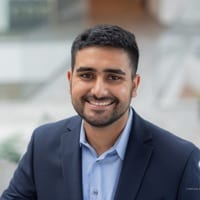
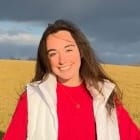
The Next Generation of EDS Experts with Jeevan Mann and Delaney Kenney
Description
In this episode of the Bendy Bodies podcast, Dr. Linda Bluestein speaks with two brilliant young researchers, Jeevan Mann and Delaney Kenney, about their groundbreaking work in Ehlers-Danlos Syndromes (EDS). Jeevan shares insights into using 3D skin models for understanding hypermobile EDS, while Delaney discusses her biorepository project and the hope for future treatments. They also share personal experiences navigating life with chronic illness, the importance of advocating for accommodations, and the role of community in supporting those with EDS. This inspiring conversation highlights the innovative research that could transform EDS care and diagnosis.
Watch
Guests
Transcript
[00:42] Dr. Linda Bluestein: Welcome back, every bendy body, to the Bendy Bodies Podcast with your host and founder, Dr. Linda Bluestein, the Hypermobility MD. This is going to be an exciting conversation today with two young people who are working in the lab of the Gates Institute here in Denver, Colorado. We are actually going to be talking about a very rare type of EDS, classical-like EDS type 2, which is related to a variant in the AEBP1 gene. And the manifestations are not that dissimilar from hypermobile EDS. And you'll hear some very fascinating information from Jeevan about how he had a different diagnosis at the beginning. So I think you're gonna find this a really fascinating conversation.
[01:28] Jeevan Mann is a returning intern to the University of Colorado Anschutz through the Gates Summer Internship Program, which gives undergraduate students the opportunity to conduct regenerative medicine research. Last summer, Jeevan had the unique opportunity to work in the Gates lab developing therapies for Ehlers-Danlos syndromes. Not only do multiple members of his family have a clinical diagnosis of hypermobile EDS, but in 2022, Jeevan was also identified as one of the few documented cases of AEBP1-related EDS in the entire world. We also have with us today Delaney Kenney, who is working in the same lab and was diagnosed with hypermobile EDS in May of 2023. Her main role is to reprogram hypermobile EDS patient fibroblasts into induced pluripotent stem cells, which will then be used to elucidate and validate the molecular mechanisms behind this condition to help identify potential therapeutics.
[02:26] As always, this information is for educational purposes only and is not a substitute for personalized medical advice. Stick around until the very end so you don't miss any of our special hypermobility hacks. Let's get started.
[02:41] Well, it is great to talk to Jeevan and Delaney today. Thank you so much for coming on the show.
[02:46] Jeevan Mann: Yeah, thank you so much for having us.
[02:48] Dr. Linda Bluestein: Yes, absolutely. We're going to start with Jeevan. And Jeevan, I would like to know what you are currently working on in the lab.
[02:57] Jeevan Mann: So I'm working in the lab with Dr. Anya Belousova, and we're working on the characterization of hypermobile Ehlers-Danlos syndrome, also known as the most prolific type of Ehlers-Danlos syndrome and the only one that remains to be uncharacterized.
[03:07] Dr. Linda Bluestein: And how are you studying hypermobile EDS?
[03:14] Jeevan Mann: So we're actually using an in vitro model of EDS using a 3D skin equivalence model. So what we do is we actually make a 3D equivalent of your skin using fibroblasts and keratinocytes. And so we spent a few years developing a model for that, and then we're doing further testing on those models to actually look at how EDS presents under the microscope and then along with our other assays and testing.
[03:39] Dr. Linda Bluestein: So right away I'm thinking, since hypermobile EDS has been so hard to wrap our brains around — or I should say so hard to pin down — we have the clinical phenotype, right? The way that it presents clinically. And then the genotype is unknown, as you said. So how do you go about making a model, a skin model, when we have so much information we don't know? How do you do that?
[04:06] Jeevan Mann: Yeah, so it is generally considered to be polygenic. So there are multiple genes that are going to be associated most likely. But there are ways that we're able to actually recapitulate the models. And one way is using mice xenografts, which is where you use immunocompromised mice and you put the patient cells — the keratinocytes and the fibroblasts — into the mouse, and then it grows into a skin equivalent. And then the new way that we've been working on is doing 3D skins. The 3D skins are not only cheaper, they take less time, and it's also a lot more efficient. We can run a lot of replicates at the same time.
[04:39] And they also do have the same exact phenotype under the microscope that we see with hEDS, which is perfect because now we're able to study it at a far greater capacity with multiple replicates. Although it took a lot of work on the front end, we're actually starting to see some pretty good results with how they're looking. So we're pretty excited about that.
[04:57] Dr. Linda Bluestein: Okay. So I want to make sure I understand. So you basically have patients that have been diagnosed clinically with hypermobile EDS.
[05:04] Jeevan Mann: Yes.
[05:05] Dr. Linda Bluestein: Correct. Okay. And then you are taking their DNA and injecting it into the mice, or what exactly are you doing?
[05:13] Jeevan Mann: So what we do is we work with the EDS Center of Excellence on campus. We work with Dr. Ellen Elias, who is the geneticist there, and she takes primary punch biopsies from patients who we've identified with hEDS. So we have our patient cohorts, and then we get primary punch biopsies from the parents as well as the actual patients. And then once we get those, we start isolating the fibroblasts and the keratinocytes from those punch biopsies, and then we expand those. So the keratinocytes make up your epidermis, which is the outer layer of your skin, and then the fibroblasts make up your dermis, which is the inner layer.
[05:51] Dr. Linda Bluestein: I take it then on these skin biopsies that she's taking from the hypermobile EDS patients, they've already found that that's a good proxy for what's happening elsewhere in the body, and that's why you're using the fibroblasts and keratinocytes from there, correct? Like it's already been shown that that tissue is different than controls or normal people.
[06:16] Jeevan Mann: It is, yes. So in the literature there is a little bit of an explanation for why hEDS has a phenotype, and that's mostly attributed to the extracellular matrix, just because collagen is an extracellular protein. So we're actually able to see that phenotype under the microscope. You've probably heard of things like collagen flowers, where the collagen isn't bundled properly and they look like flowers under the microscope. So that's something that's pretty well out there in the literature.
[06:41] Dr. Linda Bluestein: And then you were making basically a mouse model of this, but also doing the 3D work. So you have basically a couple of different ways. Am I understanding that correctly?
[06:53] Jeevan Mann: Yes. Not necessarily 3D printing right now. We are going to be 3D printing hopefully in the future, but right now we're doing this by hand, which is a lot more manual labor, but it just allows us a little bit more control with the skins while we're developing the model and perfecting it. But yes, we do have a mouse model as well, but those are a lot harder to do and they take a lot of skill.
[07:13] Dr. Linda Bluestein: And what are the goals of that research?
[07:17] Jeevan Mann: So the goals are hopefully to get a proxy by which we can assess EDS under the microscope, as well as hopefully validate any mechanisms that we could find in the future.
[07:28] Dr. Linda Bluestein: And Delaney, how has the Gates Institute helped you on your journey? You have a diagnosis of hypermobile EDS, correct? Okay. How has working with the Gates Institute helped you?
[07:39] Delaney Kenney: The main thing for me has been the support and understanding of everyone at the Gates Institute. I've never really been in a medical or academic space where I'm surrounded by people who know so much about Ehlers-Danlos syndrome. In my experience with a variety of professionals — like physical therapists, dentists, and even in the emergency room — doctors have never even heard of it the majority of the time. So it's kind of helpful to know that I'm immediately understood by what I have and everybody around me understands it to the same level.
[08:10] It's also great to be able to receive accommodations from the Gates Institute because it's an invisible illness, so so much of the time it's hard to describe to others what it's actually like. But here, because everybody around me knows what it's like, it's very easy — if I am feeling super tired one day or have brain fog one day — to get certain accommodations in the lab, which has been super helpful.
[08:35] And it's also great to just be in a place where I can talk to other people like Jeevan who also have EDS. It's amazing to be able to actually compare experiences and helpful tips and just be able to talk to somebody who has gone through similar things that I have. In my family, my sister and my dad both have EDS, but we have completely different symptoms. So even talking about it, it's totally different experiences. So it's just great to be able to have an additional person to have those conversations with, because it's hard to describe it to somebody who has no idea what you're talking about.
[09:05] Dr. Linda Bluestein: Yeah, I think that's true. If you've never lived in a body that's, as you said, more unpredictable, and with some of the things that we experience, I think it is hard for outsiders, if you will, to really understand what it's like. So I think that makes sense. And you're both interns in the lab, right? So, Delaney, are there other interns in the lab? Is having EDS something that they almost look for in interns, or will they take interns with or without EDS? How does that work?
[09:40] Delaney Kenney: Yeah, so Jeevan was actually the first intern from our program to work in this lab. In our internship program, there are usually one or two people in a variety of different labs. But for our lab, it was really great that he got to have a chance last year to work in it because he had EDS and the program directors told him about this. For me, I actually found out I had EDS last year, and from then on I knew I wanted to do some sort of research the next summer that looked into EDS. I actually found it through an article that was written about Jeevan in the lab. So for both of us, it isn't really a big part of the internship program that we have this EDS lab, but it just so happened that because we had it and because we had reached out to the program, they allowed us to perform such amazing research.
[10:28] Dr. Linda Bluestein: Yeah, I've seen that article about Jeevan as well, and it was a really great article. I'd be curious, Jeevan, what all else has come out of that article that you were involved with.
[10:41] Jeevan Mann: Yeah, so it was really a fantastic opportunity to come to the Gates Institute. I was actually a patient at Children's before I came here, and at the time I would have considered myself pre-med, just interested in science and medicine in general. And it was through the Children's Hospital that I realized they had a program here over summer where interns could research. I had no idea I would be in Dr. Belousova's lab. That wasn't even an idea of mine. I was just like, oh, it'd be cool to actually be at the university where they study EDS — not even thinking that this was something that could happen. And not only did the directors put me in contact with Dr. Belousova, but she was gracious enough to accept me into her laboratory and give me a project about hEDS.
[11:21] So I myself don't have hEDS. I technically have AEBP1 EDS. And just so everyone knows, I do actually know Dr. Bluestein from before this because I was one of her consulting patients, I believe. So we do know each other a little bit before this. And I also know one of her guests — Dr. Atwal is the one who diagnosed me with the AEBP1 EDS, because as you know, there were less than 10 people in the literature when I got diagnosed.
[11:50] But all that to say, it's been amazing to be at a program where I not only study my disease, but I also got a chance to work with another amazing intern who understands what it's like day to day, as well as the molecular side of Ehlers-Danlos syndrome, which I feel is just so rare. There are not many labs studying it.
[12:08] Dr. Linda Bluestein: Yeah. And there's so much more that we need to know in order to really be able to help people. So the type that you have, Jeevan, is considered classical-like type 2, correct?
[12:21] Jeevan Mann: Correct.
[12:22] Dr. Linda Bluestein: Okay. So Jeevan, can you tell us just a little bit more about your research and the benefits that the 3D skin equivalent models have in comparison to mouse models, and could that ever serve as a complete replacement for mouse work?
[12:39] Jeevan Mann: Yeah, so the greatest part about the 3D skins is we're able to do them on such a large scale. One of the big things we want to do is start doing drug testing eventually and trying to make therapeutic advancements in EDS. And one of the best ways we can do that is by doing it on large replicates of hEDS patients, so we can really see how it works across the board. There's a lot of variation in hEDS, and we want to see if a therapy works across all patients. So if we did that with the mouse model, it would be extremely expensive and time-consuming. There are not many people in our lab who can even do the xenograft models — it's only one or two. They're really expensive and time-consuming. And there's also a little bit of interaction between the mice physiology and the actual engraftment sometimes. That's something we also have to keep in mind.
[13:26] But the 3D skins are not a replacement for in vivo research. They're not a replacement for the mouse research. What they allow us to do is identify targets so we can eventually take it to the mice after we have a good idea of what we want to pursue. Because if we started with the mice, it would just be expensive and really long. This allows us to do this faster, more efficiently, and hopefully we'll get to a solution faster.
[13:52] Dr. Linda Bluestein: So at some point — and this is the hope, I guess — there would be different medications or other treatments that you could apply to the 3D skin equivalent models and see if that made changes in the skin. Could you explain a little bit more about how that would work?
[14:10] Jeevan Mann: Yes. So we're trying to see if the extracellular matrix is actually being affected, just because that's where the collagen is and that's where we're seeing the phenotype of EDS. So we're hoping to see an actual rescue of phenotype back to the wild type, where you see really organized collagen compared to the disorganized collagen of EDS patients. That would be what we want to see in drug development. And we can actually assess that with 3D models. We can do electron microscopy images on them, and we can do H&E staining, which just allows us to see the architecture of the skin and how the collagen is laid. So it's just a great proxy by which we can actually assess.
[14:46] Dr. Linda Bluestein: In terms of what you both — being young people that are affected by these conditions — think, I'll start with you, Delaney. What do you think are the most important things that we should be doing in this space? So people like me who have a clinical practice, have a coaching practice, do this podcast, serve on some boards and things like that — what do you think would be the most important things for those of us in this space to be focusing on?
[15:29] Delaney Kenney: I would say just getting the word out about EDS. I feel like so many professionals that I've talked to in the field, and just lay people too — nobody knows what it is. And so it's really hard to get diagnosed. At least for me, it took so many different years and so many different people telling me different things. It's just great to have resources to be able to go back to, to learn more about it. Professionals in the field communicating about it, communicating the new advancements about it — our lab in particular, it's so great. I didn't even know that there was a possibility for a future without EDS, hopefully in the future if everything goes to plan with our Center for Regenerative Medicine.
[16:12] Yeah, I feel like just the spreading of information is the most important thing, because hEDS especially, I feel like is very underdiagnosed in the general population. More communication about the disease in general is what has helped me the most.
[16:30] Dr. Linda Bluestein: Yeah, I mean, as Jeevan was saying, classical-like type 2 especially — and I guess even classical-like type 1 — is very, very rare. I know I came across papers with, as you said, nine or ten people at the time those papers were published. So very, very small numbers. But then there's the vascular type and the classical type, which are more common. And then there's the hypermobile type, which a lot of us think is probably not rare at all. I think it's actually quite common, depending on what we're using for the criteria. We have the 2017 international criteria that came out from the international consortium, which are already being revisited, appropriately so. I talked to Laura Bloom about that a few episodes ago. I asked her if she thought that hypermobile EDS was overdiagnosed, underdiagnosed, or both, and she said both. And I think the same thing. There's so much confusion that I think there are some people making the diagnosis maybe without as much knowledge. And you kind of have to see a lot of people and touch a lot of people's skin to really know what you're looking for, since these are clinical diagnoses — unlike what Jeevan is talking about for his type, which is an actual genetic diagnosis that can be confirmed by genetics. So, Jeevan, what do you think is the most important thing for us to be working on?
[18:04] Jeevan Mann: Honestly, I would say the same thing. There just needs to be more awareness about EDS as a disease. For me, the only reason that I got diagnosed is because I was very privileged to have a provider as a mother. She's a PA and she noticed the signs very early. I had started having a lot of joint pain in high school and she thought I had Marfan syndrome. I already had a rheumatologist because autoimmune disorders run in my family. I have an autoimmune disorder. And so I went to my rheumatologist, and his daughter has EDS. So he was like, oh, you seem like you have hEDS. So then I got a geneticist referral from that. And then I also got a different geneticist referral from my dermatologist because my skin started ripping when I was about 15 or 16.
[18:47] There is just — if I didn't have that community where people knew about EDS, I probably would not have been diagnosed. And that's also a big issue because even with how rare my variant is, I still required the diagnosis of hEDS to even further go on and get exome sequencing. So more knowledge in general about EDS and hEDS specifically is critical.
[19:10] Delaney Kenney: Yeah, I'd agree with that. Just to add on — the only reason that I got diagnosed too is because I went to a new physical therapist who herself had hEDS and she was like, oh, your symptoms sound exactly like this. You should go check it out. But nobody that I've ever gone to in any sphere of the medical world — unless they have it themselves, know somebody that has it, or study it — has ever heard of it before. So just the basic knowledge of knowing what it is, and not having patients like me actually have to spell it out for them and say "Google it up real quick," would be so, so helpful in the future.
[19:45] Dr. Linda Bluestein: Yeah. And that's really interesting. Jeevan, your story is really fascinating because — and some of this obviously I know from outside conversations, so I'm waiting for you to share things so that I don't share something inappropriately.
[20:02] Jeevan Mann: I had a very complicated medical history. I had a brain tumor when I was 13, and that was difficult because even then, nobody knew I had a brain tumor for 8 months. They thought I just had GI symptoms. My mom was actually a non-traditional PA. She went to her medical program after I was already born — I was in 4th grade when she went. So I started having symptoms in the 7th grade, right when she finished her PA program, literally months before I started getting my first symptoms of my brain tumor. And she was relentless in trying to figure out what was wrong with me, because I was told it was anxiety. I was told that there was nothing wrong with me, and I was vomiting 20 times a day. My mom kept pulling me out of different specialists, and then we ended up going to one in Sacramento, Dr. Inka Davies. She was so fantastic. She communicated with my mom all the time. They went over diagnostics, they would read the tests together and come up with new ideas. She consulted her neurosurgeon friend, who told us, oh, just get an MRI to check it off, it's probably nothing. And then lo and behold, I had extreme hydrocephalus that was at an extremely critical state. He remarked that had I waited a little bit longer, it probably would not have been a good prognosis for me.
[21:28] So I had my first brain surgery then, and I still try to recognize my privilege because had I not had a provider as a mother, that probably would not have been the fate for me. She not only helped me figure out my brain tumor the first time, she helped me get my EDS diagnosis, and she kept advocating for me along with the rest of my physicians. I've been very, very lucky to have physicians who advocate for me, who believe me wholeheartedly, and who do everything they can to help me.
And then arthritis and all those other degenerative conditions started coming later in high school. I started having my first symptoms of POTS when I was 14, my freshman year of high school. And I was an athlete, so I would be working out and then my vision would just go black. I saw a cardiologist. I was told that my valves in my heart were floppy — that's an actual quote. But other than that, my blood pressure just seemed to be a little bit low, and it didn't seem like a point of concern, so we just continued. And then I got subsequently worse to the point where I had to quit tennis and quit all the things I loved, because after my second brain surgery in high school — which was a revision of the first — I ended up becoming disabled for a period of about 4 months. And the only reason I'm able to walk and do all these things again is because I had a fantastic physician in Lovato who helped rehabilitate me through all my physical therapy. And then she directed me to someone in Florida who could be of more help, and that Florida conversation happened to be more EDS diagnostics.
[23:03] So I've kind of been all over the country. But I've just been very lucky to have the support system that I do in order to even get diagnosed and to have all these other comorbidities diagnosed, because it's just so hard with a condition that has so many associated conditions. EDS is one of our problems, but it's not the only thing. There's POTS, there's autoimmune conditions, inflammatory conditions. It's just a very difficult disease to live with because you just don't know what's coming next. That's why managing care is so critical, because you have to have someone who's constantly checking on you. I get an EKG yearly and I get ultrasounds as well just to make sure that I'm doing okay, because I had arrhythmias that had to get ablated. But there's just so much that's not known about this disease, and it is very important that we continue to research it and try to understand the links.
[24:01] Dr. Linda Bluestein: Wow. And it is so hard. I love how people often use the example of a broken leg. I had a family member recently with a broken leg, and I would have to say that their care was not good, even with a broken leg. So I use that example a lot — like, well, you break your leg and they fix it and all is well. No, not necessarily. And it's way, way harder, of course, with these conditions because they are so much more heterogeneous.
[24:32] And your story is really fascinating because of all the different things that you went through. And I feel like a lot of times, as you're saying, Jeevan, about seeing the rheumatologist and being diagnosed — you said you were diagnosed with an autoimmune condition, correct?
[24:49] Jeevan Mann: Yes, I have celiac disease. I also got diagnosed with mast cell at one point. And then when I was a kid, I had chronic laryngitis. I also had extremely bad allergies — out of the things I was tested for, I tested severe for about 30 or 40 of them, which was most of the panel. And I lived in a small farm town, so that was not great for me. I had to get allergy shots for 5 years, severe asthma because of that, eczema — all of the above. But it's interesting seeing that these conditions are actually highly comorbid with EDS. And funny enough, my mom has hEDS, and these things also run in her family. So it's just a very interesting dichotomy to see.
[25:30] Dr. Linda Bluestein: Yeah, that's actually — I'm so glad that you mentioned that, because having different forms of EDS within the same family is super interesting. So you mentioned that you had whole exome sequencing or whole genome sequencing, correct?
[25:43] Jeevan Mann: Correct.
[25:44] Dr. Linda Bluestein: Okay. So have your parents had whole genome sequencing as well to see if they have the AEBP1 genetic marker?
[25:56] Jeevan Mann: Yes.
[25:56] Dr. Linda Bluestein: It sounds like your mom. Okay.
[25:56] Jeevan Mann: Yes. But it's really funny because only the women in her family are affected — my grandmother, some of my aunts. But there's still just a lot unknown about this disease. And it's interesting because her presentation is completely different than mine. She's a lot more hypermobile than me, but my joints slip out of their sockets and I developed arthritis at 19, and she got it later on. Her case is also hEDS. She has many of the symptoms, but just a different presentation than mine. Our worst areas are located in different places. But there's a big spectrum even among hEDS patients, so that's to be expected.
[26:41] Dr. Linda Bluestein: And even within families — that's the thing that I think is mind-boggling for a lot of people. Like, wait, but we're genetically related to each other. You can have new mutations — de novo mutations — but still with genetic conditions, you would expect to see more similarities. Delaney, what about you and your family members? Similarities or differences?
[27:04] Delaney Kenney: Yeah, so I'm actually really different from the rest of my family too. My sister recently got diagnosed with hEDS after I did, and we think my dad is the one that gave it to us, but he still has yet to be diagnosed. But the three of us all have completely different symptoms. My sister's are more of the inflammatory sort, and mine — I feel like I have so many more symptoms than either my sister or my dad.
[27:30] When I was growing up, I played three sports, so it was more like getting injured every single year. I've gone to PT for different injuries since freshman year of high school. And then when I got to college, it became more the dysautonomia symptoms — struggling with dizziness, with lightheadedness. I get stress-induced sicknesses where I will stand up and then my vision will immediately go black and I'll be bedridden for 5 days. And I feel like I get different symptoms every couple of months too. Like last fall was the first time I started experiencing brain fog, and now when I have flare-ups, I get brain fog every time.
[28:10] But we're still trying to figure out what each of our family members has because it's been so recent that any of us has gotten diagnosed. I was only diagnosed last May and I was the first one to get diagnosed in my family. So it's still very much a learning process. It was very surprising learning that I had hEDS and that it was a genetic condition, because my sister, my dad, and I all experience it so differently. We never thought any of our symptoms would be related to the same condition.
[28:40] Dr. Linda Bluestein: Yeah, that's interesting. And I've had patients where — I'm thinking of one family where I take care of grandpa, a mom, and then multiple kids in that family. It is interesting because they're different from each other. But something that kind of fits with what both of you were saying is that the older generations often seem to be doing better, relatively speaking, than the younger generations. And I don't know how much of that is due to environmental factors, because we have so much more in our environment now in terms of exposure to pesticides and plastics and other things that are activating our mast cells and causing problems. All right, we're gonna take a quick break. And when we come back, we are going to talk more about the Gates Institute and what your career goals are. So we'll be right back.
[31:24] Dr. Linda Bluestein: Okay, we're back with Jeevan and Delaney. So Jeevan, if I was cutting you off, I want you to finish the thought of what you were about to say. Otherwise, I have a question for you. Did you have something that you wanted to add in there?
[31:37] Jeevan Mann: I was just saying it's really interesting to see the environmental impact on EDS as well. I went to UC Davis and one of the classes I took was behavioral epigenetics. That was one of the main focuses of the class — the new world that we live in and how epigenetic landmarks can actually be changed and moved, not only as you move through your lifetime, but also based on what you're surrounded with. So it's interesting, as we move into this new and modern world, to see how things that we might think of as revolutionary now might actually affect us in the future.
[32:09] Dr. Linda Bluestein: Yeah. And I think we often forget that a lot of these things have not been around forever, and we don't necessarily know what the impacts are because it takes time and research to really get that kind of information. So, okay, Jeevan, you were sharing your really interesting journey, and I'm sure you've gotten information from a number of different sources about EDS. Can you tell us more about where you have felt it's been most helpful for you to get information about EDS?
[32:43] Jeevan Mann: Yeah, of course. This is a little bit multi-pronged because before I had AEBP1 EDS, I had an hEDS diagnosis. We learned a lot from my first doctor, but I had a lot of specialists along the way who helped me, and they gave us resources such as the Ehlers-Danlos Society. And then my dad has been one of my biggest champions. When I was bedridden, he decided to take all the research onto himself. He's in real estate, he doesn't have a medical background, but he decided to go look through the literature and found people like yourself — specialists in the field making podcasts and spreading awareness about this type of disorder. He would give me papers, give me anything that could actually help, and he would try out the most random things, from supplements to medications we could possibly try. I understand it's probably terrible to see family members going through this. It's not often looked at how it affects families.
[33:39] Yeah, I would say at the end, the biggest resource has been the Ehlers-Danlos Society and advocates such as yourself who really help us figure out this disease when there's really nowhere else to look.
[33:52] Dr. Linda Bluestein: Well, I'm glad that the podcast has been helpful, because that's the goal — getting accessible information to people so that they can learn as much as possible to help themselves and their loved ones. You're right, it's a family thing. The whole family is affected. Everyone around that person. And it's really, really important for everyone to be aware.
[34:15] Okay, so Delaney, tell us more about your experience as a summer intern with the Gates Institute.
[34:23] Delaney Kenney: Yeah, so I've absolutely loved working at the Gates Institute. It's been my favorite internship program that I've been a part of. I feel like what makes it very special is just how much everybody is willing to teach me and how much everybody is willing to help out. I'm actually a neuroscience major, so this is my first time working in a biology lab, and I found it super rewarding to get to have my first biology research experience be on something that impacts my life and so many others' lives so much.
[34:52] Everyone in our lab has been so eager to help me out with learning lab techniques and even just talking with me about my own symptoms, what they've read in the literature, or even what they've discovered in the lab themselves and how it relates to that. And before I came to Gates, I was told ever since I got diagnosed that there's no treatment available — all you can do is manage your chronic pain, take vitamins, and go to physical therapy, and that's the best you can do. But being at Gates, it's the first time I had hope for a future without EDS and actually got to see what it looks like — people working towards different treatments available in the future and understanding the molecular background behind hEDS.
[35:36] So it's just been an amazing experience overall. And our program directors also give us the chance to attend a variety of seminars where leaders in different fields get to talk about their research, panels talking about how to get into grad school or med school, and just telling us about their path to their career — which is usually a winding path. Nobody really knows exactly what they're going to do right out of college. So just the collective of all of that and all of the great resources that we've been given has been so amazing.
[36:11] Dr. Linda Bluestein: And how big is the lab in terms of number of people and/or number of projects that are going on at any given time?
[36:19] Jeevan Mann: We have an unusually large lab. We have anywhere from about 20 to 25 people, somewhere in that range, and there are a lot of different projects going on. We are a dermatology lab and we also specialize in iPSCs — induced pluripotent stem cells. That's another focus of our research, and Delaney could tell you more about that than I could. But yeah, we do have a lot of different projects constantly going on, mostly in the dermatological field. Like with recessive dystrophic epidermolysis bullosa — that's one disease we're also studying inside the laboratory, also known as butterfly skin disease. So there are a lot of different projects going on, but mainly they are dermatologic conditions.
[37:01] Dr. Linda Bluestein: Okay. Delaney, do you want to tell us more about what you're doing specifically?
[37:06] Delaney Kenney: Absolutely. So my project in the lab this summer was reprogramming hypermobile EDS patients' fibroblasts into iPSCs just to create a renewable biorepository of patient samples. So I worked on a control line and a patient sample line, and I was able to reprogram the fibroblasts into the iPSCs. And then I did a variety of characterization methods such as karyotyping analysis and immunofluorescence staining to make sure that I did indeed turn them into iPSCs. And then after that is where all of the model building, the potential future drug development, and everything that Jeevan is working on comes after that. So I was kind of on the front end of just making that biorepository possible.
[37:52] Dr. Linda Bluestein: And both of you have obviously done some incredible things already in your young lives. Jeevan, let's start with you for this one. How has life with chronic illness changed your career goals?
[38:04] Jeevan Mann: Oh, that's a tough one. So I always loved science as a kid. I was probably one of the only 10-year-olds you knew that loved embryology and used to watch YouTube videos about it all day long. So I knew that I wanted to do something in the science field. But once I had my brain tumor, I really realized the impact that being in medicine could make on a person, because being a physician is more than just helping people with diagnoses — it's really changing their lives. Me getting diagnosed with my brain tumor not only saved me, but it changed the entire course of my life. It changed the way that I look at things. It changed the way that I appreciate the world. When you realize how fickle everything is, it really changes you as a person. And I wanted to be that supportive physician for other people.
[38:47] So from then on I was pre-med, but it was coming to the Gates Institute and their emphasis on translational medicine that I really realized that one of the greatest impacts I could make is not only in the clinic, but also in the laboratory, especially with such a rare disease like this. I decided that it would be great for me to also get a PhD, because we still need a lot of research in the basic laboratory for EDS as well as the clinical laboratory. So my life goal is to now get an MD-PhD and work on these rare conditions.
[39:17] Dr. Linda Bluestein: Fabulous. And is that something that you'd be applying for in the near future, do you think?
[39:23] Jeevan Mann: Yes, I'd hope so. I graduated college a little bit fast, so I'm taking a little bit of a break right now, just researching and trying to get my hours up to be a competitive applicant. Yeah, I know that's my goal. I'm going to do that whether I do them separately or together, but that's where I eventually want to end up.
[39:42] Dr. Linda Bluestein: Yeah, I think getting the MD-PhD is very, very smart. I don't think I really thought that much about it back when I was applying to med school. And I was not as young as you, but I did graduate from college early — I graduated in 3 years instead of 4. So I was younger when I started med school and I just was in such a hurry to finish for whatever reason. And of course, if you do the MD-PhD, it takes even longer. But I think that would be absolutely amazing, and I would think your application would be quite strong.
[40:17] Jeevan Mann: Thank you.
[40:17] Dr. Linda Bluestein: So okay, and Delaney, what about you? How has life with chronic illness changed your career goals?
[40:28] Delaney Kenney: Yeah, so before being diagnosed with EDS, I had previous experience studying child development in a variety of labs, but I couldn't really find a career choice or a specific niche interest in the field that I knew I was super passionate about and wanted to pursue. But now knowing that I have Ehlers-Danlos syndrome and coming to the Gates Institute, I've had the chance to study something that directly has the power to improve my life and the lives of others. And so in the future, I know that I want to continue working in this field. I'm not really sure if I'm going to go the grad school route or med school route, but I know that I found my passion in working with hEDS.
[40:54] And so I want to continue working to help elucidate the genetic mechanisms behind it and also to identify different symptoms and comorbidities associated with it, because those have impacted my life quite a lot. I do want to tie in my original interest with child development, because I am very passionate about that too, and I just overall want to research how EDS manifests in different stages of life as you grow up. And also help with my research to lower the average age of diagnosis, because I know it takes people decades to get a diagnosis. Working in more of the child development side of EDS, I feel like, would be a really great career path. But again, not really sure exactly what my career choice would be — I just know what area I want to study in.
[41:53] Dr. Linda Bluestein: And you had mentioned earlier about accommodations.
Delaney Kenney: Yes.
[41:53] Dr. Linda Bluestein: And there are probably some people that heard that and went, oh, well, I wish I could get accommodations, because that's something that is of course very challenging. Do you have any advice for people who feel like they do need accommodations, but they've been struggling to get them?
[42:11] Delaney Kenney: Yeah, so I struggled for quite some time because when I got into college, that was when I first started experiencing dysautonomia symptoms and stress-related illnesses. And I had always had the mentality — from being in competitive youth sports and a competitive academic environment — to just tough it out. Like, everybody deals with these things, so you should just always give 100% all the time. And so I feel like I didn't really advocate for myself a lot because I was like, oh, everybody deals with this, it's just the normal thing going to college.
[42:44] But once I started advocating for myself and trying different physical therapists — like I would switch doctors if one wasn't working instead of sticking with them for 3 years just hoping things would get better — just trusting myself more and knowing that I know myself better than others know me, that was the key factor in me getting a diagnosis. And when I got a diagnosis, that was the best thing to help me with accommodations, because I'd get tested for a variety of things at the nurse's office and I'd always get stress sicknesses during finals or midterm season and I'd always test negative for everything. So they'd be like, oh, you're just faking it, you don't want to take your midterms.
[43:22] But yeah, I'd say advocating for myself has been the biggest thing, and never giving up on the fact that you know yourself better than anybody else does. Just trying to find who is best to treat you and believe you in these different environments really helped me get the accommodations that I needed.
[43:40] Dr. Linda Bluestein: Jeevan, do you have thoughts about getting accommodations?
[43:43] Jeevan Mann: So I will preface this with the fact that I do have a little bit of privilege, in the sense that brain tumors tend to be a buzzword — people don't ask questions after you put that in your prior history. So it wasn't very difficult for me to get accommodations for that. But I do know that it is difficult for many people to get accommodations, and it's definitely an issue that requires a lot more focus.
[44:11] But yeah, accommodations were the biggest thing for me that allowed me to graduate early, or even graduate at all. I couldn't really attend my classes. I was lucky to attend UC Davis and they had lecture capture for all of their courses, so the rooms automatically recorded the classes and uploaded them online. I really couldn't leave my room at some point during my winter quarter at UC Davis. I had degenerative arthritis that quarter and I got a heart arrhythmia, so I really couldn't leave my room too much — my heartbeat was in the 200s and I was not well enough to leave. So I just watched my lectures online and would go in only to take the exams at the accommodated test center, then immediately back home. That's what my college career was mostly like. The accommodations made one of the biggest differences for me.
[45:01] And yeah, I would also say, like Delaney said, advocating for yourself — because if a teacher or anyone tries to deny you accommodations, it's important you speak up and really express how it affects you.
[45:14] Delaney Kenney: Yeah, to add on to that — a big thing is not playing down your symptoms. Even if you don't think it's a big deal or you don't want to make a big deal out of it, just tell them everything that you've been going through, whoever you're trying to get accommodations from. Even if it takes a while for it to happen, at least if people understand it better, they're more likely to give it to you. And yeah, just don't play it down and keep advocating for yourself.
[45:38] Dr. Linda Bluestein: And probably documentation is very important as well, I would think. I think it's a common thing that we kind of gaslight ourselves — as you said, Delaney, we don't trust ourselves sometimes and we minimize our own symptoms. And so often we're used to not feeling good and we've adapted to that. Those are all really important points.
[46:09] Delaney, you talked a little bit about getting your diagnosis and that one of the things you want is for people to get a diagnosis sooner. Do you have any suggestions for someone who is struggling to get a diagnosis?
[46:25] Delaney Kenney: I would say just get a variety of opinions. That has been the most important thing for me because when I was growing up going to my regular doctors and physical therapists, they would tell me to do my exercises or stretch more, which was never really good for me. I just kind of assumed that they're professionals, so they know what they're talking about — like, maybe I'm just doing it wrong. I was blaming myself more than thinking, oh, maybe there's something else going on here.
[46:54] So I'd say again, trusting yourself and knowing your own body, and getting a variety of opinions. Because I had to go to probably four or five different physical therapists before I saw one that was actually making things get better, and she happened to have hEDS herself. So yeah, just don't stay stagnant in your chronic illness. Don't think that it's normal when you know that it isn't, just because other people don't really think that you might have a rare disease. You definitely could, and you can definitely find people who will believe you and who do know more information about it. So definitely just get more opinions and keep advocating for yourself if you know that something is up.
[47:37] Dr. Linda Bluestein: I think that's another problem with our medical education. You know, the zebra is the symbol of EDS, right? And it's that way because in medical school you learn, if you hear hoofbeats, think horses, not zebras. But the other problem is if you've been to the doctor often enough and there's enough mystery still surrounding what's going on, you need to start thinking about zebras, and we should probably start thinking about zebras sooner rather than later. Jeevan is a great example of that. Rare things are not nonexistent — they're just less common. And a lot of those things we think are less common because we just don't do the tests often enough. It'd be interesting to see what percentage of people with that phenotype — that clinical phenotype of classical-like type 2 — would then test positive if you did whole genome sequencing on a very large sample. Would be interesting.
[48:40] Delaney Kenney: I think another thing also with receiving a diagnosis — because you had talked about the heterogeneous presentations of hEDS — is to tell any medical professional all the symptoms you have, not just the ones you're there for them specifically for. When I was being treated at physical therapy, I was mostly just talking about my athletic injuries, but then I happened to mention my dysautonomia symptoms and like dizziness and lightheadedness just because I had just experienced it recently, but I never thought the two of them were aligned in any way. And also I'd have dental procedures and Novocaine would never work on me, but I never thought that was related to spraining my ankle. Just talking about all of the health issues that you've faced — anything in your life, even if you don't think it's important — gives the whole picture. Because if people have that whole picture and not just a specific lane of what you're there to see them for, that definitely helped me get a diagnosis.
[49:43] Dr. Linda Bluestein: Yeah, that's definitely something that I advise people on a lot, even as a coaching client — how to organize their information in a way that makes it easier for the clinician to identify what's going on. So including more of your symptoms on a document, like a Word document, broken down by systems. So you might have GI, GU, neurologic, constitutional — which would be like fatigue, hot or cold intolerance, things like that.
[50:18] And then I recommend that people have a few documents. So one is having that list by category, which you can just update periodically and take to appointments. And then the other would be to have a timeline that is organized but also as concise as possible. Once you get a diagnosis, you can include that diagnosis, but you don't necessarily need to include everything leading up to that if it's not pertinent anymore. Those kinds of things and that kind of preparation can really serve you for a lot of appointments and make the clinician's job easier.
[50:59] Delaney Kenney: Definitely.
[51:01] Dr. Linda Bluestein: Okay. I want to ask both of you — and this time I'm going to start with Jeevan — what advice would you give if you could speak with your past self?
[51:07] Jeevan Mann: If I could speak with my past self, I would definitely say don't overexert yourself. I put too much pressure on myself, even as an athlete, to keep pushing myself past my limits. That's common rhetoric in sports — if you want to be the best, you push yourself past your limits. That's not true for EDS. You cannot push yourself past your limits. You're just going to hurt yourself more and you're not going to recover properly. And I did that for years without thinking anything was wrong with it, and I just kept degrading and degrading.
[51:37] The biggest jump in the quality of life that I've had is when I learned to say no to things and when I learned what fits best for me. I know that I'm not going to be running or jumping — those are things I just don't do anymore because they cause more damage than they do good for me. And although I love running and I love a lot of these sports, I've just learned to take a more laid-back approach to try to save myself in a lot of instances. So definitely don't be afraid to say no to yourself or other people if it's going to be something that pushes you out of your comfort zone in terms of mobility, or even just regularly. And yeah, I would say that.
[52:14] Dr. Linda Bluestein: Okay, what about you, Delaney?
[52:16] Delaney Kenney: Yeah, I definitely agree with Jeevan. I feel like it's really hard growing up in those competitive environments not to just tough it out. But that just never makes things better. When I was growing up playing soccer, I would be doing conditioning drills and my vision would get really fuzzy and I'd feel really dizzy, but I thought that was just part of the process of playing soccer. It wasn't until I actually talked to people about it that I realized nobody else was really experiencing the things that I was.
[52:47] Another example of this is my dental surgeries. I thought you were supposed to feel pain when you got dental surgeries. I didn't realize Novocaine was supposed to work that well. Only when I spoke up and talked to my family about it, they said, yeah, you should never be experiencing that. So now I have to get it reapplied every probably 20 to 30 minutes when I get a procedure done. So definitely don't play down your symptoms because you've been told to tough it out, because a lot of times toughing it out doesn't really do much for you. You can get a lot more resources and accommodations if you actually speak up and, like Jeevan said, learn to say no to things and learn to say, oh, this doesn't feel right and I know I'm not feeling good.
[53:32] I'd say another thing — kind of like I talked about before — is just get a variety of opinions and don't stay content where you are when you know that you're not feeling good, because you probably do have better options out there. And yeah, just advocate for yourself more and don't try to play down what you're experiencing.
[53:57] Dr. Linda Bluestein: So both of you grew up as athletes, and I grew up as a dancer — an artistic athlete, but a different type. And I definitely, around your ages, went through what you're describing. But then later in my life, I had to figure out where was that point at which I kind of did have to push myself a little bit. My husband actually gave me this watch a number of years ago, and on the box it said, "Today's a great day to set a record." And I was so mad at him. I was like, you've gotta be kidding me. I can barely take the dog for a walk, much less set a record. I was at a point where I needed to start monitoring my activity. And slowly over the past decade plus, I've been able to walk more and now go on hikes. We're in Colorado right now, all of us, so we're at altitude as well.
[54:52] So I think it's also hard because at different points in your life, maybe you have to sometimes find that place of, you know, where do I need to hold myself back, and where do I need to push myself a little bit? I talked to Alyssa Sealey, who is a Paralympic triathlete, and she talked about knowing when to push yourself a little bit versus when to hold back. Do either of you have thoughts about that?
[55:23] Delaney Kenney: Yeah, I'd say for me, when the holding back started was probably like mid-high school. I grew up playing 3 sports and then I cut it down to 1 sport. And now in college I play on the club soccer team at my school. Athleticism is a very big, important part of my life and something that I just love doing. So even though I know that sometimes I get injured really easily, it's something that I know does make my quality of life better — just exercising and being out there with my team.
[55:58] So one of the things when I got diagnosed with EDS was just, don't give into the fear of, oh, you're gonna get hurt all the time, this is gonna make your life worse, just stop everything that you're doing athletics-wise. I'd say try to find the balance between continuing to do what you love, and I love going on walks now instead of doing conditioning training for my varsity teams in high school. So just striking that balance between not giving up things that you love doing and continuing to exercise and get out there if you can — but even if it's at a lower level, that's okay. Just don't push yourself past your limits, but also don't give into the fear of having a chronic illness, because it doesn't mean that your whole life has to stop. You just have to find ways to manage it and balance the amount of exertion you put out every day.
[56:51] Dr. Linda Bluestein: And that reminds me of something that I often tell people. The question isn't so much, what can you do today? But what can you do the next day? So if you take the dog for a walk and you're a little tired later on that day, but you can do it again the next day, then that probably was a relatively okay amount of movement. I like to use the word movement rather than exercise, because both of you are still very physically active, which is great, but a lot of people for a wide variety of reasons end up really not moving very much. And then we get a lot of atrophy and a lot of other things that can happen that create a feed-forward cycle that can be really problematic.
[57:38] So I often give people that example — well, what can you do? Can you do what you did again the next day? Now, of course, if you're really training your muscles hard and working with an athletic trainer, trying to safely increase the load to get some of that muscle hypertrophy, then you're not going to do that the next day — that's not how that works. But with things like going for a walk or something, that's a good measure. What about you, Jeevan? Have you experienced anything like that?
[58:08] Jeevan Mann: Yeah, definitely with my physical therapy — getting up to the level of being able to walk again, that was one of my biggest things. And it takes maintenance to keep myself at that level. I found out recently that I can do pickleball. I can't play tennis anymore. Unfortunately, I can hit around, but I can't run for the ball and I can't serve. Those are just things that I'm okay with. But pickleball is a lot easier on the body. As long as I'm not running for the ball, I'm completely okay with that. So that's something I've realized I can do comfortably.
[58:43] But for me, mostly it's keeping up with maintenance. I'm a type of person that tends to push myself, and I don't usually realize I'm doing it until the damage has already been done. So I just tend to take a more conservative approach — I do more walking in lab, I do maintenance to keep up with it, but those are just things I already do. Every person has to have a different type of routine in order to either push themselves a little more if they're not doing enough, or hold themselves back a little like I have to.
[59:12] I actually joined a rowing team at some point because I still didn't want to believe I had EDS. I was like, oh, I'll be fine, it's not an impact sport, it'll be okay. And I ended up really injuring myself and had to take multiple days off a week. I really couldn't leave my bed. But it's just things that we sort of learn over time — how to either hold ourselves back or push ourselves a little more. I think it's a lot of trial and error, unfortunately.
Dr. Linda Bluestein: Yeah.
[59:35] Delaney Kenney: And finding that balance, I think, is the most important thing.
[59:37] Dr. Linda Bluestein: Yeah. And I'm glad that you both mentioned working with a physical therapist, because to me, that's such an important thing — for them to understand, are you the kind of person and are you in the place in your life where you need to be held back more? Or do you need to be carefully, safely encouraged to move? Because kinesiophobia is a very real thing. I had big-time kinesiophobia when I wrote my first article about pain management in EDS in 2017, and I was doing research for it. I came across kinesiophobia and I was like, oh my gosh, that is exactly what I have. I was so afraid to move because everything that I did hurt. And I was doing the boom-or-bust cycle — going from nothing to doing too much and hurting myself, and then back to doing nothing.
[1:00:27] Okay. So I like to end every episode with a hypermobility hack. We're going to start with Delaney. You could probably give us lots of hypermobility hacks, but why don't you pick one or two that you think the audience would like to hear about?
[1:00:44] Delaney Kenney: I feel like I've kind of said this throughout the podcast, but just making sure to know your limits and not push yourself too much. I know we talked about also being able to push yourself if you find you're in a place of stagnation and you might have a fear of hurting yourself, but striking that balance between knowing what you can and can't do — I feel like that's a really important thing, especially for people who just got diagnosed who are around our age. I feel like we're at this place in life where we're just expected to go off and do so many great things and build your resume and continue to move around everywhere, but knowing that it's okay sometimes to just preserve your body and your health and make that a priority — I feel like that's a very important thing.
[1:01:29] And another quick thing is just — if you have any symptoms, look to see if they might be related to EDS. If there's something that you feel is a little wrong in your body, don't push it down. Reach out to people, reach out to professionals in the field to see if that's something that might be related to it. With my example with Novocaine — I just never thought it could be related to EDS, and then I looked it up online and it was like, oh, that's one of the comorbidities with it. I just never would have known that it was related. So continue to research everything about your condition if new symptoms pop up, and just know your limits and find a good balance for your life.
[1:02:02] Dr. Linda Bluestein: And in terms of new symptoms popping up too — I think it's also important to keep in mind, as Jeevan was explaining before, there's a saying: a person is entitled to as many diseases as they damn well please. So it may or may not be related to EDS. You could have something new pop up that maybe is related, but maybe it's not. So yeah, you don't want to limit your thinking in that way, or your healthcare team's thinking. You want to start with a bigger scope and then narrow it down.
[1:02:44] So, okay. Jeevan, do you have a hypermobility hack for us?
[1:02:49] Jeevan Mann: I would say dietary hacks. I like to eat salt — that was one of the things my cardiologist told me that helps a lot with my dysautonomia symptoms. And then also hydrating and making sure that I'm taking care of myself by eating. I know it's really hard sometimes when you have gastrointestinal issues. I do as well, and sometimes I get a fear of eating because I don't want my heart rate to shoot up or I don't want to start vomiting and things of that nature. So one thing is to try to find out what works for you, the routine that works for you.
[1:03:21] And also I think finding community has been one of the biggest aids for me, because when I was in high school I knew I had these things but I didn't want anyone to look at me differently. Nobody knew. And I really started improving once I started talking to people and really taking in a variety of opinions. Like Delaney said, finding community is just fantastic because they always have random things that work for them — icing, heating. Salt is one of them that's also very big in the community. There's just a wealth of things you can learn from other people.
[1:03:57] Dr. Linda Bluestein: Okay. Well, thank you so much to both of you for joining me today. And before we wrap up, I would like for each of you — we'll start with Delaney — if you could tell me first of all if there's anything special that you're up to that we should know about, and then also where we can find out more about you.
[1:04:16] Delaney Kenney: Yeah, so we actually just did our poster symposium for our internship the other day, so that's about wrapping up. And I'm heading into my senior year of college. I'm really excited to get started on my thesis and then figure out my next steps — I'll probably take a gap year or two. So my path is a little bit undecided right now. But for my socials, my Instagram is @delaney_kenney, both with an E-Y. And yeah, thank you so much for having me on your podcast.
[1:04:50] Dr. Linda Bluestein: Absolutely. What about you, Jeevan?
[1:04:52] Jeevan Mann: For me, I'm still keeping up with my nonprofit work. We've raised money and we're just working on trying to get into schools and getting more volunteers. So that's going on right now. And then I'm still ironing out my plans for researching after this, so hopefully I'll be researching full-time somewhere soon. And you can find me on social media, on Instagram or LinkedIn — I believe it's Jeevan Manohar.
[1:05:13] Dr. Linda Bluestein: I don't think you mentioned your nonprofit before, so can you tell us about that really briefly?
[1:05:21] Jeevan Mann: Yeah, no problem. So I have a nonprofit called Medical Inspiration Inc. What it is is a nonprofit that I started about a year ago. We're trying to really help the disability community through care drives. And eventually we want to start helping with disability education, but right now we raised about $13,000, and now that we have that, we're working on getting volunteers and getting into schools to actually start making this difference. But nonprofits are very time-consuming and they take a lot of effort, so it takes a long time. I thought that getting into it would just be boom, boom, boom, but there are a lot of regulatory things that we need to do. So just working on doing that — and I just hired a social media manager. He just graduated from Berkeley, and so he'll be helping us now get into schools, hopefully soon.
[1:06:15] Dr. Linda Bluestein: Wow, that's exciting.
[1:06:16] Jeevan Mann: It is.
[1:06:17] Dr. Linda Bluestein: Amazing. Well, thank you again so much to both of you for coming on the podcast and sharing this fabulous work that you're doing and sharing your experiences. I'm just really grateful to both of you.
[1:06:31] Jeevan Mann: Thank you so much for having us.
[1:06:31] Dr. Linda Bluestein: Thank you so much.
[1:07:29] Well, it was so great chatting with Delaney and Jeevan. And I hope that you learned as much as I did about how young people like this are going through life and making accommodations, asking for accommodations, adapting what they're doing, and really trying to live the best that they can with their symptoms while also — in the case of these two young people — researching their conditions and doing some really amazing scientific work. So I hope that you're as inspired as I am by listening to this conversation.
And I want to thank you for listening to this week's episode of the Bendy Bodies Podcast. I hope you found it empowering and informative. If you loved what you learned, follow the Bendy Bodies Podcast on your favorite podcast player and subscribe on YouTube where full video episodes are released each week at Bendy Bodies Podcast. Visit bendybodiespodcast.com to access transcripts, show notes, or leave us a message. Help spread the word about joint hypermobility and related disorders by leaving a review and sharing the podcast. If you'd like to meet with me one-on-one, check out the available options on the services page on my website at hypermobilitymd.com. You can also find me, Dr. Linda Bluestein, on Instagram, Facebook, TikTok, X, or LinkedIn, all with the handle hypermobilitymd. You can find Human Content, my producing team, @humancontentpods on TikTok and Instagram. To learn about the Bendy Bodies Program Disclaimer and Ethics Policy, Submission Verification and Licensing Terms, and HIPAA Release Terms, or to reach out with any questions, visit bendybodiespodcast.com. Bendy Bodies Podcast is a Human Content production. Thank you for being a part of our community, and we'll catch you next time on the Bendy Bodies Podcast.