Making a MCAS Documentary with Drs. Weinstock, Dempsey, Bluestein, Afrin, Kinsella & Jill Brook, MA
Description
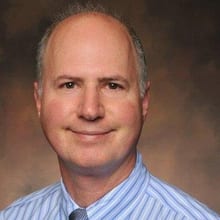
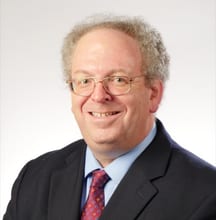
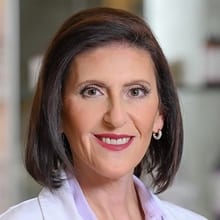
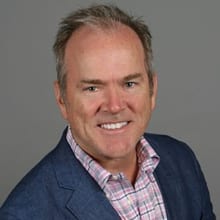
In this Bendy Bodies with the Hypermobility MD podcast episode, making a MCAS documentary is discussed. Distinguished participants in this collaborative effort include Dr. Leonard Weinstock, Dr. Larry Afrin, Dr. Tania Dempsey, Dr. Laurence Kinsella, and Dr. Linda Bluestein, alongside dedicated patient advocate Jill Brook. YOUR host, as always, is Dr. Linda Bluestein, the Hypermobility MD. Key Highlights:
- The initiative incorporates both a documentary and an online educational library strategically designed to elevate awareness surrounding MCAS, Dysautonomia, and Hypermobility Spectrum Disorders.
- Renowned healthcare professionals, namely Dr. Leonard Weinstock, Dr. Larry Afrin, Dr. Tania Dempsey, Dr. Laurence Kinsella, and Dr. Linda Bluestein, in conjunction with patient advocate Jill Brook, are pivotal contributors to this initiative.
- The documentary aspires to elucidate the myriad challenges confronted by individuals navigating the complexities inherent in the triad of syndromes, emphasizing the imperative of heightened awareness among healthcare providers to facilitate more efficacious treatment modalities.
- Dr. Afrin underscores the prevalence of MCAS and advocates for its consideration in the differential diagnosis for patients with complex medical presentations.
- The term "dystrophism" is introduced within the discourse, signifying aberrations in growth and development propelled by dysfunctional mast cells.
- Participants candidly share their experiences during the documentary's filming process, underscoring the inherent difficulty of condensing intricate information into concise soundbites.
- The timely recognition of MCAS is underscored as a critical determinant for effective treatment interventions and an enhanced quality of life.
- The team is dedicated to elucidating the nuances of MCAS, POTS, and EDS through the medium of a documentary, with the aim of providing comprehensive knowledge about these medical conditions.
- Emphasis is placed on the significance of joint hypermobility. Should it give rise to complications, it may serve as a potential indicator for dysautonomia or MCAS.
- Dysautonomia serves as an encompassing term, inclusive of conditions such as POTS and Inappropriate Sinus Tachycardia.
- Identifying growing pains (quite literally!) associated with these conditions can be a challenging endeavor. The gradual development poses a considerable challenge for all involved.
- A fervent commitment is made towards establishing an educational repository, replete with in-depth explorations by experts, delving into the intricacies of these subjects.
- The team candidly discloses the necessity for financial support to conclude their documentary project. Their overarching objective is to disseminate awareness about MCAS, POTS, and EDS.
- The documentary, at its core, is designed to render this information easily accessible, ensuring that individuals – be they patients, families, or clinicians – can acquire a comprehensive understanding of coping with these conditions. Chapters 00:00 Introduction00:37 Creating Awareness and Increasing Treatment Options03:09 The Birth of the Documentary Project05:20 Filming in New York07:19 Filming in St. Louis10:32 The Motivation to Work with Complex Patients15:49 The Journey of Recognizing MCAS17:34 The Impact of MCAS Treatment21:00 Personal Experiences and Incorporating MCAS Treatment22:42 The Need for an Educational Library25:29 The Challenge of Condensing Information26:21 Describing MCAS in Sound Bites31:10 The Importance of Raising Awareness34:42 Growth and Development Abnormalities in MCAS40:03 Main Points about Hypermobility Syndromes and Dysautonomia44:48 Partnership with LDN Research Trust51:47 Final Words and Call for Support54:26 Recognition and Treatment of Unrecognized Patients55:44 Importance of Learning and Trying56:13 Gratitude for Dedicated Doctors56:47 Closing Remarks and Resources Connect with YOUR Bendy Specialist, Linda Bluestein, MD!
Watch
Guests
Transcript
[00:35] Dr. Linda Bluestein: Welcome back, every bendy body. This is the Bendy Bodies Podcast, and I'm your host and founder, Dr. Linda Bluestein, the Hypermobility MD. This is going to be a great episode, so be sure to stick around until the very end so you don't miss any of our special hypermobility hacks. As always, this information is for educational purposes only and is not a substitute for personalized medical advice.
[01:01] Dr. Leonard Weinstock: Hello, fellow Triad patients and everyone who cares about Triad patients.
[01:13] Dr. Linda Bluestein: We have a triple crossover episode for you today, joining forces between my podcast, Bendy Bodies with the Hypermobility MD, the POTScast with Jill Brook, and Mast Cell Matters: Deep Dives on Mast Cell Activation Syndrome, or MCAS, with Dr. Tania Dempsey.
[01:31] Dr. Lawrence Afrin: Today's episode is bringing you an update and behind-the-scenes look at the nonprofit documentary and online educational library that we are creating to help raise awareness about the triad of syndromes: MCAS, dysautonomia, and hypermobility spectrum disorders. Unfortunately, many patients suffer with all three conditions, and we are working to increase awareness and the number of doctors who can effectively treat triad patients.
[02:04] Dr. Leonard Weinstock: Our guests today are the amazing physician researchers who are making this documentary possible. They include Dr. Leonard Weinstock, GI specialist, research publishing machine, and world leader in finding answers and treatments for complex syndromes. Dr. Larry Afrin, widely considered the father of MCAS with tons of publications and presentations, plus he literally wrote the book about MCAS called Never Bet Against Occam. And in addition to all that, he spends countless hours every week mentoring other healthcare providers about MCAS.
Dr. Tania Dempsey is not only one of our hosts today, but also part of the documentary film team. She is a Johns Hopkins trained physician and researcher. She's a thought leader in the space of MCAS and related conditions. And just like her partner, Dr. Afrin, she volunteers a huge amount of time educating other providers about these complex disorders.
[03:02] We've got Dr. Lawrence Kinsella, neurologist extraordinaire, who among other things specializes in helping complex patients at the intersection of dysautonomia, hypermobility or connective tissue disorders, MCAS, CFS, CSF leaks, Chiari malformation, neuropathy, and all manner of very complex neurological issues.
[03:20] And Dr. Linda Bluestein hasn't yet been filmed for the documentary, but she will be soon. Dr. Bluestein is a Mayo Clinic-trained anesthesiologist and world-leading pain expert, especially when it comes to the complex and many types of pain involved with hypermobility, MCAS, and dysautonomia.
[03:37] And finally, I'm a triad patient, and my 17-year diagnostic delay almost did me in until Dr. Weinstock saved me. So now I volunteer in several capacities to help make things easier for patients in the future. So that's the roster. Thank you everybody for everything you're doing and for being here today.
[04:02] Dr. Linda Bluestein: All right. The first question goes to Dr. Leonard Weinstock and Dr. Tania Dempsey, because this entire project, I believe, started as your brainchild. Can you get everyone up to speed on what this project is and why you have been pursuing it for years now? Let's start with Dr. Weinstock.
[04:20] Dr. Leonard Weinstock: Well, we had a mast cell activation syndrome meeting in Colorado in 2019, and it was something that got me thinking. We had all these difficult patients and so few doctors out there. How were we going to get it brought to the attention of the medical community? And part of it came as an idea — what about a movie, what about a documentary? Because it's so hard to change the academic curriculum. The patients were knocking down our doors. How were we going to get it to other doctors and possibly just to more people so they recognize their own condition? So I came up with — and probably simultaneously with Dr. Dempsey — the idea of something like a documentary to bring it into the public domain.
[05:18] Dr. Tania Dempsey: Yeah, exactly. Well said, Dr. Weinstock. But I'll just add that this has been a few years in the making because when we started initially thinking about it, we had reached out to and talked to some filmmakers, and it was at that time prohibitively expensive to even consider. We're fortunate now to have support in a way that we can actually get this done. But we do need more support, and we'll get to that towards the end of this podcast. It's coming to fruition, but it's been a long process. And again, unfortunately, everything you do like this does require funds. That was our big obstacle for a while.
[06:03] Dr. Leonard Weinstock: COVID was the other obstacle. Moving ahead during the season of COVID — not good.
[06:11] Dr. Linda Bluestein: Right. And Dr. Dempsey and Dr. Afrin, you just recently completed the first phase of filming in New York, and we would love to hear what that was like. If you could set the scene for us — let's start with Dr. Afrin.
[06:25] Dr. Lawrence Afrin: Pretty straightforward for me, Dr. Bluestein. I sat down where they told me to sit and I faced the camera and answered the questions the producer asked. It was a very straightforward interview. He appeared well informed and asked some insightful questions, and I thought we had a good conversation.
[06:54] Dr. Tania Dempsey: It was a great experience. I had to do a lot of the behind-the-scenes work, so Dr. Afrin was lucky because he was able to just walk in and he was all set up. But I was working with the filmmaker to try to find the right places in the office that would work. I've posted on my Facebook and my Instagram behind-the-scenes pictures of where we were being interviewed and how it went down. It was a lot of fun, a lot of work. But I think the information that Dr. Afrin provided and that I provided will just really make this movie reachable for both laypeople and for medical professionals. That was my approach, and I think Dr. Afrin's as well. We want to make this a film that anybody can watch, get the points, and hopefully reach more and more people. So it was great.
[07:51] So now I'd love to actually find out how it went in St. Louis. I'd love to hear from Dr. Weinstock and Dr. Kinsella what their experience was like.
[08:04] Dr. Leonard Weinstock: Lawrence, go ahead.
[08:06] Dr. Laurence Kinsella: The first day, Ron Jones and Linda Elsgood came to the office. We'd had some time to set up, and it was an extremely professional operation — just the two of them. We recorded a patient first having a tilt table test to demonstrate what that technology is like for patients to go through. We had a very in-depth interview. We had a number of questions that we went over. We had a chance to repeat what was needed and focus on certain areas of interest. And then my wife and I invited Ron and Linda back to the house for dinner, so we got a chance to get to know them on a more personal basis.
[08:59] Dr. Leonard Weinstock: My day with Rob was spent setting up the room, and there was some interesting camera work. They actually had this very low-light situation, but he knew what he was doing. He had very sophisticated equipment and spent a long time getting sound bites from me. Hopefully it won't be overfill. He did tell me about the good experience he had interviewing my patients. I had four patients who were interviewed. A good friend of mine gave up his home for the day — a very beautiful home — and that gave time to set up different areas with different looks to them.
[09:49] The cameraman said that one of the individuals had a lot of emotion going on while telling her story. I am looking forward to seeing that. I know the individual, and she's just a wonderful person. I always say to her — or frequently will say — you know, you're my greatest patient but my worst patient. She has intravenous Benadryl going continuously, and if she waits too long to change the canister, she'll start to have anaphylaxis. On one trip to the emergency room where things weren't going well, she had epinephrine five times in the ambulance. It's just amazing how this syndrome affects patients and their lives.
[10:35] So we're going to have some of that in the movie. We want people to understand how tough it can be. You can treat some patients so easily, and it's wonderful when it's like that — and they've gone to a bunch of doctors who don't know how to add up the symptoms, look at the review of systems, and suspect the condition. But even when you've done so, in some patients it can be really tough.
[11:16] Dr. Linda Bluestein: Well, that brings up the next question that I wanted to direct to anyone, but I'd love to start with Dr. Afrin: what brings you to this corner of medicine, working with such complex patients — and not just one complex syndrome, but three or more that seem to be intertwined? Obviously there are a lot of people suffering with a lot of different medical conditions out there. What is it about the triad that makes you donate so much of your time on so many projects, including this one?
[11:48] Dr. Lawrence Afrin: Well, it certainly wasn't planned. I was 13 years into practice after 11 years of training before I came to figure out — after nearly a year's effort — my first patient, whom I came to recognize as having what we now call MCAS. Her life had been destroyed by the disease, and just one month into treatment — we got lucky. Serendipity is so much of many significant advances in medicine and in all fields, and we got lucky. The very first treatment I selected, she came back in a month and I did a double take on walking into the exam room. It was incredible how much better she was doing. And that improvement has held up for more than a dozen years now.
[13:05] Then the next patient came, and it doesn't take too long before, if you're paying even halfway decent attention to what's going on in your patients, you start to realize — even though the superficial details are quite different from one patient to the next — there's an overarching pattern to this, and you begin to realize it's incredibly prevalent. In truth, every doctor has been seeing this left and right, all day long, every day, their whole careers. They just couldn't previously recognize it for what it is, because number one, they had never been taught such a thing exists, and number two, it is so variable in the details. And honestly, most doctors only have five or ten minutes in a visit. You don't have time in the typical doctor-patient encounter to dig into the details. You can address briefly one superficial issue or another, and that's it. You've got to move on.
[14:17] So I understand the challenges, the reasons why — in spite of the prevalence of the disease, not a new disease but a newly recognized disease — I understand why, despite all the smart doctors in the history of medicine, we didn't start to recognize it until just about 16 years ago. But nevertheless, if you're paying attention, you begin to realize this is incredibly prevalent. These patients have been seeing uncountable numbers of doctors, consuming enormous amounts of resources, and generally not getting very far with any of it, either diagnostically or therapeutically.
[14:54] And you see the opportunity. In the first few patients, even as different in their superficialities as they were, you see just this extraordinary opportunity to turn their lives around. And especially considering that most of them, even if they don't get diagnosed and treated, they're probably going to live a relatively normal lifespan. So this becomes all about a much better quality of life — and for some of them, it's productivity too. They've been disabled, sick to the point of disability. And when you can take somebody who's totally disabled and get them back to work for decades to come, that's significant.
[15:53] So I started figuring this out on more patients, and I began publishing. And these patients, thanks to the internet, have access to way more medical information than ever in the past. They come to figure this out much sooner than their doctors do. And so they started coming to me from all over. It really was remarkable. And that's a long story, but here we are today.
[16:30] Dr. Linda Bluestein: Has anyone else seen a similar story?
[16:31] Dr. Leonard Weinstock: I have. You referred to your own case history, and you and I and Dr. Goodman published a case report in 2018. We worked on it since basically your treatment in 2016. Anyway, the bottom line is we published this new treatment for you, and if you Googled POTS and MCAS for four years, it came up as number one, two, or three. That led to many emails and people asking if they could be my patient or where they could find this treatment.
[17:21] The internet is powerful. I had a patient not too long ago who basically wrote down all of her symptoms, typed them in, and it came up with MCAS and my name — obviously because she was from Missouri. That just shows you where people are going. The patients are ahead of the game. My day is, you know, 12 colonoscopies as a gastroenterologist, come back to the office and see seven or eight patients who either have MCAS or think they have it — and often do. So my life has turned around dramatically since 2018 when we published that case.
[18:09] Dr. Laurence Kinsella: For me, it was a patient who came to see me, had a very ruddy complexion, was flushed, and had POTS. She said, "Doctor, I think I have mast cell activation syndrome." Well, I'd never heard of this — this was well pre-pandemic, around 2014 or 2015. My initial response was resistance. Over the course of time, looking into it more and measuring her serum tryptase, which turned out to be elevated — very lucky, because very often it's not elevated — I had some argument for the diagnosis. And so I started to become interested in it. She mentioned that she had been in communication with Dr. Afrin. I said, "Who is he?" and started looking him up. Over the course of time, my resistance slowly melded into, if not acceptance, at least a begrudging willingness to consider it.
[19:31] But I wasn't sure how it really related to neurologic disorders, specifically small fiber neuropathy and POTS. Over time, as I got to know Dr. Afrin and became a member of our Masterminds listserv — which is enormously helpful — I've eventually come to the point of acceptance and even adoption. It turns out that I probably have some mast cell symptoms myself. When I sneeze, I never sneeze once or twice — it's ten times. My father had terrible rhinitis medicamentosa because of a lifelong sinusitis and basically got himself addicted to Sudafed and old-time inhalers. So it's probably something that does run in the family. And begrudgingly, I've been looking at potential allergens like mold — I've been very resistant to that, but I'm coming around.
[20:37] I am a slow adopter, but I have been very impressed with all of this. In order to convince people, you have to convince them that they might have it, or maybe their daughter or son or spouse has it. And that is a very good approach. It turns out my daughter has mast cell activation syndrome and has done well on the very easy over-the-counter cocktail that Dr. Afrin and others have described. The barrier to entry to treating this disorder has a huge advantage for us in getting people to adopt it, because it's something that doctors don't have to prescribe controlled substances to make it work. So the hurdle is low.
[21:28] Dr. Linda Bluestein: Like a lot of other people, this was not a planned thing for me. I grew up with severe asthma, terrible allergies, went through all the immunotherapy, eczema, irritable bowel, migraine — a whole bunch of things that we now know are associated with mast cell. I practiced for over 20 years in the operating room. Then when I opened my clinic in 2017 — again, not a planned thing — to do pain management for people with EDS, my second patient had been diagnosed with psychogenic non-epileptic seizure disorder and had stopped driving. She was young. The mom had asked me during one of my talks, "Do you think you could help my daughter?" And I said I had no idea, but I'd try.
[22:12] So I prescribed and did some of the things I had learned from Dr. Afrin. She came back after 30 days, and I was shocked. She had had no events, and I almost fell out of my chair — it actually worked. Because you really don't know until you actually try. So it's definitely been more of an evolution for me. I've been incorporating more and more into my practice and doing more screening. I'm so grateful for the listserv and for the incredible wealth of information that everyone in this space shares, which is just fantastic because we learn so much more than if we just go off publications. Obviously there are a lot of great publications as well, but as I started to incorporate more and more mast cell-directed therapies in my practice, my outcomes got better.
[23:05] Dr. Tania Dempsey: My experience is very similar. One of the ways that Dr. Afrin and I kind of connected was that I had done a podcast. I had already identified my first patient, was already getting interested, and had connected with Dr. Afrin to consult on MCAS. Once you see it, you can't unsee it. I just kept seeing more and more patients, and my lens shifted so dramatically that patients I didn't have a lot of answers or solutions for, I finally started to have answers for. Like Dr. Bluestein, you start being able to help more people.
[23:51] I was doing a podcast and I had done a very quick chart review beforehand. I just wanted to see what percentage of my patients at that time — I think it was around 2017 — had presumptive mast cell activation syndrome, many of them proven, but broadly based on my clinical impression. And it was almost like 90%. I think I said that on the air. At some point, Dr. Afrin and I connected, and I think he was impressed that I had started to identify that many patients. Now obviously not everyone has MCAS — I'm not trying to say 90% of people have MCAS. But 90% of patients who were coming to me who were sick, who didn't have answers, who had been to so many specialists trying to figure out a path forward — many of them had mast cell activation syndrome.
[24:56] That's why I'm so passionate about doing this documentary and working together on educational work, because it's out there. Based on some literature, we think maybe 17% of the population has some form of mast cell activation syndrome. That's a lot of people, and there are a lot of people out there who are not understood. There are a lot of medical professionals who want to learn — I want to give them the benefit of the doubt. They just don't know what they don't know. And there are families who have members who are ill and don't understand.
[25:40] So I think if we can put this information into this film as we're doing, we're going to hopefully change a lot of lives. I'd love to also talk a little bit from my own personal experience with the filming. I thought it was difficult to really put the information into the sound bites we needed. The film will be about an hour, and even with one patient, we spend hours with each patient — it's such a complex topic. I found it difficult putting together the ideas so that they were relayed properly in the film. I was wondering what Dr. Afrin, Dr. Weinstock, and Dr. Kinsella thought about that piece of the filming — how do we get that information into those short, snappy sound bites?
[26:41] Dr. Lawrence Afrin: I'll go first. I was asked that question — how do you summatively describe such an extraordinarily heterogeneous disease? And I said I've been struggling for 15 years to find a sound bite for this, because I realize that attention spans, for everybody including professionals, are pretty short. The best way I've figured it out so far is: it's a chronic multi-system illness with general themes of inflammation — that's the universal constant present in every mast cell patient — plus-minus allergic-type disorders, plus-minus abnormalities in growth and development in potentially any tissues in the body.
That's the sound bite, but each of those words is important. And you can quickly start to see the potential for variability, the heterogeneity, in that admittedly very nebulous description. You can see the heterogeneity from one patient to the next. Inflammation is a very general concept, and the symptoms you get from inflammation in one system or organ or tissue in the body can be very different from the symptoms — or consequences — you get from inflammation in other tissues in the body.
[28:46] These patients come to us with 73 different problems already long established on their problem list. But so many of those problems end in "-itis, -itis, -itis, -itis." It's all inflammation. And so many of you have heard me say this — I'll say it again: what's more likely, that this poor patient is so uniquely unlucky as to have coincidentally acquired so many different problems, all developing independently of one another? Or is it more likely they've got one thing going on that is biologically capable of causing, either directly or indirectly, most or all of what's long been going on in them?
[29:42] Yes, it's more likely there's one thing going on. This is the principle of Occam's razor — this is why I titled that book Never Bet Against Occam. It's just unfortunate that the one disease that really is capable of causing so many different problems in different patients happens to be an extremely biologically complex disease. And this creates that variability. When all you have is five minutes in the exam room and all you can do is focus on one thing, you can't pay attention to the rest of it. But if somehow you can find the time to look at this from the 100,000-foot level and realize they just can't be that unlucky, there's got to be one thing going on — well, now you've got to go figure out what that one thing is. And fortunately, we now have figured out what that one thing is.
[31:14] Again, as Dr. Dempsey said, we're not saying MCAS is the diagnosis in every chronically, multisystemically, mysteriously ill patient. But nevertheless, it's turning out to be the diagnosis in a lot of them. All I've been trying to say for 15 years is: if you have a patient who is chronically and multisystemically ill with general themes of inflammation, plus-minus allergic issues, plus-minus dystrophisms, then it becomes reasonable to consider the possibility that maybe MCAS is at the root of the patient's problem. It becomes reasonable to include this previously unrecognized disease in the differential diagnosis.
[32:15] If you don't even think about it in the first place, if you don't consider it, you'll never get to the diagnosis, and then you won't have any way of actually helping the patient get better. Treatment depends entirely on diagnosis. This is one of the most important messages — just asking doctors who have never heard about this before, for understandable reasons. I get why they might initially reflexively reject the notion. You come out of ten years of medical training with maybe one minute of teaching that there's allergy — which is prevalent but pretty straightforward to handle in most patients — and there's only one other known mast cell disease, the incredibly rare cancer of the mast cell called mastocytosis, that most doctors will never see a case of in a decade of training and three or four decades of practice. So if it's that rare, of course you're only going to get one minute of teaching about it.
[33:25] But now we're beginning to realize there's this other mast cell disorder that is kind of the polar opposite of mastocytosis in its prevalence. And therefore there is every reason in the world for all medical training programs — doctors, nurses, PAs, NPs, NDs, whatever — all healthcare professional training programs need to be incorporating teaching about MCAS. Every health professional has already been seeing these patients; they just couldn't recognize it. But once you recognize it, you make the diagnosis. It's like any other disease in that respect: give the right treatment for the right diagnosis, and look what you can accomplish.
[34:25] Dr. Leonard Weinstock: Very, very good. So many of my patients come in and talk about inflammation. That's something I had not heard patients complain about more than five years ago. So something's happening there — on the internet, number one. Number two, I do want Larry to explain what you mean by dystrophism to the audience today, because I think your theory on one of the aspects of the triad is really interesting. Could you talk to that?
[34:59] Dr. Lawrence Afrin: Sure. The word "dystrophism" is just a $400 word encapsulating the notion of abnormalities or aberrancies in growth and development in potentially any tissue in the body. We know at this point that the mast cell puts out more than 1,000 mediators, and many of them absolutely do drive effects that you would superficially classify as inflammatory. There are many other mediators that would drive effects you would classify as allergic. But it turns out there are also quite a number of mediators that are integrally involved in guiding growth and development in every tissue in the body.
[35:56] So if you get a bunch of dysfunctional mast cells — whether diffusely or even in one part of the body — that are just chronically and inappropriately producing and releasing various of their growth-guiding mediators, then why would you even expect to get normal tissue growth and development in that area? You would expect the opposite. You'd expect to get all sorts of abnormalities, and in fact, that's what we see.
[36:32] Now, fortunately, they're quite often quite modest. They're almost always benign, so they usually don't have all that much clinical effect. But nevertheless they are abnormalities, and there's got to be a reason why they're developing. It's just another clue as to what the underlying issue is — because again, these patients are not so unlucky as to have all these different issues going on independently. There's one thing going on that's driving all of this.
These patients frequently present with growth and development anomalies. Certainly some are more common than others. We very commonly see poor wound healing, for example. We very often see development of excessive scarring or fibrosis, and that ties into the inflammation piece because fibrosis is kind of the end stage of inflammation. We very commonly see development of cysts — breast cysts, ovarian cysts, kidney, pancreas, liver, lung, thyroid, brain, spinal cord cysts. Again, usually not clinically significant, but they're there. There's got to be a reason for them.
[38:00] And many times too we find abnormal growth and development in vascular formations — aneurysms, hemorrhoids, tiny little red spots on the skin we medically call telangiectasias or hemangiomas. Again, not of any great clinical significance, but there's a reason why they're there, and they're providing another clue as to what the root issue is.
[38:35] Dr. Leonard Weinstock: So I would also point to your own literature about Ehlers-Danlos syndrome — hypermobile joints from growth of ligaments and tendons in childhood — and to other literature about endometriosis, and then going back to literature that you and Dr. Molderings published on cancer and increased risk for cancer. Growth is a real big issue as part of those three conditions, and the triad.
[39:16] Dr. Lawrence Afrin: It's just that the growth issues, for very understandable reasons, are kind of the hardest of the clinical issues with this disease to even recognize, because the dystrophisms develop the slowest of all of the features of this disease. Inflammatory symptoms — you know about those pretty quickly. The allergic issues — you know about those pretty quickly. But growth and development is usually a relatively slow process, and it's very easy for patients to come back visit after visit, even over many years with a given doctor, while things are changing in the patient growth-wise, but the doctor is not recognizing it — and sometimes even the patient isn't recognizing it. But it's all part and parcel of the disease.
[40:21] Dr. Linda Bluestein: Well, I think this is getting to why we are going to need the educational library, because there's so much to know and it sounds like it can account for so much. That educational library, just to let people know, is planned to contain resources and lectures and presentations from top experts on all of these subtopics, so that if somebody wants to go deep into one of these areas, they can find all that great information.
[40:55] We're really seeing how difficult it is to pack so much information into a one-hour to 90-minute documentary film. I would love to ask Dr. Bluestein and Dr. Kinsella what they think are the main points to include about hypermobility syndromes and about dysautonomia. Because each of these things is only going to get a few minutes in the main documentary before we hope to get people to go to the online library. So in those few minutes, what are the main points you hope people take away about these areas?
[41:39] Dr. Linda Bluestein: Well, I would like people to know that joint hypermobility — or increased range of motion of joints — is actually very common and is not always problematic. But if it's symptomatic, if you have symptoms that are likely related to that, then you have a higher chance of having dysautonomia and/or mast cell activation syndrome. So if a person has symptoms that are likely attributable to having joints with greater than expected range of motion, then I think it's really important for them to be aware of these conditions so that they can take as many possible steps as possible to improve their quality of life, because if you just address one aspect without addressing the others, you won't get as far.
[42:21] Dr. Linda Bluestein: Dr. Kinsella, in your few minutes in the documentary, what do you hope are the main points people take away about dysautonomia?
[42:30] Dr. Laurence Kinsella: Well, as a neurologist, I got interested in this because there was no autonomic specialist in St. Louis, and I was seeing a number of these patients. They would walk through what I would call the dizzy door. Eventually I converted my EMG lab into an autonomic lab. I borrowed an old tilt table from the physical therapists — they had abandoned that equipment because, guess what, it makes people faint. So they stopped using it. I picked it up, and then I was able to do heart rate deep breathing and Valsalva maneuver on my EMG machine. Just add water — I had an autonomic laboratory. I started doing this around 2005 and I've been doing it ever since. And once you hang a shingle as a dysautonomia specialist, very quickly people beat a path to your door.
So, just as we have a hypermobility spectrum disorder, I think we also have a dysautonomia spectrum disorder. This covers not only POTS but also inappropriate sinus tachycardia, or IST. And then there are a number of patients who come to me with a diagnosis of POTS, but you can't demonstrate it at the bedside. Yet it doesn't change the fact that they get severe postural dizziness and palpitations — they have all the same symptoms, but you can't always demonstrate it. That's where the tilt table is really helpful as a closer to help people garner that diagnosis, along with the other autonomic studies we do.
[44:06] So I think the take-home point is that dysautonomia is a spectrum. It is multisystem — just like mast cell, just like hypermobility. We're all dealing in these multisystem disorders, and they can be overwhelming for patients and their families and their doctors.
[44:41] Dr. Leonard Weinstock: Amen.
[44:42] Dr. Linda Bluestein: Before we wrap up, does anyone want to quickly talk about our partners in the UK?
[44:49] Dr. Leonard Weinstock: Well, we all as mast cell and POTS and EDS doctors needed to get the word out. And we were lucky enough to partner with LDN Research Trust, Linda Elsgood, and her filmmaker who's done her other documentaries, Rob Jones. They've done a good job, and we hope with our input it will be even better. Our resources make it even more interesting. We do need support — we've raised a fair amount of money, about half of what we need, but we do need more. So if you go to mcasfund.org — M-C-A-S-F-U-N-D dot org — you'll see a nice preview of the movie and places where you can donate. No matter how little or how much, we just need your help and support.
[45:52] Dr. Tania Dempsey: I'll add to that. These types of projects require enough funds to actually bring it to life, to make it go live. There are a number of ways this documentary could be promoted — it could be on the LDN Research Trust website, and that would be amazing just to have this information out there. Our hope is that we can make it a little more widespread, a little more public, and so we need the funds to do that.
[46:34] I'll be honest — I didn't really realize what goes into where the money goes. The filmmaker has to get paid. He puts in hundreds of hours, probably at the end of the day, in editing — obviously filming and editing. And then housing this film somewhere is going to require funds. All of us are doing this as a volunteer project. None of us are gaining any funds from this. It's really just about making this film and getting it out there.
[47:18] We do need people to contribute, and I hate to be in this position to ask. But we're so passionate about it. We think it's going to be an amazing film. We think it's going to help a lot of people. But to get it out there — as Dr. Weinstock said, we're about halfway there. We're getting close, but it's possible that the project won't make it all the way. And that would be such a shame. We've all put so much time and effort into this. So that's the one point I think people should know — there's that possibility that we don't have the money to finish this project, which would be a real disgrace.
[48:00] Dr. Leonard Weinstock: And on the other hand, if we can make it as good as a Netflix film, then it could have widespread impact for those who suffer or are partners in the ailment, whether it be the spouse, child, or parent of the individual affected by MCAS, POTS, and EDS.
[48:21] Dr. Linda Bluestein: And I think it's also—
[48:24] Jill Brook, MA: I like to tell my patients that there are over 10,000 diseases and most doctors only know a fraction of those. Your contribution goes to helping raise awareness — to make your doctors, your clinicians, your families aware of this diagnosis. And it helps us do the research, but at least at this stage, the education to raise awareness, to impact so many lives. So please join us in getting this made.
[49:01] Dr. Leonard Weinstock: And I would say selfishly, as a patient, sharing our website — that's mcasfund.org — has benefits in not only raising the funds to make this possible, but what you'll see at that website is that it actually has a quick explainer of each of the three conditions and how they fit together. So you can send this to your family, to your friends, to your colleagues — not only to help raise awareness and see if somebody might offer financial support, but just to have them get that quick, easy explanation that helps them understand: yes, these are real, and these are the underlying mechanisms. I'm starting to put it together.
And I also just wanted to let people know that there is going to be a virtual brick wall made with names. So if you are interested in donating $10, you can become part of that brick wall that will have your name on it, so it'll be known that you were part of this movement. And for people who do have the means to donate more, there are different levels of sponsorship that also come with a few perks. So you could check that out at mcasfund.org if you're interested.
[50:18] Dr. Linda Bluestein: And I think that's such important information, Jill, that you were just sharing — that even if you can't donate financially, if you can share the website, if you can talk to people about the film, because the goal really is to raise awareness and provide education. We know there are a lot more documentaries being made nowadays, but this is really such an important one because it will be providing real information that people can use — and especially with the educational library as well.
[50:47] Before we wrap up, does anyone have any final words to share?
[50:51] Dr. Lawrence Afrin: I'd just like to recognize all of my colleagues for taking the brave step of stepping out of the comfort zones of their own specialties and subspecialties to basically do what's right for the patient. What Dr. Weinstock, Dr. Kinsella, Dr. Bluestein, Dr. Dempsey, and hundreds of other physicians around the globe have done — going beyond their training to learn and to at least try to help these initially quite mystifying patients — that's what makes all the difference.
[51:46] I understand the challenges in modern practice, why doctors often don't or can't continue with learning or trying. But to best serve the patients — and that's supposed to be our principal objective — I really do encourage as many doctors as possible to keep learning, even if initially it might not seem like these topics could have any intersection with your domain. But I promise you, mast cell disease absolutely intersects with every domain in medicine. So if you can just see your way to continue learning and to at least try — most of the treatments that make biological sense to try for this disease, they're safe. They're easy for any physician to prescribe and to manage. They're just treatments that most doctors have never heard of before because they've never had to take care of these disorders before.
[53:12] But if you're willing to learn, willing to try — my experience, and the experience of many hundreds of other doctors who are coming into this area, says you'll wind up helping a whole lot more patients than you might have ever suspected could be possible. I've been very privileged over 15 years now to have been able to assist a growing number of doctors in coming to understand this and recognize it in their first few patients. And many of them have circled back to me a year or two later and said, "Oh yes, it's definitely in a lot of my patients." Many doctors tell me how much enjoyment it's actually bringing back to their medical practices — because these previously very mystifying, very frustrating patients, whom they could not figure out or effectively treat, are now getting better.
[54:22] I've come to describe it as chicken soup for the doctor's soul. And many other physicians have told me they agree with that. So that's my closing message: learn, be willing to learn, be willing to try. Your patients aren't expecting a guarantee that you can get them better. They're asking you to try.
[54:48] Dr. Tania Dempsey: Well said. I'll just take a moment to thank you all for your dedication and your support for this project. This has been an amazing group to work with. I'm so honored to be a part of it with all of you. We have a ways to go, but we'll keep you all updated and provide progress as we go. Thank you all for being here and listening.
[55:18] Dr. Leonard Weinstock: I just want to say thank goodness for doctors like you guys. I love you so much, and I know all the patients do too. I hope you know what a gift you give to all of us. You're just incredible. And I guess that's all for now. Thank you for listening. Patients, remember, you're not alone, and please join us again soon.
[55:46] Dr. Linda Bluestein: And remember to check out the mcasfund.org website for more information. Just want to remind everyone that you've been listening to the Bendy Bodies with the Hypermobility MD podcast, the POTScast, and Mast Cell Matters. This has been such a great conversation, and thank you so much to everyone for your incredible work and for coming on today.
[56:07] Jill Brook, MA: Thank you.
Dr. Laurence Kinsella: Thanks.
Jill Brook, MA: Bye.
Dr. Linda Bluestein: Bye.
Dr. Tania Dempsey: Thanks.
[56:16] Dr. Linda Bluestein: Thank you for listening to this week's episode of the Bendy Bodies with the Hypermobility MD podcast. Visit our new website at bendybodiespodcast.com where you can now view guest profiles and show notes with links to products and journal articles. Leave me a comment, sign up for updates, leave a review or a voicemail, and access the podcast on your favorite player, all directly from our website. You may hear your voicemail in a future episode where we answer your question or dive into your gracious feedback.
[56:52] Follow us on Instagram at bendy_buddies. We love seeing your posts and stories, so be a buddy and engage our community by using the hashtag bendy buddy — that's hashtag B-E-N-D-Y B-U-D-D-Y. You can also find me, Dr. Linda Bluestein, on Instagram, Facebook, Twitter, or LinkedIn at HypermobilityMD. Visit hypermobilitymd.com for information about medical services and one-on-one coaching.
[57:18] This podcast is for general informational purposes only and does not constitute the practice of medicine or other professional healthcare services, including the giving of medical advice. No doctor-patient relationship is formed. Do not disregard or delay obtaining medical advice for any medical condition you have. Opinions shared are that of the guest and do not necessarily represent the views of the host or any particular organization. Sponsorship of the podcast does not necessarily mean an endorsement. Thank you for being a part of our community, and we'll catch you next time on the Bendy Bodies Podcast.