The Impact of Clinician-Associated Trauma on EDS and HSD with Colin Halverson, PhD
Description
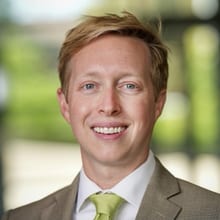
In this episode, YOUR guest is Colin Halverson, PhD. He received his Ph.D. in linguistic and medical anthropology from the University of Chicago, where he studied communication issues in medical genetics, based on fieldwork at Mayo Clinic. At Chicago, he also completed a fellowship in clinical ethics, and then a postdoctoral fellowship in medical ethics at Vanderbilt. He is currently a professor at Indiana University School of Medicine, where his research focuses on ethical care for patients with rare disease, in particular Ehlers-Danlos Syndrome (EDS).
YOUR host, as always, is Dr. Linda Bluestein, the Hypermobility MD.
Watch
Guests
Transcript
[00:35] Dr. Linda Bluestein: Welcome back, every bendy body. This is the Bendy Bodies Podcast, and I'm your host and founder, Dr. Linda Bluestein, the Hypermobility MD. This is going to be a great episode, so be sure to stick around until the very end so you don't miss any of our special hypermobility hacks. As always, this information is for educational purposes only and is not a substitute for personalized medical advice.
[01:32] Today, I am so excited to have Colin Halverson here with me. He received his PhD in linguistics and medical anthropology from the University of Chicago, where he studied communication issues in medical genetics based on fieldwork at Mayo Clinic. At Chicago, he also completed a fellowship in clinical ethics and then a postdoctoral fellowship in medical ethics at Vanderbilt. He is currently a professor at Indiana University School of Medicine, where his research focuses on ethical care for patients with rare disease, in particular Ehlers-Danlos syndrome. Colin, hello and welcome to Bendy Bodies.
[02:09] Colin Halverson, PhD: Hi, thanks for having me. I'm excited to be here.
[02:12] Dr. Linda Bluestein: Oh, wonderful. I'm so excited to chat with you. Your research is just so fascinating, and I would love for you to start out by telling us how you got particularly interested in this area of research.
[02:23] Colin Halverson, PhD: Yeah, so I have been interested even specifically in Ehlers-Danlos since I was in grad school. I kind of very roundabout started out thinking that I was going to do pure linguistics when I was in college. But as I got into grad school, I got more and more interested in the cultural side of communication. And then I had the wonderful opportunity to work with Dr. Lainey Ross, who's a pediatric and genetics ethicist who was previously at University of Chicago where I did my PhD. She got me intimately involved with all kinds of projects related to genetics. I ended up doing my own research on genetics and communication at Mayo, and was primarily involved there in oncology and rare disease. I've kind of continued down that trajectory ever since.
[03:23] But the primary interest that I had all along was the ethics issues that arise from communication in healthcare settings. And it seemed particularly acute to me — the doctor-patient relationship and communication issues for patients with rare disease, especially rare diseases like hypermobile Ehlers-Danlos.
[03:46] Dr. Linda Bluestein: It's such great work that you're doing because we know there's so much room for improvement and so many challenges that are faced on both sides. I came across your paper, "Patients with Ehlers-Danlos Syndrome on the Diagnostic Odyssey: Rethinking Complexity and Difficulty as a Hero's Journey," and thought the term "hero's journey" so eloquently and accurately describes the path that so many patients find themselves on. Can you tell us more about that research project?
[04:16] Colin Halverson, PhD: Yeah, that was actually my very first project with the Ehlers-Danlos community. At this point I've done, I think, 53 interviews with patients related to their diagnostic odysseys. That original paper was based on just 21 or so of those interviews, where I spoke with patients about the entirety of their experience from the very first inklings of symptoms until they got a diagnosis and even beyond.
[05:14] In the analysis, I was coming at that point really out of anthropology, and one of the classic works in anthropology discusses what's described as the hero's journey. It's from a lot of research done on folklore, looking at how people narrativize or create narratives around major struggles. So it seemed to me like it was really relevant. I'd had plenty of experience reading this very large book about comparative world religions and mythologies, and had been thinking a lot — as have many people in medical anthropology — about the narrative qualities of patient stories. And the heroic aspect of the patient stories was probably the most apparent feature from the conversations that I'd had at that point, and continues to be.
[06:14] So it seemed very relevant. And as we actually started going into the analysis using that construction from anthropology, it did really resonate and I think pulled out important features of the odyssey for these patients.
[06:35] Dr. Linda Bluestein: Yeah, it's such a common thing that we see. And I think you gave an example when you spoke at the EDS Society where you specifically chose an example that was very typical and not an extreme case, which I thought was really smart — rather than picking some really extreme case that a lot of people wouldn't necessarily relate to, you chose one that was much more common.
[06:59] Colin Halverson, PhD: Yes, and all of that comes out of that first round of interviews, the broad scope. I had talked to some patients for hours and hours about their journeys. And as I've found in a later survey of the global registry, the average time to diagnosis is over a decade for patients with hypermobile Ehlers-Danlos syndrome. So it's not surprising that there are hours and hours of stories, even just getting the 100-mile view of an individual patient's life.
[07:34] Dr. Linda Bluestein: Yeah, that makes sense. I want to read a couple of excerpts from this paper because I think they're just so important. I think people will really be able to resonate with this.
[07:43] "The repeated clinical consultations and persistent uncertainty create a high-stress and sometimes antagonistic clinical environment and may cause clinicians and their staff to begrudge these patients and the amount of attention they need. As there's no cure and management often demands an individualized approach and long-term commitment, clinicians may also grow to resent the time-consuming symptom management entailed in the care of patients with hypermobile EDS. Being labeled a difficult patient itself results in worse patient experiences, leaving patients dissatisfied and distressed. Clinicians may discharge difficult patients prematurely, refer them to a psychiatrist without cause, or avoid them completely. In these ways, patients are prone to problematic provider relationships, which can ultimately be detrimental for everyone involved. Many patients deeply desire a diagnosis to bring an end to their uncertainty, even when it would entail a disabling or grim prognosis. Their odyssey is typified by doubt and distress."
[08:52] I think so many EDS and HSD patients have found themselves in an antagonistic relationship with their healthcare professionals and probably can really relate to those paragraphs. What can patients do if they have an antagonistic relationship with someone that they're trying to work with?
[09:04] Colin Halverson, PhD: If at all possible, find a different provider. I think it can be worthwhile — with specific experts, or in rural settings or low-access settings — to go through the stress of trying to repair a relationship. But if you're in a more resource-rich setting, I think it's very reasonable just to move on. The odyssey itself, and even just interfacing at a baseline with the healthcare system, can be so stressful, especially for someone who's already suffering from health conditions, that you don't need to stay with a clinician. You're not obligated to stay with a clinician who isn't treating you well.
[10:01] Dr. Linda Bluestein: Yeah, that makes sense. Another thing I wanted to read from this paper: "Despite the presence of earlier symptoms that at the time were not worrisome, the transition into unbearable and chronic pain and fatigue was described as cataclysmic." I thought that was so fascinating because that describes so many people's experience, including my own. Did you find certain things that led to those transitions most commonly?
[10:28] Colin Halverson, PhD: Yes. I can't speak to the statistics of it — this is just anecdotal, and it is something that's really interesting to me too, that I would like to investigate more systematically. But the majority of the patients I've spoken with have had some kind of trigger. In genetics and oncology, people talk about the two-hit theory for cancer, where you have first a genetic predisposition and then you have some kind of environmental trigger that actually causes the proliferation of the bad health outcomes. And I think my guess is that for a lot of people there's something similar for Ehlers-Danlos — not that the symptoms aren't already there, but there can be a trigger that transforms symptoms that had been manageable into something that is life-altering or life-limiting, and then kind of forces the patient into the diagnostic odyssey.
[11:35] Some of the most common ones: a lot of people I've spoken with were very athletic as children, maybe even into young adulthood. Not knowing that they have a connective tissue disorder, they're not necessarily undertaking behaviors that are always the safest for them. So I've heard a lot of stories about people having some kind of physical trauma that then pushes them over the edge — where all of a sudden they realize they've been in pain for a long time.
[12:15] Another thing that is, I think, less common but also important and interesting — especially if we're thinking about moving past a biomedical model into a biopsychosocial model of health — is that a lot of patients seem to manage their chronic symptoms well enough until they have some kind of social trauma as well. I've talked to people who were doing well enough until their mom passed, and then a major source of their support was gone. Or they have a divorce, or their child gets sick too. And all of a sudden, something that they were able to manage before, when they didn't have those other pressures or emotional stressors, is no longer something that they can simply avoid thinking about or dealing with.
[13:14] Dr. Linda Bluestein: And amongst my patients, I've seen quite a few that have had either an illness — like a viral illness, for example, COVID — or they've had a concussion, which I guess does fall into the category of trauma. Did you see that as well?
[13:31] Colin Halverson, PhD: Yeah, I heard several times about Epstein-Barr too. I think because of the overlap with things like mast cell, it gets really complicated to figure out what's the before and what's the after for the onset of these types of issues — what's an infection or what's a temporary circumstance, and what's something that's actually more enduring.
[14:05] Dr. Linda Bluestein: Yeah, that makes sense. And speaking of symptoms, another term I really liked from your work was "panoply of symptoms." Can you tell us what that means and why — especially in the case of people with EDS or HSD — this is so important?
[14:21] Colin Halverson, PhD: Yeah, so this is also still drawing on some of the jargon from the anthropology world. The panoply of symptoms is a part of what in the hero's journey people talk about as the road of troubles, the road of challenges. And so this is part of the very long diagnostic odyssey for these patients.
[14:46] The thing that really struck me with these patient interviews was just how many — not just symptoms, but also diagnoses and misdiagnoses — they'd received along this path. It's not terribly surprising that your run-of-the-mill clinician isn't immediately jumping to Ehlers-Danlos for patients who have a lot of these types of symptoms. Especially since many patients with hEDS have a really broad diversity of symptoms, they end up with a huge number of misdiagnoses and potential comorbidities. And as they sit without a diagnosis and without their chronic pain and other symptoms being managed appropriately, their health worsens as they await their diagnosis. All three of those things combined is where I was going with the term "the panoply of symptoms."
[15:57] Dr. Linda Bluestein: Yeah, I can definitely relate to that both personally and professionally. If you go into an appointment and you start saying, well, I have this pain here, and then I have these GI symptoms, and then I have this other thing going on — you can sometimes see your physician just get a little glazed over and stop listening, because they don't have familiarity with things that could cause multisystemic symptoms. And I think that's frustrating for people.
[16:27] Colin Halverson, PhD: Yeah, I do think it's very frustrating, and I think that is also one of the major causes for the initial skepticism and distrust in the doctor-patient relationship on both sides. A patient comes in with more complaints than the clinician can manage, or complaints that are outside of the clinician's expertise, and that immediately sets a clinician on edge. And then the patient who has multiple aspects of their health that need addressing ends up having fewer and fewer of those addressed.
[17:11] One of the other studies that I've done with patients is looking at the use of numeric pain scales and how frustrating it can be to constantly be asked to reduce an experience that's as multidimensional as chronic pain to a single digit — and then often feel like that single digit doesn't actually affect their care anyway, despite that being one of their most repetitive tasks.
[17:43] I think there's something similar in that regard as well. With a connective tissue disorder that is definitionally as multisystemic as you can imagine, the primary complaint of patients with hEDS is chronic pain — and chronic pain is also something that can't be limited in the way that clinicians really want it to be in order to move forward with potential options for management. So when you talk about chronic pain with a number, are you talking about its quality, its duration, its location? What if you have multiple pains that are all disabling?
[18:39] Dr. Linda Bluestein: Yeah, I hate the visual analog pain score. I'm an anesthesiologist, so this is something I'm definitely used to asking people, but I feel like — I don't ask it really anymore, because I like to focus on function. To me, that's the most important thing: how is this pain impacting your day-to-day life, and how is it impacting your enjoyment of life? So I often use something called the PEG, which asks about your weekly average pain score and then how much it interferes with your everyday enjoyment of life and how much it has interfered with your general activity.
[19:16] Colin Halverson, PhD: That's fantastic.
[19:17] Dr. Linda Bluestein: Yeah, so I like the PEG a lot better than just asking that one number because I feel like that's really not very helpful. And you're absolutely right — I go in for appointments and they'll ask, what number pain are you having right now? And then you feel like nobody does anything with that information anyway. It's very frustrating.
[19:42] Pain is such a highly individual experience. Nobody else can feel what I'm feeling, what you're feeling, what anyone else is feeling. Putting a number on it like that kind of reduces it — as though we should all be on the same scale and experiencing it the same way.
[20:02] So was your research dealing really specifically with people with hypermobile EDS, or did you deal at all with people that have hypermobility spectrum disorder as their diagnosis?
[20:12] Colin Halverson, PhD: Yeah, this is a great and really important question. My research almost entirely has only been on hypermobile Ehlers-Danlos. This is a limitation of my research, and it's a limitation of the state of research into the psychosocial dimensions of Ehlers-Danlos and connective tissue disorders in general. There really has not been a sustained effort by anyone to look at other forms of EDS and HSD in terms of patient experience.
[20:50] This is something that I'm actively trying to correct. I'm currently running a study looking at other forms of EDS, doing a similar kind of diagnostic odyssey interview to the one I did four years ago when I started this project. If I can put a shout-out: if any listeners with any other form of Ehlers-Danlos syndrome are interested in doing this type of conversation with me, please do reach out. My email will be available in the show notes — that's the best way to get ahold of me.
[21:26] But yeah, that is a real shortcoming, not just of my research but I think in general. There is not that information at this point about how different the experiences really are for patients who don't have hEDS. And I think that's particularly important because the number of patients with hEDS is so much higher — at least with the diagnosis — than these other forms. So I think it's a real disservice not to understand what the differences and similarities actually are between these types of experience.
[22:10] Dr. Linda Bluestein: Do you think at some point there will be similar research on people with HSD? I know it's a little less well-defined, so maybe there are some additional challenges with that type of research.
[22:23] Colin Halverson, PhD: Yes, I think there probably are additional challenges in terms of publication, but there shouldn't be any real differences or difficulties in terms of the actual studies or study design. I know from my research that trying to publish about hypermobile Ehlers-Danlos syndrome always comes with a reviewer asking how you actually know that these patients have the diagnosis. There's so much gatekeeping around what constitutes a good diagnosis, who's allowed to give a good diagnosis, what type of clinician. And I imagine that would be a problem on that end of an HSD project as well.
[23:11] Dr. Linda Bluestein: Yeah, I think most people probably don't realize how incredibly difficult it is to conduct research, how many hoops you have to jump through, and how long it takes.
[23:22] Colin Halverson, PhD: Yeah, it does take a very long time, but it's a labor of love. I really enjoy what I do.
[23:30] Dr. Linda Bluestein: That's amazing. I want to read another paragraph from one of your articles.
[23:34] "All patients described a failure of empathy in the patient-provider relationships prior to their diagnosis. They encountered clinicians who lacked the knowledge necessary to provide an accurate diagnosis. They also encountered clinicians who doubted the reality of their symptoms. This doubt often led interviewees to question their own experience. Sometimes it led to iatrogenic cases of depression and anxiety, as well as fear of returning to the clinic where they worried that they would only continue to be disbelieved and dismissed. This antagonistic relationship with providers is only one aspect of the overall journey patients undergo."
[24:18] How did you see this failure of empathy impact patients?
[24:24] Colin Halverson, PhD: Just enormously. It's so sad and so pervasive. One thing I think is particularly striking is the isolation — this is probably the saddest aspect of it. And if your listeners get nothing else out of this interview, I hope they hear that this is functionally everyone with EDS who has this experience. 85% of the patients I've spoken with have some kind of trauma-like response to the clinical care that they've gotten — or lack of care, I guess, is a better way of putting it.
[25:09] The other thing I want to say in terms of the heroism of the journey is that while this is a really critical issue for patients, the vast majority of the patients I've spoken with about these types of negative encounters and traumas still describe their clinicians — even those who've acted poorly and inappropriately — as fundamentally good. They see the problem primarily as arising from clinicians who are undereducated, misinformed, or overworked, rather than clinicians who are actually trying to cause harm. However, that doesn't mean that they aren't causing harm. They absolutely are causing harm.
[26:18] The article we published last spring, in March 2023, about clinician-associated traumatic outcomes focuses not just on the psychological consequences of these negative encounters — which I think is much easier to grasp — but also on the physical health adverse outcomes that directly result from these bad encounters. We found that a large percentage, I think in the 80s, of patients have had some kind of clinical care go wrong because their clinicians aren't treating them seriously, aren't taking their understanding of their disease seriously, aren't treating their diagnosis seriously. And as a result of that, we also saw a lot of patients — again in the 80s — say that they had avoided clinical care altogether. That means their chronic symptoms weren't being managed at all, at least for a period of time.
[27:32] Dr. Linda Bluestein: I'm glad that you mentioned that more recent paper, because it was also really outstanding. You talk specifically about how patients end up with less trust in the healthcare system and also less trust in themselves — and yes, ultimately leading to worse health outcomes. By the way, I will have both of those papers and your contact information linked in the show notes.
[27:56] So in terms of those worse health outcomes, what can we do to avoid that? And especially regarding trust in ourselves — I feel like that's a really important piece that perhaps we might have more control over.
[28:13] Colin Halverson, PhD: The trust in yourselves is the thing that worries me the most. From the outside coming into this project, the idea that having these repeated negative encounters would lead patients to doubt their clinicians or lose faith in the healthcare system was not terribly surprising to me — though the percentage was still kind of striking. But the self-doubt that patients have expressed to me is really worrisome.
[28:49] In particular, this isn't just patients feeling like they can't describe their pain, can't describe their disability, can't describe their trajectory to loved ones or their clinicians — they also start to doubt whether those private experiences of pain are even real in the first place. And that is really worrisome, because if you don't believe your own experience of your internal states, of your private states like pain or fatigue, no one else can tell you what that actually is. You've lost your only access point, and your clinicians also lose that only access point.
[29:45] For a lot of people, the way they come back from that self-doubt is through other people trusting and validating their experience. I don't know that that's a great recommendation, because for a lot of people the doubt doesn't just come from clinicians — it comes from all around, from family members, spouses, children. So it can be really challenging.
[30:18] I don't think it's an easy ask to say "find a community," but that does seem like the primary way that other patients have come to triumph over that self-doubt. Along those lines, I'm currently running a study on social media use and analyzing the data at the moment. While there are certainly a lot of problems with the information you can find on Instagram or TikTok, there is a real community — on Facebook especially, but kind of all over the place. Since it is a rare disease, it can feel really isolating if you don't know someone in person. But you can meet people online who have the same experiences as you, who aren't going to doubt that you're in the pain you are, that you can or can't do the things you say you can or can't do. I think that can be really affirming and could possibly be a real way to get out of the spiral of self-doubt — obviously with the big caveat that there are plenty of negative spaces on social media too, but a community does exist.
[31:49] Dr. Linda Bluestein: Yeah, that self-doubt — I can totally relate to that. When I was at kind of my lowest point about a decade ago, I was having so much trouble with my knee, and my orthopedic surgeon actually yelled at me. I was still working as an anesthesiologist at the time, and I was in the doctor's lounge — in front of a room full of people, he said, "There's nothing wrong with your knee. I looked inside your knee and it's fine." I basically went into the locker room and cried and was like, but it hurts. It hurts a lot. He had just done my knee scope a few days earlier, and I should have known as a physician that he couldn't look inside the tissues and see what was going on — I had a big bone bruise inside my femur. He couldn't see that, even though they had seen it on the MRI. But I still started to doubt myself. I think so often, when people are in a position of authority and they tell us, "No, you're fine, there's nothing wrong with you," we just start to think, well, maybe it is me.
[32:59] Colin Halverson, PhD: I'm really sorry that happened to you.
[33:02] Dr. Linda Bluestein: Well, thank you. It was hard.
[33:06] Colin Halverson, PhD: Very disappointing. And it's exactly those kinds of interactions that make you want to stop going. The authority is a huge part of it — clinicians wearing their white coats have an oversized influence on people's perceptions.
[33:31] The other thing that I think is really striking about your story is how otherwise obvious your suffering was to you. That kind of pain isn't something that you just forget about or dismiss otherwise. It does take that dismissal from other people to provoke that self-doubt. I've spoken to women who have something like constant stomach pain, and because of this dismissal and the invalidation they experience — including from partners — they end up just thinking, well, either I'm a wuss, or everybody experiences this pain, everybody's constantly in stomach pain just like I am. Or, I think even more insidiously, maybe there is some kind of unconscious motivation. Both of which are very, very unhealthy thoughts to have about your own private experience.
[34:47] Dr. Linda Bluestein: And sometimes you hear these things in places where you certainly wouldn't expect to. I was actually with a family member at — I won't name the facility — but at a major medical institution. They had a pain adjustment-type program, and they basically said to this group of people: "Well, everyone deals with on average five symptoms at any given time."
[35:16] Colin Halverson, PhD: Really?
[35:17] Dr. Linda Bluestein: Because I'm pretty sure this group of people who are here for this program — and are paying a lot of money, by the way, to get help and improve their quality of life — are experiencing a much higher symptom burden than the average person walking around, working a job, and able to socialize with their friends. I think it's dramatically different.
[35:42] Colin Halverson, PhD: Yeah, absolutely. And it's also obviously different, because otherwise those other people would also be trying to reduce that burden.
[35:57] Dr. Linda Bluestein: Yeah, exactly. And that minimizing — "it can't be that bad" and things like that — is just really, really harmful.
[36:06] Colin Halverson, PhD: Yeah, absolutely.
[36:08] Dr. Linda Bluestein: So I would love to discuss the term "clinician-associated traumatization." I feel like that's very well-thought-out terminology. How does it differ from other constructs like PTSD, medical trauma, or medical gaslighting?
[36:27] Colin Halverson, PhD: Thank you, I appreciate that you like it. It was definitely a committee effort to come up with that term. I am not a clinician — I'm an anthropologist and a bioethicist. But I consulted with a bunch of folks from psychology and psychiatry while working through that data from those interviews on trauma.
[36:55] Initially, I thought the experiences would be better captured by an already established construct like PTSD. Several of the patients I've worked with do have clinical PTSD diagnoses, or complex PTSD — and medical trauma is another term that people use. My understanding is that there's a lot of debate about how those constructs do or don't overlap, how they're similar or not.
[37:29] But the primary reason we felt that the patients' experiences from our interviews were not fully or perfectly captured by these other diagnoses is twofold. One, the other diagnoses technically require a trigger where the patient has an actual brush with death, some kind of encounter with mortality. Certainly that is the case for many of our patients, but not all of them — and yet all of them have these types of experiences. So that felt insufficient.
[38:15] The other thing is that with terms like "medical trauma," what that really means is something like waking up from anesthesia in the midst of a surgery — having some kind of physical procedure that causes a psychological response. That is, again, not what we were finding in our studies. The trauma was emerging directly from the interpersonal dynamics, these interactions with their clinicians, not because of a specific procedure. Plenty of our patients also had that too, but that wasn't the source of this specific type of trauma that, to some degree, all of our participants expressed.
[39:03] Dr. Linda Bluestein: Okay. And this research is so fascinating. What along the way has been most surprising to you?
[39:22] Colin Halverson, PhD: Can we have multiple possible answers to this?
[39:25] Dr. Linda Bluestein: Of course. Of course.
[39:28] Colin Halverson, PhD: So one possible answer is the charity that the patients I've worked with show towards their clinicians, despite all the negativity that they've been on the receiving end of. I do think that is wonderful and surprising. I also appreciate that the patients I've spoken with have all been recruited from clinic, so I've had a somewhat biased sample because these patients haven't given up entirely on biomedicine. I think that's part of it, but I nonetheless have found it really heartening and interesting.
The self-doubt is another aspect that's been really surprising to me, and it's going to be the focus of my next study. The privacy and isolation that patients with disabling forms of Ehlers-Danlos syndrome experience, I think, builds into that. And that isolation broadly has been really surprising to me.
[40:36] I've worked with rare disease for over a decade now and have talked to families with patients who've had the only diagnosis of their condition in history. So with something like hypermobile EDS — and I'm really seeing this with the social media study too — the invisibility of the disorder is striking. For a lot of patients, it's not immediately apparent to someone who doesn't know them that they're in chronic pain or that they experience subluxations at an alarming rate. That invisibility, I think, compounds the isolation. And that's also been very surprising to me from the outside.
[41:28] Dr. Linda Bluestein: And for people who have experienced clinician-associated traumatization, what can they do?
[41:35] Colin Halverson, PhD: There are no evidence-based studies yet to say what is the best modality to manage it. I have several thoughts. First and foremost: get a trusted team if you're able. This is changing now with virtual visits, but get rid of the clinicians you don't like, find different clinicians you do like, and utilize the community around you. People living with Ehlers-Danlos know who the good doctors are — you can talk to them and find knowledgeable, trustworthy clinicians. And if you don't know people in person, go online to the Facebook communities. They seem very well moderated and can help you in that regard.
[42:41] The other thing is: the one definite thing I've heard from a couple of patients is trauma therapy. One woman told me that without trauma therapy, she wouldn't have been able to do the interview — that even just a year before, she would have broken down crying and not been able to get through it. She was very candid with me, and clearly that has been incredibly helpful for her. I don't know for a fact that anyone has done formal research on that yet, but I got some emails from folks in England after the publication came out saying they were interested in looking into that. So I don't know where that study is at, but that's optimistic.
[43:38] I've also heard from therapists working with patients who have CAT-like — clinician-associated traumatization-like — symptoms, who say that EMDR has been really useful. That's very positive, and it was actually recommended by one of our psychologist consults as we were analyzing the data. Cognitive behavioral therapy also seems like a good potential avenue.
[44:15] And I will also add that those things can help manage the trauma, but chronic pain is a miserable thing to live with, and getting psychological support — not just in thinking about the trauma, but also in managing day-to-day chronic pain — can also be really helpful.
[44:44] Dr. Linda Bluestein: I recommend to basically all of my patients that they work with a counselor or a therapist. The way I explain it to them is: you deserve to have a counselor or a therapist. You deserve to have this person as part of your team. They're absolutely essential.
[45:01] Colin Halverson, PhD: I love that. I 100% endorse that. I think everybody — with hEDS or no disorder — would benefit from mental health support.
[45:13] Dr. Linda Bluestein: Yeah, I actually interviewed a psychologist yesterday and she was making reference to her own therapist. She said probably a lot of people think that therapists don't have therapists. And she said, even though we know a lot of the "what," it still helps to have a person that you can talk to. So I thought that was really great that she shared that during the interview, because I think a lot of people will benefit from hearing it.
[45:38] Colin Halverson, PhD: Definitely.
[45:41] Dr. Linda Bluestein: Where do you want to go next with your research?
[45:45] Colin Halverson, PhD: I already alluded to this a little bit. I have two primary directions. One is looking at self-doubt, which I think is very concerning and also the least clear thing to me. In the initial round of interviews, we came up with probably a dozen topics that we thought needed further exploration, and all of them we had a fairly clear roadmap for. The self-doubt I haven't felt comfortable pursuing until really now — only after four years of working with those same cohorts, reading absolutely everything that comes out about Ehlers-Danlos syndrome, do I feel like I've got enough understanding of the context to do that topic justice.
[46:45] And then the other direction, which I also hinted at, is that I think it's really critical that we start doing research on patients who don't have hypermobile Ehlers-Danlos syndrome as well. That portion of my project is still technically ongoing, but I need a lot more patients with the rarer forms of Ehlers-Danlos syndrome to enroll, because I think already from the patients I've spoken with, there are real differences in the diagnostic course and the care that they receive.
[47:20] Dr. Linda Bluestein: And we will be sure to include your email in the show notes so that people can reach you. Is that the best way to get ahold of you?
[47:32] Colin Halverson, PhD: Yes, thank you. I appreciate that.
[47:34] Dr. Linda Bluestein: Maybe you can give it to us now too, and I'll also have it in the show notes.
[47:38] Colin Halverson, PhD: Sure. You can reach me at [email protected].
[47:49] Dr. Linda Bluestein: Excellent. And if somebody reaches out to you and they decide they don't want to participate, I take it that's completely their prerogative?
[47:52] Colin Halverson, PhD: They should reach out if they have any interest at all. If you know someone, if you want to talk about something else, that's fine too — I'm happy to chat with anybody. And there's obviously no commitment. You can drop out mid-interview if you want to. I've definitely had patients feel emotional and want to come back to a specific topic later, which is perfectly fine.
[48:28] Dr. Linda Bluestein: That's great. We definitely need more people involved in this kind of research because it's so important and it benefits the community at large. So I'm glad that we can help spread the word.
[48:42] What do you wish that I had asked and I didn't?
[48:43] Colin Halverson, PhD: I don't think there's anything. I think that's a great question, and I think we covered all of the major issues related to the diagnostic odyssey. I really appreciate this opportunity to share my work.
[49:05] Dr. Linda Bluestein: Of course. And of course we have to end with a high probability hack. Do you have a hypermobility hack for us?
[49:14] Colin Halverson, PhD: Yeah. This might just be because of where my headspace has been for the last few months as I'm doing the analysis for the social media interviews, but I really think that having a trustworthy team of clinicians makes such a difference. People on the research side of medicine talk a lot about "trust in clinicians," but I think that's the wrong framework. You need to trust your clinicians, but what you need isn't for a clinician to build trust with you — it's for you to find a trustworthy clinician. And so the hack, which I've hinted at before, is: find your community. Your community will help you build this team of clinicians. And it's good not just to have one trustworthy clinician, but really to have a team of diverse clinicians who are all trustworthy — because relying just on one PCP to tell you everything you need to know about your cardiac issues is obviously not sufficient.
[50:29] Dr. Linda Bluestein: Yeah, that definitely makes sense. And thank you for sharing your email address. Can people also learn more about you online?
[50:38] Colin Halverson, PhD: Yes, I do have a pretty active website through the IU Center for Bioethics. If you go there, you can see all my latest publications, talks, and things like that. It also has my email. You're welcome to get in touch with me that way. I technically have a Twitter or X account, but I have to say I almost never check it anymore — so you can try to reach out that way and I'll look at it probably once a month.
[51:10] Dr. Linda Bluestein: Well, we will definitely make sure that we link your website and also your papers and your email address all in the show notes so people have easy access to that.
[51:17] So you have been listening to the Bendy Bodies with the Hypermobility MD Podcast, and my guest today was Colin Halverson, PhD, professor at Indiana University School of Medicine, where he focuses his research on ethical care for patients with rare disease, in particular Ehlers-Danlos syndrome. Colin, thank you so much for coming on the Bendy Bodies Podcast today, and thank you so much for your incredible research.
[51:40] Colin Halverson, PhD: Thank you for this wonderful opportunity. I really appreciate it.
[51:47] Dr. Linda Bluestein: Absolutely. It's so great to chat with you.
[51:51] Thank you for listening to this week's episode of the Bendy Bodies with the Hypermobility MD Podcast. Visit our new website at bendybodiespodcast.com where you can now view guest profiles and show notes with links to products and journal articles. Leave me a comment, sign up for updates, leave a review or a voicemail, and access the podcast on your favorite player, all directly from our website. You may hear your voicemail in a future episode where we answer your question or dive into your gracious feedback.
[52:17] Follow us on Instagram at bendy_bodies. We love seeing your posts and stories, so be a buddy and engage our community by using the hashtag #BendyBuddy — that's hashtag B-E-N-D-Y-B-U-D-D-Y. You can also find me, Dr. Linda Bluestein, on Instagram, Facebook, Twitter, or LinkedIn at @HypermobilityMD. Visit hypermobilitymd.com for information about medical services and one-on-one coaching.
[52:44] This podcast is for general informational purposes only and does not constitute the practice of medicine or other professional healthcare services, including the giving of medical advice. No doctor-patient relationship is formed. Do not disregard or delay obtaining medical advice for any medical condition you have. Opinions shared are that of the guest and do not necessarily represent the views of the host or any particular organization. Sponsorship of the podcast does not necessarily mean an endorsement.
[53:09] Thank you for being a part of our community, and we'll catch you next time on the Bendy Bodies Podcast.