Description
Your DNA holds many secrets. Why do drugs work on some people and not on others? Why are conditions expressed so differently in different family members? How might hypermobility disorders, dysautonomia (like POTS) and Mast Cell Activation Syndrome (MCAS) be related and how does coronavirus fit into all of this? Listen in as top geneticist, Dr. Paldeep Atwal, shared his expertise on the following:
Hypermobility disorders - Why are Bendy people so different from each other yet can also share many common traits?
Ehlers-Danlos Syndromes - Why is it taking so long to find “the hEDS gene”
Epigenetics - How much of a difference do our day to day choices make?
Genetic and pharmacogenetic testing - Why do the testing if you cannot change the outcome?
Important note: The discussion about nutrition and intermittent fasting refers to the body of research with subjects from the general population. Therefore, this information is most applicable to those who are overweight or obese. You need quality nutrients for your body to perform properly! PLEASE do not make any changes to your diet (meaning foods you eat), without consulting with your own primary care physician or nutritionist. Learn more about Dr. Linda Bluestein, the Hypermobility MD at our website and be sure to follow us on social media: Websites: https://www.hypermobilitymd.com and www.BendyBodiesPodcast.comInstagram: @hypermobilitymd Twitter: @hypermobilityMD Facebook: https://www.facebook.com/hypermobilityMD/ Pinterest: https://www.pinterest.com/hypermobilityMD/ LinkedIn: https://www.linkedin.com/in/hypermobilitymd/ And follow guest co-host Jennifer at the links below: Website: www.jennifer-milner.com Instagram: @jennifer.milner Facebook: https://www.facebook.com/jennifermilnerbodiesinmotion/
Watch
Guests
Transcript
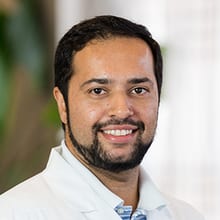
[00:11] Jennifer Milner: Welcome to Bendy Bodies with the Hypermobility MD. This is your host, Dr. Linda Bluestein, here with Dr. Paldeep Atwal, board-certified clinical and medical biochemical geneticist and director of Atwal Clinic for Genomic and Personalized Medicine. He completed his genetics fellowship at Stanford University and subspecialty biochemical genetics fellowship at Baylor College of Medicine before serving as medical director for the Individualized Medicine Clinic at Mayo Clinic in Florida. He has a longstanding interest in rare and undiagnosed disease, including the use of multiple concurrent genomics platforms to provide a diagnosis to patients. He conducts translational research with the goal of discovering new genetic syndromes and designing new therapies for genetic disease. Through his work, he co-led the discovery of biparental Mitochondrial Inheritance in Humans, discovered two new genetic connective tissue syndromes, co-developed an untargeted metabolic screening test for inborn errors of metabolism, and published extensively on human genetics with over 70 peer-reviewed publications to date.
[01:14] Dr. Linda Bluestein: In this episode of Bendy Bodies, Dr. Atwal and I chatted about the genetic influencers of joint mobility and possible explanations for why all bendy people are not alike. Other topics covered include how epigenetics are more like an accelerator pedal than a light switch, and how dietary modifications may influence DNA repair, especially amongst those with obesity, diabetes, and/or cardiovascular disease.
[01:42] Jennifer Milner: Dr. Atwal, thank you so much for joining me today on Bendy Bodies.
[01:58] Paldeep Atwal, M.D: Yeah, thanks for having me. I appreciate you taking the time to speak.
[02:02] Dr. Linda Bluestein: It is so great to have you on the show.
[02:05] Jennifer Milner: Let's start out by talking about the incidence of hypermobility disorders. Compared to the general population, dancers and other flexibility artists like gymnasts are known to have a higher incidence of hypermobility and hypermobility disorders, which is the umbrella term that we use to describe people with symptoms related to joint hypermobility. Can you start out by telling us about the different genetic and non-genetic reasons why someone might be bendy, which is the term we use to describe people who have a greater than average range of motion?
[02:39] Paldeep Atwal, M.D: Yeah, happy to. So we can talk about a couple of different things there. The first thing is non-genetics — just in general, if you think about a population of people, there's variation in that population. There's an average level of flexibility or bendiness, and that tends to follow what we call this bell-shaped curve or normal distribution. Most people will be in the middle of that. There are some people that will be really inflexible, so they'll be really stiff, and some people are really flexible. That's just a normal variation in a population.
[03:21] Now, there are things that influence that even within those populations. For example, there are differences between males and females. On average, males tend to be less flexible than females. Some males are more flexible than females, of course. And there are reasons for that as well — things like testosterone and underlying hormonal differences. That's at a higher, more population-level view.
[03:49] Then we get into the genetics of things. If you think about two types of genetics, there's single gene genetics, or Mendelian, after Gregor Mendel, and then there's complex genetics that really talks about interactions between multiple different genes together that may influence a certain trait. Single gene is the one we are most familiar with and work with the most when it comes to the practice of clinical genetics and medicine. We know that there are genes that influence that — for example, the Ehlers-Danlos genes, Marfan, and other what we call heritable disorders of connective tissue. These are genes that are involved in the structural proteins in the connective tissue, the collagens, the fibrillins, et cetera. Changes in them can influence how tightly those collagens are bound together, and that can translate to joint laxity.
[04:53] The other part of that is there might be small changes in a number of genes — let's say 50 genes, 100 genes. And if all of those genes are changed in a certain way, now we're talking about complex genetics, or complex traits. They influence a certain trait — in this case, flexibility. So let's say there are 100 genes involved in how flexible you are. If 90 of those 100 all have a certain change in one direction, that'll make you more flexible, whereas if they go another way, it might make you less flexible. Each gene has a tiny amount of influence, but on aggregate, it's how they're skewed, if that makes sense.
[05:45] That's one of the theories behind hypermobility — perhaps it's not a single gene, perhaps it's a complex trait that has multiple genes involved. So anyway, I'll stop there. That's a lot. Happy to talk more about those things.
[05:59] Jennifer Milner: That really is a very helpful explanation, because when I spoke to you before for the Hypermobility Happy Hour podcast and you were explaining about phenotypic versus genotypic expression, that really helped me to understand why there are so many people that may look like they have a variant of Ehlers-Danlos syndrome — which we know is the more common heritable disorder of connective tissue — but maybe don't, because of what you're explaining now in terms of complex genetics. That maybe it's not a single gene but a whole host of genes interacting together, if I'm understanding you correctly.
[06:41] Paldeep Atwal, M.D: Yes, exactly. And if you think about genetics — in humans, we have around 20,000 genes. It's not a big step to suggest that those other genes interact with the gene that might be causing a particular condition in some way, such that — you see it in families all the time — we call it variable expression. If there's a genetic condition that runs in the family, let's say siblings or parent and child, they might manifest the condition differently. One may be more severe than the other, or one might be less severe. And the question then is, well, why is that the case if they both have the exact same genetic change in that gene?
[07:34] It's other influencers of how it manifests. Other genes, other mechanisms such as epigenetics, which I think we might talk about later. Everything's working with each other. It's like a big melting pot. We like to think of it all as separate, but it's much more interlinked and connected than some people like to think about.
[07:57] Jennifer Milner: Sure. And that can also help us to understand why people that you see and people that I see clearly have some hypermobility disorder — so they have similarities — but yet they can look so different from each other, even within a family.
Paldeep Atwal, M.D: Exactly.
[08:12] Jennifer Milner: So let's talk about epigenetics. Let's just jump right into that. Can you explain to us what epigenetics is, how that might influence genetic expression, and how people who are bendy — or people who aren't, but just in general — can use that to their advantage?
[08:36] Paldeep Atwal, M.D: So epigenetics is one of the main mechanisms to control gene expression. The concept of gene expression is the idea that you have genes like textbooks or recipes, and sometimes you'll be using them and sometimes you won't be. And sometimes you'll be using them a lot and sometimes just a little bit. The way the body controls how much it's using them, or if it's using them at all, is through control mechanisms like epigenetics. It's a way to control the expression or the functionality of a gene.
[09:23] People think of epigenetics like a light switch — that it switches a gene off or switches a gene on, and that's it, a binary off-or-on function. Whereas in reality it's more complicated than that. It's better to think of it like an accelerator pedal, in that a gene can be cruising along at 30, or you can go up to 50, or you can really put the foot down and have full, maximal expression of that gene. Epigenetics is the way that is controlled. Does that make sense?
[10:02] Jennifer Milner: Yes, it does. I like the idea of the accelerator pedal rather than the light switch, because we know that nutrition and exercise are a couple of things that influence that.
[10:17] Paldeep Atwal, M.D: And that was exactly where I was just going to go. So thanks for that. To answer the second part of your question — how can we use epigenetics to our advantage?
We know that there are a number of things that influence our gene expression. Exercise, nutrition — these are both ways that we can quite significantly influence our epigenetic control mechanisms. If we do the right things from a nutritional perspective and an exercise and conditioning perspective, that influences the DNA expression in our body, which is an amazing thing to think about. People may not realize it has such a profound effect, but that's truly what's happening. That's why you see changes in the weeks or months from making these kinds of changes in nutrition or exercise. It's truly causing a change in your DNA expression, which I think is amazing.
[11:32] Jennifer Milner: That really is amazing. I think a lot of people get very frustrated because they'll read the headlines of different studies and say, oh, people keep flip-flopping on nutrition and what we should be doing. But if you really look at the big picture, most of the messages have stayed very consistent over the years — avoid sugar and white flour, lots of polyphenols, plants in general are good.
[12:02] I think part of the difficulty, if I'm understanding this correctly, is that yes, nutrition matters greatly and affects our DNA, but it's just a hard thing to study. It's hard to conduct those studies and to really demonstrate correlations, because humans don't remember super well. I can't necessarily remember what I had to eat yesterday, much less for the past five years.
[12:24] Paldeep Atwal, M.D: Right. So let's talk about nutrition for a minute. Firstly, there's a lot of misinformation out there, and that is unfortunate. To your point, highly processed foods have all of the micronutrients and everything pulled out of them, and the end result is a sugar load that tastes good very quickly but doesn't actually provide any nutritional value. So the first thing to do is separate calorific content and nutritional content. When you look at food, you should look at the balance between nutritional value and calorific value.
[13:11] In the past, before industrialization and before refrigeration, there was a calorific deficit that humans experienced such that finding enough food — that 1,500 to 2,000 calories a day — was a real challenge. In the US, we have no such challenge at all. You can find that in one meal, no problem. But we have a genetic programming that still craves highly calorically dense foods. We have to overcome that a little bit and really focus on the nutritional aspect of foods rather than the caloric density. We actually don't need caloric density because we have so much food available. We should actually limit the caloric density and focus on nutritional density — and that actually fills us up more.
[14:18] There's also a great study that came out recently, and you may have been following this. There were some literature and documentation of things like intermittent fasting, and people look at all these different types of diets — the ketogenic diet and so on. Now that people are able to track how they're eating, what they're eating, and when they're eating with apps and other things, there's a bit more awareness. I think the ketogenic diet is certainly not the answer, but I think a lot of people have a beneficial effect with it in the short term because it's probably the first time they've been out of glycolysis in their lives that they can remember — in that they're not eating glucose, or stored glucose in the form of glycogen, as their primary source of fuel. They're switching to fatty acid oxidation.
[15:36] If you think about it, if someone wakes up and has a cereal or some other thing with lots of carbohydrate, then has lunch a few hours later, then gets home and has a snack, then has dinner, then maybe a snack before bed — they're never really in a state where they're not getting carbohydrate intake. And when they are, they've got plenty of stored glucose to ensure they never really exit glycolysis. That's really why people notice such an effect with the ketogenic diet.
[16:09] But there's a great review article that came out a couple of months ago in the New England Journal on intermittent fasting and its role in health and aging. It really looked at that switching between glycolysis and fatty acid oxidation as the true benefit in terms of expression of DNA repair molecules, DNA protection molecules, sirtuins, all of these types of things. It's a great paper. I would encourage everyone to read it, even though it's very medical.
[16:49] Jennifer Milner: And I'm sure there are some people who are going to say, wow, I've tried intermittent fasting, I've tried the ketogenic diet, and I have noticed some improvement. But there are going to be some words in there that they don't know. In my experience, when I talk to patients about this, they say, "Oh, I have such a sweet tooth and I crave sugar." It seems like once you switch to this way of eating where you're eliminating a lot of carbohydrates and focusing on nutrient density, and also having periods of time where you're not eating — the intermittent fasting, going 12 hours without eating, or depending on the guidelines, 12 or 14 hours without eating, just drinking water or maybe having some green tea, nothing with calories — it really seems to help minimize those cravings.
[17:50] Paldeep Atwal, M.D: It does. And one of the biggest things people need to do is be aware of how they're feeling and why they're feeling it. Often the first step is recognizing that they're actually requiring more water intake when they feel hunger — so seeing what a glass of water does for their hunger levels.
[18:14] And then the second thing is interesting to note — and I feel this as well, actually — you're hungriest when you're eating, which is really interesting. When you start eating is when you actually become the most hungry and want to eat more, rather than when you've gone five hours without a meal. Which doesn't make sense when you think about it offhandedly, but it really is the case for many people.
[18:45] Jennifer Milner: That is very interesting. Huh. And to me, when you really think about how pro-inflammatory sugar is and how many conditions we have that are so related to inflammation, to break that cycle of sugar and carbohydrate cravings is so important. It can make such a significant difference for people.
[19:11] Paldeep Atwal, M.D: Absolutely. Agreed.
[19:14] Jennifer Milner: So can you tell us a little bit about why the prevalence of hypermobility disorders seems so much greater in females than in males?
[19:23] Paldeep Atwal, M.D: Yeah, it's very interesting. The way I think about it and explain it is back to this idea of population norms and bell-shaped curves. When we talk about the prevalence of hypermobile EDS — just EDS in general, the hypermobile type — the primary manifestation is hypermobility, right? The first thing people notice, or maybe they don't notice it, but it's always there.
[20:13] If you think about the populations of males and females, men on average are less flexible — not as bendy as women — just due to differences in hormones, primarily testosterone. Now, to compound that, and it's important to realize it is a compound effect: because of that difference in testosterone level, men on average have more lean muscle mass than women. The second most common manifestation is pain — you get loose joints because the muscles are having to work harder to support those loose joints, leading to pain and fatigue. Now, if you're less flexible and you have more muscle mass to support those joints, you're going to manifest less. Which is also some of the ways we treat it — we encourage people to increase their physical conditioning.
[21:11] So for me, that is the reason that men seem to manifest less than women. A big contributor is this hormonal difference between men and women that causes less flexibility and more lean muscle mass.
[21:31] Jennifer Milner: Sure. And that would fit too with the onset of menstrual cycles in females often being a time when they start to have more problems. Especially when it comes to something like dance — they're bendy and it's actually seen as an advantage. Then they start to get their menstrual periods and that's when they start to have pain. I'm always surprised by patients who started having quite a bit of pain at a relatively young age, and if you ask them when they started their periods, that often seems to correlate.
[22:17] Paldeep Atwal, M.D: Right, that's a great point. The hormonal influence is definitely there in both ways.
[22:26] Jennifer Milner: Sure. So in terms of genetic testing for people with joint hypermobility, what types of genetic testing do you think are important to consider? And when would you say that's indicated?
[22:40] Paldeep Atwal, M.D: Yeah. For someone who is presenting with a possible genetic condition, or heritable disorder of connective tissue, genetic testing is appropriate most of the time. It used to be very challenging, very expensive, and very hard to do genetic testing. Nowadays, to do a large gene panel or even an exome sequence — and shortly, probably a genome sequence — it's not that challenging anymore. There's insurance coverage for these things. There are multiple labs competing with each other, trying to drive down price, improve access, and produce more patient-friendly reports. There's more availability of counseling and interpretation services.
[23:48] So I think the option for genetic testing should be there for anyone presenting with one of these conditions. Now, whether it's a strong recommendation depends on their symptoms. If someone clearly has symptoms suggestive of a particular type or a severe subtype like vascular EDS, I think testing should be strongly recommended. If someone is perhaps a bit later in life, has kind of self-selected against having one of the severe forms, and hasn't had any issues but has features consistent with perhaps the hypermobile type, it's less of a concern. I'll tend to offer it as a reassurance if they'd like to do the testing.
[24:44] I strongly advocate that people should have the option to test if they want. There's a personal utility to that. The clinical utility may not be as high as in the other scenario, but there certainly is clinical utility. Broader testing is the way things are heading — more awareness of the subtle differences — and the trend is only increasing in that direction.
[25:18] Jennifer Milner: I actually had a patient the other day for whom I had ordered whole exome sequencing, and I was so happy that the insurance company approved it and that the report came back in a very user-friendly way for a non-geneticist. The patient felt very validated. I think it's such a helpful thing.
[25:41] And if I understand this correctly, it used to be that even quite recently, in terms of what your insurance might cover, you had a very limited panel available, and it would often come back negative because you were targeting a very narrow focus. Whereas now we're able to look at a much broader picture and get a lot more information. So the genetic testing you can do now is much more useful than what you could do even five years ago. Am I understanding that correctly?
[26:25] Paldeep Atwal, M.D: Yes, absolutely. That's exactly the point I was trying to make. Thanks for that.
[26:33] Jennifer Milner: Okay, good. And so when it comes to Ehlers-Danlos syndromes specifically, we know that multiple different types have been identified and that we know genetic markers for all but the hypermobile type, which we also know is by far the most common type. How much progress has been made on finding the markers for hypermobile EDS? And can you explain why this process is so challenging?
[27:03] Paldeep Atwal, M.D: Yeah. I think the progress is a binary function in that we find a gene and then there's progress, and until we define the gene, there's no progress. But there's more to that, so let me be more fair.
What's being done? There are lots of different groups getting cohorts of individuals together that have hypermobile EDS, doing genome sequencing and other methods to try to identify some commonality in their genetics that would be a marker or a gene underpinning it. Lots of people have done that, and it hasn't really worked. I think that's very valuable data for a number of reasons, but let me tell you what I think the possibilities are.
[28:04] Number one, it's not a type of genetic change that is readily testable by current sequencing methodologies. Currently, virtually all testing is done on what is called a massively parallel short-read sequencing platform. People call it next-generation sequencing, but I don't like that term because I don't think it's very accurate — it doesn't tell you what's actually happening. Imagine the gene is broken up into thousands of tiny 75 to 150 base pair strands. They're all sequenced, and they're all assembled back together by a computer. That's how you figure out what the sequence is. Now, the problem with that is it's not good at detecting certain types of genetic changes — certain sizes of deletion in a gene, certain structural rearrangements, insertion deletions, complex rearrangements. All the information might be there, but it's not in the normal place. The newer long-read sequencing technologies are better at detecting those types of changes. So I think employing some of those technologies when looking at these patients is one avenue.
[29:43] Number two, it's a post-genetic change — not a DNA-level change, but an RNA or post-translational change. Or it's an epigenetic modifier, as we talked about, that's primarily driving this. But that means we need to look at different things — proteomics, metabolomics, epigenetic methylation, the methylome.
And the third possibility is that it's not a single gene causing it — back to the earlier point about complex traits. There are multiple genes involved, and there's some sort of threshold effect causing it. That's much harder to detect with current technology. The idea is that once you accumulate a certain number of changes, you cross a threshold point and manifest the condition. There is progress in that area in terms of using polygenic risk scores to determine risk of things like coronary artery disease, diabetes, et cetera. But that hasn't really been applied to rare genetic diseases. We do think hypermobile EDS is genetic — it clearly runs in families, it clearly overlaps with other well-defined genetic conditions — but those are the reasons I think a gene has not been identified yet.
[32:43] Jennifer Milner: Sure. It's much more complicated than what meets the eye. I think a lot of the information that has been presented to us is: if they don't meet the new strict criteria for hypermobile EDS, then it's HSD.
[33:04] Paldeep Atwal, M.D: Yeah. I think we have to realize what consensus expert opinion is, and I think it's highly valuable and highly useful and we should be using it. But I also want to make the point that consensus expert opinion is not a substitute for robust molecular science. Once we find a gene for something, whether or not a consensus of experts thinks someone has a condition becomes secondary to whether they have a pathogenic variant in that gene. It's still valuable, but there's a higher level of evidence with the molecular findings.
[34:02] Jennifer Milner: That makes sense. And I know I just threw out the term HSD and some people might not know what that is. I want to make sure we cover a few more things. Are you willing to give a bit more explanation about the consensus criteria for hypermobile EDS? And when in 2017 they introduced this category of hypermobility spectrum disorder — can you give just a few sentences on the significance of that?
[34:38] Paldeep Atwal, M.D: Yeah. So there was a change from before in terms of the diagnostic criteria for hypermobile Ehlers-Danlos syndrome. It's now part of this hypermobility spectrum disorders framework, and it represents the more severe end of that spectrum. But to meet the criteria for hypermobile EDS, there are a number of different criteria.
The first major criterion is generalized joint hypermobility. The second criterion requires two or more of features such as soft, velvety skin, piezogenic papules, or recurrent abdominal hernia, just as examples. Positive family history is a separate criterion, and also separate is musculoskeletal pain in two or more limbs daily for at least three months. And the third major criterion is the absence of a clear alternative explanation — like rheumatoid arthritis, or a clear neuromuscular disorder, or Marfan syndrome, or unusual skin fragility suggestive of another type of EDS. So it's more of an exclusion criterion to make sure you're not missing something else.
[36:03] If you look at it, it's a one-page form. To me, the idea is that for someone who doesn't have much awareness of Ehlers-Danlos, it's useful to help them feel comfortable making a diagnosis. So it's intentionally kind of specific and restrictive, if that makes sense. But remember, we're talking about a complex genetic multi-organ condition that's been condensed down to tick boxes on one page. We just have to realize that's what's happening here. There are obviously going to be major limitations with doing anything like that.
[36:34] Jennifer Milner: That's a great explanation. And I also want to make sure to talk about — especially since this podcast is very much focused on people who are bendy but might be doing things like dance and other athletic and artistic endeavors — there was a really fascinating article published recently titled "High Prevalence of Connective Tissue Gene Variants in Professional Ballet," looking at a group of dancers at the Houston Ballet. I was curious if you could comment on that study and its potential significance for other bendy dancers.
[37:24] Paldeep Atwal, M.D: Yeah. I'm not that familiar with that study in particular, but I'm happy to talk about it in general. Studies like this are useful in that they look at a population, analyze features of that population, and make inferences or conclusions based on differences compared to the general population.
From what I've gleaned from the abstract, they found an increased prevalence of variants in known connective tissue genes in this population over and above the general population. I think that is interesting in that it suggests some gene interaction or some more complex interplay between these genes is causing something — which fits with what I said earlier about complex traits.
[38:47] The one question I would have about this particular study is whether these are known disease-causing variants, or just rare variants — uncommon genetic variants that aren't necessarily known to cause disease themselves, but differ from the normal genetic variant that's present. I think it's more the latter, which actually makes sense. It suggests there's a gene-interaction effect going on in these gene clusters — that certain changes across a collection of these genes cause something, perhaps hypermobility. So it really speaks to the point on gene-gene interactions causing hypermobility.
[39:41] Jennifer Milner: And in terms of other types of genetic testing that can be done — like pharmacogenomic testing and other SNP testing, single nucleotide polymorphisms — we know that's quite popular right now. Shifting gears for a minute, what should people in general know about that type of testing?
[40:01] Paldeep Atwal, M.D: Yeah. I'm a big advocate for pharmacogenetic testing. Let me just explain what it is. Pharmacogenetics is the science of how genetic variations in your body influence how you metabolize drugs — that's the one-liner.
[40:23] It's surprising to some people — or not so surprising to others — that just as your genetics influences things like your hair color, how tall you are, and eye color, it also influences how you respond to a medication when you take it. This science is not new — it's decades old — but the clinical application is somewhat newer than the knowledge of it.
[40:56] Nowadays, what people do is have a baseline profile of their pharmacogenetics, ideally before they need to be on any medication. If and when you need to be on a medication, you then know whether number one, that medication is going to work for you, and number two, whether the standard dose is right for you. The standard dose is often designed for, say, a 30-year-old bodybuilder or a 90-year-old lady who weighs 90 pounds — is that the right dose for you, or do you need an increased or decreased dose based on your genetics?
A common example is Plavix, or clopidogrel — an anticoagulant medication taken for heart attack and stroke prevention. Millions of people are on Plavix in the US. There is an FDA black box warning label on this drug stating that pharmacogenomic variants in a certain CYP enzyme in the liver influence how well you metabolize this drug, such that it may not be effective for you, and it's recommended that these variants are checked. That's the FDA black box warning. And yet the vast majority of people on Plavix have never had that enzyme — the CYP2C19 enzyme — checked. So they're on Plavix, hopefully it's working for them, but we know that up to a third of patients have variants in that gene that mean it doesn't work for them. Just imagine how many people might be on Plavix that are not metabolizing it the way they should be.
[43:00] Jennifer Milner: That's kind of scary, actually. That's mind-boggling. So if I'm understanding you correctly, there's a drug being commonly used — Plavix — being used on millions of people. There's a known pharmacogenetic variant that is prevalent in about a third of the population, a very large percentage. We have the ability to test for that, but most people have not had that testing. So they might be taking this drug following stent placement or whatever, potentially for a year or longer. It's a potent drug, and there are certain implications if they need to have surgery or need to come off the drug. Wow, that is mind-boggling.
[43:50] Paldeep Atwal, M.D: It's mind-boggling. And just to add to the point you made about stents — one of the biggest risks with putting in a stent is stent thrombosis. Studies have shown that people who have non-functional pharmacogenetic variants in CYP2C19 are at significantly increased risk of stent thrombosis if they're put on Plavix, because Plavix doesn't have the antiplatelet effect they need. The studies are out there, they're done, but it's still not commonly tested. It's a real shame.
[44:30] Jennifer Milner: So are you saying — I just want to make sure I'm hearing you correctly — that if you have that genetic variant and get put on Plavix, you're not getting the protective benefit you're supposed to be getting?
[44:46] Paldeep Atwal, M.D: Correct. The risk reduction of stent thrombosis that you're hoping to get by taking that pill every morning — you're not getting it. So you should be put on something else that achieves that particular effect. That was the point I was making.
[45:17] Jennifer Milner: Sure, that makes sense. So it really seems like pretty much any of us who could afford to have this testing done — and I know sometimes it is covered by insurance and sometimes it's not — that type of testing seems like it would make sense for most of us to have.
[45:40] Paldeep Atwal, M.D: I think it should be standard. The way I think it will go — I don't know if it's five years or ten years from now — it will be a population-level thing that is hopefully the norm, where it's part of the prescribing decision-making process. Let's prescribe this drug — well, let's make sure it works for this patient. That's personalized medicine, or precision medicine — the right drug for the right patient at the right time. Does it match up with their pharmacogenetics, or does it need to be a different drug? That's hopefully where we get to, but things in healthcare tend to move fairly slowly.
[46:27] Jennifer Milner: And that's a perfect lead-in to the last topic I wanted to cover, where things are not moving so slowly — and that's the coronavirus pandemic. This has happened quite quickly, and we know that there are a number of people who have had some SNP testing and other types of genetic testing done. We see reports about how it's mostly the elderly who are getting very ill and/or dying, but sometimes we see young, healthy people who have become very ill. Is it possible that this is related to some kind of genetic variant that places them at much higher risk of complications, especially regarding cytokine storm?
[47:25] Paldeep Atwal, M.D: Certainly. If you think about the cytokine storm and all of the immune system response — underlying all of that there's genetics that decides how your immune system functions. So to answer the question, is there a genetic influence on how your body responds to a viral illness? Absolutely.
We can actually see it on a much simpler level by looking at differences between men and women. Because of the X chromosome differences in women — in that each cell has either one X chromosome active or the other — women are really a mosaic of two X chromosomes. That changes the immune system in that it's more diverse, which is a good thing when fighting infection. In a neonatal intensive care unit, female infants actually do, on average, slightly better than male infants. One of the reasons is thought to be that their immune system is more diverse, more adaptive. It's a small difference, but it's there. On the other hand, women on average tend to have more autoimmune diseases — so there's a downside to it too. Too much of a difference in the other direction.
[49:10] We can apply all of those concepts here as well. Of course there are going to be differences. Someone who is ostensibly healthy and doesn't have an obvious problem might have some genetic modifier that increases their risk. That's not something we can practically do anything about right now. I would tell people to focus on the things you can do — ensuring your health is the best it can be and your immune system is as strong as it can be.
You touched on the cytokine storm, and that really seems to cause a rapid deterioration in status. Looking at where it's happening in the lung — a cytokine storm is a pro-inflammatory response to combat the pathogen, in this case. The problem is it can get to the stage where it's almost like the difference between a sniper's bullet and carpet bombing. One is very precise and one gets rid of the thing you're trying to get rid of, but unfortunately gets rid of everything else. If this is happening in the lung with a massive cytokine storm, you're getting destruction of lung tissue and destruction of the normal gas exchange that you need. That can cause more problems than benefits. This is more your area than mine, so I'll defer to you on explaining more of that.
[51:00] Jennifer Milner: Yeah, it's a fascinating area. I know you and I are involved in some groups that are very actively discussing what potential things could be used. Unfortunately, there's not as much science there as a lot of us would like, but there's enough information that I know I've made a lot of changes to my own supplements to try to make my immune system as robust as possible. But the genetic component of that is also very interesting.
[51:40] Well, is there anything else that you would like to add? And can you let us know where people can find you?
[51:47] Paldeep Atwal, M.D: Sure. I have a clinic based in North Florida, Jacksonville. Normally I see people in person as well as remotely, but right now it's virtually all remote. So I'm able to do telemedicine consultations for genetic consultations for Ehlers-Danlos and other genetic conditions. The website is atwalclinic.com. There's an email address if people have inquiries, and we also have a blog.
[52:26] I love education like this. I think I've done one of these with you before, Linda, and I hope you invite me back. I love spreading the right information and making sure people are informed and able to make their own decisions and to best manage their care going forward.
[52:49] Jennifer Milner: Fabulous. And can patients see you from a wide variety of states, or do they have to be in Florida? How does that work?
[52:57] Paldeep Atwal, M.D: I have licensure in multiple states, so it's state-licensure-dependent. And if there's one good thing that comes out of this horrible situation with coronavirus, I think it's understanding the power of telemedicine and why we need a big change in how telemedicine is practiced in the US. I completely disagree with the idea that you have to get licensure in every single state. There needs to be a federal medical license, or a federal telemedicine license, or something like that. I realize I'm perhaps asking for too much.
[53:39] But yes, to answer your question, it's restricted based on the state. I have licensure in multiple states. I don't want to say which states because that is changing, and it continues to change as I ramp up or ramp down. The best thing would be for people to just ask and we can clarify, or we can usually find some way to make it work, whether in person or some other way.
[54:18] Jennifer Milner: Well, I could not agree with you more about those hopes, because up until now we have really been asking the sickest patients to travel the greatest distances to see the people who can really help them. A lot can be done via telemedicine. You and I participate in some groups that do collaboration and consultations that can benefit patients, but it needs to be a lot broader so that we can help as many people as possible.
[54:55] Well, it was so fantastic speaking with you, and I am so grateful for you coming on Bendy Bodies today.
[54:58] Paldeep Atwal, M.D: Grateful for having me. Like I said, happy to come on anytime.
[55:06] Jennifer Milner: Wonderful. Well, you all have been listening to Bendy Bodies with the Hypermobility MD. Today our guest has been Dr. Paldeep Atwal, board-certified clinical and medical biochemical geneticist and director of the Atwal Clinic for Genomic and Personalized Medicine. Dr. Atwal, thank you so very much for taking the time to share your knowledge with us today.
[55:27] Dr. Linda Bluestein: Please go to bendybodies.org for links to all the episodes and to access the show notes.
[55:33] Jennifer Milner: If you enjoyed this podcast, please share, leave a review, and consider rating us five stars.
[55:38] Dr. Linda Bluestein: Don't forget to subscribe so you will be notified of all new episodes. Feedback is greatly appreciated and can be emailed to [email protected]. Go to hypermobilitymd.com to sign up for my newsletter. Thank you to Rhett Gill for production and sound editing, to Vince Savino for composing our original music, and to Jennifer Arsenault for designing the Bendy Bodies website and cover artwork. This podcast is for informational purposes only and is not a substitute for medical advice. Please see your own medical team prior to making any changes to your healthcare. Thanks for tuning in, and we'll see you next time on Bendy Bodies with the Hypermobility MD.