Cervical Instability: Thinking Beyond the Neck with Patty Stott, DPT
Description
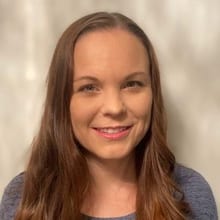
In this episode, YOUR guest is Patricia Stott, DPT, physical therapist with expertise in Ehlers-Danlos Syndromes and related conditions. Dr Stott and Dr Bluestein presented together on integrative approaches to pain management at the EDS Society Global Learning Conference in August 2023 in Dublin, Ireland. Dr Stott is the founder of Elevation Wellness, and is also trained in visceral manipulation, neural manipulation, fascial Counterstrain, Craniosacral Therapy, and is certified in Reiki. She frequently addresses instability and neck pain in her patients and is currently enrolled in a PhD program for integrative medicine.
YOUR host, as always, is Dr. Linda Bluestein, the Hypermobility MD. Explored in this episode: · Whether or not hypermobility spectrum disorder (HSD) and Ehlers-Danlos Syndrome (EDS) have different clinical presentations · Severity of presentation versus the severity of instability · How inflammation impacts cervical instability · How dysfunction in other bodily systems can impact cervical instability · Treatment options beyond “usual” physical therapy and surgery This important conversation about causes of cervical instability beyond the neck will leave you feeling hopeful, prepared to tackle that next step, with a better understanding of the multitude of factors that can impact instability of the neck. Connect with YOUR Bendy Specialist, Linda Bluestein, MD!
Watch
Guests
Transcript
[00:35] Dr. Linda Bluestein: Welcome back, every bendy body. This is the Bendy Bodies Podcast, and I'm your host and founder, Dr. Linda Bluestein, the Hypermobility MD. This is going to be a great episode, so be sure to stick around until the very end so you don't miss any of our special hypermobility hacks. As always, this information is for educational purposes only and is not a substitute for personalized medical advice. Today I am so excited to have Dr. Patricia Stott with me. Dr. Stott has many, many talents, including being a doctor of physical therapy, certified athletic trainer, and certified hand therapist. She is trained in visceral manipulation, neural manipulation, fascial counterstrain, craniosacral therapy, and is certified in Reiki. She is currently enrolled in a PhD program for integrative medicine. It has been so wonderful to be able to collaborate with Dr. Stott on various different patients, as well as share clinic space in Arvada, Colorado, where we both see patients. We also had another great collaboration when we gave a presentation at the EDS Society Conference in August in Dublin on integrative approaches to pain management. Dr. Stott, hello and welcome to Bendy Bodies.
[01:57] Patty Stott, DPT: Thank you so much for having me.
[01:59] Dr. Linda Bluestein: We've talked about doing this for such a long time. Finally, I have a feeling this is going to be the first of several conversations. So if you're listening to this episode and you think, oh gosh, but I had other questions, send them in. We'll catch up on them next time.
[02:15] Patty Stott, DPT: That'd be great.
[02:17] Dr. Linda Bluestein: Awesome. Can you start out by telling us how you became interested in EDS and related conditions?
[02:24] Patty Stott, DPT: Sure, I will try to consolidate as much as I can because I have hypermobile EDS and I've been blessed to be able to experience most of the coexisting conditions myself, which I actually find is a benefit in being able to treat it in my own patients because I have the experience of dealing with it at some point in my life. That was kind of my story in coming up and why I got into the field and why I really wanted to specialize in it.
[02:53] You know, I started getting advice from some very, very amazing specialists over the years when I was younger, and it was conflicting. It was about my physical body, what I could do with it, what I shouldn't do with it. And it didn't actually match what I was doing with my body that was actually helpful. So I made it my own personal mission, and it became a mission to help others when I had and developed my own family. I gave birth to two biological zebras, and we've kind of gone through the same thing with them. I didn't want them to have so many questions or not have as many answers, or have more answers than I had back then. So I just wanted to be part of the voice to help explore the whats and the whys and how we can make this better.
[03:39] Dr. Linda Bluestein: Sure. That makes sense. I like "biological zebras." And in terms of what we're going to talk about today — upper cervical instability — you were one of the authors on that fantastic paper that came out. Do you remember what month that was? Was that February?
[03:58] Patty Stott, DPT: February of this year.
[04:01] Dr. Linda Bluestein: Okay. And I know within a very short period of time, there were like 20-plus thousand views of that article. It was clearly something that a lot of people were really, really interested in. And people are still talking about that article. You were one of several people involved in that very, very long process, I'm sure, involving many, many meetings and volunteering your time to discuss and decide what you would have as some various guidelines and things. So we're going to talk about that today, but not necessarily in the context of the article per se. I really want to dive into how you handle these conditions in your clinical practice, if that makes sense.
[04:43] Patty Stott, DPT: Yeah, absolutely. And I will say that that is a great reference. That article has a checklist that patients and providers can use to really screen for whether this is something we think is a possibility, and also treatment strategies as well. While we're not dictating exactly what to do, there are guidelines covering the reasons behind why we would want to do something.
[05:03] Dr. Linda Bluestein: Sure. And we'll make sure to link that article in the show notes in case people did not know what article we were talking about. We'll definitely link that so they can access it as well. So can you tell us how and why you evaluate neck and head pain in the clinic, and why this is such an important topic for zebras?
[05:23] Patty Stott, DPT: Yeah, I think it's just an important topic because, you know, if we thought about even a decade ago and we talked about cranial cervical instability or upper cervical instability, there really were no mild or moderate cases. If you didn't have a severe case, you weren't treated as though you had instability. And it's really like any other joint in the body — we're not going to ignore a mild ankle sprain because it doesn't fit into our severe category. We're realizing that there is actually a much larger population that might have something on a spectrum, whether it's anatomical instability or symptomatic instability, which we can talk about. The earlier we get in to help them and recognize it, the more likely we're actually going to have more benefit in treatment.
[06:08] Dr. Linda Bluestein: Yeah, that makes sense. And I think that's an interesting analogy. You think that in the past we were only acknowledging the more serious cases? Historically?
[06:19] Patty Stott, DPT: I think that the more serious cases were taken seriously — that's what it was. We just have this misconception that cranial cervical instability means that you can't function.
[06:31] There is a difference when it comes to the hypermobile population. We know that there are anatomical structural differences between somebody who has symptomatic hypermobility and the general population, so it makes them more prone to developing a symptomatic case. And then yes, we have this stuff layered on top of it that can make symptoms feel worse — and those symptoms are completely valid — that might not be directly associated with the instability, but they're going to make you feel worse if you have upper cervical instability.
[06:59] Dr. Linda Bluestein: Okay, and what do you find most commonly in your patients with symptomatic joint hypermobility?
[07:07] Patty Stott, DPT: That layered presentation. And I would say maybe occasionally — and I know we're always going to be wrong at some point — but I just in my practice have not met anybody that has upper cervical instability that doesn't have something else, whether it's a contributing factor or a coexisting condition that's exacerbating things. There's always something else, and I get excited when that happens because the more that we have to work on, the more that we have to work on.
[07:37] Dr. Linda Bluestein: I do too. It sounds funny. I had somebody the other day with a bunch of abnormal labs and I said, well, this is great because now we have some targets. Although we know that not everything shows up in labs and imaging, so we have to address the patient and treat the patient that's in front of us always.
[07:53] So, do you think that your findings in the patients that you treat differ depending on their diagnosis? Some people probably come to you and they don't even have a diagnosis of EDS or HSD. Maybe you could start out by briefly explaining the difference between those two. I guess you would have several buckets of patients — some where you suspect they have symptomatic joint hypermobility, some who already have an EDS diagnosis, and some who have an HSD diagnosis. Amongst those three groups, do you notice any differences?
[08:38] Patty Stott, DPT: Not in presentation or management. No. The differences are really just a label. Whether we're talking about a different type of EDS, or hypermobile spectrum disorder, or hEDS, or a suspicion of something — there's something going on with the extracellular matrix that's making your structural composition wonky. And that carries through the body in different ways for each different person.
[09:07] And I guess I should say, when I say there's no difference, every single person is different. That's what the commonality is — everybody is so different. What gets them to the spot by the time they sit down in my office is what is important to me. It's their whole story, because their presentation has to do with their entire past, what their body's been exposed to, the injuries they've had. So there's not a difference because we treat them as an individual.
[09:35] And most of the patients that come to my office have already tried the standard physical therapy. If that would have worked, then we're probably not dealing with symptomatic joint hypermobility, because that responds a little bit differently. So the patients that come into my office are probably there because things haven't worked before. Anecdotally, if we just have somebody that's hypermobile and doesn't have the symptomatic piece, I might actually treat them differently than somebody that has the symptomatic piece along with it, because of the responsiveness to treatments.
[10:11] Dr. Linda Bluestein: Mm-hmm.
[10:14] Dr. Linda Bluestein: So say someone does come in and they have mild to moderate upper cervical instability — where do you usually begin, especially in light of what you just said about the fact that they've often tried a lot of other things first?
[10:24] Patty Stott, DPT: A lot of where I start is very much subjective, because through our conversation is actually where we're going to get a lot of the information as to the severity of their presentation. And this is what's important: when we go to treat upper cervical instability, we're actually looking at the severity of presentation, not the severity of instability. That is because this is a layered condition. I can have somebody that has mild signs of upper cervical instability, but their inflammatory process is out of control, their autonomic nervous system is not registering and giving output correctly. So if I touch somebody that has mild upper cervical instability anatomically but they're having a severe reaction and presentation, I'm going to make them very upset.
[11:14] So that's where you've got to go through this objective assessment and determine the type of severity of presentation — not instability, but the severity of presentation — that we're looking at. How reactive are they? How often do they have flare-ups? How quickly can they come out of those flare-ups? This is all outlined in that article. But that's how we look at it. We don't look at the patient as like, oh, your basion-axial interval was more than 2 millimeters change when you went to extension — although that's part of the story. It absolutely gives us some information. But we really have to respect the severity of presentation.
So it's a lot of subjective. I typically don't touch my patients that I suspect have an upper cervical problem for a while — for 2 or 3 sessions. Then it's really figuring out these contributing factors. And we could talk for days on this because everybody's contributing factor is different. So just because you have a diagnosis, I could be sending one person for vision rehab, I could be sending another person for lung rehab, I could be sending another person for pelvic stability work, another person to get cleared for a CSF leak. The list can go on and on as to the things that can exacerbate or even cause upper cervical instability.
[12:32] So that's really understanding the layers first, and then the contributing factors. Those are the places to start. They're not going to have a normalized reaction to whatever treatment you are providing as a provider unless their system is regulated. So it's that mast cell piece and that autonomic nervous system piece that you really have to understand before you can ever lay hands on them.
As for testing, I actually don't do too much testing on my patients outside of maybe palpation, seeing where the C1 is placed. I do have a wonderful center out here — I know we are a bit spoiled with some of what we have out here — but in Colorado we have upright MRI and they do wonderful readings, beautiful reports that are really quite accurate. I use those more for verification to see: are the numbers matching the way that you're presenting? Because again, it adds to the story. If you're only showing mild numbers that we would consider a mild positive diagnosis, maybe a little bit of impingement, but your presentation is severe, then again, maybe we don't treat the neck right away.
[13:46] That's where the second part of figuring out how to work with somebody comes in — after we figure out how do I need to approach this person and what level of severity are they presenting at, then it comes to how should I treat them?
[13:58] And I'll tell you, this bottom-up model — and for those who don't know, Susan Chalala is just a wonderful expert with the upper cervical spine — she doesn't start with the cervical spine. She starts by building the base up. This is what I try to explain to people: if you take a giant bowling ball that's wobbling and set it on top of a Jenga stack, and then you start pulling things from the bottom, you can do whatever you want to that bowling ball but it's always going to wobble if you haven't fixed the bottom of your Jenga. So you've really got to have a stable base in order to have a stable head. That gives us more ways to work with these patients and easier access points that aren't as triggering as working directly on the neck.
[14:55] From a model of how we would approach somebody anatomically, it really is this bottom-to-top approach. Are they stable enough to hold the head up there if I try to make them hold their head up there? And then the next step is understanding how to work with these patients — which kind of goes along with anything that you're working on — and that's alignment. We really need alignment all the way through that spine, because we're not just talking about C0 through the third cervical vertebrae. The whole spine is attached. What is their alignment like? Because we don't want to start any strengthening or any work unless they're in alignment.
[15:30] Not only the alignment piece, but then proprioception. Because if you start having somebody do these isometrics and strengthening but they have no concept of where their head is in space, we're really not doing them a service. We're not teaching them anything — we're just having them do things. So you really need this alignment piece, this proprioceptive piece, and then something else. And that something else is going to vary from person to person because again, it depends on what they need. What is their contributing factor? What are we strengthening? Is it a core problem? Is it a shoulder problem? That's where you can get into the specific strengthening after you have the alignment and then the proprioception.
[16:09] Dr. Linda Bluestein: I was smiling as you were saying that because I think it was the episode that was released today where I was talking with Dr. Chopra about the lower extremities, and he used the Jenga analogy also.
[16:22] Patty Stott, DPT: Yeah, it's a perfect analogy. And that's where, once we put the person in a vertical position and standing, then we have to consider the pelvis to the toes, and how the foot interacts with the ground underneath it. It just opens your eyes to a world of possibilities if things haven't worked for you before.
[16:50] Dr. Linda Bluestein: As you're saying this, I'm thinking that one of the big problems is that insurance companies — say somebody does go to standard traditional physical therapy — insurance is going to authorize them to work on a body part, right? And then you have to fill out the forms and they keep having to get authorization, and you have to improve enough, but not too much, in order for them to keep getting those visits authorized. You're discouraged as a physical therapist from looking at the body as a whole if you're in the insurance system. The insurance company cares about how the shoulder is functioning in this particular case. They don't really care about how the whole body is functioning.
[17:33] But it does make sense that the whole body is connected, and that if you're really knowledgeable about these conditions, you would understand that for people with connective tissue that doesn't function as strongly as it might in some other people. To me, that's a big part of the problem — our insurance system and how they try to take the bodies apart. Also the fact that they love to reimburse for surgeries and procedures, but not for the approach that you take, which sounds to me very logical and very important. You could do all this work on the neck and not make any progress because the problem lies at least in large part in the pelvis or in the lower extremities. Does that make sense?
[18:28] Patty Stott, DPT: It does. And that's some of the problem — and I know it's frustrating for patients out there — that a lot of us who do specialize have stepped into self-pay practice, to kind of unleash our reins a bit in being able to treat the areas that we do feel should be treated. There is a lot of monitoring and rules and regulations and things like that.
[18:51] I will say that sometimes with some insurance companies you can provide justification. That justification does involve having research, and this is where — cue the circus music — because Linda, I know that you know this: it is hard to get published when there isn't already research out there and you're trying to offer new research. You just hear, well, we haven't heard much about that, so it's just not interesting, or it's not relevant. So I was just so excited for this upper cervical piece to come out because it's really the start of trying to put more research into the understanding of the why. This is more complicated and more simple than we think. It's not just the upper cervical spine. It could be something that you've been dealing with for years and didn't know was related.
[19:42] So there can be justification for some insurance companies. You can explain to them, but again, we need more people to come out with the research as to the whys. Hopefully there are others reading and — I love collaborations, that's why I love this — because I don't know everything. Nobody out there knows everything. But if I talk to somebody and give them some information and they can excel in their own practice with their own skills and figure out other things that I don't know, that's where we need these minds to develop and start doing this research. Yeah, it could be caused by a lot of different things, but when I found that it was related to this in people and I did this treatment and it got better — so we do need some people to start writing up case studies and things like that to help us out, especially on the insurance front.
[20:31] Dr. Linda Bluestein: I really wish it was easier to publish because that is such a huge problem. It really seems like for people like you and me who are primarily in private practice, we don't have a big university supporting us and doing all the administrative tasks and things like that. And I think that's one thing that was really fabulous about this group you were involved with. You all donated your time — it was getting together the minds of the people who treat this population all across the world. This was 5 continents or something like that?
[21:10] Patty Stott, DPT: Yeah. Coordinating a time to meet was incredible. We had a couple — I think it was 4 AM meetups on my time. But I'll tell you, just to sit down with people that can carry the conversation within the symptomatic hypermobility world, and just to be validated by the fact that, hey, that's working for me too — and it's very different from what we are taught in physical therapy school. Very different from what we were instructed to do, how we were instructed to fix people. So we need to keep going with these collaborations. I know it's tough and we're all busy, but if we can continue the conversation, we'll have even more treatment ideas out there.
[21:53] Dr. Linda Bluestein: Definitely. I just finished reading Dr. Peter Attia's book Outlive: The Science and Art of Longevity, and he talks in that book about evidence-based medicine and evidence-informed medicine. What you're describing is very much an evidence-informed medicine type approach where, yeah, we have some evidence from double-blind randomized controlled trials, but obviously in some things that's really hard to study, so you have to look at people's clinical experience. You're still using evidence, but I think it's a really great way to look at evidence that is maybe different from what some people think we should be looking at. People are suffering, right? People are really, really suffering. So for us to say, nope, we're not going to help you until we have a double-blind randomized controlled trial that tells us we need to do A over B — basically, to me, that's the bottom line: getting groups together like this and saying, look, what can we do for people? What's working? What's not? And starting now and not waiting.
[23:04] Patty Stott, DPT: Yeah, I think you're absolutely right. And I have to sidetrack a little bit. We're trying to look at all of these conditions that are more symptomatic or seem more prevalent in this population. I did have a couple of specialists fly out last week, and that was the exact conversation we had by the end of it — like, well, we just found out all of this amazing, wonderful stuff, but we can't publish it because nobody's ready for it.
[23:29] We had Ron Hruska — he's the founder of the Postural Restoration Institute — and Amy Morris, another PT from the East Coast, fly out, and we looked at these patients that are having these upper GI or MALS-type issues. It was just fascinating because we found what was happening, and we really have a definition for it right now. But for each single person, it was different as to what the driving factor was. We just realized there's no way that we can publish this in research. So we've got to use our different outlets just to share our experiences. It was such a wonderful experience and all that we learned — I might have to take it to a book or a blog post. And until somebody takes that and adapts it into case studies and things, we're kind of stuck for now.
[24:20] Dr. Linda Bluestein: Or a podcast interview. I think that sounds like a great conversation that maybe you and I could have with one or both of them. Maybe you could sit in the guest co-host seat for that conversation.
[24:37] Patty Stott, DPT: I'd love to. What we found out is fascinating, and it was kind of like one of those lightbulb moments — like, how could we not realize this was happening in this population? And it changes the entire homeostasis of the body. It was incredible stuff.
[24:52] Dr. Linda Bluestein: Yeah, because there are going to be people who hear "MALS-type" — MALS, median arcuate ligament syndrome type presentation — and obviously you had some great conversations about that. So we will definitely have to follow up on that one.
[25:05] Patty Stott, DPT: Yeah, please.
[25:06] Dr. Linda Bluestein: Super interesting. Okay, so I was asking you how you start with somebody with mild to moderate upper cervical instability. When you say you don't touch them for the first 2 to 3 sessions or so — do you mean you physically are not touching their body at all, or you're physically not touching their neck? Can you elaborate a little bit about that?
[25:28] Patty Stott, DPT: So I'm typically doing a lot of subjective, especially if we're just meeting. I need to know what your body has been through. I might touch your C1 to see where it's rotated. I don't mind touching down lower to look at the alignment of the pelvis. I love to look feet-on-the-ground all the way up to the head, and I look at that while somebody is standing. And then what happens when you lay down? What did gravity do to you in between there? Because it could be a gravitational problem, which would indicate more of a pressure problem — which we can talk about at that MALS talk we have. It could be a pressure regulation problem rather than a true orthopedic problem that they're dealing with.
[26:12] So yeah, it's mostly subjective for the first little bit. I will palpate and I will try to see what's going on, but I typically rely — and I do have a lot of background in dealing with patients with upper cervical instability — on getting so much information by asking the right questions and going down those rabbit holes, especially the neurovascular and neurological ones. I try to figure out if those are correlated to the upper cervical instability with head movement or position, or whether this is something that's just neurological.
[26:47] Dr. Linda Bluestein: Sure. So when you're saying "subjective," you're meaning more from taking a history than from doing the physical part — we divide that into subjective and objective, but a lot of listeners might not be familiar with that terminology. So I just want to clarify.
[27:02] Patty Stott, DPT: Yeah, definitely. It's a lot more talking, because the last thing I want to do is touch somebody before I find out that they are reactive to everything and even the smallest touch sends them into a neurological flare-up for days. So I want to know all of that first. I want to know how their body is going to respond to my treatments.
[27:23] Dr. Linda Bluestein: Okay. And then once you've had several sessions with them and you're getting a better sense, it sounds like the path diverges significantly depending on whether you've determined that the problems lie within the pelvic floor versus the autonomic nervous system versus other postural issues, et cetera?
[27:47] Patty Stott, DPT: Yeah, absolutely. And what we're going to do in clinic and the things that we're going to have them do are very different from mild to moderate to severe cases. And all of that is actually written out in the article as well — hey, especially the don't-dos are in that article. So for physical therapists who are like, well, let me check if you have instability: please don't assume that it's already there, because we are going to see a neurovascular response if you trigger something. The tests are within the article itself — which ones to avoid and which ones might be safe. But again, you always want to err on the side of caution.
[28:31] Dr. Linda Bluestein: Yeah, definitely. So let's say you started going down one of those paths and you're still not making progress. What are some of the next, more advanced things that you might be looking at and trying?
[28:48] Patty Stott, DPT: I don't know everything and I might not be the best fit for everybody. I might not have what they need. So my first thing is — and I still have very few people that I can refer out to in this upper cervical instability population — but I do have maybe 2 providers in the area where I'll say, hey, just go see what they can do for you if it's something different.
[29:13] The next step after that would be a talk about possibly regenerative medicine, because I very rarely do I talk about anything surgical with my patients. The majority of patients actually do very well if we figure out what's driving the upper cervical instability and then rehab it appropriately. So we usually don't have to have that talk. Those would be my 2 big talks: who else are we going to see?
[29:38] The other big talk would be: do we need to rule anything out that we've missed? Is there anything else that could be driving the upper cervical instability? Because there are actually some ways that you can treat cerebrospinal fluid issues, but I'd still want to know if they had a leak that might be pulling and putting pressure on the spine and causing things to shift up higher. I would want to know if they had any signs of a diseased filum or cord tethering lower in the spine, because that's going to pull and it changes the whole pull all the way down the spine. Do we do anything about it that's super invasive? Not necessarily. But if we know that a diseased filum or cord tethering is present, we talk more about inflammation. It's just redirecting at that point. And it might not be me — it might be another specialist. I always say, for all those people out there that do specialize and do really get locked onto their patient care, it's okay to refer out. You just have to make sure that you trust the person you're referring to. They just might have the skills to help the person out that you simply don't have.
[30:51] Dr. Linda Bluestein: And I remember when I first started opening my clinic and I was feeling like I didn't know enough. Dr. Chopra kept telling me, you can't possibly know everything, and you have to have a team. There's no way you could possibly take care of this population of people without having a network of people that you can send them to to evaluate for different things or address different things. I realized very quickly that he was completely right about that.
[31:27] Patty Stott, DPT: Yeah, and you might over time start to absorb some of what the other people know. But you're right — especially with this population, it's a connective tissue disorder. You have to know head to toe, in and out, how all of those things integrate and interact with each other if you want to see long-term progress. That's literally knowing everything at a cellular level in the body. That's just impossible.
[31:51] Dr. Linda Bluestein: Yeah, exactly. It's the exact opposite of when you go to the dermatologist and they don't care about any of your history except for your skin cancers and they literally do the exam focusing on your skin, and that's it. That's super, super focused because that's their specialty. But for us, it's completely different because everything is connected.
[32:14] Patty Stott, DPT: Yeah, and I still get so excited when I learn something that I didn't know or didn't connect the dots, because again, it gives a different avenue to think about people. When I think I was at the end of the road — aha, it's this cord tethering. That's what it is. But then it's caused by something. Wait, tell me more. We can rehab it, and we might not — we're working on that stuff as well — but we might be able to actually rehab out of this depending on the presentation. It just blows my mind. I'm always just fascinated and humbled by how much I don't know about the human body. It's incredible.
[32:48] Dr. Linda Bluestein: Yeah, exactly. I feel the same way. So in terms of strategies that people can try specific to upper cervical instability — are there certain ones in your experience that tend to be most effective?
[33:04] Patty Stott, DPT: Well, you can mark this down for literally anything in this population, but especially something that might cause a neurovascular response: it's the precision and the intention of the treatment. Don't throw the kitchen sink at this person. If you think their C1 is rotated because they have a lung issue, please just work on the lung. Give them 1 or 2 things. We don't need to be overstimulating the system, especially if they're hyperresponsive to things. So I'm all about less is more. Let's figure out what are the 1 or 2 things that are going to help this person, whether it's manual treatment or their home program.
[33:47] And of course, working away from that area — I might work on somebody's lumbar spine up to their thoracic spine for 40 minutes and do one thing on the cervical spine. But it's really about precision. Why are they having upper cervical instability? Because if it's more of a mast cell systemic reaction that's causing this neurological response up there, you can play with that cervical spine and give them all the homework that you want. But until you calm down that primary agent that's driving their reactions, it's not going to do much.
[34:24] So you really have to be precise. What is it that we're trying to do? That is my goal. And until that is resolved, I'm not going to move on to the next thing. I break this down in stages for people: hey, I need to see your responses calm down first. Maybe I'll work on your dura and maybe in another area to try to relieve some of this. Again, it's different for each person, but I will repeat over and over — it's the precision and the intention. What are we really trying to do with the individual in front of us?
[34:53] It's very gentle techniques. If you look at that osteopathic way of doing things, it's kind of like working with — I was going to say kids, but let's be honest, some adults too. Sometimes they have to think it's their own idea. So when you go into the body, you don't want to tell it, well, go here because that's where I want you to go. But if you come in and say, well, I think this is a better idea — and that's the way that your hands are moving, guiding or releasing and allowing the tension to open up — and you convince it, see, wasn't that all your idea? That was a great way to move back into place, C1. It's letting the body reclaim its position.
[35:36] Because when we start to move it back into place, even though you told me that's good, it doesn't feel normal yet. I don't like it. So it's going to move out. So I think it's really this less-is-more approach. How precise can we be? What are we trying to do? Are we making sure that we're not missing something? For those that are working with somebody that has upper cervical instability and you're thinking, I think I should be working here and not on the upper cervical spine — hey, go for it. Trust yourself on it. We can get so focused on, well, it has to be the upper cervical spine.
[36:20] Dr. Linda Bluestein: If I'm understanding what you're saying correctly, that could also explain why — and a lot of my patients, I don't know about yours, but obviously we have patients in common — a lot of people do go to chiropractors or osteopaths where they've had some higher-velocity type manipulations. And so as you're saying that, I'm thinking, well, that's maybe where, number one, you can cause actual damage if you do that on somebody who has connective tissue that is not as strong as you would expect. And two, you can end up not being able to hold that position. Even if you do get it into a better position, you won't be able to hold it because of the way that it was accomplished.
[37:11] Patty Stott, DPT: Yeah, absolutely. I don't get asked this question a lot, but I do get told this statement a lot: "My C1 didn't hold." And of course it didn't, because it doesn't want to be there. So again, we're talking about the whole Jenga — this very tall Jenga chain that's been built up underneath it. If you're trying to constantly pop that top piece of Jenga back in but you have the wobbly pieces down below, it's just not going to work.
[37:40] I have run into some chiropractors that do adjust the sacrum, pelvis, and lower part of the spine — I'm okay with that. I'm also okay with symptomatic relief. I'm up for any conversation with anybody to figure out how to make you feel better. We don't know what everybody's timeline is, so I always let people know: your timeline is never wrong. If you're thinking about doing something for a treatment, consider it an experiment, and then we'll regroup. But your C1 isn't going to hold if something else is pulling it out of whack.
[38:11] And not to become more complicated, but just to show all the wonderful things that you could work on and how to think outside the box — one of the things we do for gentle movement of C1, especially for moderate and severe cases of upper cervical instability, is we use our eyes to move C1. Our C1 actually follows where our eyes go. So you can use that as a muscle energy technique.
[38:44] However — pause there — because if you have a patient that has visual-spatial issues and they are neglecting their left side because they have a weaker left eye, their vision goes to the right side because that's where it likes to focus. If it's focusing to the right side, you have a constant pull and dominance to your right side, and your C1 will follow. So you've got to look at everything. Please don't exhaust the list. That's why I typically don't talk neurosurgeon with my patients. I've had a few referrals out to them for a consultation, but there's just a world of access points that we might have missed.
[39:31] The body looks for stability everywhere, absolutely everywhere. We're talking visual stability — that is what helps feed back to our upper cervical spine of where it should be held in space. And if our vision is not stable, your body will find another place to make up for that. So it's the same for the jaw. If you can't bite fully, if you have an occlusion issue, you're getting no proprioceptive feedback, and that goes straight into the upper cervical spine. There's just so many things that you could look into in treatment options. It's not exhaustive — there's really a world out there.
[40:09] I always tell people, hang on. And especially for the patients: if you feel like you've had this weird wonky thing and you also have upper cervical instability, trust your gut if you feel like you should get that checked out, because it might be playing into your body trying to stabilize — especially that visual, spatial, proprioceptive component that is our head.
[40:29] Dr. Linda Bluestein: That's fascinating about the eyes and C1. I feel like I hear a lot of people say they either suspect or have been diagnosed with upper cervical instability, they had physical therapy directed at strengthening the neck flexors and some of the more traditional exercises — and for those listening, they can always check out the video too — and sometimes people think, okay, if that didn't work, then the next option is surgery. And I love that you're saying no, there are a lot of other things in between. Obviously there are certain exceptions because some people are so unstable, but for by far the majority of people, there are all kinds of other things they could try in between.
[41:25] Patty Stott, DPT: Absolutely. But I will say, if you are so unstable that you need to have surgery done, you still have to work on the other stuff, because the pull doesn't change after you're fixated. You will now be fixated and you'll have the same pulls in your body trying to maintain visual stability. And we haven't even gotten to the pressure system. Really, head to toe, there could be something feeding into this. So whether or not you are going to get fused or you have been fused — for those of you that are listening, if there was a driving factor before that nobody ever addressed and you're still having symptoms, please go find somebody to find that driving factor for you.
[42:02] Dr. Linda Bluestein: And when it comes to the visual things, who should somebody be looking for? Because of course there are going to be people listening that are in different countries, they can't come and see you, they can't come and see me. What type of provider should they be looking for?
[42:26] Patty Stott, DPT: If we're talking about spatial issues — and I know we hear this a lot — it depends on the provider. You might find a great provider that does everything. You might find a neuro-optometrist that doesn't help you. So you've just got to explore in your area. I would say find an EDS provider in your area and ask them who they use for their eyes.
[42:49] You can start with a regular visual exam just to see. And this is — I had my mind blown last week when somebody told me something about just the visual piece, and I tell everybody to move their eyes. I'm like, oh my gosh, I can't believe I haven't thought of this. That's why I love learning things I don't know.
[43:07] But then I had the thought: when somebody is whatever-sighted, they're handed their glasses and told when to wear them. Typically, a lot of people are told to wear their glasses when they're reading, when they're on a computer screen, when they're trying to see far distance. But your eyes don't care what you're doing. Your eyes are constantly absorbing the field around you. So if you have a body that has difficulty finding stability, please go find an eye doctor you can talk to about whether you should be wearing these glasses all the time, if your eyes can't figure this out.
[43:43] So it's really finding just the provider that's willing to listen and maybe trial some things with you. And if not, maybe we do send you to a neuro-optometrist that can look into some of those things. Sometimes going to see a visual rehab physical therapist to see if you have a convergence or divergence issue as well — are we really seeing that this is neurological with the eyes because of something that's happened before? Just know that there are a lot of options. I would say if you could find somebody in vision rehab, or just a standard eye doctor who is open to talking about these things, that would be great.
[44:23] Dr. Linda Bluestein: Okay, so we've talked about sometimes it's in the pelvis, sometimes it's in the lower extremities, sometimes it's in the visual system. Another thing that you've talked to me about that I would love for you to explain to the listeners is tongue-tie.
[44:40] Patty Stott, DPT: Oh yes. So tongue-tie sounds very localized, but it's actually not. It's the fascia that connects your tongue to some of the external fascial structures around that area, but fascia is one piece in the body — it's literally all connected. So when we say tongue-tie, yes, there's this component in the anterior neck and underneath the jaw, but it goes all the way down through the front chain of the body, all the way into the pelvis and into the legs.
[45:13] I will say, while we still don't fully understand why people are having symptomatic tongue-tie, you could have symptomatic tongue-tie and have no idea that's the cause of your symptoms, because we've adapted — or maladapted — so well. We're just so great at finding ways to compensate in our bodies. So we might never know that there's this jaw and face area, this tongue region, that's continuously contributing to the position of the upper cervical spine.
[45:44] Also, if you think about that fascial chain that runs in the front of the body — when it becomes restricted for whatever reason, whether that's inflammation, genetics, or whatever it might be — if you have a true tongue-tie and you have that restricted anterior fascial chain, it is going to pull your head forward. It is going to pull C0 forward on C1. And if you have any jaw issues or anything else that adds a little rotation to it, that can further feed into the instability that's present. So it could be a contributing factor in a number of different ways. It's certainly an exacerbating factor.
[46:25] So if anybody out there is dealing with upper cervical instability, in my practice, if I have any suspicions, I want to know about your jaw, I want to know about your vision, I want to get you checked for a tongue-tie so you can start oral myofunctional therapy. There are other people to see that can be such a wealth of valuable treatment input for these patients as well.
[46:53] Dr. Linda Bluestein: And you had mentioned the mast cell piece too, and I meant to say when we were talking about that — I've definitely found in my patients that if we get the mast cells under better control, joint stability improves everywhere in the body usually. I was not really a believer at first. When I first opened my practice and I kind of heard about mast cell, I didn't really appreciate the percentage of people that were impacted by that. I would say probably only about a year ago, I started — I was preparing to give a talk at a mast cell conference, and you learn a lot when you prepare to give a talk. I was preparing this talk and I was like, oh wow, I think maybe I should start really working more on this mast cell thing and people with persistent pain. And since I started changing my approach, I definitely think that has really helped a lot of people with their joint stability, which is obviously super important.
[47:46] Patty Stott, DPT: Oh my gosh, so much. That's what I tell people all the time — you can hop on my table if you want, but you might not want to pay the money until we calm down the inflammatory response, because we're not going to have the results that you think. It's going to cause abnormal tissue response, it absolutely will. And we're not quite sure why it tends to localize in certain areas of the spine, but certainly the upper cervical spine, this craniocervical junction, is an area for it. There might be some sort of neuroimmune thing going on there, where neurologically it might be more of an epicenter. That's why it's like a chicken-or-the-egg scenario. That's why it's so important to have these conversations — was this something that's been developing over time because of an inflammatory response, or because of one of the other things that we've talked about?
[48:32] So I always tell people: don't worry, you're already working on it. You're working on mast cell stuff. That's great. Lowering the inflammation is something we'd have to do at some point anyway, so you've already got one foot up. That's wonderful.
[48:44] Dr. Linda Bluestein: And I think a lot of people, as you said, are very adaptable. And I think most of us tend to be perfectionists and hard on ourselves. So I think it's very important for a lot of people to get that kind of encouragement, because they might go to other appointments and be told, oh, if you fall short at all, it's like you're not even trying. And it's like, no, that's not it. People don't realize how incredibly hard it is to be somebody with chronic illness, how incredibly difficult it is.
[49:16] Patty Stott, DPT: That's what I try to change the language about a little bit. I know that people are suffering — this is really hard to live with, and I know that. But also think about the amount that your body puts up with every day. It's incredible. So it might not seem strong, but it is. It's very adaptable. And for what it's going through, it's doing a lot. It might not be doing the right things yet, but it really is holding on to quite a lot.
[49:45] Dr. Linda Bluestein: Getting back to tongue-tie for a minute — what patients in particular do you refer out for evaluation for tongue-tie?
[49:54] Patty Stott, DPT: I'll tell you the ones that I really want to get checked out for tongue-tie, especially because I don't have another answer yet — and my answer might change in another 2 years or so, because we're learning so much about this. But my patients that are having intracranial pressure issues. There's a fascial component about things being compressed in the head moving forward and things being squished in there. I've just seen an improvement in headaches and intracranial pressure and that brain pressure sensation when it's paired with upper cervical instability, when somebody has oral myofunctional therapy or if they need a tongue-tie release.
[50:32] And to find out if you need one, you would see an oral myofunctional therapist. I will throw out there that there is a lot of debate about whether or not we should be releasing tongues in patients that are unstable. I don't have that conversation with my patients who have severe instability unless it's well thought out, they have a team, we have everything planned, and it's appropriate for them. That's a rare conversation when severe instability is present.
[51:00] However, if you have mild to moderate instability, I think the conversation can be had as to whether this is the best approach for that person. Because what I tell my patients is: I would never let you have a tongue-tie release unless you were talking to me and we were doing proprioceptive exercises and working on alignment. They have homework to make that procedure work for them. And just like any procedure that's ever done, I always say: look, it's an opportunity. It's not a guarantee. It's an opportunity so that we can start working out of something. But if you don't continue to work, it's not going to work.
[51:35] Dr. Linda Bluestein: I love that. When I had my Tarlov cyst surgery, that is exactly how I viewed it, but I didn't quite word it like that — that it was an opportunity, not a guarantee.
[51:44] Patty Stott, DPT: Yeah.
[51:45] Dr. Linda Bluestein: That's really, really smart. When it comes to intracranial pressure, are you thinking more high pressure, low pressure, or either — with tongue-tie?
[51:56] Patty Stott, DPT: With tongue-tie, typically it's a high-pressure response. And we could have another day of chatting about pressure strategies and what the correlation might be, because we do have some more information recently on that. But really it's more of the high pressure — that kind of feel-awful-all-the-time, nothing's-really-helping, lots-of-pressure presentation.
[52:16] Dr. Linda Bluestein: Okay. And another thing that you mentioned briefly that I would like to circle back to as we're getting close to wrapping up — you mentioned regenerative medicine, and I was curious if you would share a little bit more about your experience with your patients and what they've experienced.
[52:36] Patty Stott, DPT: Yeah, I'm a little spoiled in the area. We do have some incredible centers for regenerative medicine around us locally, but also around the nation, and some people do fly out. Now, I hear the controversy of they should be able to see anyone in regenerative medicine versus they really have to see somebody that understands symptomatic hypermobility. And I'll tell you, it depends on the patient. The patients that come into my office — I would want you seeing somebody that had a Benadryl IV drip ready, because these specialists do, because they know that sometimes there's going to be a weird wonky response. I want that provider to be able to cater care. And that typically comes with somebody that understands the condition. There aren't many out there.
[53:27] What I have seen is amazing outcomes if you figure out the cause. So if you're going in because you want to stabilize that area and we are also working on what is leading to that presentation, I have seen some amazing outcomes. If you go in thinking that regenerative medicine in and of itself is going to completely change everything — you ended up there for a reason. Your spine is in that position for a reason. Sometimes it is just orthopedic and somebody has to realign you and inject and you're good. But typically there are factors that I talked about before, and it's such a long list of what it could be. You just have to see somebody that has open eyes, can figure out what your individual problem is, and make sure that you're addressing it around the regenerative therapy as well.
[54:25] Dr. Linda Bluestein: Yeah, we definitely need more data about that too, and that's really, really challenging. So yeah. What do you think in terms of the percentage of your patients who recover sufficiently from upper cervical instability so that they do not need surgery?
[54:43] Patty Stott, DPT: That's a tough question for me because I see a lot of people with upper cervical instability. This is where it gets a little confusing — I've only referred 3 people out for consults who have not had surgery, but just to be monitored and checked because they were quite unstable. If you talk to Susan Chalala, who works very closely with Dr. Patel, her number is going to be very different. I talked to another provider out in California and we've had this conversation with others, and if we look at the grand scheme of things — that whole spectrum, mild to severe — we're typically seeing 95% of our patients not need any sort of surgical intervention to stabilize, and they can do well with rehab techniques. But also, we're the people that are looking at the mild cases right away. So it's really hard to give that number, but I would say if you go see a person that has the skills to help you, 95% of the people that come in and out of that office probably do not need surgery.
[55:43] Dr. Linda Bluestein: That makes sense. And what do you wish that I had asked you that I didn't ask? Or is there anything else you want to add?
[56:00] Patty Stott, DPT: I get asked all the time: why doesn't my C1 stay in place? Or just the comment, it doesn't stay in place. And that's what I just wanted to reiterate through our talk too. It's really important to find out why you're unstable, period. You can work on the stability itself, but I love my patients — and at some point I don't want you to come back. I'd really like to figure out what the thing is that's causing the presentation of your symptoms.
[56:27] Dr. Linda Bluestein: And that's probably true for everything. If you get to the root cause, you're going to have a much more successful outcome than if you're just putting a band-aid on it — which I think is part of the problem with most medical practices and a lot of physical therapy practices where visits are much shorter. They're not really able to look for root causes and try to address those.
[56:52] Patty Stott, DPT: Absolutely. Yep.
[56:55] Dr. Linda Bluestein: All right. So I always like to ask everyone for their favorite hypermobility hack. Do you have any hypermobility hacks that you can share with us?
[57:06] Patty Stott, DPT: I have a ton, but I'm going to start with this because I'd like to continue it in a future conversation. You have to unhinge from the thoracolumbar junction. That area is where the diaphragm is. Please stop collapsing on top of it. It's funny because whenever I tell my patients and then I find myself in that position, I'm like, oh darn.
[57:27] It can lead to a lot of different problems in people. So open that area up — it opens the diaphragm up. We can get into why the diaphragm is so important at another time, but that in itself is a movement we recommend with a number of different coexisting conditions that exist with EDS. We do not want you to hinge at that joint. Please do not collapse at the diaphragm, at the lower part of the ribs.
[57:52] And I tell people: don't worry about sitting and actively correcting it, especially if you're first trying to work on it. It doesn't have to be active at first. How do you lay down on the couch? How do you lay down in a recliner chair? Can you open that up there? Be passive first. Be passive first. I always like to start as lazy as possible until somebody's feeling better, and then do these things actively. We can have more conversations on the why that's so important, but please stop crushing your diaphragms.
[58:20] Dr. Linda Bluestein: And where can people find you online?
[58:27] Patty Stott, DPT: Elevationwellness.co. We do have some other stuff coming out in the future that we're trying to put together just to get some more education out for patients. But for now, that's my clinic site. Not too much information on there outside of about me, but that's where I am.
[58:43] Dr. Linda Bluestein: Okay, great. Well, I'm so excited that we finally got to have our first conversation. It was a very long time coming. Hopefully the second conversation will happen a lot faster than this first one did in terms of getting it scheduled. It was so great to chat with you, and I'm so grateful to you for coming on and sharing your wisdom with the listeners.
[59:06] Patty Stott, DPT: Thank you so much for having me. I appreciate being able to expand on the topics. This is how we're going to learn — somebody else knows more than me about something we just talked about, and they're going to run with it. It's going to be great.
[59:19] Dr. Linda Bluestein: Yeah, absolutely. That's what I really enjoy about doing this, because I get to talk to incredibly smart people who are all — it's like that fable about the blind men and the elephant. We're all touching a different part of the person with symptomatic joint hypermobility and addressing things in a little different way. I love getting to talk to people who are trying different things, seeing different things, and have expertise. It really, really helps all of us, I think, to be able to provide better care when we can learn from a lot of different people.
[59:56] Patty Stott, DPT: Yeah. And thank you for putting this all together.
[1:00:01] Dr. Linda Bluestein: You're very, very welcome. Well, thank you so much for listening to this week's episode of the Bendy Bodies with the Hypermobility MD podcast. Help us spread the word about joint hypermobility and related disorders by leaving a review and sharing the podcast. This really helps raise awareness about these complex conditions. Visit bendybodiespodcast.com and follow us on Instagram at bendy_bodies. We love seeing your posts and stories, so be a buddy and engage our community by using the hashtag BendyBuddy — that's hashtag B-E-N-D-Y-B-U-D-D-Y. You can also find me, Dr. Linda Bluestein, on Instagram, Facebook, Twitter, or LinkedIn at HypermobilityMD.
[1:00:41] This podcast is for general purposes only and does not constitute the practice of medicine or other professional healthcare services, including the giving of medical advice. No doctor-patient relationship is formed. This is not intended to be a substitute for professional medical advice or diagnosis. Do not disregard or delay obtaining medical advice for any medical condition you have. The opinions shared are that of the guest and do not necessarily represent the views of the host or any particular organization. Sponsorship of the podcast does not necessarily mean an endorsement. Thank you for being a part of our community, and we'll catch you next time on the Bendy Bodies Podcast.