Description
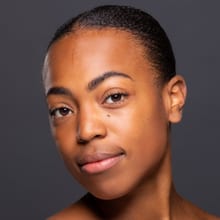
As a young dancer, Jazz Bynum enjoyed the benefits of being “bendy”. Later, she experienced more than her fair share of injuries but it wasn’t clear how these could be connected. A diagnosis of hypermobile Ehlers-Danlos Syndrome (hEDS) gave Jazz the information necessary to build the resiliency and strength she needs as a professional dancer with Ballet West. Jazz chats with Bendy Bodies about navigating her dance career while addressing her body’s unique needs with hEDS. Jazz discusses her diagnosis and what led her to seek one, and shares how her diagnosis changed how she seeks treatment. Jazz speaks openly about her decision to reveal her hEDS publicly, documenting her latest injury and nearly year-long recovery process on social media. She shares her maintenance routine outside of dance, and the lessons she’s learned about her body and her hEDS during her rehabilitation. Finally, Jazz encourages other dancers on their own journeys, addressing the importance of finding people who will support and advocate for you. An inspiring story of cultivating your own resilience through injuries, this podcast is full of encouragement and motivation for everyone struggling to move forward in spite of obstacles. . . . . . #BendyBuddy #Bendy #EhlersDanlos #Dancer #ZebraStrong #ChronicIllness #spoonie #Zebra #Disease #ArtisticAthlete #Disability #EDS #JointStability #Bendy #hypermobile #HypermobilitySpectrum #BendyBallerina #BendyBallet #Ballet #Movement --- Send in a voice message: https://podcasters.spotify.com/pod/show/bendy-bodies/message
Watch
Guests
Transcript
[01:17] Jennifer Milner: Welcome back to the Bendy Bodies Podcast, where we strive to improve well-being, enhance performance, and optimize career longevity for every bendy body. This is co-host Jennifer Milner here with the Hypermobility MD, Linda Bluestein.
[01:32] Dr. Linda Bluestein: We are so glad that you are here to learn tips for living your best bendy life. This information is for educational purposes only and is not a substitute for medical advice.
[01:42] Jennifer Milner: Our guest today is Jazz Bynum, professional ballet dancer with Ballet West. Jazz, hello and welcome to Bendy Bodies.
[01:47] Jazz Bynum: Hello. Thank you so much for having me.
[01:53] Jennifer Milner: We are very excited to have you today and to get to know you better.
[01:58] Jazz Bynum: Most definitely.
[02:01] Jennifer Milner: So before we go into the area that we want to talk about today, could you tell our listeners a little bit about yourself?
[02:09] Jazz Bynum: Yes. So currently I'm an artist with Ballet West. I'm going into my second season in the main company, but I've been here for about 4 years. I'm originally from New Jersey/Maryland — that's where my family is from. Mostly grew up in Maryland, did my training at Maryland Youth Ballet and Dance Theatre of Harlem when they had their residency program at the Kennedy Center. And then from there, I got my BFA in contemporary performance with an emphasis in ballet from Boston Conservatory, and back to here.
[02:46] Jennifer Milner: So how long have you been dancing with Ballet West?
[02:48] Jazz Bynum: This will make — 1, 2 — my 5th year here. I did 1 year as a trainee, 2 years in Ballet West II, last year was my first season as an apprentice, and then this is my second season.
[03:00] Jennifer Milner: Excellent. I think that it's great for our younger artists to hear that you are feeling some longevity at a company, because it's been a really difficult time with the pandemic and people who are trying to make that transition from pre-professional to professional — it can feel a little hopeless and sort of jumping all over the place. So that's great that you have been able to be in one spot for a while. That's fantastic.
[03:23] So one of the things that you mentioned on your Instagram page is that you have hypermobile Ehlers-Danlos syndrome. So before you received that diagnosis, did you notice anything different about the way you needed to train or even recover as a dancer versus your non-bendy friends?
[03:42] Jazz Bynum: I don't know if I noticed anything drastic because of my hypermobility. I felt there was always a struggle to be able to use my full range of motion with teachers, because so many different instructors have different ideas about how to train hypermobility, whether to use hypermobility or not. And so it kind of felt like a struggle there in terms of just learning how to understand my body and how far I could push.
[04:12] I definitely got injured a lot more frequently, but again, it was just something that — I don't know — I thought I was just a kid that got injured. And I had a lot of other GI symptoms that kind of led me to the EDS place. As far as my physical body and injuries and things, that all didn't really tie in together until the actual diagnosis.
[04:40] Jennifer Milner: Well, that's something that we hear very commonly. There's no one very straight path to getting a diagnosis. And so many times when you do finally get that diagnosis, there's that "oh, that's why." Like you said, you look back and you think, well, I was just the kid that got injured all the time, or I was the clumsy kid, or I was just the kid who had GI issues. And then all of a sudden it sort of ties all together and you go, oh, okay, there's a bigger issue that's been going on.
[05:10] Jazz Bynum: Mm-hmm.
[05:11] Jennifer Milner: So if the bendiness sort of wasn't the thing that led you to getting a diagnosis, but it was other GI issues and things like that that kind of led to that diagnosis — well, how has the diagnosis changed how you seek and receive treatment as a dancer for your musculoskeletal issues?
[05:31] Jazz Bynum: So now there are a bunch of specialists that I keep up with and make sure that all my systems are functioning properly. But then when it comes to finding a doctor or finding a surgeon, I'm always looking for a doctor that is either familiar with hEDS or specializes in it, and also is familiar with or specializes in working with dancers, because that care makes a huge difference in terms of prognosis.
[06:00] Like, even almost a year ago — 10, 11 months now, almost 11 months, 10 and a half months — I tore my ACL and my meniscus for the third time. And when we were looking at doctors, I was like, okay, I need to find a surgeon who knows about hEDS. Because in doing my own research, I found that — I think it was about 5 or 6 years ago — they created a slightly different ACL repair for hEDS patients that changes the retear rate from 40% to 4%, which is like a massive difference. And I was like, okay, I need a surgeon who either thinks that they can do this or knows how to do this. And so I was able to find a doctor who not only specializes in hypermobility but has also done the procedure before.
[06:50] So yeah, I definitely am looking for that when I'm looking for doctors, because it makes a very big difference in terms of the care you get. Because the symptoms — random stomach pain can lead to a bigger problem for us, whereas for someone else it's just like, oh, you might just be constipated or something like that.
[07:11] Jennifer Milner: So, to be clear here so that people understand — we're talking about hypermobile Ehlers-Danlos syndrome. We're not just talking about being flexible, right? And we try to separate being flexible from hypermobility, and having hypermobility from having something more multisystemic going on like hEDS. So we are specifically talking about someone with a connective tissue disorder here.
[07:35] And also to clarify — you have had 3 surgeries for the same issue, or 3 injuries?
[07:45] Jazz Bynum: I've had 5 major surgeries, but I had 3 ACL tears — or reconstructions — on the same knee.
[07:52] Jennifer Milner: On the same knee.
[07:54] Jazz Bynum: Yes.
[07:56] Jennifer Milner: Let's just let that sink in for a second. And the fact that you have continued to keep going — your Instagram name is the Resilient Ballerina, and that absolutely encapsulates it. To be able to come back is such a clear example of, like you said, the importance of finding somebody who understands working with a connective tissue disorder and can approach it from a different way. Thank you.
[08:23] Dr. Linda Bluestein: I wanted to ask — so a lot of ballet dancers especially are very flexible. As Jen said, flexibility and hypermobility are two different things, with hypermobility being more about the ligaments and how the bones are aligned and the shape of the bones and things like that, whereas flexibility refers more to neural tension in the muscles and things.
[08:47] I'm just really curious because so many dancers are probably going to listen to this — and other people, other athletes, gymnasts — and they're going to be thinking, oh my gosh, could that be me? Maybe not. I don't know. I'm hypermobile, I think — meaning greater than average range of motion of the joints. But then, not everybody, as Jen said, not everybody has hypermobile EDS. But it is very important to be evaluated and get a proper workup so that you know exactly, as you were just saying, how to get the right doctors to work with you and all of that.
[09:20] So would you be willing to share more about the process of getting diagnosed with hypermobile EDS? Because I think a lot of dancers could really benefit from hearing a little bit more about your journey, if you're willing to share.
[09:35] Jazz Bynum: So between the GI doctors that I had seen and the neurologist that I saw, they were like, you know what, maybe you should go see a genetics doctor. And so from there I went to go see the geneticist and she was like, yeah, you definitely have it. So obviously they did the Beighton score, went through the checklist, and they were looking at different things like how stretchy your skin is and stuff like that.
[09:59] Dr. Linda Bluestein: I just want to make sure people know it does not have to be a geneticist. Because a lot of times — at least in a lot of other places — I'm so glad you got to see a geneticist, because a lot of people, especially if they suspect hypermobile EDS — either they do, or maybe one of their doctors suspects it — but their doctor is like, I don't know enough about it, I can't actually diagnose you, and they cannot get in to see a geneticist. I have heard this from people, and I've seen letters that say, we're sorry, but we cannot see you because we don't suspect vascular or something like that. Which is really bad — there are like exclusion criteria like that. I mean, that's terrible, because people who have these conditions really should be getting in to see a geneticist.
[10:43] And you mentioned briefly, and I want to touch on it too, that there are different subtypes of Ehlers-Danlos, right? And the vascular subtype is very important for people to be aware of, because that does present very differently — has very different signs and symptoms and things like that. Not everyone has the classical facial features. There can be some overlap of what we call phenotypes where — talking about aneurysms and things like that — you can see a little bit more vascular fragility even in the hypermobile type. So there are possible concerns there.
[11:20] But there is the vascular type, which like you said, you can do a blood test to actually determine that, or a cheek swab. Those other types — all of the other types — can be determined based off of a test. And that's really important because if you suspect one of those types, especially if you suspect the vascular type, that's a life-threatening type.
[11:41] So we just want to make sure people know that there are different types. The hypermobile type is by far the most common type — super, super many, many times more common than vascular type. So if you're thinking, oh my God, I'm a dancer, I'm hypermobile, and now I'm thinking I'm going to get an aneurysm or something — just know that it's not that it's impossible, but it's not likely. So it's important for each person to get evaluated individually, because each person's picture is very, very different.
[12:12] And another important thing for people to know: yes, you're born with hypermobile EDS, but we are now also talking about phenotypes. So the phenotype is the clinical presentation, which is different from the genotype, which is your genetic makeup. There's a really great paper by my colleague Larry Afrin — the title is "Some Cases of Hypermobile EDS May Be Rooted in Mast Cell Activation Syndrome." If a person has mast cell activation syndrome and they get release of these mediators, and especially release of something called proteases, that can degrade connective tissue and can cause a picture that looks like hypermobile EDS. So now we're thinking that not all cases of hypermobile EDS are necessarily inherited.
[13:13] And one last thing I'm going to mention, which I think is really important, is forced hypermobility. Dancers who are purposefully training their knees into hyperextension — doing the splits, putting their front leg on blocks, putting their leg into a crazy amount of hyperextension — that's not hyperextension you were born with. That's acquired hyperextension. And I like the phrase "forced hyperextension," because that's what it is. So those are all different things that I think are good for people to be aware of.
[13:49] Jazz Bynum: Yeah, I agree 100%. Because I definitely did not go to a school where extreme hypermobility was trained. But I had 180 degrees of turnout until I had hip surgery, and so all of those things were there. Like, I could easily do my homework in a split without even feeling a stretch.
[14:08] Dr. Linda Bluestein: Really? Wow.
[14:09] Jazz Bynum: Yeah. So there were many nights I'd just sit on the couch doing my homework in a split. My mom was like, what are you doing?
[14:17] Dr. Linda Bluestein: Wow. So were you hypermobile before you even really started dance?
[14:22] Jazz Bynum: Oh yes.
[14:22] Dr. Linda Bluestein: Oh, were you? Okay.
[14:24] Jazz Bynum: Because my mom — when she had me, she was an aerobics instructor going to college and later went into education. But because of that, she was always very aware of what we were eating and how our bodies were doing. And from a very young age — I think 3 was the first time that I was diagnosed with my first set of allergies, which I later found out were intolerances — but she was like, yeah, I think you were almost double-jointed when you were little. So she definitely noticed very early on the things that were just different in my body.
[14:58] And then my sister is the complete opposite and she doesn't have the level of flexibility that I had. I think also my mom has it — she's never been tested, but she has more hyperextension than I do, and she's a lot older than I am. Obviously she's my mom. But even with her not being as active as I am now, or as she was in her 20s, she still has a lot of hypermobility as well.
[15:29] Dr. Linda Bluestein: Yeah, and that family history is always very important to be looking at. And so you've already had hip surgery also?
[15:36] Jazz Bynum: Yes. So my very first surgery, I was 13, and I had a bunionectomy. But that actually was more of like a reconstruction of my foot, because the bunion — within a matter of like 2 or 3 months — went from being a bunion to I couldn't even do a relevé. And so not only did I have to get the bunion removed, but I had to get my foot reconstructed, and I had 2 screws from that.
[15:59] Then when I was 15, I had acetabular femoral impingement of the mixed type. That took a while to diagnose because I also have a very high pain tolerance. And so I was like, oh, it's not that bad. But it was annoying me because it was decreasing my range of motion, and I was like, this is not okay. And so I went through PT, saw a rheumatologist. And then by the time I went to a summer intensive, I could not even sit in a car without being in pain. And so I ended up having to get surgery, and I had torn through all the cartilage and all this stuff. So I had all that repaired.
[16:42] And then I had the 3 ACL tears. And then the last major injury that I had but didn't result in surgery was I was dropped in a lift just in rehearsal — which is normal — and I went to not land on my partner's head and ended up fracturing my elbow. So those are the big ones.
[17:04] Jennifer Milner: And that last one is a random one, right? Those are the sorts of things that you can't really control. But the others you can start to see that pattern of having issues with the connective tissue and the way that your body works.
[17:25] Something you said earlier about how your mother noticed this, and you could tell from a very early age — and it sounds like your family was noticing it early on, and you were thinking, well, how do I fix this, or how do I address that, or how do I deal with this? And one of the themes that we keep hearing when we interview other people is that people who recognize it early on — they may not be able to name it, but who see something and have that family support to say, hey, let's address this, let's deal with it, whatever it is — really are so much more successful at being able to pursue their dreams without so many medical issues sort of weighing them down, because they learn how to deal with those medical issues at an earlier age.
[18:09] So I think part of your resiliency isn't just something that you have, but that you've cultivated from a younger age and have put this sort of longevity plan into place — whether you realize it or not — by managing these things as they come up and finding specialists who will help you manage them. So it's really great for people to hear that you've had so many surgeries and yet are still going forward and moving forward with your career and continuing to progress. Not just like, I'm going to keep dancing, but that your career is continuing to grow and blossom. So that's really fantastic.
Jazz Bynum: Yeah.
[18:41] Jennifer Milner: So we've talked about you getting a diagnosis and sort of learning to live with your issues. I would love to know — as I said, you've been very open on Instagram about having hypermobile EDS. And a lot of dancers worry about sharing their health information because they fear companies or casting directors might use it to make unfavorable decisions about them. And you're being very open about it. What made you decide to talk so openly about it? And not just that, but to show it on Instagram — here is my surgery, here's me fighting to come back in my pirouettes — and allowing us to see that vulnerable process as it goes on. So what made you make that decision to be so open about it? And what kind of response have you gotten?
[19:24] Jazz Bynum: So after my second ACL procedure is when I created the Resilient Ballerina. While I was in college, I had started a support group for just dancers that were getting injured, because at that point there were just a ton of us that were injured. And for me, it was the first time that I was injured and away from home. I had to set the doctor's appointments, schedule my surgery, just all these things. And I was like, I'm 20 and I'm trying to figure out how to do major surgery without my mom there. I mean, she came up and took care of me after, but it was a huge thing to have to navigate and not be home — especially once I was able to walk and was easing my way back into dancing.
[20:06] And then I just noticed other dancers were going through the same sort of emotional turmoil, just with other injuries, not necessarily surgery, but things that were taking them out of dance for an extended period of time. And so it started there, and then that sort of created the Resilient Ballerina. And I didn't get to create the page the way that I was able to this time, in terms of doing my journey from beginning to end, because I started it kind of after I was already back. And so this time I decided to do it from beginning to, continuing the rest of my career — because we all get injured at different points in our career, we all go through surgeries at different points in our career, but people don't get to see that.
[20:58] And I think it's very important for younger dancers to understand that injuries and major surgeries are not career-ending. Also to understand that going to college is not career-ending, because the whole idea and energy around how you can have a ballet career is so broad now. It has started to transition away from the mindset that you had to go into a company right after high school, or if you weren't dancing by the age of 16 you were never going to make it. And that's just not the case anymore.
[21:32] I've met male and female dancers — all walks of life, all genders — who have started at different times, who went through a whole bunch of different paths, took time off, went into a career, took time off, came back. There's just so many different ways that you can build this career, whether it's a big company, small company, in the US, not in the US — there's just so many things that you can do.
[21:56] And so I wanted to be as transparent and as clear with my journey as I could, to one, show people that your journey does not look any one sort of way, and also that the dancers you're looking up to don't just have this easy pathway into their careers either. And even if they do, it's still different, and that's okay.
[22:20] A lot of what I say, whether it's something that I'm writing or an interview that I'm doing, I'm always trying to remind people that your journey is your journey and that you don't need to compare that to the person next to you or someone that you're looking at on social media, because you have no idea where you're going to end up and what decision is going to take you into another opportunity. So that's pretty much why I decided to be so honest and transparent.
And it also helped me through my recovery process. And it's been amazing to be messaged by people or have people reach out sharing either their stories or asking for advice. Because even after I tore my ACL, there was another dancer at another company who ended up tearing her ACL as well, and she was asking for guidance. I think she hadn't started with doctors that were specialized in dancers, so for her to get guidance on how to rehab back into class or back into a company and what that looks like helped her on her journey as well.
[23:23] So to be able to do that is really my goal — keep spreading the information. Because I feel like between doctors and PTs, sometimes you're not always able to get in with people who know dancers or know exactly what it is you're getting back to. And so to close that gap of information — anytime something happens with dancers, whether I'm reaching out or they reach out, I'm like, this is what I know, this is what I've figured out over the last 10 years of my life.
[23:57] Dr. Linda Bluestein: And I can see how even if someone is working with a dance medicine physician, a dance medicine orthopedic surgeon, and a dance medicine physical therapist, you may still have some practical tips to share that they'd find really useful. So even if people have all of that, I think it's great for them to connect with you. And you're right — a lot of times we do fear that injuries are career-ending. So I think it's really great that you're helping other dancers and paying it forward, because that's really important.
[24:35] Jazz Bynum: And also, to that same point — even with this recovery process, I've gone through it 3 times now, and every single one has been completely different, and in really cool ways. I wouldn't say — I feel like if I had to pick a worst one, it'd be the first one, because I didn't have the graft I wanted and it tore after a year, which was just frustrating. But between the second and the third process, they were different. I had PTs both times that specialized in dance, were dancers themselves.
[25:00] But even this recovery process was really cool. I had a lot of pool therapy this time. And even when it came to getting back to pointe work — I always felt like pointe work didn't need to be the last thing that you do. Because through all those recovery processes I've been through, it was always like, once you can jump, then you can do pointe. And I always thought about it and I was like, well, why? Because you're not jumping to get onto pointe. It's the same muscles, which I feel like should be the first step before you start jumping, so you're slowly retraining that pattern.
[25:40] And so the PT that I was working with this time — she's amazing — she actually started having me do pointe work in a chair before I was even doing barre. And so by the time it came to being on pointe on my feet, I wasn't cramping, I didn't have as much fatigue, because I had gone through all those exercises just doing them in a chair, which was way harder. But now, while I'm still building strength — even though I'm getting closer and closer to a year post-op — nothing is as hard as it has been in the past. And I think that also has something to do with weight training and all those things, but just the whole timeline of how recovery went. So even those things — what I've learned through that process — it's been cool to find out, but also nice to be able to share. Like, try this.
[26:34] Jennifer Milner: One of the things that I always say to people is that you just have to find one person, and that'll get you started on your own journey. And I think that you are a great example of that. You said you get people emailing you and sending you messages saying, I don't know what to do, and you say, well, try this. That one person can be someone who has been through it like you have and can say, well, I did it this way — see if you can find this person or that person, or maybe mention this to your PT, or maybe suggest that to your doctor.
[27:06] So it's great to have someone like you who has been through this in so many different ways — 3 different surgeries for the same thing and learning a new approach to the rehab of it. Your willingness to be vulnerable and show people it's okay to have injuries, number 1, but number 2, also to share the information that you have worked really hard to get — this has been hard-won information. And it's great that you are willing to share that with others and to help other people on this journey, because I know we can often feel alone in all of that.
[27:40] You also touched on, as part of your recovery process, factors like weight training and everything like that. I would love to know — has this injury recovery process shaped or reframed the way you are going to do work to stay in shape and what your out-of-dance conditioning is going to look like? Could you share some of that with our listeners?
[28:07] Jazz Bynum: Yes. So I am always looking for more ways to just be active and to cross-train. I love doing yoga and I love doing Pilates, but especially in terms of strength building — because once you've gone through this surgical process, the strength building does not end. It always has to continue, which is fine. And it's really cool because you're always sort of evolving and revamping what you're capable of doing.
[28:34] And even with what I did at the gym, I was always sort of hesitant towards weights just because of how I envisioned my body would react to them. And then during this recovery process, my PT explained — she was like, you're not going to bulk up because you don't have enough testosterone in your system to bulk up. And also there are different ways of lifting, just like there are different ways of doing cardio and all these things. And so having to do weights in order to build the strength in this knee, I then also learned that yes, I can do weights. And so now it's exciting because I feel like I have this much more well-rounded gym experience and workout in terms of keeping the strength building in my body, but also keeping my body lean the way that I want it to be.
[29:31] And I feel like with the combination of doing the weight training and reformer work, it's like a whole different type of body. Because I was very worried this time about how my body would react to going from dancing 6 hours a day to doing virtually nothing for like 2 months and then slowly building that back up again. And it was very easy for me to maintain within a reasonable limit. I didn't really realize it at first because there are so many things that you're going through during this recovery process. But I think by just allowing my body to go through the process it needed to go through and keeping my body nourished, it just worked out that way — because in past surgeries that wasn't necessarily the case. But I think the big difference is now I've gone through puberty. I was going through puberty at that point, so my body was still trying to figure that out.
[30:29] But also, no matter what my body was going to do, I kept trying to remind myself that whatever does happen, it's okay. There's room for all of these things, and I have time to get to wherever I want to be. But yeah, it's been fun to play around with different ways of cross-training. And weights is definitely something that I will keep, especially in the off-season, because getting power back has been probably the biggest struggle in this recovery process compared to the others — especially because this surgery was way more extensive than just a normal reconstruction. So I feel like weights is probably the biggest thing. And then I'll keep doing yoga, keep hiking, doing Pilates. But yeah.
[31:24] Jennifer Milner: Well, and weights is something that a lot of dancers — not just hypermobile ones — worry about and struggle with. Especially with hypermobility, it is really hard to build strength. And as you said, your power is kind of the last thing to come back. It's very common for dancers to struggle to regain that power, that physical resiliency and rebound, and the big jump power as well.
[31:52] I did want to touch on something you said in that answer. At points along the way you're thinking, where am I? Am I going to have time to get to where I'm trying to get to? You've had 5 surgeries — is that right?
[32:07] Jazz Bynum: Yeah. Wait — 1, 2, 3. Yes.
[32:10] Jennifer Milner: You've had 5 surgeries, and you have been so open and honest about your journey here. Were there moments when you thought, I don't know if this is worth it? Did you have that sort of emotional vulnerability at certain points? And how did you find the support you needed at those moments?
[32:28] Jazz Bynum: I feel like when I did have those moments, it was out of frustration. Because even if I said it, I didn't mean it. Even this last time when I tore it, I literally could not believe it, because it had been 6 years since the second one. And so immediately, okay, when's surgery? Like, it didn't even dawn on me to not continue, because my philosophy since I was a kid was: unless you're telling me I can't walk ever again, I'm going to keep dancing. And even then, I think I would still try to find a way that I could keep dancing.
[33:09] So it's almost like not an option for me. Because even though I know how long and grueling the recovery process is going to be, I'm like, I don't care how hard it's going to be, I'm going to do it. And so I feel like where those thoughts come in, it's out of frustration, or it's a really hard day, or feeling defeated because I can't do a quad press or something like that. But then I also know that that's my self-doubt trying to come through, and either I'm shutting it down myself, or my mom is like, you can do this. And most of the time it's her, until I get past that point.
[33:53] My mother is probably the most amazing person that I know. She sees a lot of things that I'm going through that sometimes I don't even realize what it is I'm going through. And she's a very, very strong support and also extremely encouraging. Like, even in terms of getting to this diagnosis, she fought very hard with doctors to either take my symptoms seriously or to get them to look deeper, even if they didn't feel like it was necessary. So it's been amazing to also have her as a mom in general, but especially having her as part of my team to get me where I needed to be.
[34:33] But all that said, I think those thoughts come out of frustration. And whether it's me or her pulling myself out of those thoughts, the important thing is to keep moving forward. And journaling is a really big thing for me. Because going through those surgical processes, I don't really — as ironic as this is — I don't like to express what I'm going through in the moment. So that was another thing that was really great about documenting this whole process — I was getting things out as they were happening. And so I wasn't stuck in my frustration or stuck in sadness as long as I had been in the past, because I was sharing it, and because I was sharing it and expressing that emotion, I was then able to just release it and then go home and sleep, or whatever it was I had to do. But definitely in the past, not expressing things was in a way destructive because it was just leaving me in this bad mood all the time. Which that is something you're going through and it's okay, but it's not a place that I wanted to be stuck in. And so I'm always looking for ways to keep myself moving through those moments, so that I'm not ignoring them but also not being stuck in them, because that's just not where I want to be emotionally.
[36:06] Jennifer Milner: Well, to see the importance of your mother — it's so important to have someone else by your side who can advocate for you in the doctor's office, in the living room when you are tired and exhausted and frustrated. You need that advocate, you need that cheerleader who can speak into your life. But you also have done an amazing job trying to be forward-looking and encouraging yourself, and as you said, developing those skills — I need to journal, I need to Instagram — and giving yourself healthy outlets for it. You really have been cultivating that resiliency, that long-term mindset of here's what I need to do to move forward. What's next, right?
[36:47] Jazz Bynum: Yes.
[36:47] Jennifer Milner: And that's amazing. That's an amazing part of your journey, I think. Is there anything that we haven't discussed that you wanted to share with our listeners?
[36:56] Jazz Bynum: I don't think so. I think we've pretty much covered everything. I will say, though, that if this is something that you find out that you have, it's an ever-evolving journey. Like now, the things that I need or the things that worked for me when I was first diagnosed aren't necessarily working now — even in terms of certain things that were allergies actually turned out to be intolerances. So it's just something that you're always learning, always redefining for yourself. So keep open to learning and exploring with anything really, but especially since we're specifically talking about hEDS, just keep trying to gather information.
Because even now, post-surgery and going into surgery, I was on websites looking up articles, just trying to soak in as much information as I can. Because while we're figuring it out, so are the doctors, which is cool because there's more growing information. Even with knowing that this surgical procedure now exists — it's only 5 or 6 years old, and I had surgery about 6 years ago, which was also crazy because I had my second procedure and then was diagnosed a year later with hEDS, but the surgery didn't even exist then. So just one of those things. But stay open.
[38:21] Jennifer Milner: And so where can people find you if they want to follow you or learn more about what you do?
[38:25] Jazz Bynum: So on Instagram, you can follow theresilientballerina and on TikTok, same thing — theresilientballerina. And feel free to message me at any point. I'm open. I'm here to help.
[38:40] Jennifer Milner: Oh, that's really sweet. I think people knowing that they're not alone is so huge. And I think so often dancers — we have difficulty expressing ourselves, we're so used to not using our voice — and we can really struggle and feel like we are alone. So that's an incredible offer. And I hope if people really are feeling alone that they reach out to you, because I think that's fabulous.
[39:07] Jazz Bynum: Yes. As big as our world is, it's also small at the same time. I can't even tell you the random connections I've gotten, whether it's in the ballet world or the real world. And so it doesn't make sense to keep information to yourself. We should all be here to help each other out, so please do not hesitate to reach out.
[39:31] Jennifer Milner: Absolutely. That's awesome. Thank you. You have been listening to Bendy Bodies with the Hypermobility MD, and our guest today was Jazz Bynum, professional ballerina with Ballet West. Jazz, it has been a pleasure speaking with you and having you share your journey with us. Thank you so much for coming on.
[39:47] Jazz Bynum: Thank you both so much for having me.
[39:52] Jennifer Milner: We love chatting with you. It's great.
[39:54] Dr. Linda Bluestein: If you loved what you have learned, follow the Bendy Bodies Podcast to avoid missing future episodes. Screenshot this episode and tag us in your story so we can connect. Our website is www.bendybodies.org and follow us on Instagram @bendy_bodies. Leaving a review, following the Bendy Bodies Podcast, and sharing the podcast helps spread the word about hypermobility and associated conditions. This information is not intended to diagnose, treat, cure, or prevent any disease. The information shared is for educational purposes only and is not a substitute for medical advice, diagnosis, or treatment. We'll catch you next time on the Bendy Bodies Podcast.