Exploring the Link between Joint Hypermobility and Neurodivergency with Jessica Eccles, MRCPsych, PhD
Description
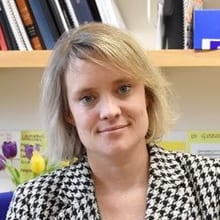
Evidence shows that neurodivergency occurs at a higher rate amongst people with hypermobility disorders. And we know that anxiety is also prevalent in the hypermobile population. When we look at neurodivergency, hypermobility, anxiety, and dysautonomia, we see hints of lines drawn between them. Might science soon be able to connect the dots? Jessica Eccles, senior clinical academic psychiatrist at Brighton and Sussex Medical School, and specialist in brain-body neuroscience, returns to speak with Bendy Bodies about neurodivergency, hypermobility, and possible links with anxiety and the autonomic nervous system. In February 2022, Dr. Eccles published the peer reviewed journal article, "Joint hypermobility links neurodivergence to dysautonomia and pain". She discusses the fascinating results of her research, and explains why neurodivergency, dysautonomia, and pain appear to be connected via joint hypermobility. Dr. Eccles shares her findings of higher levels of musculoskeletal symptoms in the study’s neurodivergent population vs the comparison group, and wonders if this may be a potential reason why people with neurodivergency experience more health symptoms. She explains the importance of raising awareness of the link between joint hypermobility and neurodivergency in the medical community, and discusses how anxiety is linked to joint hypermobility and possibly autonomic nervous system dysfunction. Dr. Eccles shares her work on the ADAPT program, a program aimed at reducing anxiety with a combined brain-body approach in hypermobile people. Still in its early stages, the program (Altering Dynamics of Autonomic Processing Therapy) has fascinating implications. Finally, Dr. Eccles reveals her current research projects and shares her hopes for future research. An incredible, accessible discussion by one of the top researchers in this field, this is an episode not to be missed. #neurodivergency #BendyBrain #dysautonomia #AutonomicNervousSystem #anxiety #ActuallyAutistic #adhd #ADHDAwareness #ASD #AutisticPride #DisabilityInclusion #RedInstead #AutismAcceptance #AutismAwareness #neurodivergent #AutisticAdults #neurodiversity #autistic #autism #BendyBodies #BendyBodiesPodcast #JenniferMilner #ZebraStrong #hypermobility #HypermobilityDisorders --- Send in a voice message: https://podcasters.spotify.com/pod/show/bendy-bodies/message
Watch
Guests
Transcript
[00:11] Jennifer Milner: Welcome back to Bendy Bodies with the Hypermobility MD, where we explore the intersection of health and hypermobility, focusing on dancers and other aesthetic athletes. This is co-host Jennifer Milner here with the founder of the Bendy Bodies Podcast, Dr. Linda Bluestein.
[00:27] Dr. Linda Bluestein: Our goal is to bring you up-to-date information to help you live your best life. Please remember to always consult with your own healthcare team before making any changes to your routine.
[00:37] Jennifer Milner: Our guest today is Dr. Jessica Eccles, clinical senior lecturer and MQ vs. Arthritis fellow with expertise in brain-body interactions, joint hypermobility, liaison psychiatry, neurodevelopmental conditions, and immunopsychiatry. Dr. Eccles, welcome back to Bendy Bodies.
[01:07] Jessica Eccles, MRCPsych, PhD: Thank you so much. It's a real pleasure to be back.
[01:11] Dr. Linda Bluestein: We're thrilled to have you.
[01:12] Jessica Eccles, MRCPsych, PhD: Thank you.
[01:12] Jennifer Milner: Yes, we are excited to have you back for a second conversation. Our first conversation, we talked about neurodivergency and the connection between neurodivergency and hypermobility. Today we're going to dive a little bit deeper into that. But before we get started, can you just tell us a little bit about yourself?
[01:29] Jessica Eccles, MRCPsych, PhD: Okay. So I am something called a clinical academic. That means I divide my time between clinical practice and research practice, broadly under the auspices of being what in the UK is called a liaison psychiatrist. So I'm based in Brighton at Brighton and Sussex Medical School in the UK. I think in America this is called a consultation liaison psychiatrist. So I'm interested in brain-body interactions, and my research really has been over the years unified by brain-body interactions, but particularly as they relate to hypermobility.
[02:13] So I've been working on hypermobility for a number of years, really since my first brain imaging study of hypermobility, which with colleagues we showed differences in part of the brain involved in fear and emotion processing — the amygdala. So the work I've been doing since then has broadly been related to hypermobility: hypermobility and anxiety, chronic pain and fatigue. And the motivation for getting into work on chronic pain and fatigue was really that there were reports of overrepresentation of hypermobile people in chronic pain and chronic fatigue populations. And I was interested in understanding more about the biological mechanisms of chronic pain and fatigue that might relate to inflammation in the body and also differences in the autonomic nervous system — the involuntary nervous system. So since 2016, we've been working on a big project about pain and fatigue.
[03:20] Also interested in other brain-body interactions in hypermobility, so I have been working in the field of researching autism, ADHD, Tourette syndrome, and that complements nicely my clinical practice, which is in adults with ADHD, autistic adults, and adults with Tourette syndrome. So my clinical practice in Sussex in the NHS is in the neurodevelopmental service. I also have other research interests. We're interested in creativity, and we're just getting into a few projects about that. And as you can see from my background, I like to take photos.
[04:08] Jennifer Milner: I do see that, and I do love the photos back there. I think we actually said this the last time we interviewed you, but there are so many different things that we could talk to you about because you have gone down so many really interesting research rabbit holes connecting a lot of different things that are at the forefront of the minds of many of our listeners. Your research areas are listed as neuroscience, psychiatric and neurodevelopmental features of connective tissue disorders, and mechanisms of chronic pain and fatigue. There's so much for us to choose from. Before we go too deeply into this conversation though, can you describe what is meant by neurodevelopmental conditions?
[04:54] Jessica Eccles, MRCPsych, PhD: So neurodevelopmental conditions are conditions that typically start in childhood in which there is some variation in what we think of as brain processing. And neurodevelopmental conditions include a variety of things such as autism, ADHD, Tourette syndrome, but also other things like dyslexia, dyspraxia, and dyscalculia, which is dyslexia but for numbers. So the key feature is presence in childhood that then carries on throughout life.
[05:41] Philosophically and medically, there is quite a lot of debate about exactly what is a neurodevelopmental condition, and I think the definitions are changing all of the time. It's a very medical model and word, and I think that over recent years things are changing in terms of how we frame these conditions and exploring the differences in people and their strengths as well as the difficulties that they face.
[06:19] Jennifer Milner: That is really interesting. I know this is a time for a lot of growth in looking at neurodevelopmental conditions, and as you said, the definition of a neurodevelopmental condition is changing all the time and is something that is hard to pin down. You listed several different ones — ADHD, Tourette's, dyspraxia. Can you elaborate a little bit more on what dyspraxia is?
[06:47] Jessica Eccles, MRCPsych, PhD: So dyspraxia is also known as developmental coordination disorder and is a difference in movement. Typically we think of people with dyspraxia or developmental coordination disorder as being clumsy, or they might have difficulties when they're growing up with things like tying your shoelaces or holding a knife and fork. But the presentation of dyspraxia doesn't mean to say that you can't catch a ball or write — every individual is different and will have strengths and differences. And what's also interesting is dyspraxia, like dyslexia, is often associated with outside-of-the-box thinking, creativity, and other interesting attributes. But we know that it also often co-occurs with ADHD.
[07:51] Jennifer Milner: Interesting. And do you see any relationship between the dyspraxia and proprioceptive issues? Are they inextricably linked? Are they just causationally linked? What do you see?
[08:12] Jessica Eccles, MRCPsych, PhD: I'm not sure about the causation, but yes, dyspraxia is definitely related to this sense of where we are in space. I alluded to an earlier hypermobility imaging study that we did, and people who are dyspraxic often are hypermobile. When we did the hypermobility imaging study, we found that a part of the brain involved in proprioception actually seemed a bit smaller in hypermobile people than in non-hypermobile people. And that might be one kind of factor in thinking about the brain processes that concern proprioception.
[09:04] Proprioception is obviously a really important sense and often overlooked, and it may be that when we're thinking about strategies and interventions to help people in the future, proprioceptive work might be beneficial for a whole variety of things and not just movement. This is conjecture on my part, but by increasing the stability of where you think you are in space, this may help with your brain processing uncertainty, and that may actually improve things overall. We know that hypermobile people often have quite weak core stability, and that by improving core stability, you can improve pain in other parts of the body by strengthening the core. So proprioception is actually probably quite ripe for investigating further as a potential intervention for improving quality of life in hypermobile people. And it's something that I would be really interested to study more in the future.
[10:38] Jennifer Milner: Well, we would love for you to do that.
[10:38] Dr. Linda Bluestein: We would love to do that with you.
[10:43] Jennifer Milner: Absolutely. I think we both see in our own practices proprioceptive issues across the board with most of the hypermobile people that we work with. And the teasing that they get — oh my gosh, you're a high-end athlete, you're an Olympic skater, you're an amazing dancer, but you trip over your own feet or you stumble falling. People always wonder how those two things can be linked. So thank you for digging into that and explaining it. Are there other reasons that the neurodevelopmental conditions, the neurodivergencies, might be important in regards to connective tissue disorders?
[11:27] Jessica Eccles, MRCPsych, PhD: Well, this is the million-dollar question in terms of how they — they both seem to often go together. They don't always go together at all. So there are neurodivergent people who are not hypermobile, and there are hypermobile people who are not neurodivergent. It's probably a very complicated process, and that's why we're really only just beginning to understand. But maybe factors that are influencing the development of connective tissue are also influencing neurodevelopment, and maybe they are interacting with inflammatory processes and autonomic processes, and they're developing at the same time together.
[12:14] And in fact, I have a student next year who's really going to focus on looking at something called gene expression, trying to look at neurodevelopmental gene expression in hypermobility to see if there are any particular links using a technique called transcriptomics.
[12:42] Dr. Linda Bluestein: Wow, that's exciting.
[12:44] Jessica Eccles, MRCPsych, PhD: We've done some initial work in people with chronic pain and fatigue that showed some inflammatory differences. But what we would like to do now is characterize that further, specifically looking to see if we can identify any gene expression involved in neurodevelopment to see if we can piece that together a little better.
[13:12] Dr. Linda Bluestein: And every time I hear the word inflammation, I get excited because that's the approach that I take with a large percentage of my patients — that even though hypermobility, hypermobile EDS, or hypermobility spectrum disorder are not defined as inflammatory disorders, it seems that the neuroinflammation that some people may be experiencing, or inflammation due to mast cell activation and that kind of thing, it seems like that approach has been working quite well with a lot of people. And I would love to have more scientific information about why that might be the case. Because most of the time, if you check cytokines or CRP or whatever, they're not going to be elevated in most people. So your work is super fascinating.
[14:04] Jessica Eccles, MRCPsych, PhD: Yeah, that's something that we're analyzing some data on at the moment — kind of low-level CRP increases and things — and we've published some abstracts on that. So that's hopefully research that should be coming out soon. And we also hope to do more research into small fiber neuropathy and the difficulties that people have. And that may be an autoimmune inflammatory process.
[14:40] Dr. Linda Bluestein: Oh my gosh, I hope everyone just heard that because small fiber neuropathy is definitely something that I get asked about a lot. Definitely a lot of my patients experience it. And if we can be moving forward with knowing more about it and having better treatment strategies, that's really going to help a lot of people.
[14:58] So in February of 2022, you published a peer-reviewed journal article titled "Joint Hypermobility Links Neurodivergence to Dysautonomia and Pain," and the results were really fascinating. Can you explain what the results were of this study and what the significance was?
[15:14] Jessica Eccles, MRCPsych, PhD: Of course. So this is work motivated by what Jennifer was talking about in terms of what is the relationship between hypermobility and neurodivergence. When we started this work — which we actually started quite a while ago, it was part of my PhD in the mid-2010s — we had read several case reports and a few studies in children that suggested there was a relationship between hypermobility, autism, and ADHD. So there was this intrigue: can we look at this a little bit further? These were relatively small studies, often case reports, and case reports are descriptions of single families or a single individual.
[16:16] And so we planned in our neurodevelopmental service in Sussex to do a research project whereby we systematically looked at all of the patients to see if they were hypermobile, and also — knowing that hypermobility was associated with differences in the autonomic nervous system, particularly the problems that people can get from going from lying to standing, orthostatic intolerance — we thought, let's look at autonomic symptoms broadly in this group and see how they compare to non-neurodivergent people.
[17:09] So we set up this study. It didn't involve a full hypermobility assessment; it just involved consideration of what's called generalized joint hypermobility. Now when we started the study, we started before 2017, so at that point joint hypermobility syndrome was synonymous with EDS-HT, which was also known as EDS-3. A little history of the diagnostic classification: at that point, people were widely considering a Beighton score of 4 or more as indicative of generalized joint hypermobility. So we had trained clinicians who measured and recorded the Beighton scale. The patients completed an autonomic symptoms questionnaire, and we recorded their diagnoses, because they were in a clinic where people were being diagnosed and assessed for autism, ADHD, and Tourette syndrome.
[18:28] Interestingly, this was at the transition of DSM-IV to DSM-5, which for people who are not familiar with it is the American manual for diagnosing mental health and neurodevelopmental conditions. In DSM-IV, you tended to only be diagnosed with one condition rather than co-occurring conditions. So you would typically have an ADHD diagnosis or an autism diagnosis. And so most of the patients in the clinic who took part in the study only had one diagnosis. We know now with DSM-5 and how things are evolving that that probably means we've missed some co-occurrences — some people who were diagnosed as autistic may actually also have had ADHD and vice versa — but we were using the information that we had at the time.
[19:27] We had 109 patients with neurodevelopmental conditions. In the paper, we explain why we're using the word "neurodivergence," and that is because we wanted to take a non-deficit-based approach. We want to recognize that these conditions have strengths as well as difficulties, and we were also keen to follow the lead of a paper about using non-ableist language in scientific literature. So that means often people talk about "healthy controls." What is healthy in the first place? Almost everyone — it would be very unusual to find someone who did not have a condition of some description, but you could have several conditions and still feel in good health. And so it's a bit of a misnomer, a "healthy control." And also, how do you know — if you haven't systematically tested with all of the diagnostic criteria — that someone who tells you "I have no mental health or neurological conditions" actually doesn't? They could be autistic or have ADHD. So instead of using the word "control," we use the word "comparison group." They are a group that have not been systematically evaluated, so we don't know whether they're neurodivergent or not. Some of them within that group may be neurodivergent.
[21:35] So in line with the non-ableist language, we're thinking about how we describe these things in the scientific literature. We have a really good database — well, there is a good database in the UK of all of the children who were born in a part of the UK called Bristol and Avon in 1992, and they had been tested using that metric at various points during adolescence. So we were quite confident that in the UK about 20% of the population have a Beighton score of 4 or more. And we know as well from a wide population survey that used the self-report questionnaire — there's a 5-part self-report questionnaire in a wide range of adults from 18 to over 100 — that also consistently found that 20% of them scored more than 2 on the 5-point questionnaire, indicating that they were hypermobile.
[23:03] So what we did is we compared our neurodivergent individuals to the general population figure of 20% statistically, and found that if we look at all genders, half of the neurodivergent people scored 4 or more, while only around 20% of the comparison group and the general population scored 4 or more. And that difference — mathematically — was statistically significant. So it was unlikely to be due to chance. And if you interpret the numbers, the odds — the likelihood of being hypermobile if you were in the neurodivergent group compared to the comparison group — was 4. So neurodivergent people were 4 times more likely to have a Beighton score of 4 or more than the general population.
[24:21] So that's interesting, but we know that there are lots of problems with the Beighton score and that there are hypermobile joints that it misses. So it was quite a crude indicator, but there is obviously a difference. We also then — because we had the data — used the 2017 hEDS criteria, which use a slightly different way of conceptualizing generalized joint hypermobility. So for prepubertal children and adolescents it's 6, then it's 5 and 4 depending on your age. We used the age-specific cutoff, and we still found that you were more than twice as likely to be hypermobile according to that stricter criteria if you were neurodivergent than if you were in the comparison group.
[25:37] And that's actually a really interesting piece of research in and of itself. There are very few studies that have simultaneously reported both metrics. So we really don't know, because there haven't been large studies like the birth cohort studies that actually tell us how many people have generalized joint hypermobility as defined in the 2017 hEDS criteria. So being able to compare the two was quite neat.
[26:20] So that was one part of the study: is there an overrepresentation of hypermobility in the neurodivergent group? And that was the case. And the 50% — as I said — was across the genders. If we looked at females, the prevalence of hypermobility was much higher, between 60 and 80%, depending on the particular neurodivergence. What we chose to do was to look at all of the neurodivergences together. The ones that we studied — because we didn't look at dyslexia, dyscalculia, and dyspraxia, as they're not typically seen under mental health or neuropsychiatry services, often being assessed in educational settings — were autism, ADHD, and Tourette syndrome. So it was the first time to actually consider the different diagnoses together, because I suspect there's a lot more co-occurrence than we think. If you look at a paper that says "this is a study of autism," there may be lots of people who also have ADHD but haven't been diagnosed, and vice versa. And it was also the first time — as far as I'm aware — that anyone had ever looked at Tourette syndrome and hypermobility, and we found the same pattern there.
[28:07] So that's one part of the study: there's a physical characteristic difference in some of the neurodivergent individuals compared to the comparison group. We know that colleagues have been doing work suggesting that neurodivergent people experience a variety of physical health issues — things like gut disturbance, the difficulties on standing, orthostatic intolerance, allergies. And my colleague Sebastian Shaw and his collaborators Mary Doherty and others just produced a paper suggesting that autistic people experience significant barriers to accessing healthcare. It's really important for us to understand more about the brain-body connections so that people can get the support that they need.
[29:11] So what we found, perhaps unsurprisingly, was that the neurodivergent group had higher levels of musculoskeletal symptoms and symptoms of orthostatic intolerance than the comparison group. And the relationship held that the greater the number of hypermobile joints, the more the symptoms. So we thought, what's going on here? The neurodivergent group are having more symptoms. The neurodivergent group are more likely to be hypermobile. We know that hypermobile people are more likely to experience problems like orthostatic intolerance and pain. Is hypermobility a potential reason for why neurodivergent people are experiencing an increased number of physical health symptoms?
[30:26] So that was our second question, and we addressed it through something called a mediation analysis, which is where you have a number of different variables that are all related and you want to see if the relationship between two things — in this case, neurodivergence and physical health symptoms — is in fact being exerted by a different variable. We had hypermobility as the mediator variable. Mediators are potential mechanisms to explain the relationship; moderators are things that alter the strength or direction of the relationship. So we did a mediation analysis, and it looks like hypermobility is somehow implicated in this relationship between neurodivergence and the physical health symptoms we described — the orthostatic intolerance and musculoskeletal symptoms.
[31:34] So it was a relatively small sample in that we had 109 neurodivergent individuals. I think the hypermobility data is pretty robust in comparing it to the 6,000 adolescents in the general population, but it needs — other people need to repeat these studies. And it would be fantastic if, a bit like we later did in our mechanisms of chronic pain and fatigue study, we did the Beighton scale, the JHS diagnostic criteria, the Brighton criteria, and the hEDS 2017 criteria. No doubt by the time someone does that project, the hEDS criteria may have changed again. But having a more in-depth characterization of hypermobility in this group would be really important.
[32:34] Because it would be interesting to know, wouldn't it? Is it the joint hypermobility that seems to be prominent, or is it other features like skin features? Because I'm becoming increasingly convinced that hypermobility is just a marker of whole-body differences that are related to connective tissue, rather than the thing itself. So we talk about joint hypermobility, but actually this is a difference in how the body is built and connected. It's a difference in the connective tissue — though then it can get confusing because you think "connective tissue disorders": is this lupus, is this scleroderma? So I'm thinking of the hereditary disorders of connective tissue. But yes, it would be really lovely in a much larger sample to characterize the connective tissue features of neurodivergent people.
[33:44] Also, it would be interesting — and we do have some work that we are analyzing and preparing for publication about this — to look at a large number of hypermobile people and to see how many of them are neurodivergent, because we can't say that from this study. We've only looked at the relationship in one direction.
[34:12] So why is this important? Well, it's really important for a number of reasons. One is raising the profile, recognition, and awareness of all three things: hypermobility, which is often overlooked or poorly understood; neurodivergence, which is often overlooked and poorly understood, especially in non-male presentations; and also — and this is where I really feel strongly as a liaison psychiatrist — the importance of when you're thinking about someone's brain, also thinking about their body, and when you're thinking about someone's body, thinking about their brain at the same time. And the reason why we really want to improve all of those things is so that people can recognize what's going on and get access to the support that they need.
[35:23] But what we're also realizing — and I alluded to this with the paper that a BSMS colleague published — is that maybe our services and spaces are not necessarily accessible in the right way. So maybe if you are hypermobile on a pain management program, there could be adjustments and accommodations made in case you were neurodivergent as well. If you are neurodivergent, maybe you could also be hypermobile, and again, things may need to be more accessible. There's a lot of things that we should be thinking about when we think about this relationship: increased recognition, screening, accessibility, and education amongst doctors, healthcare professionals, and also patients themselves. Patients are often really curious and know so much more than their doctors.
[36:34] And what I actually found quite interesting was some of the feedback I got when the paper was published — kind of like, "oh, we've known this for years and years and years, why isn't anyone doing anything about it?" Which is absolutely true, but the fact is we haven't actually known it for years and years. It's been suspected, and the patients have known it — yes — but the scientific world: there are not a huge number of studies. Whilst we were doing this study, there was a big study in Sweden, a population study, that suggested that you were more likely to be autistic or have ADHD if you had a diagnosis of JHS or EDS. But that's one big study, and we need more work to confirm it.
[38:43] Jennifer Milner: Yeah, so much of that I'm thinking about and processing. And as you said, there are so many overlaps between the two populations and the issues that they deal with. And one of the things we hear a lot from the hypermobile population is, people think I'm crazy, or people tell me there's nothing wrong, or that I'm imagining this. And they can't understand why everybody else can do these things and they can't without hurting themselves or getting out of breath or whatever the case may be. And so it's really hard to get a diagnosis.
[39:13] And I see that as well. I have family members with autism, and they're very passionate about digging into the research too. And you see so many people who are diagnosed later in life as adults going, "oh my gosh, now it makes so much sense. Now I understand why people told me it was all in my head, that I was just being sensitive." So just that emotional overlap of having something that's going on that doctors don't recognize, and then having it confirmed and going, "I'm not crazy, I am hypermobile. I'm not crazy, I'm autistic." Getting that reassurance with that diagnosis of here's an explanation why. So drawing that connection between the two groups I think is a really important one. I really appreciate the work that you have done with this. Thank you.
[40:00] Jessica Eccles, MRCPsych, PhD: Thank you. But I think it is also important to say that we can't overgeneralize. This is an interesting connection, and I find it a very interesting connection. But not all neurodivergent people are hypermobile and vice versa.
[40:01] Jennifer Milner: Absolutely.
[40:21] Dr. Linda Bluestein: I wanted to just go back to one specific thing because it was so fascinating to me. So are you saying that if somebody had one hypermobile joint and somebody else had four hypermobile joints — or I should say four versus six, because then they would actually score in the hypermobile category — the people who had a higher Beighton score, a higher number of hypermobile joints, they generally had more symptoms than the people who had fewer?
[40:46] Jessica Eccles, MRCPsych, PhD: Yes, this is regardless of where you draw the cutoff in terms of what we call hypermobility. So if you look at the comparison group and the neurodivergent group together, all people, and then you plot the Beighton score on one axis and the number of symptoms — there is a significant relationship between the Beighton score, which is not the number of hypermobile joints —
[41:20] Dr. Linda Bluestein: Thank you for that clarification. Yes, absolutely correct.
[41:24] Jessica Eccles, MRCPsych, PhD: Yeah, but it's just simpler to say that. But yes, that was what we found, and that's actually consistent with another paper that we published in December in the American Journal of Medical Genetics about multimorbidity at the interface of physical and psychological health. This was in a sample of patients with psychiatric issues, using mental health services, and the hypermobile patients had more autonomic symptoms than the non-hypermobile ones. And again, those relationships hold.
[42:19] Jennifer Milner: That's so interesting. Yeah, we just need to keep doing more research, right? We need to keep drilling down on this.
[42:24] Dr. Linda Bluestein: We need more people like Dr. Eccles who are really — I love how you describe things. I love how you think and the quality of research that you're doing. And I know that's what you mean, Jen, right? We need more people who are really asking the right questions that are going to help people. So it's just super, super great, the work that you're doing.
[42:54] Jessica Eccles, MRCPsych, PhD: But it is actually quite a small field in terms of professional researchers in hypermobility. It's not like some of the other conditions. But hopefully I'm going to be presenting at the EDS conference in September. It will be really fantastic to meet up with other hypermobility researchers from across the world.
[43:25] Jennifer Milner: Absolutely. Moving from this, or continuing on with this — what have you seen about how anxiety is linked to joint hypermobility, neurodivergency, and autonomic nervous system dysfunction?
[43:39] Jessica Eccles, MRCPsych, PhD: Ah, well, this is interesting, and we could have a whole podcast on hypermobility and anxiety. That was the original work that I was doing, motivated by this relationship that has been systematically shown, study after study after study, suggesting there is a relationship between hypermobility and anxiety. I think that relationship is driven by — and we have data to show — an overactive autonomic nervous system, which I think is related to the way the body is built and how the vasculature and the cardiovascular system work. And also, as Linda was saying, there might be autoimmune and inflammatory processes that also contribute to reasons why the involuntary nervous system is more finely tuned in hypermobile people.
[44:55] I'm not saying that autonomic dysfunction is anxiety, or that if you have a diagnosis of POTS you must be anxious. But I have a video that I prepared for the EDS Society a couple of years ago that goes through the different autonomic function tests that we did in people who are hypermobile and anxious, people who are hypermobile and not anxious, and not anxious, not hypermobile — all the different iterations. And so there is this relationship between joint hypermobility and autonomic dysfunction.
[45:37] We've known for a long time that autistic people and people with ADHD seem to be more likely to experience anxiety — and that may be generalized anxiety, social anxiety, panic disorder, panic attacks, a whole lot of different types of anxiety. And there's an emerging body of work that also suggests — and the work that we've just been doing suggests this — that in neurodivergent conditions, there are also abnormalities of the autonomic nervous system, the flight-or-fight nervous system. So we haven't explicitly joined all of the dots together, but there are associations between the three. Hypermobility is related to neurodivergence, hypermobility is related to autonomic dysfunction, neurodivergence is related to autonomic dysfunction, and neurodivergence is related to anxiety. So if we did a study and we had all that data, we could do some nice modeling to look at the links.
[46:46] And what's really interesting is there are hypotheses and qualitative work out there — rather than quantitative work — that suggest that stimming behaviors or self-soothing behaviors in neurodivergence may well actually be an attempt to downregulate an overactive autonomic nervous system. That by engaging in repetitive behaviors or stimming, that actually helps regulate the autonomic nervous system, and that may be the purpose — an unconscious thing that people are doing.
[47:47] Jennifer Milner: That's so interesting. And so we're so close but have not yet connected all the dots from one thing to the other to the other. But we can see one connects to two, two connects to four, four connects to two — we just haven't connected all of them together yet. We appreciate the work that you are doing on this. You mentioned the ADAPT program during your really excellent interview with Jeannie Di Bona on her podcast Finding Your Range, which we highly recommend listeners check out. What can you tell us about this program?
[48:18] Jessica Eccles, MRCPsych, PhD: Ah, so this arose from work being done at Brighton and Sussex Medical School, really inspired by my mentor Professor Hugo Critchley and my colleague who is now at UCL, Professor Sarah Garfinkel, who are interested in this concept of something called interoception. Interoception is an unusual word and people are like, is it introspection? But no — interoception is the internal sense of what is happening in your body, as opposed to exteroception, which is what's happening outside your body: sound, that type of thing.
In the very first paper that I published about hypermobility with the brain imaging, we noticed some interoceptive differences in the hypermobile group compared to the non-hypermobile group. And alongside this, Hugo and Sarah noticed a relationship between being sensitive to your internal bodily sensations and anxiety, and they developed a paradigm which aims — through biofeedback of what is happening in your body, using your heart rate as an interoceptive measure — to reduce anxiety. And my colleagues have demonstrated that this interoceptive training paradigm is effective at reducing anxiety in autistic individuals. They finished a big randomized controlled study just before COVID, and that was published last year. So we know that body-focused therapies may actually be helpful in reducing anxiety.
[50:29] So I thought, well, hypermobile people have interoceptive differences too. Why not adapt the biofeedback therapy, the interoceptive training therapy, to incorporate some kind of psychological support for anxiety as well — one that focuses on how we interpret and think about bodily sensations? So a combined approach. And we developed this therapy and called it ADAPT therapy, which stands for Altering Dynamics of Autonomic Processing Therapy.
[51:34] We piloted it and it was possible to do and seemed to be going well. We were just about to start the full randomized controlled trial when COVID hit. And we had to think very creatively about how we were going to do this biofeedback therapy that requires people to be connected to something that measures their heart rate — a pulse oximeter — which we normally did in the lab at the university. So during COVID we worked with a software company and we developed a way of delivering the interoceptive training part of this therapy on a tablet in people's homes. So we were able to do the randomized controlled trial of ADAPT during COVID, and our postdoc Sam presented the results to our department yesterday, which is very exciting. We hope to publish soon, and we found that it was helpful in improving anxiety.
[53:01] But we also found that lots of hypermobile people — and people may have experienced this themselves in their homes — have difficulties with the pulse oximeters, probably because of circulation difficulties and Raynaud syndrome. So this is something that we're thinking about: how can we take these things forward if people are having circulation issues? And this would probably apply — because it's to do with how light passes through your finger — to people trying to use mobile phones and other technologies to measure their heart rate as well. So we're working on developing this to make it more accessible, because that's important. And we're also working on trying to get further funding to show how this therapy would work compared to standard therapies in the NHS or other healthcare services.
[54:18] So ADAPT is a promising potential intervention for hypermobility and anxiety, but it's not available commercially or in clinical practice — it was a research trial. What was good though was that during COVID people were really struggling to access mental health support. So the overwhelming majority of participants were very pleased and happy to have taken part because there wasn't much else going on. And also to take part in a therapy where people understood what hypermobility is — I think that made a big difference, and could have been something to figure: is that part of the effect? Having someone who understands what your experience is, does that actually help the therapeutic relationship? And is there value in having talking therapists who are specialized in hypermobility and all the different things that can go with that?
[55:42] Dr. Linda Bluestein: That's a really interesting point. It makes me think that it would be fascinating to have a comparison group that's not doing the ADAPT program specifically, but working with somebody who is knowledgeable — to try to remove any kind of placebo-type effect.
[56:01] Jessica Eccles, MRCPsych, PhD: Yes, exactly. And I think that is really important. And in fact, I published a study last year — maybe the year before, time has kind of merged into one — where when I was working as a consultation liaison psychiatrist in a general hospital, we were giving psychological support to patients with something called inflammatory bowel disease, so that's Crohn's and ulcerative colitis. And we found that by providing psychological support in a pilot, that not only improved anxiety and depression symptoms, but it also improved bowel symptoms as well. Really showing the advantages of the brain-body approach. But I'm sure that having a therapist who was interested and invested in the experiences of people with inflammatory bowel disease would have made a huge difference to the therapeutic rapport. So yes, that is really interesting, and I think as people get more interested in hypermobility, this will hopefully naturally evolve in terms of a specialism.
[57:26] Dr. Linda Bluestein: And one idea that I had — as an anesthesiologist struggling at times to find a digit where you could get the pulse oximeter to work in the cold operating room when people are vasoconstricted, so you're moving it around — we also had ear probes though.
[57:40] Jessica Eccles, MRCPsych, PhD: Oh yes, we had them too.
[57:41] Jennifer Milner: We had those too.
[57:43] Dr. Linda Bluestein: Okay, you did.
[57:45] Jessica Eccles, MRCPsych, PhD: And our research assistant Georgia was, over Zoom, trying to get people to put ear sensors on their toes as well. Trying very hard.
[57:55] Dr. Linda Bluestein: On their nares, you know?
[57:55] Jessica Eccles, MRCPsych, PhD: On their nares — they were going off and warming up their hands and — we tried all sorts of things. I thought I had an idea, but you can see it sometimes, how people's ears go white in the cold as well. I think any extremity can experience circulatory difficulties.
[58:26] Dr. Linda Bluestein: Right. Definitely.
[58:29] Jessica Eccles, MRCPsych, PhD: We mainly went with ear sensors in general, because we sort of anticipated that this could be a problem, but it was still an issue.
[58:38] Dr. Linda Bluestein: Interesting. I love that you are researching interoception. I find it such a fascinating topic. As I talk to patients and they tell me the different sensations that they're having in their bodies, and then I have other people who literally get no information from their body whatsoever — they have no clue what's going on until there's a major problem. It's like they have a switch on a wall rather than a dial. They go from nothing to everything and they don't feel the little things in between. And it is hard. I think a lot of people really think that they must be crazy when they get these different sensations because — I get this question all the time: "Have you ever heard this before? Has anyone else ever told you this?" Because they think they're weird because they're experiencing something they've never heard anyone else describe. So your work has the potential to help so, so many people. It's wonderful.
[59:42] And you've done so much fantastic work already, and I know you already have lots of research projects in the works. What research are you most excited about in the future?
[59:54] Jessica Eccles, MRCPsych, PhD: Well, at the moment I am working on a couple of ideas, and I'm really excited about a proposal we're trying to put forward about understanding the mechanisms potentially of low-dose naltrexone as a treatment in chronic pain — to try and work out, because we know there's a few small clinical trials here and there, and I think there's a lot of patients who are accessing low-dose naltrexone. But what we are really interested to work out is what is happening in the brain and the body that could be contributing to its effect.
[1:00:43] Because that's a really interesting thing about medicine: there are lots of drugs that already exist for certain conditions that could perhaps be reused in other conditions. And you can imagine there's slightly less commercial interest in trying to do research in things that you can't market because they're already out there and maybe quite cheap.
[1:01:18] When I worked in the immunopsychiatry service that my colleagues at BSMS set up, we were using in patients who had a mildly raised CRP — which is a level of inflammation in the blood — a different type of antidepressant. So we were using SNRIs rather than SSRIs, because there's evidence to suggest that if you're inflamed, you may benefit more from an SNRI than an SSRI. But also, some anti-inflammatory medicines are also useful for mood problems. We know — and it isn't one of my main areas of expertise — that there is this big relationship between inflammation and mood and feeling states, and that they influence each other. So if we can identify some of the mechanisms that are going on, whether they're autonomic or inflammatory or allergic or what have you, then maybe there are simple medicines that we can use that might help people.
[1:02:46] Dr. Linda Bluestein: I prescribe low-dose naltrexone all the time and have a lot of people that really feel it's beneficial. But I would love to see much more research done on this, especially with regards to dosing and everything like that, because of course part of the challenge is they're getting it from a compounding pharmacy. So it often costs them more than getting a medication through their insurance company. And although you could do more fine tapering of the medication, that also is very costly for the patient. So it's trying to balance all of those different aspects. That's really fascinating and great that you're studying that.
[1:03:31] Jessica Eccles, MRCPsych, PhD: That's exciting. And also we're trying to take the ADAPT work forward and other work about the complexity at the interface of mental and physical health.
[1:03:40] Dr. Linda Bluestein: And for people who want to read more of your papers and learn more about the incredible work that you're doing, where can they find more about you? And are you taking patients in the UK — what should people know?
[1:04:06] Jessica Eccles, MRCPsych, PhD: So I work, as I said, in a neurodevelopmental service in our National Health Service. So I don't have a private practice. I see patients who live in Sussex — which is where Brighton is in the UK — who are looking for an ADHD, autism, or Tourette syndrome diagnosis. That's my clinical practice.
[1:04:31] But if you just Google "Jessica Eccles BSMS" — which is where I work — my staff profile will come up and there are lots of links to articles and current projects. Because I forgot to say: I'm funded to do a really exciting project on brain fog that has been stalled because of COVID and some technical issues, but we are really hoping to start that soon. So that's brain fog in postural tachycardia syndrome.
[1:05:02] Anyway, there's the website, and then you can follow me on Twitter — I'm @BendyBrain — and I am just starting out on Instagram, where I'm @DrBendyBrain. But yes, there's lots of information on my staff profile and a link to all of the publications. And where possible, we have really endeavored to publish open access. So the articles I've been talking about today — the neurodivergent one, the one about the autonomic symptoms in mental health patients, and the brain imaging one — they are all open access. So anyone can read them.
[1:05:56] Dr. Linda Bluestein: That's wonderful.
[1:05:56] Jennifer Milner: That's fantastic.
[1:05:56] Dr. Linda Bluestein: Yeah.
[1:05:59] Jennifer Milner: And I know I've found several interviews with you or lectures that you've done that I can find on YouTube — watching you present to a variety of different places — and those are always excellent. So if people are looking to hear more from you, that's another great source. So we appreciate all that you are doing in this field and for spending your time with us today.
[1:06:19] You have been listening to Bendy Bodies with the Hypermobility MD. Today we've been speaking with Dr. Jessica Eccles, clinical senior lecturer and MQ vs. Arthritis fellow with expertise in brain-body interactions, joint hypermobility, liaison psychiatry, neurodevelopmental conditions, and immunopsychiatry. Dr. Eccles, your research is incredibly valuable. And I think one of the things that we both agree is so wonderful about what you do is that you have such an eye on the practical application — you have these real-world issues that you are trying to solve, helping open up access to people who are neurodivergent or hypermobile, helping the medical community to be able to see people more clearly. You have such a clear eye on having that real-world application in the research that you do, and we are so grateful for it. Thank you so much for sharing your expertise with us today.
[1:07:16] Jessica Eccles, MRCPsych, PhD: Thank you so much for having me.
[1:07:21] Dr. Linda Bluestein: I learned so much, as always. Every single time I listen to you speak, I learn so much. We're both so grateful.
[1:07:30] Jennifer Milner: Thank you.
Jessica Eccles, MRCPsych, PhD: Bye-bye!
[1:07:30] Dr. Linda Bluestein: Thank you for joining us for this episode of Bendy Bodies with the Hypermobility MD, where we explore the intersection of health and hypermobility for dancers and other aesthetic athletes. If you found this information valuable, please share it with a colleague or friend and leave us a review on your favorite podcast player. Remember to subscribe so you won't miss future episodes.
[1:07:55] If you want to follow us on Instagram, it's @bendy_bodies, and our website is www.bendybodies.org. If you want to follow Bendy Bodies founder and co-host Dr. Bluestein on Instagram, it's @hypermobilitymd, all one word, and her website is www.hypermobilitymd.com. If you want to follow co-host Jennifer Milner on Instagram, it's @jennifer.milner, M-I-L-N-E-R, and her website is www.jennifer-milner.com.
[1:08:33] Thank you for helping us spread the word about hypermobility and associated conditions. We want to hear from you. Please email us at [email protected] to share feedback. The thoughts and opinions expressed on this podcast are solely of the co-hosts and their guests. They do not necessarily represent the views and opinions of any organization. The thoughts and opinions do not constitute medical advice and should not be used in any legal capacity whatsoever. This information is not intended to diagnose, treat, cure, or prevent any disease, as this information is for educational purposes only and is not a substitute for medical advice, diagnosis, or treatment. Please refer to your local qualified health practitioner for all medical concerns. We'll catch you next time on the Bendy Bodies Podcast.