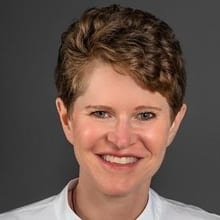
Empowering Patients with Multisystemic Diseases with Jill Schofield, M.D.
Description
Dr. Jill Schofield, founder and director of the Center for Multisystem Disease, is back to discuss multisystemic diseases and what she wishes everyone knew about them. She offers insight into how to get better care (and what to avoid), the pros and cons of having more or less lenient diagnostic criteria for diseases such as hypermobile Ehlers-Danlos Syndrome (hEDS), and advice on what to do if you suspect you have MCAS. Dr. Schofield explores possible reasons for the increased incidence of autoimmune disease, and gives guidance on finding the help you need in today’s online world. If you missed Dr. Schofield's first interview with us, please be sure to listen to our previous episode, "Investigating Autoimmune Disorders with Dr. Jill Schofield", for more great insight! Visit www.BendyBodiesPodcast.com for links to all episodes. Thank you so very much to Dr. Jill Schofield for being so generous with her time and expertise! Visit the link below to more information about Dr. Schofield (with fabulous photos from MCAS retreats including one with Bendy Bodies founder, Dr. Linda Bluestein). https://www.centerformultisystemdisease.com/contents/about/about-dr-schofield
Watch
Guests
Transcript
[00:00] Jennifer Milner: I'm Jennifer Milner, co-host of the Bendy Bodies Podcast, here with host Dr. Linda Bluestein. We're speaking once again with Dr. Jill Schofield, founder and director of the Center for Multisystem Disease. Dr. Schofield, welcome back.
[00:37] Jill Schofield, M.D.: Yes, thanks for having me.
[00:39] Jennifer Milner: Absolutely. In our last discussion, we talked about autoimmune disorders, looking at the links between EDS, MCAS, APS, and more. And today we're trying to dig deeper into multisystemic diseases and how to get help. So you are the founder and director of the Center for Multisystem Disease in Denver, Colorado. Can you tell us why you chose that name?
[01:02] Jill Schofield, M.D.: Well, it sort of speaks for itself. I'm targeting the patients who have symptoms and problems in multiple organ systems. They tend to be bounced from physician to physician, whose specialty has a kind of a narrow lens — looking at the GI tract, looking at the skin, looking at the heart. Patients who truly have a multisystem disease like MCAS tend to fall through the cracks because nobody's looking at the big picture. It's like the blind men and the elephant — one guy's looking at the tail, one's looking at the head, one's looking at the body.
[01:47] So that's why I named my practice that, in hopes of increasing awareness that there is no care currently, and there is no training currently for multisystem diseases. Nobody really thinks about them, and nobody is equipped to take care of them. The insurance companies don't recognize the complexity and the time that it takes to care for patients with multisystem diseases.
[02:16] Jennifer Milner: So what do you want patients to know about multisystemic diseases?
[02:16] Jill Schofield, M.D.: You really have to be your own advocate. If you've gone to a provider and you feel like they haven't addressed your situation or taken you seriously, you have to keep looking and looking and looking. And there aren't a lot of us out there who do this work. Unfortunately, as we already said, most of us don't take insurance because the insurance companies don't reimburse you to spend the hours it takes to actually delve in and try to sort out these problems.
[02:51] The internet has been a godsend in helping patients get the care that they need. Many patients with these conditions have really had to educate themselves, unfortunately, and to figure out where to get care and to understand and recognize that what they're being told by certain providers is incorrect — that it's not all in their head. And that's unfortunate because not all patients have the ability to do that.
[03:28] Jennifer Milner: Right. So people around the world are sort of experiencing this now, experiencing the symptoms at least, but like you said, having trouble getting the healthcare that they need. What are some things people can do to try to get better care for themselves, and is there anything they should avoid doing?
[03:46] Jill Schofield, M.D.: I think it's really difficult to get the right care. I think you have to educate yourself. I think the book Disjointed is valuable. I think Dr. Afrin's book Never Bet Against Occam on MCAS is invaluable. I think all of the patient forums are invaluable for patients to see where they're falling and to try to get to a provider that is a good match.
[04:14] One of the silver linings of the COVID pandemic is that telemedicine restrictions have been relaxed, and that is hugely valuable. For example, I've been able to see people in New Zealand who didn't have to fly here, were too sick to fly here, and it's outrageously expensive to fly here. Even just people five states away, it's still a big deal. I hope those relaxations are going to stay because everybody in the medical community has found that invaluable, and the patient community has too. I think it's going to be hard to go back to the way it was. Hopefully that will only make it so much easier for people to get an appointment with somebody who would be a good match for their case.
[05:08] I do think that a lot of people can get diagnosed and treated reasonably well within the kind of silos of medicine, as I call it. If you have POTS, you can go to cardiology — but you want to go to a cardiologist who actually knows a little bit about POTS, because a lot of cardiologists sometimes don't even seem to know what the criteria are since it's not their area of interest. A lot of people find that the simple treatments really help them. I think it's the people with more complex disease who really do need to see somebody who specializes in these conditions — who knows about POTS, knows about mast cell, knows about EDS, knows about autoimmunity. And there aren't that many people out there who do that work, but there are more and more. As I said, there's no training program. Everybody who does this work has learned about it on their own.
[06:15] Dr. Linda Bluestein: Right.
[06:15] Jill Schofield, M.D.: They go to the conferences, pay their own way to the conferences. We have a physician listserv of now over 200 physicians who treat these multisystem diseases all over the world. It's an incredible dialogue that goes on every day. We all learn from each other. It's very complicated — we learn from our patients. We tell each other, "I saw this patient with this," and everybody chimes in, and there's incredibly broad expertise, so many specialties.
[06:48] One day it's going to turn into a training program. I have no doubt about it. And there will be insurance companies that recognize that these patients are complex and they need more time. The provider needs more time to see them. It doesn't help to have 10 different people doing a rush job — it needs to be, okay, we have time to educate you, go through all the possibilities that might be leading to your symptoms, et cetera.
[07:16] Jennifer Milner: One day we will have a codified specialty for this, right? But until then, patients are going to have to do the hard work themselves and do the research.
[07:24] Jill Schofield, M.D.: Yeah, and see what they can find out there. I feel really bad about that, but on the other hand, we are light years ahead of where we were five years ago. Light years ahead.
[07:35] Jennifer Milner: Yes, yes.
[07:36] Jill Schofield, M.D.: Just with Dysautonomia International — I think Lauren Stiles, who's the president of Dysautonomia International, she single-handedly changed the face of the management of dysautonomia. She had the skill set to educate patients, she was able to generate money, she was able to bring all these great researchers together and make them compete for grants and provide this conference and publicize the videos. And in just a matter of no time, people actually know what POTS is now.
[08:11] Jennifer Milner: That's true. Well, as we have seen caregivers like yourself increasing in numbers and as we've seen the research starting to come out, it also seems like we're seeing an increase in the prevalence of multisystemic diseases. Do you think we're just starting to identify them, or do you think that they are becoming more commonplace as well?
[08:31] Jill Schofield, M.D.: That's a great question. I definitely think MCAS is exploding because our environment and our food supply is a joke. The people with MCAS are like the canary in the coal mine — they are sensitive to all the chemicals in our environment, which are just rampant. The Standard American Diet has absolutely no nutritional value. It's riddled with chemicals. All the teenagers eat fast food and processed food all the time. If you walk into an elementary school classroom today, there are signs all over about food allergies, asthma — you can't bring any food into the classroom without knowing exactly what the ingredients are. That is just completely different from even when my kids, who are 16 and 18, were in elementary school. So right there, I think that tells us MCAS seems to be exploding.
[09:34] But it hasn't been studied, and there definitely is more awareness — there's way more awareness about EDS and way more awareness about POTS. So I can't answer that for sure. I think the increased awareness is playing a huge role. It's just great when you see a patient who didn't know anything about EDS, POTS, or mast cell, and they come in and they obviously have all three, and it's so validating for them.
[10:09] Jennifer Milner: Right.
[10:12] Jill Schofield, M.D.: I go back to the beginning of their history, from the time of birth, and ask, "Did you have this?" The autoimmune patients will often say — I had one girl who said, "I was the healthiest kid that ever lived until I went to Haiti and got bitten by something, and then I've been the sickest kid that ever lived since." Whereas the mast cell and EDS patients will be like, "I had this, and I had that, and then I had this, and then I had that." And you just hear the same story over and over and over again. For them to go through all of that and just be told they have nothing wrong with them — it's great that people are getting diagnosed earlier, and the awareness is exploding, mainly in my opinion due to the internet and social media.
[11:04] Jennifer Milner: I would agree with that.
[11:05] Jill Schofield, M.D.: Yeah, it's awesome.
[11:08] Jennifer Milner: It is. And having seen so many of my dancers go through dealing with their own autoimmune issues and EDS and everything, just being validated after spending your whole life being told there's nothing wrong with you, and then being told, "Oh no, there's this, this, and this — God bless you for having lived with it this long."
[11:26] Jill Schofield, M.D.: Yeah, and they read about it and they see there are other people. It's incredibly validating.
[11:31] Jennifer Milner: Yes.
[11:31] Jill Schofield, M.D.: Also, the thing about MCAS is it's extremely treatable. It may be complex and it may take a lot of time and education, but it's extremely treatable. It sort of goes with EDS, and most people are able to be helped significantly once we have the time to evaluate them properly.
[11:57] Jennifer Milner: Well, talking about diagnosis — you were mentioning it earlier, and it's so hard for a lot of these people to be diagnosed. In your Disjointed book chapter, "Autoimmunity and Hypermobility," you discussed a lot of the challenges with autoimmune disorders and hypermobility, one of which is the diagnostic criteria. Can you explain the general pros and cons of more lenient versus more strict diagnostic criteria for a given disease, and then more specifically for autoimmune disorders and hypermobility?
[12:29] Jill Schofield, M.D.: I think it's a very, very difficult issue because there are pros and cons on each side — making the box bigger and making it smaller. It really depends upon the condition.
[12:37] The paper that Dr. Afrin was first author on, just published, on the Global Consensus II criteria for MCAS, has criteria that creates a much bigger box for MCAS than the other group — we call it the Consensus I criteria. I think having a bigger box in that case is so important because those patients with MCAS can be helped by simple, simple things that just dramatically turn around their life, like changing their diet and over-the-counter medications like H1 blockers and H2 blockers. If we're making the box so restrictive and the person doesn't think they have it, they're missing out on easy, life-changing treatment.
[13:32] Now, when we're dealing with autoimmune disease and talking about treatment with things like immunosuppressant medications, IVIG, rituximab, or TNF inhibitors — very expensive drugs that carry more risk — then I think it's appropriate to make the box more narrow. However, with antiphospholipid syndrome, as we were talking about, there are also relatively simple treatments that can be a game changer. Just the awareness of the presence of the antibodies, even to reduce the risk of getting a blood clot, is important.
[14:14] It's complicated, and I think patients just have to educate themselves. Especially in antiphospholipid syndrome, I arm my patients with a lot of papers and have them read and be aware of the issues so that when a doctor tells them they shouldn't be on Plavix, they can show why they're on Plavix and advocate for themselves. Most of the patients in that group who have had everyday disabling headaches — who find they go away with Plavix or even anticoagulation — will bite off any doctor's head who tries to take it away.
[14:51] Jennifer Milner: Try to take their Plavix away.
[14:53] Jill Schofield, M.D.: There's one paper written by Dr. Hughes, who described APS, called "Heparin, Antiphospholipid Antibodies and the Brain." It's one page. I love that paper. They can give it to a doctor and say, "Here, read this," and it opens their eyes — this is not just blood clots and pregnancy complications. There are more symptoms involved, and they are treatable. So these diagnostic criteria are the bane of my existence, but we have to have them.
[15:23] Jennifer Milner: It sounds like if we can have the more lenient criteria — a little bit larger, like the outer ring of a bullseye — it gives people a safe place to say, "Maybe if I might have MCAS, I should try an elimination diet or something very basic." And then as you start to narrow it down more, that requires more specialist care and more stringent criteria to appropriately monitor.
[15:46] Jill Schofield, M.D.: Right, to give the bigger-gun drugs.
[15:48] Jennifer Milner: Right, right.
[15:49] Jill Schofield, M.D.: Like Xolair or Gleevec — imatinib — these more expensive drugs with potentially greater risk.
[15:59] Jennifer Milner: Right.
[16:00] Jill Schofield, M.D.: I don't really consider any of the drugs we use in MCAS all that great a risk, but Xolair would be the highest risk one I would consider. So we want to be sure, and also the insurance companies, rightfully so, should require meeting a certain level of diagnostic criteria before they're going to pay for these really expensive drugs.
[16:26] Jennifer Milner: Right.
[16:27] Jill Schofield, M.D.: MCAS is my favorite example of one where I just think — Dr. Magerl's group at the University of Bonn, I think, has estimated about 17% of the German population is on the spectrum of MCAS. And that's probably true. These are people who have things like asthma, eczema, hives, food allergies, environmental allergies, recurrent sinus trouble. You can recognize those people immediately — there are people who say, "I don't have any of those things." So there's about 15% of people who have some or all of those things, and then 85% who don't have any. And these 15% are the ones sensitive to all these chemicals. Just changing up the diet and taking simple things that quiet down the mast cells, understanding the condition, and figuring out what's triggering it can just open everything up.
[17:24] Jennifer Milner: It's so helpful and empowering that they feel like they can do something to help themselves feel better.
[17:29] Jill Schofield, M.D.: Absolutely. I feel like almost all MCAS patients, if they educate themselves and learn about this — even if they see one of us just one time to go through their story and get educated — most people can take charge and manage their case independently, because so many of the interventions are over the counter.
[17:50] Jennifer Milner: Yeah.
[18:51] Jennifer Milner: Well, speaking of MCAS, you have also published peer-reviewed scientific articles on mast cell activation syndrome. In 2019 you wrote "Recognition and Management of Excipient Reactivity in Patients with Mast Cell Activation Syndrome" with Dr. Lawrence Afrin, and in 2020, "Diagnosis of Mast Cell Activation Syndrome: A Global Consensus 2," now with Dr. Lawrence Afrin, Dr. Bluestein, and an impressive list of colleagues. What would you like patients to know about MCAS, and if they suspect they might have it, what would you encourage them to do?
[19:26] Jill Schofield, M.D.: Dr. Afrin deserves all the credit for that second paper. It was just an incredible amount of work, and he's brilliant — he has single-handedly moved forward the field of MCAS. Most of us are grateful for his generosity of time and his brilliance in figuring these things out.
That paper focuses on what box size we should be using and argues that the Consensus I criteria — they didn't call it the Consensus I originally, just the Consensus, but we call it that to distinguish them — is like a shrinking, tiny box, and the Consensus II is a bigger box.
[20:15] Jennifer Milner: Right.
[20:16] Jill Schofield, M.D.: We've gone through the pros and cons of that, and most of us in the trenches seeing patients, having helped people with simple things, know it's so important to have a bigger box for MCAS.
The excipient paper is another one of my passionate interests. We have found that chemicals are not only in the diet and in personal care and cleaning products — they are also in medications, and a lot of people are not aware of that. They're also in supplements sometimes, although the supplement industry is more in tune with the concept and tends to have cleaner products in general. The pharmaceutical industry, though — oh my God. You can go out of your way to eat a super clean, organic, non-processed diet, and then someone gives you these medications filled with toxins that flare your mast cells.
[24:54] That paper is posted on my website, Center for Multisystem Disease, and it gives a lot of patient examples about the importance of knowing what excipients — or fillers or inactive ingredients, all synonyms — are in the medications you're taking. There are usually alternatives that don't have those, or ways to work around it, which can take some creativity. The NIH FDA DailyMed website — I think the URL is in that paper — lets you find the ingredients in any medication, and you can do a lot of your own research on there to make sure you're not making yourself worse with medications.
[27:40] Jennifer Milner: Right, right. And even just the same medication but a different company's generic version of it.
[27:42] Jill Schofield, M.D.: Well, it doesn't have so much to do with brand versus generic, because the brand could be even worse than the generic. It just has to do with what the ingredients are, because the active ingredient is always the same.
[28:31] Jennifer Milner: Right — it's the everything else.
[28:39] Jill Schofield, M.D.: It's the everything else. The brand is not superior to the generic; the generic can be better than the brand. You just have to know what you're dealing with.
[28:47] Jennifer Milner: Or two different versions of a generic, too.
[28:47] Jill Schofield, M.D.: That's the most important clue that you have an excipient problem. By definition — I saw a patient yesterday who took this version of oxycodone and it helped her, but a different version made her sick. That by definition is an excipient problem. You've got to find out what the chemicals are in each one. Sometimes you have to make a spreadsheet, because unfortunately most drugs have many excipients and it can get complicated. But the two categories that have risen to the top in my experience as the most likely culprits are the FD&C dyes — FD&C Red, Yellow, and Blue, and there's also Green and Black — and then anything that says "alcohol": polyvinyl alcohol, benzyl alcohol, plain alcohol. Those tend to really activate mast cells in people with MCAS and may have no effect at all on people without it.
[29:45] Jennifer Milner: It sounds like people with MCAS have to do a lot of their own research and advocating, even if they do have a doctor on their side.
[29:47] Jill Schofield, M.D.: Absolutely, absolutely.
[29:57] Jennifer Milner: That is a lot to navigate.
[30:53] Jill Schofield, M.D.: It is a lot, but there are resources to help — these patient forums, Dr. Afrin's book, there are other books. It does take a lot of reading, and everybody with MCAS is different, so you have to be aware of that. If you're reading on patient forums or reading a book, something might not apply to you — but then you read this person's story and it opens your eyes: "Oh, that might be what's triggering me." People figure things out really quickly when their eyes are open to the diagnosis. That's why we in the Consensus II group are such big advocates for making the diagnostic criteria looser.
[30:56] Jennifer Milner: Looser, yeah. That makes a lot of sense. I know that you have also written about HPV syndrome. What can you tell us about that?
[31:36] Jill Schofield, M.D.: The HPV vaccine — I don't see a lot of this, but I do believe that it can be a trigger of autoimmune POTS, CRPS, and MCAS. That paper is also posted on my website.
Any vaccine can trigger an autoimmune disease — that's well recognized. It's one of the many triggers, and vaccines can probably trigger MCAS as well. But the thing unique about the HPV vaccine is that it's a series — it used to be a three-vaccine series, and I think now it may be a two-vaccine series. So many of us saw patients who got the first one and developed everyday headaches that they didn't have before, pretty quickly, within days of that vaccine. Then they didn't get the next one until nine months later, and right after getting that one, their headaches were even worse and now they had POTS.
[31:36] It's a very controversial area because it's very hard to prove causation between a vaccine and an illness. People would say, well, people getting this vaccine are all young females and that's who gets POTS anyway. But because of the temporal association that many of us have seen, I believe it's a real link.
[31:36] The patient I described in that paper has had a great response to IVIG. The few patients I've seen have autoimmunity and severe MCAS — I didn't really talk about the MCAS piece in that paper because it was still early days with MCAS, but that patient does have severe MCAS too. It's just a controversial area. The triggers are always hard to pin down, and probably more than one trigger needs to occur.
The controversy always comes down to the fact that nobody wants to speak negatively about vaccines because vaccines have done so much for medicine. But the HPV vaccine doesn't reach the threshold of necessity the way, say, COVID vaccines do, because we can already prevent cervical cancer through other means. The patients I've seen with this all have a family history or personal history of autoimmune disease. So I just recommend to my patients who are in that age group and who have a family or personal history of POTS or autoimmunity to consider not getting that vaccine. In my opinion, it's not a necessary vaccine.
[31:36] Jennifer Milner: Interesting. And what about other vaccines?
[31:36] Jill Schofield, M.D.: I've seen the HPV vaccine destroy people's lives, to the best that we can tell — as far as causation can be established. That's the big one. MCAS patients — there is a subset who seem to react to vaccines generally. A lot of them don't get vaccines because it revs up their mast cells. We don't know for sure, but it seems like a reasonable thing to do to pre-medicate if it's a really important vaccine. Say you want to get the SARS-CoV-2 vaccine but you know you react to vaccines — you might load up on your mast cell therapy beforehand. We don't know if that's helpful, but it seems like a reasonable thing to do.
[31:36] Jennifer Milner: Are there other precautions people can take if they've reacted adversely to a vaccine in the past, before they get another one that's necessary?
[31:36] Jill Schofield, M.D.: Just what I said. If you were to take a really high dose of steroids, you probably wouldn't respond adequately to the vaccine.
[31:36] Jennifer Milner: Right.
[31:36] Jill Schofield, M.D.: But if you're just taking antihistamines and things like a higher dose of antihistamines, that shouldn't really prevent your responsiveness to the vaccine. So if I had MCAS and I reacted to vaccines and I wanted to get the SARS-CoV-2 vaccine, that's what I'd do — I would load up on whatever drugs were helping my MCAS before I got it.
[31:36] That's the same concept we recommend before somebody with MCAS has surgery or a procedure. There are perioperative recommendations that Dr. Bluestein has published about, and they're very important to reducing the risk of having a horrible flare of MCAS. I've been really shocked over the years at the severity of a flare that a person with MCAS can have from simple things like an EGD that you wouldn't think would be that big of a deal. So I really recommend people pre-medicate for those procedures or surgeries.
[31:36] Jennifer Milner: Right, that's so interesting — thank you.
[31:36] Dr. Linda Bluestein: And vaccines can have preservatives too, right, like thimerosal? So you could get a thimerosal-free — like, I always request a thimerosal-free flu vaccine.
[31:36] Jill Schofield, M.D.: Okay, yeah. And I don't know if those patients are reacting to chemicals in the vaccine or if their mast cells are just being revved up by the adjuvant — the adjuvant that is present in the vaccine, which is something that revs up your immune system so that you actually respond to the piece of the microbe that's in there. If you just inject the piece of the microbe, the immune system response is weak — it's not going to be enough to create a sustained immune response.
People with MCAS are way over here on the bell-shaped curve of immune reactivity, and it makes sense that some of those people might be more sensitive — their immune system just exploding from that adjuvant.
[31:36] Jennifer Milner: Sure, yeah, that makes a lot of sense.
[31:36] Jill Schofield, M.D.: And there's no good guidance for that. Most people have a gut feeling about it. Some people are flat out, "I'm never getting another vaccine," and others are like, "I really want to get this one — I'm going to pre-medicate for it." You really have to think carefully about what vaccine it is. The flu vaccine's efficacy is really not that good. The meningococcal vaccine — that's a really important vaccine for kids going off to college, so that would be a higher priority. All the ones in infancy, most of those are important.
[31:36] I think the HPV vaccine is the one that stands out as unnecessary in my opinion. I have seen it destroy the lives of more than one person. So it makes sense that if you have a personal or family history of these things that get kicked off, you might want to think about just getting pap smears instead.
[31:59] Dr. Linda Bluestein: Do you know much about Shingrix — for post-herpetic neuralgia? I'm thinking about it again with chronic pain. Do you know much about the efficacy of that one?
[32:09] Jill Schofield, M.D.: Oh yeah, those vaccines are very efficacious, and they're for older patients. I think it's 60 or 65 and older.
[32:16] Dr. Linda Bluestein: Well, they're recommending it over 50 now.
[32:19] Jill Schofield, M.D.: Okay, over 50 — yeah, I think you're right. Those are highly efficacious vaccines and they're a one-time series. The people who get post-herpetic neuralgia, that's a terrible problem. The herpes viruses can cause a lot of trouble, for sure. I think the chickenpox vaccine is worth getting too. It just becomes tricky — you've gotta weigh things.
[32:46] Jennifer Milner: Right, right.
[32:48] Jill Schofield, M.D.: One day we'll have genetic testing, and we'll be able to say, "Okay, you're safe for this and you're not safe for that." But we're just a long way off. And that's the way we'll be testing for MCAS one day too.
[33:02] Jennifer Milner: Yeah, and until then we are just doing educated guesses, and we try to educate ourselves as best we can.
[33:08] Jill Schofield, M.D.: Yeah, we're pretty good guessers though.
[33:11] Jennifer Milner: I mean, we try — we read a lot and then make good guesses and find good doctors to help us make good guesses.
[33:17] Jill Schofield, M.D.: Yeah.
[33:19] Jennifer Milner: I appreciate you answering all of our questions. Is there anything you wanted to add to what we talked about today?
[33:25] Jill Schofield, M.D.: I don't think so. I think that was a massive amount of info.
[33:28] Jennifer Milner: It was a massive amount of info, but I loved every minute of it.
[33:32] Jill Schofield, M.D.: Yeah, me too.
[33:33] Jennifer Milner: I'll probably be listening to it again myself.
[33:34] Dr. Linda Bluestein: I do have a question because of the coronavirus situation — are you open for consults to other states? We talked a little bit about telemedicine last time.
[33:43] Jill Schofield, M.D.: Yeah, absolutely.
[33:45] Dr. Linda Bluestein: So right now you can see people even if they can't fly out to see you or whatever. So they should just contact your office and take it from there?
[33:53] Jill Schofield, M.D.: Yep.
[33:53] Jennifer Milner: Perfect, excellent. And once again, where can people find you?
[33:58] Jill Schofield, M.D.: Center for Multisystem Disease in Denver, Colorado. You can just Google it.
[34:04] Jennifer Milner: Excellent. Thank you so much — we really appreciate all of that. You have been listening to Bendy Bodies with the Hypermobility MD. Today our guest has once again been Dr. Jill Schofield, founder and director of the Center for Multisystem Disease. Dr. Schofield, thank you so much for taking the time to come on the Bendy Bodies Podcast and for sharing your knowledge with us today.
[34:24] Jill Schofield, M.D.: Thanks for having me.
[34:26] Dr. Linda Bluestein: Thank you for joining us for this episode of Bendy Bodies with the Hypermobility MD, where we explore the intersection of health and hypermobility for dancers and other artistic athletes. Please leave us a review on your favorite podcast player. Remember to subscribe so you won't miss future episodes. Be sure to subscribe to the Bendy Bodies YouTube channel as well. Thank you for helping us spread the word about hypermobility and associated conditions. Visit our website, www.bendybodiespodcast.com, for more information. For a limited time, you could win an autographed copy of the popular textbook Disjointed: Navigating the Diagnosis and Management of Hypermobile Ehlers-Danlos Syndrome and Hypermobility Spectrum Disorders, just by sharing what you love about the Bendy Bodies Podcast. On Instagram, tag us @bendy_bodies, and on Facebook @bendybodiespodcast. The thoughts and opinions expressed on this podcast are solely those of the co-hosts and their guests. They do not necessarily represent the views and opinions of any organization. The thoughts and opinions do not constitute medical advice and should not be used in any legal capacity whatsoever. This podcast is intended for general education only and does not constitute medical advice. Your situation may vary. Do not make any changes without first seeking your own individual care from your physician. We'll catch you next time on the Bendy Bodies Podcast.