Is the Ehlers-Danlos Umbrella Helping... or Hurting? with Abbey Phillipson
Description
Could lumping every type of Ehlers-Danlos syndrome under one umbrella actually be doing more harm than good?
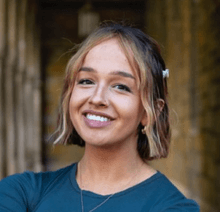
In this thought-provoking episode, host Dr. Linda Bluestein, the Hypermobility MD, is joined by Abby Phillipson, who was born with COL5A1 classical Ehlers-Danlos syndrome, survived the first recorded non-traumatic pediatric spondyloptosis, and now serves as Head Strength Coach for Paralympic and Adaptive Sports at the University of Michigan and founder of the Collagen Advocacy Network.
Inspired by Abby's powerful presentation at the UVA Research Symposium, this conversation challenges long-held assumptions about how we define, discuss, and advocate for Ehlers-Danlos syndrome. Although hypermobile EDS has dramatically increased public awareness, Abby argues that people living with rare and ultra-rare EDS types, representing just 1 to 3 percent of the community, are too often overlooked in research, funding, clinical care, and even public conversations.
Together, Dr. Bluestein and Abby explore whether the different EDS types should continue to share a single name, why distinguishing hypermobile EDS from the genetically defined types could ultimately benefit everyone, and how naming disorders by their underlying gene and predominant manifestation might improve diagnosis, research, and patient care.
Abby also shares deeply personal stories that illustrate what's at stake, including a friend who spent 35 years carrying the wrong diagnosis before genetic testing revealed kyphoscoliotic EDS. Their conversation highlights why genetic counseling matters, the limitations of direct-to-consumer testing, and how assumptions in medicine can unintentionally delay appropriate care.
The episode closes on a message of hope and empowerment. After her neurosurgeon prescribed strength training, Abby transformed from experiencing monthly full-joint dislocations to having none. Today, she helps athletes and people of all abilities discover that movement can be adapted, strength can be built, and disability does not define potential. She also shares why advocacy is most effective when it channels frustration into meaningful, solution-focused action, plus one of her favorite protein-packed hypermobility hacks.
Watch
Guests
Transcript
[00:47] Dr. Linda Bluestein: Welcome back to the Bendy Bodies Podcast. I'm your host, Dr. Linda Bluestein, the Hypermobility MD, a Mayo Clinic-trained expert in Ehlers-Danlos syndromes, or I should say an expert in hypermobile Ehlers-Danlos syndrome. As you will hear from our conversation today, we should be making a much more clear distinction between hypermobile EDS and the other types of EDS. This is such an important perspective, and we're going to be having such a great fun conversation with Abby Phillipson. Abby Phillipson was born with COL5A1 classical Ehlers-Danlos syndrome and experienced the first recorded non-traumatic pediatric full vertebral dislocation. After life-saving surgeries, her neurosurgeon prescribed strength training — now her medicine. Once barred from most physical activity due to extreme fragility, Abby turned her experience into purpose. Today, she's the head strength coach for Paralympic and adaptive sports at the University of Michigan and founder of the Collagen Advocacy Network, supporting those with rare and ultra-rare types of EDS.
[01:44] As awareness grows, so many people are feeling overlooked, and that's exactly why we have Abby here on Bendy Bodies today. No matter where you are on the spectrum of joint hypermobility — if you have a diagnosis of hypermobile EDS or a diagnosis of one of the more rare types — this conversation is for you. It is an extremely important conversation to make sure that everyone is getting better medical care and more appropriate care to meet their needs. This podcast is for education only and is not a substitute for personalized medical advice. Stay to the end for our hypermobility hack. Here we go.
[02:56] Well, Abby, I am so happy that you're here. Welcome to Bendy Bodies.
[03:00] Abbey Phillipson: Thank you so much. This is just so exciting. I think if you've been in the EDS community even for a second, you know about Bendy Bodies. So I'm very excited to be here and thank you for having me.
[03:11] Dr. Linda Bluestein: Of course. You gave such a powerful presentation at the UVA Research Symposium where you made a really strong and compelling argument — but also, I think, a little unexpected — about how grouping rare, ultra-rare, and hypermobile types under the same broad banner may actually harm all patients with EDS. And I thought this was really just such an excellent and important conversation. I want to talk about that. I want to talk about your advocacy work through the Collagen Advocacy Network, your diagnostic journey and the diagnostic journey of other people who are truly zebras among zebras, your work in strength and conditioning, and what you hope clinicians, researchers, advocates, and patients better understand moving forward. That's a very ambitious agenda for about an hour-long podcast conversation. We might have to do a part 2. We'll see.
[04:03] Abbey Phillipson: I think we might be able to tackle it all. Some of these might just weave together really nicely. So we'll see.
[04:09] Dr. Linda Bluestein: Mission accepted. I like it. So let's start with your presentation, because that really took the audience's breath away. I wasn't in the room, but I know about it, and it was just so compelling. Can you walk us through the highlights of that argument?
[04:27] Abbey Phillipson: Yeah, absolutely. First of all, I want to say that even being on this podcast shows that the community is ready for difficult conversations. I think it's been the past few years where there's almost been a feeling of a politicized nature among the EDS patient community. And I think truly that is a response of all of us not receiving what we need in various ways. I said at the symposium: we are all cogs on the same broken axle. And so though our needs may look different and our challenges within the system have looked different, we truly are responding to this sort of sense of politicized nature in the community. We are responding to a system that has largely failed a lot of patients, whether you have a rare, ultra-rare, or hypermobile type.
[05:14] Dr. Linda Bluestein: Yeah.
[05:16] Abbey Phillipson: And so really my mission at this symposium was to say, hey, we've got a group of patients within our own patient community — within the EDS community — that if you do the math on the prevalence figures, it's much less than the 90% to 10% that they always cite. It looks somewhere between 1% and 3% of the EDS patient community combined lives with a rare and ultra-rare type. And so just by way of the prevalence figures, we've got a community that isn't very often going to have a seat at the table. And as Laura Bloom had mentioned, I really — shockingly — have been the first really loud advocate for rare-type advocacy. And so if someone was going to give me the opportunity to share the perspective of that 1 to 3%, I was going to give it my all in case it never happens again.
[06:11] So it was meant to turn heads. It was meant to potentially be controversial or unexpected, but to spark really necessary conversation, which I'm excited to continue today. But just to highlight that oftentimes within this community, big decisions that affect care, that affect patients, that decide where research and funding is going to go — those decisions are largely made without patients in the room. Those conversations are happening oftentimes in the absence of any patient, but by way of the prevalence, they almost always leave the perspective of people with rare and ultra-rare types completely out of those decisions and those conversations.
[06:54] So generally speaking, it's been the last few years where we've had heightened awareness of EDS. And while that has been absolutely amazing and exactly what this community deserves, that awareness has misconstrued the other 12 or 13 types of Ehlers-Danlos syndrome to make us actually feel more misunderstood than we've ever felt within the community. It wasn't great prior to social media awareness of EDS, but for us, it's actually gotten a little bit worse for many of us in terms of feeling understood — both in the patient community and in the medical sphere. So that was kind of the goal of speaking on that.
[07:38] Dr. Linda Bluestein: And I want to apologize, because when I heard your presentation, I immediately thought: I have not done a good job of clarifying when I'm talking about hypermobile EDS versus other types of EDS. I definitely consider myself a specialist and an expert in hypermobile EDS, not in rare types of EDS. I'm not a geneticist. I don't see people usually with the other types. I see people with hypermobile EDS and I see people with HSD. But I realized when I heard you talking that I do not do a good enough job of being clear and specific about that. So I appreciate this opportunity to have this conversation, because it is so important. And the relationship between hypermobile EDS and the rare types is an important one. I know that you've talked about whether they should even be grouped together anymore. What are your thoughts on all of that?
[08:36] Abbey Phillipson: It's a loaded question. And I always think it's so important to answer this question first by saying: any talk of delineation or separation is solely on the basis of medical clarity and accuracy that benefits everyone. And so I think, again, with this almost politicized nature of this community, we as patients have suffered so long that sometimes you feel like you have to suffer the most in the room to get the resources that you need. And I think that's where that comes from. People get upset when others try to state that their disability makes them suffer more. I think as a community we all need to agree to squash that mentality of trying to rank sufferings within the types — or within people within the same type. Because at the end of the day, we are never going to have a scientific measure of suffering. We will never know another individual's experience within your own diagnosis, within another type, within the same type. We're never going to be in anybody's body but our own.
[09:39] So playing that suffering Olympics game is a moot point, and it's not a point that I hope trickles into any part of this conversation. Or if you're listening to this at home and you think I'm speaking about feelings on separation and that has anything to do with "I feel like we deserve more because we suffer more" — no, no, no. I have been very fortunate within my own diagnosis to be, other than the things that come with classical type, very healthy. I'm very privileged in that way. And I don't want that to be any part of what I say today.
I also want to be very clear that I don't speak for all people living with a rare type. We're going to hear a lot today about rare types, and it's important to remember that that's 13 different types of Ehlers-Danlos syndromes. So the goal in speaking about that today is to speak on behalf of the people that I've had the pleasure of listening to within the rare and ultra-rare community, and feedback that we've gotten from clinicians and researchers as well.
[10:44] So to rip the bandaid off: most people with rare and ultra-rare forms of Ehlers-Danlos syndrome have sort of stopped using the term Ehlers-Danlos syndrome when they're seeking medical care. The reason for this is largely because, just by way of the prevalence figures, we've got conditions that are less than 1 in 1 million often. And so when a clinician, a researcher, any sort of practitioner, or someone within the patient community hears "EDS," they're likely thinking about hypermobile EDS — because how often are they going to encounter the other types? You dedicated your career to Ehlers-Danlos syndromes. Most of those 13 rare types you will never meet and have never met.
[11:32] And so it's silly for us to put all of this finger-pointing at practitioners to say, well, it's your responsibility to know all 14 types and make the distinction. It's not realistic. While that would be amazing, doctors don't just get their information from a textbook, and we know that the textbook information about Ehlers-Danlos syndrome is very limited and usually is based off classical symptoms. It's not realistic to expect practitioners to have done all of that work among all of the other conditions they need to know how to recognize and treat. It's not realistic to expect that their experiences with patients don't largely shape how they view Ehlers-Danlos syndrome. And so if they're seeing maybe 10 patients in the course of a month who have hypermobile Ehlers-Danlos syndrome — and a lot of the time that gets collapsed shorthand down to "Ehlers-Danlos syndrome" without the H in front — what do you think that doctor is going to think of when they think of EDS? They're going to think of the model of their experiences, and the model of what is being researched heavily right now, what is being talked about heavily right now, what is on social media, what EDS resources are going towards. It's generally hEDS.
[12:50] And so I really try not to finger-point at doctors as if that's somehow their fault. Of course, we need to hold everybody responsible for making sure patients can have the most direct and nuanced care possible. But it's just a matter of the prevalence that we see this collapse. So with that being said, rare and ultra-rare types oftentimes just say the name of their gene. And within the Collagen Advocacy Network — which is an organization that I founded to provide community, advocacy, resources, and education for people with rare and ultra-rare forms — we kind of had this idea through our advocacy meetings: what if they just call our condition the name of the gene?
The label "EDS" has been very impactful for people with hypermobile EDS. It has provided nuanced care. It has provided access to resources that they didn't have when they were just bendy, when they were just "all in their head," when they were just chronically ill and chronically pained. That label EDS has helped them. It hurts us. So we came up with this idea — which is kind of what we're advocating for right now — of changing the name of the rare types to the name of our gene, because we kind of do that anyway, just to provide very clear, individualized care and recognition of the conditions.
[14:24] Also, I imagine a day where if the 13 rare types stay under the same umbrella of EDS, you've got classical at maybe 1 in 40,000, and brittle cornea syndrome at less than 1 in 1 million, both living under the Ehlers-Danlos syndrome label. Who's to say this won't happen again — where classical becomes the type that gets all the funding, all the resources, all the attention, and becomes synonymous with EDS — while you've got 8 or 9 ultra-rare types that are going to feel again misunderstood in their own diagnosis? So this feels like a solution that, while a lot of us have been tied to the name Ehlers-Danlos syndrome for a long time, provides both parties some clarity, some care, and some comfort that we need.
[15:19] Dr. Linda Bluestein: I really like that. I think that's a really great approach. Can you explain exactly what that would sound like? How would you say it?
[15:29] Abbey Phillipson: For me personally, I have 2 pathogenic deletions in my COL5A1 gene. And so when I'm usually presenting my pathology to new practitioners, I say that — I say I have 2 pathogenic mutations in my COL5A1 gene, or I'll say I have a connective tissue disorder, a collagen disorder, a COL5A1 disorder. And something I proposed at one point within our Collagen Advocacy Network group that everybody seemed to like —
[16:08] Dr. Linda Bluestein: Yeah.
[16:09] Abbey Phillipson: — was being able to say what the predominant manifestation of your condition is as part of the ICD coding. So for me, skin has always been my number one. I could bump my arm too hard on my laptop right now — I have done that — and it'll burst open and I've got a very deep, big tear that is an emergency. So skin for me has always been the manifestation that, since the day I was born, has been my biggest and most harmful one. I would love to say "COL5A1 disorder with predominantly skin manifestation" — versus I have a friend with a COL5A1 pathogenic mutation who, while they have the same skin issues, has had pretty significant cardiovascular events that need the most monitoring. So that would be a slightly different presentation: "COL5A1 disorder with cardiovascular manifestation."
[17:11] So allowing that nuance — not everybody loves this idea. I can speak for our 140 members, but I can't speak for the other thousands of people who live with a rare type. This is what we've conjured up as a group, and I want to be clear it has no scientific merit behind it yet — I'm no scientist, I'm no doctor, and I'm not on the Road to 2026 project. But this is what's been thrown around and I'm curious what you think.
[17:32] Dr. Linda Bluestein: Well, can I tell you why I'm smiling? There are the craziest ICD-10 codes. I've thought about doing a Substack article about the most bizarre ones — you know, you got bit by an alligator while jumping out of a helicopter. There are codes for things that either never happen or are so specific it's almost absurd. So what you're proposing I think is actually really brilliant, because with the way ICD-10 codes work, there's this extension afterwards. You can have it be COL5A1 unspecified, or COL5A1 predominantly skin manifestations, or COL5A1 predominantly cardiovascular — that is totally feasible within the current system because of how it works with the decimal point and the numbers afterwards. That kind of specification is totally doable and I think would be really great.
[18:33] And I did want to comment on a couple of things you said. What's interesting to me — and so important when you're talking about nuance — is the clear distinction between what you just described (2 pathogenic mutations that cause disease) versus variants of uncertain significance. I can't tell you how many people have told me they have Loeys-Dietz, and then I look and they have a variant in a gene that's associated with Loeys-Dietz. Now that we have a lot more genetic data and more people are doing either direct-to-consumer testing — which is a whole other conversation — or have had an actual medical test that says you have a disease, it's just so important that we communicate this properly. Because as you said, there is stigma associated with EDS unfortunately, and I hope I haven't contributed to that stigma. I'm trying to reduce it while also raising awareness, but it's so challenging because how people interpret things is always going to differ. And this whole "TikTok diseases" narrative — it's so important. The language that we use and the work that you're doing is just so valuable for so many people. And I think at the end of the day, it helps people with the rare types and it helps people with hypermobile EDS, because the more clear we are about a person's exact specific diagnosis and what their needs are, the more it's going to benefit everyone.
[20:14] Abbey Phillipson: Thank you so much. I don't know if this model is feasible, but I hope it is, because I know it's something the community would really appreciate. It also leaves room for hEDS to be further discovered. It is no secret that when we talk about the disproportionate resources between the types, hEDS does deserve a little bit more, because there are more unknowns, more questions around hEDS, and there are more people living with it. So it makes sense from a resource allocation standpoint that hEDS receives more. But does it make sense that the other types suffer greatly from the elevation of one group? That's something I've really struggled with in founding the Collagen Advocacy Network — how do we make sure that our advocacy doesn't cause harm to the hEDS community?
[21:12] I don't think we were great at that at the beginning. The first week or so, we felt we had to be so aggressive in our advocating because just saying you had a rare type at that time felt political. It felt like saying "I have a rare type and I'm not getting what I need" was asking for an argument about who deserves more. And so reflecting on it, I felt that our advocacy wasn't fully doing justice for the hEDS community. I do think there is a way we can do this that benefits both, but I think it starts with everybody — in the patient community and the medical community — acknowledging that there's simply just not enough to go around. So what now?
[21:35] Dr. Linda Bluestein: Right.
[22:00] Abbey Phillipson: Is this rare and ultra-rare types saying we need to take resources from hEDS and reallocate them? No. I don't think that's appropriate. I don't think that's feasible. I don't think that helps either community. So hear me loud and clear when I say this is not about trying to undermine the resources that have been built up within the hEDS and HSD community, because you deserve what you need. But it also needs to come with admitting that there's not enough to go around. Two things can be true. You can deserve the resources and still deserve more — because you do, within the hEDS and HSD community. But it can also be true that rare and ultra-rare types are suffering greatly and that something needs to be done.
[22:48] So that's my soapbox there. And that's the nuance I was trying to get at the symposium — it is so not about hEDS. Nothing about rare and ultra-rare types not getting what they need has ever been the fault of people living with hEDS or HSD, or the fault of any patient group. We are all products of a broken system. And so if you're hearing this and it feels uncomfortable — if you're thinking, "I'm definitely not privileged within my diagnosis of hEDS, I've never had a privilege of health in my life, and now I'm hearing that rare and ultra-rare types feel marginalized within the EDS community" — that feels freaking uncomfortable. It feels weird. And it might feel like a personal attack. I am here to hold your hand and tell you that we are all in this together, and nothing about what we are doing is trying to take from hEDS or apply blame to the hEDS community. So backwards, I promise you.
[24:07] So when we get to that conclusion of "there's just not enough to go around," a separation of sorts feels maybe a little bit more digestible. It also leaves room for us to learn more about hEDS. If there are polygenic, epigenetic, or even monogenic causes of various forms of hEDS or HSD that are found, this gives us a framework where — guess what — we already have nuanced nomenclature for types with identified genes, so come on over. It allows science room to grow and make adjustments where appropriate. But we've had to let go of this idea that the EDS label makes us all the same, because now more than ever it's important to look at why we're different, not why we're the same. In medicine, we're all going to get the best care when we are cued into how are these people different from each other.
[25:09] Dr. Linda Bluestein: Yeah.
[25:11] Abbey Phillipson: There's this kind of fight of, "but we're so similar in this way." Well, what if looking at how we're all similar is the piece that's hurting us — that's not allowing us to each have access to individualized care and nuance?
[25:28] Dr. Linda Bluestein: That was beautifully stated. You're right — oftentimes people think something and then think, "but..." Just like you said, multiple things can be true at the same time. It's not necessarily either/or. And unfortunately there is plenty of suffering to go around. That was really beautifully stated. And I know that even with awareness around hypermobility and connective tissue disorders increasing, it is so frustrating how hard it is for people with hypermobile EDS to get diagnosed — much less if you have a rare or ultra-rare type. I cannot believe how many people I see who have been going to doctors for years, and maybe even if they're told they are hypermobile, it's "oh, but that's just benign joint hypermobility syndrome" — which of course we should never be using anymore — and they're completely blown off and not given any resources.
[26:17] And if you have a rare or ultra-rare type, you might be seeing a doctor who has never knowingly seen a patient like you before. That clinician might be thinking "rare means nonexistent." We're taught to look for horses, not zebras, which is how the zebra became the symbol for EDS. And especially I think there are clinicians who might know about hypermobile EDS but not understand the vast differences between hypermobile EDS and the genetically identified types. So when it comes to all of that, what does the diagnostic journey often look like, and what should it look like?
[27:00] Abbey Phillipson: I always start this one off by addressing a myth that we've been hearing a lot lately. And again, I think social media is great, but I also think it has been a big downfall for the EDS community — more harmful than we all realize, with misinformation and hateful rhetoric and all the things. But I digress.
[27:21] One myth that I think is really important: we always talk about EDS as an invisible illness. And if you are always expecting it to be invisible, you're going to miss it, even if it is staring you in the face. Classical is so visible. The people I've met with classical and connected with online — which is now thankfully dozens, and I do thank social media for that — our legs are carbon copies of each other. Our hands are carbon copies of each other. Our facial features. We all have like dents in our foreheads and quite high foreheads, which is hence the bandana I always wear. That's the first time I've ever said that, y'all. If you ever wonder why I'm always wearing a bandana, that's why.
[28:05] But we're so ridiculously similar in very visible ways. And there are other rare and ultra-rare types of Ehlers-Danlos syndrome too that have very unique visible features where — if you're a geneticist and you know about the types — if a dermatosparaxis patient walks in, you know. Spondylodysplastic is very visible. kEDS has some very distinct body and facial features. There are certain types of EDS where you can see it; we're just so rare that you miss it. And coupled with that is the online EDS rhetoric that it's an invisible illness. So that part has been rather important for us to touch on, because that's not true for all types. Not all rare and ultra-rare types are uniquely visible, but a lot of them are.
[29:02] What I will say is that people with rare types — if they do have a more visible type, like classical, dermatosparaxis, kyphoscoliotic, and spondylodysplastic — oftentimes have the privilege of being visible from a very young age, and therefore that cues practitioners and their care team into knowing something is wrong and that this person needs individualized testing. In that way, there is some privilege within the types that are more visible. They knew something was wrong with me at 2 years old. And so I've been able to access care and address certain aspects of my condition much earlier than most people with truly invisible forms. That's a privilege for a lot of folks living with more visible rare types.
[30:04] But number 2 — and this was said to me by an older gentleman in our group who has classical and is in his 60s, so he's seen EDS really evolve over his lifetime — he's seen it evolve into something that is to him unrecognizable compared to what EDS used to mean, and not to say one way is right or wrong. One thing that he said really resonated with our group. It was actually the first thing he said on our advocacy meeting call: "I used to have to explain what my condition is. Now I have to try to undo what they already think they know about EDS, and still have to explain." And oftentimes that dismantling of what they think they know doesn't work, because they've seen dozens of patients with HSD or hEDS. Again, no one's fault by way of the prevalence. And so their formed idea of what EDS is is pretty solid because it's based in experience. That puts it so clearly: 20 years ago —
Dr. Linda Bluestein: Yeah.
[31:24] Abbey Phillipson: — I remember being a child and saying I have a COL5A1 pathogenic variant and I have classical Ehlers-Danlos syndrome. And sometimes they'd be like, "Oh my goodness, I read about you. Can you do the thing? Can you stretch your skin? Let me see your legs." And sometimes it was "tell me about that." Now it's "yeah, yeah, yeah, I know about EDS, I have dozens of patients with EDS."
[31:57] One of the questions on the survey I asked for entry to the Collagen Advocacy Network — which I presented at the symposium — was: "Have you ever received incorrect medical guidance due to the presumption that you had hypermobile EDS?" I think 80% answered yes. And 97% answered that practitioners say they're familiar with EDS, but not with their specific type. That kind of paints this picture: does this label help us? Diagnostic labels are supposed to define an experience and define a pathway to care. And it's not doing that for us. When it stops doing that, the label is nonfunctional.
[32:43] And I'm a linguistics major by background, so this is where I'm coming from. When a label stops working — stops defining what it's supposed to define — it doesn't work anymore. So I think we need to be looking at this differently. Obviously we need to be making decisions within the upcoming changes with a scientific basis, but we're forgetting that these are real patients with real lived experience. The societal aspect, the real patient experience aspect, is getting missed when all we're doing is following research studies. We forget that we're real. And if you talk to the rare community, if you sat them at tables, most of them — not everybody, but most — would say that label doesn't work for me anymore. So we've got to act. We've got to do something about that. And I'm worried that piece of it is going to get left behind.
[33:49] Dr. Linda Bluestein: And I would say what that gentleman said at your meeting is so powerful. And I would say that's even true for hypermobile EDS — there are people who think they know, but they don't necessarily. So there's just so much misinformation. So what do you wish more clinicians understood when they suspect a rare type of EDS but don't know what to do next?
[34:19] Abbey Phillipson: Genetic testing is so important and it needs to be more accessible — but it needs to be more accessible in a way that provides guided answers. Direct-to-consumer testing is so dangerous. I have seen real stories of people thinking they're going to die because they had a VUS on some gene, because there wasn't someone to sit there with them and digest it in a way that facilitates understanding and care. Obviously genetics departments are so overworked, and there are about 1,200 geneticists — the same number that there were in the '80s. It's not a field that is growing. They simply don't have the capacity, especially if we are talking about a population that might be as common as 1 in 500. And so while that needs to change, it's not geneticists' fault.
I'm going to share a story of my really good friend who was actually the first person I met with classical — he received a clinical diagnosis of classical that looked very much like mine when he was really young. He's been coming to my disability fitness classes for the last few years. He started a family, and I encouraged him at that point. He was very comfortable in his clinical diagnosis. I begged him for about a year to get genetic testing, kept pushing for it because he was starting a family and classical is autosomal dominant — you need to know as much as you can so you can be the best supporter possible. He finally caved. He has kyphoscoliotic Ehlers-Danlos syndrome. He does not have classical.
[36:23] Dr. Linda Bluestein: No way.
[36:24] Abbey Phillipson: It came back with 2 PLOD1 pathogenic variants.
[36:26] Dr. Linda Bluestein: Wow.
[36:27] Abbey Phillipson: And for him it was like, looks like a duck, talks like a duck, it's probably a duck — because he had kyphoscoliosis that he got surgically fused at 17 years old. He has eye muscle weakness. He has hypotonia that he was born with. He's got some cardiovascular things. And so that was a case where the red flags were all missed. That should never, ever happen. He lived 35 years of his life with a classical EDS diagnosis, and he was missed. He was missed because someone felt comfortable, slapped a label on, and called it a day. These are real people. And so something like that — that is so clear with these red flags — should never happen. If we are educated thoroughly about all of the types of EDS, that type of story won't happen again. There is no reason there should be 20-year diagnostic gaps for people with hypermobile EDS, for people with the rare and ultra-rare forms. There's no reason that should be happening.
[37:38] Dr. Linda Bluestein: That's a really excellent illustration of why genetic testing is so important. We're going to take a quick break. And when we come back, we are going to be talking more with Abby about her amazing strength and conditioning work and some myths and misconceptions about the rare types of EDS. We'll be right back.
[40:23] So we're back with Abby Phillipson and having such an important conversation. One thing that you mentioned before the break that I wanted to circle back to — because I think it's so important — you were talking about a gentleman who had genetic testing done way, way later in life than it should have been, so he had the wrong diagnosis for about 35 years. And you also said something about direct-to-consumer testing. I think this is such an important point, because like with a lot of other services nowadays, direct-to-consumer companies seem to see people with hypermobile EDS specifically as, a gold mine. They're going after them for genetic testing. I just saw an ad today for a genetic testing company that was like, "Can you touch your thumb to your wrist? Then you should do our genetic testing." So it's really important for people to understand the limitations of direct-to-consumer testing and the risks that come along with that. Because if you do find out you have a variant of uncertain significance — which we all have, by the way; we all have tons of them in different pathways — and you come back with that result, there's confirmation bias. Like this one person I saw who thought they had Loeys-Dietz because they looked at the list of things associated with Loeys-Dietz and said, "I have this, I have this, I have this" — they had the less specific things, not the more specific things. We just have to be really careful about, even though it's so hard to get care, either resisting the temptation to do direct-to-consumer testing or making sure you're really taking it with a grain of salt. Do you agree with that?
[42:04] Abbey Phillipson: I absolutely agree with that. The problem that we all need to be really cautious with is that we're living in a time right now where you can have everything at the touch of a button. And so we've kind of lost this component of medicine — even among up-and-coming practitioners — where people are a little uncomfortable saying "I don't know," or saying "I believe you that something is wrong, but I don't think XYZ explains it; let's figure it out." And so people get very attached to the first thing they think could be explaining their problems, versus asking: what if that's not right?
If we stop at something like "I got whole genome sequencing and it says I'm bad at transporting potassium to my whatever, that must be the reason for all my symptoms" — well, you might miss something. Because a VUS means we have no idea, and it also most likely means it's probably benign. There are very, very few times where they've done more research and found that yes, this actually is what's causing your symptoms. That's not very common at all. So I know that's a touchy thing, but that is the science.
People see results like that without the security of an actual genetic counselor to review them with them. And it feels so important. It feels so heavy. And it feels like finally having an answer for why you've been suffering, when maybe nobody else has even said "I believe you that you're suffering." And so sometimes this feels like easy, quick access to that comforting feeling — because going through an undiagnosed journey is really scary. It is so, so scary and so lonely.
Dr. Linda Bluestein: Yeah.
[44:04] Abbey Phillipson: And so sometimes those quick fixes — because everything in our lives now is about getting it as fast as we can — are going to potentially cause you to miss things about your own health. And let's say it does pick up something: you need somebody who's studied it their whole life, has dedicated their entire career to it, to help you make sense of that. We lose that piece when we're swabbing our cheek, sending it in the mail, and getting it back 2 weeks later with "1,646 risks detected." As tempting as it is to know all that stuff about yourself, maybe that is going to do more harm to your identity and your care than if you had played the long game.
[44:57] I know some will agree, some will disagree, but it is important. And it also highlights our need to keep pushing for systems that allow for easier, more equitable access to proper genetic testing and genetic counseling. This is not about denouncing genetic testing — it's about doing it in a way that allows you true peace of mind and that can truly allow you a nuanced care pathway, not just a list of 1,646 risks detected.
[45:30] Dr. Linda Bluestein: And this is making me think about — I'm sure you've heard of Occam's razor, but not everyone has heard of Hickam's dictum. Basically: you're entitled to as many diseases as you damn well please. You're exactly right. If we settle on a label too soon and/or think that label explains everything, we won't find other things. I was talking to somebody yesterday who has severe pernicious anemia and had all the classic signs and symptoms, and this went undiagnosed for many years. They found me through the Bendy Bodies podcast — I'm not a pernicious anemia expert by any means, but I have access to some really great platforms, which I use quite extensively. And it's important: in her case, I was like, "That explains all of this over here, probably. But then you also have all of these other things that are probably unrelated." So while it's nice sometimes to tie things up in a bow and say "it's due to this one thing," somebody with a rare type of EDS can also get appendicitis, can get cholecystitis. Don't just think everything is due to that one condition.
[46:46] And also — your symptoms are real, whether somebody else validates them or not. I find this so challenging. I don't know if it's something about a certain percentage of people in the world, myself included, who are HSPs — highly sensitive people — and so we like other people to validate our experiences and we don't tend to trust ourselves. We end up gaslighting ourselves if other people don't validate or believe us. Why do you think that is such a common thing — that even people who have all these symptoms and are suffering are doubting themselves when others don't validate them?
[47:27] Abbey Phillipson: What a loaded question. I mean, a diagnostic label is important. It can do so, so much good. It can really make you feel at home in your own body. And I know that maybe sounds a little silly, but that's why we name things — to develop a relationship with that thing. And I think a diagnosis is similar in that way. It helps you feel at home with what you've been experiencing. It helps you feel at home in a body that has probably felt like a stranger your whole life.
[48:17] I will say, though, we're actually developing an hEDS advisory board right now, which we're so excited about — just to chat with people with hEDS about things we do in the Collagen Advocacy Network. And what I've heard from a lot of folks within the hEDS community is that they wholeheartedly believe there are multiple conditions living under the name hEDS. So maybe that label isn't doing much of a service for the hEDS community either. And there are probably a ton of things that various individuals with different types of Ehlers-Danlos syndrome experience that have nothing to do with their EDS. But you have that label, and it stops people — it stops doctors too. Doctors will be like, "Oh, that's just your EDS."
[49:05] Dr. Linda Bluestein: Yeah.
[49:08] Abbey Phillipson: And although it feels validating and makes sense because you've made peace with that home that label gave you — you might be missing something. So I hear you. A diagnostic label is important, but it's okay for another one to maybe better fit later on. I genuinely feel for the folks working on the reclassification for 2026, because they've thrown out a little hint that there might be some renamings going on. And I feel for people so much. But what if there is a name that is going to make more sense, that is going to elicit a different, more fitting response from doctors?
[50:00] So I'm trying to be as hopeful as I can about whatever renamings might happen within all the types, because I'm really hoping that at-home feeling in your diagnosis can in part be facilitated by a name that encompasses more of what we're experiencing. Because what the heck does "classical" mean? It means it was the classic case — what they first discovered in the early 1900s. And I've met people with classical-like EDS, and it's not like classical at all. So I'm really hoping that instead of tearing the community to shreds and giving us all identity crises, potential renamings allow us to feel that at-home feeling.
[50:52] Dr. Linda Bluestein: When I wrote my first paper about hypermobile EDS and pain management for hypermobility — it was published in July of 2017 — I was so confused by all the different terms. I was working on it while they were getting ready to introduce the reclassification, and I didn't realize how huge this would turn out to be. And it is so, so important, like you said, because the more we can accurately describe things, the better care everyone is going to get. And when I've published a podcast episode or a post about the Road to 2026, it clearly hits people in an emotional place, and I understand because it took so long to get a diagnosis of hypermobile EDS. But you said it so eloquently — there might be a better label, there might be labels that are going to be more helpful for your doctors and make it so that you get better care. So I think that's a really good way to think about that.
[52:04] And I want to transition into a topic that I want to make sure we have time to cover, which is your incredible strength and conditioning work. In some ways you have this connective tissue fragility, but you are also about as strong and fierce as they come. And you are not only a strength and conditioning coach, but a para powerlifting coach. What do you want this community to know about either your story or the importance of movement and strength?
[52:39] Abbey Phillipson: I'm going to give you a little nugget of my diagnostic journey and history with classical Ehlers-Danlos syndrome, because it directly relates to what I'm doing now. I was diagnosed formally at 2, but on the day I was born, I was given the diagnostic label "floppy baby syndrome." They knew I was mushy, bendy, all the things. So I left the hospital with that diagnosis. And I didn't grow out of it.
[53:11] I walked very, very late. I avoided crawling because it was bruising my knees — they didn't really think anything of it, but I would scoot around the floor because I was getting bruised all over my shins and knees. So I never really crawled. My knees would wobble back and forth when I would try to stand up. I was getting bad bruises. I was getting massive open wounds with the stereotypical rare-type EDS boomerang shape, where there's a dead flap and the rest is just stretched open. They grow because the skin is so stretchy — so after you get the wound, it starts stretching. When I was 2, I fell off the kitchen counter, hit my head, and it burst open into a gaping hole. My mom says she watched it grow on the way to the hospital. Every time she would take the towel off to check, it had gotten bigger. The integrity of the skin was just completely gone.
[54:14] At the hospital, they tried to stitch it back together. The stitches ripped right through the skin, which is very typical of a lot of the rare types. They referred us for further testing because something was clearly wrong. They thought I had a myopathy — a muscular dystrophy of some sort — that was causing me to fall and be uncoordinated, rather than understanding that the bruises and lacerations existed together with the connective tissue problem. So they explored the hypotonia first without much luck. Then they did a biopsy — a muscle biopsy to confirm muscular dystrophy — and they kind of accidentally found that I had what they coined at the time "congenital fiber type disproportion," which, if you break it down, means you have weird fibers from birth. You were born with weird fibers. Which now, obviously, coins you into a connective tissue disorder. But that's the diagnosis I lived with — it was one of the first things I learned how to say.
[55:26] Dr. Linda Bluestein: Yeah.
[55:26] Abbey Phillipson: My mom made sure I knew how to say it. But then I tried to keep up in sports, didn't work out too well, sat out of PE class, didn't get to do any sports. I was really bummed about that. When I was 10, I dislocated both of my knees and had to get them medically put back in. The orthopedic surgeon who saw me at my follow-up came in — it was summer, I was wearing shorts — and he said, "Oh my God, you have classical Ehlers-Danlos syndrome." He hadn't even looked at my chart yet. We were like, what do you mean? And sure enough, he brings in all the doctors and interns working that day and he's like "do the thing," telling me to bend my thumb backwards, stretch all my skin, showing my scars. And we were like, yeah, I can do all that, but that's not what it's called. But then he gave us a pamphlet — it was classical EDS. He said we should get genetic testing, but he was so sure that he'd put us in touch with a geneticist.
[56:30] We go to the geneticist. He also says, "I don't even need to do genetic testing, I'm so sure this is what you have, but you can get it if you want." I opted out because I was scared of needles. So I went through life having all the really bad dislocations, a couple of organ prolapses, and then I became the first ever pediatric case of a non-traumatic spondyloptosis — which is a 100% dislocation of a vertebra. In one study of all spondyloptosis cases, 65% of them died because the traumatic accident that caused it was so severe. Mine just happened over time when I was about 15, 16 years old.
My neurosurgeon fixed me up, and after I recovered in the hospital for a long time, my mom asked if I should do physical therapy. And he said, "No, get her into strength training."
[57:26] Dr. Linda Bluestein: Did he really? He was a really quirky guy.
[57:29] Abbey Phillipson: Very quirky. Unconventional guy. He had done a case study on the surgery he performed on me, so he'd studied a lot about classical Ehlers-Danlos syndrome for it. He was like, "Her muscles are unaffected — just get her strong." So I started about a year later and became obsessed with it. It was something I felt really good at, and it didn't feel good for the first 6 months — it was horrible. But he told me to keep going. And sure enough, I was getting full dislocations — not just subluxations, but medically-put-back-in dislocations — probably once a month.
[57:29] Dr. Linda Bluestein: Wow.
[58:08] Abbey Phillipson: I have not had one since about 6 months after I started strength training. Not a single one. I've had small subluxations, but not one single full dislocation. So I became obsessed with it and realized I should have been doing it all along — I should have been provided pathways to do it all along. And I wasn't. Instead I was sitting out of gym class.
[58:30] So I was studying at the University of Michigan at the time. I started an adaptive gymnastics program for kids with disabilities and I loved it and they loved it and it grew really big — starting at 3 different gym locations instead of just the one that had 6 kids. By the time I graduated, we had served over 100 kids with physical disabilities to learn gymnastics. That really painted a picture for me of the importance of physical activity and fitness for people with disabilities. It shouldn't be on the list of things exclusive to people without disabilities. Everybody should have access.
[59:11] So a few years after graduating — I graduated in linguistics and cognitive science, but then shifted gears and got every certification in exercise and nutrition that I possibly could — I saw a job posting for a Paralympic strength and conditioning coach at the University of Michigan for their developing Paralympic sports program. I knew that was going to be my forever dream job. So I applied, went through a super long, crazy interview process. And now I coach Paralympians in the same weight room and facilities as every other varsity Division I collegiate athlete at the University of Michigan. I also do general fitness classes for people with disabilities as part of my work. So I'm working with folks from very, very beginner all the way up to winning Paralympic gold, and everywhere in between. It has been such a joy to remove barriers to fitness for people with truly any disability.
[59:28] Dr. Linda Bluestein: That's amazing. I want to point out that if people were watching on YouTube, they had the great pleasure of seeing your stretchy skin. And also, instead of flexing your wrist to show us thumb to forearm, you actually were extending your wrist and could do it in that direction as well. Yeah, you just did it again. So don't try this at home, kids — if it's not something that you can easily do because you could hurt yourself.
[59:29] Abbey Phillipson: Trying to figure it out while listening to a podcast about it is a silly idea.
[1:00:54] Dr. Linda Bluestein: Absolutely. So before we go on to the myths and misconceptions, I just have one other question. For people who are having difficulty finding their sweet spot of exercise — they hurt if they move, they hurt if they don't move, they're having trouble figuring out how to move in a way that is most productive — you said in the beginning it was still happening that you were dislocating all these joints. Do you have any advice to people about how they can get from where they are now to being in a stronger place?
[1:01:29] Abbey Phillipson: I'll keep this quick. First and foremost, it is unfortunate that within the EDS community and within the disability community as a whole, fitness is always prescribed to you. That takes away the fact that fitness is supposed to be fun and enjoyable — an outlet, a hobby. When you have a disability, it is often told to you that you have to do it as a form of treatment. And then you don't want to do it, because we're all kids at heart — you don't want to do what the doctor told you to do or what mom told you to do, right? So it just sucks the fun, the essence, out of fitness and sports when it's only being used as a treatment tool. A little note for practitioners there: stop prescribing it like that. We don't want another medicine. We want to be able to enjoy it. So it doesn't have to be prescriptive to be beneficial. If you like basketball, do strength and conditioning that allows you to be more fit for the thing you love. It doesn't have to just be gym sessions or PT exercises. It can be to get you doing something you really love — or maybe strength and conditioning is what you really love. So that's number one.
[1:02:49] Number 2 — and this is my little exercise science breakdown for you. You have a feedback loop that your tendons — which for us are really, really stretchy and loose — use to function. Basically, when your tendon stretches, it sends a signal to your nervous system, your central nervous system, and then back down to the tendon to shorten in response to that stretch. Think about your Achilles: you can feel your Achilles stretching when you dorsiflex your foot, and you can feel it shortening when you plantarflex it and go the other way. For us, tendons aren't as springy and bouncy, and they kind of always sit in a loose, lengthened position. That's just how it works when you have a connective tissue disorder of really any kind of Ehlers-Danlos syndrome. So we don't get that bounce back to shorten. When you're doing something like running or jumping — which I'm sure a lot of you listening are thinking "I can't do that" — same, that's because what makes running feel healthy is the ability to brace your fall and shorten or stretch those tendons. We can't do that. We might be getting the message to shorten, but the tendons just don't shorten — they just keep stretching.
[1:04:10] So let's think about a squat. You go down into a squat, you have the going-down portion and then the going-up portion. Where we have the most difficulty is right in between — you get to the bottom and reverse it to come back up. That is where people with stretchy, loose, compromised connective tissue or collagen disorders tend to be unstable, because that tendon that's supposed to say "brain, got the message, shorten and tighten back up" — we don't do that. It just keeps on stretching. It's called the amortization phase: the difference between going down and going up, the eccentric and concentric portions of the movement. That's where we tend to get hurt.
[1:04:50] My biggest recommendation is: until that portion feels stronger, take it out. Meaning, don't do full squats — sit down on something, take a second, and then stand up, so you're not relying on that quick shortening and stretching of the tendon to get you out of the squat position. Because when you're first starting, it's not going to work like that.
[1:05:12] Same thing with, let's say, a chest press. You're lying on your back pressing something, you're coming down, and that reverse spot on your chest where you're going to push the barbell or dumbbells back up — that is where we tend to feel unstable, because we are fully stretched and our brain can tell us to shorten, but we're just not going to shorten. So take that part out: rest it on your chest, let go of it if you need to, rest it on a table or on some spotter arms. Take a moment, and then push the weight back up. Eventually you'll slowly be able to add that amortization phase back in. But usually you can't to start. So splitting your movement into 2 distinct movements instead of trying to go through and get that bouncing effect was like my saving grace — because you won't get it.
[1:05:56] Dr. Linda Bluestein: I love that. That's fantastic advice, and something unique — I have not heard that framing before. So thank you for sharing that. Okay, I want to bust some myths here before we wrap up. What myth would you most like to bust about rare and ultra-rare types of EDS?
[1:06:17] Abbey Phillipson: Number one — which I mentioned earlier — is that if we keep saying it's always an invisible illness, we're going to miss stuff. Sometimes they're very visible.
[1:06:30] Number 2: I have found that many people within the rare and ultra-rare community don't love using "chronically ill" or "chronic illness," because they don't feel sick. They've been born with it. They've been the same exact version of the makeup of their genes since the day they were born. It doesn't feel sick to them. It feels like them. And so sometimes that can feel a little disconnected from the identity of people with rare and ultra-rare types — or any type that has been born with it, has had the same symptoms since birth. We don't feel sick. We feel like us.
[1:07:10] Dr. Linda Bluestein: Yeah.
[1:07:11] Abbey Phillipson: And so it can feel a little alienating sometimes to always hear that word used. Ooh, what's a good number 3? I think this one goes without saying for most people, but as much as we say "rare and ultra-rare types," we are not very similar to each other either. We hear "hEDS and HSD versus rare and ultra-rare types," and I think we should really squash that lumping rhetoric. I lump rare and ultra-rare together because A, there are 13 of us with horribly hard-to-pronounce names, and B, my topic today is really about the misconceptions around people with rare and ultra-rare types — and that's something we all collectively experience.
[1:07:54] But when we are among ourselves, in a space just for rare and ultra-rare folks, we specify every time. Or if we're asking for advice about something, it's like, "Hey, fellow arthrochalasia friends, what do you do when blank?" Because we all know we are very different from each other. Right now we're going for the low-hanging fruit — and the low-hanging fruit is that there's definitely a disparity between the resources and discourse that hEDS is getting versus the rare and ultra-rare types. Once the world knows "hey, there are 13 or 14 types that we need to delineate," we are not going to all call ourselves "the rare types" anymore. We are going to split up. But we're going for low-hanging fruit right now. So don't get it twisted — we all have very different experiences within the rare and ultra-rare types. Symptomatically, societally, we're experiencing something similar in terms of awareness gaps, but our actual symptoms? Very different. Very different.
[1:09:09] Dr. Linda Bluestein: And is there a different umbrella term we should be using instead — I'll just say the non-hEDS types?
[1:09:21] Abbey Phillipson: That's a great question that I don't have an answer for. And I'm excited to bring it up to some of my group members later. I know the EDS Society and some research labs have started saying "the genetically defined types" or "the monogenic types," meaning one gene causes XYZ. That can sometimes be helpful, but I'm hesitant because that's not always received well from the hEDS/HSD community — because in some cases like TNXB haploinsufficiency or KLK15, there are some potential genetic causes. So I don't know if that's the best phrasing. And it doesn't fit for everybody. That's why I think we just need to each have our own name. This is where it gets tricky — I'm like, "that doesn't fit for everybody," well, there's probably a nomenclature that does fit everybody. I just don't have the answers.
[1:10:24] Dr. Linda Bluestein: I've seen the abbreviation "nvEDS," lowercase n, lowercase v, meaning non-vascular EDS. I don't know if it could be "nhEDS" — non-hypermobile EDS — just as a placeholder thought.
[1:10:43] Abbey Phillipson: Interesting. I just asked somebody what "PWEDS" meant because I kept seeing it in my comments, and it's "person with EDS" — so I'm clearly behind, because I was like, what type is PWEDS? I've never heard of that type.
[1:10:53] Dr. Linda Bluestein: I had never heard of that either. That's so interesting.
[1:10:57] Abbey Phillipson: I'm a bit concerned with "non-vascular" only because within the vascular EDS community, a lot of people are very concerned about other things — like spontaneous hearing loss, spontaneous vision loss, and bowel perforation — which is very, very dangerous and happens a lot with many of the rare and ultra-rare types. So the only reason I'd push back on "vascular versus non-vascular" is that even within the vascular subtype there are so many things that could be life-threatening that we might miss if we're only pointing at the one most obvious life-threatening thing. There's a lot that can be life-threatening. But I don't know. I don't know.
[1:11:02] Dr. Linda Bluestein: Well, to be clear — this was something I came across in a literature search for a presentation I'm doing at the Academy of Orofacial Pain. I'm leaving tomorrow for that, which I'm really excited about, because this is a group of physicians who may not know much at all about joint hypermobility, connective tissue disorders, mast cell activation syndrome, or dysautonomia, and yet they definitely have these patients in their practice. The paper was looking at people with orofacial pain and distinguishing those with genetically identified EDS but without vascular — so it was really in regards to a specific study context.
[1:13:07] Abbey Phillipson: Yeah, that's totally fair.
[1:13:09] Dr. Linda Bluestein: They excluded vascular for whatever reason. Yeah.
[1:13:12] Abbey Phillipson: That happens sometimes. It's just such a different beast. I think if one type is renamed, vascular deserves to be first — and they should decide what they want to be named.
[1:13:20] While you were talking about your event tomorrow, it made me think of what I actually want as my number 3 myth.
[1:13:27] Dr. Linda Bluestein: Oh, okay.
[1:13:29] Abbey Phillipson: I have met very few people with rare and ultra-rare types who also have the triad that's always talked about: EDS, POTS, and MCAS. That bugs people with rare types. Not saying no one with rare types has POTS and MCAS — it absolutely can happen and does sometimes. But always seeing that triad bothers people with rare and ultra-rare types. And that just speaks to the fact that — what if we are working with a crazy beast of a condition that is hEDS, with all of its insane comorbidities that seem unrelated but are all tucked together? And then you've got, if it's COL5A1, you've got this, this, this, and this. It's scary to think about how much we still don't know about hEDS. But that's maybe a good myth to bust: that all EDS is associated with POTS and MCAS. That's not usually the case for people with rare and ultra-rare types.
[1:14:26] Dr. Linda Bluestein: That's very important. Thank you for thinking of that, because that is such an important distinction. Do you have one final thing that you want all clinicians to know?
[1:14:48] Abbey Phillipson: What I want clinicians to know is that rare is real. So many people within the hEDS community and the rare and ultra-rare types have had an experience where a doctor dismisses them, or is surprised, or is apprehensive about the label Ehlers-Danlos syndrome because of how rare it is. For the rare non-hypermobile types, we want to say: we exist. There's no reason we'd just be a footnote in your textbook, or you'd be able to Google us and see 90 of us. Well, those 90 are real and I've met them. You may go your whole career without meeting them, but we are rare and we are real. We make up those numbers in the textbook. So that's what I want to tell practitioners.
[1:15:41] Dr. Linda Bluestein: That's so well said and so important. Because yes — the whole idea of "if it's rare, I'm just never going to see it." We are never going to see it if we don't look for it. And then what's your final takeaway for patients?
[1:15:58] Abbey Phillipson: Keep hope. Stay curious. Stay engaged as this year of change is coming up. Try to take the fear and discomfort you may be feeling in conversations like this one and turn that into curiosity, turn it into productive conversation — instead of turning it into fear or hate. And make sure that we are directing those productive conversations and that curiosity at the people who can actually change something, not at each other. That has been a big problem in the community — we are directing this pain and suffering at each other. We need to be doing it in a way that gets it up to the people who can make a change. And people want to listen when you have something productive to say, when you're curious — not when you're just angry. It's okay to be angry, but we've got to place that into change. So take care of each other as patients. We are powerful in numbers. The infighting has got to stop.
[1:17:09] Dr. Linda Bluestein: Love the solution focus. And as you may know, we end every episode with a hypermobility hack. Do you happen to have a hack to share with us?
[1:17:19] Abbey Phillipson: I already talked about strength training, so I feel like I can't use that as a hack. Get your protein in, y'all. And I think the best way to do that — I hate cottage cheese, but I blend cottage cheese and pour it into my pasta sauces. I'll mix it in with my scrambled eggs. Get your protein, y'all. Your body loves protein. Your body is so good at using protein to rebuild tissues that are inflamed. So cottage cheese is my hypermobility hack.
[1:17:51] Dr. Linda Bluestein: I love that hack because that's something that hopefully most people can afford. Not everybody, I'm sure, but hopefully most people can afford to buy generic cottage cheese. And if they can't blend it, at least they can maybe find some ways of concealing it in different things. I don't like it either. So I love that hack because I don't eat meat — I eat fish, but not meat — so I'm always trying to figure out how to get more protein in my diet as well. So thank you for that hack.
Abbey Phillipson: Absolutely.
[1:18:19] Dr. Linda Bluestein: Well, Abby, this has been such a great conversation. I'm so grateful to you for being here and for the incredible work that you're doing. This conversation is so incredibly important for all patients and can probably also be applied to other conditions as well — there are probably other communities that have similar problems and can relate to the things you just shared with us. So thank you for taking the time to come on the podcast and share your vast wisdom and knowledge with us. And before you go, can you tell us where we can learn more about you, and if people want to get involved with the Collagen Advocacy Network, what they can do?
[1:18:59] Abbey Phillipson: Yeah, absolutely. On Instagram I'm just @abbyphillipson — A-B-B-E-Y. I don't know who slipped that E in there, but I've never gotten a mug or a pencil in my life. So Abby Phillipson on Instagram. And Defined by Collagen on Instagram is the Collagen Advocacy Network's Instagram page. collagenadvocacynetwork.org — you can click "join us." Even if you don't have a rare or ultra-rare type, you can join as an ally or a supporter, as a researcher, as a family member, or as a practitioner. So many different ways to get involved. We are a new organization and we are completely patient-led and volunteer-led. So give us space to mess things up, because it's probably going to happen — we're 2 months old here. I think we need to give everybody in the EDS space more chances to mess up and make it right. We are open to feedback always. So please send me a message or send the Collagen Advocacy Network an email — it's linked at the bottom of the website if you have any feedback or concerns. We truly want to hear it. We need more feedback and course corrections based on that feedback in this community.
[1:20:08] Dr. Linda Bluestein: I really appreciate you saying that, because there are certainly times where people have said, "oh, you should have said such and so on the podcast," and a lot of the time they're right. It's like, oh yeah, I didn't think of that at the time, but you're right — I should have clarified what the person said, or challenged them, or presented a different perspective. We're all just people.
[1:20:28] Abbey Phillipson: We need to be able to learn.
[1:20:30] Dr. Linda Bluestein: Exactly. And sometimes — I mentioned I'm an HSP — sometimes people say things on social media and I want to write back because I have feelings too. I'm just trying to do the best that I can, and we all are. So I love that you shared that about your organization. I think I already joined, but if not, I will go join right now, because I love the work that you're doing. It's just really fabulous and so very well appreciated and so needed. So thank you so much again for taking the time to chat with me and come on the Bendy Bodies Podcast.
[1:21:09] Abbey Phillipson: Thank you so much for having me. I'm looking forward to — well, "looking forward" is a strong word — but listening to myself, I guess. Thanks for having us and giving us the platform to speak as the little 3%.
[1:21:17] Dr. Linda Bluestein: The very important 3%. As you said, these are real people. It doesn't matter if there's 90 — if it's you, it matters if there's one.
[1:21:33] Abbey Phillipson: Exactly. Exactly. Thank you.
[1:21:35] Dr. Linda Bluestein: Thank you again.
[1:21:55] Dr. Linda Bluestein: Thank you so much for listening to Bendy Bodies. We really appreciate your support. It really helps the podcast when you like, subscribe, and comment on YouTube, and follow, rate, and review on all audio platforms. This helps us reach so many more people and spread the information to everyone. Thank you so much, and enjoy the rest of the episode.
[1:22:11] Thank you for listening to this week's episode of the Bendy Bodies Podcast. If you'd like to go deeper, I share additional education, clinical insights, and resources in my newsletter, the Bendy Bulletin, which you can find on Substack at hypermobilitymd.substack.com. You can also help us spread the word about connective tissue disorders by leaving a review, sharing this episode, or sending it to someone who needs it. These small actions truly make a difference in raising awareness about these conditions that are still widely misunderstood. And don't forget, full video episodes are available every week on YouTube at Bendy Bodies Podcast.
[1:22:49] My passion is helping people — and in addition to my clinical and educational work, I offer one-on-one coaching, professional mentorship for healthcare professionals, and expert witness services. If you'd like to learn more, please visit the services page at hypermobilitymd.com. You can find me, Dr. Linda Bluestein, on Instagram, Facebook, TikTok, X, and LinkedIn, all at Hypermobility MD.
[1:23:19] We also want to share a few helpful resources from UVA Health EDS and Hypermobility Disorders Center. For questions or appointment inquiries, you can contact them at [email protected]. That's the letter R, [email protected], or call 434-243-8200.
You can find our incredible production team on TikTok and Instagram at Human Content Pods. We love bringing on guests with unique perspectives to share. However, these unscripted discussions do not necessarily reflect my views or opinions. Furthermore, perspectives expressed within Bendy Bodies media, including this podcast, do not reflect the views or opinions held by Human Content Inc.
This podcast should not be considered medical advice. Listening to or watching this podcast does not constitute a doctor-patient relationship. Please always consult a qualified healthcare provider regarding your own care. For information about the Bendy Bodies program disclaimer and ethics policy, submission verification and licensing terms, HIPAA release terms, or to get in touch with us, please visit bendybodispodcast.com.
[1:24:27] Bendy Bodies Podcast is a Human Content production. Thank you for being a part of our community, and we'll catch you next time on the Bendy Bodies Podcast.