Description
If you could listen to just one conversation about Ehlers-Danlos syndromes (EDS), hypermobility spectrum disorders (HSD), postural orthostatic tachycardia syndrome (POTS), and mast cell activation syndrome (MCAS), what would you need to know?
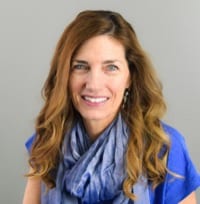
In this listener Q&A episode, producer Aron Korney puts host Dr. Linda Bluestein, the Hypermobility MD, in the hot seat to answer the questions patients ask most about hypermobility, connective tissue disorders, genetic testing, medications, and managing complex chronic illness.
Dr. Bluestein explains why EDS, HSD, POTS, and MCAS are whole-body conditions rather than isolated joint disorders, and how connective tissue affects nearly every organ system. She shares why "less is more," why small, consistent improvements create meaningful long-term progress, and how the placebo and nocebo effects can influence healing.
The conversation also covers the U.S. Food and Drug Administration (FDA) black box warning for fluoroquinolone antibiotics, including ciprofloxacin, levofloxacin, and moxifloxacin, explaining why people with connective tissue disorders should discuss safer alternatives with their healthcare providers when appropriate. Dr. Bluestein then tackles one of the most confusing topics in EDS: genetic testing. She explains why a negative genetic test does not rule out every rare subtype of EDS, how variants of uncertain significance (VUS) and direct-to-consumer genetic reports can be misleading, and why clinical evaluation remains essential, especially when vascular EDS is suspected.
Finally, she discusses how mast cell activation syndrome (MCAS) can amplify pain, migraines, gastrointestinal symptoms, dysautonomia, and other multisystem symptoms, how to obtain accurate laboratory testing, and why she casts a wider diagnostic net when evaluating complex patients. The episode concludes with a simple hypermobility hack that uses vagus nerve activation to help calm a constant fight-or-flight response.
Whether you're newly diagnosed with EDS or HSD, wondering if you have POTS or MCAS, trying to understand genetic testing, or looking for practical strategies to improve your health, this episode delivers the essential concepts every patient should know.
Watch
Guests
Transcript
[01:18] Dr. Linda Bluestein: Welcome back to the Bendy Bodies Podcast. Don't change your dial. Don't turn your knobs. I'm not Dr. Linda Bluestein. I'm one of her producers, Aron Korney, and I'm honored to be back and just having the privilege to sit down once again, putting Dr. Bluestein in the hot seat for questions from you guys. No surprise, we are full of deep dives as always into the most significant things that you guys want to know about. Today we're focusing on positive life impact. What practices, what takeaways, what kind of activities, actions — you name it. Today's all about what you can do if you have EDS, hypermobility spectrum disorders, MCAS, POTS, and any related conditions in that orbit. We're really going to get into what are tips and tricks that you can do to improve your life. If you're a longtime listener, you know the plan. We want you guys to feel seen. We want patients to feel seen, clinicians to stay more curious, and just help everyone feel better informed in their decision-making. And as always, the information discussed today is for educational purposes only and is not a substitute for personalized medical information or advice. Trust me, I'm a podcast producer who only learned how to properly use a Q-tip when he was in his late 30s. So you don't want me giving that advice. Stick around. We'll be right back with this lady right here, Dr. Linda Bluestein, and today's hypermobility hacks.
[03:08] Aron: And we're back. Dr. Bluestein, how are you today?
[03:10] Dr. Linda Bluestein: I'm good. How are you, Aron?
[03:12] Aron: Thrilled to be back here with you. I really enjoy doing these with you. It seems like people don't mind you and I just volleying up these questions from the community. It's really nice.
[03:18] Dr. Linda Bluestein: I think they like it. I think they really like it.
[03:25] Aron: Certainly hope so. You guys are definitely sending a lot of questions, so you can all go to bendybodiespodcast.com if you want these questions to reflect your own brain, because that's how people talk. All right. First question we've got here — we've got a bunch of these, so let's see what we can do. If this were the only episode someone ever listened to about EDS and related conditions, what would you most want them to understand?
[03:51] Dr. Linda Bluestein: I think the biggest things are that these are not rare conditions. These are not joint conditions. These are not conditions that affect only a handful of unusually flexible people. They're actually very complex whole-body disorders that can affect nearly every organ system. And once you understand that connective tissue is everywhere, these random symptoms suddenly seem to make sense. And when you recognize the bigger picture, you can stop asking, why does the patient have so many problems, and start asking whether there's a unifying explanation.
[04:19] And I also really love the conversation that happened recently on a Pointe Magazine post, because they interviewed me about EDS and dancers. There were so many great comments from former professional dancers and current dancers saying, I have EDS, I didn't know it when I was dancing. So again, we know that a lot of people are affected by these conditions. And if we can reach people at the soonest possible time, we can really help them to get better care and feel better.
[04:53] Aron: Yeah. It's interesting. I have a friend who is a Feldenkrais teacher who was a former dancer who had all these hypermobility issues and joint issues. Her whole career changed into that when she realized how much dancers struggled. So it was interesting that you bring up dancers. It seems like that community is probably a no pain, no gain group. So they overlook these things, right?
[05:22] Dr. Linda Bluestein: Yes. They're a no pain, no gain group. And unlike other athletes who often have a lot of resources — sports medicine specialists and lots of research — we do have research in dance. We have dance medicine organizations like IADMS, the International Association for Dance Medicine and Science. But we still have a long ways to go in dance. And a lot of dancers are just not getting the support that they need, which is part of why I'm so passionate about helping dancers. They're such a hardworking group.
[05:51] This episode is not dance-focused, but I just wanted to bring that up because I think sometimes people might wonder, well, why do I talk so much about dance? And it's because — go where the people are, right? That's where a lot of the bendy people are. And so we want to be trying to reach those high-risk populations at the earliest possible stage.
[06:11] Aron: Yeah. So let's go wider than that. You've done what feels like something like 200 episodes now of Bendy Bodies where you've talked with so many experts. What made you want to do an episode that's just focused on potentially the life-altering, ground-shifting things people need to know? Why did you want today to be just on that?
[06:35] Dr. Linda Bluestein: The other day I was doing a one-on-one session with somebody and we started talking and they were asking some questions that were really high level. And I was like, wow, this person has done a lot of reading. They know a lot of these things. And then I brought up fluoroquinolone antibiotics — and we're going to talk more about fluoroquinolone antibiotics shortly. But when I brought that up, they were like, what are you talking about? They had no idea that there was a connection between fluoroquinolone antibiotics and connective tissue.
[06:59] And so I realized that a lot of people are getting into the weeds. They know a lot of really detailed things, but they might not know the basics. And also on this show, we have done a lot of high-level deep dives, but I thought, what are the basic things that we haven't talked about? I don't think we've talked about fluoroquinolones. This is a really important topic, so we need to talk about it.
[07:22] Aron: You're like, who knows the least about it and thinks fluoroquinolone might be a Harry Potter spell? I hear you. So what do you think is being missed the most in general with everybody? If we're just in the spirit of boiling it down to the most simple takeaways for folks.
[07:39] Dr. Linda Bluestein: Sure. And this is not specific to fluoroquinolones, by the way. This is just some of the things that are being missed most often.
[07:45] Aron: I appreciate it, because I don't know how to say it.
[07:48] Dr. Linda Bluestein: That's okay. I'll insert myself whenever we have to say that word. It took me a long time to practice and I'm terrible at pronunciation. Okay. So the first thing is: less is more. We always want to be looking for the minimal effective dose. I find oftentimes people are taking a whole lot of medications, a whole lot of supplements, and sometimes higher doses than what they need. So oftentimes when I'm working one-on-one with someone, the first thing we do is look for medications and supplements that they might want to work with their prescriber to decrease or to eliminate if they're not really making a difference. We get a lot of training in medical school about prescribing medications, but we don't get information about deprescribing medications. So that's the first thing.
[08:33] The second thing is how small things can really add up. I've said this before on the show and I'll say it again. When I was in terrible, terrible pain, I kept looking for the one thing that would take my pain away. So if something wasn't completely successful in my mind, I would stop doing it. For example, using a TENS unit — I tried that and I was like, okay, it wasn't earth-shattering, so I stopped using it. Whereas a lot of the time, if you can find 5 things that each give you 10% improvement, now you have 50% improvement. So small things can really add up.
[09:08] Another point I wanted to make is that we often notice when things are going less well, but we don't notice when things are going better. So it can be really helpful to keep a journal and track your symptoms. And I know people hear, keep a journal and track your symptoms, but I'm saying also look for any signs of improvement when you're trying something new, because otherwise you might miss the subtle signs and you might not be as diligent about following through. But if you really start to look for those things, I think that people can get more bang for the buck, because we do want to take advantage of the placebo effect and really capitalize on those things.
[09:42] The placebo effect and the nocebo effect — which is the opposite — are very real. And I'm not saying just go take placebos and that's going to make you better, because obviously it's not. But at the end of the day, the whole goal is to get you feeling better. And sometimes we need to do a little psychology with ourselves. We know that expectations matter a lot. There's been some fascinating research looking at the brain and how blood flow is altered when we have different expectations. So if somebody is told this is going to make their pain worse versus if they're told this is going to make their pain better, and they're injected with the same medication, different parts of the brain light up. You're injecting them with the same medication, but in one condition you're telling them this medication is going to make your pain better, and in the other condition you're telling them it's going to make your pain worse — and you're getting the same medication IV. Different parts of the brain lit up. So we want to use our brains to try to help us feel better.
[10:43] Aron: So when you're talking about the nocebo and placebo and all the cognitive aspects — you earlier brought up that this conversation kind of encompasses more of a full, systemic dialogue and needs to be addressed from that perspective. Can you talk a little bit more about what you meant by systemic?
[11:06] Dr. Linda Bluestein: Right. So because connective tissue is everywhere in the body, these conditions can affect every single system in the body. And a big message that I want to convey, especially to the clinicians out there, is that these conditions are not benign. I still see in people's medical charts the diagnosis "benign joint hypermobility syndrome," which really tells me something about that person and their background. I can't keep up on terminology in other fields, and I know that, but at the same time I really hope that people will stop using this term, because in 2017, when the new criteria came out by the International Consortium, they removed the term benign joint hypermobility syndrome. And that term really conveys a message that these conditions are not significant and that having hypermobility is not a problem. For some people, they can have joint hypermobility and never develop symptoms. But for a large, large number of people, they have joint hypermobility and they have symptoms associated with it — symptomatic joint hypermobility. And again, it can affect every single part of the body. So we can end up with gastrointestinal problems and cardiac problems and neurologic problems.
[12:22] One analogy that I like to use is to think about connective tissue and EDS and HSD as being like a house. So if you think of the body like a house, for a long time we treated EDS and HSD like it was problems with the doors and the hinges — which I kind of like that analogy, because you think of joints and doors and hinges. Loose joints, clicky shoulders, knees that hyperextend, and ankles that roll. But connective tissue is not just in the hinges. It's in the foundation. It's in the walls. It's in the plumbing. It's in the electrical system. The connective tissue is also in the roof, the insulation, and the supports that hold everything together. So if the building material is different, we would not be surprised that problems show up in more than one room, because if you have a problem with the foundation, that can affect every other part of the house. If the foundation starts to collapse, the electrical wiring can come apart, the plumbing can come apart. And so it's the same thing with connective tissue — it can affect every single part of the body because it's what holds the whole body together.
[13:28] So the joints can be unstable. The muscles have to work overtime to hold the body together. The blood vessels might not regulate blood flow well, so you can get dizziness, heart rate changes, exercise intolerance, or POTS symptoms. In some people, the blood vessels or nerves can be compressed and the body can compensate and grow new blood vessels in ways that can cause other symptoms. The gut can struggle with motility — we were talking about gastroparesis earlier, where there's slow motility through the stomach, which can contribute to reflux, gastroesophageal reflux, and SIBO or small intestinal bacterial overgrowth. We also see nausea, bloating, constipation, abdominal pain, et cetera. We see nerves that are irritated and sensitized, and again the compression syndromes like thoracic outlet. The immune system becomes more reactive with allergy-type symptoms, mast cell activation symptoms. So the patient can look really complicated, but the symptoms are not random. There are just cracks in different rooms of the same house.
[14:27] Now, we also have to remember that every symptom is not necessarily from EDS or HSD. We need to keep a careful eye for new and unrelated problems, because assuming that everything is due to EDS or HSD can also cause its own set of problems. For many patients, that kind of framework can be really helpful — and for clinicians too.
[14:48] Aron: Yeah, it sounds like — and that's important at the end there — it sounds like the message is, don't be too addicted to the EDS diagnosis always. But at the same time, when you are looking at these kinds of issues, I could tell it hit an emotional nerve for you about the "benign" phrasing.
[15:09] Dr. Linda Bluestein: Oh, interesting.
[15:10] Aron: Yeah. And I think that's really interesting. I bet everyone listening or watching picked up on that too. You clearly were being very diplomatic. I want to poke at that a little with you there. This sounds like a long-term problem in the practitioner space, right?
[15:26] Dr. Linda Bluestein: It is. And for me, even still — as somebody who specializes in these conditions — I literally was on the phone this morning trying to get an orthopedic appointment because I did something weird to my foot the other day. I'm literally hobbling around my house right now. And I'm wearing this brace on my elbow because that's flaring up. I haven't been able to go to my exercise classes this week. So even "benign" — yeah, it sounds benign. Even when we get to a good place, and I think I was probably bragging a little too much recently, things happen and the path is not linear. Getting overconfident is probably not a good idea.
[16:11] Aron: Interesting. Yeah. Before we move on, I do want to ask a little bit more — just me being naive about the benign part — but do you think there is a reformation or reform needed in how practitioners are educated on long-term treatment with hypermobility and EDS kinds of issues? This is me being very naive, but what I'm getting from this is that it's not a lack of caring on their part, but a lot of practitioners just aren't educated on it. So they just do what they were taught to say or do and mark in charts, right?
[16:54] Dr. Linda Bluestein: Well, I'd say there are several problems. One is the production pressure in our insurance-based healthcare system. Trying to see 30 or 40 people in a day if they have conditions like this — that's obviously really challenging. You have like 5 or 10 minutes per person. So clinicians need more time to really work with these patients. And a lot of healthcare systems don't give people that kind of time. I've actually had clinician friends who were told, you can't take any more EDS patients because you're taking too much time with them and you're not seeing a high enough volume of patients in a day.
[17:31] So I think oftentimes people don't understand that clinicians can be under a lot of pressure when they're working for a big health system. And I'm not saying big health systems are bad — we need them and they can do a lot of wonderful things. But at the same time, it's often not the right fit for somebody with these complex conditions.
[17:50] Aron: So before we keep going, I want to dig in a little bit more there, because I think there's something very helpful for everyone listening or watching. When you talk about practitioners — whether it's your PCP or whoever — and for better or for worse, institutionally, there will be times you are sitting down looking your doctor in the eye and realizing it's not that they don't care, but this is their job and they have to keep things moving. Do you have any helpful constructive advice about how to be constructive as a patient — not combative — if you find yourself sitting with a practitioner you like and trust, but you can tell that you're not getting quite enough time? How do you help make sure you're being attended to properly, and saying the right things to make sure they're taking it seriously enough?
[18:40] Dr. Linda Bluestein: So I have a few tips on this. Number one, the more you can organize your information ahead of time, the easier it's going to be for them to digest the information and help you. I have some patients who are becoming really outstanding experts at this. They put their information into AI and have it organized by system. For example, they'll put in their symptoms and have them organized by system. They have their team in there — all their doctors' names — and they bring these documents to appointments with pending workups, the latest results, and things like that. Make it easy for your doctor to help you by doing these kinds of things. This is a perfect use of AI right now because you can put all this into AI and say, organize this for me, keep it concise, keep it as brief as possible. That helps your doctor to focus. So I think that's a really good thing for people to do.
[20:12] I also think it's perfectly fine to suggest, I'm concerned that I might have Ehlers-Danlos syndrome, the hypermobility type, or whatever it might be. But also describe your symptoms and how you're feeling them, and don't label them. Don't say, I have kidney pain. Say, I have pain and it hurts right here. Just say what it is that you're feeling. And then later on, if they're not picking up on what you're thinking, say, I'm worried it might be my kidney, or I'm worried it might be EDS. So the first thing is organize your information and present it in a way that is as objective as possible — like a reporter telling a story.
[20:12] I also think it's really helpful to share resources and to share what you've been reading, and let them know what the sources are. So for example, I have so many people who tell me that they share this podcast with their clinicians. I often get messages from clinicians who say, I listened to the Bendy Bodies podcast because a patient told me about it. But how you bring it up is really, really important. You don't want to make it seem like they don't know anything — you want to be respectful. You want to say, I found this resource, whether it's the Bendy Bodies podcast or something that the Ehlers-Danlos Society puts out, or a journal article, or whatever it might be. Say to them, I know you're super busy, I wanted to share this resource with you because I think it might be an efficient way to learn if you're curious about these conditions, because my understanding is that I might not be in the minority — these conditions might affect a lot of people. And I keep hearing that if clinicians understand more about these conditions, they can actually help a lot more people. So you want to give them the buy-in — make them feel like, if I learn about these things, I'm going to be able to help a lot of people who haven't been helped in the past.
[21:31] And the last thing I want to say about that is empathy. I like how you framed it as a clinician that you like and are working with, because oftentimes I hear people say, well, my doctor didn't know how to pronounce Ehlers-Danlos. That doesn't make them a bad doctor. If they are empathetic and curious and want to help you, that's what you need. You don't need them to be able to pronounce Ehlers-Danlos. Trust me, there are lots of doctors who can pronounce Ehlers-Danlos and you don't want them, because they either misunderstand these conditions or they have a lot of stigma associated with them. So the most important thing is to have a clinician who is curious and empathetic.
[22:11] Aron: So on that note, Dr. B — I don't write the Bendy Bodies newsletter, but would it make sense to do a newsletter with Dr. Bluestein's advice on constructive prompts to give your AI when condensing your information to help your practitioner understand what they need to know, tied to EDS or any of these hypermobility conditions? I personally have a number of prompts that I use for different AI tools along with my documentation. Would that be something you might do a newsletter about? Like, for example, based on an understanding of EDS, please help my doctor understand this from this perspective — boil down the attached documents in this way?
[23:02] Dr. Linda Bluestein: I think that's a fantastic suggestion for a newsletter topic, so I will definitely do a newsletter about that. My newsletter is on Substack at hypermobilitymd.substack.com. And I love doing newsletters because it gives you time to digest and organize information. I am going to be doing a series on what different specialists need to know about EDS — and also what PCPs should know about EDS. This is kind of a complement to that series I'm planning on doing. So I love that idea. Thank you. That's a great suggestion.
[23:36] Aron: Yeah, just the patient side of it to kick things off, right?
[23:39] Dr. Linda Bluestein: Right.
[23:39] Aron: Yeah. So we can move on, but that just came to mind as something I was going to ask you on the side anyway and be like, what do you suggest I do? Because I'm dealing with some stuff — might as well do it for everyone. You've mentioned antibiotics a number of times now, and it's very clear that there are medication risks, obviously, and very significant and substantial ones. And obviously AI is playing a big role these days in research for better antibiotic-resistant issues — especially fluoroquinolone antibiotics like ciprofloxacin, levofloxacin, moxifloxacin. Did I say those right, Dr. B?
[24:16] Dr. Linda Bluestein: You did. Yay. Perfect.
[24:19] Aron: Why do you think people with connective tissue disorders require a little extra attention or consideration when it comes to these?
[24:28] Dr. Linda Bluestein: So, as you said, these are fluoroquinolone antibiotics and they carry an FDA black box warning. What a black box warning means is it's the FDA's strongest warning for serious or potentially life-threatening risks. For all of these, there are black box warnings. The warnings include tendon rupture, tendon pain, tendonitis, peripheral neuropathy, effects on muscles, joints, and the nervous system, as well as an increased risk of aortic aneurysm or dissection in certain high-risk patients.
[25:01] So that means these antibiotics can affect connective tissue in a negative way. They can cause your aorta — which is the biggest blood vessel coming out of your heart — to get enlarged or more stretchy, and it could even cause it to rupture. They can cause your tendons to rupture. And so it's really important for everyone who has a potential connective tissue disorder to be aware of this, because we might be even more vulnerable than the general population. Reactions can be delayed by weeks or even months. And the message is not to never use them, but to be really thoughtful — especially if you're a prescriber. Do not use them casually if there are other, safer alternatives.
You also want to know the names: ciprofloxacin, levofloxacin, moxifloxacin. If you are prescribed these medications, ask, why are you choosing this option? Is there a safer option for me? And if you do develop new pain or unusual symptoms, definitely make sure your clinician is aware really promptly.
[26:02] People talk about being floxed — F-L-O-X-E-D. There are people who say that they were functioning at a completely different level, and then they were prescribed one of these antibiotics and the wheels fell off the bus. Their body completely fell apart. So just like when people have gotten COVID, or mold exposure, or tick-borne illnesses, this is another time that we often see people with connective tissue disorders experience a huge acceleration in their symptoms.
[26:32] There are people who have gotten these fluoroquinolone antibiotics and have gotten significantly worse, or have had new onset of connective tissue symptoms. So it's just really important to be aware. If a person has multiple antibiotic allergies, you start to get more and more limited in your choices. So it might be that this is really the only choice for a particular person. It's really important to discuss your concerns with the prescriber, but they might tell you, well, you have a penicillin allergy, you have a cephalosporin allergy — and there are times where these antibiotics are completely appropriate. They're used for urinary tract infections, they're used for respiratory tract infections, and they are very effective as antibiotics. This doesn't happen to everybody by any stretch of the imagination. It's just important to be aware of, because these are potential risks. And there's probably — because it just makes sense — a dose relationship. So maybe rather than a 10-day course, if a 7-day course is also sufficient, maybe that's another consideration as well.
[27:40] Aron: No, that's really interesting. I personally, and I'm sure others listening and watching will agree, I think that's really interesting context to get from you, because I always hear about antibiotics and there's good and bad to them. They're an overall force of good, I imagine, but it's helpful to understand from your perspective what are things to be aware of and be thinking about with some of these treatment options.
[28:10] Dr. Linda Bluestein: Well, I mean, ciprofloxacin and levofloxacin are prescribed a lot — they're prescribed all the time. I would not actually consider those to be niche antibiotics. They're very commonly used for bladder infections and respiratory infections. So these complications happen very rarely, but they're significant enough that the FDA feels there needs to be a black box warning. And that's why people need to know. But it's definitely not a case of never use them, because there are times that they are the best choice. That's always the question — what's the best choice, factoring everything in?
[28:46] So we're going to take a quick break and when we come back, we're going to talk about genetic testing and how variants of uncertain significance are so often misunderstood, and what to do if you have a phenotype that is really strong for a certain rare type of EDS but you don't have positive genetic testing. What should you do? How should that be handled? We're going to take a quick break and we will be right back.
[31:15] Aron: During the break, we were talking actually about the fact that there are a lot of needs for good practitioners out there — good staff who are knowledgeable about all of these things and are thoughtful and engaged and present, which is very hard for everyone in any career these days. Dr. B, you mentioned that you had a little plug for those who might be in the job market right now?
[31:39] Dr. Linda Bluestein: Yes. I'm so excited about our partnership with the University of Virginia Health EDS and Hypermobility Disorders Center. It's been super fun doing podcasts with their medical director, Dr. Dacre Knight, and with their associate medical director, Dr. Ina Stevens. So UVA Health is hiring right now for their EDS and Hypermobility Disorders Center. I believe they currently have open positions for a dietitian and nurse practitioners. However, I'm sure they have ongoing needs. So please do check out their website — we'll read it at the end. Please check out the UVA website for their EDS and Hypermobility Disorders Center for open positions.
[32:21] Aron: No, I think that's great. I think it's great that there are a lot of people out there who are ready and seasoned and good to go for roles like this and need to hear about it. Through the partnership we've all been seeing you do with UVA, I think it's really great that you're asking everyone to get the word out. Because this episode has really shined a light on how important it is to have good, proactive, present individuals in these practices, right?
[32:50] Dr. Linda Bluestein: Most definitely. And you need a team. As much as any one of us can really help people quite a bit, especially when we can work with them one-on-one, every single person with these conditions can benefit from having a team. That does include all the different specialists, a dietitian, occupational therapist, physical therapist, et cetera.
[33:10] Aron: So — UVA had a question for you, which is, can you help get the word out? I have a radical idea here, Dr. B. Why don't we do another question from your audience?
[33:21] Dr. Linda Bluestein: Okay.
[33:22] Aron: All right. Here's the next one we've got. A lot of patients are told, your genetic testing was negative, so you don't have a rare type of EDS. Is that always true?
[33:28] Dr. Linda Bluestein: So the short answer is no. Genetic testing is incredibly valuable, but it's not perfect. A lot of people think that if there's something we can test for, oh, that tests for everything. But a negative genetic test does not automatically rule out every rare subtype of EDS. We know a lot in genetics, but we don't know everything. And we know that the clinical picture — the phenotype — is really important to take into consideration.
[33:58] I've worked with some people one-on-one who have some of the very rare and unusual findings of a more rare subtype or a genetically identified type of EDS, and their genetic testing is negative. That doesn't mean that they don't have that type. Maybe we just haven't identified the gene yet. So it's really important to be thinking very carefully about the phenotype. Does this person have some of the red flags that we have discussed and listed? We discussed those with Dr. Claire Francomano and Dr. Paldeep Atwal. And we also have a red flag document on the bendybodiespodcast.com website. It's really important to consider whether a person has some of these red flags — like ruptured organs, dislocated hips at birth, pneumothoraces (which is when the lung collapses), and some of these other things.
[34:51] So it could be that the variant is present but not detected in the testing method that's used. It could be that the variant is found but it's classified as a variant of uncertain significance because we don't yet have enough information to know whether this variant is disease-causing. Clinical judgment really matters a lot. And I find this to be most important if somebody has some of the findings that are consistent with vascular EDS, because that type is so much more life-threatening.
[35:22] If somebody tests negative for the vascular type and the other genetically identified types of EDS, and somebody labels them as having hypermobile EDS, and they go to an ER with chest pain — the ER doctor is not going to be thinking about an aortic rupture. If they have the worst headache of their life, the ER doctor is not going to be thinking about an aneurysm rupture, because the chart says they have hypermobile EDS. So that's why the phenotype, or the clinical picture, is so important.
[35:53] Aron: Yeah. And I guess to take it full circle — it's so important to know how to best aggregate, track, and communicate what you're going through with your practitioner, because what's happening practically in reality sometimes doesn't align with certain tests. I learned that firsthand. I've had really severe allergies my whole life to things I touch, like animals. I did a skin test years ago and it showed I'm allergic to everything. I did a blood test last year with a different practitioner and it showed I have no allergies to anything, even though I always have allergies. They said, oh, you have no allergies. And I was like, I definitely do. That was the first time I thought, these labs are far more complicated and less black and white than we'd think for any autoimmune or other physiological disorder.
[36:42] Dr. Linda Bluestein: So yeah, that's super interesting, because we know that if somebody has mast cell activation syndrome, they're going to have allergic-like symptoms, but their allergy testing is not necessarily going to be positive, because mast cell activation syndrome is not an IgE phenomenon. So that's super interesting.
[37:00] Aron: So then, okay. On the flip side of that — when do you often see genetic testing be something that is really fruitful and that has a really good batting average in the work you do?
[37:13] Dr. Linda Bluestein: So it's excellent for the monogenic — which just means one gene or known gene — disorders. Whether it's Loeys-Dietz, vascular EDS, Marfan syndrome, those kinds of conditions — it's excellent for confirming those. If you have a positive result with a known pathogenic gene, it's very, very helpful. So it can identify those specific EDS subtypes that carry very important management implications. It can also help with surveillance, family counseling, and risk assessment, and it can help clinicians know when they need to monitor for vascular, ocular, skeletal, or organ-related complications.
[37:52] But a result should always be interpreted in the context of a patient's clinical presentation. So in that example I gave earlier — if somebody really looks like they have vascular EDS but their testing is negative for it, I think most clinicians who have been in this space long enough and treat enough of these patients will treat that person as if they have vascular EDS, even though the testing is negative. Because there are reasons — as we discussed earlier — where there could be a false negative. It might behoove that person to do the type of screening that you would do for vascular EDS in that situation.
[38:23] Aron: That makes sense. And I think a lot of people at this point have done things like 23andMe and other at-home tests. Do you have any thoughts on the world of direct-to-consumer, off-the-shelf genetic tests that people can buy and order?
[38:46] Dr. Linda Bluestein: Yeah, that's a tough one. My biggest criticism is, number one, they aren't necessarily using the same techniques as medical-grade labs. But even more importantly, their reports — I see these reports because patients bring them in when they see me one-on-one. In my opinion, these reports really overstate the findings. If you get a genetic test through a medical company, they will say this is a variant of uncertain significance and they'll explain what that means, et cetera. But when people get genetic testing through some of these other companies, I feel like they really overstate the findings. I feel like they want the patient to feel validated — which is of course a wonderful thing — but in doing so, they really overstate things, and they're calling things variants of uncertain significance when we really don't know what they mean. That's my biggest frustration with those tests.
[39:43] Aron: Interesting. This is me being very naive — no one hold me to this. But it occurs to me that they probably have a financial motivation to have a number of positive results, so that they can show as a company that they are successfully diagnosing X, Y, and Z. There's a motivation to test positive. Am I wrong? Like if it's on the fence and it's balanced, they might lean that way?
[40:19] Dr. Linda Bluestein: No, I think you're right. I think they're trying to err on the side of being validating for the person. And so they are taking these little bits of information and running with them rather than taking the conservative and super factual approach.
[40:35] Aron: Yeah. There's something in psychology that I always like to bear in mind, which is the term confirmation bias.
[40:43] Dr. Linda Bluestein: Yes.
[40:44] Aron: When people deep dive into something and ask a lot of questions about something, you can sometimes tell that all they want is whatever answer helps reinforce the conclusion that either they fear or they expect — but either way is the one they are pursuing. It's something in life for all of us to be aware of. Or in court, they'll call it leading the witness.
[41:13] Dr. Linda Bluestein: Yes. I want to give an example of that. I saw somebody for one-on-one coaching — it had to be over a year ago now. There was an opening last minute and they scheduled the night before, and they were in an absolute panic. They had just gotten their results back from a medical lab and they had a variant of uncertain significance associated with one of the genes for Loeys-Dietz syndrome — one that can be problematic in Loeys-Dietz syndrome, which is one of the rarer connective tissue disorders. And they went to the websites for Loeys-Dietz and started looking things up. And they started going through the symptoms that are listed. They were like, I have this, I have this, I have this.
[41:56] When we discussed it though, I pointed out to them that, yes, you have things that are on this list. And maybe numerically you might even have more things than not. But the things that you have are the ones that are the least specific. The most specific items on that list — you don't have any of those. So I think confirmation bias is a super important concept for everyone to understand. And it kind of comes back to what I was saying earlier: report your symptoms, please don't try to label them.
And I like what you said about writing a newsletter about how to use AI to prepare for appointments, because it can also be hazardous. I have people who are like, I'm convinced I have a kidney stone because I got this result. I know what they're doing — they're putting it into AI and then thinking, I have a kidney stone. But really that's something that can show up when you have more concentrated urine. I had somebody who thought they had cancer because they put the results into AI. And I'm like, that's not what that means. So confirmation bias with AI is an even bigger problem than ever before. We need to be very careful. Maybe again, getting back to the prompts — I'm going to make a note of that so I can give people prompts for how to avoid confirmation bias, or, can you help me avoid confirmation bias?
[43:13] Aron: Yeah, I'm really excited about that. I imagine it's going to be kind of an ongoing project for you that will keep adapting. But I think having that general prompt to guide things is really valuable. We're learning more and more with AI as we all get more integrated with it in our lives that blanket-dropping things and asking for assessments isn't as constructive as having the right prompt sets for it.
[43:37] Dr. Linda Bluestein: Yes. The prompts are everything.
[43:40] Aron: Yeah. And it's funny — even before AI, we had WebMD, where if you stub your toe, it says you have terminal cancer and will die within a week. Right. So it sounds like it's all about compiling and aggregating the right prompts, the right information, working with your practitioner, and being self-aware enough to check in and see if you're driving yourself towards a conclusion that you won't stop at until you find evidence you're right about your worst fear — for peace of mind — but which is actually to your own detriment. But I want to get one more question in before we're done. Just to wrap up on this one, are there any other takeaways you want us to consider about the world of genetics and our tests and everything?
[44:29] Dr. Linda Bluestein: Sure. Just remembering that genetic testing is only as good as our current knowledge and it can't identify genes that we haven't discovered yet. Not all variants are harmful. I see people all the time talk about MTHFR, which is a methylation gene, and they talk about the mutations — we really should be calling those variants, because they're so common in the population. So it's really important to think about the fact that we all have genetic variants and they're not all causing disease.
[45:02] Another point I wanted to make about direct-to-consumer testing: from the geneticists I've spoken to, they do not make a diagnosis based on direct-to-consumer testing. So if you're trying to figure out how to utilize your health budget, give that a second thought — a geneticist or other doctor is most likely not going to take your direct-to-consumer genetic test and make a medical diagnosis based on it. Also, a positive direct-to-consumer result is often not confirmed in medical-grade testing. It might be, but it isn't always. So whenever possible, get medical-grade testing if you can.
[45:43] Aron: I think that's fair.
[45:44] Dr. Linda Bluestein: Yeah.
[45:44] Aron: All right. So I think we have time for one more question, and I think this will be really interesting for everybody. We get so much feedback about how much everyone enjoys hearing you talk about this topic. Here's the question. You often talk about mast cell activation as something that can radically change the whole clinical picture. What do you mean by that?
[46:12] Dr. Linda Bluestein: So mast cells are present everywhere in the body and they're in places where we interface with the environment — the skin, the respiratory tract, the GI tract, et cetera. So they can affect so many things. And I think this is a topic that a lot of people are so interested in because — not that we want to turn this into the misery Olympics — but gaslighting for EDS and HSD is really bad. Gaslighting for MCAS in some ways is almost worse. There are so many doctors who say you need to have a tryptase test, and if your tryptase test comes back normal, then you can't have MCAS. If you don't have anaphylaxis, then you can't have MCAS.
[46:57] There are multiple different schools of thought on the diagnostic criteria for MCAS, and my feeling is that we should be casting a wider net, because we can help a lot of people when we do so. So while I do order tryptase testing on anyone I suspect has mast cell activation syndrome, I consider a negative result or a normal result to be basically not helpful. I don't consider it to be conclusive of anything. If the tryptase does come back elevated, that's helpful, because then you know that they might have hereditary alpha-tryptasemia or mastocytosis. Depending on how high it is, you might need to do a bone marrow biopsy. Mastocytosis is when there's an increased number of mast cells, and mast cell activation syndrome refers to when the mast cells are more twitchy and they release their mediators more easily.
[47:44] And we know that MCAS can amplify pain. It can amplify migraines. It can be involved in bladder pain, GI symptoms, endometriosis, brain fog, sleep disruption, psychiatric conditions, medication reactions, dysautonomia like POTS, fatigue, and food and environmental reactivity. So treating MCAS can actually change the entire trajectory.
[48:06] And I can't remember if I told this story before or not, but my second patient ever after I opened my clinic — the mom came up to me after I gave a lecture and said, this is what's going on with my daughter. She has psychogenic non-epileptiform seizure disorder, which basically means they think she's having this seizure activity but she's making it up. And she's having these other symptoms. She had a known diagnosis of EDS and, I believe, a known diagnosis of POTS. She asked, do you think you can help my daughter? And I had just barely gotten into this. I knew so little at that point. And I said, well, I don't know if I can help her, but I'm willing to try.
[48:52] So I saw her for her first appointment. I prescribed a number of MCAS-related therapies, which included low-dose naltrexone, some supplements, and antihistamines as part of this as well. And she came back for her 30-day follow-up and she had not had a single episode. And I almost fell out of my chair. Because I was so new at this and I didn't know — it actually worked. Her driver's license had been taken away because obviously somebody can't drive if they're having recurrent seizures. And she was a teenager, so it was huge for her to be able to drive and have a normal life.
[49:37] So early on I realized how mast cells can cause such different symptoms in different people. Because there are so many different mast cell mediators, no two mast cell patients are going to look alike. But we just need to be thinking of this when we are assessing our patients, because oftentimes treating that mast cell component can have an incredible range of benefits.
[50:04] Aron: And by the way, that must've been such a trajectory setter for you professionally — to get that validation. I would imagine that must've been like the heavens opening up on you, like, oh, there's something here for me.
[50:19] Dr. Linda Bluestein: That's exactly what it was. And learning about something in the books is one thing. But when you actually try it with a patient and they come back and say, I'm doing better — that's what really makes you think, okay, there is something to this. Yeah.
[50:34] Aron: I mean, in your case, you were seeing a teenager get a big part of their life back, right?
[50:40] Dr. Linda Bluestein: Yeah, absolutely.
[50:41] Aron: So look, I know you've talked about this before, but just to keep it all consolidated in this conversation — if anyone's listening and they're like, okay, we've talked about genetic testing, we've talked about MCAS, we've talked about the wide scope — do you often recommend people ask their PCP to do certain tests on their own before they even see a specialist like yourself? Or where do people start if they suspect MCAS?
[51:09] Dr. Linda Bluestein: So if your practitioner is willing to order a baseline tryptase, I think that is a good idea. There are certain things that the practitioner needs to put on the requisition slip. The sample has to stay cold the entire time. These mediators are very thermolabile. So as soon as they draw the blood, they need to put it in a refrigerated centrifuge, and then it needs to go in the refrigerator. It is so important that every step along the transport chain the specimen is handled correctly. That's probably where we get a lot of false negative results — because the specimen isn't being handled correctly.
[51:50] So it's really important for practitioners to understand how to order these tests. For example, whether it's the baseline serum tryptase or giving somebody a slip to get a tryptase drawn during a flare, we need to put these parameters directly on the slip so that the patient knows, the lab knows, et cetera. I do give people a slip to draw during a flare, but I want to point something out that's really important. Please, please, please do not induce a flare for the purpose of doing the labs. There are people who do that and then they're in a flare state for months. I recommend people have that slip, keep it, and go to the lab if they get a flare — ideally getting the labs done within one to four hours at the most. I understand that's very difficult in a lot of situations, but please do not induce a flare in order to get the labs done, because then you're going to be really disappointed if it comes back negative and now you've put yourself in a flare that's going to last for a number of months.
[52:51] There are urine tests that we can do as well, looking for prostaglandins, something called N-methylhistamine, and leukotrienes. Again, there are things we need to do differently with medications — we ideally are avoiding supraphysiologic doses of mast cell stabilizing medications like vitamin C. And there are other medications that we need to stop before doing this testing. So it's important for practitioners to know what those things are. But yes, I think it would be great for more PCPs to order that testing for patients. That's something they can do.
[53:24] Aron: I feel like I'm just on air asking you to do more homework. But there's a part of me that's like, maybe that's also something to give people as a draft — because so much is done through web portals now where you message your PCP. You don't always need an appointment to go over this with them. What's a good way for someone to first tee that up to their PCP? I'd be very curious how you would recommend somebody ask their practitioner, pretty much saying, hey, I suspect I might have this — could you be open to ordering A, B, and C just to start looking into it for me? Because I would imagine if you're a practitioner and you get that message and it's a mile-long list of things, you're going to think they're having a moment. Versus, oh, okay, those are easy — I can just order them for you. That removes the barrier of entry for everyone, right?
[54:34] Dr. Linda Bluestein: Yeah, I love that question, and I think the way you worded it was really good, actually. You know — would you be willing to order these for me? And as we were talking about earlier, I will write a newsletter about this because I think it's really important. I'll write a newsletter on how to ask your PCP for MCAS labs and exactly what they need to put in the requisition, because if you put it in a way such that they can literally copy and paste, they're at least a little more likely to do it. Maybe they're not going to do it, but at least you've lowered the barrier.
[55:11] Aron: I've actually been meaning to do this personally for a while. I wonder if we can report back next time I'm on with you, if you and I try it. I'm serious — you can help me draft what I would ask my provider. He's very easy to work with, and I can report back on whether he was receptive or not. Give a firsthand account of how that went. You and I can try that, if you want.
[55:30] Dr. Linda Bluestein: Well, we all have smart phrases that we use in our EMRs. So I already have all the language there — it's just a matter of putting it in a different format. So I will definitely get that language to you. And like you said, you can report back and let us know how it goes.
[55:45] Aron: Yeah, no, I think that'd be interesting. I think we're about at time, even though I feel like you and I could do this for hours. Before we wrap, I have a question for you — we are so lucky to have such an incredibly engaged community around Bendy Bodies. Dr. B, I know it's a pile of compliments and I'm so sorry for doing that to you. But what are the kinds of questions that you're not getting yet that you'd like people who are listening or watching to think about sending your way for the next one of these?
[56:43] Dr. Linda Bluestein: Yeah. Thank you for that question and for the compliments. I did an episode recently — I'm not sure exactly when it's going to be airing — with Abby Philipson, who has a rare type of EDS. She spoke at the UVA Health Hypermobility and EDS Center symposium in April. She spoke about how patients with the rare types of EDS are really feeling like they are not getting the amount of attention that they need, because now we've got so much attention going to hypermobile EDS and HSD. And she's right. She's absolutely right.
[57:15] So I felt badly when I heard about her presentation, because I had people messaging me about it. And I'd been doing this podcast already at that point for 6 years, and I had on my to-do list to do an episode about the rare types of EDS — the monogenic types, or whatever we want to call them — but I hadn't done it yet. So I think if people have questions about that, those would be really welcome. Other topics I have on my to-do list that we haven't done yet: an endometriosis episode, a thoracic outlet syndrome episode, a gastroparesis episode. If I had my way, I would probably have 5 episodes a week because there are so many things to talk about. I feel like we're never going to run out of ideas.
[58:04] But I think people with the more rare types of EDS are probably experiencing very different problems than people with the other types. So I would love to hear from those people. I would love to hear what kind of information might be helpful for them, what kind of guests they would like me to have on. I love it when people give me guest suggestions, because I always want to have the best possible guest for any given topic. I would also welcome more questions about hormones and perimenopause and menopause, because that's a topic that affects a lot of people. And suggested guests for any of that would be great. So hopefully that gives people some ideas. They can contact us at bendybodiespodcast.com.
[58:39] Aron: That sounds great. It sounds like — also tell us your stories, not just ask your questions, and that can be stuff we go through together. And if any of you know Halle Berry, we all know she's in a whole perimenopause media era of her career right now.
[59:02] Dr. Linda Bluestein: Yeah, I would love that. And there are a lot of other well-known people I would love to have on as well — somebody with such an incredible reach — because the challenge is that so many people who are listening to the podcast already know the podcast is relevant to them. They're doing the deeper dive into the medical topics. But how do we reach the people who don't know this applies to them? That's the big challenge. That's where we're trying to reach more and more people who are walking around suffering from chronic pain and have no idea that they have hypermobile joints. Or maybe they know that they're "double jointed," but they just don't know that's connected. We need to reach those people, because they can be helped. This whole mantra of "there's nothing you can do" is just really harmful. That's why I'm so passionate about the podcast. I spend less and less time doing one-on-one sessions because I feel like I can help more people this way. I do still do one-on-one sessions, but I just don't do it as much because I feel like this is where I can make a bigger impact.
[1:00:10] Aron: Well, it's clear from what we hear from everyone that you are. And again, everyone listening and watching — go to bendybodiespodcast.com. Tell us your stories, ask us your questions. Linda and I really love getting an excuse to sit down and look through all of these together and talk about them. And I know you do on your show too, but selfishly, I feel very grateful to get to do these with you, and thank you for having me on again.
[1:00:37] Dr. Linda Bluestein: Well, thank you so much, Aron. I love doing these conversations with you, and we will be right back with our hypermobility hack. Thank you so much for listening to Bendy Bodies. We really appreciate your support. It really helps the podcast when you like, subscribe, and comment on YouTube, and follow, rate, and review on all audio platforms. This helps us reach so many more people and spread the information to everyone. Thank you so much again, and enjoy the rest of the episode.
[1:01:02] So today's hack is about living in a constant adrenaline state. A lot of us are doing this. We are constantly going, go, go, go, and our nervous system is really, really activated. So if you feel like that applies to you, this hyperadrenergic state can actually cause you to have more anxiety, can cause your symptoms to be exacerbated, and can cause you to feel wired but tired — shaky inside and things like that.
[1:01:35] Some of the key things I want people to know: first of all, you're not imagining it. If you feel like this might apply to you, then probably it does. You could look externally calm but actually be physiologically overwhelmed, and your sympathetic nervous system might be on overdrive. This can be labeled as anxiety alone, but it might be chronic activation of your sympathetic nervous system, which can worsen pain, fatigue, sleep, GI symptoms, immune reactivity, and functional capacity.
[1:02:05] So anything that you can do to lower that sympathetic state can be really helpful. Some of the things you can do are to activate the vagus nerve, which is responsible for the rest, digest, and restore — or parasympathetic — nervous system. The sympathetic nervous system is the fight, flight, or freeze part of the autonomic nervous system. Some things that we can do to activate the vagus nerve include wearable devices you can wear on your wrist, one that goes around your neck, some that go on your ear, or you can use a TENS unit on your ear. You can do things like meditation and mindfulness practices. And some of the other things that are free include humming, singing, and gargling. You can also try cold water plunges or sticking your hand in cold water, or activating the diving reflex by sticking your head in cold water. Of course, talk to your healthcare practitioner before you consider doing any of these things. But those are some things that can help with activating the parasympathetic nervous system and calming down that constant activated adrenaline state.
[1:03:11] Thank you for listening to this week's episode of the Bendy Bodies Podcast. If you'd like to go deeper, I share additional educational clinical insights and resources in my newsletter, The Bendy Bulletin, which you can find on Substack at hypermobilitymd.substack.com. You can also help us spread the word about connective tissue disorders by leaving a review, sharing this episode, or sending it to someone who needs it. These small actions truly make a difference in raising awareness about these conditions that are still widely misunderstood. And don't forget, full video episodes are available every week on YouTube at Bendy Bodies Podcast.
[1:03:45] As many of you know, my passion is helping people better understand and navigate symptomatic joint hypermobility. In addition to my clinical and educational work, I offer one-on-one coaching, professional mentorship for healthcare professionals, and expert witness services. If you'd like to learn more, please visit the services page at hypermobilitymd.com. You can find me, Dr. Linda Bluestein, on Instagram, Facebook, TikTok, X, and LinkedIn, all at Hypermobility MD.
[1:04:11] As part of our collaboration with the UVA Health EDS and Hypermobility Disorders Center, we also want to share a few helpful resources. For questions or appointment inquiries, you can contact them at [email protected]. That's the letter R, [email protected].
[1:04:34] Our incredible production team is Human Content. You can find them on TikTok and Instagram at Human Content Pods. We love bringing on guests with unique perspectives to share. However, these unscripted discussions do not necessarily reflect my views or opinions. Furthermore, perspectives expressed within Bendy Bodies media, including this podcast, do not reflect the views or opinions held by Human Content Inc. Although we may share healthcare perspectives on this podcast, no statements made on Bendy Bodies should be considered medical advice. Listening to or watching this podcast does not constitute a doctor-patient relationship. Please always consult a qualified healthcare provider regarding your own care. For information about the Bendy Bodies program disclaimer and ethics policy, submission verification and licensing terms, HIPAA release terms, or to get in touch with us, please visit bendybodiespodcast.com. Bendy Bodies Podcast is a Human Content production. Thank you for being a part of our community, and we'll catch you next time on the Bendy Bodies Podcast.