Description
Too many diagnoses. Too many opinions. Too many tabs open. Not enough clarity.
If you've ever felt overwhelmed trying to navigate Ehlers-Danlos syndromes (EDS), Hypermobility Spectrum Disorder (HSD), POTS, MCAS, chronic pain, or other complex health issues, you're not alone.
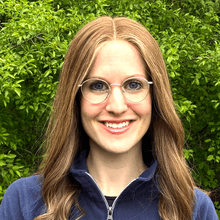
In this episode of Bendy Bodies with the Hypermobility MD, Dr. Linda Bluestein is joined by physician assistant Rebecca Gluck, PA-C, who brings specialized genetics experience from working alongside Dr. Clair Francomano and serves on the Ehlers-Danlos Society's Medical and Scientific Advisory Board and Road to 2026 Research Committee.
Together, they discuss how patients and families can move from information overload to a clearer, more practical plan. They explore how to evaluate online communities, AI tools, direct-to-consumer genetic testing, and conflicting medical opinions without becoming even more overwhelmed.
Rebecca and Dr. Bluestein explain why diagnosis is often the beginning, not the end, of the journey, and why there is no single "EDS expert" who can solve every problem in one visit. They also walk through how to prioritize symptoms, identify the most functionally limiting issues, avoid unnecessary "whack-a-mole" interventions, and build a collaborative care team.
This conversation is for anyone who has too many diagnoses, too many opinions, too many tabs open, and no clear next step. If you are trying to make sense of EDS, HSD, hypermobility, mast cell activation, POTS, chronic pain, genetic testing, AI-generated health information, or proposed procedures, this episode offers practical guidance to help you pause, sort through the noise, and move forward with more clarity.
Watch
Guests
Transcript
[01:05] Dr. Linda Bluestein: Welcome back to the Bendy Bodies Podcast. I'm your host, Dr. Linda Bluestein, the Hypermobility MD, a Mayo Clinic-trained expert in Ehlers-Danlos syndromes. Today, we're going to be talking with physician assistant Rebecca Gluck. When Rebecca reached out to me a number of months ago, I was so excited because she had such a fabulous background working with people with connective tissue disorders. Rebecca began her clinical career in physical medicine and rehabilitation and gained specialized genetics experience working with Dr. Clair Francomano and supporting patients with hereditary connective tissue disorders. Rebecca also serves on the Ehlers-Danlos Society's Medical and Scientific Advisory Board and Road to 2026 Research Committee. At Bendy Bodies, she brings a unique blend of clinical expertise, patient education, and compassionate support to help clients feel informed, validated, and empowered. This podcast is for education only and is not a substitute for personalized medical advice. Stay to the end for a hypermobility hack. Here we go.
[02:04] Well, I am so excited to be here with Rebecca Gluck. We've been wanting to do this for a while. So thank you so much, Rebecca, for coming on the Bendy Bodies Podcast.
[02:10] Rebecca Gluck, PA-C: Thank you. I'm so glad to be here.
[02:15] Dr. Linda Bluestein: I know that a lot of people have really enjoyed working with you already doing edu-coaching, but a lot of people don't know a whole lot about you. So I think this is going to be a great opportunity for people to learn about your background and what kind of patients and clients you've worked with. And I think it's really going to be helpful for a lot of people.
[02:32] I know that you and I have spent so many years hearing people's stories across a lot of different healthcare settings. And I know a lot of people are really confused right now. What do you think is making it so confusing?
[02:49] Rebecca Gluck, PA-C: I think this is such a great question because so many people out there are feeling so confused and overwhelmed and honestly don't even know where to start. What I've really seen consistently — from working in a very specialized genetics clinic with Dr. Clair Francomano, to my years with the EDS Society working on the helpline, virtual support groups, moderating a lot of different online forums, and in the course of my current work now with Edu Coaching — is that people today have access to more information than ever before. Which is amazing and can be so helpful, but it can also leave people feeling stuck because they're just so overwhelmed with all of that information. They're unsure what applies to them and they're trying to figure out what's accurate, what's relevant to them, who they should see, who they should see first, what to try, what to avoid. And they're really getting different opinions everywhere they look.
[03:44] Dr. Linda Bluestein: Yeah, exactly. What is the next step that I should take that's going to be most beneficial for me? And I feel like you have different experience than I have — we have overlapping experiences, right? So you have been in some of these online communities where I feel like there are more people giving medical advice than those of us who are medical professionals. We know to be very careful, but I feel like in a lot of these communities, you'll see patients telling other patients, "You should do blank, blank, blank." They'll say, "I benefited so much from this," and others don't know whether they should or shouldn't follow that advice.
[04:22] But you and I know from talking to people that they might on the surface look very similar, but people are so different. And I think that's a key message I want people to hear — if somebody suggests something to you online, yes, maybe look into it, but please do not take someone else telling you "you should do blank" as definitive advice. While your situations might seem similar on the surface, there is a very strong possibility that they are very different. Would you agree with that?
[04:58] Rebecca Gluck, PA-C: Oh, definitely. And I think the online forums are so helpful and so valuable because for so many people, that is really how they are putting pieces together. That's where they're finding information that ultimately leads them down the path of the help that they need. But at the same time, there is so much misinformation out there and a lot of it is presented as fact — "This is what you need to do. This is what helped me. This saved my life. This is the only diet that you need." There's endless information out there, and for people to try to sort that all out on their own is really challenging.
[05:35] Dr. Linda Bluestein: Yeah, absolutely. So they often get completely different messages, right? Whether they're talking to a clinician, reading an online community, using AI tools — which we're going to talk about too, because those can be super helpful, but you obviously have to take everything with a grain of salt — or if they're looking at their test results, they're getting different messaging. So what do you think people should do about that?
[05:59] Rebecca Gluck, PA-C: Yeah, this is such a common problem. I see this probably daily — people coming in with all these different messages from all these different places. Someone might Google their symptoms, then read a bunch of forums, then see some social media posts, then put it into AI, and then go and see their primary care doctor, specialist, or physical therapist. And each of them may be talking about the same symptoms, but they're coming at it in a totally different way.
[06:30] I think what's really important to remember is that each person's experience with these conditions can be very different. So even if the diagnosis, the label, or the symptom is the same, it can be coming from a different source. There could be different underlying causes. And what works for one person, like we mentioned earlier, may be completely different for another.
[06:50] This can also trip clinicians up, because what they saw in their patient with EDS yesterday may not apply at all to the person sitting in front of them. So even someone who says, "I've had a few EDS patients," that doesn't necessarily mean they can apply that experience across the board. So much of this information feels conflicting to patients, not necessarily because the information is wrong, but because it's not specific to that person.
[07:19] Dr. Linda Bluestein: Yes, it's that specificity that is so important. And speaking of AI — we both use it and I think it's fantastic — you have to be so careful. I had a patient who put their labs into AI and sent me a message on the portal and they were panicking because the AI tool told them that their labs could indicate cancer. I looked at it and thought, I do not think you have cancer. There was another explanation that was so much more logical. So yeah, we just have to be really careful with those things.
[08:06] And I know you and I have talked about this quite a bit. It's not only AI and social media now, but we also have direct-to-consumer testing — for so many things, including genetic testing. So how do you think those things have changed the way that people try to make sense of their symptoms?
[08:26] Rebecca Gluck, PA-C: Yeah, this is such a relevant question. There's really been such an explosion of tools that people are using to try to make sense of what's going on with them. Each of these could have their own standalone podcast episode because there's so much to say. But I'll hit one point at a time.
[08:44] Like we mentioned earlier with social media, it can be so helpful because it gives people validation that they're not the only ones going through this. They're not alone. This is something that is actually real and it's happening to other people, and it can expose people to different possible explanations for their symptoms. There is real value there, but there's such a huge range in the quality of the information that's out there.
[09:04] The key takeaway for people is to really check where that information is coming from. Is it a reliable source? Is it coming from a scientific organization or a doctor who is knowledgeable and certified and that is their area of practice? Or is it from some random person who may or may not be giving good information?
[09:25] And on that same vein, that question of "is this valuable or not?" is kind of the key to AI as well. It is such a great tool. I use it all the time for organizing information and generating ideas. But people really have to remember that it's not diagnostic. Like your patient who was scared about cancer — AI cannot diagnose you with anything. It's taking the piece of information that you give it and looking at that narrowly. It doesn't know anything else other than what you put in it. And it often makes mistakes — really big mistakes. If I had a dollar for every time it said to me, "Good catch" — it's not a perfect tool. It often presents information in a way that sounds much more certain than it really is, when there's often a lot that still needs to be figured out alongside that.
[10:19] So it's a great tool, but it's a tool. Everything has to be taken with a grain of salt and double-checked.
[10:27] I love to talk about genetic testing, particularly direct-to-consumer genetic testing, because this is something people with EDS and HSD ask about a lot. When we say direct-to-consumer testing, we're talking about testing that people can order online themselves without a doctor — they're not seeing a genetic counselor, they're not seeing a doctor, they're just ordering a test online. And there are quite a few issues with it.
Number one is that reliability varies a lot. There have been studies showing that some of this testing is kind of like flipping a coin as to whether the results are even accurate. But even with reliable labs, genetic testing results are often not straightforward. They need to be interpreted in clinical context, and if you're not working with a clinician who is experienced in genetics, you don't get that piece. Often the reports list off all these genes and people think — people will say to me — "I tested positive for 11 types of EDS." That is not possible.
[11:37] Dr. Linda Bluestein: Right.
[11:39] Rebecca Gluck, PA-C: It really is confusing. And I think the key takeaway from all of this is that it used to be that most people had no idea what was wrong with them. And now many people just have way too many ideas of what could be wrong with them. And that's tough. It's tough to sort through all of that.
[12:02] Dr. Linda Bluestein: I made a few notes while you were talking because you made so many excellent points. One: when people say exactly that — "I tested positive for 11 types of EDS" — and then you ask to see the report, you realize that the reports from these direct-to-consumer tests are written in a way that is so misleading. They're written like things are much more absolute when really they're much more nuanced. They might have variants of uncertain significance, but the report is making it sound much more certain.
[12:34] So people need to understand the nuances. If you're on social media and people are saying things in absolutes, that should set off a little warning sign. Whereas if they're talking about things in a more nuanced way, that's probably more accurate — even though it's not as attention-grabbing.
[12:58] Rebecca Gluck, PA-C: Yeah. I always tell people that if you see "always" or "never," that is usually a sign that it's not a reliable source, because there are very few — if any — "always" and "nevers" in the EDS, HSD, and hypermobility world due to so much variability. Those "always do this, never do that" statements are kind of red flags — let's double-check this.
[13:24] Dr. Linda Bluestein: And your point about AI is such a good one. I was using it the other day for scribing during a patient's visit, and at the end it told me that the labs were from February of 2027. I'm like, wow, you can predict the future. So yeah, no — thank you for all of those points.
[13:47] You were talking about this just a second ago, but I want to ask about how confusion around diagnosis contributes to problems, including uncertainty about whether a diagnosis is needed, when genetic testing is helpful, and how much weight to give labels.
[14:02] Rebecca Gluck, PA-C: This is a great question. I think a lot of people who suspect that they have a hypermobility-related disorder can become somewhat obsessed with getting an official diagnosis. And I think it's really important to talk about where and how it can be helpful.
[14:22] For many people, getting that official diagnosis can be really helpful. It gives validation — a name, a language to finally explain what they've been experiencing — and it can help communicate with providers across healthcare systems. There are definitely benefits. But what often happens is that people expect that diagnosis to do more than it can. They're expecting it to fully explain all of their symptoms or to give a clear roadmap of what to do next. It's like, "Okay, now I have this diagnosis, now all I have to do is follow the plan." And unfortunately, we're not at that stage yet where we have: if you're diagnosed with X, you just do Y and you'll be cured.
[15:15] Diagnosis is often not the magic answer. In many ways it can actually be the beginning of the process of figuring things out, not the end.
[15:28] Genetic testing comes up in a similar way — people often hope it will be that definitive answer that explains everything and gives them all the tools they need. And specifically, in disorders like hypermobile EDS and HSD, we don't have a genetic test that can confirm the diagnosis. Genetic testing is used to rule out other conditions when there are specific concerns. Depending on the situation, that can sometimes add a lot of clarity — we've ruled out things we were concerned about and now we can move forward. But like you mentioned earlier with variants of uncertain significance, sometimes it brings up more questions than we had before. And sometimes, if there's a strong family history, you are still managing the person based on their symptoms and their family history and not necessarily a genetic test.
[16:29] So the label is helpful. The diagnosis can be helpful. It can help guide and give people a framework they're working within, but it is not a magic solution that will solve everything.
[16:46] Dr. Linda Bluestein: Right, right. When you get the diagnosis, you still have the symptoms and you still need to figure out what to do with them. It's not like you get the diagnosis of hypermobile EDS or HSD and then there's a super clear path. We obviously help people with that and help them figure out how to prioritize and everything, but yeah, that's such a good point.
[17:04] And I feel like the terminology also contributes to confusion over time because we've had so many different changes in the nosology, right? People are told all the time, "You're just hypermobile," or they're still using "benign joint hypermobility syndrome" even though we're not supposed to use that anymore. You still see that in people's charts. How do you think that terminology contributes to the confusion?
[17:30] Rebecca Gluck, PA-C: I think it plays a big role, and it's very relevant right now because by the end of this year, early next year, they are coming out with a new classification for EDS and HSD. So this is something that's really relevant because things may be changing again soon.
[17:46] The goal of classification updates is that as scientific knowledge evolves, we want to best group people in ways that make the most sense to coordinate care and get them the care they need. But these name changes can be really confusing, both for patients and for clinicians. No clinician out there can keep up to date with every single condition on earth and all the changes. And this isn't unique to EDS and HSD — terminology updates happen across medicine. Big in the news was PCOS just became PMOS, and that's a huge change affecting millions of people. It can take years for changes in terminology and criteria to filter through all the different systems — the coding, the charting — and change is difficult on many levels.
[19:03] I still frequently see people being diagnosed today with terminology that is pre-2017 criteria. So they're kind of ten years behind. And "benign joint hypermobility syndrome" is the worst, because there are people being diagnosed with that or who have it in their charts and their condition is so far from benign. That really is a disservice to people.
[19:33] It's part of medicine — we can't avoid those changes, it's part of how everything evolves. But recognizing that if you get one diagnosis and then the next doctor you see says, "That diagnosis doesn't exist. Who gave that to you?" — then you feel like, "Does my condition not exist?" A lot of it is just the name. What you call it doesn't change the symptoms that you're having. But understanding some of that background — the different names and how they changed and what it used to be called before it became what it is currently — can help give people the context to understand what clinicians are telling them and what they're reading online. If they pull up an old research paper, they can understand, "Oh, EDS-4 is now called vascular EDS, and that's talking about the same thing." So having that information can help put all those things together.
[20:24] Dr. Linda Bluestein: So why does it sometimes feel like physical therapists, PCPs, specialists, and online spaces are often describing the same person, but in completely different ways?
[20:38] Rebecca Gluck, PA-C: That's a great question. I think each of those different perspectives is looking at a different piece of the puzzle — the famous story of the blind men and the elephant, where they're each feeling a different part and saying, "This is a hose," "This is a wall" — they're all approaching the same thing but from a different angle and a different piece.
[20:59] A PT is looking at movement and stability. A GI doctor is looking at the GI tract. Online forums are often looking at the emotional aspect. A research paper is looking at it from a physiologic, biologic, or genetic perspective. You kind of have to put all those pieces together to understand the full picture.
[21:22] And I think that's a lot of what we do — take all those pieces that people are bringing us from all the different sources and say, "Now what do I do? What is all of this?" That's where we can often come in and help people look at that bigger picture. And that's something really privileged to be able to do, because it's hard when you're trying to do it for yourself as a patient. You're so overwhelmed, often not familiar with the terminology, not familiar with a lot of these different concepts. Your average patient does not have a medical degree. And trying to educate yourself on all of these different things while you're really not feeling well because you're struggling with all these things — that is really, really hard.
[22:16] Dr. Linda Bluestein: Yeah. I'm glad that you mentioned that, because while most people are not medical professionals, I have a lot of medical professional patients — a lot. Physicians, PAs, physical therapists, and so on — people who have that background — and it still can be really hard when it's your own body. You have maybe a lot of extra education that many other people don't have, but it's still so hard to keep on top of a single space. And this isn't a single space, because it affects every system, right? Trying to keep on top of things in the world of hypermobile EDS and HSD and other forms of EDS and other connective tissue disorders is a really big undertaking.
[23:06] I find that is very true for a lot of clinicians as well. They've also been gaslit. And I cannot tell you how many times — and you've probably heard this too, because I know you've seen veterinarians, medical students, and many medical professionals — they'll say, "If I'm struggling this much, how is somebody without a medical background supposed to figure this out?"
[23:33] Rebecca Gluck, PA-C: And I hear that. As you were speaking, I was thinking that exact same thing. I've spoken to so many people who have told me, "I am a doctor. I have been a practicing doctor for 40 years. And my doctors won't take me seriously." I can't even imagine how people who don't have the experience I have, who don't know the system, who can't speak the lingo, are managing with all of this. And it's all the more difficult. That's where support becomes even more important and more helpful.
[24:03] Dr. Linda Bluestein: Yeah, definitely. Let's talk about the "EDS expert." Obviously both of us are EDS specialists and we have a lot of expertise in this area. But we also see people talking online about, "I just need to find an EDS expert." What do you think people mean when they say they're looking for an EDS expert?
[24:19] Rebecca Gluck, PA-C: You hear this all the time. I think people are often searching for that one person who can come and tie everything together — almost like a Dr. House type of figure. They'll just come in and in one visit answer every question at once, solve every complexity, and wrap it all up with a neat bow and say, "Here is the answer." That's the kind of unicorn they're looking for out there.
[24:46] Dr. Linda Bluestein: Right. So while we specialize in these conditions, I think a good way to describe what we do is that we're like quarterbacks. We can help navigate a lot of the different moving parts. I often tell people, "I'm not the smartest person in the room by any means, but I am somebody who doesn't give up. I'll just keep digging and looking and trying to figure out what are some other levers we can pull, what are some of the lowest-hanging fruit we can try." Because nobody has enough expertise to solve every part of a person's problem. I remember Dr. Chopra telling me early on, "You will need a team — neurologists, endocrinologists, neurosurgery. You can't solve or treat all of the things that people are going to present you with."
[25:38] So in that way, I think yes and no — there are true EDS experts. Do you think that's accurate?
[25:45] Rebecca Gluck, PA-C: Yeah. In the way that I just described — people searching for that one person who can come in and solve everything — honestly, I don't think that exists. I don't think there's any one person who can solve every single issue, and certainly not in one visit, because these are multi-systemic conditions and it takes a team approach to really address everything that's going on.
[26:12] There are absolutely excellent clinicians out there who have so much experience in these areas, who really take the time to evaluate and manage these conditions thoroughly, who don't give up and keep thinking things through. I've been so fortunate to learn from and work with people like this — like you, like Dr. Clair Francomano, like Dr. Alan Hakim — who are really dedicated to doing as much as they can for their patients. And even these highly specialized providers still have to refer out. It's impossible to do every specialty at once. You can refer, but no one person can solve everyone's problem.
[26:57] So I think a much more realistic way for people to approach this is not looking for the one expert, but ideally to build a network of expertise — build a team of people who are going to help you get to that point.
[27:13] Dr. Linda Bluestein: Love that. We are going to take a quick break. And when we come back, we are going to talk about a real-life example of a type of client that Rebecca and I often work with and what some things are that might be helpful. And we're going to talk about genetics and a little bit more about rare types of EDS and how the care might differ, whether you have hypermobile EDS, HSD, or a rare type of EDS. We'll be right back.
[29:48] Okay, we are back with physician assistant Rebecca Gluck and talking about so many things that we want people to know about hypermobile EDS, HSD, and also rare types of EDS. We were just talking about the team. So whether you have a rare type of EDS or hypermobile EDS or HSD, you need a team, right? But how does the care differ between these? And I know that you have more expertise dealing with the rare types of EDS than I do, because you worked with Dr. Clair Francomano for a number of years.
[30:18] Rebecca Gluck, PA-C: Yeah, and this is a great question, because there are a lot of similarities across types of EDS, but there are also key differences. In all types of EDS and HSD, care is usually primarily guided by the symptoms someone is having. So for example, if someone doesn't have any GI symptoms, they may not need a GI specialist on their team.
[30:41] Where it starts to differ is in terms of diagnosis and how genetics plays a role. As we talked about earlier, for hypermobile EDS and HSD, there isn't currently a genetic test, so genetics is often not a part of confirming the diagnosis. In general, care is more clinically based, more symptom-driven, and specialists are involved as needed — building that team like we talked about earlier.
[31:07] In really all of the rare types of EDS, genetic testing is pretty central in confirming a diagnosis. These patients are often identified and followed through genetics — that tends to be their home. And a lot of these conditions also require more structured screening. For example, in someone with vascular EDS, even if they don't currently have any vascular symptoms, regular vascular screening is usually required because of the high risk of aneurysms. And even then, the screening and management are often still guided by the individual's personal and family history, not just their genetic test results or their diagnostic label. So across the board, that individualized piece is still there, and that "always and never" really doesn't exist here — it has to be individualized to the person.
[32:27] Dr. Linda Bluestein: So what about in your experience working with Dr. Francomano — what do you do about the patient who presents phenotypically looking like vascular EDS, but then the genetic testing comes back negative? Or maybe with some variants of uncertain significance, but certainly not definitive for vascular EDS. You and I had a case like this the other day with a coaching client. In your experience, how is that patient often managed?
[33:00] Rebecca Gluck, PA-C: Yeah, that's a great question. And I think it applies across genetics, not specifically to EDS. The general rule of thumb is that we treat the patient according to the closest matching disorder. So if they really look like vascular EDS, if they really look like Marfan syndrome — depending on what the symptoms are and what the family history looks like — they would often be managed that way.
[33:29] Like that person we had seen — I recommended they have a baseline vascular screening because they had had an aneurysm, and there were other things that were suggestive. This really seems like vascular EDS, so baseline vascular screening would be helpful in that case, even though there aren't any published guidelines that specifically recommend that. And that is something that gets tricky, particularly with insurance, because without that diagnosis, insurers ask: why does this person need a full body MRI? It can get complicated. But as a general rule, treating people according to the closest condition that matches — if it's a really close match — we can often go by those guidelines.
[34:33] Dr. Linda Bluestein: Okay. So in an example like this where phenotypically they look like vascular EDS, but the testing comes back negative, they might be treated as though they have vascular EDS, but they're not necessarily going to receive the formal diagnosis of vascular EDS because the genetic testing doesn't confirm it. Is that accurate to say? Because of course genetic testing continues to evolve and we continue to get more and more information about these variants of uncertain significance. So it's really a diagnostic conundrum.
[35:03] Rebecca Gluck, PA-C: It is. And this is kind of where the art of medicine comes in, beyond the science. And there are real differences of opinion across geneticists. Some geneticists will say, "You meet the clinical diagnostic criteria for vascular EDS. This looks like vascular EDS. I'm going to call it vascular EDS," or "genetically negative vascular EDS." Others will say, "The genetic testing is confirmatory. We can't call this vascular EDS. I'm going to call it connective tissue disorder, unspecified, with vascular EDS-type features," or whatever they're going to call it. So the name can sometimes be clinician-specific.
[35:42] And I think you have to weigh the risks and benefits, because in vascular EDS, surgery is very high risk and you really don't want to do surgery unless it's truly necessary. If that person in question doesn't actually have vascular EDS, surgery might be pretty safe for them. And putting surgeries on hold that would really improve their quality of life — or would help treat something sooner than we would if they had vascular EDS — is a disservice to them if they don't. So it's always that balance. We don't want to over-diagnose people and restrict them in that way. But we also don't want to under-diagnose people and expose them to risks they shouldn't be exposed to.
[36:26] Dr. Linda Bluestein: And I think you and I should do a follow-up discussion about the red flags and be a little more specific about what we're talking about, because I feel like there might be some people listening right now who think, "Oh, I have some things that are consistent with vascular EDS," like some easy bruising and bleeding and that kind of thing. But in this case we're talking about some very highly specific features that make us worried about this particular person. So I don't want people to hear that part of the conversation and think, "Oh my gosh, they're talking about me."
[37:06] So I think it would be helpful for us to come back and have another conversation about red flags and how those are handled. I would encourage people to send in questions for Rebecca for that future conversation, because I think it would be very helpful — the whole genetics conversation, when genetic testing should happen, the role of the geneticist — I feel like we could do a whole other episode on that. Please send in your questions, as that's really helpful for us.
[37:33] Rebecca Gluck, PA-C: Thank you for pointing that out. I think that's so important because with the diagnostic criteria as they are now — particularly for vascular EDS, which I know we've talked about the most because it is the most well-known and scariest type out there — a lot of those minor features are very nonspecific to vascular EDS and a lot of people in the world can have them and not have vascular EDS at all.
[38:01] So we're talking about situations where a geneticist or another very experienced clinician suspects vascular EDS, but the genetic testing is negative — then these decisions need to be made at that level. But for people themselves, if you are concerned about vascular EDS, it's really important to get that figured out one way or another. You definitely don't want to say, "I'm not going to have that surgery because I'm scared I might have vascular EDS," without actually knowing. So thanks for bringing that up — it's a very common point of confusion and concern for people.
[38:38] Dr. Linda Bluestein: Yeah. Some of the things are more specific and others are more general and affect a lot more people. So if there isn't one central expert, what should people realistically be looking for in a practitioner?
[38:46] Rebecca Gluck, PA-C: What I often tell people is that the majority of people are very unlikely to have that full dream team of EDS experts, because that framework honestly just doesn't exist in most parts of the world. We're just not there yet. So what's often much more realistic — and honestly more helpful in most cases — is finding providers who are willing to listen, willing to learn, and willing to work collaboratively as part of a broader care team.
[39:21] I know that's easier said than done, but that is the key. If you can find providers who are willing to listen to you and to learn, and who are humble enough to say, "I don't know a lot about this, but I'm going to go do some research. Thank you for sharing what you've learned. I'm going to read your notes and read the article you printed out for me, and I'm going to talk to colleagues and figure this out" — that's the key of who you're looking for.
[39:50] Dr. Linda Bluestein: I think sometimes clinicians are in a really difficult place because I see patients online all the time saying, "I wish they would say they don't know," but at the same time, I see people criticizing clinicians who don't know how to pronounce Ehlers-Danlos. And there is so much that people have to know. I wish that people would give the same grace that they want given to them, because just because your clinician doesn't know how to pronounce Ehlers-Danlos doesn't mean that they can't quickly get at least some grasp on what this is and use their background medical knowledge to get up to speed fairly quickly. And like you said, if they're willing to read and willing to learn and work collaboratively, that person can be so valuable even though they started out knowing what appears to be next to nothing, right?
[40:41] Rebecca Gluck, PA-C: Yeah, and I think that's often how a lot of the people who really specialize in these conditions got started. They had a patient and they were like, "I don't know anything about this. I'm going to learn about it." And then once they learn about it, it's like, "Wow, a lot more of my patients have this than I thought." They start to see those patterns everywhere, and then they're diagnosing people and saying, "Oh, it looks like you have dysautonomia. I think mast cell activation syndrome might be an underlying driver to what's going on with you." And they're suddenly putting things together for multiple patients that they would never have done had they not started learning about these conditions.
[41:17] Because as we know, these conditions are so much more common than anything they learned about in medical school or from articles. They come up so often. And once the word gets out that this doctor has really helped all these people, then all the people start coming — and boom, there you have an EDS expert locally to you. That really often is how it happens.
[41:47] Dr. Linda Bluestein: Have you been listening in on some of my professional mentorship sessions?
[41:53] Rebecca Gluck, PA-C: Nope.
[41:53] Dr. Linda Bluestein: That's literally how so many of them go. Yeah. They may have somebody in their family who's affected or some personal reason to have a higher level of interest, but not always. I've worked with plenty of physicians who are exactly what you just described — they have a patient and then they find that as they learn about it, they want to keep going. So yeah, that's super helpful.
[42:13] So can we walk through what this actually looks like with a real-world example of somebody trying to navigate this? We're going to give an example case of Sarah. Sarah is a 29-year-old woman who started having joint pain and frequent sprains as a teenager, but was told that she was "just flexible." In her twenties, she developed worsening fatigue, dizziness when standing, headaches, GI symptoms, widespread pain, and difficulty functioning day to day that was increasing.
[42:40] She starts with her PCP, who evaluates basic concerns and refers her to cardiology for dizziness and palpitations. Cardiology focuses on orthostatic symptoms and recommends following up for other issues. GI evaluates digestive symptoms separately. The physical therapist notices significant instability, poor proprioception, and movement compensation patterns, and raises concerns about hypermobility-related conditions. Meanwhile, Sarah is trying to make sense of everything through multiple sources — clinicians, online information, AI tools — and receives different interpretations, including "you're just hypermobile," "you may need genetics," and "genetics won't change anything."
[43:19] I'm sure a lot of people right now are thinking, "Yes, yes, yes — this is what I have been dealing with." At this point, she feels every practitioner is describing a different version of her problem, and every appointment leads to another referral rather than a connected explanation. How common is this scenario and why do you think this keeps happening?
[43:37] Rebecca Gluck, PA-C: Yes, this is a story I have heard daily for the last decade. The details change, but the core of it is exactly the same. And I think you can agree with that — it's the same story in different ways.
[43:51] I think this keeps happening because most healthcare systems are designed around specialists who can be very siloed in their area of expertise. Which is sometimes a really good thing — if you need a knee surgery, you want the person who operates on knees all day, every day. But the downside is that it makes it harder for anyone to see the bigger picture. And the system isn't usually built to connect communication between those specialties. So you get that person bouncing back and forth — "You need to see this one for this," "I don't specialize in this."
[44:35] If you have a knee problem that doesn't require surgery and no one can figure out why you're having knee pain, because each person is only looking through their one lens — the neurologist says there's nothing wrong with your nerve function, and everyone's looking at their one area — no one can put together what's going on. It takes someone who can really look at the whole picture and say, "Okay, there are actually a lot of different factors contributing to this pain, and here are different approaches we can take to help." Maybe it needs to be an orthotic in a shoe, or a different type of PT, or gait training, or pelvic floor problems — everything in the body is connected. And when each specialist is only looking through their own lens, things often don't get put together in that big-picture way.
[45:36] Dr. Linda Bluestein: And let's talk a little bit about the hammer-nail phenomenon. The CSF leak specialist says you have a CSF leak. The May-Thurner specialist says you have May-Thurner syndrome. The Chiari specialist says you have Chiari. The Eagle syndrome specialist says you have Eagle syndrome. And I'm not saying a person doesn't have all those things, but you don't want to be having five different surgeries when maybe working on stabilizing your mast cells is going to help your tethered cord enough that you don't need surgery, or maybe it's going to help your craniocervical instability enough that you're not going to need surgery.
[46:14] Can you talk a little bit about your experience with this hammer-nail phenomenon? Because I certainly think this is one of the biggest problems that people face.
[46:23] Rebecca Gluck, PA-C: Yeah. And I think that ties in so closely to what I was saying — each specialist is looking for what they're looking for, and it puts patients in a really difficult place of having to make those decisions. Especially if it's multiple surgical diagnoses — surgery, and especially some of these neurosurgeries, is very high risk. And it's not easy to decide. How is someone who doesn't have that level of expertise going to decide: should I have the neurosurgery on my neck first, or my spine, or an abdominal surgery?
[47:07] It's really difficult. And I feel fortunate to be able to help people walk through all of this. People come to us and say, "I've just been diagnosed with all of these things and they're proposing five different surgeries — now what do I do?" We can talk through it with people and say, "Let's start with the symptoms that are most impacting your quality of life. Which are those, and which of these diagnoses do they best match up with?"
[47:35] And what makes it so complicated is that, like you said, sometimes there's an underlying mast cell activation disorder where treating that can make a huge difference in pain throughout the body. I had someone recently who was diagnosed with trigeminal neuralgia — an extremely painful facial nerve condition. She did all sorts of different things to manage it, tons of different treatments. Then she learned about mast cell activation syndrome, went on a strict low-histamine diet, started several different mast cell stabilizing medications and antihistamines, and her pain disappeared.
[48:18] Dr. Linda Bluestein: Oh wow.
[48:19] Rebecca Gluck, PA-C: Yeah. That was so dramatic to me, because I've heard a lot of people say, "Oh, treating my mast cells will help my pain," and a lot of times it's a very subtle difference. But I have seen cases like that person where it really is a dramatic difference.
[48:36] It's so hard to know: is this just a surgical problem that needs surgery, or should I keep searching for something else going on? Because we also see people who are: Should I be tested for chronic Lyme? Should I have my house tested for mold? It can become a real rabbit hole of trying to find something else underlying. And sometimes you have to focus on the problems that are more surface level. So how do you advise people to balance that?
[49:09] Dr. Linda Bluestein: I love that example you gave, because I think sometimes it's easier — when somebody has widespread pain — to say, "Let's treat the mast cell," because otherwise you'd really be doing a lot of whack-a-mole.
I want to first clarify the difference between something that may need a more potentially urgent surgical intervention versus something that is more elective. You and I talked about somebody recently with a tethered cord type situation that was kind of rapidly progressing — there's a difference between something that would be much more elective from a surgical standpoint versus something that definitely needs more urgent intervention. What we're talking about now is somebody who does not need urgent surgical intervention, which is by far the majority of people we talk to. By far the majority of people we talk to have been dealing with symptoms for a very long time. So if there's going to be any permanent neurologic damage, they've already passed that window — they're way past that window, unfortunately.
[50:06] But I think the example you gave about trigeminal neuralgia is so important because it shows that even in a very focal pain situation — and I've seen similar things, not necessarily trigeminal neuralgia, but very focal pain that improved dramatically by addressing mast cell — there's a lot we can do. I've also seen patients who had severe craniocervical instability and thought they were going to need surgery, but in the process of improving their mast cell activation and maybe treating mold or Lyme — not necessarily in a super aggressive way, because sometimes people get really extreme with those treatments — they improved their joint stability enough that they did not even need surgery.
[50:48] So I think that whenever possible, if we can address these more holistic root causes, it's so much better. Otherwise we end up playing whack-a-mole — having surgery for this and surgery for that. And I love it when I see somebody who hasn't had any surgeries and hasn't been dealing with post-op complications, because surgery is sometimes necessary, absolutely, but once you've had surgery you get scarring and it changes things anatomically. Then you have to deal with the ramifications of that on top of the underlying problems.
[51:29] So what do realistic next steps look like in this situation?
[51:34] Rebecca Gluck, PA-C: If Sarah were my Edu Coaching client, the way I would approach this is to start by helping her narrow things down to her top two or three most functionally limiting symptoms. What are the things that are really interfering with your day-to-day life? Then I like to map out what's already been evaluated across her different providers — what have people already looked at, what tests have you already had, what things have already been ruled out — so that we're not duplicating things that have already been done.
[52:11] From there, it really becomes about prioritizing symptoms in order so she knows what to focus on first and what's okay to put on the back burner for now. In people who have so much going on, which is so many of the people we see, it is impossible to tackle everything at once. There aren't enough hours in the day. And so that prioritization is really helpful.
[52:33] Once we have those priorities laid out, we can start to think about which types of providers are most likely to actually be helpful for those priorities, and talk about the best way to communicate her needs with those practitioners.
[52:58] It's really important to note that this process can take time when people have so many complex conditions that are all interacting with each other. Those priorities can change, and very often in a positive way. It's like: "My pain was my number one concern. I couldn't function because the pain was clouding everything. And now that my pain is so much better controlled, now I notice these other things are popping up, and now we can look at those."
[53:27] And it's also really interesting how sometimes managing one area of someone's symptoms can have a ripple effect. Very often people's top priority is fatigue and energy — they can't keep their eyes open, they're so exhausted, they can't work, they can't take care of their house, they can't do anything fun, and it's affecting everything financially, emotionally, physically. It's just overshadowed by this fatigue.
[54:03] When we can work on ways to address fatigue — and that's a topic for another podcast, because it's very complicated — something like: someone has a sleep study and finds out they have sleep apnea, even though their doctor said, "You're young and thin and female, you don't have sleep apnea." But because of EDS, they actually do, and once that's treated and they're sleeping better, suddenly so many things can shift. They have less pain, they have more energy, emotionally they feel lighter, they can do things, and that can start a positive spiral in so many ways.
[54:46] So it's not a quick fix. There are very few quick fixes. There are hacks and tricks and things you can implement right away that can immediately start to help. But in terms of the big picture, it's a process and it takes time. And I love when people come back for follow-up and we can say, "Okay, how are you doing? What's next? How did that visit go? What follow-ups do you have now?" That process over time can really, really help people a lot.
[55:24] Dr. Linda Bluestein: Totally agree. And I thought of something interesting when you were talking about that — another benefit of seeing people back is that sometimes we don't necessarily notice improvements because we're looking for and feeling when things are worse, but we don't necessarily appreciate when things are better.
[55:45] I was texting with a friend the other day. He was texting me on my birthday and somehow it came up, and he was like, "Wait, you don't have pain anymore?" And I'm like, "No, not really. I mean, every so often, if I injure something, but I don't have pain on a daily basis like I did." And he was like, "That's amazing." Because he knew me from before — he knew I had been having so many problems and he had really been helping me with that. And I was like, you're right, that is amazing. And while I realize how much better I am than I used to be, I don't think I was appreciating it on the level that he was able to, by having those more discrete snapshots.
[56:23] When we have those discrete snapshots, I think we can help people have more hope. We can say, "Look, last time I talked to you, you were really dealing with X, and now that symptom is so much better." And I think it really helps people feel hopeful and understand that there are things that we can do. And that's the big reason why we do what we do — to help people understand that, because they keep getting this narrative of, "There's nothing you can do." And that's so frustrating.
[56:53] Rebecca Gluck, PA-C: Yeah, it's so true. We described it earlier as whack-a-mole — you're always hitting something. And when you're stuck in that feeling of always hitting something, you can lose sight of how many you've actually hit, how many points you have up on that screen. When people come back and it's like, "Just a few months ago you were so exhausted you couldn't work at all, and now you're back to working part-time, and you've functionally improved so much." Yes, there are new things that come up, but you have made such great progress. When you're in it, life is always throwing new things at you, and having that different perspective can be really huge. That's a really important point.
[57:37] Dr. Linda Bluestein: So for the people listening who feel like Sarah — overwhelmed, confused, and getting different answers everywhere — what do you want them to hear?
[57:48] Rebecca Gluck, PA-C: If you feel like Sarah — overwhelmed, bounced from doctor to doctor, playing whack-a-mole with your symptoms — I would want you to really know that your experience is incredibly common and that you're not doing anything wrong. These conditions are so complicated and it really is truly challenging to coordinate it all. It really is hard. But there is a path forward. We've seen so many people who have been feeling very stuck in that place who have made tremendous progress. And I think it often starts in much smaller, more manageable pieces than people expect. People think they're going to have to change everything and do these big things, and sometimes it's the small things that can really change things around.
[58:36] What I would want you to focus on next is not trying to make sense of everything at once, but starting with the things that are actually most disruptive in your day-to-day life and building from there. Instead of trying to piece together every single different message you're getting from every different source, try to keep bringing it back to: what is the main thing affecting my function right now? Start with that and build from there.
[59:01] Dr. Linda Bluestein: And that last bit is exactly what I tell people when they're getting told, "You have CCI, you have a CSF leak, you have Eagle syndrome" — keep coming back to what are the most bothersome symptoms. Imaging findings or lab findings are one thing, but it's that clinical connection, making that correlation, that's so important.
[59:25] So I love that you've given us lots and lots of hacks already, but do you happen to have a hypermobility hack for us? Because that's how we end every episode, and I know listeners love to hear our hacks.
[59:36] Rebecca Gluck, PA-C: I have so many hypermobility hacks.
[59:36] Dr. Linda Bluestein: I was trying to pick which one to choose for today.
[59:41] Rebecca Gluck, PA-C: I want to talk about AI, because we mentioned it earlier, and it's really a tool that more and more people are using. It can be a great way to generate ideas, organize information, learn about new ideas, and generate questions to bring to appointments. Those are great uses for it. But at the same time, it's really important to remember that AI can also very confidently give incorrect or totally oversimplified information sometimes. So keeping in mind that it's a great starting point for exploration, but not the final answer.
[1:00:18] Dr. Linda Bluestein: Love that. Yeah, it's great for organizing your information. I encourage people to do that — you can take all your symptoms in a very disorganized list and ask AI to organize your symptoms by system, and that makes it much easier for the clinician to look at and go, "Okay, these are the neurologic, these are the GI," and so on. Things like that are perfect uses for AI.
[1:00:38] So I'm so grateful to you for taking the time to talk to me today. Before you go, I would love for you to share special projects that you're working on. And of course, this includes what you're doing with the EDS Society and things with the Edu Coaching as well. And where people can find you.
[1:00:59] Rebecca Gluck, PA-C: Yeah. So currently I am a member of the Medical and Scientific Advisory Board for the Ehlers-Danlos Society, which is really an honor and a privilege, and it's been great to be able to work with them in that way. I'm also part of the Road to 2026 Research Committee. Over the past two years, we've been working on the classification updates and a bunch of different diagnostic pathways and treatment pathways and explorations in different articles that will be published about these different conditions. So stay tuned — those will be published at the end of this year or early next year, and that will be an exciting update. And I would love to work with you one-on-one. You can find me on the Hypermobility MD Bendy Bodies Edu Coaching, and we would love to work with you.
[1:01:48] Dr. Linda Bluestein: Well, thank you so much, Rebecca. I love this conversation because there are so many things that people need to know, and we're going to come back and talk about the rare types and red flags, because I think that's going to be another important follow-up conversation. People who have questions for Rebecca for our next conversation, please send those to us at bendybodiespodcast.com. And it was great chatting with you. Thank you so much.
[1:02:11] Rebecca Gluck, PA-C: Thank you so much for having me.
[1:02:11] Dr. Linda Bluestein: Thank you so much for listening to this week's episode of the Bendy Bodies Podcast. If you'd like to go deeper, I share additional education, clinical insights, and resources in my newsletter, the Bendy Bulletin, which you can find on Substack at bendybodiespodcast.substack.com. You can also help us spread the word about connective tissue disorders by leaving a review, sharing this episode, or sending it to someone who needs it. These small actions truly make a difference in raising awareness about conditions that are still widely misunderstood. And don't forget, full video episodes are available every week on YouTube at Bendy Bodies Podcast.
[1:02:51] As many of you know, I offer one-on-one coaching and mentorship for both individuals living with connective tissue disorders. You can learn more about these options on the services page at hypermobilitymd.com. You can find me, Dr. Linda Bluestein, on Instagram, Facebook, TikTok, X, and LinkedIn, all at hypermobilitymd.
[1:03:09] As part of our collaboration with the UVA Ehlers-Danlos Syndrome Center, we also want to share some of their helpful resources. For questions or appointment inquiries, you can contact the UVA EDS Center at [email protected]. Again, that's the letter R as in Robert — [email protected]. You can find answers to common questions at uvahealth.com/support/eds/FAQ.
[1:03:39] Our incredible production team is Human Content. You can find them on TikTok and Instagram at Human Content Pods. As you know, we love bringing on guests with unique perspectives to share. However, these unscripted discussions do not necessarily reflect the views or opinions held by me or the Bendy Bodies team. Although we may share healthcare perspectives on the podcast, no statements made on Bendy Bodies should be considered medical advice. Please always consult a qualified healthcare provider regarding your own care. For more information about the Bendy Bodies program disclaimer and ethics policy, submission verification and licensing terms, HIPAA release terms, or to get in touch with us, please visit bendybodiespodcast.com. Bendy Bodies Podcast is a Human Content production. Thank you for being a part of our community, and we'll catch you next time on the Bendy Bodies Podcast.