Description
What if the diagnosis was just the beginning—and the root cause was hiding in plain sight? In this riveting episode, Dr. Linda Bluestein welcomes pediatrician and integrative medicine expert Dr. Pejman Katiraei, whose work with children struggling with autism, mold exposure, and mast cell activation reveals a shocking truth: many kids aren’t just neurodivergent—they have neuroinflammation.
Together, they peel back the layers on what’s really driving autistic behaviors, why some children can’t tolerate food, noise, or even hugs—and how mast cells and histamine might be behind it all. Dr. Katiraei shares remarkable stories of transformation, explains why traditional testing often fails, and reveals a controversial treatment that’s changing lives.
If your child is sensitive, reactive, or struggling to connect—and you’ve been told it’s just "behavioral"—this conversation might rewrite what you thought was possible.
Watch
Guests
Transcript
[01:18] Dr. Linda Bluestein: Welcome back, every bendy body, to the Bendy Bodies Podcast with your host and founder, Dr. Linda Bluestein, the Hypermobility MD. I'm so excited to have this conversation with Dr. Pejman Katiraei. Autism is so prevalent in our society, and I feel like we need so much more information about how we can evaluate these kids, diagnose, and treat them. We know that mast cells are so important in mast cell activation syndrome and other conditions that impact people with joint hypermobility. So this is a very interesting intersection.
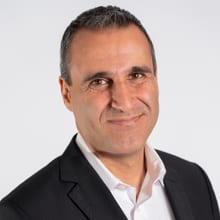
Dr. Pejman Katiraei is a board-certified pediatrician who has completed two fellowships in integrative medicine and has over a decade of clinical experience helping children with severe learning and behavioral challenges. He completed a fellowship under Dr. Andrew Weil at the University of Arizona and then started the Loma Linda University Holistic Medicine Clinic, of which he was the medical director until 2014. Dr. K is now in private practice in Santa Monica, where he focuses on helping children with mold-related illnesses, autism, and other mental health challenges.
[02:26] I'm so excited to have this conversation, and I think you're going to find it really helpful. As always, this information is for educational purposes only and is not a substitute for personalized medical advice. Stick around until the very end so you don't miss any of our special hypermobility hacks. Here we go.
[02:45] Okay, I am so excited to be here with Dr. Katiraei. Thank you so much for joining me today.
[02:52] Dr. Pejman Katiraei: No, it's my pleasure. Happy to be here and happy to share what I can to just bring more awareness. At the end of the day, for me, I'm acutely aware of how many families and people are struggling. As a pediatrician, how many kids are struggling. And if this conversation can help even one child and family just at least understand what's going on, if not find some answers and solutions to make that child's life better, then this conversation was all worth it.
[03:23] Dr. Linda Bluestein: Wonderful. And I wanted to start out by saying you and I have a couple of things in common. We're both UCLA graduates. I went there for medical school, and I think you were there as an undergrad. Also, I noticed that your clinic is on Wilshire Boulevard, and I lived on Wilshire Boulevard the first year of medical school at UCLA with my grandmother. My grandmother and my grandfather were critical in forming the hospital St. John's, which you might be familiar with in Santa Monica.
[03:51] Dr. Pejman Katiraei: I am. Yeah.
[03:51] Dr. Linda Bluestein: So lots of connections there. I'm really excited to chat with you. And also we are recording this on World Autism Awareness Day, which is kind of cool. We're also recording this in between Parts 1 and Parts 2 with Dr. Theo Haradis, so that's cool because we'll have him back and this is going to probably help me formulate some additional questions for him. I'm really excited to dig in.
[04:16] So in terms of autism, let's start with just general definitions and also the prevalence. Is it actually increasing, or are we just more aware?
[04:29] Dr. Pejman Katiraei: No, for sure it's been increasing. Several studies have been done where they have definitely looked at how much of this is increased diagnostic accuracy versus actual increases in prevalence. And they've all found that the rates of autism have continued to increase despite diagnostic protocols and models not really changing over at least the last several years.
[04:55] Dr. Linda Bluestein: Okay. And I also want to make sure that people know, if they're interested in the subject of autism— which is going to be most of our conversation today, autism, mast cells, other things that Dr. Katiraei specializes in— please check out those episodes I mentioned with Dr. Theo Haradis and also episodes 47 and 32 with Dr. Jessica Eccles.
[05:16] Okay, so the other thing that I think is so important is there's this huge dichotomy between what mainstream medicine says about autism and what people like you who have special training in integrative medicine are thinking in terms of possible etiologies, risk factors, root causes, and things like that. In mainstream medicine it's like, oh, we don't know what causes autism, but we have a lot of clues, right? So what do you think in terms of root causes for autism?
[05:49] Dr. Pejman Katiraei: From everything that I've learned— and Dr. Haradis has actually helped shape part of that conversation— if I was to distill autism down into two things, it is an inflammatory condition compounded by toxins, which then explains all the gastrointestinal issues, because toxins and inflammation induce those changes. The toxins induce the mitochondrial errors. My friend and mentor, Dr. Richard Fry, has published extensively on how there are a very large prevalence of all kinds of complex metabolic issues, which also inform the processes of autism. But if I was to distill it down, it's really an inflammatory issue compounded by toxicity that is really at the root cause of it.
[06:36] Dr. Linda Bluestein: And there's some fascinating data. One study I came across talked about how people with mastocytosis— which we know is different from the much more common mast cell activation syndrome— show that children with mastocytosis are at 10 times increased risk of autism. When you're doing a study and you actually get a result that shows that huge a difference, that's really significant. In terms of hypermobility, which we know has overlap with mast cell activation syndrome and mastocytosis— although that's less common— how are hypermobility and EDS tied to autism, learning disabilities, and mental health conditions?
[07:17] Dr. Pejman Katiraei: Great question. I find a lot of times, whether it's learning disabilities or autism, people are so caught up in the diagnosis and they have a hard time stepping back and saying, well, what the heck are these things that we called autism or learning disabilities?
[07:36] When you look at the different subsets of autism, there are these level 1, level 2 kinds of higher-functioning children who tend to have difficulty with sociability because they get overwhelmed. If you were to distill it down, they do have other things as well, but if you were to distill it down to what keeps this larger subset of children with autism stuck— and we can talk about the more severe cases— what keeps them from struggling to socialize, struggling to connect, and if you were to distill that as one of the foundational things, then we ask, well, what causes that? And that's where the mast cells and the neuroinflammatory component come in.
[08:25] What's so fascinating is because of the histamine reaction that mast cells induce, mast cells and the microglia actually regulate 50% of our total histamine levels within the central nervous system. And when you ask, well, what does histamine do? Part of why I know this is I've had to back into this with the children that I take care of. I started giving them some supplements and treatments to modulate the mast cells, and then all of a sudden, oh my God, their sensory issues improved dramatically. At times I've had children where, as I've regulated their inflammatory response and the microglia, these children are now social butterflies, going up to other kids and trying to engage. Even some of the nonverbal autistic kids— literally within a month or two— are at school and the teachers, aides, or parents watching are like, "It's crazy. He started going up and trying to talk to the other kids," even though they can't talk.
So when we ask, well, where do these things come from? It turns out that histamine plays a really, really important role in the regulation of sensory pathways. There's this incredible article— it's about 50 pages— by Haas et al., 2008. If you type in "histamine and sensory processes" or "sensory pathways," it'll come up. I think the title is actually Histamine in the Nervous System. What Haas talks about— and this was the first time my eyes got opened up to it— is how important histamine is in the regulation of multiple central nervous system pathways, especially the sensory. So it modulates the vestibular function, or middle ear and vestibular function, regulates a lot of the sensory pathways. And in animal studies, they have found that histamine also changes auditory pathways, olfactory pathways, tactile, motor planning, et cetera.
[10:33] When we see these kids— the kids that get overwhelmed in loud and crowded environments, the kids that can't tolerate having clothing, the child who will only wear one t-shirt and one pair of shorts even if it's 20 degrees outside— where does that pickiness come from? We associate restrictive eating and weird patterns of pickiness with autism, but no one asks how that's tied to everything else.
[11:03] I'll give you an example. There was a mom I was talking to the other day whose child is on the spectrum, and she said, "It's crazy. When he got sick, his tics got worse. He started stimming and getting hyperactivated. All of a sudden he stopped eating broccoli, started rejecting so many foods, became really picky, and had sleep issues. Then as soon as everything calmed down, he started wanting broccoli again." And I said, well, that is actually inflammation showing up in real time. So the pickiness, the restrictive eating— sometimes these kids have intense olfactory sensitivity. I've had families where the child can't eat in the same room as others because the smell of the food is overwhelming. All of that is histamine and inflammation.
[12:01] If you were to imagine stepping into these kids' shoes, the entire world is overwhelming from a sensory standpoint. You're in a battlefield, dodging all of this sensory information that for most other people is not a big deal. That helps explain part of it. And then if you layer on top of that some of the brilliant work that Dr. Theo Haradis has done— where mast cells and microglia also mediate the fear pathways, change the limbic system, change the amygdala— literally our perception of what is a threat in the world is distorted.
[12:42] If you add to that that the microglia also influence quinolinic acid, serotonin, dopamine, and a host of other neurochemical pathways that then influence the neuroexcitatory sympathetic response, you've got sensory overwhelm, everything in the world seems disproportionately threatening, and you're hyper-alert. You can't relax. And then if you say, well, that sure looks like a lot of the autism we see in these kids— what is so abstract suddenly becomes so much more logical. And then if you say, well, EDS is driven by mast cells, that connection suddenly starts making a whole lot of sense.
[13:37] Dr. Linda Bluestein: Yeah. And I remember when I first came across the article by our friend Dr. Lawrence Afrin, who wrote this incredible article— "Some cases of hypermobile EDS may be rooted in mast cell activation syndrome." I imagine you've seen that article, and we'll link it in the show notes. By the way, we'll also link that Haas 2008 article so people can look at all these things.
[14:02] When I first read that article, I was like, oh my gosh, this makes so much sense. This interaction between the autonomic nervous system and connective tissue and the musculoskeletal system and the GI tract— we haven't even gotten into that yet— and the nervous system is just really so fascinating. In medical school we're taught that these things work in isolation. So it's no surprise that a lot of our colleagues, who were probably classically trained like we were, have a hard time wrapping their brains around so much of what you just shared, which was really valuable information.
[14:47] Dr. Pejman Katiraei: It is. But when I was classically trained and had to find my way through this, part of it was that a lot of the things I've described, I've had myself. For a very large percentage of my life, I had what I thought was anxiety, but it was actually central mast cell activation. My brain constantly misperceived threats, which was a big part of my anxiety. I've had all kinds of weird sensory issues. I didn't know this, but oxytocin and dopamine were not firing normally in my brain. So the way I was able to connect with people, the way I experienced reward— all of these things were distorted. You can make some argument that I probably was, to some extent, maybe still am, somewhere on the spectrum.
[15:40] A lot of times, whether it's dogma or we just like to hold on to our way of seeing things, it becomes hard for people to step back and say, well, if we can't understand what's going on, maybe there's another way to look at this. That's one of the things that holds so many people back. They have their way of seeing things and that's the only way they want to see things. And this is not just the conventional docs— I see a lot of my integrative colleagues do the same thing. They get trained in one model and that's the only model they use, which I don't think is ultimately helping these children. The better we can understand what's going on— and it's not about me, it's not about you, it's about these poor kids that just can't be in the world and they're struggling.
[16:36] Dr. Linda Bluestein: Yeah, we definitely need to be open to new information and really understand the science as best we can so that we can help people— especially like you said, with these children that have their whole lives in front of them. So it's so important to get to the root of the problem. And speaking of the root of the problem, what about the role of the gut? What should we know about that?
[16:57] Dr. Pejman Katiraei: It's huge. There was a recent article just several months ago where they looked at the total physiology of the gut— not just the microbiome, but really all of the chemical milieu and metabolic milieu of the gut. And they found, I think it was a 95% high predictive ability: if everything in the gut becomes a big hot mess metabolically, chemically, meta-inflammatory, et cetera, its ability to predict autism is incredibly high.
[17:40] The thing that I find, though, is a lot of people get stuck within the gut and they fail to step back and say, well, what created the mess that is in the gut? I see a lot of my colleagues who have incredible intentions and have done a lot of training, but they dive right into, well, let me use probiotics and this and that to treat the gut, without asking, well, what caused the gut to fall apart?
[18:09] They miss the actual trigger that created the situation. I find a lot of times that while the gut is playing a very important role in the manifestations of things like autism, it's actually downstream from the initial trigger that created that imbalance.
[18:30] Dr. Linda Bluestein: Getting to the root cause is so important. Another one of our colleagues, Dr. Claudia Miller, has done excellent work in the space of multiple chemical sensitivity and TILT— toxicant-induced loss of tolerance. I'm sure that plays a role here as well as things like dampness and mold. We're going to get into treatment later, but in terms of etiology and causes, what should we know?
[18:57] Dr. Pejman Katiraei: Great question. With everything that we have released into our environment— the phthalates, the glyphosates, the metals, air pollution, the particulates— all of these have created the perfect storm. We have borderline handicapped the gut physiology of these kids. There are a percentage of kids who are genetically vulnerable, and with all of these different toxicants, we have further made their guts vulnerable.
[19:34] Air pollution impacts the microbiome, causes gut inflammation. Phthalates, glyphosates, all of these things do the same, and they influence the mitochondria and so forth. But they create this susceptibility— it's like a car that is waiting to fall apart but hasn't yet. The engine is kind of shaking. The yellow warning light comes on. Sometimes it doesn't start very well, but it does.
[20:00] If you look at a lot of the kids that present with autism— and there are some kids that were perfectly fine and then fall apart— the vast majority had subtle issues that just never came to light. They had some sleep problems, some sensory issues, some digestive issues. A little bit of eczema, a little bit of food allergies. Their poops are not totally normal— either diarrhea- or constipation-prone. They've had ear infections. Car kind of doing its shake, yellow warning light coming on. No one notices all of those things. And then there's this tipping point where the system falls apart, the gut completely falls apart, which then triggers more inflammation, more toxicity because of the gut itself. And that is where that regressive moment comes from.
[20:51] If we ask, what is the elephant in the room? What is the most potent, significant toxin? That's where dampness and mold come in. And treating thousands of kids— I've been at this since 2008, and in the thousands upon thousands of kids that I have seen, not to say metals and plastics and glyphosates don't matter, they obviously do— the thing that I have seen that has been single-handedly the most dangerous exposure, hands down, is dampness and mold. The inflammation it causes can directly trigger microglial mast cell activation in the nervous system just through inhalation of the particulates, the molds, and the toxins. But the most concerning part is how these toxins, once they're inhaled, influence the microbiome and the gut, and the damage that they cause is far more concerning than anything else.
[22:06] Dr. Linda Bluestein: And we're definitely going to talk more about how you establish a diagnosis, because that's so important. We know there's no biomarker for autism itself— at least that's from what I understand. You might find some increased inflammatory markers, but there's not a single test that is really specific. So what kind of early signs should parents be looking for?
[22:30] Dr. Pejman Katiraei: I don't think there's one early sign. It's not like, if you just see this, your child is going to develop autism. There's really a constellation of things, and it's more of a pattern that, when it starts coming together, the risk of bad things happening goes up.
[22:53] One of the things is significant sleep disruption. The kids that have a really hard time falling asleep— and this isn't just a slightly annoying bedtime routine issue. These kids truly have insomnia. You give them melatonin, they kind of fall asleep, but then they wake up at 2 o'clock in the morning wide-eyed, or you get them to sleep but they're up at 4:30 and you can't get them back. They're just hypercaffeinated all the time.
[23:24] Sleep disruption is actually a sign of central mast cell activity. Histamine modulates our arousal centers. If you flip that around— why does Benadryl work? Benadryl works because it drops central histamine, which causes us to knock out. Excess levels of histamine change our circadian rhythm and increase our arousal center, so we're just wired awake.
[23:50] When you compound that with what we just talked about— how histamine also influences the sensory pathways— you've got a kid with all kinds of weird sleep issues and weird sensory distortions. They get overwhelmed in crowded environments. They're having issues with their hair being washed. They become more picky. And then you add to that some of the gut findings: they're starting to have chronic diarrhea, chronic constipation, abdominal pain for no reason. Because the gut influences our tolerance of foods— when you get intestinal permeability and gut inflammation, that's where a lot of food allergies and sensitivities come from. So you've got a kid with sleep issues, sensory issues, digestive problems, and on top of that, he won't tolerate gluten, won't tolerate dairy, every time she gets corn she breaks out in hives.
[24:52] This all becomes part of this picture: we've got gut disruption, we've got central nervous system immune dysfunction, and this child's system is in a very vulnerable place. And when you add to that an antibiotic, or COVID, or RSV, or any additional stressor that causes the immune system and the gut to now falter further, all of a sudden that child's system that was teetering on the verge falls apart. And now you've got a child that's really struggling neurologically.
[25:37] Dr. Linda Bluestein: And what about babies that have colic? Is that related in any way?
[25:47] Dr. Pejman Katiraei: Yeah, absolutely. Colic— I originally thought it was just a gastrointestinal issue. And what I found in my general peds practice was there are kids that have some colic around 3 weeks of age, they start getting a little fussy, mom cuts out gluten and dairy, and then they're fine. And then there is this other subset of colic that is far more gnarly. The intensity and severity of it is much more. These kids can't be consoled. Parents are having to bounce them, rock them, put them in a car and drive them all over the place. Their little nervous systems just cannot calm down.
[26:33] What I came to realize is that is actually one of the earliest findings of this central histamine mast cell activity. And what's really remarkable is in a handful of kids where things were so bad, the parents are like, just do anything— we don't know what to do, we're losing our minds. I put them on some supplements to downregulate the mast cells and to break down the histamine within the gut. We were giving these kids quarter-capsule doses, and 2 or 3 weeks later the kids start sleeping, they're more calm, their colic is gone. And that was when it really brought it together— oh my God, these poor little babies are actually having the first sign of inflammation in their poor little nervous systems, which is really sad.
[27:22] Dr. Linda Bluestein: Really sad. So that is so fascinating. And I'm sure it varies depending on whether you're treating a small baby, an infant, or an adolescent. But in terms of the lab tests that you do, what are the things that you are most likely to be looking at?
[27:43] Dr. Pejman Katiraei: A lot of people do testing to see if there's inflammation within the nervous system, and there are all kinds of fancy tests to do that. Maybe because I've seen so many of these kids, and the parents are like, well, what about this test, what about that test? What I tell them is: your child has all of the signs of a neuroinflammatory response. What we need to do is figure out what the heck is causing that inflammatory response— what is the trigger? And that is where the bulk of my focus goes.
[28:19] Depending on the history of the child, I have found that dampness and mold is one of the most significant contributing factors. And usually when it's there, the pattern of allergic findings— food intolerances, eczema, chronic coughs, chronic congestion, adenoids, ear infections— shows up, whether it's in the child that is of concern, or sometimes it's not the child but their sibling. I'm talking to the parent because the child came in with autism, and I start asking these questions and the parent stops and says, "Well, it's not him, but his sister has had 6 ear infections and she's only 2 years old, and the doctor said her adenoids are really large and we may need to take them out." That allergic pattern is very highly indicative of dampness and mold, because frankly, no other toxin causes that.
[29:16] When I see that, my first question is, is this actually real? And I have found the most sensitive and accurate way to assess that is through antibody testing— blood antibody testing— where we're asking: has this child's immune system encountered mold or mold toxins at some point in time? I want to differentiate this from a lot of the other modalities that people use, because I was trained to use urine mold toxin levels— mycotoxin testing. And what I found was these tests were highly unreliable in the kids. They may be useful in adults— I don't have much experience with that— but in the kids, we get scenarios where the house was so contaminated that it was basically going to be condemned. "You need to leave this house, no one should be living here." Horrific levels of mold. But then you look at the urine and it doesn't look terrible.
[30:12] And then conversely, I would have cases where the urine levels were so high that I would be freaked out, like, oh my God, this has to be mold. And we would check, and there wasn't much in the house. It turns out the kid was eating peanuts and gluten and dairy, which happen to be high in these levels. My mentor and friend Dr. Andrew Campbell was the one who told me, "Hey, Pejman, these tests you can't rely on in these kids."
[30:41] A lot of colleagues also use organic acid tests. I still use them and I love them, but one out of two times— literally 50, maybe 60% of the time— you get a false negative when it comes to assessing dampness and mold and its downstream effects. So for those people strictly using the organic acid fungal markers, those are highly unreliable as a sole method of assessing these kids. And that's where the blood testing comes in. That's one thing that I look for.
[31:17] Dr. Linda Bluestein: Okay. Are there other lab tests that you find can be helpful?
[31:21] Dr. Pejman Katiraei: Yeah. Dr. Shoemaker found this wonderful biomarker, matrix metalloproteinase-9— MMP-9— to be one of the things that seems to be correlated with mold-related illness and dampness and mold. Basically, MMP-9 in an overly simplistic way is an enzyme that gets activated when there's a lot of tissue repair: tissue gets damaged at the matrix level, the body comes to repair it, MMP-9 goes up. It's more sophisticated and complicated than that, but that's an easy way to remember it.
[31:55] It's one of the most sensitive markers I have found, and it's also easy to draw and easy to process. There are other ones that are good, but depending on the lab, some of them need to be spun down a certain way, which creates complexity. MMP-9 is easy to get, most labs can run it, and it is fairly sensitive to dampness and mold exposure.
[32:27] With that, on all the kids I check, I check them for celiac and for thyroid antibodies, because sadly those are fairly prevalent. One of the things I've also started using as a biomarker is Saccharomyces cerevisiae antibodies, which is specifically for colitis and Crohn's. But when you look at what those antibodies check for, they're checking for: is there some kind of gut inflammation and gut disruption? Is the immune system interacting with some kind of funky yeast— specifically the brewer's yeast? Except it turns out that Candida and certain molds, from an antigenic standpoint, happen to look just like these brewer's yeast. So it could very well be that these antibodies that are popping up positive are actually being activated by Candida or other yeast or mold that are present.
[33:26] I find that while most of the kids don't have actual Crohn's or colitis, this test is fairly easy to get, insurance covers it, and it gives some valuable information. Sadly, about 30 to 40% of kids on the spectrum have these elevated levels of these ASCAs— primarily the IgG that comes up— which is another sign that we probably have gut inflammation, gut disruption, and it's probably being driven by some kind of yeast or mold.
[34:10] Those are the things I look for in the context of dampness and mold, and then depending on the history, sometimes we go searching for Lyme and other things that could be contributing factors as well.
[34:21] Dr. Linda Bluestein: Okay. We are going to take a quick break and when we come back, we're going to talk a little bit more about diagnosis, comorbidities, and treatments. We will be right back.
[35:55] Dr. Linda Bluestein: Okay, we are back with Dr. Katiraei and learning so much great information. This is so fascinating. Are there any brain imaging studies that can be helpful, or is that something that is not there yet?
[36:09] Dr. Pejman Katiraei: You can do functional PET scans, which can actually look for signs of microglial activation. But are those scans easy to do? Can you get a child into a scanner easily, especially if they're already overwhelmed— the typical autistic kid? Probably not.
[36:31] Outside of that, neuroimaging can give information, but to me, if you just look at the child— they're constantly overwhelmed, they're stimming, they're just overwhelmed— all of that is inflammation, period, hard stop. The child that just can't handle being in the world. And PANS and PANDAS kids— they're talking to you, they're interacting with you, but their overwhelm is in the patterns of fear. Their perception of fear is completely off. We think of PANS and PANDAS as just the basal ganglia being inflamed, but if you zoom out, there's a handful of articles now diving into how microglial activation is being argued as part of that. The microglia can also influence the basal ganglia.
[37:26] When you look at these kids and it almost looks like their nervous system is on fire, in a simplistic way— their brain is on fire and that's why they're so overwhelmed. Well, if their brain is on fire, that's inflammation. So we need to create a different model where we don't rely on these tests as much. Because at the end of the day, parents will do whatever for their kids— if they have to finance their home and put thousands of dollars on a credit card to help their child, they'll do it. But if you can see the signs of inflammation in a child, do you need a $1,000 test or a $600 test to confirm that? Wouldn't it make more sense just to treat the inflammation with $100 worth of supplements, and if 4 weeks later that child is more calm, isn't that a better use?
[38:29] That's where I've started pushing back against the convention being established in the holistic and functional medicine community where everyone is enamored by testing. I think tests can be helpful, but there has been such a powerful marketing influence where physicians are pushed to test, test, test for this, test for that. There are some families with endless resources for whom $3,000 of testing is no big deal. But there are also families for whom those $2,000 or $3,000 worth of tests could potentially be better spent in other ways.
[39:09] Dr. Linda Bluestein: Yeah, definitely. We don't want to be doing things if they're not really going to change the treatment plan. So that definitely makes sense. And just to take a little diversion before we go into treatment, are there other conditions that we're seeing more of in kids that we should be aware of and that you treat?
[39:36] Dr. Pejman Katiraei: As part of this spectrum, a lot of learning disabilities— the ADHD. If you look at a lot of children who have ADD/ADHD diagnoses, it's not a straightforward inattention, distractibility, hyperactivity. These kids have processing issues, issues in working memory, issues with executive functioning, which also crosses over into autism. That constellation of learning challenges is very prevalent in this population. With some of these kids who have ADHD, they essentially have a similar, perhaps less intense version of the same neurophysiology that is impacting their ability to learn.
[40:28] Sadly, I've got an 8-year-old and a 5-year-old— she's in second grade, he's in TK— and every classroom seems to have at least one, if not 3 or 4 kids who are just completely struggling to learn. Some of them have regulation issues. Some of them are having panic attacks and anxiety issues. Then we've got the children on the spectrum. We have this epidemic of pediatric mental health and we're completely missing what are the factors that are driving all of this.
[41:07] Dr. Linda Bluestein: And I wanted to also circle back to when you mentioned PANS and PANDAS. I know what those are, but for people listening who don't, could you explain what they are? That's really important as well.
[41:19] Dr. Pejman Katiraei: Thank you for clarifying that. PANS is pediatric acute neuropsychiatric syndrome, and PANDAS is basically the same thing but specifically tied to a strep infection. These poor kids basically present with a relatively sudden onset. The kid was doing pretty well, no big issues, and then out of the blue— sometimes within a matter of days, sometimes weeks, maybe a month or two— they start cognitively falling apart. First, a high degree of anxiety, weird patterns of restrictive eating. A lot of times they have developmental regression: handwriting goes weird, some of them start doing baby talk. With that comes intense degrees of OCD, ritualistic behaviors, compulsions, obsessions, and intrusive thoughts. Neurologically, these kids just get thrown under the bus.
[42:21] A lot of the community has been entirely focused on strep, and then with that mycoplasma, various viruses— some people are looking at Lyme— not to say those are not an issue. But what's really interesting is you see in the literature this discussion of, well, not every child actually needs to have strep to have this thing, and they should still be put on antibiotics and treated even though they don't have antibodies against strep. Some of them do have culture-positive strep, but you kind of have to go searching for it.
[43:01] When you zoom out and ask, well, what creates the immune susceptibility for all these weird things to happen? Kids get strep infections and they don't go neurologically sideways. Pretty much every human being on this planet has had EBV and probably CMV at some point— these are common viruses that literally every single person has. Mycoplasma, walking pneumonias— if you took 100 people off the street, like 80% of them have antibodies against mycoplasma. Everyone is pointing the finger at these triggers because it's easy. But very few people are asking, well, if these things are so common— 30% of kids off the street are carriers for strep— but they don't develop these neuropsychiatric issues. So what causes their immune system to go so haywire that it starts reacting to all of these common things?
[44:04] And that is where dampness and mold come in, because the degree of inflammation and immune incompetence— on one hand the immune system is on fire, on the other hand it has literally lost its ability to protect the host— that is dampness and mold.
[44:23] Dr. Linda Bluestein: Those are questions I've also asked our colleagues Dr. Ruhe and Dr. Kaufman, because they also do a lot in the space of infections and why do infections affect some people so dramatically differently. Some people just breeze through it— and we're not just talking about people with a documented immune deficiency. We're talking about people who appear to have a fairly normal immune system. If we could figure that out, I think that would be a really huge thing.
[44:58] And speaking of infections, we know infections activate the immune system, activate the mast cells, which then cause inflammation and allergic-type phenomena and release mediators that have effects all throughout the body. We also have vaccines, which are designed to help us tolerate those infections better. Obviously there are some people who think that vaccines cause autism. Not to put you on the spot, but do you have any particular thoughts on that, how that's evolved, and what to say to people worried about vaccines and their kids?
[45:39] Dr. Pejman Katiraei: I want to present it like this. As a consultant who takes care of kids on the spectrum, it is sadly not uncommon for parents to report that the child got an inoculation, and shortly after that is when they started really struggling. There's no doubt in my mind that that connection is there.
But if we ask, what was it about that child immunologically that created their susceptibility to have that reaction? The conversation completely changes. It's the same thing as with PANS and PANDAS and all of these infections. Because there are plenty of kids who get the inoculations and their immune systems don't even blip. They don't even get a fever. Literally it's just okay, and they move on. So we're still in this model of being hyperfocused on the trigger— whether it's an infectious trigger or whatever else— and we're not looking at, physiologically, what has created this undermining of the immune system.
[46:59] You said something really important: these children are not known to be immunologically vulnerable. They don't have a known immunodeficiency. And what's wild is in the children I see who have been exposed to dampness and mold, they actually do have immunodeficiency. There are several articles that have talked about how various toxins— bacterial toxins, mold toxins, microbial volatile compounds, et cetera, it's a soup of stuff— actually start creating a deficiency in the immunoglobulin. Specifically IgG, and to some extent IgA, you end up getting immunodeficiency because of these toxins.
[47:48] One of the things I see commonly enough in the kids who come in for a second or third medical opinion: those other individuals ran, for instance, pneumococcal titers. The kids got the pneumococcal vaccine to protect them against ear infections and pneumonia, but then when you run their titers, there's no immune reactivity against any of these vaccines. Some of the kids, when I check their gut immune response— specifically looking to see if their gut is reacting to Candida or the occludin zonulin proteins because of the leaky gut— some of these kids literally have the lowest measurable levels of these immunoglobulins at the gut level. I've talked to the lab director at times and he's like, "This is crazy. I've never seen such low levels." All of this is really a reflection of how much of an induced immunodeficiency these kids develop. It's not a congenital immunodeficiency, but it really becomes a toxin-mediated immune deficiency— a reflection of all the toxicity that is modulating their immune response in a really profound and significant way, which frankly terrifies me for these kids.
[49:18] Dr. Linda Bluestein: And the way you're detecting that is, like you said, looking for the antibodies against a vaccine that they got— they should have antibodies— that's one way. And then with the zonulin, is that through a stool test, or how are you looking at that? You mentioned the gut— are those also through blood tests?
[49:37] Dr. Pejman Katiraei: There are a few different labs. Cyrex is one. There's another company called KBMO. There's a third one I'm blanking on the name of. If you go on Rupa and type in "gut permeability test," they have a few different ones. Essentially, any company that checks for antibodies against, for instance, LPS or lipopolysaccharides.
[50:01] That's how I came to all of this, because I got to a point where I'm like, oh my God, these kids have horrendous gut permeability. Let me start checking them for antibodies against LPS and occludin, because that's a way to measure how good or bad their gut function is. I started running a whole lot of these tests on the kids, and after about 6 months of doing it with like 40 or 50 tests coming back, all of a sudden it's like, oh my God, these kids are just completely immune-compromised at the gut level. That influences their ability to mediate gut permeability. It influences the microbiome, because it turns out IgA and IgG actually influence the health and variety of the microbiome. So it has all of these downstream consequences, which is what makes their gastrointestinal tracts a sitting duck for any stressor that shows up.
[50:55] Dr. Linda Bluestein: The gut is so important for the immune system. It plays a critical, critical role. Okay. I was doing some reading about the different approaches that you take. I definitely want to address treatment. There's a method that I have coined— MNSS PMMS— and it seemed like you were using a lot of similar elements. This is movement, education, nutrition, sleep, psychosocial modalities, medications, and supplements. I've heard you talk about supplements, medications, and a lot of other things we can do for autism.
[51:32] So what things are you finding most helpful? And I know you've had years of training in plants and botanicals, but I've also heard you say that your approach is a little different now. What are your top treatment tools and how did you arrive at that place?
[51:49] Dr. Pejman Katiraei: Wonderful question. I spent 4 or 5 years in a pretty intensive fellowship to get trained as a medical herbalist. There was a period when I was literally custom-blending tinctures of 5 to 7 different botanicals to do all kinds of fancy stuff. So I had a love affair and I still have a love affair with plants. I think they have tremendous potential.
[52:22] But what was staring me in the face with these kids with autism and PANS and PANDAS was, I would put these kids on botanicals to try to restore the integrity of their gut, and then 6 months later, 9 months later, I'd look at their clinical progress and they were making some progress, but at a snail's pace. And then I would check their levels and do testing, and nothing had changed— everything was kind of the same as before.
[52:52] The part that was even more concerning was I would find that 30% of the time, maybe more, when I would put these kids on antimicrobial botanicals— BioCytyn, Micro Regen, whatever— and I still like those products, don't get me wrong— when I would put these kids on these products early on, they would just flare. Literally one drop or two drops and all hell was breaking loose. The kid that was already anxious was completely losing it. After stepping on a few of those landmines, I'm like, okay, I don't want to lose any more limbs. That was enough.
[53:37] That is where I started really asking, well, if this isn't really working and occasionally things blow up in my face, what else is out there? And that's where Dr. Campbell comes into the picture, because for the longest time he's been saying, "Pejman, use itraconazole, use itraconazole." He's been talking about this long before I came into the picture.
[54:06] So I started using itraconazole, which is a pharmaceutical antifungal, in these kids. And holy moly, the changes that I have witnessed have been staggering. It's almost a little beyond belief until you witness it for yourself.
[54:24] Now, it's important to say that not every kid is ready for itraconazole. And if you use it in the wrong child— or the right child at the wrong time— it can still cause them to completely flare. So it's not something that should be used haphazardly. You need to work with someone who knows what they're doing.
[54:45] Because if you ask, well, what is this medication doing? Obviously first and foremost it's an antifungal— it kills Candida, it can kill Aspergillus, it can kill pretty much most molds and fungi. And if you have a boatload of fungus in the gut and you have an immune system that is basically paranoid— just waiting to get triggered for any reason— and now here you come killing off a whole bunch of these fungi and mold, God only knows what toxins they're releasing and how they're interacting with the immune system. Here you come wiping out this population of fungi and mold, and that immune system that basically has paranoia is now flipping out because of this change. You can get a horrendous flare.
But if you time it perfectly— get the kid ready, control the exposure, bring their immune system to a place where the paranoia has calmed down— itraconazole is insanely effective. I've had kids with full-blown PANS/PANDAS, anxiety, OCD, who literally couldn't leave the house to go to school. Intrusive thinking, intense fears. And then literally within a month and a half of itraconazole being slowly dialed up, they're going to school by themselves. The mom said, "It's crazy. We went to school and she got out of the car and just walked into her classroom by herself. I asked her, do you want me to come with you? She said, 'No, mom, I'm fine.'" And the mom is like— she wasn't leaving the house 2 months ago, let alone going to school by herself.
[56:40] I've had kids with level 3 autism— severe autism, no eye contact, no speech, those poor kids in the corner just stimming and shaking and just overwhelmed. We dial a few things in, stabilize their immune system, 2 months into the itraconazole the kid is making eye contact. They're not overwhelmed. They're calm. I mean, it's the most beautiful thing you can possibly imagine. I've had some of these kids now actually going and engaging with other kids. They can't talk, they can't communicate, but they're wanting to engage with others.
[57:19] And for myself— when I started seeing this in some of the kids, I thought, well, I've had lifelong gut issues. Let me try it. This was June of last year. If I could say itraconazole changed my life, that would be an understatement.
[57:38] Dr. Linda Bluestein: Really?
[57:39] Dr. Pejman Katiraei: When I took care of myself, my anxiety and OCD were manageable, but always kind of humming in the background. It was like being in that room with a light that was always on— that OCD kind of constant fear: oh my God, what if this happens, what if that happens, what if these patients leave? All of these irrational fears that had no basis in reality, but my mind was constantly going. And with that, there were self-esteem issues. I didn't realize it, but oxytocin wasn't working. With my wife, my kids— I had formed mental images of what love was, but my heart never truly experienced that connection, because literally there was a hormonal gap between emotion and experience. I would create these constructs of love, but my brain literally could not feel that emotion.
[58:41] Dr. Linda Bluestein: Wow.
[58:42] Dr. Pejman Katiraei: Serotonin, dopamine— I wouldn't have called myself depressed back then, but life was flavorless, literally. There was no joy, there was no flavor in life, because my brain literally was not processing serotonin and dopamine. I didn't enjoy reward the same way as others. And I just thought, well, this is how I am. This is what is. I thought other people were like this.
[59:09] Until a month into itraconazole, there was literally one night when I started crying while I was cuddling with my little guy because of the overwhelming sense of connection and love that I felt towards him. And there were moments where I would just be walking down the street, walking our dog, and just feeling the joy in the beauty of that moment. People say be in the moment, enjoy the moment— well, if you can mentally force yourself to be there but you literally chemically cannot experience those things, then how much in the moment can you really be?
[59:47] And all of a sudden it's like— well, that's kind of autism, right? I share all of this not because of myself, but because this is what these poor kids experience all the time. And on top of that, they're overwhelmed. On top of that, they're bombarded with fear and they've got sensory issues. When you look at their experience like that, it's so heartbreaking to think of how many of these poor kids just go through life feeling this way. And with just one pharmaceutical, we can literally change their lives if we just get a few things dialed in.
[1:00:30] Dr. Linda Bluestein: That's really amazing that an antifungal could have that kind of effect— just really incredible. And I love that you had this transformation and this incredible rich background going through all this with the herbals and everything. Are there supplements that— because you've mentioned supplements a couple of times— that you find helpful, maybe before you use the antifungal, or afterwards, or alongside it?
[1:01:00] Dr. Pejman Katiraei: Yeah, absolutely. Do you mind if we circle back to itraconazole for a second?
[1:01:06] Dr. Linda Bluestein: No, I don't mind at all.
[1:01:10] Dr. Pejman Katiraei: As I witnessed this change in myself and started seeing these kids evolve in a fairly rapid way, I really started questioning if itraconazole was just an antifungal.
[1:01:24] Because when you ask, well, how quickly can you modulate the gut? How quickly can you shift the microbiome or the fungal makeup of the gut to influence change? It doesn't happen that quickly. It really doesn't make sense that it's just because you took care of the fungus in the gut.
[1:01:44] And this is where I started digging into what else this azole does. That's where you get into the cancer research and the autoimmune research, where they're looking at fenbendazole, all of these different classes of azoles— some are antiparasitic, some are antifungals— for cancer treatment, for autoimmune, for all of these different things. All of a sudden the picture opens up.
[1:02:16] It turns out that itraconazole is actually a very potent anti-inflammatory. It's an immune modulator first and foremost, and an antifungal as kind of a secondary effect. And it literally shifts multiple systems within the immune system simultaneously. There is this cell-signaling pathway called Sonic Hedgehog. I don't know if you've ever heard of it.
[1:02:45] Dr. Linda Bluestein: I haven't.
[1:02:48] Dr. Pejman Katiraei: We think of it as the cartoon character, but it turns out that Sonic Hedgehog actually orchestrates this entire complex cascade of immune behavior. And one of the things Sonic Hedgehog can do is profoundly influence the microglia. It literally orchestrates and dictates microglial behavior. It can influence the blood-brain barrier— the integrity of the blood-brain barrier. And if Sonic Hedgehog is overactivated, it disrupts the blood-brain barrier. When it becomes regulated, it starts improving the blood-brain barrier, which we know is a part of autism.
[1:03:29] There are multiple cascades and pathways beyond this. Part of what's so fascinating about this drug is that it's getting rid of the fungus and mold, it's improving gut integrity— I've had multiple families where their kids have had 2 or 3 years of chronic constipation or diarrhea, and then literally 3 or 4 weeks later, "Oh my God, this is the first normal poop she's had her entire life." So it improves the gut, it improves the microbiome, it gets rid of the fungus, and simultaneously it's actually influencing multiple cascades of immunity within the systemic and nervous system all at the same time, which to me is so fascinating to reflect on. I think it holds a lot of potential in helping a lot of these kids who are struggling.
[1:04:24] Dr. Linda Bluestein: Do you think it's helpful in adults as well? I know you're a pediatrician, but from what you know— and you said you took it yourself— do you think it would be helpful for adults also?
[1:04:31] Dr. Pejman Katiraei: Yeah, I think so. A lot of these adults who have MCAS and all kinds of complex nervous system and systemic immune issues— I think, again, it has to be used meticulously. You don't want to just throw it in there, but when it's used at the right time, I think it can be a game changer. Absolutely.
And then in terms of what other supplements to set the stage— for me, the first thing is before I treat, I try to understand the environment. I think that is something really important to highlight and a huge thing I see missing from most of what my colleagues do. They dive into treatment and they miss the ongoing exposure. Part of that is not their fault; it's lack of training. And then we get into all of the issues with how mold testing is currently done.
[1:05:35] New Hampshire is the only state, if I remember right, that actually requires mold inspectors to become certified. There are other states that have passed laws, but when you look at what those laws actually require in terms of licensure, a lot of times it's just: you submit an application, say "yep, I'm a mold inspector," pay $80 or $100 or whatever, get your licensure, and you're now a licensed mold inspector— except you could have done a weekend training. That is how low we have set the bar.
[1:06:12] And the way we're testing currently is missing it so often. Someone will say, "Do you have mold?" "No, we tested our house, we don't have mold." And then the provider takes that at face value and says okay, you don't have mold, and moves on. Except the way that home was tested was completely flawed, which continues to cause the exposure, which continues to cause the inflammation. And then the provider comes to try to treat and either the child flares or they treat and everything slides backwards because all of that ongoing exposure was there.
[1:06:47] So one of the things I've learned to do is get really focused on making sure that the child's environment— or the adult's environment— is controlled. There's a test called the Dust Test. I have no affiliation with them, but I use it as a way— so it's an ERMI test, but it comes with better instructions and is a little easier to interpret. Basically it's a DNA probe on the dust, which tells us: is there a funky amount of mold in the house or not?
If there is a severe amount of mold, it's like you're on the Colorado River trying to paddle upstream and you can't understand why you're going downriver. You can't fight that current of force when there are significant levels of mold. The Dust Test has codes— code 5, code 4, and then 3, 2, 1. Three, two, one is like you're golden. Four, maybe there's an issue. Five is a red flag— really hard to detox and heal.
[1:07:48] So my first step is, do we have a mess? Is this from the past? Some families come to me and say, "We had mold in this house, we moved out, we're good." And the child is already doing better, which is a good sign— in which case we can treat. But there are also times when the exposure is ongoing, people have missed it, and the child keeps circulating and having issues because of that.
[1:08:14] Once we control the exposure, the next step is using some supplements to calm down the mast cells and microglia. Basic things: just some vitamin D and zinc. The reason I don't do more is I found that in these kids, citric acid is a kryptonite. Because citric acid comes from Aspergillus, and immunologically it turns out you might as well just throw mold in their gut— as far as their immune system is concerned, it's seeing mold. So you are adding to the immunological antigen load when you're actually trying to give them a supplement to help them detox.
[1:08:58] I started dialing down how much I do because of that, and now it's limited to a handful of things. There's a supplement called Mirica, M-I-R-I-C-A. The main ingredient that I really have come to like is PEA, which happens to be really good at downregulating the gut mast cells. It starts stabilizing the gut. I know Dr. Theo Haradis has talked about luteolin, and his NeuroProtect, I think, is another great product that is more for the central nervous system, because it's so good at absorbing that it kind of bypasses the gut and goes right into the brain. Whereas Mirica kind of lingers in the gut for a little bit and then slowly makes its way up.
So NeuroProtect and Mirica are great. I am a huge fan of DAO enzymes— diamine oxidase enzymes— because histamine at the gut level causes intestinal permeability and triggers dendritic activation. The dendritic cells, which are the main guards, become paranoid. Part of what I try to do is not reduce histamine in the nervous system but reduce the histamine in the gut, which is perpetuating a lot of the gut inflammation. I find DAO enzymes to be really helpful for that.
[1:10:12] And then literally just some vitamin D and zinc.
[1:10:20] If the kids respond and they start calming down— they're more chilled, sleeping better, eating better— and that happens probably 40% of the time, that to me becomes a green flag: we're in a decent place, this kid's immune system is not completely going haywire, and we can start moving forward to the antifungals and start treating.
[1:10:43] There's about 20% of kids who are so immunologically averse. These are the kids who typically have very high MMP-9. The happy level is around 380 according to Dr. Shoemaker. A lot of these kids will have MMP-9s of 600, 900, 1100— those are the kids who have an immunological equivalent of a ticking time bomb. A lot of times they simultaneously have the positive colitis antibodies— the ASCA, the Saccharomyces cerevisiae IgG. So immunologically you see the correlation: this is positive, that's positive, that's positive. And then you give them the supplement and it's like, no thank you.
[1:11:28] In those kiddos, when you see the immune system is not behaving logically, I have found peptides to be our next best friend. Outside of itraconazole— larazotide, KPV, and I'm starting to understand how BPC-157 comes into the picture, so I'm doing some side-by-side tests. But the way these peptides are able to stabilize the gut immune response and the systemic immune response to then allow us to move forward has been beyond extraordinary in some cases.
[1:12:11] That is my general approach. It seems so simplistic— what about the liver, what about probiotics? But when you look at it from the standpoint of what does the body need to detoxify— how does the body detoxify?— it's through a stable microbiome and a stable gut, period. If those two things are there, the body is able to detoxify. If those two things are not there, you could do backward somersaults and support the liver and everything else as much as you want— the detoxification is not happening.
[1:12:45] If there's gut inflammation, the microbiome cannot start healing, and you can pour every probiotic and prebiotic under the sun in— the inflammation keeps those things from working. Whereas if you control the inflammation, the microbiome starts normalizing. Not to say all of these other things aren't helpful, but I believe a lot of those things come after this basic protocol, which then allows them to work so much better rather than fighting the inflammation that is being triggered by all this other stuff.
[1:13:23] Dr. Linda Bluestein: Oh my gosh. This is so much amazing information. I'm making notes— on a piece of paper and in the spreadsheet here. I have a couple of quick follow-up questions because I want to be respectful of your time. And I want to get to the where-can-we-find-you part.
So really quickly— I do love those same supplements: Mirica PEA, I personally take it and also prescribe it, DAO, NeuroProtect— I love all those things. With the citric acid, is the concern there that it's used as a preservative in some of these supplements? And then if you could tell us, the Dust Test— I can put the link in the show notes, but if there's a specific name of the company, or if it is just "the Dust Test," if you could let us know that.
[1:14:14] Dr. Pejman Katiraei: Yeah. So citric acid is used as a filler, additive, and preservative. If you look, 60-plus percent of supplements actually have it in them. Those are supplements that, especially in these kiddos— and you can argue in adults with MCAS as well— they should avoid, because the fungal and immune imbalances in the gut can make that become a big problem.
[1:14:34] The Dust Test is literally called the Dust Test. They made the name super easy. If you just type in "the Dust Test," it comes right up. It's super easy to do, which is part of why I've become a huge fan. Again, no financial affiliation with them at all. They make it so easy to do the test. It comes with really detailed instructions. The interpretation is straightforward, and they've got a free phone call you can have with someone to also help you make sense of it. You don't need a PhD in fungal microbiology to interpret it: oh, level 5, that's probably not good. They just made it so scalable and easy and I've really become a big fan as a result.
[1:15:33] Dr. Linda Bluestein: Fabulous. We will have links to those supplements that were recommended. We're going to have a lot of links in these show notes— a lot of super fabulous things that you've shared with us. So thank you so much. And the last thing that I usually like to ask is for a hypermobility hack. Do you have a hack that you can share with us?
[1:15:53] Dr. Pejman Katiraei: I think the hack— which may not be such an easy hack— is: find out what is the trigger, the actual root cause trigger. It's easy to take supplements. It's easy to look for the superficial things. If you can find what caused the issues that then led to the hypermobility— and we can argue mast cells may be part of that— and you take care of that root cause, which is my approach with autism and all of these kids, the change that becomes possible is almost sometimes beyond imagination.
[1:16:41] It's not to say supplements can't help. It's not to say treatments can't help— all of those things for sure. But step back and ask, why did this come about in the first place? What created it? Understand that and treat that. And I think that will go so much further, even though it's going to require more work upfront.
[1:17:01] Dr. Linda Bluestein: That makes perfectly good sense. And I think that's probably applicable to a lot of different things, so that's really valuable advice. I can't tell you how much I appreciated this conversation today. It was so, so informative. And I know that you're very, very busy, so I really appreciate you taking the time to chat with me.
[1:17:19] Before you go, can you share with us where we can find you? I know you have— I think it's Holistic Kids and also Holistic Minds, spelled W-H, right? You have a practice but also something else you're working on. If you could share that with us and any other information you want people to have.
[1:17:39] Dr. Pejman Katiraei: Sure. So my practice is called Wholistic Kids— W-H-O-L-I-S-T-I-C Kids. Holistic Minds is something we've been working on to ultimately help empower more providers. It's going to be an AI portal that physicians can plug into— the system crunches all the data, gathers all the data, and starts highlighting where the areas of focus they need to pay attention to will be. That really came about because a lot of providers are like, I don't have 10 years to get into all of this crazy nuance. But they want to help. There are so many wonderful providers who just want to help, but it's hard for them to get to understanding some of these weird nuances. That's where Holistic Minds comes in— it's meant to empower providers to be able to do this job easier and more efficiently and effectively.
[1:18:44] I'm on Instagram, that's where I post most of my videos, and that Instagram is under Wholistic Kids— I'll share the links with you. I have some more technical videos on YouTube, and that YouTube channel is PKatiraei— my first initial and last name. The YouTube channel really has the more technical videos on environment and testing. For those families wondering why these tests are missing it, there's an hour-and-a-half video that gets into some of that in pretty painful detail. So yeah, those are some of the places where people can find me.
[1:19:30] Dr. Linda Bluestein: Fantastic. We will be sure to put all those links in the show notes. And I want to put in a plug for Holistic Minds— if that could be available for adults as well, that would be fabulous.
[1:19:43] Dr. Pejman Katiraei: It's something that we want to work towards. Right now we're actually doing another round of fundraising to really build everything up to a place where we can do a release. So we're kind of in a holding pattern, but it's definitely something we want to do for sure.
[1:19:58] Dr. Linda Bluestein: That would be really, really great. We need as many tools as we can get, because things are getting so complex and it's hard to absorb a lot of information, so the more help we can have, the better. Well, thank you so much for chatting with me today. This has been such a great conversation. I know I've learned a lot. I'm sure the listeners have learned a lot, and this is just really fun.
[1:20:23] Dr. Pejman Katiraei: Well, thank you for creating this space and having me here. Part of why I'm happy to be here and share with you is I just look and there are so many kids, so many families who are struggling. Some parents have said, "I would literally cut off my right arm if my kid could get better." I know there are a lot of parents in that boat. And if this conversation helps even a handful of them just understand what's going on and feel comfortable taking a few steps forward, it's all worth it.
[1:21:04] Dr. Linda Bluestein: I agree. It's so rewarding to get messages from people who say they listened to a particular episode and it really changed their life in some meaningful way. That always makes me feel good because it's obviously a lot of work— time-consuming, getting wonderful people like yourself who are doing really good work, working out the schedules and everything. But yeah, I'm sure that a lot of people are going to really appreciate this and find it really helpful. So thank you.
[1:21:35] Dr. Pejman Katiraei: Most welcome. Thank you.
[1:22:33] Dr. Linda Bluestein: Well, that was really a great conversation with Dr. Katiraei, and I hope you really enjoyed it and found it really helpful. I feel like there's such an interesting dichotomy between the traditional medical world and the integrative medicine world, especially when it comes to something like autism. So this is really important information. Please do share this episode with other people you know who might have kids that are suffering from autism and related conditions.
[1:23:01] Thank you so much for listening to this week's episode of the Bendy Bodies with the Hypermobility MD Podcast. You can help us spread the word about joint hypermobility and related disorders by leaving a review and sharing the podcast. This really helps raise awareness about these complex conditions. If you would like to dig deeper, you can meet with me one-on-one. Please check out the available options on the services page of my website at hypermobilitymd.com.
[1:23:26] You can also find me, Dr. Linda Bluestein, on Instagram, Facebook, TikTok, Twitter, or LinkedIn at hypermobilitymd. You can find Human Content, my producing team, at humancontentpods on TikTok and Instagram. You can also find full video episodes up every week on YouTube at Bendy Bodies Podcast.
[1:23:43] To learn about the Bendy Bodies Program disclaimer and ethics policy, submission verification and licensing terms, and HIPAA release terms, or to reach out with any questions, please visit bendybodiespodcast.com. Bendy Bodies Podcast is a Human Content production. Thank you for being a part of our community, and we'll catch you next time on the Bendy Bodies Podcast.