Description
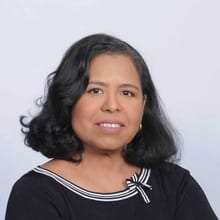
What if your body’s collapse wasn’t burnout… but a system crash no test can catch? In this episode, Dr. Linda Bluestein welcomes Isabelle Ramirez Burnett, systems engineer, health coach, and founder of Renegade Research, to reveal the silent breakdowns behind ME/CFS, long COVID, and hypermobility-related illness.
Diagnosed with ME/CFS at just 7 years old, Isabelle pulls back the curtain on decades of missed diagnoses, medical dismissal, and her discovery of a community willing to do what the healthcare system couldn’t—build their own science.
You’ll hear about the remission that stunned researchers, the controversial meds that gave her life back, and the protocols patients are building from the ground up. If you’ve ever wondered why your body feels like it’s working against you—or what recovery might actually look like—this episode may change everything.
Watch
Guests
Transcript
[01:03] Dr. Linda Bluestein: Welcome back, every bendy body, to the Bendy Bodies Podcast with your host and founder, Dr. Linda Bluestein, the Hypermobility MD. I'm really excited to bring to you today Isabelle Ramirez Burnett. She is the CEO of Renegade Research, a patient-led decentralized nonprofit focusing on research, clinical education, and practical advice around complex multi-system chronic conditions such as ME/CFS and Long COVID. Isabelle is also the project director for their largest to date research project, Remission Biome. She is a systems engineer and board-certified health coach who started her career in the pharmaceutical and medical devices industry. She has been living with ME/CFS for 43 years, which derailed her intentions to become a doctor, but her own illness and passion for science has led her to work across multiple health-related disciplines and companies.
[01:54] I am really excited to have this conversation today because ME/CFS is such a poorly understood condition and so frequently missed. It affects so many people that have hypermobility and related conditions, so this is going to be an important conversation. As always, this information is for educational purposes only and is not a substitute for personalized medical advice. Stick around until the very end so you don't miss any of our special hypermobility hacks. Here we go.
[02:22] Okay, we are here with Isabelle Ramirez Burnett, and I'm so excited to chat with you. I think our paths have crossed a number of different times in some different places, but I think this is the first time I've gotten to actually really chat with you.
[02:36] Isabelle Ramirez Burnett: Yes, we have crossed paths in the EDS world before, for sure.
[02:41] Dr. Linda Bluestein: Yeah, wonderful. So can you share with us how ME/CFS has impacted your daily life, your relationships, your ability to work and pursue hobbies, and how you got into this space in the first place?
[02:56] Isabelle Ramirez Burnett: That's a loaded question. I have had ME/CFS for 43 years, so it has impacted most of my life. And even before developing full-fledged ME/CFS, there were actually signs and symptoms of EDS that also impacted me. So I developed ME/CFS at the age of 7, and that was after having shingles at the age of 7, after having chickenpox at the age of 2.
[03:26] The impact in my earlier years were, I guess I could say, less than they were as an adult, because I was very fortunate to grow up with my grandmother, who was incredibly knowledgeable about herbal treatments, who pursued clinicians relentlessly, and who also believed me whenever I explained the symptoms that I had and what I could and could not do. She was able to modify my diet. She was able to get me on herbal supplements. She was able to seek care and not take no for an answer when I was growing up. And I was also fortunate that in school, there was a very open atmosphere of understanding any limitations. For example, I had the same PE teacher from the 3rd grade until the end of high school. When I told him that I couldn't shoot the basketball because I couldn't look up, he was perfectly fine and made accommodations for that. When I couldn't run the mile, he made accommodations for that and had me do other things — way before there were systems in place for that to happen.
[05:00] So I recognized that growing up, my experience was very different than a lot of people with this condition, whether it is because of the lack of clinical care or because of the lack of understanding from family members — that's not something that I experienced growing up. But with that said, there were definitely challenges. The challenges in school, being able to keep up with my peers, being able to do things on weekends after having ME/CFS symptoms and having to deal with those challenges for the entire week at full force, had definitely an impact.
[05:50] And then at the age of 12, I had measles and I was hospitalized for a month, nearly died. And then when I finally got back home, I fell down the stairs. And I think that's when a lot of the hypermobility issues became much worse — the neck was terrible, the back pain, et cetera. But again, from the age of 12 to when I got married at 19, my grandmother was taking care of me and it was just a very different experience, and the accommodations that I had were great.
[06:36] Things changed and took a turn for the very worst when I moved to the United States at the age of almost 21. I got married at 19. We had our first child, and my husband is from the U.S. We met in the Dominican, got married, had our first child, and then moved here. And the difference and the impact that this condition had in my life moving forward was just really, really detrimental. Not only did my symptoms get worse, because now I don't have somebody that is taking care of me and understanding how to deal with my symptoms, but seeking clinical care myself was incredibly challenging. As you know, there are no tests. Diagnosis was, again, a huge challenge then. And a lot of clinicians assume that this is psychosomatic — a woman, you have pain everywhere, you say that you're incredibly fatigued.
[07:52] So it affected my marriage. It affected my ability to care for my children. It affected employment many times. I would go on cycles of being able to do things and then overexerting myself, shrinking my energy envelope time after time after time, going into a decline and having to be housebound, bedbound for weeks or months at a time. And that lasted until I was diagnosed with Chiari malformation in 2015. And that diagnosis — what it allowed me to do was to be believed, not just in the clinical setting, but extended family and other extended relationships, where there's a concrete thing that you can put a finger to and say, this is what my symptoms are due to. And then the landscape changed again from that perspective.
[08:55] Dr. Linda Bluestein: Yeah, it is amazing how when we can see something on imaging, or there's a lab test or something, it's so much more often that people are believed, as compared to when — I hate to say it — but it's like guilty until proven innocent. Like you're making it up until they can almost prove that you're not, which obviously is not the way it should be, because we know that our lab tests and our imaging are far, far from perfect.
But I want to come back to a couple of things that you said that I thought were really interesting. So age 7 — first of all, that is really, really young for the onset of all of this. And also about the Dominican, that you grew up there and that the care in the U.S. has been less optimal for you. I wasn't sure if it's how healthcare has evolved, or your particular support that you had in the Dominican as compared to here. But it's really helpful information because I only know how the U.S. healthcare system works, and I know that very, very well because I've been working within it for several decades now. But I don't know how other healthcare systems work. So if you have any insights about how healthcare in the Dominican is, I'd be interested to hear them.
[10:08] Isabelle Ramirez Burnett: Yeah, so the biggest difference, I guess, with healthcare in the Dominican is that people are not as easily dismissed when there are no obvious answers — whether from a test, radiology, or explanations that clinicians can come by. There's also a much bigger integration between what you'd call natural remedies like herbs and supportive therapies and pharmaceuticals. And there is more collaboration with family members.
[10:52] My grandmother would pursue things relentlessly, but it's not because she was being pushed away. A doctor would tell her, "This is where we are. I don't see anything else that I can do besides what you are already doing. I'm happy to prescribe this or that, or tell you to continue doing this or that, but there isn't really much further that I can go. We understand that she's having these symptoms, but we can't understand the why." But there was never at any point the insinuation that this was all in my head. She was encouraged to pursue it and was given all of the therapies that a clinician would have from their toolbox until they couldn't do that anymore.
[11:50] Dr. Linda Bluestein: That's really good to know, because obviously it's a huge challenge here in the U.S. — people being believed and supported in the medical community. It's really, really frustrating. And it sounds like you have experienced those challenges since you came here.
[12:06] Isabelle Ramirez Burnett: Yes, absolutely. The first couple of clinicians that I saw, it was a terrible experience. Again, it's all in your head. There's nothing that we can see. Everything looks perfectly fine. I was fortunate enough, about 2 years in, to find a much older clinician who was again very interrogative, did additional testing, and gave me additional support. Unfortunately, that clinician retired about a year and a half into my care. But it gave me the foundation — on top of what I had from my grandmother, and on top of the scientific literature that I had at that point — to be a lot more involved in my own care and to become a little bit more like my grandmother, although with far less success.
Because without someone pushing clinicians for me, I had to be my own advocate for the rest of the time — to do a lot of my own research, to try different things, to go to a rheumatologist if my primary care physician was not going far enough, was not investigating, was not willing to try certain therapies. And at times, to go back to the Dominican and see a doctor there who would help me. It's something that a lot of immigrants do. A lot of the time it's due to cost, but a lot of it is also due to the fact that you will have that support — that clinicians will work with you and try to refer you or look for alternatives or find solutions. If you bring them a study and say, "This is what's being done," they're willing to prescribe things off-label a lot more often than clinicians here are.
[14:06] Dr. Linda Bluestein: That is really fascinating. Of course, there are people who travel to different countries for medical care for different reasons — sometimes it might be plastic surgery because it's a lot less expensive, or surgery because they can get in quicker here in the U.S. paying out of pocket. But what you just shared is the first time I've ever heard of someone going from the U.S. to the Dominican for what sounds like ongoing medical management. I feel like a lot of the cases I've heard about are surgical.
[14:40] Isabelle Ramirez Burnett: Yeah, the medical care there is actually outstanding if you have the money to pay for it. And in dollars to pesos — which is the currency — dollars can go a very long way. So that's part of the reason why people go. A lot of Dominicans will travel back for a couple of months at a time to take care of all their medical, dental, and everything that they need for the year, because even with insurance, it can turn out to be cheaper and much more comprehensive.
[15:19] Dr. Linda Bluestein: Don't even get me started on insurance and all the problems. But anyway, we'll save that for another time because we would get really, really off track. Okay, so what inspired you to become an advocate for ME/CFS patients?
[15:42] Isabelle Ramirez Burnett: Definitely my own challenges — that was at the forefront of my inspiration. I saw how hard it was. A lot of the times that I was working, I was a pharmaceutical sales rep, and I would go into doctor's offices to discuss my products. I would be talking to a physician about a certain condition and you don't want to know how many times that clinician would say that fibromyalgia, ME/CFS, and a number of conditions were all in your head — while at the same time I am standing in front of this physician feeling like I'm going to collapse any minute, having to go to my car and rest and take things in between visits just in order to keep my job.
[16:49] And if there's something that I'm very guilty of, it's being way too bubbly and overly optimistic when I shouldn't be. And to have somebody tell me to my face that everything that I'm feeling in my body is not real is incredibly frustrating. Working in the pharmaceutical industry, with my own passion for learning, I can read scientific studies and discern information. And I know that a lot of people can't or don't even want to. We have to become our own quote-unquote doctors to bring solutions to ourselves, and seeing how complex navigating all of that was — even for someone who enjoys it and can understand it — and how difficult it is to pinpoint what works for one person, I wanted to help others who didn't have the background, the affinity for this, or the support from family.
[18:11] In addition to my grandmother, I've had a very supportive husband and the rest of my family as well. And I know that many people just don't have that. So being able to advocate for those who can't do it for themselves has become my life mission.
[18:29] Dr. Linda Bluestein: What are the most common misconceptions do you think about ME/CFS, and how do you address them when you are advocating?
[18:36] Isabelle Ramirez Burnett: The most common misconception, I think, is around the "chronic fatigue syndrome" name. We all get fatigued. Some people get more tired than others — you may have more stamina or less. And there is a misconception that chronic fatigue syndrome is just fatigue, which is very, very different from ordinary fatigue. It's like you have a battery that just doesn't charge, and it doesn't matter how much you will yourself to do something or how much desire you have to do it — there's an invisible wall in front of you that keeps you from doing it body-wise. It's not a mental block. It's a lack of energy that is way disproportionate to whatever it is that you are doing.
[19:36] For some people, in order to get through a day of work, you have to go home and sleep for the rest of the night — which I did many, many days — or you have to rest for the entire weekend with no other social life, just to maintain employment. While for other people who are on the more severe end of the spectrum, you may get incredibly sick just from going to the bathroom. That's all the battery that you have.
[20:12] And then another common misconception is how much that can fluctuate within one person over periods of time, or even within the same day. For many years, I had a code word with my husband: "I hit the wall." It's that point at which my battery has completely shut down and I can't do anything else. And he understands that. But to see somebody who is maybe just having dinner or cooking dinner and all of a sudden their battery just dies — it's very hard to understand.
[20:59] There's a lot of heterogeneity to the condition. Some people may have pain, some have chronic migraines, others have intolerance to sounds and lights. There is so much variation in the multitude of symptoms and the comorbidities from one patient to the next. But the most important thing is that the fatigue is not just a common fatigue. It is a true draining of your life force and your battery that you just can't will it to replenish on your own.
[21:46] Dr. Linda Bluestein: Yeah, and we just recently spoke with Dr. Yellman, and I definitely want people to go listen to that episode as well, because he gave a very elaborate explanation of post-exertional malaise. Your explanation was so great because, I think you're right — for people who have never experienced this, they really have a hard time wrapping their heads around what it must be like to have that extreme intolerance of activity, being upright. And especially, like you said, given that it varies from day to day, minute to minute, hour to hour, I think a lot of clinicians find it very hard to understand conditions that vary that much. Scientifically, I feel like they feel that doesn't make sense, and therefore it must not be true — it must not be what you're telling me.
[22:42] Isabelle Ramirez Burnett: Yeah, absolutely. And shout out to Dr. Yellman — I absolutely love him as a clinician. If you don't mind, I'll also give a plug for the Remission Biome YouTube channel, where he has a presentation that was absolutely fantastic as well.
[23:00] Dr. Linda Bluestein: Yes, absolutely. And we are definitely going to talk about Remission Biome later on, because I definitely want to dig into that and understand more about what you all are doing there. I think it's wonderful. And yeah, he was such a great guest — so much great information. I think a lot of people listening to this episode who haven't already listened to that one are going to definitely want to go check it out. We'll link that in the show notes so people can find it easily.
[23:25] So if people are listening to this and thinking, "I do know somebody who has ME/CFS" — maybe it's a friend, maybe it's a family member — how can they best support that person?
[23:41] Isabelle Ramirez Burnett: I think the most important part of the support is to understand that what you see is not necessarily what that patient is feeling. There isn't always an outward visible manifestation of the condition. You don't see a fever. You may not see sweats. You may not see somebody outwardly collapse. But when a patient is telling you how they feel, believe them, because there are no words to explain the things that go on within your body.
[24:22] It's like when you're standing in front of the refrigerator looking for a snack and you feel like gravity is 100 times more than it normally is because orthostatic intolerance is hitting you. There is no way to see that. There's no way to see pain. And chronic pain patients hide it very well. People say, "I don't have tolerance to pain," and I think it's the complete opposite — there's a high tolerance to pain, because to live with it on a daily basis shows that you have a high tolerance. So many symptoms just don't have an outward manifestation.
[25:05] So the best way to support somebody is to understand that they're not making up what they're telling you — it's true. And the other thing is to ask the patient how they need that support, not to assume and provide the solutions that you think would fit if you were in that position. Ask the patient, "How can I support you? What can I do now for you? What can I do later?" Whatever availability you have to support that patient, ask the patient how that can be accomplished best, and that's how you'll be able to help the most.
[25:54] Dr. Linda Bluestein: Yeah, that's a good point, because I think we often don't think to ask the person how we can help. And maybe even because of the fact that there are often cognitive challenges as well — brain fog and things like that, which we've talked about multiple times on the podcast — maybe also, in addition to asking "How can I help you?", giving some specific examples: "Would it be helpful if I bring over some food? And if so, what kind of restrictions do you have? Would it be helpful if I drove you to a doctor's appointment?" Like they say, if you're trying to help a friend who has cancer, don't just say "How can I help?" — giving something specific really shows that you genuinely want to help.
[26:37] It's hard to ask for help, right? As patients, people are often very guarded, even with their very closest family. I think that's something a lot of us struggle with.
[26:51] What advice would you give to newly diagnosed patients about navigating the healthcare system?
[27:01] Isabelle Ramirez Burnett: Even before navigating the healthcare system, I'd say plug into the patient community — but do so understanding that you have your own agency. One of the biggest challenges that we have is that we don't have a lot of clinicians like yourself and Dr. Yellman who understand this condition, take a lot of time with patients, are willing to try different things, and know what set of tests to order to keep digging for potential solutions. So plug into the greater community to understand all of the routes that people go through.
[27:51] The other advice I would have is to start documenting your symptoms and your results as soon as you can, to the extent that you can. This is where a friend or a family member may be most helpful if that's a challenge for you, because it's very difficult to recognize the little improvements that you may have when you introduce or remove something — the 2%, the 5% — because it gets very lost in the noise of everything else that you're dealing with. So if you're documenting and tracking as much as possible, wearing wearables and seeing how that changes from day to day — what does your wearable look like when you feel your best and when you feel your worst? Does anything change when you start a new medication or a new supplement? Does anything change when you spend 2 hours on Zoom? Keep track of those things so you can understand and make informed decisions about your body.
[29:06] And the other thing is that something that perhaps didn't work at one point because of the conditions of your body at that time doesn't necessarily mean it won't be helpful at a later time when those barriers have been removed. That's another aspect where tracking really helps, so you can see correlations and start making assessments of how to move forward with your clinician.
[29:44] The other thing would be to continue to seek out — if not expert clinicians, at least the ones who are open to working with you, whether that means being open to you bringing them the latest studies or bringing them anecdotes of things that have worked for other patients, whatever the case may be. You don't have to be stuck with one clinician. If one doesn't work, seek others and find the ones who are willing to work with you, even if they don't fully understand what is going on.
[30:18] Dr. Linda Bluestein: Yeah, I love that, because I do often encourage people that if they see a clinician who's open-minded, curious, and empathetic, that can be just as valuable — or almost as valuable — as someone who has expertise in your condition, depending on what you need at that point in time. Those are really important features to be looking for.
[30:40] And I also love how you pointed out tracking your symptoms and really paying attention to improvements. Even myself — I think I tend to really notice when things are not as good, when I have more pain or something's not as good as normal. But when something gets better, I feel like we often miss it, because it's very easy to take it for granted when things are starting to get a little bit better. That's important information that as a clinician I always want to know.
[31:16] I even find when I go to my own doctor's appointments — I go to a doctor for my TMD, that's probably the most routine follow-up I have — she'll ask me all these questions and I never know the answer. I'm like such a terrible patient in that regard. But we really should try to pay attention to those things, because that's important data for them to go off of to make future plans for our treatment.
[31:48] We're going to take a quick break, and when we come back, we are going to talk about what Isabelle has found most helpful in her care, and also about the different nonprofit organizations that she's working with, and what patients can do to get the best possible treatment. So we'll be right back.
[33:26] Dr. Linda Bluestein: Okay, we are back with Isabelle, and I would love to know what role you think doctors and healthcare providers should play in improving the experience of ME/CFS patients.
[33:38] Isabelle Ramirez Burnett: It's a huge challenge, and I understand it is for clinicians because of the structure of our healthcare system. We are in a system where 15 minutes, if that, is what's common. And in this type of condition — where it's complex and multisystemic — 15 minutes just doesn't cut it to understand where the patient is coming from.
[34:09] I think the biggest thing that clinicians can do to work within the constraints of the system that we have is to remain on top of the knowledge, the education, and the research that exist, and to also plug into the patient community. The doctors who are doing that are so much more armed to help patients, no matter what those constraints are. Our organization puts out expert clinician roundtables that are free and available to everyone. There are many organizations putting out education. There are clinicians who are willing to mentor others and share information that can help expedite things and encourage trying new approaches with patients.
[35:10] And then understand that, even though you have the scientific knowledge and you are the clinician, the patient is the one having the lived experience of this condition. When you partner up as a clinician, there is a much greater chance of success. I think clinicians want that for themselves and for their practice.
There are also private clinicians who don't take insurance. I know it's limited to people who can pay, but it also sort of decongests the burden on the rest of the population that does have to stay within the insurance system. So I don't see that as a negative. The more clinicians that can provide care in whatever capacity they can, I think is a plus for the community. But in whatever system you are in, just understand that the patient is your partner. Don't be paternalistic and flaunt your credentials to dismiss what the patient is telling you. Keep up with the literature and bring the empathy first and foremost, even before bringing the knowledge. There's the saying out there that people don't care how much you know until they know how much you care. And that's no different for a patient.
[37:00] Dr. Linda Bluestein: Yeah, I love that saying. And I also really appreciate how you're talking about feeling the symptoms, because that's the other thing — I only know what my body feels like. The patients that I have seen for the longest and have the deepest relationship with — I hear what they're telling me, but I've never lived in their body. So the lived experience is so important, and I think it's so important to respect that.
[37:37] What about how patients can be most empowered if they don't have a clinician or a team who really understands the complexity of their condition?
[37:47] Isabelle Ramirez Burnett: Something that can benefit one patient can be a huge detriment to another. Something that a patient may be able to take — 50,000 IUs of vitamin D, for example — another one just does terribly with. So there's a lot of variation in there.
Patients themselves, again by plugging into the patient community and staying informed, doing as many tests as you can possibly afford so you can understand and have a compilation of where you sit biochemically — that is really helpful. There are sometimes clinicians who, even though they're not acting as your doctor online, can tell you what something means. And then you can go from there and do whatever you can with that information.
[38:54] If you have any inclination for reading study after study, definitely do that, because it is incredibly helpful. Understand what is being prescribed to other patients who are most like you. What's being done in other countries is also very helpful. And then, like I said before, don't feel like you have to stay with the clinician that you are with if they are not at least open to discussion and willing to help you and receive the information that you provide. Continue to search until you find a clinician who will work with you and try to help you.
[39:44] Dr. Linda Bluestein: Do you have tips for, let's say, somebody who does read a study online or comes across a journal article, and/or talks to other people in the community and decides they want to try a certain medication or supplement? Do you have tips for how that person can bring that up to the clinician in a way that's more likely to be received well?
[40:04] Isabelle Ramirez Burnett: That's a great question. You have to assess that relationship first. If you brought an article to your provider and the first thing they say is, "The internet is not a doctor," then they're not going to receive anything well, however it may be presented. But it may be better approached from the perspective of, "My friend — or somebody who has a lot of the same symptoms that I do — is taking this. Is this something that we could try?" Saying it in a way that doesn't feel threatening if the relationship is not great. If you can develop that relationship first, then that may be what comes before you can move forward and be a resource for your provider. You have to understand the clinician you're working with to know how much input they're willing to accept from you.
[41:15] Dr. Linda Bluestein: Yeah, and as you pointed out earlier, hopefully you have a sense that you're on the same team. Unfortunately, sometimes we get a definite vibe in the room that we're not on the same team, and so that can be a big problem. If you do have that kind of relationship, I think it's going to be so much better received than if it's a more antagonistic relationship — or just not a good collaboration. Because you want these decisions, like you said, to not be paternalistic. It should be what's called shared decision-making — together there should be a conversation: here are some of the options, here are some things that we can do.
[41:57] And speaking of things that we can do, are you willing to share anything about how you manage symptoms on a day-to-day basis? I don't know how much post-exertional malaise or chronic pain or anything like that you have, but are there certain things that you've been able to do in order to manage those symptoms?
[42:18] Isabelle Ramirez Burnett: Absolutely. In 47 years dealing with this condition, there is a lot that I have tried and a lot that I have learned. So I take two main medications, which are unfortunately very stigmatized. One is a pain medication, tramadol, and the other is a stimulant, Concerta. I also have narcolepsy, so the Concerta was prescribed for that. And in doing my own research, I realized tramadol doesn't just help with pain. I've known for a long time it helps with the fatigue, it helps with the brain fog, and it also helps with PEM. We did a project in which we measured lactate with lactate measuring devices, and I could see the lactate rising when I'm in PEM to ridiculous levels and how after taking tramadol, it goes back down to normal levels.
[43:15] And there's actually a recent article on tramadol and COVID that shows the different mechanisms and how many things it helps — it helps with inflammatory cytokines, it helps with ROS. It's another shortcoming of the medical system that a medication gets approved for a particular indication and that's where it stops for the most part, when one medication can have so many different mechanisms of action. We definitely need a system of reusing medications that are already on the market for all of the conditions that we have and doing better research in that area.
[44:26] So tramadol is one that helps me — I would say it's probably responsible for maybe 40% of my function, which is huge. And then on the Concerta side, even though I take it for narcolepsy, when there have been shortages and I have been without it for many days, I realized how much it impacts my orthostatic intolerance — how much it helps it. We had a roundtable recently with Dr. Rowe, and I asked that question, and he said, "Yeah, we use it with patients for orthostatic intolerance because for a lot of patients it's a great solution." So I realized I'm not the only one seeing that.
[45:16] Besides those two, there are things that I use — whether continuously or periodically — to address a baseline decrease or certain symptoms: things like NAC, B vitamins that are on all the time, EPA and DHA. There are a number of supplements that I use, whether ongoing, pulsed, or on hand for when certain symptoms come on.
[45:58] And then one of the things that has had a huge impact — you mentioned earlier we got to talking about Remission Biome — is doing that protocol, which we are still studying. That gave me a period of about 9 months where my baseline was the best it has been for almost any time. The only other time that I had a similar baseline increase was with antimicrobials when I had Lyme, which also affected a period of time post-treatment where my baseline was nearly at a healthy person's level — a lot of symptoms decreased, just being able to function even better than a healthy person a lot of the time.
[46:52] But this is one of the places where it's the hardest to be prescriptive, because a combination of different things is what works. We don't have a cure. But we are seeing that what affects function — and even symptoms to sometimes a lesser degree — is a combination of different things for different people. But if the function is there, then the symptoms can be better managed.
[47:26] Dr. Linda Bluestein: Yeah, definitely. I think that's one thing I've learned in my practice — there's nothing that works for everyone, so that really does make life challenging.
[47:34] And I do want to come back to a few of the acronyms that you threw out, because people might be wondering. EPA and DHA are omega-3 fatty acids. NAC is N-acetylcysteine. ROS is reactive oxygen species. And then I also wanted to comment about the tramadol, because that is really interesting. I actually had a patient very recently share that journal article with me, and I have to confess I had not seen it — it was quite interesting. As a prescriber, one of my biggest concerns with opioids — and tramadol, I should point out, was originally not classified as an opioid. It was classified as an opioid later on, and I don't know exactly what year that was, but it started out being classified as kind of a mixed agent because it does have some SSRI or antidepressant-type effects acting on the serotonin system, as well as action on the mu opioid receptor. So I thought that study was really interesting. One of my biggest concerns as a prescriber is, are we going to get into a situation where we need to escalate the dose? Do you mind sharing if you've been able to be on a stable dose for an extended period of time?
[48:45] Isabelle Ramirez Burnett: Yeah, so I've been taking it for 24 years now.
[48:49] Dr. Linda Bluestein: Oh, wow.
[48:50] Isabelle Ramirez Burnett: And my dose was much higher when I was at my worst. A higher dose has lesser of an impact the more severe a patient is. It is a synthetic opioid and it got scheduled — I think it was in 2014, somewhere in there. I was actually a rep for Johnson & Johnson when I started taking tramadol. That's why I asked my doctor to prescribe it, because I understood so much about how it works.
[49:26] It is a synthetic opioid. The data shows that the addiction rate is so much lower — I think it's 1 in 100,000 patients, and about 90% of those patients have a history of addiction. And the dose can definitely be managed for most people without any withdrawal effects tied to ups and downs in your baseline. At one point I took the max dose, which is very far from where I am right now. Even on my better days, I'll skip a dose or whatever the case may be. I know people take it intermittently. I have a friend, for example, who takes it when she needs to go to doctor's appointments, or if she's having family over and wants to be able to participate in activities, she'll take it then.
[50:39] I know a lot of fibromyalgia patients take it because it is indicated for pain, and in fibromyalgia, pain is much more prevalent than it is in ME/CFS. So patients understand that it's having a much greater impact than just affecting pain. But again, the studies haven't been done. It's not widely used. It is very stigmatized because it is now classified as a controlled substance. Doctors don't want to prescribe it because they're afraid a patient is going to get addicted. So there are many barriers to it despite how much it can do for a patient.
[51:29] And the other challenge — and this is something I know from my pharma days — is that the effect of it is very different when using it acutely versus using it chronically. And if it's not titrated correctly, patients can get dissuaded from using it because of the transient side effects. That was very frustrating as a pharmaceutical rep: even though I repeated it time after time after time, the titration just wouldn't be done. And then patients would get scared because of those initial side effects.
[52:07] Dr. Linda Bluestein: And when you're talking about initial side effects, you're talking about constipation, nausea?
[52:14] Isabelle Ramirez Burnett: Nausea and dizziness are more of the ones that patients get scared from, especially the dizziness. And if it goes on for a week or two, it's even more common for patients to discontinue. Also, the pain effects seem to be greater when it's used consistently rather than in that initial phase. So if the pain is not being very well controlled and then you're getting nausea and dizziness, that's definitely a reason for discontinuing — if you don't know that those are transient side effects that could have been altogether avoided just by titrating slowly, especially in this patient population.
[53:04] Dr. Linda Bluestein: Yeah, it can be hard to know sometimes when to persist with something and when to back off. I ask people all the time to give a medication another trial, because sometimes the way it was tried the first time — like you said — it was started at too high of a dose, or maybe it was an excipient problem or something like that. I will be sure to link that article in the show notes so people can read about tramadol and Long COVID. I think people would find that interesting.
And what about self-care? What do you think are some good self-care things for people with Long COVID and ME/CFS?
[53:42] Isabelle Ramirez Burnett: For self-care, some of the most important things involve having a supportive community — whether that's your family, your friends, or, if you live alone, the people that you have the most contact with who understand when you are down and the things that you cannot do. Because a lot of stress comes from wanting to do something and then not feeling well the moment that event comes up — even if it is a phone call with a friend — and then feeling like you're disappointing your friend, or your family member who doesn't understand that at that moment you cannot do that. So having that closeness and having a group of people who understand what it is to have this condition, I think is important.
[54:40] And then — easier said than done — is to ditch the feelings of guilt. It's bad enough that you have to live with the physiological symptoms and consequences of the condition, but then the feelings of guilt for not being able to do things that you wanted to do or that other people expected you to do — that is an additional burden. And again, easier said than done, but pacing, resting when you need to, not overburdening yourself with things that don't need to get done.
[55:26] And then the other things — if you can go out of the house or afford it — are supplemental benefits: going for a massage if you can, or a lymphatic massage, which is usually very helpful for people. Going for red light therapy. Going to do something you enjoy if you can, when you can. I've heard from so many people: "I feel guilty if I go out with a friend because I haven't done the things in my house that I need to do, or haven't done this for my children." And this condition is already enough of a burden without accumulating more on top of it.
[56:22] Dr. Linda Bluestein: Yeah, and I think so often we forget about the things that bring us joy because we can't do them in the way that we could before. And so we often don't have anything we really enjoy doing. But if you can do something — even in a different way, maybe you used to do some other form of art but now you can maybe draw for just a very short period of time — if you can tap into something that you used to like doing, I think that can be helpful also.
[56:53] Isabelle Ramirez Burnett: Absolutely.
[56:54] Dr. Linda Bluestein: What about the overlap between Long COVID and ME/CFS? How do you think that has influenced awareness or research into these conditions?
[57:03] Isabelle Ramirez Burnett: That's a great question. ME/CFS has been a very neglected condition for decades, whether from the clinical or the research perspective. Again, the fact that there are no diagnostic tests, no approved treatments. You don't wear the condition on your face. And you don't always know when it happens — for a lot of us, it is infection-triggered, but the onset can be weeks to a month or even more from when that infection happens. So people don't even necessarily make the correlation.
[57:48] And I think — unfortunately, because the fact that this happened is very unfortunate for Long COVID patients — we saw the consequences in a massive number of people at once. The presentation is very similar, with variability in severity of course, to ME/CFS. The statistics vary, but the most commonly cited figure is that 50% of Long COVID patients meet the criteria for ME/CFS. The rest have different subtypes of Long COVID — neuro-COVID, cardio-COVID, the POTS and autonomic presentation — that don't meet the full criteria for ME/CFS. But there's a very large group that does.
[58:48] And I think that for clinicians, researchers, and the community at large, having such a large number of people who have had the onset of Long COVID as a consequence of COVID has been eye-opening for everybody. With that said, even though there is a lot of overlap between the two conditions, I think it is important that we continue to study the differences and understand better whether different pathogens can trigger different types of ME/CFS — and all of the nuances that go into the two, whether the presentation is different closer to the onset versus those of us who have had it for a long time. I think we have a huge opportunity for really diving deep into studying everything that happens from beginning to end, since we still have COVID going on and can prospectively study people who develop Long COVID.
[1:00:04] Dr. Linda Bluestein: And I want to also circle back, because I was making notes and missed one thing. You mentioned, I think when you were talking about the things you've found most helpful with your symptoms, something about a protocol that you're following. Did I catch that correctly?
[1:00:22] Isabelle Ramirez Burnett: Yes. I'm not currently following it, although I might do it again soon. The Remission Biome Protocol is a protocol that got started on X because patients were discussing the science of ME/CFS and the things that had helped. One of the things that was central to it was the fact that several patients had had remission events with antibiotics. The most commonly used antibiotic was amoxiclav — amoxicillin-clavulanate.
[1:01:02] So to make a long story short, patients devised a protocol based on the science, based on what was understood about ME/CFS and Long COVID presentation, and based on those experiences with antibiotics — in conjunction with their clinicians. I was one of the first 3 patients who did the protocol back in March and April of 2023. Upon doing that protocol, like I said before, I was nearly at the levels of a healthy person for the following 9 months. What sort of took me out of that baseline — although not back down to where I was before — was another infection in November of 2023.
[1:02:02] So upon that, we organized a more formal patient-led research, self-experimentation type of study where patients, in collaboration with their clinicians, would follow the protocol. That is still ongoing. We initially had a cohort of 50 patients, and we have learned so many lessons from it and modified as we go.
[1:02:36] Out of that, the organization Renegade Research was born. Remission Biome is now the largest project of Renegade Research. And what Renegade Research does is a patient-led nonprofit organization that has 3 legs. One is agile patient-led research. One is education — we are doing the roundtables and actually developing an education platform that's going to be based on systems biology and biochemistry for clinicians to really understand all of the nuances and be able to devise testing and treatments for their patients. And then the other leg is practical advocacy, because what ends up happening with a lot of patients is you lose your job because you can't work. And for a lot of people, they also lose their support — whether that be a spouse or a family who doesn't believe them — they lose social support, they may lose housing.
[1:03:52] So we're looking at how do we connect those pieces so there is care at all levels. Because without those basics — if you don't have housing, if you don't have food, if you don't have the basic needs covered — looking for clinicians without even having insurance is just not possible. And if you can't afford the medications or the supplements, you just can't follow through on that. So that's a critical foundation for being able to do the rest of the things.
Then there's the recognition that clinicians are not necessarily knowledgeable about what goes on with the condition, and a lot of clinicians want to be but may not have the time or the ability or know where to start to find the latest research, hear what patients are experiencing, or learn what other clinicians are doing. So we're bringing that information to them. And then the agile research is doing pilots and proof-of-concept studies based on those experiences that patients bring — what's working for them, what are their observations, what are they tracking — that we can aggregate all those n-of-1s, pull all that data together, analyze it, and minimize the noise to see the signal. So larger studies can be done based on the things that have the potential to make the biggest difference in the quality of life of patients.
[1:05:42] Dr. Linda Bluestein: Yeah, that's really great, because you can get some really interesting anecdotes but then you don't know if that extrapolates to a larger population. So that's wonderful that you're doing that.
[1:05:53] We're going to need to wrap up, unfortunately. And I always end every episode, as you may know, with a hypermobility hack. Do you happen to have a hypermobility hack that you can share with us?
[1:06:05] Isabelle Ramirez Burnett: Yes, I have a few.
[1:06:07] Dr. Linda Bluestein: Okay.
[1:06:08] Isabelle Ramirez Burnett: One of the simplest ones I like to share — if somebody can get on the floor, of course — is how wonderful the floor can be for decompressing. Just laying on the floor by itself, whether you can move your arms around you, move your back, or just provide that surface that kind of pushes against your structure to be able to decompress, is something that can really help. If you can go against the wall and bring your legs up, when your hips are out of place, that can generally help as well.
[1:06:54] But another thing is — to the extent that is possible — is working on stability. Connective tissue needs to have the tensile strength in order to hold your skeleton together. And for ME/CFS patients, exercise can be a big challenge depending on where you are. So disconnecting the concept of exercise from mobility, in order to be able to do the things that can help that structure maintain its integrity — whether that is moving your arm in a certain direction, or just laying on the floor to decompress.
[1:07:44] And then another great source for hacks is Kevin Muldowney's book, Living Well with EDS, which is applicable to a lot of people with hypermobility. If you have a PT, great. But if you don't, there are techniques in that book that can be really helpful for maintaining that strength.
[1:08:12] Dr. Linda Bluestein: Some things that people can do on their own even if they don't have a PT?
[1:08:15] Isabelle Ramirez Burnett: Yes, absolutely. Very simple things — like taking the palm of your hand to your forehead and pressing softly, or pushing your chin back if you have problems with your neck. Those are very simple things that can be done for the majority of people, even if your energy is extremely limited, that can help with that integrity and keep the pain at bay and keep the hypermobility a little more well-managed — keep your body together.
[1:08:44] Dr. Linda Bluestein: Keep it a little more well-managed. Okay, great. Thank you so much for joining us today, Isabelle. It was great to chat with you. Before you go, can you let us know where we can find you?
[1:09:06] Isabelle Ramirez Burnett: Yes, thank you so much for having me. Thank you for this conversation. People can find me — I'm very active on X — I'm @IsabelRamirezRD, and also posting a lot from our Renegade Research account, which is @RenegadeRES on X as well. If people have any questions, my email is [email protected].
[1:09:36] Dr. Linda Bluestein: Okay, wonderful. Well, this has been such a great conversation. I know ME/CFS is a condition that is so poorly understood, and I feel like a lot of people are probably undiagnosed — just like with EDS, and with dysautonomia, many people have POTS that are undiagnosed. This podcast is to help people get the information that they need so that they can get better care. So I really appreciate you sharing all this information and all the work that you've been doing, and taking the time to come on the show.
[1:10:10] Isabelle Ramirez Burnett: Thank you very much as well.
[1:11:16] Dr. Linda Bluestein: Well, I really enjoyed that conversation with Isabelle, and I hope you found it really helpful. I know so many people are suffering from ME/CFS and really, really struggle to get help. So I hope that you will investigate the nonprofit organization that she's involved with, and also check out episode 140 with Dr. Yellman, because that will also have lots of great tips for you.
[1:11:38] Thank you for listening to this week's episode of the Bendy Bodies with the Hypermobility MD podcast. Help us spread the word about joint hypermobility and related disorders by leaving a review and sharing the podcast. This really helps raise awareness about these complex conditions. If you would like to dig deeper, you can meet with me one-on-one. Please check out the available options on my website at hypermobilitymd.com. You can also find me, Dr. Linda Bluestein, on Instagram, Facebook, TikTok, Twitter, or LinkedIn at hypermobilitymd. You can find Human Content, my producing team, at humancontentmd.com, @bendypodspods on TikTok and Instagram. You can also find full video episodes up every week on YouTube at Bendy Bodies Podcast. To learn about the Bendy Bodies Program disclaimer and ethics policy, submission verification and licensing terms, and HIPAA release terms, or to reach out with any questions, please visit bendybodyspodcast.com. Bendy Bodies Podcast is a Human Content production. Thank you for being a part of our community, and we'll catch you next time on the Bendy Bodies Podcast.