Description
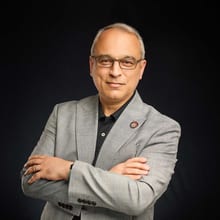
In this episode of the Bendy Bodies podcast, Dr. Linda Bluestein, the Hypermobility MD, welcomes Dr. Alan Hakim, a world-renowned rheumatologist and expert in Ehlers-Danlos Syndromes (EDS) and Hypermobility Spectrum Disorders (HSD). Dr. Hakim reveals for the first time something about his own health. Listen in to find out what Dr. Hakim really thinks about the Beighton Score and the 2017 hEDS Classification Criteria. He also shares when he feels genetic testing is indicated and how to interpret variants of uncertain significance (VUSs).
Watch
Guests
Transcript
[00:47] Dr. Linda Bluestein: Welcome back, every bendy body, to the Bendy Bodies Podcast with your host and founder, Dr. Linda Bluestein, the Hypermobility MD. I am so excited to chat today with Dr. Alan Hakim. I reached out to Dr. Hakim back in 2016, when I was starting to write a journal article about joint hypermobility and pain management. Most of you will know that he is just an incredible, incredible researcher in this space. He probably could be considered, he and Dr. Graham, the grandfathers of joint hypermobility and Ehlers-Danlos syndromes. So this is so exciting. His parting words to me after I was asking him for some help with an article I was writing were, "Spread the word." That's literally what he wrote, those 3 words, and I was like, okay, that's what I'm gonna do. And that's pretty much what I've been doing ever since.
[01:34] So super excited to chat with him today. Dr. Hakim is a rheumatologist based in the UK with academic affiliations in the United States. His portfolio of work includes several high-profile studies in the genetics, genomics, proteomics, and epidemiology of EDS and HSD. And he works closely with academic labs and clinicians facilitating research, research funding, and identifying opportunities across translational medicine to better understand disease pathways and the development of new treatments.
[02:04] As a dedicated educator, he facilitates learning, mentoring, and networking internationally as the lead medical advisor for various international conferences, the lead for the hugely successful EDS ECHO portfolio of programs, courses, and events around the world. And he is the author and editor of a variety of informational website pages, multiple research and review papers, several academic journal volumes, many book chapters, and 6 books in medicine, rheumatology, and EDS and HSD. That is why we are so excited to talk to Dr. Hakim today. He is probably the best source of knowledge in this space, so it's super exciting to chat with him.
[02:44] As always, this information is for educational purposes only, and it's not a substitute for personalized medical advice. Stick around until the very end so you don't miss any of our special hypermobility hacks. Let's get started.
[02:58] I am so excited to finally get to chat with Dr. Alan Hakim. Are we actually finally doing this? I can't believe it.
[03:05] Alan Hakim, MD: Yeah. We are.
[03:07] Dr. Linda Bluestein: Oh my gosh. So I just want to let you know, buckle your seatbelt because I have lots and lots of questions for you. These questions have been building up over quite some period of time. So I'm ready. Okay, awesome. So excited to chat with you. Let's maybe start out with talking about the difference between hereditary disorders of connective tissue and acquired connective tissue disorders, because I feel like that's something that confuses a lot of people. Can you give us a little definition or lay of the land with that?
[03:40] Alan Hakim, MD: Right, yeah, absolutely. It's confused me and most of my colleagues along the way at various times as well. I think that's the starting point — to appreciate that we tend to use the term connective tissue disorders for a lot of different types of disease in rheumatology. And the term connective tissue disorders was used for quite a long time up until the point where we started to use the term "autoimmune rheumatic disorders" to describe those inflammatory connective tissue diseases like rheumatoid arthritis, systemic lupus erythematosus, Sjögren's syndrome. These are all conditions that I'm sure a number of your listeners have heard of, but really we call those now the autoimmune rheumatic disorders, even though they are part of the connective tissue disease group.
[04:34] So, have a look now at the hereditary disorders of connective tissue. It doesn't mean that some of these autoimmune disorders like rheumatoid and lupus aren't hereditary in that they tend to run in some families, but it's a different group of conditions. And so that's where we're talking about conditions like Ehlers-Danlos syndrome, Marfan syndrome, Loeys-Dietz syndrome. So when you're looking at the literature or you're reading some kind of commentary somewhere, you're on a website and you're looking at the term connective tissue disease, ask yourself: is this particular article or paper talking about an autoimmune rheumatic disorder, or is it talking about one of the heritable connective tissue disorders like EDS?
[05:22] Dr. Linda Bluestein: Okay, that's an excellent explanation. That's very helpful for me. I hate to ask you this so soon into the interview, but HSD — where do you think that might fall in? Because of course that's a diagnosis of exclusion, right?
[05:37] Alan Hakim, MD: So yeah, absolutely. Well, there's always going to be a spectrum, so having the word "spectrum" in the disorder was extremely helpful when we were thinking about how this fits. And really, when you look back through the literature, you can see that in essence it's fitted into all of the descriptions from the moment that hypermobility was recognized as associated with musculoskeletal disorders. And it's all in joint hypermobility syndrome descriptors.
[06:06] The issue that we had when we were looking at the development of the new classification in 2017 is that there was this merging, if you like, between joint hypermobility syndrome and hypermobile EDS in different criteria that had appeared in parallel with each other over the previous two decades. So it's not really that hypermobility spectrum disorder has suddenly appeared as a condition — it's a way to better describe what has been around for a very, very long time.
[06:37] Now, hypermobility of itself is inherited. Some of the work that I did way back when demonstrated that the inheritance is about 70% of the explanation when you see it in families. You can acquire it, it can develop for other reasons. So you will see some heritable nature to hypermobility spectrum disorder because hypermobility is heritable. But thereafter, it most comfortably fits with the Ehlers-Danlos syndromes within the heritable disorders of connective tissue, because we use the term form fruste. It's sort of coming first. It's subtly expressing things but not expressing the full picture. It's the form fruste of hypermobile EDS, and hypermobile EDS is the form fruste of classical EDS. So they just sit in this spectrum.
[07:33] And when you look at the way in which people present with their hypermobility and their musculoskeletal concerns in the context of HSD, you can't really fit it in anywhere else. It doesn't fit with fibromyalgia comfortably as a primary diagnosis. It doesn't fit with osteoarthritis as a primary diagnosis. It fits with the heritable disorders of connective tissue where hypermobility and hypermobility-related musculoskeletal problems are one of the main issues.
[08:05] Move over to the whole exploration of all of the comorbidities, and we're in a slightly different conversation there, because although you can see that the comorbidities that we see in HSD — like POTS, orthostatic hypotension, some GI disorders — although they look identical to people who have hypermobile EDS, and there has rightly been conversation about whether that makes them the same thing, actually, you see those comorbidities in other conditions as well. You actually see them in the rarer types of EDS, and you see them in chronic fatigue syndrome, and you see them in fibromyalgia.
[08:49] So at the moment, whilst we recognize the comorbidities more and more as part of the clinical concerns that people have with HSD, even though they're not in the criteria for HSD yet — I use the word "yet" — we can't say that they either separate or merge with other diagnoses like hypermobile EDS yet, because they're seen in so many other conditions. So HSD has a home in its own right within that spectrum, really — right at the beginning of all of those various issues that we describe along the way from hypermobility spectrum disorder all the way through to the rarer types of EDS.
[09:27] Dr. Linda Bluestein: Okay, that's a great explanation, because of course with the comorbidities, a lot of people are frustrated that they aren't part of the criteria, but then it gets really messy really quickly, right?
[09:37] Alan Hakim, MD: If you start putting the comorbidities in the criteria — yeah, well, there are a couple of things there that your listeners may be interested to know. First of all, we're doing a very large study. It's called a prospective study, so we're taking patients in real time and we're looking forward rather than trying to capture data from when we've met them in the past. And we're exploring what the similarities and differences are between people who are diagnosed with HSD, people who are diagnosed with hypermobile EDS, and people who have a chronic pain disorder that isn't related to any form of hypermobility. Can we tell the difference between them, or indeed the similarities between them? That's one important question. And having that baseline will be really helpful because — and I'm sure this will come up in your other conversations — as things like new biomarkers or possible genetic markers come to the fore, we'll actually then have a very, very rich, very clearly defined patient population from that study that we can test all those markers on.
[10:47] So that's one thing. The second thing that I think is important for us all to remember is that if you look at a lot of the studies that we've done so far internationally, there's been a lot of evidence published of the associations within a group — POTS within HSD, POTS within hypermobile EDS — but there hasn't been a lot of cross-comparison with other populations, with other illnesses, or with the general population. So whilst we can see that it's common, it's quite difficult at the moment from the literature to show that it's more common than in another condition, or more common than in the general population. But we're getting there, and it's that kind of information that we need to be able to put things into criteria.
[11:32] Because if you just say, for example, POTS is a criterion for a diagnosis of hypermobile EDS, if it's also a diagnosis in 90% of condition X or condition Y, then it doesn't really help you to define the diagnosis. The thing that we have to move forward is that the criteria that make the diagnosis just make the diagnosis. They don't infer that those are the only problems that the person has. And so recognizing the associations is so important. If they happen to become part of the criteria, that may elevate them and make people more aware, but they don't have to be part of the criteria for everybody to listen, understand, and recognize that there is this complication or there is this condition present aside from the primary diagnosis.
[12:25] Dr. Linda Bluestein: Okay, that's really helpful. And something like POTS that's become, I think, more common since COVID — that's even probably harder to assess than something that's super rare.
[12:37] Alan Hakim, MD: Correct.
[12:38] Dr. Linda Bluestein: Right, yeah.
[12:38] Alan Hakim, MD: Yeah, if it's super rare, it's actually much more likely to become part of the criteria, bizarrely, because it's so strongly associated with one particular circumstance that if you see it, that's what it is. The more common it becomes, unless you can demonstrate a mechanism that's directly related to the disease you're talking about, then it becomes an association, and it's very difficult to make it a specific criterion. And you see this in all other walks of criteria development over the years for different diseases.
[13:15] I've discussed this before at different meetings — no one set of criteria anywhere where there's this breadth of heterogeneity and variety in symptoms is going to be absolutely specific to your diagnosis. Because it's common in lots of places. But it doesn't stop — it should not stop — clinicians and patients from understanding all of these different associations and how they manifest as part of their disease.
[13:47] Dr. Linda Bluestein: Okay. I want to move on to talking about joint hypermobility and specifically generalized joint hypermobility. And of course, you've written so many papers on all of these topics. This is actually where I really first started learning about all of this back in 2016. In terms of generalized joint hypermobility, of course, we have the Beighton score, which we know has problems, but it's used for research purposes especially, right? And then the 5-point questionnaire that you developed with Dr. Graham, published in 2003, which is a fabulous tool especially for assessing historical joint hypermobility. What do you think is the best way to assess for generalized joint hypermobility?
[14:33] Alan Hakim, MD: Okay, yeah, so let's start with the fact that no score is perfect.
[14:38] Dr. Linda Bluestein: Yes, right.
[14:39] Alan Hakim, MD: If you go to the other extreme where you look at the upper limb score and the hand score and the foot score, there have been beautiful studies looking at the validation of these, but they're immensely complex to do. No generalist, no general physician, no acute physician in an A&E department is ever going to have any time to do any of that, no GP. So there's no perfect score, and there have been several papers written about this.
[15:08] So the first thing that I always say about any scoring system that's applied — for example, as part of teaching or the criteria, and typically that is the Beighton score — is it's your first window into whether there might be an issue here. So if we take the cutoff score of 5 out of 9 as suggesting that there's going to be generalized joint hypermobility, just for the rest of this conversation — if the score is 5 out of 9 or more, then everyone can be quite confident that there's a very strong likelihood that this person has generalized joint hypermobility. Even then, it doesn't tell you which joints are hypermobile, and a clinician who's assessing somebody — a physiotherapist, a doctor, anybody — needs to look at all of the joints, and in particular the ones that are causing the symptoms, the grief, because that's the only way in which you identify the true breadth and nature of the problems related to the hypermobility.
[16:11] So whichever way you look at it, you've got to go beyond your identification of the Beighton score. If it's 5 or more, that's great, you're in — now let's go and understand the exact breadth of all of this. Now, it's exactly the same if it's 4 or less, because — and this sounds a bit illogical — if it's 4 or less and you have somebody with you who you think sounds like a heritable disorder of connective tissue because of all of the other things, the world is not just about the hypermobility. The diagnosis is more than that. If you've got somebody with 4 or less, you're thinking, well, this isn't generalized joint hypermobility — then you've missed the point. What you have to do is look at all of the joints and determine whether there are features of hypermobility instability that may be a root cause for the musculoskeletal symptoms that the person is presenting with, in the context of all the other signs and symptoms that they've got.
[17:17] So all of these tools were designed to try and capture audiences for research. I hope from what I've said you can tell they're not great in clinical practice. They are a guide, and they get you more or less into the right space — either very confidently from the get-go, or they can muddle you a little bit if you think there's something going on but the Beighton score isn't quite right. There are lots of reasons why the Beighton score may be low. The individual joints that you're examining may be damaged, may be injured, may be painful, difficult to move, so you can't assess them. But therein is the observation: I can't assess this — what is going on with this joint? Are there any other clues anywhere else in the body? So it's not a dead duck. You have to find other ways to improve on this.
[18:17] One of the things that we looked at in the International Consortium Working Group on hypermobile EDS and HSD was whether you could use those other upper limb and lower limb scores and the foot score — parts of those — to really embellish, if you like, the Beighton score. And the answer is you can. Some work was done to look at how they correlate with each other. It would be wrong of me to tell you exactly what they are at the moment because they're in the middle of a study to see how well they actually work, but they won't be a surprise to anybody. I can tell you it won't be a surprise that if you look at the wrist and the shoulder and the hip and the ankle and the big toe, they are another 5 areas that aren't in the Beighton score that really help enrich whether you've got somebody with generalized joint hypermobility or not. And there are relatively straightforward tests that clinicians can do to demonstrate that range of movement. So we're exploring that as part of this prospective study for the review criteria and hope to be able to report the value of them as additions to the Beighton score.
[19:31] Dr. Linda Bluestein: Yeah, and you and I had a conversation — of course, I probably remember it way better than you do because you've had so many conversations with so many people, I'm sure. But back in 2018, at the conference in Baltimore, we were chatting about joint hypermobility and how joint instability is probably even more important, right? But that's harder to assess. I love how you describe the Beighton score — whether it's greater than 5 or 4 or less, you should still be taking a similar approach. And of course, that's challenging with people who maybe don't see as much of this population and are trying to understand the criteria and how to assess these patients. And then you get to the level of assessing joint instability, and that's even more complicated. Do you have thoughts about that?
[20:20] Alan Hakim, MD: Yeah, I absolutely do. I wish I had an answer for it too, but you're absolutely right. I actually wonder whether it's the instability that is the greater problem than the hypermobility, right?
[20:33] Dr. Linda Bluestein: Right.
[20:34] Alan Hakim, MD: And that this is why we see people who are hypermobile who are completely well. What I'd really love to do is a study that looks at well hypermobile people and see how unstable their joints are compared to unwell hypermobile people and how unstable their joints are.
[20:50] Joint instability is a tricky one. You'll see from some of the infographics that we produced at the Ehlers-Danlos Society, descriptors of — we put on social media, little infographics, descriptors of — what is a dislocation and what is a subluxation. So subluxation is a slippage of the surface of the joints, but not so much that they come apart from each other. And it is extremely difficult to assess that. In fact, there are no defined criteria for what that looks like or what that feels like. But so many of us who've been in clinical practice for a long time just know that you can feel it. And actually, when you show it to your patients, they can see it. I had a wonderful example where I went to shake the hand of a person at our most recent conference, and the whole wrist just went clonk, clonk, clonk. And it's like, well, yeah, you've got an unstable wrist.
[21:47] So clinically, with experience, you can pick them up. But how do you teach the generalist to spot this? How do you teach the individual in the community who's experiencing this to better describe what they can feel is going on? There are some tricks. You can see a little sulcus, a little dip or dimple in the side of the shoulder when it's subluxing. You can actually see the wrist wobble all over the place, and people can wobble their joints without actually dislocating them. So there are visual ways to demonstrate this, but they're not very easy to teach, and they do come with quite a lot of experience.
[22:30] My personal view is it's less about the hypermobility and more about the instability in the presence of the hypermobility. And of course, what a lot of therapy does is try to improve that stability without losing the range of movement. So intuitively, we've known this for a long time. It's just hard to describe.
[22:53] Dr. Linda Bluestein: Yeah, yeah. Okay. And then thinking further about the criteria, especially for hypermobile EDS — because we know that's by far the most common type — in terms of Criterion 3, where we're supposed to be excluding acquired connective tissue disorders and things like that, what tests in particular do you think are most important there? You wrote a fabulous article quite a while back about why hypermobility matters that was so well done — it was aimed at clinicians and just so synthesized all of this. What tests do you think would be most important?
[23:35] Alan Hakim, MD: Yeah. I wish you'd alerted me that I'd written it, because I think I've forgotten it. It's just now ingrained in my DNA.
[23:44] Dr. Linda Bluestein: Well, and if there's something that we want to add after the fact, we can do that too. You can email it to me and I can put it in the show notes.
[23:53] Alan Hakim, MD: So just thinking about clinical practice and some of the teaching that we do, the first thing I want to say about Criterion 3 is it's not an all-or-nothing. It's written in a way that I think isn't at the moment very helpful, and we are thinking about how you rewrite this, because it almost suggests that if you have, for example, an inflammatory rheumatic disorder like rheumatoid arthritis or lupus, that you can't have hypermobile EDS. And that isn't true. I can see from the wording how you could infer that, but that isn't what it means.
[24:30] So if you're trying to determine whether the hypermobility and the instability — and maybe some of the skin signs, for example, the bruising — are much more related to some kind of autoimmune inflammatory disorder, then you need to go down that pathway and make sure that you've excluded the autoimmune rheumatic diseases. So there's a panel of blood tests there and further assessment for the possibility that the explanation in front of you is more likely to be due to rheumatoid or lupus, for example.
The trickier thing, I think, relates to the muscle weakness and the myopathy side of things. In our groups where we present very difficult cases in terms of diagnosis or therapeutics, just occasionally it's become obvious that the story is one of profound muscle weakness, either in a block of muscles — say, neck across the shoulders, or pelvis down into the thighs, maybe the calves — and then you realize that actually you're looking at a pattern that's much more myopathic. And that doesn't mean that it's necessarily a myopathic variant of Ehlers-Danlos syndrome — it means it's a myopathy. And so the other thing that we need to be cognizant of is whether there is some kind of muscle disorder, and that might require further investigation. I've seen accounts of people being identified as having mitochondrial diseases of the muscle and various other rare myopathies where there wasn't another explanation that really made sense around hypermobile EDS.
So I think Criterion 3 should almost be used as an aide-mémoire that there are other quite important diseases that you need to think about in the differential diagnosis to make sure you don't miss something. That might be the primary diagnosis, as opposed to, "well, it can't be hEDS because you've got that." So one of the things that we're doing as we look at the criteria is thinking about how one remodels the structure of the criteria, because at the moment you only get in if you've got the generalized joint hypermobility. We've all discussed the issues around that, so if you don't get that right, you don't get in.
[26:52] Then there's a whole series of questions about what is the phenotype — the features that make up the condition. Well, that's all being explored in detail as part of this study. The whole issue of family history and chronic pain symptoms and things like that is important but probably not very sensitive, because we know that there are strong family histories and we know that the two most common symptoms are widespread pain and chronic fatigue — so they're not going to really tell you very much in comparison to everybody else, but they need to be in there.
[27:25] And then that final bit — we're exploring what have the clinicians identified that made them think it could be something else, and what are the clues. And indeed, what we probably want to do is add biomarkers into that place. You know, please test these biomarkers as they come in so that we're testing for the diagnosis as opposed to excluding it. And just reminding everybody else that there are other diseases out there and you do not want to miss them.
[27:51] Dr. Linda Bluestein: And it's such an interesting point because I think the Ehlers-Danlos Society has done such a great job of raising awareness about the Ehlers-Danlos syndromes and HSD and this group of conditions. At the same time, I feel like I've seen people — either in my clinical practice or I encounter them on social media — where once they learn about EDS, they want that to be the diagnosis because they want a diagnosis and they've been gaslit or whatever, and so they haven't had a proper workup yet. And so they find EDS and they think, "That's going to be something that I'm going to fit into."
[28:28] And I ask people to also keep an open mind, because if you go to your doctor and say specifically, "I think I have hypermobile EDS," they might not test for those other things. I have seen patients — I had a guy come in who was a construction worker, and suddenly couldn't walk, and he was coming in in a wheelchair. It's like, "Wait, something major is going on here." He had profound muscle weakness, and he thought it was EDS, and I don't think it was myopathic EDS. It was like, there's some other process going on here, and you need a really thorough evaluation. So I also think sometimes people prematurely latch on to certain diagnoses, and if they do that, then they're leading their clinician down a path that maybe is not the right path.
[29:18] Alan Hakim, MD: I think you're absolutely right, and we do talk about this a lot at our conferences. We completely understand the importance of a diagnosis to be able to hang all the different things on, but therein lies the crux: if the things that you're hanging on it have changed substantially and don't make sense, then please, please, please don't let everybody say, "Well, it's due to your EDS." You would never do that in any other condition. If somebody with diabetes came along with a big black wart on their skin, the doctor wouldn't say, "Oh, that might be due to your diabetes," and just dismiss it. They'd go off and look for skin cancer. That's a soft example, but it illustrates the principle of how it can go wrong if — first of all, if it's the wrong diagnosis, and secondly, if everything that you're experiencing is then labeled as due to that diagnosis.
[30:13] As you described, I've seen several people who have presented with various symptoms relatable to EDS but had a different diagnosis, or worse still, had absolutely nothing to do with anything in our territory, right? And I've only picked it up because I'm an internal physician thinking, well, I need to get the textbook of medicine out here because this does not make sense. And we've picked up a couple of things, including cancers, which is difficult for everybody. But the bottom line — the message here is: do not let anybody just label your symptoms as due to your EDS. If it doesn't make sense to you, it's probably because it doesn't make sense, right?
[31:03] Dr. Linda Bluestein: Right. And I think maybe it was our colleague Dr. Heidi Collins who said this: people are entitled to as many diseases as they damn well please.
[31:12] Alan Hakim, MD: Yeah. Yeah, it's an unfair world, and you're allowed more than one for sure.
[31:16] Dr. Linda Bluestein: Yeah, yeah. I think people forget that so often. That is so important. We're gonna take a quick break, and when we come back, we are going to talk about when to do genetic testing.
[32:52] Alan Hakim, MD: Okay, so when to perform and what to perform — those are the things that go through my mind in clinical practice. So if you take it from a criteria standpoint and what we know of the different features that make up the rarer types of the monogenic EDS — so classical EDS, vascular EDS — you can actually sort of line up what we call the red flags: signs or aspects of the history that would make you think, "Huh, the person in front of me, or the family in front of me, potentially has a rarer type of EDS, and I should do some genetic testing to either identify that or exclude that."
[33:37] So the kinds of red flags that we're looking for would be things like extremely stretchy skin that's very, very badly scarred; a personal history or a family history of very severe bruising, deep clots under the skin, haematomas, or even a vascular rupture, sudden collapse, those sorts of things; very severe scoliosis; clubfoot; abnormal body shape where you're Marfanoid with an abnormal pigeon chest. All these different features are called red flags, and what they're doing is taking the clinician's mind from, "okay, I have somebody who has hypermobility, joint instability, skin signs, other tissue signs — it feels like it could be hypermobile EDS, but..." — and it's the "but" — "there is this really profound thing going on that says, hmm, this fits actually more with one of the rarer types."
[34:44] Now, one of the pieces of work that we're trying to do after the 2017 classification criteria is to try and amalgamate that collection of things that we look for into something that's a bit more tangible for clinicians. So rather than go, "Could it be classical EDS? Let me just have a look at the classical EDS criteria. Could it be vascular EDS? Let me just have a look at the vascular." Rather than do that — which is quite frankly intellectually mind-numbing and doesn't work in clinical practice — the pathway towards clinical decision-making is: okay, is there something really odd from that collection of things that makes me think I need to do some gene testing? And what we do now is a gene panel.
[35:26] Dr. Linda Bluestein: Panel.
[35:26] Alan Hakim, MD: So we don't go testing for classical EDS or for kyphoscoliotic EDS specifically. We do a panel, which varies slightly, but in essence they've got all of the major genes that we're aware of that clearly describe the different types of EDS. And so when that comes back — if it comes back as likely pathogenic or pathogenic, then you're home and dry from the diagnostic perspective. Sometimes they come back as variants of uncertain significance, which you can pick up on in a moment. That's a bit tricky, but clinicians are allowed to work through the presentation and the variants of uncertain significance and think, well, we're still going to treat this the same.
[36:07] So that's the first thing. And I think within that, there may potentially in some quarters have been some misconception about the vascular pathologies, because "vascular" doesn't mean POTS and hypotension. These are vascular issues, but that's not what we're looking for when we're looking at the red flags that would suggest something like vascular EDS or one of the other vasculopathies within that group.
[36:38] So that's where we are at the moment. Now, where we will be as the genetics unfolds for hypermobile EDS is a totally different question, and I will have to come back to you when all of that gets published. Our general feeling overall — in the conversations that I've seen internationally — is that because HSD and hypermobile EDS is quite a heterogeneous group in general, there are lots of people who've got similar things going on but they're also different from each other. I suspect what we'll find as we identify particular markers for potential genes, or even other markers a little bit further down the pathway — like protein markers and things — is that we'll have to look at the presentation that each of those individuals has, and we'll probably get lots of little groups.
[37:38] I don't think that we'll suddenly call them multiple different types of EDS. I think there'll just be things like red flags. We'll say, "Okay, if you've got this, this, and this, do that gene test." And that's how we'll get there.
[37:52] So at the moment, a lot of people will say, "Well, I just can't get to see a geneticist, I can't get a genetic test done." The boundaries to that part of clinical service and clinical care, I think rightly relate to the fact that if you haven't got those red flags, if there are no clinical suspicions of those rarer types of EDS, then you shouldn't be having genetic testing. I know that there are some individuals — and I've done this myself — who want to get genetic testing done to absolutely exclude it and be completely sure. That's fine. It excludes those conditions, but it doesn't exclude everything else. And so if it gives you some reassurance, I get that. I use the analogy of doing an MRI scan for back pain — the years of debate there have been about this and the number of studies that have been done to show don't do it — everybody still does it.
[38:51] Dr. Linda Bluestein: It's a good analogy.
[38:53] Alan Hakim, MD: Yeah, it's all about people needing what they need. But the vast majority of the time, the vast majority of people do not need that genetic testing. Is that helpful?
[39:06] Dr. Linda Bluestein: Yes, yes, very helpful. And I'm glad you brought up variants of uncertain significance. I will actually be talking to our colleague Dr. Claire Francomano as well in the near future, so we will dive into that a little bit deeper. But how do you handle those? Because it is tricky. I've had people send an SOS type message because maybe they decided to do direct-to-consumer testing or they had somebody else order it for them. And then they look it up and they see that it's a variant of uncertain significance for Loeys-Dietz. And then they look up the list of things for Loeys-Dietz. Well, of course, a lot of those things are very nonspecific and overlap with hypermobile EDS and other conditions, but they don't realize that the really specific things for Loeys-Dietz — well, they don't have any of those. So how do you handle variants of uncertain significance? Because that's a hard one.
[40:00] Alan Hakim, MD: Yeah, it is. Well, if it's any help to anybody, I go and talk to my clinical genetics colleagues. Because although it's a field that I'm familiar with, it's not my lane when it comes to really trying to work this out. So I don't want to overstate my expertise, but if I can't do it, I shouldn't expect anybody else in my same peer group to do it. I shouldn't be expecting any general practitioners to do it, and no way should anybody in the community ever have to try and unravel all of that for themselves, because they'll find themselves in an absolute minefield. It's complicated for lots of different reasons.
[40:47] But the conversations that I have where the VUS is sitting very close to one of the known pathological genes — well, first of all, you've got to know that it's sitting very close to one of them to be suspicious about it, and that requires a little bit of digging and understanding of the way in which ClinVar and OMIM and various other databases present the data. You might even do literature searches and discover that there are similar variants that have been described in the literature, but maybe only one or two cases. That's quite a lot of complex work for most people to work their head around, and not fair that they should.
[41:23] And then after that, you really have to start asking the question: okay, so this looks like it could be related — how many other people in the family have got this variant of uncertain significance? Do they have the same kind of clinical features that the patient has? Are there any particular tests — particularly of RNA, which is the next expression along from the DNA — that might tell you that this does lead to a pathological problem in the proteins moving further and further down the line?
[42:03] This is very nicely described actually by Francisca Malfait. She has a slide when she's talking about VUSs, and there are about 8 or 9 different things that the clinical geneticist will do to try and work out whether the pattern fits. So I'll give you an example of a family where 3 members — one of the parents, 2 of the children — had exactly the same VUS, and one of the children was my patient. I thought, gosh, this looks like this family's got classical EDS, but there were very soft signs of classical EDS in the patient. There were absolutely no signs of classical EDS in the parent or in the sibling.
[42:46] One of the things that I was taught very, very early on from clinical geneticists about VUSs is: if you've got the same VUS in another member of the family and they are absolutely well, or they have no signs of the disease that you're looking for, then it's unlikely to have very much biological expression at all — or actually it's benign. Because if it really was likely pathogenic or pathogenic, it would be being expressed in those other members of the family.
[43:14] So some of our listeners might be aware that some laboratories will do additional testing on other members of the family, but they typically specifically ask for people who've got the same kinds of clinical features, the same kinds of problems. It's actually really interesting to do tests on people in the family who don't have the features, right? Because they're the ones that are going to give you the bigger clue.
[43:41] So it's difficult. And of course, as we do more and more testing, more and more VUSs are going to come up. One of the things that we've been talking about — and this is a conversation going on internationally across medicine — is how you collate all of that VUS data to see what signals it starts to send about where we should be looking for pathological genes in general. Because they're primarily classified as VUSs because there's no literature on them being described as related to disease. It's a difficult territory.
[44:15] I have another patient where the gene was originally described as a VUS, but it was sitting so close to the actual pathological gene, and the person basically has this disease, and it's so obvious. And so it went through that round of — okay, what is that particular VUS gene doing? And ultimately it was determined through some quite complex laboratory work that it is pathological, and so it's been published. But you can't do that for all the VUSs, and you don't need to do that for all the VUSs.
[44:58] Dr. Linda Bluestein: Wow. That's really, really interesting. So if somebody has a genetic test result with a VUS and they're not really able to find a clinician to help them with that — any suggestions as to what they can do?
[45:17] Alan Hakim, MD: Well, we haven't set this up yet — and I use the word "yet" because you can't do everything, right? I'm actually taking the conversation back to our medical and scientific board at the Ehlers-Danlos Society later in the year, where we've been talking about VUSs and VUS libraries. So I think that there should be a service of some sort where a clinician can bring the inquiry and we can explore it.
[45:42] We do have a genetics and genomics ECHO program that we run with clinical geneticists. In fact, Claire Francomano is one of our facilitators. So clinicians can bring their cases to us, and we will look at them and use all of the means that I was just describing broadly to determine whether this is likely to be an issue or not. That's one mechanism, but it's only one. It only happens once a quarter and you can't do everything. So I think trying to build out those kinds of systems — or to democratize the access to the experts, allow everybody to bring their inquiry to those experts — is what I would like to see. Because I don't think that healthcare services have really got the capacity to be able to deal with these questions. They're very specific questions for very specific patients. So first of all, the patient will need to find a clinician who's sensitive to this, and then we would want the clinician to bring their question to this group and we would try and unravel it.
[46:56] Dr. Linda Bluestein: Sure. And the ECHO program is so great. Moving knowledge, not patients, right — is the tagline. So I think it's really such a fantastic program. I've learned a lot for sure. And once you've gone through the initial, I think it might be 6-week program, then you have the monthly drop-in sessions that you can come to for the regular ECHO program, not the genetics and genomics one. So I think that's a great thing to bring up. And of course, you're director of that program, right? So that's such a wonderful service for clinicians who want to learn more and really want to help this population specifically.
[47:37] Alan Hakim, MD: No, absolutely. Well, thank you for plugging it. I tucked it in there under genetics noise, but there are lots of programs. And that open forum is something that Claire Francomano and I find really exciting and really refreshing, because people come with anything and everything in terms of questions and concerns about their patients. And where else can you be in a space where you've got multiple colleagues from a number of different disciplines — it truly is multidisciplinary — and put this in front of everybody and say, what do you think? The other motto is "all teach, all learn." And people sort of say to me, how do you keep up with everything? Well, it's easy. I sit in the room and I listen to everybody else and they tell me. I do a bit of my own reading as well, but it really is an environment where everybody gets to learn about what's going on everywhere and think together as a group.
[48:38] So more of that. We want to build all of that out. We're hoping to build it out in a more bespoke way to cover the needs for primary community care, to cover the needs for emergency room care. We want to expand it into social care, and we want to expand it into dentistry. We've been doing this for 5 years now, and I think we've got the model right. We've validated what we do. I think people feel safe in that environment and trust it, which is really, really important. Now, the next 5 to 10 years is about expanding it out and seeing if we can capture more and more people — not just making them aware so that their knowledge and their confidence is improved, but actually then giving them that framework to come back and talk to anybody and everybody in our network and engage across the boundaries internationally and all the barriers that understandably sit between institutions and regions and countries. None of that matters in the way in which we do the work.
[49:47] Dr. Linda Bluestein: Yeah, I think that really is the way that the sessions are run. That is fantastic. And of course, we know that there are lots of barriers to people getting better care. Even for acute problems, healthcare has its flaws. We're living in some pretty challenging times. And for chronic complicated conditions like the Ehlers-Danlos syndromes, it's even so much harder. Besides the ECHO program, any other thoughts in terms of how to overcome some of those other barriers and how to educate other physicians?
[50:26] Alan Hakim, MD: Yeah, absolutely. So I think you can take some of the traditional models that have been used over time and maybe rework them slightly. Some of the conversations I've been having more recently are: let's stop writing reviews and expecting the world to read them. Because they're important in themselves, they give some structure, but actually not a lot of people read this stuff. You and I might, and other listeners will, but that makes us an unusual breed. Everybody else is busy in a much, much bigger world dealing with all sorts of disorders with significant issues in terms of resources and capacity and everything else, and they're just not going to tune in.
[51:11] So how do you do this? One of the things that we're thinking about now is rather than focusing all of our attention on our primary conferences, how do we get out to all of the other conferences? How do we get into, not just with posters and things, but how do we get into plenary sessions? How do we get into teaching sessions everywhere — the pediatric conferences, the GI conferences, the pain conferences? And of course, we are now in a position — it's taken about 2 or 3 years, but we're now in a position with the International Consortium, with the ECHO Professionals Database, with our clinicians directory, and anybody else quite frankly who wants to join — to utilize all of that expertise from all of those different clinicians in their own disciplines and say, okay, which conferences should we go to? What materials do we need to give you? How can we help you spread the word and spread the love so that people come back to us as the core, to all of the different materials that they'll find — not just on the Ehlers-Danlos Society website, but everywhere else — and just be more familiar that it's out there and reach out to it and trust it, because it's been provided to them by informed people that they trust.
[52:30] So that's one major mechanism, but in essence, I think what we're talking about is knowledge mobilization. So as we produce new information and become more aware, as we think about how we might define and refine pathways for diagnosis, etc., we're going to have to do a lot of work about how we disseminate that knowledge. We can't just put it out there and expect the world to suddenly pick it up. It requires little armies of people all over the world to act as those catalysts to spread that. I've got a group of amazing rheumatologists in the UK who go out and teach about all of this all the time, just trying to expand that knowledge. We just have to facilitate more of that as much as we can.
[53:28] Masterclasses have proved to be really, really helpful, particularly amongst our allied health professionals. There's a masterclass that's been developed in the UK that's been to multiple sites around the UK to support therapists in developing their understanding and their clinical practice. There's another big one that's about to start in the USA, which we're really excited about, because it draws in everybody and gives them the skills that they need. And then there's a big international conference of allied health professionals that we're facilitating to get as many people as possible to realize the opportunities that are coming in research, and to draw in new people who might be in that world and might also be clinical practitioners.
[54:17] So there's a little potpourri of lots of things. It might sound a little bit chaotic, but if you ask me to line them all up, I'd put all the right shapes in the right boxes. And I think it all sits under the auspices of this science, if you like, of knowledge mobilization. There are multiple different ways in which you do this.
[54:40] I think the other key area for us is not so much trying to go to governments and other organizations for policy change, but actually trying to work much more closely with those governing bodies that make the real changes. So things like the FDA. We had a meeting with the FDA in November last year. They were really interested in where we were in terms of the science that's coming to the fore in EDS, particularly in hypermobile EDS, and said, "We want to be with you at the beginning of that journey so that we're prepped and ready to help you when it needs to go wider. Don't come to us when it's already done because we'll have to catch up. Let us go with you." So making sure that we're in those conversations early and utilizing all of those resources — all the different mechanisms that different groups have to spread the word more widely than you could ever reach. Those are the mechanisms we have to put in place.
[55:45] Dr. Linda Bluestein: Yeah, no, that makes a lot of sense. And I think your point about being at other conferences is so important. I've spoken at some small programs and I have been invited to speak at a sexual medicine conference, which is great. I'm super excited about that. So I think those kinds of things are so, so important, because a lot of patients would love it — and it'd be great to have more clinicians taking the full ECHO program, but like you said, people are busy. They have a full-time practice, they're raising children, they are so, so busy. So they might go to, in my space, the ASA conference. And if there's a talk at the ASA conference on EDS and implications in terms of positioning and airway management and all of that kind of thing, that would be such a better way for people to get at least some information.
[56:47] Alan Hakim, MD: Yeah, you know, I think you've hit the nail on the head. It's: what are the key things that you are dealing with as a clinician? You don't need to know everything there is to know about EDS, but what brings you into our territory? So you say, "I'm going to go and give a talk at a sexual medicine or sexual health conference." To me, with my knowledge of everything that goes on within EDS, that makes complete sense. But there would be a lot of people that go, "Why? How does that fit? Why is she here?" And then when they hear you and they hear all the issues that relate to good sexual health, they'll go, "Oh gosh, okay, now I get it." And that's exactly what we want. People don't know what they don't know, right?
[57:35] Dr. Linda Bluestein: Right. Yeah, absolutely. In terms of patients advocating for themselves, do you have certain tips to share for that?
[57:44] Alan Hakim, MD: Oh, I always borrow all the really clever ones from all of our patient experts at the conferences. This comes up all the time. So I think advocating for yourself in the context of maybe being with a clinician who may not know EDS — I do think it's important for you to have a small amount of documentation that kind of outlines your condition and how it's affecting you, and maybe who your clinicians are, what your current medications are, what you've tried before in all treatments — not just medicines — that has or hasn't worked very well. But you can't come with a big folder. I mean, I've had a couple of people come into the room with two big ring binders. It's like, I can cope with that because I think I know what's going to be in there, but you do that to a novice and it'll just frighten the living daylights out of them.
[58:40] So it's trying to find that balance — having some headline summaries about things, but also realizing that you can't get through everything all at the same time or all in one sitting. That you probably need to be spending some time introducing the main issues and then working through. It's immensely difficult for people who've got any complex health disorder.
[59:09] The only thing that I would say, quite frankly, is: if at the end of that first consultation you have a sense — or it's absolutely clear — that the person just doesn't believe you, and not just doesn't know but isn't willing to find somebody who might be able to help, then get out. Because I've seen too many people get caught in a system that's actually not looking after them, that's actually not reviewing their case, not protecting them — doing the opposite. So don't be afraid to do that. But it's a fine balance, because first and foremost you kind of want to let your clinician have a chance. Because for a lot of people, it really does sound like it's quite tricky. But if you boil it down to one or two things in the first instance, you give them that chance to be able to work out how to help.
[1:00:01] Dr. Linda Bluestein: Yeah, I've had people say they're gonna get a different PCP — and here we use that term for primary care physician — and I ask them, "Hey, why?" or "What's your concern?" Not to argue with them, but just so that I understand. And sometimes some of the things that they'll express, it's like, okay, well, they don't know a lot about EDS, but if they are curious and empathetic and they want to learn, then rather than bouncing around and keep going from person to person, sometimes it's worth sticking it out a little bit more and making sure. I agree with your assessment if they seem like they really are just not interested, but sometimes I think people might leave prematurely.
[1:00:45] Alan Hakim, MD: Yeah, I think that's right. So if you go back to those fundamental principles — if you've got somebody who you can talk to that you don't feel anxious in front of, you might feel a bit frustrated with them, but you don't feel anxious in front of them because of the way they're relating to you, and there are episodes where you can see relatability, where there is empathy — you've got somebody in front of you who cares but doesn't know which way to necessarily go with this particular problem. Those are the seeds of great healthcare. The knowledge comes next, right?
[1:01:24] It's almost like the opposite where you get somebody who's incredibly knowledgeable, but boy, they're just not a nice person. Well, okay, you'll get what you can, and — particularly in primary care, where those skills and assets are really, really important because they're the foundations from which you then decide where you're going to go to see if you can help — then stick with it. Because what you can then do in that situation is go, "Dr. So-and-so, I've been doing a little bit of reading and I've realized that this particular therapist or this particular doctor actually might be able to help us" — pluralize it, socialize it within the context of your relationship. "Can you — and would you — refer me?" I say "can you" because a lot of the time systems don't make it that easy. There may be local referral policies, there may be other issues further afield. Even the more specialist organizations require some local contact before they will take a patient on. So there are lots of those logistics, if you like, but if you've identified somebody who you think might be able to help both you and your doctor, then just introduce that.
[1:03:10] I've had a lot of patients come my way where the healthcare professional — because I receive referrals from anybody and everybody in healthcare — has just said, "These are the symptoms, these are the concerns. I haven't got a clue — I'm summarizing — I haven't got a clue what's going on here, but having listened to my patient and the suggestion that they come and see you, can you help?" Well, that's fine. That's why we're all here, right? I don't know if I can or I can't, but let's have a look.
[1:03:45] And I actually much prefer that kind of approach because it doesn't come back to that idea of having a fixed or affirmed diagnosis. It takes an approach which is much more along the lines of: this is the problem, so can we unravel the problem? If we can give it a diagnosis, we give it a diagnosis. If we can't, nevertheless — how do we treat? How do we manage? What do we need to do?
[1:04:16] I think the other piece of guidance that I have for both clinicians and patients is that given the complexity of some individuals' concerns, there's — it's not a risk, it's a fact — they go off to 10, 20 different clinicians and they basically spend their life routing around different appointments and different tests and everything else, and I don't think that's healthy. I don't think it's healthy for anybody. I can't keep up when I'm the person trying to collate everything that's going on. But I think it's important to try and identify maybe 2 or 3 of the key things that might be the primary problems that are driving lots of other things.
[1:05:02] Dr. Linda Bluestein: Right.
[1:05:04] Alan Hakim, MD: If you can get to the bottom of those problems, a lot of the other stuff might dissipate somewhat. But actually, if you take each individual one and you go, "Okay, I'm going to do those tests and go to that place, and those tests and go to that place," it becomes a really messy journey that I think is probably quite difficult for most people to cope with.
[1:05:22] Dr. Linda Bluestein: Yeah, I'm so glad you brought that up because I have seen patients where they will have seen someone else just a few days earlier and they're going to see someone else a day or two later. And not only are they going to get conflicting recommendations often — because these aren't necessarily different specialties or addressing different problems, they're often addressing the same set of problems — they're not necessarily giving time for that treatment plan to work. So I usually tell them: why don't you decide whose treatment plan feels like a best fit for you and then stick with that one treatment plan.
[1:05:55] Alan Hakim, MD: Right. Yeah. I kind of have a general rule of thumb of 3 months. If things aren't better after 3 months of a treatment to a degree that you're satisfied with, then either — if it hasn't made any difference at all, then we're just in the wrong territory. If it's made some difference, then we just need to be exploring how we expand, develop, or refine that treatment. But if it hasn't made any difference after a couple of weeks, please don't go looking for something else somewhere else. It just becomes very confusing.
And sometimes I've found, particularly with those individuals that come with the big folders, that actually when you look through, that's kind of what's happened. There are multiple engagements with multiple different healthcare professionals with multiple ideas about things — all well and good, but actually none of them have been properly taken through their process to see whether they would've made any difference or not. And so that makes it very, very tricky to know whether you should go back to some of those or whether they are redundant because they didn't really work. So ultimately, if you look forward to what does it look like next year or the year after, sometimes you have made no progress because you haven't allowed progress to be made. And we have to sort of backtrack and almost start from scratch.
[1:07:21] Dr. Linda Bluestein: Yeah. Okay. So we are running to the end of our time. I'm sorry.
[1:07:32] Alan Hakim, MD: Everybody who knows me knows I talk too much.
[1:07:34] Dr. Linda Bluestein: No, no, no. You definitely do not talk too much. But I'm taking about half of the questions that I wanted to ask and deferring them to the next conversation. There's so much to talk about.
[1:07:46] Alan Hakim, MD: I'm very happy to come back.
[1:07:47] Dr. Linda Bluestein: Okay, that would be amazing because there are entire sections that I wanted to cover, and probably some people are listening to this and thinking, "Wait, I submitted such-and-such question and she didn't ask it." Trust me, I got your questions. The list of questions is now about 180 or something like that — not just for you, but overall. Okay, but I like to end every episode with a hypermobility hack — or it could be more than one hack. I'm sure you have hundreds, if not thousands, of hacks. Do you have one or two that you could share with us?
[1:08:22] Alan Hakim, MD: So the first thing — you put this question to me in the form that I had to fill out and I have to confess that I might be a little bit old and don't understand. Do you mean tip? Is that what you mean?
[1:08:32] Dr. Linda Bluestein: Yes, I'm sorry. Yes, tip.
[1:08:34] Alan Hakim, MD: No, that's fine. Well, I shouldn't be ageist. I'm not showing my age, I'm showing my ignorance.
[1:08:41] Dr. Linda Bluestein: Like a quick win?
[1:08:41] Alan Hakim, MD: A quick win. Okay. I'm not sure that this is a quick win, but what I would say is make sure that you keep as active as you can, because losing activity — it doesn't matter what your age or your disease — you'll become more frail, and with frailty comes more ill health. So keep as active as you can.
[1:09:10] Now I'm going to share with you all for the first time ever that I think I probably have hypermobility spectrum disorder. I'm hypermobile at the knees, and there are all sorts of strange things that go on in my sacroiliac joints. When I was 19, I went to see a rheumatologist because I had sacroiliac pain. He couldn't find anything. X-rays were normal, I didn't have one of the inflammatory disorders like ankylosing spondylitis. And for years I ran into trouble with what I think is probably soft tissue prolapsing at the sacroiliac joint. Anyway, I found a set of exercises and the whole thing went away.
Dr. Linda Bluestein: Wow.
[1:09:47] Alan Hakim, MD: And if I don't do those exercises, it comes back.
[1:09:49] Dr. Linda Bluestein: Wow.
[1:09:49] Alan Hakim, MD: Tip: when you've found your exercises, keep at it. And if it starts to flare up, just sense check with yourself: have I stopped my exercises?
[1:10:07] Dr. Linda Bluestein: Yeah, first of all, that's a great tip — totally agree. I can think of my own historical things and whether you get some other illness or something else happens and you're less active — finding the right place to start and getting back to a level of activity that's going to be good for your body. But yeah, and also, thank you so much for sharing that with me, because I've always wondered about that. It seems like most people who are as passionate as you are and have dedicated the incredible amount of time that you have have some kind of connection besides just the fact that you're a physician who started doing research on this long, long ago.
[1:10:54] Alan Hakim, MD: Thank you so much.
[1:10:57] Dr. Linda Bluestein: But I emailed you — I emailed you in 2016 because your name kept coming up over and over again on all these papers.
[1:11:07] Alan Hakim, MD: How boring.
[1:11:10] Dr. Linda Bluestein: Not boring at all. And you were so gracious when I emailed you and I shared the paper that I was working on. And I said, I know you're super busy, but if you're able to take a peek at this. And you wrote back to me and I was like, wow, that's amazing.
[1:11:24] Alan Hakim, MD: So yeah, I should say I'm self-diagnosed. Nobody's ever actually diagnosed me. When you work in the arena, you kind of figure — well, as has been quoted of me — it looks like a duck, it quacks like a duck, it's a duck.
[1:11:41] Dr. Linda Bluestein: Yeah. Yeah.
[1:11:43] Alan Hakim, MD: But yes, I've had the pleasure of working in this field for 25 years now. I initially trained as a rheumatologist and then got more into soft tissue rheumatology, and bless him, it was Rodney Graham who came and tapped me on the shoulder when I was in the middle of my research before becoming a consultant and said, "Have you ever thought about linking all of the soft tissue injury research that you're doing to hypermobility?" And there was no model or methodology to do it, and yet interestingly when you look at soft tissue injury inflammatory biology, at the time there was a model suggesting that there were these genetic influences and they might be related to hypermobility. So we did the work and the rest is history.
[1:12:25] Dr. Linda Bluestein: Wow, that's amazing. Just incredible. Well, I want to say thank you so much — I mean, truly, there are spaces where a lot of people have made contributions in this space, but the work that you have done is absolutely, absolutely outstanding. And I am so grateful to you because without what you've done, all the rest of us who have come later and tried to make some kind of a contribution wouldn't be able to do what we've been able to do.
[1:12:59] Alan Hakim, MD: Well, thank you very much for that, Linda. And I just see it as a cornerstone from which we're going to do a huge amount more over the next 5, 10 years. I think the next 5 years are going to be really, really exciting as a lot of the biology unfolds in front of us, particularly around hEDS and the extracellular matrix. Let's watch this space. I'm very excited about this, and it's reminiscent of more than 25 years ago when we were looking at the introduction of biologics for use in autoimmune rheumatic diseases, when the science had suddenly unfolded and then began to literally fall out in front of us. And you look back now and there are dozens and dozens of treatments and much greater understanding of these conditions in that part of my world.
[1:13:44] And I can see glimmers of it just starting to happen because of the opportunities that we've had over the last 5, 6 years, in particular with some significant funding into the field to start to do this work. It's very exciting, and we just continue to do as much as we possibly can to support our community.
[1:14:11] Dr. Linda Bluestein: And before we go, where can people find you?
[1:14:15] Alan Hakim, MD: Everywhere. You mean in my clinical practice?
[1:14:18] Dr. Linda Bluestein: In your clinical practice, online, if they want to read more of your work.
[1:14:26] Alan Hakim, MD: Yeah, well, if they want to read more of my work, they just type my name into Google and unfortunately a very long list comes up, but it's all there — reviews, papers, website pages, books. There's lots of information everywhere in that regard. They can find me at the Ehlers-Danlos Society. I'm readily available there. If they can't find my email address at the Ehlers-Danlos Society, then they can go through the inquiry line or the helpline, or if they're interested in ECHO, through the ECHO line, or research through the research line. There is everything. All roads lead back to me because I'm the chief medical officer and the director of research and the director for ECHO. So — they say not all roads, but most roads lead back to me that way.
[1:15:13] Dr. Linda Bluestein: Yes.
[1:15:14] Alan Hakim, MD: So that's the way to find me. In terms of the way in which I engage clinically, the main opportunities that I have now are really through all of this international networking that I was describing, particularly under ECHO. People contact me through ECHO and ask all sorts of questions, and I give them guidance. I don't really do it in that traditional clinic environment anymore because I find that actually there are barriers to that, and I can be of more value by supporting clinicians with general inquiries. And people do that all the time. I get 2 or 3 a day — you could call it pro bono, but I just see it as part of the job I do for the society. And if I can help, I will.
[1:16:04] Dr. Linda Bluestein: That's amazing. That is really, really great. And is there a different website for that or to reach you that way?
[1:16:11] Alan Hakim, MD: No, through the Ehlers-Danlos Society. People connect that way with me, yeah.
[1:16:16] Dr. Linda Bluestein: Okay, fantastic. Well, thank you so, so much for this great conversation. I know the listeners are really, really going to love hearing all of this from you, and I just really appreciate you taking the time. I know you're so busy with all the different hats that you're wearing, so I'm just so grateful.
[1:16:37] Alan Hakim, MD: No, absolutely, thank you so much. I apologize it's taken so long, but please do invite me back and it won't take so many months for me to say yes.
[1:16:45] Dr. Linda Bluestein: Sounds good. I am patient and persistent, but yes, doing it sooner rather than later would be terrific. So, well, thank you again.
[1:16:54] Alan Hakim, MD: Thank you very much. Take care.
[1:16:54] Dr. Linda Bluestein: You too. Wow, that was such a great conversation with Dr. Hakim, and he's such a wealth of knowledge and such an incredible expert in this space. So I hope you enjoyed that as much as I did.
[1:17:11] And thank you so very much for listening to the Bendy Bodies Podcast and helping spread the word about these complex conditions. You can find me, Dr. Linda Bluestein, on Instagram, Facebook, TikTok, Twitter, and LinkedIn @HypermobilityMD. You can find Human Content, my producing team, @HumanContentPods on TikTok and Instagram. If you would like to dig deeper and would like to have a one-on-one session with me, you can go to hypermobilitymd.com for more information. You can also find full video episodes up every week on YouTube at Bendy Bodies Podcast.
[1:17:44] To learn more about the Bendy Bodies Program disclaimer and ethics policy, submission verification and licensing terms, and HIPAA release terms, or to reach out with any questions, please visit bendybodiespodcast.com. Bendy Bodies Podcast is a Human Content production. Thank you so much for being a part of our community, and we'll catch you next time on the Bendy Bodies Podcast.