Understanding Hypermobility Disorders with Linda Bluestein, M.D.
Description
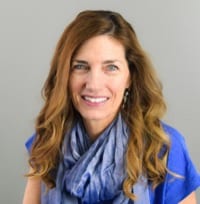
In this episode, guest co-host Jennifer Milner interviews Bendy Bodies’ own host, Dr. Linda Bluestein! Hypermobility disorders can be frustratingly hard to diagnose or even define. From symptomatic joint laxity to connective tissue disorders like Ehlers-Danlos Syndromes (EDS) or Marfan Syndrome, the umbrella of hypermobility disorders covers a number of conditions and up-to-date information can be hard to find. Bendy Bodies' host, Linda Bluestein, M.D. shares her expertise with Jennifer Milner in this episode, opening up on how she turned the challenge of her own hypermobility disorder into a blessing for others as she made working with hypermobility disorders into her life’s work. Dr. Bluestein breaks down the different types of hypermobility, discusses the difference between signs and symptoms, and outlines some hallmark signs of connective tissue disorders. Be sure to listen to this incredibly informative episode! Learn more about Dr. Linda Bluestein, the Hypermobility MD at our website and be sure to follow us on social media: Website: https://www.hypermobilitymd.com and www.BendyBodiesPodcast.com Instagram: @hypermobilitymd Twitter: @hypermobilityMD Facebook: https://www.facebook.com/hypermobilityMD/ Pinterest: https://www.pinterest.com/hypermobilityMD/ LinkedIn: https://www.linkedin.com/in/hypermobilitymd/ And follow guest co-host Jennifer at the links below: Website: www.jennifer-milner.com Instagram: @jennifer.milner Facebook: https://www.facebook.com/jennifermilnerbodiesinmotion/
Watch
Guests
Transcript
[00:35] Jennifer Milner: Welcome to Bendy Bodies with the Hypermobility MD. This is your guest co-host Jennifer Milner, here today to interview the founder and host of the Bendy Bodies Podcast, Dr. Linda Bluestein. Dr. Bluestein is a former ballet dancer, integrative medicine physician, and board-certified anesthesiologist who specializes in hypermobility disorders. She's also the founder and former co-host of the podcast Hypermobility Happy Hour and is a contributing author for the book Disjointed: Navigating the Diagnosis and Management of Hypermobile Ehlers-Danlos Syndrome and Hypermobility Spectrum Disorders.
[01:12] Dr. Bluestein and I have been working together in the hypermobility field for a few years now, presenting at IADMS and sharing clients, and now working together on this podcast that she founded. So welcome to your own podcast. I thought it would be great for the listeners to hear from you because, as much as we have experts on in their own fields, you are hands down an expert in this field and have so much information to get out there. So I wanted people to hear from you. So how did you make the leap from dancer to doctor to hypermobility specialist?
[02:04] Dr. Linda Bluestein: That is an interesting question. I did really want to be a professional ballet dancer. That was absolutely my dream. I fell in love with ballet from the very first time I went to a performance, like so many other people, and had quite started having quite a few injuries and other health problems that in high school made me realize that I needed to come up with a plan B. I had also always been interested in science and medicine, and so when I chose my undergrad university, I chose UC Irvine, which has an excellent dance program.
[02:38] Early on, as I was finishing up medical school, I knew that I wanted to work with dancers, but I also at that time thought the only path for that was to do orthopedics. And even though I didn't know why I was having so many joint problems at that time, I knew that I could not do orthopedics. I knew that my body would not be able to handle the physical requirements. So I did a 20-plus-year detour into anesthesiology.
[03:05] And then I started having some more health problems, had some pretty major surgeries, including some bone grafting surgeries and spine surgery. That led to my discovery of Ehlers-Danlos syndromes and the realization that this is an area of tremendous need. So I started writing about it, researching it, speaking about it, taking care of patients, and basically doing everything that I can just to help as many people as possible with these really complicated and difficult-to-understand disorders.
[03:42] Jennifer Milner: Excellent. So your own misfortune is our gain.
[03:50] Dr. Linda Bluestein: And it's funny because at the time, I remember when I had the bone grafting surgery — that was the last problem that I had — and I was working in the operating room. This was not that many years ago. And I was devastated. You know, you think of all the years that it takes to train to be an anesthesiologist. And it was really, really hard for me for a very long time to say that I could no longer practice as an anesthesiologist.
[04:11] But I use this example all the time with my patients: so often the thing that is the worst possible thing we can imagine at that time turns out to be the best possible thing. And I never in a million years could have pictured myself being in a position where I could impact so many more people. As an anesthesiologist, I was taking care of one person at a time, and now I have the ability to impact so many more people's lives. So it really was a gift. And I know that sounds probably really cliché, but it is true.
[04:43] Jennifer Milner: Well, that is true, and it's great to look at the things that are put in your life that challenge you as something that you can turn into the things that you can use to bless other people. I love that story.
[04:52] So the word "hypermobility" is thrown around so much, and I know that there are so many different types out there. What are the different types that you can encounter? What is there beyond just being bendy?
[05:11] Dr. Linda Bluestein: Let's just start with some very brief definitions. Joint hypermobility simply means that a joint has a greater-than-average range of motion — that's literally all that means. A hypermobility disorder, or some people say hypermobility syndrome, means that a person has joint hypermobility and has symptoms. Joint hypermobility all by itself is not necessarily a problem. It can be, and it can be associated with other things, but that's why it's critically important to ask: are they bendy but otherwise perfectly fine and have no other symptoms? Or are they bendy and have some symptoms that may be related to that?
[05:48] And actually, this is a good time to just mention very quickly symptoms versus signs. Symptoms are things that a person feels within their body — headaches, dizziness, nausea, vomiting. Signs are things that other people can see, like a rash, or that can be measured, like blood pressure. So joint hypermobility simply refers to range of motion, and hypermobility disorders is a very large umbrella that refers to people who have symptoms and/or signs related to this type of picture. And we're going to talk a little bit later about whether you even have to be bendy — and this is where it gets really confusing and complicated.
[06:36] So when it comes to joint hypermobility, you can have several different types. If you have hypermobile shoulders and that's it, that's considered localized joint hypermobility, abbreviated LJH. If you have hypermobility just in your fingers and toes, that's called peripheral joint hypermobility. And if you have hypermobility in generally 5 or more joints, that's generalized joint hypermobility, abbreviated GJH. The key thing to know about generalized joint hypermobility is that a lot of times when people are talking about joint hypermobility, they're not specifying the generalized type — when we talk about hypermobility, we're usually thinking of this group of people that have lots of bendy joints.
[07:42] The challenge is that there are different scoring systems out there, and none of them are perfect. The ones that are more simple and easier to use can also miss a lot of cases. My favorite scoring tool is probably the 5-point questionnaire, which came out in 2003, and that takes into account historical information. That's really important to know.
[08:00] And then in 2017, the International Consortium on Ehlers-Danlos Syndromes and Related Disorders came out with new classifications for these syndromes. Not everyone who's bendy has a connective tissue disorder, but some will. People can be bendy for a wide variety of reasons — it could be due to the shape of the bones, the strength of the connective tissue, or muscle tone. Certain races also tend to have more bendiness than others.
[08:43] When it comes to having a connective tissue disorder, that means the reason why people are bendy is because their connective tissue is weak. The collagen, the things that make up our ligaments, our tendons, muscles — all of these different parts of the body — if those are weak, then we have a connective tissue disorder. The most common connective tissue disorder is the Ehlers-Danlos syndromes. In 2017 they defined these much more clearly. There was a lot of confusion leading up to that point, and now we know that there are — at this point anyway — 14 different subtypes of EDS. The challenge is that the most common type, the hypermobile type, does not have a molecular marker. So there's no blood test for that, no genetic test for that, and that comprises the most common of the Ehlers-Danlos syndromes. There are also other types of connective tissue disorders that fall under that umbrella, but that's the general lay of the land.
[09:48] Jennifer Milner: Interesting. So you could have the trick shoulder that you take out at parties and have no other issues going on with your body and be totally fine?
[09:59] Dr. Linda Bluestein: Yes.
[10:01] Jennifer Milner: Or you could have hypermobility in several different joints and still be totally fine and have no symptoms or signs of something else going on within your body.
[10:14] Dr. Linda Bluestein: Right, exactly. And I'm glad you brought up party tricks — or circus tricks, whatever you want to call them.
[10:19] Jennifer Milner: Party tricks, yes.
[10:21] Dr. Linda Bluestein: If you are a contortionist or you work for Cirque du Soleil, or want to work for Cirque du Soleil, then perhaps that's something you're going to continue to do and train for. But for the average person, even for a dancer, those types of maneuvers where you really are getting the joint out of alignment and putting it back in — you really want to control that a lot better, especially depending on what it is you want to do.
[10:54] I used to do party tricks all the time, and now when I look at it from my lens of a few more years down the road, I really wish I hadn't done that so much. So I tell my patients — especially if they don't already have a diagnosis of EDS and I suspect that they have EDS — I ask them to show me their party tricks. I videotape them, take photos, and document them. And then I say, "Please don't do those anymore." Again, if it's necessary for your profession, that's different. But think about what your goals are. If your goals are to be a classical ballet dancer, then the training that's going to be appropriate for your body is going to be very different than if your goal is to be in Cirque du Soleil.
[11:47] So I think it's really important for people to be aware that all of those things are potentially beneficial because you need to have a certain amount of flexibility and range of motion in these various athletic endeavors. But at the same time, they do come with a risk. And just because something is not painful now doesn't mean it won't be painful in the future. My whole goal is to help younger people stay as active as they can and avoid having chronic pain later on. It can be very challenging because if your body feels good you're obviously going to have a different approach, but most people have had at least some injury. And so they are more open to this type of information.
[12:39] Jennifer Milner: Yes. And it's great to talk about discovering it or acknowledging it as a young person and saying, "What can we do now to support you so that you don't have pain later on?" — if the reason you're coming in is not because you've already gotten to the point of pain.
[12:55] Dr. Linda Bluestein: Right, exactly. I want people to not need me or somebody like me. I would like to put myself completely out of business — and other people doing things like me — by having a lot less chronic pain in the future. Yes, definitely.
[13:10] Jennifer Milner: Yes, and I love that too. So you've talked about flexibility and the different degrees of flexibility and the party tricks and how they can all lead to bigger issues of hypermobility syndrome, disorder, or EDS. So if someone isn't super flexible, does that mean they are eliminated from the possibility of having a hypermobility disorder?
[13:36] Dr. Linda Bluestein: As you know from working with dancers and everybody that you work with and all the programs that you've developed, flexibility has so much to do with muscle and fascia and a lot of other things besides just the joint, which is any place where two or more bones come together. The range of motion of a joint can be limited due to a lack of flexibility of the soft tissues. So flexibility and hypermobility or hypomobility are definitely separate things.
[14:01] The challenging thing is that for most of the different scoring systems that have been developed, they don't take that into consideration. For example, the Beighton score, which is the one most frequently used — you're not really supposed to take into account if a person has had an injury or surgery. Well, once a person has had surgery on a joint, that dramatically changes the range of motion of that joint.
[14:36] Jennifer Milner: Absolutely.
[14:37] Dr. Linda Bluestein: I remember when I had surgery — I trained at the Mayo Clinic and I went back there for surgery. I was on a dance floor and I collided with someone and dislocated my ulnar nerve. I didn't know you could do that, but apparently you can. I tore what's called the retinaculum, because of my weak connective tissue. At that time, I did not know that I had EDS, and I did not understand why I got injured so easily. I asked my doctors, "Why do I get injured so easily?" But they said I was fine.
[15:12] Anyway, I had that injury, went to Mayo Clinic, and my orthopedic surgeon measured my range of motion of both of my elbows and said, "Wow, you're super bendy. By the way, after this surgery, you will lose that hyperextension of your elbow" — on the side they were operating on. But they never said what the significance of that was. They didn't check for bendiness anywhere else. And I had no idea at that time what that meant, no clue whatsoever. But now that elbow does not hyperextend — technically speaking, I've lost that point on the Beighton scale. And that's a problem.
[15:51] And especially to me, the biggest problem is the criteria — and I know you and I both use the worksheet from the Ehlers-Danlos Society, which they really did do a very good job of putting together into a concise document that people like primary care providers could look at and try to sort out: does this diagnosis apply to this person? But the challenge is it starts with the Beighton score. So if you're an older person who has had multiple injuries, maybe you were super bendy when you were younger and that has contributed to your lifelong history of problems, but now you're not bendy anymore.
[16:32] So it is really complicated, and most clinicians are seeing lots of different types of problems. They need to know about a wide variety of conditions and they are seeing these patients in their practice, but they may or may not be recognizing them. Once you start to see these conditions, you cannot unsee them. Once I started to really understand that — that's why I try to educate as many clinicians as I can — because if they open their eyes to it just a little bit, then they will realize that having an understanding of these hypermobility disorders will actually make managing these patients easier, not harder.
[17:13] Jennifer Milner: Right. Yeah.
[17:15] Dr. Linda Bluestein: I digressed. Sorry.
[17:16] Jennifer Milner: No, no, you didn't, because it's important. It's so hard to find that one person that can actually see you and really see you and to know where to go from there. And we're going to talk a little bit more about that in a little bit because it can be so frustrating and feel like you're completely alone.
[17:34] But going back a little bit — you mentioned earlier that dancers and acrobats and contortionists do have some things they have to do for their job. So how do you know if you're one of those bendy people? How do you know if you have the good or safe hypermobility with the pretty lines, or if you have the difficult hypermobility? What signs should someone be looking for?
[18:07] Dr. Linda Bluestein: Being more hypermobile is definitely beneficial in certain professions. I would say it's more a matter of: are you able to manage whatever the underlying reason is why you're hypermobile in the first place?
[18:23] For example, I don't know how many listeners will have heard my episode with Valerie from Cirque du Soleil on the Hypermobility Happy Hour. If people have not heard it, it would be great to go listen to that episode. I met her at IADMS in Montreal. She has a sister that has an EDS diagnosis, and she said she knows she probably has EDS also, but she can manage it because Cirque du Soleil is really proactive in terms of risk reduction with their athletes. They've really helped her, while maintaining this incredible range of motion, to also build a lot of strength and optimize alignment.
[19:07] So I tend to think of hypermobility itself as not necessarily good or bad — it depends on what you're doing. I think that instability is the thing that is pretty much always not ideal, especially if you're not doing something like contortionism. That's where building strength into the body is so important. And I love when you and I spoke with Moira McCormick, and she said that building strength into the body benefits the dancer at every age throughout their lifespan.
[19:44] So in terms of knowing whether or not a person has a connective tissue disorder, there are 3 hallmarks. The first one is loose joints. The second one is stretchy skin. And the third one is fragile tissues. If you have loose joints but your skin isn't stretchy and your tissues aren't fragile, that's much better than if you have all three of those things. If you have all three, that's when I think you should probably consider that maybe there is an underlying connective tissue disorder, and that's what explains the loose joints.
[20:33] Jennifer Milner: So when you say fragile tissues, are you talking about bruising easily, scarring easily, or healing slowly? What sort of things are you talking about?
[20:40] Dr. Linda Bluestein: All of those. You hit the nail on the head with a lot of those. When I look at my patients, especially if they've had any kind of surgeries, I definitely like to look at how well they scar — because some will develop really widened scars, some will have tissue breakdown and won't really heal properly at all.
[21:03] We talked earlier about the different types of Ehlers-Danlos syndrome, and the vascular type is one that's very, very important to be aware of. People who have the vascular type aren't necessarily as bendy as some of the other types, but they do have much more fragile blood vessels. So they will have a lot of problems with bleeding and really excessive bruising. Abnormal bruising is definitely quite common across the umbrella. But in terms of quite significant bleeding, that's something that definitely needs to be brought to the attention of a healthcare professional because it might indicate something more serious.
[21:54] And looking at scars tends to be very, very interesting.
[21:59] Jennifer Milner: So if someone has found that they kind of tick all the boxes here that we've talked about and seem to feel like they're leaning towards a hypermobility spectrum disorder — as they're sitting in their chair freaking out — is there a cure for hypermobility spectrum disorders?
[22:21] Dr. Linda Bluestein: There's not a cure per se, but the important thing to know is that there are so many things that can be done to manage symptoms. Number one, the exact label is not as important as the symptoms that the person is dealing with, and those can change over time. So it's very important to have your healthcare team address whatever symptoms you're dealing with and work on solutions for those symptoms — and there's so much that can be done. I'm just amazed at how much improvement I've seen in a lot of my patients, especially when we catch things sooner. That's why it's so important for people to be aware of these disorders as early as possible so that they can take steps to improve their quality of life, because a lot of what they can do, they don't need a doctor to help them with.
[23:22] Jennifer Milner: Okay, so if there's no cure for hypermobility spectrum disorder, is there a benefit to getting a diagnosis?
[23:28] Dr. Linda Bluestein: There definitely is. When other healthcare professionals are treating someone, if they see that on the list of diagnoses, it may help guide their care of that person. And hopefully, as more and more clinicians become aware of these disorders, more and more people will recognize the significance of seeing that on the list.
[23:50] And while we're on this topic, I do want to briefly explain what hypermobility spectrum disorders are. In 2017, when the International Consortium on Ehlers-Danlos Syndromes and Related Disorders came up with new criteria and new classifications — in particular, they really addressed hypermobile EDS very specifically. They really tightened up the criteria for hypermobile EDS, and they did that in part because they really want to find the genetic marker for hypermobile EDS. This is very important because instead of this being one person's opinion or another person's opinion, we can say we've done the genetic analysis and we know for sure that you have this. And this does affect a lot of people because we know that this is the biggest category.
[24:45] So they introduced this new category, Hypermobility Spectrum Disorder, so that people who do not meet criteria for hypermobile EDS would still have a diagnosis that would help explain the constellation of symptoms they had. I think there's still definitely a benefit to getting a diagnosis.
[25:05] A lot of patients I see in my practice, and a lot of people I speak to elsewhere, think that Hypermobility Spectrum Disorder is a lesser diagnosis. And so this is a great opportunity to explain that that is absolutely not the case. People who work with these patients all the time, myself included, know that there are people who have hypermobile EDS who have a much higher quality of life than people who, for a number of reasons, have been given the diagnosis of Hypermobility Spectrum Disorder. A person can also travel up and down that spectrum over their lifetime.
[25:51] This is all a very challenging space because it's changing quite rapidly. I'm sure my answers to a lot of these questions will be very different a couple of years from now. But at this point in time, the main thing we know is that it's really important to recognize this bigger picture because there's so much that can be done to manage your symptoms and manage your healthcare. And while there's not a cure, there are so many therapeutic options available. Having that hope is critically important because our mindset has so much to do with how our body feels. And the other therapies that we do are greatly impacted by our mental thought process going into them.
[26:45] Jennifer Milner: Absolutely. And I think that's something we're going to get into later as well. This has been incredibly helpful information for me, and I'm sure for everyone who has been listening. So I am so grateful for you having this conversation with me today. If you would like to hear more, we are going to continue this conversation and go a little more in depth on some of these things in our next episode. So for today, you have been listening to Bendy Bodies with the Hypermobility MD. Our guest has been the host of Hypermobility MD, Linda Bluestein. That's it for today, but we have lots more coming up, so please stay tuned.
[27:21] Dr. Linda Bluestein: Thank you. If you have enjoyed this program, please like, share, subscribe, and leave a review. This podcast is for informational purposes only and is not a substitute for medical advice. Please see your own medical team prior to making any changes to your healthcare. Bendy Bodies original music is by Andrew Savino, and sound editing is by Rhett Gill. Thank you so much for tuning in, and we will see you next time on Bendy Bodies with the Hypermobility MD.