Description
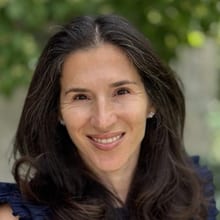
Eating disorders are complicated and not uncommon in artistic athletes. Common comorbidities of symptomatic joint hypermobility (SJH), like mast cell activation disorder (MCAD) or gastroparesis, may contribute to disordered eating, which can spiral into an eating disorder. For years, eating disorders have been stigmatized and dismissed by many in the health community. To discuss this difficult topic, Bendy Bodies sat down with Dr. Jennifer Gaudiani, MD, CEDS-S, FAED, and founder of the Gaudiani Clinic for Eating Disorders. Dr. Gaudiani shares how she became so passionate about caring for this complex population and the importance of understanding her patient’s stories. She talks about why there’s such a stigma around eating disorders and how she’s working to change that. We discuss why this topic is so important for those with SJH and cover possible eating disorder mimickers. We break down definitions and explore possible predictors of eating disorders. Dr. Gaudiani shares the aspects of treatment that she has found vital, and offers tips on how to speak to someone you suspect may have an eating disorder. Finally, she reveals ways to find experts for getting the help needed for an eating disorder. Learn more about the Gaudiani Clinic here. For physicians, dance teachers, coaches, and anyone struggling with an eating disorder, this episode is a valuable look at a difficult topic. . . . . . #MentalHealth #BodyPositive #Nutritionist #DoctorsOfIG #IntuitiveEating #EDWarriors #Recovery #SportsNutrition #ChronicIllness #EatingDisorders #PlantBasedNutrition #MentalHealthMatters #NutritionMatters #InvisibleIllness #AntiDiet #AntiDietCulture --- Send in a voice message: https://podcasters.spotify.com/pod/show/bendy-bodies/message
Watch
Guests
Transcript
[00:11] Jennifer Milner: Many people with bendy bodies end up in either professions or in very serious elements of their life as performing artists who were doing bendy things. And a lot of those professions come with a certain body look. And also expectations of a certain amount of suck it up. They're amongst, as we know, the most brilliant athletes on the planet, and a lot of the culture in dance comes with we all suffer, you can too. And there's a pride in that, there's a warrior's pride. So when people are taught to ignore their body's signals, to push through pain and discomfort, and to look a certain way, it is so easy to fall down the rabbit hole of a restrictive eating disorder.
[01:13] Dr. Linda Bluestein: Welcome back to the Bendy Bodies Podcast, bringing you state-of-the-art information to help you improve your wellbeing, enhance your performance, optimize career longevity. This is co-host Jennifer Milner, a former professional ballet and Broadway dancer who struggled for years with hypermobility-related problems. Now I train dancers to ensure the next generation of hypermobile artists are better equipped to work to their fullest potential.
[01:37] I'm Dr. Linda Bluestein, the Hypermobility MD. I started Bendy Bodies to provide accessible information about joint hypermobility. Combining my medical education and personal experiences enables me to treat and coach patients and clients to optimize their quality of life. This information is for educational purposes only and is not a substitute for medical advice.
[01:56] Our guest today is Dr. Jennifer Gaudiani, an eating disorders expert physician and the founder and medical doctor of the Gaudiani Clinic. Hello, Dr. Gaudiani, and welcome to Bendy Bodies.
[02:04] Dr. Jennifer Gaudiani: Hello, and thank you so much for having me.
[02:09] Jennifer Milner: Absolutely. Can you tell us a bit about who you are?
[02:13] Dr. Jennifer Gaudiani: I would love to. So I'm an internal medicine physician in Denver, Colorado, who specializes in eating disorders, and it's an unexpectedly rare niche actually. There are so many fabulous therapists and dietitians who specialize in eating disorders around the country. But strangely enough, given how many medical problems either emerge from eating disorders or get worse in parallel with eating disorders, there's just not that many doctors who absolutely love and know this population of patients.
[02:46] So I got into it because my sister had an eating disorder years ago, and I supported her on the sister side. Thankfully, she's recovered and has been generous enough to allow me to let people know she is my muse. I ended up really unexpectedly getting to help grow and run the nation's top medical stabilization center for adults with critical anorexia for 8 years after I moved to Denver with my husband and then toddler daughter. And at the end of that time, having realized these are my people, I love this work so much, I love the mind-body connection, I decided to set out in 2016 and opened my own outpatient medical clinic. That was determined to serve people of all body types, all acuities, all shapes and sizes, and to really help uplift the quality of medical care for people with eating disorders across the country and across the world.
[03:40] So my team and I grew slowly. We're now with my other amazing partner physicians licensed in over 40 US states. So we do a lot of telemedicine work. And our goal on an individual level is to help people with eating disorders receive care in a passionately anti-diet, body-positive environment, to receive expertise about the myriad medical problems that happen, to have a safe space to heal, and to know that there's somebody quarterbacking their care. Because anyone who has a history of an eating disorder or knows someone will know that things can get complex and that communication amongst a multidisciplinary team is super important.
[04:21] More broadly speaking, I am grateful for my national and international platform where I get to speak passionately about my determination to provide weight-inclusive care, my deep commitment to honoring patient autonomy and respecting medical trauma and helping to provide an alternative to prior care received. And on a personal level, I am the mom of a 14- and 17-year-old daughter, and I've been married for 20 years this year. And I love the outdoors and have a very frisky dog who really put us through our paces during COVID.
[04:56] Jennifer Milner: That is fantastic. I am so appreciative of the way that you approach this topic and the way that you are so multidimensional with the care. You're right. There's not a lot of physicians who specialize in it. And I think there are a lot of people listening who, just in the first 60 seconds, are completely hooked and passionately impressed with what you're doing and how you're trying to do it. Because one of the recurring themes that we hear with people with hypermobility in all of their different issues is that they feel unseen, unheard, gaslit. And I think that has so much overlap with people with eating disorders.
[05:37] You've commented several times that you're looking for help for people of all body types. And a big thing that I hear over and over again in the dance world is, well, they can't have an eating disorder because they're not too skinny. So these are the things that I see and I hear. And so it's so wonderful to hear of a place that is working to be affirming and that is working to be looking at building autonomy and building body positivity. And as you said, is vehemently anti-diet. So that's amazing.
[06:09] I just wanted to ask, was your sister going through her eating disorder when you were already a doctor? Or is that one of the things that inspired you to pursue medicine?
[06:19] Dr. Jennifer Gaudiani: That's a beautiful question. She went through her eating disorder as I was in my medical training. And absolutely, she was one of the inspirations. Seeing how the system can not always serve patients. And if we're being frank, the system harms patients. So I really became interested in— having been an English major in college who close-read poetry, which, P.S., made pre-med classes really challenging, I just barely scraped into medical school— I was really interested in the way that the patient could share their narrative of their own experience and that they would not be seen as a disease but seen as a whole wonderful yummy human who had certain life experiences, and then I could lean forward and meet them halfway and bring my medical expertise, and together we could create a plan that seemed to most honor the patient's own goals and values.
[07:12] Because it is so easy with power in the room as a physician for me to make assumptions about what patients want and don't want, and to think of myself as this big expert who knows it all. And that's a dreadful mistake. So I really enjoy letting my patients know that they are the captain of their ship and I want to be the wind in their sails. It's a really, really fun partnership, and my sister definitely inspired the early seeds of that philosophy.
[07:41] Jennifer Milner: That's fantastic, and that's a really beautiful approach that I think the compassion comes through, I'm sure, when you're in the room with people. You mentioned earlier that there can be a lot of preconceived notions towards eating disorders. Why do you think there is such a stigma around eating disorders and even trying to talk about them?
[08:02] Dr. Jennifer Gaudiani: Yeah, well, I can definitely attest to the medical stigma. There are certainly still social stigmas, although I think people are getting better at talking about mental illness and struggles with more authenticity and less risk of ostracization or judgment. But goodness knows it's still there.
[08:23] On the medical side, unfortunately, I think people with eating disorders are considered to be too difficult to work with. And I don't think that it's doctors being mean, but I do think that the system has squeezed doctors so badly that the idea of working with individuals who have complex chronic illness becomes too fearsome to doctors. And they will either explicitly exclude those patients or— and I bet a lot of your listeners have experienced this— they'll just be so unresponsive or harmful or so belittling or gaslighting that the patient leaves their care. Those are two of the ways that doctors exclude individuals with complex chronic illness.
[09:01] The other piece to this is that I got zero hours of education on eating disorders, and I went to great institutions. I was at Harvard and Boston University and Yale. So zero hours. Pretty wild. Given that eating disorders on the whole carry a double death rate of any age-matched illness, and those with anorexia nervosa carry the second highest death rate of any mental illness, second only to opioid use disorder. So given that well over half of deaths occur due to medical complications, how can it possibly be that there are so few doctors who do this?
[09:48] And the other piece that we have to keep in mind about why those with eating disorders have such a challenging time in the system is the profound weight stigma that medical providers grew up with and continue to practice, that fails people in every possible body size. Let's say that someone is in a thinner or even emaciated body. Oftentimes they'll be invisible in the doctor's office because there is such celebration of low body weight in our culture, and they may be asked questions like, "Oh wow, you look great. What have you been doing?" — which chills their capacity to say, "I'm desperately ill. I'm not okay. I need help. I need to change this body you've just praised." Or somebody who is in a standard-appearing body may arrive, and they may be in the midst of a life-threatening eating disorder where their life has been completely overtaken by behaviors, and yet they'll be missed.
[10:43] I had a patient once who was in a, quote-unquote, normal-appearing body, who had barely been able to swallow food for 6 weeks. This was before she entered my care, and she had been losing weight. Her dietitian and therapist were terrified for her, and they begged her to go to the GI doctor. They said, please, please, please, you have to go. And so even though the eating disorder was screaming in her ear that she wasn't sick enough and she didn't want to receive this care, she reluctantly went, expecting to be taken extremely seriously and immediately hospitalized for tube feeding. They looked at her and said, well, your weight's okay, so it can't be that bad. And they sent her home. That's an example of the terrible treatment that my patients may receive.
[11:22] And then those in larger bodies, of course, are stigmatized across the board in any possible setting that you might find them. I literally don't use the O words. I will use them as an example here— obesity or overweight— because they are a de facto pathologization of weight without knowing anything about the person's actual health. One of my beloved colleagues recently said that she has very fair Irish skin, and when she went to the dermatologist recently, her dermatologist said, you know, you've got some increased risk obviously for sun damage and for skin cancer, so we're going to have to be careful. But the doctor didn't prescribe her with fair skin syndrome, which, to make the metaphor complete, would have to also come along with tremendous stigma and unfortunately concurrent beliefs about someone's moral state or the way that they care for themselves. So those who are in larger bodies who often may have severe restrictive eating disorders without any binging whatsoever are completely stigmatized by doctors as well.
[12:27] So the answer is it's very complex and frustrating, and this is one of the reasons I'm so passionate about trying to get the word out.
[12:33] Dr. Linda Bluestein: That also fits with my personal experience of the time that I was probably the lowest weight in my life, or at least the least healthy. And I did get praised like that. And yeah, I can completely relate to what you just said. When it comes to people with hypermobility, with joint hypermobility, why is this topic so important to discuss for this population? Why, from the standpoint of this podcast, is this such an important conversation?
[13:07] Dr. Jennifer Gaudiani: Yeah, well, I think that there's a couple of reasons, and I know that we're going to get even deeper into some of the other Venn diagrams that overlap for those who have joint hypermobility. But for starters, I want to say that there's good literature that shows that those who are diagnosed with Ehlers-Danlos syndrome, and therefore all of the others who haven't been diagnosed but who have it or a variant of it, do have a higher risk for eating disorders.
[13:29] It's not entirely clear why that is, but some of the philosophies include— and I've seen this many times because I care for many, many patients with hypermobility— that the digestive elements of hypermobility aren't talked about enough. And that can emerge from a difference in the way food may taste to the difference in gut mobility and motility, where sometimes people with hypermobility have prolonged gastric emptying, meaning gastroparesis, and their food doesn't leave their stomach in a timely fashion, meaning that their hunger and fullness cues are going to be off, or they may have very, very slow gut function in general. So they've lived a life challenged by constipation, bloating, recurrent episodes of small intestinal bacterial overgrowth that go along with that slowed gut mobility. And the reality is that all of those influence how we feel after we nourish ourselves. And if we feel crummy after we nourish ourselves, we're going to eat differently.
[14:34] Plus, anyone who has a functional GI disorder, which may be the presenting symptom of their hypermobility before they even understand what's happening in the bendiness of their bodies, the first thing that Western medicine does now is say, well, you know, you should probably try a gluten-free diet. How about a dairy-free diet? Maybe skip soy as well. Actually, don't eat carbs at all. And at some point, my beautiful little rule followers are like, geez, what is there left to eat? And because there are genetic temperamental traits that contribute to those who are at risk for eating disorders, who doesn't like a good old-fashioned rule and being a rule follower and doing it right, doing it best? Plus, unfortunately, when people eat like that, some will lose weight, and then you have that societal wave of approbation from coaches, from instructors, from the world, from peers, from parents, from grandparents. And it's very hard to resist that, so people can end up down a rabbit hole.
[15:32] Secondly, many people with bendy bodies end up in either professions or in very serious elements of their life as performing artists who were doing bendy things. And a lot of those professions come with a certain body look and also expectations of a certain amount of suck it up. They're amongst, as we know, the most brilliant athletes on the planet. And a lot of the culture in dance comes with, we all suffer, you can too. And there's a pride in that. There's a warrior's pride. So when people are taught to ignore their body's signals, to push through pain and discomfort, and to look a certain way, it is so easy to fall down the rabbit hole of a restrictive eating disorder. So those would be two of the initial reasons I would think this is related to your listeners.
[16:24] Dr. Linda Bluestein: I would love for you to either elaborate or just kind of come back to the whole concept of complex illness and how complex chronic illness— and you're 100% right, our clinics are meant for fast-paced, high volume. They're really designed more for acute problems, although I have to say, especially lately, my experience is where I don't even think we're doing a very good job at that. As you said, we're squeezing doctors. That's a great word for that. I hadn't really heard it described that way before. That's brilliant.
[16:59] And then the whole word about functional, functional GI disorders, because I remember when I was first diagnosed with a functional GI disorder, even as a physician, I didn't know what that meant. So could you describe what that means? Because I feel like that's a very important concept for people to understand.
[17:18] Dr. Jennifer Gaudiani: Yeah, absolutely. There are plenty of medical problems that come with obvious standardized testing. You have appendicitis, you have a blood test that shows an elevated white blood cell count and a CAT scan that shows inflammation over your appendix. Diagnosis. So much of what I do does not have a measurable connection. That makes it no less real. We just don't know how to measure these things.
[17:47] And the problem is that Western medicine, again, in the ways we were taught and then in the ways we've experienced medicine since then, fundamentally also teaches that we should question or be suspicious of especially severe, highly troubling symptoms that cannot be correlated with a test. This is really, really problematic. Because the majority of my patients do not have a measurable correlate and have been told by doctors, it's all in your head, you're making it up, this is psychosomatic, there's nothing I can do for you, you should try being a little less anxious.
[18:27] So from a functional GI perspective, what I mean by functional— and there have been various words used to describe this— it basically means digestive problems that aren't easily measurable. And for instance, in the migraine world, it's so understood and accepted that migraines are real, even though we can't test a blood test or do a CAT scan to see how severe a migraine really is. Fortunately, for the most part, we now understand that we use the patient's narrative description to form the diagnosis and understand the severity. Doctors have lost our capacity to listen to a story and have that be the evidence we need.
[19:07] So when you tell me that every time you eat, within 15 minutes, your stomach burns with a searing pain and you feel refluxed food and acid come up, maybe even into your mouth, and you begin to bloat and your skin starts to itch, I would be such a jerk to say, "Well, unless I can find a blood test to explain that, it doesn't exist." Of course it exists. You are literally experiencing it. So we start from that place. Listen to the patient. Ask all the questions.
[19:39] In the beauty of my private practice, I have tons of time to really hear the whole story. And as a result, I've learned so much. I mean, I thought that I was pretty knowledgeable about eating disorders when I left my hospital program. It turns out I've probably doubled my knowledge base since then, since 2016, because of all of the things I've had to humbly say, oh my gosh, I never knew this existed. Oh wow, that's a therapy I had never heard of before.
[20:07] So among the things that I see all the time in my quote-unquote functional GI work include small intestinal bacterial overgrowth, or SIBO. And not only the Western ways of managing it, but also the herbal ways, some of which are pretty well supported by the literature, some of which come down in a spoken tradition from expert gastroenterologic dietitians, for instance. And doing that without diet culture, doing that with as little restriction in food as possible. I do a lot of work with irritable bowel syndrome, a ton of work with gastroparesis, which can be measured sometimes, and with mast cell activation syndrome, which I know that we're going to talk about in a little bit.
[20:50] And also, fascinatingly, pelvic floor dysfunction and abdominal wall dysfunction. So ever so briefly, because this may be relevant to your listeners, especially those who have gone through cycles of restriction, but plenty of other folks as well — people can end up with an abdominal wall muscular set that is both too tense and too weak, but at least too tense. So it acts like an internal corset around all of the organs, and that can cause a feeling of extreme nausea, fullness, and discomfort when people eat, not because they have gastroparesis or slowed emptying, but literally because they're getting bound from within. And a really great physical therapist can teach people how to breathe again. They can help reduce the myofascial restrictions that are binding them from within. And when we actually use the full extent of our diaphragms, we're massaging our guts forward and we're stimulating our parasympathetic nervous system that calms us and brings us out of that state of heightened stress.
[21:52] Similarly, pelvic floor dysfunction can contribute to constipation, pain with intercourse, pelvic pain, frequent urination, a feeling of being inadequately emptied after pooping. These things can be managed with PT, but I never knew about them. So it's been such a joy at the age of 46 to say, wow, I didn't know that. I'm so excited to learn. Teach me more. I have no ego here. All I want to do is be here for my patients and learn more.
[22:22] Jennifer Milner: That's incredible. I think that's the dream that every person wants — is to find a doctor who says, I don't know, but let me learn about it. Let me dig in deeper. So you've talked about a lot of different issues with gastroparesis, with MCAS, with stomach emptying issues. And these can all be digestive issues that can sometimes be misunderstood as an eating disorder. But when we're speaking about an eating disorder specifically, how do you define an eating disorder? What exactly are we talking about?
[22:55] Dr. Jennifer Gaudiani: So eating disorders are formally diagnosed through the highly flawed, but it's what we've got to work with, Diagnostic and Statistical Manual 5, the DSM-5. So there are very specific criteria by which one diagnoses a formal eating disorder. There are so many things that the DSM-5 gets wrong. One of them, for instance, being that they label something called atypical anorexia nervosa — someone who has all the beliefs and behaviors and fears of someone with anorexia nervosa, but they don't happen to be in an emaciated body. They house atypical anorexia under other specified feeding and eating disorders, OSFED, which sounds very wonky until I say oftentimes insurance excludes all care for OSFED diagnoses.
[24:38] And the use of "atypical anorexia" is so outrageous because anorexia nervosa has a population prevalence of maybe 0.1%. Atypical, quote-unquote, anorexia nervosa may have a population prevalence of as much as 3%. I wouldn't be surprised if it were higher. So which one's atypical? What's the atypical state when someone restricts their calories and slows their metabolism and puts their dear sweet body into a survival mode that evolved over millennia to save our lives when we have inadequate nutrition? It's the ones who get underweight. That's what's atypical from a population perspective. But no, medicine is going to focus on the emaciated ones only.
[25:17] So the rest of what society is experiencing is disordered eating. And I'm going to say that really broadly because our society, as you may have noticed, is obsessed with hyper-controlling our food in truly arbitrary ways in order to attain thin privilege. It's really important that we don't think of this as a superficial or shallow goal. In our society, we know automatically — but I'll put words to it — that if you have a thinner body and any other point of lesser privilege, you are safer than if you have a fat body and those traits. So the entire focus of our society on losing weight, for some, has to do with health outcomes, but for many has to do with trying to attain and sustain thin privilege. So it's a very serious systems of oppression problem. That's the language that I use. Others don't have to use that, of course, where we recognize that we're all under this umbrella and under these expectations and tacit rules.
[26:28] Most people — probably 90+% of the population, I think — probably engages in disordered eating in that they say today, arbitrarily, I can't eat this, I'm not eating that, I feel guilty about eating this. I have the mistaken, scientifically faulty belief that I have to work out extra to, quote-unquote, burn off that. It's everywhere. And it makes recovery from an eating disorder so hard because it's like trying to recover from alcohol use disorder while living in a bar. It's just so challenging.
[27:01] And it shows up in populations you wouldn't expect. A friend of mine and a friend of the clinic who's done a beautiful TED Talk on male athletes with eating disorders describes that when he was playing college football and briefly pro football, he would estimate that over 90% of the guys he played with had disordered eating, where they were trying to change their food in order to microscopically change the appearance of their bodies because of the mistaken belief that the way a body looks predicts the way that a body acts or performs.
[27:34] So the vast majority of society lives within disordered eating. Many, many individuals have formal eating disorders and don't get diagnosed or treated because a lot of the time doctors prescribe eating disorder behaviors in the guise of trying to support health. Anyone listening to this who's in a larger body knows their doctors have said, well, weigh yourself regularly and measure your food, count your calories, be focused on weight loss above all else. It sounds like the prescription for an eating disorder to me.
[28:06] Jennifer Milner: Well, and I appreciate what you said about the pro football players — that they were altering their diet to change the appearance of their bodies, and that's such an important differentiation to make, right? Because some people do need to alter their diet to change the health of their bodies. We have to alter what we eat in order to be healthier. But it's that altering their diet to change their appearance, and that number of 90% that you estimated of people having disordered eating — we see it everywhere. We see every type of diet, every lifestyle plan, those sorts of things out there. Do you think that this is a new phenomenon that's happening, or do you think that it's been around and just hasn't been quite so bold to be on the surface?
[28:54] Dr. Jennifer Gaudiani: Yeah, this has been around forever. There's a brilliant book called Fearing the Black Body by Sabrina Strings, who's a brilliant sociologist, and she writes about the racist roots of thin focus and really takes us on a fascinating journey through hundreds of years back in Europe and elsewhere, where ultimately thinness, as people came to the US and as the country was founded, became associated with sort of virtuosity, whiteness, and innocence in really interesting ways.
[29:24] So these thoughts have always been around, but now our world of the internet and social media amplifies it enormously. Plus, there is just no question that the multi-billion-dollar dieting industry benefits from continuing to leave us in cycles of weight loss and weight gain that keep us coming back for more of their products and more of their programs. It turns out that weight cycling — the more you lose weight and gain it — may contribute to up to a 100% increase in risk of heart attack, stroke, and death. Just weight cycling itself. It's really stressful on our bodies to weight cycle. And of course, the people who are most at risk for being put through behaviors or putting themselves through behaviors that lead to weight cycling are the people in larger bodies, who are then further stigmatized for daring not to be healthy in certain ways. So it's a big problem, and I just continue to try to bring focus to it.
[30:23] Jennifer Milner: Do you think there are any predictors that might sort of indicate if someone is predisposed to developing an eating disorder? I know people have searched for genetics, they look for family history. Are there any predictors out there?
[30:38] Dr. Jennifer Gaudiani: Yeah, definitely. And yet we have to remember that the data that have been collected so far are flawed in that many of the researchers haven't been looking in all of the right quarters for who gets an eating disorder.
[30:47] The top risk factor for developing an eating disorder is participating in restrictive eating. This can be for any reason, because the part of our brain that's ancient — that I typically call our caveperson brain — that runs our underlying operating system metabolically and that evolved over millennia to protect us from starvation, is triggered by the experience of inadequate nutrition. And it does certain things physiologically and psychologically that vary genetically by the person, but on the whole are pretty well-known changes that it makes.
[31:27] So for instance, a really gobsmacking piece of research that came out a number of years ago showed that individuals who have food insecurity — where the highest level of food insecurity was defined as having children who were hungry at home — actually had extremely high levels of eating disorder behaviors. And nobody thinks about that because they think about this as a problem of more elite or well-resourced individuals. But I believe that the degree of participation in eating disorder behaviors, including binging, eating and purging, and overvaluing oneself based on body appearance, was as high as 17% among those with the highest level of food insecurity. So that's really mind-blowing.
[32:12] But then you take that, and anybody who's had an illness where they couldn't eat enough, or they've gone on a diet, or they've fasted for a particular reason — that can set off our brain into a pattern that then can flow into an eating disorder. And we add to that certain temperamental traits which are by no means universal, but which are commonly seen, where it's individuals who are more sensitive, more aware of external validation than internal compass, where what someone says about them carries more power than what they know to be true about themselves. They have a harder time holding on to that. More anxious, more perfectionistic, more rigid. All of those characteristics can end up leading towards an eating disorder — and those would be sort of what we call the turtle characteristics, quote-unquote.
[33:04] But some of the quote-unquote hare characteristics — H-A-R-E as in rabbit — are the seekers of the quick fix, the people who will go and do something a little spontaneous in a dangerous way to get a high off of it. Those individuals can be more tuned towards binging and purging, for instance, or comorbid substance use disorder. A brilliant quote that I heard years ago that I don't know whom to attribute it to — when I was writing my book, I looked for the quotation and couldn't find it anywhere — was, "Those who purge," that is, who get rid of food either by vomiting or laxative abuse, "are attracted to complexity and then overwhelmed by it." Which is just so interesting when you think about yourselves or the people you love who may have been involved in this.
[33:50] So those are all of the elements. And then of course, families do not cause eating disorders, and family culture and the way that parents themselves were taught to talk about food, bodies, worthiness, the permission to experience a full range of emotions — these certainly impact how a child or young person or adult feels in their own experience of their body.
[34:15] Dr. Linda Bluestein: Now let's talk a little bit about things that might mimic an eating disorder. So what kind of things should we be considering in the differential diagnosis, especially for people with bendy bodies?
[34:27] Dr. Jennifer Gaudiani: Absolutely. I think that this actually dovetails really well with talking about mast cell activation syndrome because, gosh, is there an overlap. Just ever so briefly for the listeners who don't know what mast cell activation is, or MCAS — it's a disorder of a population of blood cells that we all have called the mast cells, M-A-S-T, which hold histamine and hundreds of other inflammatory mediators, which should normally stay inside those cells until something very serious and rare happens. But in mast cell activation syndrome, the cells release their contents in response to what would for other people be very mild exposures. For instance, a fragrance as you walk through a store, or using alcohol hand sanitizer, or sitting out in the sun in the heat, or eating certain foods. And these individuals can experience an extremely individually unique set of symptoms and a very individually unique set of severities. It only really came into knowledge maybe about a decade ago. I only learned about it 5 or 6 years ago, and this is how Linda and I know each other.
[35:37] But as I came to understand mast cell and realize how few patients are properly diagnosed and treated, I realized, oh my gosh, this might be a huge key in the eating disorder field. Because patients with eating disorders are already disbelieved and disrespected by the medical profession when they say, every time I eat X, my stomach really hurts. So many of my patients get gaslit and are told, well, that's your eating disorder talking. And in fact, it is not. So I've written a 4-part blog series that individuals can find on our clinic website — which I know you'll put in the show notes — gaudianiclinic.com, about mast cell and eating disorders. So how it presents, how we diagnose it, initial management, and more advanced management. And it's been really, really exciting for me to recognize how important mast cell is in this field.
[36:37] Because I'll put across a sample patient and you can see how this mimicker could occur. So let's say that we have a 25-year-old woman who always had constipation as a baby, as a little kid, and was kind of a fussy eater and tended to get rashes inexplicably now and then and really reacted to bug bites. Who around the time of her first period felt her health really go downhill in ways that she barely had words for. But once her first period came, which was excruciating because it was really heavy and terribly crampy, she just started feeling fluish all the time. And especially after she ate, she would just feel yucky in her whole body. It wouldn't just be abdominal pain. It would be sort of like she had a fever. Her joints would hurt. And her energy went down. She would start to feel her heart race as she stood up and got around, and she felt something was really wrong. Her mood also started to darken. And of course, everyone around her unfortunately said, well, that's a teenager for you. And her pediatrician took a quick look and did some blood tests, and they were all completely normal. So her family sort of shrugged and was like, well, I guess she's just going to be one of those tough teenagers.
[37:51] And she just kept having this feeling of, I'm not okay. But what she noticed was if she ate less, she didn't feel as bad — so while other people around her would talk about how satisfied they felt after eating a meal, she would really feel bad. And she started to eat less, and then she started to lose some weight. And of course, society went wild for that, all excited about weight loss. And she ended up going down this rabbit hole and ultimately developing anorexia. But this was mast cell all along. If somebody had been able to get her early on and say, yeah, of course you feel like hell — you have cells releasing histamine and hundreds of inflammatory mediators every time you eat, sit in the sun, breathe in the Pledge that your mom uses to polish the dining room table. We can help this. We can block those effects so that you don't have to end up way deep down a rabbit hole.
[38:45] And as I'm sure most of your listeners know, having your connective tissues nibbled on by inflammatory markers for years, months, decades can cause hypermobility and all the digestive problems that come along with it. So I've seen patients who end up with something called ARFID, avoidant restrictive food intake disorder, which has no desire to change body, no fear of fatness, no disruption in one's perception of one's body, but an inability to eat enough which leads to complications of malnutrition — because of mast cell.
[39:20] I've seen people who end up with ARFID or anorexia because they had functional GI problems that just made it so uncomfortable to eat that — I mean, we know what happens when mammals get negative conditioning after a certain stimulus. If every time a rat eats a piece of food it gets a little electric shock, it will stop eating the food. This is what happens to people whose bodies don't feel good after they eat, or who aren't believed that they cannot in fact eat gluten. They just can't. Doesn't matter what their antibodies are, they cannot eat gluten or they will feel super sick. That's not an eating disorder. That's mast cell, that's hypermobility, that's functional GI stuff. But all of these things can devolve into an eating disorder for the biological and social reasons we've talked about.
[40:06] Dr. Linda Bluestein: That makes a lot of sense, and I really appreciate that because I feel like I often see people when they are so far down that path they may already be on tube feeds, or they've had so many complications and their issues that they've had for so many years have been just dismissed. And yeah, that's why we do this podcast — is to try to give information to people at the earliest possible time so that they can do whatever they can to help themselves, because we know that the healthcare system — obviously, it would be great if we could wave a magic wand and change that. But in the meantime, at least maybe we can give them more information.
[40:49] So you've really done a beautiful job of outlining all of this. And I think of this because before we started recording, you were talking about being a poetry major in college. And it's beautiful because the way you word things is so wonderful. So we've talked so much about the problems. What about solutions and treatment? What are some of the things that you have found to be most vital for successful recovery?
[41:15] Dr. Jennifer Gaudiani: Yeah, everyone's recovery journey is going to be unique, which is problematic because the eating disorder institution — capital I — in our country and the American Psychiatric Association have perhaps understandably, but I think ultimately not helpfully, created very rigid algorithms for who needs to be in what level of care and what progress looks like. And if you're not making that kind of progress, you are a disappointment or you're refractory or you're difficult. And what I find is, eating disorders on their own are already so hard on the sufferer and on their loved ones. But if you then add in some of these conditions like hypermobility, like mast cell, that have real medical implications, that respond to real medical interventions, but the eating disorder people don't know about that and disbelieve it, you really have a population of patients who are struggling and who are ill-served.
[42:11] And we take care of a ton of patients with mast cell activation syndrome in our clinic, and I continue to learn every single day. But the fundamental elements of eating disorder recovery involve first recognition that there's a problem — by self or by others. And if anyone listening to this thinks to themselves, oh man, I know this person in the studio, I know this person in the gym, I know this person in my class who really might not be in a good place — and usually that's because there's a visual thing — we have to remember, the vast majority of people with eating disorders do not look different from anyone walking down the street.
[42:41] The nicest thing that that non-professional person can do is, in a safe space, briefly say, I just want you to know I'm worried about you. You don't owe me any discussion, and we don't even need to talk about this, but I've observed X, Y, or Z, and I think there might be a problem. And I just wanted to let you know that I've observed that, and I would love it if you would go get professional help. Because so many of my patients tell me, no one ever said anything to me. And that reinforced their inner eating disorder voice, which chronically says, you're not sick enough. And that's why I wrote my book called Sick Enough: A Guide to the Medical Complications of Eating Disorders. But that voice that says you're not sick enough uses society's discomfort with saying anything, or feeling like it's not my business, to stay powerful and to stay in control. So I encourage people: say something.
[43:34] And if you have a loved one whom you have more sway with, stand up and say, I'm worried. One thing to be really aware of is that because eating disorders are egosyntonic, meaning they become wrapped up with the person's sense of self — and unlike cancer where no one says, I really need to hold on to this cancer so that I know who I am — eating disorders very much do that. They resist being recovered from. And I like to tell patients that it's really, really helpful to watch someone's reaction to your expressing concern. Because if I say to someone, hey, I noticed you've got a mole on your back that looks irregular, I'm a little worried about it — they don't say, I don't have a mole. You have a mole. My mole isn't even that big. I've seen people with bigger moles than mine. Why are you even bothering me about this mole? They just say, oh, thanks so much, I'll go see my dermatologist. That kind of prickly reaction, that resistance — ooh, that has a lot of prognostic and diagnostic value. So if somebody reacts really negatively, that's probably a sign that there actually is something going on.
[44:40] And in our general communities, the best first place is not to start with your doctor, who for myriad reasons we've discussed is not going to get this right almost certainly, but to start with Googling eating disorder expert, dietitian, or therapist. And especially for the dancers out there, there are a lot of eating disorder-knowledgeable dietitians and therapists who are also either former dancers or who work with a large population of athletes, who work with dancers and who can really understand, hey, there are some pressures here. There is some reality we've got to work with. And also, as an elite athlete yourself, you must take care of this beautiful body for it to function on the stage, for it to do what you want it to do. So we're not going to tolerate absent periods. We are going to take care of you as a whole human. We're not going to tolerate recurrent stress fractures, for instance.
[45:29] So the best way in is to have someone with eating disorder expertise do an evaluation. And from there, there has to be an acceptance that this is not going to be a linear or an easy or a short process. It's going to take a long time. And in fact, so many of my patients believe that once they can eat consistently at any body size, they're probably done. The reality is actually often that's when the work begins, because that's when we start to really do the richer, deeper emotional work and uncover the layers of perhaps trauma or exposures in life or belief systems that really need to be nurtured and helped in order for the eating disorder to really go away and stay away.
[46:12] Jennifer Milner: Yeah, and that's covering a lot of different aspects. What you're saying is there's no one fix. And I know a lot of times in the past I've seen people who, once they hit their goal weight, they're done, they're dismissed from the clinic and they're sent on their way. So it's so important to acknowledge that there is a mental component to eating disorders as well. And I'm sure if you talk to anybody who has an eating disorder and you say, well, just eat — they'd say, oh gosh, I don't know why I didn't think of that, right? It is a mental disorder. It is a mental illness. And so not addressing that is going to have an impact.
[46:56] At the same time, as you've so beautifully laid out for us today, if there are other things underlying it, like MCAS, not addressing that isn't going to help them get back to healthy eating either. So finding that way to be synergistic with both the mental and the physical treatment for it.
[47:18] As I just said, we've seen so much in the past that was horrible about eating disorder treatments. And now we have what sounds like a beautiful role model for now and for the future with your clinic, really looking at the whole person. Do you have hopes for anything coming forward? Is there any research that you'd like to see, any hopes for the future of how this is treated?
[47:39] Dr. Jennifer Gaudiani: Yeah, I really want medical care to improve. Of course, that's my niche. I do not want to stay in a niche. I want to be part of a whole new generation of medical care providers who really know this and love these patients like my partners and I do. But I also want to see an increasing engagement with the subject of autonomy. The more we can allow our patients to make decisions for their own bodies, even when they have an egosyntonic eating disorder that's also giving them very negative messages, the more we engage them from within in the process of recovery instead of quote-unquote doing it for my mom and dad or doing it to get out of treatment.
[48:15] So I think that better medical care, recognition of mast cell from way early on — which is probably going to happen in the dietitian's offices, as those are the ones I'm really trying to educate on this right now — and a constant encouragement to come back to one's own true goals and values and move towards those in the recovery process rather than try to find a one-size-fits-all approach. I think that those are key things coming up.
[48:40] Dr. Linda Bluestein: We've covered so many fabulous things today, and I know, Jen, you have so many other questions that we could talk about — yeah, we could talk about this forever. What did we not talk about that you'd like to touch on, and where can people find you?
[48:57] Dr. Jennifer Gaudiani: So there are so many other exciting things, but a lot of them I have started to do videos on and lots of podcasts and some blog writing. And so people can find us at www.gaudianiclinic.com, which is G-A-U-D-I-A-N-I clinic.com. We have a ton of resources on our website and on our social media that people can learn more about. And if anybody listening to this is like, geez, I think I might need more medical care, by all means call the clinic. My partners are amazing physicians and I supervise them directly, and we would certainly be happy to see if we can help.
[49:34] Jennifer Milner: Excellent. Thank you so much. You have been listening to Bendy Bodies with the Hypermobility MD, and our guest today has been Dr. Jennifer Gaudiani, an eating disorders expert physician and the founder and medical director of the Gaudiani Clinic. Dr. Gaudiani, thank you so much for sharing your time with us today.
[49:49] Dr. Jennifer Gaudiani: It's been a joy. Thank you so much for having me.
[49:51] Dr. Linda Bluestein: We were thrilled to get to chat with you. If you found this helpful, follow the Bendy Bodies Podcast to avoid missing future episodes. Please leave a review and share the podcast so more people know about Bendy Bodies and joint hypermobility. Screenshot this episode, tagging us in your story so we can connect. Our website is www.bendybodiespocast.com and follow us on Instagram at bendy_bodies. We love seeing your posts and stories, so please tag us using #bendybody. This information is not intended to diagnose, treat, cure, or prevent any disease. The information shared is for educational purposes only and is not a substitute for medical advice, diagnosis, or treatment. Please refer to your local qualified health practitioner for any medical concerns. We'll catch you next time on the Bendy Bodies Podcast.