Description
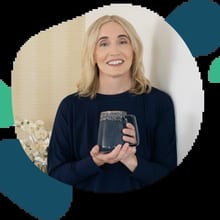
Hypermobile athletes and artists are often excellent movers - until they hit “the wall”. Sometimes you hit a point where even basic movements become a struggle. How can you continue moving without increasing your pain? Bendy Bodies discusses this important topic during pain awareness month with Jeannie Di Bon, a movement therapist who literally wrote the book on moving pain-free with hypermobility! Jeannie talks about steps people can take if they’re struggling to add movement into their everyday life. She shares why movement is crucial for people with hypermobility and how she works to improve joint stability in the body. Jeannie offers insight into how deconditioning can happen so quickly and discusses why alignment reeducation is so important. She discusses how to reprogram your posture and shares ways to improve proprioception. Jeannie describes her Integral Movement Method and how it can be incorporated into day-to-day life. And she shares information on her Zebra Club, the importance of having a supportive community around you, and her education courses for dance educators, trainers, and more. Finally, Jeannie stresses the importance of the nervous system being engaged in the movement education process, and reinforces the need to listen to your body and move accordingly. An episode for every Bendy Body, this discussion is full of practical tips and encouragement. To learn more about Jeannie, visit: https://jeanniedibon.com/ . . . . #EhlersDanlos #ZebraStrong #Bendy #BendyBody #Spoonie #Movement #Hypermobile #PainAwarenessMonth #PainCounts #LifeWithPain #Hypermobility #Posture #JointPain #JointStability #MovementEducation #ZebraClub #DiBon #JenniferMilner #HypermobilityMD #BendyBuddy --- Send in a voice message: https://podcasters.spotify.com/pod/show/bendy-bodies/message
Watch
Guests
Transcript
[01:09] Jennifer Milner: Welcome back to the Bendy Bodies Podcast, where we strive to improve well-being, enhance performance, and optimize career longevity for every bendy body. This is co-host Jennifer Milner here with the Hypermobility MD, Linda Bluestein.
[01:25] Dr. Linda Bluestein: We are so glad you are here to learn tips for living your best bendy life. This information is for educational purposes only and is not a substitute for medical advice.
[01:36] Jennifer Milner: Our guest today is Jeannie DiBon. Jeannie, hello and welcome to Bendy Bodies.
[01:41] Jeannie DiBon: Oh, thank you. Thank you both for inviting me. Really, really excited to be here and I really appreciate it. Thank you.
[01:49] Dr. Linda Bluestein: Of course.
[01:50] Jennifer Milner: Well, we are excited to have you here. I know we have referred to you several times on the podcast, so we're glad to finally have you in the guest chair so we can dig a little bit deeper with you. So for the people who don't know you or aren't really familiar with your work, can you tell us just a little bit about yourself?
[02:06] Jeannie DiBon: Yes, of course. So I'm Jeannie DiBon and I'm based in London, but I have clients all over the world. I'm a movement therapist — my background was initially Pilates, and I trained with Polestar Pilates, which is a rehabilitation Pilates organization. But I went on and investigated and learned other things to supplement my body and to help my body and ultimately to help my clients. So I don't stick strictly to Pilates now. I look at movement patterns, and I'm very, very interested in tension patterns and how people hold tension in their body and stress and trauma in their body.
[02:43] And of course, if you live with a chronic illness like hypermobile EDS or HSD, chances are you've got some tension and pain and things going on in your body. So I'm particularly interested in helping people with that. I specialize in hypermobility, EDS, and of course the chronic pain that tends to go with these conditions.
[03:10] Jennifer Milner: Absolutely. And I know you wrote your book, Hypermobility Without Tears, which is all about moving pain-free with hypermobility and EDS. We see a lot of people with hypermobility, including high-level artists and athletes, who function really well until they kind of hit that EDS wall, at which point they really struggle to incorporate movement back into their daily life without increasing pain. It's sort of like you're either the hare or you're the tortoise — there's not a lot of in-between. So what concrete steps can a person in this situation take?
[03:49] Jeannie DiBon: Yeah, that's a really interesting point. We see it obviously in dancers and athletes, but we also see it in lots of our hypermobile population. Lots of people come to see me for exactly those reasons: "I used to be able to do this. I used to be a dancer. I used to be an athlete. And now I can't even get out of bed in the mornings."
[04:08] And I think it's really interesting — it brings into what I was just talking about, about being interested in stress and trauma. Dan Siegel, who's the author of Mindsight, talks about people having a window of tolerance. And I think for a lot of us, we have this tolerance level. If you're a dancer, you're working really hard, you're doing lots of repetitive motions, you're probably pushing yourself very, very hard to be at the top of your game. It's almost like we get to this window of tolerance and it fills up, and then something happens and we can't do that anymore. And that's where we kind of get our stress and our trauma.
[04:53] I was lucky enough to speak to Stephen Porges, who's the author of the polyvagal theory, and I'm very interested in that side of things and how it impacts our conditions. He was saying that hypermobility and EDS shouldn't cause all these other problems of fatigue and all the dysautonomias — he really feels that the dysautonomia and the things that stop us doing what we want to do are kind of piggybacking on the back of our EDS.
[05:23] So when somebody gets to that stage where they used to be an elite athlete or a dancer and now they're not because of injuries, stress, or whatever's going on, we really need to start looking at the autonomic nervous system. That's where I would start with people, because something's happened in the brain at that point. Something's now stopping you, something's causing all these injuries — whatever started that. And we have to now start almost reprogramming and calming down that nervous system.
[05:58] I have an example. I have a client who was a dancer. She stopped dancing, but she wanted to carry on being fit and healthy. She loved movement, and she was doing kickboxing at home on her own — a very fit, very strong lady. She was doing the kickboxing one day and did a kick, and something happened. She woke up the next day and literally could not get out of bed, and she's still in bed unfortunately. We do very, very gentle things to help get her autonomic system regulated again, but that kicked off a whole spiral of things: sensitivities, mast cells, even sensitivities to things like Wi-Fi. Where did all of that come from? What created that?
[06:50] So I think there's a lot going on sometimes with our athletes, our dancers, and our general population. How do they get to that point? What happened to the nervous system that got them to that state? It's not just a physical issue. Yes, we get injuries, yes, we get repetitive strain injuries. But it's not just that. I think there's something else going on. We hit that window of tolerance, our stress buckets kind of explode and say, "That's enough, I can't do this anymore." But yeah, that's just my thoughts on it and what I see with my clients.
[07:29] Jennifer Milner: I think a lot of people would instinctively lean into that, and as they're listening to this, they're probably going, "Yeah, that makes a lot of sense and really resonates with me." So if we're talking about it being an issue that's more with the autonomic nervous system, why is movement so crucial then for people who have hypermobility?
[07:52] Jeannie DiBon: It is so crucial. From a physical point of view, obviously we've got to stop that deconditioning, because we know that people with hypermobility and EDS are going to decondition quicker than somebody who doesn't have our condition. And I love that you call it movement and not exercise, because exercise has such connotations for some people — they're told to exercise, and actually movement can be anything you want, anything you enjoy. It doesn't have to be a formal exercise class.
[08:23] So it's really, really important that we work on that deconditioning, because once you start to decondition, you're going to spiral down and down. That's when people start to have issues like "I can't walk anymore, I need a walking aid." We need to stop that hopefully before people decondition so much. Movement helps with our postural tone, our muscular tone, it helps with our pain management. When I don't move, I feel worse — much, much worse — and I know my clients feel the same.
[09:05] Movement should be a beautiful thing, right? We've got the physical side of the deconditioning and the muscular tone, but what about the emotional side? Having the confidence to do the things you want to do in life. I don't want to be scared of walking up my stairs, walking up to the shops, or not being able to walk my dog. We need to keep that emotional health as well, because it's a balance — emotional and physical. So yeah, lots and lots of reasons go into why movement is so important.
[09:43] Dr. Linda Bluestein: And I have a line that I like to say, and I get a little careful about it because the way you described it is so perfectly about how the deconditioning happens. Because sometimes when you mention the word deconditioning, people get defensive. Like you said, it can be a result of something else that happened, but we still have to be very careful to get out of that as quickly as possible. So I say deconditioning is the devil and we just want to get out of that as quickly as possible. In terms of if someone is in a really rough place, or maybe they're doing pretty well but they have some joint instability and they really need to work on that in order to improve functioning of the whole body, how do you recommend that people work on that?
[09:47] Jeannie DiBon: Joint stability is obviously another really important factor in our whole management of this condition. A lot of people jump in and think, "Well, you're unstable, so we need to strengthen that joint, you need to do strengthening exercises and then you'll be fine." I take a step back from that and say, no, we can't strengthen something if somebody's in the wrong place. One shoulder's here, one shoulder's forward, the pelvis is rotated — whatever it might be.
[11:02] So I come back to alignment first, and I do a lot of work helping people understand where their bones should be. If I don't understand where my shoulder should be, how am I even going to attempt to strengthen it? So I do a lot of work pre-strengthening, and that takes up quite a lot of time, but it's crucial work.
Once you've got it — "I understand my shoulders are here and not here" — okay, great. Now we can start doing some strengthening work very slowly. Go slow, go low. When you start adding on the strength, we want to do low loads. We don't suddenly want to start giving people 20 kilos to try and lift. When I started, I was on half a kilo — I couldn't lift anything without pain. And there's nothing wrong with that. You start where you are. Some people can't even have weights initially, and that's fine too.
[12:11] Wherever you are today — I always say one small physical step is a massive emotional step because you've done it. You've done one rep with half a kilo. Absolutely brilliant. And that's going to start working on your joint stability, which is then going to make you feel so much better.
[12:29] Dr. Linda Bluestein: Great. And that also probably ties into improving your posture and neuromuscular patterns. Can you comment on that a little bit as well?
[12:38] Jeannie DiBon: Yeah, absolutely. I always say that you can't teach someone posture. Intellectually I could say, "Okay, let's stand up — you need to put your pelvis here and your shoulders here and your head needs to be back," and all of those things. We know what good posture looks like, but it has to be embodied into the nervous system for you to actually be able to utilize it and maintain it. Because I could teach you, "Let's stand up, let's do this," and you'd go, "Yeah, I've got that." And the minute the call finished, you'd probably go, "Oh, that was way too hard, I can't maintain that," because we haven't conditioned you to maintain your postural tone.
[13:25] So the two go together. The movement patterning that I do — I look at how you are moving, what's not moving, what's stuck, where are you moving too much, what's causing your nervous system stress. And can we change that? At the same time, coming back to that nervous system: can we help you feel safe?
[13:51] When they start to take all of that on board, you see over the weeks that you're working with someone, their posture automatically starts to change. Their chest starts to open, the head gets naturally drawn back, the pelvis starts to take on some density so it kind of hangs as it should. They start to feel their feet into the ground — the feet are super important for posture, we've got to really be sitting in our feet. And it all comes together in this beautiful way. It's not that I've taught them how to do posture, but their nervous system has understood, "This is supposed to be here, and this is supposed to be here, and my feet are supposed to be here." All of a sudden someone's got a beautiful posture, and that way it lasts.
[14:42] There's nothing worse than someone telling you, "Pull your shoulders back." It's horrible and it's painful. So I prefer to drip-feed it and let it blossom on its own.
[14:57] Jennifer Milner: I love that idea of drip-feeding it. And I know all of my clients and everybody listening on the podcast has heard me say so many times: slow and low, slow and low.
[15:08] Jeannie DiBon: Yeah.
[15:09] Jennifer Milner: Which is just another way of saying the same thing. And talking earlier about joint stability and now about postural reeducation and retraining, the theme that you keep coming back to — which I 100% support — is that education is so key. We have to educate people about what we're trying to accomplish, what it should feel like, maybe even what is going on: "This is what is happening to you. This is what's happening with your nervous system. This is what it should feel like." And then let's figure out how to get the strength to maintain that. As you said, just telling someone to pull their shoulders back — they're going to hold it until you stop looking.
[15:47] Jeannie DiBon: Yes, exactly. And then walk away, right? Yeah, that's absolutely spot on. I totally agree 100% with that summary.
[15:56] Jennifer Milner: Thank you. Education — so important.
Jeannie DiBon: Yeah.
[15:59] Jennifer Milner: So speaking of education, you have a lot of different ways that you put information out there — your books, your YouTube videos, and then you've got the Zebra Club program. And throughout all of them, you do a lot of work on proprioception, which is another big hobby horse of mine. So who should try to improve their proprioception, and what are some ways that we can do this?
[16:23] Jeannie DiBon: Well, everyone can work on their proprioception. But thinking about your audience — dancers probably have the most amazing proprioception because they do these beautiful moves. You have to have proprioception and control to be able to do the things that a lot of your listeners are doing.
[16:42] Just recently I had a phone call from a university in America who work with elite athletes — a lot of volleyball and a lot of sports that we probably don't have as much of over here. They were concerned because they had these really strong, fit guys, some of whom were hypermobile, and they kept getting injured. They kept tearing their ACLs. And they were like, "Well, these guys are so strong and fit, they can run up and down the pitch — what's going on?" And I said to them, "Well, do you ever step back? Because they're in the gym doing loads of weights and all the big stuff. Do you ever actually step back and work on their proprioception? Do you actually get them to go slow, go low — which they'll probably hate, but which is really important? Can you actually teach them to understand where their body is in space?" And that was really interesting. They've gone away and they're going to start adding proprioceptive training to their athletes' programs, which I think is often missed in a lot of athletic programs.
[18:09] So yeah, anyone — whether you're an athlete or just someone like you or me — can benefit from proprioception work. What I've found is that once people start to get proprioception about what they're actually doing, their injuries start to go down. We become suddenly aware: "Oh, I shouldn't be standing with my knees locked back, and I shouldn't be lifting with my elbows locked." They start to control their range of movement, and all of a sudden those sprains and strains start to diminish very significantly.
[18:51] So it's super, super important. It's one of my principles in my Integral Movement Method — it comes after breath and relaxation, so it's the third principle, because it's so important before you can start going on to strengthening work. We can't give someone a weightlifting program if they don't know what they're doing in space. They're just going to injure themselves. So it has to come pretty early on in anybody's training program, in my opinion.
[19:17] Jennifer Milner: So what might that look like? I'm going to beg you for details on that. What are some ways that people can work on their proprioception? Because it's one of those things we talk about a lot and people are like, "I don't know what that means."
[19:31] Jeannie DiBon: "I don't know how to do that." Yes, that's a good point — it is a word that gets thrown around a lot.
[19:40] The way I do it, and I'm probably quite unique in that I'm quite obsessed with talking about sensation — the way I get people to improve their proprioception is I spend a lot of time with them lying on their back, in a safe supine position, with lots of proprioceptive information coming up from the ground. They can feel their body fully supported on the ground. And what I talk to them about is the sensation, and we do really basic things.
[20:11] If somebody's got very unstable shoulders and they don't understand how their arms are supposed to move — and they can't control their arms when they lift them up or pick up a bag, whatever it might be — a simple thing is: we lie on our back with our elbows bent, vertical forearms, very safe, very simple. And we just start to lift the arm up towards the ceiling. If you watch any of my YouTube videos, people say to me, "Jeannie, I know you love those bent-arm exercises," because they pretty much appear in all of my videos. It's so useful to start to feel: when my arm goes up, can I feel that heaviness and weightiness of my shoulder dropping down? So they start to get that awareness of where that joint actually is, and we learn to move our arms very safely, very slowly.
[21:01] And that's the other thing — to improve proprioception, you have to do things really, really slowly. I say to people, "Do it the slowest you've ever done anything. It's going to feel ridiculously slow." But in that slowness, you're actually paying attention to every single thing rather than just going, "Oh, that's easy, I can lift my arm up and down, what's the big deal?" No — can you actually feel that? Can you pay attention to it? Because then your nervous system is listening. And we come back to the beginning about how we have to start to reprogram people in how they move, how they think about movement, and making people feel safe in their movements.
So yes — lots of lying on the ground, getting lots of feedback. Then I add resistance: bands, balls. You don't need a reformer. I know a lot of us have got reformers, which are brilliant proprioceptive tools, but if you don't have one, you get a TheraBand, you get a small squishy Pilates ball, you get a spiky ball. There are so many things you can use to give you that feedback to help improve your proprioception.
[22:22] Jennifer Milner: Yes, I completely agree with you. It seems like such a difficult concept for people to grasp sometimes — that idea of our sixth sense, our proprioception. But it's so important for people with hypermobility to understand, when we have so many different options for where our shoulder joint might sit or how our humerus might sit in the socket, it's really important to be able to listen to it and see how it feels and see what it's trying to say to you. So I love that you spend so much time working on that.
[22:52] One of the other things you talk about is your 5-step Integral Movement Method. Could you describe that and how our listeners could incorporate it into their day-to-day lives?
[23:03] Jeannie DiBon: Yeah, so the Integral Movement Method — or the IMM as we shorten it to — comes back to how I first started. It's a way of making people more mindful and more aware of the subtleties in their movement patterns. As I said at the beginning, I'm very interested in: what tension patterns are you holding, what breathing patterns have you got, where is the muscular tension that's stopping you moving pain-free?
[23:34] So the first step — and I spend a lot of time here — I call it "unwind." Unwinding muscular tension, unwinding emotional tension. Again, lots of time lying on the back in a comfortable position, looking at breathing patterns, looking at very simple movements, noticing what's going on. Do you brace? Are you guarding? Have you stopped breathing? All those things that go on. We spend a lot of time softening and letting the body settle into the floor.
[24:07] Then the next stage is called "explore." We start to move, and I call it explore because it should be fun. I don't like perfection. I don't want people thinking, "Oh, it's got to be done exactly like this." Just explore. How do your arms move? They don't have to go in a straight line — doesn't matter.
[24:22] Then we stop and assess: when I lifted my arm, did I brace? Did the shoulder come up to my ear? Whatever it might be. And we start to notice, "Okay, can I change that? Now I'm aware that my shoulder always comes up to my ear." So we refine it. Step 4 is "refine" — we move again, now conscious that when I lift my right shoulder, it always comes up to my ear. Can I change that?
[24:50] And then the final stage, which is really important, is "reflect." You stop and you actually ask: do I feel different when I get up off the mat? Does the work I've just done make me feel different? Do I breathe differently? Do I hold myself differently? Even if someone says one thing — often they'll say, "Actually, I feel really strange," or "I feel weird" — and I'm like, brilliant. If you feel weird, that means your nervous system has gone, "Oh, this is different. That feels different to how we normally do Pilates or movement or yoga." You just want them to say, "Wow, I feel different, I feel lighter," or "My feet feel heavier." Everyone's going to have a different response, but you need some kind of response because we need our nervous system to be engaged in the process.
[25:44] Sometimes you can go to the gym or to a class and do it mindlessly — we're just in it, going for it, not really participating with our brain, not fully engaged or fully present. You get up, you leave the class, and you go on with your day. Have you really noticed or changed anything about how you move and how you hold yourself? The one thing I want to do for people is make them more aware, more conscious of their patterns, because often in those patterns is where the pain is being held — the stress, the trauma, the pain. So if we can become aware of that, we can change it. And that's ultimately what we're trying to do.
[26:26] Jennifer Milner: It sounds like what you're saying is that movement is really important for every hypermobile person, and that we are looking to understand that the movement is important, the education is important, and the nervous system re-education is so important. So this is not a linear process. We're not looking at 10 reps today, 20 reps tomorrow, 30 reps the next day. We are looking at listening to the body, gaining confidence in what we feel, and then being able to interpret what we feel and move forward in that way. So some days we will be the hare and we'll feel great and we'll be running. And some days it'll be hard to stick our head out of our tortoise shell and keep moving. And that's completely okay — is what you're saying?
[27:17] Jeannie DiBon: Yes, absolutely. It's a really good point. I was talking about this with some of the members of the Zebra Club last night and we drew a little graph about progress and how people move forward. It's not linear. For a non-EDS person, it might be a graph that goes straight up — every week more loads, more reps, everything. For us, you might start off going up a little, and then there's a dip and a little circle, and you kind of step back, you reassess, maybe go back and then go forward, and then you go up a little bit more, and then there's a little dip again. And that's okay. We're not going to have a straight line, and that doesn't matter, as long as we keep working at what's right for us.
[28:13] Like you say, recognizing: "Okay, today I'm not going to go and do my usual workout. Today I just need to lie on the floor and do some breathwork because I'm feeling a little bit anxious or I just don't feel right." So many times I missed that and would go and do things, and ultimately we can end up hurting ourselves because some days our bodies just don't want to do the hard stuff. We want to just do breathwork, some somatic work, and that's absolutely fine.
[28:44] Interestingly, a lot of my members — which is kind of counterintuitive — what they've said is that in doing the softer work, the unwinding, the slower work — what we call in the Zebra Club the "gentle classes," which are not gentle as in "oh, this is easy," but the body awareness classes, the essential nervous system classes — by spending more time balancing out those gentle classes with the strengthening classes, they've actually got much stronger than they ever thought they would. They find real value in stepping back and going, "Actually, I just want to do this today — Rest and Restore, or body scanning." But those much more somatic ones, they found them invaluable. So it's a really important part for our hypermobile population.
[29:50] Dr. Linda Bluestein: That really makes a lot of sense. And I think what you're teaching people is how to help their nervous system feel safe. And once their nervous system feels safe, they can feel like they can add on the movement and actually incorporate more activity of the body. And I try very hard not to use the word exercise, because so many people hear that word and they're like, "I just keep getting told I need to do physical therapy and exercise." And it's like, no, it's a combination of things. And that's what I really love about the Zebra Club and your YouTube videos, and I recommend those to people all the time.
[30:28] Jeannie DiBon: Thank you.
[30:29] Dr. Linda Bluestein: Of course. Can you talk a little bit about the Zebra Club — why you started it and what kind of feedback you've gotten?
[30:38] Jeannie DiBon: Yes, thank you. The Zebra Club is really my heart's work. I love it and I can't ever envisage not doing it. It kind of came off the back of my first hypermobility course, which I wrote in 2016: Strengthen Your Hypermobile Core. That has now been the subject of a research study and has been used by 10,000 people, which is amazing. But when I wrote it back in 2016, there wasn't really anything structured out there for the hypermobile population. There were a few bits on YouTube, but varying quality — YouTube is full of all sorts of things, isn't it? So there wasn't really anything structured out there.
[31:29] The course came out — it's five lessons of 30 minutes, which is a good introduction to getting people moving with hypermobility. I think it was the first of its kind, an online program for hypermobility. And so that was successful. I was having a conversation with Dr. Leslie Russek, who's a speaker for the EDS Society and a physical therapist. I said, "Look, I've got this idea of building on that and making it into a bigger community. What do you think?" And she was like, "Well, that sounds brilliant because there isn't really anything like that, especially in the States — there isn't that kind of support for people."
[32:11] So back in 2018, I started working on it. Ultimately it was to help people, because people can't go to physical therapy forever, people can't afford to keep going. Is there something we can do at home, in the safety of our own home? Some people don't like to travel, some of us need to stay close to home. So what can we do at home with the minimum amount of equipment, and affordably?
[32:40] We have over 120 classes now in the Zebra Club, at varying levels. But apart from the classes, we have this built-in community. And it's the community — there's nothing worse than going through this EDS journey feeling alone and isolated, feeling like nobody understands. A lot of our members come on and they've never even spoken to anyone who has EDS before. We have these monthly meetings and they can meet other people and go, "Hey, I've got that too." And that alone is such a massive healing for people, to understand they're not alone. People have the same issues as you, and we're all going to get through it together. There's a real sense of people helping each other.
[33:30] We have events and monthly meetings and our own Facebook page within the app, so only members can see what's posted. It's wonderful. I'm very proud of what it's become. It was there to help people — ultimately to help people move better, to feel better. And we became an app last November, so we're now on the App Store and we have a web app too, so if people don't like to use their phones, you can still do it on your desktop. Yeah, that's why I created it and how it came about.
[34:13] Dr. Linda Bluestein: That's really great. There are more resources than there used to be, but it can be so challenging when people are really struggling — some people do end up spending a fair bit of time in bed and they just don't know what to do or where to start. For people like that, is the Zebra Club still a good place for them to tap into, or should they start someplace else? If someone's really just in a bad place and feels like everything they do hurts, what do you recommend?
[34:53] Jeannie DiBon: Yeah, absolutely. We do have members like that. I created a whole set of classes to get people started that you can actually do on the bed — lying down totally supine, no equipment — just to help those people who are starting out in that condition. We've got a lot of seated classes as well, and as I was saying earlier, a lot of those somatic awareness classes: body scans, breathing practices, things you can just do on your bed or in your armchair. It's all about helping them feel safe to move again, starting to build confidence, getting over that fear of movement that a lot of us have.
[35:46] Speaking to other people is also really powerful — saying, "I'm going through this, has anyone else been through this?" And people saying, "Actually, yes. This class really helped me, that class really helped me." We have classes that start from being in bed or in a chair all the way up to what we call "challenging" classes, which are a little bit faster. We've worked on all the proprioception and the stability by then.
People also asked for cardio. They said, "I really miss doing cardio, but every time I try a cardio class with jumping and star jumps, I injure myself." So I put together a whole set of hypermobile-safe cardio classes that don't involve jumping around and damaging our knees and our ankles. And we even have chair cardio — so if you can't stand up, I've got you covered there too. I just try to think of everything. I go to bed and wake up in the middle of the night going, "Ah, that would be a really good class." I'm kind of obsessed with it.
[37:12] Dr. Linda Bluestein: That's amazing. And I love the terminology that you use because our society can be so judgmental. The person who's lifting lots of weight at the gym or the professional athlete who can tolerate lots of pain tends to be viewed very differently than the person who's really struggling. So I like how you use names that are much less judgmental — I really, really like that.
[37:42] Jeannie DiBon: Absolutely. It's really important, right? Because you're not going to start feeling safe and you're not going to start calming things down if you feel that people are judging you. That all goes into the mix — how I feel about myself is going to show up in my body. We can't escape the two. So I want people to feel welcome, safe, part of a community, that there's something for everyone no matter where they are today. That's what I wanted to create because I've been there. I've been in pain, I've been unable to do things. I know how valuable it can be, and I just want to give that back to people.
[38:28] Dr. Linda Bluestein: That's amazing. So final question: where can people learn more about you? And if there's anything we didn't ask that you wanted to add at the end here?
[38:40] Jeannie DiBon: Oh, well, thank you. I think we've covered everything. So yes, as you've mentioned, the YouTube channel. I do live classes once a month on YouTube, but there's also a whole host of different classes and education on there — it's not just about exercise, it's "why is this happening, why is that?" I try to educate. That's always going to be updated on my YouTube channel, which is just Jeannie DiBon. I'm on all the social media platforms: Instagram, Twitter, Facebook, LinkedIn, if people want to find me.
And of course there's the Zebra Club, which is www.thezebra.club. It's always a tricky one because the search engine always puts a space in it, so it's thezebra.club.
I also just briefly wanted to mention, in case you have any health professionals or therapists or physical therapists listening — I do also run education for teachers: Pilates teachers, yoga teachers, massage therapists, through the EDS Society on their Echo platform. It's the IMM, learning about my Integral Movement Method, and it's all online — two hours a week for nine weeks, so 18 hours of content. That's a relatively new thing. We've just finished our first program and our next one is starting in September. I just wanted to mention that in case anyone is interested in professional education.
[40:17] Jennifer Milner: That's great, and I think it's going to be a really valuable resource for a lot of people. There's not that much out there that medical professionals, or people on the periphery like trainers and Pilates teachers, can find on the subject of hypermobility. So I think that's going to be super valuable. Thank you for that.
[40:35] Jeannie DiBon: Thank you.
[40:36] Jennifer Milner: Well, you have been listening to the Bendy Bodies Podcast, speaking with Jeannie DiBon. Jeannie, thank you so much for coming on the podcast today.
[40:41] Jeannie DiBon: Thank you. I've really enjoyed it — absolute pleasure to be with you. Thank you.
[40:49] Jennifer Milner: The feeling is mutual, I promise you. If you love what you learned, please follow the Bendy Bodies Podcast to avoid missing future episodes. You can screenshot this episode and tag us in your story so we can connect with you. Our website is www.bendybodies.org, and you can follow us on Instagram @bendy_bodies. Leaving a review, following the Bendy Bodies Podcast, and sharing the podcast helps spread the word about hypermobility and associated conditions. This information is not intended to diagnose, treat, cure, or prevent any disease. The information shared is for educational purposes only and is not a substitute for medical advice, diagnosis, or treatment. Thanks so much for listening to us today, and we'll catch you next time on the Bendy Bodies Podcast.