Description
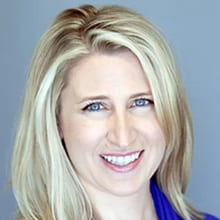
What exactly is dry needling? How is it different from acupuncture? What sort of issues might it be used for? Dry needling can be a vital part of an artistic athlete’s healthcare, but sometimes can be misunderstood. Mandy Blackmon, DPT, head physical therapist for Atlanta Ballet's company dancers also serves as an instructor in the Dry Needling Series for Myopain Seminars since 2014. Mandy explains why she considers dry needling to be a highly effective tool for treating the hypermobile population, and how people with hypermobility can react differently to dry needling. She offers advice on where to start when faced with people with multi-systemic issues, and reveals why dry needling is like rebooting a computer! Mandy tells us how to find a dry-needling practitioner, and what information to share with that professional, as well as outlining situations where dry needling might not be appropriate. Whether you’re new to dry needling or use it as a regular part of your health maintenance toolbox, there’s a lot to learn from this excellent discussion. To learn more about Dr. Blackmon and Myopain Seminars: https://www.mandydancept.com/ https://www.atlantadancemedicine.com/ https://www.myopainseminars.com/resources/blog/ • • • • #dryneedling #dancemedicine #hypermobility #hypermobile #dancephysicaltherapy #chronicpain #ehlersdanlossyndrome #fibromyalgia #ehlersdanlos #heds #hypermobility #zebrastrong #BendyBodies #zebra #chronicpainwarrior #JenniferMilner #balletwhisperer #hypermobilityMD #BendyBodiesPodcast --- Send in a voice message: https://podcasters.spotify.com/pod/show/bendy-bodies/message
Watch
Guests
Transcript
[00:35] Jennifer Milner: Welcome to Bendy Bodies with the Hypermobility MD, where we explore the intersection of health and hypermobility, focusing on dancers and other aesthetic athletes. This is co-host Jennifer Milner here with the founder of Bendy Bodies, Dr. Linda Bluestein. Our goal is to bring you state-of-the-art medical information to help you live your best life. Please remember to always consult with your own healthcare team before making any changes to your routine. Our guest today is Amanda Blackmon, board-certified specialist in orthopedic physical therapy, head physical therapist for Atlanta Ballet, and dry needling instructor.
[01:28] Dr. Linda Bluestein: Mandy, hello, and thanks so much for being here today.
[01:31] Mandy Blackmon, DPT: Hi guys. I'm so happy to be here. Thanks for having me.
[01:35] Dr. Linda Bluestein: We're thrilled to have you and would love to hear first a little bit more about your background.
[01:41] Mandy Blackmon, DPT: I grew up as a dancer, but knowing that I really wanted to do physical therapy from an early age. So I went to the University of Georgia and majored in exercise and sports science and gerontology. And then went to Emory University and got my doctorate of physical therapy in 2005. Very quickly after graduating from Emory, I was really missing the dance world and performing arts. So I started taking courses and got certified in Pilates and dance medicine training so that I could go into performing arts medicine.
[02:17] Very soon after that I became interested in chronic pain and trigger points. So I went through Myopain Seminars dry needling courses in 2009 and 2010. And I've been an instructor with them for about 8 years now. I get to travel all over the country and teach dry needling to physical therapists, chiropractors, physicians, and nurse practitioners. So that's been really fun.
[02:43] My research interests really lie in hypermobility, performing arts medicine, pelvic floor dysfunction in dancers, and dry needling and chronic pain.
[02:53] Dr. Linda Bluestein: That is so awesome. And what we really want to talk about today is dry needling. This is a subject that I think is going to be so useful for people. So can you start out by telling us what is dry needling?
[03:07] Mandy Blackmon, DPT: They call it dry needling because we're using a needle that's not a hypodermic needle with an injection. A lot of patients are familiar with pain injections, whether that be lidocaine or other substances, even steroid injections. But when we use dry needling, it's a solid, thin filament needle similar to an acupuncture needle. We find an actual trigger point or knot in the muscle, and we're looking for that trigger point to twitch and almost release when we put the needle into the muscle. So there's not an actual substance being injected.
[03:45] Dr. Linda Bluestein: Okay. And how is that different from acupuncture?
[03:49] Mandy Blackmon, DPT: Similar tool but very different methodology in the way of looking at a patient. Acupuncture really comes from a traditional Chinese medicine or Eastern approach. I'm not an acupuncturist, so I'm telling you what I know as far as the differences. But acupuncturists tend to look at meridians or chi lines or energy lines. They're looking at the body very holistically and looking at a more Eastern-based approach of balancing energy or balancing chi. It's wonderful for a lot of different things.
[04:22] Whereas healthcare practitioners who practice dry needling are typically coming from a more Western training. There are acupuncturists who also do dry needling, but physical therapists, physicians, chiropractors, and nurse practitioners that practice dry needling are typically coming from a more Western training, looking at pain science, looking more specifically at pain referral patterns that have been established in the literature, and also looking at other impairments that trigger points may cause, like range of motion, strength, and motor planning issues, and using the needle to go after those more specifically.
[05:01] Jennifer Milner: You mentioned several different types of medical professionals that might use dry needling. So it sounds like it's something that crosses over a few different descriptors and is not just for physical therapists or just for chiropractors, but is a tool that the larger medical community could make use of. Is that fair to say?
[05:23] Mandy Blackmon, DPT: That's fair to say. Dry needling really came to the United States in the physical therapy world in the '90s. My mentor, Jan Dommerholt, is a Dutch-trained physiotherapist and started dry needling here in the '90s and was the first trainer of dry needling. Now there are many, many schools, but it really varies state to state on which healthcare practitioners are allowed to utilize dry needling within their scope of practice. I believe right now the number for physios to use it is up to 36 states in the country. And then sometimes athletic trainers can do it. Like for instance, where you are, Jen, in Texas, athletic trainers can dry needle. There are a few states where chiropractors can do it. And then physicians and nurse practitioners, I believe across the board can do dry needling.
[06:20] Jennifer Milner: Interesting. So not every state allows physical therapists to do dry needling. You said, I think 36 out of 50?
[06:27] Mandy Blackmon, DPT: Correct. Don't quote me on that number, but it's somewhere around there. There have actually been some pretty big territory wars across the country. States like California, New York, I believe Oregon, Washington State, Hawaii, and Pennsylvania, for various and sundry reasons have not allowed dry needling. Some of that is acupuncturists or chiropractors or physicians actually using political lobbying to fight that. In other states, it's not as big of a battle — it's just that there was originally written in their practice act that physical therapists can't pierce the skin. So it depends on what states have taken it up as a fight they want to fight. As a dry needling instructor, I'm hoping we can get it passed in all 50 states in the near future.
[07:25] Jennifer Milner: What issues might dry needling be used for then?
[07:29] Mandy Blackmon, DPT: Great question. Traditionally, it's really thought of as a technique to treat pain directly. Dr. Janet Travell and Dr. David Simons wrote their very famous dry needling text in the '80s and established pain referral patterns for almost every muscle in the body. A lot of people just think of using dry needling for pain. But more current research has shown us that trigger points can actually have a greater effect on more impairments that healthcare practitioners might see.
[08:04] For instance, it can limit range of motion and cause inflexibility in a muscle. It can cause a muscle to appear weak. It can make muscles or functional muscle groups have altered movement patterns. It can actually cause more autonomic type symptoms like feeling of fullness in the ear, or even ringing in the ear, or vertigo, or watering of the eyes. So sometimes we're using it a bit more holistically to address symptoms like that.
[08:35] Jennifer Milner: So it sounds like what you're saying with the trigger points is that it starts sort of musculoskeletal for a lot of people, but it sounds like you're linking it also to possible nervous system uses as well.
[08:48] Mandy Blackmon, DPT: Absolutely — nervous system, but then also GI symptoms, vestibular symptoms. It can really kind of cross the gamut as far as different presentations that patients are presenting with. And I see that even more in our hypermobile patients because they tend to have so many systems involved. A lot of times treating their trigger points, I can get an even bigger effect because I'm addressing multiple systems at once.
[09:17] Jennifer Milner: So if you're addressing multiple systems, whether advertently or inadvertently, it's really helpful to have a big understanding of what population you're trying to work with specifically. And you mentioned hypermobility — because people with hypermobility often have multi-systemic issues, it would be really helpful to have a good working understanding of people with hypermobility and their issues. So how might the hypermobile population react differently to dry needling in general?
[09:48] Mandy Blackmon, DPT: Great question. I don't know that this is established in the literature, but anecdotally, because I work with the population so much, I really think our hypermobile patients have more trigger points than the average patient. I almost imagine it's like our muscles are working overtime to try to hold our joints together because the joints aren't doing their job, so the muscles are. I think that because they have more trigger points, they can also have more of the pain complaints and more of the systemic effects.
[10:20] For instance, we know that trigger points in the abdominal wall — whether it be rectus abdominis, the obliques, or transverse abdominis — are typically indicative of some kind of underlying visceral dysfunction. We know that our hypermobile population have a lot of underlying both gynecological and/or GI issues. So a lot of times those are going together, and I might be addressing trigger points in the abdominal wall not only for their low back pain but also to address low gastric motility or endometriosis type symptoms.
[11:02] Dr. Linda Bluestein: How do you decide where to start? Because at least for my hypermobile patients, they have so many symptoms, so many different things going on, and they all have trigger points — tons of trigger points it seems like. So do you go with what is the biggest thing that they are presenting with on that day? Or once you've picked a course, do you stick with that course until you switch to something different? How do you approach that?
[11:30] Mandy Blackmon, DPT: That's a great question. Sometimes it's gut — sometimes I'm totally going off instinct. But when I'm teaching this to students, I tell them to start centrally. With the hypermobile patient that has widespread chronic pain, or maybe even CRPS or something like that, I think of needing a window into the system. So a lot of times my go-to is actually the thoracic multifidi. If you think about that, those thoracic segments are sitting over the sympathetic chain and can have huge responses from the autonomic nervous system. So a lot of times I'll start there and think, let's just kind of calm this nervous system down, see if we can get that thoracic spine moving a little better, the fascia around the thoracic spine moving a little bit better.
[12:23] We know from the literature that upper trapezius is another great place to start with widespread pain. There's actually some research studies that show in a more fibromyalgia population — I'm using finger quotes there — that a single injection into the upper trapezius is enough to calm down that nervous system and calm down those pain pressure thresholds. So a lot of times I'll extrapolate that to dry needling and start with upper trap. Lumbar spine is another great place to start.
[12:55] And then if I'm looking at a patient who does have a lot of visceral complaints, I'll start on the abdominal wall — and not always with dry needling. Sometimes I'll start with just manual therapy and demonstrating to my patient, hey, this is part of what's going on with you, so it's going to be part of our treatment plan.
[13:17] Dr. Linda Bluestein: And how many places might you dry needle in one visit?
[13:24] Mandy Blackmon, DPT: I tend to start pretty low because you always want to gauge your patient and see how well they respond, and make sure that you don't flare them up or exacerbate and make their symptoms worse. I've found that a lot of my hypermobile patients really love the dry needling, and they can almost get a little addicted to it in the best possible way.
[13:55] Starting slow and then gauging that response and making sure you're following up with neuromuscular reeducation, pain education, and good quality pain-free movement is really important as well. Because you can go in and just needle the heck out of a patient — they may feel really great for the time being, but then they're going to flare right back up because if you don't retrain the system, it's going to go right back to its initial state.
[14:27] A metaphor I use for a lot of my patients is: when you have trigger points in your muscle, it's a lot like your computer going into the spinning wheel of death — the pinwheel that just spins and spins and spins. Your computer can't move forward, it can't move backward, it's just stuck. For a muscle, the same thing — that muscle can't relax, it can't contract like it's supposed to, it can't stretch like it's supposed to, it can't activate like it's supposed to. So taking a needle and getting rid of that trigger point is sort of like hitting Ctrl+Alt+Delete on the system.
[15:01] But by the same token, if you just reset your computer and you don't do a software upgrade, your computer is just going to go right back to where it was. So that's how I treat my patients and explain to them the importance of regaining those motor movement patterns — finding good pain-free movement that is helpful to them is sort of like their software upgrade. We can't just have them on the table doing dry needling, dry needling, dry needling. We have to make sure we're balancing that with other treatment modalities.
[15:36] Dr. Linda Bluestein: And you mentioned myofascial release, which is another passive modality — dry needling is a passive thing on the part of the patient. So probably you want them actively engaged. You want them re-establishing a positive relationship with their body. Okay, so all that makes sense.
[15:54] Mandy Blackmon, DPT: Absolutely. And I'm a big fan of kinesio tape as well, or different kinds of taping methods. So I think of following up my dry needling and releasing those muscles with good movement education, which might be assisted by tape or bracing or other kinds of external support as well.
[16:15] Jennifer Milner: That's so important what you've been talking about. I know anecdotally, for me and the dancers that I work with when they go get dry needling, there are several different providers that I work with in the area who do dry needling. And the ones who aren't used to hypermobility will get a little excited at all the tight muscles that they find, and they'll be like, oh, we're going to release this and this and this and this. And then when something is released in a hypermobile person's body, it's like the rest of the things just do a runner — they're like, we're free! And then different muscles just grab on tighter to try to hold on.
[16:52] What you mentioned earlier about how important it is for the body to stabilize the joints and how often we do that to the detriment of overusing some muscles — once these muscles are released, there's no structure in place for them to use. So it's so important, from what I have seen as a non-medical professional, to approach the hypermobile population slowly, as you mentioned, and starting with just a few things. Otherwise I have seen them bounce back the next day, maybe in a different part of their body much tighter and having some sort of a flare.
[17:29] So I love that you're recognizing that there is a difference and that it does need to be approached slowly and with caution, because it's such a valuable tool. But if a hypermobile person experiences it without that framework, without the software upgrade that you mentioned, without that retraining, then they may walk away going, oh, it was no good for me, it really didn't work well. They were just missing part of that experience — they got the first part but didn't necessarily have the rest of it to go with it. So thank you for that.
[18:05] Mandy Blackmon, DPT: Absolutely. And full disclosure — I've made that mistake even with my own business partner who has a very hypermobile shoulder. Over-needled that shoulder and the humeral head just sort of fell out, and it's like, oh, that was a little too much. So I would encourage practitioners who are working with hypermobiles to also be kind to yourself. You will make that mistake. It's a very fine line of doing too little or too much. And tape helps everything — you can just tape that right back up.
[18:36] Jennifer Milner: That's right. Just tape it up for a little bit. Well, speaking of this, how would someone find a good practitioner for dry needling?
[18:46] Mandy Blackmon, DPT: It's a great question. There are now over 30 schools of dry needling in the United States, and they all approach things a little bit differently. I'm obviously biased because I've been with my particular company for a very long time and they were the first company in the United States, but there are also excellent schools across the country. It kind of depends on where you are as to which training programs have a hold in that region.
[19:20] The American Physical Therapy Association has a Find a PT site — it's findapt.org — where you can search and use dry needling as one of the keywords, which can be helpful. I also think talking to other patients and getting a specific referral can be huge, because I've had patients come in and say, oh, I've had dry needling, it didn't work. And I say, okay, tell me a little bit about that dry needling experience. And they were dry needled by someone who's trained completely differently than I am. Some of the dry needling schools use more what we call indwelling needles — they put lots of needles in, they might even hook them up to electrical stim, which is fine, it's just not the style that I'm trained in. So it might be a very different experience for that patient to see someone trained differently or accustomed to working with hypermobile patients.
[20:23] A lot of times it's word of mouth, but there are different websites you can go to to look for a practitioner. I would say asking the healthcare providers in your area or asking other patients where they've had positive experiences is probably the most valuable.
[20:41] Dr. Linda Bluestein: That makes sense. And likewise, to find a physical therapist who is likely more knowledgeable about hypermobility — do you have any suggestions for that?
[20:53] Mandy Blackmon, DPT: Looking at the performing arts special interest group through the APTA — they have a provider search engine. IADMS, the International Association of Dance Medicine and Science, has a provider search engine as well. So a lot of times it's sort of cross-checking those: okay, this person does dry needling, this person does hypermobility, and where do those two intersect.
[21:18] Dr. Linda Bluestein: Sure. And if a hypermobile artist wants to try dry needling as a part of their care, what kind of information should they share with their practitioner?
[21:25] Mandy Blackmon, DPT: They should make sure their practitioner knows that they're hypermobile and how they've responded to other manual therapy interventions in the past. Patients are very intuitive, and I think especially our hypermobiles tend to know their bodies very well. I've had patients come in and say, hey, if you're going to address my QL, make sure you do it on both sides because it tends to throw me off if you only do manual therapy on one side. Just anecdotal things like that. So I think previous experiences with manual therapy or other types of intervention — as much information as you can give your physical therapist or healthcare provider about that is only going to help them. And it's up to the PT or whoever you're seeing to actually listen, take in that information, and try to apply it to the patient that's in front of them.
[22:30] Jennifer Milner: Sure. And jumping on to that — you mentioned talking about your experience with dry needling in the past. For the hypermobile person, you mentioned it's so multi-systemic. Is sharing other medical information that you think might be part of your hypermobility also helpful? Talking about other issues that you might have?
[22:55] Mandy Blackmon, DPT: Absolutely. If you have autonomic symptoms, or POTS, or GI issues, or urogynecological issues — all of those are really important. For instance, if I have a patient on my table who has a history of POTS and I'm needling the cervical spine, upper trap, SCM, any of those muscles that might be involved in blood pressure regulation or vestibular hyper- or hypofunction, I'm going to be extra careful. It's not that I'm not going to needle them, but I'm going to go slow. I'm going to continually monitor their response to what I'm doing. When we're done dry needling, we're going to sit up very slowly, we're going to regulate our system — we're not just going to hop off the table and walk across the room. So having that knowledge and being a little more kid-gloved with those types of patients can be helpful for both the practitioner and the patient.
[24:04] Dr. Linda Bluestein: That makes sense. And are there situations where dry needling would not be helpful or might not be helpful?
[24:11] Mandy Blackmon, DPT: Absolutely. It's definitely not a cure-all. I'm using it as an additional tool in my larger toolbox, but there are patients that I do avoid needling. Some patients have metal allergies to the needles, so that can be an issue, especially if they have really high skin sensitivities. Localized or systemic infections are another issue where you may not want to dry needle — you may want to use more manual techniques to address those trigger points.
[24:43] We typically don't dry needle in the first trimester of pregnancy, just because even though there's no association with spontaneous miscarriage, the incidence of miscarriage is so high in that first trimester that I tend not to dry needle then, unless it's a patient who's had a lot of experience with dry needling before.
[25:07] Patients with bleeding disorders — whether they have low clotting levels or they're on some type of anticoagulant medication, whether it's related to hypermobility or not — there are certain muscles we tend to avoid because we can't apply direct hemostasis and we don't want to risk that patient having a bleeding episode.
And some patients are just afraid of needles, and if they truly have a fear of needles, treat them manually. It's not worth battling that when we have other tools in our toolbox.
[25:53] Dr. Linda Bluestein: And that's a perfect lead into the next thing I was going to ask, which is: what about the patient who has concerns about breaking the skin, or where you have concerns about a higher risk for infection? Can you dive into that just a little bit more, especially in reference to the metal allergy issue and patients who might have a lot of allergies and potentially a mast cell disorder?
[26:24] Mandy Blackmon, DPT: There aren't a lot of incidences of infection being caused by dry needling. However, there have been some case studies — say, a patient was dry needled and then put in a dirty whirlpool and got a skin infection. We also know that postoperatively you always have the risk of that joint, say if it's a joint replacement, a total knee or a total hip, becoming septic and getting an infection. So different schools teach different timelines — say, you might avoid needling directly around a knee replacement for at least 6 to 8 weeks, or you want to make sure that the skin and tissue is thoroughly healed and showing absolutely no signs of infection: no redness, no warmth, no swelling, no fever, no streaking up the leg, etc., before you would dry needle in that area.
[27:30] Most practitioners don't alcohol swab the skin anymore because some of the newer research is saying that actually takes away the first barrier to infection, which is our natural oils on the skin, and actually dries out the skin. But other people will say, oh my gosh, I feel so much better if you do go ahead and alcohol swab my skin. So again, it's on a case-by-case basis, and I'm treating the patient that's in front of me.
[28:02] I think it's really about educating the patient and answering their questions thoughtfully and thoroughly to make sure they're completely comfortable with the procedure.
[28:09] Dr. Linda Bluestein: And it's really good that you mentioned about someone who, for example, has had a knee replacement, because everything is connected in the body. When I was doing anesthesia in the operating room and somebody would come in for heart surgery, I would be talking to them and realize that they had a potentially infected tooth that they had not mentioned to their surgeon. And all of a sudden, now we have to revisit whether we're going to put in this artificial valve. So if you go in for a PT visit and you have an infected tooth or some infection going on elsewhere in the body, that's also a good thing to mention.
[28:48] Mandy Blackmon, DPT: Absolutely. We want to know — even if my patient feels like they're coming down with a cold and has swollen lymph nodes, I'm not going to needle them that day. There's just no reason to add an extra layer of potential infection or potential complication when we do have other tools available.
[29:08] Jennifer Milner: That's great. I feel like you have covered a lot of information in a short amount of time. Thank you for being so clear-cut and succinct, because I have definitely learned a lot. Was there anything else that you wanted to share about dry needling in the hypermobile population?
[29:28] Mandy Blackmon, DPT: I would say that maybe not hypermobiles in general, but dancers in particular tend to have very high pain thresholds. And again, they tend to love the dry needling. So you want to be careful not to overdo it — to really use your clinical reasoning skills as a healthcare provider and make sure that you're fully addressing that patient and not just dry needling because they'll come in just for that. I think that's going to help the community at large if we make sure that dry needling is being used as only one piece of a larger plan of care and treatment plan for that community, because they do tend to get a little addicted. It just feels good.
[30:21] Dr. Linda Bluestein: It does.
[30:23] Jennifer Milner: It's great. I love it. So let me ask you this — I have one more thought after you saying that. Is dry needling something that a lot of people use for chronic pain, or is it something that most people go to for musculoskeletal issues first and it's just now being talked about for chronic pain? Where is it with that?
[30:43] Mandy Blackmon, DPT: I think it's both. I think previously it was more of a chronic pain modality, and now we're really seeing in the literature that it can be extremely useful for more acute injuries. There was actually a great study done in New Jersey where they were using dry needling in an emergency room along with, I think, classical music — I'll have to find it. But they were able to reduce their opioid prescriptions by 50% by utilizing dry needling techniques for acute type things. Think about the patient who throws their back out, or has an acute migraine, or acute neck pain. So we are seeing it starting to be used in a more acute population very effectively.
[31:38] Jennifer Milner: That's really cool. I have high hopes for where this is going to go for the general population. That's awesome. Where can people learn more about you and your work?
[31:49] Mandy Blackmon, DPT: I have a website — it's mandydancept.com. I'm also on Instagram. And then my other business, along with my business partner Emma Faulkner, which we just opened last September, is Atlanta Dance Medicine — atlantadancemedicine.com. We have an Instagram as well and teach dance medicine courses.
And then the company that I teach dry needling for is a great source of information — myopainseminars.com is on the internet and there are some good frequently asked questions and resources for patients, information about chronic pain, information about dry needling. There's also a resource there where you can see different rulings in different states where dry needling is allowed, which is really helpful for patients. They can say, okay, I'm in California — it's not allowed by physical therapists here. Is there a way for me to find maybe an acupuncturist that also does dry needling? And find some different resources that way.
[32:53] Jennifer Milner: That is very helpful.
[32:55] Dr. Linda Bluestein: On the Myopain website — so it's spelled M-Y-O-pain — they probably also have any practitioner that's certified specifically in Myopain listed as well, right? So even if they're a physician or nurse practitioner or whatever, they would be on there.
[33:11] Mandy Blackmon, DPT: We had a website change during COVID so that functionality is there, but it is not 100% up to date. I am also really good at remembering who I've trained and where. So if patients are having trouble finding a practitioner, they are welcome to email me or find me on Instagram, and I can try to find them somebody based on their zip code.
[33:33] Dr. Linda Bluestein: And I should have clarified at the beginning — when I was raising my hand and saying that I am addicted to dry needling — my physical therapist was trained by you, and she is wonderful and does it very selectively. It's definitely not at every session. It's just specifically certain times that she's like, I think today we should dry needle. And it's been very helpful. And I think in some ways — I don't know if you find this with your patients, Mandy — but it's almost like that acute pain of the needling, because it is painful.
[34:06] Mandy Blackmon, DPT: It can be very painful.
[34:09] Dr. Linda Bluestein: And depending on where they're going and such, it's almost like afterwards there's a release, and there's something that changes where it's like, yeah, okay, now it's sore, but it feels better somehow. It's hard to put into words almost. But for me personally, there's been times where it hasn't really changed much, but there's been other times where it definitely has. And I do believe that it matters very much what all is being done surrounding that, and how it's being utilized, and when it's being utilized, and all of that.
[34:40] Mandy Blackmon, DPT: How you're following up. And I think it's important for patients to know that too. When you do have a trigger point or a knot in the muscle, we know that there are actually excessive levels of pain chemicals inside that knot. And when you put a needle into the knot and that muscle twitches and then releases, those pain chemicals are dispersed into the surrounding tissue, which is why we think you get that pain relief — but also a post-needling soreness or achiness that can be a little bit more widespread than the acute focal pain you may have been having when you walked in.
[35:26] It's important for patients to know that that's very normal. Typically it goes away in 24 to 48 hours. Some patients don't have any soreness at all, but other patients will have soreness for a lot longer. And that can mean that maybe you were over-treated or even under-treated. So again, there's a fine line there of knowing how much to do, especially with a patient who's hypermobile.
[35:50] Dr. Linda Bluestein: Right. Because we know that people who are hypermobile are also more prone to anxiety. So we don't want people to be like, oh, I'm sore, oh, this is bad, and then getting more anxious, which is going to make the pain worse, which is going to make the anxiety worse. So we want to use all of this education as a way of having all of these things be as successful as they possibly can be, because we're armed with the information that will help reduce that anxiety and help us understand what's happening in our bodies.
[36:28] Mandy Blackmon, DPT: Absolutely. And arming these patients with ways to treat trigger points themselves as well, because the needle is not the only tool. Using foam rollers, using pinky balls, using the Theracane — there are all these different products and ways to treat trigger points. Giving patients that education is only going to empower them to help treat themselves so that they're not completely dependent on the passive therapies of their PT or whoever else is treating them.
[36:59] Jennifer Milner: And I do see that the dancers I work with who get the most out of PT and dry needling are the ones where the PT says, okay, remember this — here's a lacrosse ball. You get into the middle of rehearsals or whatever, here's where you're going to try to address it yourself if it comes up again. Now let's talk about why you keep having this one spot be an issue. Let's say they have to have their FHL needled all the time — not that any dancer ever overuses that, right?
[37:33] Mandy Blackmon, DPT: My favorite muscle to needle.
[37:36] Jennifer Milner: Let's talk about what might be happening instead and what we should be using instead. It's that piece of the puzzle, as you mentioned earlier — empowering the patients to take over that self-care as much as they can, and making sure that they're not just stuck or addicted, as you said, to coming in and getting the needles and running out the door without trying to affect a real and lasting change.
Mandy Blackmon, DPT: Absolutely.
[38:03] Jennifer Milner: Well, we have really enjoyed today. I really appreciate this conversation. You have been listening to Bendy Bodies with the Hypermobility MD. Today we have been speaking with Mandy Blackmon. Mandy, thank you so much for taking the time to come on the Bendy Bodies Podcast and to share your expertise.
[38:22] Mandy Blackmon, DPT: Thank you so much for having me, ladies. This was so much fun.
[38:26] Dr. Linda Bluestein: We really appreciate it. I can say that I learned a lot, even though I've been needled and I've spoken with you about dry needling for, I think, 4 hours in our last conversation — some of which was about dry needling, some was about other things, of course. But this was still super informative. So we really appreciate it. Thank you.
[38:46] Mandy Blackmon, DPT: Well, I've loved being here. Thank you for all the great work you do.
[38:47] Dr. Linda Bluestein: Thank you.
[38:50] Jennifer Milner: Thanks for being our guest. We'll see everybody next time. Bye-bye.
[38:56] Dr. Linda Bluestein: Thank you for joining us for this episode of Bendy Bodies with the Hypermobility MD, where we explore the intersection of health and hypermobility for dancers and other aesthetic athletes. If you found this information valuable, please share it with a colleague or friend and leave us a review on your favorite podcast player. Remember to subscribe so you won't miss future episodes.
[39:17] If you want to follow us on Instagram, it's @bendy_bodies, and our website is www.bendybodies.org. If you want to follow Bendy Bodies founder and co-host Dr. Bluestein on Instagram, it's @hypermobilitymd, all one word, and her website is www.hypermobilitymd.com. If you want to follow co-host Jennifer Milner on Instagram, it's @Jennifer.Milner, M-I-L-N-E-R, and her website is www.jennifer-milner.com.
[39:55] Thank you for helping us spread the word about hypermobility and associated conditions. We want to hear from you. Please email us at [email protected] to share feedback. The thoughts and opinions expressed on this podcast are solely of the co-hosts and their guests. They do not necessarily represent the views and opinions of any organization. The thoughts and opinions do not constitute medical advice and should not be used in any legal capacity whatsoever. This information is not intended to diagnose, treat, cure, or prevent any disease, as this information is for educational purposes only and is not a substitute for medical advice, diagnosis, or treatment. Please refer to your local qualified health practitioner for all medical concerns. We'll catch you next time on the Bendy Bodies Podcast.