Balancing Seasonal Fueling Patterns with Kristin Koskinen, RDN
Description
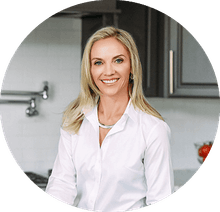
Do you love a fresh start? Have you ever made a new year's resolution and then dreaded it? It’s common for people to look at eating habits, make bold, sweeping commitments, and vow to be perfect this month/year/lifetime. But that’s not realistic, or healthy - physically or emotionally. And since people with hypermobility disorders are statistically more likely to display obsessive behaviors like disordered eating, it's something we need to talk about. Kristin Koskinen, RDN is back with Bendy Bodies to talk about this potential minefield of a season. She reminds us that self-improvement is different from self-abuse, and that “being good” does NOT equal “restrictive”. Kristin points out that fear can be a significant driver and that each person’s fear, guilt, or insecurity must be acknowledged. She encourages people to look at the “why” behind wanting to make behavior changes and promotes moving forward with small baby steps. Kristin discusses how extrinsic devices aren’t necessarily helpful or accurate, how labels might box us in, and reminds us of the importance of not trying to “undo” what we’ve already done, but to simply try to move forward. This episode is for anyone struggling physically or emotionally with food patterns, or even for the healthy dancer looking to be more mindful of her nourishment.
Watch
Guests
Transcript
[00:11] Dr. Linda Bluestein: Hello and welcome to Bendy Bodies with the Hypermobility MD, where we empower hypermobile dancers and athletes through education and community. This is Dr. Linda Bluestein here with co-host Jennifer Milner. We can't wait to chat with our guest, but first would like to remind you about how you can help us help you. First, subscribe to the Bendy Bodies Podcast and leave us a review. This is helpful for raising awareness about hypermobility and associated disorders. Second, share the Bendy Bodies Podcast with your friends, family, and providers. We really appreciate you helping us grow our audience in order to make a meaningful difference. This podcast is for you.
[00:48] Today we are so fortunate to be chatting once again with registered dietitian, nutritionist, and dancer Kristin Koskinen. Kristin pursued a career in dietetics to find the answers to her questions about nutrition and its impact on health and performance. She owns a private practice where she offers virtual nutrition counseling with a focus on performance nutrition. She incorporates the functional aspects of food in her approach to help artistic athletes of all levels, including those who've retired from dance. Her integrative approach recognizes that nutrition isn't just about the food you eat. It's important to take many factors into consideration, including individual biochemistry, environment, cultural influences, social norms, and body image, especially when working with dancers.
[01:33] Kristin is a founding member of DanceMedica and is regularly invited to speak on topics related to dancer health and is a frequent contributor to media, including Dance Magazine, Shape, Oprah, Healthline, NBC, and today.com. Kristin spoke with us earlier in the year on the topic of supporting a dancer's health through nutrition, so be sure to check out her first discussion with us. As well, Kristin is a founding member of Bendy Bodies and contributes so much to our work with artists on the hypermobility spectrum. Hi, Kristin, and welcome back to Bendy Bodies.
[02:17] Kristin Koskinen, RDN: Hello. Thank you for having me. Yay.
[02:20] Dr. Linda Bluestein: It's great to see you, Jen.
[02:22] Jennifer Milner: Good to see you as always.
[02:23] Dr. Linda Bluestein: All right. Well, Kristin, we asked to chat with you in January because it's the time of year that we think of as kind of a holiday hangover. Lots of people feel run down and less than healthy because they've been enjoying holiday foods and surrounded by sweets. After indulging for a few weeks, people feel that emotional pendulum swing towards guilt and start making lots of unsustainable decisions on how to fuel themselves. Do you see that in your practice?
[02:47] Kristin Koskinen, RDN: I do tend to see a little bit of a blip in January, because it's when people have— it's a fresh start, and we all like fresh starts, whether it's New Year's or birthdays or the beginning of a school year. And so for chronic dieters, this is part of their cycle, and coming to the new year might be when they'd want to see me. That's for a population really looking to lose weight and not necessarily trying to address other health concerns, which health and weight are not always the same thing. So if someone's coming to lose weight, they might look at January, and usually it's not even at the beginning of January. I tend to see those numbers closer to the end of January, maybe the third or fourth week, when people have decided to go back to what's worked for them in the past, whether it's any sort of diet program, restricting, hitting the gym, beating themselves up, and they realize it's just not working or they're not going to be able to keep it up any longer.
[03:58] Jennifer Milner: Well, and there's something very specific about this time of year. I know we like to have those parameters, like spring is this and fall makes us feel that, and January makes us feel like you said, that sense of a fresh start. But we're also coming off of a really emotionally fraught time of the holidays where we, I think more than any other time of the year, associate some really intense emotions with food. So we have that idea of we're going to starve ourselves for the couple of days leading up to Thanksgiving so that we can eat whatever we want over Thanksgiving, or we refuse to play those games, so we decide to eat normally and then swear we're not going to overeat, and then we go to our favorite Christmas party and we super overeat, and then we feel guilty for overeating, and then we start only eating carrots and mineral water or going to the gym five times a day or something that's not even as much about being healthy as it is about self-flagellation.
[04:58] So there's that loop that we can get stuck in of indulgence and guilt and earning it and not deserving it and being bad that I feel and that I see in my dancers. And I'm sure you must see that in your practice as well.
[05:12] Kristin Koskinen, RDN: Right. The idea of, I ate, I'm bad because I ate bad, or I didn't follow the diet, or I wasn't perfect. And anything shy of perfect is bad. And therefore I must self-flagellate and compensate. I've got to compensate for all these things. And the pendulum went here and now I've got to come all the way back here.
[05:40] I think people take this in two respects. One, physiologically, they think, oh, well, we associate the holidays a lot of times with sweets and favorite goodies that only come out that time of year. I stocked up there and now I've got to come over here and do everything the opposite, and that's how I'm going to heal myself physically. But also there's the perception that you touched on, Jennifer — I somehow fell off as a person and I need to correct my behavior by compensating with being rigid and disciplined because I was undisciplined if I ate this. Now I must be very disciplined to come back.
[06:28] Jennifer Milner: Pay for it.
[06:28] Kristin Koskinen, RDN: Pay for it. And I have to pay — I was naughty and so now I need to be good. And good, we too often associate with restrictive. I come from a ballet background, and we see this idea of people who are "good" — even in ballet, it's related to discipline or perceived discipline. People who manage to keep their body frame very thin by their eating behaviors can be ultra thin and everyone says, oh, they're so good. Or, oh, you must be so good. Look at the way you eat. Because the way I eat doesn't make me good or bad. It really doesn't. And it doesn't make you good or bad.
[07:18] And restricting and narrowing down to this absolute nothingness of what you choose to eat — which sometimes happens; it's the carrot sticks, celery, I'm going to go on a juice cleanse, a fast, a challenge to compensate or make up and redeem myself — that's just not the way it works. And it creates these cycles, and the cycles sometimes include bingeing and restricting. Sometimes they include depression because there's a win and a fail. And depending on what we're using to mark our wins and our failures — if those wins and failures come from extrinsic numbers from the scale, from a Fitbit, from calorie-counting apps — those are the things that are telling you you're good or bad if you buy into this mindset, which so many of us do. And it's not just the dance world, for sure. We see it all over, and social media absolutely elevates it.
[08:26] Dr. Linda Bluestein: Absolutely. Well, and even going beyond holidays, do you think that winter itself can be some sort of a trigger?
[08:37] Kristin Koskinen, RDN: Oh, great point. Absolutely. I think something that's really important for people to recognize — I talk about this in terms of environment: where do you live in the world? So right now, we live in the Northern Hemisphere. And if you live in the Northern Hemisphere, anywhere north of, say, LA or Atlanta — or figure out where you are in between if you live in the middle of the US, but using these as markers — you're going to see seasonal changes where we have less daylight. There are a lot of jokes going around: oh, it's midnight, but I looked at the clock and it's only 6:00 PM, because we have so much dark. The sun is less. Our bodies physiologically respond to certain qualities of light. We don't get those qualities of light in the winter when the sun's zenith is different. So one, how the light hits our eyes is different. Two, how much sun exposure we get and what that does to our mood is different. Three, even if you are outside and can expose your skin for 15 minutes a day — a reasonable sun exposure — you're not going to get enough to promote production of vitamin D. If you have any kind of health condition that precludes you from making enough vitamin D, you may need to supplement that.
[09:53] We also tend to be inside more during the winter. It's just really hard for a lot of people to get outside. If you live someplace where you're snowbound, you may be stuck, or you may just feel like being cozy. We as human beings like the cave. We like to snuggle up — being in front of the fire, hearth and home. These are parts of our tradition and they feel good.
[10:12] And if we look at humans, even the beginning of the 19th century, most homes weren't lit beyond a fire and the sun. People worked by the sun. In the winter, people tended to stay inside more. The amount of time they slept was much increased because there wasn't light to stay awake by. And so when we look at our bodies in terms of cycling, we have cycles of rest and repair. We wake up in the morning, our cortisol levels are high, we should have high energy. They taper during the day. Our melatonin goes up and it's time to sleep.
[11:15] If you live someplace where your ancestors came from a place with four distinct seasons, then that winter season is a time when we rest. We are biologically wired to rest and recover. During the spring and summer, you're sowing and prepping the soil and doing all the things, and you've got lots of sun to do all the work. In the fall, we reap what we've sown, and in the winter, we rest and get ready to repeat that cycle.
[11:46] So even looking at how you feel and what you feel like doing — you may not feel like doing stuff. That could be biological. Recognizing that your body may be different over different seasons, and that's okay. Your body may not look or feel the way it does in summer, in the winter, for reasons beyond your workout, because we do respond to sun, we do respond to being outside. Those are physiologic drivers.
[12:18] Dr. Linda Bluestein: That's super interesting. And that's okay for a person's body to feel differently — that's the big message there, is that we shouldn't be judging ourselves harshly because of that.
[12:28] Kristin Koskinen, RDN: Exactly.
[12:30] Dr. Linda Bluestein: Yeah.
[12:31] Kristin Koskinen, RDN: And if you're deciding that, well, I've put on weight and now my next best step is to start drastically cutting calories in January — as soon as the Christmas lights and the Christmas tree are put away — I think it's interesting because we look at the holidays as a time of abundance. The holidays are about abundant food, lavish decorating maybe, gift-giving. We're in a giving spirit. It's about giving and abundance. And then we come to January, and it's like someone shut off all those twinkle lights after January 1st, and we go into the dark days of winter. It's stark and austere. We're in the long dark days of winter. The days are starting to get longer, but it still feels dark. It's cold. We don't have the things to look forward to, and we move into a scarcity mentality.
[13:29] Dr. Linda Bluestein: The gifts are done.
[13:29] Kristin Koskinen, RDN: The bills have arrived. The weight's been put on, the cookies are put away, and I need to flagellate for whatever missteps I took — the cocoa, whatever I did to enjoy my life during those times. And now there's this tendency to undo it, right? We want to undo — which is ridiculous. We can't undo anything. We can move ahead and develop and grow, but we don't undo.
[13:56] And so in the dance world, I find this problematic because for a lot of dancers, it's audition season. Young dancers may be auditioning for summer intensives. So if they're concerned and they think, oh, I want to look good in the video — I need to lose weight for that — that can become very problematic, because when people lose weight, they're at increased risk for stress fractures. We mentioned not being outside or maybe not getting enough vitamin D on a micronutrient level. That can increase your risk for stress fractures. If you haven't been eating in your usual way because it was the holidays and now you're just moving back to your usual pattern of eating, maybe you've got a little bit of a nutrient deficiency that you need to catch up on — and starting to restrict yourself more might move you in the wrong direction.
[14:59] Dr. Linda Bluestein: That makes sense, and that's a perfect tie-in to the next topic I wanted to cover, which is body image issues. We know these are more common in the performing arts as compared to the general public. And people with hypermobility are statistically more likely to have anxiety disorders, obsessive-compulsive disorder, and other things of that nature, which can make disordered eating even more likely in this population. So how do you deal with that emotional component that often comes with addressing fueling choices?
[15:29] Kristin Koskinen, RDN: Yeah, we always look at N=1, whether it's a physiologic issue — meaning what's going on in your body — or if it's a psychological or emotional issue, which also happens in your body. Sometimes we can get some additional help from counselors and therapists. But we want to look at what the issue is. And so when people come to me, a lot of times by the time they come to me, they're tying a knot in the end of their rope and there's another problem that's brought them to me. It's usually a health concern that any sort of disordered eating might have precipitated.
[16:09] So it's really important to recognize that eating disorders are coping mechanisms for a lot of people. They have served a purpose — any number of purposes — and those purposes are different for each person. They've been a really important part of that person's life, and so we don't just dismantle them. What we need to look at is: what purpose is this serving? And when we look at where you're at now in terms of how your body is responding to what you're doing, and what steps can we take — what do you feel comfortable with? What can we address first? Is it a behavior? Is it introducing a food? Is it a specific nutrient? And we really start with what that person feels comfortable with. What is their first step?
[17:07] It's going to be different for every person. What one person is fine with may induce anxiety, fear, and a panic attack in a different person. Pizza might be somewhere a person can never go. And their greatest accomplishment over the year might be that they ate pizza. This happens. But that's not where we start. Maybe it's, well, are you getting enough food? Our end goal isn't necessarily that, but maybe it's, how are you recovering from an injury? That's a really common one — they come to me because they have an injury they can't recover from. Well, let's look at the injury. Your body needs this to recover. Can we start with this first supplement?
Dr. Linda Bluestein: Maybe.
[17:49] Kristin Koskinen, RDN: Can we start with this first food? Can we take a bite? And we grow into it. And the greatest motivator is success. Motivation doesn't come from a spark. Motivation comes from success. And that's where these baby steps come in.
And psychologically — if there's OCD, anxiety, depression — has the diet created a nutrient deficiency that's keeping you from feeling good? And can we give you nutrients and help you create those neurotransmitters and biochemicals that help you feel good? That's going to drive the process to keep moving forward. So it really depends. Sometimes it's a behavior; sometimes it's something we bring in nutrition-wise. But it always depends on the person, and we go from there.
[18:44] Jennifer Milner: Well, you've said before that disordered eating is often a source of solace or of control for a person, and that it is a tool that people use to get an end result, whether they're using it knowingly or unknowingly, but that it usually ends up breaking them while also defining them. So I imagine it's incredibly difficult to untangle the emotional from the physical when people are trying to say, yes, eating this food would make my depression better, but it would make my anxiety through the roof because that's one of my forbidden foods that I've told myself I'm not allowed to eat. So it has to be a really complicated thing to try to unravel. I love what you're saying about baby steps. Can you elaborate a little bit more on ways that people can see those baby steps and try to separate the emotional from the physical?
[19:42] Kristin Koskinen, RDN: Well, that's something we work on together. Have you ever seen those Imaginarium toys — the big balls that have all these different pieces, and the goal is to bring it back to a little ball where all the pieces fit together? That's what we do. If you push too hard from one side, it becomes disfigured. If you push too hard from the other side, it becomes disfigured. So we may look and say, for example, if there's a physiologic reason why someone has anxiety, we might start with something as simple as: let's try getting some magnesium on board. If eating those foods is too scary, we might try a supplement. We might try an Epsom salt bath. That might be — it might not even involve ingesting anything — just to take those first steps.
[20:31] Sometimes the baby steps can be the babiest of things. Sometimes it's: what if you go to the store and just look at that food, see where it sits in the grocery store? And that's it — just some exposure to start breaking down fear. Fear is very powerful and it's usually not rational, but it's a significant driver. And so it's important that each person's fear or insecurity is validated. What seems obvious — there's no obvious. That's a term I would love to get rid of. Oh, it's so obvious. No, actually it's not. Or maybe it is for you, and that's great, but it may not be for this person.
[21:23] Sometimes we need to remove barriers and false information that people are operating on that's getting in their way. So it's seeing: what are the barriers? Is it false information? Is it misconceptions? It's complicated. It's really complicated.
[21:43] Dr. Linda Bluestein: The human body is so complicated. And as you're talking, you're making me think about things I've been reading lately, which are really saying we should not be looking at disorders as being either psychological or physical, but that most disorders involve aspects of both. The idea of the mind-body connection is that they are absolutely connected — and through the gut. So nutrition, to me, at the end of the day shouldn't be the last thing, as you're saying, the last knot on the rope. It should be at the very, very top. It should be the first thing, not the last thing.
[22:16] Kristin Koskinen, RDN: Yeah. Well, it's not uncommon for me to have patients come in — teenagers very commonly — with anti-anxiety medications or antidepressants that have been prescribed to them. And these are kids. I'll say, well, do you know why you're taking this? Why were you given this medication? And they're like, well, I have a serotonin deficiency. Well, there are no drugs that are going to give you more serotonin. The way you get more serotonin is to build it up. Your body makes it. The drugs they give you just help you to recycle it. And so when we come in and say, well, we can shift some things and try to come up with some safe ways — and by safe I mean physiologically safe, but also things that feel safe to the person — hey, what if we tried bringing this in to help you make more of that? How would that feel? That feels pretty good. And it does feel pretty good. And then we also tend to see mood elevation.
[23:20] Gut issues are huge. I see that all the time. And I sometimes see that with dancers who come to me, and their primary concern may be weight, but usually it's bloat. And if it's like, this is me relaxed and they look several months pregnant while the rest of their body is, say, a classical ballet dancer — are there some gut issues we can work with? Do we want to strategically pull some foods out, put some foods in, pull some foods out temporarily, work them back in, see how that impacts gut bacteria? Maybe they do need some medical intervention to help get on top of that. And if you have some gut things, sometimes that's definitely a bendy body issue. Sometimes I think, I think you need to talk to Dr. Linda and see about those things.
[24:19] Dr. Linda Bluestein: Absolutely. Losing weight is such a hot topic, especially with people who have anxiety or dancers, and can be such an emotionally laden topic. But if people come to you specifically and say, can you help me set up a diet to lose weight? How do you address that?
[24:36] Kristin Koskinen, RDN: I am not a weight loss dietitian. I don't do one-and-done meal plans for people. And I get that fairly frequently: hey, could you just give me a meal plan because I want to lose weight? I don't do that. Because first of all, I ask: why do you want to lose weight? What's behind that? We want to find out what that's about. And number two, let's look at everything that's going on with you physiologically and see if maybe there's an underlying cause to what's going on, and let's look at how you feel.
[25:17] So if someone's main concern is they want to lose weight, maybe that weight issue is actually a symptom of an underlying medical concern. And maybe your medical concern involves a nutrient excess or a nutrient deficiency. I have a fairly lengthy intake process. It includes a medical history, a nutrition history, a diet history, and I review that. And sometimes I can look through and say, ah, it looks like maybe this is a problem. And if we treat your body — if we give it these nutrients — maybe we're going to give it what it needs to metabolize everything properly.
[26:01] So for example, I had a young girl come to me and it was her mother who said, oh, my daughter's gained a lot of weight since COVID started, and I just want her to have some healthy eating behaviors. And that's great. Absolutely. We can talk about intuitive eating and how to nourish your body. But as I reviewed her intake paperwork, she had a significant medical history that showed that maybe if we brought in some medical nutrition therapy — that's what dietitians do — we might solve some underlying problems that were causing some rashes and hiccups. And she is a singer, so that was a problem. And it may or may not impact the weight too.
[26:39] And so we gave her a very specific diet plan based on her needs to follow for a period of time, which in her case was just a couple of weeks. As a result, the rash went away, the hiccups went away, and she happened to lose quite a bit of weight — which wasn't necessarily fat weight, but her body shifting and getting rid of some excess fluid and things she was holding onto as a result of this underlying medical condition. And now we're moving forward with: how do we maintain without this rigid diet, which is not sustainable? How do we eat in ways that support your health and wellbeing, and not have to deal with any of this diet nonsense and the traps that too many young people get caught up in?
[28:27] Jennifer Milner: So it sounds like you are not a calories-in, calories-out kind of person, and that you feel like there's a little more work to be done than that. So how can people rethink their goals and the way that they approach fueling, to do it in a more healthy way?
[28:45] Kristin Koskinen, RDN: I think one of the things I'd like to see — we've done so well shifting from good food, bad food, where people are starting to make that transition and talking about fueling, especially in the dance world. And I'd like to take that to another level, which would be nourishing. Am I nourishing my body? That creates a much broader perspective on food and nutrition as opposed to fueling, which is important — fueling kind of guides us. It looks more at energy. What we put in a car is fuel, it is energy. We measure it in certain ways, just like we measure energy in food in calories. That is just an energy measurement. But it can also refer to macros and measuring things in grams.
[29:37] Rather than measuring and feeling that sense of control over numbers — when we look at nourishment, that's a far broader concept, because we don't just eat energy. We eat food, and that food comes along with other components that we absolutely require for every function of our body, whether it's healing and recovery, thinking, skin regeneration, your kidneys moving. All of these processes are exceptionally complicated, and they need these nutrients to work.
[30:15] Sometimes I like to think about minerals in a very simplified way. You have certain enzymes in your body, but they require a mineral to be in the driver's seat to make them happen. So if I don't have the mineral there, the enzyme can't do its job. Now, of course, that's overly simplified, but sometimes it helps to have these little figures of — well, if I'm not getting enough of the nutrients I need, then the things my body has going just can't work. And it goes beyond fat, protein, and carbohydrates. This is when we look at vitamins, minerals, phytonutrients — the constellation of things we call nutrition. And nutrition and weight loss are not always the same thing. They're often not the same thing. But keeping that in mind as we move forward.
[31:10] Jennifer Milner: As you move forward. Yeah. So not looking at it just as dieting, not trying to lose weight, but saying, what am I trying to get out of this and how can I move forward in a healthy way? There are some people who are trying to move forward in a healthy way, and it is our habit as a society to look for a prescribed formula — if I do this, then this will happen. We like to have that neat little meal plan and that kind of thing. As we try to put those sorts of things together, are there some triggers or some habits that might at first seem harmless but that can lead to compulsive choices or disordered eating?
[31:52] Kristin Koskinen, RDN: Yeah, absolutely. The number one indicator of an eating disorder or disordered eating is going on a diet. And the numbers tell us that one in four dieters will end up with an eating disorder or disordered eating at some time in their lives. And that number goes up for dancers, and it goes up, up, up for ballet dancers. The numbers are frightening.
[32:08] And so anytime when we try to quantify food, that's usually dieting. So if you're counting — counting calories, counting macros, counting points — these are all dieting mechanisms. And so that can be confusing because people say, well, then what am I supposed to do? How do I know what to eat? And what we really like to do is, one, we need to always remember that N=1. Everybody is different. How one person responds to any food is going to be different than another. We could put two people on the exact same plan. One person is going to thrive. The other is going to crash. The body just doesn't work that way.
[33:06] So any kind of counting, using extrinsic devices to mark our success — whether it's the scale, your Fitbit, MyFitnessPal, calorie trackers, apps on your phone — they look like helpful tools, and some of these things may be used as helpful tools, but far more often they end up being dictators and voices that tell us whether we're good or we're bad.
[33:37] Dr. Linda Bluestein: I—
[33:37] Kristin Koskinen, RDN: If I go over the number, I'm bad. If I go under the number, I'm good. And we aren't good or bad based on any of those numbers. We're not good or bad based on the food we eat.
[33:50] Jennifer Milner: Well, okay, but scales are a part of life. Doctors use them. So what are some valid reasons that you might have to weigh yourself?
[34:00] Kristin Koskinen, RDN: Absolutely. Valid times to weigh yourself include looking at hydration status. If you sweat a lot, we might want to see how much fluid to get back in. So we might have you weigh yourself before and after a workout to make sure you're getting enough hydration. In a medical situation where we're looking at water retention, that would qualify too. If you're a child and your pediatrician weighs you for growth charts to track growth, that's appropriate. And if you need to find out whether it's cheaper to ship yourself to a destination via UPS versus buying an airline ticket, that works too. But otherwise, there's really no purpose for the scale.
[34:44] My clients are oftentimes shocked that it's not something we track. And even with clients where weight loss is one of their goals — they just don't feel comfortable in their bodies — that's okay. But let's ask: why do you want to lose weight? For some people, they've been doing things that have just led them to not feel good. And when they make some changes, they're going to end up losing some weight and they're going to feel more comfortable in their body. And that's fine. But I don't track weight. I don't track inches. I don't do before and after pictures.
[35:23] Jennifer Milner: Well, and I guarantee you that just the fact that I used the word scale sends some anxiety through some people who are listening to this right now. And the thought of not stepping on the scale every day to have the scale tell you whether or not it's going to be a good day or a bad day is definitely running through people's heads as a stressful thing.
[35:42] Kristin Koskinen, RDN: And using the scale is so interesting because it dictates — well, before you get on the scale, I suggest to people: what are you going to do with that information? What is it going to tell you? And just like you said, is it going to determine if you're having a good day or a bad day? Because for some people, if they get on the scale and the number is what they like, they're going to eat differently. Some people are like, woohoo, I'm under, I can do whatever I want. So this idea versus — well, what if you just ate in a way that took care of your body and nourished you, and didn't have the scale tell you, oh, today's a cookie day. No, today's a self-flagellation day. Juice fast.
[36:23] Jennifer Milner: Mm-hmm. Well, and talking about juice fasts and things like that — it's really popular right now to look for some sort of a quick label to slap on our food choices. We always enjoy being part of a tribe and finding something to, number one, identify with, and number two, have other people tell us what to do in a very easy, if-you-do-this-then-this-will-happen way. So we talk about going vegan or vegetarian or paleo and finding some sort of all-encompassing title that will just make the choices for us. Can you talk a little bit about those labels that are popular right now and the strengths and vulnerabilities that can come with painting your whole diet with such a broad brush?
[37:11] Kristin Koskinen, RDN: Absolutely. Labels tend to box us in. And so when you decide — even if your self-language is, oh, I'm going to try this or that diet — it very rapidly becomes, oh, I am this or that diet. I am vegan. I am keto. I am paleo. And that can be really damaging because it becomes restrictive. And if a person says, I'm following a vegan lifestyle or whatever, the people around them may also inadvertently overly support these choices. When we restrict — when it becomes your identity — there's an expectation. We may have that expectation for ourselves, but others may also have it for us: I need to fulfill that whether I want to or not, whether I even like this anymore or not.
So for vegan, for example, someone shows up someplace and people trying to be generous and supportive might say, oh, we can't have this because Jane's vegan, so we're going to make her this food. And so Jane shows up, and maybe she would have been happy to have whatever everyone else was eating because she's just exploring plant-based. Now she has to eat the pasta marinara while everyone else eats the other things because she's the vegan.
[38:37] And some of these diets and labels come with other expectations or connotations. If you're Whole30, you're this kind of person. If you're vegan, you're this kind of person. If you're keto, you're this kind of person. These are your people and you do these kinds of things — which is ridiculous, but it's true. It's what we do when we label anyone. If I label you a liberal or a conservative, now people have a whole set of assumptions: well, she must shop at this store, she likes these people, she supports these causes. Based on a simple label — conservative, liberal, vegan, paleo. Avoiding those black-and-whites can be really freeing.
[39:29] Dr. Linda Bluestein: Do you feel like social media has made that even more so? Because we're sharing certain things, and it tends to be a divider — which side of this are you on? As Jen said, I totally agree about finding the tribe, and social media makes it kind of easier to find that tribe.
[39:45] Kristin Koskinen, RDN: Absolutely. And it feeds into that. And we have this perception that more people are doing what we think they're doing than the reality. That's a common psychological phenomenon. Oh, everyone's doing it. No, they're not. And they're not doing it to the degree that you think they are.
[40:03] Jennifer Milner: Right.
[40:03] Kristin Koskinen, RDN: We see that with college kids. They may think, oh, everyone's drinking, everyone's doing these things, but the statistics will tell us otherwise. But they may base their choices on what they perceive everyone else — that tribe they want to be in — is doing. Oh, everyone is doing these things, and now so must I, or I want to be like that, or I want to do what everyone else is doing, or I want to be current and relevant, and this is what that looks like.
[40:34] Jennifer Milner: Well, and you see dancers — Instagram influencers — who say, hey, I just ate this really amazing power bowl before dance class, and look what happened. And then you see the clip of them doing eight pirouettes. And so all these dancers that follow them say, oh, I need to start eating that power bowl before dance class, not stopping to think: are the choices in that power bowl right for me? Or is it something I should be doing or not be doing? Finding that middle ground is the tricky part.
[41:03] I wanted to come back though to — you were talking about veganism and vegetarianism and those different labels as a tribe. What if people are doing it for a different reason? What if there are moral or ethical considerations? And specifically for our population, are there issues that people should be worried about with those types of choices?
[41:26] Kristin Koskinen, RDN: Sure. There's been a lot in the media recently about plant-based eating. So we're talking about veganism — it's definitely plant-based, but plant-based has no definition. So if you hear in a documentary or from an influencer that they're plant-based, that doesn't necessarily mean they're vegan, or that the health benefits of being plant-based translate to being vegan.
[41:47] So if you are following a vegan diet because of moral, ethical, or ecological reasons, that's absolutely fine. Just make sure, in terms of how your body is responding, that it actually suits you and is right for you. It's not for everyone. When we look at the Bendy Bodies community, or dancers, or most people, they actually don't benefit from a fully vegan diet. Plant-based, meaning eating a lot of plant foods or getting most of your foods from plants — yes. But when we remove animal-based foods, we remove a lot of nutrients, and our bodies simply absorb certain nutrients more easily from animal foods. We see it with whey in terms of recovery. We see it with certain minerals like zinc and iron when we get them from animal-based foods as opposed to plant-based foods.
[42:39] And when people remove animal foods, they also remove different components that we are now finding in the literature to be super helpful in terms of recovery and gut health, including gelatin and collagen, which are only found in animal-based foods. And so if you're removing those, for some people they're going to be okay, but for others, these are instrumental to their health and well-being. And I've seen a lot of success with people who incorporate these foods into their programs — especially with recovery, especially with connective tissue issues.
[43:15] Dr. Linda Bluestein: This is so fascinating because I normally use the word pescatarian — I eat fish. And as someone myself who has a bendy body, I have often wondered about not being pescatarian anymore and eating meat. But I overly identify, exactly as you said, and everyone else around me identifies me that way too. And so it has become a huge part of who I am in a way, which doesn't necessarily serve me like I think it does. Are there certain foods you recommend if someone is going to try adding meat back into their diet? Because if you've gone a really long time without eating any meat besides fish, are there certain things you recommend they start with? Or if you're eating fish, is that often meeting that need?
[44:00] Kristin Koskinen, RDN: Oh yeah, it can meet the need, especially if you're eating the skin, and as often as possible getting fish bones, like from canned fish. Eggs — if you're not eating eggs, I think eggs can be fantastic, especially with the choline and how that can help support the brain. And depending on your eggs, you're going to get some degree of omega-3 fatty acids from them.
[44:21] I think having a bit of red meat can be really helpful for certain people. Everyone's different, but if you're looking at iron levels especially, having even just a little bit once a week or once a month can be helpful. Making sure the kind of meat you're eating matters — is it sourced well? Is it humanely raised? I'm not talking about eating overly processed stuff. But some people may find that if they try adding a little bit in, they feel better.
[44:55] And for people — this brings up the idea of clean eating. Clean doesn't have a definition. We look at the holidays as times of abundance and lavishness. Maybe we have foods we don't enjoy the rest of the year — special holiday traditions. We really let all the stops out. We spend more money on food and celebrating and entertaining. These are times our families come together. We have oftentimes religious affiliations and all these celebrations. It's about abundance and gift-giving, and we give with food and we celebrate with food, and we eat our grandma's recipes because those were made with love. And we live in this gingerbread house of food and celebration and abundance.
Then January 2nd hits and we go to the gym and it's stark and we beat ourselves up. And for people who want to be clean and eat clean — which means any number of things — does that mean you eat minimally processed food? Does that mean you're vegan? Does it mean you're raw? Does it mean you're gluten-free? Whatever it means to whoever, that's what clean is. And so now we're going to be clean, get all the decorations put away, move all that stuff out, organize the house, go real simple, Marie Kondo after we've just done all this stuff. And it's a bit extreme.
[46:36] We want to undo what we just did. Why? You don't need to undo what we just did. We may want to move forward. We've had all these things, and now I recognize maybe I don't feel as good. Are there some things I need to change? Do I need to bring something more in? Maybe I need to let something go? Maybe this is a time when I've enjoyed certain things and now I'm going to enjoy reconnecting with other foods and training methods — but not trying to undo them, or say that was bad or naughty. No, it wasn't. You were on the nice list on December 25th. You're still on the nice list now. It doesn't matter what you ate. It's okay.
[47:22] Jennifer Milner: So you're saying we shouldn't try to undo what we've done. We should just try to move forward.
[47:25] Kristin Koskinen, RDN: Move forward. And here's the thing — what is it you're undoing? It really depends. If it's, oh, I overate, I felt uncomfortable, I ate these foods that kind of make me feel like crap in the long run, well, maybe you need to pull back on those foods, and maybe generally speaking you do.
[47:46] I use these bentos in my practice a lot, and something I have in my bentos is a hold space. Sometimes the holidays become the bento where it's all hold space items. Hold space are usually fun things that we celebrate. So maybe your bento has been, out of six slots, five fun items and one leaf of lettuce. And you're like, that was fun, but it doesn't make me feel good. And so now I'm going to go back to what makes me feel good — physically and mentally — because what we put in our body impacts our mental health as well. And maybe I need some help knowing what that is. Maybe you don't even know what that is.
[48:24] Just because a cleanse, a challenge, or a diet says it'll help you lose weight does not mean it will help you feel good. It doesn't necessarily even mean it will help you lose weight. It may help some people lose weight. It may help some people feel good. It may not work or be appropriate for you. And if it's not something you can maintain essentially for the rest of your life — there are going to be shifts. Our bodies shift and change over the course of a day, a season, as we grow, as we mature. What you needed when you were a professional dancer is probably a bit different from what you need when you're not a professional dancer. So we make micro adjustments as opposed to flip-flopping. I would like to see more of a transition mentality as opposed to, well, now I've got to really beat the hell out of myself because, you know, December.
[49:23] Jennifer Milner: Right. So it's not either living in the gingerbread house or living at the gym. It's finding some sort of happy medium that we can live in a sustainable way and enjoy what we're doing while also making healthier choices moving forward.
[49:38] Kristin Koskinen, RDN: Yeah, absolutely. And everyone's healthy is going to be different. Healthy is such a vague word. What's healthy for one person is not going to be healthy for another. Sometimes the dose is in the poison — what may be great for one person in large amounts may knock someone else way off the edge. If you need help sorting those things out, that's okay. Maybe eating lots and lots of veggies makes you bloated because you have an underlying health condition, and we need to give you certain fruits and veggies and get rid of the bloat. Because when you go on the juice cleanse, you end up with blood sugar spikes and falling off. There are lots of reasons why these things may look good on paper but in practice, not so much.
[50:29] Jennifer Milner: Right. Well, you have given us so many great little bites to chew on — talking about baby steps and the importance of baby steps, really looking at why we're doing something and why we're really trying to make changes, the importance of speaking with a professional who can help us look at the way we fuel, and even looking at the difference between fueling and nourishing. I think these are all things we can all take with us. If people are trying to look for you, how can they find you?
[50:56] Kristin Koskinen, RDN: They can find me on my website, www.eatwellpros.com, or on Instagram, which is my name, Kristin_Koskinen_RDN. Same with Facebook, or you can shoot me an email at [email protected].
[51:14] Jennifer Milner: Excellent, thank you. And we will have that information in the show notes as well, so you can find her there. Well, you have been listening to Bendy Bodies with the Hypermobility MD as we chat with registered dietitian nutritionist Kristin Koskinen. Kristin, thank you so much for coming back to chat with us again. We always learn so much from you and really appreciate you sharing your wisdom with us.
[51:39] Kristin Koskinen, RDN: Thank you for having me.
[51:41] Dr. Linda Bluestein: It was wonderful chatting with you. Thank you.
[51:43] Jennifer Milner: Absolutely. Thank you. Bye.
[51:43] Dr. Linda Bluestein: Thank you for joining us for this episode of Bendy Bodies with the Hypermobility MD, where we explore the intersection of health and hypermobility for dancers and other artistic athletes. Please leave us a review on your favorite podcast player. Remember to subscribe so you won't miss future episodes. Be sure to subscribe to the Bendy Bodies YouTube channel as well. Thank you for helping us spread the word about hypermobility and associated conditions. Visit our website www.bendybodies.org for more information.
[52:16] For a limited time, you could win an autographed copy of the popular textbook Disjointed: Navigating the Diagnosis and Management of Hypermobile Ehlers-Danlos Syndrome and Hypermobility Spectrum Disorders just by sharing what you love about the Bendy Bodies Podcast. On Instagram, tag us @bendy_bodies, and on Facebook at Bendy Bodies Podcast.
[52:32] The thoughts and opinions expressed on this podcast are solely those of the co-hosts and their guests. They do not necessarily represent the views and opinions of any organization. The thoughts and opinions do not constitute medical advice and should not be used in any legal capacity whatsoever. This podcast is intended for general education only and does not constitute medical advice. Your own individual situation may vary. Do not make any changes without first seeking your own individual care from your physician. We'll catch you next time on the Bendy Bodies Podcast.