Medical Cannabis, hEDS, and the Sensitized Nervous System with Professor Dave Nutt & Lucy Stafford
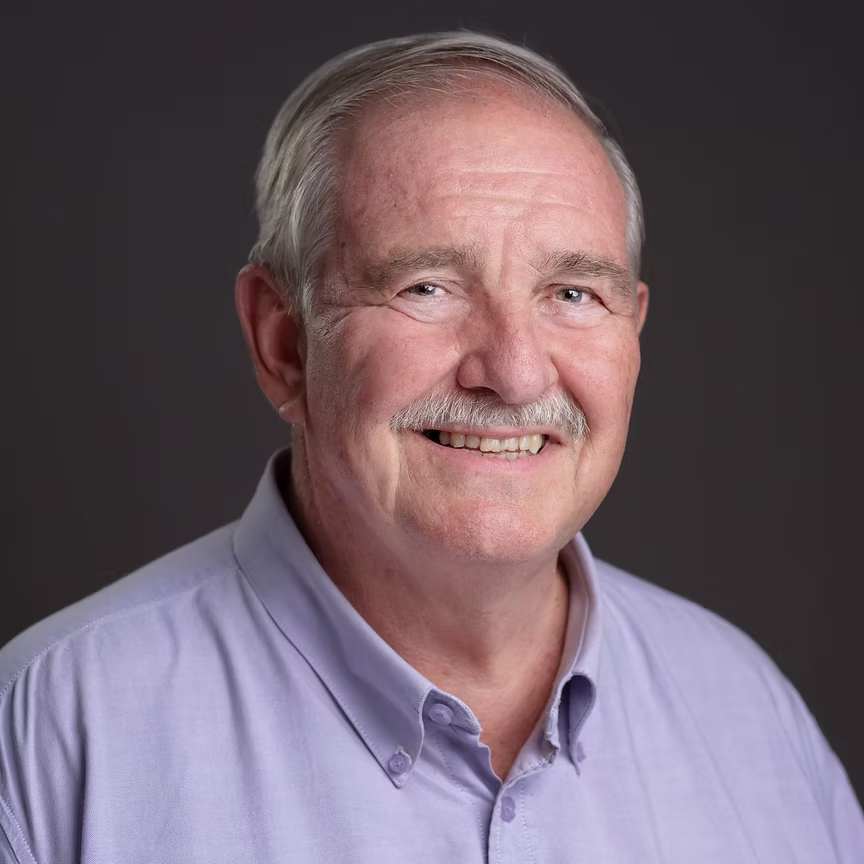
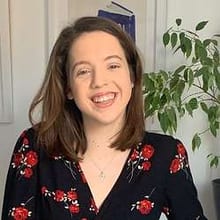
Description
Why do some people with hEDS or HSD report meaningful relief with medical cannabis, while others feel worse, notice no benefit, or experience side effects? And what might these varied responses teach us about pain, the autonomic nervous system, gut function, and nervous system sensitization?
In this episode, host Dr. Linda Bluestein, the Hypermobility MD, is joined by Professor David Nutt, a neuropsychopharmacologist at Imperial College London, and Lucy Stafford, a PhD researcher in clinical neuroscience with lived experience of hypermobile Ehlers-Danlos syndrome.
This is not a hype episode, a recommendation to use cannabis, or medical advice. Instead, it is a careful, curiosity-driven conversation about what is known, what is still emerging, and what remains uncertain about medical cannabis in hEDS and HSD.
Lucy shares her experience of severe illness, high-dose opioid treatment, a feeding tube, repeated ICU stays, and eventually coming off opioids, an experience that helped shape her path into cannabinoid research. Professor Nutt explains the discovery of the endocannabinoid system and why this system may be relevant to pain processing, stress responses, autonomic regulation, immune signaling, and gut function.
Together, they explore how cannabinoids may influence a sensitized nervous system, why responses vary so widely, and why medically complex patients need individualized guidance rather than shame, dismissal, or unsupported promises.
The conversation covers many of the practical questions patients often ask, including the difference between CBD and THC, full-spectrum products, terpenes and the entourage effect, routes of administration, absorption differences, and the importance of a cautious “start low, go slow” approach when cannabis is being considered under appropriate medical supervision.
They also address important safety considerations, including contraindications, drug interactions, psychiatric risk, impairment, dependence, and why cannabis is not appropriate for everyone. The episode closes with a broader discussion of stigma, the emerging science of psychedelics for chronic pain, and the human and financial costs of undertreated complex illness.
The Bendy Bodies podcast is for educational purposes only and is not a substitute for personalized medical advice. Laws, product quality, dosing, and individual risks vary, so patients should consult a qualified healthcare professional before using cannabis or changing any treatment plan.
Watch
Guests
Transcript
[01:02] Dr. Linda Bluestein: Welcome back to the Bendy Bodies Podcast. I'm your host, Dr. Linda Bluestein, the Hypermobility MD, a Mayo Clinic trained expert in Ehlers-Danlos syndromes. Today, we're going to be talking with Professor David Nutt and Lucy Stafford. We're going to be talking about medical cannabis, and I'm really excited to have this conversation because I know that so many people with hypermobility disorders, POTS, MCAS, et cetera, have heard about using medical cannabis, but they really don't know: is this something that is worth trying? Where do I start? What are the side effects? What are the things that I should be talking about?
[01:35] And this conversation is going to be nuts. I'm sorry. I just had to say that because we're talking to Dr. Nutt. One reason I wanted to have this conversation is because so many patients with EDS, HSD, POTS, and MCAS are already experimenting with medical cannabis, often without adequate guidance or evidence. And whether clinicians are comfortable with that or not, we need to have these conversations more and more, so we can understand what the options are for people so we can help them as much as possible.
This conversation is not about cannabis being good or bad. It's about understanding why nervous systems can behave differently and how people can have different responses regarding their pain and other symptoms, and what these medications can teach us about chronic illness itself. This podcast is for education only, and it's not a substitute for personalized medical advice. Stay to the end for hypermobility hacks. Here we go.
[03:05] Well, I am so excited to be here today with Dr. David Nutt and Lucy Stafford, and we are going to be talking about cannabis. This is not a hype episode. This is not medical advice. Cannabis is one of the most discussed, but also polarizing topics in the EDS and hypermobility community. We know that people with EDS, HSD, et cetera, often have nervous system hypersensitivity and are constantly trying to answer the same question: why does cannabis help some people but makes other people worse?
And despite it being commonly used, medically complex patients are often excluded from research, which makes it even more challenging. We also know that all treatments for hypermobile EDS and HSD are off-label. So today we'll be exploring what we actually know about cannabis, the endocannabinoid system, connective tissue disorders, autonomic dysfunction, mast cell activation, and chronic pain.
[03:55] This conversation is also grounded in a recently published paper co-authored by both of today's guests. And listeners of Bendy Bodies may also recognize one of the paper's co-authors, Dr. Jessica Eccles, who has joined me multiple times on the podcast to discuss hypermobility, neurodivergence, autonomic dysfunction, and brain-body connections. If you haven't heard her most recent episode, which is episode 194, please check that out as well because these conversations connect beautifully. Thank you to both of you for coming on Bendy Bodies.
[04:22] Dr. David Nutt: Thanks for the invite.
[04:23] Dr. Linda Bluestein: Of course. We're going to start with you first, Lucy. I think it's really important for listeners to understand that you're not only speaking from lived experience, but you're also deeply involved academically and scientifically in this field, including co-authoring this paper that we've mentioned, which will be linked in the show notes, of course, and pursuing doctoral-level work. I think it's important to start with your story because it beautifully bridges the lived experience with the emerging science. So what initially led you to explore cannabis in the context of chronic illness?
[04:54] Lucy Stafford: This was quite a long time ago now, around 8 years ago when medicinal cannabis was legalized in the UK. So in November 2018, following widespread campaigning in the UK to enable these prescriptions to happen — the first time since around the 1960s. And at that time I was very unwell. I had a severely dislocated jaw. I was at quite a point of desperation. I had felt like I had trialed almost every treatment, every medication, and my pain specialist and I felt like we were in a real desperate state. And he knew that Sativex, which is a licensed medicinal cannabis product for multiple sclerosis, was used to reduce spasms. So he thought, we've got nothing to lose. Let's try this as a real last resort.
[05:41] Dr. Linda Bluestein: So are you saying that the initial thing that you tried was — because there are some prescription products here in the US. I have not prescribed any of those for a while, but I know that they are available. I prescribed them more in the beginning of my practice, actually. So you're saying that you started with an actual prescription product?
[05:56] Lucy Stafford: Unfortunately not. That was slightly misleading, inasmuch as I was prescribed a medicinal cannabis product on the NHS, and we were all very optimistic with this law change that I would have access to this medication. However, what we have seen in the 8 years following the law change of medicinal cannabis in the UK is that NHS access — where treatment is free at the point of access — is completely unavailable for medicinal cannabis products. So it sent me on a whole journey of self-exploration and then getting a private prescription.
[06:32] Dr. Linda Bluestein: Thank you so much for sharing that. Are you willing to discuss a little bit about what symptoms you were dealing with at that time, and what your hopes were, and what other alternatives were being offered to you? Because I know there are some people who end up on opioids even at a young age. I've had patients come to me in their 20s taking chronic opioids for many, many years, and it's hard to get them off. But fortunately, a lot of the time they are willing to try. And I feel like opioids are a therapy that yes, sometimes is indicated, but oftentimes people go to that as a last resort because they don't know what else to do — and it's really not in the person's best interest. Are you willing to share any more about what symptoms you were dealing with or what other alternatives were discussed?
[07:16] Lucy Stafford: Yeah. So at that point I was taking a huge amount of opioids. I had really stepped up the opioid ladder throughout my teenage years, starting with codeine and tramadol. And by the time I was 18, I was on a fentanyl patch and fentanyl lozenges. And I still felt like I was in a huge amount of pain, with so many side effects. I was incredibly lethargic, with significant autonomic dysfunction. So I found standing up really difficult and I was incredibly deconditioned — particularly medications like opioids, they do make you very fatigued, very exhausted. I wasn't able to continue my education.
[07:59] At the point that I was trying cannabis, I really think I was in a state of learned helplessness. I didn't really believe that anything could get me out of that stage because I was so young and so much hadn't helped me up until that point. So I was skeptical that anything could make a real difference, but I was also desperate.
[08:18] Dr. Linda Bluestein: And that's one of the problems with opioids — they're deactivating, and they are a depressant on the nervous system, so they can contribute to that sense of helplessness and everything. So that's really challenging. What did you notice next, or what made you interested to study cannabis more? I take it there were some positive findings that you had along the way.
[08:43] Lucy Stafford: Yeah. One of the main things was that it felt like I had enough pain relief that I was able to come off all of those opioid medications. And the things that I hadn't realized — they weren't negatively affecting my cognition in the way I'd assumed. The other thing that cannabinoids really helped me with was gastrointestinal functioning. I had significant dysmotility, and cannabinoids really helped with that, as well as coming off the opioids, because the opioids were also contributing to my dysmotility at the time. The cannabinoids really helped that as well, and got me off a feeding tube at that point.
[09:14] Dr. Linda Bluestein: So you were on a feeding tube?
[09:19] Lucy Stafford: I was, yeah.
[09:20] Dr. Linda Bluestein: That's how bad your gastrointestinal function was.
[09:23] Dr. David Nutt: Well, your jaw as well, wasn't it?
[09:23] Lucy Stafford: It was everything, as you know. And yeah, even physically eating food was very, very difficult, and then digesting food as well. It's a very multisystemic, full-body condition.
[09:34] Dr. Linda Bluestein: Yeah. And people don't think about it if they don't have any problems eating. They don't think about the chewing and the ability to swallow — you have to be able to chew, you have to be able to swallow. And then to be able to get the food to go through the GI tract and digest and absorb your nutrients, and all the things that have to happen. I find so many patients end up on fewer and fewer foods because they have adverse reactions, and now they're missing a lot of nutrients. So they might take supplements, which can help, but that also adds excipients into the equation, which their mast cells might not like.
[10:15] Dr. David Nutt: She was actually being intravenously fed quite a lot of the time, which was also an enormous threat to her health because of the risk of cross-infection. And she was in intensive care on some occasions. So yeah, Lucy was seriously, seriously ill. Don't minimize it, Lucy. You were not well.
[10:34] Lucy Stafford: I've come a long way.
[10:35] Dr. David Nutt: You have. You've come so far. You probably want to minimize it. I appreciate that, I do.
[10:42] Dr. Linda Bluestein: Yeah. So Dr. Nutt, I really appreciate you saying that, because one of the huge reasons why I do this podcast is to give people hope. And it's important for people to understand that here is an example of somebody who was on TPN — parenteral nutrition — where you couldn't even use your gut at all. So that's an important distinction. And if you were so sick at times that you were in the ICU, that's also very important because somebody listening to this, either who has been in that severe, severely ill state, or if it happens to them in the future, they're going to think, oh, well, I heard about this person. And of course everyone's different, but it just gives them hope to know — look at you. You look fantastic now. I know some people don't like hearing that because we can be suffering a lot still on the inside, but you're certainly not in the ICU. I don't see a feeding tube in your nose. So thank you, Dr. Nutt, for pointing that out. Do you want to elaborate on any of that, Lucy?
[11:42] Lucy Stafford: Absolutely. If you had told me where I was at 18 that I would now be 26 doing my PhD, looking at the underlying neurological mechanisms contributing to these conditions — I graduated, I left school with no qualifications because of my health being so poor. There really isn't much hope in the EDS world in terms of there being established treatment programs at all. But I don't think anyone should lose hope with the condition, because it is an incredibly fluctuating condition and there are things out there that alleviate symptoms and improve functioning.
[12:15] Dr. Linda Bluestein: So you went from being that ill, being in the ICU and being fed through tubes of various different sorts, including through your bloodstream because your gut was working so poorly. What is the main thing, or combination of things, that you attribute that incredible transformation to? And I know it didn't happen overnight — it took a long period of time. But what were the things that you think were most pivotal?
[12:43] Lucy Stafford: Medicinal cannabis was the start of the huge turning point. That got me off all of the medications that I was very, very reliant on. It meant that my gut was more functioning. But cannabinoids made my body feel safe enough for me to just do small movements. I remember when my physio started with just curling my toes in bed. I was so weak, so deconditioned, that that was my physio. And we built up from there, but that was what I could manage at the time.
[13:15] The cannabinoids gave me vitality and strength, whereas opioids were moving me further away from myself and, to be honest, my will to live and will to keep going with treatment. So cannabinoids, lots and lots of physiotherapy, psychotherapy to manage all of the trauma of going through this kind of illness, lots of other complementary things, and really learning how to make my nervous system feel safe and how to make my body feel safe — because it certainly didn't feel that way for a very long time.
[13:49] Dr. Linda Bluestein: That's so interesting. So the opioids did not help your nervous system feel safe, but the cannabinoids did?
[13:54] Lucy Stafford: Yeah, I would say that exactly.
[13:57] Dr. Linda Bluestein: That's super interesting. And Dr. Nutt, many listeners know you from your groundbreaking research in psychedelics. And I want to share one of your many books that I have been diving in and reading — it's really great. And I know you also have a biography, Nutt Uncut. Is that correct?
[14:14] Dr. David Nutt: That is true.
[14:16] Dr. Linda Bluestein: Which is also a great book. I have those linked in my Amazon store for anyone who's interested. And if you're just listening and not watching on YouTube, I just held up Dr. Nutt's book, Psychedelics: The Revolutionary Drugs That Could Change Your Life: A Guide from the Expert. You have such an amazing work history and you've done such incredible things in your career. I would love to hear how you feel cannabis can play a role, and what things you have come across in your research that have been most unexpected.
[14:54] Dr. David Nutt: I'm a psychiatrist and psychopharmacologist, and I was also for a period the UK government's chief drugs advisor. And I was sacked from that position in 2009, basically for saying that alcohol was more harmful than cannabis and that we should make cannabis a medicine — because it used to be a medicine. It was a medicine in the 1800s. Queen Victoria used it. In fact, we were one of the very few countries which held out against the US effectively banning cannabis globally from the 1920s and '30s. But in 1971, we eventually succumbed to US pressure. No one knows exactly what you offered us or what you threatened us, but we took it out of the pharmacopeia then, and it left people like Lucy with basically no access to any form of cannabis.
[15:45] What got me interested in this field were really 2 things. One was: how harmful is cannabis, really? And I developed tools for exploring more sophisticated questions about comparative harms of drugs, which eventually produced what has now become an extremely famous scale of harms — where cannabis is definitely not at the top. Alcohol is, in our country.
[16:17] But more than that, the scheduling and regulations were actively stopping research on what history had told us was quite an important herb and also a medicine. My particular interest developed around epilepsy — seeing children who had severe seizures, some having thousands of seizures a month, having to leave the UK and go to other countries to get medical cannabis, because all we had was Sativex, which really wasn't licensed for epilepsy and didn't particularly work for it. That seemed to me grossly unjust. Essentially, if you could afford to live outside the country, your child might live. If you couldn't, your child would probably die.
[17:07] And so I began to campaign for a rational approach to what I call whole-spectrum cannabis extracts. And in doing that, I met this amazing woman called Lucy Stafford. When I first met her, she was in a wheelchair — truly. Her mother wheeled her in, and she had just started going to the Netherlands to get her medical cannabis. It was an absolute honor to work with you, Lucy, and to watch you transform from someone in a wheelchair to someone who I think walks more elegantly than me now. Have you given up your stick completely?
[17:45] Lucy Stafford: Not yet.
[17:47] Dr. David Nutt: She walks without a stick and I'm still recovering from a broken ankle. So now I'm the limping one and she's the dancing one.
[17:53] Lucy Stafford: I'll lend you mine.
[17:56] Dr. David Nutt: Lucy, amongst many others, encouraged me really to do something. When I was sacked as a government advisor, I was fortunate to get funding from a philanthropist to set up a parallel charity, and that charity has done an awful lot of good things. In 2018, when — as Lucy pointed out — the government decided cannabis could be prescribed by specialists in this country, I was suspicious. I was very suspicious that anyone would actually do it, for a number of reasons we can come back to if you want.
[18:31] So what I persuaded my charity to do was act as a go-between between patients who might benefit from cannabis — such as Lucy — and providers. Because providing medical cannabis, even when it was allowed, was very difficult. For all sorts of technical, bureaucratic reasons, each patient had to be treated as a special case, which added huge amounts of bureaucracy and costs. My charity said, let's see if we can become a conduit putting patients with prescribers together. And we began to educate the doctors. Eventually we had several hundred doctors in the UK trained to prescribe medical cannabis.
[19:17] Lucy was one of the people we brought along to explain to them that you can prescribe medical cannabis to people and they not only live, but also get better. And she demonstrated how you can use it — because of course a lot of people don't know you can vape it, et cetera. That initiative we called T21. It eventually ended up having over 5,000 people with access to medical cannabis at a discounted rate. We tried to keep the cost down to the same level as it would have been on the black market, because we knew a million people were going to the illegal market to get it.
For those 5,000 people, I think it was now 57 individuals with Ehlers-Danlos syndrome. And that was where the paper you mentioned at the very beginning — the recent paper that Lucy pulled together — was the beginnings of that. I think it's probably the largest cohort of people with EDS treated with medical cannabis in the world. It actually showed, as in Lucy's case, that medical cannabis can be very helpful for this group.
[20:23] And they would never be studied otherwise. Medical cannabis isn't profitable because you can't patent it. So it's not being studied in many disorders. We have to rely on patients taking initiative, like Lucy and her parents did, and then reporting back. That reporting back has not been very efficient, and that's the great misfortune of the American opening up. It was fantastic that America led the world in medical cannabis, but because it was illegal under federal law, we didn't get enough quality data on the benefits — a real missed opportunity.
[21:01] We managed to get quite a bit of data on quite a number of different disorders. We're still slowly writing them up, but we obviously prioritized EDS because of Lucy's background knowledge and ability to do research and write it up. Hopefully it's going to spread the word to the thousands of listeners you have who might contemplate using it, and hopefully will get benefit.
[21:24] Dr. Linda Bluestein: And I think it's important to note, because a lot of people listening are going to know a lot about cannabis and the endocannabinoid system, but there are going to be people who don't know that we have an endogenous endocannabinoid system. If one of you would like to explain that, I think it would help people to understand that we have endogenous endocannabinoids, and we also have things like palmitoylethanolamide that act on endocannabinoid receptors as well. These are things that are already happening within the body. Is that correct?
[22:02] Dr. David Nutt: I was kind of there at the beginning of the discovery of the cannabis receptor, probably before Lucy was born. And it was a total surprise — the brain's got cannabis receptors. Why would that be? Did God smoke joints? Who knows?
[22:22] There was an interesting prequel to that, which was the discovery that there were opiate receptors in the brain. Those were discovered in the late '60s, early '70s. And people said, wow, opiate receptors — does that mean the brain makes opium? The answer is sort of. The brain makes a thing called endorphins. So what opium is doing, what heroin is doing, is going into the body and replicating — or in fact worse, overstimulating — the receptors that serve another function.
[22:57] So then the great hunt was on for the endogenous cannabinoids. And of course several were found. We know that the endocannabinoid system is massively important. It's an adaptogenic system. It balances out the brain. It works in a very different way from other neurotransmitters, because it feeds back from one neuron back to the presynaptic neuron and helps keep the brain — and subsequently we discovered other cannabis receptors in the periphery — helps the nervous system and the immune system under control. So it's actually a vital, critical part of life.
But we couldn't study it. It was very difficult to study because the drugs we needed to study it were illegal. And that has been one of my great campaigns over the last 30 years. At least make it possible for people to study these — both cannabinoids and psychedelics — not just because they're interesting questions and biologically fascinating molecules, but also because who knows what the therapeutic value might be. And Lucy's exact case is fantastic to me because it proves that if you study something, you might end up discovering something you never expected — which is the utility in a disorder that no one previously would have ever linked to the endocannabinoid system.
[24:12] Dr. Linda Bluestein: Can you also elaborate a little bit more on the endocannabinoid system and the role it plays with autonomic regulation, inflammation, interoception, threat perception? Because I think that's another really important area that we see with so many people who have hypermobile EDS, HSD, et cetera.
[24:30] Dr. David Nutt: I'm going to hand over to Lucy because that's what her PhD is about.
[24:36] Lucy Stafford: The endocannabinoid system plays a really important role in almost all areas. It doesn't simply block pain signals per se, as an opioid may. What it does instead is recalibrate these signals. Neuropathic pain studies have shown that there are differences in functional connectivity between the anterior cingulate cortex — which is a really important part of the brain involved in prediction, in comparing what's expected to come in from the body and what's actually coming in — and regions such as the sensory motor cortex and the thalamus, where all sensory information is being brought together.
So when patients report, "I still have pain, but it feels differently now — it doesn't feel as intrusive, it doesn't feel like it's taking over my whole sensory experience," that is likely what we are also seeing in the brain.
[25:35] In terms of autonomic regulation, the endocannabinoid system is mostly a sympathetic inhibitor. So for people who might be hyperadrenergic and running on adrenaline, with that part of the autonomic nervous system going abnormally, cannabinoids may have the potential role of reducing that autonomic dysfunction. However, on the opposite side, as a vasodilator, if the EDS-related autonomic dysfunction is related to the stretchiness of the blood vessels, it could theoretically make those symptoms worse. That's what my PhD is looking at — trying to characterize where autonomic dysfunction is happening in the autonomic nervous system in these patients. Is it a neurological thing, or is it more something that's happened to the blood vessels?
[26:27] Another really important part of the endocannabinoid system is its effect on the gut, as CB1 and CB2 receptors are widely dispersed not just in the brain, but also in the enteric nervous system. CB1 receptors in particular control visceral nociception and motility. That's very much demonstrated in animal and rodent models, but there is also some clinical trial data in humans showing that cannabidiol is helpful in gastroparesis.
[26:59] Dr. Linda Bluestein: Which is great, because so many people have gastroparesis. And as you were discussing earlier, opioids are terrible for that. I just want to mention for people who might not know: the enteric nervous system is the nervous system of the gut. So we have the sympathetic nervous system, the parasympathetic nervous system, and the enteric nervous system.
[27:15] We're going to come back to this after the break, but before the break, I wanted to ask: we know a lot of people have central sensitization or a hypersensitized nervous system. Before I started to do a lot better with my own health — because I have hypermobile EDS also — I had severe allodynia and hyperalgesia. Allodynia being where things that are normally not painful at all are painful, and hyperalgesia being where things that are normally a little bit painful become a lot more painful. Lucy, what theoretical role do cannabinoids play in altering the gain setting of a hypersensitized nervous system?
[27:45] Lucy Stafford: If we think of the endocannabinoid system in its normal functioning — endocannabinoids are produced on demand. Instead of typical neurotransmission where the presynaptic neuron releases a neurotransmitter to the postsynaptic neuron, what happens with endocannabinoids is that the postsynaptic neuron releases neurotransmitters based on what is happening in the presynaptic neuron. When there are increases in intracellular calcium — an indication that there is activity-dependent firing in the presynaptic neuron — these can be produced.
In a long-term chronic pain state, there is evidence that the endocannabinoid system gets dysregulated, not being able to adapt to this gain. And so utilizing phytocannabinoids — cannabinoids found in cannabis — may well help to adjust that gain setting. The CB1 receptor is the most abundant neuromodulatory G-protein-coupled receptor in the brain. And yet, across multiple neuroscience degrees, for me, it wasn't mentioned once.
Dr. Linda Bluestein: Yeah.
[28:47] Dr. David Nutt: The other thing to add to that is that sensitization is largely driven through glutamatergic mechanisms. Glutamate is an excitatory neurotransmitter. People have seizures because their glutamatergic system is out of control. That's almost certainly how phytocannabinoids help so many people with epilepsy. And pain sensitization is just another form of sensitization — it's just not in the motor system. You don't have physical fits, but you have, in a sense, emotional and sensory spasms because the system is hyperactive.
So there is this wonderful ability for us to use exocannabinoids to normalize endocannabinoid dysfunction, which may come from all sorts of reasons we don't fully understand. Some of it may be genetic, some of it may be acquired. The good thing is we've got safe exocannabinoid alternatives which most people would probably benefit from if they knew about them. And most doctors, if they knew about them, would probably find that they've got a lot of patients who would value them.
[29:57] It's that lack of knowledge which is so pervasive. The fact that Lucy has just finished a neuroscience degree at a top university where there was almost no mention of the most dense of all the receptor types — linked to particular things called G proteins. That's outrageous. It's like saying, we don't believe in gravity anymore. We'll do physics without talking about gravity. We'll do neuroscience without talking about cannabinoids. It's bonkers.
[30:33] Dr. Linda Bluestein: I love what you just said about seizures and glutamate and an excitatory problem in the nervous system, because I feel like a lot of people who have central sensitization — either because they've had so many bad doctor's appointments, or because they're told this — feel like it's their fault. So I feel like that's a very helpful message for people to hear: that they have an excitatory problem in their nervous system related to glutamate, which is making them more sensitive in a sensory way. But it is not their fault. It is physiologic, not psychiatric.
[31:07] Dr. David Nutt: Yeah, absolutely. And of course, one of the other problems is that trying to dampen the pain down with opiates in the end just makes it worse, because you get sensitization from opiates too. And of course you also get dependence on opiates.
[31:21] I just want to emphasize that Lucy's not alone in being able to dramatically reduce the use of and need for opiates. In our studies of those 5,000 patients, we found — on average, among those who came in with pain, which was about half of them — a greater than 50% reduction in opiate use without even trying. People don't need opiates. Once you're properly stabilized on a phytocannabinoid, you get off them. And then it's a virtuous circle — your body is healing again, you're improving from both directions.
[32:06] Lucy Stafford: Right.
[32:06] Dr. Linda Bluestein: And as Lucy pointed out earlier about feeling safe in the body, I think that's so important. We're going to take a quick break. And when we come back, we are going to dive into some of the details. I feel like people might be listening to this and thinking — I hear this all the time — well, I tried it and I had these side effects, or whatever. The devil's in the details. So we're going to need to talk about how you figure out the dose, the modality. I want to talk about CBD versus THC versus CBN and other cannabinoids. And I also want to talk about ADHD. So that's a long list, but those are some things I want to cover after the break.
[34:49] So we're back with Dr. David Nutt and Lucy Stafford, and we are going to talk about the different types of cannabinoids, dosing, methods of administration, and some other things. But before we get into that, Lucy, can you tell me what you think some of the most important myths or misconceptions are when it comes to cannabis and cannabinoids?
[35:10] Lucy Stafford: Probably the biggest myth, if you don't know anything about medical cannabis, is that cannabis is administered in a joint that is smoked and that you get very high. For most people, that is not the case, because cannabis is really a whole medicines cabinet of many different medicines.
[35:29] Within cannabis, the most active components are the cannabinoids, and the 2 most common ones are CBD and THC. THC is the part of cannabis commonly associated with intoxicating effects, but it is also used therapeutically. So I think it's important not to put a warning label on THC simply because it has these psychoactive properties, because it is still used medicinally. However, it's important to know that you don't have to only use that. There are many other components to cannabis, including cannabidiol, which has more anti-inflammatory and anxiolytic properties. This idea that it is one drug available only in one form is, for most people, inaccurate — most are taking it in oil-based administrations or vaporized at a lower temperature than smoking.
[36:24] Dr. David Nutt: Let me chip in here. We have a big problem in the UK. Cannabis has been an approved medicine in this country for 6 years, but the National Health Service hardly prescribes any. And that is because doctors have been conditioned to think that if you start using cannabis, you will go psychotic and you will get dependent. That is a myth that has been perpetuated by a whole series of senior doctors, both in the area of pain medicine and in the area of psychiatry.
[36:55] And it's not true, but it's used by many medical practitioners to say, well, I'm not sure, so I won't try and I won't learn. And that's actually where a lot of our learning is coming from the US, where you've got maybe 100 million Americans now having access to medical cannabis. And we're not seeing massive problems relating to either dependence or psychosis. So we can reassure people: if you use medical cannabis in a proper medicinal way, getting the right combination, the right strains prescribed by someone who knows what they're doing, it actually is a powerful medicine with a definite benefit-to-risk ratio.
[37:50] Dr. Linda Bluestein: And can you talk a little bit more about dependence? Because I think that's a very important point. We know that dependence is a huge problem with opioids. It's a huge problem with things like benzodiazepines. Physical dependence develops with a lot of different things. And then of course we also have addiction, where you continue to use the substance despite the fact that it's causing negative effects in your life. Can dependence occur with cannabinoids? Are there things that people should be aware of to minimize that chance?
[38:19] Dr. David Nutt: What obviously does happen is that the people who are most vulnerable to becoming dependent on cannabis are those who are seeking intoxication. So that's the first thing to say. The second thing is that the dependence-producing element is largely the THC. So smoking cannabis with a lot of THC to get very high, to get stoned, is more likely to produce dependence than taking smaller amounts.
[38:49] The other important balancing feature is the presence of cannabidiol, and possibly other endocannabinoids. Cannabidiol does seem to offset some of the worst side effects of THC. It seems to mitigate against THC dependence. It can certainly be useful in helping people who are THC-dependent come off it. So it's kind of anti-addictive.
[39:14] So we've always encouraged people to try mixtures. Obviously, the way to minimize dependence on anything is to take as little as possible, as infrequently as possible. Optimizing or minimizing the amount of THC you take to get the best benefit without getting intoxication is certainly the first criterion for trying to reduce the risk of dependence. And trying to use mixtures of CBD and THC, and using it to deal with the medical problem rather than for other purposes. And actually, we find quite a few people don't like the intoxicating effects of THC — it's actually aversive to them. So it's not that everyone who starts using cannabis is going to say, wow, I love it, I'm going to get high. That's rather different from opiates, where people tend to like them.
[40:09] Dr. Linda Bluestein: And so how do people find the dose that is likely to work for them?
[40:18] Lucy Stafford: Well, the saying in the cannabis world is: go low and go slow. Start with a low dose of both CBD and THC. You'd start predominantly on a high-CBD product and then move potentially to a balanced CBD-THC product if you're not getting the response you'd like from the CBD alone. It's really important to recognize the clinician-patient relationship here. But fundamentally: go low and go slow.
[40:45] Dr. Linda Bluestein: And I do discuss this with patients sometimes. It's nice being in Colorado now — I was in Wisconsin before, where it was much more restrictive. And you're right, people can just go into a dispensary here and talk to somebody, and the person will say, oh, try this, try that. But what kind of education do they have? Versus a doctor who could give much more prescriptive advice.
[41:11] So we're talking maybe starting with something like 12.5 milligrams of CBD and 1 milligram of THC, or some kind of ratio? Because some people listening to this have gone into dispensaries where the products are 1-to-1 — 5 milligrams of THC for every 5 milligrams of CBD. Whereas I personally feel like having a much higher ratio of CBD to THC is beneficial. But are there any numbers that you've heard of as a kind of good starting place for a lot of people? Again, this is not medical advice — you need to talk to your own doctor or prescriber. And also: are we talking vaporized, edible, tincture?
[42:06] Dr. David Nutt: Let me chip in a bit here and then let the expert say more. A lot depends on what symptoms you are trying to treat. We know that epilepsy is particularly sensitive to CBD, though over time you might need a bit of THC. We know that sleep is particularly sensitive to CBD. Whereas pain, you may need more THC. So that's a good place to start — what particular symptoms are predominating? You can choose your balance, your mixture, according to that.
[42:45] We're trying to encourage people as far as possible to use ointments and oils, because that gives you a flatter profile. You don't get those peaks. And we know from other medicines that peaks tend to lead to changes in the system — the higher the concentration, the more likely the system is to adapt. So we're trying to get as smooth, as stable a system as possible.
[43:18] But a lot of people use a bit of both. Some people use CBD at night and THC in the day to help deal with spasms or pains or challenges. And sometimes vaporizing is necessary. Lucy famously showed people how to vape on British television in my hospital — it was an absolutely classic piece of TV, wasn't it, Lucy? Because most people had no idea you could vape. Of course you can vape CBD as well as THC. Vaping can be vital for people who are in a great deal of distress, because it gives you very rapid alleviation.
[43:57] Lucy Stafford: Yes, absolutely. The vaporized formats tend to be used for breakthrough pain that is so incredibly difficult to manage, whether it's related to a spasm, a subluxation, or a dislocation. People really find a lot of utility in having a rapid-onset option. There aren't really many medications available that have that rapid onset.
In our real-world evidence study, we found that most patients were prescribed between 2 and 3 products — so they were really having a personalized combination of different medicinal cannabis products. The most commonly prescribed product within our study was high-THC flower, which is interesting because that does go against what the consensus recommendations are — high-CBD oils and that kind of thing. But in the real world, what patients seem to be utilizing is a mix of high-THC flower as well as balm oils. Interesting.
[44:59] Dr. Linda Bluestein: And when you say oil, do you mean the tincture that you put under your tongue?
[45:05] Lucy Stafford: The products used in our study were full-spectrum CBD and THC oils — not just CBD and THC, but also the minor phytocannabinoids and terpenoids and flavonoids. There is a whole host of literature and patients discussing their own experiences with different terpenoids and the effects they may have in compounding the benefits.
[45:32] Patients get really quite specific in knowing — I've heard that high-limonene strains can be too stimulating and can actually worsen neuropathic pain for some people, because they are immunostimulating. Whilst for some people that might give them energy, for others it makes them feel wired. Whereas beta-myrcene is commonly used to aid digestive issues.
[45:57] Dr. David Nutt: But it's really important to reemphasize what Lucy just said. Just because one particular strain or combination doesn't work, you don't give up. Because you've got a lot of choice. You take evidence, you learn, you read as much as you can about your particular symptoms and what people have found. And you're very fortunate in the US because you can pretty much get every variant you want somewhere.
[46:32] In a way, cannabis is about taking control of yourself as well. It's not about being a passive recipient of a prescription. It's about engaging with both your prescriber or your doctor and this wonderfully varied medicine to get what's best for you. And Lucy is an example that if you get it right, over years, you can completely transform your life.
[46:51] Dr. Linda Bluestein: And I have so many follow-up questions. When you're talking about the strain and all of that, you're saying that different ones have different terpenes. Can you explain what those are? And also — because nobody has unlimited money, I'm sure there are people thinking, it would be great to try all these different things, but it's costly. And what about the safest ways to vaporize, since we know that smoking has its own risks? And then also about topical preparations, and oral products like CBD capsules? Can you comment on those things?
[47:45] Lucy Stafford: Terpenes are the part of cannabis that contribute to the smell, and terpenes are part of almost every plant. Within cannabis, they seem to contribute to the entourage effect. Something like limonene may be quite energizing and stimulating. Whereas you get terpenes such as myrcene, which are more sedating — so you might want to gravitate towards those at nighttime.
[48:15] Vaporization — you can buy dry herb vapes, which heat ground cannabis inserted into the vaporizer, usually to around 180 degrees Celsius. There is also cartridge vaporization, which has some controversy around it — Dave can comment better than I can on the safe production of vape cartridges, because there is potential for contamination. Then topicals are also commonly used. I can say anecdotally I have absolutely found utility in them, particularly alongside a massage — they can be really beneficial.
[49:03] The same with oral products. When cannabinoids are infused into foods, that can sometimes aid absorption because cannabinoids are lipophilic and so they need some fat in order to digest. However, with the digestive issues associated with hypermobile EDS, you might actually end up with less absorption. I have heard of patients who can take a high dose of an oil or an edible product and get no therapeutic effect because the absorption simply hasn't happened. Certainly that was the case when I started my medicinal cannabis journey — I wasn't really absorbing anything through my gastrointestinal system. So having a vaporized option was really, really beneficial.
[49:52] Dr. David Nutt: It's important to emphasize the point Lucy's making: you're not burning anything. Vaporizing is at a much lower temperature than burning. So that mitigates against the risk of carcinogens. It's not smoking. We don't encourage people to smoke joints or use bongs.
[50:09] Dr. Linda Bluestein: That's a very important point. So using something vaporized at a lower temperature is going to be much safer than smoking a joint or using a bong. And also, Lucy, you're pointing out that in this study most people were using 2 or 3 different kinds of medicinal cannabis — so they might be vaporizing for big flares of pain or emergency-type situations, but taking something orally for maintenance or to help with sleep. Is that accurate?
[50:43] Lucy Stafford: Yes. Essentially that is what we see in the real world. And I think that is what a lot of patients really gravitate toward this medicine for — it can be adapted to your needs. And as you know, living with this condition, it's different every hour, every day, every week, every month. Over the course of the illness, you can adapt how you administer it. I think that's a really empowering part of it. It also means it's incredibly difficult to research and put into any kind of clinical trial, which causes a lot of problems for researchers — but that's for us to figure out.
[51:27] Dr. David Nutt: Just a comment on the vaping. In theory, putting it into a propylene glycol like you vape nicotine would be a very efficient way of delivering it, but at present it's just not regulated well enough. The quality control isn't good enough. So we advise against that.
[51:43] Dr. Linda Bluestein: So using the dried herbs being vaporized is better rather than a liquid being vaporized. I just want to make sure I totally understand.
[51:46] Dr. David Nutt: Absolutely.
[51:55] Dr. Linda Bluestein: What about contraindications? Who would be a bad candidate or should not try cannabis?
[52:02] Dr. David Nutt: Someone who has become paranoid previously on taking THC. It's not uncommon for young people who start using cannabis to stop because they start getting paranoid. And that's why, in a way, cannabis is less habit-forming than tobacco — because quite a significant proportion of people don't continue using it all their lives. If you've had a tendency to get paranoid, you want to minimize the use of THC, and you should certainly focus on CBD-dominant products.
There are also some medicines metabolized by the liver where CBD can slow down the metabolism, which could potentially increase the level of the medicine. So if you're on other medications, it's worth checking. If you're using less than a couple of hundred milligrams of CBD, you're probably not going to get into those kinds of problems. But if you're going to use high doses of CBD, it's worth double-checking that it isn't going to interfere with the metabolism and cause higher levels — and therefore more side effects — of other medications.
[53:25] Those are the 2 groups of people where you'd say be cautious with medical cannabis, but that's actually relatively few people.
[53:34] Dr. Linda Bluestein: What if you're taking other psychiatric medications? Are there psychiatric medications that would make these cannabinoids less safe?
[53:45] Dr. David Nutt: Cannabis doesn't cause seizures. It could slow down the metabolism of some antipsychotics, so you could get slightly higher levels. But I don't think there are many people where that would be a significant issue. Generally, if you've got a psychotic tendency, we would prefer you didn't use cannabis, because it's conceivable it might make it worse. So if you're on an antipsychotic, you probably shouldn't be taking cannabis — CBD perhaps, but even then, I'd advise against that without medical supervision.
[54:31] Dr. Linda Bluestein: And how would somebody know that they are becoming dependent? Are there certain things they should look for?
[54:37] Dr. David Nutt: If you're using more, or needing to use more, and if you find that you're looking forward to using — those are the pointers to dependency. If you're starting to shorten the time between the last dose and the next dose, and certainly if you're finding you want to get high, then ask yourself that hard question. It's the same principle as monitoring alcohol. If you're using a drug that can be psychoactive like THC, you should be conscious that it could start to commandeer some of your decision-making. So be clear-headed about it. Don't ignore any signs that you might be using more than you know you should.
[55:32] Dr. Linda Bluestein: And Lucy, what do you wish clinicians understood better about how medically complex patients can and are actually using cannabis in the real world?
[55:42] Lucy Stafford: I would ask them to be open-minded. Patients tend to use these medicines when they feel like they have few other options.
[55:51] Dr. David Nutt: And also — one of the other areas where this is ridiculous is terminal care and palliative care. Cannabis is really good for palliative care. The nurses in palliative care know that. They actually turn a blind eye to people bringing their cannabinoids into palliative care. But if you ask them, they have to say, oh no, well, we don't know if it might interact. And if you ask the doctors, most of them will say, oh no, because it could have a negative side effect.
[56:19] The reality is medical cannabis is probably about as versatile a medicine as you could ever get. And the problems are largely ignorance rather than problems with the medicine. So be inquisitive, think about it, check things out, talk to other patients, and seriously keep a very open mind. I mean, I spend a lot of my time trying to persuade intelligent friends who've got serious illnesses to go onto medical cannabis, and they say, well, I can't get it on the NHS. Well, sorry, pay for it then. The reality is it's going to help. The threshold of ignorance is so massive. And as you say, everyone should keep a really open mind and try to get good advice from other groups that are talking about it with their particular syndromes. There must be at least 30 or 40 different major indications for medical cannabis that we've got good data on.
[57:30] Dr. Linda Bluestein: And before we wrap up, I also wanted to ask, Dr. Nutt — you've done such extensive research on so many different psychedelics, cannabis being one of them. And I love the scale of harms. I've seen a couple of different versions that you've worked with various groups on, and of course it's in your wonderful book. We should do a whole other episode on other psychedelics, and I know there are a lot of people who would have questions. Is there anything you would like to share before we wrap up?
[58:07] Dr. David Nutt: I'm not recommending psychedelics for Ehlers-Danlos — I can tell you that — because I don't know enough about it. That's one area where it's unclear to me. Certainly we're interested in pain. We've just finished a study of single-dose psilocybin in fibromyalgia, trying to break the circuits of the pain network. So it's completely possible that psychedelics might be useful in other pain syndromes.
[58:33] I'm going to defer to you two because I'm not an EDS — I mean, I didn't know how to spell it until I met Lucy. I don't think I'd seen a case in my medical training. She's educated me more than I've educated her.
[58:49] But psychedelics will have enormous utility in a range of psychiatric disorders — disorders in which people get locked into thought loops they can't break. They may have utility in pain disorders. There is a lot of interest now in psychedelics and the microbiome, though no one's done the research yet. We know that the microbiome bugs do have receptors for psychedelics, and the enteric nervous system has a lot of serotonin receptors. 90% of all your serotonin is in your gut rather than your brain. So I think we're going to learn more about psychedelics in various systemic disorders as well as brain disorders over time. It's very much in its infancy, whereas with medical cannabis, we're reaching adolescence now. We haven't quite got to maturity, but we're getting there.
[59:49] Dr. Linda Bluestein: Well, you might not be an expert in Ehlers-Danlos, but I was trying to say that Lucy was probably the first patient you recognized with Ehlers-Danlos — but probably there were patients before that who either just weren't diagnosed, or it wasn't picked up on.
[1:00:04] Dr. David Nutt: Yes, I'm certain. And of course, one of the other points — and this is an important one — doctors don't diagnose things they can't help. And that's why I think our paper is so important. We've already had people from various countries writing in saying, fantastic, at last I've got something — now I know, now I will diagnose, because I've got some idea of what to do rather than just replacing the hips.
[1:00:31] Dr. Linda Bluestein: And in your book, you talk a lot about things that affect a very large percentage of people with hypermobile EDS and HSD — things like trauma, anxiety, depression, neurodivergence. So even though your book is clearly not about EDS by any stretch of the imagination, I'm reading it and thinking a huge amount of this applies to people with these conditions. Wouldn't you agree, Lucy?
[1:00:54] Lucy Stafford: Absolutely. And I would be very interested in the future of psychedelic research — maybe not as curative for chronic pain conditions per se, but around the psychological burden that comes alongside living with a lifelong condition, and improving that.
[1:01:11] Dr. David Nutt: And there's also this other interesting aspect to psychedelics that might have utility — the low dose, the non-psychedelic dose, as an immunosuppressant. They may have adaptogenic utility like cannabis. Much harder to study, because they're all still illegal. And chronic administration of a low dose is almost impossible to research. But yes, keep an open mind on those as well. I can't give you chapter and verse, but I can say: definitely keep an open mind.
[1:01:42] Dr. Linda Bluestein: I will. And as I pointed out before we started, I'm somebody who didn't have my first drink of alcohol until my 21st birthday. So I love that we're keeping an open mind and talking about things that may benefit people, even though right now they might not be legal. But if we can figure out more ways to do research, like you have been doing, Dr. Nutt — and Lucy, you too, of course — we need to have an open mind. We need to be figuring out unique ways that we can help people, because people are suffering. People are committing suicide. People's lives are being destroyed. They can't work and they're just in such dire straits.
[1:02:27] So we need to really be looking at all possible ways that we might be able to help them, because this narrative of, well, why bother with the diagnosis because there's nothing that you can do, is so completely incorrect. And Lucy is such a beautiful example of that.
[1:02:40] Dr. David Nutt: And there's one other twist to this that I always say, and still people don't listen because we don't have a very educated bureaucracy in this country. The savings — Lucy is paying for her own therapy, and she is saving the NHS hundreds of thousands of pounds a year. She deserves better. Everyone would benefit if we had a more mature attitude to medical cannabis. There is no doubt.
[1:03:11] Dr. Linda Bluestein: I mean, think how much that care cost when Lucy was in the ICU and on TPN. If somebody had come up with this idea sooner and could have potentially averted all of that — what would her trajectory have looked like? How much money would that have cost the system? So yeah, that's a very important point, Dr. Nutt. Thank you for bringing that up.
[1:03:34] We always end every episode with a hypermobility hack, and I would love for each of you to give us one. Our audience loves hearing these hacks. Do you have a hypermobility hack to share?
[1:03:46] Lucy Stafford: My hypermobility hack is around creating routines that feel safe for your body — whether that is utilizing a medicinal cannabis product alongside doing a meditation, or a movement that feels safe for you. I think until I started on cannabis, I didn't know what feeling safe in my body even felt like. And I hadn't realized that that was actually the key: when my body feels able to move, able to not be in extreme pain all the time, that's when the rehabilitation started.
I completely resonate with how far away that can feel, because I think it took me over 20 years to get there. It can feel like a completely foreign concept — like, what does that even feel like? There is no one path to it, but holding that as a goal, and building routines into your life — starting small and building up — does make all the difference.
[1:04:53] Dr. David Nutt: My hack is to say: get my book on cannabis. It unfortunately was never released in America, because the state laws are so different it was not possible to write a book that was compliant with every state. But I have written a book on cannabis and it's called Cannabis: Seeing Through the Smoke. I suggest that if you get a copy, read it, and then take it to your doctor and say, I want to try medical cannabis, please, because this guy Nutt has written about it. And also, Lucy, send out your BMJ article to everyone so they can take both to their doctors and say, can we give it a try, please?
[1:05:48] Dr. Linda Bluestein: I think that's a great idea. We will definitely link those in the show notes. And I also want each of you to share where people can learn more about your amazing work. Lucy, we can start with you.
[1:06:03] Lucy Stafford: Anyone who is interested in following my work on hypermobile Ehlers-Danlos syndrome during my PhD can follow me on Instagram @lucystaffordphd.
[1:06:13] Dr. Linda Bluestein: Dr. Nutt, where can people learn about you?
[1:06:16] Dr. David Nutt: Just go onto the Drug Science website. It's a fantastic website. It's got Lucy's papers, my papers, millions of podcasts with me, lots of slides — it's a fantastic resource around medical cannabis and also psychedelics. It's drugscience.org.uk, and everything's free. Go on there and I'm sure there'll be something you'll find interesting and useful.
[1:06:43] Dr. Linda Bluestein: I'm so grateful to both of you for taking the time to talk to me today. This is such an important topic. Medical cannabis is something that I think everyone should know more about and keep an open mind to. So I'm really grateful to both of you.
[1:07:00] Dr. David Nutt: Lovely to talk to you. Well done, Linda.
[1:07:01] Lucy Stafford: Thank you so much.
[1:08:21] Dr. Linda Bluestein: Thank you for listening to this week's episode of the Bendy Bodies Podcast. If you'd like to go deeper, I share additional education, clinical insights, and resources in my newsletter, the Bendy Bulletin, which you can find on Substack at hypermobilitymd.substack.com. You can also help us spread the word about connective tissue disorders by leaving a review, sharing this episode, or sending it to someone who needs it. These small actions truly make a difference in raising awareness about these conditions that are still widely misunderstood.
[1:08:52] And don't forget, full video episodes are available every week on YouTube at Bendy Bodies Podcast. As many of you know, my passion is helping people better understand and navigate symptomatic joint hypermobility. In addition to my clinical and educational work, I offer one-on-one coaching, professional mentorship for healthcare professionals, and expert witness services. If you'd like to learn more, please visit the services page at hypermobilitymd.com.
[1:09:17] You can find me, Dr. Linda Bluestein, on Instagram, Facebook, TikTok, X, and LinkedIn, all at Hypermobility MD. As part of our collaboration with the UVA Health EDS and Hypermobility Disorders Center, we also want to share a few helpful resources. For questions or appointment inquiries, you can contact them at [email protected]. That's the letter R, [email protected], or call 434-243-8200.
[1:09:50] Our incredible production team is Human Content. You can find them on TikTok and Instagram at Human Content Pods. We love bringing on guests with unique perspectives to share. However, these unscripted discussions do not necessarily reflect my views or opinions. Furthermore, perspectives expressed within Bendy Bodies media, including this podcast, do not reflect the views or opinions held by Human Content Inc.
[1:10:12] Although we may share healthcare perspectives on this podcast, no statements made on Bendy Bodies should be considered medical advice. Listening to or watching this podcast does not constitute a doctor-patient relationship. Please always consult a qualified healthcare provider regarding your own care. For information about the Bendy Bodies program disclaimer and ethics policy, submission verification and licensing terms, HIPAA release terms, or to get in touch with us, please visit bendybodiesboutique.com. Bendy Bodies Podcast is a Human Content production. Thank you for being a part of our community. And we'll catch you next time on the Bendy Bodies Podcast.