Living fully with a Hypermobility Disorder with Linda Bluestein, M.D.
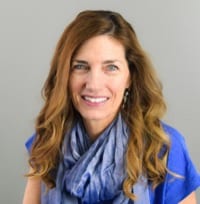
Description
In this second interview with Bendy Bodies host Dr. Linda Bluestein, she explores the realities of living with a connective tissue disorder. As a renowned hypermobility expert, Dr. Bluestein discusses issues that can exist alongside Hypermobility Spectrum Disorder (HSD) or Ehlers-Danlos Syndromes (EDS), such as autoimmune issues, dysautonomia, and more. She shares her acronym for maintaining a high quality of life, discusses the small changes that can add up to meaningful improvement in quality of life, and reveals her hopes for the future of HSD/EDS research and treatment. Learn more about Dr. Linda Bluestein, the Hypermobility MD at our website and be sure to follow us on social media: Website: https://www.hypermobilitymd.com Instagram: @hypermobilitymd Twitter: @hypermobilityMD Facebook: https://www.facebook.com/hypermobilityMD/ Pinterest: https://www.pinterest.com/hypermobilityMD/ LinkedIn: https://www.linkedin.com/in/hypermobilitymd/ And follow guest co-host Jennifer at the links below: Website: www.jennifer-milner.com Instagram: @jennifer.milner Facebook: https://www.facebook.com/jennifermilnerbodiesinmotion/
Watch
Guests
Transcript
[00:36] Jennifer Milner: Welcome to Bendy Bodies with the Hypermobility MD. This is your guest co-host Jennifer Milner, here with Dr. Linda Bluestein, the host of the Bendy Bodies Podcast. Welcome back.
[00:52] Dr. Linda Bluestein: Thank you for having me.
[00:54] Jennifer Milner: Last episode we covered a lot of ground. We talked about the different types of hypermobility. You kind of explained the difference between signs and symptoms, how hypermobility in itself is neither good nor bad, and it's more instability that we should be looking at. And you kind of described some of the hallmarks and signs of connective tissue disorders for us, and also covered the value of getting a diagnosis even if there is no cure for things like EDS. So today I just want to go a little bit deeper into this. And if you have a diagnosis of hypermobility spectrum disorder or EDS or Marfan's, what are some of the common issues, the comorbidities that might go along with that?
[01:53] Dr. Linda Bluestein: So this is a fascinating area because we see lots of different explanations in different places. I'd say the bottom line is we don't really know for sure why these things tend to travel together, but we do know that people who have these bendy musculoskeletal type pictures do also tend to have other conditions that travel along with this.
[02:17] So the first one being dysautonomia, which means abnormal functioning of the autonomic nervous system. And you can think of the autonomic nervous system as controlling the things in your body that you don't think about — your heart rate, your blood pressure, digestion, your pupil size, your sweating. It's very much involved in things like temperature regulation. So dysautonomia just means abnormal function of the autonomic nervous system. And we know that people who have these bendy musculoskeletal pictures tend to have problems with temperature regulation. They get dizzy when they stand up. They might faint more frequently. And there's a lot of different explanations for these. Some of these are related to hormones. Sometimes these things may peak during puberty, and then some people improve a bit. So if they're happening around the time of puberty, that's better than if they're happening at other times because hopefully some of that's going to improve. But there's lots of treatments that can be done for these dysautonomia conditions as well. So that's one thing that comes along with it, or can come along with it.
[03:34] Another one is mast cell disorders. So these are disorders that involve a type of cell in the body called mast cells, and that's spelled M-A-S-T — sometimes when I say it, it sounds like M-A-S-S, but it's M-A-S-T cells. Think of mast cells as the primary cells involved in allergic-type reactions: hives, flushing, histamine. When you release histamine and if you have environmental allergies, you start sneezing, you get watery eyes, all of those kinds of things. So people who have these bendy musculoskeletal conditions have a higher incidence of allergic-type phenomena, things like asthma. They also have a higher incidence of some of the other things that come along with this, like flushing or anaphylaxis, which involves throat swelling when you're exposed to things that would trigger this kind of reaction.
[04:42] The interesting thing about mast cell disorders is that two of the most common triggers are stress and heat. And heat also aggravates dysautonomia. So the challenge with those three things is that there's a lot of overlap, and it can be very difficult to tease all of this out. So again, I come down to: what are the main symptoms that you're having, and what is the most important thing to address at this point in time? Right now, it could be summer, so you're having more issues with dizziness and heat tolerance and that kind of thing. But if you live in a northern climate, as winter comes in, that stuff gets better, but you start having more joint pain. So within a person, they will have different symptoms at different points in time.
[05:36] Pain is also another really common problem that people can have. There are all kinds of different types of pain related to bendy disorders like EDS or hypermobility spectrum disorder or Marfan's. People can actually have all three types of pain: nociceptive pain, neuropathic pain, and centrally mediated pain. So pain can definitely be a big problem.
[06:01] They can also have gastrointestinal problems. Sometimes constipation is a big problem, or getting full really quickly when eating — that's called early satiety. Those can be very challenging to deal with, as can food sensitivities.
[06:18] And then the last thing I wanted to mention is autoimmune disorders. We know that people who have these conditions have a higher prevalence of autoimmune disorders like Hashimoto's thyroiditis, which is when we develop antibodies against our thyroid. Again, we don't necessarily understand exactly why this happens, but the good thing is that a lot of the treatments we would do for one of these actually benefits the other. So my whole goal is to try to get to the root cause and try to address things at a level where you're going to have the least intervention with the most impact.
[06:59] Jennifer Milner: I love that. And you and I have talked about this a lot together, and at one point you told me that your motto is kind of, "If you can't connect the issues, think connective tissues."
[07:13] Dr. Linda Bluestein: Yes, I think that's a really good phrase for people to remember, and I didn't come up with it, by the way. I've heard Dr. Heidi Collins say that — I'm not sure if she's the one who said it first, but it's just such a quick and dirty way of thinking about it. If you think about it, it really makes sense. We only have four types of tissue in the body, believe it or not, connective tissue being one of those types. So if our connective tissue is faulty, it can affect so many things in the body. And we know that there's a close relationship even between mast cells and pain. Once you start seeing these disorders, once you start understanding and learning about them, you can't unsee them. So yes, I'm glad you brought up that phrase, because I think that's a really important thing for people to have — I started to say in the back of their minds, but maybe even in the front of their minds.
[08:12] Jennifer Milner: Well, and if I have a dancer that I suspect might be somewhere on that spectrum, I'll ask them lots of different questions, like: How do you react to anesthesia? Do your joints hurt all the time? Do you feel faint? Just trying to start getting their brains thinking in that direction. And to see them go, "Oh yes, oh gosh, yes, I do scar easily, oh yes" — that's when I, within my scope of practice, encourage them to go see someone to talk to them about it. But to see the dots connected for the first time can actually be quite encouraging, because you're so disheartened with all these things going on and nobody's really drawn them all together in one place before.
[08:55] Dr. Linda Bluestein: Right, and I'm so glad that you're asking those questions, because this is the challenging thing. We know that these bendy disorders, hypermobility disorders — if you take the whole entire umbrella — are actually quite common. And some of the things that people have with these disorders, for example sleep disorder, anxiety, depression, constipation — some of those are such common things themselves that from a research standpoint, it can be very hard to tease out how prevalent that is. You need large, large numbers.
[09:41] But if you take some of the things that are much more rare in the general population — like local anesthetic insensitivity — that's a fantastic one to ask about. Because if a person says, "Now that you mention it, when I go to the dentist and they inject the local anesthetic, it doesn't work, or it takes a lot longer, or they need to give me a lot more" — that's not something that's super common in the general population, so it is likely to be more specific to these conditions. So I love that you're asking those questions.
[10:08] Jennifer Milner: And the scarring too, because the skin is a great window into the body.
[10:20] Dr. Linda Bluestein: Exactly. The skin gives us so much information — the allergic reactions, the way you flush, the way that it's elastic, how it scars. There's so much information to be had just from that.
[10:31] Jennifer Milner: So if someone starts to suspect they might have a hypermobility disorder, where do they go? Do they see a geneticist, a rheumatologist, a cardiologist? How do they find that first doctor?
[10:44] Dr. Linda Bluestein: So that's challenging. I would say, number one, it depends on the symptoms that you're having. Right now it can be very time-consuming to try to figure some of this out. I would say that whenever possible, start with your primary care provider, because if you have a good primary care provider, that is so key. They are going to be the hub of your wheel — you've got all the spokes going out to all the different specialists, and having a good primary care provider is so important.
[11:21] I hear this all the time: "Oh, but my primary care provider didn't know what EDS was." And I ask people to please be patient with that. At the same time, people sometimes say, "I wish my doctor would just say, 'I don't know.'" Sometimes they get frustrated when they say, "I don't know." So keep in mind that we are in the age of an information explosion, and even within my very narrow scope of practice, it's almost impossible to stay up on everything. If you're a primary care provider, think of the huge breadth of things that you need to know about. But what's most important is that your primary care provider wants to help you. Are they empathetic? Are they nonjudgmental? Are they open-minded?
[12:11] Now, that being said, it's important that you as the patient approach them in a way that shows respect for their time and understands the constraints that they're operating under. For example, I suggest going to your primary care provider, maybe bringing in an article, and saying, "Hey, I know you're super busy, I know you won't have time to look at this today, but I was wondering if this might apply to me. My dance coach Jennifer Milner shared this with me and suggested maybe this should get checked out. Could I schedule another visit to come back and discuss this with you?" That way, you're opening the door for them and making it much easier for them to look at this information — and they know they're not being judged, right? The judging goes both directions. So I think it's important to approach it in the right way. I would start with the primary care provider if possible.
[13:18] Keep in mind that someone like a geneticist — while there are some geneticists like Dr. Atwal who will do telemedicine visits for a variety of states — most geneticists have a very, very long wait list. And for most people, the geneticist isn't going to test them anyway. It's really a fairly limited population for whom that's the appropriate first person to go to. Rheumatology is great if you're dealing with a lot of joint pain and if you get to the right rheumatologist. For me personally, the first rheumatologist that I went to just made me feel really bad about myself and really judged. It was the second rheumatologist who made the diagnosis — I had kind of read an article and knew a little bit about it, but really didn't know very much. And it was that second rheumatologist who said, "Oh, absolutely, this is what you have."
[14:19] So I'd say rheumatology tends to be a good fit for a lot of people. If you're having a lot of POTS or dysautonomia-type symptoms — POTS is one of the subsets of dysautonomia — that can often be managed by a cardiologist or a neurologist, because those conditions are kind of a cross between the cardiovascular system and the neurologic system. I think it just depends on what kind of symptoms you're having.
[14:51] Jennifer Milner: That makes sense. And I know for me and the dancers I work with, some of them have had great success with their primary care physician. I will give them the 2017 diagnostic criteria, and they have carried it in to see their pediatrician and said pretty much what you said — "It's been suggested I should get myself looked at, this is the criteria that I could find, is there a way that we can talk about this?" And the doctors have said, "Huh, I don't really know, let me read through this and let's look at it." And then a month later they've had a diagnosis of EDS, and the doctor has said, "All right, let's get you checked out by a cardiologist, let's get your eyes checked" — and at that point the doctor is doing the research, moving forward, and starting to manage that care. So it does work if you go in respectfully and realistically, with an understanding of what is going to be accomplished in this one session.
[15:49] Dr. Linda Bluestein: I'm so glad you added that word "realistically," because even for myself, when I have patients that have realistic expectations, it lowers my own anxiety level. When people approach it that way, I feel like, "Okay, we will be able to work as a team here, and we both have a similar idea as to the path forward." So I love that you added that. That's fantastic.
[16:18] So we've been to the doctor, we've looked at the comorbidities, we've gotten a diagnosis — or even just a "hey, you're somewhere on that spectrum, we're going to keep an eye on it." So what does it mean to live with it now? You've said there is no cure, there's management, and there's preemptive management as well. What are some of the concrete things that someone can do to try to maintain their quality of life?
[16:51] I would say the first thing I want to mention is to keep in mind that there's no cure for most things. Yes, there's no cure for this, but that's true for osteoarthritis and other forms of arthritis for the most part — we're kind of managing symptoms with a lot of those other conditions as well.
[17:12] Jennifer Milner: Right, that's a great point.
[17:16] Dr. Linda Bluestein: It's so easy to get discouraged. The things that we think greatly impact the actual physiologic processes that go on in our body — when we are more stressed, that impacts the hormones in our body. It's a physiologic thing. So changing our mindset can have huge benefits.
[17:44] Okay, so I have an acronym for the approach that I take.
[17:48] Jennifer Milner: We love acronyms.
[17:50] Dr. Linda Bluestein: Well, it just makes it easier to remember. So I have an acronym for the approach that I take to managing these disorders, and it's MENS PMMS. If you notice, there are three Ms in there.
[18:06] The first M is for movement. I cannot stress enough how important it is to move and keep moving. And for each person, this is going to look different. But whenever possible, I think that having somebody like yourself involved in a person's care and general wellness is crucially important. Because if I'm working with you, or I have a child that's working with you, you can look at them and you're going to be able to correct their alignment or give them specific exercises. I love the creative exercises that you do to help work on that.
[18:47] Thank you.
[18:49] I mean, you do such great things, and I loved getting to actually do your workshop at iADAS — because you have such creative things. I think a lot of people get frustrated because they say, "Well, but I can't move. Every movement that I do makes me hurt more." It requires a lot of creativity sometimes, and it can be very challenging to find the movements that you can do. But for most everybody, there are some movements that can be sorted out — it often just requires an expert like yourself to identify where the starting place is. Because for most of these people, just going into the gym and picking up a set of weights is not going to be beneficial. You're not going to be able to see your own form. You may make things worse rather than better. So the first M is for movement, and I would encourage people to get as much advice and expertise as possible. It's first in the list for a reason.
[19:59] The E is for education. I believe that having neuroscience education — specifically related to pain — can all by itself help pain processing in the body and reduce suffering. There's a big difference between pain and suffering. Pain is the actual sensation, and suffering is when you have pain plus fear. If we can reduce that fear by having more education and understanding the role that our mind plays, we're not taking away the source of the pain, but we're making the pain a lot less. There are lots and lots of studies to back up that neuroscience education really does work. And education for the other aspects of this, not just for the pain.
[20:53] The N stands for nutrition. I know that we will be having an expert coming up, so I won't go into a lot of detail, but I do talk with my patients a lot about nutrition. I've experimented a lot myself with different nutritional strategies and have really found that it makes a huge difference in how I feel. In my patient population, I've found that there's so much that can be done with nutrition to greatly manage symptoms. So I think that's super, super important.
[21:30] The first S stands for sleep. The relationship between sleep and pain — and sleep and basically any other function in the body — is critically important. If we are not getting good quality restorative sleep, it affects our immune system, it affects inflammation in the body, it affects pain processing. So this is critically important.
[21:52] The P stands for psychosocial. It is really important for everyone to have good social support. Sometimes we don't find that in our home environment — we may find it in a support group or by connecting with other people online. And it's important to keep in mind that those kinds of support groups can work both ways. If it's mostly problem-focused, that can be less beneficial than if it's solution-focused. So I encourage people to really look for that, and to look for people that understand and can help you manage some of the other challenges that come along with this. Sometimes it's helpful to have individual one-on-one counseling. There are group counseling options that are available. Sometimes it can be important to have a psychiatrist in your picture, because they can prescribe medications that will drastically affect how your brain is processing pain and other signals. And I don't want people to think that's necessarily a lifetime thing — it could be that you just need that to get over a hump. So that can be extremely important.
[23:18] The next M stands for modalities. Whether it's acupuncture or acupressure — and while I mentioned movement before, in this category I would talk about things like Pilates. Chiropractic I get really nervous about, but I know some people do it, and I have had patients that have gone and they're doing fairly high-velocity things. I would be extremely cautious with that. I think things like acupuncture and acupressure are beneficial. Soaking in a hot tub or soaking in water can be very beneficial. Doing movement therapy in water can be very beneficial. Things like a TENS unit — transcutaneous nerve stimulation. Again, I think part of the message I need to get across here is that a lot of people are looking for the single thing that's going to cure them, and instead I would encourage people to think of it as: you get 2% from this and 5% from that and 10% from this other thing, and then it starts to add up to meaningful improvement. The goal is to have a realistic goal. It's not necessarily to take away all pain, although of course that would be nice. But if we can get to the point where we no longer have "pain brain," as I like to call it, and we have a quality of life where the pain, if it is still there, is just in the background — that's the aim.
[24:59] And then the second M stands for medications. There are lots of medications that can be used for pain, and some of them need to be compounded because I prescribe them in a dose that is different from what the pharmaceutical company uses. For example, something like naltrexone, which was originally developed for alcohol and opioid addiction, can be used in a tiny dose — a microscopic dose, like 1/10 the dose of the drug manufacturer — as an anti-inflammatory, anti-pain-processing drug. It can be very, very beneficial, but it has to be compounded. So there are some medications out there that can be useful.
[25:46] And then the S stands for supplements. There are lots of different supplements that can be used for both pain and strengthening connective tissue. So I often will recommend some different supplements as well.
[26:01] Jennifer Milner: That's excellent. And I know that you said those small changes across a wide spectrum will really add up to meaningful improvement. I think that's so important for people to understand when seeking out a doctor or help from anyone. Standing on your leg for 10 seconds at a time balancing isn't going to fix everything, but standing on your leg for 10 seconds at a time, and getting better sleep, and finding people to talk to, and overhauling your diet, and finding supplements — those are the small changes that will add up. Dipping into a wide variety of pools is what's going to be the magic bullet, I think. Is that what you're saying?
[26:44] Dr. Linda Bluestein: Yes, you synthesized that perfectly. So what you're saying is that exercise is not dangerous for hypermobile people — is that correct?
[26:56] Jennifer Milner: Exactly, yes, definitely.
[26:58] Dr. Linda Bluestein: I think the key thing when it comes to exercise is finding what works best for you, and it can be challenging to find that sweet spot. A lot of people talk about the boom-or-bust cycle — they finally have a day where they're feeling a little bit better and they overdo it. They think, "Oh, I'm going to go for a run" — something they don't normally do — and that sets them back. So I think an important thing for people to realize is, number one, exercise needs to be highly individualized. It's what is right for your body at that point in time. How do you feel the next day? How do you feel the day after that? How do you feel a few hours later? Those are the important keys to look for. If you do something and the next day you're absolutely miserable and you can't even get out of bed, that was too much. But if your muscles are a little sore, that's okay.
[27:59] I think the other thing I try to get across is that it's kind of like a sunburn. While you're sitting out at the beach, you can't tell if you're sunburnt or not. If you're hypermobile, you can't necessarily tell while you're doing the exercise — and that's for a whole variety of reasons we could discuss at another time. While you're doing the activity, it can be hard to figure out. This was something that was really challenging for me with Zumba, which is one of my absolute favorite loves. It's just so much fun. But I cannot let myself just freely go into it because I could be set back for weeks. I've had to learn what's a safe range of motion for me, what's a safe amount, and just learn by trial and error. So it's important for people to pace themselves appropriately.
[28:50] Jennifer Milner: Well, and as Moira said in one of our first episodes, hypermobile people injure more easily and take longer to recover. And knowing that and understanding that and being careful — it's so hard for a dancer who wants to keep going and wants to push through whatever tendinopathy they're feeling in their foot or their knee or whatever, thinking, "Well, everybody else can do it, why can't I?" Just to understand that they are different, and they're in it for the long haul. They're trying to run a marathon and not a sprint.
[29:24] Dr. Linda Bluestein: Yes, exactly. But the bottom line is exercise is very important and also should be highly individualized and judiciously managed.
[29:36] Jennifer Milner: Correct. And you said something that also reminded me of another thing Moira said, which is about the dancer organizing their week — and I think that everyone can think about this in terms of organizing their exercise schedule. You want that dancer to peak on opening night, not be past their peak. And I know this is a really common problem now, where dancers who were originally cast in these roles — and I know a certain amount of this is really outside of their own control — so I hope that there are artistic directors listening to these episodes and understanding that it's in everyone's best interest to not overdo it, for the dancer's body and for the non-dancer's body. An ounce of prevention really is worth a pound of cure.
[30:40] And one of my patients said, "It's not the doing, it's the stopping." I thought that was very interesting because it's true — while you're doing the activity, you feel fine usually, and then afterwards you know how much you overdid it. But it's also the deconditioning that can happen if we have this black-and-white, all-or-nothing thinking. That's again where anyone who possibly can get to Dallas, Texas needs to get in to see you, because if you have an ankle injury, that doesn't mean that you should stop using other parts of your body. You can stay conditioned in other parts of your body, but if we have an injury and then we decondition everywhere else, that has all kinds of implications and can lead to a dangerous spiral.
[31:43] Dr. Linda Bluestein: Yes, absolutely. I 100% agree. And I would love to work with anybody, but unfortunately most people don't live in Dallas or even in an area that has easy access to any hypermobility specialists, because they are still relatively rare. So how can these people get up-to-date information on treatments and therapies that might benefit them?
[32:12] I think the really important thing is to examine where you're getting your information from and make sure that you are getting information from credible sources. The really challenging thing in this space right now is that the traditional big healthcare centers — like Mayo Clinic where I trained, Cleveland Clinic, Johns Hopkins — while they have some amazing providers within those facilities, it's not necessarily the best place to go. I know I have patients in my practice who contacted Mayo Clinic and were willing to travel there. Mayo Clinic said, "We have nothing to offer you." I'm thinking of one patient in particular, but this is true for many of my patients.
[33:06] This one patient I'm thinking of — I've seen her now only a handful of times. The first time she came to see me, she was such a mess. She came with her service dog. I ended up actually sending her directly to the emergency room from my office. And she came back the following day to finish the visit. She came back 30 days later a completely different person. And it was just so upsetting to me that Mayo Clinic had said, "We have nothing to offer you," because a lot of the things I suggested to her were not a bunch of fancy prescriptions. I did take her off of some things. I did a lot of education with her and her mom, and we did make a lot of changes in that month, don't get me wrong. But she was dramatically improved in that month's time.
Even I am right now in Wisconsin, and I only have a license to practice medicine in the state of Wisconsin, so I can take care of people who can travel to Wisconsin — or at least I could, although that's changing. I'm not sure where my practice is heading in the future. It's a challenging space to be in, and I'm trying to figure out what methods are available with modern technology to get information to the most people in the most cost-effective way. With Wisconsin Integrative Pain Specialists, the private practice that I've had, people have often flown with their families, stayed in a hotel several nights, and then gone back home, and now we're talking on the phone and having limited access. So I think the important thing I want people to know is that there are people — I'm not the only one who is really trying to get this information into the hands of the people who need it.
[35:03] I'm working with an international group of people who are trying to help this population. I will tell people that there are people writing emails at 4 in the morning, seven days a week. Our next meeting is in New York — it's not something that other people can attend because it's really a collaborative thing. It's more of a meeting than a conference, a putting-all-of-our-heads-together. I'm an anesthesiologist. There's one other anesthesiologist in the group that I know of. We have radiologists, allergists, all of these different specialists within this group. And I firmly believe that this information is going to get into the hands of people — it's just a matter of overcoming some of these barriers, like how do you deal with working across state lines or even international lines, and cost issues. Are there challenges? Definitely. But there are definitely people who are trying to come up with solutions. So stay tuned.
[36:16] Jennifer Milner: And some of it, for those people who feel isolated, is just reaching out and doing their own research and then trying to get in touch with those people and trying to learn more from them. That's how you and I met.
[36:28] Dr. Linda Bluestein: Yes, I love that story. Can I tell that story?
Jennifer Milner: Yeah.
[36:34] Dr. Linda Bluestein: Okay. Little did I know that you and I would be doing this, however much later. It's just crazy. I love this story. So I wrote an article in 2017 for a pain management journal. They asked me if I would write an article, and to be perfectly honest, at that time I didn't even know that much about EDS. But they asked if I would write an article for this CME pain management journal. And I thought, oh, what should I write about? And all of a sudden — I should write about EDS, pain management and hypermobility disorders. So I wrote this article, got it published in July of 2017.
Now, I should first mention that normally this would only be available to subscribers, but being the optimistic person that I am, I contacted the publisher and said, "Please, please, please make this available open access. This is way too important of a topic." And so many people downloaded it that they made it available open access for twice the period that they originally promised to me.
[37:41] Jennifer Milner: Yes.
[37:42] Dr. Linda Bluestein: So Jennifer, my email address was in there. Jennifer sent me an email and said, "Oh, I'm so fascinated by this topic. I would love to chat sometime." And I was so excited to get your email. I wrote back and said, "Yes, we absolutely should chat." And the very first time that we spoke on the phone, I thought, "Oh my gosh, I have to meet this woman sometime. She is so, so smart." We have such complementary skill sets, because you know about so many things that I don't, and I have information to share that can benefit the people that you're taking care of. So it was so exciting, and little did I know that it would be about two years later that we co-presented at iADAS, right?
[38:35] And the funny thing about that was — that was in Montreal, Canada — you and I were sitting in a lecture hall that very first day, texting each other, "I think you're in this row, I think you're—" because we hadn't even met in person yet. We had not met in person. But we had been working collaboratively with the amazing and brilliant Dr. Bonnie Robson, who is a psychiatrist in Canada. The three of us had a presentation in Montreal.
[39:06] So yes, it's just an amazing story about how you reach out and have no idea where that's going to lead. With modern technology, it's just incredible the things that we can accomplish. Hopefully we have really helped move the needle, and I hope lots of people will be listening to this podcast. It's been absolutely amazing to have you as a guest co-host, because your experience and expertise are so valuable. It's so cool that it all started literally with an email.
[39:48] Jennifer Milner: It really did. And the moral of the story is don't be afraid to do your research, and then don't be afraid to reach out to those people. Not everyone can answer right away and you may never hear from some people, but the information is out there, and all it takes is finding one doctor who will then find another and another and help you pull together that team.
[40:16] Dr. Linda Bluestein: Correct, and the other thing that you did that was amazing — you made it easy for me, getting back to the realistic expectations. You didn't say, "Can you please send me 20 different things." You were just like, "Hey, I would just love to chat sometime." And so it felt like something I really wanted to do and a very easy and natural fit. And then we realized that we have so much in common.
[41:14] Jennifer Milner: That is right. And one of the things that has been so valuable for me in our friendship is that the information you have comes from such a great medical point of view, but not the "well, this is what I learned 20 years ago in medical school, so this is what it must be." You are constantly researching and constantly pushing those boundaries. And we've seen research and information about EDS, especially hypermobile EDS, just kind of explode in the past couple of years. So could you talk a little bit about where the research is on this right now, and where do you hope it will focus in the coming years?
[41:58] Dr. Linda Bluestein: I think the biggest frustration to me is getting the information as quickly as possible from the hands of the researchers into the hands of the clinicians that are caring for patients. When I opened my practice — which wasn't long after I published that article — I decided from the very beginning that I was only going to see patients part-time, and that was so that I could continue to do research. It is a very time-consuming process to interact with this international group, stay up on the literature, and so forth.
[42:34] I think we need to figure out better ways of getting information from the people that are caring for patients, because that's research too. It's like an N-of-1 type research. It's maybe not the same kind of research as randomized double-blind controlled trials, which of course have their incredible place in moving things forward. But those are very challenging to set up, and by the time we have the data and publish it, it takes time. So it's important to think about all of the information that we're gathering and keep it in context. If I've mentioned something that worked for one person, that's still just one person.
[43:28] Figuring out how — especially with low-risk interventions — to get that information as quickly as possible into the hands of people who can actually make those interventions: that's the key. It's one thing if we're looking at cancer chemotherapy — major expense, major side effects, major risks, we need a lot more data. But when it comes to things that are super low-risk and make sense, like dietary changes, the level of evidence required should be different.
[44:01] But I'm glad you mentioned the research, because I think we will be getting a lot more information in the future and people should stay tuned. Understand that if you have a clinician who is working full-time and raising a family, their amount of time to do research is not that large. So I think your strategy is a great one — bringing in that single piece of paper. If you want to bring in an article, that's fine too, but highlight a couple of sections, and again very respectfully, with a question mark: "Do you think this could apply?" Not demanding, like, "I want this, this, and this done," but "Hey, I saw this — what do you think?" It's going to engage that person in a much more effective way.
[44:57] Jennifer Milner: Yes, you're absolutely right. And that's one small thing that everybody can do, no matter how big their city or any of that.
[45:02] Dr. Linda Bluestein: Right. Well, speaking of getting information out there into the hands of people with these issues, do you have any links or sites that you would like to share?
[45:16] I am trying to keep everything on the hypermobilitymd.com website. I do have a newsletter — but just so people know, other than the rare instance when a couple of things happen relatively close together, you will not be inundated with emails. If you sign up for updates on the hypermobilitymd.com website, as new articles are published — certainly not every article, just certain ones — or when there's a new episode of Bendy Bodies that I want people to be aware of, or other updates to information that I think are particularly relevant, that's a good place to make sure that you're among the first people to be notified.
[46:05] The website is quite new, so we will be continuing to add more things to it. It's also a good place to reach out through the Contact Me link and let me know what are some things that you want to see on, for example, the Bendy Bodies Podcast. You can also email [email protected] and let us know what you like, what you don't like, what other guests you want to see. We're going to be covering a lot of topics related to dance, some topics that are not related to dance, other things that are applicable to the general population, from geneticists to rheumatologists. We have a lot of other guests lined up. So basically, hypermobilitymd.com is the hub, if you will.
[47:02] Jennifer Milner: Excellent. That's a great place to start for people looking for information, and I know it delivers them to some other great spots as well.
Dr. Linda Bluestein: Yes.
[47:10] Jennifer Milner: Well, it's been a treat interviewing you and getting to share all of the wealth of information you have on hypermobility spectrum disorders with our listeners, and I'm so grateful that that information is out there now for them to use. You have been listening to Bendy Bodies with the Hypermobility MD. Today our guest has been Dr. Linda Bluestein, the host of Bendy Bodies. I'm Jennifer Milner. That's it for today, but we have lots more great guests coming up, so stay tuned. Thanks so much.
[47:45] Dr. Linda Bluestein: Thank you for joining us for this episode of Bendy Bodies with the Hypermobility MD, where we explore the intersection of health and hypermobility. Please leave us a review on your favorite podcast player. Remember to subscribe so you won't miss future episodes. Be sure to subscribe to the Bendy Bodies YouTube channel as well. Thank you for helping us spread the word about hypermobility and associated conditions. Visit our website at www.bendybodies.org for more information.
[48:16] For a limited time, you could win an autographed copy of the popular textbook Disjointed: Navigating the Diagnosis and Management of Hypermobile Ehlers-Danlos Syndrome and Hypermobility Spectrum Disorders, just by sharing what you love about the Bendy Bodies Podcast. On Instagram, tag us @bendy_bodies, and on Facebook at Bendy Bodies Podcast.
[48:42] The thoughts and opinions expressed on this podcast are solely those of the co-hosts and their guests. They do not necessarily represent the views and opinions of any organization. The thoughts and opinions do not constitute medical advice and should not be used in any legal capacity whatsoever. This podcast is intended for general education only and does not constitute medical advice. Your own individual situation may vary. Do not make any changes without first seeking your own individual care from your physician. We'll catch you next time on the Bendy Bodies Podcast.