Description
What if your rushed, robotic medical visit isn’t just frustrating, but a symptom of something much darker? In this powerful episode, Dr. Linda Bluestein sits down with Dr. Victor Montori, author of Why We Revolt, to explore what’s truly broken in healthcare and why patients and clinicians are suffering on the same side of the fight.
Together, they uncover the corrosive impact of industrialized, fast medicine, the hidden costs of “heroic” care, and how complex patients are forced to carry impossible burdens in a system that sees them as data points, not people.
Dr. Montori shares his vision for a Patient Revolution, explains why the soul of healthcare is under siege, and issues a call to action for anyone who's ever felt like just another number. If you’ve sensed something is deeply wrong in the exam room… you’re not imagining it.
Watch
Guests
Transcript
[01:04] Dr. Linda Bluestein: Welcome back, every bendy body, to the Bendy Bodies Podcast with your host and founder, Dr. Linda Bluestein, the Hypermobility MD. Today we're going to be talking to Dr. Victor Montori, author of the book Why We Revolt: A Patient Revolution for Kind and Careful Care. We all know that healthcare is really not in a good place right now, so we're going to be discussing some of the really common problems in healthcare, such as industrialized healthcare, rushed encounters, which he refers to as fast medicine, and patient work. We will cover some steps that both patients and clinicians can take to contribute to the revolution for kind and careful care.
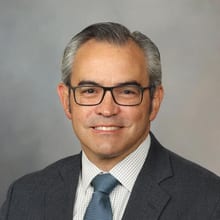
[01:41] Dr. Victor Montori is a practicing endocrinologist at the Mayo Clinic in Rochester, Minnesota, and author of the book Why We Revolt, which serves as a conceptual framework for the patient revolution. He is a frequent international speaker and has published more than 600 peer-reviewed papers. I am so excited to have this conversation because we know that especially complex patients desperately need healthcare to work better for them. As always, this information is for educational purposes only and is not a substitute for personalized medical advice. Here we go.
[02:14] Well, I am so excited to be here with Dr. Victor Montori. Dr. Montori, I have just been devouring your book, and I have to say, it's all highlighted, of course, and then also parts are underlined, and I've got little tabs. This is such a great book, and I love the work that you do. It's so, so important. Can you start out by telling us how you got interested in this topic in the first place?
[02:43] Dr. Victor Montori: Yeah. Well, thank you for your kind words, and I'm happy we're spending time together even though I'm not there. The book is the result of decades of professional activity as a clinician. I have the privilege of taking care of patients for that period of time.
[03:01] I started that process by learning to be a doctor in Peru, in my home country. At the time, the country was ravaged by terrorism and hyperinflation — which is an economic situation in which the prices of things 10 minutes ago will be much higher now — which destroys credit. I mean, it's impossible to have a mortgage or checks or credit cards or any of that nature because the prices just move so quickly, and that makes people poor very, very fast. That combination made people very sick. And at the same time, our ability to respond to disease and illness was very limited.
[03:55] When it was time to figure out what I was going to do after medical school, I saw the possibility of coming to the United States for additional training as an internal medicine doctor and later an endocrinologist, someone who takes care of patients with hormone disorders. I particularly take care of patients with diabetes. And that transition to a highly resourced, well-organized, well-managed environment was jarring. I learned medicine by reading the exact same books that people would at the time — I'm dating myself, we read books — the same textbooks of medicine that people in the United States were reading. So I just had to make all sorts of allowances: okay, how are we going to do something like what's in the book for these patients with the resources that we have?
[04:55] Coming to the United States, I had all the resources. I could actually do everything that the book said was appropriate and adequate as a response to people's situations. And yet there were challenges. Those challenges that I observed were present despite what I saw was missing over there. These were well-managed, highly organized environments, fully resourced with highly trained professionals. And there were gaps in care, challenges, difficulties in their ability to really be there for their patients, to appreciate their patients well and respond well to their situations. Patients felt to some extent processed. Sometimes people say, "I felt like a number," or "I felt like a diagnosis — I'm the pneumonia, I'm the gallbladder, I'm bed 35." This feeling of being processed through, despite all these resources, was really striking.
[05:58] It became clear to me that there was a gap between what we are trying to do, what we're trying to receive when we go for care as a patient, and what actually happened. And that motivated the work of the book and the work of an organization called The Patient Revolution, which is a nonprofit that I formed with other colleagues about a couple of years before the book came out.
[06:59] One other thing that I discovered later — which highlights where we are now — is that after publishing the book and watching it become well-read in places like Australia, Canada, and the UK, with the first translation in Italy and then in Spain, it became very clear that these countries have very different systems than the US or Peru. But what became apparent is that when you do not have enough resources at the point of care — either because, like in Peru, there's poverty, corruption, or mismanagement of limited resources, or like in the United States where everybody's trying to extract value from the healthcare system, leaving very little when the point of care needs to happen, or in those other places where governments managing single-payer systems are under policies of austerity and fail to invest enough — the final common pathway of all these ways of limiting resources for care is that care disappears. And when that happens, healthcare has corrupted its mission. It has stopped caring, and that hurts both patients who come in for care and the clinicians that show up to give that care. So that is the origin of this work.
[08:44] Dr. Linda Bluestein: I find that no matter where people are in the world — and I only speak English, so I only speak with English-speaking people when I have sessions internationally — it does seem like it doesn't matter where you are in the world, there are such common problems. And like you said, they have different root causes, but it's just really, really challenging.
[09:07] In your book, you talk about how industrial healthcare harms patients and that industrial healthcare fails to notice patients. Rigid protocols and fear of deviating from them miss the person. Systems that prioritize access and volume place very little value on the length and depth of the interaction between patients and clinicians. Forcing encounters to be brief and shallow speeds patients through consultations in which clinicians cannot appreciate their patient's situation fully. Failure to notice is also the effect of encounters bloated with industrial agendas such as documentation and billing, which draw attention away from the patients and towards the computer monitor, distracting from care to document it.
[09:48] I love how you worded this, and patients, of course, sense this, right? They sense that their doctor doesn't have a lot of time, and that they are not necessarily thinking beyond rigid protocols and focusing on test results, because those are the things that are quicker. So what can especially complex patients do who really need their clinician to think beyond these things and see them as the individual that they are? Do you have suggestions for what complex patients can do?
[10:18] Dr. Victor Montori: So this is where I become very frustrating to people because I don't think I'm practical enough. The world is filled with advice. Just go on YouTube, TikTok, Instagram, whatever, and you'll have somebody telling you how to do things. And a lot of those things assume that if you get the goods for yourself, then the world is a good place for you. That is such an individualistic view that it ends up harming the people that actually deploy those tools.
[11:00] Let me give you an example from the other side of the desk. I like to give my patients enough time. I like to have unhurried conversations. This has a cost. With my appointments constrained to whatever time slot I have, if I give people enough time, sometimes for the problems they bring, "enough time" is more than the time allotted for their visit. I run usually long and late. As a result, I have to apologize to everybody that comes after the patient with whom I run late, which hurts them. They have other priorities. They have a life to lead. They have commitments to family and work. I just ran through that. I disrespected that. That's not very caring. Furthermore, I work with other people who have things to do at the end of their workday, and I just made their workday longer — once again, disrespecting what their lives are about and what other things are important to them in addition to the very meaningful work that they do.
[12:15] So this idea of heroically doing what's right for my patients ends up hurting all sorts of people, including people that I care about and people that I'm supposed to be caring for and with. And the same thing happens for the patient advocate. "I'm going to show up, I'm going to come in, and I'm going to make sure that the attention is on me, and I'm going to do all these things regardless of what that clinician's job or activities or demands are, because I'm going to get what I need for myself." Lovely — and yet that is going to create some troubles, not just for you, the advocate patient, because you're going to become the difficult patient. "Oh, the painful patient — I don't want to have to see you if I don't have to." These sorts of approaches backfire completely because what you just did is made the constrained clinician's tasks much more difficult to complete. The next time you go, you'll have to do the same effort. What about if the next time you go, you're sicker? What if you have less energy? What if your companion that you brought along the first time — because they can take notes and you can advocate for yourself — is busy and cannot make it? Now you have to struggle, and nothing has been fixed because you're just advocating for yourself.
[14:00] So where I'm impractical is I really do not advocate for individual solutions, for fixing it for you. I think what we need is to come together — patients and clinicians — and to work towards fundamentally changing what healthcare is about. I know that doesn't address the problem of today, and you are sick today. But to focus on what you can do for yourself to make your visits worthwhile leaves the problem of you having to think about doing that completely unchanged — unchanged for yourself, unchanged for your friends and family, unchanged for your children. And if there is no pain in the system and the system doesn't have to change to create the conditions for care, then the system will continue its evolution towards more intense, faster processing of people, which then requires more intense effort to self-advocate. So you have to be healthier to be a good patient.
[15:08] Dr. Linda Bluestein: Right.
[15:10] Dr. Victor Montori: And so heroics on the part of individual clinicians who try to do their best despite the system, and heroics on the part of individual patients who try to take the care even when it's not available, are just not sustainable for those parties, and they don't create the kind of sustained change that actually benefits them in the future. That's why we're talking about a patient revolution.
[15:33] Dr. Linda Bluestein: And I know you also talk a lot about burnout, which I think is definitely a huge problem. And I love how you use the phrase "heroic clinician," because a lot of us do try to go above and beyond and take more time. And like you said, it does create other problems. You talk about how the harm is not only done to patients — that industrial healthcare is killing the healer's soul, that enforced productivity depletes clinicians, and that clinicians often blame themselves when they feel burned out. I know you published a paper on this recently that we can link in the show notes. For clinicians who feel burned out and want to spend more time with patients — and of course we'll share your website and suggest that people go there, and we'll talk a little bit about what people can do to help facilitate this revolution — what can they do? Because oftentimes they blame themselves, but you talk about it being a more systemic problem.
[16:43] Dr. Victor Montori: Yeah. What is this moral injury that leads to burnout? I have a story that I think helps both sides. One thing that I want to make very clear is that we think of patients and clinicians on the same side of the problem. Many observers of the situation of healthcare find patients having to fight against the system and see the clinicians on the side of the system. I happen to see the clinicians and the patients on the same side of the problem, with the system affecting them both.
[17:22] The story I use is the story of the canary in the coal mine. When I give talks, I have a slide of what appears to be the last canary in the coal mine in England — from the late '80s or early '90s, incredibly recently. Coal miners would come in with their little bird in the cage into the mine shaft and use the bird to determine if the mine was toxic to them. As I understand it, as the toxicity in the air became evident, the canary would become restless — flying around the cage, moving on the little swing, chirping and chirping, trying to get attention. But eventually, as toxicity levels continued to rise, the bird doesn't die, as most people say. It's a renewable technology. The bird stops singing.
[18:48] So think about the patient with chronic conditions, complex regimens, multiple specialist visits, who has to do all sorts of different things to get the care that they need. And all of a sudden, some things don't get done. Some appointments, they don't show up for. Instead of thinking of this as a patient who's not taking responsibility to do their part in the industrial healthcare machine, if we think of this as a bird who stops singing because the level of healthcare demands has become toxic to them — that leads to a different response. If we think of the clinician who all of a sudden starts taking vacation more often, starts taking time off, shows up late, seems absent, seems not to care — if we think of that clinician not as somebody who's failing their professional responsibilities, but as a bird who stops singing, we can see the transition from moral injury, the restlessness in the cage, to burnout, the silent bird in a toxic environment.
[19:49] The miners know: when the birds stop singing, they better get out. And what our response in healthcare has been — when clinicians and patients stop participating — is to intensify the demands on their time and their effort. The patient who is non-compliant with treatment and sees their outcomes decline: the response from the clinician is to intensify the therapy, to give them yet another task or another pill, one that is more difficult to take. This paradoxical response reveals how uncaring the environment is in which patients and clinicians get to show up to give and receive care.
[20:44] Seeing it as evidence — not of the personal failings of patients and clinicians, not of their lack of professionalism or personal responsibility — but thinking of them as people who show up to do the work and get to do it in a toxic environment leads to a different line of thinking and a different response. And it furthers the idea that healthcare is not a place that's creating conditions favorable to care.
[21:15] Dr. Linda Bluestein: Yeah, no, I think that makes a lot of sense. And it's so frustrating because I love what you said at the very beginning about clinicians and patients being on the same side, being on the same team. It's so hard, because for so many patients — especially a lot of the ones that listen to this podcast — they have such complex problems. And they see the clinician as, as you explain well in your book, the choreographer of the dance. The way they see it, they think that the clinician is in charge of the duration of the visit and a lot of things that the clinician does not actually have control over. So I think that deepening that understanding and helping people to understand that clinicians, most often, really want to do the right thing for the patient — but they're just not able to.
[22:08] Dr. Victor Montori: Well, we have to be clear: there are some people who should not be given the privilege of being at the bedside with a patient. There are some professionals that behave extremely poorly, but I happen to think that they're the minority. I have concerns that they may proliferate, and I'll explain that in a minute, but I think they're in the minority.
[22:33] There is a phenomenon — I should come up with a good name for it — it's the idea of pointing upwards. When I talk to groups of patients, they point at the clinician and say, "Oh, my doctor's in charge." When I talk to groups of clinicians, they express a form of learned helplessness — the kind of consequence of abuse that you sometimes see in abuse victims — where they basically don't think they can do anything about improving the conditions of care. And when I tell them, "But your patients think that you're it, that you have all the power — why do you feel completely powerless?" they point up and say, "Oh, but the administrators, the boss — they have the power."
[23:22] So then I've talked to administrators, to roomfuls of CEOs. I tell them: this is what the patients feel, this is what the doctors think, so you're it. How are you going to improve the conditions for care? And they point up and say, "Well, but the insurance companies and the pharmaceutical companies — they charge us, they don't pay us — that makes it impossible to keep our hospital." And of course every one of those people are right. But they've all — all the way up to CEOs — seemed to have this sort of learned helplessness that makes none of them act as agents of change. They keep asking themselves, what can I do?
[24:14] And I often have to correct their grammar. The grammar of change is: what can we do, and what will we do, and what should we do? Look at your moral obligations for guidance, and then look at your courage to act. And that courage doesn't have to come from a singular "you" — that courage comes from a plural "we." There's a loss of "we" that is actually enabling and allowing industrialized healthcare to persist.
[24:58] Dr. Linda Bluestein: That's so interesting — the pointing upwards. We're going to take a quick break and when we come back, we are going to address exactly that question: what can we actually do? What can we do?
[26:41] Okay, we're back with Dr. Victor Montori, author of the book Why We Revolt: A Patient Revolution for Careful and Kind Care. So we are going to talk about — well, what can we do? What are some things that we can do?
[26:55] Dr. Victor Montori: So, in 2016 — it's going to be almost 10 years now — we formed this organization called the Patient Revolution, which is not a patient advocacy group. It's a care advocacy group. The first thing people can do is check out our website and what we're trying to do. That's at patientrevolution.org. Come in and check it out.
[27:21] What we're trying to do in this organization is create a community of care activists. Not all of us get to have the energy, the time, or the ability to make a difference. Many of us live with chronic conditions in which we have to do both things — we have to live our lives and also be patients, and try to enable our lives by managing and controlling our conditions and palliating our illnesses and getting our energy when we can. So there is scope within this for patients to spend some time, energy, and attention — not just advocating for self, with the limitations we discussed earlier, but also joining a group of other people committed to fundamentally changing healthcare, and then finding themselves in a room not just with other patients, but also with clinicians.
[28:40] The invitation is also for clinicians who are suffering within this system and have the time and bandwidth to potentially come in and draw from the expertise and knowledge of others, but also — perhaps more importantly — draw the courage from the group to actually try to make a difference where they are. The Patient Revolution's community of care activists is one first opportunity you can join.
[29:19] We have an online course called Foundations of Care. One of the things that Foundations of Care does is give you a language to understand and describe the problems of healthcare — we call them the pathologies of care. So people can speak about how it is that sometimes they feel like a blur, that their clinician doesn't know them very well. Or hurry. Or burden — the notion of the burden of treatment, which is a surprisingly recent development in medicine where we began to recognize that the work healthcare transfers to patients and families can itself contribute to reduced quality of life and disrupt their lives. So burden, and encounter, and minimally disruptive medicine, and cruelty. We're using the word cruelty to describe the common situation of coming to healthcare seeking care and experiencing indifference — indifference to your urgencies, indifference to your pain, indifference that sometimes costs lives.
[30:38] I'm tired of hearing stories of the young Black woman who shows up in the emergency room pregnant, stating she has abdominal pain, and is asked to sit down and wait for her turn, only to be found bleeding to death on the floors of that emergency department. That is offensive to our human sensibilities, and it's fundamentally cruel. But it's also cruel when you call in asking to be seen and you're put through a telephone triage system that behaves as if you've never been in this office, you've never seen any of our doctors or nurses. And it's a call center person — not one of the people that you know — who gets to decide whether you will be seen and when. All these things are indifferent to the investments you've made in the relationships of care, which have cost you so much because you had to overcome distrust and all these other things.
[31:41] Systems are indifferent to the need for continuity of care. I've already opened my soul and become vulnerable to this particular clinician, only to find that when I come back for follow-up, it's a completely new person that I now have to explain everything to again. I get re-traumatized every bloody time. So it's cruel that we don't actually respect the effort it takes to form those relationships, or the value that the continuity of those relationships has in improving your situation. Cruelty is another word that you get to learn to use to describe the problems of healthcare in our Foundations of Care course.
[32:20] Another thing you can do is read the book, Why We Revolt — another way of entering into the language we're trying to use to explain what's going on and some of the ideas that put it together, so one can understand the problem better and act on it.
[32:41] And then in Patient Revolution, we have a greenhouse — which is where we grow new ideas, new tools, and perhaps new policy initiatives or other things that our care activists can work on. When you finish the Foundations of Care course — which is an online course that you do on your own time, facilitated by facilitators in our community who help you through it — the final step is a capstone project. The capstone project is a mini revolt. You get to think about: what is my sphere of influence? What are the problems of care where I am? And let's see what we can do together to try to make a difference. Our facilitators help you plan a mini revolt, a mini activity within your space where you can try to make a difference with people around you in fundamentally changing the conditions for care. And then you get to tell that story of how it went to the community. Think of it as little pebbles being dropped on a pond, creating ripples — but those ripples come together, and the hope is that they become an unstoppable wave that eventually shifts healthcare from a trajectory towards further industrialization to one of careful and kind care for all.
[34:01] I'm not describing a process that will take 2, 3, or 5 years. I'm describing a generational process. This is the kind of thing that people who plant trees are familiar with. The idea is to start the work today. Perhaps we may not see the benefits ourselves, but we hope that at least the next generation — if not the subsequent one — will fully enjoy the benefits of the decision we are making today: saying no, we're not pursuing that path of further industrialization. We're turning away from it towards one of deeper human connection and humanistic care, focusing on the situation of each individual person.
[34:36] Dr. Linda Bluestein: And this course — you said it's online, but is it on demand, or is it online with some live interaction? Can you explain a little more about that? And I believe that when I looked at this, there was also a sliding scale in terms of fees for the course.
[34:42] Dr. Victor Montori: Yeah, that sliding scale is mostly to ensure the organization can sustain itself. Our organization is tiny — all the people working in it can be fed with half a pizza, and our budget is very limited. What we're trying to do is not get bigger administratively; we're trying to get bigger in the size of the community these organizations support. So the sliding scale is an effort to, A, make it available to everyone, and if you happen to have the means to support the organization, here's a way in which you can do it while getting something in return. We've been toying with this scale to make sure it doesn't exclude anybody, and we're happy to report that we've seen people take every rung in the ladder, so to speak — which gets to the point that if you get an opportunity to make a contribution, that opportunity can be appropriate to your means.
[36:20] The course itself is set up in modules, and it's a cohort — so it's not like everybody starts at different times. You start with your cohort at a given pace, but when you log in to do your work for a particular module, that's on your time. We have people from all over the world, so all time zones are sometimes represented in the same cohort. People show up, enter their responses to the reflections, and can see the responses of other people and the dialogue that then ensues — which is asynchronous but is dialogue nonetheless. All of that is moderated and facilitated to ensure maximum learning. And then towards the end, as people are formulating their plans of action — their mini revolts — there's also interaction with the facilitators to make sure the plans are concrete enough so that you can actually come back and share what you've been able to accomplish. At the moment, I think we have in our library of mini revolts about 90 or so different projects happening around the world to fundamentally make care more careful and kind for everyone.
[37:45] Dr. Linda Bluestein: That's fantastic. And so this is something that you said patients can do, clinicians can do — so they're doing it side by side?
[37:53] Dr. Victor Montori: Right. Correct. We have clinicians, we have patients, we have engineers, we have lawyers, we have designers, we have statisticians — statisticians are people too. Just kidding. No, I'm not kidding, they actually are. But anyway, you get the point. And so there are all sorts of different people, and it's interesting because of course they bring their skillset, their expertise, their lived experience as patients, their lived experience as clinicians to bear on these projects. They're very rich and very interesting, and some of them are sort of expected and some of them are totally surprising. It's been amazing to watch.
[38:28] Dr. Linda Bluestein: And I want to come back to a topic that we kind of touched on a little bit earlier, and that you talk about quite a bit in the book, and that is patient work. We know that patients are getting asked to do more and more. And I feel like we're living in such strange times, because there's a part in the book with the subtitle "The Robot Will See You Now." It's so ironic because we have this incredible technology, and with certain conditions we can do incredible things, but at the same time we're missing out on that human connection and some of these basic things, and we're also asking patients to do a lot of work.
[39:13] I really like how you said that pursuing efficiencies in the work patients do is most important — that it is the patient's time, energy, and attention that are especially scarce and that we need to kindly respect. Patients who have EDS or Ehlers-Danlos syndromes and the comorbidities that come with that, who listen to this podcast, they have to do so much work. You talk about it being basically the equivalent of a part-time job. And of course, the conditions themselves make it hard for people to do outside work, but now they're having to do this extra work. And you talk about how, if they're not able to follow through with certain instructions, oftentimes we give them even more work to do. In the shorter term, what can patients do who feel like they're getting overwhelmed with work?
[40:04] Dr. Victor Montori: Yeah, so clinicians have no idea how much work their instructions are to patients — that's the first realization. When I ask patients, "Oh, take your pills first thing in the morning, then the other ones with the last bite of your evening meal," I'm sort of ignoring the fact that the patient already takes 9 other tablets, and those have their own specific instructions as well.
[40:37] Medication taking — organizing, scheduling, and refilling — is one of the set of tasks that healthcare has essentially allocated to patients and their families. Family members not infrequently are the reason why patients are able to implement the treatment program with some degree of consistency, because it is family members who sometimes set up the pillbox or remind the patient, "Hey, it's time for your pills." And they have to do it in a gracious enough way to not create conflict. So there is material work, physical work, administrative work, and emotional work that needs to be done.
[41:19] But the first thing to recognize is that clinicians have no idea. So when you're interacting with a clinician — either in person or through portals or other mechanisms — when something is added on, it's very important that some work be spent thinking about, "Okay, how exactly am I going to implement that, given everything else that I'm doing?" That's actually a legitimate conversation that needs to take place in the office when setting up new plans of care.
[41:45] The other thing is that if you receive care from multiple specialists, and with the decline in primary care, most people are now walking around without anybody coordinating all of these things. That's another task the patient is left to do, and not necessarily in the best position to do it. I mean, there are many expert patients who are very good at this, but it often takes some time and learning through suffering, which is not the best way.
[42:22] There are people like pharmacists that you can ask for a medication therapy management appointment. Pharmacists can sometimes help you organize medications in a way that retains their efficacy but makes them much easier to take. Silly example: so many people are on statins and cholesterol-lowering medicines. There was a time where clinicians recommended those must be taken at night. There's really no reason for that. If you take all your pills in the morning and that one is your night pill, can we just not put them all together in the morning? Yes, of course you can. Is there going to be a loss of something? It probably doesn't matter. Just take them all together. So things of that nature — knowing when to sort of break the rules. "It said on an empty stomach, but I just took my first pill — stomach's no longer empty. Do I need to wait a couple hours for an empty stomach again?" I have patients who have assumed that, and they're taking pills every 2 hours and asking, "When do I eat?" So pharmacists can spend the time to help you sort out how to organize your medications in a way that they fit your life.
[43:25] The same thing with refills. There's really no good way of synchronizing refills, in part because many patients get their medicines from different pharmacies — some are mail order, some are the corner pharmacy — and sometimes they have 30-day prescriptions, sometimes 90-day prescriptions, and somehow 3 thirty-day prescriptions are not the same as a 90-day prescription. And we're still sending faxes around. So a pharmacist can sometimes bring some order to that chaos.
[44:08] Having assistance is often helpful. If you're coming into an important appointment, bring somebody with you to take notes, or just record the visit. And if you're adapted to this, share the recording with a large language model system, an AI system — particularly as those evolve so you can have them on your computer disconnected from the internet. You don't want to be sending your medical notes to the cloud, because there is no guarantee that these companies are going to respect your privacy. But if you can have one of these systems that you can download and that doesn't communicate to the internet — and those are becoming more common now — then potentially you can have those systems listen to your encounter and produce your own note of the visit. Not the note of the medical record, but your note of the visit, your summary of what went on, that you can query to say, "Can you tell me the 3 to 5 to-dos that came out of this?" That helps you organize your activity. Organization tools available for executives — "get things done" methods, strategy, structure, and so forth — can be used as well.
[45:31] But each one of those things I just described is more work. And we started by saying, what about reducing the work? Some of that is similar to what we do when we exercise. When we exercise, we spend time, energy, and attention. That takes effort, but what comes out on the other side is vitality, and that vitality gives us more bandwidth to do more with our day. When we read and learn, that takes time and effort and attention, but what comes out on the other side is experience and expertise that then makes things easier afterwards. So investing in some of these upfront activities of self-management might actually free up capacity so you can do more.
[46:23] Palliative care — if you're being seen for your disease but you suffer from insomnia, from pain, from shortness of breath, any of these symptoms that are difficult to manage, have a focus on the symptom without always pursuing the root cause. If you always have insomnia, okay — you've developed good sleep hygiene. What else can you do? Palliative care physicians can sometimes be brought in to help with those. Usually they're busy with people whose lives are ending, but the use of palliative care in chronic disease is dismal. And yet what limits your ability to live are all those symptoms that are sometimes improved when your condition is better controlled, but sometimes are left untreated. So manage your debilitating symptoms so you have more capacity.
[47:19] Find a rich uncle, or win the lottery — very helpful, because you can hire additional help. There are people who are very intense users of delivery services — your Instacarts and your Uber Eats — getting things delivered so that you have to do less of that daily activity. Try to use all those resources to the extent that you can.
[47:56] But at the end of the day, it comes back to a responsibility of the healthcare system to stop thinking about patients as unpaid employees of the hospital and stop giving them errands — delegating activities that the system should do. It is not uncommon in committees where people are struggling with, "How do we get that piece of data?" for somebody to say, "We can ask the patient," or "The family can fill out the survey." Similar to the advice I just rattled off about patients, there's a similar set of considerations about clinicians and healthcare systems. If you're in the room when that is said, remind people that they're talking about folks who are completely exhausted, and stop allocating additional work. Or if you are going to do that, then take away some other work that you've allocated before.
[49:10] My favorite example is that I visited a clinic once and waited in the waiting room, and there was a sign that said, "This clinic needs to get 100% of diabetic patients on cholesterol medicines — help us get there." I can see the motivation: "Help us be a good clinic for you." But I don't think people recognize that we're asking patients to come into the clinic to help the clinic. Patients come into the clinic for the clinic to help them.
[50:04] Dr. Linda Bluestein: Right.
[50:06] Dr. Victor Montori: So the ultimate work here is to change the arrows. We hold patients accountable for their own improvement. No — patients and clinicians should hold the organization accountable for creating the conditions necessary for them to care well. The organization cannot be blaming clinicians and patients for their bad outcomes. The accountability arrow has to be flipped. The majority of the work cannot be dumped on patients. The work needs to be done by the organization — that is the purpose of the organization, to do most of the work. And this idea that "patients have to take responsibility" is usually said by people who have never been sick.
[50:50] Dr. Linda Bluestein: Yeah, so true. So true. And one final question before we wrap up, which points directly to what you were just saying. One of the questions a listener asked me to ask you had specifically to do with having a general practice doctor, a PCP, and they said they just have an incredibly difficult time trying to find a PCP who will do more than just treat it like a cold. This person has a myriad of complex illnesses and such a hard time finding somebody. How can somebody navigate that? And you're right — if we don't have somebody coordinating care, that creates even more problems. Do you have any suggestions?
[51:33] Dr. Victor Montori: Again, not a practical person, so obviously the wrong person to ask. When there are no primary care clinicians, there's no suggestion. What are you going to do? They're just not there. I think it's worth thinking about why they're not there. We're talking about one of the most meaningful human activities — why are they not there? What has made the primary care clinician a species at risk of extinction? And the reason is: we don't value care.
[52:19] In specialty care — I'm a specialist — we have things we do that are very gimmicky, some interventions. Some people cure people. That's pretty amazing. People do surgeries and fix people — that's pretty amazing. But primary care clinicians, for the most part, are experts on the patients that they see. They're not experts on the diseases those patients have. Diseases come and go; the patients stay. For specialists, the diseases stay — I see diabetes day in and day out; it's the patients that come and go. And you need both. When you're a chronic patient whose disease is not going to come and go but is going to come and stay, having a clinician who stays with you — not with the disease, with you — is particularly important. And as you get older, you accumulate other conditions. So the notion of "I'm going to make my specialist my primary care clinician" runs the risk that the clinician will always see the disease you have but miss you as a patient.
So you've got to vote. You've got to advocate and vote, because the solution to the problem of primary care depletion is political. We need policies that make care the core purpose of healthcare, and then align those policies to make sure that people who have to care for patients wherever they are are available. This is an acute problem in rural America — it's horrendous. Suburban America has a little bit of better luck, and urban centers sometimes have some choice, depending on where. For the most part, we've depleted that and made it so unattractive.
[54:05] And this is where I said we could come back to this, and I think you just gave me an opportunity. I don't think most clinicians are bad people. I think most clinicians are good people who show up for the right reason. But we are running an interesting risk. As healthcare becomes more and more about an industry set on making a lot of money, many medical students are joining the career not for the same motivation that people in previous generations had — "Why are you going into healthcare? I'm going to care for people." And then they get disappointed that there's more of this other stuff. We are having a generation where, according to some studies, about half of the students joining to study medicine are doing so without any interest in ever taking care of a patient.
[55:05] I heard the explanation from a police officer who got interviewed once. He was retiring and was one of those police officers in a small town who knew all the kids on the corner, knew everybody by name, had all these relationships with people in the community. The interviewer on public radio asked him, "How come we don't have more policemen like you?" And he said, "Well, I have a gun, but I never used it. I was really hoping I would never use it. I'm retiring now and I've never used it, and that makes me very happy. But the kids today are recruited by the police department and the police academy by showing them the SWAT vehicles, the night goggles, the special helmets and the fancy rifles and the drones — and the kids that are attracted by those things tend to be fundamentally different than the kids who are attracted to, 'Let's have a conversation with a complete stranger on a corner.'" As a result, if you populate your police force with people who are interested in using the technology, don't be surprised that in a condition of stress, they're going to go for the technology to address the problem.
[56:20] Similarly, I'm concerned that as we continue to industrialize healthcare — continue to make it more about the money that can be made and the products that can be produced and less about the caring for and about and with each other that it entails — the people that are signing up are the wrong people for the job. So not only do we have few primary care clinicians, but the ones that are showing up to care are actually not that interested in care anymore.
[56:47] So it really requires us to act together to form a movement for care — a movement for care that doesn't stop at the doors of our local hospital or clinic, but also knocks on the doors of political power to try to influence it, so that we make investments in education, and also investments in care, investments in the flourishing of people, which is the main reason our societies and our state exist for. We are so far from that. So: got to vote, got to become politically engaged, got to be members of a movement. Place to start — visit patientrevolution.org. Join us as a care advocate. And I think that's going to eventually give us more answers, with the creativity and courage of the group, as to what we can do to bring about careful and kind care for everyone.
[57:41] Dr. Linda Bluestein: And that's a really pretty frightening statistic — that 50% of people going into medicine don't ever plan on actually taking care of patients. Because people think it's bad now; it's only going to get worse. I have seen that statistic before, and it's really scary. Wow, this has been such a great conversation. If you could just mention your website one more time so people know where to find you — and thank you so much.
[58:15] Dr. Victor Montori: I welcome everyone to visit patientrevolution.org. Join our school, join our community, and let's make a difference together.
[58:27] Dr. Linda Bluestein: Well, thank you so much for coming on the Bendy Bodies Podcast. I really appreciate you taking the time and sharing all this great information with us.
[58:36] Dr. Victor Montori: Lovely to be here, and good luck to everyone listening to this. These are tough times, but let's think of this as preparing for the dawn after a long night.
[59:37] Dr. Linda Bluestein: That was such a great conversation with Dr. Victor Montori, and I hope that you are going to be inspired to visit his website and join the Patient Revolution. I do think that this is such important work, and although it would be great to have a few super concrete specific steps for us to follow, I think taking his course is a really great idea. And we all know that the problems in healthcare are big — these are not things that we're going to be able to change overnight. So it really is going to take time and effort on all of our parts. So I hope you found this episode helpful.
[1:00:08] I want to thank you for listening to this week's episode of the Bendy Bodies with the Hypermobility MD podcast. You can help us spread the word about joint hypermobility and related disorders by leaving a review and sharing the podcast. This really helps raise awareness about these complex conditions. If you would like to dig deeper, you can meet with me one-on-one. Please check out the available options on the services page of my website at hypermobilitymd.com. You can also find me, Dr. Linda Bluestein, on Instagram, Facebook, TikTok, Twitter, or LinkedIn at hypermobilitymd. You can find Human Content, my producing team, at humancontentpods on TikTok and Instagram. You can find full video episodes up every week on YouTube at Bendy Bodies Podcast. To learn about the Bendy Bodies Program disclaimer and ethics policy, submission verification and licensing terms, and HIPAA release terms, or to reach out with any questions, please visit bendybodiespodcast.com. Bendy Bodies Podcast is a Human Content production. Thank you for being a part of our community, and we'll catch you next time on the Bendy Bodies Podcast.