Description
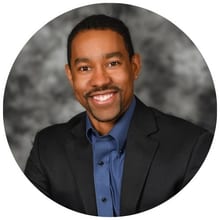
In this special on-site episode of the Bendy Bodies podcast, Dr. Linda Bluestein, the Hypermobility MD, sits down face to face with Dr. John Pitts! Dr. Pitts, is an expert in regenerative medicine, about cutting-edge treatments for hypermobility and chronic pain. Dr. Pitts discusses prolotherapy, protein rich plasma (PRP), and "stem cell" therapies and explains how these treatments can heal tissues and improve function without surgery. He shares insights on treating conditions like Ehlers-Danlos Syndrome (EDS), Hypermobility Spectrum Disorder (HSD), and joint instability, focusing on helping the body heal itself. Whether you’re dealing with nagging pain or seeking alternatives to surgery, this episode offers hope and practical solutions.
Watch
Guests
Transcript
[00:42] Dr. Linda Bluestein: Welcome back, every bendy body, to the Bendy Bodies Podcast with your host and founder, Dr. Linda Bluestein, the Hypermobility MD. Today we are having a great conversation with Dr. John Pitts. I know that you are going to love this conversation. I personally have had prolotherapy and PRP, and I have wondered with a lot of my nagging aches and pains that I have, should I consider getting more injections or should I just wait it out until it's so bad that I need surgery? What should we do? This is not my area of expertise. I am an anesthesiologist. I have done pain management, of course, but I do not do these procedures. So I didn't really know a whole lot about them. So I really wanted to talk to Dr. Pitts.
[01:23] Dr. Pitts completed a residency in physical medicine and rehabilitation at Emory University in Atlanta, Georgia. He came to Colorado as a fellow to learn more about regenerative medicine and interventional orthopedics, as well as further develop his skills in fluoroscopic guided procedures, diagnostic ultrasound, and interventional ultrasound. Dr. Pitts has been involved in research and development regarding regenerative procedures and post-procedural rehabilitation. He is the current fellowship director at the Centeno-Schultz Clinic and has interests in nutrition, supplements, and complementary and alternative medicine. He has written a nutrition guide, Nutrition 2.0: 21st Century Guide to Nutrition and Health. He is also the main editor of the Atlas of Interventional Orthopedics, the first full textbook on the new field of interventional orthopedics to educate physicians on why and how to perform these injection procedures.
[02:20] I am so excited to chat with Dr. Pitts today. This is a super important topic for people who have joint hypermobility and connective tissue disorders like the Ehlers-Danlos syndromes. As always, this information is for educational purposes only and is not a substitute for personalized medical advice. Be sure to stick around until the very end so you don't miss any of our special hypermobility hacks, and let's get started.
[02:47] Well, I am so excited to chat with Dr. Pitts today. I know so many people have been just really eager to hear this conversation about regenerative medicine. And for the purposes of the conversation today, we're really going to focus on the hypermobile EDS and HSD population. And in fact, we're not really going to make a distinction between the two because that would be a whole other conversation, right? So we're going to kind of lump that population together. But I want to start out by asking you, can you define regenerative medicine for us, and why is this such an important topic for people that have these conditions?
[03:20] Dr. John Pitts: Absolutely. So when I think of regenerative medicine, I think of doctors doing something to patients that help them to heal themselves. So in traditional musculoskeletal medicine, we think of doctors doing pain management. This is doctors giving patients drugs and medicines, injecting medicines, or performing procedures that help the patient out of pain, but they don't actually address the underlying issues that cause their problem or dysfunction in the first place. With regenerative medicine, we're trying to restore function, improve tissue healing so that the patient has better function and less pain — because they're getting better, not just because we gave them drugs to help with their pain.
[03:57] Dr. Linda Bluestein: I love that. So you're really dealing with the root cause then rather than just covering it up.
[04:01] Dr. John Pitts: Absolutely. We're trying to address all the root causes, biomechanical issues, structural issues that contribute to dysfunction that leads to pain. So if we address those, we're going to get better and longer-lasting relief than if we just do pain management. And we're going to have far less potential side effects because we traditionally don't use many drugs and medications for this.
[04:21] Dr. Linda Bluestein: Okay, fantastic. And in terms of evaluating patients, how do you evaluate the typical — and again, this conversation really is focused on EDS and HSD — how do you evaluate those patients? And is that evaluation different from patients that don't have those conditions?
[04:37] Dr. John Pitts: Yes, absolutely. So every patient that comes in our clinic is going to get a full, basically hour-long type evaluation where it's face-to-face, hands-on exam. So we're going to take a detailed history to find out what that patient's problems are, the symptoms that they're having. We're going to do a detailed physical exam so we can figure out which structures hurt. We're going to do ultrasound examination on many parts of this. We're going to look at any imaging films, or if we don't have any imaging, we can request imaging from what we see on the history and physical exam. Put all that together like a detective to fit pieces of the puzzle together to know what's going on with that patient.
[05:14] For EDS patients, we're going to also add in a Beighton score, just to see how hypermobile they may be. And we're going to be aware that in patients with EDS, all their joints are going to be hypermobile. So if we're looking for excess mobility from their natural baseline, we're going to really be comparing side-to-side differences. And it's also going to make a difference as far as what we recommend for treatment, because we treat people with hypermobility a little bit differently than the normal population that doesn't have EDS.
[05:42] Dr. Linda Bluestein: Okay. And what percentage of your patients do have EDS or HSD, do you think?
[05:48] Dr. John Pitts: I would estimate probably about 10%. Obviously EDS is low in the general population, but we tend to see a higher number of EDS patients because all EDS patients have musculoskeletal problems and pain and joint problems, et cetera. So we're going to see a higher number of those patients in our practice.
[06:05] Dr. Linda Bluestein: And when we talk about regenerative medicine — or I know you also refer to it as interventional orthopedics — can you explain what the different procedure types are for that?
[06:25] Dr. John Pitts: Yeah, absolutely. So we kind of liken it to cardiovascular surgery and interventional cardiology. So if you had major heart problems in the past, you had to have open heart surgery to address those problems. But now with new technology, it's more interventional cardiac procedures. They can just go through a vein or artery in your leg or wrist and perform those same procedures. So similarly in orthopedics — orthopedics is doing surgery, cutting out body parts, using body parts, doing major surgery — we're trying to address those issues with just injections basically. And what we inject are mostly substances called orthobiologics. These are basically substances that help your body to heal itself. Things like prolotherapy, PRP, bone marrow concentrate containing stem cells, adipose graft, et cetera. And the goal of all these things is, again, to try to get the body to do what it naturally does, but just kind of enhance that healing function for areas that don't have enough stem cells in the area or don't have enough healing capacity for the injury that's there.
[07:27] Dr. Linda Bluestein: Okay. So those are the different types of procedures. What are the advantages and disadvantages of each of those? And I know that could probably be like a multi-hour conversation right there. But if you can just kind of give us that 10,000-foot view — maybe a little more detail about how prolotherapy is different from PRP, and of course I think an important conversation is stem cell injections and bone marrow concentrate, how those are different if they are different, and why these things are important for people to understand. I think that's really important for them to know what the options are so they can be thinking through these things carefully.
[08:09] Dr. John Pitts: Right, absolutely. So that is certainly a broad question. We're going to keep it as general as possible but try to get as much detail in there as we can. I think it's helpful to first compare it to the traditional pain treatments out there. So if you think somebody comes in with pain, they might do a steroid injection into a joint. Steroids help reduce inflammation and help with pain, but they actually can break down tissues. With any of these substances — PRP, prolotherapy, bone marrow concentrate, stem cells — there's no destruction. It's basically taking parts of your own body and transplanting it, or using a substance that helps stimulate healing in your own body. So it's safe. That's one of the advantages of these procedures. They don't have inherent risk themselves. There's only the risk of the injections, which are much less risk than surgery.
[08:53] If we think about prolotherapy, that's kind of the easiest, most basic form of injection-based therapy that we can do. This is basically injecting a sugar solution that's hypertonic. It creates a little osmotic stress on the cells and they release growth factors that help heal the area, because they perceive that as damage. So it's basically like creating an ankle sprain — when you have a first ankle sprain, you get some swelling, a little pain, recruiting blood flow to the area. It just kind of stimulates a healing response in your body that's very mild, but can work really, really well for minor injuries. So if you have minor ligament injuries, that can work really well. And what we find in the EDS population is that many EDS patients actually respond a little better to prolotherapy for ligaments as opposed to PRP for ligaments. So we've noticed that difference.
[09:45] Now we go up the ladder to PRP, which is much stronger than prolotherapy. If prolotherapy will fix a particular problem with 3 to 4 procedures, PRP may be able to handle that same problem in 1 to 2 procedures, or even help problems that prolotherapy can't help at all. PRP stands for platelet-rich plasma. This is basically taking out your blood, concentrating the platelets — which are little cell fragments that have growth factors in them and are involved in wound healing — and directly placing them into damaged tissues. PRP at this point has much better evidence than most of orthopedic surgery as a whole field. We've got 3 dozen randomized controlled trials showing that PRP helps for knee arthritis. We've got randomized controlled trials showing it helps in pretty much most areas of the body right now. We publish these data every year. So that's a really great tool to help with mild to moderate musculoskeletal type problems.
[10:42] If we go up a little further from there, we get into bone marrow concentrate that contains stem cells. I specifically word it that way just to be accurate. Just saying "stem cells" is sexy and fancy, but that's not the correct terminology. With bone marrow concentrate, we're taking bone marrow out of the iliac crest — typically the back of the hip bone — and concentrating the cells out of there. That's where all your blood cells are made. So we have a lot of progenitor cells, or cells that turn into other cells. A small number of those cells in the bone marrow are what we call mesenchymal stem cells. These cells can turn into a lot of different tissue types and are involved in the healing response. They're found all throughout your body, and if you didn't have stem cells, you would pass away very quickly because these cells help repair damaged tissue in all your joints and tissues. So basically we're just concentrating those cells — the stem cells and the other cells in the bone marrow that can also be helpful for healing. There's also PRP in the bone marrow that we can get, and all of that helps a person heal. That's even stronger than PRP. So for more moderate to severe problems, we might choose a bone marrow concentrate procedure.
[11:54] Another procedure that's done in the US that has stem cells as well is called an adipose graft, or micronized adipose tissue. Fat tissue has stem cells in it — those mesenchymal stem cells — as well. So you can take fat tissue, break it down a little bit, and inject that tissue into damaged structures to get some stem cells from the fat to repair tissues. That doesn't have as much evidence as bone marrow cells, but it does have good evidence that it can help with things like knee arthritis and rotator cuff tears. So that's a reasonable option as well.
[12:28] The other type of so-called stem cell treatments — we can get into more detail if you want — but those are things that either are not allowed in the US or are really scammy and sound like stem cells, but you have to be careful to avoid them.
[12:39] Dr. Linda Bluestein: Yeah. I think that's a really important thing, and we're definitely going to get into what people should be looking for when they are thinking about whether or not to have one of these procedures, because I'm sure there are some critically important questions that people should be asking when they are making that kind of a decision. So let's talk about that in the second half of the conversation. But thank you for laying that out so well. That was really, really helpful. So in terms of each of those procedures, are there contraindications?
[13:12] Dr. John Pitts: Absolutely. There's no medical procedure on earth that is right for everybody. Again, these procedures are very safe, so there are not many things that preclude you from treatment. But one is — do you have the right diagnosis? We want to have a clear musculoskeletal problem that we think can be helped by these treatments. We typically get the patient to heal themselves, so patients need to be healthy themselves. If they have a lot of medical conditions, or they can't tolerate procedures, or they have some severe nerve issues going on, things like this, we might stop and say, hey, we don't think you're necessarily a candidate for this. Or if their problem is something that needs surgery — it's just too severe for any of these treatments to help — then surgery is the right path.
[13:56] So every patient goes through a candidacy evaluation at our clinic where we say, hey, you're a very good candidate for this treatment, or you're a so-so candidate, or this may help but we're not sure, or you know what, this is not appropriate treatment for you and you should go another route. Definitely not everybody is a candidate for these treatments. But if you have a musculoskeletal problem that doesn't need surgery — and I emphasize need, not just surgery being an option — then likely you're a candidate if you're otherwise healthy and don't have any medical conditions that would preclude you from undergoing procedures.
[14:29] Dr. Linda Bluestein: Okay, that makes sense. And then in terms of timing and when people are making that decision to go ahead or not — sometimes people wait until things are really, really severe, and other people are kind of more inclined to treat something when it's more of a nuisance. How do you decide when it's the right time? Do you ever tell people to come back because it's a little early? Or are there sometimes people where you're like, oh, I wish you'd come sooner? How do people know from a timing standpoint when is the right time?
[14:58] Dr. John Pitts: Absolutely. So I think the sooner the better to get evaluated. If you have a lingering problem that hasn't gone away after maybe a month or two of trying conservative therapies, that's the time to go see a specialist doctor like myself — PM&R trained, nonsurgical interventionist, or a nonsurgical musculoskeletal doctor like PM&R, interventional pain, sports medicine, et cetera. That's the time to see the doctor because at least then you can get a diagnosis and maybe get some directed physical therapy. So not everybody who has a problem is going to need treatment right away. Typically, if you have an acute injury, you want to give your body about 4 to 8 weeks to see if it heals itself, because most things will declare themselves by then — after 4 to 6 weeks, you'll know if you're getting better or not.
[15:43] At that point, if you're not getting better, that's a good time to seek treatment. Even if you came to us right after an injury, we would probably say, hey, this is what I think is going on, doesn't need surgery or does need surgery, this is the type of therapy I think you should try. And then if those other modalities don't help, then you might want to consider one of the treatments that we offer.
[16:04] Dr. Linda Bluestein: Okay. And I'm thinking of a family member who's dealing with an injury right now. I've had PRP into my TMJ joint — I've had PRP a couple of times, and I've had prolotherapy a number of times, not here, but before I moved to Colorado. Can you do these in really, really small joints? I'm thinking of a family member who has a rock climbing flexor tendon injury.
[16:34] Dr. John Pitts: Yes. Just yesterday I treated a small DIP joint in the finger, and also that same kind of joint in the toe. We do treat those little tendons there. Our clinic can treat the entire musculoskeletal system basically. In any given day you might see us injecting head to toe — TMJs, neck, low back, toe joints, knee joints, ankles, elbows, all of that. So yes, we can treat those small joints.
And then as you mentioned, some patients do wait too long. Yeah, there is a point where sometimes you can wait too long. Typically, that doesn't mean we can't help — it usually just means it's not going to help as much as it could have if we'd gotten to it earlier. Sometimes if you do wait too long, like if you have severe deformities or severe arthritis in the hip that has gone way past where it should, then we can't help, and the only option at that point is surgery.
[17:25] Dr. Linda Bluestein: And in terms of other — I asked people if they had questions for this conversation, which was great because I got lots of great questions. We know that people try various different things as they are pursuing relief of their musculoskeletal pain, right? So steroid injections, NSAIDs, nonsteroidal anti-inflammatory drugs. People asked about the pros and cons of getting a steroid injection or being on NSAIDs long-term. And I know you wrote your excellent book about nutrition and supplements. So can you give us that 10,000-foot view about alternatives that people might be trying and which ones are a good idea, which ones have maybe more side effects than people are aware of?
[18:12] Dr. John Pitts: Yes, absolutely. Personally, I haven't taken an NSAID since I was probably in my 20s. We're prone to be against medicines for the most part because there's no such thing as a medicine that doesn't have potential side effects. If you take NSAIDs here and there, are they going to kill you? Probably not. But NSAIDs can increase your risk for GI bleeding, kidney problems, liver problems, and they actually inhibit platelets. So they don't work well with PRP — they can inhibit your healing mechanisms as well. They can actually increase chronic pain. You can actually get addicted to NSAIDs as well. They come with a host of negative side effects.
[18:48] Steroids have all those same side effects and even more. They can cause severe bone loss. They can alter your blood sugar. They can alter your hormone levels. So these medicines do not come without some serious risk. And we see some of the complications from these medicines. So when at all possible, we want to try to avoid them. One of my biggest pet peeves is that patients will get packs of oral steroids just for musculoskeletal pain. In my personal opinion, I think that's inappropriate. I've never in my life prescribed that for anybody with musculoskeletal pain. Now, if you have a rheumatological condition, autoimmune condition, problem breathing, or an allergic reaction, totally appropriate — but not just for pain.
As for alternatives, one great one would be turmeric or turmeric curcumin. This has studies showing it can be as effective as NSAIDs for pain relief, but it more stimulates your natural anti-inflammatory response instead of completely shutting it down. So it's safer. Turmeric does still have some risk at higher doses — far less than NSAIDs. It can cause gallbladder stones or kidney stones, or if you have those conditions, may make them worse. But for the most part, it's pretty safe.
[19:58] Tylenol is one of those medicines that is okay as far as healing is concerned. It still can have effects on the liver and kidney, of course, and if you take too much, that can be dangerous — but at least it doesn't impact the healing process. So we prefer that over NSAIDs when it's appropriate or when it can help.
And then there are other supplements like glucosamine and chondroitin that have good evidence they can help with some mild arthritic pain. It's not going to be a home run, but if it helps 5, 10, 15%, that's a win. And then there are other supplements that have mixed evidence, like Boswellia, bromelain, tart cherry juice, et cetera. That stuff can help a little bit. But having an overall healthy diet full of whole foods, vegetables, fruits — if you do eat meat, the expensive grass-fed, good kind — having a good healthy diet with less processed foods is anti-inflammatory as well. And some form of movement and exercise, physical activity, is actually good for reducing inflammation too.
[20:56] Dr. Linda Bluestein: Well, I feel like that was a little mini master course in the multimodal pain approach. There are probably some people who just heard you say "addicted to NSAIDs" and are freaking out. I have had patients like this — young patients sometimes. In fact, I interviewed a former professional ballet dancer who worked for both the Royal Ballet and American Ballet Theatre, and she was the winner of Prix de Lausanne — which for any dancers out there listening, they're going to know this is a huge international ballet competition. This woman was very, very high level. That's Bonnie Southgate Moore, and she talks about how to get through all of that. She was taking hardcore prescription NSAIDs, and I can say this because she said it on the podcast. Can you explain a little bit more about what you mean by addicted to NSAIDs? Because of course when people hear "addicted," they often think of opioids.
[21:58] Dr. John Pitts: Right. I think we all know somebody who maybe tries to be as active as they can, but they can't do anything unless they pop Advil or Aleve first. They can't function throughout their day. If they miss a day, they're kind of completely shut down. And so when you rely on any kind of pain medicine for a long period of time, your body gets used to that, and that becomes your new baseline. So now you're more susceptible to things that maybe shouldn't hurt or would only cause a little bit of pain — they now cause you increased pain. You kind of get some dependence and reliance on those medicines the longer you take them.
[22:31] It happens with NSAIDs, it happens with opioids. It's not quite the severe opioid addiction — opioids are more likely to cause death and drug-seeking behaviors — but it's still an addiction, and you still get hooked on these medicines. People can't function without them, and you get into a really bad spot because those medicines will come with side effects sooner or later.
[22:53] Dr. Linda Bluestein: Yeah, it can be life-threatening, right? I mean, if you end up with kidney failure or a GI bleed, that really can be life-threatening. And they can also interfere with tissue healing too, right?
Dr. John Pitts: Absolutely.
[23:03] Dr. Linda Bluestein: And steroids as well. Okay. I have one more question before we go to a break. A lot of the people who have hypermobile EDS and HSD have mast cell activation syndrome — their mast cells degranulate easily, so they might have allergic-type phenomena and signs of inflammation. These conditions are not super well recognized by most practitioners. But when they're having procedures, especially if they're going to have any kind of contrast dye or be exposed to different drugs — because I know for some of these procedures you sedate people, right?
[23:05] Dr. John Pitts: Correct.
[23:42] Dr. Linda Bluestein: So are you familiar with those conditions? And if so, is there anything different that you do in terms of preparing those patients for these procedures?
[23:53] Dr. John Pitts: Yes, we have several EDS patients that have mast cell activation. I most commonly see it in those patients that have cranial cervical instability. I believe there's some sort of link where, when you have some irritation to the cranial nerves or the base of the brain, that can impact mast cells — because we've seen when we treat those patients, the mast cell activation problem gets better as well.
[24:15] Some patients kind of already know what triggers them and maybe what helps them. Some patients we might give a prophylactic Benadryl. Some patients know certain medicines that bother them. I've got one patient who is allergic to all kinds of medicines, and so what we'll do is give her a little test of a medicine we might use — inject it in her skin or give it to her to try — to see if it causes any allergic reaction. So we can pick and choose what medicines we know are safe for that type of procedure. Most patients don't have a problem with sedation with mast cell activation. So it's not usually a big deal, but if it is, there are different medicines we can use for the sedation, so we can eliminate one if we have to. We can make accommodations for that.
[24:55] Dr. Linda Bluestein: That's fantastic. We are going to take a quick break. And when we come back, we are going to talk about upper cervical instability. So we'll be back soon.
[26:07] Dr. Linda Bluestein: So we're back with Dr. Pitts and really excited to talk about upper cervical instability, because this is obviously such a huge problem for people with hypermobile EDS and HSD and other types of Ehlers-Danlos, of course. So can you talk a little bit about what upper cervical instability is and what procedures might be considered for those conditions?
[26:29] Dr. John Pitts: Yeah, absolutely. So cranial cervical instability, or instability in the upper neck ligaments, is a pretty devastating condition. Everybody with EDS — all your joints are hypermobile, you have pains everywhere — but you can tolerate it if maybe your ankle or your knee or your hip bothers you a little bit. You can work around that a lot of times. But when your upper neck is unstable, it affects your brain, it affects your mood, it affects your nerves. It can give you headaches. It really kind of just shuts down all parts of the body. So it's a pretty devastating condition to have.
[27:01] Basically, if you have lax ligaments in the upper part of the neck that cause either the base of the skull or the first and second cervical bones to move too much, that's going to cause stress on different nerves of the spine, sometimes the base of the brain, sometimes the cranial nerves. Sometimes that can impact blood flow or venous outflow. So that's going to cause a whole myriad of different symptoms depending on which area in particular is getting affected.
[27:29] We have a little bit of a classification system based on where the instability is, and that will determine what type of treatment we offer. So if we have true cranial cervical instability at C1-C2 — because the first bone slides to the sides in relation to the second bone, suggesting injury to the alar ligaments — we have a specialized procedure that Dr. Centeno and Dr. Schultz created called the PICL: Percutaneous Injection of the Cranial Cervical Ligaments. That's a bit of a mouthful. It's a novel procedure created here in Colorado, and it's only done here, where you actually inject through the back of the throat because that's the only way to safely get to those ligaments — they're in front of the spinal cord, so you can't come from the back. You can target those ligaments directly. The transverse ligament, the apical ligaments, the ALL ligaments, and other ligaments up in that area can be targeted with that procedure as well.
[28:21] If we just have some upper neck instability involving the supraspinous and interspinous ligaments in the back, then that's an easier procedure where we can inject those ligaments from the back. And of course, a lot of times the joints are going to develop some arthritis or wear and tear from having chronic instability. So those joints can be injected as well, typically from the backside. It depends on what the specific problems are and that would determine what specific injection types we do. But the big one, for those main ligaments — alar, transverse, apical, et cetera — is that PICL procedure.
[28:54] Dr. Linda Bluestein: And I've heard people call that the Pickle.
[28:56] Dr. John Pitts: Yes.
[29:00] Dr. Linda Bluestein: PICL is a little longer to say. Do you mind if I call it the Pickle?
[29:06] Dr. John Pitts: No, no.
[29:06] Dr. Linda Bluestein: Is that okay?
[29:07] Dr. John Pitts: People do.
[29:07] Dr. Linda Bluestein: Okay. So whether you're doing the Pickle or you're doing another type of injection with the posterior approach you described so well — what are you actually injecting for each of those? Or does it depend on the patient?
[29:22] Dr. John Pitts: Yes, it depends on the patient. But you're specifically targeting the ligaments that you believe to be damaged. For any regenerative medicine or orthobiologic treatment to work, it has to go exactly in the spot that's a problem. So if you have joint arthritis, you have to inject it inside the joint. If you have some ligament laxity in the supraspinous or interspinous ligaments, the POM, the alar ligament, transverse ligament, et cetera, you have to inject those ligaments directly. And anytime you're doing any injections, you want to make sure you have image guidance so you know you're injecting into those ligaments correctly. Most of these injections are done under fluoroscopic guidance, and some ligaments are also done under ultrasound guidance. Whatever the targeted structures we think are either damaged, injured, or contributing to pain — those would be the targets for injection.
[30:10] Dr. Linda Bluestein: And in terms of determining which ligament or ligaments — because I can imagine in some people you're going to have multiple ligaments that are problematic — how are you making that determination? Because most people have had a static MRI, so maybe they're lying down and everything looks quite good. And we know that MRI only gives you a certain amount of information anyway. What is the most critical piece of data that you're looking for when you're determining what needs to be injected?
[30:43] Dr. John Pitts: Yes, absolutely. You take all the information you have to make a full picture to determine what you're going to do. You don't just take imaging studies, you don't just take history, you don't just take exam. You use all those tools and put them together, because each one by itself has flaws. You're trying to reduce the chance of an incorrect diagnosis by putting all of that together.
[31:02] CCI is very frustrating for patients because if you go to most doctors, they're not trained to look for CCI. If they think of upper neck instability, they think either you have a Hangman's fracture and need emergent surgery, or everything's fine — there's no in-between. But CCI is that in-between. So you have to take a detailed history to see if the symptoms match, do a detailed exam to see if the spots that you would expect to be tender, sore, or feel loose on exam match, and then one of the best imaging studies most likely to get you to the diagnosis of CCI is a digital motion X-ray. These are movement-based X-rays where you take a look at patients as they flex their head, rotate to the side, bend to the side, and take measurements to see how the bones move in relation to each other. DMX has some published data on what those measurements should be, so you can see if they're abnormal or not.
[31:52] Now, just having the DMX alone would not say, oh, we have to treat this. But if the symptoms and the physical exam match, then that adds up. Another good imaging modality is an upper cervical or upright MRI with flexion-extension. That can pick up a few things that DMX can't. But DMX tends to pick up more things than that. Static imaging is the least likely to pick up instability because, like you said, it's a static image. Instability is dynamic — it relies on movement. So unless you see some really obvious tear in the ligament, which is very difficult to see on an MRI, or you have some really grossly abnormal measurements, it's going to be more suggestive than diagnostic.
[32:38] Dr. Linda Bluestein: And when it comes to working up people with upper cervical instability, we know that people who have Ehlers-Danlos syndromes — in particular those who tend to have hypermobile Ehlers-Danlos — it seems like there's a common co-occurrence of tethered cord or Eagle syndrome, where the styloid is compressing the jugular vein, and tethered cord where the end of the spinal cord is not moving freely in the CSF. So is there a potential risk if you tighten up the ligaments in the upper cervical spine and somebody has, for example, tethered cord? Are those things that can impact outcomes? Are those things that you try to evaluate for before you undergo one of these procedures?
[33:26] Dr. John Pitts: Yeah, absolutely. So it's very important to understand what these terms mean and to be careful with those diagnoses, because a true tethered cord is something you identify on the imaging study — an MRI — where you can see some tether in the cord or the cord terminates lower or higher than where it should. That's a surgical treatment.
[33:47] Now, most patients with EDS who say they have tethered cord really mean occult tethered cord as a diagnosis. Basically what that means is we don't know if the cord is tethered or not, and the only way to know is to have an invasive surgery to detether and see if that helps. So that's a much more invasive way to figure out if that's the problem, and that will have implications on the spine as well. So it's very rare that we're going to say, oh yeah, this patient has occult tethered cord, because there's no way to really prove that outside of surgery.
[34:20] Same thing with Eagle syndrome. Eagle syndrome is basically elongation of the styloid process. That doesn't just happen randomly — it usually happens because you have extra stress on your neck, your TMJ, or on that ligament, and that creates some extra bone. So whenever you see extra bone in the body, that's a sign of instability. That's your body's way of compensating. About 4% of normal patients out there have elongated styloids and have no symptoms whatsoever. So trying to figure out the maybe 4% of those 4% folks that actually have symptoms from it is really difficult. There's no diagnostic test for that.
[34:59] Typically, all these things are related to the instability. If you help the instability, that does help. I will say I've had one patient where we did a Pickle and it helped his neck a great deal. He also had a lot of lower lumbar symptoms, and then he noticed those a little bit more. So he did undergo a tethered cord surgery and it did help with the lower leg symptoms, but it made his CCI worse. So even in that case where he did have some occult tethered cord and the surgery did help him, there were still negative consequences.
[35:32] And then for that one patient, I've seen multiple patients who've had tethered cord surgery before coming to us, and a lot of those patients are often worse, not better, after that surgery. So it's one of those things where it's a riskier procedure to figure out if you have that or not.
[35:47] Dr. Linda Bluestein: Yeah. I have patients like that too, where they might have abnormal neurodynamic testing of the bladder — which of course can come from a lot of other things besides tethered cord. So like you said, if you have an occult tethered cord, you can't prove that. By definition, you're not seeing evidence of it on the MRI. So it's really, really tricky.
[36:10] And then of course, there's a lot happening between the head and the pelvis. Is it from cervical instability? Is it from Eagle syndrome? I have so many people who have been diagnosed with CSF leak and Eagle syndrome and cervical instability — the list just goes on and on. And there's a different surgery or different intervention for each of these. Do you really have all of those different things, or do so many of the symptoms overlap that it's just really, really difficult to sort out what's the driver of a lot of those other processes?
[36:43] So it sounds like, if I'm hearing you correctly, you're saying that even if someone did have an occult tethered cord, to undergo the PICL first — which is going to be less invasive — and then, okay, maybe you are going to end up deciding to pursue tethered cord surgery after that if it does worsen things. And when you have a tethered cord surgery, you're going to have a general anesthetic. They're going to have to manipulate your airway. So if you have an unstable cervical spine, that's a problem right there. If you don't have the Pickle first, or some other way of stabilizing your upper cervical spine, now you're having a surgery where not only are they inducing a general anesthetic and doing endotracheal intubation, but now they're also turning you prone — which incurs obvious risk because now you've been paralyzed with muscle relaxants and so you have extra laxity in your musculoskeletal system. We're very careful when we turn people prone, but things can happen, right?
[37:37] Dr. John Pitts: Absolutely. Great point. I have so many patients that have developed CCI symptoms just from undergoing maybe another surgery — gallbladder removal or anything — because the intubation went a little bit rougher or the staff wasn't aware of the problem and didn't take extra care. And they developed problems because of just having surgery in general.
[37:59] So in all of medicine, you want to weigh risk and benefit. You want to do the least risky, most likely to help procedure first, and then work your way up the invasiveness ladder. So the first step, if you have cranial cervical instability or tethered cord et cetera, you start with conservative things — medicines, physical therapy, all those modalities that help you try to exercise and mobilize, work on your posture and alignment, maybe some gentle AO chiropractic, et cetera. And if that doesn't work, then you can go up to maybe some injections — things like PRP or platelet lysate epidurals around those lower nerves if you think it's tethered cord, treating some of the upper neck joints or ligaments from posterior if we think those are contributing, and then the Pickle procedure. And then if all of that has failed or didn't get you where you need to be and you still have symptoms that might be from Eagle syndrome, internal jugular vein compression, or tethered cord, then you have those surgeries as a last resort.
[39:03] Dr. Linda Bluestein: Yeah, I totally agree. So in terms of Pickle versus fusion — do you have patients sometimes that come to you where they definitely have upper cervical instability, but it's so significant that you say, you know what, I think you're a candidate for fusion surgery, and this is not an appropriate situation for a Pickle? Does that happen?
[39:27] Dr. John Pitts: Yes, absolutely, that can happen. It doesn't happen as often because most of those patients very clearly need surgery, so they don't get to us in the first place — they tend to have surgery. But yes, we do see patients that have either just severe disability where we don't think they can undergo a procedure, or they've had this cranial cervical instability going on for so long and it's gotten so severe. Maybe patients have some cranial settling where those are a little bit more difficult to treat with a PICL procedure, or they just have some really bad instability and are on the verge of needing emergent surgery — yes, we would definitely tell those patients that they need surgery.
[40:04] But otherwise, we give them the risks and benefits, and PICL is likely a procedure that could be helpful and is worth trying if they don't have any emergent red flags, are able to tolerate the procedure, and don't have any other medical issues that would preclude them from treatment. And based on our research and our evidence, probably about 7 in 10 — 70% — of the patients that undergo PICL procedures who otherwise may have been candidates for cervical fusion wind up avoiding that invasive surgery.
[40:36] Dr. Linda Bluestein: Okay. And let's talk about what happens after these procedures. What kind of precautions do people need to take, and what is the typical course like?
[40:47] Dr. John Pitts: You can imagine this is going to vary patient to patient. Let's just give a couple of generic examples. If it's a relatively healthy patient with a newer injury or newer symptoms, and they're pretty functional in life, their recovery is going to be much quicker. After all these procedures, you're going to have quite a bit of soreness and pain — that's typically just for a few days up to a week afterwards. You're going to listen to your body, feel things out, take it a little bit easier. In general, whatever you could do before the procedure, you should be able to do shortly afterwards, within a few days to a week or two at most for most patients, as long as it doesn't hurt or flare up symptoms. Things you couldn't do before, or things that would flare up symptoms, are going to take longer as your body heals. Typically, most people get the biggest improvements between 3 to 6 months. Even before that, you can start to see some little improvements. But it's basically listening to your body.
[41:48] Now, patients who've had this longer, are more debilitated, maybe can't work — some patients are lying in bed for 20 hours a day and can't even be upright for periods of time — they're probably going to have a tougher recovery. That flare-up of pain and dysfunction could be very life-altering and traumatic for them for those first week or two. And then there's a handful of patients who feel like nothing happened, and a handful of patients who get a prolonged flare-up where they might be worse for a couple of months before they start to turn the corner and get better. So it's a range, but most people flare up for about a few days to a week or two.
[42:27] Dr. Linda Bluestein: Okay. And I know people are dying to hear about data and outcomes and what you're seeing in terms of results. I have to say, I met you about a month ago — I've lived in Colorado for 2 years, and I finally came out to see what you were doing. I was so impressed when I went on the tour and you showed me the lab. And then you started telling me that you have a PhD on staff, right? I want to hear about that. So in a nutshell — because I know we're talking about multiple different procedures and different parts of the body — can you give us that 10,000-foot overview of what you're seeing for results?
[43:34] Dr. John Pitts: Absolutely. We're the first clinic in the world to inject stem cells for orthopedic use, back in 2005. Since that time, we've been tracking patients in a registry. We send surveys out to patients at 1 month, 3 months, 6 months, and every year for the duration of their treatments to collect data.
[43:51] With the CCI patients and Pickle procedures, no different. Dr. Centeno collected some data because we had enough EDS patients to compare to a non-EDS population — about 40 EDS patients compared to close to 200 non-EDS patients. The outcomes were pretty similar. There was no significant difference in outcomes. On our own intuition, we think people with EDS may need a little bit more treatments, and they're more likely to reinjure themselves because all their ligaments are loose. We can make ligaments stronger than their baseline, we can get them back to where they were functional and not having as much pain or problems, but it can take less to reinjure those ligaments if you have EDS. But based on the data, the outcomes are very similar.
[44:37] And that holds true for probably most procedures, though we haven't compared EDS and non-EDS directly for all of them. For most procedures, it varies procedure to procedure, but most of these things help out 70 to 80% of folks. We tend to see worse patients because we see patients coming from all over the world who've tried everything else. We're not getting the easy home run patients a lot — those are probably 90-plus percent success. But we see all levels of severity, and the majority of folks are getting much better.
[45:14] What we classify as getting much better is basically asking patients, what percentage improved do you think you are from your baseline? If most patients say greater than 50% improved in their pain and function — they can do more things, they're happy, and they're not worried about these issues as much — and they've avoided surgeries they otherwise would have had, that's a success.
One example is avoiding knee replacement. Of all our knee patients, we track tens of thousands, and only about 13% have gone on to have knee replacements so far in the data. So 87% avoiding knee surgery is pretty remarkable.
[45:52] Dr. Linda Bluestein: That's amazing. How far out does that data go? When you're saying only 13% needed a knee replacement, are you talking about 5 years out, 3 years out?
[46:13] Dr. John Pitts: Yeah, that's data collected from every patient since 2005. So some patients have long-term data for maybe 5 to 9 years. Based on the evidence we have from our internal data, stem cell procedures for the knee, or joints in general, can help out for 2 to 7 years at a time. And then at that point, if it helped a lot, you can always repeat. If we add intraosseous or bone injections when you have severe arthritis, the published data shows 5 to 15 years of benefit from stem cell procedures for severe arthritis.
[46:54] If we're talking about non-EDS patients who just have a ligament or tendon problem, those things can be fixed and you're fine unless some other issue comes up. For instance, with rotator cuff tears, we've completed a randomized controlled trial of 50 patients comparing bone marrow concentrate with stem cells versus exercise, and the average improvement is about 89%. You see both subjective and objective changes on ultrasound and MRI, and those ligaments or tendons are healed unless you reinjure them. And 89% overall improvement for anything in orthopedics is darn near a miracle.
[47:29] Dr. Linda Bluestein: Yeah, exactly. So I'm also remembering when I was here last time and I watched you do some procedures. One of the procedures was on a physician — that still leaves a large pool of people, so people aren't going to be able to identify who that was — and it was somebody coming back for their second knee, and you had already done their other knee more than 5 years earlier. I really enjoyed getting to observe some of those procedures. And of course, that's what we're going to do this afternoon too. Are there certain factors that you've identified here at your clinic that are predictive of better or less good outcomes? And does something like osteoporosis make a difference?
[48:17] Dr. John Pitts: Yes. There are definitely factors that can contribute to the success of the procedure. Some of that we speculate, some of it's based on evidence. A lot of this data is based on knee arthritis because that's the most common problem we treat, but it probably translates across to arthritis in general.
[48:34] When things are mild to moderate, PRP works great. When things get more moderate to severe, bone marrow concentrate works better. When patients have had prior surgeries, especially meniscectomies, most of them still do better, but there will be patients that don't do as well because you can't get that removed meniscal tissue back. So prior surgeries are sometimes a big deal as far as outcomes. Of course, if you have some deformities, you're not going to correct those with any injections, and that can play a negative role in outcomes.
[49:09] Things like ligaments or tendons — if you have a complete tear where the tissues are retracted — you're not going to be able to get those ends back. Those need surgery and can't be helped with injections.
[49:20] We suspect your nutrition, your diet, your overall health play a huge role. If you have diabetes or metabolic syndrome, which a lot of Americans have, that can have an impact on your success. We haven't found obesity alone to be a big contributor in some of the data, but I still suspect that if you have obesity with metabolic syndrome, that's going to alter the chance of success as well.
[49:43] And then we've studied various medicines — and noticed that certain medicines patients were on when we were growing stem cells out had a negative effect on those stem cells. Certain drug classes have a negative effect on outcomes, such as statin drugs, some blood pressure medicines, of course steroids and NSAIDs, some prostate medicines, and hair loss medicines. So if there's anything we can stop as far as medicines that we think can have a negative impact on stem cells and healing, we'll tell the patient to do that as well.
[50:17] Dr. Linda Bluestein: Okay, so that just blew my mind about the statins. A lot of people are on statins, right? Is that certain statins or pretty much all of them?
[50:37] Dr. John Pitts: It tends to be all the statins. Now, again, these are things you have to weigh the risks and benefits on. For most patients, if you're taking statins for high cholesterol, you don't have a family history, you haven't had a heart attack or stroke, most doctors are going to be okay saying, yes, you can come off your statin for a week or two before and after these procedures. No big deal.
[50:58] Now, if you've had some cardiovascular issues or you have familial hypercholesterolemia, then maybe your doctors might say no, or you can only come off for a few days. And again, these are just risks. It's not a guarantee you're going to fail — we're just trying to stack the deck in your favor. We always have to weigh risks and benefits. Nothing's 100% perfect. We just try to do the best we can and give you the best chance of success as possible.
[51:23] Dr. Linda Bluestein: Yeah. Nothing is 100%, but I think that especially if there are small things we can do, we should absolutely be doing those to try to improve our outcomes. So when you are doing procedures in the cervical spine — getting back to that for a minute before we wrap up — there are very, very critical structures in the neck. Are there life-threatening complications that can occur? What's the frequency? And what are the kinds of things — because that's going to lead into what questions people should be asking when they are deciding whether to let a particular person do a particular procedure on them. I know you guys are the only ones that do the Pickle, but there are other procedures that people are doing in the cervical spine. So if we can start with the cervical spine and any life-threatening complications there, and then go into the questions people should be asking.
[52:22] Dr. John Pitts: Yeah, absolutely. We're fortunate — we've never had any life-threatening or severe adverse outcomes with any of these cervical procedures. But the risks are there. Especially for C0-C1 and C1-C2 facet joint injections, because the vertebral artery runs close to those. So if you don't know how to perform those procedures and you're not very comfortable with them, that can be a big risk — causing stroke, causing some neurologic injury or damage if you inject the wrong substances into those arteries.
[52:55] With us, we use fluoroscopic guidance. We have a special program on our fluoroscopic machine called DSA — digital subtraction angiography — so we can look and make sure we're not getting vascular uptake before we do the injection. If we notice that, we can make adjustments. And for the most part, we try to avoid that in the first place by knowing how to do these procedures. But you have to do a lot of these procedures to become comfortable with that.
[53:20] Unfortunately, these are not common procedures for most clinics, because most clinics are focused on pain management. For joints, they don't even inject joints mostly anymore — they just block the nerves that go to the joints, medial branch blocks, so they can do a radiofrequency ablation. But you can't do that for these upper joints. So not a lot of doctors are trained or experienced in those type of procedures.
[53:54] So you need to ask the doctor: how often do you treat these C0-C1 and C1-C2 joints? Are you using fluoroscopic guidance? Do you have digital subtraction angiography on your system in case you think you're getting vascular uptake? How many of these do you do on a regular basis? Those are the type of questions you want to ask for that type of procedure.
[54:13] Obviously, with the Pickle procedure, the biggest risk is infection. If you get infection around the spinal cord, that can be very devastating. Again, we've never had any major complications like that with these procedures. There are risks with every procedure, but injections tend to be far, far less risky than any surgery, and the invasiveness of injections incurs different levels of risk depending on where they are.
[54:40] Dr. Linda Bluestein: Okay. So it sounds like some of the key questions to ask are about the person's experience — how many of whatever type of injection they're going to be doing on you have they done? What kind of imaging are they going to be using? Some of the procedures you do under sedation, and I know here you actually have a nurse anesthetist that comes in for the Pickles, which is great. What other questions should people be asking when they're trying to decide? They're in Montana, talking to a doctor, maybe it's more simply prolotherapy, and they're trying to decide whether or not to pursue that.
[55:26] Dr. John Pitts: Yeah, absolutely. In general, if you're thinking about doing a regenerative medicine or orthobiologic procedure, what should you look for in a clinic? First, who is doing the procedure? Is it a nurse practitioner or a PA, or is it a physician? And if it is a physician, what is their training? Are they a musculoskeletal physician? You don't want an ER doctor, a pulmonologist, or a cardiologist doing your musculoskeletal medicine, just like you don't want me doing your cardiology. You want to make sure it's a doctor trained in musculoskeletal medicine — most typically PM&R, anesthesia and pain, sports medicine, some type of interventional radiology, some type of doctor that deals with these problems. You don't want a nurse practitioner or PA. You don't want this done in a chiropractor's office if there are no MDs there. So that's one big thing.
Then, what are their options for injection? Prolotherapy, PRP, bone marrow concentrate with stem cells? There are a host of questions you can ask about that, because just saying "PRP" is very generic. What's the concentration? How much blood do they take? Do you have leukocytes or white blood cells in the PRP? What concentration of prolotherapy do you use? If you're doing stem cells, is it coming from bone marrow or adipose, et cetera? If they mention things about exosomes and birth tissue stem cells here in the US, all that is more scammy and not allowed, so you have to be careful.
[56:47] And then, how are they doing the procedure? Are they using ultrasound, X-ray guidance, et cetera? And when is it appropriate to do the procedure? If every single patient who has a credit card is a candidate for treatment, that's not appropriate. You should be able to ask, hey, when would I not be a candidate? What type of patients would not be a candidate for this procedure? That's very important as well. Those are some of the big ones off the top of my head.
[57:18] Dr. Linda Bluestein: Yeah, those are great points. And my husband is a surgeon, and I tell people all the time, when it comes to getting a surgical consult, make sure that they're not operating on everyone who walks through the door and that they are selective in who they operate on — because then you're by far the most likely to have a better outcome. So yeah, those are great questions.
[57:42] And somebody did ask, what, if anything, are you doing here at your clinic to improve access and affordability? I know a lot of people don't realize how much is involved in these procedures. When I came here a month ago or whenever it was, I saw the door at the front and thought, oh, I thought it would be bigger — but then you took me on a tour and I was like, oh, this is a huge place. I think people don't necessarily realize how expensive it is to offer these procedures, and especially to do them the right way. Can you talk about that a little bit in terms of access and affordability?
[58:34] Dr. John Pitts: Yes, absolutely. For us, we always try to do the least expensive, least invasive, safest thing that we think is most likely to help the patient. So not everybody walks through the door and gets told they need stem cells. We might say, hey, you might just need physical therapy. Or hey, we think for this problem, prolotherapy has a great chance of helping. So we try to limit costs in that manner.
[58:55] And then with our overarching company, Regenexx, that Dr. Centeno and Schultz founded, we're going out to companies that self-insure their employees, because they're going to be a little bit more focused on the cost of preventive care than big insurance companies. They know that orthopedics tends to be their biggest healthcare spend. Orthopedic surgery is very expensive — much more expensive than what we do. And based on our data and research, we can save these companies probably 70% of their orthopedic surgery cost, and what we do is much cheaper. So they're getting on board with that. We now have more than 2,000 companies, maybe more than 10 million people throughout the US, that have that type of coverage for our procedures. So if they have a problem that otherwise would have led to surgery, and they've failed physical therapy, conservative measures, and possibly some type of pain management injection, then they actually have coverage for PRP and bone marrow concentrate procedures through our Regenexx doctors.
[59:56] Large insurance companies just think about not paying for anything. They'll wait till you drop insurance, switch jobs, or get on Medicare, et cetera. So they're going to take much, much longer to come around.
[1:00:10] And then with some of the high-deductible insurance plans that people have, a lot of times what we offer is not really more expensive than traditional care, because if you've had epidurals or other pain management injections and had to pay out of pocket for those, those are about the same cost or sometimes more than what we do here. So costs can vary, but we try to be cognizant of that. We're not trying to give patients the most expensive procedure — we're trying to give them the most appropriate procedure for their problem.
[1:00:40] And of course, all our musculoskeletal doctors are board certified, have all undergone fellowship training in this area, and do this all day, every day. We've got 4 procedure rooms with fancy C-arms, ultrasound equipment, all the crash cart supplies because we do sedation, and a full staff of team members to help you out. Downstairs, we have a full lab run by a lab manager that has to meet protocols for operating all this centrifuge and staffing equipment, with air vents to make sure everything is safe and the risk of infection is minimized. We've got a university-caliber, $50 million-style lab run by a PhD where we do clinical research. So we're putting in a lot of effort and resources to make sure you're getting the very best care and outcomes possible, and trying to make that as affordable as we can.
[1:01:32] Dr. Linda Bluestein: Yeah, that's really, really good. And I think the insurance question is really interesting. I've thought so often that insurance companies will cover all kinds of things but won't pay for some of the preventive things. Okay. I like to end every episode with a hypermobility hack, and you've already given us so much great information — but do you have a hack you can share with us for people that are hypermobile?
[1:02:10] Dr. John Pitts: Yes, absolutely. Strength training. People who are hypermobile have instability in their ligaments, so you have to compensate for that with muscular strength. If you're hypermobile, you can do all kinds of fancy party tricks, but you might not want to. You want to make sure that you have good mobility — which means full strength throughout your range of motion, able to move your joints with your muscles being active — and focus more on strength training rather than a lot of stretching. That's very important. And with strength training, you definitely want to get enough protein to help build muscle. I think that's super important.
[1:02:44] And then from our side of things, if you do have these nagging joint pains or problems, get those addressed earlier. A lot of times, if it's just some instability and you're younger, your joints haven't worn out quite as quickly because you have enough stem cells and repair mechanisms that you haven't broken down your joints yet. So if you're having some early problem, you might get help with just some simple prolotherapy injections to the ligaments around a joint. And that'll save you from needing more procedures or developing more arthritis and problems down the road.
[1:03:18] Dr. Linda Bluestein: That is a really good point, because it seems like it's not uncommon for one thing to set someone off. I do have patients who spend 20 hours a day in bed because they have so much persistent pain. Some of them are really young. And of course, it can be multifactorial — they can end up with dysautonomia and other reasons why they're in bed — but it can start out as a musculoskeletal thing. Then they're in bed. Well, then of course their autonomic nervous system doesn't function properly because they're in bed. When researchers were trying to do studies on astronauts, what did they do? It's very expensive to send people into space, but instead they took young people and put them in bed, because that was a good way to simulate not being exposed to gravity. So that was a great way to study that.
[1:03:59] So, Dr. Pitts, it was so great chatting with you. I'm so grateful to you for sharing this information. Before we wrap up, I just have two final questions. The first one is, what are you up to these days in terms of any special projects you're working on, anything that you're researching, anything you're really excited about? And also, where can people learn more about you and about the clinic?
[1:04:25] Dr. John Pitts: Absolutely. First, thank you for having me — quite an honor. It's a pleasure talking with you.
[1:04:30] Some of my focuses as far as research: I've just submitted a paper on treating discogenic pain in the neck, cervical intradiscal. We have a lot of evidence that PRP and bone marrow concentrate stem cells can help discogenic pain in the low back, but the cervical region is a tougher area. I've developed a procedure to treat those discs, and we've been getting pretty good outcomes. So I just submitted a paper on that.
[1:04:55] Another thing that's probably relevant to this community with hypermobility is that the ligamentum teres in the hip is a big ligament that's often missed and overlooked, and it can contribute to instability that leads to hip labral tears. I've developed a procedure to treat that ligament as well — kind of working on teaching that and perfecting it. That's a big one, because a lot of people with hip labral tears go through hip labral surgery, which doesn't have great evidence. I'm sure you don't see many patients where the hip labral surgery went really well. The reason is that you have to think about the underlying biomechanics. Typically, the hip is unstable either from a ligament standpoint, from the gluteal muscles, or from low back issues that cause the hip to move abnormally. That leads to the tear in the labrum that you see. But just taking out the labrum or trying to repair it doesn't always work, because then you create more instability just by having surgery. So working on that hip instability is a big passion of mine as well.
[1:05:52] And people can find out about me at Centeno-Schultz.com. I'm on the doctors page there, so all my info is on there.
[1:06:02] Dr. Linda Bluestein: Okay, great. Well, it was such a pleasure chatting with you. I learned a lot, and I'm sure the listeners and viewers will have learned a lot as well. Thank you again for taking the time to share your vast knowledge and your incredible wisdom with us.
[1:06:20] Dr. John Pitts: Thanks for having me. Appreciate it. Thanks.
[1:06:25] Dr. Linda Bluestein: Oh my gosh, that was such a great conversation with Dr. Pitts. I'm sure that you learned a lot because I know I sure did. The field of regenerative medicine is such an exciting one, but there's so much confusion, and I feel like it was just really important to talk to somebody who has a lot of experience and knowledge and could give us that 10,000-foot view of so many things we need to be aware of. I particularly want you to pay attention to those questions that he shared in terms of what you should be asking if you're evaluating a clinic or a specialist that might be doing a procedure on you, because that's extremely important. Make sure that you ask those questions that he shared.
[1:07:10] Thank you for listening to this week's episode of the Bendy Bodies Podcast. I hope you found it empowering and informative. If you loved what you learned, follow the Bendy Bodies Podcast on your favorite podcast player and subscribe on YouTube at Bendy Bodies Podcast. Visit bendybodies.com to access transcripts, show notes, or leave us a message. Help us spread the word about joint hypermobility and related disorders by leaving a review and sharing the podcast. If you'd like to meet with me one-on-one, please check out the available options on my services page at hypermobilitymd.com. You can also find me, Dr. Linda Bluestein, on Instagram, Facebook, TikTok, Twitter, or LinkedIn, all with the handle hypermobilitymd. You can find Human Content, my producing team, at humancontentpods on TikTok and Instagram. To learn about the Bendy Bodies program disclaimer and ethics policy, submission verification and licensing terms and HIPAA release terms, or to reach out with any questions, please visit bendybodespodcast.com. Bendy Bodies Podcast is a Human Content production. Thank you for being a part of our community, and we'll catch you next time on the Bendy Bodies Podcast.