Description
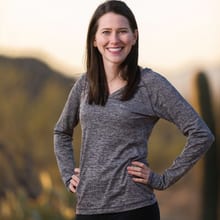
In this episode of the Bendy Bodies podcast, Dr. Linda Bluestein, the Hypermobility MD, sits down with Emily Rich, an occupational therapist specializing in POTS (Postural orthostatic tachycardia syndrome), Ehlers-Danlos syndromes, and other chronic conditions. Emily, who is also a patient with hypermobile EDS and POTS, shares her insights on how occupational therapy can help individuals regain control over their daily lives. From adaptive tools to fatigue management strategies, Emily provides practical advice and discusses her groundbreaking research on group rehabilitation programs for POTS. Tune in to learn how to manage symptoms and improve your quality of life with expert guidance.
Watch
Guests
Transcript
[00:32] Dr. Linda Bluestein: Welcome back, every bendy body, to the Bendy Bodies Podcast with your host and founder, Dr. Linda Bluestein, the Hypermobility MD. My guest today is Emily Rich. Emily is an occupational therapist specializing in treating dysautonomia, Ehlers-Danlos syndrome, hypermobility spectrum disorders, long COVID, and other chronic conditions. Emily is a fellow patient with hypermobile EDS, POTS, and mast cell activation syndrome. She just defended her PhD dissertation on POTS and rehabilitation. We know that these conditions cause a lot of challenges with completing everyday tasks and fulfilling work responsibilities, which is why this is such an important conversation. Stick around until the very end so you don't miss any of our special hypermobility hacks. As always, this information is for educational purposes only and is not a substitute for personalized medical advice. So let's get into it.
[01:25] Well, I'm so excited to be here today with Emily Rich, occupational therapist, because this is such an important topic for people with EDS, HSD, POTS, all of these conditions, right?
[01:37] Emily Rich, OT: Yes, all of the alphabet soup, right? That's what we all see, all the alphabet letters.
[01:41] Dr. Linda Bluestein: Yes, for sure. We love our acronyms, don't we?
[01:44] Emily Rich, OT: Yes, exactly.
[01:46] Dr. Linda Bluestein: All right, let's start with a really unusual topic, I think, in a way, because I don't think most people think of occupational therapy when they think of POTS. But I know this is your area of specialization, so I really want to talk about that. So can you tell us what occupational therapy looks like for people with POTS, or postural orthostatic tachycardia syndrome, for those that are not familiar with that acronym?
[02:08] Emily Rich, OT: Absolutely. My whole goal in life right now is to make occupational therapists think about POTS. And so those things do go together, but you're absolutely right, that's not something that people think about when they think about POTS treatment.
[02:24] So occupational therapy is basically helping people get back to doing their life. Being able to do the things you need and want to do in daily life, like drive a car, get good rest — sleep is considered an occupation. It's not just what we do at work, it's anything that occupies our time in day-to-day life. And so my whole goal for people with POTS is to find ways to get them back to doing the things that matter to them. That might be through modifying and compensating, adapting daily life kinds of things. So maybe that's getting help when you need it, using a tool or device, or sitting down in the shower.
[03:02] And it's also rehabilitation, which traditionally people might think of physical therapy for, but getting back endurance, getting back strength, getting back skills that maybe we've lost since we've had POTS symptoms come on board.
[03:16] Dr. Linda Bluestein: And just to elaborate on the POTS symptoms that people might be experiencing — in case someone's listening to this — we're talking about people like in the shower, they might be dizzy when they're standing up, and they feel those palpitations, tachycardia, especially with upright posture. I bet you see a lot of people who are complaining of brain fog because of course that's a really common symptom as well, right?
[03:38] Emily Rich, OT: Yes, I tend to get all the things that people don't have any solution for yet, right? These are the residual things. And yeah, it's that lightheadedness. Our whole world is upright, right? That's where we do most of our things. And so POTS really affects almost everything you do in daily life, from those symptoms of feeling faint or actually fainting.
[04:00] Dr. Linda Bluestein: And what do occupational therapists do for people that have hypermobility, whether it be hypermobility spectrum disorder or Ehlers-Danlos syndromes?
[04:09] Emily Rich, OT: Yeah, so similar in terms of getting back to daily life function, but it looks a little different. People with EDS or HSD might more have significant pain. They might also have issues with sleep, definitely the fatigue, the brain fog. And so we're doing things to help them be able to do the things they want to do with less pain, modifying tasks — whether that is using a pencil differently, using a tool so that you don't have to use your shoulder as much, or trying to help those joints to stay in place better — as well as things like managing fatigue, pacing, energy conservation strategies. Really looking at how do we help people be able to do daily life.
[04:59] Dr. Linda Bluestein: Yeah, and so many of those things are so challenging. I have a lot of patients, especially if they're still in school and they have to navigate backpacks and heavy bags. Some schools now either don't have lockers or students aren't allowed to go to their locker between classes. These are some of the things that I hear.
[05:18] Emily Rich, OT: Absolutely. It's a big deal, right? And when we do those things every single day, students going to school, it really takes a toll on the body. So I'm always excited when someone finds something that they do repetitively because it's like, ooh, this is a big bang for our buck. We can adjust this, and it's going to make a big difference.
[05:39] Dr. Linda Bluestein: And there's the practicalities of telling a 16-year-old to carry around a wheeled backpack — that's not exactly something they're going to want to do. So what kind of tips do you have for that specifically? I see people all the time with a big heavy bag on one shoulder, for example.
[06:06] Emily Rich, OT: Yes, definitely not what we want to do. Getting second versions of textbooks — I think people don't use textbooks quite as much anymore, now it's more computer-based — but can we hold our computer in our hands? Can we distribute the weight so that some is on my back and I'm also carrying some? Everybody has big water bottles now, and I'm a fan of that, especially if you have POTS. But if you can, carry the water bottle on a crossbody strap or something so that you are distributing that weight. It's not all pulling back on your shoulders, pulling on your back.
[06:45] And then of course, if you can use wheeled things, or if you can have duplicates of things in multiple locations so that you're not carrying books and laptops back and forth from school to home, just minimizing that distance that they have to be carried.
[07:00] Dr. Linda Bluestein: I like the idea of putting the water bottle on a crossbody strap because also the closer things are to our core, the easier it is as well.
[07:08] Emily Rich, OT: Yes, that's something that I teach patients every day pretty much — keeping things close to your body, bringing your elbow in toward your side. You're going to have a lot more control and a lot more stability through your wrist and through your hands. So that's true for all kinds of different things.
[07:23] Dr. Linda Bluestein: I had one patient who was having a lot of neck pain and she was in physical therapy and still not doing great. And then I saw her come in for an appointment and she had this big heavy bag and you could see how it was contorting her body. Yeah, we need to work on that.
[07:37] Emily Rich, OT: Yes, we need mirrors everywhere we go to see what it's doing to our bodies.
[07:43] Dr. Linda Bluestein: Tell us a little bit about your research efforts into POTS.
[07:47] Emily Rich, OT: Yeah, so I'm wrapping up my dissertation and my PhD now. I just defended, and so I'm just waiting for that to all get finalized. But my research recently has been in creating a group-based program for POTS self-management. You think about arthritis, you think about diabetes — these other conditions have kind of a program when you get diagnosed, you go through this program, or if you're having a flare, you can learn more about what to do. But that doesn't exist for POTS, and it doesn't really exist for EDS either.
[08:22] So I went on this mission to create a curriculum, and then we piloted it and we've now been doing it for 3 years. We run about 10, almost 11 groups in my community. We did some data collection on the first year and then I revised that program based on what we found. We did some quantitative analysis as well as some qualitative focus group work, asking the participants: what was your experience? What did you like? What did you not like? And we revised it. That's what my dissertation was.
[08:58] So now we call it the multimodal group rehabilitation program, which uses occupational therapy and physical therapy across 8 weeks and incorporates 3 different things. One is education — teaching people skills, teaching them about their autonomic nervous system, what they can do, sleep hygiene, and fatigue management. Coupled with Pilates-based movement and exercise. And then the third component is mindful self-compassion. So it's sort of this three-pronged approach to help people manage their symptoms.
[09:35] Dr. Linda Bluestein: That's fantastic. So I'm sure people are going to hear this and think, where can I sign up? Is this something that's available yet, or not yet?
[09:45] Emily Rich, OT: Yeah, so my plan is that I'm going to package the curriculum, and my hope is that this could be available internationally. A lot of times what I see is, A, there's a lack of providers. We know that there's not enough people treating these conditions, and that's definitely still true in allied health — not just doctors but therapists. There's not enough therapists.
[10:05] We also know there's a role for therapists. They can really help with improving function and these practical daily life things, especially when the wait lists are so long to get into physicians. And the third piece is that groups help — people help each other. It's kind of amazing. So through giving this curriculum to different sites, the hope would be that clinicians aren't intimidated. None of us learned about POTS in school. They have this curriculum, they know what to do, they can see more patients at once. A group-based program is an efficient way to deliver care. And then the patients can help each other — they get to meet each other. Often it's the first time they've met someone else with POTS or with EDS. As you can imagine, there's a lot of people with EDS in the groups.
[10:54] Dr. Linda Bluestein: Yes.
[10:55] Emily Rich, OT: So that's the goal. In the meantime, I'm hoping to create something online that will be similar, that could be an offering for people. But yeah, that's our big-picture group-based program.
[11:07] Dr. Linda Bluestein: Fabulous. And so this is something that is executed through the physician's office, I guess. Maybe I'm not totally understanding that part.
[11:16] Emily Rich, OT: Yeah. So hopefully it will happen in community centers, which could look different, right? So absolutely in outpatient therapy clinics where there are already OTs and PTs. It could happen in a physician's office if that's something the physician could bring in a therapist or someone to implement. But yeah, hopefully it's in communities. That's my goal — that it's not limited to these centers of excellence, which barely exist, but that we are bringing this information to communities. I live in a community of 1 million people. It's not huge. And we've had a lot of demand and a lot of patients been able to go through the program. So I think it's very realistic to take to lots of different size communities.
[11:56] Dr. Linda Bluestein: I've thought about doing group visits for patients because I agree. I think that's something that they can learn from each other. And a lot of the things that we do don't need to be done in an individual setting. They can be done in a group setting. So that's more cost-effective. It's so beneficial — like you said, they learn from each other as well as learning from the clinicians. So I think that's really exciting that you have been working on this and you've already had that many groups go through.
[12:23] Emily Rich, OT: Yeah, it's been fantastic. I really can't even describe what happens in that environment because it really feels like magic — all these different pieces come together, the learning, the exposure to safe movement, and the psychological piece that can be really hard and nuanced. Like, I don't want to go see a therapist, they're going to tell me this is in my head. And hopefully that's not true. But with medical gaslighting and medical trauma, that's understandable. So we're bringing a lot of different things together, and it's really helping a lot of people. It's very exciting.
[12:55] Dr. Linda Bluestein: And if a clinician wants to utilize this program — say I wanted to start this in my community — what would I have to do in order to do that?
[13:09] Emily Rich, OT: Reach out to me, and hopefully soon I will have an answer. We're still finalizing everything and working on trademarks and those kinds of things. But in the meantime, I do have a course online for therapists that are just learning about what they can do for these patients — that's more of the one-on-one care side.
[13:31] You can create your own group program, of course, but yeah, we are still in the process of finalizing all of that. I do have a program online for therapists because there's just so little out there in terms of continuing education on POTS for therapy. It's unfortunate, and I think it's getting better, but there's a lot of need. There are a lot of patients who really need providers to be more educated and to know specifics about treatment for POTS.
[13:59] Dr. Linda Bluestein: Yeah, especially in these post-COVID years. Of course, POTS is so much more common than it used to be, and so it's so important that we get people able to function and do the things that they love to do more efficiently.
[14:24] Emily Rich, OT: Yeah, the estimate is that the number of people with POTS in the United States has actually doubled. We're looking at maybe 6 million Americans at this point. And since the pandemic hit, we're definitely seeing just more autonomic dysfunction — even if it's not POTS, just big-picture dysfunction of the autonomic nervous system, where people have fatigue and myalgic encephalomyelitis and all of these things that we see that are similar to POTS and often come with EDS as well.
[14:53] Dr. Linda Bluestein: Sure. And when you were talking about the program and that you already have a course online for therapists, are you talking about occupational therapists specifically?
[15:03] Emily Rich, OT: So the course is really intended to be for any kind of allied health professional. I have even had a few physicians, nurse practitioners, and chiropractors take it as well. But it covers lifestyle-based approaches for POTS — so it includes sleep management, fatigue management, autonomic nervous system education. How do we teach patients what's going on in their body? How do you break it down for them? Movement and exercise pieces, the fluid, the salt, the compression, all of those lifestyle pieces that most physicians just do not have time to go into depth on with patients in terms of implementation.
[15:41] And so my thought is that's where allied health comes in — to really be able to say, I can see you once a week for 45 minutes or whatever it is, so that you are following through, you're able to ask questions, we're really implementing this. Instead of, here's your prescription for fluid, salt, compression, exercise, I'll see you back in 3 months. So that's kind of the idea.
[16:05] Dr. Linda Bluestein: Yeah, because a lot of that is very nuanced, right? I put a lot in my initial note with people and it's probably overwhelming. The notes end up being really long and the instructions are really a lot to take in. It would be a lot to go through every single one of those pieces of the plan in that level of detail for every patient. So that's great.
[16:28] Emily Rich, OT: It's too much. It's too much for us to expect that medical providers are going to be able to do. Especially when you have so many co-occurring conditions — like ADHD, or someone who's autistic — and how do I implement getting water regularly? That might be really challenging for different reasons. We have to think creatively about how to remember that. And then you have someone with a disordered relationship with food because they've had gastrointestinal issues their whole life. And now you're telling them to drink the sugary drink or to eat really salty foods. It is nuanced.
[17:06] It's not as black and white for at least half the population because they are complex. They do need more support and more detailed intervention. Even if a cardiologist, for example, has told someone to increase their salt, they come to me and maybe they're just salting their foods a little bit more. They don't quite understand how to read labels and what sodium versus salt means and milligrams versus grams of salt. And, you know, I'm going to drink a Gatorade once a day — that's probably enough, right? Well, not exactly. That's only about 200 milligrams of sodium, versus something like an LMNT, which is going to have 1,000 milligrams of sodium. So really getting into the specifics. And it's kind of amazing how well a lot of patients can do with even just fine-tuning those very basic strategies. It's been really fun to get to be a part of that.
[17:58] Dr. Linda Bluestein: And what are some other things that you want POTS patients to know that a lot of them don't know?
[18:03] Emily Rich, OT: Yeah, I would say starting out with: what do POTS patients know? I hope that they know what I call the big 5 non-pharmacologic interventions for POTS.
[23:28] So that is, first, fluid. Not everybody needs more fluid, but making sure that you're getting enough — as well as sodium. If we are just drowning out the sodium with a lot of fluid, like more than 100 ounces, maybe you're getting 200 ounces of fluid, that's a whole lot. You're going to need a lot of sodium too so that you can increase your blood volume.
[23:28] Compression is one that a lot of people have heard of. But what I would say is a lot of POTS patients maybe don't know how effective abdominal binders can be, and that they are often more effective than lower body compression garments. So our ideal situation is we have full lower body compression — at least ankle up to waist — as well as an abdominal binder around the waist. That could look like a corset, or an abdominal binder if you type that into Amazon. It doesn't really matter, it's what's comfortable for you. But knowing that even if you can't tolerate leggings or socks, the abdominal binder alone is often more effective than wearing socks or even leggings. So that's the third — compression.
[23:28] The fourth one is exercise or movement. I think everyone's heard of it and everyone's frustrated by it. We need to be moving our bodies in ways that help our symptoms long-term and that don't exacerbate our symptoms short-term so much that we're not able to function.
[23:28] And then the fifth one is elevating the head of your bed. That is one that a lot of people don't know. Raising the head of the bed 4 to 6 inches off the ground with bed risers or cinder blocks or something like that — you could also use a full-body wedge. A lot of people think they just need to elevate their head or their upper body. But in reality, you need to have your whole body at an angle. This is sort of tricking the kidneys — a strategy so that you lose less blood volume overnight, so you maintain more of that blood volume when you wake up in the morning and you're not quite as depleted. You don't feel as crummy in the morning.
[23:28] So those are the big 5. Hopefully everyone listening now knows about those. They're super important. There's all kinds of other things I like to teach people too, but those are really important.
[23:28] Dr. Linda Bluestein: Do you also educate providers and clinicians about POTS?
[23:28] Emily Rich, OT: I do, yeah, absolutely. So I have the provider's course on my website, which has been really great. We've had about 150 different providers around the world who've enrolled and are learning and treating, which has just been fantastic.
[23:28] And then on top of that, I started an Instagram account several years ago that has just sort of exploded. It was really intended for patients originally — a place for me to pilot strategies and ideas with patients and get their feedback and learn from them. But it's also been a place for me to educate providers. My favorite thing that has happened is that physicians especially, as well as therapists around the world, send their patients to my Instagram. I get people coming in and commenting, saying, my doctor in Florida sent me to your Instagram account for more information, and I'm learning so much. It's been really helpful. So I'm able to interact with providers, teach providers, and then providers are also able to use it as a resource for their own patients.
[23:28] Dr. Linda Bluestein: That is so great because so many clinicians need to know more about these conditions. So we're going to take a quick break. And when we come back, I want to dive more into how you educate providers, what you share with them, how you help them take better care of their patients. We'll be right back.
[23:28] Dr. Linda Bluestein: Okay, Emily, so we're back. Can you share with us how you educate providers, what you share with them? We all know that clinicians are busy and it's really hard to learn about these conditions that are so complicated, yet affect so many aspects of a person's quality of life.
[23:28] Emily Rich, OT: Yeah, absolutely. I understand what it's like to be a busy clinician, and I pretty much only treat POTS and EDS and then a couple of other complex kinds of patients. And so it's like, when do I have time to learn this extra stuff? In some ways I'm fortunate that I have these conditions because a lot of it's intuitive for me, but I've had to do a lot of my own research as well.
[23:28] So what does that look like? Well, first of all, the course that I made is asynchronous. I presented it first live so that people could tune in during the pandemic and had a whole long day. But then after that, I re-recorded it in little snippets at a time. My hope is clinicians can turn it on on their phone on their drive to work or listen to it on their morning run or whatever it is that they're doing. And then I provide the PowerPoint slides, I provide resources for providers to use so that when they're done listening, they can go reference those sheets when they're at their computer.
[24:14] The other thing is I include education handouts for providers as well as for patients. So providers, when they take this course, they automatically have a packet of resources that they can give to their patients. Instead of reinventing the wheel, like — this is how much salt you need, this is the compression level you need — the provider is able to just print out the sheet, put it in front of their patient, and say, okay, now let's individualize this to you. Specifically, I would ideally have you wearing 20 to 30 millimeters of mercury of compression. What does that look like? What are the brands that might offer that? How do you go about that? But then that provider, seeing other complex patients, doesn't have to remember all of these details or create their own handout.
[25:03] I definitely teach providers the nitty-gritty on compression. For example, patients that have mast cell activation — they're not going to be able to wear just whatever compression necessarily if they're going to have a reaction to it. What are the alternatives for them? Similarly, people with sensory sensitivities, which is at least half of the patients that I see — what if they don't tolerate really tight compression? What if a certain material doesn't breathe? Or they're a teenager in high school and they don't want to wear funny-looking socks to school. How do we help them to blend in?
I also go into a lot on the autonomic nervous system. Hopefully every medical or healthcare provider has been trained to some degree on autonomics, but honestly it's not as in-depth as any of us would have liked in terms of treating this population. So I go through both the in-depth what a healthcare provider needs to know and understand, and very importantly, how do we simplify this? How do you feel confident enough that you can break it down easily to a patient who doesn't have a healthcare degree, so they can understand for themselves — oh, when my hands turn cold or clammy, or when my vision can't focus up close, or I'm having trouble with dry eyes or dry mouth, or my digestion is not functioning properly, those are signs that maybe I'm in a more sympathetic or fight-or-flight state. Maybe now is a good time for me to use some of the tools to regulate my autonomic nervous system.
[26:36] And how do I take information about why that happened? Was I overstimulated in this environment? Was I exhausted? Was I standing for too long? So it's both the in-depth knowledge for the clinician and the ability to explain it to a layperson so that they're able to use it for their own body. Because ultimately, self-management is the goal — meaning you are empowered, not alone. You're not left alone to do this, but you're empowered with the skills, the knowledge, the tools to know what to do when you have certain symptoms and manage those symptoms.
[27:13] Dr. Linda Bluestein: Yeah. So much of what we learned in school was about the autonomic nervous system, right? But at least when I went to school, we were also taught that these things were so rare. I obviously went to school long before COVID. It's something that's not on so many people's radar. I remember being in an elevator with a cardiologist not that long ago, and I said something about POTS, and he was like, "That's so rare." This was pre-COVID, and I was like, "Really? Because no, it's not." Even then it wasn't.
So I think that's one of the big barriers — just getting clinicians to understand that these patients are coming in, and if you have even just some basic steps that you can start to give them, some handouts and things like that, you're doing something significant that could really impact their quality of life. And I wanted to ask — you mentioned mast cell activation syndrome, and definitely the sensory sensitivities, I see that a lot in my practice. The other thing that I think is so challenging is heat. So many of us are heat sensitive. If we covered ourselves head to toe with compression, of course there are so many benefits — it feels good, it helps with proprioception, it helps with venous return, it helps with joint pain, swelling, maybe some joint stability — but we would be so hot and we might react to the fabric. So do you have any tips for people who are thinking, well, that all sounds great, but —
[28:46] Emily Rich, OT: Sounds great in the lab, right? There was a great study done just a few years ago that showed the level of compression and the degree that it affected the heart rate. I use that study — it's great to show people that, yeah, even if you don't have full lower body compression, the abdominal binder alone is the second best thing that you could do for yourself. It's far better than wearing socks. That's a huge surprise to a lot of people, myself included. I used to think, well, I wouldn't just put on an abdominal binder, it's going to push some of the blood down. But that's not what this research showed.
[29:22] But real life — we're not going to cover ourselves head to toe in compression, especially if we're going outside. I live in the literal desert. I live in Arizona, in southern Arizona, by the Mexico border. This is not a place that is easy to convince people to wear compression head to toe. So I deal with this all the time.
[29:41] I think number one is weighing the cost-benefit ratio. Is the compression making me so hot that I actually feel worse than I do without it? If so, that's not going to be the right route for you, or we need to find a different type of compression, one that's more breathable. I am fortunate that I live in a place where a lot of providers will write a script for patients to get compression through insurance, and insurance will cover quite a bit, which is really nice. And the place that orders the compression tends to order very sheer leggings — kind of like stockings, they don't breathe and they're not toeless, there's no way for airflow. So I often tell patients, get this because it's covered by insurance, of course, let's have a pair of those. But those are not going to be the ones you're going to wear when you're running errands, going outside, or going to a doctor's appointment in the summertime. Maybe you just keep those for cooler months.
[30:44] And the other thing I like to point out is that you can still wear compression for part of the day. That's especially where something like an abdominal binder comes in — it's a whole lot easier to put on and take off than those really tight leggings or even socks, where you're subluxing your thumb just trying to pull them on.
[31:04] Dr. Linda Bluestein: Totally.
[31:04] Emily Rich, OT: Right? So instead, when you're indoors, just wrap the abdominal binder around you, or put on some Velcro socks or leggings that you don't have to pull on, and then just take them off when you're going to go outside. Using compression strategically is another trick that I really like to teach people.
[31:23] Dr. Linda Bluestein: Yeah, that makes a lot of sense. I had a family member who was prescribed the 30 to 40 millimeters of mercury waist-high stockings, and I was giving them a hard time that they weren't putting them on, and they're like, you try putting them on. And yeah, I thought I was going to dislocate every finger in my hands.
[31:36] Emily Rich, OT: I don't even recommend the 30 to 40. I know that is the gold standard in terms of how tight they are, but the compliance — a patient's ability to put those on every day — is so low. 20 to 30 is usually what I recommend. And then for those with sensory sensitivities, often we just do 15 to 20 and say, you know, this is what it is, but it's something rather than nothing. It's meeting the patient where they are.
[32:07] And just a tool that I would love for your listeners to have as a hack is called a compression donning device. There are many versions of this — donning is just a fancy OT word for putting on, and doffing means taking off. It's a tool, they're about $15 to $30, and you can pull your sock or legging on it. You pull it down, kind of turn it inside out, and then you hold the handles and pull the sock or the leggings on. It is fantastic. You could even make larger handles so that your hands are not subluxing and your thumbs aren't having to get into those socks. It makes a huge difference. So that's something you might want to play with if you're experiencing those challenges with your hands.
[32:56] Dr. Linda Bluestein: And you know how much I love hacks, so I appreciate that.
[32:58] Emily Rich, OT: Yes, that's an OT's favorite thing — those lifestyle hacks.
[33:02] Dr. Linda Bluestein: Yeah, love that. And we'll get to some more hacks, or at least a hack at the end, of course, as we always do. Let's talk about fatigue because I know that this is such a huge problem. I was really shocked when I opened my practice because, of course, being an anesthesiologist and my practice being devoted to pain medicine, I knew I would see people with pain, but I didn't realize that the second biggest complaint would be fatigue. So what kind of suggestions and hacks do you have for people that are experiencing fatigue?
[33:34] Emily Rich, OT: Yeah, that's such a good point. I think fatigue is so underrecognized in terms of how it impairs our daily life. And the reasons why we have fatigue are so diverse.
[33:44] So first of all, I like to draw a picture with your energy in the middle. And then I like to have arrows on the outside — what affects your energy levels? First of all, we know it's not just physical exertion. Of course, that's a piece of it. If I run or do a lot in a day, I'm going to be tired. But what else affects fatigue? Well, cognitive energy is a piece of that too. If I'm studying for an exam or I have a deadline at work, that's going to contribute. Additionally, we know that emotional energy takes quite a bit — and that can be highs and lows. So it's not just I had a hard day or got bad news. It's also I'm really excited, there's a wedding or a graduation, a family member visiting, you're traveling — those are exhausting too.
And then there's sensory fatigue and social fatigue — all of the different ways that our energy manifests. As well as pain, which definitely contributes to our overall energy levels and tolerance. And so many other things: mast cell symptoms are definitely going to contribute, POTS symptoms are going to contribute, decreased circulation. So it's so multifaceted.
[35:07] So starting with: what are all my variables? Once we lay that all out, we start to tackle it. What's going to get the biggest bang for our buck? Maybe drinking more fluid and getting more sodium is going to help circulation and give me more cognitive energy because I'm going to get more blood flow to my brain. Maybe reclining my body a little bit is going to help again with circulation, taking gravity out of the picture throughout the day — 5 minutes at a time, putting my legs up on the wall. That could address multiple things, including pain.
[35:46] Taking breaks from your desk, making sure that you're getting up at least once an hour, even if it's for 2 minutes, changing positions. Of course, I'm also going to say pacing yourself — trying to avoid booming and busting. Meaning, I feel great today, I need to do all of the things I haven't been able to do for the last week, I'm going to do them all today because I don't know how I'm going to wake up tomorrow. But I can assure you, you're going to wake up tomorrow not feeling good if you do all those things. So pacing yourself across the week, pacing yourself across the day, taking breaks.
[36:39] There's so many aspects of it: pain management, using tools, compensating, asking for help. But it really is about addressing the multiple components that are affecting you as an individual and your specific fatigue.
[36:48] Dr. Linda Bluestein: And sleep is such a big part of that too. So do you have any particular sleep hacks that you want to share?
[36:56] Emily Rich, OT: Oh, I'd love to. For EDS and hypermobility in general, obviously pain is a huge factor in terms of sleep, and that can be very challenging to manage. We know that positioning isn't always the most helpful thing, as much as we would like for it to be, but things like a good mattress, and then maybe even bracing or splinting at night to help maintain appropriate positions and postures. I think the classic hypermobile posture for sleep is curled up in the fetal position, neck twisted, arms collapsed, kind of hugging yourself. But we know that contributes to pain.
[37:36] And then from a POTS perspective, there are just so many ideas about what to do for sleep. Starting with regulating the autonomic nervous system throughout the day, because it's not just I'm calm before I go to bed — it's what has your nervous system been doing all day long? Really reinforcing an evening routine at minimum, spending several hours in the evening winding down, decreasing screen time. Of course, that's what everyone's going to tell you to do. But also, conversely, getting sunlight first thing in the morning, helping that circadian rhythm to know, okay, this is morning — and then it's dark at night, lowering the lights in your house in the evening, trying to decrease that stimulation.
[38:23] Also using things that are going to buffer disruptions to your sleep, like white noise or brown noise. Putting music on in the background so that if you're sleeping at a more surface level — which we often see with POTS — if there's a dog next door that barks or somebody opens a door in your house, you're going to have some kind of a buffer to keep that from waking you up if you're a light sleeper or you wake up throughout the night.
[38:54] People sometimes say they crash at night — they fall asleep really easily — and that's the idea that their body's been revved up all day and then they go into a low hypoarousal state. Their body crashes. And so the problem is, are they really in that rest-and-digest state, or did their body just couldn't hold on anymore? What can we do to help get into that rest-and-digest state before sleep? Because otherwise you might crash and fall asleep right away, but an hour, 2 hours later, you wake back up, you're having night sweats, you're super alert, maybe you had a bad dream, or you're not dreaming at all. So really getting that autonomic regulation is really important for people with POTS.
[39:42] Dr. Linda Bluestein: Okay, and we've obviously talked about POTS specifically a lot, but I also want to talk about EDS and HSD. Are there certain assistive tech things that you recommend that people can try for those conditions?
[39:56] Emily Rich, OT: Oh my gosh, there's so much. It's so hard to even know where to start. But just in terms of modifying and adapting — assistive tech can be as basic as, we consider eyeglasses assistive tech, right? If someone has difficulty seeing, we add glasses and now they can see better.
[40:11] So one great example is building up the handle on something to make it larger. Especially if you're having issues with hand pain or dislocations, subluxations in your thumb or fingers — making something larger actually, A, makes it easier and takes less energy to hold on to, and it also protects your joints so that they're in that more rounded position instead of hyperextended. If you try using a pen that's really skinny, one of those like in a doctor's office — the cheap pen because they get thrown away or lost — those are going to be a lot harder on your joints than if you use a larger pen.
[40:55] The same thing holds for trying to turn the faucet on your sink or the shower. If you make it larger or add a lever to it, it's going to give you more power and make it easier. Same example with laundry — pouring the detergent, or being able to pour from a pitcher into a glass, or pour things out of a pot — that can sublux your wrist or your thumb. Lots of strategies there. One is definitely using a smaller container. For laundry, I use more concentrated detergent in a smaller container. Or having someone else pour drinks into something smaller, using a push-button spout kind of container. For pots and pans, if you can use two hands and try to hold the bottom of the pot instead of rotating your wrist, that helps.
And those might seem like simple things — are those really assistive tech? But we do consider those kinds of modifications to be helpful. I mentioned the compression donning device for subluxing fingers. And then also in the shower, for example, instead of having to bend down or lift your leg for shaving, you can use a long-handled razor. And there are ankle or footrests that you can suction cup in your shower onto the wall, so you can prop your leg pretty low instead of kicking it up and your hip going out. Long-handled scrub brushes for your hair if you're having hand pain. Those kinds of tools and modifications.
[42:53] Of course, sitting down in the shower — anyone who knows or follows me knows that's one of my favorite hacks. Sitting down while cutting and chopping things at the sink, washing dishes, sitting at the stove. Those are just a variety of things that I love to show the hypermobile patients that I work with.
[43:15] Dr. Linda Bluestein: Okay, now I'm going to ask you a personal question, a selfish personal question. I have arthritis in my index finger, and it's one of my bigger problems at times. I had a silver ring splint and I just never wore it. And now I'm like, oh, I wish I had worn it. Anyway, a lot of those things you just mentioned will help with that. And I do already have a lot of the built-up things. Is there anything else that you can do for a smaller finger joint like that?
[43:47] Emily Rich, OT: Oh, those finger joints can be so tricky. Ring splints aren't out of the question even now, especially if you see any subluxation, even side to side. So things can slip in different ways. Paying attention to that, making sure that it's not just arthritis, that it's not still contributing.
[44:10] Wearing splints at night can especially be helpful. There are splints that help to decrease your fingers from drifting — they're called ulnar drift splints, drifting toward the ulnar side. Those can be important. There are buddy splints where you connect one finger to another finger so that it kind of keeps it more in line.
[44:31] But honestly, I think pain management is huge when you're at that level if it is arthritic. Using movement — we say motion is lotion, so lubricating the joint, keeping it from getting as stiff. In the morning you might try using a paraffin bath, which is like when you go get a manicure and you get the fancy upgrade of paraffin, but you can do it at home with a $30 device on Amazon and bricks of paraffin wax. That feels amazing. Contrast baths are alternating cold and warm — putting your hand in an ice cold bath and then into warm, then cold, then warm. It helps to get the blood pumping through that joint and can really help with pain management.
[45:15] So preventing any further challenges with the joint if you feel like it's continuing to progress. If you feel like it's progressed to where it's going to stay at this point, then we really look at pain management.
[45:28] Dr. Linda Bluestein: I appreciate that. It's definitely unstable still. So thank you. And I know a lot of people deal with finger pain. So that's great. Last question before we jump into the hypermobility hack. Do you have any favorite apps or devices for tracking symptoms?
[45:46] Emily Rich, OT: There are so many new apps every day, so I'm not always as up to date as I probably could be. But the most recent one that I have been playing with and I think is helpful is the Visible app. It's definitely all over social media, so a lot of folks have probably heard of it.
[46:03] Dr. Linda Bluestein: Yep, I've seen it.
[46:04] Emily Rich, OT: Yeah, and they have a free version, and I think it's got some good things. I like heart rate variability monitoring. I think it can be helpful information in terms of physiologic changes in the body. I used to recommend the Jouva Health app, which is really good for migraines and it's free. And the Welltory app, which is a paid subscription. They both use the camera on your phone to measure heart rate variability through your finger. The technology could be better, but I think it's decent considering everyone has a phone and you can check your heart rate variability. The Visible app has actually incorporated that feature now, which is great to have sort of a one-app solution that does lots of different things. So I like that one.
[46:48] I also like PaceIt, which is good for pacing — it's created more for ME/CFS. But it can be helpful for pacing and recognizing energy exertion in all those different areas, not just physical exertion. You can color code your activities. You can even do that without an app. But recognizing how do I spread out the types of energy that I'm using, so I'm not just using all my physical energy one day, but I'm alternating with some cognitive and some sensory and doing different types of things.
There's also one for kids — I know originally someone had asked about an app for teens. There is the Web MAP app that's from Seattle Children's, and it's really intended for pain management. But it has a lot of different relaxation skills and ideas for pacing and energy and emotion regulation, and then some pain neuroscience education. Sometimes for teens it can be really hard to reach that population with the right type of intervention, but that's one that I like.
[47:53] Dr. Linda Bluestein: Yeah, awesome. That's one that I recommend as well. And I've seen the Visible one on social media but hadn't really played around with it yet. So very good. We've gotten to the hypermobility hack portion of this episode, and I would love to hear what your favorite, or at least a favorite, hypermobility hack is.
[48:14] Emily Rich, OT: Yeah, so my biggest challenge that I see and continue to experience myself is often proprioception. Proprioception is where is my body in space — if I close my eyes, I can touch my nose, or the fact that you can feed yourself without having to look where your mouth is. That is often decreased in people who are hypermobile. People ask me all the time: I run into things, I bruise easily. And it doesn't help that I am quote-unquote clumsy. Well, that has to do with proprioception.
[48:52] So in terms of a hack, my best hack is how to get proprioceptive input all throughout the day. Rather than it being another exercise — I already have so many exercises and I can't even do my daily life things, let alone these exercises — how do I get proprioception in everyday activities?
[49:14] When we talk about proprioception, we talk about heavy work, about getting input into the joints. Lifting, pushing, pulling — those are ways to get input, and you want to do that all day long, all throughout your body. We need input into our feet, which can then go up into our knees and into our hips when we're striking the ground while walking.
If you are sitting in your car, one of my favorites is to press on the steering wheel — you're going to get proprioceptive input into your elbow, hand, wrist, shoulder, and sometimes your trunk a little. And then you can pull on the steering wheel; the steering wheel stays still and you're doing isometric contractions against it. You can press into the sides. You can press with your hands in the middle and press out, up and down. There are about 6 different planes of motion that you can work through while you're at your stoplight or before you get out of the car when you arrive at your destination.
[50:09] I also like when you're brushing your teeth, stand on one leg — you're getting some more of that balance feedback and input. And instead of leaning against a wall, which we all love to do, try to get more feedback. Maybe walk like you have bubble gum stuck to the bottom of your feet, so that you're really getting feedback from a bare foot into the ground with each step. Those are just some basic ways that I get proprioceptive input all throughout the day. It helps decrease injuries, helps increase cognitive abilities, decreases fatigue. There are so many ways that we think proprioception can help.
[50:50] Dr. Linda Bluestein: Excellent. And I love that because I feel like sometimes when I go in for therapy, I'll be like, tell me which of these exercises to prioritize, because it's really hard to fit all of them in. So finding ways to do it throughout the day is really smart.
[51:07] Emily Rich, OT: Yep, just put it in your routine and you don't even have to think about it.
[51:10] Dr. Linda Bluestein: Yep, fabulous. Well, you have been listening to the Bendy Bodies with the Hypermobility MD podcast. Our guest today was Emily Rich, occupational therapist. And Emily, it has been so great chatting with you. So before we go, can you tell us what you're up to in terms of projects, research, anything like that?
[51:29] Emily Rich, OT: I'd love to. So by the time this airs, it'll have passed, but I was headed to the Dysautonomia International Conference. And the EDS conference is this summer as well. I'm again wrapping up my dissertation work, and then my hope is to launch a patient program that will be online, similar to my POTS providers course, but a different format for patients to be able to learn more about managing their symptoms and understanding their bodies better. That is the next big project on the radar.
[52:07] You can sign up for my email list on my website, which is otemily.com, and that's where you can also find the provider's course. And then anyone who's looking for a provider near them — because there's nothing like having your own personal go-to therapist — I have a list on my website under clinicians and providers. There are allied health professionals all around the world, definitely in the United States and beyond, who specialize in seeing people with POTS and also with EDS. That's a great resource for people to find someone near them.
[52:41] And then of course, follow me on Instagram, which is where I am more than anywhere else — it's the easiest to keep up with. That's Emily Rich OT, not Emily Richott. A lot of people think that's my last name, but it's just Emily Rich OT. I'll post updates there and have lots of free content and education.
[53:05] Dr. Linda Bluestein: I have to confess, I thought that was your last name. So when I was looking at the notes for this episode, I was like, oh, okay. So you learn all kinds of interesting things.
[53:16] Emily Rich, OT: Yeah, good company.
[53:18] Dr. Linda Bluestein: It's a great handle though, you know — obviously I use Hypermobility MD as a way of designating what it is that we do. So I think that's really fabulous. So thank you so much, Emily, for taking the time to chat with me today. This is such an informative episode and I know people are really going to enjoy learning from you.
[53:39] Emily Rich, OT: Thank you so much. It was so great to be here.
[53:44] Dr. Linda Bluestein: Thank you so much for listening to this week's episode of the Bendy Bodies with the Hypermobility MD podcast. You can really help us spread the word about joint hypermobility and related disorders by leaving a review and sharing the podcast. This helps raise awareness about these complex conditions. You can find me, Dr. Linda Bluestein, on Instagram, Facebook, X, and LinkedIn @HypermobilityMD. You can find Human Content, my producing team, @HumanContentPods on TikTok and Instagram. You can also find full video episodes up every week on YouTube at Bendy Bodies Podcast. To learn more about the Bendy Bodies Program Disclaimer and Ethics Policy, Submission Verification and Licensing Terms, and HIPAA Release Terms, or to reach out with any questions, please visit bendybodiespodcast.com. Bendy Bodies Podcast is a Human Content production. Thank you for being a part of the community, and we'll catch you next time on the Bendy Bodies Podcast.