Milestones and Reflections: 100 Episodes of Bendy Bodies with Linda Bluestein, MD
Description
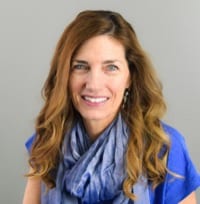
Dr. Linda Bluestein celebrates 100 episodes of Bendy Bodies discussing the most rewarding part of hosting the podcast and the challenges of podcasting. She emphasizes the importance of balancing the complexity of EDS and the need for healthcare professionals to understand and empathize with the struggles of patients with hypermobility conditions. Dr. Bluestein discusses the symptom burden experienced by individuals with EDS and the challenges they face in getting their symptoms understood and validated by healthcare professionals. She shares her approach to treatment as well as the top three concerns among EDS patients. Dr. Linda Bluestein and guest host Kate Colbert discuss the importance of effective communication between doctors and patients, and the need for healthcare professionals to understand the patient's perspective. Dr. Bluestein shares her goals for the Bendy Bodies podcast and they end with a hypermobility hack for traveling with EDS.
Guests
Transcript
[00:35] Kate Colbert: Hello, every bendy body. It's Kate Colbert, your guest host of today's episode of the Bendy Bodies Podcast. And this is a really exciting episode. It is episode— are you ready? Episode 100. Oh my gosh. So the Bendy Bodies Podcast has been such an important part of advancing understanding of Ehlers-Danlos syndromes and related conditions. And this is huge. So I am here sitting in Dr. Linda Bluestein's regular chair while she sits in the hot seat as the guest so we can celebrate her and celebrate the success of the Bendy Bodies Podcast.
[01:08] Dr. Linda Bluestein: So here we are. Welcome back, every bendy body. This is the Bendy Bodies Podcast, and I'm your host and founder, Dr. Linda Bluestein, the Hypermobility MD. This is going to be a great episode, so be sure to stick around until the very end so you don't miss any of our special hypermobility hacks. As always, this information is for educational purposes only and is not a substitute for personalized medical advice.
[01:42] Kate Colbert: Dr. Bluestein, congratulations, 100 episodes! Can you believe it?
[01:47] Dr. Linda Bluestein: No, I can't. It's interesting because in some ways it feels like it should be 500, but in other ways it feels like it should be 20 or something. So yeah, I'm really excited.
[02:00] Kate Colbert: You've come a long way. So let's dig into this. Let's celebrate 100 episodes by talking about some things that your listeners might be curious about and talking about sort of where you've been and where you're headed, and maybe dig into some topics that you haven't covered yet in the first 100 episodes. So let's talk about what it's like to be Dr. Bluestein. I want to know what's the most rewarding part of taking all of your medical expertise and what you've learned over the years and your insights about hypermobility disorders like EDS. What's it been like to take that to the airwaves and to the masses? What's been the most rewarding part of that?
[02:46] Dr. Linda Bluestein: Definitely feedback from listeners. Getting messages, whether it's direct messages on Instagram, messages on X/Twitter, LinkedIn, emails, messages that they leave directly on the website. That is by far the most rewarding thing — hearing from people how valuable the information has been, how helpful, how it has changed their life in some way. It just means so much to me because it is a labor of love. I don't know that most people realize how much work goes into a podcast. I know before I had one, I was like, oh, it's just people talking, how hard can it be? But you don't realize the planning and the editing and scheduling the guests and all of the different relationship management.
[03:31] And then planning to publish it and the transcripts and the show notes, etc. So I think that it just makes the work all the more worthwhile when I get messages from people that it has really been meaningful for them. It just makes the work meaningful for me. So that is definitely the most rewarding part for me.
[03:58] Kate Colbert: Yeah. And it's kind of overwhelming to think about that. In your medical practice, you're seeing one patient at a time, or maybe a family coming in together, but sort of one-to-one medical care. And when you look at the statistics for the show, it must be interesting to be thinking about, wow, that one set of comments, that one conversation that we had on that particular date or that particular episode impacting thousands of people, and what that's like. What is the hardest part, and what's been the hardest part ramping up and doing these first 100 episodes?
[04:35] Dr. Linda Bluestein: Well, of course there's always a learning curve with everything, so figuring out the best platform to record on, how to deliver the information in a meaningful way, what people really want to gain from a podcast, and things like that. And who's listening? Who is the real audience? And of course there are different people in the audience, and I know we're going to talk about that.
[04:59] But I'd say probably what's been really hard is figuring out a way to share information in a way that is both fair and helpful. What I mean by that is fair to the listener. Anyone listening to this is unique. Every single person is unique. So when I'm on a one-on-one appointment, I know as much as they're telling me. I know what's going on with that person. I can see them. I'm doing a physical exam with them. I can deliver the information in a way that is specific to them. With the podcast, that's not the case. I don't know if the person listening is in bed 20 hours a day and is not able to get up and moving around because they have such bad CCI — craniocervical instability — or maybe they're not up and moving around because their POTS is so severe. Or maybe they have ME/CFS. I don't know what's going on with that person. Or maybe they're actually functioning quite well and they're looking for tips so that they stay functioning well. So each person is so unique and what applies to one person doesn't apply to another.
[06:04] The second thing I find really, really challenging — and I hope I'm going to explain this well — is offering the correct dose of hope. Because I feel like sometimes when I hear things, everything sounds so perfect and rosy. I just came back from a conference actually where I got to speak to sports medicine physicians about hypermobility, which was an incredible opportunity. And when you sit there and listen to a talk, everything sounds great. It sounds like everything works all the time. I would like to say that I have helped every single person I've ever seen, and that's not true. I've helped a lot of people. A lot of people have gotten a lot better, but there are some people that I haven't helped. And so while the podcast is a great source of information, and I think it's so important for people to have hope because there are so many things that they can do, I also want to be responsible. I don't want people to think that if their doctor hasn't done ABC, their doctor is wrong or bad or whatever. So I feel like that's hard — balancing that. It can sound so idealistic or easy to do this particular workup or that particular thing.
[07:51] And thirdly, I want to be fair to the healthcare professionals who themselves are likely struggling in a system that doesn't support them — or support them caring for this population that has really complex and time-consuming needs. I have a friend who has EDS. She's a family practice doc, and she had a clinic in a regular insurance-based practice. And they told her she had to stop taking EDS patients. And she closed her clinic ultimately. So she went from this practice to now no practice, at least last I knew. So it's really, really hard nowadays to be a physician. It's really hard to be a physical therapist. My physical therapist was telling me yesterday about how she's charting late at night at home — between the regulatory struggles, etc., there are a lot of challenges. So it can be easy to make things sound so simple on a podcast, and I want to be respectful to all of the different parties and be a problem solver. So that's hard to balance.
[08:58] Kate Colbert: Wow. It's powerful to hear you talk about that. And as a patient, I thank you for that. I've been listening since the very beginning, and I'm maybe your biggest fan — though there are a lot of fans out there who would probably be willing to fight me for that title. And I think that you're doing a really great job of that. What I hear you saying is that it's not just complex to have EDS and it's not just complex to treat EDS. It's complex to talk about EDS.
[09:31] Dr. Linda Bluestein: Yes. That's a brilliant way to put it. Yes.
[09:35] Kate Colbert: And that's exactly what you've done here — you have made this commitment to go onto the airwaves over and over again and invite different types of guests and different types of experts, and various areas of complication of connective tissue disorders. And to have really meaningful conversations and relatively in-depth conversations, and yet know that you can't possibly cover it all. You can't possibly talk about every type of patient profile or type of story or type of outcome for different kinds of interventions. And so there are going to be moments when patients who are listening, or families who are listening, or healthcare providers who are listening, are going to say, that strikes a chord for me, that aligns with my experience. And other times people are going to say, that's not quite how I experienced that symptom, or that's not how my body reacted to that sort of intervention.
[10:35] And I love your thought around sort of how much hope — what size the dose of hope. And if I can say something which I think is a sensitive topic, but related to what you're getting at: we are in a really interesting inflection point in awareness around EDS right now. This episode is being recorded in 2022 at a moment when awareness about EDS is as good as it's ever been, and it's still significantly lacking. Ten years ago, I could mention that I had EDS to somebody and — well, 10 years ago I wasn't diagnosed, because I wasn't diagnosed until 5 years ago when I was 45. I'm 50 now. But 5 years ago I could tell somebody I had been diagnosed with EDS and they had no idea what I was talking about. And now I can say something and the cashier at the grocery store says, oh, my granddaughter has that.
[11:28] So there's more awareness. More people are getting diagnosed. There's more information out. Social media has been a big help in that. Patients telling their own stories, podcast platforms, and shows like yours have been instrumental. And yet, as there is more information available, there will inevitably be more misinformation available. And that's one of the things I really struggle with, not just as a patient trying to parse out what could be helpful to me, but as an advocate, as the founder of a nonprofit.
[12:04] For people who are not familiar with EDS Guardians: I'm the founder and executive director of EDS Guardians, which is a nonprofit that is a patient-to-patient, caregiver-to-caregiver pay-it-forward organization that helps EDS patients who lack care and need vital support. And I struggle sometimes when I'm trying to find information because patients will come to us with very unique complications of their illness that maybe I don't relate to personally, and I'm trying to find the right information for them. And there's a lot of information out there that, to your point, simplifies things too much. It's difficult to make a TikTok video about something as complex as gastroparesis or craniocervical instability and explain it in a way that doesn't dumb it down in a potentially even dangerous way.
[12:55] One of the things I appreciate the most about the Bendy Bodies Podcast is that you have not given in to this trend to try to make everything short and punchy and oversimplified. If a conversation with one of your guests requires a 45-minute or an hour-and-15-minute conversation for them to really explain their area of expertise as it relates to EDS, that's what you're going to deliver. You never shortchange the conversation, which I appreciate. And by the way, that's the beauty of a podcast. If you have time to listen to the whole episode, you listen to the whole episode, or if you're like me, you break it into thirds. I sometimes will listen to like a third or half of an episode while I'm doing my makeup in the morning, and then I might listen to the other third when I'm out for a walk later that day or before bedtime. So it's like going to a conference when I listen to your podcast. So I love that. Thank you.
[14:01] Okay, so we've talked about the rewarding parts and the hard parts and the important parts. I want to come back to something you said a minute ago about the rewarding part of hearing from listeners. And there may be listeners right now who don't realize how easy you are to reach and that they can send comments to you through the Bendy Bodies website, etc. Tell me a little bit — because I know you get a lot of questions and feedback from people on social media and through the website forms — what are some of your favorite comments and questions that have come in from the Bendy Bodies community so far in the first 100 episodes?
[14:38] Dr. Linda Bluestein: So I'm going to break those into 4 categories. The first category is patients. When they tell me how helpful it is to hear tips — that they actually bought this brace that they heard about, or they tried this particular movement pattern, or they tried again to go to physical therapy instead of just giving up because they had a bad experience, whatever it might be. When I get that kind of feedback, and also the validation piece — so many people tell me how validating it is. They feel like I'm speaking directly to them. And that's the goal. That is exactly the goal. I try to think of every single one of my patients.
[15:24] I remember I was at an EDS conference once — the EDS Society Conference — and I was talking to Dr. Fraser Henderson. And he was kind of surprised. And I was like, well, I have a small practice on purpose so that I can know who everyone is. And I am thinking of these people in the back of my mind when I record an episode. When I plan an episode, I'm thinking of the listeners, etc.
[15:57] I've had people tell me — patients tell me — that I was the first person who ever gave them any kind of a hint that persistent pain, widespread pain, allodynia — which is where things that are normally not painful are painful — could be a sign of hypermobility syndromes. And that they then went and got an evaluation and got a diagnosis. And that if it wasn't for the podcast, they would never have gotten that diagnosis. That really means a lot to me.
[16:33] And kind of like what you had mentioned earlier, I came to the realization towards the end of my anesthesia career that I was taking care of one patient at a time. But I wanted to reach more people. I would go to conferences and I would hear speakers and I would think, there's got to be — as I'm in the second half of my life and approaching 60 — okay, I've got to figure out a way to reach more people. So definitely, when I get those messages, it's like, okay, good. I'm glad to know that it's working and that they got to see somebody who made the diagnosis and evaluated them properly.
[17:18] The second category is healthcare professionals. I hear from a ton of physical therapists, physicians, etc., that they've gotten information from the show that has helped them take better care of their patients. I'm thinking of a person in particular — she's a pediatrician, and I don't know why she picked the show to listen to, but she did. She said she was listening to it and she was like, huh, I wonder if I have EDS. So she pursued the diagnosis and was diagnosed with hypermobile EDS, then realized she had a lot of kids in her practice who were on that hypermobility spectrum. They might have hypermobile EDS, they might have hypermobility spectrum disorder, they might have something else, but they're hypermobile and/or they have unstable joints. And so that really meant so much to me, because of course she's expressing gratitude and saying how it changed her life. But now she's changing other people's lives.
[18:29] Kate Colbert: That's exponential.
[18:29] Dr. Linda Bluestein: Yeah. Because she's recognizing it in other people. So when people ask, who listens to the podcast? I'm like, it's a lot of different types of people. And I want it to be that way because I want healthcare professionals to listen and feel like they can walk away with something they can use to help their patients, because that's a way to help even more people — like you said, exponential.
[18:49] And then I get messages from caregivers sometimes, that they can better understand their loved one when they hear things being described. And I've done a lot of episodes that are inspirational, talking to people with EDS. They hear those stories and they think, oh, okay, maybe the person in my life is not crazy or lazy. These are real things. These are real problems.
[19:16] And then the fourth category is companies. I've gotten some lovely, lovely messages from nonprofit organizations. And of course, I love our partnership with EDS Guardians, which is an amazing organization. But I've had nonprofit organizations reach out and want to form partnerships, become sponsors, collaborate, and things like that. Or other companies that have things to sell or whatever. So it really comes in multiple different forms. But getting all of those messages just, again, makes the work worthwhile.
[19:56] Kate Colbert: Wow, I love that. I love that you're hearing from the community because I'm sure that when you first started, you wondered who's listening. I mean, anybody who's ever worked on the radio, you sort of wonder like, who's out there? And that's why call-in shows became so popular on radio. So I love the fact that folks are reaching out to you.
[20:15] That story about the pediatrician is really powerful — the exponential effect. And I would suspect that every single episode, every single listener, maybe even learns something that helps them personally or helps one person in their life. And there's that beautiful sort of marketing concept of tell two friends, right? You know, if you enjoyed eating lunch at this cafe, tell two friends. And if they tell two friends and they tell two friends, suddenly you don't have to do any advertising. And I feel like that's the case with your podcast as well.
[20:54] I remember listening to an episode really early on — one of your very early episodes when you were doing a lot of focus on dance medicine and dancers and artistic athletes who were hypermobile. And they were talking about different kinds of pain that happened. They were talking about small fiber neuropathy and there was a description of what that can feel like. And a light bulb went off for me. It was not a symptom that I have, but it was a symptom that somebody in my family has. And so I was able to pick up the phone to that family member and say, hey, I think that thing you've been describing for years that seems mysterious and elusive — I think I know what that might be. And this might be something you want to ask your doctor about. And so that's really exciting when you think about how many people are being helped every single day by the podcast.
[21:52] Dr. Linda Bluestein: And your thought about the light bulb moments is interesting because I've literally had people say it's so uncanny how the timing of things sometimes — I know this one person who was like, I was struggling with this thing and you had an episode about it. Then I was struggling with this other thing and then you had an episode about that. And they said, I was almost afraid to tune in the following week because —
Kate Colbert: Yeah.
[22:15] Dr. Linda Bluestein: Because it— yeah. And it is true that sometimes that's why I think it's great to address things multiple times or in different ways, because different people will describe things differently. What resonates one time doesn't necessarily resonate with another person. So it's really helpful — there's no end to topics. And I love getting topic suggestions and guest suggestions and things like that.
[22:45] Kate Colbert: Yeah, I love that. And I actually appreciate that too, that you don't ever think that a topic is sort of one and done on the show. So, as I have begun to get sicker and sicker with my upper cervical instability and sort of headed towards maybe a surgery related to that, I've been able to go back through Bendy Bodies and look at where you're talking about craniocervical instability, where you're talking about non-surgical options, talking to physical therapists and dentists and talking about the jaw and all these things that are related, as well as talking to neurosurgeons about how this is addressed surgically. And it's really, really helpful to hear you and your guests talking about really important topics from different angles.
[23:33] And I think that's really helpful as a listener for me to be able to get all of that. And again, I often liken the show to a medical conference. I'm a big fan of the Ehlers-Danlos Society Global Learning Conference that they hold every year. And this year, 2024 — when this is being recorded — they're actually having a session about CCI with 4 or 5 physicians all talking about it back to back, everybody with 20 minutes, talking about different approaches and different insights. And I think that when you bring on all these different guests to talk about different issues, whether it's joint pain or whatnot, the more we hear about different perspectives, the more we can apply it to our lives. Or if I'm a healthcare professional, the more I can apply it to my patients. So I do believe that for folks who are listening episode after episode, the learning ends up being — as that phrase goes — the whole is greater than the sum of its parts.
[24:43] I love, by the way, that you can go to the Bendy Bodies website and search by topic or search by name. So if you're having some brain fog, as is fairly common in this condition, and you heard a little bit of an episode and you want to go back and find it, it's really easy to go to your website and type in the guest name or the topic with all those show notes, or search by topic in that dropdown. So that's super helpful for folks who maybe suddenly are having trouble with their dysautonomia, that they can come and do a deep dive on dysautonomia and listen to just those episodes this week. So I find that incredibly helpful. Thank you for that.
[25:24] We've talked a little bit about healthcare professionals, and I know you recently had another episode that I got to be on as well, about EDS awareness, where you gave some really great tips to healthcare professionals to increase their awareness about hypermobility conditions. Folks who haven't heard that episode should go back and listen to it for sure. But what do you wish all healthcare professionals knew about hypermobility conditions? Or maybe, what do you wish they would do or think differently? Maybe they're aware about EDS, but maybe the way that their mindset is around these conditions, or the way that they're approaching them, is not optimal. What do you think people wish that healthcare professionals knew, or thought, or did differently when it comes to EDS?
[26:19] Dr. Linda Bluestein: I really wish that they would realize that people with symptomatic joint hypermobility are, almost all of them, incredibly heroic. I know it's really hard to understand what it's like to live in an EDS body if you don't have one. But seeing people who keep going despite having just incredibly crazy and wonky things happen to their bodies — things that I honestly think are really hard to fathom sometimes — it's just so, so hard to relate to this. And it's incredibly admirable how people keep going through these things. Severe upper cervical instability, abdominal compression syndromes, POTS, mast cell activation syndrome, spontaneous CSF leaks, headaches that last for years. The things that people deal with on a day-to-day basis is so mind-boggling. And I think that most healthcare professionals, if they haven't lived even a small amount of that, it's just really, really hard for them to relate.
[27:38] I gave a talk a number of years ago, and I came up with this idea — I sometimes use flip charts when I give talks in person — where I drew a line to represent symptom burden over time. Let's say it ranges between 80 and 100 most of the time. You could be dealing with 50 or 60 symptoms or whatever, which is a ton. And if your doctor has been healthy their whole life and has always lived down at zero symptoms — maybe they've gotten the flu and then go right back down — it is so hard to bridge that gap. I just feel like that is such a hard thing to do as a patient and as a healthcare professional.
[28:50] I got a lot of gaslighting before I got diagnosed. And one person in particular — I knew her fairly well and she was really super healthy, really athletic, had lived in a body that just performed the way she wanted it to. And I think it was just really hard for her to understand a person's body that doesn't. So if you can even just try for a minute to put yourself in the other person's shoes — you know, in medical school now, sometimes they will do more real-life scenarios where they'll have you wear a glucose monitor and pretend you're a diabetic and check your insulin. And they'll do things like tell you, you just got locked out of your car, your insulin is in the car, and your blood sugar is 450. What are you going to do?
[29:58] Kate Colbert: Oh, wow.
[29:59] Dr. Linda Bluestein: And I think that if somebody can come up with a simulator — this is a note if you're listening and you have an idea — something like, you were just walking, minding your own business, and your ankle dislocated. And now you've got to pop it back in, or maybe you don't know how to pop it back in. It's just so, so hard for so many people to relate to these things. And it's hard to wrap your brain around something like spontaneous CSF leak. We're not taught that you can have a spontaneous CSF leak. So I think that's where I really wish people would just open their minds, open their hearts, and try not to say, that can't happen.
[30:48] And for patients — open your minds and your hearts too. If you see your doctor Googling Ehlers-Danlos, or they don't know how to pronounce it — and by the way, I see people complain about that on social media — that doesn't mean they're a bad doctor, and that doesn't mean they're not going to help you. Maybe they're Googling it because they're not that familiar, but they're going to actually try and learn, and they're going to want to help you. So just like you don't want them to judge you, try not to judge them.
[31:16] Kate Colbert: That's great advice. I love that. And I don't care how they pronounce it, as long as they're interested in helping me.
[31:28] I had a really beautiful moment the other day in physical therapy. A lot of us who are aging and have sort of cumulative effects on our body from having EDS — even though EDS is not technically a progressive condition, the injuries can be cumulative. I have a new physical therapist, and she's great, and I'm her first EDS patient. When my previous PT was relocating, I cried when I found out she was leaving. I asked who was going to take care of me now. And I was allowed to choose a physical therapist from among that practice. I was able to ask, who do you think is really curious? Who do you think is willing to learn? Who do you think won't get overly frustrated if session after session they find that they're flaring me because I have high irritability or cervical instability? If they feel like they're hurting me more than they're helping me, who's not going to give up on me, and who's not going to give up on themselves? And we were able to identify very quickly a PT who we thought could do that.
[32:38] She said to me this week — we did one tiny little exercise that flared me and I ended up with sort of a neuro crisis. And she knew how to get me through it. She was icing my head and the whole bit. And afterwards I was so afraid she was going to break up with me — do what dozens of PTs have done and leave me in tears saying, I just feel like I don't know how to help you, I'm going to go ahead and discharge you. And by the way, for patients who are listening and that has happened to them — that is the modality or the system failing you. That's not you failing PT. That's not you failing. And that doesn't mean that your condition cannot be helped. It just means that the system is not set up to help you, and your provider doesn't feel like they know how to provide customized extraordinary service for your extraordinary body.
[33:38] And I was so pleased with what she said to me, because I could tell she was feeling defeated — everything she tries causes a problem. I had a hypertensive crisis recently at PT and my blood pressure went to 230 over 150. And she said to me, Kate, it's clear to me that I'm going to have to do a lot more learning. And she told me about what books she just ordered, including Taming the Zebra, from guests who were recently on your podcast. And she listens to the Bendy Bodies Podcast. I go in every time and say, I need you to listen to episode 94. And I write it down on a Post-it note, and the next time I come in, Jenna has listened to that episode.
[34:23] Dr. Linda Bluestein: Wow.
[34:25] Kate Colbert: Every single time. My previous PT — I sent her something on Instagram once about some really great information, and I think it was from Jeannie Di Bon or somebody, and she said, oh, I did a bunch of those courses when I first started caring for you. And so it's amazing how many of my providers, even without me realizing it, are educating themselves about EDS so they can take better care of me, and hopefully take better care of a lot of other people. And that's powerful.
[34:51] And you're absolutely right — nobody in a body like this expects that our providers have any sense of what it feels like to live in a body like this. Which, by the way, I wish you didn't have EDS because I wish nobody had it. But as your patient, I was blown away when I first was able to get an appointment with you and realized, oh my gosh, this is the first time in my life — and maybe will be the only time in my life — that I have a doctor who walks around in a body like mine and who understands when I describe a strange sensation or a symptom or a sign, who might actually know what that feels like. And that is a powerful thing.
[35:35] So let's talk about patients since I was just talking about being a patient. Let's talk about your patients. Some of the people who are listening, maybe a lot of people who listen to the podcast, might think of you primarily as the founder and host of the Bendy Bodies Podcast. But of course your day job is as a physician, where you're treating and advising adults and children and sometimes entire families about the clinical management of EDS and related conditions. And I know you have a coaching model where you also coach folks who have such conditions where you're not managing their care as their doctor. In terms of the symptoms or struggles that people are coping with, what are the top three? What are some of the top complaints? Every time I ask you for a number, you always defy me, by the way. So anybody who's listening should know — every time I ask Dr. Bluestein for a top 3, she gives me 9. Whatever she says is always brilliant, and then I think I should have asked for the top 9. So, what are some of the top complaints that you're hearing from people who are living with — that's so funny. Just like how EDS bodies are unpredictable, I'm going to throw a little wrench here and I'm going to give you 3 things.
[36:57] Dr. Linda Bluestein: Oh my God, I know.
Kate Colbert: You always defy me, doc. I love it.
[36:59] Dr. Linda Bluestein: So I do pain medicine. Of course number 1 is pain. It is shocking to me — I've seen people as young as probably 10 as clients. I mean, I've seen an 18-month-old — well, I saw the parents of an 18-month-old as clients, which is what I do: I see people online, they don't have to come in for an appointment. Like you said, I don't manage their medications. I don't manage their care. I just give them one-on-one customized information. But I've seen young, young people with pain everywhere, and that's really tragic.
[37:43] There's one young man that I saw who was 10 at the time. He was one of my first patients very early on, and he had pain everywhere. Mom and dad said, everywhere? And he said, yes, everywhere. And then he thought about it and he said, maybe not my eyelids. Bless his heart.
[38:04] Kate Colbert: For me, if you ask me where does it not hurt and I think about it — I've said out loud, maybe the tip of my nose.
[38:14] Dr. Linda Bluestein: Yeah. Wow. And with this boy, he's now 16 or 17. And last I talked to mom — because mom's also a patient, as you said, lots of families — he's doing great, living a normal teenage life. As I've mentioned, I have definitely not healed everyone by any means. I'm not even going to use the word cure, of course, because that's not what we do. We try to improve functional capacity, improve quality of life, make it so that you can do the things that you want to do. But in this person's case, he's doing normal 16- and 17-year-old things. He's going to school and he still has aches and pains, but he's not in pain like that. It's not pain with a capital P, it's pain with a lowercase p.
[39:02] So that's the first thing. The second thing is fatigue. There is no question about this, and it is bone-searing. Cannot get my muscles to cooperate — that kind of fatigue. Again, I think because I've seen so many people now, it just really sinks in how bad these symptoms are and how difficult people are experiencing life. And I wish I did have a magic wand that I could just wave, because that would just be amazing. So I'm working on that.
[39:44] Kate Colbert: I have a magic wand right here. Yay!
[39:47] Dr. Linda Bluestein: So there's a story behind this that I want to share, but for anybody who's watching on YouTube, I actually have a collection of magic wands. And now that I know that Dr. Bluestein needs one, I may be sending her one in the mail.
[39:58] Dr. Linda Bluestein: Yes, I need one. I will take it to my clinic and tap the root — you could be the magic EDS fairy.
[40:07] Kate Colbert: Oh my gosh, I love that. So yeah, fatigue is a tough symptom. It is definitely a challenging thing to treat. Not that we don't often make good strides and really improve that symptom, but it's a tough one.
[40:26] Dr. Linda Bluestein: And the third one I would say is gastrointestinal symptoms. It's the whole GI tract from top to bottom. Difficulty swallowing, frequent heartburn, gastroparesis — which is slow emptying through the stomach — SIBO, small intestinal bacterial overgrowth, because things are not emptying the way they should. Sometimes people get intermittent partial small bowel obstructions, which cause severe abdominal pain. People get abdominal pain, bloating, food intolerances, diarrhea, constipation. Difficulty getting stool out could be related to pelvic floor problems. But GI problems are number 3.
[41:14] Kate Colbert: Wow. Yeah. It's a party. It's just so much fun, isn't it?
[41:18] Dr. Linda Bluestein: It's a party. Yes.
[41:22] Kate Colbert: As Dr. Chip Norris said on the stage at an EDS conference a couple of years ago — he started his talk with, this disease really sucks. And everyone in the audience just started clapping. It's not what we expected to be his opening remark. And he wasn't wrong.
[41:57] So let's talk about things that are working. You talked a little bit about a patient who came in with pain everywhere who was able to really dull that pain through the treatment plan that you were able to offer. We talked about hope, and I think it's really important for folks who are listening to know that there are a lot of things that are working, that are making people's lives more adapted to this condition, with less discomfort. So what's working? When you think about some of the big success stories among your patients, what interventions seem to have the most promise and why?
[42:24] Dr. Linda Bluestein: So first, I'm going to share my acronym, MENSPMMS, and maybe we'll link another source of information about this. But the letters stand for movement, education, nutrition, sleep, psychosocial modalities, medications, and supplements. You'll notice there are 3 Ms, and medications is last, because usually by the time people have come to me, they've been on a ton of different medications. And sometimes one of the first things that I do is work on stopping some of those.
[42:57] As the brilliant Dr. Heather Tick said recently on the podcast — I think it was episode 95 — she asked me, how much did you learn in medical school about stopping medications?
[43:10] Kate Colbert: And I remember her saying that. Nothing.
[43:10] Dr. Linda Bluestein: And then she asked, how much did you learn about starting medications? A lot. So people all the time prescribe medications and never think about what's the endpoint. We just keep adding and adding and adding. And there are excipients in those medications — the quote-unquote inactive ingredients — that those of us with hyperactive mast cells, which are part of the immune system, want to minimize. So one thing that I definitely often do is start with, okay, let's get rid of some of these medications and supplements, because I think sometimes that can be a huge part of the problem.
[44:02] But the most pivotal thing for me — I'm going to share a story about mast cell-directed therapies. Almost exactly 2 years ago, I was asked to give a talk on soft tissue pain and mast cell activation syndrome at a mast cell conference. And I thought about it and I was like, I'm not sure I'm the right person to give this talk. Do I know enough about this topic? So I contacted the organizers and said I wasn't sure. And they said, you are the most knowledgeable pain medicine physician coming to this conference. And they said, we really think that you're the right person to do this talk. I said, okay. I'll do my best.
[44:55] So I read and read and read and read. And as I was reading, the light bulbs were just going off, and I was like, oh my God. I came across articles like, mast cells: the gatekeepers of pain. I had no idea — not to that degree anyway. So I started changing the way I treated my patients and started directing my therapy a lot more at mast cell activation syndrome, even if their symptoms weren't 100% consistent. Sometimes someone walks in the room and you're like, oh my God, this is absolutely florid MCAS. And other times it's like, I can make a weaker case for it, but maybe. But I started making more of a shift.
[45:44] Okay, let's identify the triggers — that's step one. It's not necessarily to eliminate everything, but even simple things like drinking out of stainless steel or glass and avoiding plastic. And using air purifiers, avoiding fragrances, off-gassing of things like sofas, getting fresh air. Our buildings are so tightly sealed now. Xenobiotics are a big problem. We're exposed to all of these pesticides, etc. So we want to think about those exposures first, and then we want to think about therapies.
[46:21] In terms of therapies, antihistamines are very, very important. We have H1 antihistamines, first generation and second generation. First generation is things like Benadryl or diphenhydramine, and second generation are the non-sedating antihistamines like cetirizine, fexofenadine, etc. And then we have the H2 antihistamines, which are famotidine — otherwise known as Pepcid — and cimetidine. There was ranitidine, but that got taken off the market. So H1 and H2 antagonists can be very, very helpful. What often happens is people are not taking enough. And again, this is information, not advice, so please consult with your own healthcare practitioner. But oftentimes you have to go to a higher dose than over-the-counter.
[47:12] I'll give an example. I went on a trip and I got eaten alive by no-see-ums. I was itching my skin and it was bleeding for months afterwards. I couldn't sleep. I was so miserable. And even though obviously at that point I wasn't getting bit anymore, my mast cells were so activated that I couldn't get them to calm down. I went to the dermatologist and they said, I want you to take Zyrtec at 4 times the over-the-counter dose — 2 in the morning, 2 at night. I was like, what? And that finally worked. So sometimes we have to dose these a little differently — twice a day instead of once a day. And sometimes it's a matter of finding the right antihistamine. It could be a prescription one, a non-prescription one, and trial and error unfortunately is sometimes necessary. But those things are really helpful.
[48:05] Cromolyn is another medication that is very, very helpful for the right people. It is a very, very old drug. I say this to patients all the time: I am nearing 60, in my late 50s, and I was prescribed Cromolyn when I was a kid for my asthma. So that's how old this drug is. Cromolyn is available as a nebulizer, as a nasal inhaler, you can put it in your eyes and your ears, and you can also take it as a liquid that you put in a glass of water and take before meals. Cromolyn helps stabilize mast cells, so it can be very effective mostly where you locally apply it, although I've had plenty of patients say that they've gotten wide systemic effects from the Cromolyn they're ingesting orally. I've had patients who came in on 8 drugs and they started Cromolyn and were able to stop a bunch of things. So again, nothing works for everyone, but sometimes that works beautifully.
[49:10] And then the last thing I'm going to mention right now is quercetin — spelled Q-U-E-R-C-E-T-I-N. That's a supplement, a flavonoid, that can stabilize mast cells. And just like there are a ton of things that can activate mast cells, knowing what those are and taking a curious mindset is very important.
[49:31] I suffer from anxiety. When we are more anxious, it activates our mast cells, and that makes our symptoms worse. And this is physiologic, by the way. So whatever we can do to help our anxiety can also help our mast cells. And that's not to blame anyone — I am definitely a lifelong anxiety sufferer. It's definitely a tool that we can use that has very few side effects, like thinking about whether we can do some mindfulness breathing, activating our vagus nerve in some fashion. Those things can be really helpful.
[50:10] Kate Colbert: That's great. By the way, activating the vagus nerve — singing is really great.
[50:16] Dr. Linda Bluestein: Oh yes.
[50:16] Kate Colbert: And if you're not a good singer, humming. Humming is really great. In fact, if I have a neuro crisis, my physical therapist knows to just get in front of me and start humming and tell me, hum with me. And that can be really helpful. And then singing was kind of an accidental finding for me. I'm a musician, but you can play a beautiful song on a flute — you don't want to hear me sing. And so I don't sing for fun, but now I sing for healthcare. I've noticed that I can be headed somewhere in the car feeling very sick, whether it's my POTS flaring or MCAS stuff going on. But if I'm listening to music I really love and I'm singing along, by the time I get there I feel much, much better. And I used to think, oh, that's just adrenaline or mind over matter. But over time I've begun to realize, no, my body is literally functioning better after I sing. So that activating of vagal tone is really interesting stuff.
[51:20] And I love hearing you say that these mast cell-directed therapies are starting to really help patients with a lot of things. When I was first diagnosed, I remember mast cell was sort of the last thing people thought about. It was sort of an afterthought. And now I'm hearing more and more experts saying that they believe that when it comes to sort of the monster that is EDS, it's possible that MCAS is the head, not the tail. And if we focus on MCAS, we can start seeing systemic improvements everywhere, which is exciting to think about.
[52:04] Okay. So let's talk a little more about your day job as a doctor. You're a specialist among specialists. When I explain to people, I always just call you my EDS doctor. And some of my other doctors are like, I don't know what that means. And I say, well, she's a pain medicine doctor, an anesthesiologist by training, who specializes in treating patients with connective tissue disorders. But for a listener who doesn't really know how a quote-unquote EDS doctor might work with the rest of their team — their primary care doctor, allergist, immunologist, neurosurgeon, cardiologist, whoever the case may be — can you tell us a little bit about how you fit into the patient's healthcare team and how you help other doctors do their jobs better by shining the EDS-filtered light on the work of caring for those patients?
[53:00] Dr. Linda Bluestein: I would say two major ways. One is as a translator. Nowadays we are bogged down with so much information, and it can be so hard to sort out hype from what's actually going to help and how to interpret it. Having somebody who can act as a translator can be really, really helpful.
[53:27] The other way is by playing detective. A lot of physicians don't have the time to play detective. So I can often do the groundwork for them, and that's kind of the role I might play on that person's team. And sometimes I've discovered things that have been missed by other people on their team — micronutrient deficiencies, severe anemia, florid inflammation, autoimmune conditions — things that are helpful clues to figuring out how to get this person to feel better.
[54:09] So I feel like by playing detective and by playing interpreter, I can help people get better care from the people that they're seeing — not seeing me indefinitely, but being able to work with the other doctors that they have.
[54:28] And I guess I should add a third thing: teaching them how to be a better healthcare consumer. Showing reasonableness. Patients sometimes go into an appointment with a brand new doctor already angry. And I get it, I understand why. But it's also helpful to think about how that person is going to feel if from the very beginning they feel like there's nothing they can do that will make you feel like the encounter was successful. So whenever possible, I try to teach people things like how to communicate better. If they'll say something to me and I say, you know, I think if you're going into another appointment, I would recommend phrasing it like this. Because I want to try to give them a skill set in communication that might help them to get better care.
[55:34] One of the huge problems we have is doctors don't understand how patients think and patients don't understand how doctors think. Your book, Think Like a Marketer, is a brilliant book. And as you know, I have ADHD. I rarely finish a book. I've started a lot of books, but I don't always finish them. But I finished your book. It's a great book. So I think teaching people how that doctor is probably thinking, and how you can approach that in a way that's more likely to be successful — that's the third thing I try to help people with.
[56:10] Kate Colbert: Yeah, I love that. I will be thinking of you that way now as a translator and a detective. And I think you're right. I mean, I'm biased — anybody who knows what I do in my day job knows I own a communications consulting company, and I'm a communicator by trade, trying to help people communicate more effectively. I teach courses on persuasive communications, how to get people to do what you want them to do. And at the end of the day, that's kind of the doctor-patient relationship. Patients want doctors to help us. We want them to do what we want them to do for us. And doctors want patients to give them the information they need, answer questions clearly, help them arrive at a diagnosis and treatment plan, be compliant with that treatment plan, and then come back and tell them how it's going so it can be tweaked over time. We have needs of one another. And if we can figure out how to communicate more clearly so that we can get each other there — I've had some difficulty in my life getting care where I've had doctors who I thought were providing poor bedside manner in the moment.
[57:22] I've shared a story of being rolled into surgery and having a surgeon who I thought was treating me disrespectfully in the moment. And I realized this is not in anyone's best interest if I get rolled into an operating room and put under anesthesia while there was this sort of weird tension between me and the doctor. But I was scared and I had a really important question and I needed a modification to my anesthesia protocol that for my health outcomes needed to be addressed in that moment. And I wasn't being listened to.
[57:53] I said to that doctor — there was a neurosurgeon and anesthesiologist in the room at the time — hang on a second. I said, last I checked, we were all on Team Kate. And unless I'm misunderstanding something about the goal we're trying to accomplish here today with this surgery, I think we all want the same thing. I think we all want good health outcomes for me. And I looked at both doctors in the eyes and then came back to the doctor who was being a little bit fussy and looked him in the eyes and said, yes. And I waited, and you could literally physically see it register for him.
[58:38] He was just ready to do a really important job as a neurosurgeon — he was focused on what needed to happen in that operating room. And I could see him get disarmed. I could see him take a deep breath and reach forward. And this is actually sort of related to — I had a letter from you, from one anesthesiologist to another, with some information about the protocols that should be altered. And he took the letter back that he had just shoved into my husband's hand, saying he didn't need to read it and that he knew about EDS. And he took it back and he stood there and he read it, and then he asked a couple of clarifying questions, and he turned to the anesthesiologist and asked her a question or two, and then said, okay, Kate, I'm going to let you and Dr. So-and-so sort out the rest of this and I'll see you in the operating room.
[59:23] And we were able to have that breakthrough and I was able to get the vital care that I needed and deserved because we communicated our way through that solution. And in that moment, whether it feels fair or not, it was my job — my opportunity as the patient — to broker that conversation for my benefit. And I think that's really important for people to understand.
I love this, and my advice to people would be: we don't in the United States have integrated healthcare in the way that we would like. People like to talk about places like Mayo Clinic and wish that we had that everywhere, where all the different specialists were coming into the room and talking about the one patient case and it was truly interdisciplinary care. That unfortunately doesn't really happen anywhere, frankly. But what I'm finding is that I, as the patient, am the common element of every one of those relationships. I have a cardiologist and my EDS doctor and my primary care doctor and my dermatologist and whatever. And I can help them all talk to each other through me.
[1:00:30] You recently said something to me about, ask your cardiologist — tell your cardiologist I have a hunch about this and ask them what they think about that. And I often do the same thing with you and with other doctors, where I'll say, my neurosurgeon said this really interesting thing, I'm wondering what you think about that, or he or she had this question for you. And you've all come to a place where you're literally sending me like a carrier pigeon between all of you. I'm delivering these messages: Dr. A is wondering about this — hey, Dr. B, what do you think about that? And suddenly I'm getting better care because I'm helping you all communicate to one another through me, and letting me be that conduit. Which I think is really exciting. As close as we might get to interdisciplinary medicine, though I am fortunate to have doctors who actually do sometimes pick up the phone and call each other, which is really great.
[1:01:29] Okay. So 100 episodes. As we kind of wrap up this momentous centennial episode, let's talk a little bit more about the podcast and the future of the podcast. A lot of podcasters make it to this milestone, and the first 100 episodes are the hardest. Most hosts who make it to this huge milestone become game changers. 100 episodes quickly become 200 and 300 and 500 and 750. And when it comes to a podcast like yours, you're not just changing the game. You're bringing medical authorities to the microphone to talk about really consequential issues. You're talking about the health and the scientific understanding and the medical treatment of EDS. A game-changing podcast like this can inevitably become a life-changing podcast and even a life-saving podcast, which is a power and a privilege that you carry. And I thank you for that.
[1:02:37] As you look to the future, what do you hope to accomplish with the Bendy Bodies Podcast? Who do you hope to educate and validate, inspire, and support through the important work that you're doing here?
[1:02:49] Dr. Linda Bluestein: Well, thank you. First of all, I hope to have many, many, many more episodes because my wish list for topics grows faster than I can record them. People will say, what about this, what about this? And I love getting those suggestions. But I keep adding them to the list, and I don't know if I'll ever get to the point where I have enough support that I can record and release multiple episodes a week. There are unlimited topics.
[1:03:21] Kate Colbert: Job security.
[1:03:23] Dr. Linda Bluestein: Yeah, exactly. My biggest goal is to improve care for people living with symptomatic joint hypermobility by educating healthcare professionals and inspiring them to help this population of people who are so deserving of this care and who are living with an unbelievable burden of symptoms that most healthcare professionals just cannot possibly fathom.
[1:03:51] And I hope to support and collaborate with nonprofit organizations like EDS Guardians and help them raise more money so that they can work on their mission and vision and spread the word about these conditions, because they're so much more common than most people realize and impact so many people's lives.
[1:04:15] I said this recently — I think at the dinner the night before the conference with the team — this is a public health emergency. I really believe this. Before COVID, hypermobility and connective tissue disorders were already a problem. But in this COVID, post-COVID era — I'm doing air quotes around post-COVID because people still get it — this is potentially pivotal for having enough people to do the jobs to keep society running. Because young people are the ones that are sadly affected the most. And so we need to be able to identify them, give them the support that they need, help them when they get sick so that their immune system comes back online as quickly as possible, identify immune deficiencies if they have them so that we can support them through that, and give them the kind of care they need so that they can have a meaningful, healthy adulthood.
[1:05:27] Because these conditions affect every single aspect of a person's life — every aspect. It affects their ability to do their job, their ability to do their activities of daily living, their ability to interact with other people in their life and have any kind of quality of life. So for healthcare professionals to know that this is truly meaningful work — if you take an interest in taking care of people with symptomatic joint hypermobility, it actually will be really, really rewarding. You just have to start and take one step at a time and not get too overwhelmed. Like telling people about the podcast — that's so easy, right? Just start doing those things and try to get more information and more knowledge. They're doing their best. I really think they are.
[1:06:30] You can save a lot of time in visits by telling patients about the podcast, because you can say, go listen to this, let's do a follow-up in a month, and then let's talk about the remaining questions you have at that time. So I'm excited about the future, and I hope that we cover lots and lots of additional exciting topics. I hope that there's lots of great research on the horizon to talk about because so often I'm saying it depends, it depends, it depends — we need more data for so many things. But I really think that we are going to get there.
[1:07:07] Kate Colbert: That's great. And the research really is starting to accelerate. I look at research that's funded by various sources, whether it's NIH or good folks at smaller organizations like the EDS Research Foundation — and the Ehlers-Danlos Society is funding research these days. There's just more information than there ever has been. It's not enough, but I do think we're headed in the right direction.
[1:07:45] So as we close, what is your advice, Dr. Bluestein, for those of us who are listening? How can we as patients, caregivers, advocates, and medical professionals do our part to ensure that the world of EDS awareness and care is better — that patients with these conditions are better respected and served by the time you release episode 200?
[1:08:13] Dr. Linda Bluestein: I think that like with any community, it's really helpful to represent the community in a good way. When it comes to EDS, explaining things in a way that really helps healthcare professionals understand you, helping your caregivers understand you, and asking questions like, what information would help you help me? If we all listen more, that would probably be helpful.
[1:09:02] And bringing up EDS and HSD in conversations is fascinating, actually. I'll go to a dinner with somebody and all of a sudden I'll say some little thing and next thing I know they're like, oh, well, I'm double-jointed and I have this and I have that. And they had no clue about EDS or HSD, none whatsoever. So bring it up. You can actually really help someone by bringing up this information, seeking to understand what someone else is going through, and then sharing your story. It really helps to share our stories. That helps a lot.
[1:09:47] And then lastly, tell people about the podcast, because it's free. The whole goal is to make this as accessible as possible. It's on tons and tons of different platforms. So please, please, please tell everyone you know about the podcast. Let me know what you like, what you're finding helpful. Let me know what you don't like. If you have suggestions for guests, if you have suggestions for topics — those are the things that I think would be really, really helpful.
[1:10:25] Kate Colbert: Wow, thank you. I love that about the fact that while in many ways the insights offered on Bendy Bodies have been made possible by your own connections and all of your colleagues and providers and scientists who have insights about EDS that you have brought to the microphone, the podcast itself — as it has grown and listeners are connecting you to different people — is so much more than that.
And I am so grateful to you, and I know thousands and thousands of us are so grateful to you for doing this important work and carrying this banner forward to have these conversations on the airwaves in this way. And in some ways this really has been a community-created podcast, because so many people have come to the microphone, so many folks are sending you their advice and tips and topic ideas. And you've been listening.
And maybe that's the theme as we celebrate 100 episodes: that listening to the Bendy Bodies Podcast can make a world of difference in individual lives and in this community as a whole. Doctors and providers listening better to patients will enable better outcomes. Patients listening to their providers and scientists and doing their own research and listening to one another will provide for a better experience. Caregivers and everyone in the lives of people who have these conditions — listening and trusting and believing the patients when they tell you what they're going through. We all end up better if we start by just committing to listening.
[1:12:16] And here we are. Thank you for the opportunity and for giving us the chance to listen so far to 100 episodes of the Bendy Bodies Podcast. Congratulations so much, Dr. Bluestein. If I had a cupcake, we could celebrate.
[1:12:29] Dr. Linda Bluestein: It would need to be a gluten-free cupcake — and maybe vegan and dairy-free. And of course, no artificial colors.
[1:12:38] Kate Colbert: Right, right. Which eliminates a lot of cupcakes. But congratulations. Before we say our final goodbyes here, it wouldn't be a Bendy Bodies Podcast episode without a hypermobility hack.
[1:13:04] Dr. Linda Bluestein: Oh yeah.
[1:13:06] Kate Colbert: Listeners love the hacks. They're very important. So Kate, do you have a hypermobility hack to share with me?
[1:13:15] I do. So this one is kind of timely. I've been traveling a lot — I'm a chronically ill entrepreneur and I've been traveling a lot on business. I'm headed to London this weekend, but I just got back from back-to-back trips to Boston, Oakland, Boston. And travel is really, really hard on my body, as it is for a lot of people with any sort of chronic illness, but especially things like EDS.
[1:13:39] So one of my big hacks right now, if I could put it in two words, is: pack heavy. We've been trained in our lives that when you travel, you should pack light. People love to brag about, I went on a 7-day trip to Europe with just a backpack, right? And that somehow that makes them a better person than the person who took a big suitcase. But when you have a dynamic disability, you have complex multi-systemic illness — you don't know what you're going to need. You don't know what supplements, what medications, how many pillows, how many neck braces, what other comfort items you're going to need. So pack heavy.
[1:14:25] One, I have the Southwest Airlines credit card because on Southwest Airlines bags fly free — your first 2 bags are free and each bag can weigh 50 pounds. So without spending anything extra, between my carry-ons and my two checked bags, it is not unusual for me to take 150 pounds worth of luggage on a trip. I also take my husband, who is a really great Sherpa who does not have EDS. So I take everything that I can. I have one of those little luggage scales so I max out the weight limit. If I think, oh, what if I need my knee braces? What if I might need this? Pack it, take it. It would be better to have it and not need it than to need it and not have it. And that's my approach to traveling.
[1:15:20] And then reduce the burden on your own body. We always buy the luggage carts at the airport. We park really close, then we go get a cart and load it up and get everything checked in. Luggage carts are usually like $8. You are worth $8. Just trust me on this.
[1:15:42] And then, if it's going to be hard on your body, even if you are ambulatory and typically able to walk that distance, why start a vacation or a business trip with an injury or extra exhaustion? So I always ask when I check in my luggage, can I have a wheelchair and have somebody take me to my gate? I always travel with a whole bunch of $5 bills so that I can tip my wheelchair attendants. And that can make a world of difference. So pack heavy, but then lighten the burden on your body however you can. That's my travel hack.
[1:16:21] Dr. Linda Bluestein: Love it. Love it. And you're right. I actually had a pilot say that the other day. He was a really funny pilot and he said, I know no one ever likes to listen to the safety information, but it's better to have it and not need it than to need it and not have it. And people listened that time. Like nobody ever listens to the safety information. So that's a good point.
[1:16:45] Kate Colbert: Well, thanks so much for having me on. I love when I get to guest host. It's really cool. And it's just as fun to help shine a light back on you after everything that you have done to help patients and to shine lights on your amazing guests. So thanks for the opportunity, and I will let you wrap it up.
[1:17:02] Dr. Linda Bluestein: Okay, well, you've been listening to the Bendy Bodies Podcast with the Hypermobility MD, and your guest host today was Kate Colbert. It was so great to chat with you today, Kate, and I hope that we get to chat again for episode 200 — and I know we're going to chat again before that, but maybe we'll meet again on episode 200 as well.
[1:17:23] Kate Colbert: Sounds great. Thanks so much.
[1:17:26] Dr. Linda Bluestein: Okay, thanks. Bye.
[1:17:30] Thank you for listening to this week's episode of the Bendy Bodies with the Hypermobility MD Podcast. Visit our new website at bendybodiespodcast.com where you can now view guest profiles and show notes with links to products and journal articles. Leave me a comment, sign up for updates, leave a review or a voicemail, and access the podcast on your favorite player, all directly from our website. You may hear your voicemail in a future episode where we answer your question or dive into your gracious feedback.
[1:17:56] Follow us on Instagram at bendy_buddies. We love seeing your posts and stories, so be a buddy and engage our community by using the hashtag bendy buddy — that's hashtag B-E-N-D-Y B-U-D-D-Y. You can also find me, Dr. Linda Bluestein, on Instagram, Facebook, Twitter, or LinkedIn at HypermobilityMD. Visit hypermobilitymd.com for information about medical services and one-on-one coaching.
[1:18:22] This podcast is for general informational purposes only and does not constitute the practice of medicine or other professional healthcare services, including the giving of medical advice. No doctor-patient relationship is formed. Do not disregard or delay obtaining medical advice for any medical condition you have. Opinions shared are that of the guest and do not necessarily represent the views of the host or any particular organization. Sponsorship of the podcast does not necessarily mean an endorsement.
[1:18:47] Thank you for being a part of our community, and we'll catch you next time on the Bendy Bodies Podcast.